Jason Isaacs

The Salt Path

08/07/25

Update

In the aftermath of the bombshell dropped by Chloe Hadjimatheou in this weekend’s Observer, where she exposes the lies this story is based on, it feels right to reassess our original response to the movie. Our opening sentence included the words “raised eyebrows”. Perhaps we shouldn’t have been so gullible.

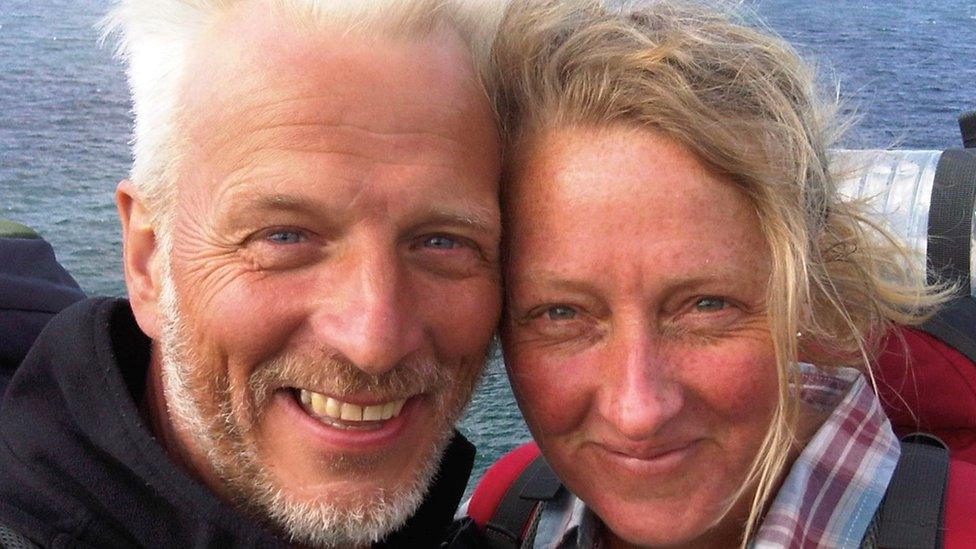
But we’re in good company, including Penguin Random House, Number 9 Films and more than two million readers worldwide. Chivalrous Jason Isaacs, sitting next to Raynor Winn on The One Show sofa, gently corrects her when she says it all began when she and her husband “got into a financial dispute”. “You were conned out of everything you had,” he says sympathetically. “You might not be able to say it but I can.”

The Winns’ audacity is breathtaking. According to Hadjimatheou, the real con-artist is Raynor, aka Sally Walker. Aka embezzler of £64k from her employer; aka borrower of £100k to pay back her ill-gotten gains and thus avoid a criminal trial. When their house was repossessed, it wasn’t because a good friend betrayed them; it wasn’t a naïve business investment gone wrong. It was the simple calling-in of an unpaid debt, ratified by the courts. Did Walker and her husband Ti-Moth-y really believe the truth would stay buried as they appeared on national television to publicise their untruths?

So how gullible were we, really? Like many, we believed the basic premise. Why wouldn’t we? Sure, it was clear that the exact circumstances of the couple’s slide into destitution were being glossed over, and of course their story was shaped into a neater narrative than real life provides. But we had no reason to doubt the fundamentals. (How could anyone have guessed they had a ‘spare’ property in France?) In fact, my interest piqued by the movie, I went on to read Winn’s books. I liked The Salt Path, although I was disappointed not to learn more about the calamitous investment. I found books two and three (The Wild Silence and Landlines) less interesting: just more of the same, but – now that the couple were housed and embracing successful careers – without the jeopardy. In these sequels, the focus shifts to Moth’s terminal illness, corticobasal degeneration, and the miraculous curative effect that hiking has for him. While the first book tentatively suggests that strenuous exercise might be beneficial for those with this rare condition, by the third we’re deep into dubious ‘wellness’ territory, with Winn’s ‘own research’ supposedly trumping anything a neurologist might purport to know.

Still, we won’t be taking down our review (you can read it in full below). We stand by it as a reaction to a well-acted and nicely-crafted film that we enjoyed. Of course, its message of grit in the face of adversity doesn’t have quite the same potency it did, now that we know the protagonists are a pair of grifters, but, if we can steel ourselves to view it as a work of fiction, it’s an affecting and moving piece.

Susan Singfield and Philip Caveney

01/06/25

Cineworld, Edinburgh

I’ve often remarked that real-life stories, depicted as fiction, would more often than not be the case for raised eyebrows. Take the case of Raynor and Moth Winn, for example: a married couple who, after a badly-judged business investment went tits up, found themselves evicted from their family farm, unable to obtain any financial help, bar a paltry £40 a week benefit. Around the same time, Moth was diagnosed with a rare (and inoperable) degenerative brain condition. Their response? To set off to walk the South West Coastal Path, a trip of hundreds of miles, telling themselves that if they just kept walking, something was sure to turn up…

Okay, so in a move they could surely never have anticipated, the book that Raynor wrote about the experience eventually went on to sell two million copies… but it would be a hard-hearted reviewer who begrudged them this success.

In this adaptation by Rebecca Lenkiewicz, we first encounter Raynor (Gillian Anderson) and Moth (Jason Isaacs) as they fight to save their last real possession – a small tent – from the ravages of the incoming tide. The couples’ back story is told in a series of fragmentary flashbacks, though director Marianne Elliott is less interested in the events that brought the couple to this sorry situation, than exploring the possibilities of what their newfound freedom brings them.

As the two of them progress on their journey, struggling at first but gradually adapting to a different kind of life, it becomes clear that there is something to be said for casting off the familiar shackles of a home and a mortgage. The couple find an inner strength they didn’t know existed and, along the way, they rediscover what drew them together in the first place. This could easily have been overly -sentimental but manages to pursue a less obvious route.

The story takes the duo across some jaw-dropping locations around Cornwall and Devon and the majesty of the scenery is nicely set against Chris Roe’s ethereal soundtrack. Anderson and Isaacs make a winning duo, conveying the real life couple’s indomitable spirit and genuine devotion to each other, while the various situations they stumble into range from the comical to the deeply affecting.

The film’s final drone sequence cleverly encapsulates its central message in one soaring extended shot. There have been some mean-spirited early reviews for The Salt Path but I find it genuinely moving and a cinematic journey worth sharing.

4.2 stars

Philip Caveney and Susan Singfield
Mrs. Harris Goes to Paris

30/09/22

Cineworld, Edinburgh

I am poorly when I see the 1992 teleplay, Mrs ‘Arris Goes to Paris, nursing a cold. I am lying on my sofa with the TV on, drifting in and out of sleep. At one point, I wake up, and there are Angela Lansbury, Diana Rigg, and, wait, is that Fred from Corrie? Is this a fever dream? I find myself engaging with the story, and watching through to the end. On occasion, I mention it to friends, but nobody has ever heard of it. They look at me sceptically. I let it go…

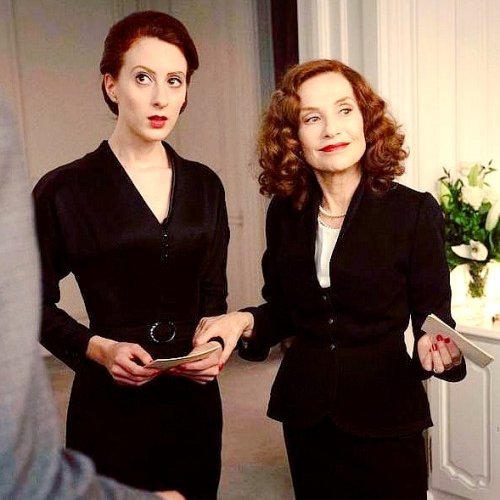
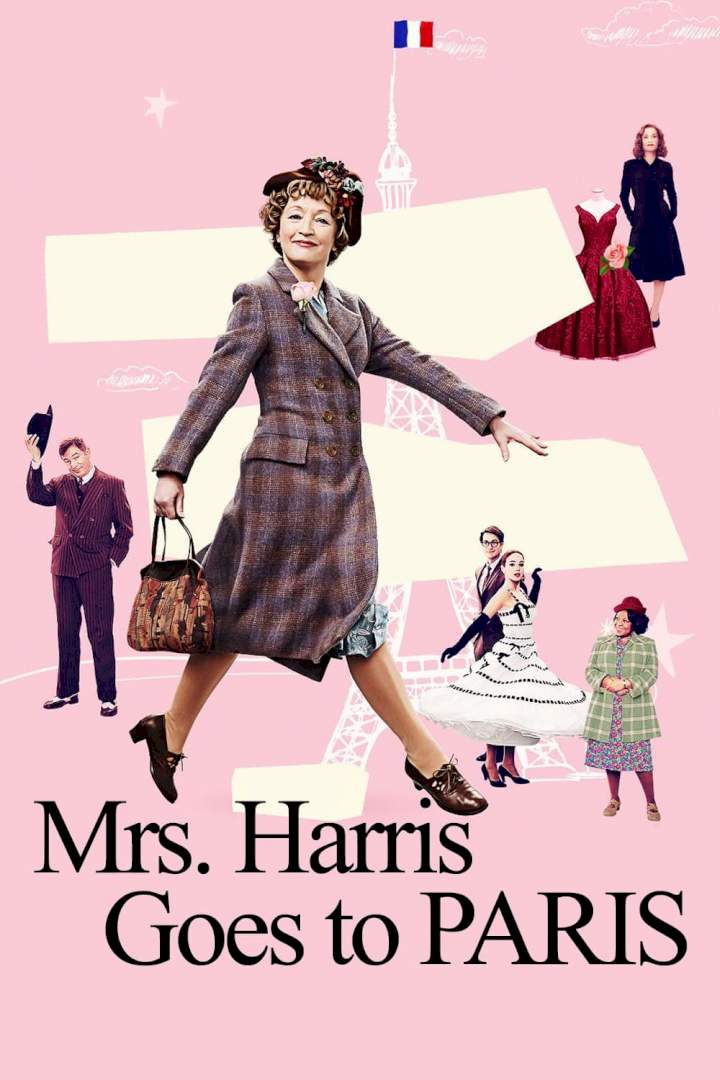
So I’m weirdly excited about this latest iteration of the tale, which I now know is based on a novel by Paul Gallico. Lesley Manville stars as the titular Mrs Harris (her ‘H’ restored), with Isabelle Huppert and Jason Isaacs as the big name support.

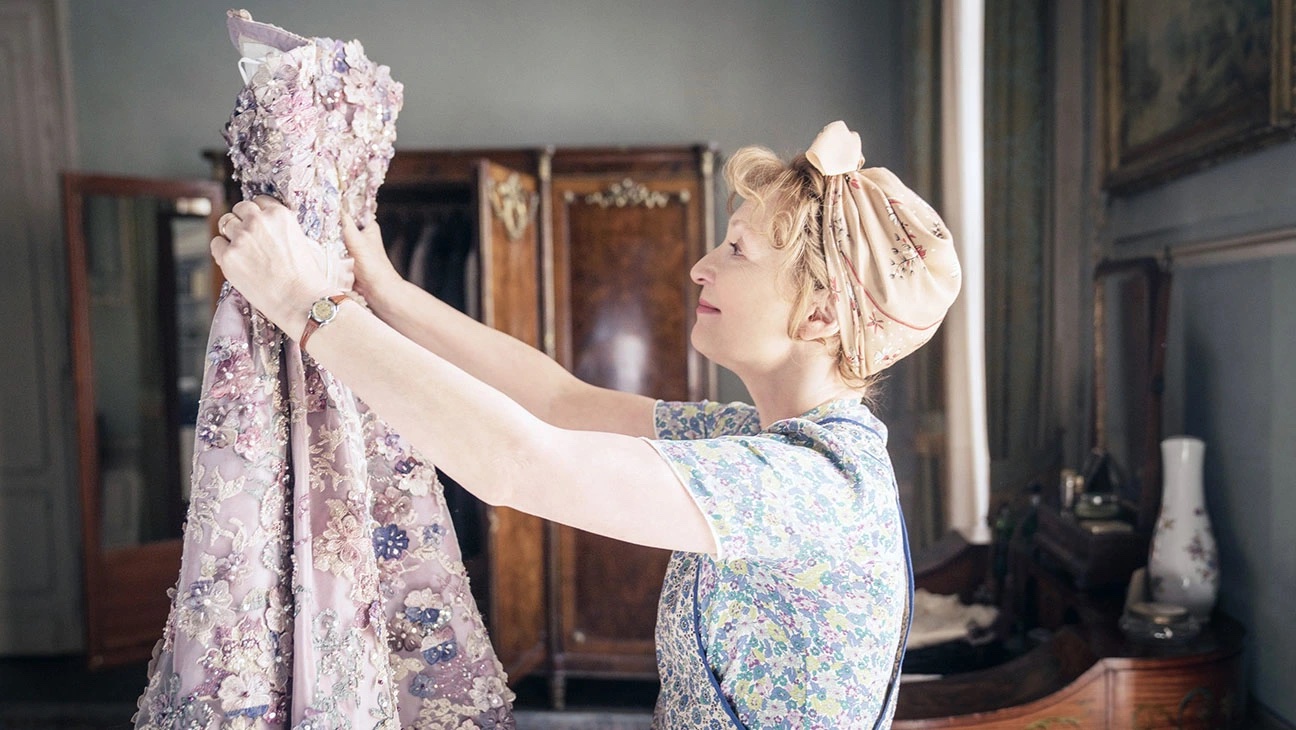
It’s London, 1957. Ada Harris knows in her heart that she’s a war widow, but she’s been waiting years for Eddie’s death to be confirmed. In the meantime, she’s working as a charwoman, cleaning up after a succession of indolent rich folk. She’s not unhappy exactly: she has a busy social life, drinking, dancing and ‘going to the dogs’ with her friends, Violet (Ellen Thomas) and Archie (Isaacs). But something is missing and, when Ada catches a glimpse of an exquisite couture gown in Lady Dant (Anna Chancellor)’s bedroom, she realises exactly what that missing something is…

A posh frock from Paris is beyond Mrs Harris’s slender means, but she’s a determined woman, and sets to with admirable grit, making savings wherever she can. Take the bus to work? No, not when she can walk. And what does she need with evenings out? Better to spend the time altering and repairing people’s clothes, bringing in a few extra shillings. Despite her hard work, however, that Dior dress is still way out of reach.

Until a series of fortunate events occurs, and – of course – she’s off to Paris! (Come on, that’s hardly a spoiler; it’s literally in the title.) The streets of the French capital appear to be paved with litter (there’s a bin strike, which we citizens of Edinburgh can certainly relate to), but Ada rises easily above the stink. She’s having the time of her life, and – with the help of André (Lucas Bravo), Natasha (Alba Baptista) and the dashing Marquis de Chassagne (Lambert Wilson) – she’s rediscovering her mojo. Sure, Mme Colbert (Huppert) is a bit sneery, and Mme Avallon (Guilaine Londez) seems to view her as an enemy, but so what? A couture gown is on its way; what could possibly go wrong?

Mrs Harris Goes to Paris is essentially a fairytale, although it’s not very grim. It’s a frothy concoction, signifying little, but it’s eminently watchable, with warm, engaging characters, and a satisfying (if predictable) story arc. Under Anthony Fabian’s direction, this primarily Hungarian production (no, I don’t know why either) is beautifully shot, and Felix Wiedemann’s cinematography really captures the ethereal beauty of the clothes, so vital to the tale. It’s refreshing to see a love story that doesn’t patronise an older woman, and I’m pleased that the ‘fish out of water’ stuff is played down. Ada is independent: she has lived alone through a war and is used to city life, and she mixes with all kinds. It’s no surprise that she can hold her own in a Parisian restaurant, nor that she’s unfazed by the unfamiliar etiquette of a Dior fashion show. Perhaps the most important theme is one of societal change: just as the political elite in Paris have to accept that the workers won’t settle for poverty wages any more, neither will Ada continue to put up with late payments and disrespect from her employers. The war was a real turning point, and its longterm implications are starting to be felt.

I don’t really know how this compares to the teleplay, because I wasn’t fully compos mentis when I was watching that, but I do know that it’s more enjoyable to see Mrs Harris finding her dream dress when I’m not in a Lemsip fug. And at the cinema too, which is always better (true fact, no counter-arguments accepted).

3.8 stars

Susan Singfield

Mass

02/02/22

Now TV

Mass isn’t going to be anybody’s idea of a fun trip to the cinema.

Perhaps that’s why we’ve seen no opportunity to view it on the big screen, though, to be fair, this intimate drama, written and directed by Franz Kranz, works perfectly well on a television screen. Effectively, it’s a four-hander, and I might be forgiven for assuming that it started life in the theatre, but actually it’s an original screenplay and one that draws me quickly in to its central premise.

We start proceedings in a dowdy church hall, somewhere in the heart of America, where Judy (Breeda Wool) fusses around preparing a room for an impending meeting, directing the taciturn Anthony (Keegan Albright) to help her set out the furniture just so. This one, she warns him, is going to be ‘tricky.’

Then Kendra (Michelle M Carter) arrives to further supervise things, and we learn that she has been working with one of the couples due to meet here and has finally persuaded them to attend. But these distractions are just set dressing for the main event. Soon enough, the first couple arrive and take their seats. They are Jay (Jason Isaacs) and his wife, Gail (Martha Plimpton), and it’s clear that they are reluctant to be here. Shortly thereafter come estranged couple Richard (Reed Birney) and Linda (Ann Dowd) and we sense that they too are horribly conflicted.

We soon learn why they are here – and this is in no way a spoiler.

There has been a fatal school shooting some time earlier. Both couples have lost a son in the incident, one son a victim, the other the perpetrator, who afterwards took his own life. The two couples are here to talk through their respective issues, to try to come to terms with what has happened to their children and to their own lives. What follows is a harrowing exchange, which ranges through mutual sympathy, antagonism, despair and outright anger. This is a mature and important conversation that America needs to address urgently.

Of course, this is only going to work if the acting is top notch and, frankly, it is uniformly brilliant. Indeed, I’d be hard put to select one performance over another; suffice to say, I am by turns horrified, bewildered and tearful. This is incendiary stuff and the banal topping and tailing of the piece just serves to accentuate the power of the main event.

Needless to say, Mass won’t be for everyone – it will be too brutal, too affecting for some and you could argue that, after the gloom of the pandemic, many will prefer to look towards more optimistic horizons. But it is nonetheless a powerful slice of filmmaking that achieves its ambitions with skill and determination.

4.3 stars

Philip Caveney

The Death of Stalin

23/10/17

If there was a prize for ‘Most Unlikely Subject for a Comedy’, the death of Russian premier Joseph Stalin would probably figure on the list of prime contenders. I mean, how amusing can that actually be? But Armando Iannucci clearly isn’t interested in such preconceptions. Against all the odds, he’s fashioned a funny and subversive entertainment from this unpromising source, based on the graphic novel by Fabien Nury.

It’s March, 1953, and Russia is cowering under the brutal regime of ‘Uncle Joe’ Stalin. People can be rounded up and shot for the most spurious of reasons – perhaps they’re intellectuals. Perhaps they belong to the wrong organisation. Perhaps their faces just don’t quite fit. The atmosphere of paranoia is amply portrayed in the film’s opening sequence, where radio director Comrade Andryev (Paddy Considine), is forced to restage a live performance by a symphony orchestra, simply because Stalin has phoned up and asked for a recording of it – and unfortunately no such recording has actually been made. ‘Don’t worry,’ Andryev assures his bemused audience as he ushers them frantically back to their seats. ‘You won’t be killed. I promise.’

Armando Iannucci’s comedy of terrors is a brave and wonderfully assured undertaking, finding comic mileage in the absurdity of day-to-day existence under the jackboot of a tyrant – and from the unexpected possibilities that are unleashed when that tyranny finally comes to an end. When Stalin unexpectedly drops dead from a heart attack, the various members of his government begin the complex task of jockeying for position in the new order and the results are a joy to behold.

The film has been criticised in some quarters for its lack of authenticity, but to be fair, there’s no real attempt to make it feel authentic. Characters talk in a mix of accents from regional British to (in the case of Steve Buscemi’s Nikita Krushchev) broad American, and the script misses no opportunity to go for a well-timed belly laugh.  

The cast is stellar – I particularly like Simon Russell Beale as head of the secret police, Lavrentiy Beria, a smiling assassin who hides his vile nature under a mask of cheerful bonhomie. Jeffrey Tambour is also excellent as Georgy Malenkov, Stalin’s second in command, who suddenly finds himself simultaneously having to lead the country in its collective grief and incapable of coming to a rational decision about anything. Rupert Friend has a lot of fun with the role of Vassily, Stalin’s loose-canon, vodka-swilling son. But the film’s undoubted comic highlight is Jason Isaacs as straight talking ‘Marshall of the Soviet Union’, Georgy Zhukov, the hilarity aided no end by the fact that he talks with a pronounced Yorkshire accent. I’ve no idea why that’s so funny, it just is.

Okay, so this isn’t quite the comic masterpiece that some have dubbed it. The film suffers somewhat from the age-old problem of having nobody in particular to root for, since they all appear to be lying, double-dealing creeps – unless of course, you count Olga Kurylenko’s Maria Yudina, a concert pianist who seems to be the only person in the film brave enough to speak her mind about Stalin’s cruelty; but hers is a cameo role, acted out on the sidelines. The only other character we remotely care about is Stalin’s hapless daughter, Svetlana (Andrea Riseborough), who can only watch the carnage that unfolds in the wake of her father’s death and hope against hope that she’ll somehow make it out of there alive.

Weighing in at a relatively sprightly 106 minutes, The Death of Stalin is a clever and accomplished movie, well worth investigating. This is Iannucci playing to his strengths as a political satirist and mostly coming up with the goods. Interesting though, that despite a script peppered with crackling dialogue, the film’s funniest scene is an entirely visual one. Go figure.

4.2 stars

Philip Caveney


A Cure for Wellness

24/02/17

Pirates of the Caribbean director, Gore Verbinski sets a course for even darker waters with  this 18 certificate mystery movie, giving us a twisted fairy tale that evokes plenty of other great films, yet still somehow manages to retain its own identity. This is the kind of thing that Tim Burton does, only, dare I say it? Better. Much better.

Ambitious young executive, Lockhart (Dane Dehaan) is sent by his employers to a remote sanitarium in the Swiss Alps, where he is instructed to locate and bring back the company’s head honcho, Pembroke (Harry Groener), who went out there for the ‘cure’ and has subsequently gone AWOL. No sooner has Lockhart arrived than he’s presented with a whole host of unanswered questions. Why is the sanitarium’s mysterious director, Volman (Jason Isaac, sporting a Germanic accent) so oily and evasive? What’s going on with the weirdly enigmatic Hannah (an engaging turn from the appropriately named Mia Goth)? And what exactly is in that special spa water that everybody seems addicted to drinking?

Verbinski takes his time answering those questions and, even if some of the convoluted plot’s loose ends are never satisfactorily tied up, it’s nevertheless an intriguing and sometimes suspenseful journey getting there. Despite a running time of two and a half hours, the film never drags and switches smoothly from one deeply creepy set-piece to the next. A sequence in a dentist’s chair is likely to put you off ever sitting in one again, while other scenes here will doubtless dissuade you from eating jellied eels for life. Along the way, some of the best horror films in history are cleverly recalled – Rosemary’s Baby, Dance of the Vampires, The Shining… and there’s even a strand that put me in mind of vintage TV series, The Prisoner (which to my mind is the ultimate praise).  If everything goes a bit Hammer Horror at the conclusion, it’s by no means a bad thing.

Not everyone will like this. It’s probably far too weird for mass approbation and there’s a complete refusal to take the easy path when the scenic route has so much for offer – and speaking of scenery, the location photography is particularly sumptuous. But be careful. Behind every pretty thing, there’s something sinister waiting to jump out at you.

4.5 stars

Philip Caveney