Jane Austen

Pride and Prejudice

24/05/25

Netflix

It’s hard to believe that Joe Wright’s adaptation of Pride and Prejudice is already twenty years old – and, while it’s been rereleased into selected cinemas to mark the occasion, it’s also right there on Netflix, all ready for re-examination at the touch of a button. I remember liking it back in the day and feeling that it was much more realistic than the widely-admired 1995 TV mini-series, which I found a little too chocolate-boxy.

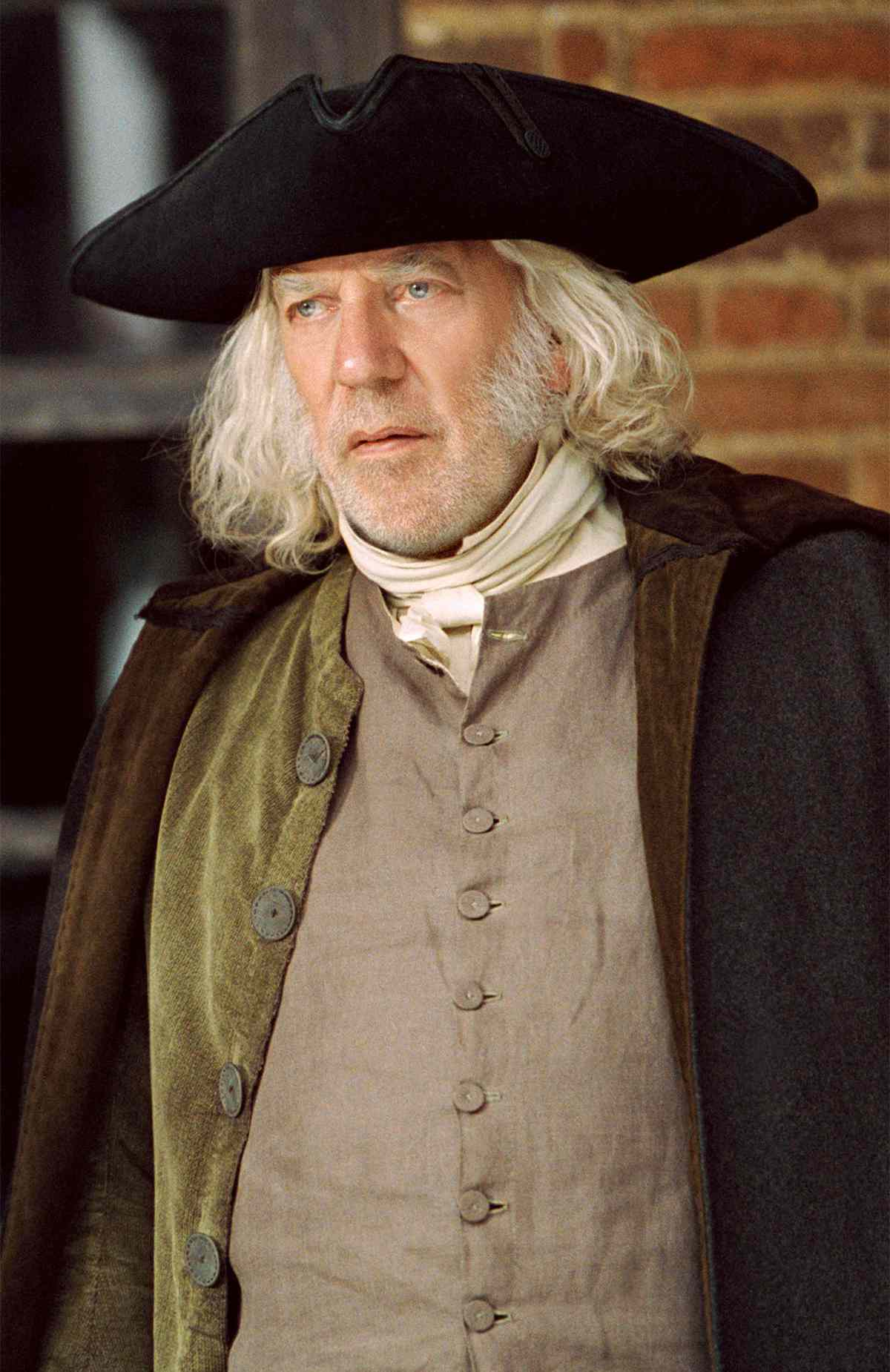
Wright’s version, though offering a tranquil and bucolic adaptation of Jane Austen’s novel, actually succeeds in showing the slightly down-at-heel and ramshackle nature of the Bennet family. In this version, a viewer fully understands the mounting desperation of Mrs Bennet (a wonderfully scatty Brenda Blethyn) as she seeks to find suitable husbands for her daughters, aware all the time that the clock is ticking and the women of the family stand on the edge of penury. Mr Bennet (Donald Sutherland) is useless, looking on in mystified wonder as his wife goes about her earnest business.

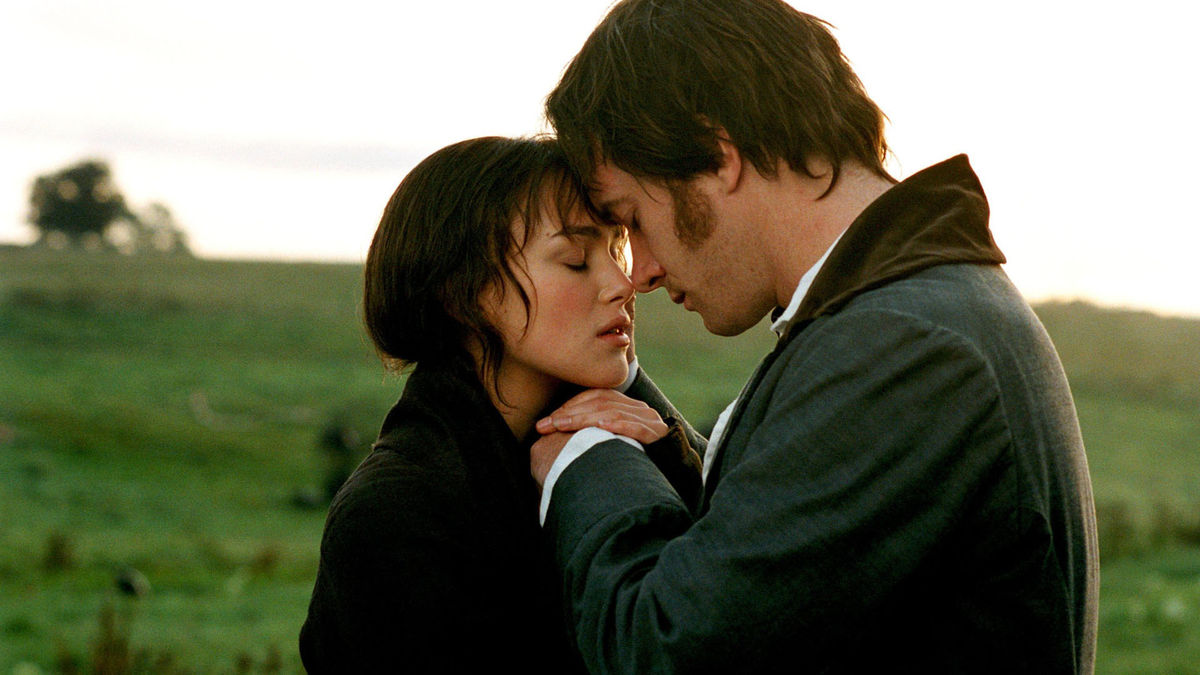
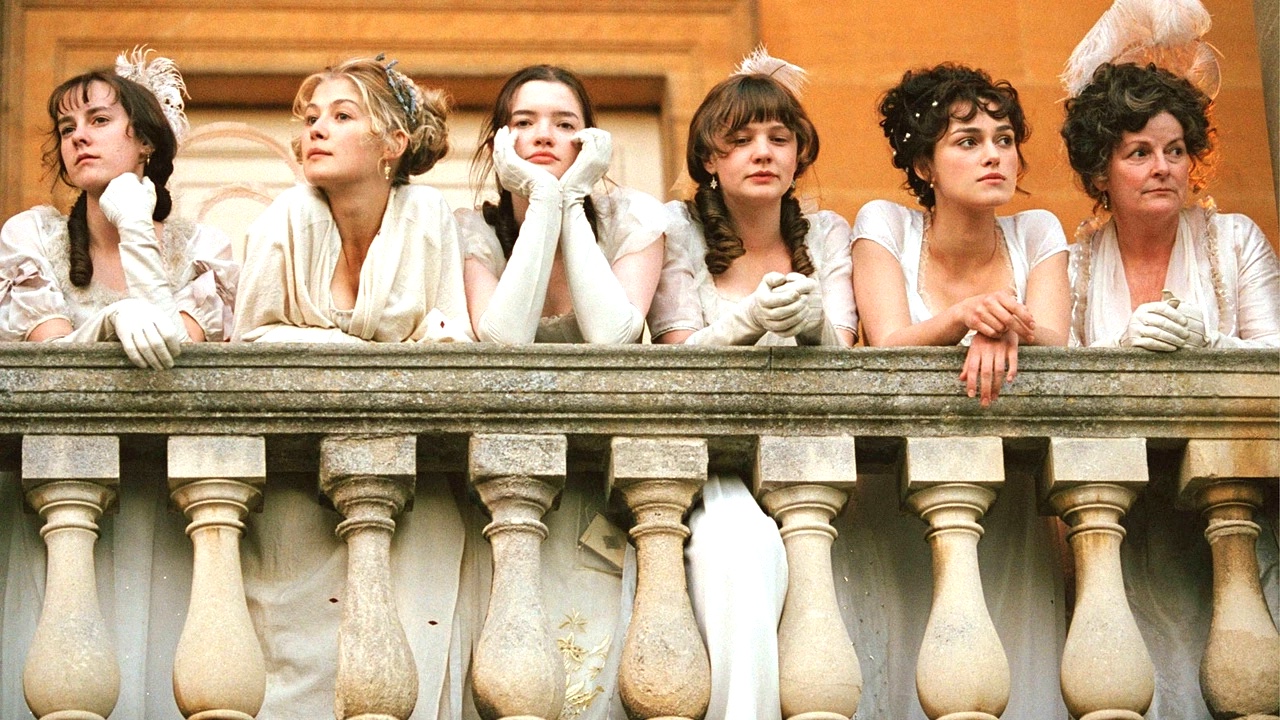
As the wilful and opinionated Elizabeth, Keira Knightley is an inspired choice. Why so many critics have taken against her acting abilities is quite beyond me, but here she plays Lizzie with considerable skill, scathing in her early encounters with Mr Darcy (a deliciously-sombre Matthew Macfadyen) and loving and playful in her interplay with Jane (Rosamund Pike) and her other sisters (look out for an early appearance by Carey Mulligan as Kitty). There’s a splendid turn from Rupert Friend as the caddish Mr Wickham, while Judi Dench struts her inimitable stuff as the acid-tongued Lady Catherine and Tom Hollander is wonderfully obsequious as Mr Collins, the reverend with an earnest desire to impress her.

The source novel has been cleverly adapted by Deborah Moggach, with additional (uncredited) dialogue by Emma Thompson, who had already earned herself an Oscar for her work on Ang Lee’s version of Sense and Sensibility. Wright never lingers too long on a scene and consequently the running time of two hours and nine minutes seems to positively flash by.

There are so many simple yet effective moments that have stayed with me since my first viewing. I love the scene where the Bennets’ prize pig wanders through their living quarters as though it’s a perfectly natural state of affairs, and the scene where Elizabeth and Darcy, enacting a complicated dance routine in the midst of a frenetic party are, quite suddenly, dancing completely alone. Roman Osin’s lush cinematography makes every landscape look suitably ravishing yet never overplays its hand. A scene where a pensive Elizabeth is taken from bright morning sunlight into the dark shadows of evening in one slow take is so understated, it barely registers.

This is Wright’s debut full-length feature and yet it feels like the work of a more experienced director. He would go straight on from this to his adaption of Atonement, another extraordinary literary film, once again with Knightley in a key role.

Sometimes when you return to a film after a long interval, you wonder what made you like it so much on first viewing. In the case of Pride and Prejudice, I feel I enjoy it even more.

4.6 stars

Philip Caveney

Emma.

14/02/20

Some people bemoan their prevalence, but I don’t object to remakes of classics, so long as they’re done well. Little Women was one of my favourite films of 2019, with Greta Gerwig demonstrating exactly how worthwhile such revisitings can be. I like the vim and vigour that seems to be on-trend, the opening up of old favourites to a brand new audience.

Admittedly, I’m puzzled – and a little irked – by the addition of a full stop to Emma.. It seems affected, a bit try-hard. I’m hardly mollified by the explanations I find on-line either: there’s a ‘period’ because it’s a period drama (doh!) or – worse – this is the final, definitive version of the tale. (No, that would be the book.)

Still, I’m keen to see Emma., particularly as the poster, trailer and cast list hint at something sprightly and fun. I love Jane Austen’s novel, and have enjoyed a range of adaptations (Clueless, obviously, is the best). Eleanor Catton is also a writer I admire. But, sadly, neither her script nor Autumn de Wilde’s direction offer us anything more than a pretty confection.

Speaking of which, there is a lot of pretty confectionary in this film, with towering four or five-layer cakes present on almost every table (disappointingly, we never see them cut; I’d like to know what they look like inside). The dresses are gorgeous too, and the furnishings. In fact, it’s all rather ravishing, but there’s almost no substance – an empty edifice, just like the cakes.

It never feels real. Every emotion seems transient, every slight soon forgotten. Emma (Anya Taylor-Joy) is, as we know, handsome, clever and rich. She’s unbound by the need to marry, as she is financially secure, and anyway, her father (Bill Nighy) needs her at home. To stave off the boredom of wandering around a big posh house and wearing nice frocks, she decides to indulge in a spot of match-making. But it takes Emma some time to realise that other people aren’t as privileged as her, and that her meddling can cause them actual hardship. For a modern audience, this is a problematic narrative, with its underlying assertion that we should all know our place. But this is never addressed, not even obliquely; in fact, if I didn’t know the source material, I don’t think I’d be able to ascertain the social hierarchy at all. The costumes don’t make it clear, nor do the characters’ interactions. Just sometimes we are told that a character is poor, or that their prospects aren’t too good.

The characters aren’t defined enough, either, especially the men. The differences between Mr Knightley (Johnny Flynn), Mr Elton (Josh O’Connor) and Frank Churchill (Callum Turner) are barely perceptible; in the novel, the three are worlds apart. In fact, although Flynn performs well in the role, I don’t think the script even makes clear who Knightley is; I’ll wager many a newcomer to the story assumes he’s Emma’s brother at first.

Mia Goth is the standout, imbuing the unfortunate Harriet Smith with real charm and naïvety. Her nervous reverence for Emma is perfectly drawn. Miranda Hart also puts in a decent turn as Miss Bates, offering us the film’s only real moment of authentic emotion and poignancy.

All in all, this feels like an opportunity missed, a waste of talent and potential.

2.9 stars

Susan Singfield

Pride & Prejudice* (*Sort Of)

24/01/20

Lyceum Theatre, Edinburgh

I’m enjoying the current flush of period drama adaptations on both stage and screen: Greta Gerwig’s Little Women, Armando Iannucci’s The Personal History of David Copperfield, Zinnie Harris’s The Duchess (Of Malfi). The staid and starchy interpretations I remember from my youth are long gone. Now there’s verve, vigour and a sense of fun, an assertion of the protagonists’ youth and the authors’ humour, a sharp incision that takes us to the beating heart of classic texts.

And Jane Austen is especially funny, isn’t she? (I come to this version as, if not quite a Janeite, then at least a fan of her writing.) It’s easy to lose sight of how bitingly satirical she was because her sarcasm is couched in antiquated politenesses, her characters’ bound by alien social mores. Here, writer Isobel McArthur strips away these obstacles to modern understanding, offering us a cast of refreshingly familiar wine-quaffing, lustful young women, whose potty-mouths are endearing and hilarious. Hurrah! These are people we can recognise and revel with, whose broken hearts and thwarted ambitions we can really care about.

It’s Pride & Prejudice through and through; we don’t really need the ‘sort of’ to qualify anything; the changes here are only superficial. The story is intact: the five Bennett girls and their parents are hostages to a dodgy will that determines only a man can inherit their father’s home and (modest) fortune. If he dies, the women will be destitute. No wonder Mrs Bennett is desperate to see her daughters married: their very livelihoods depend on it. No wonder either that a rich man is preferred; if he has a good income, he can take care of all of them. A shame, then, that they live in Meryton, where eligible bachelors are few and far between, and that firebrand Lizzie (Meghan Tyler) is so choosy about who she’ll shack up with. Until she meets the enigmatic Darcy (Isobel McArthur), and their love-hate relationship begins…

Directed by Paul Brotherston, Pride & Prejudice* (*Sort Of) is a glorious, riotous romp of a play, a bawdy, feminist iteration of the tale. The deployment of a karaoke machine is inspired, a perfect reimagining of the piano and singing performances required of young ladies in Austen’s time. The six-strong cast are all magnificent, but the standout moments belong to Hannah Jarrett-Scott, who switches effortlessly between a Tim-Nice-But-Dim-style Bingley and a tragic, lovelorn Charlotte Lucas. McArthur’s repressed, inarticulate Darcy is also a sheer delight, and props too to Mr Bennett, performed by a backward-facing armchair and an ever-present newspaper.

The only false note for me is the servant girl conceit. At the play’s opening, we’re introduced to the domestic help, reminded of their presence in the novels, told of how they are ignored. From thereon in, what we’re witnessing is supposed to be their play-acting, their impersonations of their employers, their interpretation of the landed gentry’s world. But we don’t learn anything about them, nor about their opinions, their deprivations, their own hopes and dreams. We just get Austen’s story; the working class is still ignored.

Still, it doesn’t detract too much. This is a sprightly, engaging, laugh-out-loud piece of theatre, richly deserving of tonight’s standing ovation.

4.6 stars

Susan Singfield

Love & Friendship

images

29/05/16

Cameo, Edinburgh

Love & Friendship is an amalgamation of two early novellas (Lady Susan and Love and Freindship [sic]), penned by the esteemed Jane Austen when she was still in her teens. It’s a witty, acerbic tale, and seems true to the spirit of this oft-misunderstood writer in a way that many screen adaptations of her work do not. Romance, here, is never really the point; we don’t really care who marries whom. Instead, this is a satire: a deliciously wry examination of how people manipulate social mores.

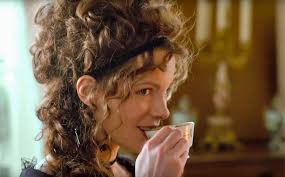
Kate Beckinsale, as Lady Susan, is superbly cast. She is undoubtedly a venal fiend, and yet we root for her because… well, why not? She’s attractively rebellious and unrepentant in her selfishness, and – if some men are idiotic enough to fall for her games – then really, more fool them.

Most engagingly foolish of all is Tom Bennett’s James Martin, an affable buffoon, whose lack of intelligence is more than compensated by the size of his estate. Bennett milks his role’s comic potential, clearly relishing the chance to ask, in all seriousness, which of the twelve commandments he is allowed to break.

Oh, it’s a slight film all right, like Austen’s books,”a little bit (two inches wide) of ivory” – but it’s crammed full with such verve and vivacity that it’s hard to think of a more engaging way to spend an afternoon. Especially when we’re in the delightful environs of Edinburgh’s oldest and most loved cinema, the superb Cameo, where we’ve recently become members.

4.1 stars

Susan Singfield