

Jack Thorne

Joy

23/11/24

Netflix

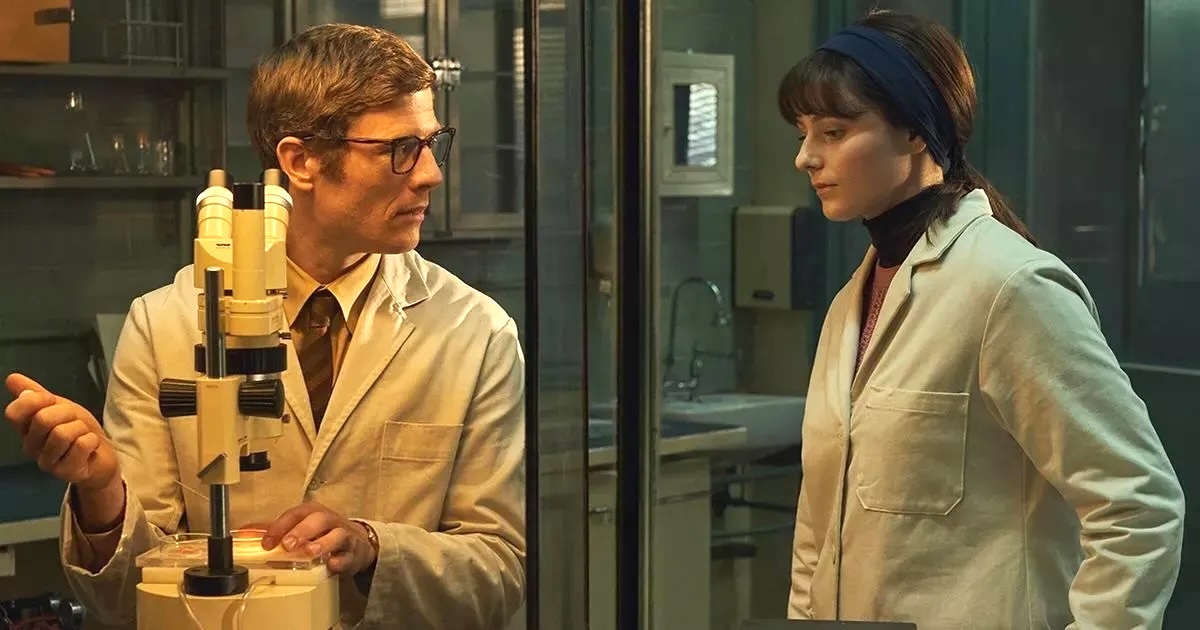
For people of a certain vintage, the name of Bob Edwards might ring a bell. He was, of course, the doctor who came up with the concept of Invitro Fertilisation and who, after years of tireless work, was behind the birth of Louise Brown – the first ‘test-tube baby’ as the press of the era dubbed her. You’ll probably also have heard of Patrick Steptoe, the surgeon whose advances in keyhole surgery made the whole process a possibility.

But the name Jean Purdy is certainly not as familiar. The third member of the team, an embryologist, Purdy worked alongside the two men (and, indeed, as this film suggests, was ultimately the driving force that brought their work to completion). And yet, to a great degree, her contribution has been largely airbrushed from history. She didn’t even merit a mention on the memorial plaque at Oldham General Hospital (Louise Brown’s birthplace) until 2015.

This story begins in 1965 when we meet Purdy (Thomasin McKenzie), freshly graduated from nursing school, being interviewed by Edwards (James Norton), who has recently embarked on the project that will occupy him for many years. His aim is simple: to provide an answer to all those would-be parents who have been prevented from having children because of a simple quirk of nature. Edwards and Purdy quickly become a duo. But their first goal is to enlist the help of Steptoe (Bill Nighy), who – though brusque and dismissive at first – is soon won over, largely by Purdy’s direct, no-nonsense approach.

The trio duly embark on years of experimentation as they work towards their ultimate goal. Underfunded and mocked by the tabloid press (who dub Edwards ‘Doctor Frankenstein’), it’s a long hard road – and it’s not until 1978 that their years of work finally bear fruit. Along the way, Jean’s relationship with her own mother is broken. Gladys (Joanna Scanlon) is deeply religious and sees this whole endeavour as ‘sinful’ and ‘unnatural.’ She cuts her daughter out of her life and even asks her not to attend the church they have both gone to for years. It’s only when Gladys falls ill that an uneasy alliance is finally established.

Purdy also nurtures a secret: she herself suffers from endometriosis and is unable to have the child that she has always longed for…

Jack Thorne’s screenplay is beautifully understated, as is Ben Taylor’s direction, which effortlessly catches the drab look and feel of the 60s and 70s. The three leads handle their roles with considerable aplomb and McKenzie in particular is wonderfully affecting, managing to convey her character’s inner turmoil with little more than a wistful look and a sidelong glance. As somebody who has personal experience of the benefits of IVF in the form of my much-loved daughter (and I fully appreciate how easy it was for me as the male in the relationship), I don’t mind admitting that some of the scenes here have me filling up.

Joy is a ‘small’ film, which probably accounts for the fact that it’s not competing with the likes of Gladiator 2 at your local multiplex and, instead, has gone straight to streaming. But it’s really worth the watch. It tells a fascinating true story of courage and determination.

And in its own quiet way, it’s a remarkable film.

4.3 stars

Philip Caveney

The Motive and the Cue

21/03/24

Cineworld, Edinburgh: National Theatre Live

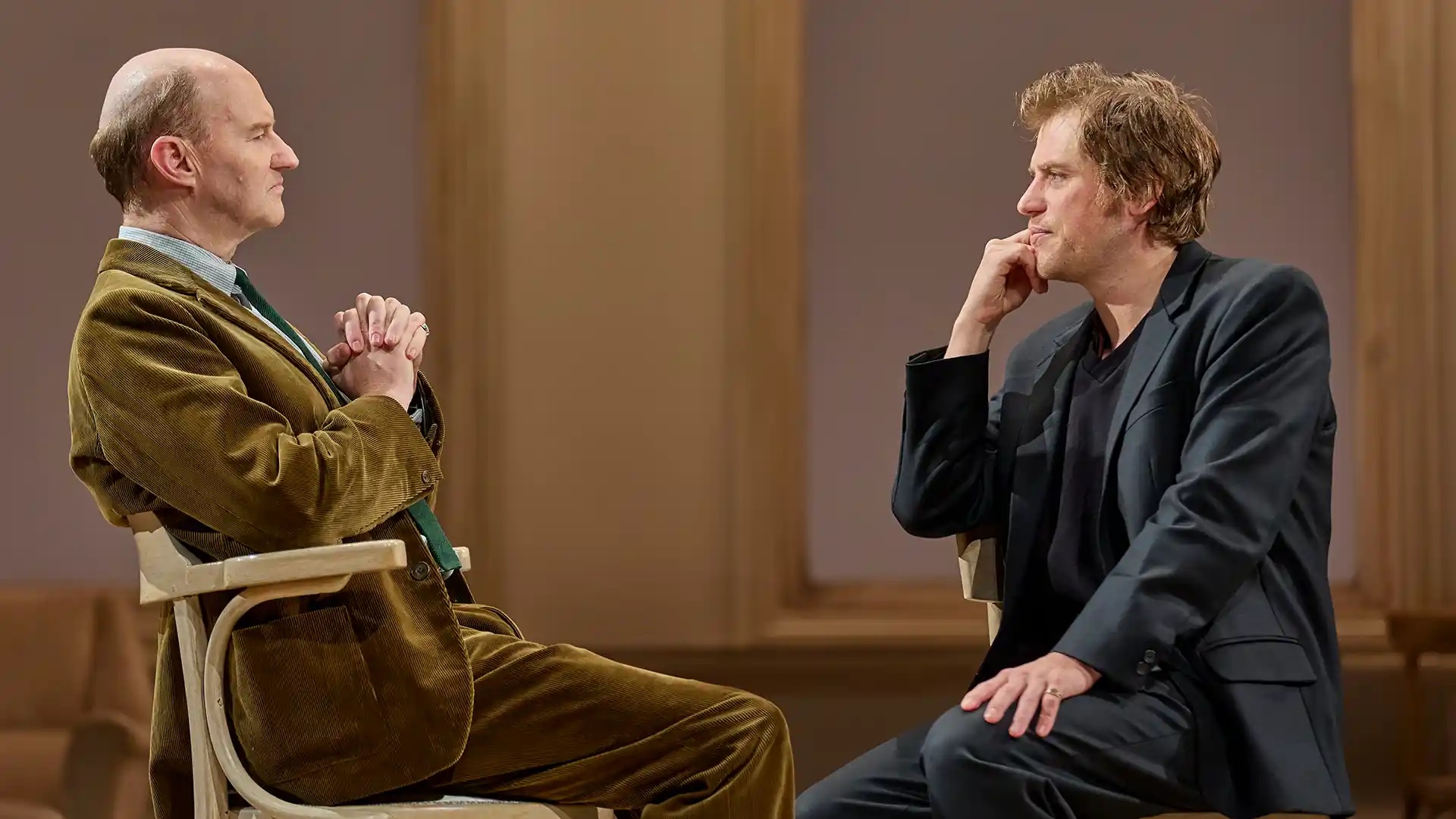
It’s 1964 and Welsh superstar Richard Burton (Johnny Flynn) has decided to turn down some lucrative film offers in order to perform Hamlet on Broadway. (We’ve all been there.) He’s decided that the director should be John Gielgud (Mark Gatiss). Now in his sixties and considered something of a has-been, he famously played the Danish prince to great acclaim as a young actor.

To complicate matters, Burton has recently married Elizabeth Taylor (Tuppence Middleton) – for the first time – and she reluctantly accompanies him, but finds herself banished from the rehearsal space and sequestered in a swish hotel room with an endless supply of alcohol, while her husband grapples with his role.

Jack Thorne’s fascinating play, beautifully directed by Sam Mendes, never shows us the finished production but lingers instead on successive rehearsals as director and star bicker and feud their way to a fresh vision of Shakespeare’s most-performed play. There’s a large ensemble cast at work – some eighteen of them – but most of the other actors are relegated to supporting roles, though both Allan Corduner as Hume Cronyn and Luke Norris as William Redfield manage to make an impression. Meanwhile, Gatiss and Flynn joust entertainingly with each other to sometimes hilarious effect, Gatiss perfectly embodying Gielgud’s sly and snarky manner, while Flynn turns up the bombast as the hubristic Burton, his working-class-lad-made-good bluster deliciously rendered.

Middleton too does well with her character, capturing Taylor’s earthiness and her uncanny ability to cross all boundaries, particularly in the scene where she acts as a kind of intermediary when Gielgud and Burton (inevitably) end up at each other’s throats. I love the scene where Gielgud reflects on the tragedy of achieving stardom at twenty-three, to which Taylor points out that she was just twelve when National Velvet became a runaway hit.

The production is also blessed with an extraordinary set by Ed Devlin, where scene changes are revealed using an ingenious expanding letterbox arrangement. I have no idea how this is achieved, but the effect is remarkable, the transformations so slickly done it feels almost like a series of magic tricks.

This is a play that will delight anyone who loves theatre and the way it works, a glimpse at the nuts and bolts that lie behind the glittering façade. It’s fascinating to see the players experiment with the source material as they gradually inch their way to what will eventually become one of the most successful theatre productions in history.

4.6 stars

Philip Caveney

The Swimmers

04/12/22

Netflix

Some reviewers have dismissed The Swimmers as ‘a feelgood movie’, but that, I feel, is doing it an immense disservice. While it’s based on the true story of Syrian sisters, Yusra and Sara Mardini, Sally El Hossaini’s film – which she co-wrote with Jack Thorne – takes its viewers through some pretty distressing experiences before we finally experience any sense of uplift.

We first encounter the two girls in their home city of Damascus, where they are enjoying the exuberant nightlife and, by day, are training hard with their father, a swimming coach, whose greatest dream is to see his two daughters representing their country in the next Olympics. But the year is 2012 and a war is inexorably approaching. When next we see the family, it’s 2015, they are experiencing a far less privileged lifestyle and are swiftly coming to the conclusion that there is no hope of ever achieving happiness in Syria. So together with their young cousin, Nizar, (Ahmed Malek), Yusra (Nathalie Issa) and Sara (Manal Issa) take a flight to Turkey and subsequently set off on a hazardous journey, hoping to make it to Hanover, where they have a friend who they know will take them in.

But for Yusra, those long-cherished dreams of being an Olympic swimmer have never faded away…

We’ve all heard of the perils suffered by refugees attempting to escape war-torn countries, but The Swimmers makes them feel horribly palpable A terrifying journey across the sea to Lesbos in an old inflatable boat is only the first in a whole series of nail-biting disasters that ensue. And it seems that wherever the sisters and their companions travel, there are ruthless people who are more happy to make a swift buck from their desperate situation. Is there anybody they can trust? And even when they finally reach their destination, there are more torments they’ll need to endure before they can have any sense of belonging in their chosen home. There’s a genuine sense of the scale of the issues, too. A scene where a group of refugees wander across a Greek beach that is literally littered with thousands of discarded lifejackets is – quite literally – breathtaking.

Real life sisters, the Issas offer delightful portrayals of the central characters and there’s an appealing performance from Matthias Schweighöff as Sven, the swimming coach who accepts Yusra as a member of his swimming team, and helps her to pursue her ambitions all the way to the 2020 Olympics in Rio. For a little while, the ‘feel good’ tag feels well-earned.

But this being a true story, grim reality soon intervenes. A post-credit message informs us what has really happened to Sara since 2020, and the smile fades from my face. The Swimmers is a brilliantly told tale of human endurance that’s also extremely informative, and the Mardini sisters’ incredible journey keeps me hooked throughout.

4.2 stars

Philip Caveney

The Secret Garden

28/02/21

Amazon Prime Video

It’s a hundred and ten years since Frances Hodgson Burnett’s The Secret Garden was first published, but its appeal remains undiminished. I remember fondly the copy I had, part of a collection called ‘Children’s Classics for Girls’ (my brother had ‘Children’s Classics for Boys,’ but we both read all of them, of course, because gender boundaries are stupid, and no one knows that better than kids). I remember my grandad (who worked for MGM) enthusing about the 1949 film version too, because it was mostly shot in black and white, but changed to glorious technicolour in the titular garden. I didn’t actually see it until I was grown up, but I carried that image in my head for years.

Mary Lennox (Dixie Egerickx) is ten years old, and living in India. Her family is rich and British, but their enormous wealth and privilege can’t save them. This latest movie adaptation changes the context, so that it’s 1947, and we see the turmoil outside the Lennox mansion, caused by Partition. In the novel, Mary’s parents die of cholera. Here, it seems, they are victims of understandably violent protest. One by one, the servants leave, and Mary is left alone: orphaned, adrift.

In the novel, Mary is spoiled: a demanding, contrary madam, who needs to be brought down a peg or two. Here, director Marc Munden offers us a more sympathetic perspective: how can a child be held accountable for her bad manners? She has been parented in a distant, remote way; raised to expect others to obey her commands. What this Mary needs is love and attention – but that’s in short supply. Found, eventually, by British soldiers, Mary is shipped off to a cold, grey England she has never seen, to live with an uncle she doesn’t know. And she never gets to know him, really, because Archibald Craven (Colin Firth) is every bit as unreachable as her own parents were, willing to do his duty and provide for his niece, but completely uninterested in actually seeing her. The ancestral home, Misselthwaite Manor, is enormous, so it’s easy for them to live separate lives.

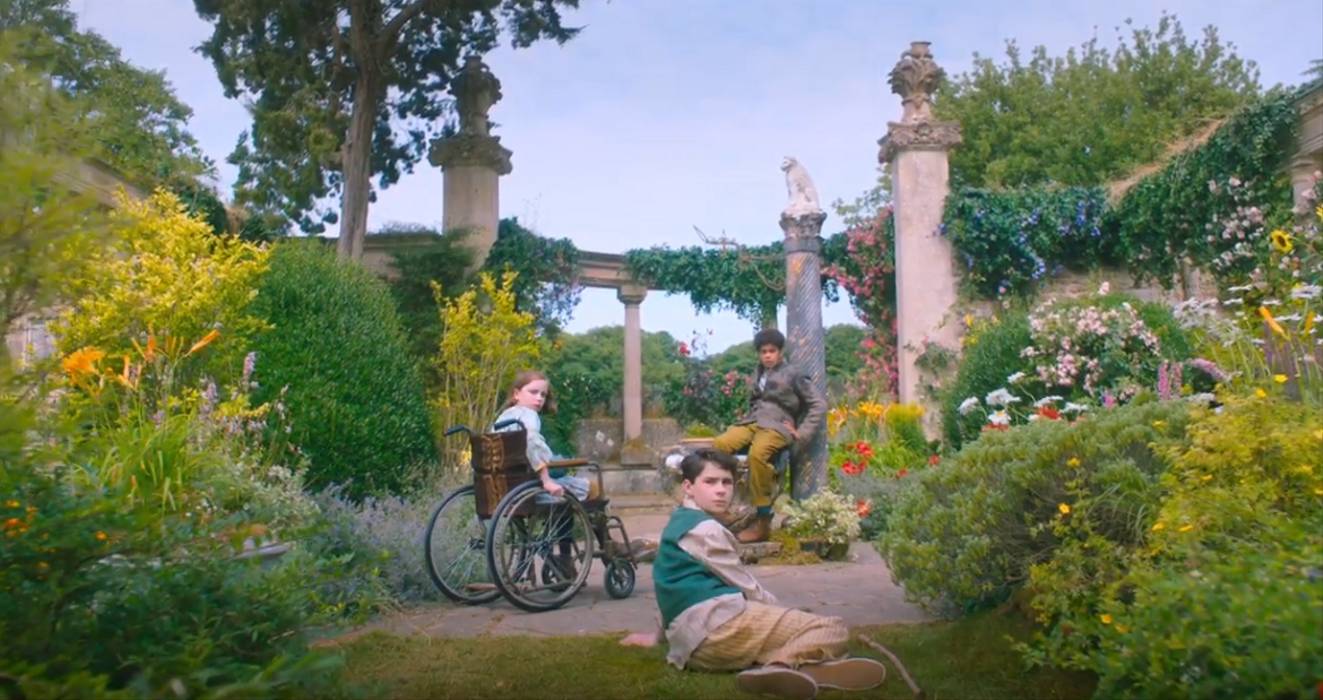
As in India, Mary spends most of her time in the company of servants. Here in Yorkshire, this means the formidable Mrs Medlock (Julie Walters) and the down-to-earth Martha (Isis Davis). While befriending Mrs Medlock is out of the question, Martha proves more amiable, and her brother Dickon (Amir Wilson), whom Mary meets while exploring the estate, soon becomes Mary’s playmate. Together, they roam the vast grounds, take care of a lame dog and, one day, discover a way into a walled garden, which has been locked ever since Archibald’s wife – Mary’s aunt – died, many years ago. This secret, magical place becomes their sanctuary. The idea of transformation is integral to the book, so it’s a little odd that Jack Thorne’s script seems almost to toss this idea aside. Whereas Hodgson Burnett has the children working hard every day to restore the garden to its former glory, here they just play in it. This undermines the central tenet of the story: that gardens (and children) need tending if they’re to grow well.

Take cousin Colin (Edan Hayhurst), who is bedridden, and supposedly out of bounds. He’s another neglected child, trapped by his father’s fears. Archibald thinks Colin has inherited his hunch back, and keeps his son ‘safe’ by cutting him off from the world. Mary hears him crying in the night and decides that what he really needs is to play outside. Like Clara in Johanna Spyri’s Heidi, it turns out that his disability can be ‘cured’ by a bit of fresh air and a positive attitude. (I don’t know if this is as deeply offensive as it seems on the face of things or if it’s a true reflection of poor medical practice at the turn of the last century. Even if the latter is true, does this still apply in 1947?) Still, it’s a transformative move: like the garden, both Colin and Mary become stronger, happier people once they’re shown a bit of love.

This is a good-looking film, and the children all perform well. I like the fact that Mary’s story is contextualised, both by the opening scenes in India and by the old equipment lying around the Manor, a reminder of its recently being requisitioned as a war hospital. But both Walters and Firth are criminally under-used (why cast such great actors if you’re not going to give them anything to do?) and it’s a shame that the garden itself never seems magical; in fact, it’s almost indistinguishable from the rest of the estate, and it’s not clear why this place in particular matters so much to the children. From black and white to technicolour might seem hack nowadays, but I think this movie needs an equivalent trick.

3.6 stars

Susan Singfield