IMAX

Pink Floyd at Pompeii

25/04/25

Cineworld, Edinburgh

I first saw this film in the cinema fifty-three years ago…

Wait. Stop. Can that be right? I mean, I understand that I’m getting old but… fifty-three years? But, yes, the dates do check out. And amazingly in 1972, when Pink Floyd at Pompeii was released, I had already been a fan of the band for half a decade. In 1967, in what was my final year at a rather horrendous boarding school in Peterborough, I was entranced enough by the Floyd’s second single, See Emily Play, to actually use some of my pocket money to buy a mono copy of their debut album, The Piper At the Gates of Dawn. Returning to school with it held proudly under my arm, I found myself surrounded by a gang of bigger boys, who sneeringly informed me that the Floyd were ‘degenerates who took drugs’ -unlike their favourite band, The Beatles. They then threw me to the ground and attempted to stamp all over my new purchase but luckily I was able to shield the album with my own body and it survived to be played another day.

I took great delight the following morning in strolling over to my assailant’s breakfast table and dropping a copy of a newspaper in front of them. The banner headline on page one was, “‘I took LSD,’ says Paul McCartney.”

The years rolled on. In 1969 I finally saw the band live at the Liverpool Philharmonic performing Umma Gumma, managing to procure a ticket for the equivalent of what might these days fall down the back of the average sofa. I emerged with the demeanour of somebody who had just witnessed the second coming of Christ. I remember that at one point the band wore gas masks and played in the midst of bright red smoke. I was by now a rabid fan.

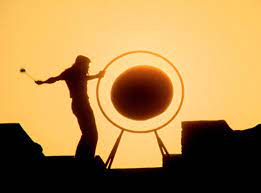
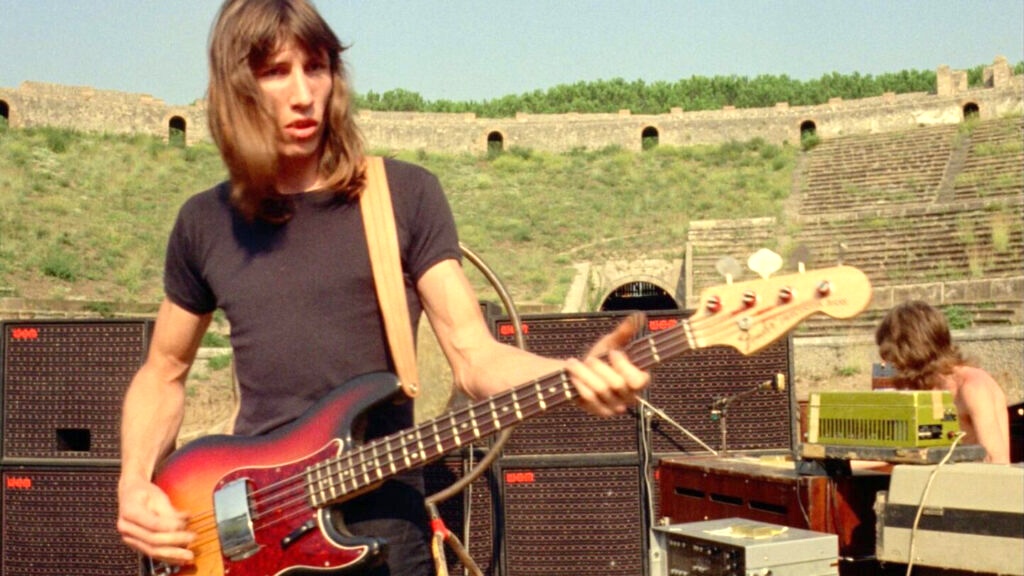
Which finally brings me to this re-release. In 1972, director Adrian Maben persuaded the band to go to the ancient ruins of Pompeii, set up their equipment in an empty arena and run through excerpts from their new album, Meddle, plus a selection of live favourites (Careful With that Axe, Eugene; A Saucerful of Secrets; Set the Controls for the Heart of the Sun). There’s no audience present unless you count the various film technicians and road crew, standing stripped to the waist in the baking sun and watching with apparent indifference as David Gilmour, Roger Waters, Richard Wright and Nick Mason unleash a barrage of sonic mayhem. On the directorial side there’s little in the way of special effects. Cameras, mounted on rails, prowl restlessly around the musicians as they play, sometimes tracking along behind stacks of sound equipment. At key moments in the Blitzkrieg, images of ancient statues, bubbling lava pits and fiery sunsets are inserted into the mix, Maben seeming instinctively to know when to augment a particular sound with a visual counterpoint.

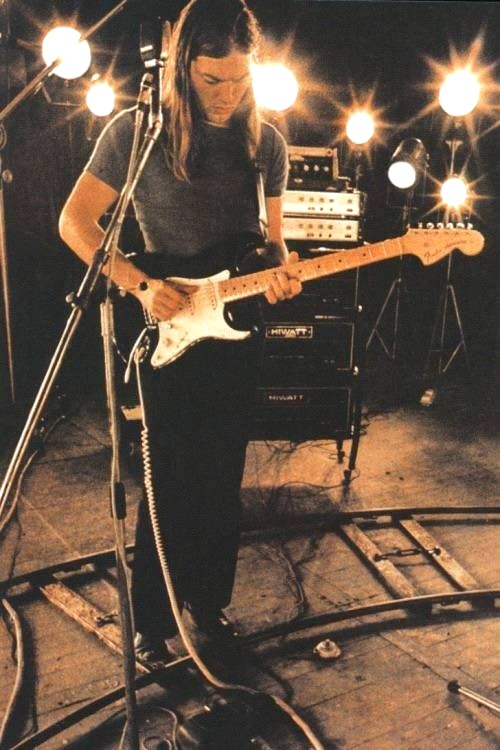
What’s new here is the massive scale of an IMAX screen, a pin-sharp print and a crisp, clear digital sound mix that captures every last musical nuance in perfect detail. There are cutaways to the band ensconced at Abbey Road studios, working on what will be Dark Side of the Moon. The wonderful advantage of hindsight shows four young men who are quietly confident that their new brainchild will be good, but completely unaware that in just one year, they will be releasing one of the biggest-selling – and many would claim – greatest albums in history.

The next time I saw Floyd live, it was at Wembley Stadium, with that massive state-of-the-art show that included the infamous exploding aeroplane and levels of technical razzle-dazzle that changed the rock business forever. But it’s at Pompeii that I prefer to remember them, a youthful quartet just beginning to nuzzle hungrily at the edges of greatness, blissfully unaware of everything that’s about to follow. And I’m amazed to discover that Maben’s film is so ingrained in my memory that I can remember key shots and images as they unfold. It’s one hour and thirty-two minutes of sheer heaven for me and, glancing around the packed auditorium, I can see I’m not alone.

Stars? For me, this one can’t be anything less than the maximum allowed. After all, I’ve waited a very long time to see it. Again.

5 stars

Philip Caveney
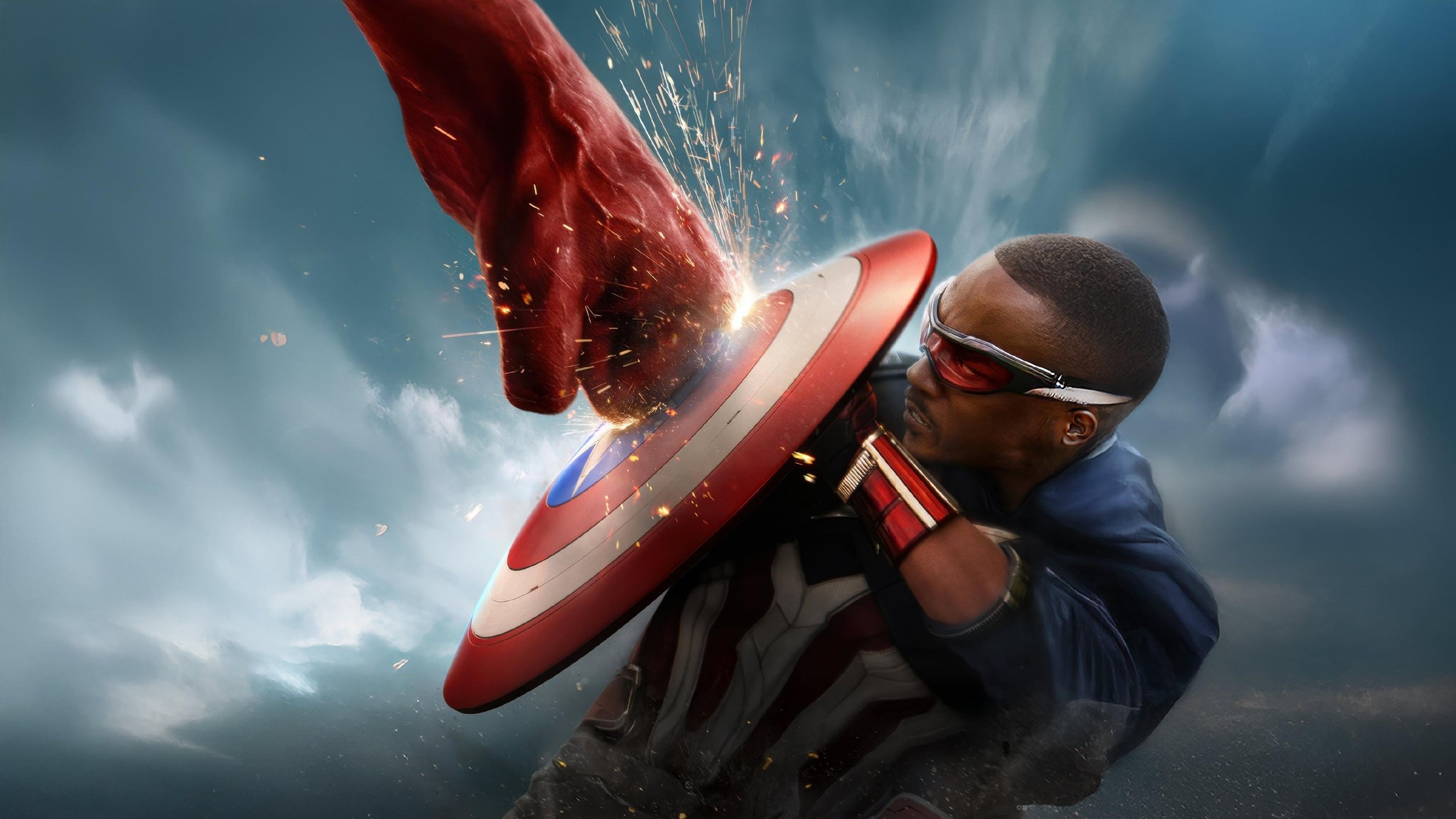
Captain America: Brave New World

18/02/25

Cineworld, Edinburgh

Heading to the screening for this, I have a wistful recollection of earlier times, when going to see the latest Marvel movie was actually something to look forward to. You know, Avengers Assemble, Guardians of the Galaxy, that kind of thing. It wasn’t so very long ago and yet it already feels like a distant memory. These days, the best I can hope for is, ‘Maybe it won’t be terrible.’

Marvel Studios are victims of their own success. Too many sequels, too many prequels, too much product. But as long as the crowds keep coming, they’ll continue, right?

There are maybe eight people in the huge IMAX auditorium this afternoon, which makes me suspect that I’m not the only one who’s bored with the MCU’s recent output. And okay, Deadpool & Wolverine did make an almost indecent amount of money – largely, I think, by daring to opt for a 15 certificate instead of the more usual 12A, but it was no masterpiece. It makes me wonder how much longer the studio can survive offering insipid releases like Captain America: Brave New World.

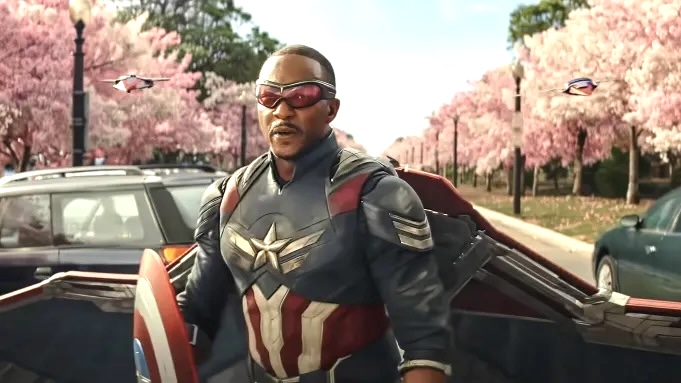
Mind you, on paper, it sounds surprisingly promising. Get this: recently elected American president, Thaddeus Grant (Harrison Ford) is showing signs of instability. (Given the current situation in the USA, this could have played out like a clever satire, but all too predictably, it doesn’t.) Grant sends Sam ‘Cap’ Wilson (Anthony Mackie) and Joaquin ‘Falcon’ Torres (Danny Ramirez) to Mexico to combat sneering villain, Sidewinder (Giancarlo Esposito), who has stolen some… er… classified items. A massive punch-up duly ensues. Lots of people die in polite 12A fashion – there’s no blood to speak of and the cameras never really register the impact that big explosions have on the human anatomy.

When Sam and Joaquin return victorious, exhibiting a kind of smug self-satisfaction that’s hard to endure, they discover that President Grant is acting very strangely indeed. He appears to have become fixated on the discovery of a new metal called adamantium, which can only be found on the mysterious ‘Celestial Island,’ and which he’s desperately keen to get his mitts on. On a trip to the White House, Sam and Joaquin witness an assassination attempt on the president, which is initiated by their old friend, super soldier Isaiah Bradley (Carl Lumbly). Afterwards, he has no explanation for his behaviour…

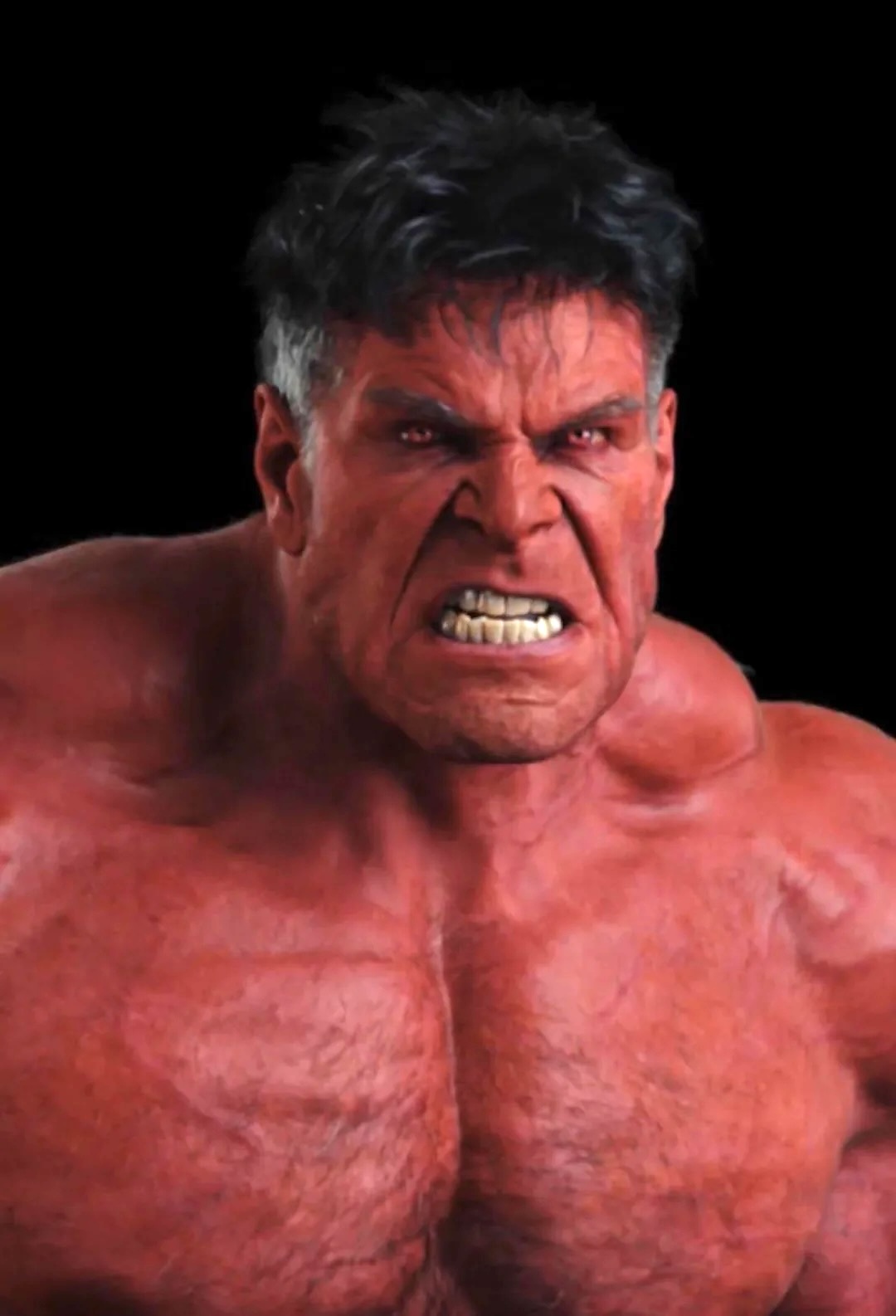
But look, I don’t know why I’m bothering to go into the alleged ‘plot’, which took no less than five screenwriters to create, since it’s mostly an excuse to throw together a series of action set-pieces, leading up to the penultimate scene where Grant mutates into… well, if I say it here, there will doubtless be indignant cries of, ‘Plot spoiler!’ – even though what happens has been blatantly revealed in all the film’s trailers and even features on the poster. I hope they paid Ford a lot of money to converted into pixels and I also hope that ace actor Tim Blake Nelson was paid a shit-ton of the stuff to wander about sporting a head like a rotting cauliflower and muttering dark threats in the role of evil genius Samuel Sterns.

I’m left with the inevitable questions. Why does Torres talk and act like a hyperactive teenager when he’s clearly in his 30s? What were those ‘classified items’ anyway? And how come, when a man turns into a Hulk, he still has a pair of pants that fit him?

At least this one comes in at just under two hours, for which relief much thanks, but if ever proof were needed that Marvel have squeezed this franchise as thin as it will go, surely here it is. But no, as the inevitable post-credit sequence grimly intones, Captain America will return…

Which sounds more like a threat than a promise.

2. 3 stars

Philip Caveney

The Brutalist

25/01/25

Cineworld, Edinburgh

It’s evident from the very beginning of The Brutalist that director Brady Corbet is determined to establish his own rules. Instead of rolling vertically, like every other credit sequence you’ve seen, the words slide horizontally across the screen and resemble the work of a groundbreaking graphic designer. Using VistaVision – a screen format popularised in the 1950s – the film has its own distinctive look. It has a prodigious running time of over three-and-a-half hours, but, much like the old epics of David Lean, viewers are afforded a fifteen-minute interval, so we can avail ourselves of a toilet break.

It’s a wonder then that The Brutalist is so utterly compelling that I barely even notice its length. This is monumental in every sense of the word and perhaps the biggest wonder of all is that it’s been created on a budget of less than ten million dollars – a fraction of most films conceived on this scale.

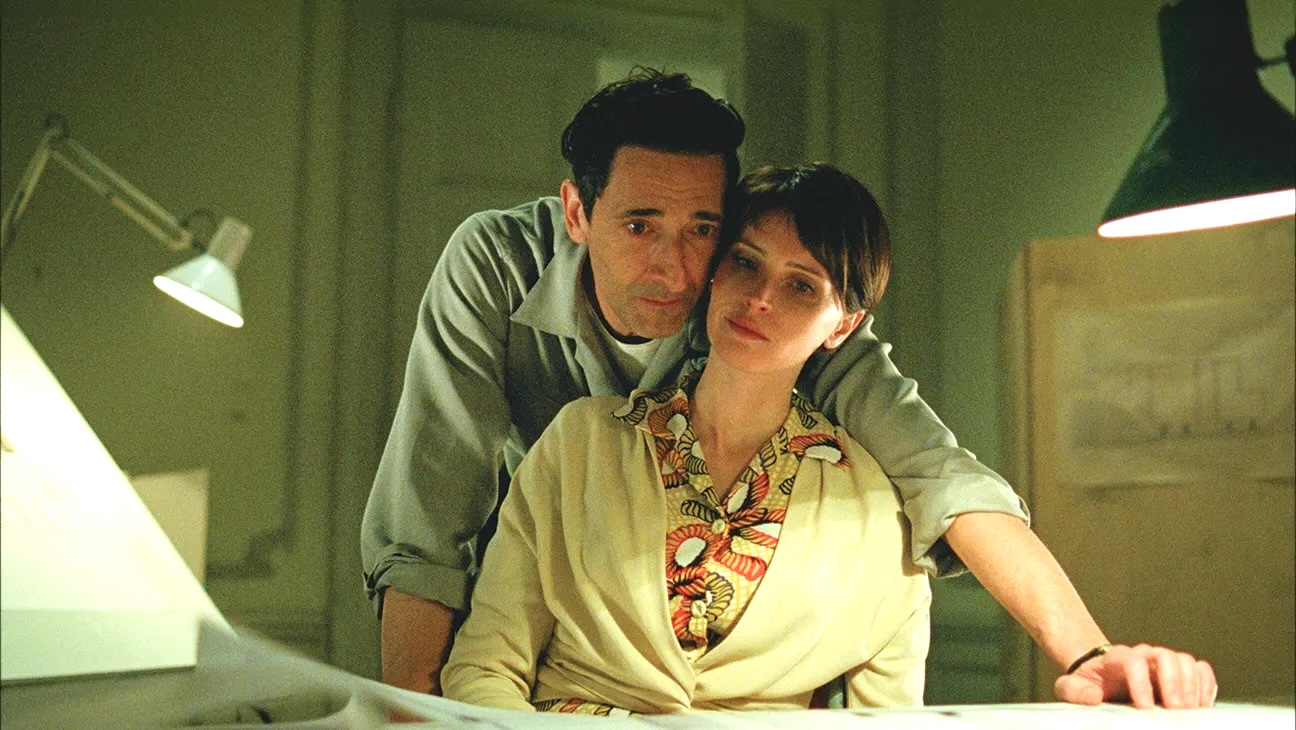
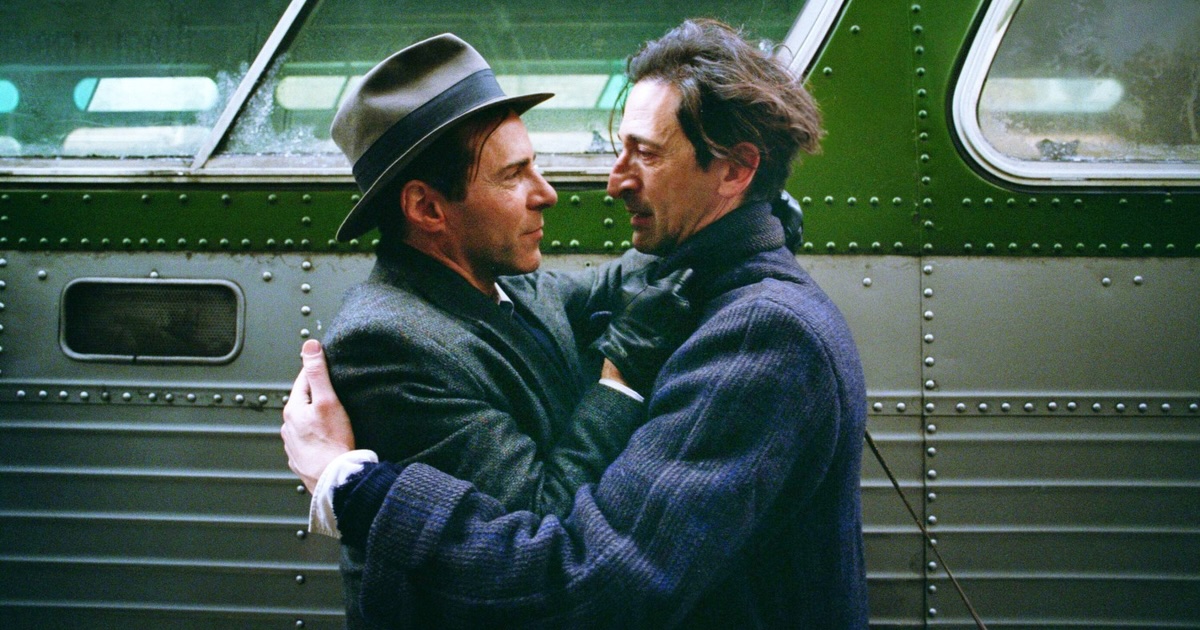
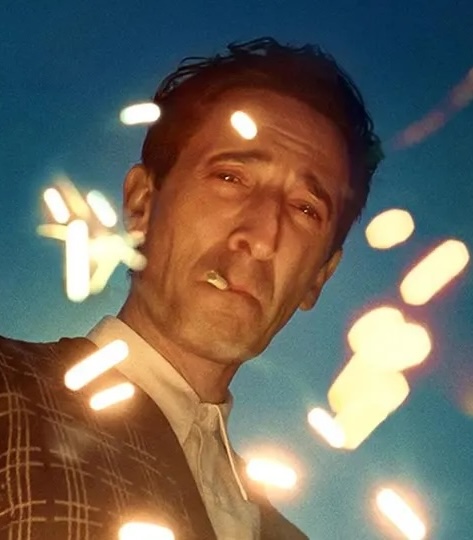
The story begins in 1947 with a series of fragmentary glimpses of Jewish refugee, László Tóth (Adrien Brody) travelling by ship from his native Hungary to begin a new life in America. He has been forcibly separated from his wife, Erzsébet (Felicity Jones), and his orphaned niece, Zsófia (Raffey Cassiday), and imprisoned in Dachau concentration camp for most of the war, but has now been offered sanctuary in Pennsylvania by his cousin, Attila (Alessandro Nivola), and his Catholic wife, Audrey (Emma Laird). The couple run a small furniture store and Attila is well aware that, before the war, László worked as an architect of the Bauhaus School. His design skills, Attila thinks, will come in useful.

Attila is approached by Harry Lee Van Buren (Joe Alwyn), who wants to commission László to redesign his father Harrison’s private library as a birthday surprise. Rather than do a straightforward upgrade, László transforms the room into a stunning work of art. When Harrison (Guy Pearce) arrives home earlier than expected, he clearly doesn’t approve of what’s been done in his absence and flies into a rage, ordering László and Attila to leave. Harry subsequently refuses to pay for the work and, as a consequence, László finds himself thrown out of his cousin’s place, with no better prospect than labouring to earn his daily bread. With his friend, Gordon (Isaac de Bankholé), he sinks into heroin addiction.

But when the redesigned library appears in the pages of an influential style magazine, Harrison undergoes a dramatic change of heart. Suddenly, he wants to be László’s patron, to converse with him, to fully understand his working methods. What’s more, he has influential Jewish friends who will be able to help him to bring Erzsébet and Zsófia over from Hungary to be with him. And then Harrison starts talking about a new commission: a massive civic centre dedicated to his late wife, a place where the local community can meet and enrich their lives.

But in the fullness of time, László will discover that such indulgences come at a price that will utterly compromise his artistic freedom – and will impinge upon his life in ways he could never have anticipated…

The Brutalist is a remarkable film in so many ways, not least because of Brody’s powerful performance in the lead role, a tortured artist, forced to compromise his talent at every turn. Pearce is also terrific as the self-aggrandising Harrison and Alwyn excels as his sneering, deeply unpleasant son, a man used to getting his own way in everything he approaches. Jones doesn’t enter the story until the film’s second half but submits a beautifully nuanced performance as Erzsébet, a woman still physically tortured by the aftermath of the starvation she suffered during the war. I should also mention Daniel Blumberg’s wonderful score, which provides the perfect accompaniment to Lol Crowley’s eye-popping cinematography.

The film has plenty to say about the creative process and it nails perfectly the powerful seduction that success offers to any artist – the fateful allure of patronage and its unpalatable compromises. Brady’s screenplay, co-written with Mona Fastvold, is wise enough to hint at unspeakable things rather than spelling them out – and it keeps me hooked until the final frame.

Will Brody lift the ‘best actor’ gong at this year’s Oscars? It’s a strong possibility in a year that features a whole bunch of commendable performances. Meanwhile, go and see The Brutalist and marvel at its epic qualities – and, if possible, watch it on an IMAX screen to best appreciate the wonders of VistaVision.

5 stars

Philip Caveney

Megalopolis

03/10/24

Cineworld, Edinburgh

Well, I can’t say I wasn’t warned. Francis Ford Coppola’s long-nurtured passion project, Megalopolis, arrives garlanded with the kind of vitriolic advance reviews that instantly sank its chances of making any money at the box office. But why all the furore? What has the man done that’s so unspeakable? You’d think he’d murdered somebody. Instead, at the age of eighty-six, he’s made a vanity project, self-financing the hundred million dollar film by selling one of his vineyards. (We’ve all been there.) He hasn’t bankrupted a movie studio, which makes a refreshing change.

Lest we forget, Coppola has made some underwhelming films before. Yes, he gave us The Conversation, The Godfathers (One and Two) and of course, Apocalypse Now, but there was also One From the Heart and er… Jack, both of which were less than perfect.

It’s important to note that right from the opening credits, Megalopolis is described as ‘A Fable,’ so those who describe it as ‘unrealistic’ may be missing the point.

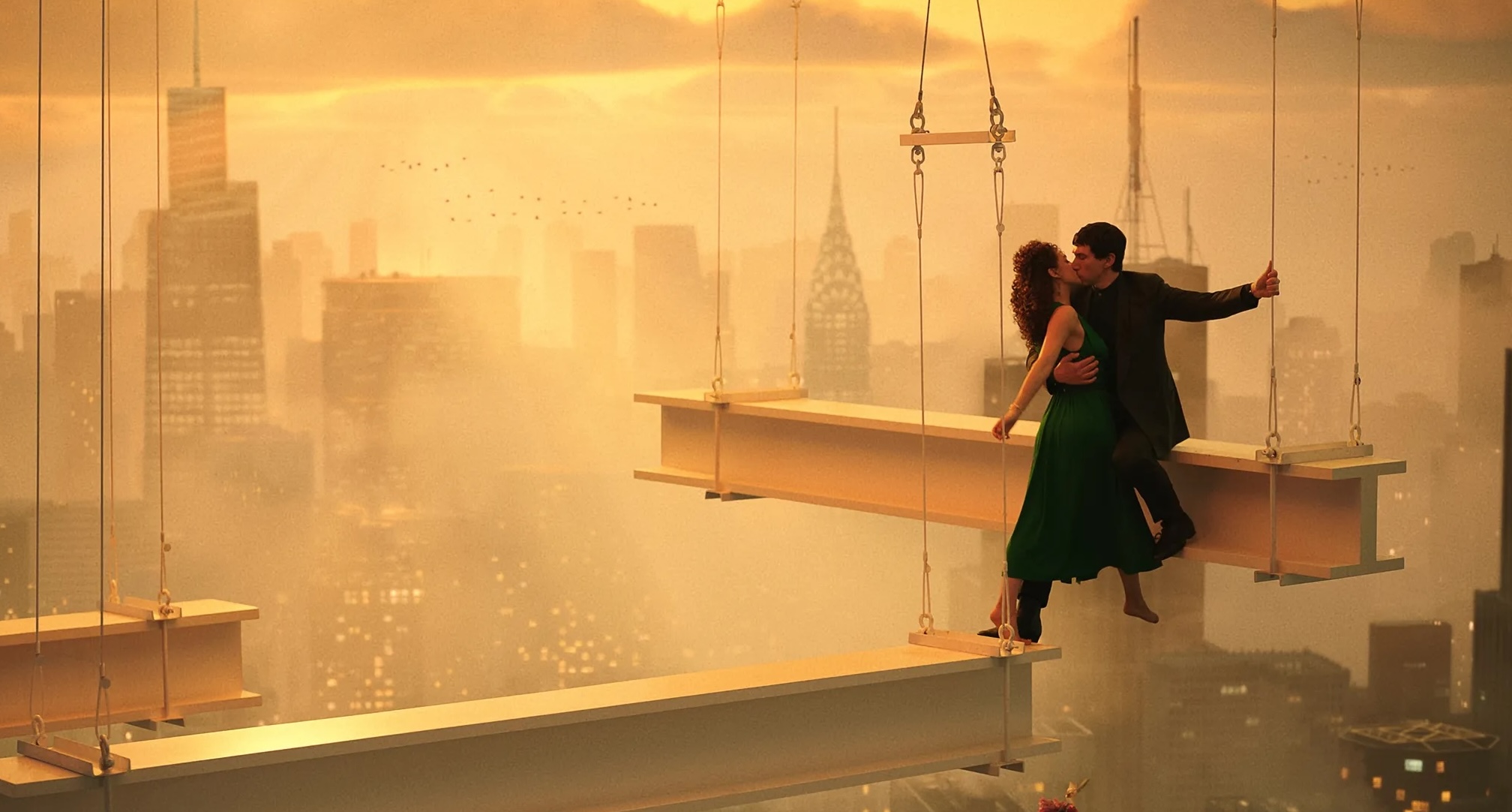
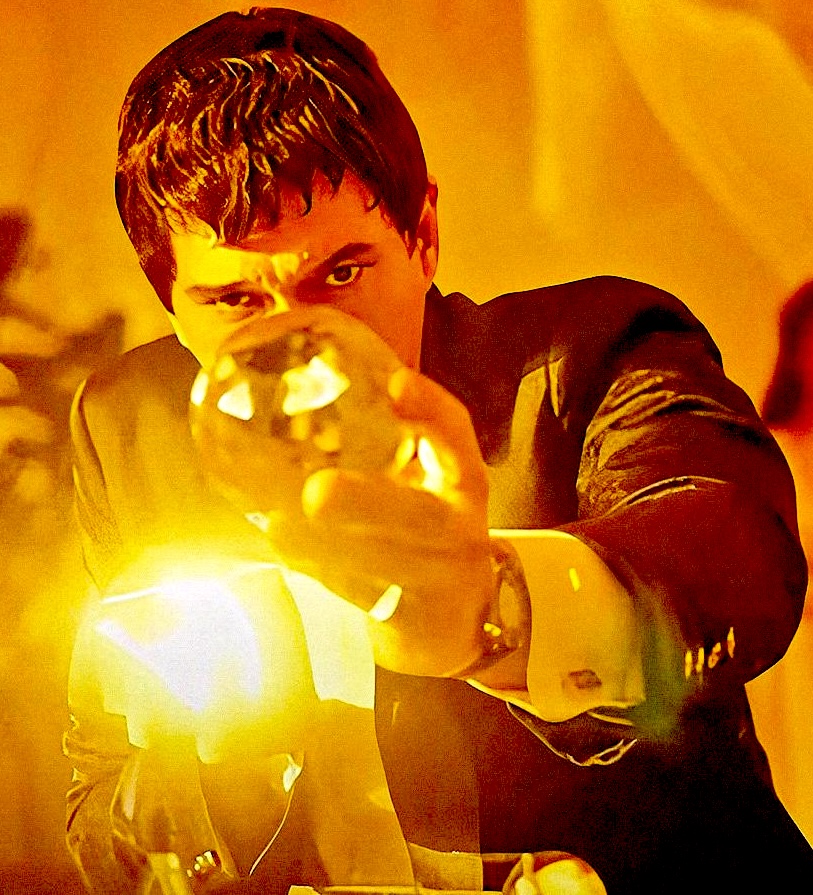
Somewhere in an imagined future, New York has become New Rome, and those that run the city have taken on the aspects of senators and emperors, strutting around in toga-like garments and looking very pleased with themselves. Cesar Catalina (Adam Driver) is a sort of genius / town-planner, who has discovered a mysterious and indestructible building substance called Megalon. He has also found a way to stop time by clicking his fingers (as you do) and has a penchant for lapsing into Shakespeare soliloquies for no apparent reason.

Cesar is currently intent on building the titular inner city area, which he believes will be the first step in creating a bright new future, but his main adversary in this project is Mayor Cicero (Giancarlo Esposito), who seems to be opposed to any kind of progress. Cicero’s daughter, Julia (Nathalie Emmanuel), on the other hand, finds herself increasingly drawn to Catalina and it’s not long before sparks begin to fly between them. It’s clearly going to cause trouble.

There are other powers at work in the city. TV presenter, Wow Platinum (Aubrey Plaza), is suffering from failing audience figures and is keen to take a step up in the world by marrying Cesar’s rich uncle, Hamilton Crassus III (Jon Voight). She uses her nephew, Clodio (Shia LaBeouf), to help her to get there, by any foul means he can devise. (The odious Clodio is clearly inspired by Donald Trump, right down to the bloody insurrection he foments and is perhaps the one place in the ‘fable’ that does relate to real life.)

Overall, Megalopolis doesn’t work and it’s not that it’s short of ideas. On the contrary, it is virtually struggling to contain them all and it doesn’t help that there are too many big names in cameo roles here, most of them improvising their lines. The likes of Dustin Hoffman and Talia Shire flit briefly across the screen and it feels as though Coppola, having secured their services, is unsure of exactly what to do with them. Sometimes, when you work too hard on a project, you stop seeing it objectively.

On the plus side, the film looks magnificent in IMAX, a succulent, shimmering wonder to behold (Coppola did his own cinematography) and, in the film’s latter stages, there are sequences that might best be described as psychedelic, the massive screen appearing to erupt at regular intervals in a blaze of light and colour. If you’re going to see this, do try to catch it in the cinema, because its going to lose all of its majesty on streaming. The running time of two hours and eighteen minutes soon elapses and, after everything that Coppola has given us over the years, surely it’s not too much to ask that movie buffs make the effort to actually go out to see it.

3 stars

Philip Caveney

Furiosa: a Mad Max Saga

25/05/24

Cineworld, Edinburgh

Furiosa is my most anticipated film of the year but to fully explain why, it’s necessary to briefly look back at the career of writer/director George Miller. I saw the first film in the Mad Max franchise way back in 1979, a modest, low-budget revenge thriller starring a young Mel Gibson. It was perfectly watchable but gave no idea of the wonders that were to follow. 

In 1983, The Road Warrior brought back the titular character with a bigger budget and an iconic look that depicted Australia in the years following a nuclear war. It was louder, more ambitious and gloriously inventive, an unstoppable thrill ride. In 1985, Beyond Thunderdome brought in Tina Turner for a guest appearance and appeared to round off the franchise in grand style. 

In normal circumstances, that would probably have been the end of it. So when Miller resurfaced nearly thirty years later with Fury Road, I had very low expectations. Tom Hardy stepped into the scuffed boots of Max and Charlize Theron played a new character, Furiosa. The film was an extraordinary, foot-to-the-metal, adrenaline-powered masterpiece, one that left me stunned at its conclusion. I saw it a second time in 3D and, two years later, was one of the first in the queue for the special Black and Chrome edition. How was Miller ever going to follow such a powerful creation?

He took his time. I was astonished to realise just the other day that it’s a full nine years since Fury Road’s release. The worst thing that could happen, I thought, would be if he tried to replicate the previous film’s simple, propulsive structure – and happily he’s gone in an entirely different direction. Of course he has. He’s George Miller.

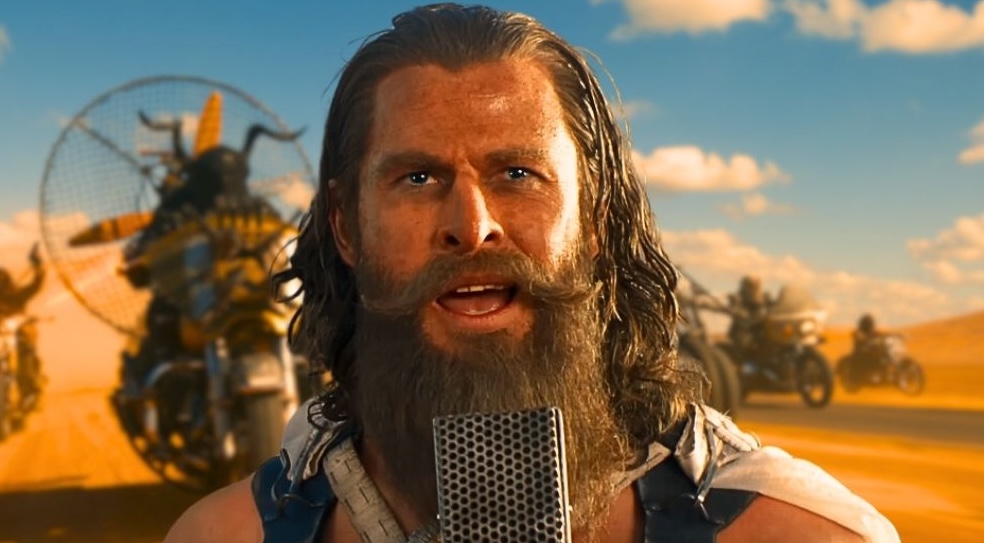
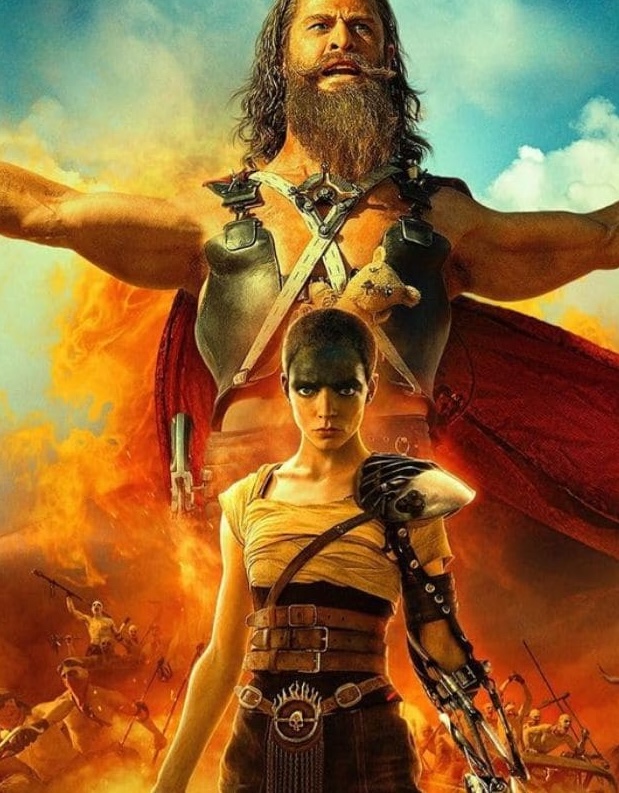
Furiosa is a prequel, a much more episodic affair than its predecessor, divided into five chapters (each with a portentous title) and, unlike Fury Road’s three and a half day timeline, this is set over something like eighteen years. We first meet the young Furiosa (Alyla Browne) in ‘The Green Place,’ the childhood home she spent most of Fury Road trying to get back to, and it’s clear at a glance why she was missing this verdant ‘place of abundance’ in the midst of a desert. But her tranquil life is rudely disrupted when she is kidnapped by a gang of bikers from the wasteland and taken to the kingdom of Dementus (Chris Hemsworth), a motor-mouthed, self-aggrandising ruler, who is used to taking whatever he wants whenever he wants it. Furiosa is merely his latest acquisition. But the girl’s mother, Mary (Charlee Fraser), follows her, intent on taking her home again at any cost…

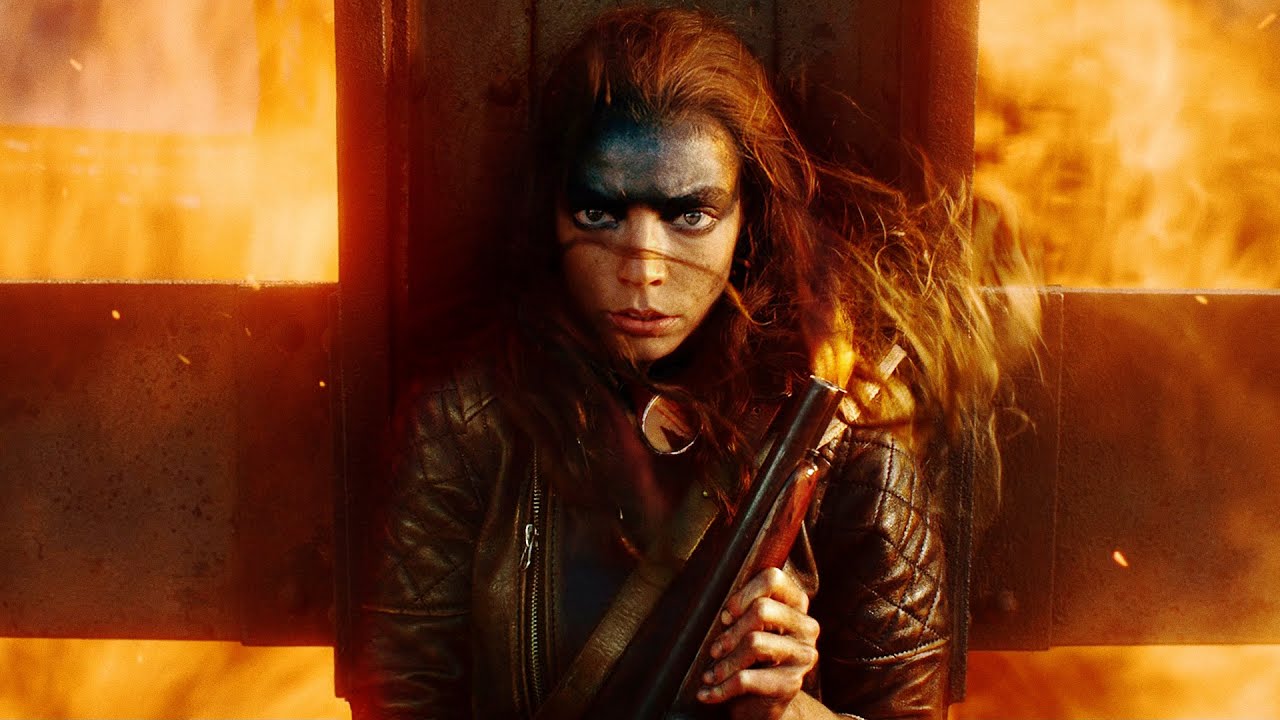
What immediately hits me about this film is the glorious world-building that’s going on. This is an eye-popping spectacle. Every shot caught by cinematographer Simon Duggan is ravishing and Jenny Beavan’s costume design is endlessly inventive. Add the powerful sound design and you have a film that literally shakes you in your seat. It’s a full hour before Alyla Browne mutates into Anya Taylor-Joy in one of the most accomplished on-screen transformations I’ve ever witnessed. Given only thirty lines of dialogue in the entire film, Taylor-Joy has to convey her character mostly using her eyes. She somehow manages to show Furiosa’s inner turmoil, only briefly finding solace in the affection of rig-driver Praetorian Jack (Tom Burke). Her most powerful motivator – a desire for revenge – is ever present and often propels her into rage. It’s fascinating to watch her. Hemsworth is also wonderful as Dementus, so much more than a cardboard cut-out villain. Here is a man with his own inner turmoil and awareness of his failings. He really should play bad guys more often.

Motor lovers shouldn’t despair because Miller’s trademark behemoth vehicles are in evidence – including a chariot pulled by three motorbikes – and there’s an extended chase sequence that pulls out all the stops, particularly in the part where Praetoran Jack’s rig is attacked by paragliders. As ever, hats off to the stunt performers who make this such a thrill ride. 

But Furiosa is more – much more – than just another action flick. It’s also about the power of mythology, the ways in which stories of epic odysseys perpetuate and endure across the centuries. It’s about the desire of humanity to survive against overwhelming odds and the ways in which religions are shaped by those who invent them. But mostly, it’s about a 79-year-old director at the height of his powers, being unleashed into the world’s biggest sandbox and invited to play. And here, Miller shows more unbridled invention than I’ve seen in a very long time. 

My advice? Get thee to the biggest IMAX screen available, buckle in and enjoy the ride. Oh, and Max? He’s there… but you’ll need to keep your eyes peeled to spot him.

5 stars

Philip Caveney

Dune: Part Two

03/03/24

Cineworld, Edinburgh

It only needs a glance around the IMAX auditorium at Edinburgh’s Cineworld on this Sunday afternoon to confirm that Denis Villeneuve’s big gamble has paid off. There’s barely an empty seat in the building. 

Dune: Part One came along at a propitious time. It was October 2021 and we were barely out of lockdown, sitting uncertainly in our seats, wearing paper masks and slapping gel on our hands at five-minute intervals. What we needed now was something epic to take our minds off the pandemic and we certainly got that – but what we were also handed was an unfinished story and a three-year wait for its conclusion. 

Would it be worth it?

The answer to that is a resounding yes! If the first film occasionally felt a little too languid for comfort, Part Two ramps the action up to eleven, and Villeneuve has the good sense to keep everything rattling along at full speed ahead. The result is a film that, despite  a running time of just under three hours, never feels overlong. 

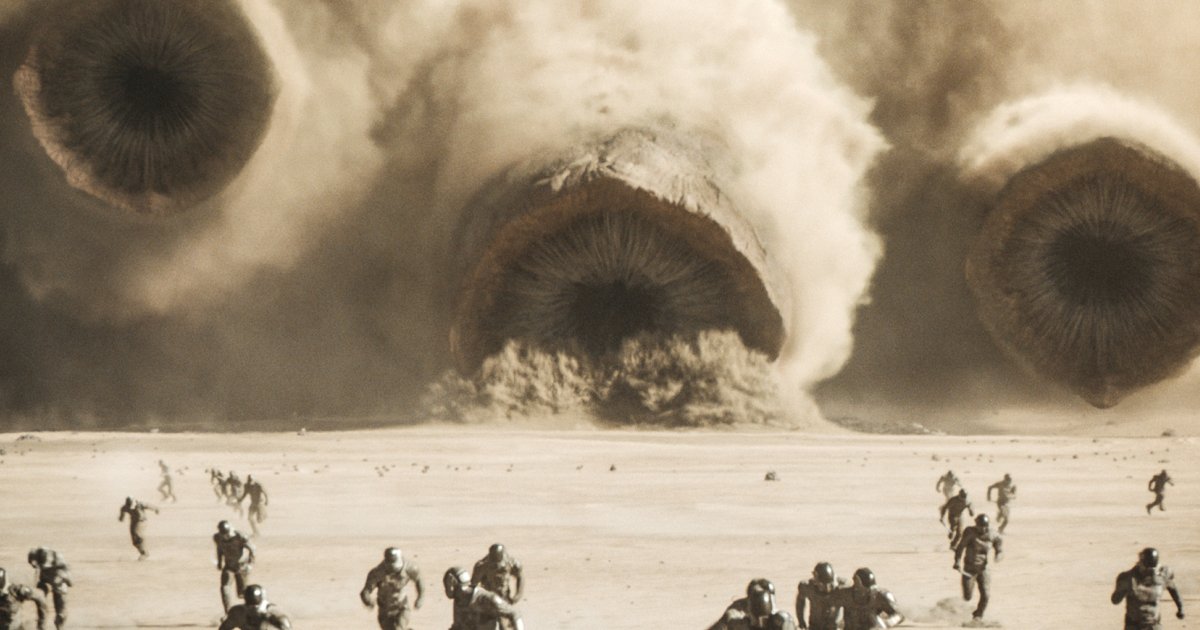
And in this case the word ‘epic’ barely does the material justice: this is an immense, eye-popping spectacle, an insanely inspired slice of cinematic world-building that at times leaves me almost breathless at what I’m witnessing up on the giant screen. This, my friends, is why they invented IMAX. If you haven’t seen Part One since its release (or at all for that matter), I’d advise you to catch up with it via streaming before sitting down to the second installment. I did and it helps no end to reacquaint myself with the characters.

We pick up exactly where we left off. Paul Atreides (Timothée Chalamet) and his mother, Jessica (Rebecca Ferguson), have survived the murder of most of their family and have sought refuge with the Fremen people in the remotest part of the desert planet, Arrakis. Paul has finally met his (quite literal) dream girl, Chani (Zendaya), and, under the protection of Stilgar (Javier Bardem), he’s learning the ways of the Fremen. 

At the same time, he’s all too aware that some of the more devout members of the tribe are giving him meaningful looks and referring back to an ancient prophecy that a messiah will one day arrive and lead the Fremen to triumph over their oppressors.

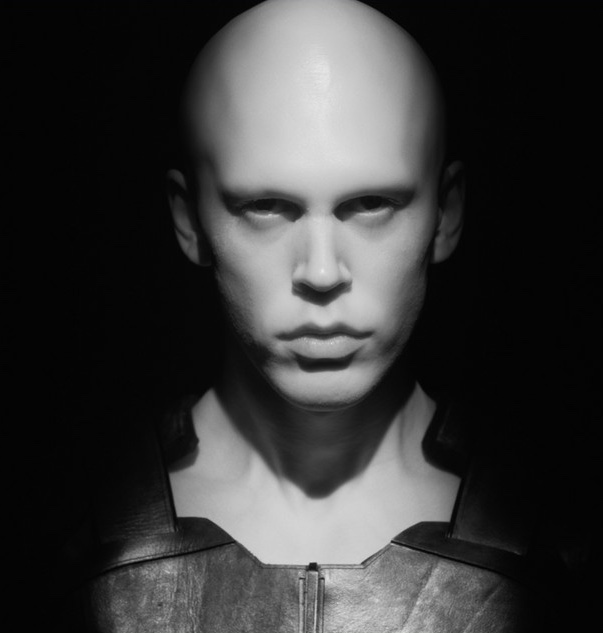
Could this be a potential way for Paul to take revenge for the killing of his father by the evil Baron Harkonen (Stellan Skarsgard), who is still skulking in a bathtub doing unspeakably horrible things to everyone who comes near him? And if you think he’s bad, wait till you meet his nephew, the psychopathic Feyd-Rautha (Austin ‘Elvis’ Butler), who redefines the word ‘villain’ in one of the most remarkable screen transformations ever.

Villeneuve has excelled himself here and Dune: Part Two is an extraordinary achievement, one that cements his reputation as one of the great visionaries of the cinema, up there with the likes of David Lean and Stanley Kubrick. His interpretation of Frank Herbert’s source novel spins allegories about the links between religion and drugs, the evils of colonialism, the ruthlessness of royalty, the inevitability of war between the poor and the privileged. That’s all there lurking behind the dazzling action set pieces and massive explosions.

My only niggle (as with the first film) is that the 12A rating sometimes works against the film, when all that violent mayhem must remain essentially bloodless in order to tick the boxes – but it’s not a big enough quibble to dampen my enthusiasm for this giant-sized helping of space fantasy, that quite frankly makes the Star Wars franchise look positively amateurish by comparison. 

And if the story’s conclusion doesn’t feel quite as er… conclusive as I might have expected, the possibility of Dune Messiah looming on a distant horizon may account for it. A trilogy, perhaps? 

Well, it would be rude not to, right?

5 stars

Philip Caveney

Moonage Daydream

20/09/22

Cineworld IMAX, Edinburgh

Anyone expecting a straightforward biography of the late David Bowie is in for a surprise. Brett Morgan’s art film (I hesitate to use the word ‘documentary’) is as experimental as anything I’ve seen in a very long while, a pulsing kaleidoscopic collection of vivid images and found footage, propelled by some of the most memorable rock songs ever committed to acetate.

In its peculiar way, it’s as elusive and enigmatic as its subject.

I was twenty when I first heard The Rise and Fall of Ziggy Stardust and the Spiders From Mars, already a little too old to be completely captivated by his androgynous alter ego, but it’s here that the film opens – with Bowie at the height of his fame, pursued everywhere by adoring fans, working-class kids doing their level best (and mostly failing) to appropriate his ‘look’. We learn only a little about his earliest years and there’s no mention of the infamous Angie, to whom he was married for a tumultuous decade. Morgan prefers to let the music do the talking, while the screen explodes with a myriad visual references: the films; the books; the paintings; the actors; the locations that influenced Bowie, that made him what he became – a rock chameleon, inhabiting a whole series of different personae, constantly reinventing ways to take an audience by surprise.

Viewed on the IMAX screen, the result is immersive, hypnotic, even overwhelming at times and, on the few occasions when Bowie is allowed to deliver an entire song, I’m thrilled by how contemporary it sounds. Of course his gender-fluidity was way ahead of the curve, but so too was the music, visiting places where few others dared to tread. And his presence here seems predominantly to be that of the wanderer, always on the move, visiting an endless list of new locations, always on the lookout for what can be assimilated into his ‘new’ sound. It’s interesting to note that it’s only when he finds happiness (through his marriage to Iman) that his music finally begins to lose its dangerous edge.

Some will find this too much of an assault on the senses, but for my money it serves as a fitting – and long overdue – tribute to one of the most remarkable performers in music history. And those who choose to come along simply to hear his best songs performed in Dolby stereo won’t be disappointed.

4.4 stars

Philip Caveney

Ad Astra

22/09/19

Imagine, if you will, that in Apocalypse Now, Captain Willard’s journey takes him not upriver to the dark heart of Vietnam, but out across the cosmos, to the Moon, Mars and ultimately Neptune – and you’ll have the essence of Ad Astra, a story about a son’s hazardous search for his lost father.

Roy McBride (Brad Pitt) is an astronaut famed for his self-control. In the film’s hair-raising opening sequence, he survives a terrifying near-death experience without so much as a discernible rise in his heart rate. But, capable though he undoubtedly is, that reserve has cost him his relationship with Eve (a barely glimpsed Liv Tyler), and he still suffers from the loss of his father, Clifford (Tommy Lee Jones), a pioneering space explorer last seen approaching Neptune and long presumed dead.

But, when a series of catastrophic power surges threatens the very existence of the universe, evidence emerges that Clifford might still be very much alive out there and, what’s more, he may have caused those power surges. Roy is given a thankless mission: to head out to Jupiter to reunite with his father and, if he can, to save the world from destruction (so no pressure there).

Director James Gray (who helmed the much-underrated Lost City of Z) has created a fascinating and original slice of science fiction. The film somehow manages to balance ravishing planet-scapes and nail-biting action set-pieces with slower, more cerebral stretches, concentrating on Roy’s internal conflict as that legendary self-control starts to break down. It’s a long journey and an eventful one, taking in a colonised moon with branches of Virgin Atlantic and Starbucks, an eerily silent space-buggy chase and, best of all, a sequence where Roy has to make a forced entry onto a spaceship, seconds before it blasts off from its launch pad.

As his quest progresses, he is increasingly confronted with a terrible realisation – that his long-missed father might not be quite the hero that Roy has always believed him to be. Pitt does an extraordinary job in the lead role, managing to emote so much from behind a permanently impassive mask; it’s probably a career-best performance from him and one that may well get a nod at next year’s Oscars.

That said, Ad Astra is surely destined to be a marmite movie. Those who turn up expecting a rollicking space adventure are in for a severe disappointment. Those seeking something more meaningful, however, are likely to have a very good time with this, particularly those who opt for the eyepopping majesty of an IMAX screening

4.7 stars

Philip Caveney