

Idris Elba

A House of Dynamite

12/10/25

Filmhouse, Edinburgh

It’s been quite some time since we saw anything from Oscar-winning director Kathryn Bigelow, but A House of Dynamite signals an auspicious return to the fray. This Netflix-financed epic will be streaming soon, but meanwhile it’s been granted a limited theatrical release. It’s big, glossy and features a host of well-known actors in relatively small roles, in a whole series of convincingly-recreated sets. It’s also one of the most utterly terrifying films I’ve ever seen.

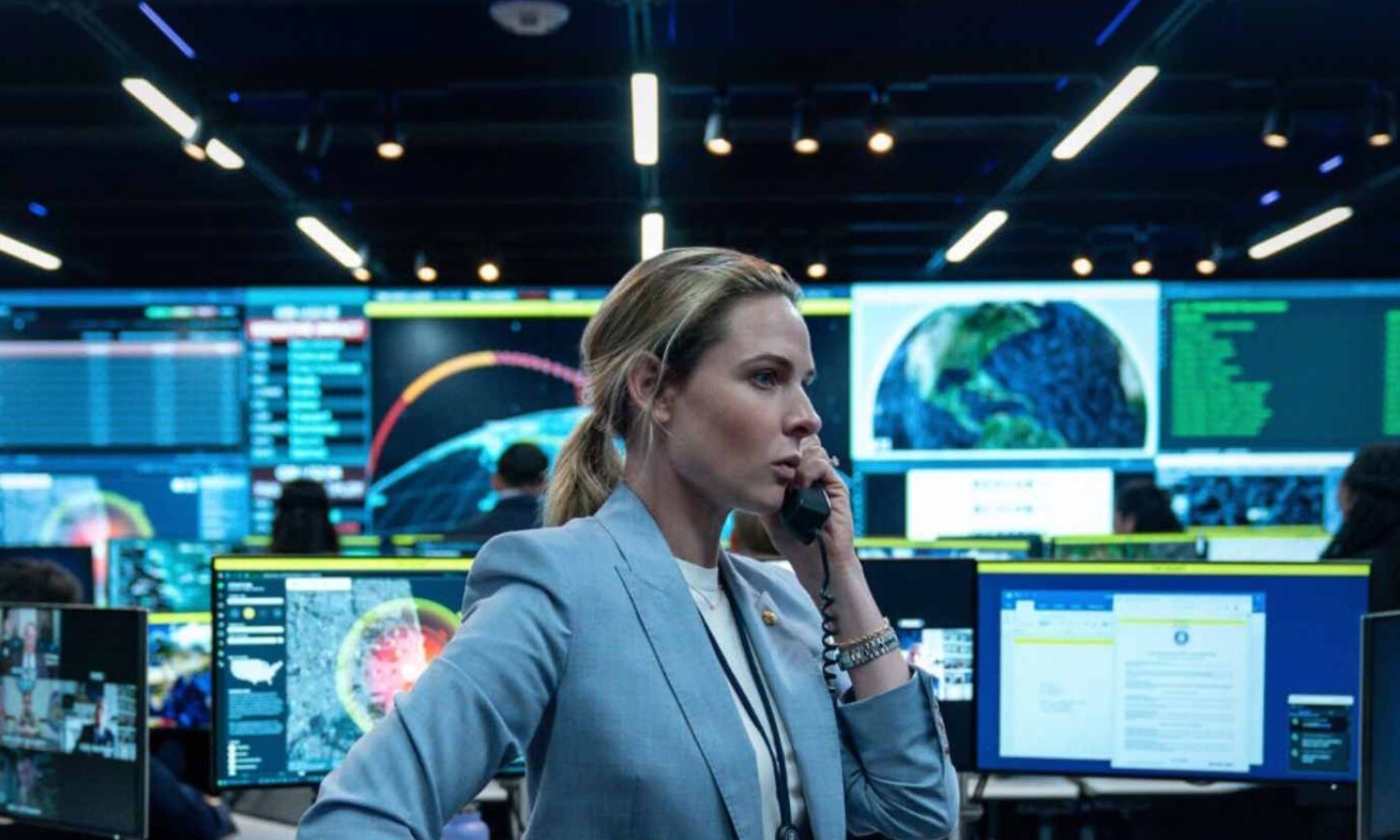
At Fort Greely, Alaska, Major Daniel Gonzalez (Anthony Ramos) and his team detect the unannounced launch of an intercontinental ballistic missile, heading towards the United States. Moments later at the White House Situation Room in Washington DC, Captain Olivia Walker (Rebecca Ferguson) sees the incoming projectile on a giant screen and watches appalled as the terrifying statistics unreel. The missile’s current trajectory has it aimed squarely at the city of Chicago and – if unimpeded – in just eighteen minutes’ time, millions are going to die.

An attempt can be made to intercept the missile in the air but, as one observer comments, it will be “like trying to hit a bullet with a bullet.” And, should that fail, the only thing to be determined is the severity of the response. With no country claiming responsibility for the launch – indeed both Russia and North Korea are denying it – the decision must lie entirely with the POTUS (Idris Elba), who is in the middle of making a speech to a high school basketball team somewhere in the city.

And that eighteen minutes is ticking away…

Anyone expecting an exciting drama where a lantern-jawed hero runs athletically into view with a perfectly-timed maverick plan to save the world is going to be severely disappointed with A House of Dynamite. This is simply not that film. Instead, it’s the kind of story you watch with clammy palms as the threat steadily rises: the kind where you begin to realise that there really isn’t going to be any way of evading the devastating conclusion. There will be not scenes of relieved people hugging each other and fist-pumping beneath the Stars and Stripes as they realise the threat has been miraculously defused.

Instead we have human beings staring into the abyss as they see their hopes and dreams turning to smoke. And the realisation that this is the world we now live in, where one mistake can have cataclysmic consequences. Writer Noah Oppenheim opts to show the same eighteen minutes of the missile’s trajectory from three different perspectives. It’s only in the final third that we actually get to see the POTUS, as it dawns on him that he is going to have to select his country’s response to the situation from a handy booklet presented to him by an aide – a sort of IKEA manual for disaster – and that the repercussions of that decision will live with him forever. (Despite his helplessness, I find myself wistfully wishing that Idris Elba actually were the President of the US instead of the man who currently has his hands on the nuclear codes…)

This is a tough watch. I honestly cannot remember being so profoundly affected by a film since I first saw Peter Watkins’ film, The War Game, back in 1966. While I cannot in all honesty claim to have enjoyed watching A House of Dynamite, I believe it’s an important and brilliantly-directed film, with a powerful and important message at its core. I would urge everyone to see it and have a long, hard think about the awful truth it clarifies: that we as a species have built the unstable dwelling of the title – and that we are forever doomed to live with that knowledge unless we do something to change it.

5 stars

Philip Caveney
Three Thousand Years of Longing

04/09/22

Cineworld, Edinburgh

First, a little bit about George Miller. I’m a big fan.

He is, of course, the Antipodean director who gave the world the Mad Max movies – and who, after an interval of twenty-seven years, did the near impossible by returning to the franchise and delivering what is arguably the finest action movie of 2015 – Mad Max: Fury Road. But wait, there’s more! What about The Witches of Eastwick? Brilliant film! And what about Babe? And, er… okay, I haven’t seen Happy Feet but it was a massive hit with the kids.

I guess what I’m saying is that Miller is no one-trick pony. And if nothing else, Three Thousand Years of Longing is proof of that. Co-written by Miller and based on a short story by AS Byatt, this is a film about the enduring power of storytelling. It wears its literary credentials with pride – indeed, the film is divided up into ‘chapters’ – and the result is enchanting in the most literal sense of the word.

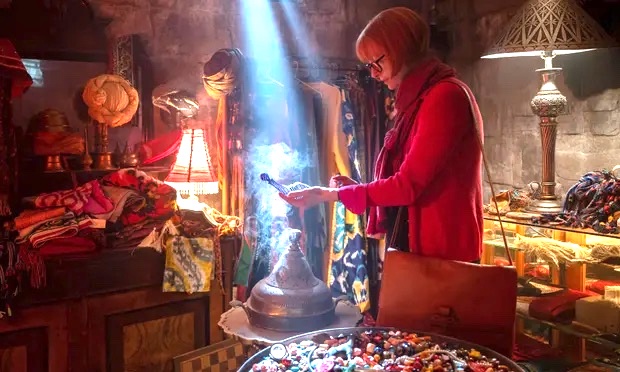
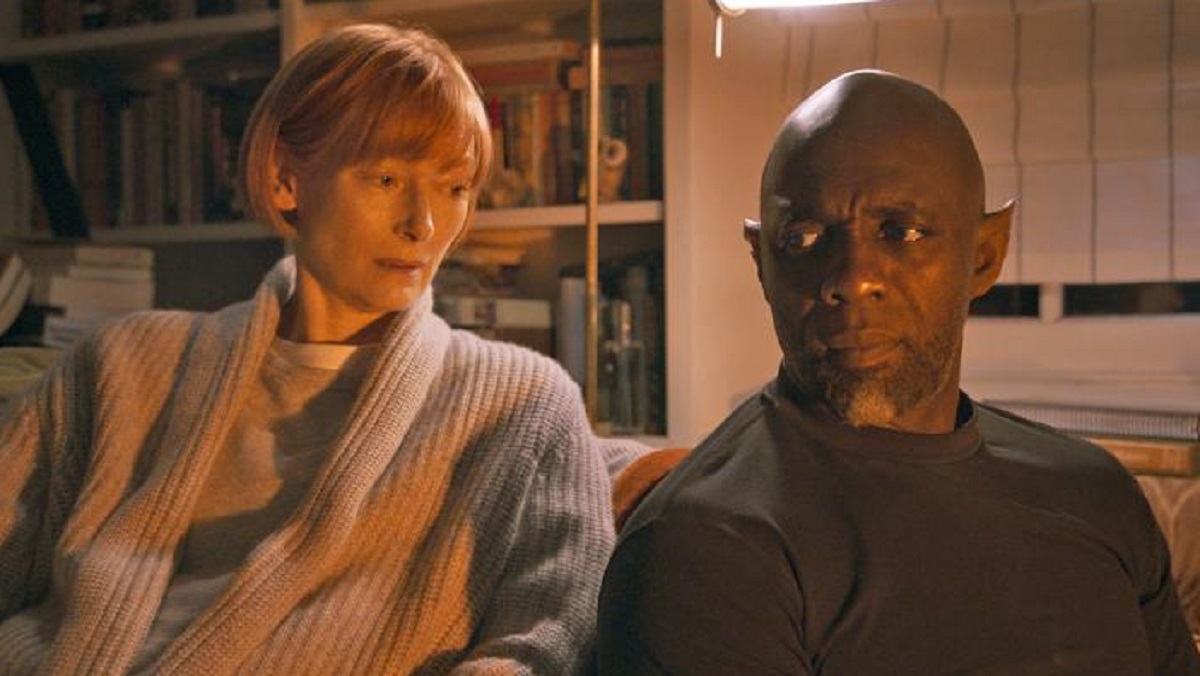
Alithea (Tilda Swinton) is a narratologist (it’s a real thing), who has devoted her life to the study of stories. At one point, she makes the brilliant observation that “all gods and monsters outlive their purpose and are reduced to the role of metaphor”. On a trip to Turkey, where she’s been booked to speak at a literary conference, she buys a souvenir at the old bazaar in Istanbul, an ancient glass bottle. Whilst attempting to clean it with an electric toothbrush, Alithea accidentally releases its occupant, The Djinn (Idris Elba), who has spent a lot of time locked up in a variety of similar vessels.

It isn’t long before he and Alithea are exchanging extracts from their respective life stories…

I love this film, which offers a magical, Arabian Nights-style odyssey through a series of exotic landscapes, peopled by a host of fascinating characters. It would be so easy to get this wrong, ‘othering’ the various magical creatures who stride through the ensuing adventures, but Miller never puts a foot wrong and there’s a delicious fluidity to John Seale’s epic cinematography and Margaret Sixel’s editing, which mean the unfolding stories are never allowed to stagnate. Elba gets to escape from lion-thumping duties (see Beast) to prove his acting chops, and Tilda Swinton is as delightfully enigmatic as ever.

“You can’t put the genie back in the bottle,” is a well known adage, but apparently you can, as The Djinn learns to his regret. Also, faithfulness is so often taken for granted by the people who receive it. One other thing: this may be the first movie I’ve seen where the COVID pandemic is visually referenced with crowds of people in an auditorium wearing face masks. This was a big event in world history and yet most film makers have chosen to ignore it. Why?

Three Thousand Years of Longing probably won’t put a huge amount of bums on seats (I suspect that it’s too thoughtful, too labyrinthine to be a big hitter), but it’s nevertheless a gorgeous, exciting slice of cinema that’s clearly the work of a director who, in his late seventies, is at the peak of his powers.

Next up, Furiosa! Can’t wait.

4.5 stars

Philip Caveney
Beast

31/08/22

Cineworld, Edinburgh

Listen! Hear that? The swishing noise is the sound of thousands of tourists reaching for their pens and crossing ‘African Safari’ off their bucket lists.

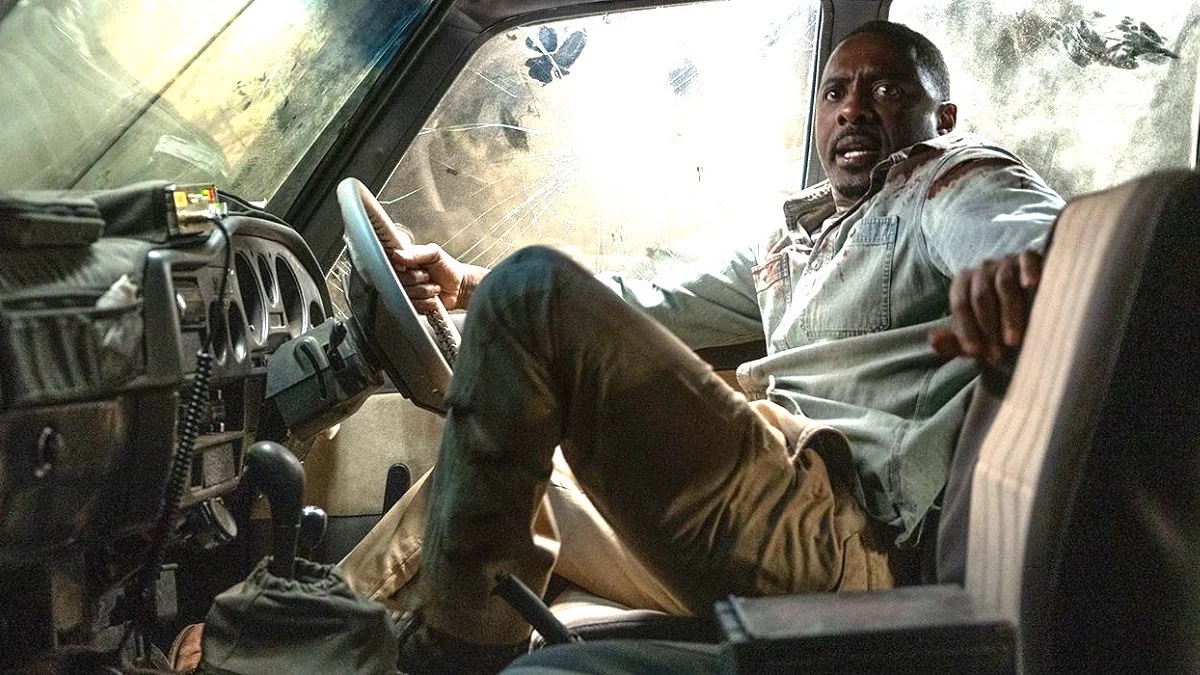
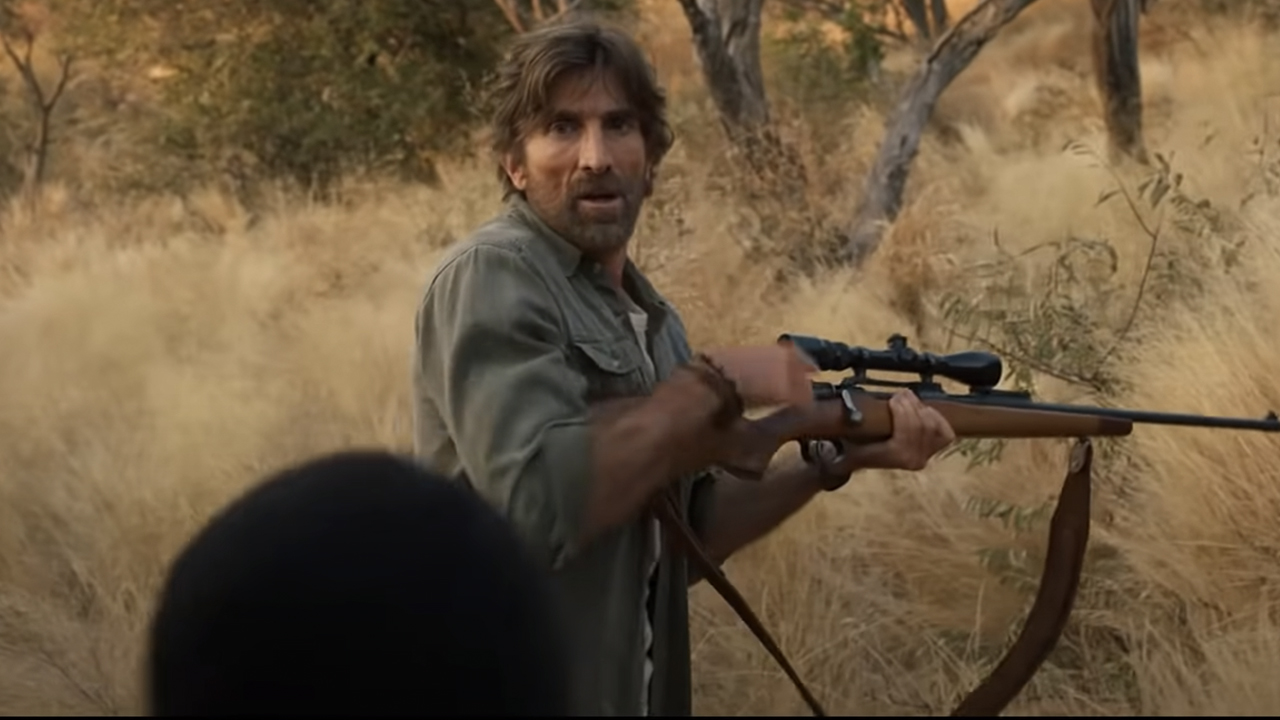
In the rather generically titled Beast, American doctor Nate Samuels (Idris Elba) takes his two young daughters, Meredith (Liana Samuels) and Norah (Leah Jeffries), back to the remote part of Africa from where their late mother originated. Since his wife’s death from cancer, Nate has become somewhat distanced from the girls, so he’s arranged to hook up with his old pal, game warden, Martin Battles (Sharlto Copley), for a family holiday, that will be part safari, part tribute, part bonding experience.

What Nate and his companions don’t know is what’s happened in the film’s opening scenes, where a group of poachers have slaughtered an entire pride of lions but have failed to kill the dominant male, who is understandably miffed and looking for vengeance. This is a lion who appears to share genes with Michael Myers. He’s unstoppable – and it isn’t long before the safari has turned into a desperate attempt to survive…

Beast may essentially be a kind of landlocked Jaws, but it’s nonetheless effectively done. Screenwriters Ryan Engle and Jaime Primak Sullivan team with director Balthasar Kormákur to assemble a lean machine of a film, that alternates between Nate’s attempts to reconnect with his daughters and a series of nerve-shredding suspense sequences. I find myself flinching and gasping at every sound, as the Samuels are chased, cornered, clawed and battered, always in dire danger of becoming lion fodder. Those who dislike injury details will find themselves looking away from the screen at key points.

It’s surprisingly effective. The titular beast has been CGI generated, but is nevertheless very convincing – there’s none of the dead eyed, ‘uncanny valley’ look that affects so many computerised critters – and I find myself suitably terrorised throughout. There are some nicely integrated dream sequences too, one of which really throws me a googlie. Despite its ‘Man v Monster’ storyline, this isn’t any kind of retro macho piece: there’s nuance aplenty, and the two young girls are well-rounded, believable characters, who play an integral part in their own survival.

This isn’t going to change your life, but those who relish the idea of seeing Idris Elba punch a lion in the face will certainly get a kick out of Beast. The African tourist board, on the other hand, may not look quite so kindly upon it.

You’ll believe a lion can bear a grudge.

4 stars

Philip Caveney

The Harder They Fall

03/11/21

Netflix

It’s a shameful fact that many of the cinema’s most revered westerns feature less than a handful of black characters – even though history informs us that up to a quarter of the citizens forging new lives in the Old West were people of colour. So it would seem a propitious time for a cowboy film where black characters are centre stage and their white counterparts relegated to supporting roles. Directed – and co-written – by Jeymes Samuel, The Harder They Fall sets out to be a revisionist piece and to some degree it hits its targets. What a shame, then, that the main protagonists in this story are, almost without exception, a bunch of callous murderers, ready to obliterate anyone who stands in their way.

Who then are we supposed to identify with?

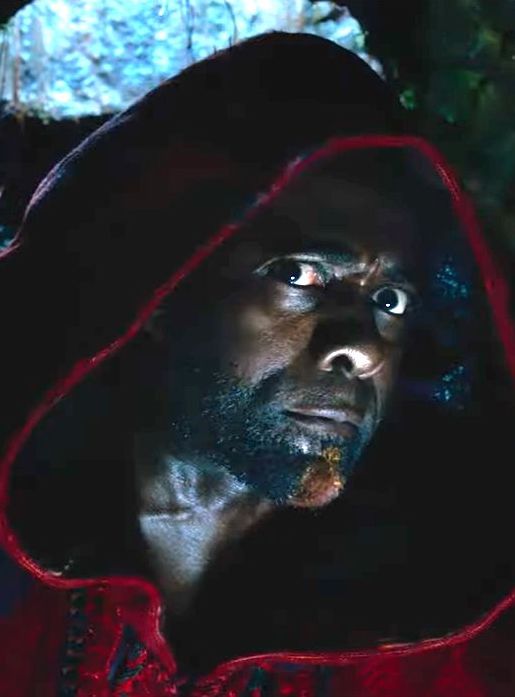
Nat Love (Jonathan Majors) is looking for vengeance against the man who killed his parents when he was a child and who carved a cross on his forehead with the tip of a knife. The charmer in question is Rufus Buck (Idris Elba), recently freed from prison and now seeking to recoup the $25,000 that Love’s gang took from him – money that his own followers have recently stolen from a train. But… his gang stole it first, right? So obviously it belongs to him!

Love, meanwhile, returns to his old stamping ground to reconnect with former lover, Mary Fields (Zazie Beetz), whom he hopes to marry one day, but first there’s the little matter of taking his revenge on Buck, who has returned to the all-black town of Redwood and removed the man he left in charge by pistol-whipping him and taking his place. It’s clear from the outset that Buck doesn’t plan to be a benevolent ruler, shooting a man in cold blood for having the temerity to question him about the steep taxes he’s planning to enforce. Buck is backed up by the equally malevolent Trudy Smith (Regina King) and fast draw merchant, Cherokee Bill (LaKeith Stanfield). As the two rival gangs square up to each other for a showdown, it can only end in bloodshed.

There are some elements in The Harder They Fall that I really like. The widescreen cinematography is gorgeous and the recreations of frontier towns are quite different from anything I’ve seen before. Furthermore, the decision to use contemporary reggae and township music as a soundtrack is an inspired move, lending a sense of urgency to the action. There’s also an expertly-handled climactic shoot out. All points in the film’s favour.

But every story needs characters that an audience is willing to root for and there’s a sad dearth of them here. Even US Marshal Bass Reeves (Delroy Lindo) seems to have no qualms about bending the rules when there’s money to be made. (Western scholars will doubtless recognise many of these names, because they are taken from historical characters, but there’s been no attempt to reproduce any of their actual accomplishments, which seems self-defeating.) All we learn of these people is that they’re quick on the trigger and the constant litany of shootings, beatings and stabbings becomes wearisome after a while. We’re probably supposed to identify with Nat Love, but the truth is, he’s not really all that different from his nemesis, Rufus Buck. He just shoots people with a smile on his face, while Rufus scowls.

So, while I agree this is an important release that’s come at exactly the right time, I just wish I cared more about the people who are being shot and bludgeoned to death right in front of me.

As it stands, this feels like a squandered opportunity. And that’s a real shame. Samuel is clearly a skilled filmmaker but he needs a stronger script to make this fly.

2.8 stars

Philip Caveney

The Suicide Squad

03/08/21

Cineworld

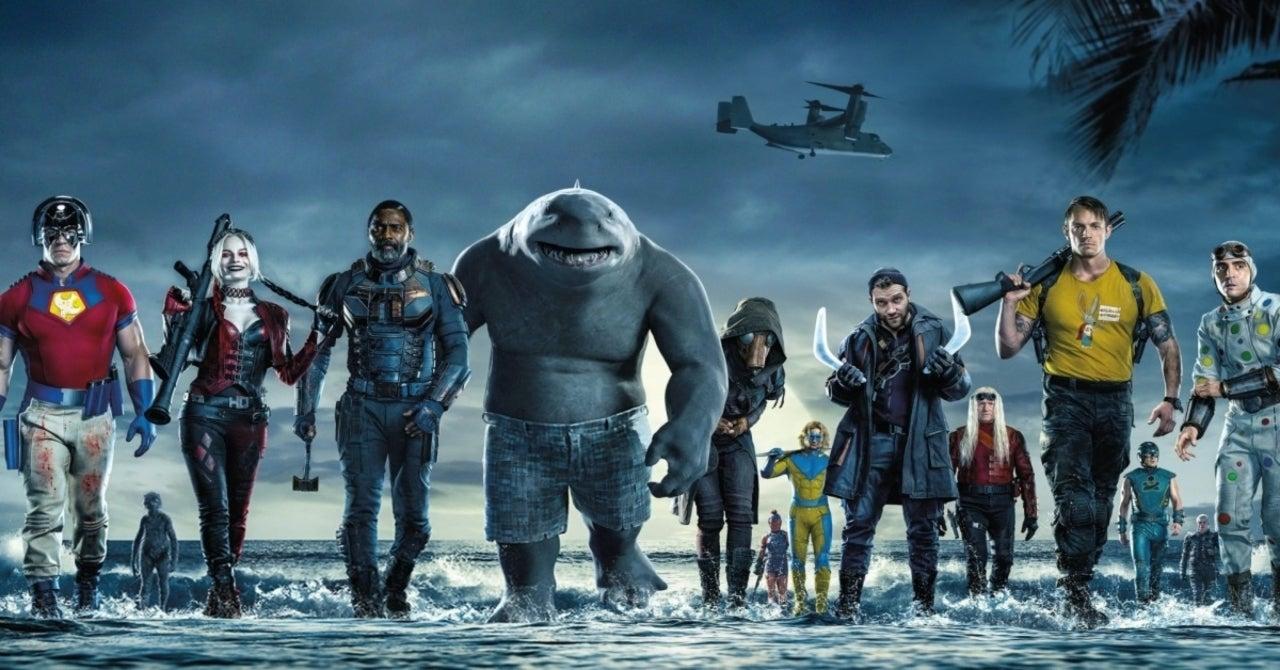
DC’s increasingly desperate attempts to rival the success of The Marvel Universe seem to be exemplified by this muddled and over-inflated offering from James Gunn. Not to be confused with David Ayers Suicide Squad, this is The Suicide Squad, but, much like its predecessor, it suffers from a bad case of #toomanysuperheroes. While it’s surely a more successful attempt to put those titular antiheroes onscreen, it still feels overlong, overcomplicated and, quite possibly, just over.

It starts well enough with the ruthless Amanda Waller (Viola Davis, playing it straight) recruiting convicted hitman Savant (Michael Rooker) for a dangerous mission. She offers him an opportunity to reduce his prison sentence if he manages to survive, but adds the pesky complication that, if he tries to bail, a device in his head will explode. We then meet the rest of the team, one of whom we know from the first film and the rest of whom seem expendable. The familiar face belongs to Colonel Rick Flag (Joel Kinnaman) and it soon becomes clear that his team only exists to serve as a distraction, while the real squad, led by Bloodsport (Idris Elba), gets on with the actual mission. He’s joined by another character we’ve met before, Harley Quinn (Margot Robbie), and by some very odd newbies, including Peacemaker (John Cena), Polka-Dot Man (David Dastmalchian), King Shark (a man with a shark’s head voiced by Sylvester Stallone) and Ratcatcher 2 (Daniela Melchior) who… well, suffice to say if you suffer from a fear of rodents, this film may not be for you.

There follow two hours and twelve minutes of fights, explosions, stunts and some explicitly bloody dismemberment, sailing very close to the wind considering the film’s 15 certificate. We’re treated to several shots of King Shark eating his opponents, which is probably meant to be comical, but is way too graphic for comfort. There’s also a sort of plot here, though it’s frankly bananas. The squad are sent to a South American country, where – in a ‘secret’ laboratory – scientists, under the supervision of Thinker (Peter Capaldi), are rearing a… giant starfish called Starro the Conqueror… yes, I know, at times it feels like a hyperactive six-year-old wrote the screenplay.

Like many of these big budget spectaculars, it’s a game of diminishing returns. There are too many punch ups, too many silly one-liners and too long a running time. Around the hour and a half mark, I’m starting to glance at my watch. Robbie’s Harley Quinn is by the far the best character, and she gets the film’s finest moment, an extended sequence where she escapes from prison to the tune of Just a Gigalo, the copious blood spatter replaced by flurries of animated flowers. It’s delightful and, if the rest of it were up to this standard, this would be a more positive review.

As it stands, it’s hard to be enthusiastic. A post-credits sequence which appears to offer a spin-off featuring one of the story’s less likeable characters is hardly an alluring prospect. Maybe I’ll give that one a miss.

3.4 stars

Philip Caveney

Concrete Cowboy

12/04/21

Netflix

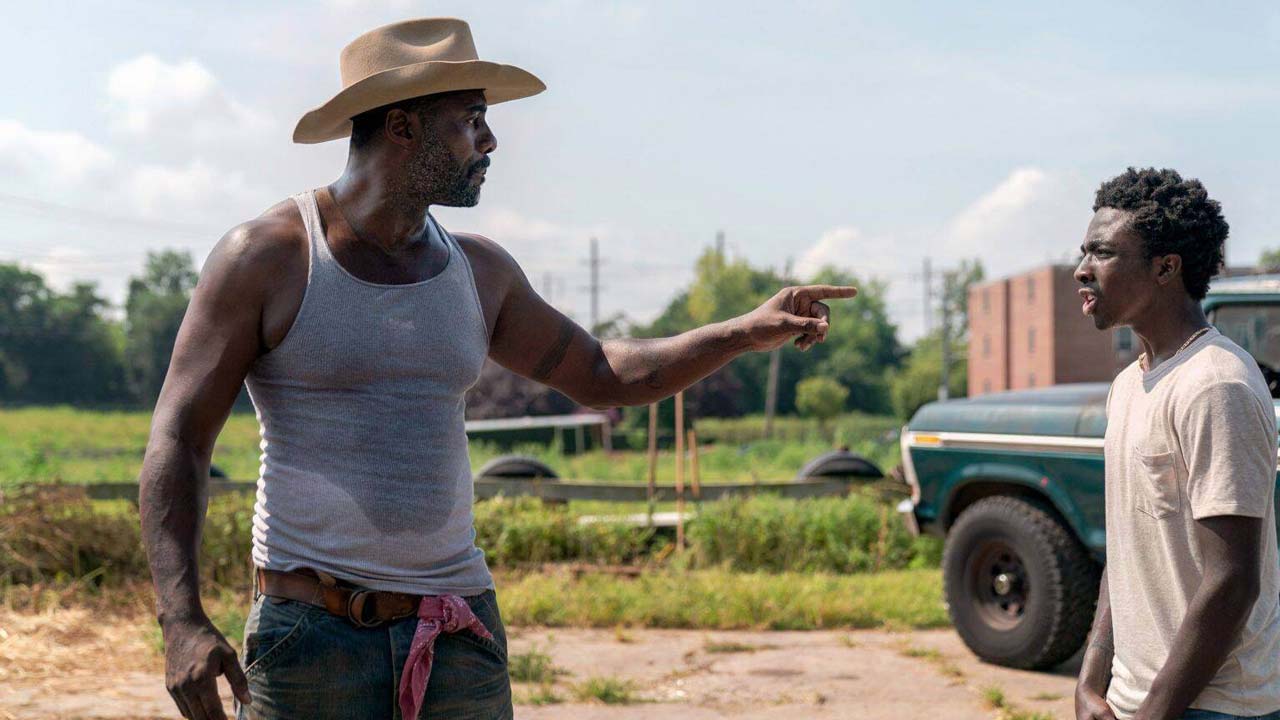
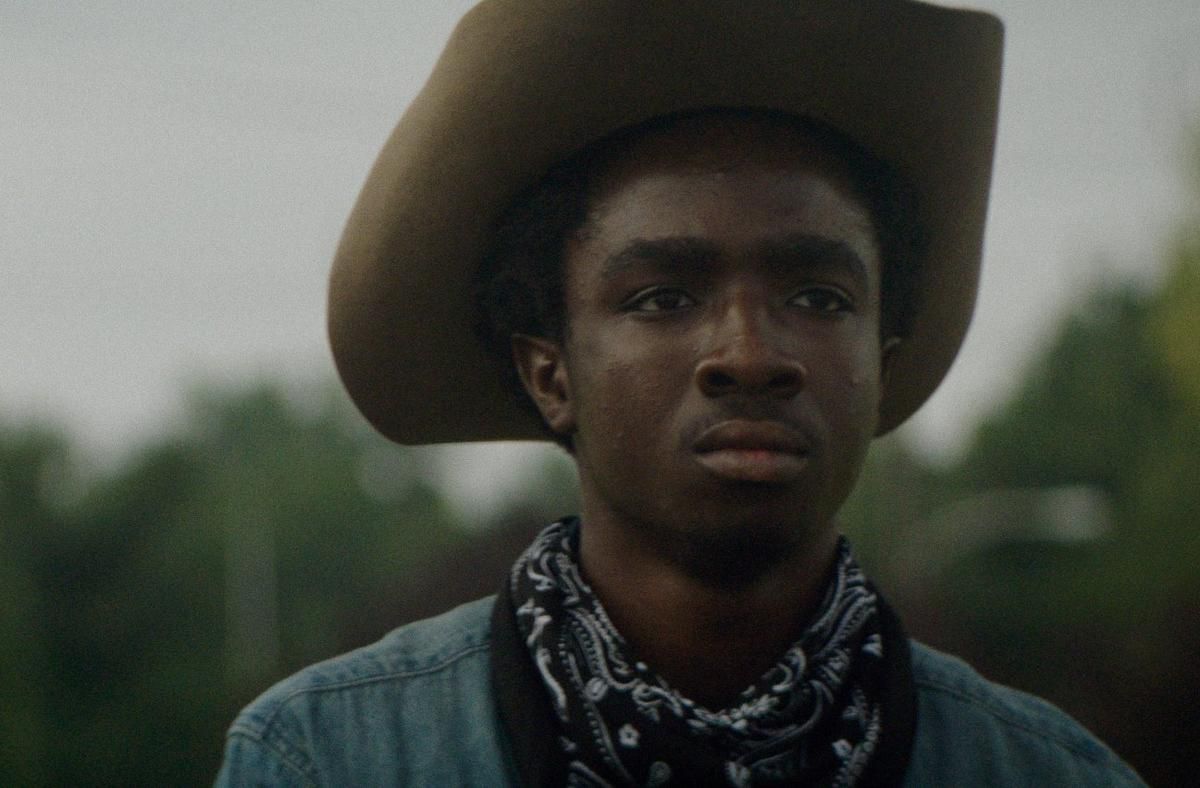
There’s nothing innovative about the plot of Concrete Cowboy. The ‘troubled teen learns to better himself by caring for an animal’ trope is very well worn, with shining beacons such as Kes and Old Yeller really making their mark. But writer/director Ricky Staub’s movie is nevertheless well worth watching, because it’s hard to tire of redemption tales, and this one shines a light on a little-known community: black cowboys in Philadelphia.

This isn’t just my ignorance; the movie spells it out. Most of us don’t know black cowboys exist; they’ve been whitewashed out of history. In fact, we don’t expect to see poor black Philadelphians on horseback at all, but there they are, eking out a living from their urban stables.

Caleb McLaughlin is Cole, and he’s in bother. Again. Expelled from yet another Detroit school, Cole is running out of options. His mum, Amahle (Liz Priestley), knows she needs to do something radical. And so, despite his protests, she packs Cole’s bags and drives him to Philadelphia, telling him he has to spend the summer with his dad, Harp (Idris Elba). Cole is not at all keen on the idea, especially when he realises just how unconventional Harp’s living arrangements are. Sleeping on a sofa isn’t such a big deal, but sharing a room with a horse is beyond the pale.

It’s not easy. Harp is kind but very strict, and Cole doesn’t take well to discipline. And there is temptation in Philadelphia too, in the form of Cole’s childhood friend, Smush (Jharrel Jerome), who’s risking everything by double-crossing the drug dealers he works for. Cole goes along for the ride – and for the fancy new trainers – but he soon realises the danger he’s in…

But he doesn’t need to follow Smoosh, because he has a horse, Boo: a wild, unbroken animal that only he can get close to. What will he do?

McLaughlin delivers a fine performance; it’s easy to empathise with the moody teenager he portrays, to understand his conflicting emotions. The ensemble cast are great too, notably Lorraine Toussaint as stable owner, Nessie, and Ivannah-Mercedes as love interest, Esha. But my favourite thing about this film is the exposé of the cowboys’ precarious situation. They rarely own their stables; as renters, they’re vulnerable to eviction, if a landowner can make money by selling to property developers as an area gentrifies, for example. It seems so wrong that their entire way of life can be threatened like this, and so short-sighted. All Smush wants is to earn enough money to move to the countryside and live on a ranch; if people are denied opportunities, of course they turn to crime.

So, no, it’s not original, and yes, you can see every plot turn a mile away, but Concrete Cowboy is still a fascinating watch.

3.7 stars

Susan Singfield

Zootropolis

12/01/21

Disney +

Our recent flirtation with the House of Mouse affords us the opportunity to investigate some of the Disney product we’ve previously missed. Zootropolis seems worthy of investigation. There are several people out there (you know who you are) who’ve urged us to give it a try and, for no other reason than the fact that – pre-Covid – we were somewhat spoiled for choice, we have chosen to ignore them.

We no longer have that excuse. And of course, it turns out our friends were right. Doncha just hate it when that happens?

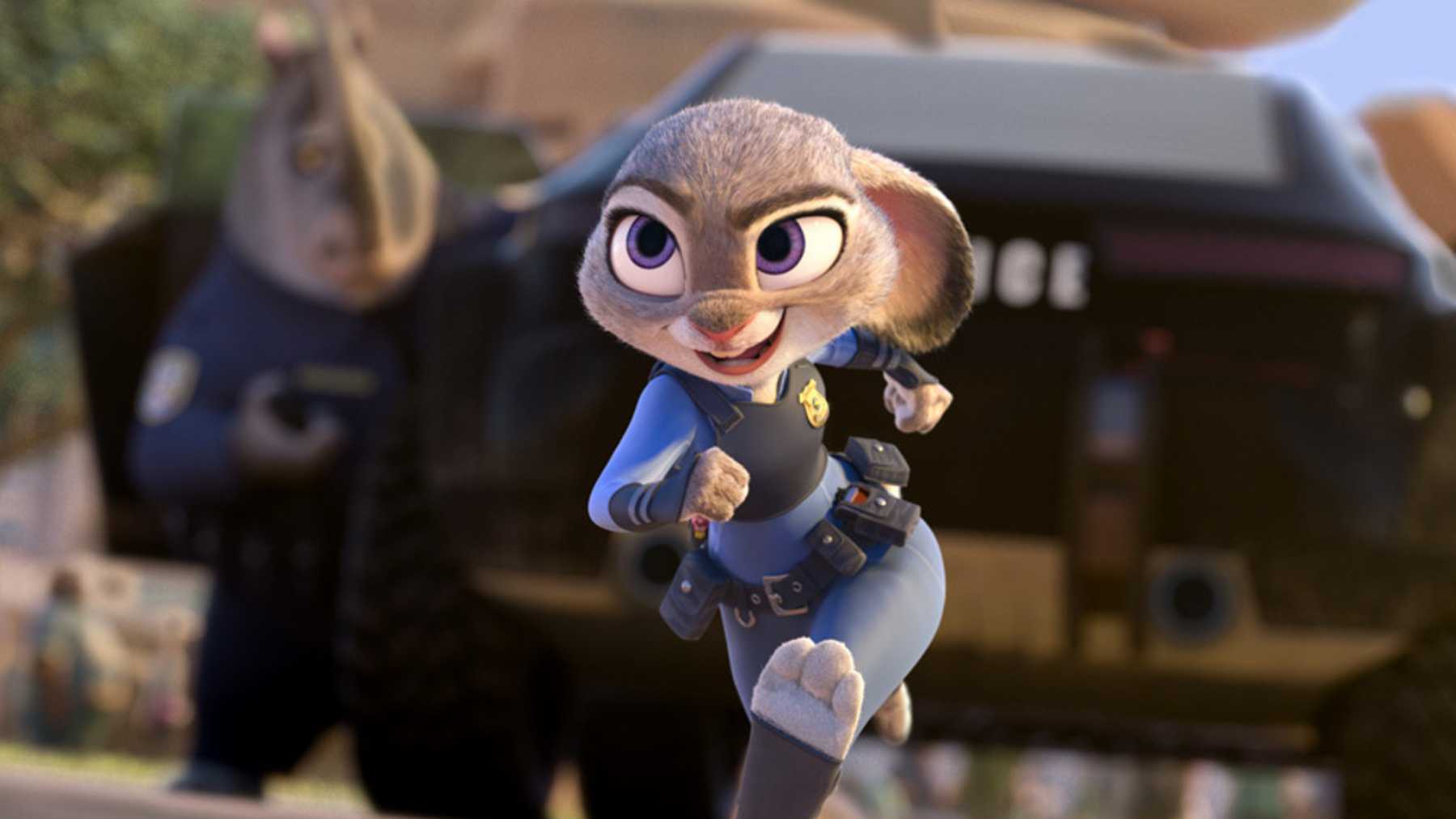
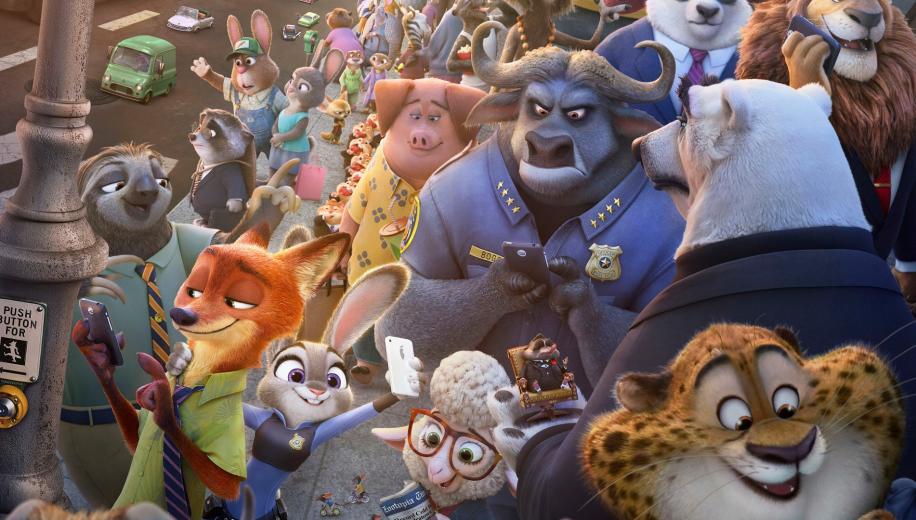
In a world where all animals happily co-exist, young rabbit Judy Hopps (voiced by Ginnifer Goodwin) grows up with one overpowering ambition: to become a police officer. Her carrot-farming parents are really not keen on the idea. Bunnies, they insist, are meek and cute, and not cut out for such shenanigans. But Judy is determined and, sure enough, after graduating valedictorian from the police academy, she heads off to the city of Zootropolis to start her new career.

The titular city, by the way, is the film’s most glorious achievement. A fully-realised environment divided into different sectors – desert, rain forest, tundra – it’s all rendered in eye-popping animation with extraordinary attention to detail. Watching it, you can almost believe it exists.

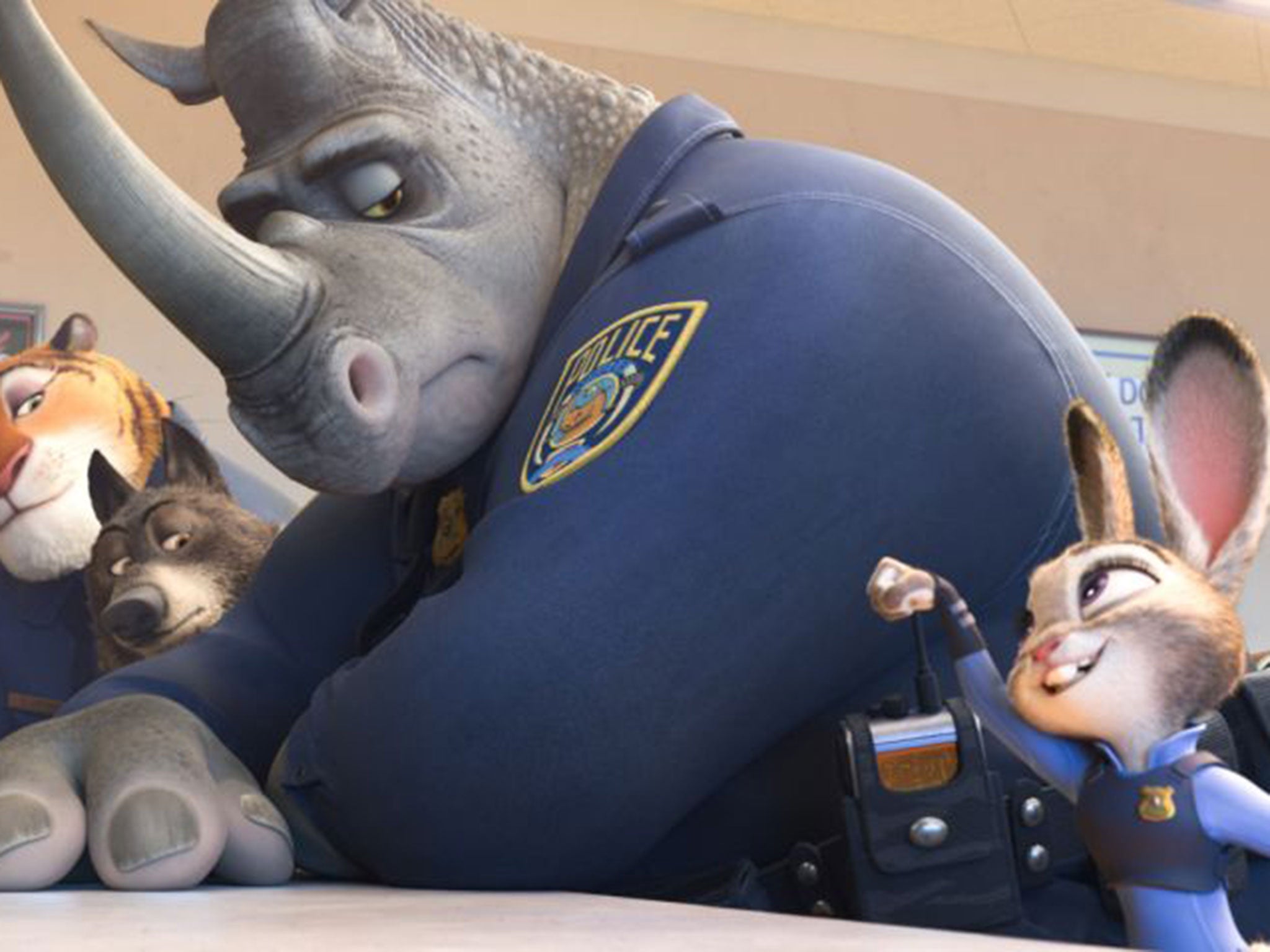
Judy arrives at her police precinct all ready to go, but the stern Chief Bogo (Idris Elba) clearly shares her parents’ views of what a bunny is capable of and promptly assigns her to parking duties. She applies herself to the task, and soon encounters the streetwise Nick Wilde (Jason Bateman), a wily fox who has devised his own ways of making a living by skirting very, VERY close to the edges of the law.

When a series of mysterious disappearances occur around the city, Judy spots an opportunity to step up her career a couple of notches and cunningly blackmails Nick into helping her investigate the situation. They soon realises that this particular rabbit hole goes very deep indeed…

Zootropolis is enormously appealing – a bizarre marriage between a futuristic sci-fi adventure and an old fashioned noir mystery. Look out for a delightful spoof of The Godfather in the engaging form of Mr Big (Maurice LaMarche) and relish the scene where Judy and Nick visit an information department serviced exclusively by sloths, led by Flash (Raymond S. Persi). You’ll giggle too at an appearance by Tommy Chong as a fly-infested yak, the manager of a… health spa.

Of course, there’s another of those famous Disney ‘messages’ embedded in this tale – a subtext that warns of the dangers of making cultural and racial assumptions, and how every individual deserves the personal freedom to pursue what interests them. It’s not particularly subtle, but it’s an important message, isn’t it, and maybe subtlety isn’t always appropriate.

At any rate, it’s great fun and it’s chock full of invention. If, like me, you’ve put this onto the back (bunny) boiler, now might be the perfect time to try it out.

4.4 stars

Philip Caveney

Yardie

06/09/18

Idris Elba’s debut feature film is an interesting one. Okay, so it’s a little patchy, but there’s real heart here, and energy, and some fabulous performances. Based on the cult novel by Victor Headley, this is as much a character study as anything else, and lead actor Aml Ameen (D), is mesmerising in the central role.

We start off in 70s Jamaica, where young D lives with his brother, Jerry Dread (Everaldo Creary). Jerry is a gentle soul, keen to broker peace between rival gangs, and make Kingston a safer place. But, having secured a truce, the triumphant party he hosts in No-Man’s-Land is abruptly shattered by a teenager wielding a gun. Jerry is killed, and D’s life is changed forever.

We next see him ten years later, and he’s a troubled man, struggling to repress his rage. He’s been taken under the wing of one of the gang leaders, King Fox (Sheldon Shepherd), whose music production company tells only half the story of his wealth. Fox is also a drug dealer, and, when D’s anger at his brother’s murder threatens his business, D is quickly dispatched to London, to sell a large batch of cocaine to Fox’s London connection, Rico (Stephen Graham).

But D’s path does not run smoothly in the UK; he’s too full of fury to seek a quiet life. Haunted by his brother’s memory, D seems determined to self-destruct, jeopardising everything, including his relationship with Yvonne (Shantol Jackson), his childhood sweetheart, and their daughter, Vanessa (Myla-Rae Hutchinson-Dunwell).

Where this film works is in the evocation of the period, the nightlife and the music. It looks fantastic, all vibrancy and colour, and the atmosphere, fuelled by an urgent reggae soundtrack, is electric. But there’s something lacking in the plotting, I think, a strange lack of intensity in D’s quest for revenge that doesn’t quite match the violence he eventually unleashes. Some of the London criminals feel like caricatures, and at times it’s hard to understand what D’s motivation is.

Still, it’s an eminently watchable movie, and the imagery is still imprinted on my mind.

3.8 stars

Susan Singfield


Molly’s Game

04/01/18

As a screenwriter, Aaron Sorkin has certainly earned his stripes. From The West Wing to The Social Network, he’s proved his abilities as an ace screenwriter. For his directorial debut, he’s seized upon the real life story of Molly Bloom (not that Molly Bloom) portrayed here by Jessica Chastain on excellent form and based upon Bloom’s autobiography – which probably explains how she is be presented here as a bit of a saint, rather than the ruthless enabler she so clearly was.

The film opens with an extended voiceover that explains how Bloom’s youth is spent as a competitive downhill skier, schooled by her hard-assed father, Larry (Kevin Costner) and constantly in the shadow of her more successful brother, a downhill champion. When a terrible injury puts a premature end to her sporting ambitions, Bloom looks around for alternative forms of employment and more by accident than design, ends up helping to host a series of ‘slightly’ illegal poker games where celebrity players gamble (and generally lose) obscene amounts of money. When her boorish employer, Dean (Jeremy Strong) decides to cut her out of the games, she immediately sets up in competition with him, hiring swankier venues and stealing all of his regulars. From there, she goes all out to tempt in more affluent players. When, two years after quitting the business, she is arrested by the FBI she goes in search of a lawyer and finds Charlie Jaffey (Idris Elba) who despite his initial reluctance to represent her, is soon won over by Bloom’s charms… (Jaffey, by the way, isn’t a real character, but an invention, intended to represent the various lawyers she was associated with before coming to trial).

It’s perhaps inevitable that Sorkin the director fails to fully rein in Sorkin the writer – with a running time of two hours and twenty minutes, Molly’s Game becomes somewhat lumpen in the middle section and could surely have lost half an hour in the editing suite. Furthermore, those viewers (like me) who know or care nothing about the rules of poker may find their attention wandering during these stretches – but the film gathers momentum as it heads into its final stretch and has me hooked to its conclusion.

Sorkin’s dialogue is as delicious as ever, but if there’s an overall problem here, it’s simply that it’s hard to sympathise with any of the major characters – Elba’s fictional one aside. The once cute Michael Cera (of Juno) is really unpleasant as the mysterious Player X and even the usually affable Chris O Dowd is irritating as perennial loser Douglas Downey. And no matter how eloquently Chastain plays that lead role, its hard to feel warmth for a woman who doesn’t think twice about exploiting the needs of gambling addicts in order to earn herself considerable sums of money.

In the end, Molly’s Game is watchable if flawed. Poker fans will doubtless see this as a royal flush, whereas to me it’s more like three of a kind.

3.8 stars

Philip Caveney


The Mountain Between Us

08/10/17

This handsomely mounted movie, directed by Hany Abu-Assad, is a story of survival against all the odds in remote mountain locations. Nicely acted and decently filmed, it’s hampered somewhat by an all-pervading sense of predictability and by the conviction that it could have been a whole lot better if it had been willing to take a few more risks, particularly in the gender-stereotyping department. 

Photojournalist Alex (Kate Winslet) is desperate to get to Denver, where she’s scheduled to marry her partner, Mark (Dermot Mulroney). But impending bad weather leads to the cancellation of her flight. At the airport, she overhears surgeon Ben Bass (Idris Elba) telling a flight attendant that he too is desperate to get to Denver in order to carry out an urgent operation on a young patient. Alex talks him into sharing the cost of chartering a small private plane, flown by aging pilot, Walter (Beau Bridges), a man who clearly hasn’t spent an awful lot of time reading up on his health and safety procedures. Almost before you can say ‘bad idea,’ Walter has suffered a fatal stroke and the couple find themselves involved in a messy crash-landing on a snow-covered mountain peak. Worse still, Walter hasn’t bothered to inform anybody about the flight so nobody knows where they are – oh, and one more thing: Alex has only gone and fractured her leg…

All the usual tropes of a survival movie are present and correct – the couple overcome the problems of staying warm (mostly it would seem, by burning credit card bills) of finding food (a couple of packets of almonds) and of healing their wounds. Ben somehow finds the necessary tools to fix Alex’s broken leg and generally patch her up. If there’s a real criticism here, it’s that Ben is pretty much the ingenious hero throughout this scenario, solving nearly all of the couple’s problems single-handedly – even, at one stage, dragging Alex along behind him like an encumbrance. A hungry cougar adds a bit of much-needed menace (and eventually ends up supplementing the food supply) but eventually, the hapless couple realise that, if they are going to make it out alive, they will have to descend the mountain on foot – and, as they travel, it becomes increasingly apparent that the two of them are falling for each other, big time. Which is awkward, to say the very least.

This would be all well and good, but the film then overstays its welcome by looking at what happens after the events on the mountain, dragging out proceedings and holding off on an ending that we all know is waiting in the wings. Winslet and Elba make an agreeable couple and manage to strike plenty of sparks off each other, but she should have been given a bit more to do on that mountain.

All in all, this is watchable stuff – but not exactly ground-breaking.

3.5 stars

Philip Caveney