Ian McKellan

The Critic

15/09/24

Cineworld, Edinburgh

A film about a theatre critic? Well, that’s irresistible for a start, despite a series of rather sniffy advance reviews that have – much like this film’s protagonist might – damned the endeavour with faint praise. So I’m both surprised and delighted that I enjoy this as much as I do.

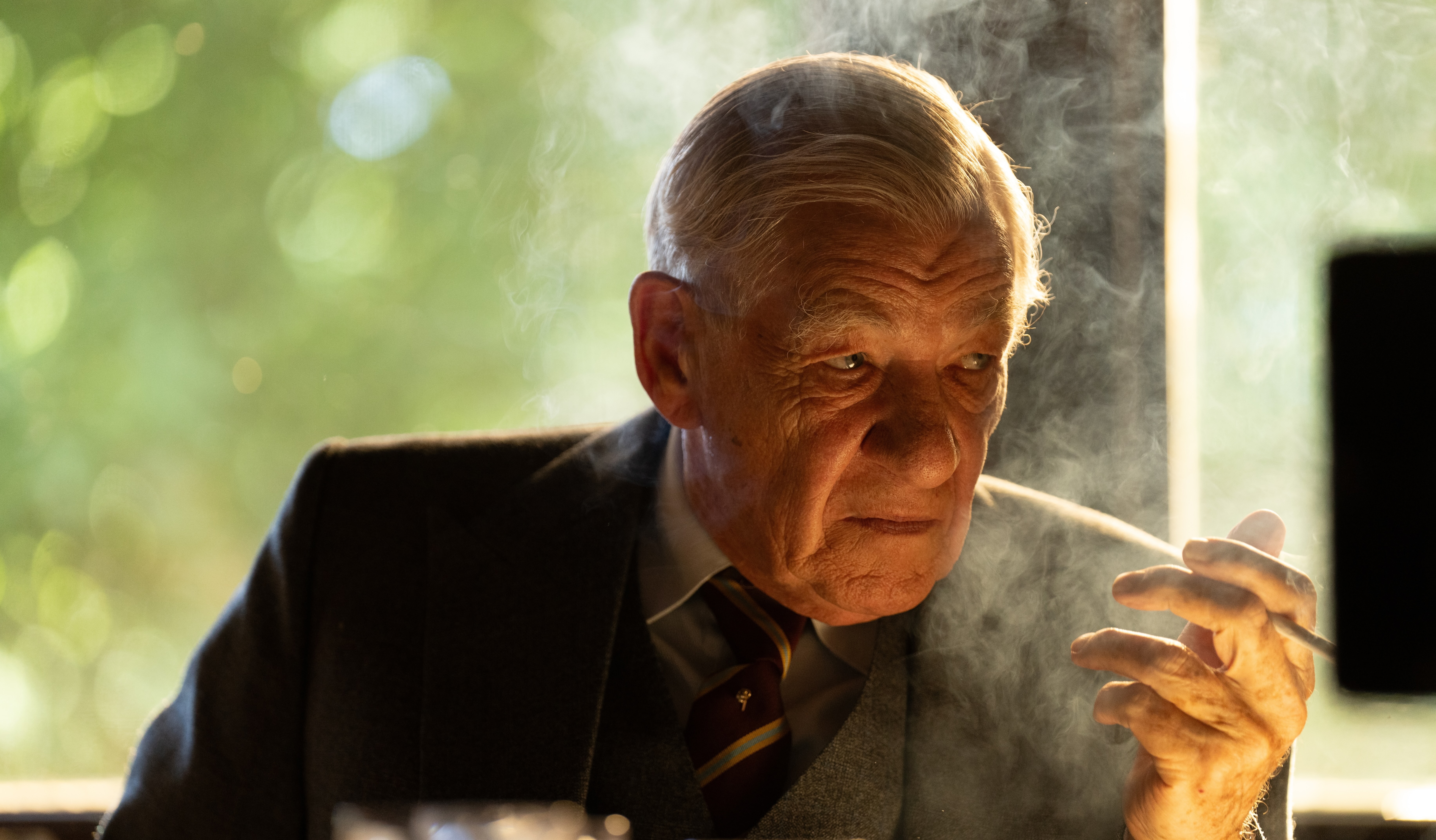
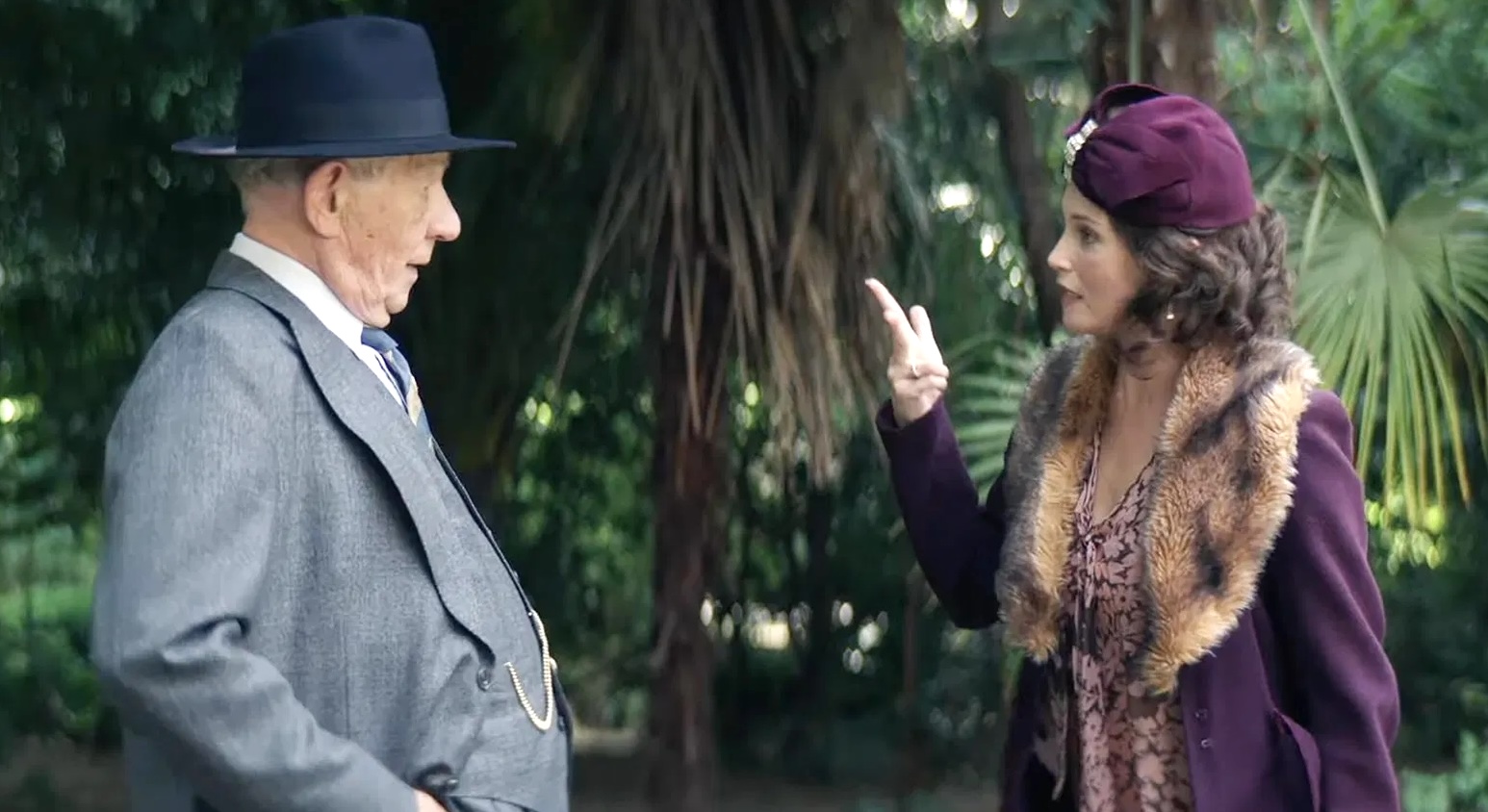
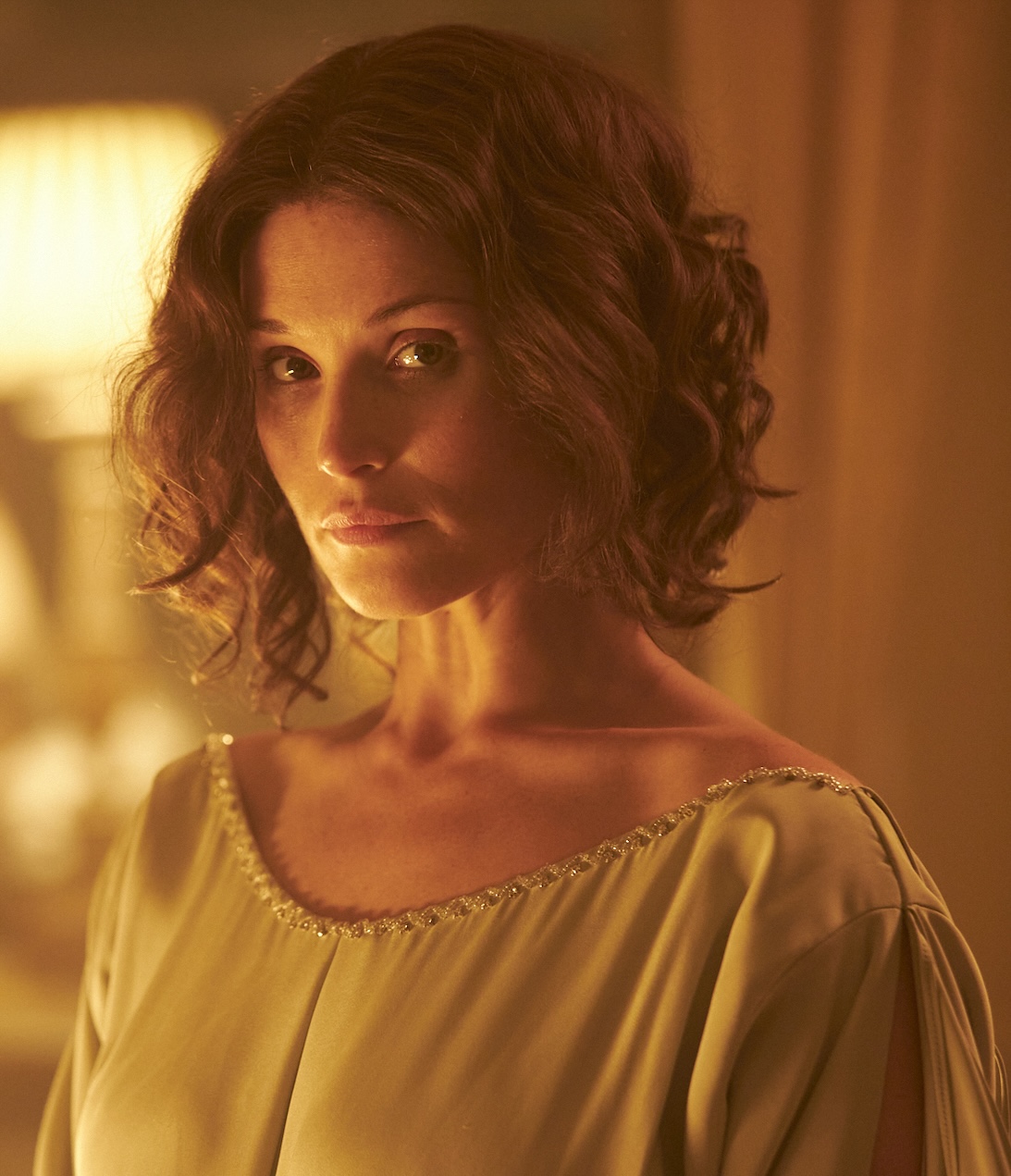
Written by Patrick Marber and loosely based on Anthony Quinn’s novel, Curtain Call, this is set in London in 1935, a time when the titular critic, Jimmy Erskine (Ian McKellen), the long-established theatre reviewer at ‘The Chronicle,’ really does have the clout to sink a production with a few well-aimed barbs. Jimmy is quick to point out that he has a genuine love of the theatre and will always dispense praise when he feels it’s been earned. Lately, most of his ridicule is directed at actress Nina Land (Gemma Arterton), who Jimmy believes has no business being on the stage. It doesn’t help that she holds him in high esteem – indeed, it was reading his reviews as a little girl that lured her into becoming an actor in the first place.

Jimmy is covertly gay – a crime punishable by imprisonment in the 1930s – and when one night he is caught in a compromising position with his live-in assistant, Tom (Alfred Enoch), he is called in to the office of The Chronicle’s new proprietor, David Brooke (Mark Stong), and handed a month’s notice. But Jimmy isn’t going to take it lying down. He has too much to lose, not least the opportunity for fine dining and lashings of booze to go with it.

And it has come to his attention that Brooke is an avid fan of Nina Land…

What’s particularly enjoyable about The Critic is the fact that all of the characters we encounter are nuanced enough that, despite a stereotypical set-up, none of them ever feels like a caricature. McKellen is clearly having a whale of a time as the venal and calculating Jimmy, a man who – because of his sexuality – has had to learn to be adaptable in order to survive, yet is bold enough to coyly ask a follower of Oswald Mosley if he has ironed his black shirt all by himself. There’s the delicious paradox of Arterton playing an allegedly bad actress, giving quite the best performance I’ve seen from her, by turns vengeful and vulnerable. There’s a lovely cameo from Lesley Manville (who seems to be popping up in just about everything lately) as Nina’s mother, Annabel – and Strong too invests his character with just the right touch of pathos.

The 30s setting is nicely evoked and, as The Critic moves ever deeper into the realms of tragedy, I find myself wondering what compelled others to be so er… critical of it. For my money, this is an assured film, nicely directed by Arnand Tucker and hauntingly photographed by David Higgs. It would, of course, have been great fun to lay into this with a hatchet (oh, the irony!) but, annoyingly, I find myself completely unable to do so. The Critic is, in my humble opinion, an absolute delight.

4.5 stars

Philip Caveney
Mr Holmes

MV5BMTg5MjE0Njk0MF5BMl5BanBnXkFtZTgwNTgwMjQ4NTE@._V1_SX214_AL_

24/06/15

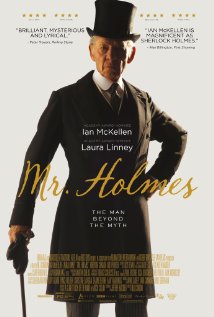
There can be few fictional characters who have enjoyed as many interpretations as Sherlock Holmes – we’ve already seen him as a young man, so it was perhaps inevitable that somebody would take him in tother direction. Here, he’s played by Ian McKellan as a 93 year old, convincingly aged in state-of-the-art latex. It’s 1947 and he’s long retired to a village in Sussex, where he’s looked after by housekeeper, Mrs Munro (Laura Linney making a decent fist of an English accent). Her young son, Roger (Milo Parker) clearly idolises the old man and has a bit of an interest in detection himself. Directed by Bill Condon, the film is adapted from the short story A Short Trick of the Mind and has Holmes struggling with the onset of dementia, whilst desperately trying to piece together and write about the particulars of his last case, the one that made him retire from the detection game. In this parallel universe, Sir Arthur Conan Doyle never existed. The Holmes stories really were written by Dr Watson (who we only glimpse in flashback) and Holmes is clearly a lost soul without his old partner to back him up.

This is a slight though pleasing story, dominated by a perfectly nuanced performance from McKellan (though it has to be said, there’s more than a passing resembance to his turn as James Whale in Gods and Monsters, which Condon also directed.) He’s ably supported by the other members of the cast, particularly young Milo Parker and by Hattie Morahan as the young woman who’s tragic story causes Holmes to ditch sleuthing and take up beekeeping instead. If the tale occasionally strays into the realms of sentimentality, it’s of no great consequence; this is diverting enough but the earth doesn’t move and it makes you think that in the end, Holmes tales are a bit like buses – there’ll be another one along soon.

3.8 stars

Philip Caveney

X Men: Days of Future Past

MV5BMjEwMDk2NzY4MF5BMl5BanBnXkFtZTgwNTY2OTcwMDE@._V1_SX214_AL_

07/02/15

Of the many superhero franchises out there, (and there does seem to be an awful lot of them) the X Men films are the ones that interest me the least, so perhaps it’s not really surprising that I’ve waited this long to catch up with the latest instalment. It seems to me as po-faced and inert as the rest of them and somehow the bewildering array of mutants with the power to do ‘incredible’ things – bend metal, set objects on fire, affect the weather, make balloon animals… (OK, I made the last one up, but you catch my drift?) somehow never manages to ignite my interest, let alone suspend my belief.

DFP opens in a gloomy dystopian future (aren’t all futures like that in the cinema?) where colossal killing machines are on the verge of wiping out Mutantkind and where Ian McKellan and Patrick Stewart sit around looking constipated, while other, younger mutants run frantically around being killed (or are they?It’s that kind of movie.) In a last-ditch effort to save the world, Wolverine (Hugh Jackman) is sent back in time to the year 1973, to try and prevent the introduction of the very events that have ignited this grim future. Once there, he has to reconnect with Charles Xavier (James MacAvoy) and persuade him to lend a hand. There then follows a convoluted storyline that’s based around the assassination of JFK and there’s even a cameo by President Richard Nixon (Peter Camancho), who it seems might be just the man to initiate a future disaster. Meanwhile, Doctor Bolivar Trask (Peter Dinklage) has created mutant-seeking robots and is itching to turn them loose…

Amidst all the ponderous twists and turns, DFP offers one truly brilliant sequence, the scene where Quicksilver (Evan Peters) runs around in super-fast mode, altering the potentially fatal consequences of a police shootout. It’s extraordinary and all too brief and there remains the conviction that this was the set piece that director Bryan Singer was planning all along and that the rest of the film was just an excuse to set it up. Sadly, Quicksilver doesn’t have much else to do in the movie, which is a shame, because if there’d be more of his antics, this review might have been a tad more enthusiastic. But for me, this was overly complicated nonsense, expertly mounted, glossily filmed and featuring a host of talented actors, all of whom needed every ounce of their skills in order not to look bored.

3.2 stars

Philip Caveney