
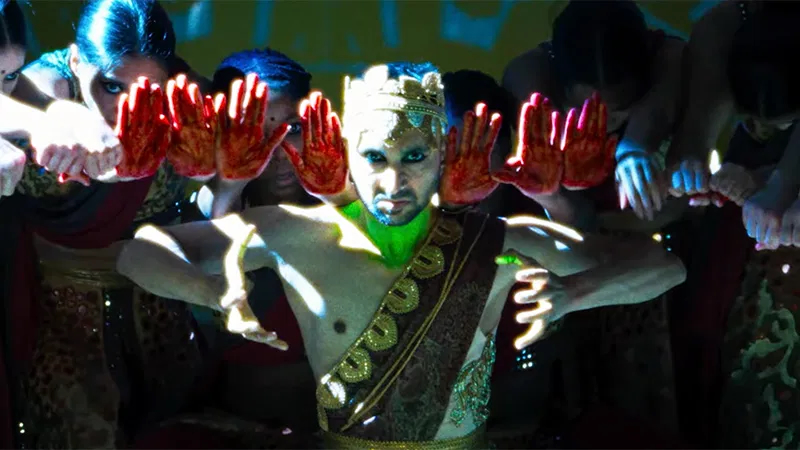
Hamlet

Alas! Poor Yorick

08/04/25

Studio Theatre, Edinburgh

As the name suggests, Alas! Poor Yorick is a reimagining of Hamlet, which centres on the minor characters of the gravediggers, those fellows of infinite jest who seem to revel in making the simplest actions long and needlessly complicated. John Gorick (as well as rhyming nicely with Yorick) doubles as the first gravedigger and a recalcitrant donkey, forever chasing an elusive carrot. Jon Haynes plays his assistant and (at one point) Hamlet himself, eager to orate over the burial place of the long-deceased jester, even if he does keep picking a soliloquy from the wrong blooming play.

Ridiculusmus enact their long-established brand of clowning, a Godot-like exploration of repetition, occasionally punctuated by absurd observations and deliberately naff jokes, though it must be said that tonight’s performance isn’t as sprightly as I would like, the extended riffs on the futility of existence feeling a little too creaky for comfort.

In the latter stages of the narrative, the arrival of players from the Lung Ha Theatre Company do lend the piece a splash of vigour and a startling change of pace. Emma McCaffrey plays a priest with an unGodly liking for the bottle, while Gavin Yule offers an interesting spin on Laertes. We’ve seen these performers in several very different productions over the years and their versatility is impressive.

If there’s a sticking point here, it’s that the clowning is a little muted and reserved and I’m not convinced that it quite comes off – and the vivacity of the final section only serves to highlight this.

Still, it’s always interesting to explore the possible backstories of Hamlet’s minor characters, and those particular Shakespearean fools/gravediggers will never seem the same again.

3 stars

Philip Caveney

Sing Sing

31/08/24

The Cameo, Edinburgh

It’s National Cinema Day and picture houses across the country are offering tickets for a mere £4. The Cameo is packed to the rafters. Does this mean that cinemas could sell out regularly if they lowered their prices, or is the mass turnout down to the sense of a special occasion?

The programming is important too, of course. Sing Sing deserves to draw the crowds, even at full price. It’s a weighty, life-affirming piece of work, humanising the inmates of the titular maximum security prison. It’s also a timely reminder of why the arts are so important.

Based on John H. Richardson’s book, The Sing Sing Follies, Greg Kwedar’s movie is all about the RTA programme (Rehabilitation Through the Arts), which provides customised curricula of theatre, dance, music, etc. in prisons across the USA. Each jail has its own steering committee of prisoners, and external facilitators to help them explore their ideas. The benefits to both inmates and wider society are clear: by offering troubled people hope, allowing them the chance to explore their feelings and develop skills, to improve their self-esteem, the severity of infractions within prisons is reduced – and so is recidivism. The urge to punish, to make correctional facilities as unpleasant as possible, is perhaps understandable but it’s self-defeating. If we want a better world for everyone, we have to accept the evidence and give incarcerated people as many opportunities as possible to improve their circumstances.

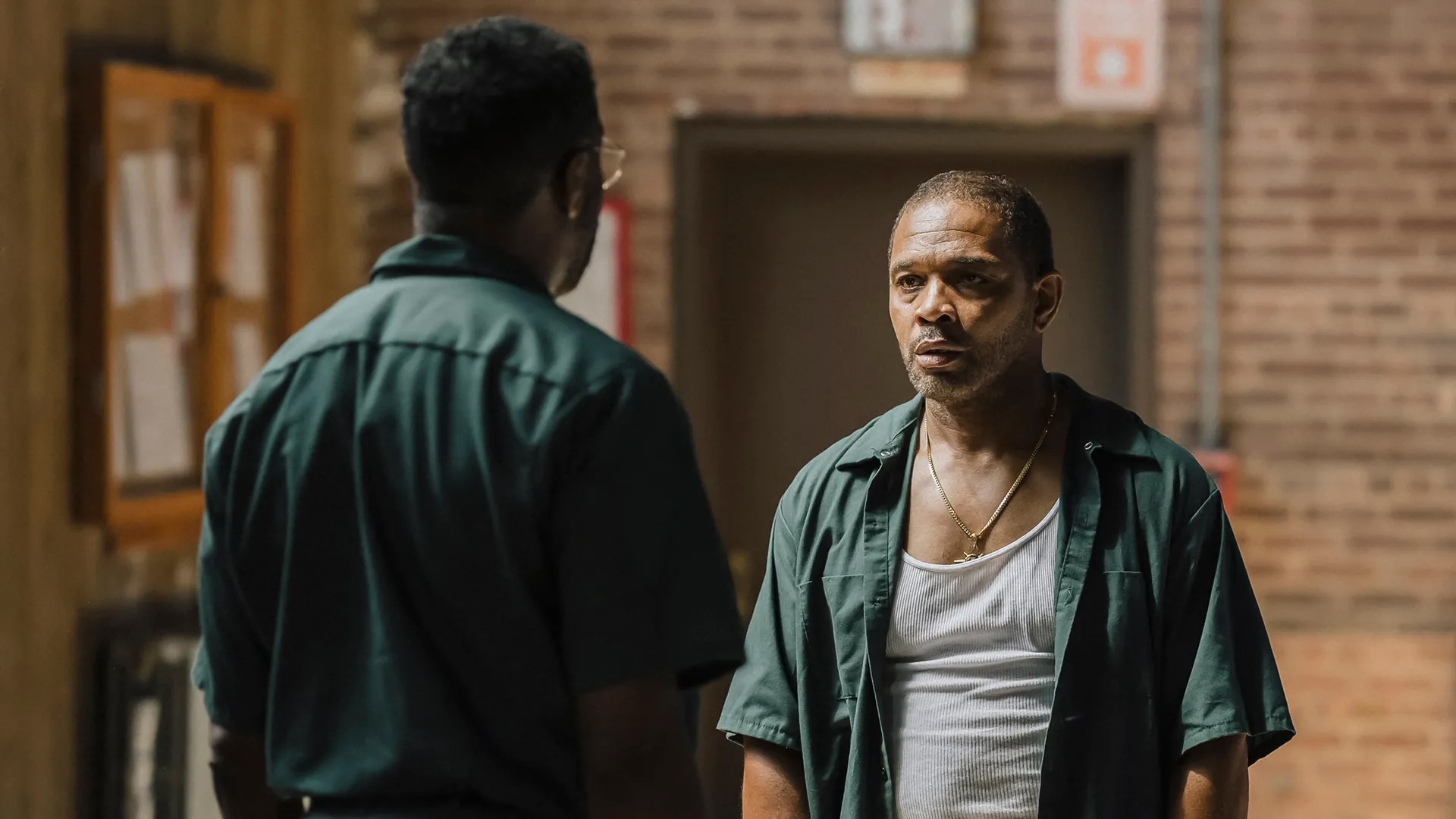
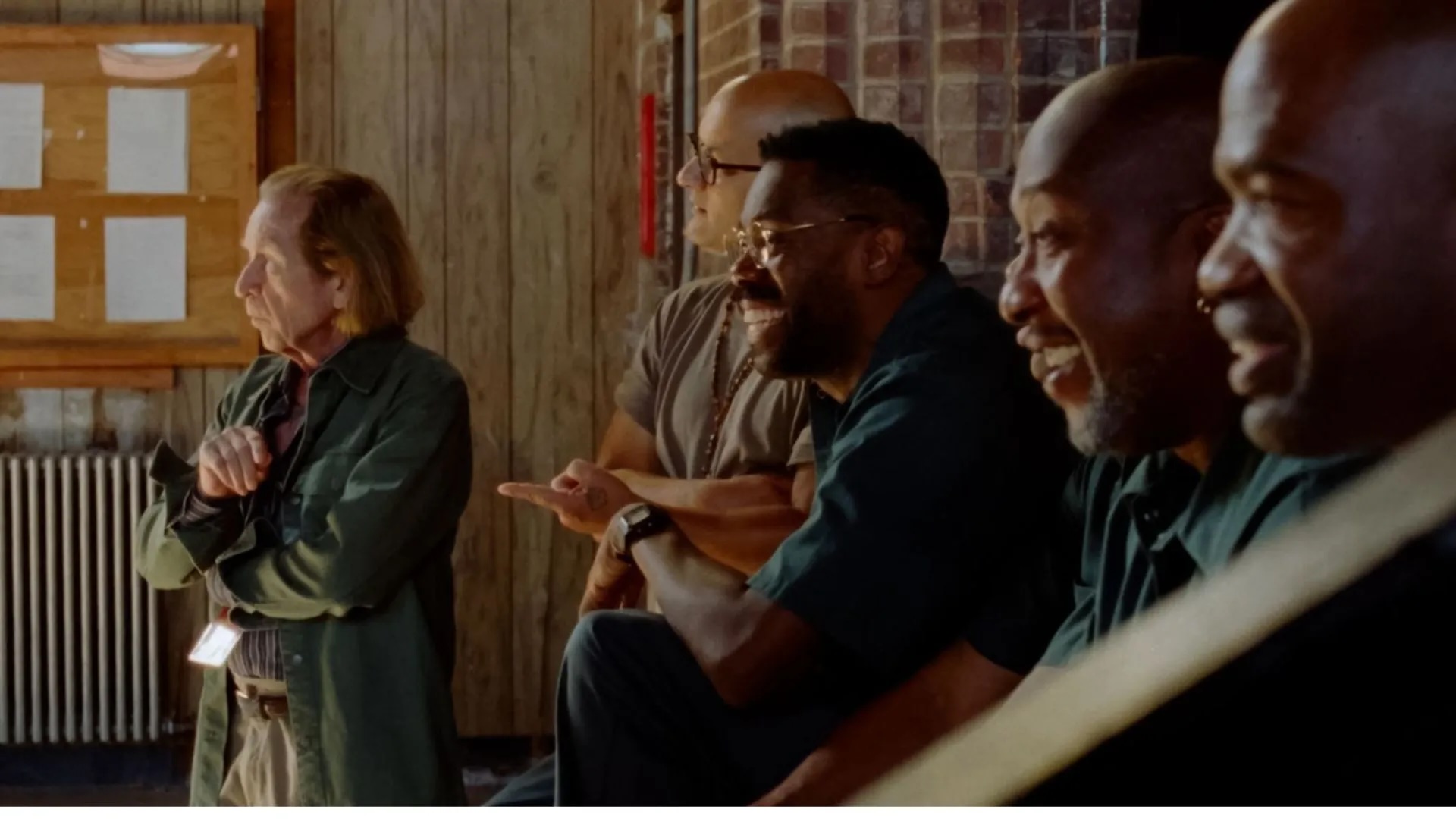
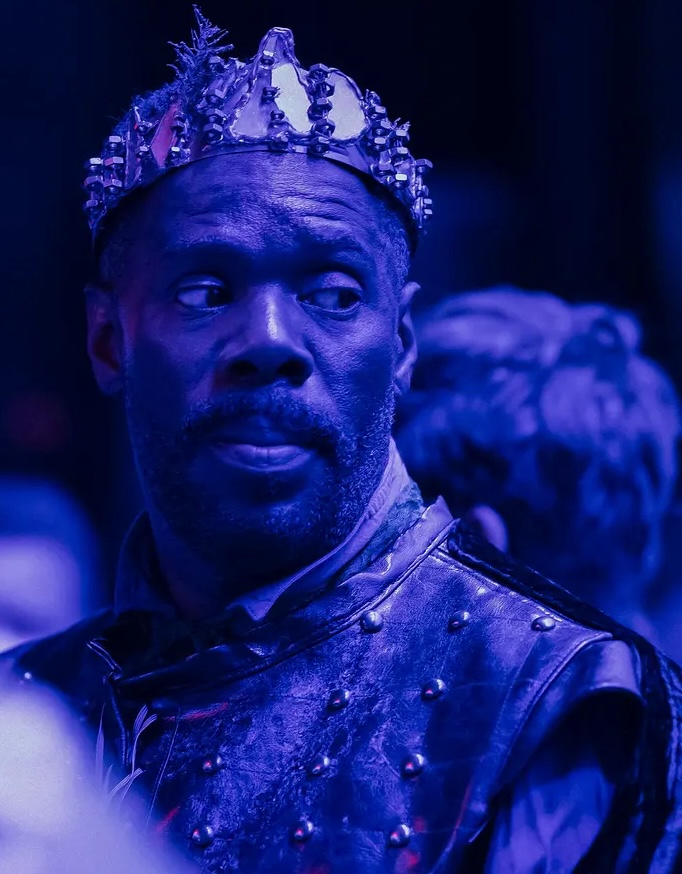
Colman Domingo makes a thoughtful, impressive John “Divine G” Whitfield, a central member of Sing Sing’s RTA group. Divine G – who has a cameo appearance – writes plays as well as performing in them, and also works tirelessly to support other inmates with their appeals. Apart from Paul Raci as volunteer drama leader Brent Buell, the rest of the cast comprises ex-prisoners playing themselves. Co-lead Clarence “Divine Eye” Maclin is especially affecting: his transformative journey from bullish gang member to esteemed performer might be predictable but it’s absolutely compelling.

We shouldn’t need reminding that theatre matters: we’ve known it forever. Thomas Keneally’s The Playmaker and Timberlake Wertenbaker’s Our Country’s Good both immortalise the real-life production of The Recruiting Officer performed by convicts deported to Australia in 1789. Margaret Atwood’s fictional account, Hag-Seed, doesn’t just illuminate The Tempest for a contemporary audience, it also advocates for arts in jail. Bertolt Brecht’s Lehrstücke (1920s and 30s) were created precisely to focus on the process of creating drama and the impact it has on actors. Here, in Clint Bentley’s gentle, often funny screenplay, we see again exactly how life-changing theatre can be.

Kwedar wisely steers clear of the violence we are accustomed to in prison movies: the menace is there, but it’s in the wings. Instead, we get to see the men at their best, when they’re engaged in something they really care about. As Sean “Dino” Johnson points out, “We get to be human in this room.”

And human they are. As a teacher of creative drama (albeit with children, not criminals), I’m not at all fazed by Buell’s bonkers-sounding playscript, Breakin’ the Mummy’s Code, which incorporates everyone’s ideas, including time travel, Freddy Krueger, ancient Egypt and, um, a couple of Hamlet’s soliloquies. That sounds just fine to me! It’s heart-warming to see how much it matters to the men, how seriously they take the acting exercises and the director’s notes, how much fun they have when they’re finally on stage.

Sing Sing is an important film, but it’s a highly entertaining one too. Beautifully crafted, with cinematography by Pat Scola, you’re guaranteed to leave the cinema with a smile on your face and a sense of hope for the future.

4.7 stars

Susan Singfield

Hamstrung

03/08/24

Pleasance Courtyard (Baby Grand), Edinburgh

Theatre’s most famous skull, Yorick, is amply fleshed out in this playful monologue, written and performed by George Rennie. Shakespeare provides scant detail about the “fellow of infinite jest” –  we only know that he sang, danced, made people laugh and gave the young Hamlet piggybacks. But Rennie mines these few familiar lines to breathe life into a character renowned for  being er… dead. 

Rennie is an engaging actor, strutting and fretting his hour upon the stage and easily connecting with the audience. The early stretches of the play establish Yorick as a jester, keen to do his job and entertain. But his smile stretches thin as he strives to perform his routines; he’s clearly aware that something is wrong. Where is his master? Where is the King?

From here, the monologue takes a darker turn, as Yorick slowly realises that the King isn’t the only one who’s dead. There are some clever touches, including a revelation about what really happened when Hamlet thought he saw his father’s ghost. Most affecting is Yorick’s yearning for the player he loved when they were both touring performers. Being plucked from obscurity to work at court has proved both a blessing and a curse.

There are some elements that don’t work quite so well, including an extended sequence featuring two audience volunteers – in today’s show, it’s Philip and me. Although we have fun participating, the scene is long and it’s hard to see what it adds to our understanding of the character. It’s introduced as Yorick’s attempt to ‘tell his story’ but I can’t work out how it does that. (It could just be that I missed something. I was a little distracted by the fact that Philip and I were sharing one pair of reading glasses because he’d left his at home.) Structurally, I feel like this comic relief would fit better in the first half hour, as it weakens the deepening tension and unsettling atmosphere of the second act.

Still, there’s a lot here to like, including the sound design, which complements the story well, reflecting Yorick’s state of mind. Now get you to the Pleasance Courtyard; to this favour you must come; Rennie will make you laugh at that.

3.5 stars

Susan Singfield

The Motive and the Cue

21/03/24

Cineworld, Edinburgh: National Theatre Live

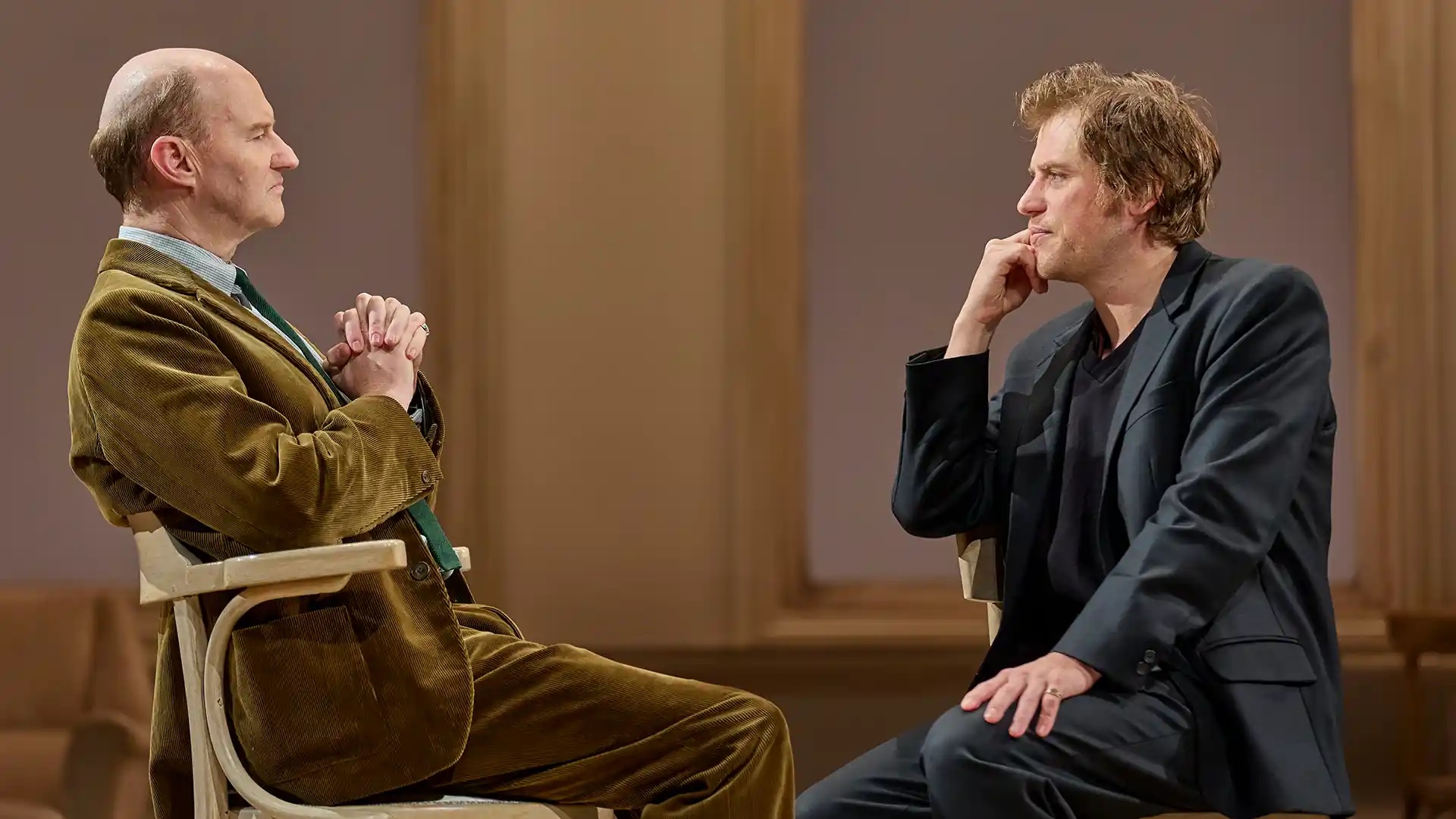
It’s 1964 and Welsh superstar Richard Burton (Johnny Flynn) has decided to turn down some lucrative film offers in order to perform Hamlet on Broadway. (We’ve all been there.) He’s decided that the director should be John Gielgud (Mark Gatiss). Now in his sixties and considered something of a has-been, he famously played the Danish prince to great acclaim as a young actor.

To complicate matters, Burton has recently married Elizabeth Taylor (Tuppence Middleton) – for the first time – and she reluctantly accompanies him, but finds herself banished from the rehearsal space and sequestered in a swish hotel room with an endless supply of alcohol, while her husband grapples with his role.

Jack Thorne’s fascinating play, beautifully directed by Sam Mendes, never shows us the finished production but lingers instead on successive rehearsals as director and star bicker and feud their way to a fresh vision of Shakespeare’s most-performed play. There’s a large ensemble cast at work – some eighteen of them – but most of the other actors are relegated to supporting roles, though both Allan Corduner as Hume Cronyn and Luke Norris as William Redfield manage to make an impression. Meanwhile, Gatiss and Flynn joust entertainingly with each other to sometimes hilarious effect, Gatiss perfectly embodying Gielgud’s sly and snarky manner, while Flynn turns up the bombast as the hubristic Burton, his working-class-lad-made-good bluster deliciously rendered.

Middleton too does well with her character, capturing Taylor’s earthiness and her uncanny ability to cross all boundaries, particularly in the scene where she acts as a kind of intermediary when Gielgud and Burton (inevitably) end up at each other’s throats. I love the scene where Gielgud reflects on the tragedy of achieving stardom at twenty-three, to which Taylor points out that she was just twelve when National Velvet became a runaway hit.

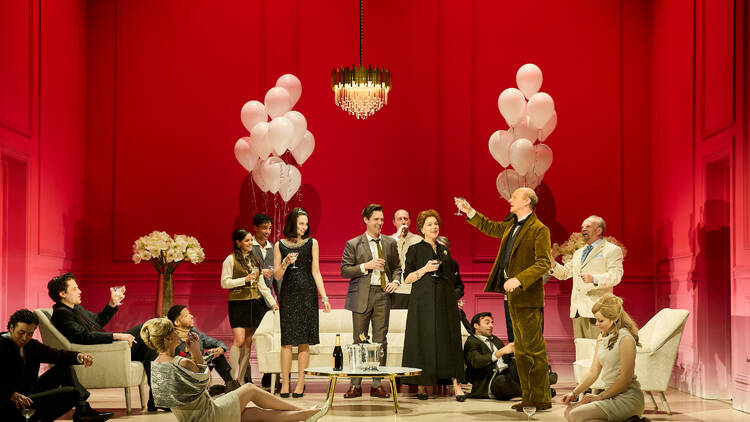
The production is also blessed with an extraordinary set by Ed Devlin, where scene changes are revealed using an ingenious expanding letterbox arrangement. I have no idea how this is achieved, but the effect is remarkable, the transformations so slickly done it feels almost like a series of magic tricks.

This is a play that will delight anyone who loves theatre and the way it works, a glimpse at the nuts and bolts that lie behind the glittering façade. It’s fascinating to see the players experiment with the source material as they gradually inch their way to what will eventually become one of the most successful theatre productions in history.

4.6 stars

Philip Caveney

The Northman

19/04/22

Cineworld, Edinburgh

It seems suspiciously like fate. Here I am – only just returned from a week in Shetland, where I’ve been researching Vikings – and this film is waiting for me at the local cineplex. Of course I have to see it. I can’t not see it. But I have some reservations. For one thing, despite the film’s almost indecent rash of five star reviews, I haven’t been exactly enamoured by Robert Egger’s previous offerings, The Witch and (more especially) The Lighthouse, both of which felt like cases of style over content.

It’s clear from the get-go, that The Northman is a big step up for Eggers (who co-wrote the screenplay with Sjon). His evocation of Viking life is vividly painted in freshly-spilled viscera across a massive landscape. The world-building here is dirty, ugly and thoroughly convincing. In the opening scenes, we meet young Prince Amleth (Oscar Novak), welcoming his father, King Aurvandil (Ethan Hawke), back from his conquests. Amleth’s mother, Queen Gudrún (Nicole Kidman), is rather less welcoming and the reason for that soon becomes clear. She has secretly allied with Aurvandil’s brother, Fjölnir (Claes Bang), who is determined to kill Aurvandil and his son, and take Gudrún as his wife.

If the story seems familiar, it ought to. The ancient Scandinavian legend of Amleth is the tale that initially inspired Shakespeare to write Hamlet.

Amleth manages to escape from the bloody mutiny and, when next we meet him, he’s grown into a thoroughly buff Alexander Skarsgård, who, adopted by another tribe, has become a fully-fledged wolf warrior, a berserker. An ensuing battle sequence leaves no femur unshattered, no skull uncleft. Those viewers who wince at bloody violence may prefer to avoid this film at all costs – or spend a lot of time looking away from the screen.

Amleth learns that his uncle Fjölnir has had his stolen kingdom taken from him and has been exiled to Iceland, where he’s attempting to make a new life for himself as a sheep farmer. Gudrún has gone with him and Amleth knows that he must follow. So he disguises himself as a slave (by first branding his chest with a hot coal) and stows aboard a boat taking a consignment of workers over to Fjölnir. On the hazardous journey across the ocean, he meets up with Olga of the Birch Forest (Anya Taylor-Joy), a self-professed earth witch, and quickly falls under her spell.

But can this new love quell the thirst for vengeance that has consumed him since childhood?

The Northman is by no means perfect. It’s at its best when depicting the savage lifestyle of the Vikings and I also love the hallucinatory images that often flood the screen, particularly Amleth’s repeated visions of the legendary Tree of Yggdrasill, where family members are suspended like ripening fruit from its entwined branches. There’s also a spectacular Valkerie ride that carries me headlong to Valhalla.

Kidman, though initially underused, does get one scene that puts an entirely different spin on circumstances and makes me appreciate why she’s a director’s go-to for so many difficult roles. I would also have liked to see more of Willem Dafoe who, as Heimar the Fool, has clearly been drafted in to fill the Yorrick-shaped hole in the piece.

If I have a criticism, it’s simply that the age-old theme of revenge offers little in the way of surprise – indeed, there’s one point in the film’s later stages that seems to offer a braver and less conventional solution to Amleth’s torture, should he be man enough to take it – but, perhaps inevitably, it’s thrown aside and our rugged hero goes back to the well-worn path he’s always been destined to tread. Which makes the final fiery confrontation a little underwhelming.

Still, there’s no doubt that this is Eggers’ most assured film thus far – and I’m definitely interested to see where he goes next.

4.2 stars

Philip Caveney

Ophelia Is Also Dead

21/08/19

theSpace at Niddry Street, Edinburgh

Ophelia is also Dead is – as you might infer from the title – Ophelia’s story, given more weight than Shakespeare ever intended. Here, the sketchy image of the deranged drowned girl is developed into a fully-rounded character, with a disctinctive voice.

The script, by Aliya Gilmore, is insightful and inventive, almost a forensic study of Hamlet and Ophelia’s function within it. Dripping with water in a ravaged wedding dress, Ophelia tells us who she really is.

Fionna Monk’s performance is impressive: all anger and anguish, determined to be seen. I like the meta-theatricality, particularly the notion that she is all Ophelias in all productions, facing a never-ending raft of badly-interpreted Hamlets.  She has been Ophelia for four-hundred years; she’s seen herself portayed in many ways.

However, for all its quirky originality, this Durham University play somehow feels a bit too essay-ish, like a student trying to demonstrate everything they know about Shakespeare. And I really think it needs to be a monologue; the rest of the cast are under-used, serving only as a distraction, interrupting Ophelia’s flow. The intensity of Monk’s interpretation is undermined by these pointless cameos.

Still, this offers a new and interesting perspective on a criminally overlooked character.

3 stars

Susan Singfield


Hamlet

Unknown-2

Royal Exchange, Manchester

29/09/14

Of all Shakespeare’s tragedies, Hamlet is surely the most daunting for any actor. The Royal Exchange’s version runs for a bum-numbing three and a half hours and incorporates so many famous soliloquies and one-liners, that even the most accomplished actor must work overtime to maintain concentration. Thankfully, that’s not a problem here, because this is one of the most compelling and satisfying Shakespearian adaptations I’ve ever seen. It might seem a novelty featuring a female actor in the lead role but it’s by no means a new idea. Sarah Siddons was the first to do it in 1777 (in Manchester, appropriately enough, though its reported that she had to drape herself in a long dark shawl to ‘preserve her modesty.’) and there have been a whole string of female actors who have followed in her footsteps over the years though, interestingly, nobody has attempted it since Frances De La Tour in 1979.

Sarah Frankom’s gutsy modern day retelling of the story features some brilliant touches. I loved the fact that Claudius and The Ghost were played by the same actor (the ever brilliant John Shrapnel) and I loved that Polonius had become Polonia – Gillian Bevan’s assured performance turning the character into an overreaching Mother. Her constant attempts to wheel and deal a marriage for her shy daughter, Ophelia (Katie West) provided the biggest laughs of the evening. And best of all, finally – FINALLY, here was a production that made good use of those two perennial encumbrances, Rosencrantz and Guildenstern, characters that many modern productions skip completely. Here they were portrayed as two punky slackers from Hamlet’s youth, always ready with a quip and a packet of crack cocaine, their cheery natures only making their ultimate betrayal all the more affecting.

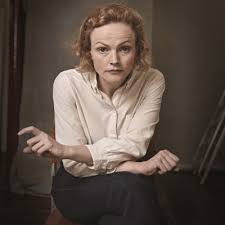
But of course no production of Hamlet can succeed without a charismatic lead player and I’m happy to report that Maxine Peake is simply astonishing in the role, by turns melancholic, sarcastic, brash and (why not say it?) macho. Make no mistake, this is an ensemble production in every sense of the word, yet pity the poor actor that must compete for the audience’s attention whenever she swaggers onto the stage. Even the climactic sword fight (an element on which many a production has foundered) is fast, furious and nail-biting right up to the final moment. The final applause threatened to take the roof off the building.

Due to its unprecedented popularity, the Exchange has added another week to the run. Get hold of a ticket by any means you can, because this is Shakespeare at its very best. A triumph.

5 stars

Philip Caveney