Festival

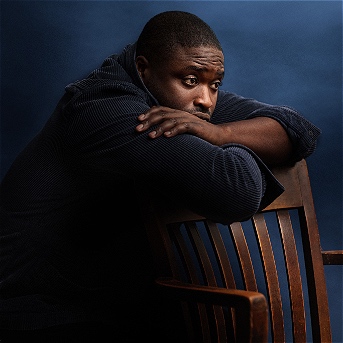
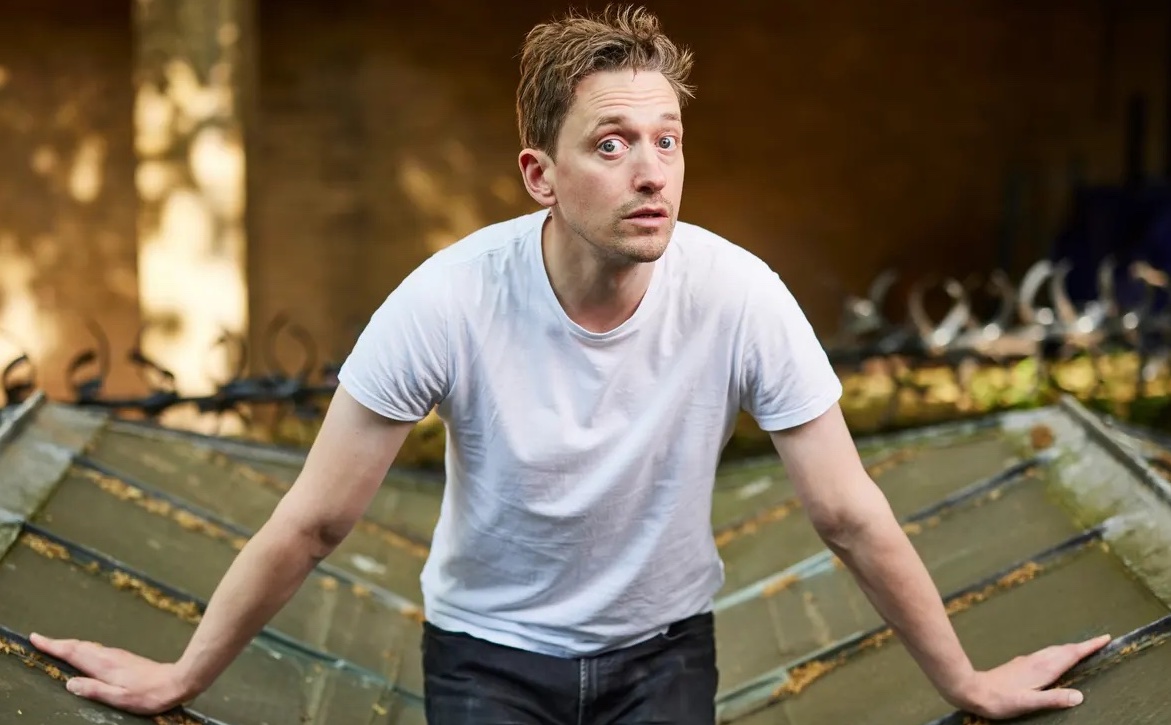
John Robins: Howl

27/08/23

Just the Tonic Nucleus (Atomic Room), Edinburgh

I’m not usually drawn to introspection. My preference is for comedy that looks outwards to what’s happening in the big wide world – but there are exceptions to every rule. I don’t like sci-fi but I love Woman on the Edge of Time. I don’t enjoy watching sport unless it’s tennis. I only like chocolate ice cream if it comes from Mary’s Milk Bar.

And I can get on board with introspection when it’s as well-crafted as Howl.

In this raw and achingly honest show, John Robins talks about a mental health crisis that precipitates a life-changing realisation: he’s an alcoholic. Having spent years in denial about his problematic relationship with booze, things finally come to a head when he… tries to buy a slotted spoon.

It’s hard to convey how funny Howl is because there’s nothing intrinsically amusing about a man falling apart. But Robins is a gifted comedian; he knows just how far to push his tragic narrative before undercutting the misery with a well-aimed quip. He’s emotionally intelligent, connecting with the audience by making observations we can all recognise – and then demonstrating how, for him, these relatable foibles can grow into something monstrous and uncontrollable. It’s the extremes that make us laugh – but it’s also the extremes that have driven him to the edge. Robins walks the tightrope well.

As a committed PCD, I thought I knew Johnny JR’s skillset but I hadn’t realised he could act (DI Robbyns notwithstanding). Here, he expertly physicalises the awkwardness of an encounter with his ex’s mum, where he’s desperately trying to make his obsessive thoughts sound rational. It evokes a weird sort of protectiveness: I want to look after him even as I erupt into laughter, and I suspect I’m not alone. It’s rare for someone to expose their vulnerability quite so openly and with so little self-pity.

I’m glad Robins is sober – and long may it last. To have made it through an entire Edinburgh run without a drink is a big achievement. This show is an aptly titled howl of pain, but it’s also strangely inspirational -and thus we end the Fringe on a high and hopeful note.

5 stars

Susan Singfield
Bacon

27/08/23

Summerhall (Cairns Lecture Theatre), Edinburgh

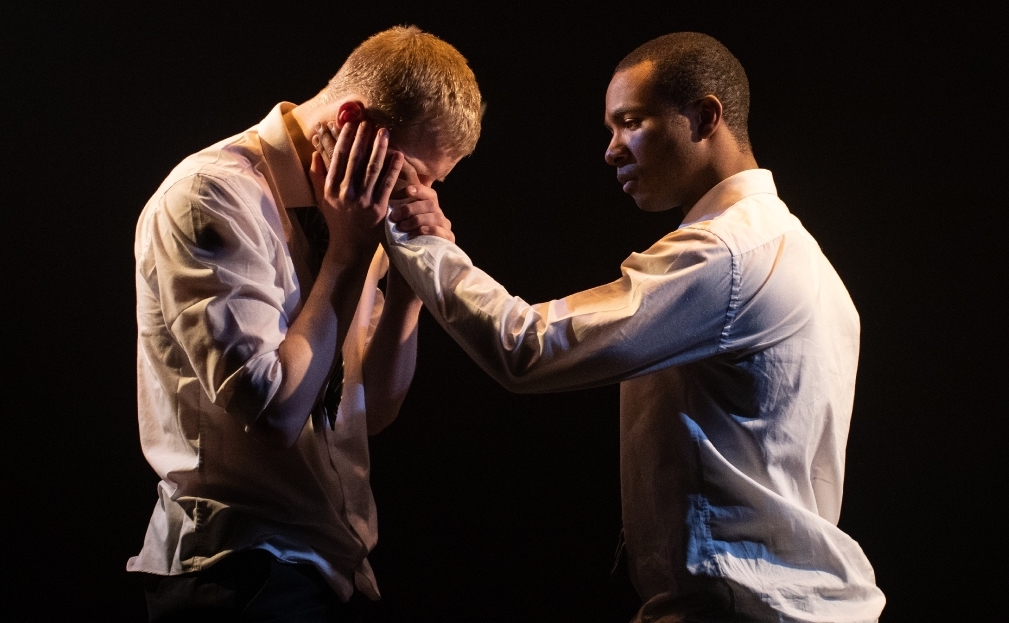
Mark (Corey Montague-Sholay) wants to tell us his story…

When we first meet him, he’s standing behind the counter of the coffee shop where he works and he’s transfixed, frozen in terror, because Darren (William Robinson) has just walked in and he’s staring at Mark. It’s been four years since the two of them last laid eyes on each other.

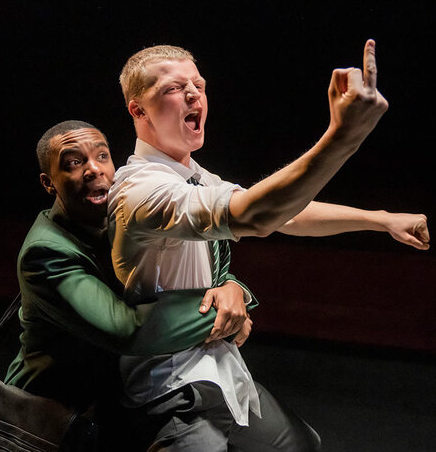
And with that we go back to their very first meeting when they’re just fifteen years old. Mark is the new kid at school: reserved, studious, endearing – yet somehow entirely friendless. And Darren, he’s the quintessential troubled teen: rebellious, irreverent, dangerous in that indefinable way. He’s troubled by his own burgeoning sexuality, and the toxic relationship he endures with his father.

It’s clear from the boys’ very first meeting that something has sparked between Mark and Darren, something that begins to smoulder and which will eventually ignite with tragic consequences.

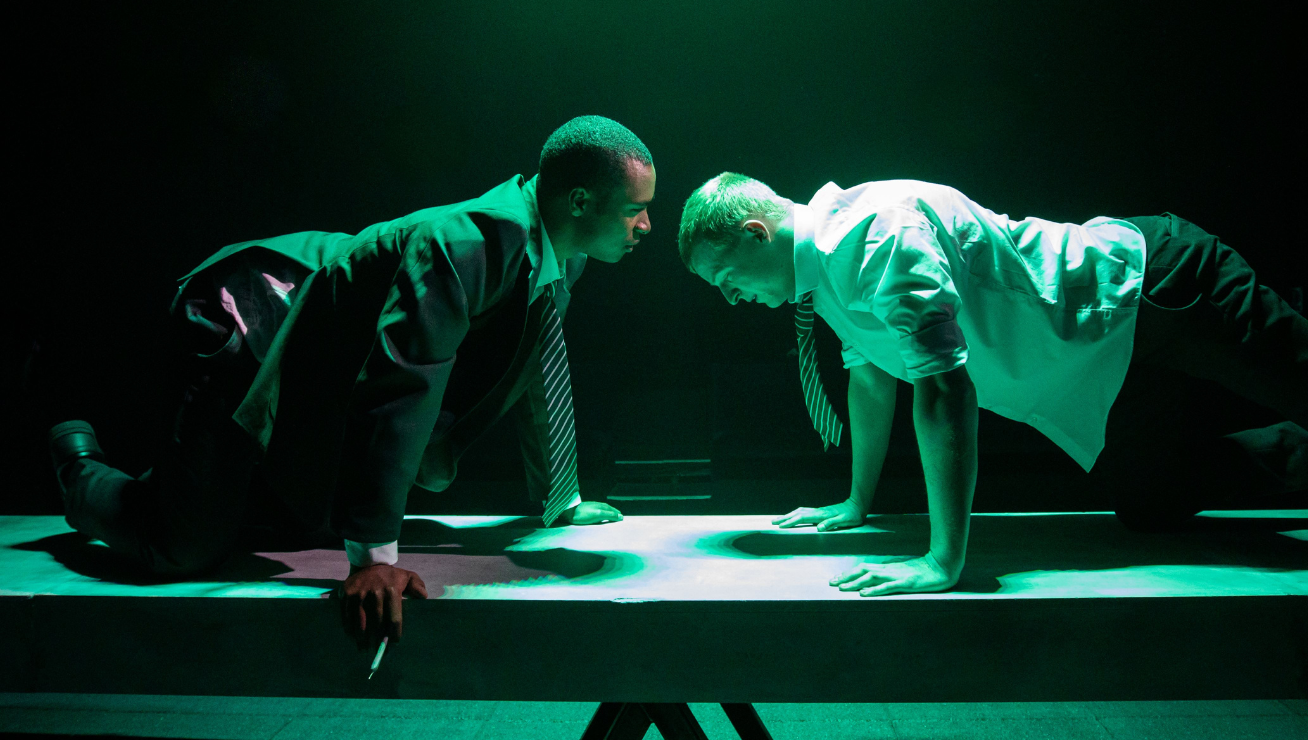
Written by Sophie Swithenbank and directed by Matthew Illiffe, Bacon is a whip-smart, tightly-constructed duologue that pulls me into its tenacious grip and holds me spellbound as the story unfolds, cutting back and forth between the two boys’ home lives, their developing relationship, their triumphs and disasters. The lines of dialogue run together, the two characters starting and ending each other’s sentences.

Natalie Johnson’s simple but effective set is a huge see-saw, rising and falling as the power dynamic fluctuates. The two performances are extraordinarily powerful and the play’s conclusion is quite simply shattering.

It would be hard to imagine a play more perfectly suited to the Fringe. Once again, I find myself wishing I had seen this earlier so I could trumpet its brilliance.

5 stars

Philip Caveney

Pilot

26/08/23

Summerhall (Tech Cube), Edinburgh

Some time in the near future, an ex-detective attempts to piece together the fragments of an old manuscript, left behind by someone called Al.

The play, by Lekan Lawal, award-winning Artistic Director of Eclipse Theatre Company, is as fragmented as the manuscript at its centre. It’s ambitious, questioning the accepted way in which we structure our narratives and calling for a new method of storytelling. The title suggests that Lawal is aware that this piece does not provide the answer, only a suggestion for where we might start.

He is a genial host, introducing himself and his subject matter in a friendly, inclusive way. The room feels like a welcoming space, and I find myself warming to him, wanting to like his performance. We start off with a few audience volunteers engaging in a game of musical chairs (Philip comes third), the victor invited to share his experience of another time he felt like a winner.

And then we’re off, into a heady mix of music, live video projection, dance and spoken word. Lawal reads from Al’s manuscript, and from Chekhov; we touch on Icarus and Superman, Knight Rider and Dalston market, family weddings, race and feelings of failure. I enjoy all of it: it’s engaging and entertaining and each snippet makes sense while it’s in front of me. But I’m not sure what it all adds up to and can’t help feeling that, in the end, all the trappings serve to obfuscate rather than illuminate Al’s story.

Nonetheless, if you can’t experiment with something new at the Edinburgh Fringe, then I don’t know where you can, and I’m pretty sure that within Pilot there’s an idea that really does have wings.

3 stars

Susan Singfield

One Way Out

24/08/23

Underbelly Cowgate (Belly Button), Edinburgh

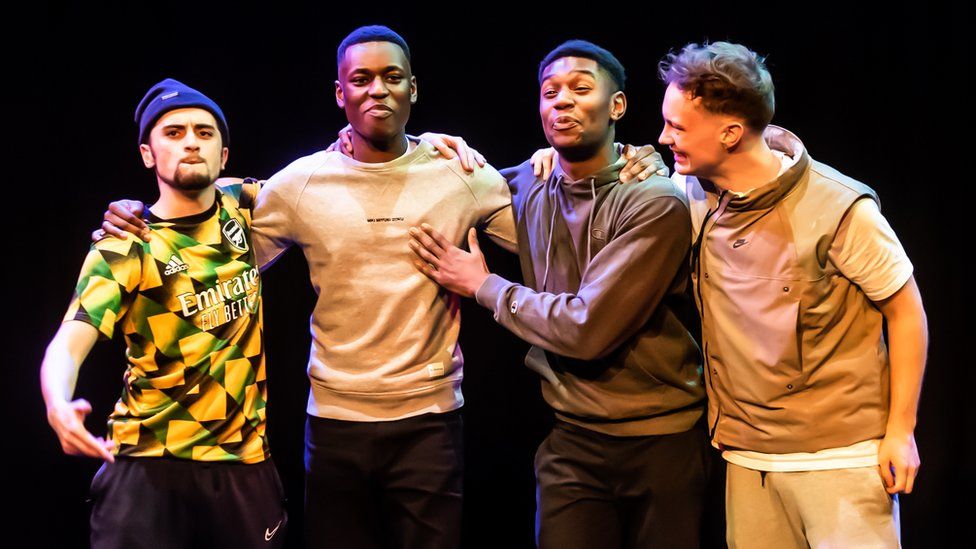
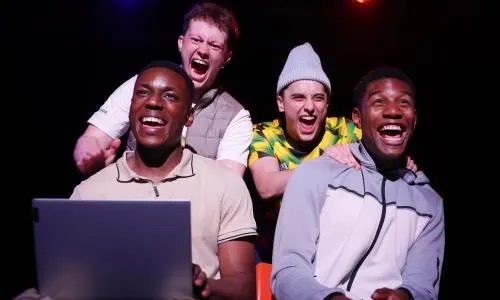
One Way Out by Theatre Peckham’s NO TABLE productions is a deserving winner of Underbelly’s Untapped award, “a game-changing investment in early and mid-career theatre companies wanting to bring their work to the world’s biggest arts festival”. Hats off to Underbelly: if we want the Fringe to be an inclusive event, one that celebrates vibrancy and creativity, then financial support like this is a must. And One Way Out is certainly worth backing.

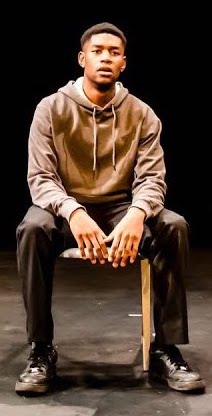
Written and directed by Montel Douglas, this is the tale of four friends, poised on the brink of adulthood, awaiting their A level results and planning their futures. The performances are high-octane; the direction bold and energetic. The boys are nervous about leaving school, but excited too. Tunde (Marcus Omoro) is focused on getting to university, the first step towards his dream of “a job with a suit”. Salim (Adam Seridji) plans on expanding his family’s business; his Uncle has one shop, but Salim will have many. Meanwhile, Paul (Sam Pote) is struggling academically. He does like performing magic tricks though. Maybe he could do something with that? Of the four, Devonte (Shem Hamilton) is the least certain of what he wants. He’s too busy worrying about his mum, who is on dialysis. Tunde is concerned about him. “You’re clever,” he tells his friend. “You’ve got to think about yourself as well as your mum. You should at least apply to university.”

But Jamaican-born Devonte’s UCAS application is his undoing. He doesn’t have the relevant documentation, can’t prove his leave to remain in the UK. He’s been here since he was nine years old, but now he’s being sent away…

Inspired by Douglas’s own memories of a cousin who was given a deportation notice at nineteen, One Way Out is a deceptively clever piece. Beneath all the fun and banter, all four young men are preoccupied with the question of what will happen to them, what their futures will look like. They’re dizzy with possibility. Devonte’s misfortune sends shockwaves through the group – and through the audience. It seems impossible that he should be uprooted against his will, torn from everything he knows – his friends, his sick mother – punished, as if he is a criminal. It should be impossible. Tragically, it is not. The Windrush scandal shames Britain, and Devonte’s plight highlights the atrocity. “It’s seventy-five years since the Windrush arrived,” Devonte says. “And seventy-five years since the NHS was founded. That’s not a coincidence.”

I like that the piece is brave enough not to offer a solution. There isn’t one. Three of the boys move on, for better or worse, into their adult lives, but we don’t find out what happens to Devonte because he’s gone. His friends’ efforts to save him fail. The system is brutal and its consequences dire. The audience just has to hope that Devonte will find happiness, and that Jamaica treats him better than the UK ever did.

4.3 stars

Susan Singfield

Nassim

24/08/23

Traverse Theatre, Edinburgh

Nassim (the play) is six years old, and has been performed by hundreds of acclaimed actors, including Whoopi Goldberg, David Greig and Cush Jumbo. The conceit is simple: each actor only performs the show once – without any rehearsal and having never seen the script. Nassim (Soleimanpour – the playwright) directs via a backstage camera and a loose-leaf script. Soleimanpour is Iranian but his plays have never been performed in Iran; Nassim is about his attempts to express himself creatively without being able to use his mother tongue. One by one, the actors speak for him, acting as a conduit for Soleimanpour’s words. It’s powerful and affecting.

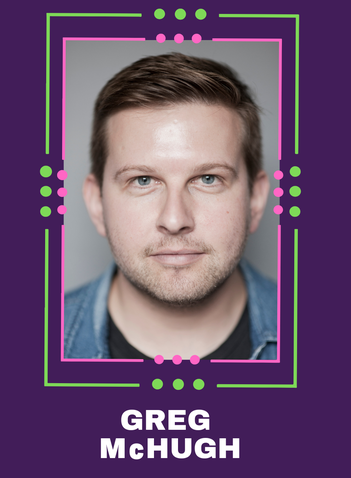
Tonight’s actor is Greg McHugh, best known to us as the terrifying Teddy in BBC Scotland’s Guilt. I’m happy to report that he seems a lot cuddlier in person, approaching Soleimanpour’s script with warmth, respect and humour. He gamely follows all of the instructions, including the more out-there ones, such as holding a sugar lump in his teeth (it makes sense soon after) and accepting cherry tomatoes as punishment for errors in a language game.

But Nassim isn’t just a play: it’s a lesson in Farsi and a reaching out across divides. The tone is gentle and benevolent, provoking smiles rather than laughs – and then, finally, tears. It’s a way for Soleimanpour, a conscientious objector, to reclaim his voice, to subvert the Iranian government’s attempts to silence him. For years, he was unable to leave Iran, and so he sent his scripts out into the world without him; now, he lives in Germany, and travels with them, joining the paper-doll chain of performers onstage, forging those connections in person. He’s freer than he used to be, but it comes at a price. He’s left behind his home, his family. His mother. Mumun. He teaches us a phrase: Delam tang shod barat. I miss you.

Only the hardest of hearts could fail to melt.

4.5 stars

Susan Singfield
Dom: the Play

17/08/23

Assembly Rooms (Ballroom), Edinburgh

The first thing to say about Dom: The Play is that it’s not what I’m expecting. Unsurprisingly, at the world’s largest arts festival, the vibe is mostly liberal and self-aware. Like its namesake, Dom: The Play is neither of these things.

This isn’t necessarily a problem – I’m all for challenging my own preconceptions – but the play just doesn’t really work for me. It’s not incisive or satirical; instead, it’s a seventy-five minute defence of Cummings, devoid of any critical analysis of his time in government. It’s easy to understand how people believed the rumours, cunningly circulated by playwright Lloyd Evans, that Cummings actually wrote the script. The closest the play comes to any kind of criticism is the acknowledgement that he didn’t actually manage to achieve what he set out to do.

Although the publicity material promises to reveal the truth about what really happened at Barnard Castle, it doesn’t: he’s never brought to task. In reality, Dom simply dismisses it in one line: “I didn’t break the law.” Surely, even if Cummings the character can’t see his own flaws, the play ought to expose them? Here he’s presented exactly as he seems to see himself: as a visionary hampered only by other people’s mediocrity.

Dom: The Play is an oddity in other ways too. It’s tonally uneven: the bad-wig pantomime buffoonery of Tim Hudson’s Boris sits uneasily alongside the long TED talk-style sections, where Cummings (a very convincing Chris Porter) is given space to expound on his ideas, while the sketches depicting Nicola Sturgeon, Michael Gove, civil servants and Guardian readers are very broad and rarely succeed in skewering their targets.

It’s all a bit icky. There’s something very misogynistic in the way an offstage Carrie Johnson is portrayed, as if she’s Eve or Lady Macbeth, responsible for her husband’s downfall, and there are some revoltingly classist jibes too, e.g. a line about Angela Rayner, which might well be a verbatim quote, but is presented here not as something awful that should never have been said, but as a funny joke, and one we’re invited to laugh at.

I leave disappointed. It feels as though this play is meant to rehabilitate Dom in the eyes of the public, but in truth it feels as smug and tone-deaf as the man himself. I’m angry all over again – about his boorishness and self-importance, and about the damage he wrought.

2.6 stars

Susan Singfield
Tituba

16/08/23

C Venues Aurora (Main House), Lauriston Street, Edinburgh

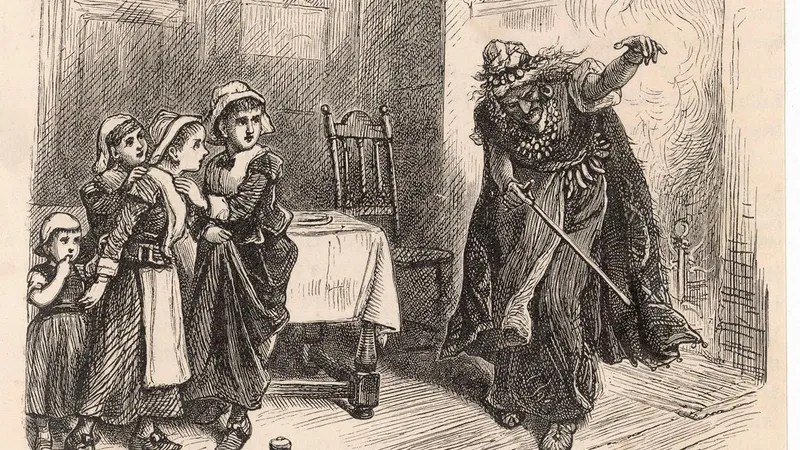
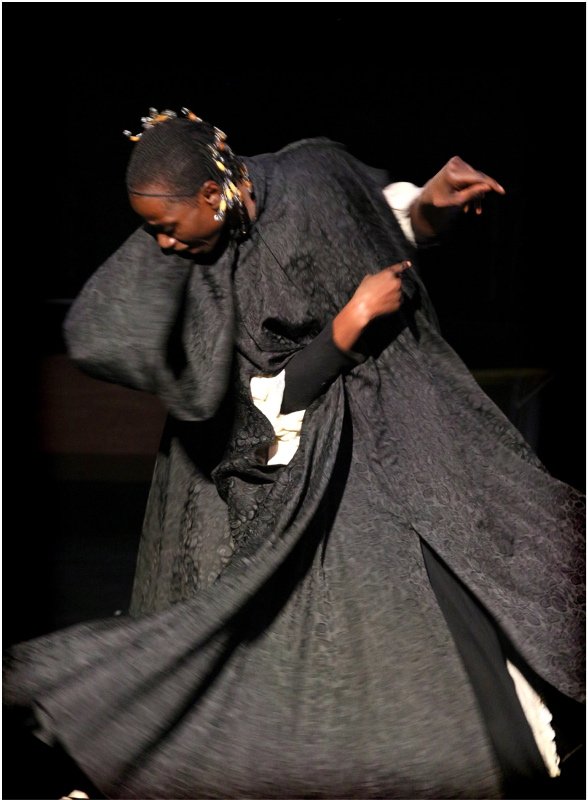
Written as a correction to Arthur Miller’s The Crucible, which relegates Tituba to the sidelines, Winsome Pinnock’s 2016 monologue reinstates her as a central figure, a key player in the Salem Witch Trials. Whereas Miller shows her practising witchcraft with the town’s white children, encouraging them to dance naked and sacrifice chickens, and then ignores her, Pinnock returns to the transcripts of the court cases, where Tituba was the first to confess, the first to name others and thus take her revenge on those who had enslaved her. Of course The Crucible is a wonderful play, but it’s a shame Miller silences Tituba as he does, because her story is really interesting, as well as important.

In this lyrical monologue, Pinnock explores Tituba’s backstory, as well as her motivation for denouncing the townspeople in Salem. I learn for the first time that she’s Caribbean, not African, and see how she has more reason than anyone else in the play to grasp this opportunity to seize power. Almost everyone in Salem is oppressed to some extent: the church exerts a strong grip, demanding adherence to its punitive codes. But there’s a clear hierarchy within this: first the white men, then the white women and then the white children. At the bottom of the pile are the Black women and children, the latter sold and sent away, the former worked to the bone and whipped on a whim. No wonder Tituba speaks out.

In this Africanus World production for C Venues, Faith Martin Abongo delivers an intense, compelling performance, accentuating the poetic rhythm of Pinnock’s words. This Tituba is riveting, illuminating; I learn a lot about her world. The section where she is beaten is hard to watch – as it should be – and it’s to Abongo’s credit that I can almost feel Samuel Parris’s cruel presence.

If there’s a criticism here, it’s to do with the staging. This is an intimate play, but the Main Hall is vast and cavernous and some of the words are hard to hear. I think the piece would work better if it were brought forward, closer to the audience, and if – instead of exiting between each scene, only to return moments later having made a simple costume change – Abongo were to remain onstage throughout.

All in all, this is a beautifully-crafted piece of writing, and Abongo does it justice.

3 stars

Susan Singfield

The Umbilical Brothers: The Distraction

15/08/23

Assembly Roxy, Edinburgh

Although this is (almost) our first experience of The Umbilical Brothers, they’ve been around for a long time, successfully plying their madcap blend of mime and soundscapes to appreciative audiences since the mid-90s.

We caught a glimpse of the sort of show they’re best known for at the Assembly Gala Launch, where David Collins performed a series of ever-more complex and surreal actions, accompanied by Shane Dundas’s weird and wonderful sound effects.

The Distraction is something else entirely though, a departure from their established style – although still just as silly and inventive. This show is all about the tech, specifically green screens and multiple cameras, and I’ve never seen anything quite like it.

You can almost hear them saying, “That’d be fun!” and then adding a series of ‘what-ifs’ until a show’s worth of shenanigans has been established.

Even while we’re waiting for the sell-out audience to file in, we get a sense of how cheery it’s going to be, as a series of groan-worthy jokes is displayed on the big screen that dominates the stage. It’s a canny move, setting the tone for the next hour.

There are some tech glitches in the first ten minutes, and it’s hard to tell if they’re real or part of the act. If the former, no matter – the delay is entertaining in itself. If, as I suspect, the latter is true, it’s a neat move, instilling a sense of jeopardy, and reminding the audience to be impressed by how much computer wizardry is being used.

Over the next sixty minutes, the duo mine the possibilities of live green-screen action, taking us from outer space to the depths of the ocean, via TV sports (played with babies – don’t ask), a guest appearance from Steve Jobs and more than one exploding head. There is audience participation – but not as you know it. And there are lots of dolls. If this all sounds like an amorphous mass of nonsense, then that’s exactly what it is – but brilliantly so.

I defy anyone to watch The Distraction without laughing all the way through.

4.5 stars

Susan Singfield

Blue

14/08/23

Assembly George Square (The Box), Edinburgh

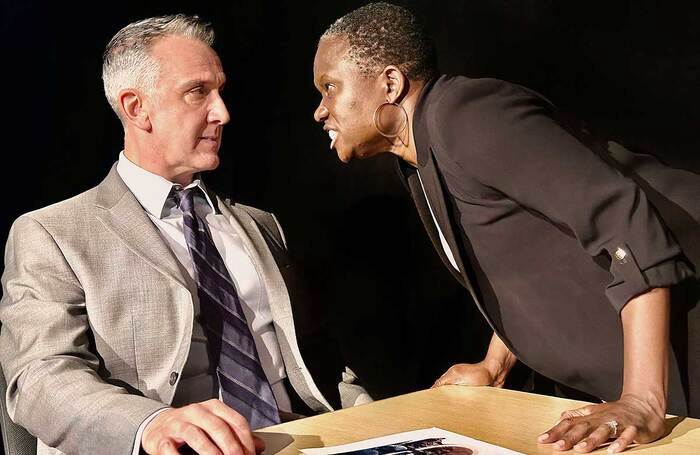
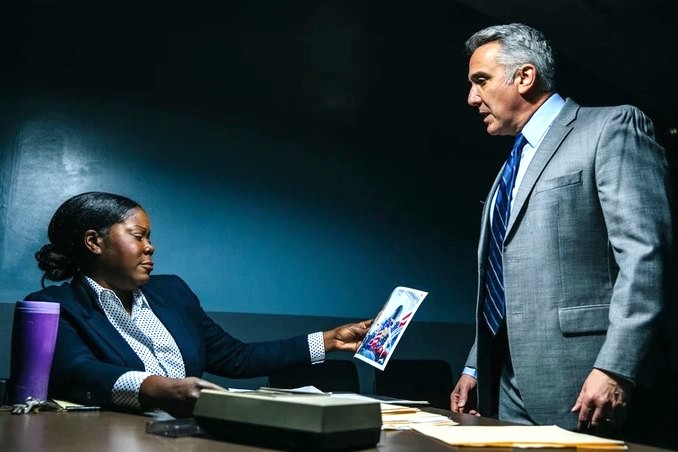
Blue by June Carryl is an intense two-hander, focusing on the aftermath of a police shooting.

Sully Boyd (John Colella), sorry, Sergeant Sully Boyd, as he is quick to remind us, is used to the Police Department’s internal discipline procedure. He’s had complaints levied against him before. Being interviewed by a fellow officer is just a formality, isn’t it? And anyway, this time the investigator is Rhonda Parker (Carryl), an old family friend. Sully’s known Rhonda since she was a kid; he was pals with her dad; heck, her husband used to be his partner, before he quit the force.

But something is different. For starters, this ‘mistake’ is much, much worse than the others. He’s shot and killed a Black motorist, and there’s no evidence that the guy did anything wrong. There is evidence, however, of Sully’s mounting racism, his conviction that something is being stolen from him, from all white men. As the aphorism goes, “When you’re accustomed to privilege, equality feels like oppression.”

Sully can reminisce about the good old days as much as he likes, but his true feelings have been brutally exposed, and another Black man has paid the price. African-American Rhonda isn’t about to let him off the hook…

Post-George Floyd, there has been a sea-change: first the groundswell of the Black Lives Matter movement and then pushback from those who think that, if Black lives matter, it means that white lives don’t. Blue is a blistering illustration of what this looks like in practice, of how a police force that is supposed to serve and protect us all equally is incapable of doing so, because its vision of ‘us’ is rooted in white supremacy.

It is to both Colella’s credit as an actor and Carryl’s as a writer that Sully does not come across as a two-dimensional baddy. He clearly sees himself as a decent guy, someone who’s put in his time serving his country, and just doesn’t understand why things have to change. He likes his position of privilege, even if he won’t acknowledge it.

However, it’s Carryl’s emotive performance that brings this important two-hander to its powerful and devastating conclusion.

4.6 stars

Susan SIngfield

Bangers

14/08/23

Roundabout at Summerhall, Edinburgh

Bangers is a tale told in rhyme, rap and R&B, a propulsive slice of gig theatre that feels as much like a party night as a performance. Set somewhere in the city of London, it’s the story of two unconnected characters, Aria (Danusia Samal – who wrote this) and Cleff (Darragh Hand), both of whom are going though rocky patches in their lives.

Cleff is coming to terms with the recent death of his father and struggling to decide whether to pursue his musical ambitions or, to please his Mum, take the safer route of passing exams and going to college. Aria is still haunted by a crush she had years ago, on the teacher who first mentored her and inspired her to perform. When Cleff and Aria bump into each other in a nightclub, it’s clear from the outset that they’re capable of making sweet music together, if only they can find a clear path through the debris of their respective issues.

The performance is presided over (you might more accurately say refereed by) an acerbic house DJ (Duramaney Kamba), who often intervenes when Aria and Cleff squabble and who employs a whole range of sound motifs to keep them in check. There’s a genuine good-time vibe to this show and Roundabout is packed to the rafters with cheering, clapping onlookers.

The story is told through ten different tracks. Samal and Hand take on several different personae as the story unfolds, but there are no real visual clues to help me spot when there’s been a change – which makes things a bit confusing at times. And, while I believe in Cleff’s story arc, Aria’s stretches my credulity. Could somebody really be hung up for so long over something so slight?

A late plot twist is probably meant to come as a big surprise, but I’m sure I’m not the only one who can see it coming.

Nonetheless, it’s hard to resist the sheer exuberance of the performances and the overall mood is so celebratory, I find myself compelled to go with the flow. By the show’s conclusion, I’m up on my feet with the rest of the crowd, urging the three performers on to their final joyful song.

4 stars

Philip Caveney