
Edinburgh

Kanpur: 1857

06/08/25

Pleasance Courtyard (Beneath), Edinburgh

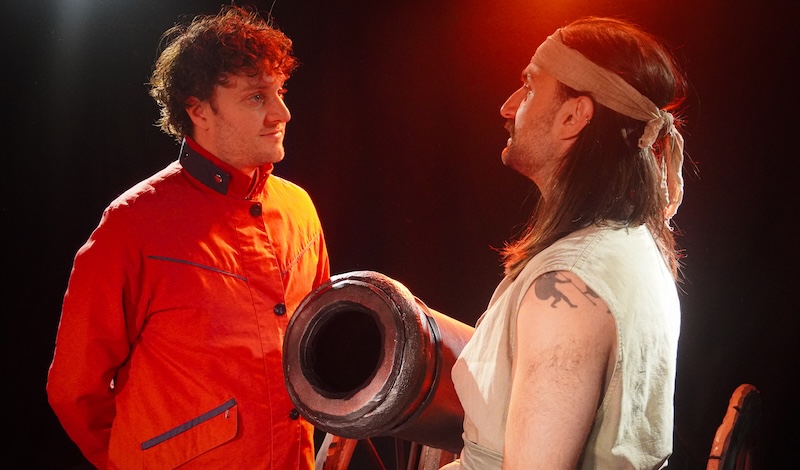
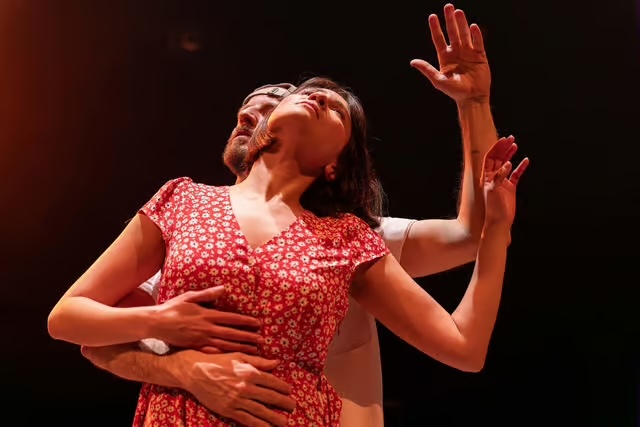
Set in Kanpur, India, in the aftermath of the so-called “Sepoy Mutiny,” an unnamed Indian (portrayed by the play’s author, Niall Moojani) is sentenced to death for insurrection. The captive is a Hijra, often described as ‘the third sex,’ who are traditionally assigned as male at birth, and can decide which gender they wish to assume in the fullness of time. The officer in charge of the execution, played by co-director Jonathan Oldfield, offers his victim an opportunity to speak, or rather demands that they do so. Afterwards, they will be strapped to a cannon and blown apart in front of a crowd of onlookers – or, as we’re known in these quarters, a Fringe audience.

A serviceable-looking cannon has been sourced, and it’s pretty much the only prop in evidence. I can’t help thinking about the difficulties of bringing such a cumbersome weapon down into the Pleasance Courtyard’s ‘Beneath’ performance space, but happily that’s not my job.

Oldfield’s officer serves in a distinguished Highland regiment, though his accent is – perhaps inevitably – cut-glass English. Now, he suggests, is the time for the condemned to explain what has brought them to this awful situation. A garrulous sort, the officer can’t stop interrupting his victim’s narrative, asking awkward questions, offering his own privileged perspectives, even at one point picking up a guitar and lending some lilting accompaniment.

Kampur: 1857 has interesting points to make about the nature of colonialism, reminding us that, during the conflict there have been acts of barbarism on both sides – though these observations come from Oldfield’s character, speaking from the more comfortable point of view of somebody who isn’t about to be evenly distributed across the landscape, and whose side’s reaction to the mutiny has been massively disproportionate.

The piece, which lies somewhere in that strange no-man’s-land between storytelling and drama is at its best when the two characters are exchanging views, bickering, joking, vainly trying to bring each other around to some shared worldview. Oldfield gets the best of it, his sneering superiority played at full-throttle, while Moojani’s dialogue is more reserved and contemplative. Meanwhile, tabla player Hardeep Deerhe provides a rhythmic accompaniment to his words.

It’s impossible not to feel swept up in the play’s final moments, as the victim waits, helpless and silent, their final seconds ticking inexorably away…

3.8 stars

Philip Caveney

Single Use

06/08/25

Pleasance Courtyard (Bunker Three), Edinburgh

Ella’s life is a muddle: she’s struggling to separate her mounting troubles and figure out how to deal with them. A bit like her recycling.

Ella (Verity Mullan) is an expert procrastinator. She’s unfulfilled by her bar job, but can’t be bothered to look for anything else. She likes the idea of her allotment, but tending to it is a step too far. She never pays her rent on time and doesn’t get on with her flatmate anyway. She cares about the planet, but it’s not her fault takeaways are delivered in plastic boxes – and who has the energy to cook? From the outside, it’s clear that Ella is depressed. It’s just that she hasn’t realised it yet.

Written by Mullan and directed by Emma Beth Jones, Single Use works well as a character study. Mullan is an engaging performer, imbuing Ella with a winsome vulnerability and spark. I particularly enjoy the physical comedy – her exaggerated sense of repulsion as she deals with her icky bin bags; the slurping of beer from Tupperware – all perfectly complemented by Flick Isaac-Chilton’s sound design.

However, there are too many disparate plot strands competing for our attention and it’s not always clear who the various voice messages are from. I’m confused by ‘Stusi’ (Ella’s young stepsister), who is first described as someone to whom “puberty has not been kind” – leading me to assume that she is about thirteen years old – but then turns up in a car to give Ella a lift home. The climate crisis element feels particularly under-developed, with the tantalising messages from Malaysia left to fizzle into nothing.

Ultimately, there are some promising ideas here, but they perhaps need a little more cohesion and development for this piece to fully realise its potential.

3 stars

Susan Singfield

The Other Mozart

05/08/25

Assembly George Square Studios (Studio Two), Edinburgh

You’ve heard of Nannerl Mozart, right?

Nope?

Me neither.

Her brother’s pretty well-known though. He’s so famous he’s known by just one name (which is probably a good thing, considering his original moniker was the unwieldy Joannes Chrysostomus Wolfgangus Theophilus Mozart – although he did later change this to Wolfgang Amadeus).

It turns out “Nannerl” (aka Maria Anna Walburga Ignatia; yep, Mama and Papa Mozart really liked long names) was something of a musical prodigy too, who toured with “Wolfie” when they were both children. This elegant production, written and performed by Sylvia Milo (in rotation with Daniela Galli), finally brings Nannerl out of the shadows and into the light.

It’s no great shock to discover that the reason we don’t know about her is because of her gender. Europe’s aristocracy were happy to watch a little girl perform, less so a grown woman. Here, with great artistry and precision, Milo shows us the toll this must have taken on the talented musician and composer, forced to watch her younger sibling garnering credit and acclaim while her own similar ambitions were thwarted, subsumed into marriage and motherhood.

Sadly, none of Nannerl’s original pieces survive, but Milo’s poised performance is beautifully complemented by Phyllis Chen and Nathan Davis’s compositions, which evoke the era perfectly, allowing us to believe in Nannerl’s genius.

The Other Mozart, directed by Isaac Byrne, is a work of art: a sophisticated blend of monologue, music and movement – and it’s a visual marvel too. The set is the costume; the costume is the set: a giant dress, designed by Magdalena Dąbrowska, fills the entire stage, waiting, predator-like, to trap Nannerl in its fathomless drapes. The image is intensified by Miodrag Guberinic’s cage-like panier, constructed – I think – from music stands, constricting Nannerl but also amplifying her stature, so that she rises monumentally, towering over us, defying us to forget her name.

An object lesson in reclaiming women’s history, The Other Mozart is exquisitely conceived and realised, a magnum opus in its own right.

5 stars

Susan Singfield

Charming

05/08/25

Greenside (Forest Theatre), George Street, Edinburgh

“And they all lived happily ever after…”

Everyone’s familiar with the traditional fairytale ending, but playwright Annie Lux has a question: what does that actually look like? Twenty years down the line, how are Prince Charming and Cinderella getting along? After all, she reminds us, there’s no mention of “together…” in that concluding line.

We meet Charming (Nigel Myles-Thomas) after a gruelling ‘petition day’. He’s tired, as tetchy as King Charles III faced with a leaky quill, and not at all inclined to see the insistent latecomer who’s waiting at his gate. But this last-minute petitioner is Cinderella’s fairy godmother (Claire Toeman) and, with a wave of her wand, she’s gained entry. Before he knows it, Charming is being served divorce papers. Cinderella wants out.

Directed by Lee Costello, Myles-Thomas imbues Charming with weary charisma, and his bewildered responses to Cinderella’s demands are very funny. I like the conceit that the characters know about the different versions of themselves, and use these as justification for their actions (“Only in Grimm! Not in Andersen!”), although I do wonder why punches are pulled. If we’re to acknowledge the ugly sisters having their toes chopped off in Grimm, why is there no mention of them having their eyes pecked out?

Apart from a brief appearance from Cinderella’s wicked stepmum (Margot Avery) – no iron shoes; no walking on fire – Charming is a two-hander and, while Avery makes a decent fist of the role, I don’t think her character has enough to do. To justify her sudden arrival in the final third, she needs to signal an escalation or be a catalyst for change, but that is not the case, so she just feels redundant. Another issue is the over-reliance on dialogue: nothing is conveyed without being spoken, which seems a shame as theatre is a visual art form and fairytales are so replete with imagery.

There are plenty of revisionist versions of this story, but not many focus on the characters in middle-age, and it’s interesting to see this whimsical representation of the effects of the passing years, even on those with charmed – and Charming – lives.

3 stars

Susan Singfield

She’s Behind You

03/08/25

Traverse Theatre, Edinburgh

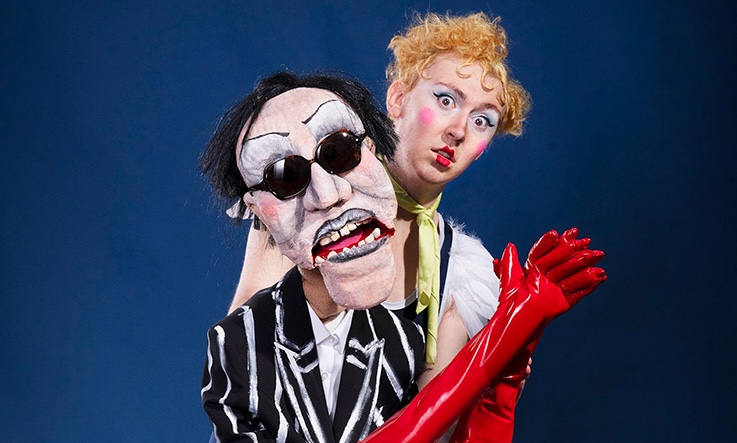
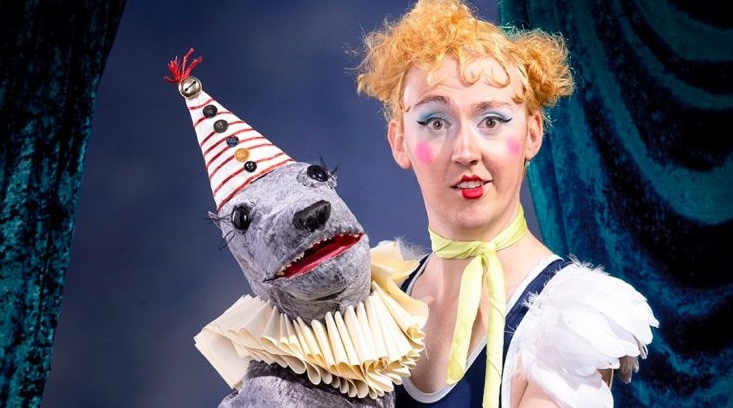
Johnny McKnight lifts the lid on all things panto in this hugely entertaining and informative one-dame show, directed by John Tiffany. She’s Behind You is an interesting hybrid, retaining all the bawdy glamour of Britain’s most popular theatrical form, while simultaneously offering a thoughtful commentary on its strengths and weaknesses. A seasoned writer and performer, McKnight has the audience in the palm of his spangly-gloved hands, eliciting gales of laughter as well as contemplative silences. He knows exactly how to tell his tale to best effect, effortlessly undercutting the more sombre moments with a raucous one-liner or comic song, carrying us along with him. It’s all beautifully designed by Kenny Miller and there’s a lightning-fast costume change (courtesy of Jennie Lööf) that will leave you breathless.

McKnight’s stage persona, Dorothy Blawna-Gale, is as warm as she is sassy, brash but never brutal – more Elsie Tanner than Cruella de Vil. “Punch up,” McKnight exhorts, reflecting on earlier iterations of his dame, where he followed in the footsteps of the Widow Twankeys and Ugly Sisters he’d so admired in his youth, making ‘harmless’ jokes about race, gender, sexuality and body size. “Times change,” he reminds us – and panto has to change with it. Some rules need to be kept – after all, the conventions of the genre date back to commedia dell’arte, a working-class art form that spurned elitism and focused on entertaining the masses – but some need to be broken.

For example, the gender imbalance doesn’t sit well any more, but most commercial panto casts are still at least 75% male, and the few women don’t get much agency, let alone the chance to tell jokes. There’s also an inherent homophobia, he tells us, which genuinely surprises me (I guess that’s my straight privilege showing). I’ve always thought of pantomime as gender fluid, sometimes sexist but never anti-gay. McKnight’s insider perspective opens my eyes, and I’m impressed by his efforts to walk the walk, writing scripts he can stand by and be proud of, serving his audiences rather than belittling them. Pantomime has survived so long by being adaptable and irreverent, so why is there so much resistance to challenging certain tropes?

But if all this sounds po-faced, then I’m doing McKnight a disservice, because – more than anything – She’s Behind You is a cyclonic blast, as big and bold as its glittering protagonist, and fully deserving the standing ovation it receives tonight.

So click your age-appropriate-but-sparkly orthotic heels together three times, and repeat, “There’s no place like the Traverse.” Dorothy Blawna-Gale will be waiting to see you. Oh yes she will!

5 stars

Susan Singfield

Alright Sunshine

03/08/25

Pleasance Dome (Jack Dome), Edinburgh

Edinburgh playwright Isla Cowan is making quite a name for herself in Scottlish theatre – and it’s easy to see why. We’ve watched two of her previous pieces (2023’s And… And… And… and 2024’s To Save the Sea) and been mightily impressed; today’s production of Alright Sunshine is even better: an intense monologue about being a woman, being a police officer, and the darkness lurking behind sunny days on the Meadows. 

PC Nicky McCreadie (Molly Geddes) is dedicated to her job. It comes first: before her family, before her relationships, before her health (who has time for eggs for breakfast when there’s a Greggs on the way to work?). Her dad was polis too, and she’s determined to be the kind of officer he’d be proud of… if he were alive. She’ll be as strong, as focused, as brave as he always urged her to be. She won’t give in to her feelings. She won’t cry. She won’t be weak like her mum. She won’t be a girl.

Directed by Debbie Hannan, Cowan’s taut, almost poetic script is brought powerfully to life by Geddes’ mesmerising performance: a tour de force with real emotional heft. The playful, observational tone of the opening sections – where the park’s ‘timetable’ is humorously detailed – is skilfully undercut by the gradual disclosure that all is not okay in PC Nicky’s world. She’s seen too much, given up too much, suppressed too many emotions in her bid to be the perfect policewoman. Now that carefully-constructed carapace is breaking apart and she has no idea what she’s supposed to do.

It would be a crime to reveal any more than this; suffice to say that this is a compelling play with an important message at its heart. If you can watch it without giving in to your feelings, without crying, without being a girl, then you probably need to talk to someone. Soon.

5 stars

Susan Singfield

Hold the Line

02/08/25

Pleasance Courtyard (Bunker Two)

Hold the Line is the type of theatre that speaks to its time. Right here, right now, when the nation’s beloved NHS has been starved of funds for the past two decades, is exactly the moment for writer/performer Sam Macgregor to shine a spotlight on one of its least glamorous aspects, the 111 non-emergency helpline.

Gary (Macgregor) is a call-handler. The job has more in common with other call-centre work than it does with what we usually think of as healthcare, but with emotional trauma thrown into the mix. In amongst the standard queries there are, of course, the timewasters, ranging from the humorously trivial (“I’ve got a lash in my eye”) to the pointlessly abusive (“Fuck off!”). But there are also desperate people who, unable to get a GP appointment or unwilling to face an eight-hour wait in A&E, stretch the definition of ‘non-emergency’ beyond recognition, forcing Gary to exceed his remit. He’s not a medic: how can he be responsible for matters of life and death? And yet here he is, the only point of contact in a situation he’s not trained for, as his boss tells him there’s no clinician available just yet, so keep the patient on the line… 

Macgregor imbues the protagonist with a raw humanity, while Gabriela Chanova takes on the supporting roles, most notably Tim, calling about his diabetic dad, and Tony, Gary’s supervisor. Regular disembodied tannoy announcements remind Gary (and us) that he has targets to meet, that ‘comfort breaks’ are essentially selfish, causing waiting times to escalate, and that everything he does is being monitored. There is no downtime, no space to process difficult calls and no information available about the outcomes. As so often seems to be the case, the caring professions are not cared for. 

Director Laura Killeen utilises the small space well: Tony’s agitated pacing back and forth along the same path, over and over, serves to underscore the repetitive nature of the work, as well as the  sense of being on a treadmill, going nowhere fast. I also like the simplicity of the design (by Nalani Julien) with its central focus on Gary’s desk, and the cunningly hidden phones, which are used to good effect in the frenetic ‘workout’ routine, highlighting Gary’s inner turmoil. 

I have just one criticism: the section where Macgregor plays ‘Top Brass’, showing how Tony faces the same pressures as Gary, makes some important points, but it’s somehow weaker than the rest of the play, the polemic less artfully disguised. 

That aside, Hold the Line is a tight two-hander, holding up a dark mirror to the state of our health service. Voices like Macgregor’s highlight what’s happening – and hopefully help to bring the change we need. 

4 stars

Susan Singfield

Lucky Tonight

31/07/25

Traverse Theatre, Edinburgh

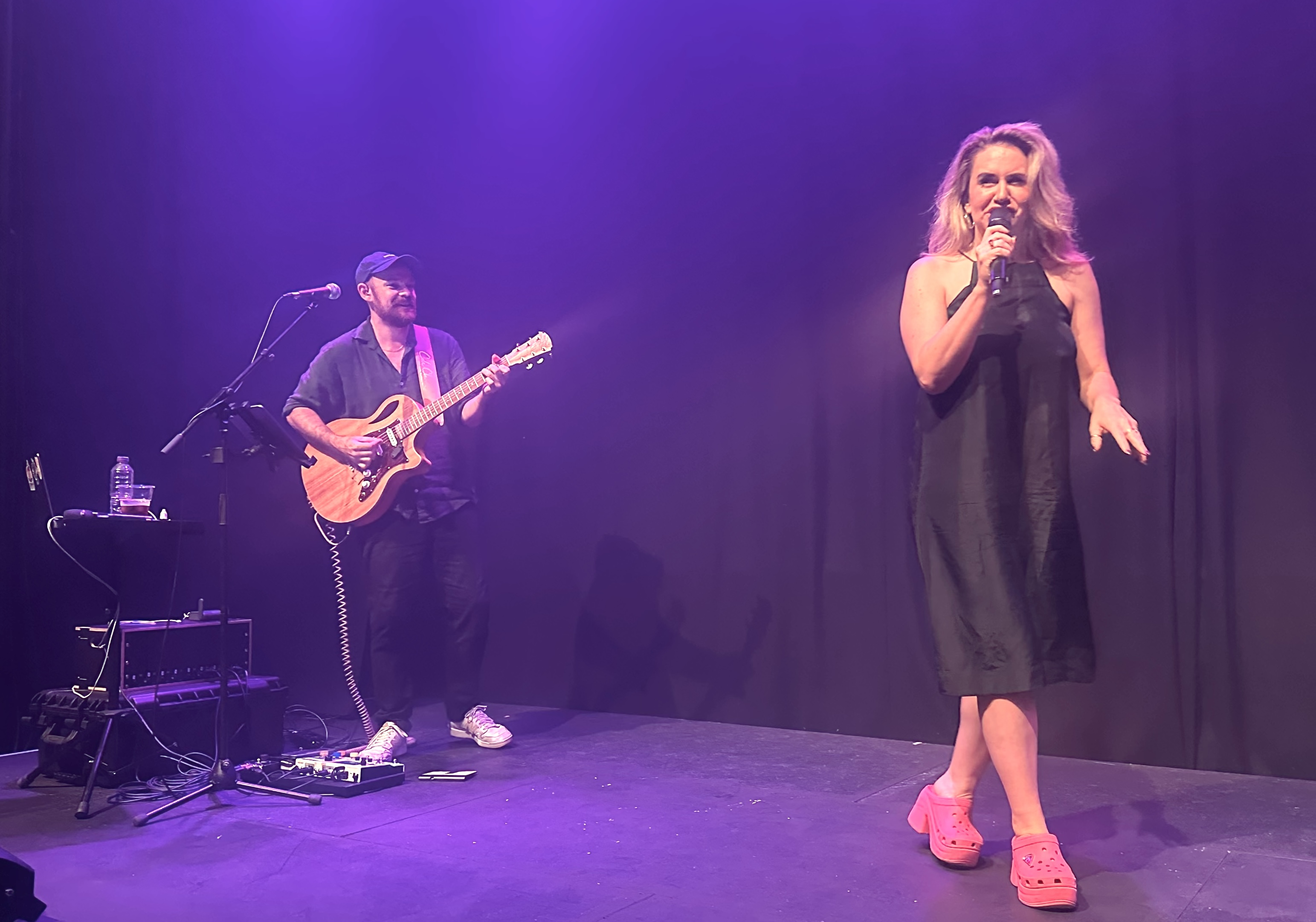
Lucky Tonight is an interactive play/pub quiz, performed by its creator, Afreena Islam-Wright. It’s a fascinating theatrical hybrid, the form mirroring the tale. After all, Afreena is used to having a foot in more than one camp: this show explores the complexities of growing up Asian in Manchester: part Gorton-rebel, part Bangladeshi-brainbox. Islam-Wright is an engaging storyteller, skilfully creating a relaxed, informal vibe as the genial host, before slowly revealing a much darker undertone.

Perhaps the vibe is a little too relaxed: Islam-Wright interrupts her own flow with frequent questions to both her director (Julia Samuels) and the tech desk, asking for clarification of where she’s up to or if she’s missed a chunk of text. This isn’t billed as a work-in-progress, so I’m a little disconcerted by these moments. The vast number of largely unnecessary props cluttering the stage doesn’t help. I like the ramshackle spirit of the piece, but I think it needs a more solid base, with clearer audio and visual clues to keep the protagonist’s complex narrative on track.

The quiz is fun, nicely judged so that it feels challenging without being impossible. We’re given tablets and some simple instructions, and we all enter gamely into the competition. Without giving anything away, there are some audaciously-themed rounds, which add edge and a sense of jeopardy. I think there’s scope to take these further, to make the piece more impactful. (Aside: thanks to our third team member’s impressive music knowledge, we actually win the quiz!)

Islam-Wright captures our sympathy: it’s impossible not to empathise with a young woman caught in a trap between her own desires and her family’s demands, finding a way to make peace with the people she loves without compromising who she is. The tone is gentle throughout, creating an unsettling contrast with what is revealed – and, for me, this is the show’s strength. I’m like the proverbial frog who doesn’t notice he’s immersed in boiling water until it’s too late, and I leave the Traverse after what’s felt like a fun-filled ninety minutes, surprised to find myself in awe of Islam-Wright’s resilience and my mind focused on deeper themes.

All in all, Lucky Tonight offers a fresh approach to a coming-of-age story. With more precision and a willingness to push the boundaries, it could be something really great.

3.3 stars

Susan Singfield

Chloe Petts: Big Naturals

31/07/25

Pleasance Courtyard (Forth), Edinburgh

(Happy to use she or they)

It’s that time again, when Edinburgh explodes with literally thousands of new shows – and for no particular reason that we can determine, first out of the stalls for us this year is Chloe Petts, who has named her show after er… her favourite things in the world (I’ll leave it to you to work out what they might be). She must be delighted with the turnout for her first performance, which sees the capacious Pleasance Forth very nearly packed to capacity. She strolls out and, seemingly without effort, gets the crowd on side.

Okay, it’s not revolutionary stuff, but her confident patter ranges from her formative years – when she found herself avidly embracing the lad culture of the early noughties (and often actually being mistaken for a lad in the process) – to her doomed attempts to hide her sexuality from her straight-laced but well-meaning parents.

As her story unfolds, Petts unleashes a whole barrage of howlingly funny one-liners and, at key moments, conducts a beautifully-timed series of high fives with a young lad in the front row, who doesn’t quite know whether to go with them or cross his arms in mortification.

All in all, it’s a promising start to Fringe 2025 and I leave having enjoyed a really good laugh throughout her sixty-minute set. In a world where such a commodity seems to be in increasingly short supply, what more can you reasonably ask from a stand-up?

4 Stars

Philip Caveney

Bring Her Back

26/07/25

Cineworld, Edinburgh

Okay, so Bring Her Back is predicated on my least-favourite horror trope: the monstrous mother – in this case, a formerly-fêted counsellor, rendered grotesque by the tragic loss of her child. However, although I can’t deny being put off by the reductive motif, nor can I forget how highly I rated Danny and Michael Philippou’s 2022 debut feature film, Talk to Me, so I’m keen to see their sophomore effort.

And, while there’s no clever subversion of the aforementioned trope, I’m pleased to report that the Philippou brothers have made another gloriously unsettling movie. Sally Hawkins is terrifying as Laura, the scary foster-mum who takes in orphaned step-siblings, Andy (Billy Barratt) and Piper (Sora Wong). The pair just need somewhere to stay for a few months until Andy turns eighteen and can apply for guardianship of his sister, but Laura has other ideas. She’s desperate to replace her daughter, Cathy, who drowned in her now-empty swimming pool – and Piper is the perfect match. Not only is she the same age, height and build, she’s also partially sighted, just like Cathy was. She has no idea that Laura is dressing her in borrowed clothes…

Andy’s not happy, but he isn’t sure what’s making him so jumpy. Is it grief? After all, he has just lost his dad. He doesn’t want to be negative about Laura, who’s going out of her way for him and Piper, but why is the other foster kid, Olly (Jonah Wren Phillips), so uncommunicative, and why is he locked in his room?

Bring Her Back is a tight thriller, never overstaying its welcome. The body horror is minimal but shockingly potent (dentists in particular are likely to wince), and I find myself holding my breath and peeking at the screen from behind my hands. Hawkins embodies creepiness, her hyper-focused characterisation dominating the film exactly as it should, but there are also strong performances from the supporting trio of youngsters, who find themselves at Laura’s mercy. I like the way that cinematographer Aaron McLisky blurs the focus to allow us to see some scenes from Piper’s point of view, and the dialogue (by Danny Philippou and Bill Hinzman) is nicely scripted.

There are a couple of areas that could do with sharpening, such as what exactly has Laura done to Olly? And where has she found the how-to videos she obsessively watches? But these are minor quibbles, far outnumbered by the clever moments that make the whole thing eminently watchable.

Go see it, if you dare. Grapefruit.

4.3 stars

Susan Singfield