Edinburgh

Night Waking

01/10/25

Traverse Theatre, Edinburgh

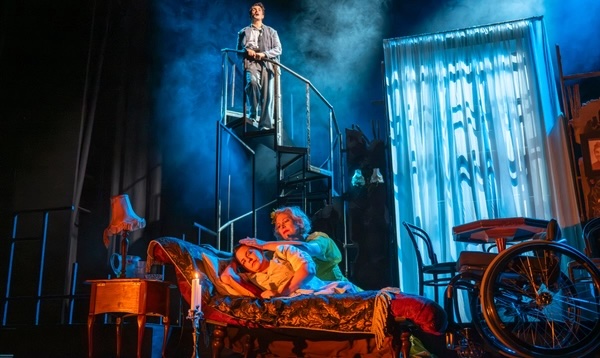
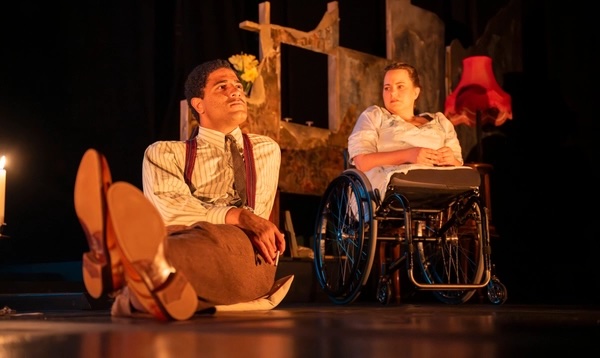
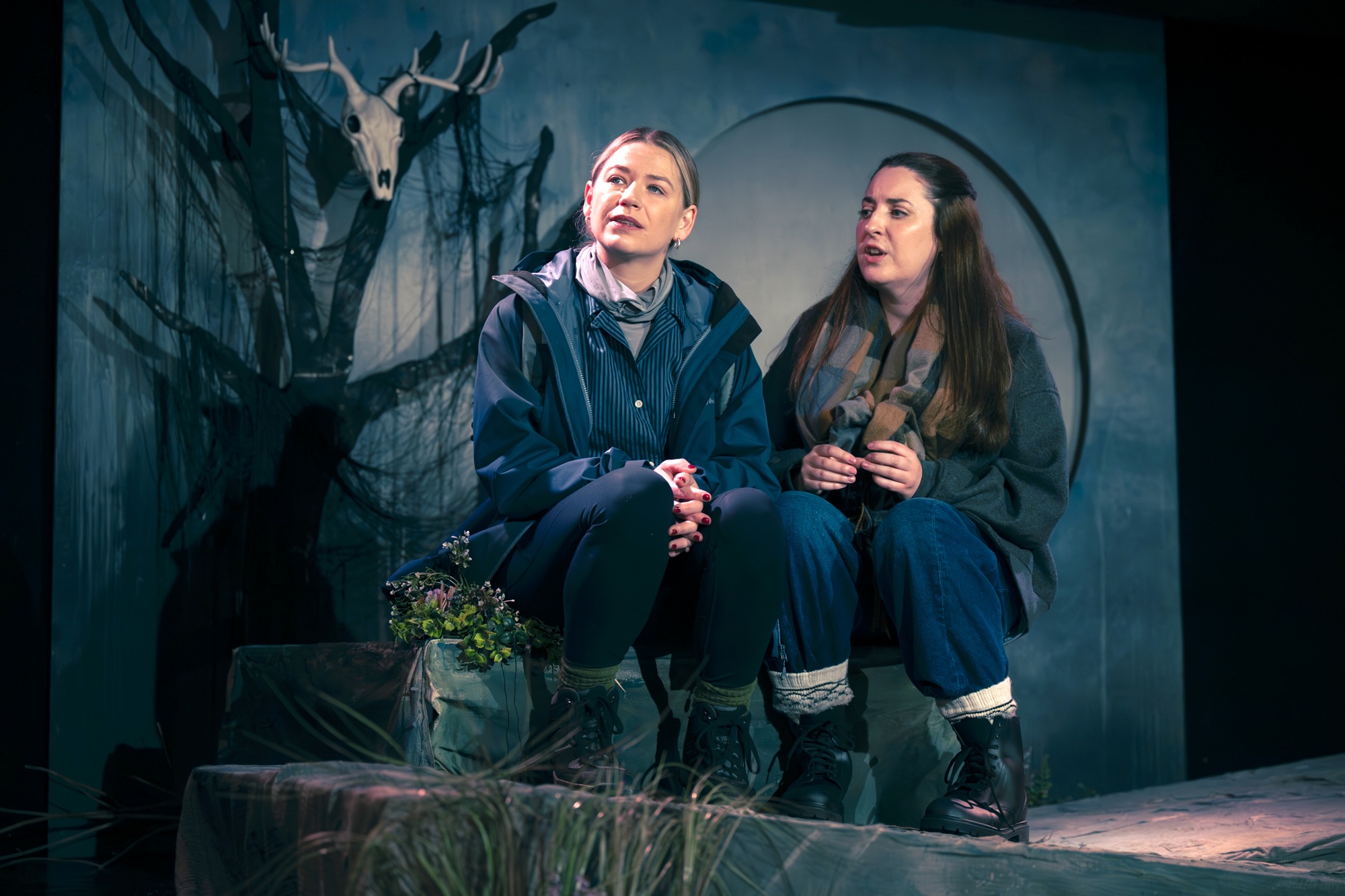
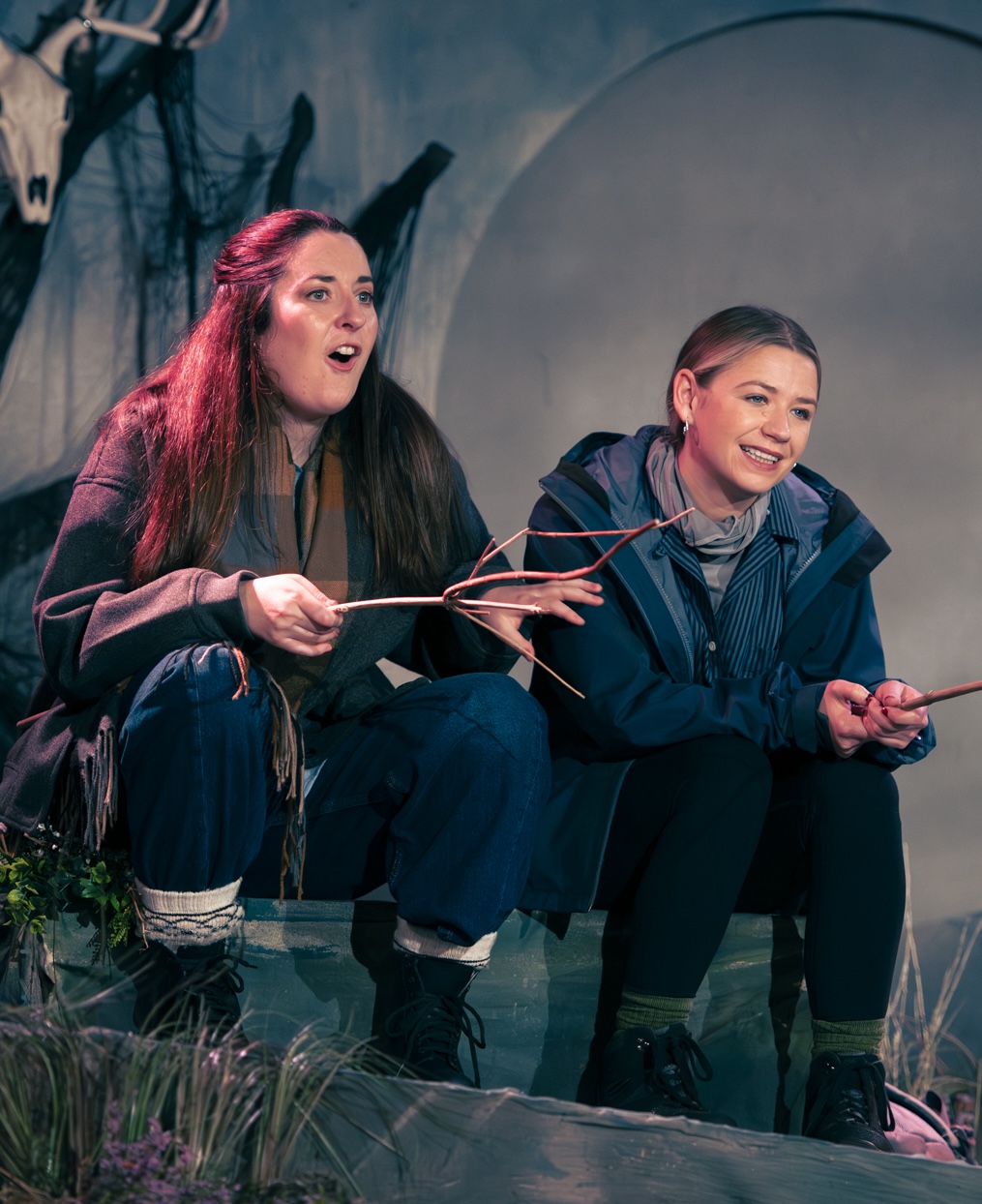
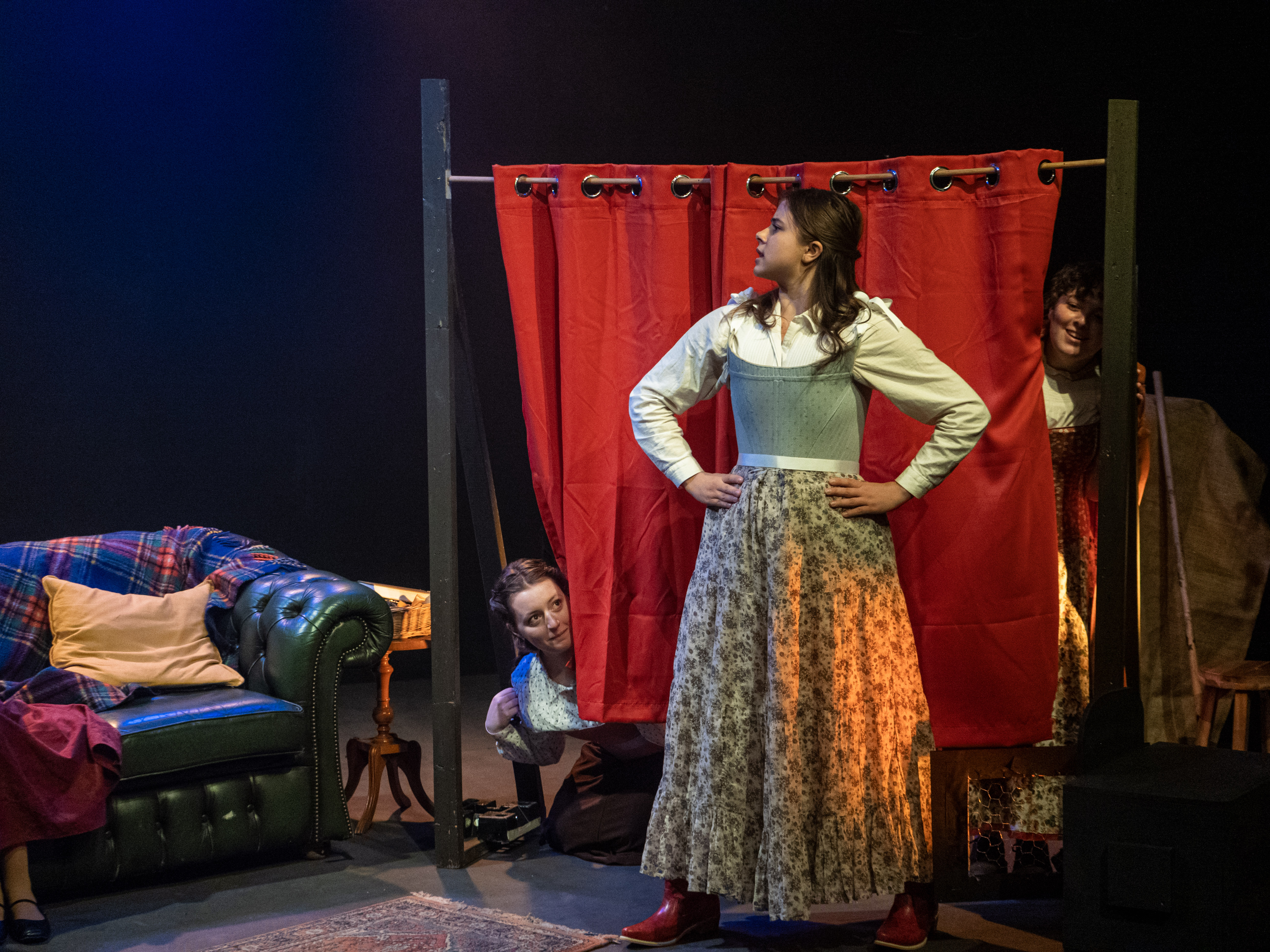
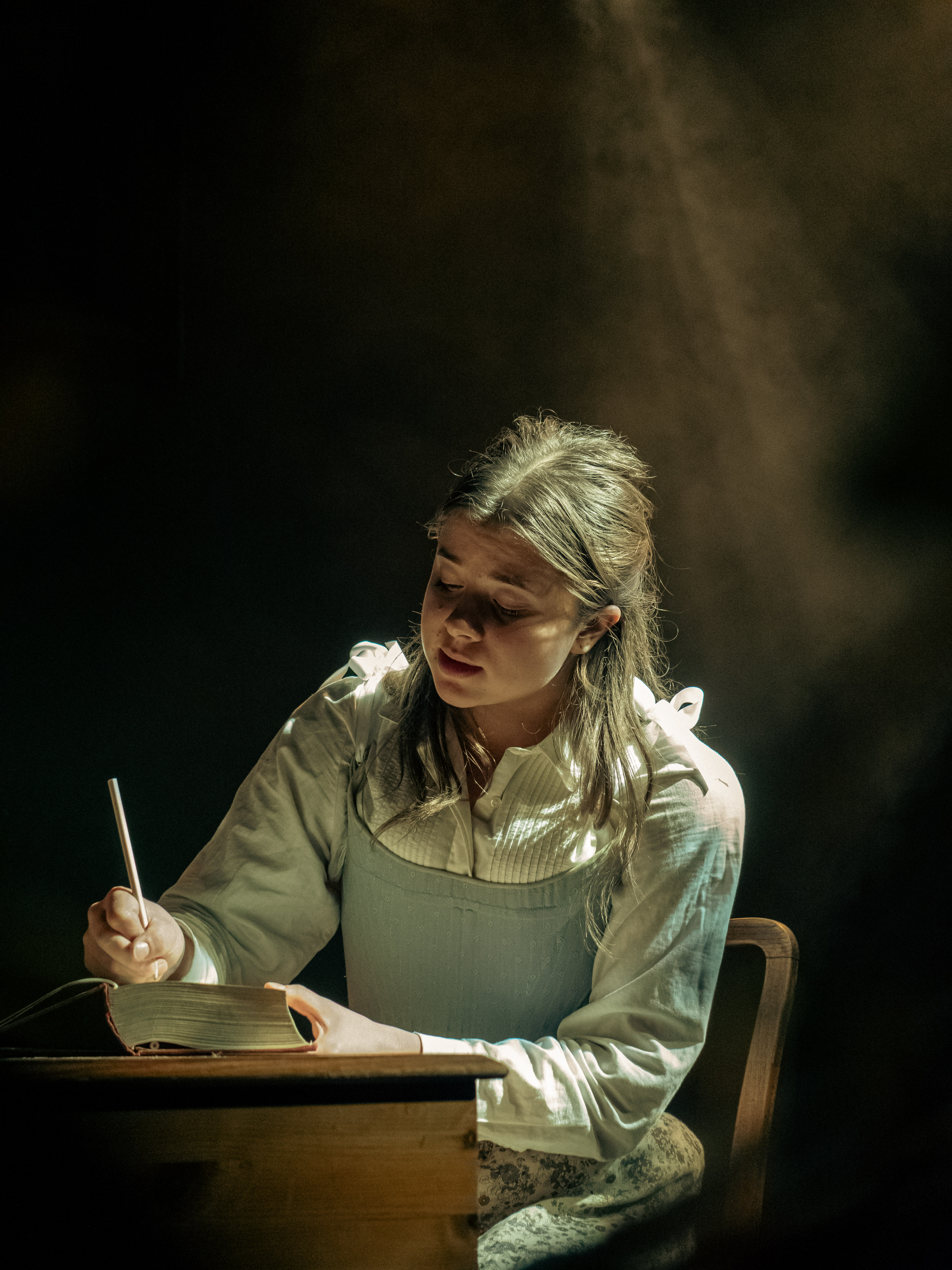
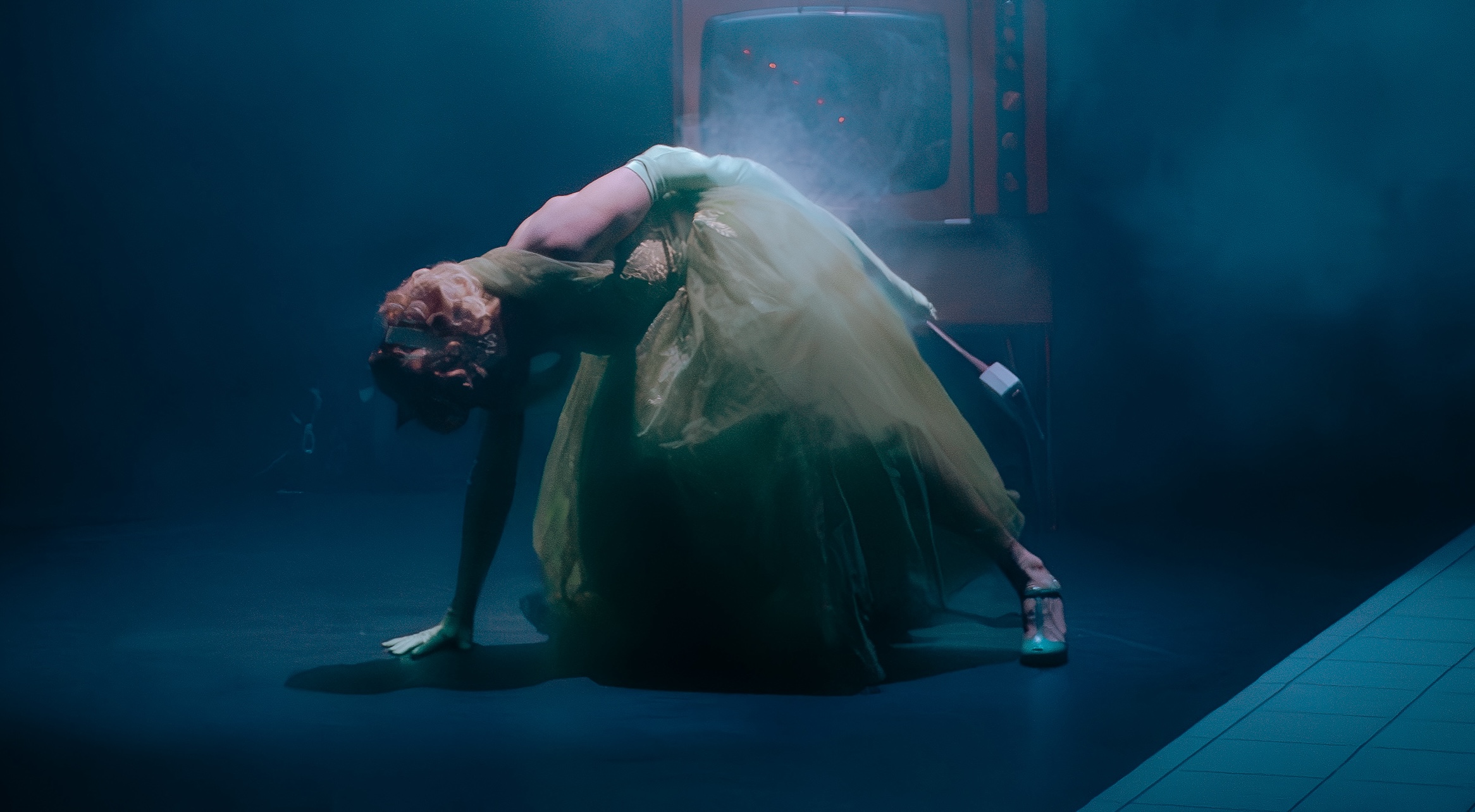
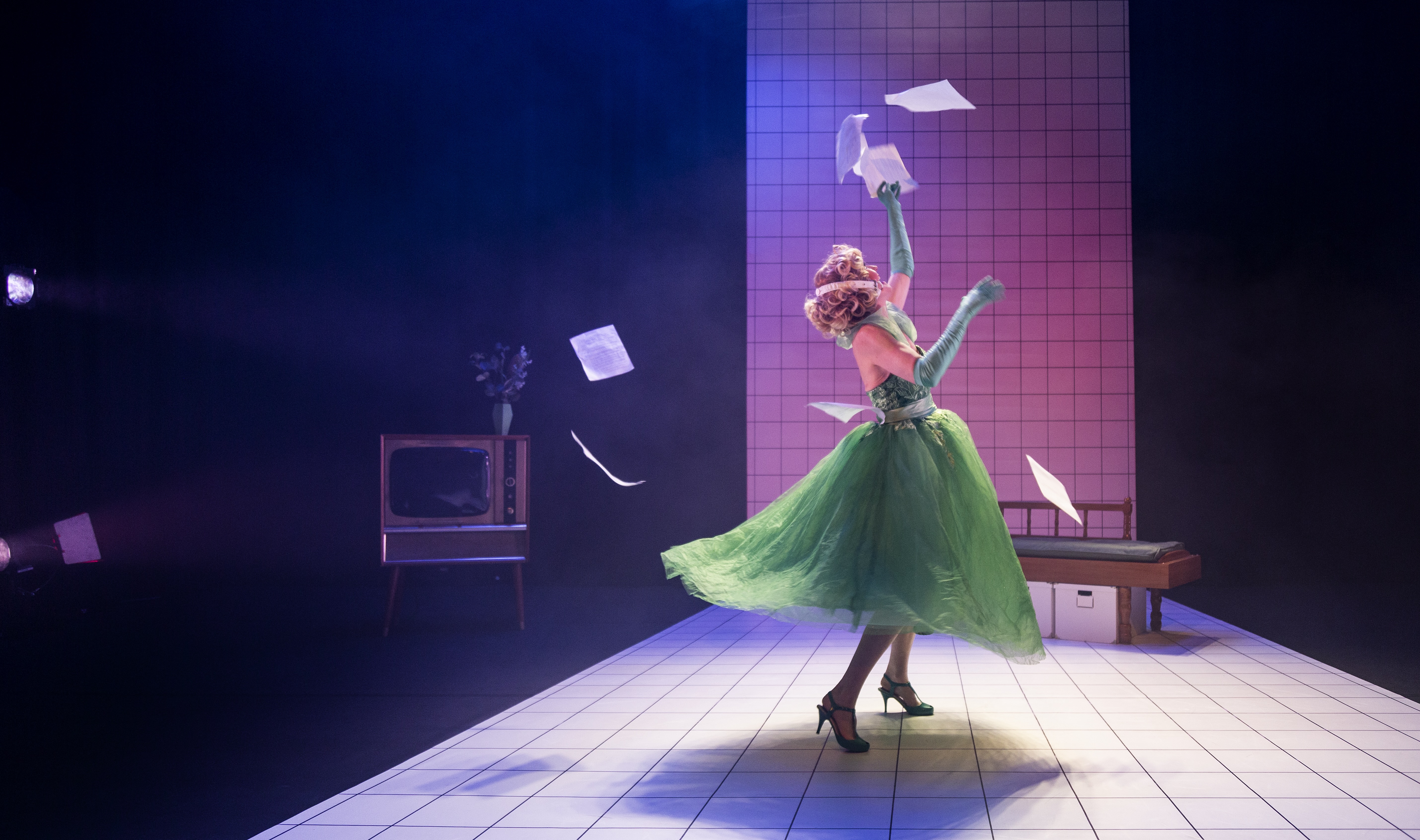
Adapted from Sarah Moss’s novel, Shireen Mula’s Night Waking is complex and demanding, exploring motherhood, colonisation and the ramifications of history. Nicola Jo Cully performs this challenging two-hour monologue with aplomb, segueing between a range of disparate characters, convincingly portraying the protagonist’s mounting despair.

To be fair, despair seems like a reasonable response to the situation Anna finds herself in. Temporarily uprooted from Oxford to a remote Scottish island, she feels marooned, alone all day with her two young children, while her husband, Giles, conducts his ornithological research into the declining puffin population. Her own academic career has stalled since she became a mum, and her attempts to write are stymied by the overwhelming demands of childcare and housework. She’s already feeling angry and depressed – murderous, even; suicidal – so the discovery of a baby’s bones in the garden is the final straw.

And it’s not the only skeleton in the manor house’s cupboard. Giles has recently inherited the island, and historian Anna is horrified when she uncovers evidence of the atrocities his ancestors perpetrated. No wonder the locals are so unfriendly; old resentments run deep.

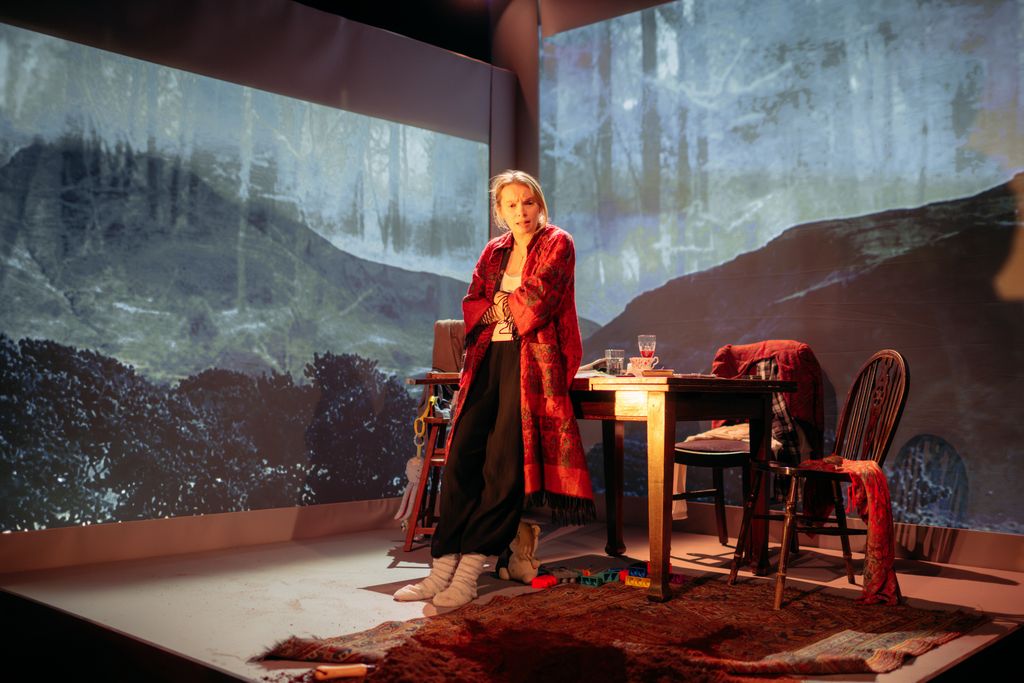
I love the overlapping nature of the storytelling here, the way the script skips back and forth in time, slowly peeling back the layers to reveal more about both Anna’s situation and the island’s dark history. Rebecca Atkinson-Lord’s agile direction is complemented by Hugo Dodsworth’s impressive set and video design: the projected background images jolting us from one scene to another, as scattered and disconnected as Anna’s sleep-deprived thought processes; the open grave an unmistakable metaphor for digging up the past.

However, I’m not always convinced by the content. The historical aspects are a matter of record so – shocking though it is – I can easily believe that landowners forcibly shipped the impoverished islanders to Canada, and that infant mortality rates were devastatingly high. It’s the contemporary sections that stretch credulity. Am I really supposed to accept that an Oxford professor would allow her husband’s complete abdication of parental responsibility? That an educated, well-to-do 21st century man would interrupt his wife’s work meeting because their baby won’t stop crying? Any family wealthy enough to own an entire island would surely hire a nanny if they were struggling to cope.

A play to admire, perhaps, rather than to enjoy, Night Waking is wide-ranging and ambitious, as thought-provoking as it is informative, and I find myself utterly absorbed in Anna’s tale. The play’s closing statement, revealing how little has changed for the Highland’s inhabitants over the years, provides a hammer-blow of a conclusion.

4 stars

Susan Singfield

FEIS

23/09/25

Traverse Theatre, Edinburgh

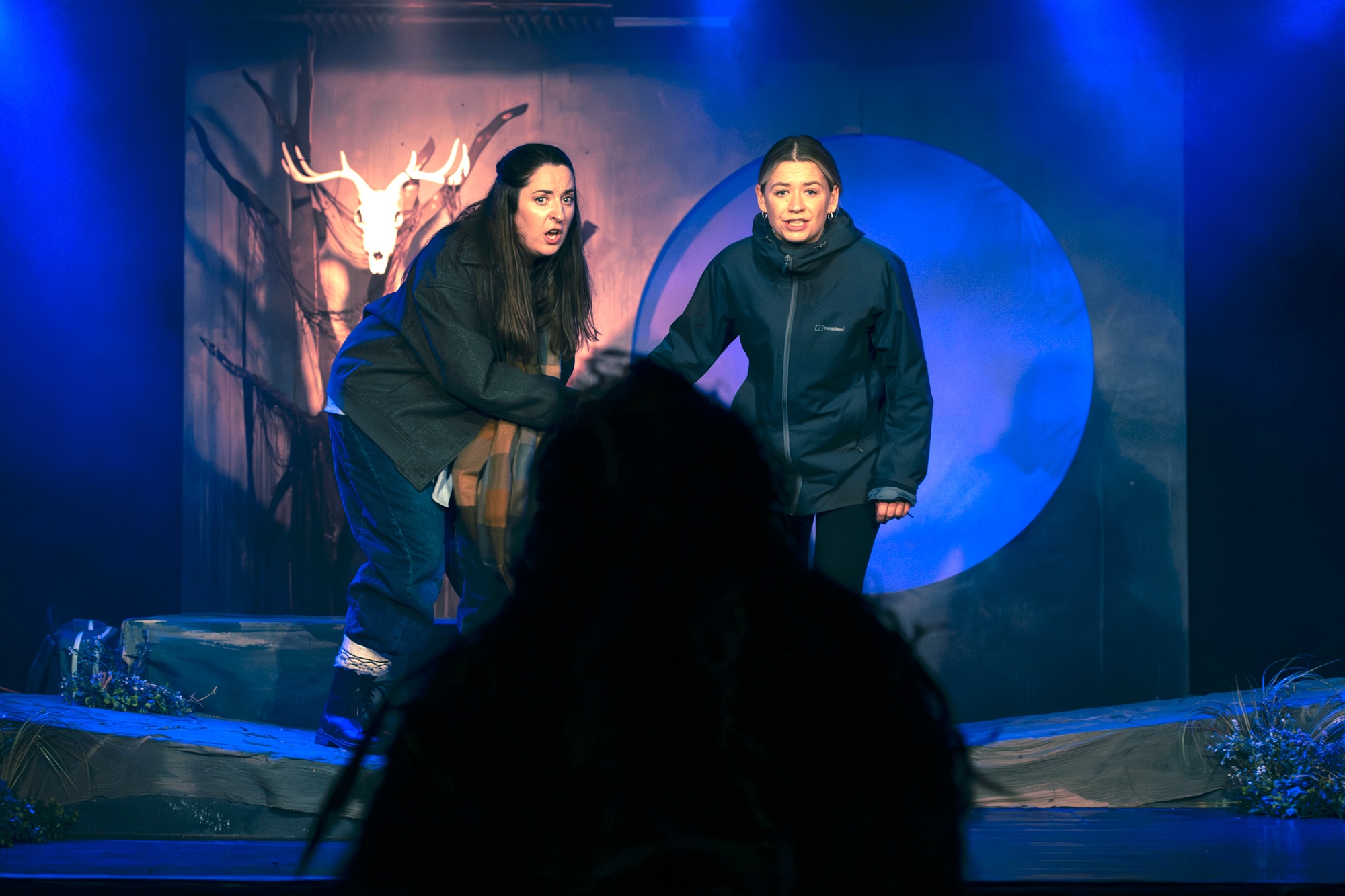
All is not well at Maguire’s School of Irish Dance. Back in the day, this Glasgow-based outfit was seen as a leader in its ghillie-footed field, when Deirdre (Louise Haggerty) won enough rosettes to paper the walls of her teenage bedroom. Decades later, the school’s fortunes are flagging disastrously and she’s been reduced to offering a ‘VIP’ service, performing online for an exclusively male clientele, who are not above offering extra money for her used socks.

Deidre’s mother, Maura (Julie Coombe), is blissfully unaware of these new measures but, when her teenage granddaughter, Aoife (Leah Balmforth), falls flat on her face at the 2023 Irish World Championships, things look pretty grim. Then Maura manages to scare off the school’s only other decent dancer and it’s clear that something has to give…

Billed as a dark comedy – though perhaps the term ‘farce’ might be more appropriate – FEIS (pronounced fesh) is a cautionary tale about ambition and the lengths to which some people are prepared to go to in oder to secure a win.

Writer Anna McGrath pursues the laughs with a vengeance, though it has to be said that the various twists and turns of the story often defy credibility and, in one particular instance, a real-life star of the Irish dance world has a pretty heinous accusation levelled against him.

Haggerty gives the lead role her all, even throwing in what looks to this novice like an impressive bit of Irish-dancing, but I remain unconvinced that anybody would go to the lengths Deidre does in order to attain her objective. Balmforth feels severely underused throughout, while Coombe’s is obliged to deliver a series of fat-shaming comments at an unseen dancer that feel somewhat at odds with contemporary thinking. (This may be the point but it feels ill-judged to me.)

Musician Brian James O’ Sullivan adds some spirited jigs and reels to the proceedings. Michael Flatley, meanwhile, was unavailable for comment.

3 stars

Philip Caveney

Coast & Creel

20/09/25

Fountainbridge, Edinburgh

It’s a rainy evening in Edinburgh, and we’re both in the mood for seafood. Fortuitously, a new establishment has recently opened, just a stone’s throw from where we live. As the name suggests, Coast & Creel specialises in the stuff (a creel being a traditional wicker basket in which all things aquatic can be stored). And, lest I’m in danger of putting off all those diners who cannot bear the fruits of the sea, I should perhaps add that the restaurant does offer a selection of steaks, which (at least from a short distance) look pretty enticing.

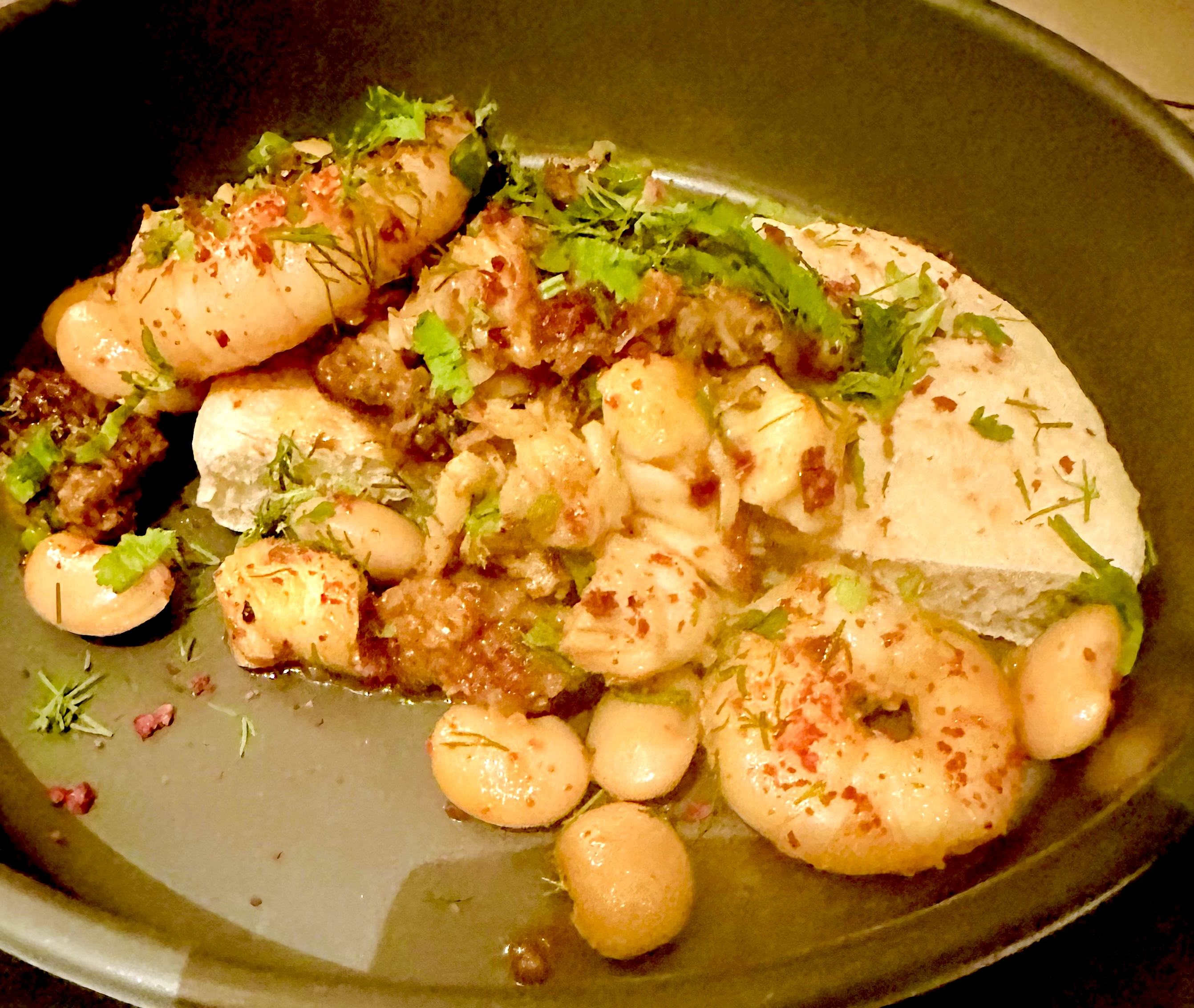
I start with Chargrilled King Prawns, which arrive looking (and smelling) suitably enticing. They are perfectly cooked, left just long enough on the grill to retain that soft, buttery quality that makes them so appealing, and are accompanied by a couple of slices of sourdough, black garlic aioli and a drizzle of shellfish-infused oil. Susan’s Pan-Seared Scallops are also rather splendid: melt-in-the-mouth tender and accompanied by shrimps, clarified caper butter, parsley oil and samphire. There’s a chunk of artisan bread with which to mop up what’s left in the shell.

On to the main courses. I have chosen Fillets of Halibut. The dish arrives looking underwhelming (none of the photographs we take of it are suitable for this review) but, happily, it tastes heavenly. There are three generously-sized fillets, beautifully tender, arranged on a bed of soft, cheesy potato dauphinoise. There are a couple of chunks of al dente baby courgette, some heads of asparagus and, once again, samphire in beurre blanc. I finish the lot and have to be restrained from licking the plate.

Susan has opted for Paccheri Pasta with Creel-Caught Langoustine, which is quite a sight to behold. It comprises three large langoustine (which must, of course, be broken up with a lobster cracker in order to get to the flesh inside the shells). There are more accessible razor clams, cockles and mussels (thankfully no longer alive-alive-oh), all wallowing in an aromatic seafood bisque. The dish is finished with chilli, garlic and parmesan. Again, this is accomplished food, but am I the only one who wishes that the langoustine flesh could be extracted in the kitchen, without all that cracking, scrabbling and splintering, which leaves a diner in urgent need of an endless supply of hand wipes? I appreciate it’s part of the ritual, but it seems a great deal of effort for little return.

I can guess what you’re thinking. They surely won’t have left room for puddings.

Well, we took the precaution of keeping lunch light in order to partake, because we’re thoughtful like that – and we know our readers always want the full picture. Besides, I have spotted Sticky Toffee Pudding on the menu, which I can never resist. This one is unlike any I’ve had before with a distinctly ‘bonfire toffee’ flavour – if you can remember what that tasted like. It’s accompanied by vanilla ice cream, fruits and a delicious toffee sauce. Susan has chosen Warm Churros, which (despite having an unfortunate visual resemblance to barbecued sausages) taste quite delightful. They’re filled with dulce de leche and also feature a delicious sauce (chocolate in this case) and vanilla ice cream.

We emerge feeling pleasantly full, to see that the rain has (at least for a while) moved on. Those looking for a superior seafood experience should set sail for Fountainbridge without delay, where Coast & Creel may be exactly what you’re seeking.

4.8 stars

Philip Caveney

A Big Bold Beautiful Journey

20/09/25

Cineworld, Edinburgh

I’ve never been a rom-com fan: too cynical for ‘rom’ and unamused by mawkish ‘com’. But – schmaltzy subtext notwithstanding – when it’s served up as beguilingly as this, you can count me in.

A Big Bold Beautiful Journey is a fantastical drama about a mundane situation. David (Colin Farrell) rents a car to travel to a friend’s wedding, where he meets Sarah (Margot Robbie). Their instant attraction is scuppered by the fact that they’re both commitment-phobes. So far, so ordinary. Luckily – for both audience and characters – David’s sat-nav has a mind of its own and, before long, their separate drives home have become a joint road-trip down Memory Lane towards Promising Future. Via magical doors.

Written by Seth Reiss and directed by Kogonada, ABBBJ adds up to more than the sum of its parts. It doesn’t hurt that the two leads are so likeable, nor that the cinematography (by Benjamin Loeb) is so vivid and picturesque. As the duo step through the various portals to the past, we are treated to some real visual delights: the art gallery Sarah used to visit after-hours with her mum, enraptured by her favourite painting of a grey couple with rainbow heads; the re-enactment of the high-school musical where David had the lead.

There’s some pleasingly quirky book-ending too, with Kevin Kline and Phoebe Waller-Bridge as the mysterious car rental company’s mechanic and cashier (respectively). These benign puppet masters have seemingly orchestrated both the meet-cute and its subsequent developments, their mystical business more about love than motor vehicles.

Is this enough to counteract the sentimental ‘open your heart’ messaging? Just about. More variety would help: the final third feels samey and repetitive and, without the thrill of inventiveness, the saccharine is just a little too cloying.

On the whole, however, I’m sold. This is an arch and idiosyncratic piece of cinema, quite unlike anything else at the multiplex this year.

3.7 stars

Susan Singfield

The Talented Mr Ripley

16/09/25

Festival Theatre, Edinburgh

The enduring appeal of Patricia Highsmith’s anti-hero reasserts itself here in Mark Leipacher’s stylish adaptation. First unleashed on the novel-reading public in 1955, the murderous con-man has somehow kept us all rooting for him through four sequels, as well as numerous film and TV dramatisations. Can this stage version offer us anything new?

Tom Ripley (Ed McVey) is a chancer, living on his wits in NYC, largely untroubled by conscience. When the wealthy Herbert Greenleaf (Christopher Bianchi) approaches him with a lucrative offer, of course Tom accepts. No matter that Greenleaf’s proposal is predicated on an error: Tom is not friends with the old man’s errant son, Dickie (Bruce Herbelin-Earle); indeed, he’s only met him once. But Greenleaf Sr is desperate. Not only is Dickie frittering away his trust fund in Europe, playing at being an artist instead of taking over the family business, but his mother (Leda) is sick, and she wants to see her boy. If Herbert pays his expenses, will Tom travel to Italy and persuade Greenleaf Jr to come home?

You can bet Dickie’s life he will.

Before long, Tom has insinuated himself into Dickie’s world, revelling in the carefree habits of the idle rich, with spontaneous weekends in Rome or Nice, lounging on the beach and eating in restaurants. But when Herbert calls off the unsuccessful enterprise, Tom is faced with a dilemma. How can he go back to his old life now?

The abstract set design (by Holly Pigott) locates us firmly within Tom’s psyche, as he struts his stuff on the raised white square, nimbly avoiding the perilous hole in the middle, where all obstacles to his success are thrown. The threats to Ripley’s carefully-constructed façade appear as a chorus of noir detectives, complete with belted trench-coats and wide-brimmed Fedoras. “Do you ever feel like you’re being watched?” he asks repeatedly, as they peer at him from the shadows, always one step behind. The image is bold and memorable.

There are lots of directorial flourishes, some more successful than others. I love the Venetian plague doctor masks that also represent pigeons, and the way Dickie’s girlfriend, Marge (Maisie Smith), doubles as a Renaissance statue. I also like the convergence of Dickie and Tom. I’m less convinced by the fourth wall-breaking shouts of “Cut!” precipitating a reset. I understand the point – we’re following Ripley’s thought-processes as he figures out a course of action – but it’s distracting, further complicating an already-labyrinthine plot. The second act, in particular, feels cluttered, and would definitely benefit from paring down.

McVey delivers a star turn in this demanding role, exploring the complexity of Ripley’s multi-faceted character. Perhaps a smaller theatre would allow us a more nuanced view of his performance; as it is, we’re only able to see the broad strokes, but these are impressive enough.

An ambitious, stylish piece of theatre, proving that there’s plenty of life in Tom Ripley yet – if not in those who dare to get too close to him.

4 stars

Susan Singfield

Inter Alia: NT Live

07/09/25

Cineworld, Edinburgh

What Suzie (Miller) Did Next was bound to garner a lot of attention. The mega-success of Prima Facie, starring the inimitable Jodie Comer, has catapulted the Aussie playwright into the limelight, and left the theatre world waiting with baited breath to see what else she has up her silk sleeve.

Inter Alia, a three-hander starring Rosamund Pike, serves as a kind of companion piece to the 2019 monologue, this time examining the legal system’s response to sexual assault from the vantage point of the Bench. Pike plays Judge Jessica Parks, a high-flying professional, juggling work and family life. She’s got the drive and energy to give both her all, but there’s no escaping ‘mom guilt’, however feminist you are. Still, she and her barrister husband, Michael (Jamie Glover), seem to be managing well: their teenage son, Harry (Jasper Talbot), isn’t exactly happy – he doesn’t really fit in at school and is the victim of some mild bullying – but he’s generally okay, mooching through his days and studying for A levels. He’s a gentle, sensitive boy, nothing like the entitled defendants Jess encounters in court, with their swaggering justifications for rape…

Until, one fateful night, when the ideals Jessica has long-espoused are suddenly called into question, along with her integrity. Who is to blame when a floundering young man commits a crime? And is it possible to be guilty and innocent at the same time?

Prima Facie‘s director, Justin Martin, is back on board for this follow-up polemic, and it’s just as gorgeously kinetic as the earlier piece, perfectly encapsulating the frantic nature of Jess’s life as she hurtles from conviction to kitchen, from case files to karaoke. The set, designed by Miriam Buether, is ingenious, a combination of the domestic and the professional, with props, costumes and doorways cunningly concealed in the kitchen units. At key moments, a wooded park is revealed beyond the dominant interiors, a glimpse into the outside world – both real and online – where Jessica isn’t in control, and which Harry has to learn to navigate for himself.

This is a gentler play than its predecessor, but no less audacious or thought-provoking. Pike is extraordinary in the lead role, and ably supported by her fellow actors. Miller doesn’t offer any easy answers or let anyone off the hook, but she expertly straddles the fine line between trying to understand assailants without diminishing their victims. Like those around us, we leave the cinema deep in discussion, trawling through our own experiences, trying to work out what we would do in Judge Jessica’s place.

I’m still not sure. But I do solemnly, sincerely and truly declare and affirm that Inter Alia is another searing commentary on our times, and – as such – another must-see from the National Theatre.

5 stars

Susan Singfield
Nixos

06/09/25

Brougham Street, Edinburgh

6, Brougham Street has been a special place for us ever since we moved to Edinburgh. Back in 2015, when we first ate there, it was My Big Fat Greek Kitchen, a decent enough venue, though we observed at the time that the food was somewhat let down by its presentation. In 2017, it took a major step up when it became Taxidi, owned by chef Dimitri, and offering a remarkable selection of traditional Greek dishes at great value prices. In 2024, Dimitri went for a major transformation with Mitsos: Serial Griller, changing the format completely, but triumphing once again with a strikingly different approach to Greek cuisine, all freshly cooked to order on a giant grill.

Now the premises is under new ownership, has been rebranded as Nixos, and looks very different. The premises have been beautifully redecorated, making the place feel lighter and roomier than ever before. It keeps the Greek theme but puts the emphasis firmly on street food, centred mostly around the Gyros (pronounce eros): a combination of freshly-baked flatbread, filled with your choice of meat, cheese or vegetables, mixed with salad and tzatziki, then liberally augmented with fries. The idea is to pick up the entire thing and wolf it. Dainty eaters should be warned that the cutlery here is of the disposable wooden variety, so it’s best to conquer your inhibitions and chow down.

We order two different gyros. Susan goes for chicken and I opt for halloumi and, it turns out, the service is lightning-fast. Our meal arrives almost before we’ve had a chance to draw breath.

Okay, so this isn’t the place to come for a long, relaxing meal – we’re all done and dusted in half an hour – but the food is undeniably delicious, the halloumi wrap in particular generously stuffed with large chunks of perfectly grilled cheese. (Gyros are difficult to photograph. Our attempts really don’t do them justice.) We share a bowl of kalamata olives, which are spot on and we also sample a couple of Greek soft drinks in lemon and sour cherry flavours, but beers and wine are available for those who indulge. There’s currently no sweet menu (something which I’m told the owners are thinking about) and we cannot argue with the bill which comes in at less than £30 for the two of us.

We will doubtless eat this food again, but perhaps next time as a takeaway, a tastier (and healthier) alternative to pizza – unless of course, that sweet menu happens to make an appearance. If you haven’t yet sampled the handful of heaven that is a gyros, here’s your perfect opportunity.

4 stars

Philip Caveney

The Thursday Murder Club

01/09/25

Netflix

Oh dear. The first film of the month and it’s a stinker. I haven’t read Richard Osman’s best-selling novel (cosy crime isn’t really my thing) but I’m sure it deserves a better adaptation than this. His podcasts (which I do listen to) show him to be clever and erudite. This movie is neither.

All the right pieces are in play: popular source material, a stellar cast, the prettiest of English villages. There’s even cake – but sadly not enough to sweeten this twaddle.

The Thursday Murder Club comprises four wealthy pensioners: Elizabeth (Helen Mirren), Ibrahim (Ben Kingsley), Ron (Pierce Brosnan) and Joyce (Celia Imrie). They live in a stately home called Coopers Chase, which has been converted into the the most luxurious retirement apartments imaginable, and pass their time investigating the cold case files their fellow resident, Penny (Susan Kirkby), a former detective, has somehow managed to hold onto.

But when money-grubbing landowner, Ian Ventham (David Tennant), reveals his plans to redevelop Coopers Chase, murder is no longer confined to the past. The privileged pensioners can barely conceal their glee at having something real to get their dentures into, much to the dismay of local police officers, Chris Hudson (Daniel Mays) and Donna de Freitas (Naomi Ackie).

Amidst the lightweight sleuthing, some serious issues are raised, including people-trafficking and dementia. But these are hopelessly out of place, treated so glibly that it feels very uncomfortable. There’s some real snobbery at play here too, presumably unconscious: the working-class-man-made-good with his loud voice and tacky McMansion; the upper-class oldies with their mellow tones and oh-so-tasteful decor.

I want to find nice things to say because it’s Helen Mirren, for God’s sake. But hers isn’t even the most wasted talent – at least she’s in a lot of scenes. The wonderful Ruth Sheen barely gets a look in as Aunt Maud. (What’s the purpose of this character? She adds nothing to the plot.)

To quote a catchphrase that’ll only mean something to Gen X, here’s my suggestion: Just Switch Off Your Television Set and Go and Do Something Less Boring Instead.

2 stars

Susan Singfield
The Roses

30/08/25

Cineworld, Edinburgh

It’s an ill wind that blows nobody any good, so perhaps it shouldn’t come as a surprise to Theo Rose (Benedict Cumberbatch) when the very storm that shatters his career as an architect also heralds a renaissance for his restaurateur wife, Ivy (Olivia Colman).

Theo and Ivy have relocated from London to Northern California, where Theo has been commissioned to design a naval history museum. Ivy’s professional aspirations have been on hold since their two kids, Roy (Ollie Robinson/Wells Rappaport) and Hattie (Delaney Quinn/Hala Finley) came along, but now they’re busy with school and friends and she’s starting to get itchy feet. How long can she carry on cooking elaborate tasting menus for a family of four? Theo is nothing if not supportive, encouraging her to set up a new eatery, opening a few evenings a week.

But when Theo’s high-profile building collapses in a hurricane, he finds himself persona non grata in the architectural community, unable to find work. Meanwhile, seeking shelter from the same weather, an influential food critic is blown into Ivy’s restaurant, and her review catapults Ivy to stardom. It makes sense, then, for Theo to take over domestic duties, while Ivy capitalises on her success and expands her business.

But Theo finds it hard to cope with his sense of failure, and Ivy finds it hard not to resent his newfound closeness to their kids. Before long, their relationship begins to sour, their grievances mounting to monstrous proportions…

Directed by Jay Roach, The Roses is laugh-out-loud funny, as the couple’s responses to their problems escalate cartoonishly, their excesses both shocking and exhilarating to watch. At the same time, with such skilful actors in the lead roles, it’s also desperately sad: we’re bearing witness to the disintegration of a once-happy marriage, observing as two people find themselves travelling a path towards mutual ruin, unable to stop as the momentum builds.

Despite its destructive premise, The Roses turns out to be a feelgood kind of film. Based on the novel by Warren Adler and famously filmed as The War of the Roses in 1989, Tony McNamara’s script is bitingly funny, with lots of arch lines and bitchy humour to lighten the tension. The supporting cast provide some excellent comic relief – particularly Ncuti Gatwa as Jeffrey, Ivy’s loyal waiter, and Kate McKinnon as Amy, the couple’s sex-starved friend.

As for the ending? I don’t think it’s giving anything away to say that it’s best described as “audacious”.

4.3 stars

Susan Singfield

Motorhome Marilyn

24/08/25

Gilded Balloon Patter House (Doonstairs)

Our last Fringe show of 2025 is Motorhome Marilyn, a choice inspired by my mum, who listened to Michelle Collins talking about the play on Radio 4’s Woman’s Hour, and was taken with its backstory. Back in the late 90s, Collins was in LA, trying to build on her UK fame. While she was there, she noticed an old lady emerging from a dilapidated motor home, dressed as Marilyn Monroe. The image stayed with her for years until, in 2018, she mooted the idea for a play to her writer friend, Stewart Purmutt, and they started work on it. When Purmutt died in 2024, Ben Weatherill took over, and now Motorhome Marilyn – more than quarter of a century in the making – has finally parked up at this year’s Festival.

The set, by Joshua Beaumont and Matthew Emeny, is pretty lavish by Fringe standards. We’re inside a camper van, stuffed to the pop-top with Monroe memorabilia. There are posters, tea towels, mugs and cushion covers: if there’s an available surface, Marilyn’s face adorns it. And there’s Denise (Collins), a Marilyn lookey-likey, whose own identity has been subsumed over the years, so that she’s no longer sure who she really is.

There’s also Bobby, Denise’s confidante, who just happens to be a snake…

Directed by Alexandra Spencer-Jones, the story works quite well: there’s a Miss Havisham-like quality to Denise, who is tragically stuck in a role she’s aged out of. Her hopes for stardom have come to nought, but she’s nothing else to cling to, no option but to don that platinum-blonde wig and paint on a scarlet smile. Collins imbues the character with pathos, although there are moments when I’d like to to see her emotions heightened – with some Eastenders-style excessiveness, perhaps.

Occasionally, too much is spelled out for the audience: we are not left to infer anything, but spoon fed each detail. This detracts from the authenticity of the dialogue, which is a shame. Nonetheless, Motorhome Marilyn is a sometimes funny and always engaging piece of work, an ode to failure and broken dreams.

3.4 stars

Susan Singfield