Edinburgh

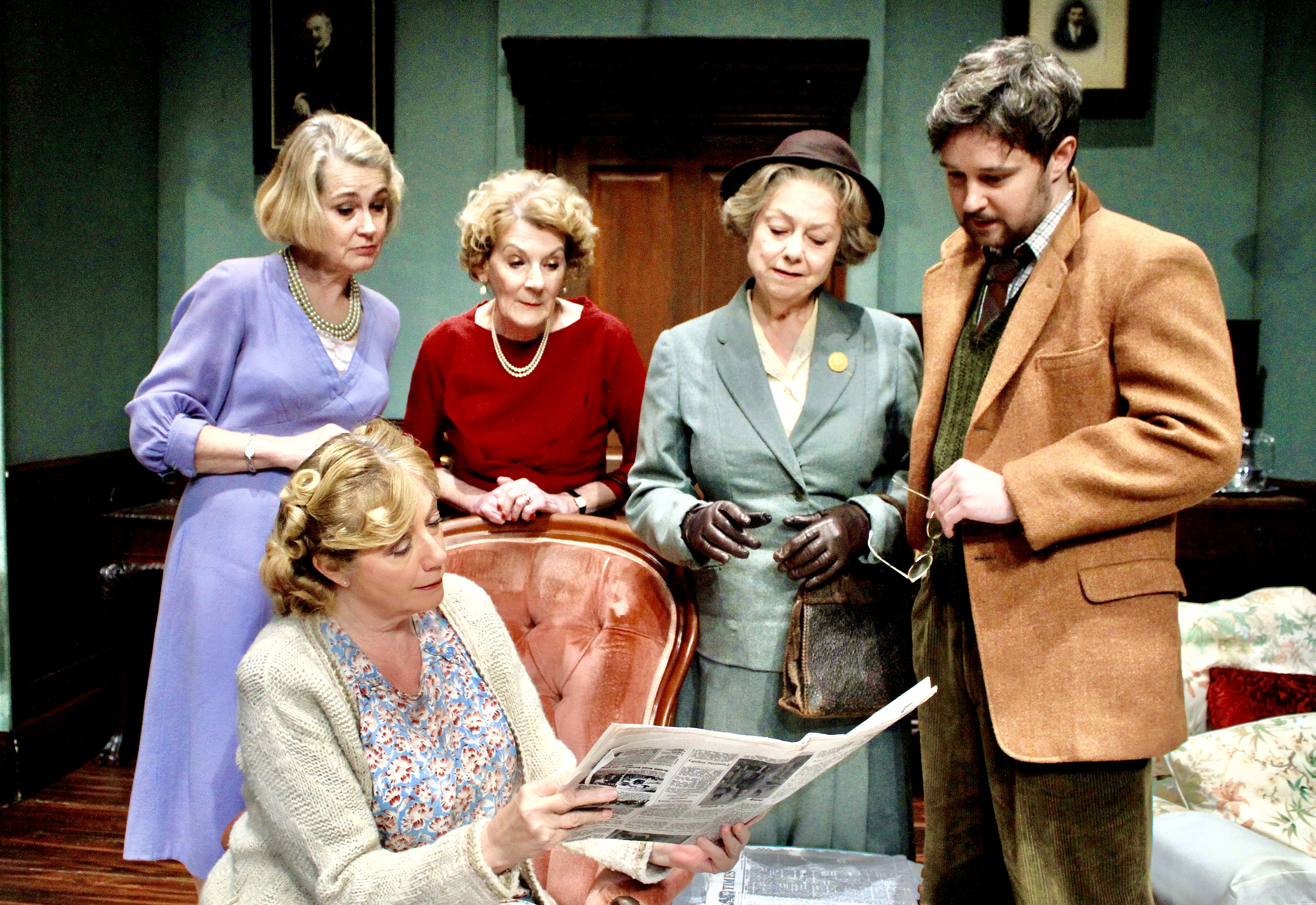
A Murder is Announced

03/05/22

King’s Theatre, Edinburgh

‘Cosy mystery’ is a strange genre. The body count is high but the blood loss is minimal; an alarming number of its denizens have murder in mind, but we’re not witness to any physical brutality. Death occurs courtesy of a fast-acting poison or a single, well-placed blow to the head; killers tend to be well-to-do, well-spoken, suburban types, fond of chintz and regular cups of tea – oh, and there’s usually a domestic servant or two.

If the genre has a queen, Agatha Christie wears the crown. And of her prodigious output, the Miss Marple stories are the cosiest of all. Jane Marple looks like a cliché: a nosy, soberly dressed spinster of independent means, living modestly in a sleepy village. But Miss Marple is shrewdly intelligent, and her prying has a purpose: she’s a dab hand at uncovering criminals, and the local constabulary often find her help invaluable.

A Murder is Announced is a classic Miss Marple mystery. It opens with an unlikely premise: someone posts an ad in the Chipping Cleghorn Gazette, announcing that there will be a murder at 6.30pm that night at Little Paddocks, home to Letitia Blacklock (Barbara Wilshere). Letitia is a kindly soul, and she’s opened Little Paddocks to a whole host of friends and relatives, so there’s a raft of potential victims – and killers. Her impoverished old school pal, Bunny (Karen Drury), has lived there for years, and – more recently – Lettie’s second cousins, Julia (Lucy Evans) and Patrick (Will Huntington), have appeared. They’ve been living abroad, but now they’re back in the UK and need somewhere to stay. In addition, Lettie has taken pity on Philippa (Emma Fernell), and invited the young widow to reside in her home too. Housekeeper Mitzi (Lydia Piechowiak) is kept very busy!

And, at 6.30pm that night, a murder does indeed occur. What’s going on? Luckily, a certain Miss Marple (Sarah Thomas) is in the vicinity, visiting her nephew, the local vicar, so Inspector Craddock (Tom Butcher) doesn’t have to figure it out alone…

Despite the convoluted and unlikely plot, there are no surprises here. But that’s part of the appeal, I guess: we know what we’re getting – hence the term ‘cosy.’ Middle Ground Theatre Company’s production is competently done: director Michael Lunney successfully corrals the twelve-strong cast’s tortuous backstories into a comprehensible tale, and the actors deliver solid performances.

I’m a little confused by the lowering of the curtain for an extended period at the end of each scene. The first time, I’m expecting a complex set change, but, when the curtain rises again, only minor adjustments are apparent. A plate of sandwiches has been removed; a newspaper folded. I can’t help feeling this could be achieved a little more dynamically.

In the end, there’s nothing striking here – either good or bad. A Murder is Announced just does what it says on the tin, and there’s no denying its popularity; the theatre is bustling. There are worse ways to spend an evening, but I’d love one day to see new life breathed into this old form.

3 stars

Susan Singfield

Happening

03/05/22

The Cameo, Edinburgh

Happening – or L’événement – is a harrowing tale, directed by Audrey Diwan and based on author Annie Ernaux’s experience of an unwanted pregnancy. It’s 1963, and the students at Angoulême university are preparing for their exams. It’s hot and hormones are running wild, but sex is a shameful, clandestine activity, and ‘getting caught’ is every girl’s nightmare.

When Anne (Anamaria Vartolomei)’s period is late, she knows exactly what it means. She faces a stark choice: have a baby and forsake her dreams of a career in academia, or have an abortion, thus risking imprisonment or death. She’s a clever girl, destined for great things. She can’t bear to see her future curtailed; she’s not ready to be a mother. But procuring a termination proves punishingly difficult.

This is a hard film to watch. Vartolomei is compelling in the lead role, and her desperate isolation really strikes a chord. Poor Anne! No woman should have to go through such troubles alone. The ‘father,’ Maxime (Julien Frison), is useless. He’s more worried about what his friends think of Anne than he is about her plight. What does she want him to do? Nothing, she tells him. She’ll manage by herself – just as she has throughout this ordeal. Because there’s no one who can help. Not her mum (Sandrine Bonnaire); she’s so proud of her brainy daughter – how can Anne face disappointing her? Not her best friends (Luàna Bajrami and Louise Orry-Diquéro) – she can’t make them complicit because they’d face gaol time too. Not her doctor – he’s definitely not on her side. So Anne is utterly, irrevocably, unbearably alone.

She does find a way, of course. Women do. This is why banning abortion is nothing more than an act of wanton cruelty. Unwanted pregnancies don’t miraculously become wanted ones; women’s lives just get harder. Anne has to skulk in the shadows, begging for help from people she barely knows, hoping against hope they don’t betray her. And, when she does – finally – find someone who can assist her, she has to sell everything she owns to fund the procedure.

Meanwhile, Maxime’s still frolicking on the beach with his pals, his life untouched.

It makes me angry, watching this at the same time as Roe V Wade is under fire in the USA. We know what happens when women can’t access legal, safe abortions: they die. The Supreme Court is attacking women’s basic human rights, condemning thousands to suffer. How dare they?

Happening‘s release is a timely reminder of what we stand to lose. Although it’s set in the 1960s, it doesn’t have the feel of a period drama: the fashions are neutral, the obviously contemporary details restricted to the music and the law. This lends the film an immediacy: this issue isn’t just an historical one.

Laurent Tangy’s cinematography captures the oppressive summer heat, the bleached colours reminding us of time’s inexorable progress. As the weeks unfold and Anne approaches the point of no return, the impulse to look away becomes almost irresistible.

And yet we can’t. We mustn’t. Because Anne doesn’t have that luxury.

5 stars

Susan Singfield

Dean Banks at the Pompadour

30/04/22

The Caledonian Hotel, Princes Street, Edinburgh

Once upon a time, we’d have saved a lunch like this for a special occasion. But, in this uncertain decade, we’ve learned not to put things off. Who knows when another lockdown might be imposed – or, indeed, what else might occur? So we’re seizing the day, and making the most of opportunities as they arise.

Today’s opportunity appears in the guise of a special offer: a nine-course lunchtime tasting menu for £55 each. We’d budgeted for more eating out than we managed on our recent holiday to Shetland (we were there pre-season, and the few restaurants that were open had very limited availability), so the timing seems fortuitous. And it’s only a five minute walk from our apartment. We’re in!

We’ve eaten in this room before, back in 2017, when the Galvin brothers ran it. It’s a lovely space: all light and air, with huge semicircular windows and pastel hues. Not much has changed since Dean Banks took it over last year: the only visible difference is the addition of a model boat and a few fishy statues, hinting at the prominence of seafood here.

The service is formal but friendly. There’s the option to have an extra course – lobster – for an additional £35, but we decline. Nine courses should be plenty, right? We do, however, decide to go for the matched wines, because – why not? It’s £45 for five glasses, all carefully selected to complement the food.

Everything – and I mean everything – is note perfect, from the delicate saucisson sec & wild garlic tart to the intensely orangey (well, sea-buckthorny) dulse shortbread cream and everything in between. The corn and sunflower coblet might well be the nicest bread I’ve ever had, and it’s served with three butters: sesame, miso and salted. The miso is a particular hit, so much so that we’re planning on trying to make some at home. The north sea hake is ridiculously pretty, so that we almost don’t want to disturb its construction by biting into it, but then, of course, we do, and it’s delicious. There’s a Scottish-Asian theme throughout, with local produce enhanced by flavours such as gochujang and kimchi. It’s all perfectly balanced and delightful. The beef cheek is the richest dish; if it were any bigger, it’d be too much, but it’s expertly judged, and just the right amount. Pudding is spectacular: a matcha parfait with mango, yuzu and a black sesame ice cream. The latter is wonderfully weird: nowhere near sweet enough to be eaten alone, but a superb counterpoint to the fruity creaminess of the parfait.

If I have a quibble, it’s about the words ‘nine course’. And it’s not really a quibble because I don’t want anything more than I’m given, it’s just that amuse-bouches, bread and petit fours aren’t normally counted as ‘courses’, are they? I’ve had six-course menus before, and these have featured alongside. But still, what’s in a name? Our lunch smelled just as sweet.

We’re smiling as we leave, slightly squiffy on all that lovely wine. What a pleasant way to spend a Saturday!

5 stars

Susan Singfield

Fantastically Great Women Who Changed the World

26/04/22

King’s Theatre, Edinburgh

I almost don’t make it to tonight’s production of Fantastically Great Women Who Changed the World. The drama class I’m teaching doesn’t finish until 6.30pm, and FGWWCTW starts at 7pm. That’s half an hour to get from Fairmilehead to Tollcross, which ought to be do-able but – well, this is Edinburgh – there are roadworks. It’s 6.57pm when I park up, and then dash breathlessly to the King’s Theatre, charging into the box office, hollering ‘thanks’ as I hurtle through to the foyer, before racing to the auditorium. I slump into my seat next to Philip, only for the end of an umbrella to appear before my eyes. “Phones off!” says a voice. There’s a woman in a raincoat and glasses, all mock severity, and that’s it. The show’s begun. She marches onto the stage, barking instructions. The lights go down…

Aaand relax?

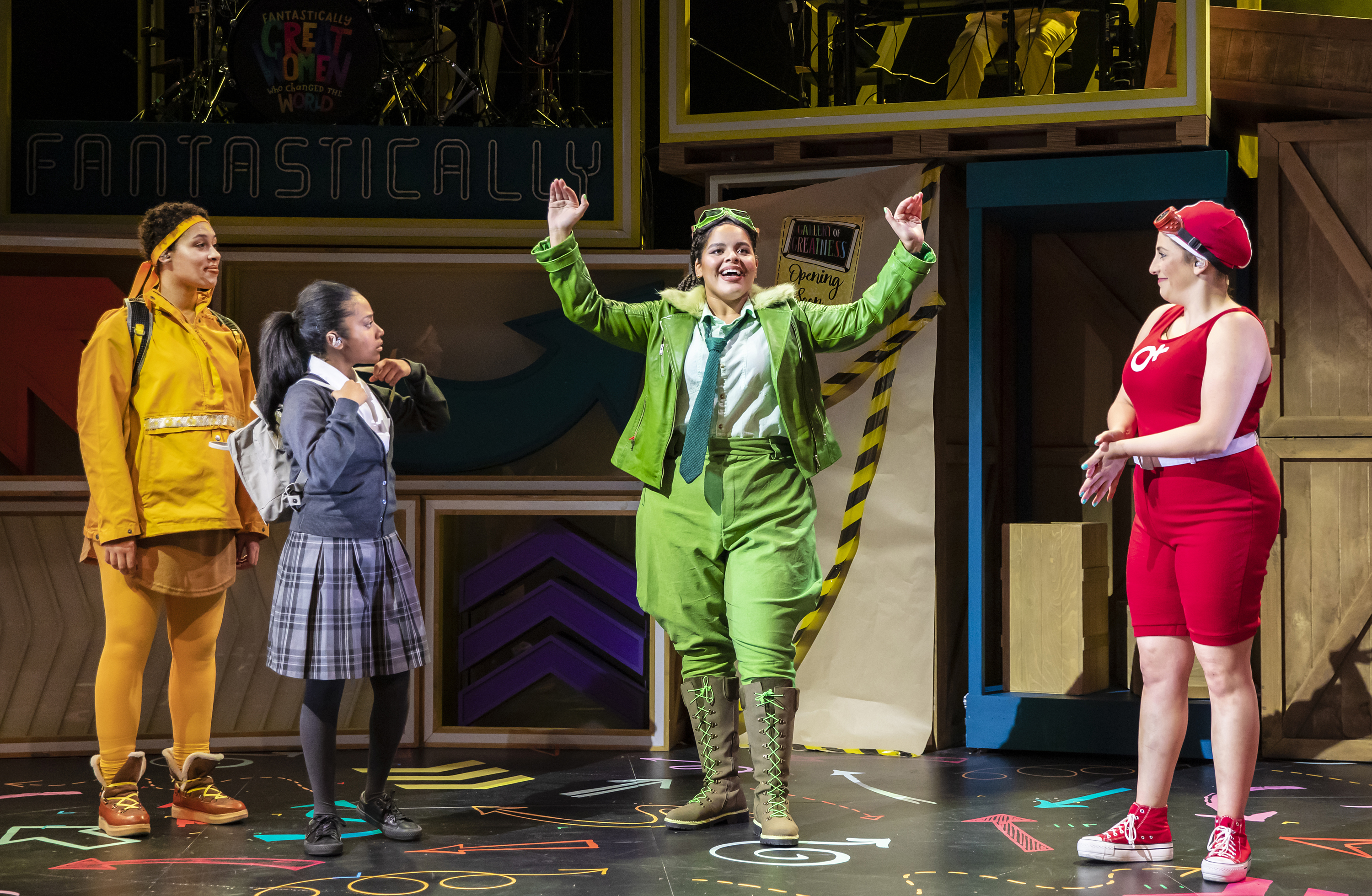
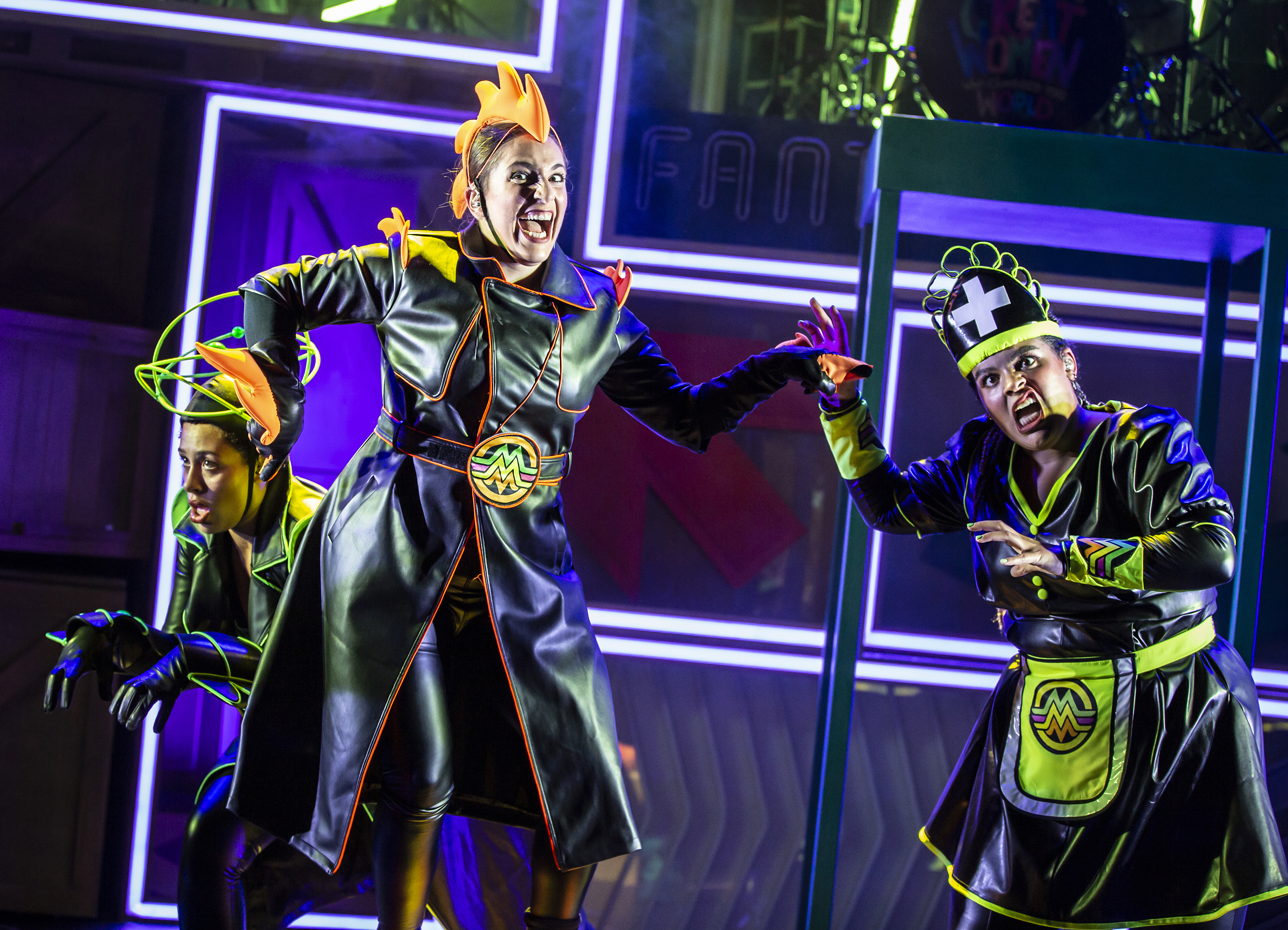
Well, no. FGWWCTW is not a relaxing show at all. In fact, the frantic urgency of my arrival serves well to set the mood. This is a dynamic, fast-paced gallop of a show, as bold and spirited as can be – like SIX’s little sister. I love it.

Based on Kate Pankhurst’s 2016 nonfiction best-seller of the same name and directed by Amy Hodge, the musical has a simple premise. Jade (Kudzai Mangombe) is on a school trip to a museum. Ever the ‘good girl,’ she has helpfully stopped to retrieve other students’ misplaced items, only to be forgotten in the chaos – and left behind. This, we learn, is typical: Jade’s quiet obedience means that she is often ignored or overlooked. A disembodied tannoy voice tells her that the museum is closing, urges her to leave, and forbids her from entering the Gallery of Greatness she’s standing outside. But Jade has had enough of doing as she’s told. This time, she’s going to do what she wants to do – so into the Gallery she goes.

It’s a good decision. Inside, Jade meets a host of inspiring women, who share their stories with her, and urge her to find her own greatness. There’s Sacagawea, Frida Kahlo and Marie Curie (Jade Kennedy); Amelia Earhart, Rosa Parks and Mary Seacole (Renée Lamb); Gertrude Ederle, Jane Austen and Mary Anning (Christina Modestou) – not to mention Emmeline Pankhurst and Agent Fifi (Kirstie Skivington). Anne Frank puts in an appearance too (she’s played with charm and grace by young actor, Lana Turner, who shares her name, of course, with another ‘fantastically great woman’.) The women are all wise in their own ways: some are funny and some are serious; some are gentle and some are fierce. But they are all, without exception, exceptional. “Take up space,” they tell Jade; “find a way to make yourself heard.” Jade doesn’t know what she’s good at or what she wants to do, but they tell her that doesn’t matter. All she has to do is exist, be true to herself and stand up for what she believes is right – and she will change the world.

The target audience is a young one (6+), and the theatre tonight is full of enthusiastic kids. It’s heartwarming to witness: they’re enraptured by the audacious performances and the maverick message. Even as an adult, I’m totally engaged, caught up in the drama, delighted that Jade is being encouraged to dare. Mangombe’s performance is central, of course, and she’s mightily impressive. When I consult the programme, I’m genuinely shocked to realise she’s an adult, as she embodies a conflicted eleven-year-old so well.

The songs (by Miranda Cooper, Chris Bush and Jennifer Decilveo) and choreography (Dannielle ‘Rhimes’ Lecointe) are great. None of it’s subtle: this is as in-your-face and brazen as it gets. It works. It’s impossible not to feel energised and, yes, empowered.

“A better world for everyone begins with dreams.” And “deeds, not words.” If you have children, there’s an easy first step: take them to see this.

4.3 stars

Susan Singfield
Six by Nico

23/04/22

Hanover Street, Edinburgh

This one’s been a long time coming. When Six by Nico first opened in Edinburgh, way back in 2018, our lovely friends mooted it as an option for an evening out. But it was so popular, we couldn’t get a booking. We kept trying to find a suitable date, but to no avail. Then the pandemic happened and everything was put on hold. We ate a couple of Nico’s ‘at home’ meals, which were very nice, but the authentic Six experience still eluded us. Even tonight – when, finally, both we and our pals are free, and the restaurant is open – we’ve had to settle for a 9.15pm booking, which is definitely too late for us, but we can’t let this opportunity slide. This rendezvous carries a weight of expectation…

Six by Nico‘s concept is well known by now: it’s become a mini-chain, firmly established in eight cities around the UK and Ireland. It’s a fresh, simple idea: a themed tasting menu of six courses, which changes every six weeks. The presentation is very much ‘fine dining’, but the prices really are not. It’s £32 all in, and £27 for five matched wines. There’s no denying this is cheap.

Sadly, however, it appears that sometimes the old adage is true: you do get what you pay for. The current menu is called Ancient Rome, and it sounds promising on paper. But, although there are glimmers of excellence, it doesn’t cohere to make a pleasant meal.

Philip and both of our friends opt for the standard menu, which includes meat and fish. I go veggie for the evening, because I want to. The first course is the same for everyone: it’s ‘Cacio e Pepe, which is crispy pasta , black pepper and parmesan royale. (Mine’s supposed to be goat’s cheese, apparently, but it tastes of parmesan, so I don’t think it is. I’m not actually vegetarian though, so I’m not too worried, and I like the flavour anyway.) This is a tasty little morsel, if a little too creamy for my liking, and it bodes well for the meal.

Next up is ‘From Eggs to Nuts’ for all of us. This comprises a crispy egg, some white asparagus, hazelnuts and brown butter. The eggs, nuts and asparagus are good, but the ‘brown butter’ takes the form of a creamy sauce again, which proves a tad rich.

Cream seems to be a bit of a recurring thing. Did the ancient Romans really eat so much of it? The third (veggie for all) course is ‘Cavolo Hispi Arrostito’ and, honestly, I’m starting to feel a bit queasy now. The dish consists of pasta (again), roasted hispi cabbage, pickled girolle mushrooms, truffle foam and pecorino sardo. I’m expecting the mushrooms to have a vinegary tang, so that they cut through the dairy fat, but they don’t really. The acidic wine (this one’s Duas Margens) helps, but our friends have soft drinks, so there’s no such respite for them.

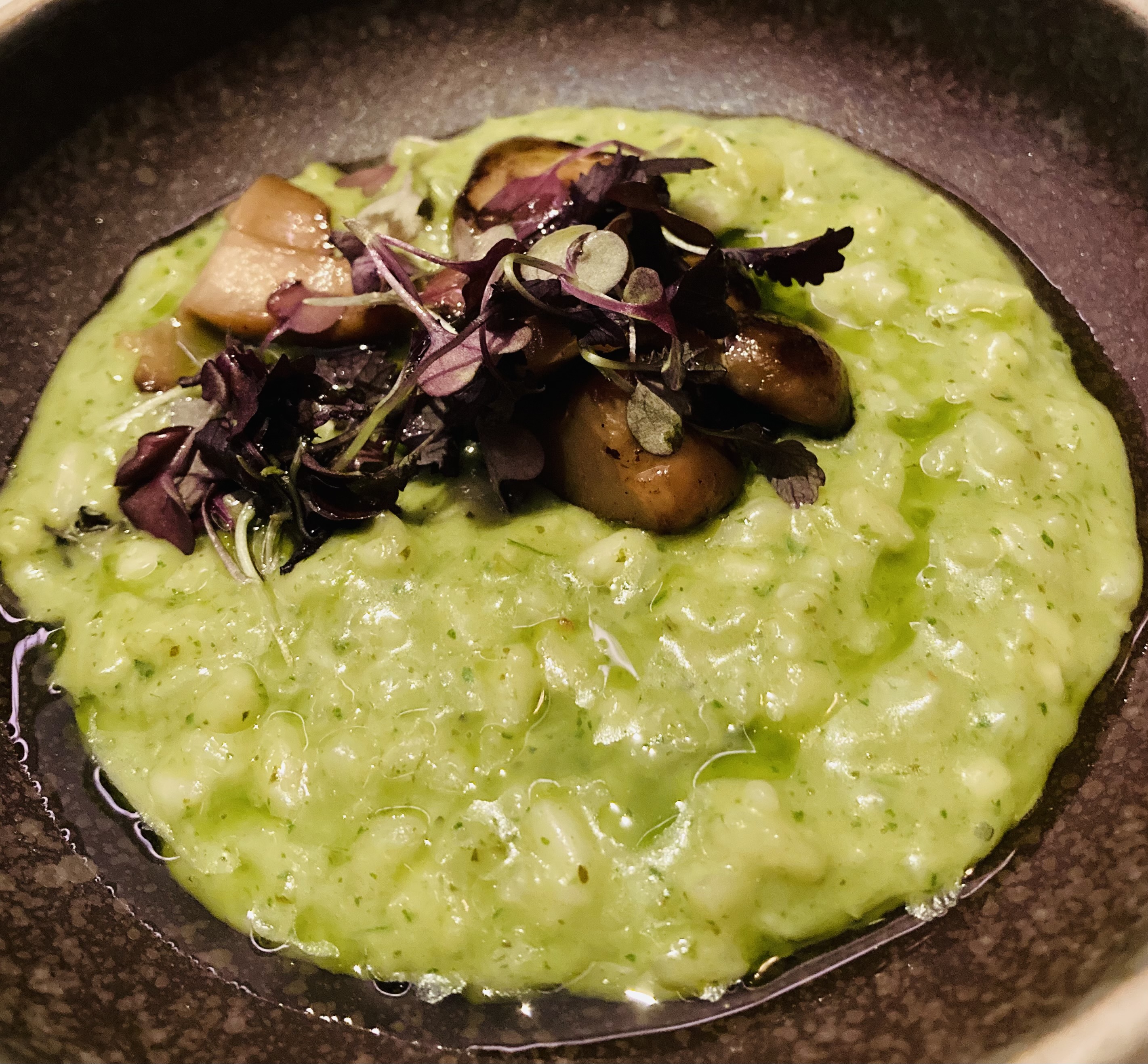
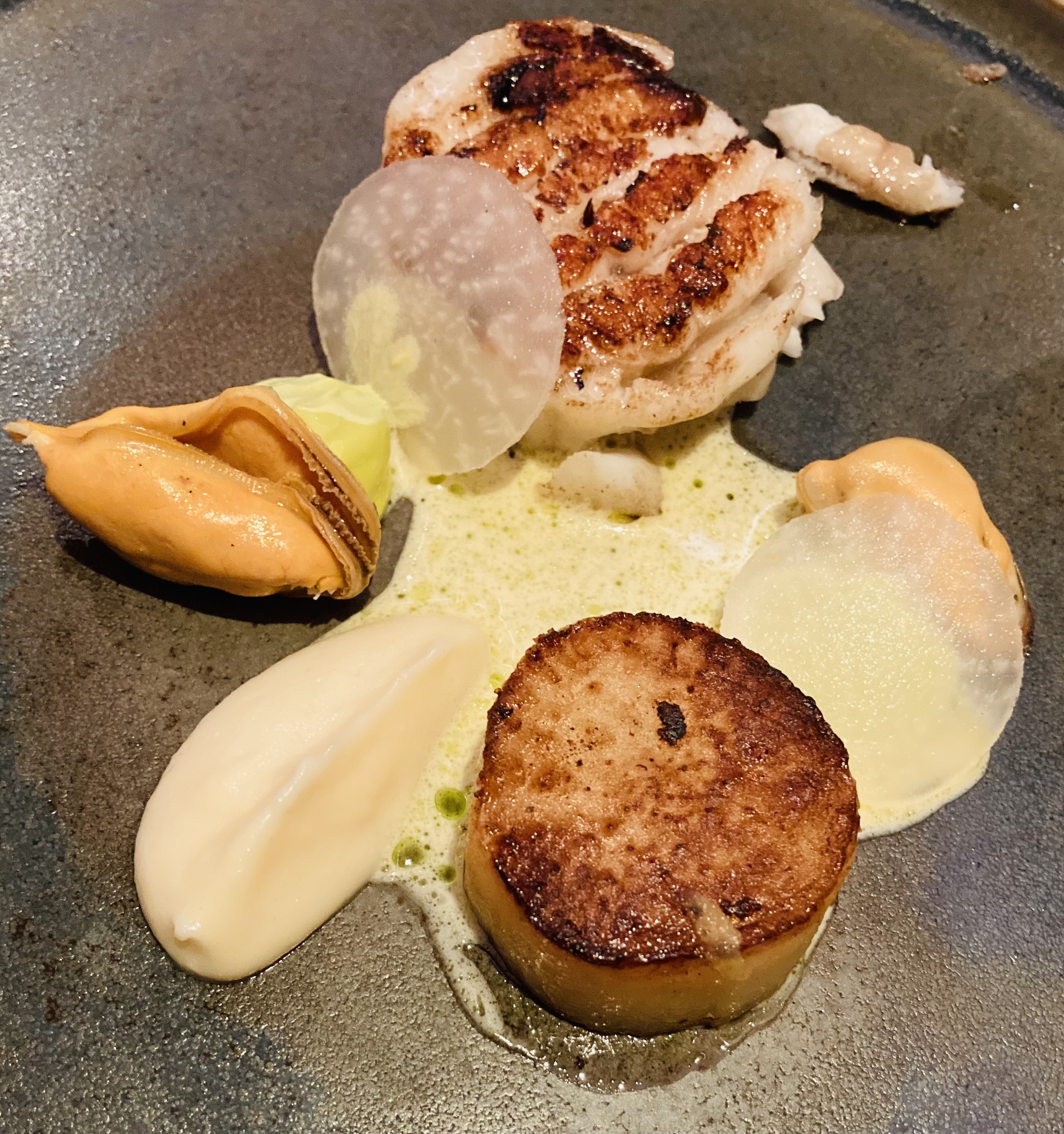
Course four (‘The Bay of Naples’) brings my favourite of the savoury dishes: a risotto of parsley, garlic and porcini mushrooms. It’s a bit repetitive with the fungi, but the risotto is delicious, with bold flavours and nicely firm rice – and there’s no cream, which is definitely a bonus. The others aren’t so lucky. They have sole, smoked mussels, lovage, white turnip and mussel… cream. This looks great, and there’s a theatrical flourish, as it arrives wreathed in smoke and covered by a glass cloche. Once the smoke has cleared, the fish turns out to be well-cooked and the smoked mussels are a hit, but none of them likes the pairing of sole with turnip, especially as the neeps are deemed ‘uncooked’ and ‘rock hard.’ “Unpleasant” isn’t a word you want to associate with your dinner.

The fifth course is called ‘The Great Feast of AD14’. For the meat-eaters, this means a small plate of pork (belly, rib and fillet), with fennel, bean ragu and a date and apple sauce. The pork fillet is very pink, which makes one of our friends uncomfortable, and the meat in general is declared ‘underwhelming.’ The date sauce gives it a boost, but the bean ragu has something creamy mixed in, so no one’s much in the mood for that. It’s a mean-looking dish, which doesn’t conjure up images of a great feast of any kind. Not that we want more. We’ve kind of had enough.

Again, I fare better. The veggie option is baked globe artichoke, with leak, curd, toasted hazelnut and walnut foam. There’s bean ragu on my plate too, but the creamy stuff is next to it rather than mixed in, so I can just leave it – and the ragu is delicious without, all tomatoey-smoky loveliness.

We’re disappointed and we’re flagging, but there’s still a course to go. Our young waitress is lovely – she’s trying really hard, and is all gauche charm and friendliness – so we rally, give her a smile as she rattles through her memorised lines about the wine, and wait to see what pudding brings.

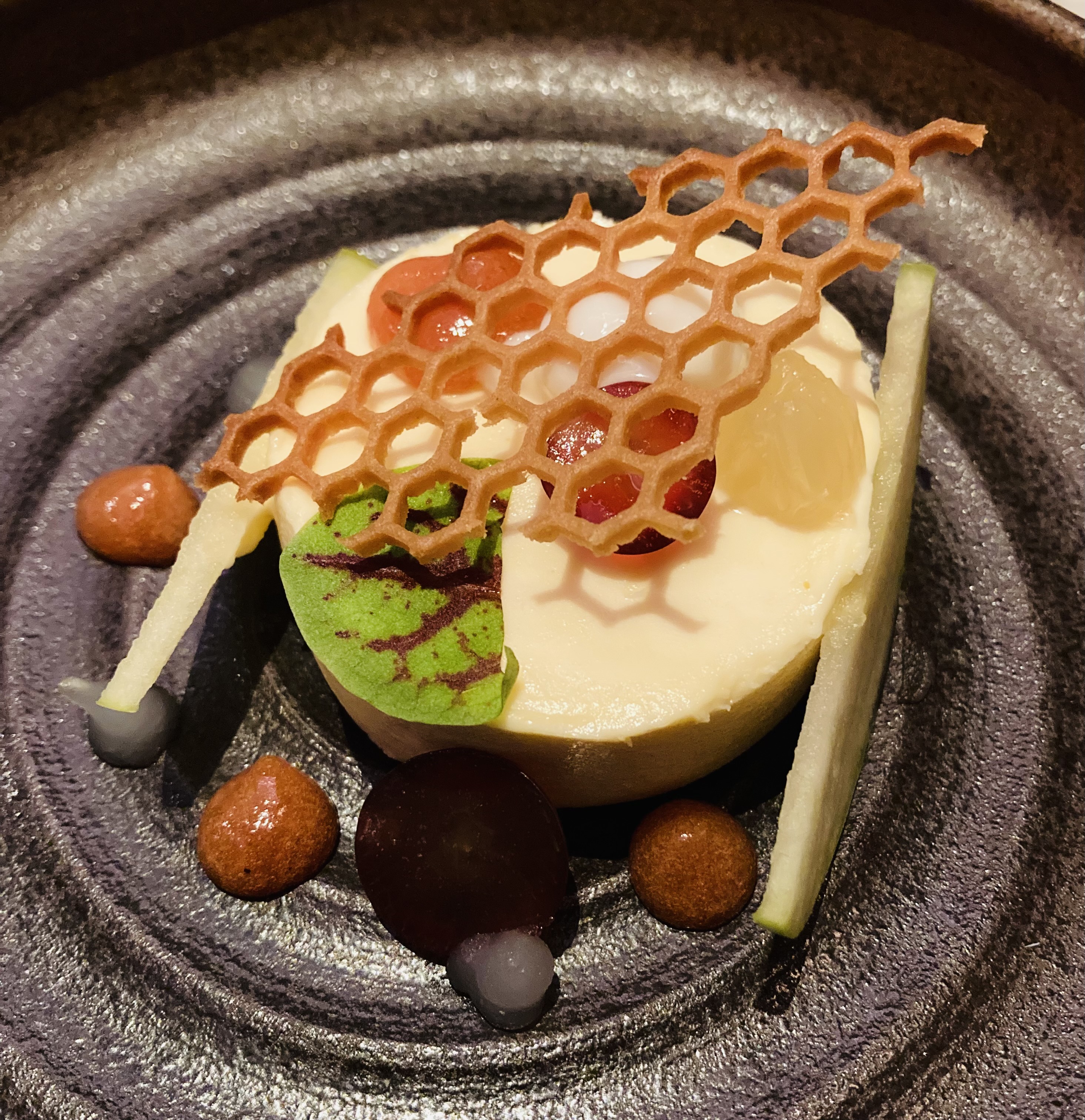
It brings a ray of sunshine. At last! The finale is excellent. The simple title (‘Honey and Cheese’) is deceptive. This is a honey parfait, served with ricotta cheese, preserved quince, fizzy grapes, pear and citrus. It’s bursting with fresh, zingy flavours – all complementing each other, each mouthful a delight. It shows us what this meal could have been.

But it’s not enough to save it. All in all, the menu just doesn’t work for us. There is no logical progression between the courses, no awareness that the dishes need to be more distinct (two courses with mushrooms, two with pasta, two with hazelnuts, five with cream). The next menu is ‘Hollywood’ and it reads well, but I don’t think we’ll be back. There are too many good restaurants in this city for us to bother with this again.

2.9 stars

Susan Singfield
The Great Gatsby

21/04/22

Festival Theatre, Edinburgh

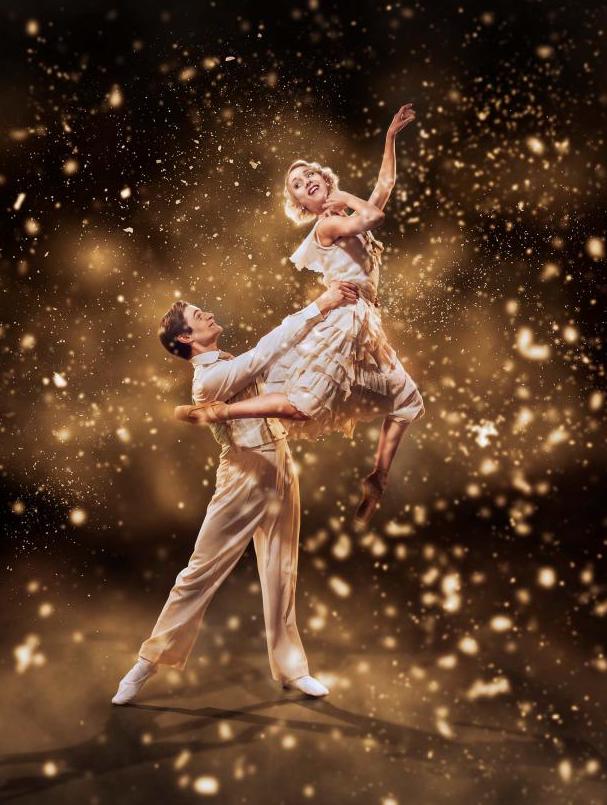
Regular readers of B&B may be somewhat surprised to see this review. We haven’t previously covered ballet, mainly because of a reluctance to show our general ignorance of the subject. But it is theatre, when all is said and done and, when we see that Northern Ballet’s adaptation of The Great Gatsby is to visit the city, it seems the logical choice for a starting point. F. Scott Fitzgerald’s famous novel is a story we already know, so we should have no problem following the action. And so it proves.

Actually, on reflection, Gatsby seems an inspired choice for the tricky metamorphosis of literature-into-dance. For one thing, those jazz-age excesses are perfectly suited to the medium and, for another, many of the novel’s most memorable scenes are built around visual motifs: the blinking green light of the Buchanan’s home on the horizon; those lavish parties frequented by alcohol-fuelled celebrities; the distorted reflections in the infamous room of mirrors.

Jay Gatsby (Joseph Taylor) spends his days reminiscing about his lost relationship with Daisy Buchanan (Abigail Prudames), back when he was a young soldier. He even gets to dance alongside his younger self (Harris Beatty), before four men in black raincoats and derby hats step out of the shadows and neatly illustrate how criminal activities turn Gatsby into the rich socialite he is today.

But wealth and success haven’t dulled the longing he still harbours for Daisy, who now lives with her husband, Tom (Lorenzo Trossello), and their little daughter – an adorable performance by Rosa Di Rollo – in their home across the bay (cue that blinking green light).

Into this turbo-charged atmosphere dances Daisy’s naive cousin, Nick Carraway (Sean Bates), who soon befriends Gatsby and then can only watch in dismay as he and Daisy become ever more entangled in a relationship that will surely end in tragedy.

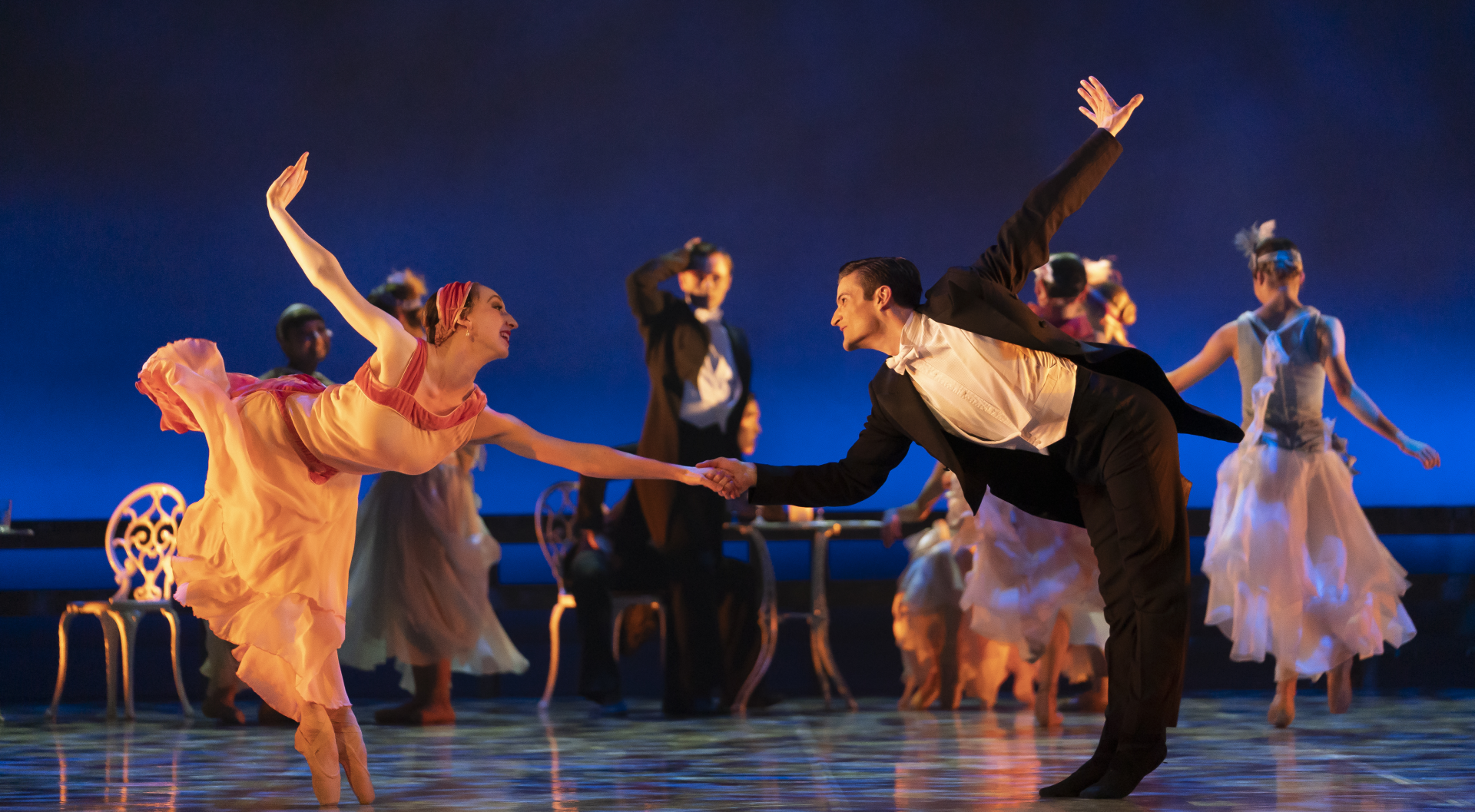
This stirring adaptation also feels curiously cinematic, an effect heightened by Jérôme Kaplan’s brilliant set design, which contrives to present physical events – even an entirely convincing road accident – with absolute authority. And the dancing, of course, is sublime. While I freely admit that I don’t know the difference between an arabesque and a jeté, I’m still enraptured by the cavalcade of physical perfection that whirls and leaps and pirouettes around the stage with apparent ease. I particularly enjoy the earthy physicality of Riko Ito as garage mechanic George Wilson, driven to distraction by his wife Myrtle (Minju Kang)’s affair with Tom Buchanan – and also the wonderfully accomplished ensemble pieces, where those epic parties of the roaring twenties are lavishly enacted in perfectly-tailored suits and glittering cocktail dresses.

The music of the late Sir Richard Rodney Bennett provides the perfect accompaniment for the story, encompassing as it does elements of jazz, ragtime and sweeping, soulful grandeur. We even get to hear the great composer sing in the production’s penultimate piece, a heartfelt rendition of I Never Went Away, which offers a poignant preface to a brutal and shattering conclusion.

So there we have it it. As an introduction to an art form, The Great Gatsby offers everything I was hoping for. Also, it proves a propitious night for a first foray into ballet, as long time choreographer and director David Nixon OBE is about to step down from the role he’s occupied for twenty-one years.

An emotional onstage presentation duly ensues and a heartfelt standing ovation caps an evening that will linger in my memory.

4.2 stars

Philip Caveney

The Meaning of Zong

20/04/22

Lyceum Theatre, Edinburgh

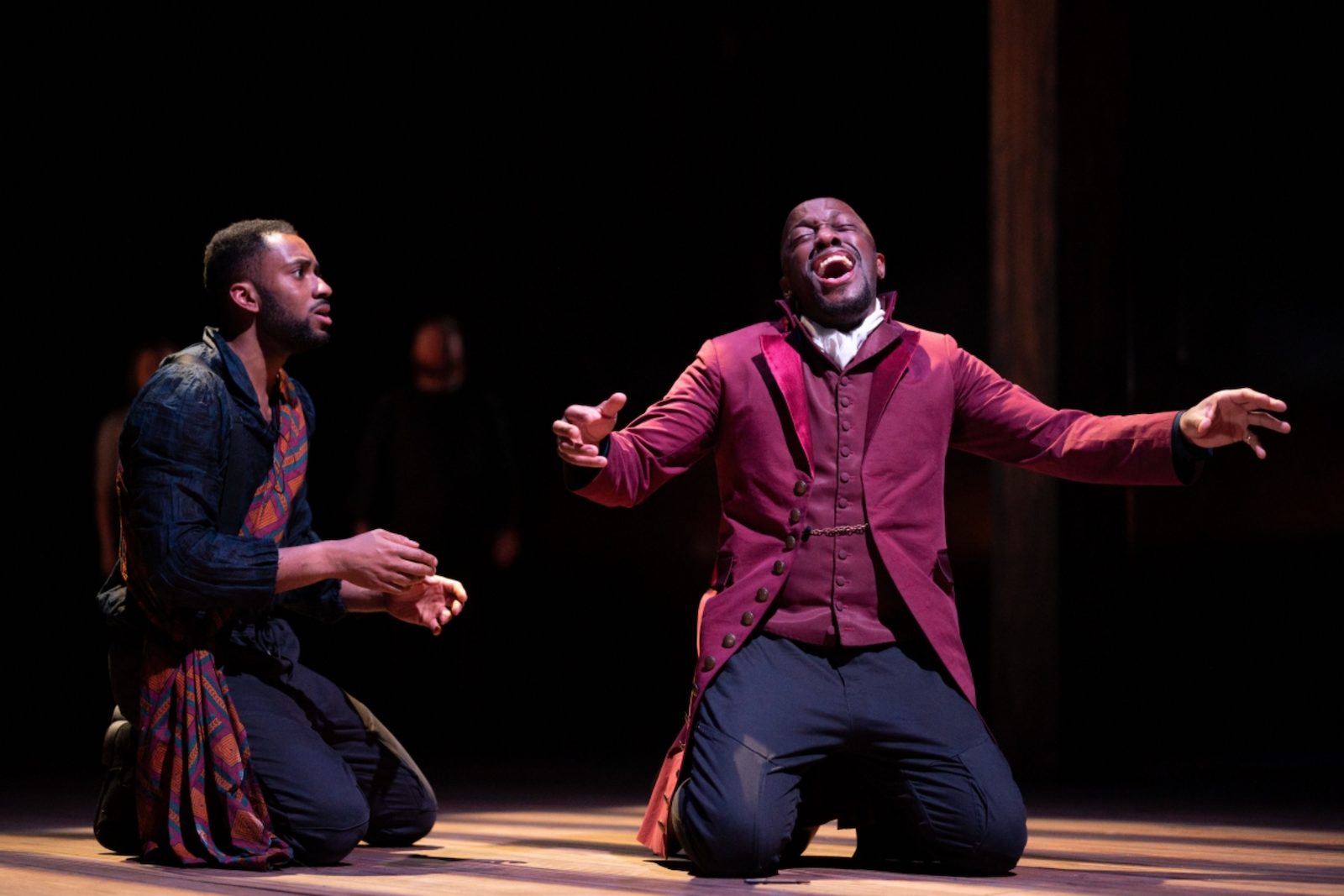
The Meaning of Zong opens in a contemporary UK bookshop, where Gloria, a young black woman (Kiera Lester), attempts to tell the white staff that they have misclassified a book about the Atlantic slave trade. They’re mystified. “It’s in African history,” they tell her. “But it’s British history,” she replies. They don’t understand, prevaricating with platitudes about ‘being allies,’ while vaguely insinuating that such decisions are taken by a distant boss. Gloria’s frustrated, but help is at hand, in the form of Olaudah Equiano (Giles Terera), a former slave, who steps out of the history book to tell Gloria (and us) his tale.

And the tale he tells is truly shocking: a shame-inducing account of an event so appalling it ought to be common knowledge. That it is not speaks volumes, illuminating the importance of that opening scene. If we don’t even acknowledge our history, how can we hope to learn from it?

In 1793, Oloudah tells Gloria, there was a massacre on board a British slave ship called The Zong. 132 slaves were thrown into the sea and left to drown, jettisoned because – so it was claimed – there was a shortage of drinking water, and so their killing was a “necessary” act. Not only did they commit murder, the ship’s owners also put in an insurance claim for the loss of their “property.” The insurers disputed the claim, of course (because some things are immutable), but not before Oloudah chanced upon the case, and joined forces with anti-slavery campaigner Granville Sharp (Paul Higgins) and shorthand secretary Annie Greenwood (Eliza Smith) to ensure the case was brought to public attention. The slave owners’ blatant dismissal of human beings as “cargo” caused outrage, and proved to be a significant step on the path towards abolition.

Although it’s an ensemble piece, this is very much Terera’s project: as well as playing Oloudah, he is both writer and co-director (along with Tom Morris). It’s a spectacular achievement, making bold social and political points, while still being playful and overtly theatrical. He pulls no punches and yet we’re on his side; he never lets us off the hook, but we feel galvanised rather than defensive.

We never witness the massacre. Instead, we are shown the legal struggle Oloudah and Granville mount to have the court’s ruling overturned. Instead, we are shown the strength of three female slaves (Lester, Bethan Mary-James and Alice Vilanculo), recounting the story of Anansi, the spider god, calling on the spirits to save them. And one of them – unnamed – is saved, clinging to a rope, reaching through the years to become Terera’s inspiration for this devastating reminder of our collective guilt.

Jean Chan’s set is a thing of beauty, reinforcing the notion that everything is connected, that we can’t escape our past just by shutting our ears and hiding things away. Thus Westminster Hall’s magnificent wooden ceiling is also the slave ship’s hull; the judge’s bench is also a Waterstones bookshelf. The furniture we sit on, the cutlery we use, the sugar we sprinkle in our tea: these things are all linked to slavery, Oloudah tells Gloria – and the truth will out.

Sidiki Dembele’s onstage drumming is both powerful and provocative, first bringing the audience together then silencing us with its force. It’s the perfect accompaniment to a story that demands to be heard.

The Meaning of Zong has already finished its run at the Bristol Old Vic, and only has a few more days here in Edinburgh before it moves on to Liverpool. It’s worth seeking out. We mustn’t let this story fade away. It belongs in the bookshop’s window, not relegated to a forgotten shelf.

4.7 stars

Susan Singfield

The Da Vinci Code

05/04/22

King’s Theatre, Edinburgh

Ah, The Da Vinci Code. That preposterous juggernaut of a 2003 novel: badly written, controversially researched, ludicrously convoluted – and yet, somehow, as popular as can be, selling more than eighty million copies worldwide. 

Dan Brown’s tale leans on other people’s cleverness: his protagonist, Robert Langdon, is a Harvard professor, whose sidekick, Sophie Neveu, is a brainy cryptographer. Their enemies are equally learned, and the murder at the heart of this high-octane mystery takes place in the highbrow setting of the Louvre. Indeed, the whole plot is reliant on the duo’s impressive understanding of theology, symbology and Renaissance art. All of this, of course, is just smoke and mirrors, obscuring what is – essentially – a cryptic crossword given legs. Nevertheless, it’s undeniably engaging; there’s a reason the novel was a runaway hit. 

This stage adaptation (written by Rachel Wagstaff and Duncan Abel) doesn’t shy away from the schlocky nature of the source material. Instead, director Luke Sheppard uses more smoke and mirrors, this time in the form of impressive technical effects and slick production values. If touring shows can sometimes seem a little lazy, this is anything but, and Brown’s silly story is elevated by some damn fine theatrics. 

The plot is pared back, so that there’s less obfuscation and greater clarity. There are fewer chases (thank goodness). Nigel Harman imbues Langdon with a credible seriousness: it’s an unshowy, subtle piece of characterisation that serves the production well. In many ways, he’s the still centre of it all: bemused at finding himself involved, but quietly determined to sort things out. Hannah Rose Caton’s Sophie is somewhat livelier, as suits the role, but neither she nor Harman dominate the stage. That’s not what this is about, after all. 

The focus here is on the clues, on the elaborate treasure hunt that sees the pair wielding guns and crossing continents, challenging religious doctrines and theorising about everything from the Mona Lisa to the Holy Grail. David Woodhead’s bold set – all gauze panels and moments of revelation – is complemented by Andrzej Goulding’s stunning video design, with luscious projections filling every wall. It’s a dazzling spectacle (and, naturally, there’s an extra frisson for us as an Edinburgh audience, when the depiction is of nearby Rosslyn Chapel).  

I like the chorus too: the company sits, blank-faced and hooded at the side of the stage, rising occasionally in sporadic chants and rituals, all precisely choreographed by Tom Jackson Greaves. 

So – admittedly somewhat to my surprise – watching this production is a real pleasure. And not even a guilty one. 

4 stars

Susan Singfield

Topolabamba

23/03/22

Lothian Road, Edinburgh

We’ve had a fun day. Philip’s been visiting schools in North Lanarkshire as part of the Read to Succeed author tour, and, as I’m not working today, I’ve been acting as his chauffeur. We’ve been blessed with glorious sunshine, and have managed to squeeze a lunchtime walk around Drumpellier Park into our itinerary, as well as a quick visit to sculptor Andy Scott’s fabulous Kelpies, that loom over the motorway on our way home. So we’re feeling great, and want the good vibes to continue. Why not pop out for dinner?

Mexican restaurant Topolabamba is a two minute walk from our flat, but – thanks to its location, right by Byron, Wildwood, Nando’s, etc. – we’ve always assumed it’s part of a mega-chain, and so dismissed it as “not for us.” But a chance remark on someone else’s Facebook post makes me realise this is not the case. Topolabamba only has two branches (the other is in Glasgow), and, what’s more, the menu looks exciting. We’re sold.

Inside, the restaurant is a cacophony of colour: it’s a lively place, full of quirky wall-art and vivid lighting. The service is friendly and efficient, relaxed and unfussy. So far, so good.

We spend a long time choosing our dishes. There are ‘mains’ (called ‘The Big Boys’) but the majority of dishes come under the headings ‘Street Food’ and ‘Classics,’ and there’s a note on the menu recommending an order size of three to four dishes per person. We take this as gospel, and do as suggested, which leads me to my only real complaint: it’s too much food. It barely fits on the table. And if it’s too much food for me and Philip, then I’ll wager it’s too much food for most people (we both have hearty appetites).

Thankfully, it’s all delicious.

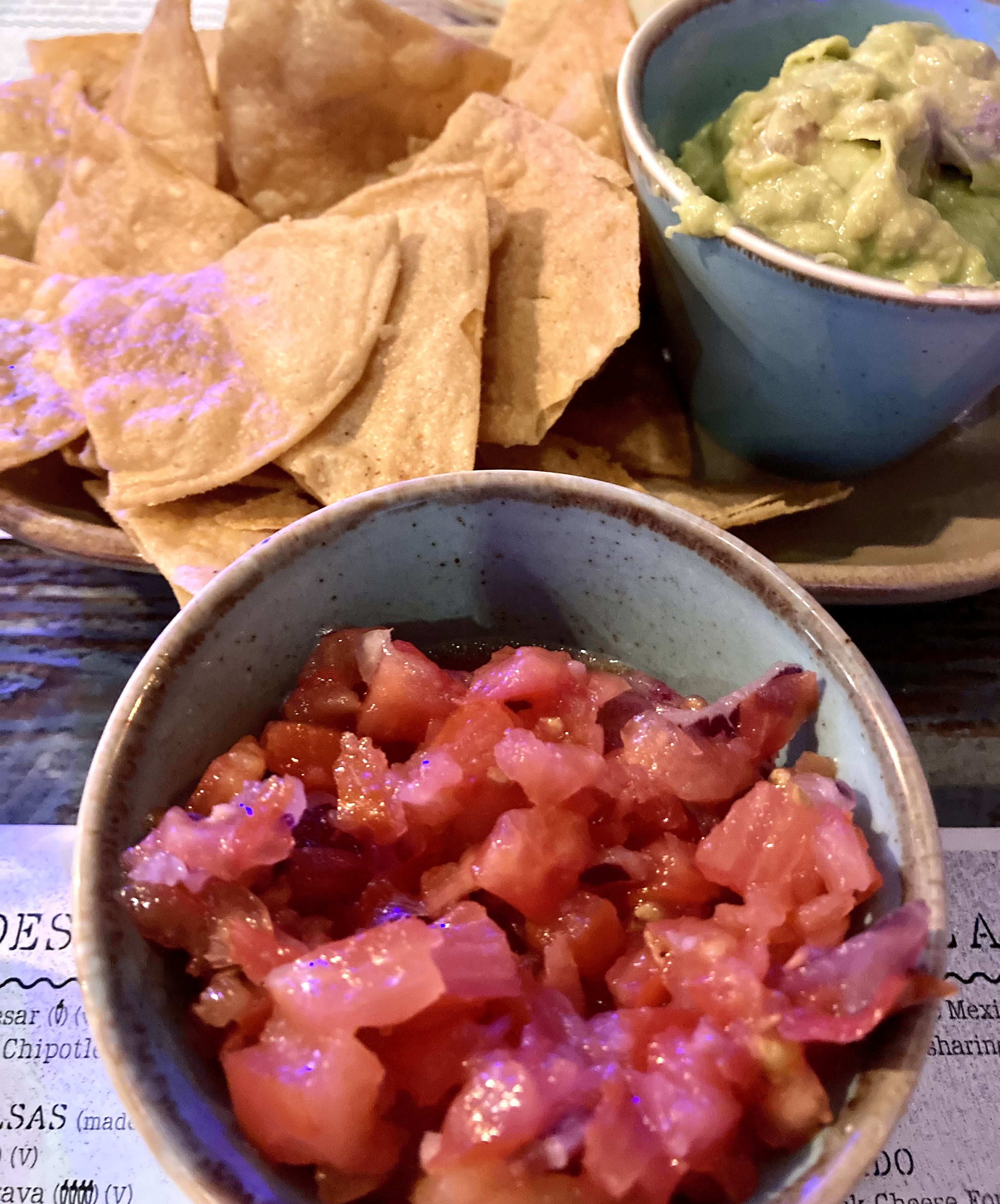
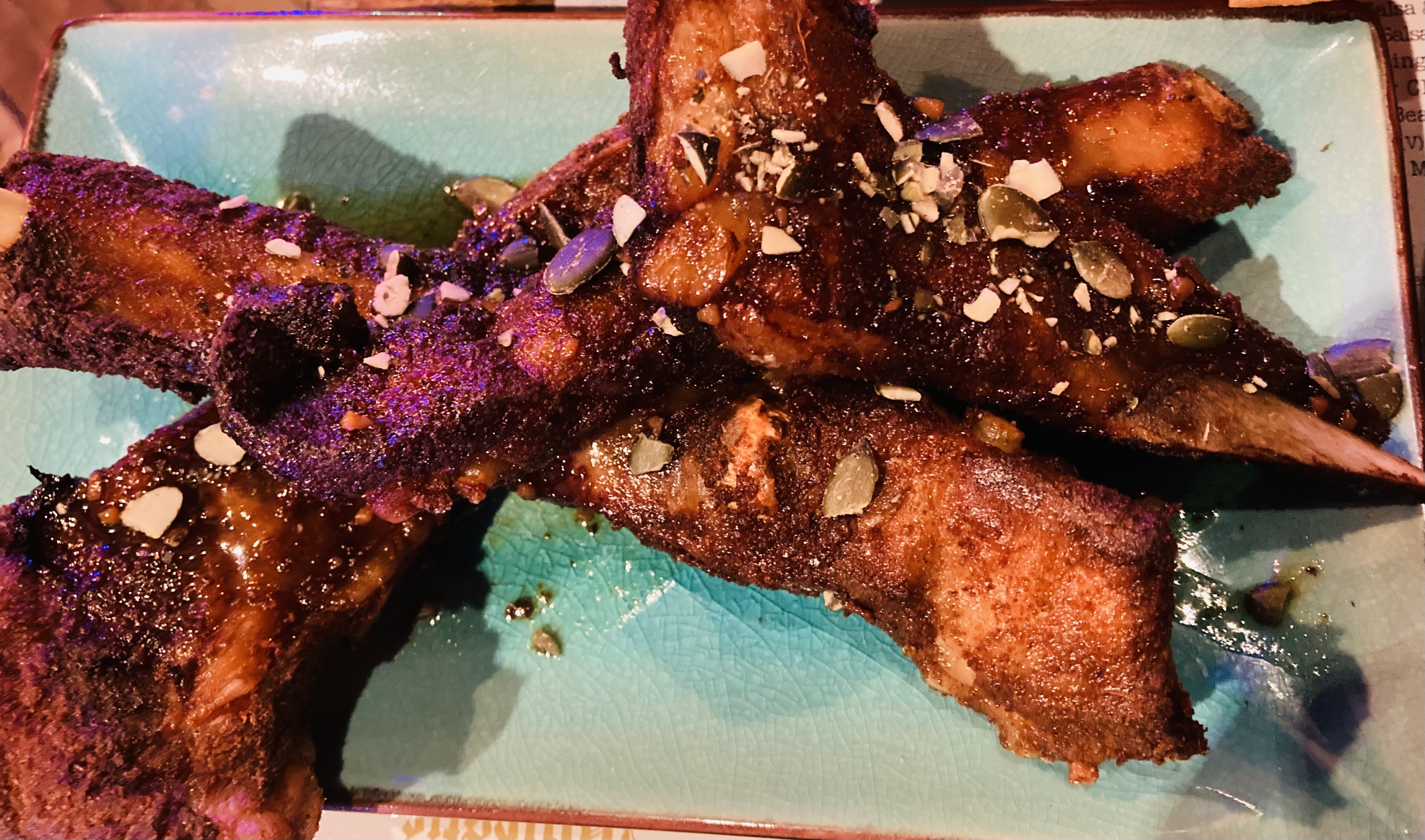
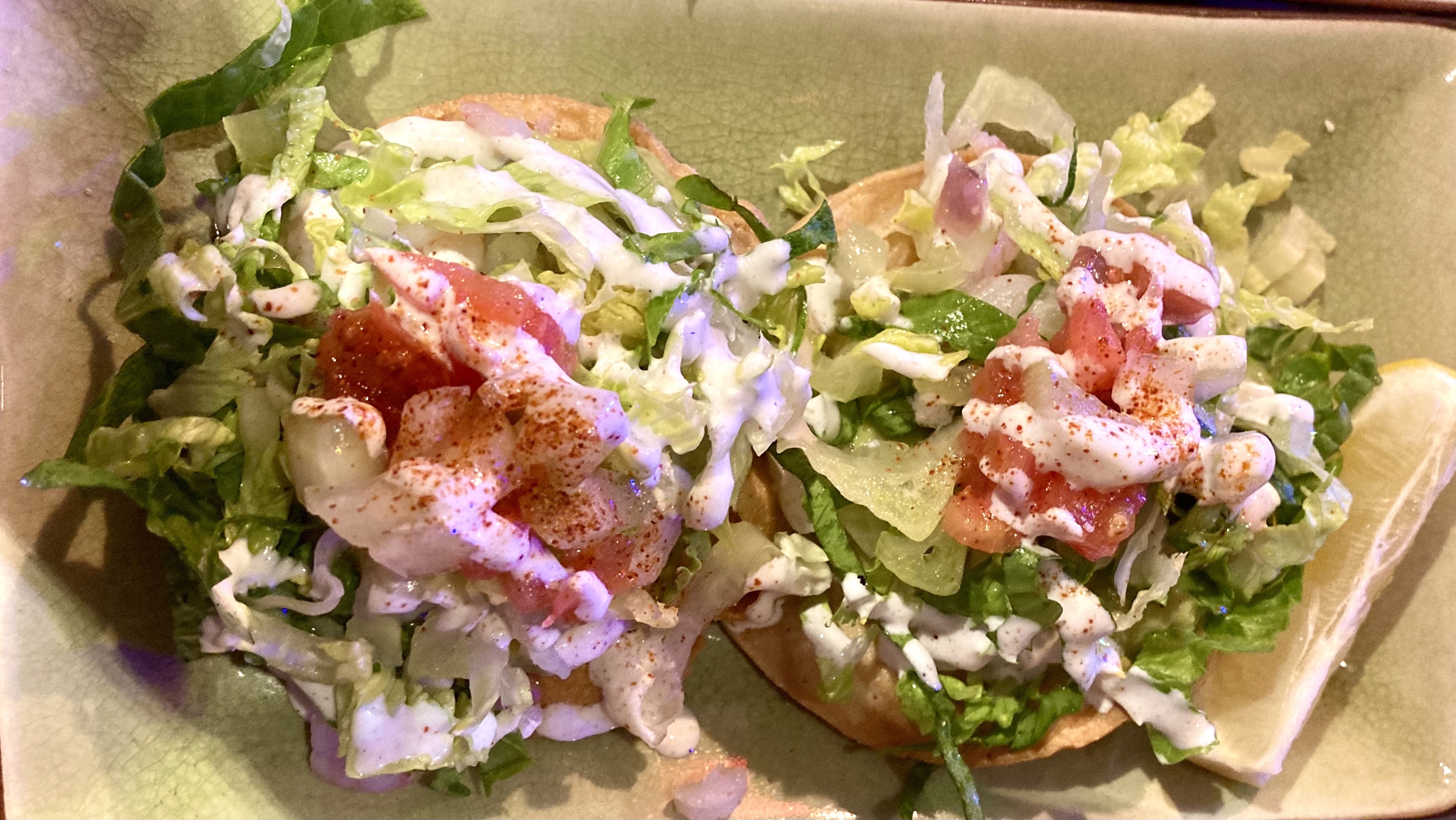
We share a range of dishes as eclectic as the decor: guacamole with tortilla chips and salsa; two lots of tostadas (prawn, cucumber salsa & guacamole and crab ceviche); quesadillas with smoked chicken & Oaxacan onions; classic queso fundido (basically a cheese fondue); Baja surf chowder, and some chipotle honey ribs. They’re all delicious and absolutely bursting with flavour. The standouts include the chowder, which is packed full of fish; it’s rich and intense and very more-ish. The smoky quesadillas are the very definition of comfort food, and the prawn tostadas are fresh and zingy with lime.

We’re pleasantly surprised by the bill. All of that mouth-watering fodder, as well as a large glass of house white and a pint of El Borracho, comes to a grand total of £65.39 – and that includes service!

We leave, smiling. How lucky we are to have such a fabulous eaterie on our doorstep. We’ll definitely be back. Next time, however, we’ll order as we go along – making sure there’s enough space on the table as well as in our bellies.

4.3 stars

Susan SIngfield

Sheila’s Island

01/03/22

King’s Theatre, Edinburgh

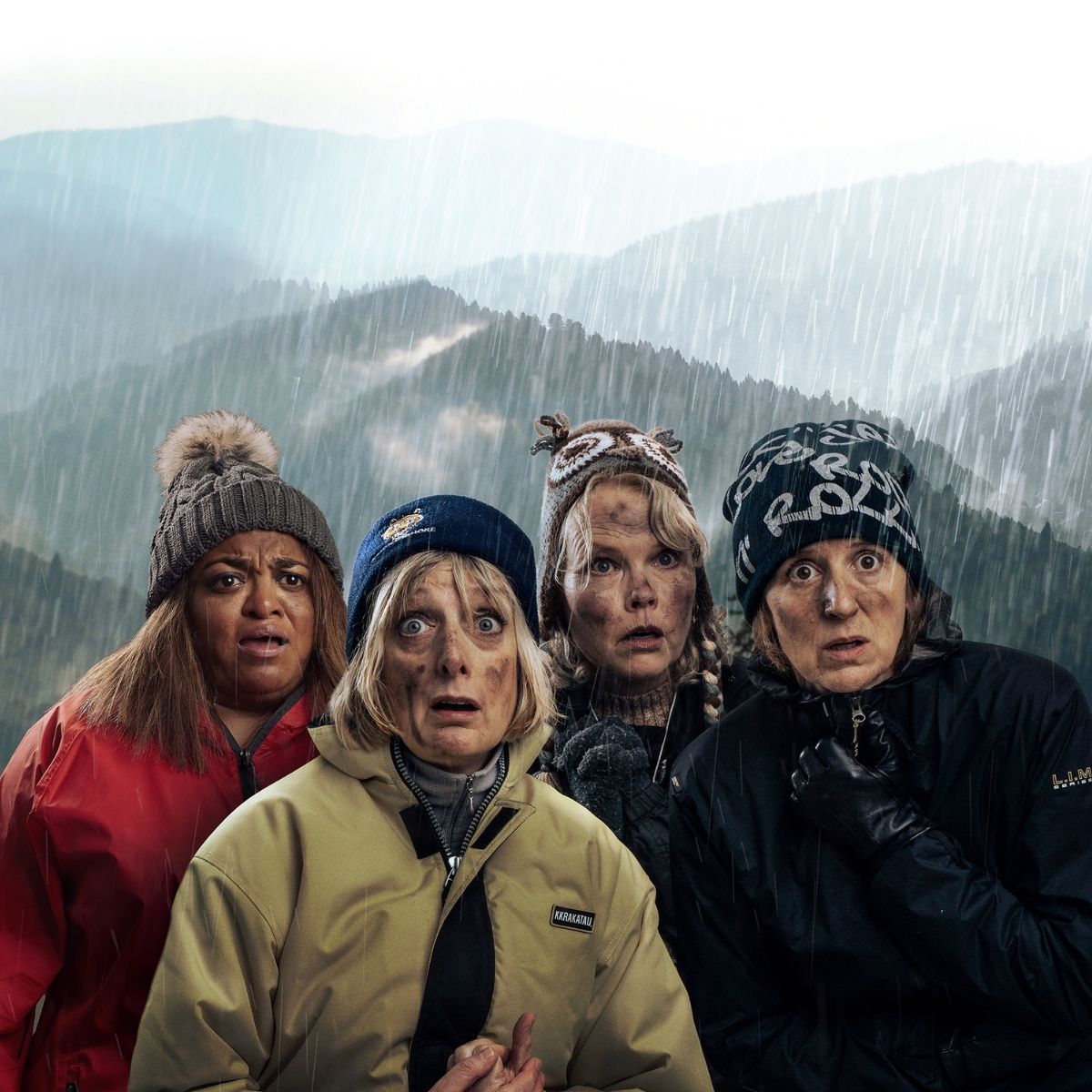
Sheila’s Island, directed by Joanna Read, is a reworking of Tim Firth’s 1992 play, Neville’s Island, about a group of middle-managers on an outward bound ‘team-building’ trip. Only two notable things have changed: the protagonists’ gender, and the need to explain why no one has a working phone. The former is dealt with more convincingly than the latter: the women are as rounded and credible as their male counterparts. As for the perennial mobile problem, I’m quite happy to buy the idea that ‘water damage’ has rendered Julie’s unworkable; I’m less convinced that the other women would have acquiesced to a request to hand theirs over to the course organisers. It just seems unnecessarily convoluted. ‘No signal’ would suffice…

The island in question is in the Lake District – Derwentwater – only a mile from the mainland. It’s November 5th, and the women are there because Sheila (Judy Flynn), their team leader, has led them astray, after misreading the first clue on a treasure hunt. They’re stranded because their canoe has sunk. Denise (Abigail Thaw) is particularly miffed, because her rucksack is still in the canoe, but Julie (played tonight by understudy, Tracy Collier) has packed enough for ten, so they’ll probably be okay. Except that Fay (Sara Crowe) is with them… and Fay has a lot of personal issues to work through.

Firth is good at humour, and there are jokes a-plenty in the script, delivered with gusto (and great timing) by the performers. The low-stakes situation is played for laughs: this is a long way from Robinson Crusoe or Lord of the Flies; the women can expect to be rescued within a day or so. Nevertheless, they rapidly descend into disharmony, with petty rivalries sparking heated exchanges, and their ridiculous attempts at bushcraft are genuinely funny.

Where the play fails, for me, is in its attempt to deliver something deeper than the shallow waters at the island’s edge. I don’t believe any subject should be off-limits when it comes to jokes, but neither do I think that issues as serious as nervous breakdowns, suicide attempts and being a long-term carer should be appropriated as asides. The subjects are too weighty for this flimsy tale to bear, and they make the tone uneven. It seems a little tin-eared, if I’m honest.

The set (by Liz Cooke) is a thing of loveliness, with simple, stark lines depicting bare trees, and an inlet of water reflecting Paul Anderson’s gorgeously lit winter sky with all its Bonfire Night fireworks. In the end, though, Sheila’s Island doesn’t quite deliver the “oohs” and “aahs”.

3 stars

Susan Singfield