Edinburgh

Nassim

24/08/23

Traverse Theatre, Edinburgh

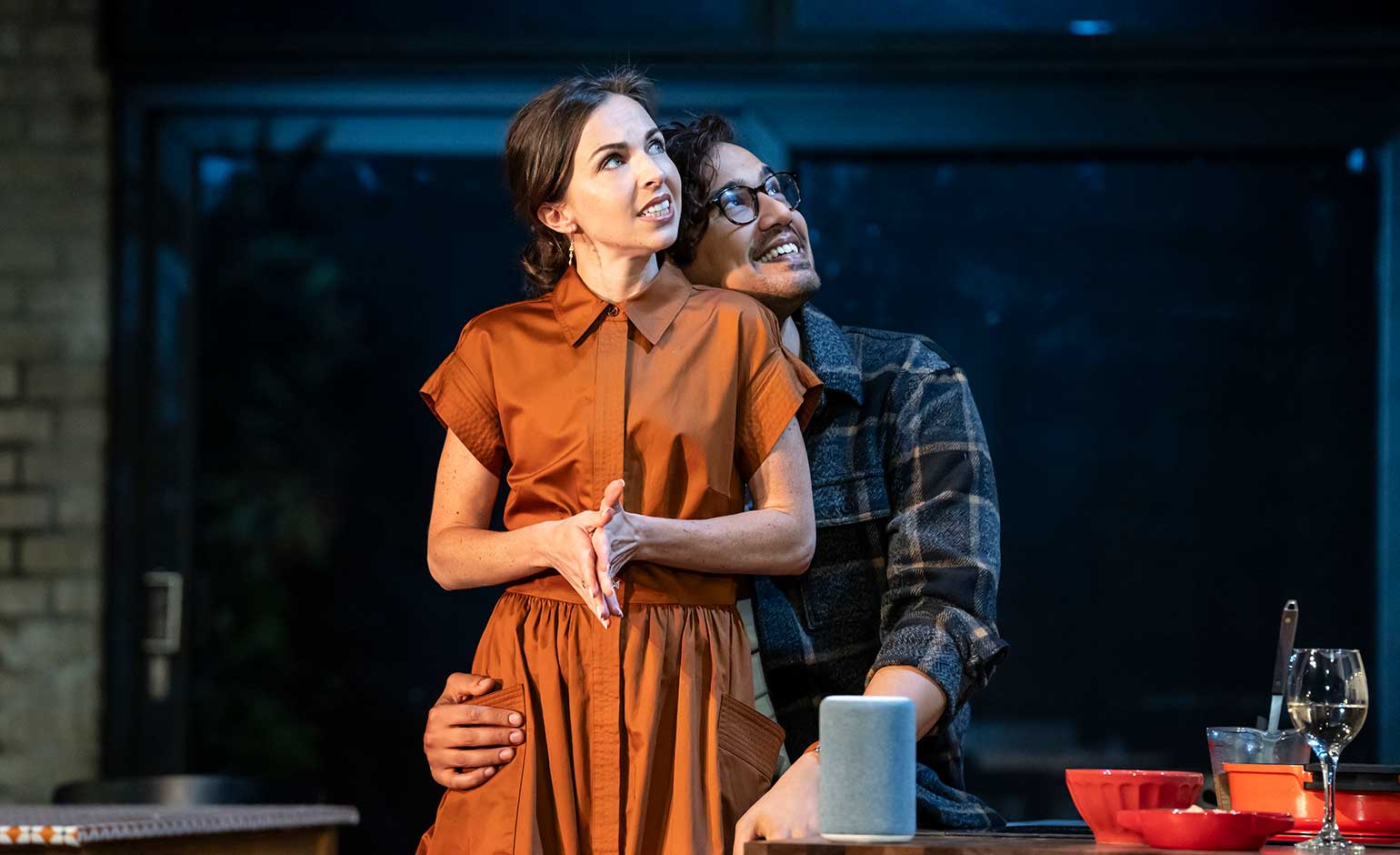
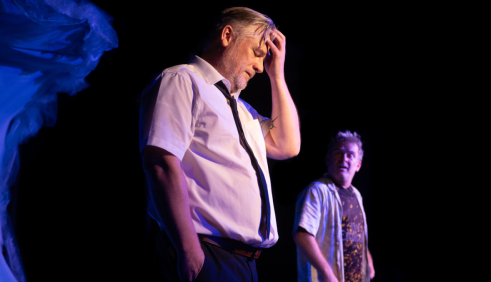
Nassim (the play) is six years old, and has been performed by hundreds of acclaimed actors, including Whoopi Goldberg, David Greig and Cush Jumbo. The conceit is simple: each actor only performs the show once – without any rehearsal and having never seen the script. Nassim (Soleimanpour – the playwright) directs via a backstage camera and a loose-leaf script. Soleimanpour is Iranian but his plays have never been performed in Iran; Nassim is about his attempts to express himself creatively without being able to use his mother tongue. One by one, the actors speak for him, acting as a conduit for Soleimanpour’s words. It’s powerful and affecting.

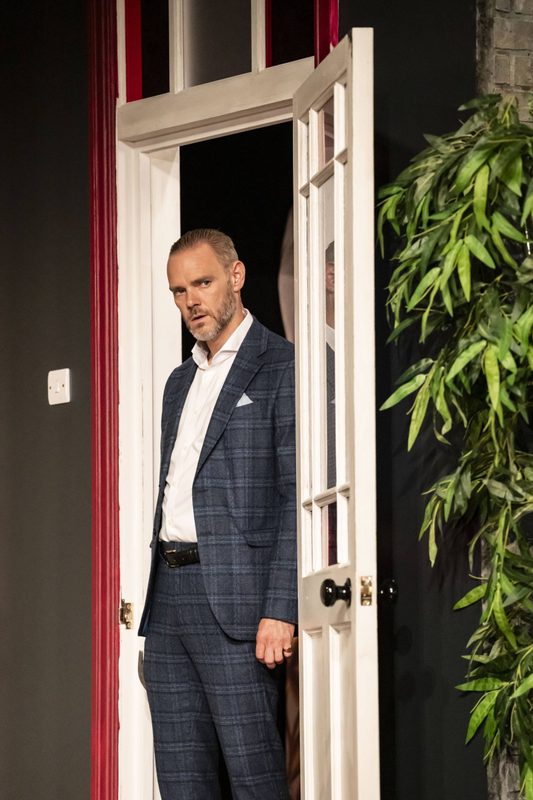
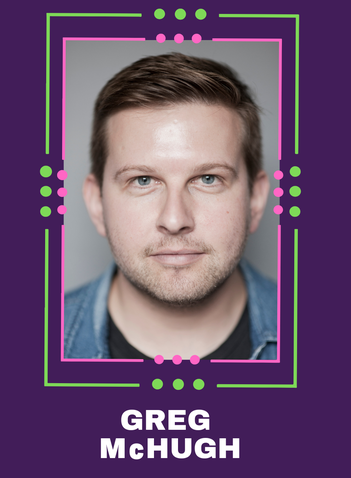
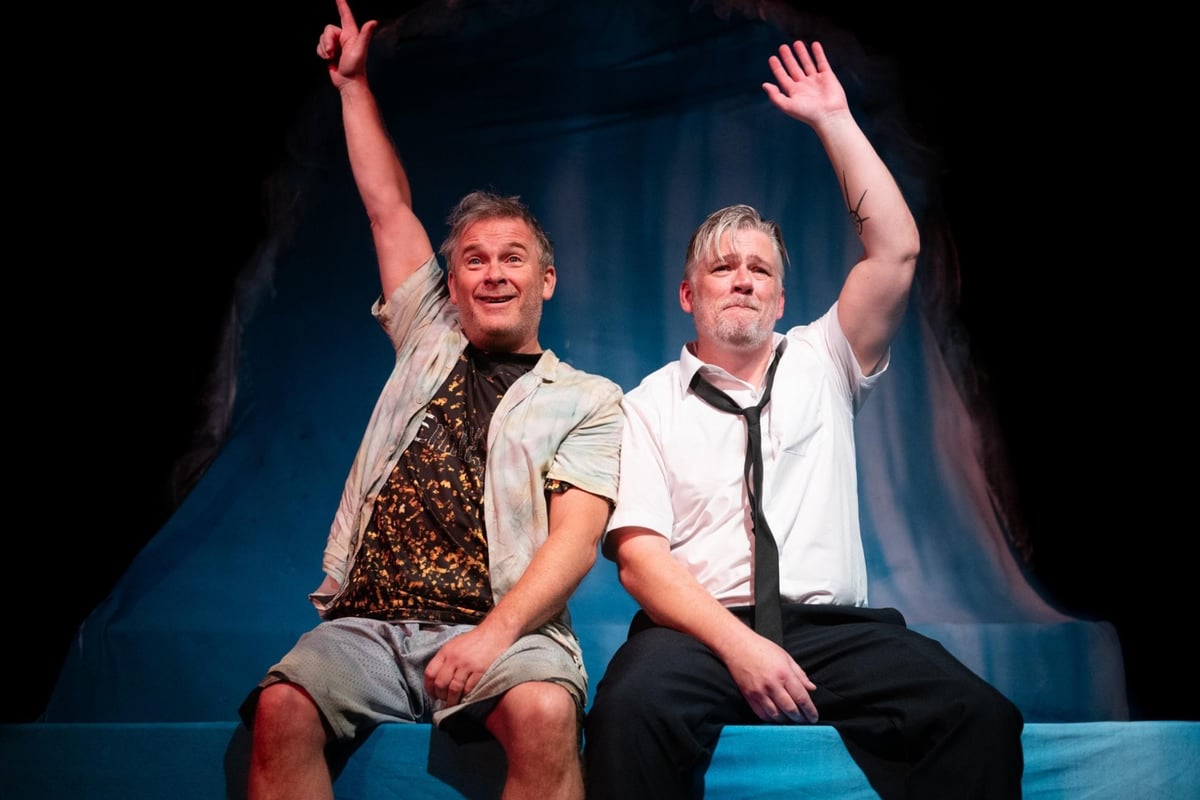
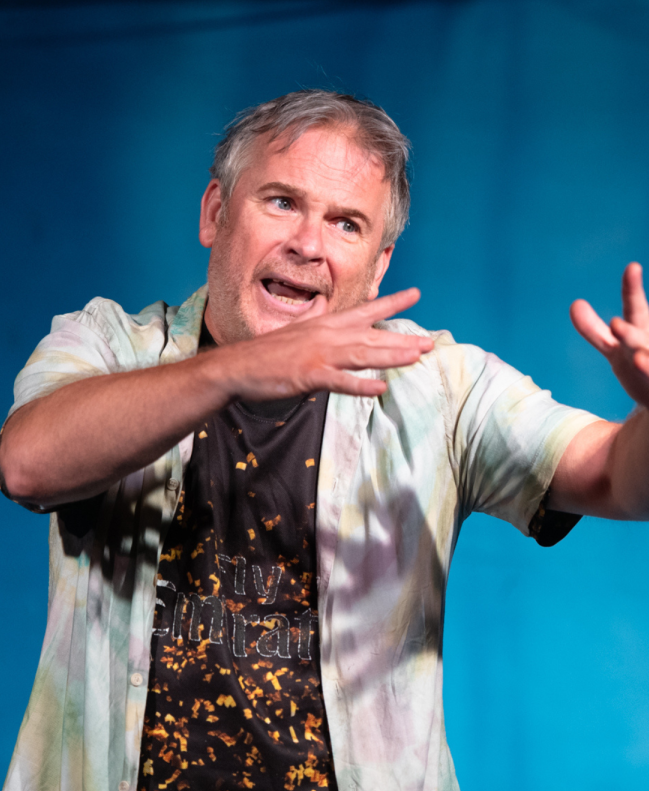
Tonight’s actor is Greg McHugh, best known to us as the terrifying Teddy in BBC Scotland’s Guilt. I’m happy to report that he seems a lot cuddlier in person, approaching Soleimanpour’s script with warmth, respect and humour. He gamely follows all of the instructions, including the more out-there ones, such as holding a sugar lump in his teeth (it makes sense soon after) and accepting cherry tomatoes as punishment for errors in a language game.

But Nassim isn’t just a play: it’s a lesson in Farsi and a reaching out across divides. The tone is gentle and benevolent, provoking smiles rather than laughs – and then, finally, tears. It’s a way for Soleimanpour, a conscientious objector, to reclaim his voice, to subvert the Iranian government’s attempts to silence him. For years, he was unable to leave Iran, and so he sent his scripts out into the world without him; now, he lives in Germany, and travels with them, joining the paper-doll chain of performers onstage, forging those connections in person. He’s freer than he used to be, but it comes at a price. He’s left behind his home, his family. His mother. Mumun. He teaches us a phrase: Delam tang shod barat. I miss you.

Only the hardest of hearts could fail to melt.

4.5 stars

Susan Singfield

Lie Low

22/08/23

Traverse Theatre, Edinburgh

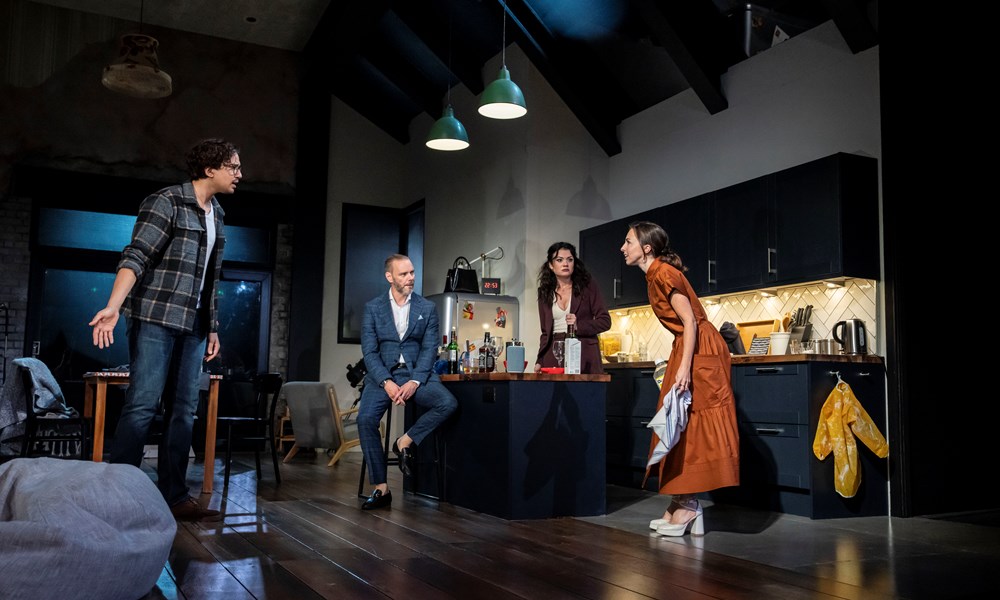
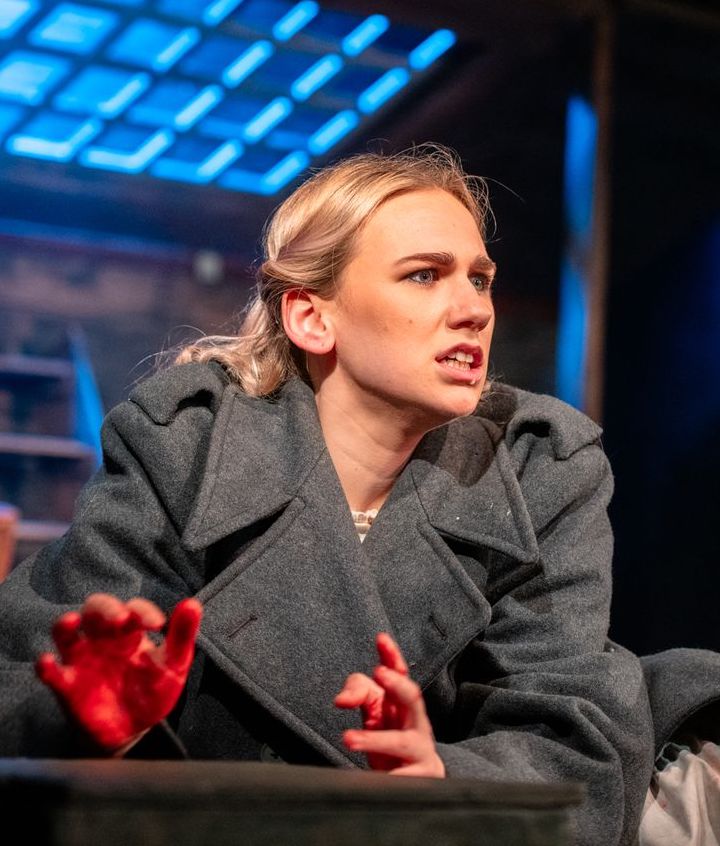
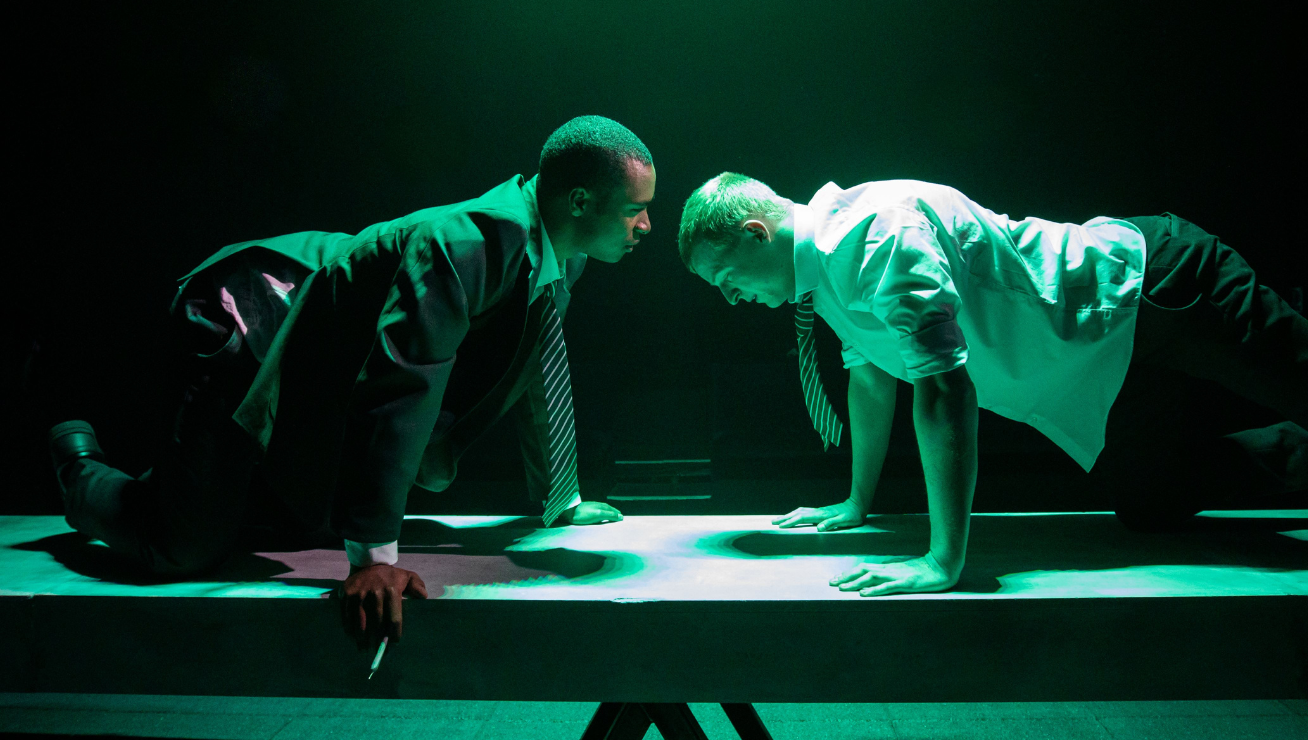
Lie Low is a disquieting play, where nightmares are funny but the waking hours are bleak. It’s a year since Faye (Charlotte McCurry) was attacked, a year since a masked man broke into her house, hid inside her wardrobe and attacked her. She’s fine, she insists; she’s been coping. It’s just that she hasn’t been able to sleep for the last three weeks. If she could just sleep, then she’d be okay…

The disembodied, recorded voice of her doctor emphasises how little help Faye is getting. He suggests pills, meditation, no screens before bed, etc., but Faye has heard it all before. The doctor’s response might not align exactly to what a real doctor would say, but it’s an excellent representation of how it must feel when you’re not being heard, a cry for help met with distance and reserve.

But maybe the point is that nobody can help Faye. We talk glibly of wellness – “reach out, talk to someone, be kind to yourself” – but we can’t live laugh love our way to mental health. Faye is traumatised and she can’t do anything except paper over the cracks.

When Faye’s brother Naoise (Thomas Finnegan) phones her out of the blue, she seizes on the opportunity to try something out. He hasn’t spoken to her since the attack – he hasn’t known what to say, he tells her – but he can make amends now.

By donning a mask, getting into the wardrobe and re-enacting the attack…

Ciara Elizabeth Smyth’s script veers from humorous to horrific in the blink of an eye. The shift in tone is awkward, but that’s what makes it work, disorientating the audience, so that our laughter dies on our lips and makes us uncomfortable, as we recognise the deep-seated anguish behind Faye’s preposterous requests. Occasionally there is perhaps a little too much exposition: the piece works best when we are left to fill in the gaps for ourselves.

But when Naoise reveals the real reason for his call, things become even darker, and we find ourselves reeling, just like Faye, unsure of whose narrative to trust, uncertain what is real and what is not.

Directed by Oisín Kearney, Lie Low is a masterclass in precision and exactitude, every move carefully choreographed. The dancing is wonderfully jarring, at odds with Faye’s state of mind but reinforcing the metaphor of the duck mask: Faye’s brave face.

“I’m fine.”

4 stars

Susan Singfield
Where is Love

21/08/23

theSpace @ Surgeon’s Hall (Theatre 3), Edinburgh

Bloomin’ Buds is a Bradford-based theatre company, founded by Katie Mahon (who also produces this play), with the aim of offering “drama-based support for working class communities who are struggling to access opportunities and the arts due to facing class inequalities.”

This seems especially important at the moment, as the cost-of-living crisis means that people have even less money than usual to spend on ‘non-essentials’, and arts subjects continue to be squeezed in state schools (though still highly valued in private ones… go figure). But, as Dana Gioia says, “The purpose of arts education is not to produce more artists… It is to create complete human beings capable of leading successful and productive lives in a free society.”

Where is Love‘s protagonist, Shelly (Maeve Brannen), is certainly a complete human being, although she’s not convinced she’ll have a successful and productive life. She’s a fighter; she’s had to be. Abused by her dad and taken into care, Shelly has learned to look after herself. She’s sixteen when she first meets Will and he seems exciting. But several kids and a lot of bruises down the line, Shelly is at breaking point…

This play, written by Jennifer Johnson, is based on a real life story and, if you think you’ve heard it all before, therein lies the tragedy. Shelly’s experiences are anything but unusual: one in three women in the UK experiences domestic violence. Perhaps some elements of the piece could be expanded on – it’s not quite clear, for example, how long a time period is covered, nor how many children Shelly has – but it all adds up to a compelling and surprisingly uplifting tale. The cycle can be broken: Shelly can give her kids the stability she never had and, through her work, help others who’ve been let down by the system.

Brannen performs the monologue with absolute conviction, imbuing Shelly with an impish appeal, and I like the addition of the real Shelly’s recorded voice, her words used to provide extra background information or to move the story along.

Grace Wilkinson’s direction is assured and imaginative: rarely has a washing line been put to such a variety of uses. This one serves not only as a symbol of Shelly’s domestic load, but also as the hanging strap on a bus, a shower screen and lots more. The music (by Claire O’Connor) is noteworthy too, particularly Shelly’s plaintive refrain, “I’ll be your landmark…”

Bloomin’ Buds are doing an important job in opening up access to the arts and ensuring that working class voices are not excluded from the mix. In fact, the theatre company’s own backstory would make an interesting play in itself. Next time, maybe?

3.5 stars

Susan Singfield

Artist/Muse

20/08/23

Assembly George Square (Studio Five), Edinburgh

The Wednesday Women’s Writing Collective (WWWC) is “a group of women and femmes dedicated to fostering creativity and uplifting marginalised voices”. In this piece, written by Diana Feng, Tegan Verheul, and Clarisse Zamba, their focus is on the anonymous artist’s muse, who – they posit – is a co-creator, and so merits some credit.

The Assembly’s Studio Five has a day job, spending eleven months of the year as a lecture theatre. On entering the small space today, I note that there are sheets of paper and pencils on the long bench tables. “Please feel free to do some life drawing,” the usher says.

On the stage, standing inside a large gilt frame, there is a woman. We pick up our pencils and begin to draw.

It’s a neat conceit, positioning the woman as an object, a thing for us to look at and attempt to recreate. It positions us as the artist too: we’re in charge of our creations, aren’t we? Except… without her, we have nothing to draw. Her style, the expression on her face, her demeanour; we have had no say in those. She is the image and we mere interpreters. (In my case, a pretty poor one at that…)

We never finish the drawings. Once the lights go down, the story begins. The woman steps out of the frame and bursts into life. She is Olivia Fernandez (Caterina Grosoli), a life model in the middle of a screaming row. Her sculptor boyfriend, Laurent (Luke Oliver), has found a new, much younger subject – and Olivia isn’t going to go quietly. As their argument grows more violent and heated, she seeks refuge in a stranger’s house. He – “Of course!” says Olivia, despairingly – turns out to be another artist, albeit a much quieter one. He’s Paul Patel (Sushant Shekhar) and he recognises Olivia: he’s seen her image captured many times. Before long, the two have fallen in love – but Paul is jealous and begs Olivia not to pose for anyone else. But how can their relationship survive if her wings are clipped? And, if his body of work depends on her body, how can he claim full ownership?

It’s an interesting premise and we find ourselves grappling with the thorny questions it raises for a long time afterwards. (What if the subject is a mountain or a piece of fruit? What if it’s a building – should the architect be acknowledged? Can we compare life models to musicians, in that a session player/occasional model doesn’t need to be named, but a band member/muse does?)

If the script itself isn’t as weighty as its themes, losing gravitas by centring on an improbable love story, it’s engaging nonetheless. Grosoli gives a sprightly performance as Olivia. Based on Fernande Olivier, Pablo Picasso’s muse, she is a bold, sassy young woman, and Grosoli imbues her with verve and spirit. I especially like the way that dance is used to symbolise her restless nature.

The play’s design is clever too, and I’m impressed by the judicious use of projection on the enticingly blank canvases.

The first thing I do when I get home is put a face to Fernande Olivier’s name, seeking her likeness in photographic as well as painted form.

3.4 stars

Susan Singfield
Dom: the Play

17/08/23

Assembly Rooms (Ballroom), Edinburgh

The first thing to say about Dom: The Play is that it’s not what I’m expecting. Unsurprisingly, at the world’s largest arts festival, the vibe is mostly liberal and self-aware. Like its namesake, Dom: The Play is neither of these things.

This isn’t necessarily a problem – I’m all for challenging my own preconceptions – but the play just doesn’t really work for me. It’s not incisive or satirical; instead, it’s a seventy-five minute defence of Cummings, devoid of any critical analysis of his time in government. It’s easy to understand how people believed the rumours, cunningly circulated by playwright Lloyd Evans, that Cummings actually wrote the script. The closest the play comes to any kind of criticism is the acknowledgement that he didn’t actually manage to achieve what he set out to do.

Although the publicity material promises to reveal the truth about what really happened at Barnard Castle, it doesn’t: he’s never brought to task. In reality, Dom simply dismisses it in one line: “I didn’t break the law.” Surely, even if Cummings the character can’t see his own flaws, the play ought to expose them? Here he’s presented exactly as he seems to see himself: as a visionary hampered only by other people’s mediocrity.

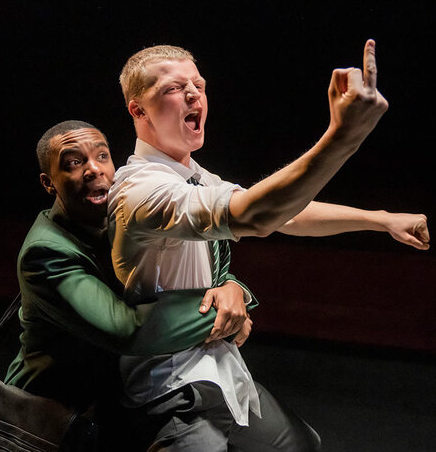
Dom: The Play is an oddity in other ways too. It’s tonally uneven: the bad-wig pantomime buffoonery of Tim Hudson’s Boris sits uneasily alongside the long TED talk-style sections, where Cummings (a very convincing Chris Porter) is given space to expound on his ideas, while the sketches depicting Nicola Sturgeon, Michael Gove, civil servants and Guardian readers are very broad and rarely succeed in skewering their targets.

It’s all a bit icky. There’s something very misogynistic in the way an offstage Carrie Johnson is portrayed, as if she’s Eve or Lady Macbeth, responsible for her husband’s downfall, and there are some revoltingly classist jibes too, e.g. a line about Angela Rayner, which might well be a verbatim quote, but is presented here not as something awful that should never have been said, but as a funny joke, and one we’re invited to laugh at.

I leave disappointed. It feels as though this play is meant to rehabilitate Dom in the eyes of the public, but in truth it feels as smug and tone-deaf as the man himself. I’m angry all over again – about his boorishness and self-importance, and about the damage he wrought.

2.6 stars

Susan Singfield
Tituba

16/08/23

C Venues Aurora (Main House), Lauriston Street, Edinburgh

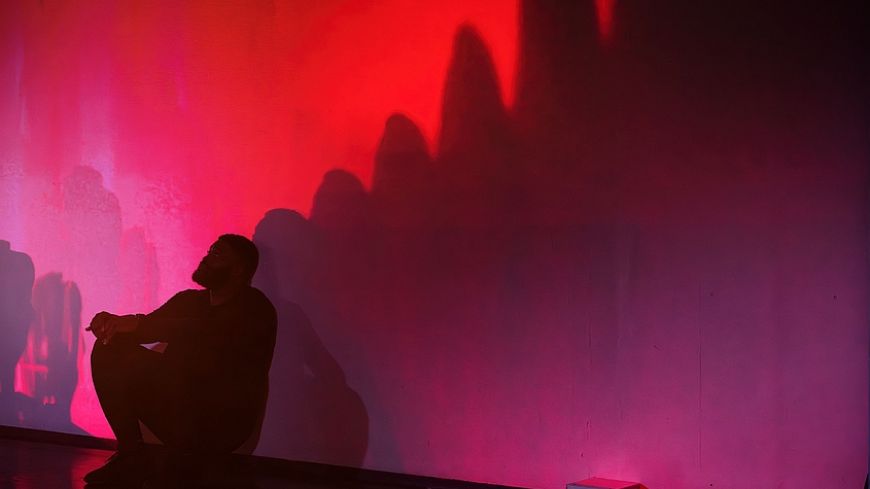
Written as a correction to Arthur Miller’s The Crucible, which relegates Tituba to the sidelines, Winsome Pinnock’s 2016 monologue reinstates her as a central figure, a key player in the Salem Witch Trials. Whereas Miller shows her practising witchcraft with the town’s white children, encouraging them to dance naked and sacrifice chickens, and then ignores her, Pinnock returns to the transcripts of the court cases, where Tituba was the first to confess, the first to name others and thus take her revenge on those who had enslaved her. Of course The Crucible is a wonderful play, but it’s a shame Miller silences Tituba as he does, because her story is really interesting, as well as important.

In this lyrical monologue, Pinnock explores Tituba’s backstory, as well as her motivation for denouncing the townspeople in Salem. I learn for the first time that she’s Caribbean, not African, and see how she has more reason than anyone else in the play to grasp this opportunity to seize power. Almost everyone in Salem is oppressed to some extent: the church exerts a strong grip, demanding adherence to its punitive codes. But there’s a clear hierarchy within this: first the white men, then the white women and then the white children. At the bottom of the pile are the Black women and children, the latter sold and sent away, the former worked to the bone and whipped on a whim. No wonder Tituba speaks out.

In this Africanus World production for C Venues, Faith Martin Abongo delivers an intense, compelling performance, accentuating the poetic rhythm of Pinnock’s words. This Tituba is riveting, illuminating; I learn a lot about her world. The section where she is beaten is hard to watch – as it should be – and it’s to Abongo’s credit that I can almost feel Samuel Parris’s cruel presence.

If there’s a criticism here, it’s to do with the staging. This is an intimate play, but the Main Hall is vast and cavernous and some of the words are hard to hear. I think the piece would work better if it were brought forward, closer to the audience, and if – instead of exiting between each scene, only to return moments later having made a simple costume change – Abongo were to remain onstage throughout.

All in all, this is a beautifully-crafted piece of writing, and Abongo does it justice.

3 stars

Susan Singfield

The Umbilical Brothers: The Distraction

15/08/23

Assembly Roxy, Edinburgh

Although this is (almost) our first experience of The Umbilical Brothers, they’ve been around for a long time, successfully plying their madcap blend of mime and soundscapes to appreciative audiences since the mid-90s.

We caught a glimpse of the sort of show they’re best known for at the Assembly Gala Launch, where David Collins performed a series of ever-more complex and surreal actions, accompanied by Shane Dundas’s weird and wonderful sound effects.

The Distraction is something else entirely though, a departure from their established style – although still just as silly and inventive. This show is all about the tech, specifically green screens and multiple cameras, and I’ve never seen anything quite like it.

You can almost hear them saying, “That’d be fun!” and then adding a series of ‘what-ifs’ until a show’s worth of shenanigans has been established.

Even while we’re waiting for the sell-out audience to file in, we get a sense of how cheery it’s going to be, as a series of groan-worthy jokes is displayed on the big screen that dominates the stage. It’s a canny move, setting the tone for the next hour.

There are some tech glitches in the first ten minutes, and it’s hard to tell if they’re real or part of the act. If the former, no matter – the delay is entertaining in itself. If, as I suspect, the latter is true, it’s a neat move, instilling a sense of jeopardy, and reminding the audience to be impressed by how much computer wizardry is being used.

Over the next sixty minutes, the duo mine the possibilities of live green-screen action, taking us from outer space to the depths of the ocean, via TV sports (played with babies – don’t ask), a guest appearance from Steve Jobs and more than one exploding head. There is audience participation – but not as you know it. And there are lots of dolls. If this all sounds like an amorphous mass of nonsense, then that’s exactly what it is – but brilliantly so.

I defy anyone to watch The Distraction without laughing all the way through.

4.5 stars

Susan Singfield
Blue

14/08/23

Assembly George Square (The Box), Edinburgh

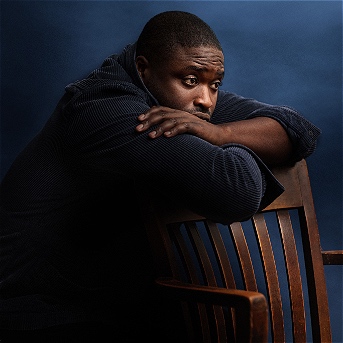
Blue by June Carryl is an intense two-hander, focusing on the aftermath of a police shooting.

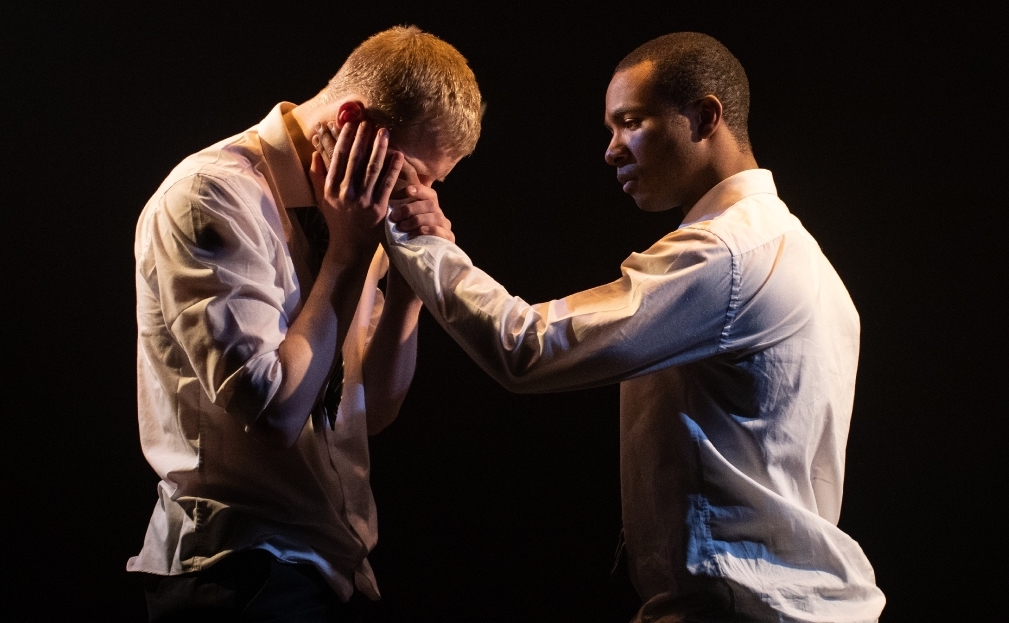
Sully Boyd (John Colella), sorry, Sergeant Sully Boyd, as he is quick to remind us, is used to the Police Department’s internal discipline procedure. He’s had complaints levied against him before. Being interviewed by a fellow officer is just a formality, isn’t it? And anyway, this time the investigator is Rhonda Parker (Carryl), an old family friend. Sully’s known Rhonda since she was a kid; he was pals with her dad; heck, her husband used to be his partner, before he quit the force.

But something is different. For starters, this ‘mistake’ is much, much worse than the others. He’s shot and killed a Black motorist, and there’s no evidence that the guy did anything wrong. There is evidence, however, of Sully’s mounting racism, his conviction that something is being stolen from him, from all white men. As the aphorism goes, “When you’re accustomed to privilege, equality feels like oppression.”

Sully can reminisce about the good old days as much as he likes, but his true feelings have been brutally exposed, and another Black man has paid the price. African-American Rhonda isn’t about to let him off the hook…

Post-George Floyd, there has been a sea-change: first the groundswell of the Black Lives Matter movement and then pushback from those who think that, if Black lives matter, it means that white lives don’t. Blue is a blistering illustration of what this looks like in practice, of how a police force that is supposed to serve and protect us all equally is incapable of doing so, because its vision of ‘us’ is rooted in white supremacy.

It is to both Colella’s credit as an actor and Carryl’s as a writer that Sully does not come across as a two-dimensional baddy. He clearly sees himself as a decent guy, someone who’s put in his time serving his country, and just doesn’t understand why things have to change. He likes his position of privilege, even if he won’t acknowledge it.

However, it’s Carryl’s emotive performance that brings this important two-hander to its powerful and devastating conclusion.

4.6 stars

Susan SIngfield

Bangers

14/08/23

Roundabout at Summerhall, Edinburgh

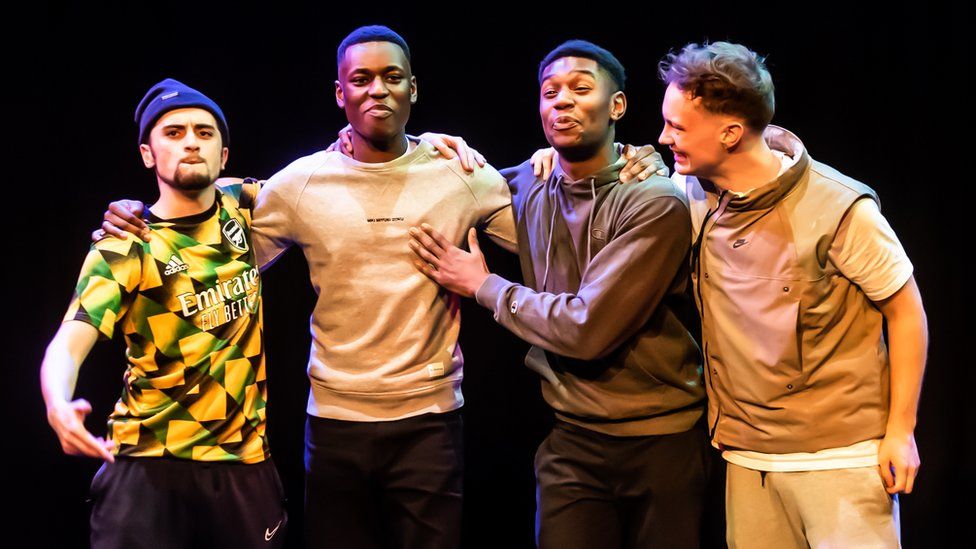
Bangers is a tale told in rhyme, rap and R&B, a propulsive slice of gig theatre that feels as much like a party night as a performance. Set somewhere in the city of London, it’s the story of two unconnected characters, Aria (Danusia Samal – who wrote this) and Cleff (Darragh Hand), both of whom are going though rocky patches in their lives.

Cleff is coming to terms with the recent death of his father and struggling to decide whether to pursue his musical ambitions or, to please his Mum, take the safer route of passing exams and going to college. Aria is still haunted by a crush she had years ago, on the teacher who first mentored her and inspired her to perform. When Cleff and Aria bump into each other in a nightclub, it’s clear from the outset that they’re capable of making sweet music together, if only they can find a clear path through the debris of their respective issues.

The performance is presided over (you might more accurately say refereed by) an acerbic house DJ (Duramaney Kamba), who often intervenes when Aria and Cleff squabble and who employs a whole range of sound motifs to keep them in check. There’s a genuine good-time vibe to this show and Roundabout is packed to the rafters with cheering, clapping onlookers.

The story is told through ten different tracks. Samal and Hand take on several different personae as the story unfolds, but there are no real visual clues to help me spot when there’s been a change – which makes things a bit confusing at times. And, while I believe in Cleff’s story arc, Aria’s stretches my credulity. Could somebody really be hung up for so long over something so slight?

A late plot twist is probably meant to come as a big surprise, but I’m sure I’m not the only one who can see it coming.

Nonetheless, it’s hard to resist the sheer exuberance of the performances and the overall mood is so celebratory, I find myself compelled to go with the flow. By the show’s conclusion, I’m up on my feet with the rest of the crowd, urging the three performers on to their final joyful song.

4 stars

Philip Caveney

Candide

14/08/23

theSpace @ Surgeons Hall (Grand Theatre), Edinburgh

Ima Collab is a young theatre collective from Hong Kong, and their spirited version of Candide opens this week in the Space @ Surgeon’s Hall. Condensing Voltaire’s sprawling epic into a forty-minute slice of theatre is a tall order, but the fourteen-strong cast give it their all, and the result is both energetic and entertaining.

Like his C18th contemporaries Tom Jones and Gulliver, the eponymous Candide is an ingénue, whose epic journey from innocence to experience spans many decades and several distinct acts. His idyllic youth in a Baron’s castle, under the tutelage of renowned optimist Pangloss, comes to an abrupt end when he is caught kissing the Baron’s daughter, Cunégonde. Cast out, he endures a series of hardships: he is forced into joining the Bulgarian army, for example, and also survives both a shipwreck and an earthquake. Along the way, he is repeatedly reunited with and then parted from Cunégonde, until at last they marry and live unhappily ever after. (I think it’s okay to give spoilers to a three-hundred-year-old story.)

In this production, the tale is narrated to an eager group of travellers, keen to know why one of their number is obsessed with Voltaire’s novel. The contents of their suitcases are pressed into use as props, and the fourth wall is continually broken, as the cast ask questions of the audience, and issue demands to one another (“Can you make me a boat, please?”).

This breathless retelling is vibrant, and the cast are very engaging. There are a lot of jokes, most of which land well, although I’m not so keen on the fat-phobic jibe at the aged Cunégonde, who, played for the most part by one actor, is briefly replaced by a perfectly lovely-looking larger one – a move clearly intended to suggest that she is less desirable than she used to be.

The direction is imaginative and, if the ensemble movement sections sometimes lack precision, they are always enthusiastically performed.

An ambitious and diverting piece of theatre, Candide is certainly a lot of fun.

3.4 stars

Susan Singfield