Edinburgh

4Play: 4 New Plays by 4 Scottish Playwrights

12/12/25

Traverse Theatre, Edinburgh

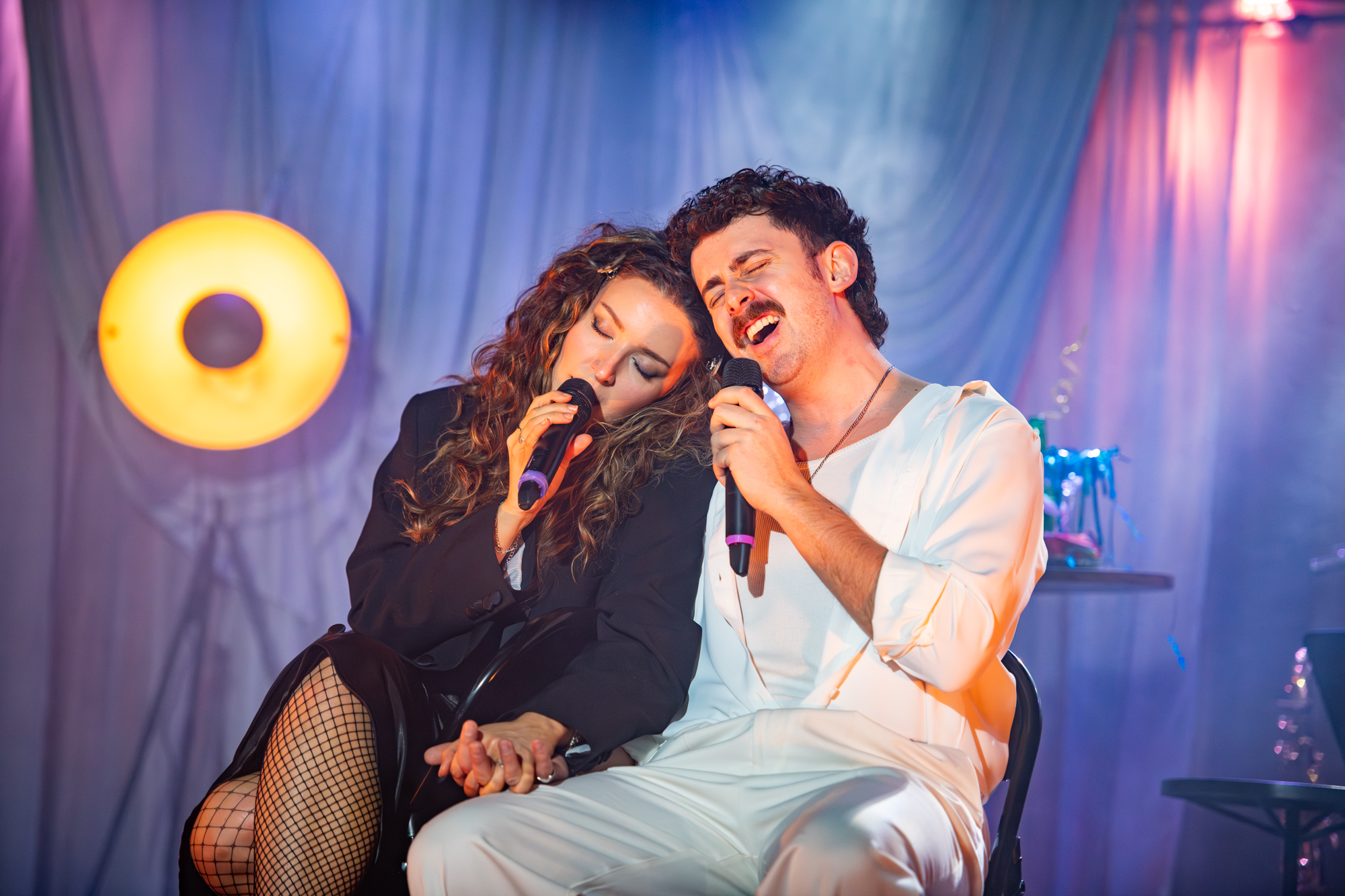
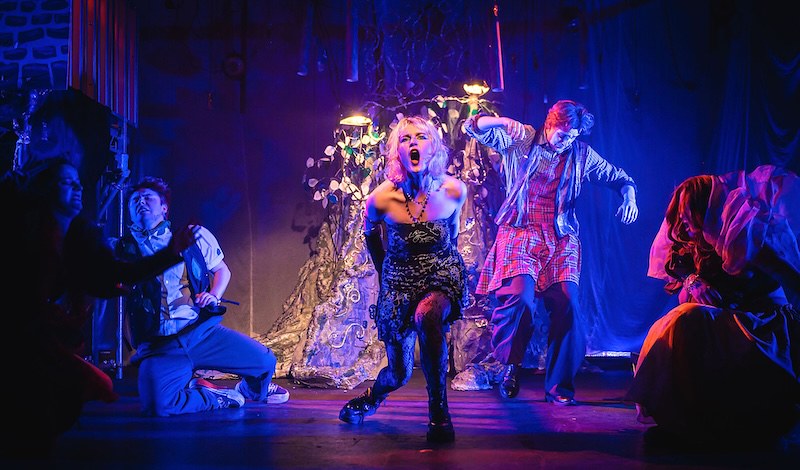
Last year, 4Play comprised four full plays, performed over two nights. This time around, it’s a truncated affair, with excerpts rather than entire scripts. The first two pieces are only ten minutes long, while the second pair are given longer to develop their themes, each with a running time of approximately twenty-five minutes.

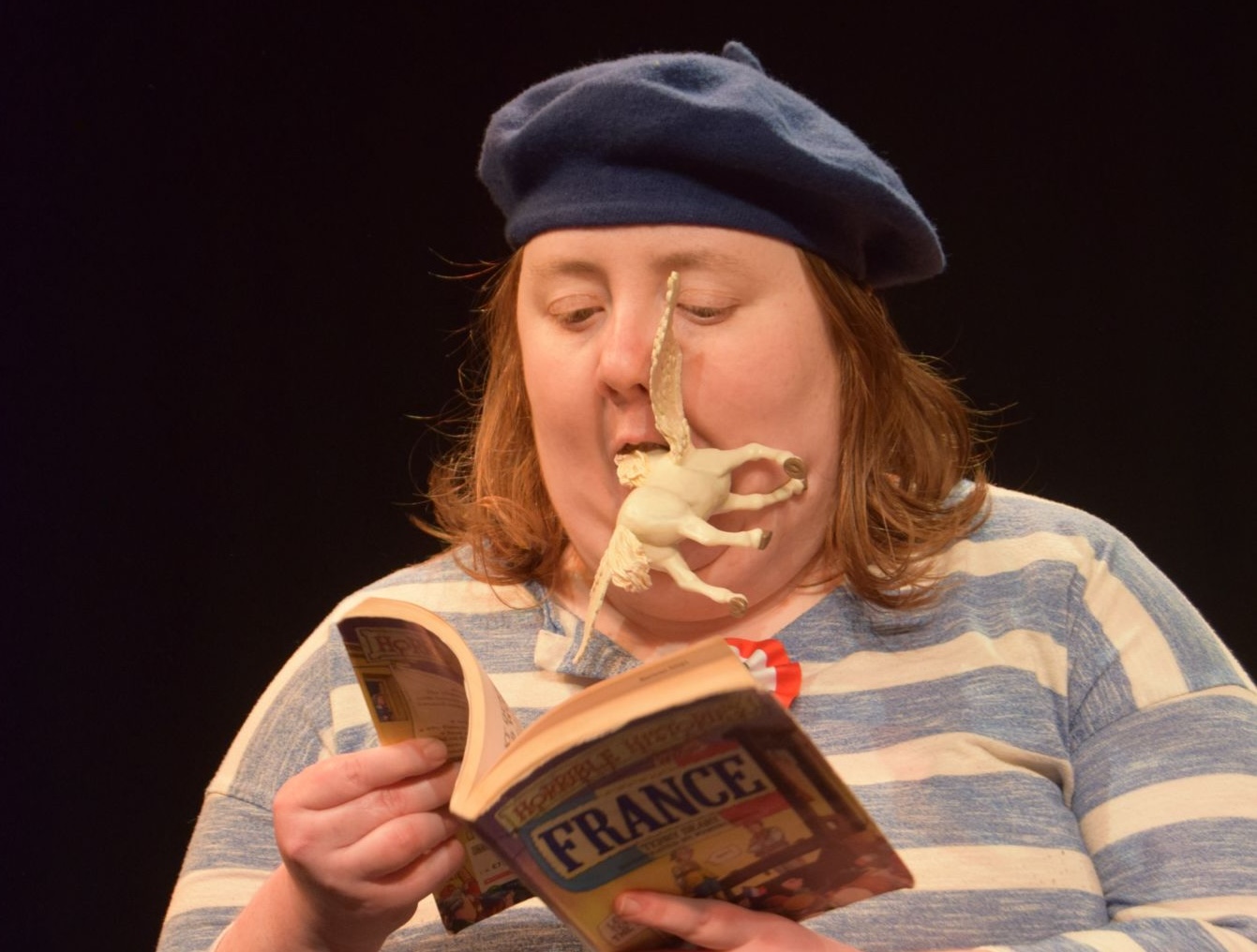
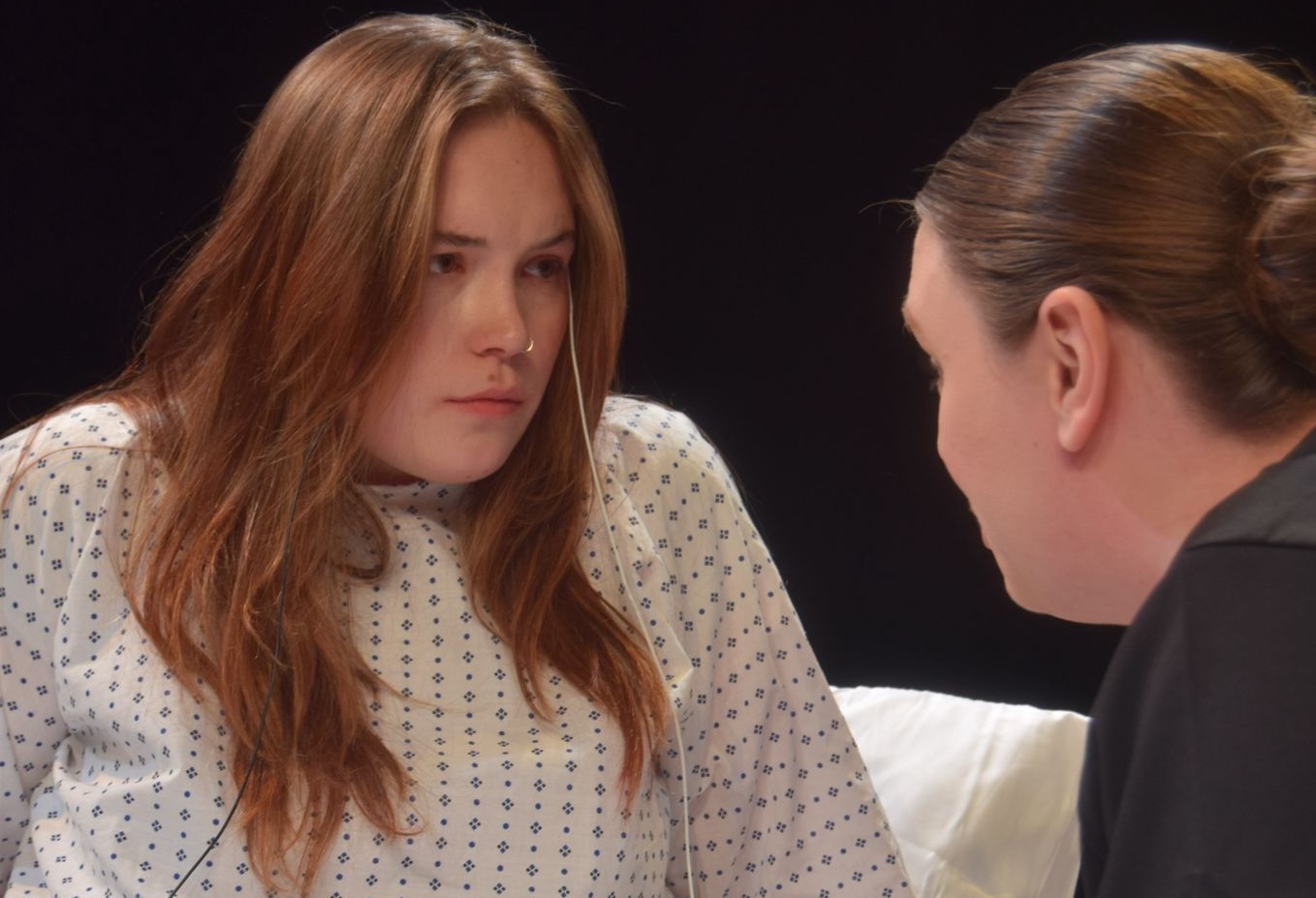
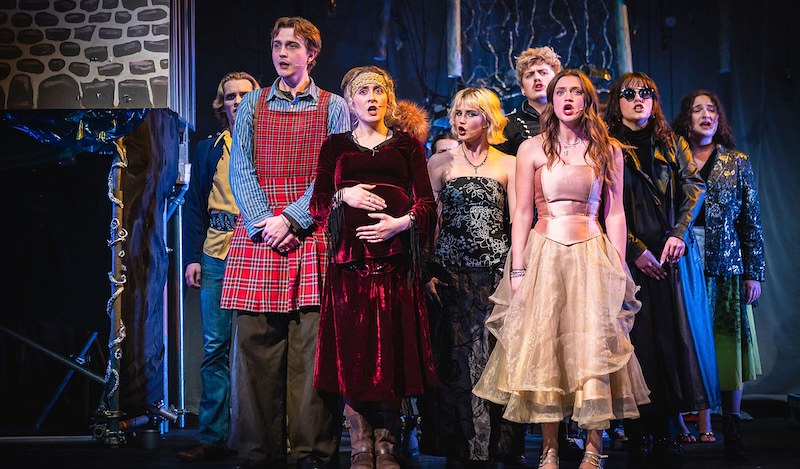
We open with a short extract from Ruaraidh Murray’s Chips, directed by Michael Nardone and Jake Sleet. Nothing to do with the California Highway Patrol, this is a fictionalised account of a true-life tale of… microchip theft. Apparently it was a thing in the 1990s. As if breaking, entering and taking apart computers wasn’t enough of a challenge, Kaz (Christie Russell-Brown) is heavily pregnant, and her partner-in-crime, Wan (Calum Manchip), isn’t exactly focused on the job…

The second piece is Brace, written by Geraldine Lang and directed by Matthew Attwood. Paul (Jack Elvey) and Lewis (Kieran Lee-Hamilton) are apprentice scaffolders, struggling to learn their trade without any real guidance. In their business, mistakes have material consequences, and it’s the people at the bottom of the pile who have to pay. Although I appreciate that the physicality of the boys’ work is key to the piece, I can’t help feeling that it’s a mistake to spend so much time constructing the scaffolding; I’d prefer to hear more dialogue and delve further into the plot.

After the interval, it’s Sunday Palms, which is by far our favourite of tonight’s plays. From the opening soundscape – an oddly unsettling aural representation of a man returning home from work to his empty flat – to the awkward dialogue that follows the unexpected appearance of a childhood friend, Sean Langtree’s script is utterly compelling. Directed by Grace Ava Barker, the piece is immediately intriguing, and I’m fascinated to know where the story leads. Why is Brian (Daniel Campbell) so alarmed by Nathan (Langtree)’s presence? Whose victory does the title presage? Langtree’s Nathan is perfectly observed – just that little bit too needy, too edgy – while Campbell nails Brian’s discomfort, his attempts to hold to societal norms in the face of Nathan’s peculiar demands.

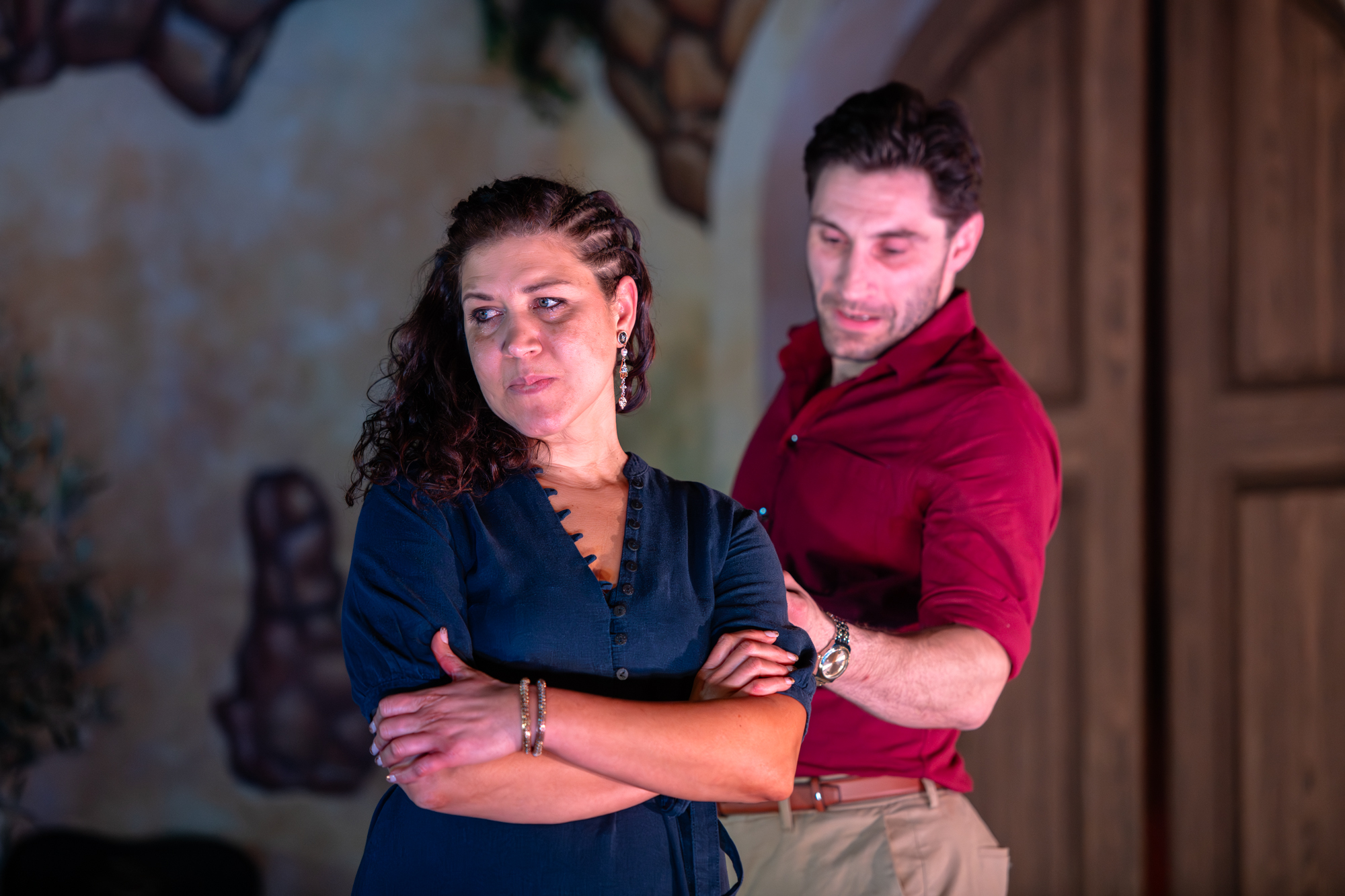
Last up, it’s Hunt by Andrea McKenzie, directed by Gwen M Dolan. We’re in the near future, and AI has taken over the cities. Mags (Deborah Whyte) and Joel (McKenzie) are yearning for a simpler life: to step away from their computers and connect with nature. The trouble is, they’re more familiar with tech than they are with tents, neither has remembered to pack the kettle – and how exactly do you light a fire? What’s more, Joel soon discovers that Mags hasn’t been entirely honest with her, and there’s more to this trip than she’s been told…

Reductions in length notwithstanding, 4Play – and other schemes like it – are vital to ensuring that new voices are heard in theatre. 4Play has had considerable success, introducing Katy Nixon’s Cheapo and Mikey Burnett’s Colours Run, which have both spread their wings and flown to critical acclaim. As Scotland’s new writing theatre, it makes perfect sense for the Traverse to support the event, and we’re delighted to have this opportunity to see emerging playwrights develop their skills.

3.2 stars

Susan Singfield
Wicked: For Good

06/12/25

Cineworld, Edinburgh

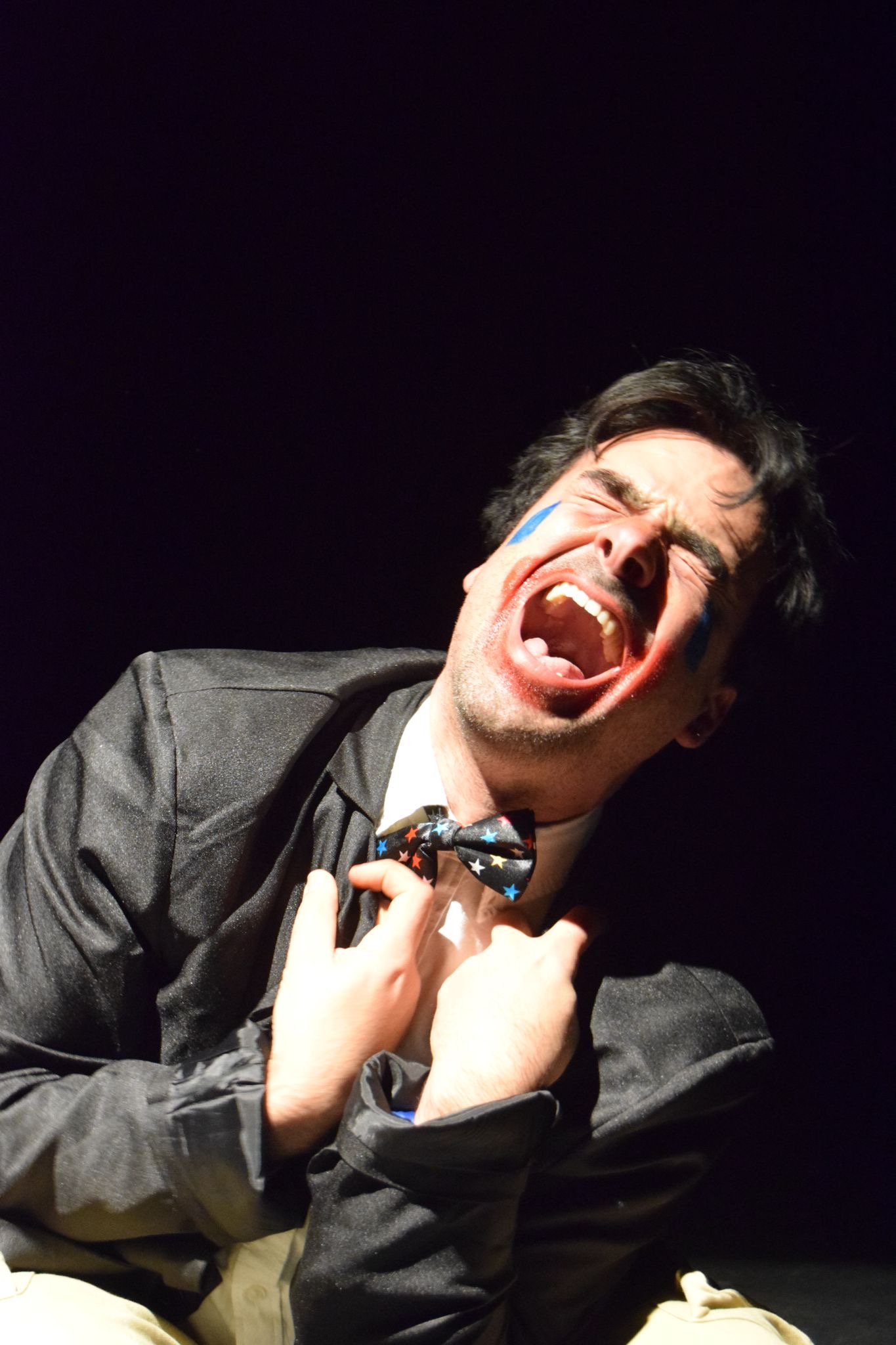
Despite being dazzling, bold and unashamedly in-your-face, Wicked: For Good somehow manages to fall flat. Perhaps the problem lies in the year-long gap between the two parts of this story; it’s like a glass of champagne that’s been left out too long and lost its fizz.

That said, in many ways I prefer this second act (which I’m refusing to call a sequel, because it isn’t: the story arc spans both films, and neither stands alone). At least there’s a resolution here, and I enjoy the creative ways the storyline feeds into The Wizard of Oz. Narratively, For Good – directed by Jon M Chu – is stronger than Wicked, but as a musical? I’m no aficionado, but even I can tell there’s only one real banger in this show (Defying Gravity), and it isn’t reprised here. As a result, the big song and dance numbers, even with Christopher Scott’s sumptuous choreography and the cast’s impressive vocals, just aren’t very memorable.

We catch up with Elphaba (Cynthia Erivo) and Glinda (Ariana Grande-Butera) after their erstwhile friendship has been well and truly shattered by the Wizard (Jeff Goldblum) and Madame Morrible (Michelle Yeoh). Neither young woman is exactly happy about the way the duo uses propaganda and misinformation to control the citizens of Oz but, while Glinda opts for a pragmatic, ‘if-you-can’t-beat-’em-join-’em’ approach, Elphaba favours revolution, exposing the truth at any cost. Each feels betrayed by the other…

The two leads are magnificent: perfectly cast and with crackling on-screen chemistry. Their combined talent is beyond formidable, and the strongest scenes are those where they’re together. But they’re let down by a histrionic script (by Winnie Holzman, Dana Fox and Gregory Maguire), where emotions are always dialled up to eleven, and unrequited love is enough of an excuse to destroy a realm. It’s all very teenage – and all very one-note. Nessa (Marissa Bode) fares especially badly, her death-by-Kansas-farmhouse so fudged that you wouldn’t know what had happened if you weren’t familiar with the tale.

There’s plenty to admire here: the production values are second-to-none, and the world-building is exquisite. I just think that it would have been better to make one excellent three-hour film rather than two quite good ones, whose combined five hours add up to less than the sum of their parts.

If you’ve already seen Wicked, then you’ll need to watch For Good to see how it all turns out. It’s not dreadful (there are certainly worse ways to spend a winter afternoon). But is it worth all the money and the hype? You’ll have to decide for yourself if you want to follow the yellow brick road back to Oz.

3.5 stars

Susan Singfield
The Fifth Step: NT Live

01/12/25

Dominion Cinema, Edinburgh

As if NT Live performances weren’t enough of a treat, we’ve recently ramped up the indulgence levels by choosing to watch them at Edinburgh’s most bougie cinema, the Dominion. At 3pm this afternoon, we zip up our raincoats and venture out into the December drizzle, ready for the half-hour walk that will take us to our huge, reclining seats.

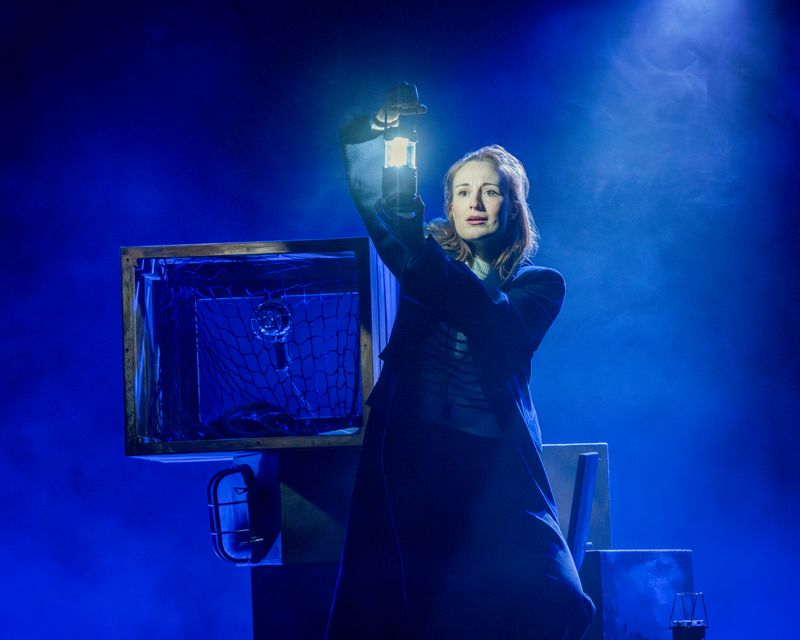
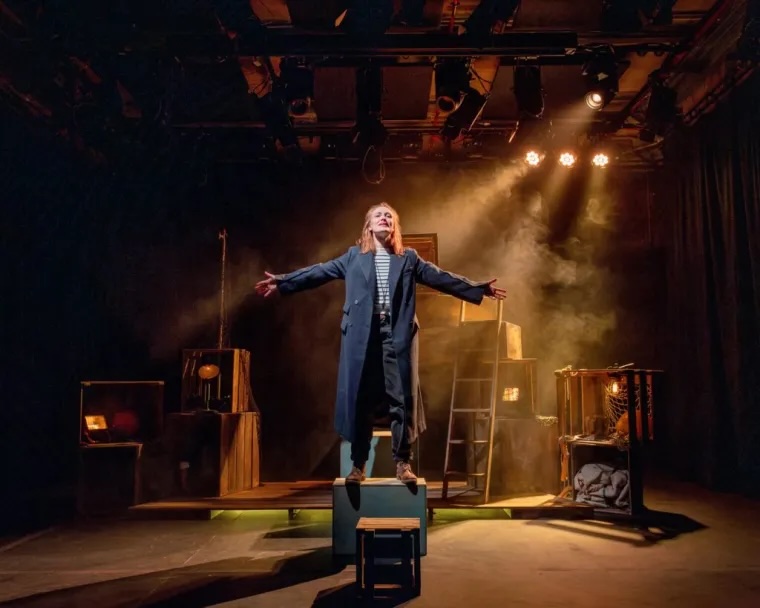
The Fifth Step is a compact, one-act play by Jack Ireland, and its ninety-minute running time is perfectly judged. This is a tight and concentrated piece, where small impulses are magnified, vague doubts forensically explored. The in-the-round set, designed by Milla Clark, is almost brutalist, comprising a stark square with raised, cushioned sides, reminiscent of a boxing ring or a trampoline: a taut jump mat, ready to absorb the characters’ anger, or give them the push they need to set themselves free.

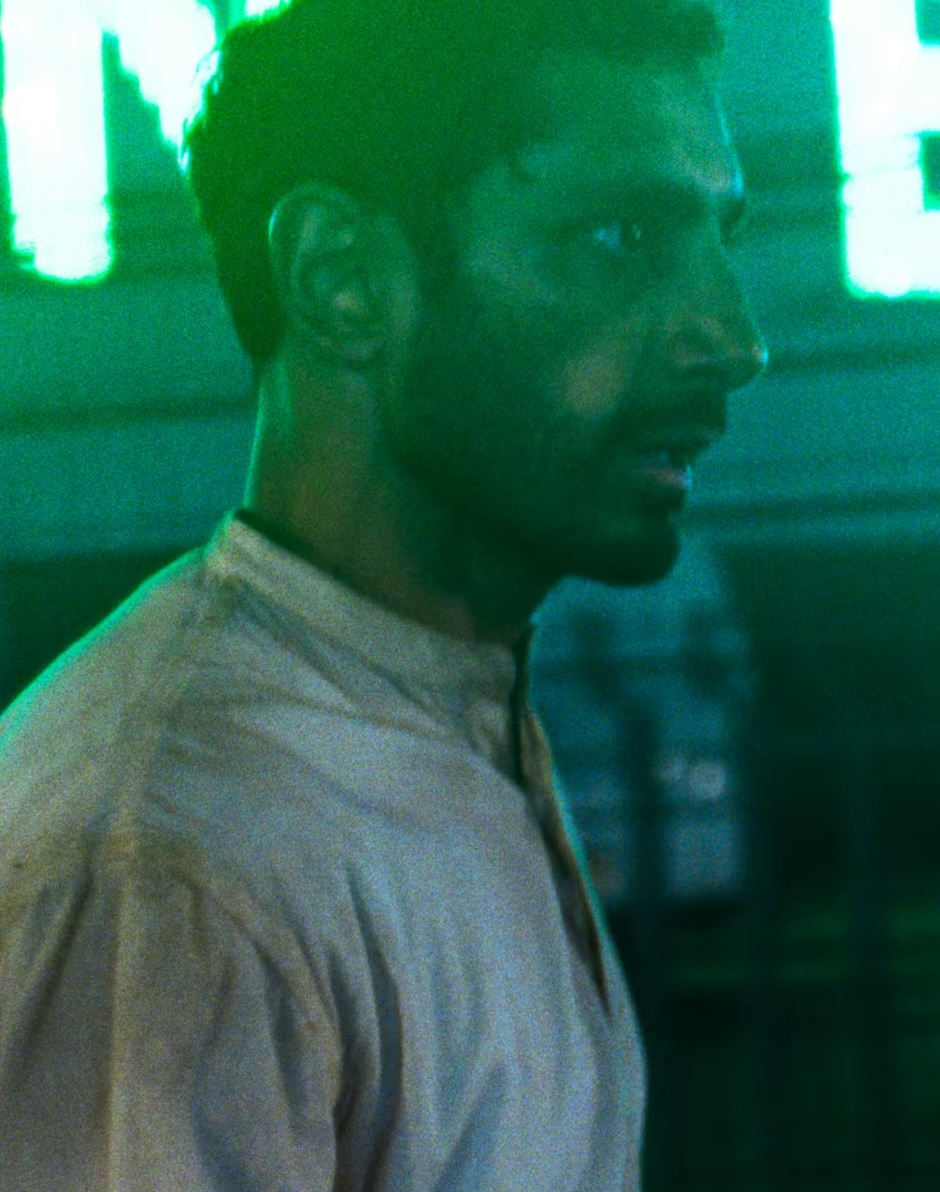
We’re in the world of AA, where acceptance meets strict protocols and kindness sometimes seems harsh. Jack Lowden plays Luka, a twenty-something alcoholic, scared that he’s turning into his dad, and desperate to avoid this destiny. Nervy and uncertain, he isn’t sure that he can do it, not when sobriety leaves a booze-shaped void he fills with loneliness and self-loathing. Hovering in the room after a meeting, he gets chatting to James (Martin Freeman), who has been on the wagon for more than twenty-five years. The older man knows exactly what Luka is going through, and offers to become his sponsor. From hereon in, we watch as their relationship develops – and as they both continue to battle against their respective addictions.

Ireland’s script is darkly funny, and director Finn Den Hertog maximises its comic potential, without ever belittling the men’s experiences. Not much happens, and yet all of human life is here: our frailty, our fabulousness; our bravado, our beauty; our destructiveness and our shared desperation. Luka begins by looking for easy answers: if he does whatever his sponsor says, then surely he’ll find happiness. But James has his own demons to grapple with and he knows that life is far more complex than that. You just have to keep on being honest, keep facing up to your own failings – and keep supporting one another along the way…

Unsurprisingly, Lowden and Freeman deliver faultless performances. They’re perfectly cast, Freeman’s wry stillness the ideal foil for Lowden’s twitchy, pent-up energy. A fascinating insight into not just addiction but also notions of authority and responsibility, this is definitely one to watch if it’s showing at a cinema near you.

4 stars

Susan Singfield
Cinderella: A Fairytale

29/11/25

Royal Lyceum Theatre, Edinburgh

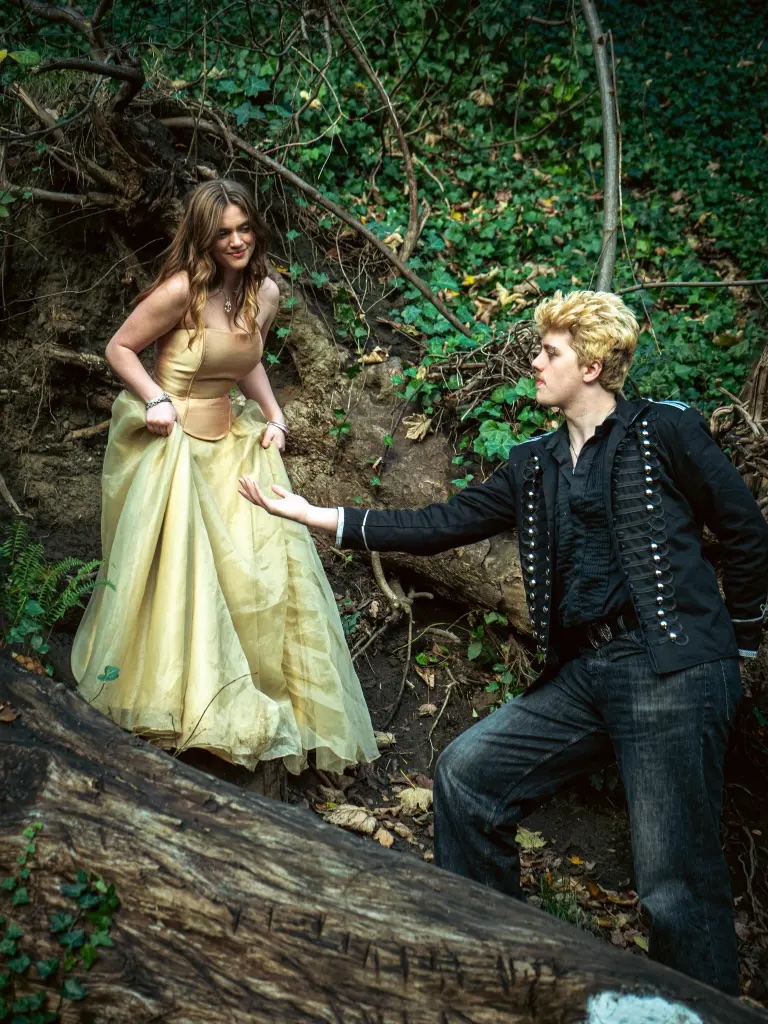
Look, I love a good panto as much as the next drama queen. Still, I have to admit there is something very special about this chance to see a Christmassy rendition of one of the world’s most famous fairy-tales without the distraction of all the boo-hiss-he’s-behind-you-wink-wink-nod-nod stuff. Cinderella‘s plucky orphan narrative is a compelling one, not least because of its moral certainty, where the good are rewarded and the bad are well and truly punished: there’s vengeance at play here, as well as virtue. And, in this version by Sally Cookson, Adam Peck and the Original Company, that dichotomy is writ large.

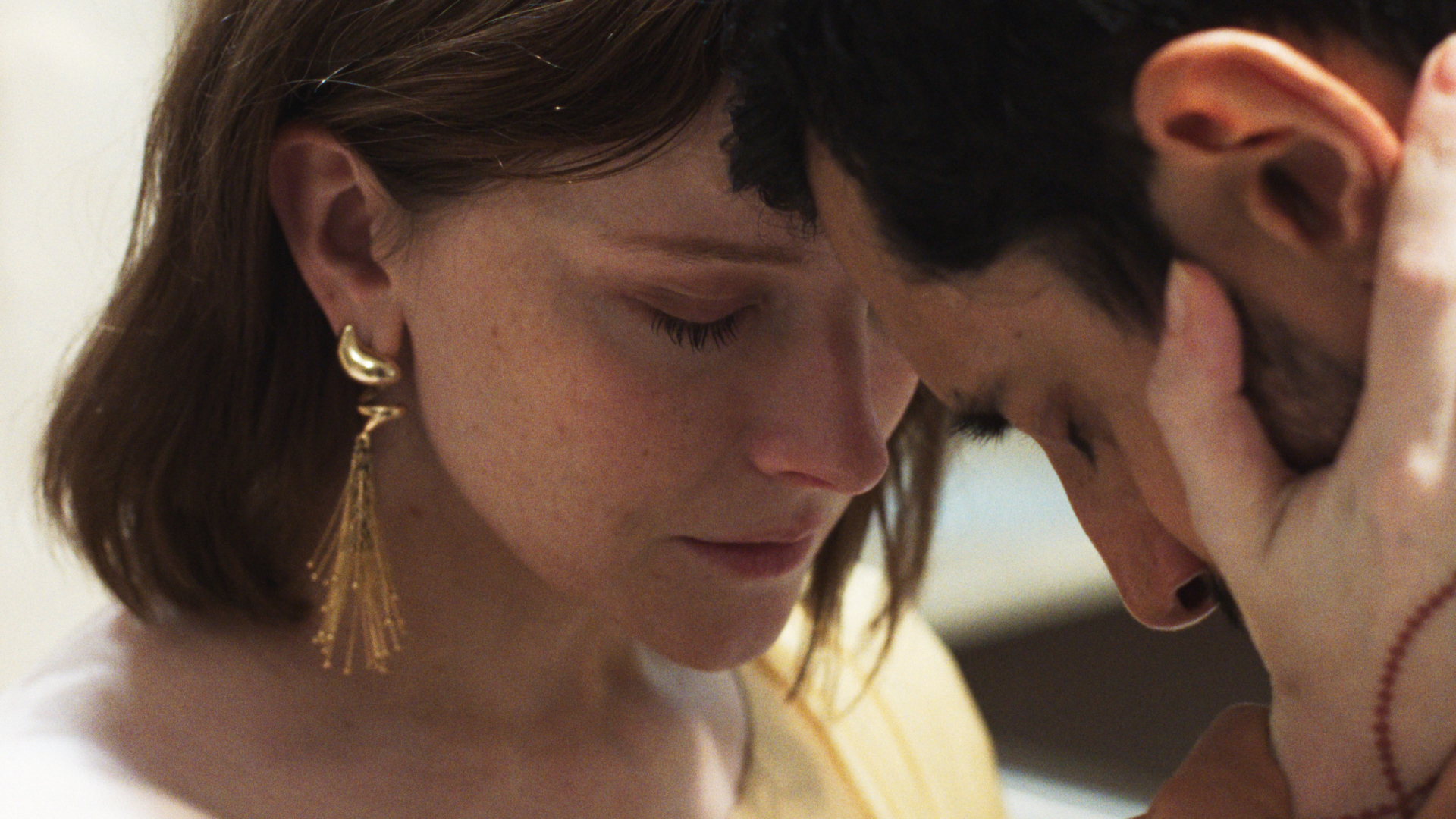
Ella (Olivia Hemmati) lives in a gloriously-realised enchanted forest, all dappled sunlight and multi-coloured birds. The home she shares with her dad (Richard Conlon) is one of those idyllic, romantically-ramshackle cottages where poor people live in story books, and she’s happy there. But when Father marries Mother (Nicole Cooper), everything changes: not only does her step-mum impose a whole raft of irritating rules, she also brings along her own two children, Sister (Christina Gordon) and Brother (Matthew Forbes), who are so priggish and uptight that Ella can’t stand them. And then, just as she’s getting used to the new regime, Father dies, leaving a grieving Ella at Mother’s mercy…

The strength of this show lies in its aesthetic: Francis O’Connor’s set and costume design evoke an ethereal other-worldliness, where magic feels eminently possible. The bird puppets (directed by Forbes and manned by Leo Shak, Stephanie Cremona and the cast) are fabulous, their rainbow plumes as appealing as they are fantastical. Even as a middle-aged woman, I’m completely captivated; how alluring must this staging be for the children in the audience?

The love story element is underplayed: Prince (Sam Stopford) is a nerdy teenage ornithologist and he and Ella strike up such a lovely, convincing friendship that the idea of their marriage seems jarring and incongruous. Director Jemima Levick wisely eschews any overt wedding pageantry, but I do wonder if it would be better to remove the romance entirely, focusing instead on the simple affection between the pair. After all, it’s not as if there’s the same financial imperative for this Ella, who seems to be living in a whimsical approximation of the contemporary world, as there was for her Grimm progenitor, who needed a husband to escape her servitude.

Cooper is obviously having a whale of a time as the odious Mother, camping up her tantrums and cruelty to create a deliciously-devilish interpretation of the character. The protracted toe-chopping sequence – the production’s only real nod to the folk story’s dark heart – is a gruesome highlight. Meanwhile, Gordon and Forbes’ Ugly Siblings are more sympathetic and nuanced than their traditional counterparts, frightened and corrupted by their toxic mum – and clearly redeemable. Carly Anderson has less to do as Queen, who appears here as a slightly-sozzled, benignly-bemused socialite. It’s an interesting take on the role but she is under-used.

Jon Beales’ music and Emily Jane Boyle’s choreography complement each other perfectly, enhancing the story and ensuring the pace never flags.

All in all, this is a delightful production, and one that is sure to enthral audiences of all ages this festive season.

4.2 stars

Susan Singfield
Montrose

16/11/25

Montrose Terrace, Edinburgh

We’re in the mood for a spot of high-end lunch and we’ve heard good things about Montrose, which is a sister establishment to Timberyard, one of the undoubted stars in the Edinburgh culinary firmament. Montrose claims to offer a more relaxed kind of cuisine at reasonable prices so, in order to put that claim to the test, we take a leisurely stroll over to Montrose Terrace to sample their three-course set lunch.

The offer is all three courses for £30, with a small selection of side-dishes, which can be added for a little more outlay. The menu is changed on a monthly basis, though the advertised dishes can be tweaked if somebody has an allergy issue or a pronounced dislike of one of the key ingredients. But, as we so often claim, there’s not much out there that we won’t eat.

The restaurant has a calm, pleasant atmosphere and is arranged on two levels. (Halfway up the stairs there’s what must qualify as the smallest customer toilet in Edinburgh.) The staff are friendly and easy to chat to as we order drinks and wait for our two additional dishes to arrive.

These are a Pickle Plate and a Cantabrian Anchovy Gilda. The former is a plate of crunchy pickles served with a tangy dressing, amid which some beautifully-sweet gooseberries are undoubtedly the stars. The latter turns out to be a single (though quite delicious) fresh anchovy nestled on some truly scrumptious olives. For £5, I find myself wishing we had an anchovy apiece.

Next up is our starter, which is Crown Prince Pumpkin with trevino, hazelnut and rosemary. There’s a decent-sized chunk of slow roasted pumpkin, drizzled with a creamy, nutty sauce and there’s a lot of (too much?) green salad, which is as fresh as you like, but leaves me feeling that this dish perhaps needs an extra element to make it zing.

The main course is essentially the restaurant’s take on sausage and beans, though it’s a lot more interesting than that sounds. It comprises two spicy slices of Venison and Pork Kofta, a chunk of crispy seared shallot and some earthy black-eyed beans. They’ve even managed to make an accompanying portion of kale taste good. It’s a great idea and perfectly suited to an autumn lunch.

Pudding must inevitably follow. Out comes a Pear, Vanilla and Walnut Trifle, which – while it’s not the most photogenic of dishes, the colours all being variations of brown – is nonetheless a lip-smacking delight. It’s like somebody’s crossed a tiramisu with a crumble and this is the weird but oddly satisfying result. I’m definitely in favour taste-wise, but surely a scattering of bright red raspberries would make this look a lot more appetising.

With drinks, this meal comes in at around £90, which in these troubled times represents good value for this standard of cuisine. We depart, sated and happy, and ready for – you’ve guessed it – a visit to the cinema.

4 stars

Philip Caveney

Die, My Love

16/11/25

Filmhouse, Edinburgh

Die, My Love, based on Ariana Harwicz’s acclaimed novel, is another irresistible movie from Scottish director, Lynne Ramsay. With a script by Ramsay, Enda Walsh and Alice Birch, this unflinching study of a woman’s postpartum psychological breakdown is as compelling as it is harrowing – and Jennifer Lawrence is frankly wonderful in the lead role.

Grace (Lawrence) and Jackson (Robert Pattinson) are expecting their first baby and, in preparation for this new chapter of their lives, they move into Jackson’s deceased uncle’s house. They’re not fazed by the piles of leaves in every room, the old-fashioned decor or even a minor rat infestation: they’re young, excited and in love. They’ll make it work.

But once Grace gives birth to Harry, the spark between her and Jackson dies. She’s stuck at home: bored, resentful and unable to cope. Jackson’s job means that he can escape from the oppressive confines of their isolated house, but Grace’s work is writing; it doesn’t get her out and she can’t focus on it anyway. “I don’t do that any more,” she says.

She loves her baby but she feels trapped and abandoned. Jackson never wants to have sex with her any more, although the box of condoms in his car seems to be getting lighter by the week. She refuses to be just Harry’s mother: why can’t she also still be Grace-the-writer, Grace-and-Jackson, Grace-the-wild, the-impulsive, the-let’s-have-fun? With only Jackson’s bereaved mother, Pam (the fabulous Sissy Spacek), for company, Grace’s mental health begins to deteriorate, her behaviour becoming ever more erratic and dangerous.

Ramsay’s film is undoubtedly dark, but it’s bleakly funny too. Grace’s blunt responses to the platitudes she’s offered often fall into the “things-we-all-wish-we-could-say-but-can’t” category, and – if it weren’t for all the damage they cause – her devil-may-care actions are almost inspirational. I feel sorry for both Grace and Jackson, a couple trapped in a relationship that no longer works, dragging each other down in their attempts to meet society’s expectations of them. “Let’s get married,” says Jackson in desperation. Maybe a wedding is the glue they need to stick them back together?

Or maybe not…

More than anything, this movie reminds me of Charlotte Perkins-Gilman’s The Yellow Wallpaper; indeed, there are several overt references here to the 19th century short story, not least in Grace’s frantic stripping of the heavily-patterned wallpaper with her fingernails, or her crawling through the long grass just like Perkin-Gilman’s “creeping woman”. It’s not just the remote house and the remote husband, nor even the medicalisation of female emotions or the retreat into a fantasy world. More than any of that, it’s the mind-numbing boredom of the protagonist’s existence, and her refusal to accept this as her lot.

A real contender for my film of the year, Die, My Love is a bravura piece of movie-making: stark, beautiful and as uncompromising as its heroine.

5 stars

Susan Singfield
The Glass Menagerie

07/11/25

Royal Lyceum Theatre, Edinburgh

Directed by Andrew Panton, this production of The Glass Menagerie (from Dundee Rep, Citizens and the Royal Lyceum) is an altogether gentler and less histrionic affair than other interpretations I have seen – and all the more compelling for it. Emily James’ barely-there set echoes the characters’ fragility, underscoring the narrator’s opening assertion that the play “is not realistic.” The overt theatricality – the fourth-wall breaking; the exaggerated miming as the family eat a meal – paradoxically emphasises the underlying authenticity, the idea that this is “truth in the pleasant disguise of illusion”.

The time: 1937. The place: St Louis, Missouri. Our narrator is Tom Wingfield (Christopher Jordan-Marshall), and it’s no coincidence that he shares his initials with the playwright. The Glass Menagerie was described by Tennessee Williams as “a memory play,” a loosely autobiographical attempt to pin down his relationship with his emotional past – so it makes perfect sense that Tom should be an aspiring writer, desperate to escape the clutches of a dead-end job in a broken economy. He is consumed by the need for freedom in all its guises – creative, personal, sexual – bitterly resentful of his mother’s insistence that it is his duty to stay at home and provide for her and his sister.

His mother, Amanda (Sara Stewart), is the kind of fading Southern belle Williams is famous for, but – at least in this iteration – she’s less monstrous than Blanche DuBois or Maggie the Cat. This Amanda reminds me more of Austen’s Mrs Bennett: a woman made ridiculous by her desire to find a husband for her daughter, even though her zealotry makes perfect sense in a society where women are financially dependent on men. Stewart imbues Amanda with warmth and likability, while also making clear exactly why Tom finds her so intolerable.

Amy Conachan’s Laura is irresistible. She is Tom’s older sister, but a combination of shyness and disability means that she is far less worldly-wise than him. In fact, they are opposites in almost every respect. While Tom finds the city too small and claustrophobic, Laura is agoraphobic, too terrified even to open the front door, let alone build a life for herself outside the home. Tom rails against his situation but Laura has ruefully accepted her lot in life, successfully side-stepping Amanda’s attempts to set her up on dates and dedicating herself to the care of her collection of delicate glass ornaments. So it’s all the more heartbreaking to see her open up to Tom’s kindly friend, Jim (Declan Spaine), only to have her hopes dashed by his smiling comment that he’d love to have a sister just like her. Exquisitely acted, the extended duologue between this pair is a real highlight for me.

The dreamy nature of the play is further emphasised by the music, liltingly performed by Spaine as the story unfolds, and Simon Wilkinson’s light design perfectly complements the ethereal atmosphere, at times illuminating the characters’ faces in such a way as to almost create cinematic close-ups, so that we’re forced to focus on their pain and misery.

This beautifully-realised production of The Glass Menagerie has only one more showing at the Lyceum, so you’ll have to be quick if you want to get yourself a ticket for tonight’s performance.

4.6 stars

Susan Singfield
Baba

02/11/25

George Street, Edinburgh

We’re dubbing today the ‘Double-B’ – we’ve just been to Cineworld to see Bugonia and now we’re in Baba, keen to sate our hunger while we chat about the film.

Baba has been on our radar for a while. It’s part of the Scoop group, which also boasts the excellent Ox and Finch and – our favourite – Ka Pao. Like these, Baba is a fusion restaurant, this one blending Levantine cuisine with distinctly Scottish ingredients. The menu is very enticing.

After some deliberation, I decide to start with buffalo mozzarella. A generous portion of creamy cheese arrives, topped with sour cherries, harissa and basil, a flavour combo which comes as something of a revelation. It’s delectable. It’s served with pitta as standard but, as I’m in the process of working out if I have a gluten intolerance, I ask for the NGCI alternative. This takes the form of a paper bag filled with two charred slices of GF bread, which complement the mozzarella perfectly.

Philip opts for pan-fried cod cheeks, which come with prawns, merguez, butterbeans and toasted pitta. The dish as a whole is excellent, but it’s the prawns that stand out. They’re huge and wonderfully flavoured.

For our main, we decide to share a Baba mixed grill, comprising slow-cooked lamb shoulder, pork neck, chicken thigh and grilled veg, accompanied with harissa, zhug, tahini and herbs. It’s a simple dish, but the meat is tender and very well cooked, and we enjoy it immensely. We also have a side of blackened sweet potato, elevated by a mixture of saffron crème fraîche and harissa, which I’m planning to try to recreate at home.

Naturally we both want pudding. I have a dark chocolate and tahini crémeux, wiith sesame tuilles and my second helping of both cherries and crème fraîche, while Philip has a tahini cookie, with peanut praline, orange and chantilly cream. Both deliver the lip-smacking sweetness we’re craving, and we scrape our plates clean.

We leave the restaurant feeling pleasantly full, and head out into the November evening, debating whether or not to call at the Filmhouse bar for a (non-alcoholic) nightcap to round things off. Of course the answer is yes. After all, we’ve still got loads to discuss about the film, and what better place to do it?

4.4 stars

Susan Singfield
Righ Lasgair: The Fisher King

28/10/25

Traverse Theatre, Edinburgh

Lexie (Fiona MacNeil) and Effie (MJ Deans) have lived on the Isle of Lewis since childhood. At Lexie’s insistence, they have set off on a fishing trip to the remote Loch that she used to visit with her late father, back when she was wee. Effie has gone along with the idea, but it’s clear from the get-go she’s really not suited to the outdoor life, complaining every step of the way and much more interested in singing and chatting nonsense than pressing on with the hike.

On the long trek to their destination, Lexie spins yarns about some of the mysterious mythological creatures that are connected with this mountainous landscape. Chief among them is the elusive Righ Lasgar: The Fisher King, a creature renowned for luring his victims to their bloody deaths by apparently granting their heart’s desire. Lexie is desperate to catch fish today and, after a distinctly unpromising start, the two women begin to reel them in…

Kenny Boyle’s understated supernatural folk tale would, on the face of it, suggest that it’s an appropriate subject this close to Hallowe’en, but perhaps it’s too understated for its own good: the duo’s bickering is mostly played for laughs, which means that a late-stage attempt to shift the tone abruptly into the realms of terror really doesn’t come off.

There are other issues. While of course it’s commendable to incorporate Gaelic elements into new Scottish writing, reeling off words in the language and then repeating them in English feels ponderous. Non-Gaelic speakers should be able to work out what’s being said from the context. Furthermore, Lexie’s late-stage ‘revelation’ has no impact because it’s something that’s already been announced much earlier in the play.

MacNeil and Deans give this their best shot, and Heather Grace Currie’s set design cleverly evokes the great outdoors in the tiny space of Traverse 2. The costuming of the titular creature (played by Adam Buksh) is also pretty impressive but, sadly, it fails to generate the necessary chills to make that final gear-change work.

2.8 stars

Philip Caveney

Roofman

26/10/25

Cineworld, Edinburgh

Rarely has Mark Twain’s pronouncement that, “Truth is stranger than fiction… because fiction is obliged to stick to possibilities” felt more apt. Imagine the pitch. “So there’s this really sweet-natured armed robber, who pulls off an inordinate number of heists before being caught. He escapes from prison and then hides out in a busy branch of Toys “R” Us – for six whole months – during which time he also finds himself a girlfriend and joins a church…”

Nah. Way too unlikely.

What do you mean, it actually happened?

Channing Tatum is perfectly cast as Jeffrey Manchester, the charismatic criminal whose breathtaking chutzpah has us all rooting for him. He exudes the requisite warmth and charm to make us buy into this frankly incredible tale. All he wanted was to buy his daughter a bike, right? It’s perfectly reasonable for a man in his situation to load a gun and raid more than forty branches of McDonald’s. Isn’t it?

Of course, the key to this story is in the absurdity of Manchester’s hideout. There’s such a disconnect between the escaped convict and his surroundings: the Spiderman T-shirt and Heelys lend him an air of child-like innocence; the den he builds behind a bike display is a boyhood dream of unlimited computer games and bottomless bags of M&Ms. His night-time trolling of tyrannical store-manager Mitch (Peter Dinklage) is also a joy to behold.

Kirsten Dunst plays Leigh, a Toys “R” us employee who falls for “John” (Manchester’s alter-ego), an undercover intelligence officer, who charms both her and her two daughters (Lily Collias and Kennedy Moyer). He becomes an active member of Leigh’s church, forming strong relationships with the Pastor (Ben Mendelsohn) and his wife (Uzo Aduba), which even survive the eventual revelation of his true identity. (Apologies to anyone who thinks this is a spoiler, but the facts are out there in the public domain, so there’s not much point in gatekeeping them here.)

But of course the police haven’t forgotten about the armed robber on the loose and, alongside the fun and games, Manchester is plotting a vanishing act. And people are going to get hurt along the way…

Writer-director Derek Cianfrance’s adaptation of these true-life criminal escapades is a lively, engaging affair, encouraging the audience to goggle open-mouthed at Manchester’s audacity, and his ability to find joy in the most stressful conditions. Sensibly, Cianfrance and his co-writer Kirt Gunn have eschewed any cinematic flourishes in this straightforward, chronological account, the simplicity allowing the strangeness of the situation to speak for itself.

Roofman puts a different spin on ‘cosy crime’ and it’s certainly worth wrapping up and braving the ‘cosy season’ weather to make the trip to your local multiplex. Just keep an eye out for any holes in the ceiling. You never know who might be lurking up there…

4.4 stars

Susan Singfield