Edfringe 2025

1984

17/08/25

Pleasance Courtyard (Above), Edinburgh

We first chanced upon the work of theatre company Box Tale Soup at 2023’s Fringe, where we were impressed by their intriguing adaptation of MR James’ Casting the Runes. If 1984 seems like an ambitious step-up in scale, we needn’t worry. All of the company’s impressive tricks are deployed to great effect to bring George Orwell’s dystopian masterpiece to the stage.

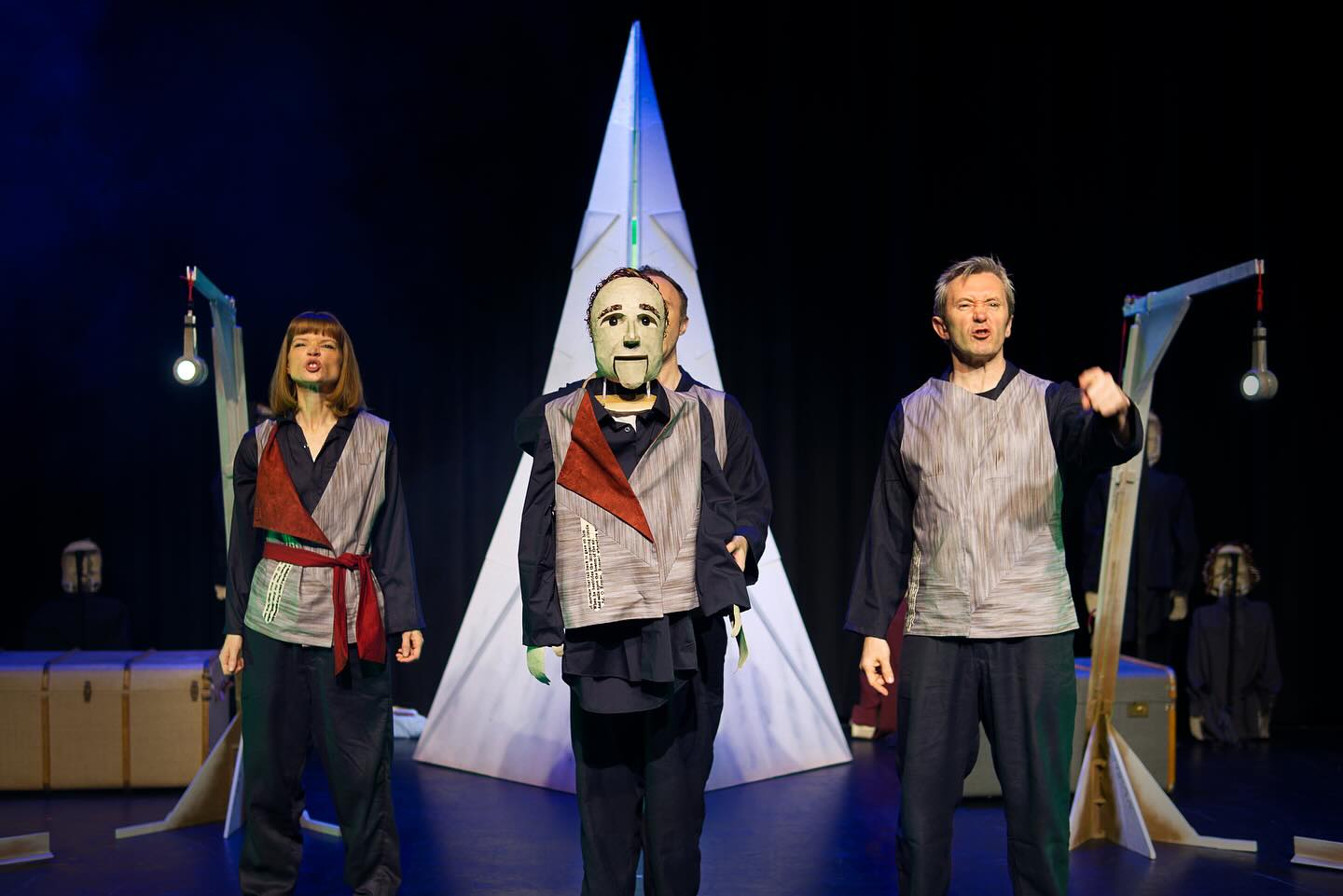
For starters, there are those distinctive-looking puppets, sometimes external representations of the people who carry them – which makes me think of the masks we so often choose to display to the world – and in other instances, they are characters in their own right.

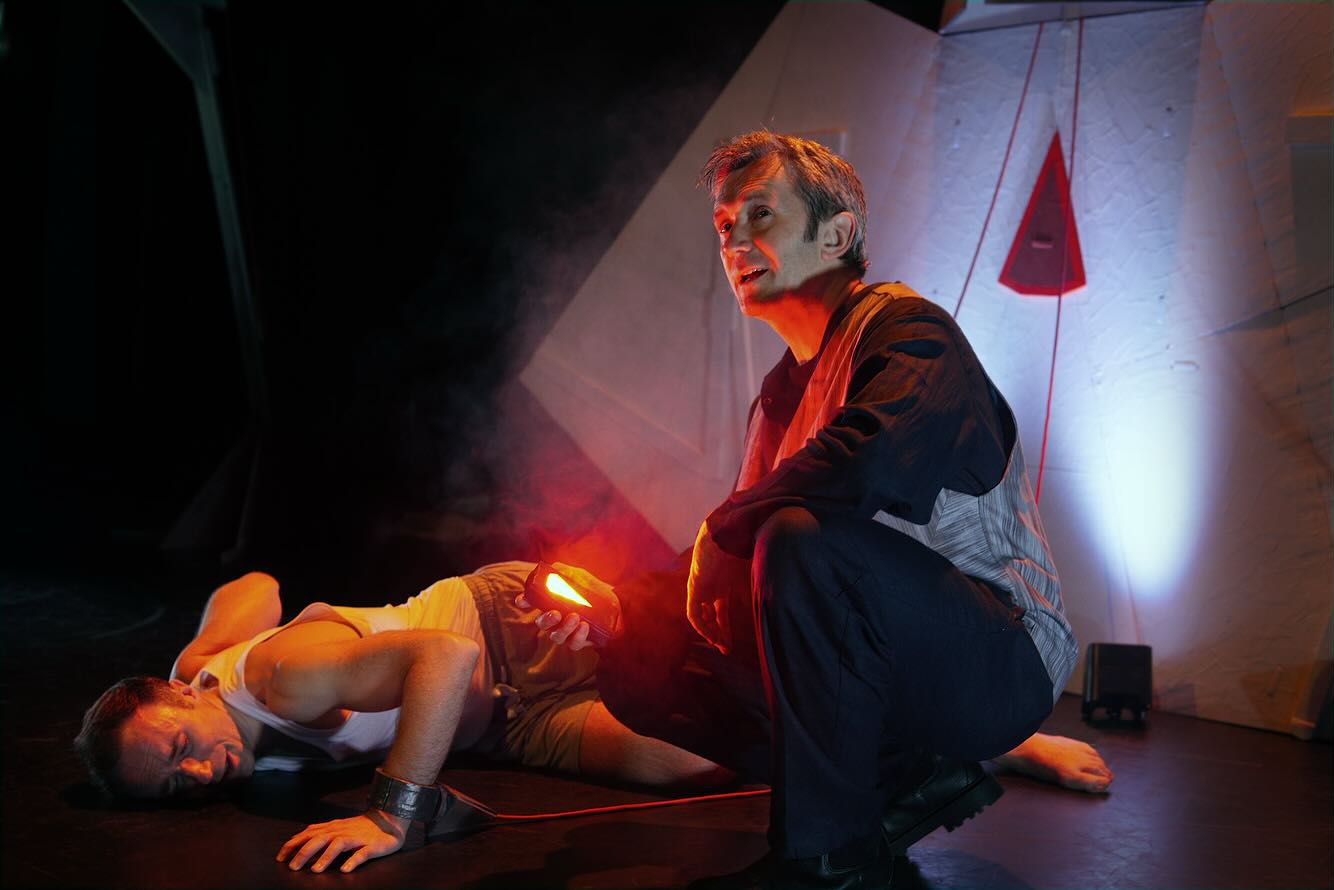
The story of Winston Smith (Mark Collier), his forbidden romance with Julia (Antonia Christophers), and his ultimate torture at the hands of O’Brien (Noel Byrne), is so universally known, it seems pointless to say too much about the storyline; suffice to say, this adaptation leaves nothing out – and it’s also chilling to acknowledge that in today’s turbulent world, Orwell’s warnings about totalitarianism seem more relevant than ever.

The inventive ways in which this familiar story is told are so intriguing and immersive that I never suffer from the common problem of knowing what happens next – each successive scene has some new detail to marvel at. The performances from all three actors are compelling and the complex set in which the drama unfolds is so skilfully manipulated and rearranged as the story progresses that the pace is never allowed to flag.

From the very beginning I’ve been aware of a set of closed doors at the back of the stage – and when the doors of Room 101 are finally opened, this powerful adaptation exerts an even more chilling grip on its spellbound audience.

Before I go, one question. How many fingers am I holding up?

4.6 stars

Philip Caveney
The Unstoppable Rise of Ben Manager

10/08/25

Pleasance Courtyard (Above), Edinburgh

Bunkum Ensemble’s The Unstoppable Rise of Ben Manager is a Kafka-esque nightmare of a play, skewering the emptiness at the heart of many people’s work.

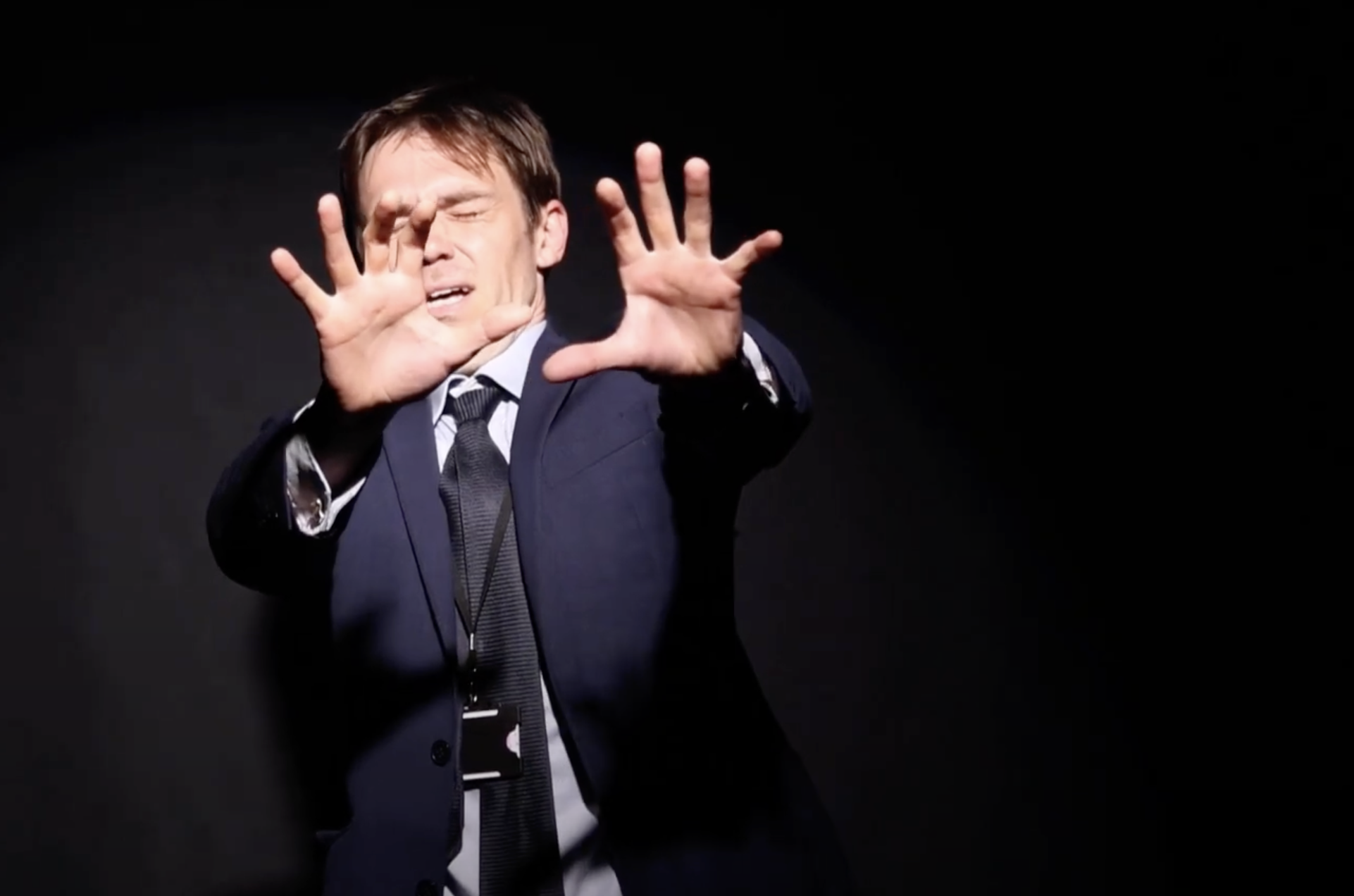
Ben Weaver (Jack Parris, who also wrote the script) is an ordinary kind of guy, an unassuming office drone, who works to live, to pay the bills. As the play opens, we see him suited and booted, in town early for an interview, eating an almond croissant to kill the time. But Fate has something different in store for Ben today: when he picks up a lanyard bearing the name ‘Ben Manager’, he finds himself caught in a Faustian trap…

Ben aces his interview. As Ben Manager, he is king of the vacuous PowerPoint, master of the mindless acronym. He knows his OOOs from his ETDs and he’s great at restructuring (“You’re all fired!”). What’s harder to understand is what it’s all for: what does the company actually do? What exactly is his role? Disoriented, Ben tries to remember what used to drive him. “I think I’d like to be creative,” he muses. “Maybe costume design?” But these half-formed thoughts are nebulous, impossible to grasp, lost to the demands of his daily routine.

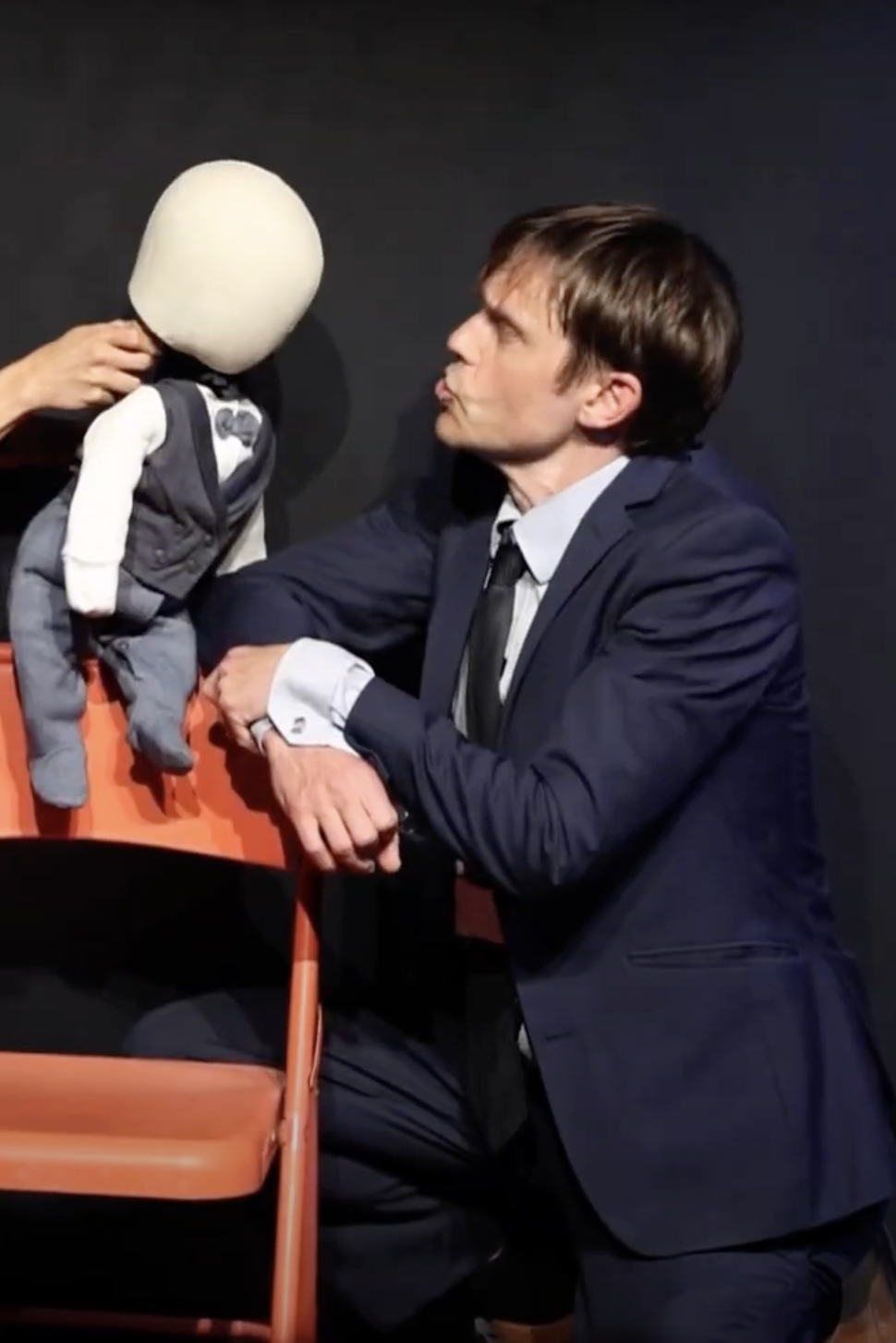
Parris is commanding in the central role, a leaf-cutter ant caught in the corporate machine. As events build to an almost hallucinatory crescendo, his mental unravelling is cleverly physicalised, and I love the disconcerting effect of the baby-sized puppet-colleague (operated by Teele Uustanti), its words spoken into a microphone by musician-performer Mike Coxhead). The audio-visual design is also impressive, adding to Ben’s (and our) growing sense of disconnection from reality.

Although it elicits plenty of laughs from the audience, The Unstoppable Rise of Ben Manager is fundamentally a brutal and discomfiting piece of theatre – and I’m not sure I’d find it amusing at all if I worked a nine-to-five.

4.3 stars

Susan Singfield

Midnight at the Palace

08/08/25

Gilded Balloon Patterhoose (Big Yin), Edinburgh

“I went to primary school with Baylie Carson’s stepmum.”

I know, it sounds like a Fringe show title, but it’s not. It’s just a fact. Summer 1982, North Wales: while the rest of our class dealt with the big move to high school, Kerry faced a more exciting change, emigrating all the way to Australia. And now, more than forty years later, I’ve climbed the stairs to the third floor of Edinburgh’s Patterhoose to see her stepdaughter perform. It’s a tenuous connection, but feels oddly significant. It’s lovely to see our peers succeed, and somehow even more lovely when it’s their children doing well.

And Carson is doing really well, recently appearing in West End productions of SIX (Anne Boleyn) and Mean Girls (Janis). They’re in the ascendant.

But tonight they’re here, part of a sequin-clad ensemble bringing the little attic room to life with this sparkling production of Midnight at the Palace.

The musical is based on a true story. It’s the late 1960s and San Francisco’s counterculture is booming. Radical Hibiscus (Andrew Horton) and disco-diva Sylvester (Gregory Haney) lead a ragtag group of hippies, freaks and drag-queens, known as The Cockettes, whose performances at the North Beach’s Palace Theater are legendary. As the group becomes successful, however, tensions begin to rise, especially when they get the chance to appear in New York. While the others are drawn by the allure of Broadway, Hibiscus believes that ambition corrupts. He wants to stay in California, true to his ideals, performing for free, refusing to be co-opted by ‘The Man.’

Perhaps to its detriment, Rae Binstock’s book doesn’t really focus on the conflict, but Brandon James Gwinn’s music is great, with some really catchy, memorable songs. The piece works best as a celebration of queer culture: the gaudy costumes and home-made props a riot of colour and joy; the vivacious performers full of sass and vim, gleefully waving two fingers at the normies, swallowing acid and quaaludes; singing, dancing, shagging around. However, there’s not much of a storyline, and it’s a shame that the fascinating political undercurrents are only referenced rather than explored.

Carson is a standout as Pam, the sweet country girl with a yearning for excitement, who hitches her way to The Golden City to find a family of friends. Their song Take Me Home is a highlight of the play. Haney is also fabulous as Sylvester, dominating the stage, while Horton’s A Crab on Uranus is a visual delight. I also really like the puppetry (John Waters and Divine are particularly amusing), and am mightily impressed by the dynamic dance routines Paul McGill manages to choreograph on such a small stage.

Midnight at the Palace is a blast: a spectacular, gender-bending kaleidoscope of fun.

4 stars

Susan Singfield

Kanpur: 1857

06/08/25

Pleasance Courtyard (Beneath), Edinburgh

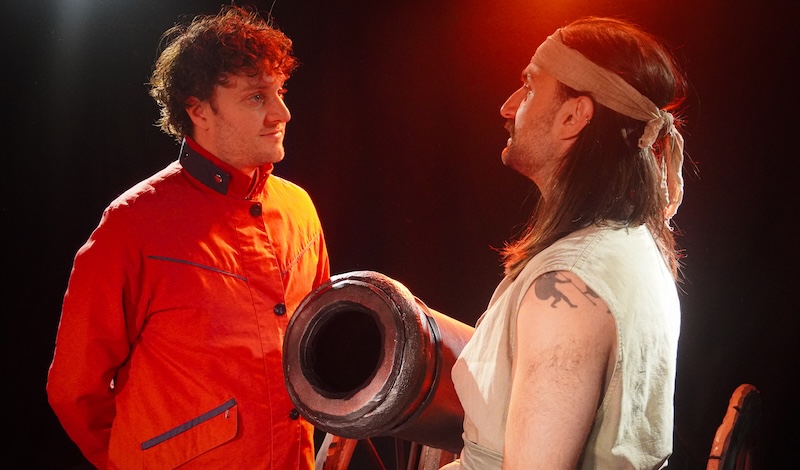
Set in Kanpur, India, in the aftermath of the so-called “Sepoy Mutiny,” an unnamed Indian (portrayed by the play’s author, Niall Moojani) is sentenced to death for insurrection. The captive is a Hijra, often described as ‘the third sex,’ who are traditionally assigned as male at birth, and can decide which gender they wish to assume in the fullness of time. The officer in charge of the execution, played by co-director Jonathan Oldfield, offers his victim an opportunity to speak, or rather demands that they do so. Afterwards, they will be strapped to a cannon and blown apart in front of a crowd of onlookers – or, as we’re known in these quarters, a Fringe audience.

A serviceable-looking cannon has been sourced, and it’s pretty much the only prop in evidence. I can’t help thinking about the difficulties of bringing such a cumbersome weapon down into the Pleasance Courtyard’s ‘Beneath’ performance space, but happily that’s not my job.

Oldfield’s officer serves in a distinguished Highland regiment, though his accent is – perhaps inevitably – cut-glass English. Now, he suggests, is the time for the condemned to explain what has brought them to this awful situation. A garrulous sort, the officer can’t stop interrupting his victim’s narrative, asking awkward questions, offering his own privileged perspectives, even at one point picking up a guitar and lending some lilting accompaniment.

Kampur: 1857 has interesting points to make about the nature of colonialism, reminding us that, during the conflict there have been acts of barbarism on both sides – though these observations come from Oldfield’s character, speaking from the more comfortable point of view of somebody who isn’t about to be evenly distributed across the landscape, and whose side’s reaction to the mutiny has been massively disproportionate.

The piece, which lies somewhere in that strange no-man’s-land between storytelling and drama is at its best when the two characters are exchanging views, bickering, joking, vainly trying to bring each other around to some shared worldview. Oldfield gets the best of it, his sneering superiority played at full-throttle, while Moojani’s dialogue is more reserved and contemplative. Meanwhile, tabla player Hardeep Deerhe provides a rhythmic accompaniment to his words.

It’s impossible not to feel swept up in the play’s final moments, as the victim waits, helpless and silent, their final seconds ticking inexorably away…

3.8 stars

Philip Caveney

Single Use

06/08/25

Pleasance Courtyard (Bunker Three), Edinburgh

Ella’s life is a muddle: she’s struggling to separate her mounting troubles and figure out how to deal with them. A bit like her recycling.

Ella (Verity Mullan) is an expert procrastinator. She’s unfulfilled by her bar job, but can’t be bothered to look for anything else. She likes the idea of her allotment, but tending to it is a step too far. She never pays her rent on time and doesn’t get on with her flatmate anyway. She cares about the planet, but it’s not her fault takeaways are delivered in plastic boxes – and who has the energy to cook? From the outside, it’s clear that Ella is depressed. It’s just that she hasn’t realised it yet.

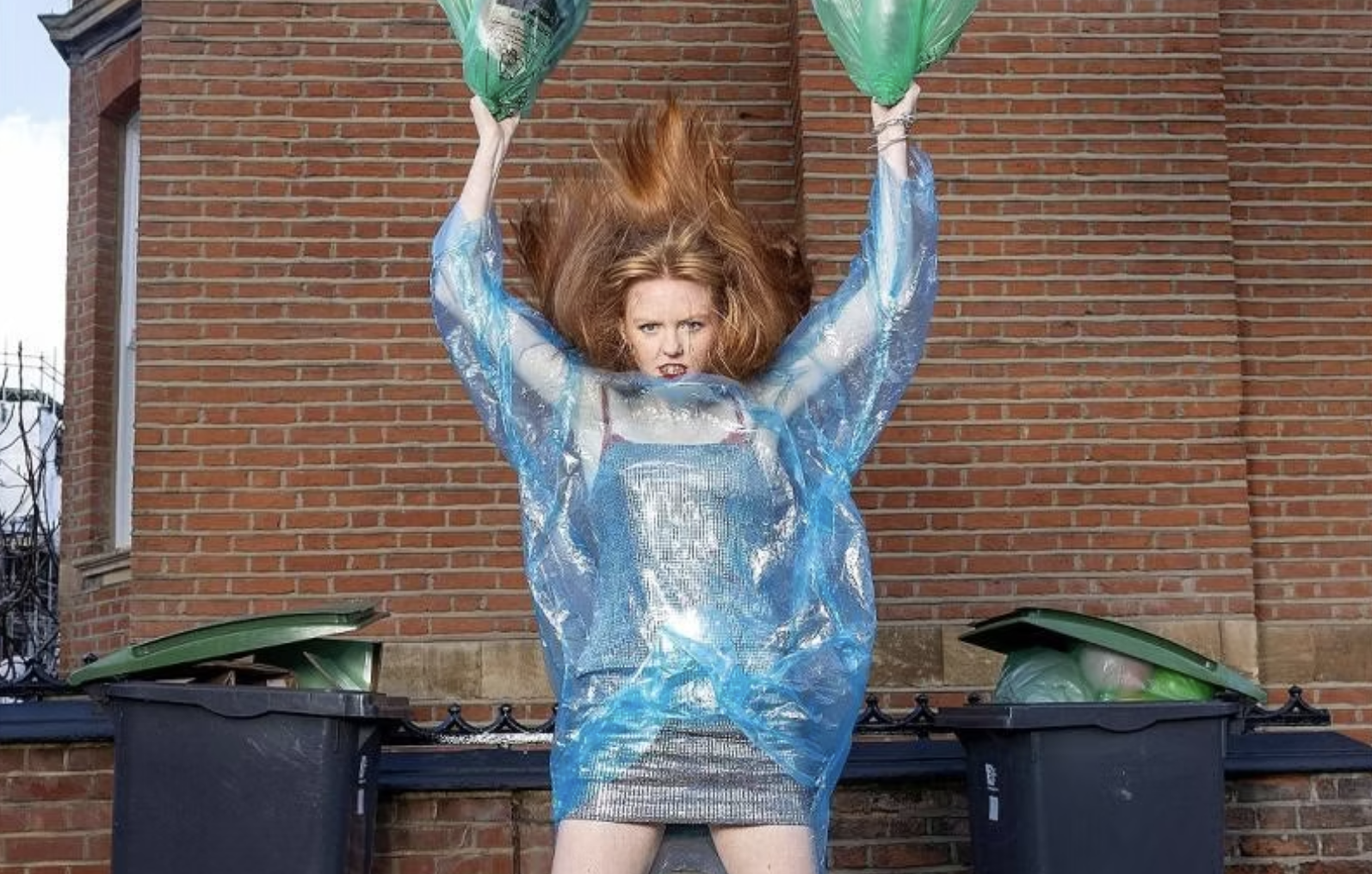
Written by Mullan and directed by Emma Beth Jones, Single Use works well as a character study. Mullan is an engaging performer, imbuing Ella with a winsome vulnerability and spark. I particularly enjoy the physical comedy – her exaggerated sense of repulsion as she deals with her icky bin bags; the slurping of beer from Tupperware – all perfectly complemented by Flick Isaac-Chilton’s sound design.

However, there are too many disparate plot strands competing for our attention and it’s not always clear who the various voice messages are from. I’m confused by ‘Stusi’ (Ella’s young stepsister), who is first described as someone to whom “puberty has not been kind” – leading me to assume that she is about thirteen years old – but then turns up in a car to give Ella a lift home. The climate crisis element feels particularly under-developed, with the tantalising messages from Malaysia left to fizzle into nothing.

Ultimately, there are some promising ideas here, but they perhaps need a little more cohesion and development for this piece to fully realise its potential.

3 stars

Susan Singfield

Matt Forde: Defying Calamity

05/08/25

Pleasance Courtyard (Beyond), Edinburgh

It’s rather lovely to see Matt Forde strolling out to greet a sold-out house at the spacious Pleasance Beyond, the mere sight of him bringing back memories of alcohol-fuelled nights at earlier fringes (in smaller venues) in those far-off days before we went on the wagon.

Anyone coming to this show after spotting the poster and expecting some kind of Wicked mash-up will be sorely disappointed. That title is, I think, a reference to the comedy-impressionist’s own recent brush with cancer and the couple of years he’s spent learning how to adjust to his new condition. If anything, the experience has given him an added openness, a willingness to talk about his own situation in unflinching detail. I now know a lot more about erectile dysfunction than I did before.

Which is not to say that this isn’t a rollicking evening of laughter as he flits from impersonations of one politician to another: a hapless Keir Starmer, trying his level best to do the right thing but invariably putting his foot in it; a swaggering Nigel Farage, fired up on pints of best bitter and loudly opposing anything his opponents present him with; and is there any other impressionist who can portray the execrable Donald T with quite such skill, capturing the man in all his awfulness which just a frown and a grimace?

Forde is also rather adept at making me reconsider views that that I’ve long held, merely by coming at a subject from a slightly different direction. He’s a staunch centrist, and I’d like to hear his views on the new Corbyn-Sultana alliance, but maybe it’s too recent an event for him to have built a routine around.

Tonight’s set offers an overview of Great Britain as it stands at the crossroads of change. Just exactly where our country is headed remains to be seen, but it’s great to have a skilled comic like Forde to provide the commentary, offering his own authoritative insights into the world of politics.

I’m glad to see him back on stage, where he belongs.

4 stars

Philip Caveney

The Other Mozart

05/08/25

Assembly George Square Studios (Studio Two), Edinburgh

You’ve heard of Nannerl Mozart, right?

Nope?

Me neither.

Her brother’s pretty well-known though. He’s so famous he’s known by just one name (which is probably a good thing, considering his original moniker was the unwieldy Joannes Chrysostomus Wolfgangus Theophilus Mozart – although he did later change this to Wolfgang Amadeus).

It turns out “Nannerl” (aka Maria Anna Walburga Ignatia; yep, Mama and Papa Mozart really liked long names) was something of a musical prodigy too, who toured with “Wolfie” when they were both children. This elegant production, written and performed by Sylvia Milo (in rotation with Daniela Galli), finally brings Nannerl out of the shadows and into the light.

It’s no great shock to discover that the reason we don’t know about her is because of her gender. Europe’s aristocracy were happy to watch a little girl perform, less so a grown woman. Here, with great artistry and precision, Milo shows us the toll this must have taken on the talented musician and composer, forced to watch her younger sibling garnering credit and acclaim while her own similar ambitions were thwarted, subsumed into marriage and motherhood.

Sadly, none of Nannerl’s original pieces survive, but Milo’s poised performance is beautifully complemented by Phyllis Chen and Nathan Davis’s compositions, which evoke the era perfectly, allowing us to believe in Nannerl’s genius.

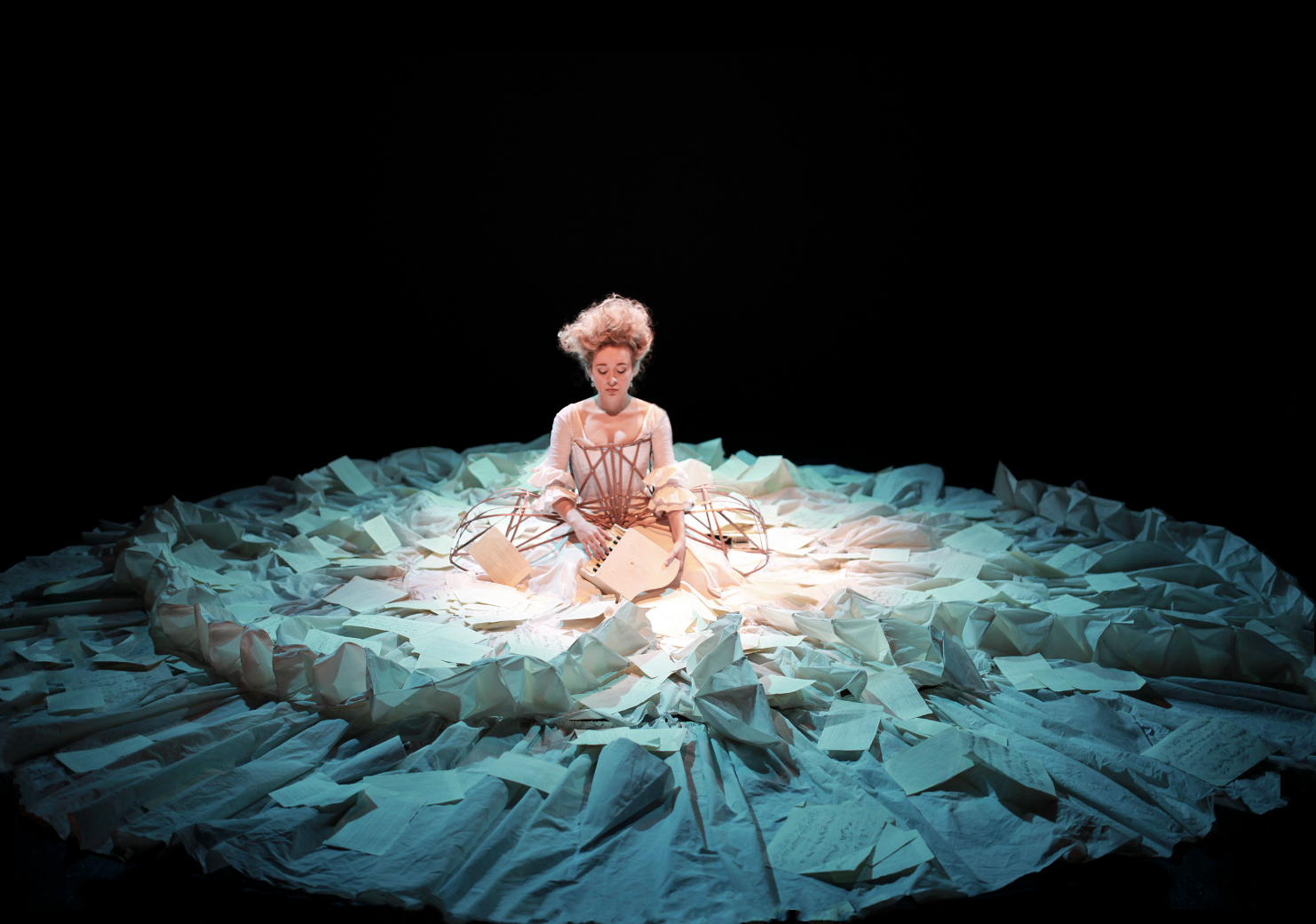
The Other Mozart, directed by Isaac Byrne, is a work of art: a sophisticated blend of monologue, music and movement – and it’s a visual marvel too. The set is the costume; the costume is the set: a giant dress, designed by Magdalena Dąbrowska, fills the entire stage, waiting, predator-like, to trap Nannerl in its fathomless drapes. The image is intensified by Miodrag Guberinic’s cage-like panier, constructed – I think – from music stands, constricting Nannerl but also amplifying her stature, so that she rises monumentally, towering over us, defying us to forget her name.

An object lesson in reclaiming women’s history, The Other Mozart is exquisitely conceived and realised, a magnum opus in its own right.

5 stars

Susan Singfield

Charming

05/08/25

Greenside (Forest Theatre), George Street, Edinburgh

“And they all lived happily ever after…”

Everyone’s familiar with the traditional fairytale ending, but playwright Annie Lux has a question: what does that actually look like? Twenty years down the line, how are Prince Charming and Cinderella getting along? After all, she reminds us, there’s no mention of “together…” in that concluding line.

We meet Charming (Nigel Myles-Thomas) after a gruelling ‘petition day’. He’s tired, as tetchy as King Charles III faced with a leaky quill, and not at all inclined to see the insistent latecomer who’s waiting at his gate. But this last-minute petitioner is Cinderella’s fairy godmother (Claire Toeman) and, with a wave of her wand, she’s gained entry. Before he knows it, Charming is being served divorce papers. Cinderella wants out.

Directed by Lee Costello, Myles-Thomas imbues Charming with weary charisma, and his bewildered responses to Cinderella’s demands are very funny. I like the conceit that the characters know about the different versions of themselves, and use these as justification for their actions (“Only in Grimm! Not in Andersen!”), although I do wonder why punches are pulled. If we’re to acknowledge the ugly sisters having their toes chopped off in Grimm, why is there no mention of them having their eyes pecked out?

Apart from a brief appearance from Cinderella’s wicked stepmum (Margot Avery) – no iron shoes; no walking on fire – Charming is a two-hander and, while Avery makes a decent fist of the role, I don’t think her character has enough to do. To justify her sudden arrival in the final third, she needs to signal an escalation or be a catalyst for change, but that is not the case, so she just feels redundant. Another issue is the over-reliance on dialogue: nothing is conveyed without being spoken, which seems a shame as theatre is a visual art form and fairytales are so replete with imagery.

There are plenty of revisionist versions of this story, but not many focus on the characters in middle-age, and it’s interesting to see this whimsical representation of the effects of the passing years, even on those with charmed – and Charming – lives.

3 stars

Susan Singfield

ROTUS: Receptionist of the United States

04/08/25

Gilded Balloon Patterhoose (Snug), Edinburgh

Meet Chastity Quirke (Leigh Douglas), a God-fearing young Republican, who has used all her guile and skills to manoeuvre her way from humble intern to the coveted role of receptionist at the White House – or, as her good friend president Drumpf likes to refer to her, ROTUS. If you want to meet Drumpf you have to get past Chastity first.

Loyal, determined and always ready to turn a blind eye to the underhand dealings she’s witness to on a daily basis, Chastity finds herself surrounded by ruthless congressmen, who count on her to act as their eyes and ears, ready to tip them off to anything they might use to their advantage. She’s ruthless – and has the requisite skills to make any innocent remark she makes sound like an indecent proposal.

Chastity believes that she has what it takes to stay at the top of her nefarious game. But is she a player? Or is she simply being played?

With the current smouldering powder keg that is US politics, ROTUS couldn’t be any more topical – and Douglas, who also wrote the whip-smart script, is an assured and confident performer. This is as bitingly funny as it is disturbing to witness, as we watch Chastity manipulating her way through the rampant misogyny and deceitfulness of the MAGA patriarchy. Director Fiona Kingwill keeps everything stripped back and allows Douglas to strut her stuff: the result keeps the audience hooked until the final moment. Little wonder the relatively compact Snug is selling out on a daily basis.

Those who fancy a slice of this delicious satire should book tickets at the earliest opportunity. As we take our seats, Storm Floris is raging outside but Douglas cooks up her own perfect storm on the little stage in front of us and we are spellbound. Don’t miss this one, it’s a keeper.

4.4 stars

Philip Caveney

She’s Behind You

03/08/25

Traverse Theatre, Edinburgh

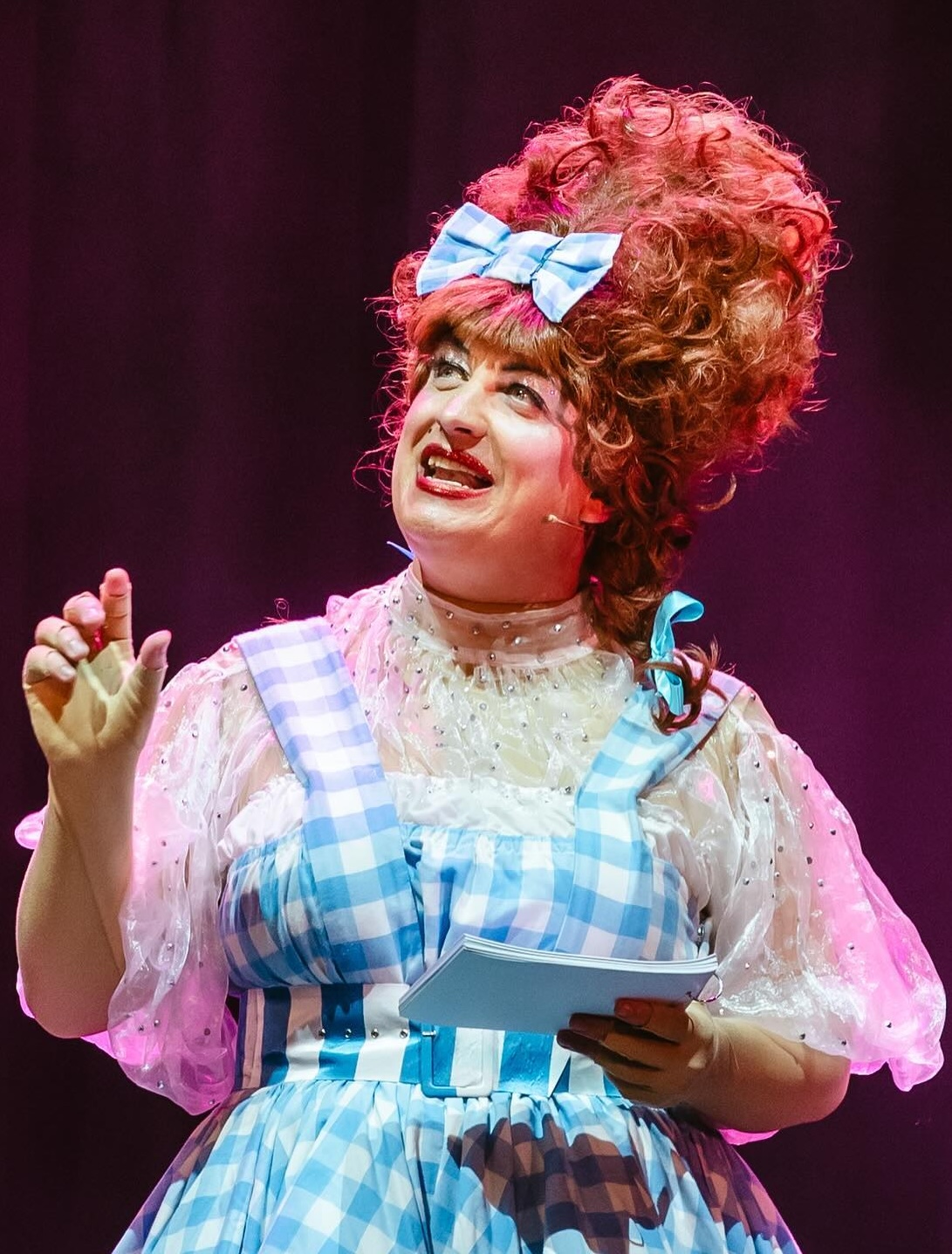
Johnny McKnight lifts the lid on all things panto in this hugely entertaining and informative one-dame show, directed by John Tiffany. She’s Behind You is an interesting hybrid, retaining all the bawdy glamour of Britain’s most popular theatrical form, while simultaneously offering a thoughtful commentary on its strengths and weaknesses. A seasoned writer and performer, McKnight has the audience in the palm of his spangly-gloved hands, eliciting gales of laughter as well as contemplative silences. He knows exactly how to tell his tale to best effect, effortlessly undercutting the more sombre moments with a raucous one-liner or comic song, carrying us along with him. It’s all beautifully designed by Kenny Miller and there’s a lightning-fast costume change (courtesy of Jennie Lööf) that will leave you breathless.

McKnight’s stage persona, Dorothy Blawna-Gale, is as warm as she is sassy, brash but never brutal – more Elsie Tanner than Cruella de Vil. “Punch up,” McKnight exhorts, reflecting on earlier iterations of his dame, where he followed in the footsteps of the Widow Twankeys and Ugly Sisters he’d so admired in his youth, making ‘harmless’ jokes about race, gender, sexuality and body size. “Times change,” he reminds us – and panto has to change with it. Some rules need to be kept – after all, the conventions of the genre date back to commedia dell’arte, a working-class art form that spurned elitism and focused on entertaining the masses – but some need to be broken.

For example, the gender imbalance doesn’t sit well any more, but most commercial panto casts are still at least 75% male, and the few women don’t get much agency, let alone the chance to tell jokes. There’s also an inherent homophobia, he tells us, which genuinely surprises me (I guess that’s my straight privilege showing). I’ve always thought of pantomime as gender fluid, sometimes sexist but never anti-gay. McKnight’s insider perspective opens my eyes, and I’m impressed by his efforts to walk the walk, writing scripts he can stand by and be proud of, serving his audiences rather than belittling them. Pantomime has survived so long by being adaptable and irreverent, so why is there so much resistance to challenging certain tropes?

But if all this sounds po-faced, then I’m doing McKnight a disservice, because – more than anything – She’s Behind You is a cyclonic blast, as big and bold as its glittering protagonist, and fully deserving the standing ovation it receives tonight.

So click your age-appropriate-but-sparkly orthotic heels together three times, and repeat, “There’s no place like the Traverse.” Dorothy Blawna-Gale will be waiting to see you. Oh yes she will!

5 stars

Susan Singfield