Edfringe 2022

We Are Traffic: An Uber Adventure

20/08/22

Assembly Rooms, George Street (Drawing Room), Edinburgh

Jonathan Tipton-Meyers’ account of his years as an Uber-driver has a vaguely confessional feel – Confessions of a Taxi-Driver, anyone? Hurting badly from the break-up of his marriage and the failure of his business venture, Tipton-Meyers’ solution is to get into his car and drive at top speed, away from the scene of the accident.

When he needs to earn some money, he becomes an Uber-driver or, rather, an employee of Rideshare as it was originally known. Now, a few years down the line, he laments the fact that it’s no longer possible for a guy down on his luck to earn a decent living from ferrying friendly strangers around Los Angeles. Because, when Uber comes along, everything changes. A lot of money is still being made but not by the drivers – and even having to stop for a toilet break becomes a major issue.

What’s more, driving around the highways and byways gives him new insights into the quirks and disparities of his adopted city – and of the inherent racism that underpins it.

Tipton-Meyers shares anecdotes about some of the eccentric characters he meets on his travels – about the levels of abuse he sometimes faces from drunken passengers – and he gives us a glimpse into his hopes for a better future. He’s an affable narrator, but sometimes there’s the feeling that he’s still somehow a little too close to that breakup, that the wounds are too raw for him to arrange it all into a satisfactory story arc.

But it’s an agreeable way to pass an hour on the Fringe and a life-affirming lesson about chasing your dreams and never giving up on them.

3 stars

Philip Caveney

Ghislaine/Gabler

19/08/22

Greenside at Riddles Court, Edinburgh

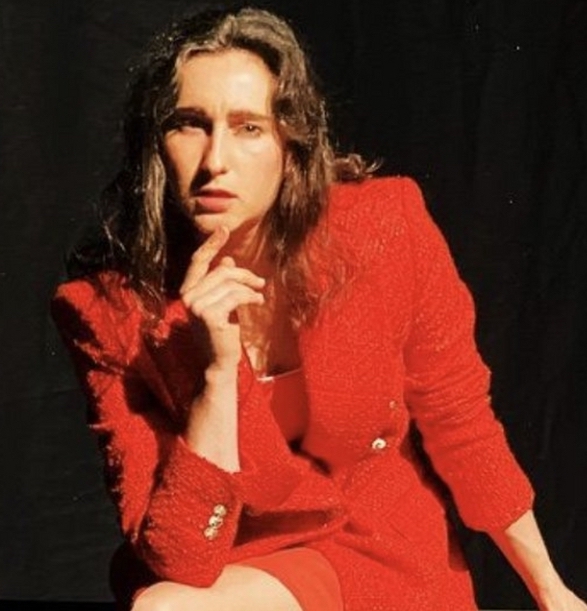
Ghislaine Maxwell is largely defined by her relationships with men: she is Robert’s daughter and Jeffrey’s partner. But who is she now, alone in her prison cell, her father long-gone, her ex-lover also dead? She’s a woman of many parts: convicted sex-trafficker, erstwhile socialite, pampered rich-kid, penniless fighter – and the only person serving any time for the rapes that occurred at Epstein’s ‘parties’. The rapists themselves are either dead or free.

In this challenging piece of theatre, Kristin Winters draws a parallel between the enigmatic Ghislaine and Ibsen’s anti-heroine, Hedda Gabler. The similarities are, in fact, quite astonishing, although I wouldn’t have made the connection by myself. Like Ghislaine, Hedda grows up living in the lap of luxury, and is close to her difficult but rich father – and, like Ghislaine, his death leaves her (relatively) poor. Both women are known by their fathers’ names (Hedda’s married name is Tesman; Ibsen explains the title thus: “My intention in giving it this name was to indicate that Hedda as a personality is to be regarded rather as her father’s daughter than her husband’s wife”). Both women are corrupted by their circumstances, and abuse their power to hurt those weaker than themselves. They each seek to influence other people’s fates; they are hungry and twisted, and it is hard for others to understand what motivates them.

So, yes. The conflation makes perfect sense. And writer/performer Winters’ strange and complex play is as fascinating as the women themselves. It’s an exploration of something unknowable, that raises as many questions as it answers. It’s not an easy watch – and nor should it be. It’s as gnarly and difficult as Maxwell and Gabler, as opaque and unfathomable as their actions. Winters mixes physical and verbatim theatre, lines from Hedda Gabler, imagined internal monologue and dance – and the result is extraordinary. Winters’ intensity is almost unbearably disconcerting.

Perhaps the piece is a little too demanding of its audience: there’s an assumption that we’re au fait with not just the Epstein case (fair enough, that’s common knowledge), but also with Hedda Gabler (I’ve got that one, luckily), and with what happened to Robert Maxwell (in my case, just the ‘media-mogul-financial-misconduct-drowning’ elevator-pitch). I’d like maybe a tad more hand-holding to guide me through some of these details.

This is an intelligent and arresting play and, although I don’t enjoy it exactly, I guess I’m not supposed to. I’m provoked, intrigued, and – in the end – impressed.

4.1 stars

Susan Singfield

We Were Promised Honey!

19/08/22

Roundabout at Summerhall, Edinburgh

This, storyteller Sam Ward tells us, is a choice. This: staying here, listening to what he has to say, engaging with his tale. There’s no happy ending, he says; he wants to be upfront about that. We’re free to refuse. To sit in silence for the allotted hour. It just needs one audience member to say, “I would like to begin.”

The risk is small (especially during Fringe, when more than half the audience are probably performers of some kind), but it feels real. I find myself wondering what it would be like if no one spoke. Would we really just sit? But there’s barely a hesitation. A confident voice rings out. And we begin.

This is a story on an epic scale, and the miserable outcome is existential rather than personal. Ward’s whimsical narration takes us on a journey billions of years into the future, when the planet dies, the universe collapses. Our fate is sealed. The question is, do we want to know what happens along the way? And the answer, of course, is yes.

Yesyesnono theatre company specialises in ‘democratic art’, and We Were Promised Honey! demonstrates clearly what this might look like, how it might work. Ward creates a friendly, open atmosphere, where people feel safe to join in, confident that he won’t make fools of them or push them to do things that make them uncomfortable. Apocalyptic subject matter notwithstanding, WWPH! is a joyous, hopeful kind of show, focusing on the small kindnesses and moments of happiness we find in our lives, despite our inevitable demise. We’re all like Richard Russell, the 29-year-old Sea-Tac baggage handler, who went joyriding – in a plane, even though he’d never flown before. Eventually, he crash-landed and died but, for a while, he flew…

This is a gentle, quirky piece of collaborative theatre, and I leave feeling strangely soothed, and ready to embrace the day.

4.2 stars

Susan Singfield

Assisted

18/08/22

The Space@Surgeon’s Hall, Niddry Street, Edinburgh

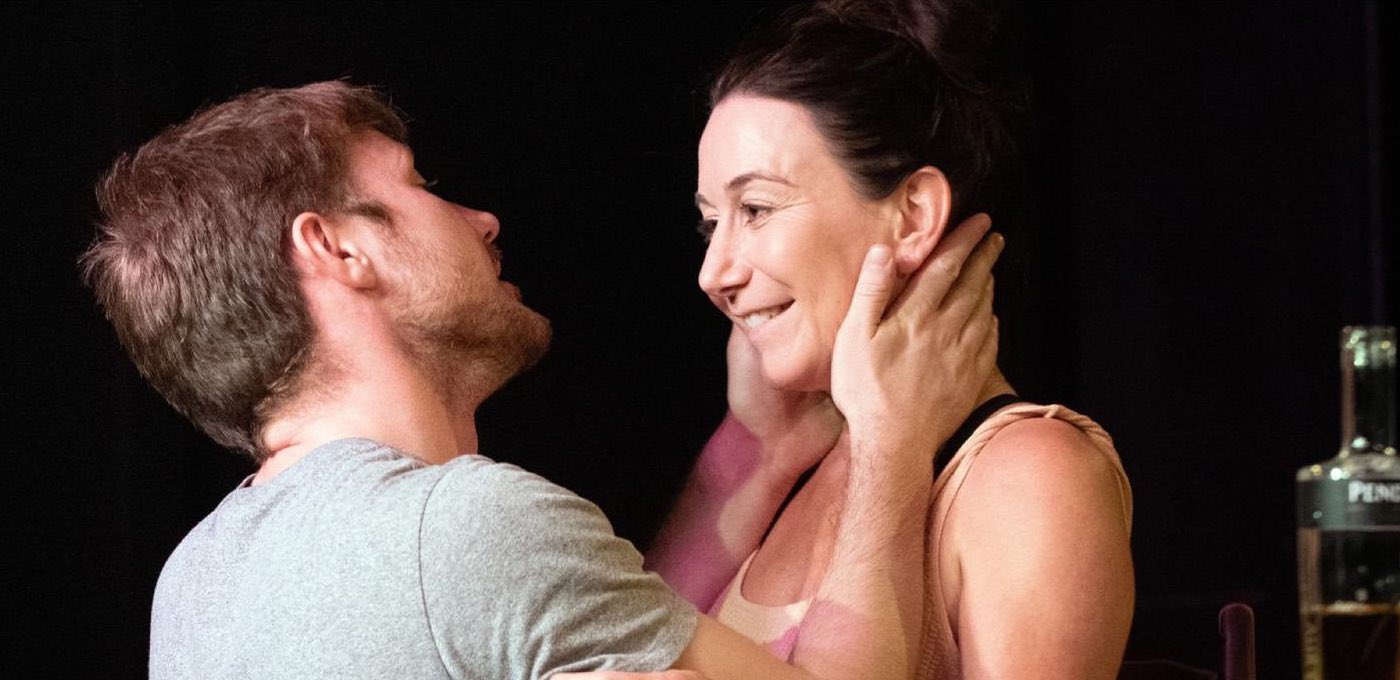
Jordan (Matt Vickery) is a wealthy tech entrepreneur living in a swish apartment, locked away from the stress of the outside world. Connie (Emma Wilkinson Wright) is his latest partner. When we first meet the couple, they are in the early stages of a relationship, in love with each other and looking towards making some kind of a future together. With this in mind, Connie leaves her flat and moves in with Jordan. He is already unpleasantly smug but, as time goes on, he becomes ever more controlling, exerting his influence over Connie – over what she wears and where she goes.

Jordan’s household is run by Alivia (voiced by Jessica Munna), an AI device that handles the day-to-day running of the home. Essentially, she’s Alexa, only a few generations further on. She’s able to communicate effortlessly with her human companions, to reason things out with them – and, as Jordan is so fond of observing, unlike Connie, she’s infallible. Alivia doesn’t eat, she doesn’t drink alcohol and she has no inconvenient ambitions to become a mother. Jordan knows he can always depend on Alivia to give him the answers he wants to hear.

Greg Wilkinson’s intriguing play, longlisted for the Popcorn Award, takes us just a few small steps into the future and spins a prescient tale of humanity’s increasing dependence on AI. Along the way it makes some cogent points about society’s constant striving for perfection – and how much easier it is for humans to evade their responsibilities by handing them on to their electronic carers.

Unlike many shock/horror stories that have flirted with the same subject matter, Assisted takes a more subtle approach, delivering a nuanced take on its chosen theme. Vickery and Wilkinson Wright play their parts with panache and Munna somehow manages to create a memorable presence with her voice alone.

This is an intriguing and credible vision of the near future.

4 stars

Philip Caveney

George Egg: Set Menu

17/08/22

Assembly George Square Gardens (Piccolo), Edinburgh

He’s an interesting guy, that George Egg. On the one hand, he’s a stand up comic with a beguiling charm and a nice line of quickfire patter. On the other hand, he loves to cook. Nothing odd about that so far, but George has an unconventional approach to the culinary arts. 

Inspired by his early touring days when he was obliged to prepare his own food in tiny hotel rooms – and reluctant to shell out money for overpriced scran – he’s learned how to adapt whatever’s on hand (or whatever he can bring from his tool shed) to help him whip up a decent meal.

This show is billed as a ‘best of’ and incorporates three earlier Edinburgh shows: Grand Final, Anarchist Cook and DIY Chef. Which, in essence, means that he creates three courses while he delivers his routine. 

For starters, there’s a poached egg and kipper dish, cooked with the aid of a steam-powered wallpaper scraper… and don’t worry, I’m not going to list all three dishes. 

Meanwhile, my mind boggles at some of his escapades. I really wouldn’t want to be the guest who checks in to a Premier Inn and has to cope with a hotel kettle that’s been used to create a spicy chicken dinner! I imagine these days he needs to sign in under an alias.

At any rate, this is a very agreeable way to spend an hour on the Fringe, laughing at Egg’s snarky quips whilst salivating at the smell of his food cooking. And, if you’re sharp elbowed enough, you’ll have the opportunity to sample his creations after the show – but it’s only fair to warn you that the suggestion ‘come hungry’ should be taken with a large pinch of salt. The large audience have consumed most of the nosh before we’ve even reached the exit. Top tip: sit near the door!

I’ve seen a lot  of comedians over the years but I’ve never seen one quite like Egg. 

Bon appetit!

4 stars

Philip Caveney
About Money

17/08/22

Summerhall (Tech Cube 0), Edinburgh

“It’s not about money,” says Michael (Rohit Kumar), the swaggering manager of Tasty’s (Tasties? Tasteez?) fast food restaurant. “What is it about then?” asks Shaun (Michael McCardie), struggling to understand what other benefits his recent ‘promotion’ might bring.

Because, of course, it’s always about money.

Especially in Shaun’s case, because he’s got responsibilities. He’s not here for pocket money to fund a new pair of trainers and a few nights out. He needs a proper wage, enough to support him and his little sister, because she’s relying on him and there’s no one else. Well, there’s Eddie (Matthew Boyle), who’s happy enough to do a bit of babysitting in exchange for a place to stay, but Eddie can’t be counted on…

Eliza Gearty’s play is a timely one (similar in theme to Katherine Soper’s Wish List), highlighting how unfair and how unfit for purpose the gig economy really is. But, as Shaun’s co-worker Hannah (Isabele de Rosa) discovers, unionising isn’t easy.

Unusually for an adult play, About Money features a child in one of the leading roles. Nine-year-old Lois Hagerty more than holds her own, delivering an impressively nuanced performance and imbuing Sophie with an impish charm. The rest of the cast also perform very well, creating memorable and appealing characters, but it’s Sophie we’re talking about as we leave, and it’s Sophie we’ll remember. This is no accident. Gearty’s script positions her as the focus, and Alex Kampfner’s direction highlights this, literally placing her centre stage. She’s the star around which the others orbit, that makes them strive to improve their corner of the world. For her.

On the downside, I’m unsure about the date scene, when Hannah comes to spend the evening with Shaun. This seems a little contrived, and somehow unbelievable. Likewise, the late-night search for a missing person feels rushed, and is told rather than shown.

Nonetheless, About Money is an engaging and thoughtful piece of theatre.

4 stars

Susan Singfield

The Macbeth Inquiry

16/08/22

The Space at Niddry Street, Edinburgh

We’ve seen a few of Edinburgh University Shakespeare Company’s productions over the years, and we’ve always been impressed. We’re interested to see what happens when they get “Shakesperimental” with this contemporary reimagining of Macbeth as a politician, only metaphorically stabbing PM Duncan in the back.

It’s a nice idea, and the blending of Shakespeare’s script with the current vernacular is – for the most part – convincingly done by the three writers (Izzy Salt, Clara Wessely and Freddie Stone). Ted Ackery’s Paxman-like news reporter is an interesting addition. Ackery is a strong actor (he excelled as Joe in Miller’s All My Sons, which we saw earlier this year), and this shows in the blistering exchanges he has with the various ministers who dare to be interviewed by him. I’m less convinced, however, by the comic exchanges between him and weather reporter, Claudius (Rorke Wilson), which derail rather than enhance the production. Wilson performs well, but these moments seem to come from another play, and I feel like I’m watching a series of in-jokes that probably seemed hilarious in rehearsal, but don’t really fly on stage. I don’t get it. Is Claudius supposed to be funny just because he’s camp? It seems somewhat regressive, if so.

Maddy Brown’s trouser-suited, city-slicker version of Lady Macbeth is perhaps the standout performance here, her vaunting ambition dismayingly credible – but the characterisations are all good. Archie Turnbull (as Macbeth) delivers some key speeches with real gravitas, commanding the audience in a way that makes us believe the people might just vote for him.

I’m not mad about the frequent blackouts, used to mark the ending of each scene. It doesn’t help that today’s audience decides to applaud whenever the lights go down, as if every section were a mini-play. It’s a bizarre response, and not one I’ve seen before in all the hundreds of times I’ve been to the theatre. The blackouts make the action seem a little stilted, and I think the flow would be much improved by more imaginative transitions.

All in all, while there’s much to admire here, The Macbeth Inquiry just doesn’t quite work for me. Still, I applaud EUSC for giving this a go. At least they haven’t lost “the good we oft might win, by fearing to attempt”.

2.7 stars

Susan Singfield

Les Dawson: Flying High

15/08/22

Assembly George Square (Gordon Aikman Theatre), Edinburgh

For many in the auditorium, this show is a trip down memory lane. For me, it’s more of an introduction. It’s not that I’m too young to remember Les Dawson – he was on TV when I was a child – but we never watched his show at home, although I saw bits of it at my grandparents’ house, or with my friends. As I walk along the Meadows, on my way to George Square, I try to recall what I know of him. There isn’t much: I’m stuck at gurning, gruff voice, fake bosoms and “my mother-in-law”.

No matter. Let’s see what light the inimitable (ha!) Jon Culshaw can shed on a man who was, for decades, a staple of popular entertainment.

This 480-seater theatre is packed. There’s clearly a lot of lingering affection for Dawson – and a lot of faith in Culshaw to deliver. The set looks promising: it’s lavish by Fringe standards, dominated by a large screen, designed to look like a 1980s TV. There’s also a piano (or, at least, the back of one; I can’t see from where I’m sitting if it’s real), and an aeroplane seat, from where much of the material is recounted.

The premise is simple: Dawson is on Concorde, flying to Manhattan to perform at a private party for a rich ex-pat from Leeds. He has agreed to write an autobiography and, until it’s done, Dawson can’t focus on the novel he really wants to write. So he decides to put his time in the air to good use, recounting the story of his life, from the terraced streets of Collyhurst to the Royal Variety Performance.

Culshaw’s affection for Dawson is evident in his performance, which focuses on the comic’s warmth and charm, as well as his natural humour. I hadn’t realised that Dawson harboured literary ambitions, but it makes sense: the jokes, I see now, are often lyrical flights of fancy, undercut by a crude punchline. He uses language in a way that shows he loves it, playing with words, creating startlingly beautiful images. It’s fascinating to see this burgeoning in his youth, as Culshaw shows us a young wannabe poet pushed into boxing by a well-meaning uncle who doesn’t understand. Who knew that Dawson was the Billy Elliot of his day?

I like Tim Whitnall’s script, with its fourth-wall breaking acknowledgement of theatricality, as Culshaw speaks from the screen in a range of guises: as John Humphreys, for example, or as Dawson’s cartoon ‘gossipy-women’ creations, Ada and Cissie. “You’re a narrative device,” Dawson tells Humphreys, “helping to set the time and place.”

This is more than just a good impression, although it’s certainly that too. Although this piece is basically a monologue, director Bob Golding ensures it never feels static, and the audience is audibly appreciative. I leave feeling fonder of Dawson than I ever expected to.

4 stars

Susan Singfield

Crossing the Void

14/08/22

The Space on the Mile, Edinburgh

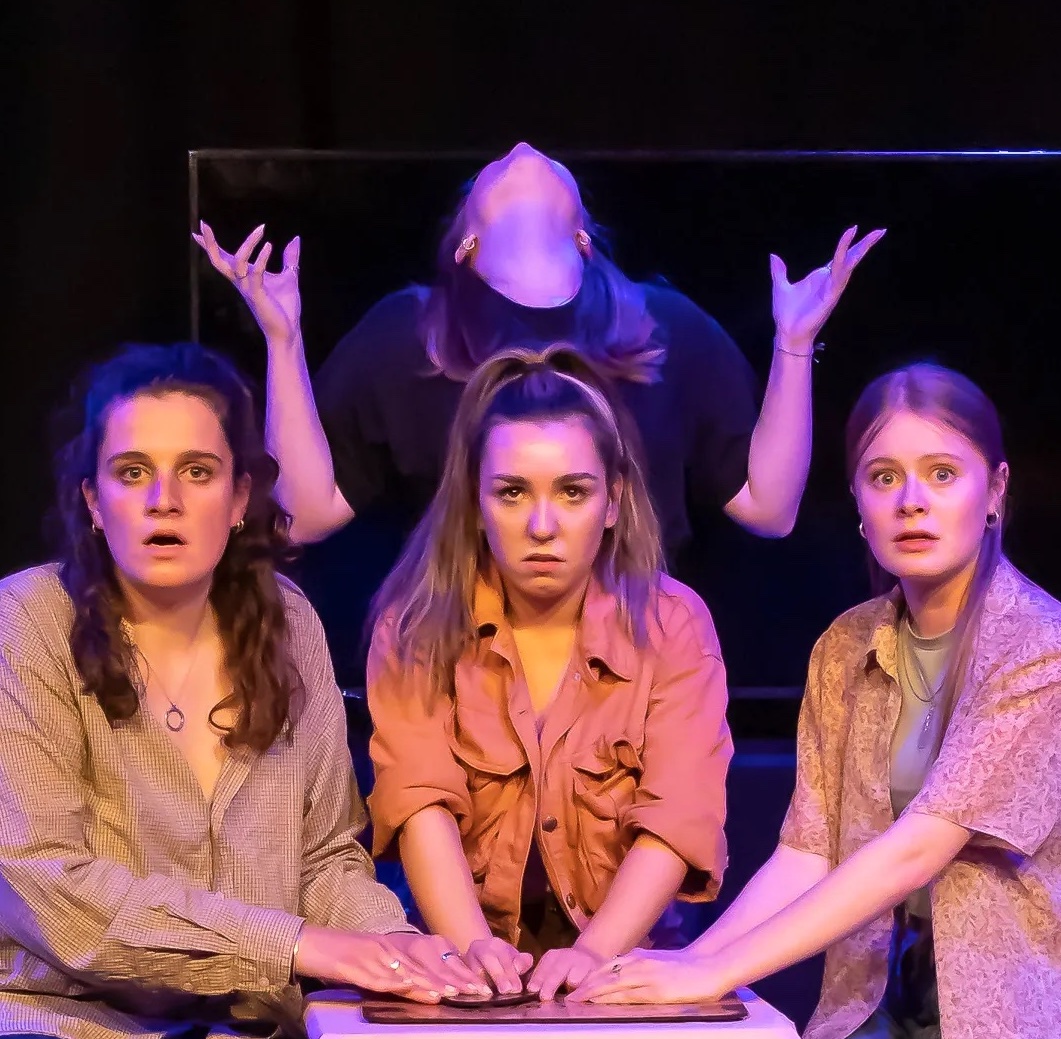
Koi Collective’s debut theatre show is a tight comic thriller, written by Sally MacAlister and directed by Grace Baker. Hannah (Eilidh Barn) is dead, and her friends and sister, Josie (Zoe Isobel Kinniburgh), have gathered to talk, to remember – and to conduct a séance. As you do. Abby (Georgia-Lee Roberts), now living in London, has managed to procure the keys for their old student flat in Edinburgh, and Finn (Amelia Fleur Yayici) has ordered a ouija board kit from Amazon. What could possibly go wrong?

Over the course of the evening, as the girls drink mimosas, snack on Monster Munch and attempt to communicate with Hannah, tensions emerge and intensify. What secret is Charlie (Evie Mortimer) hiding? Why has Lorna (Zara Louise Kennedy) always felt excluded from the group? And whose is the mysterious phone that keeps on ringing but can’t be found?

This is an impressive production, played with absolute commitment and precision by all five actors; there isn’t a weak link. The characters are wonderfully distinct, their interactions compelling and believable – and Yayici, as the boisterous, insensitive Finn, is darkly funny too.

I like the use of video clips to reveal the past: filmed footage of the group at parties or shivering on the beach, reading tarot cards and being daft. This helps to cement the sense of a shared history, letting us see how Hannah’s death has fractured their lives, as well as offering some clues as to what might have happened to trigger her demise.

Crossing the Void is a dynamic piece of theatre, and the team spirit behind the production feels almost palpable. There’s clearly a sense of shared ownership between the writer, director and actors – and this successful collaboration has paid dividends.

Kinniburgh is being replaced from today by Robyn Reilly (because of other commitments). Reilly is joining something very good indeed.

4.3 stars

Susan Singfield

Jenny Bede: The First Pregnant Woman in the World

13/08/22

Underbelly Bristo Square (Clover), Edinburgh

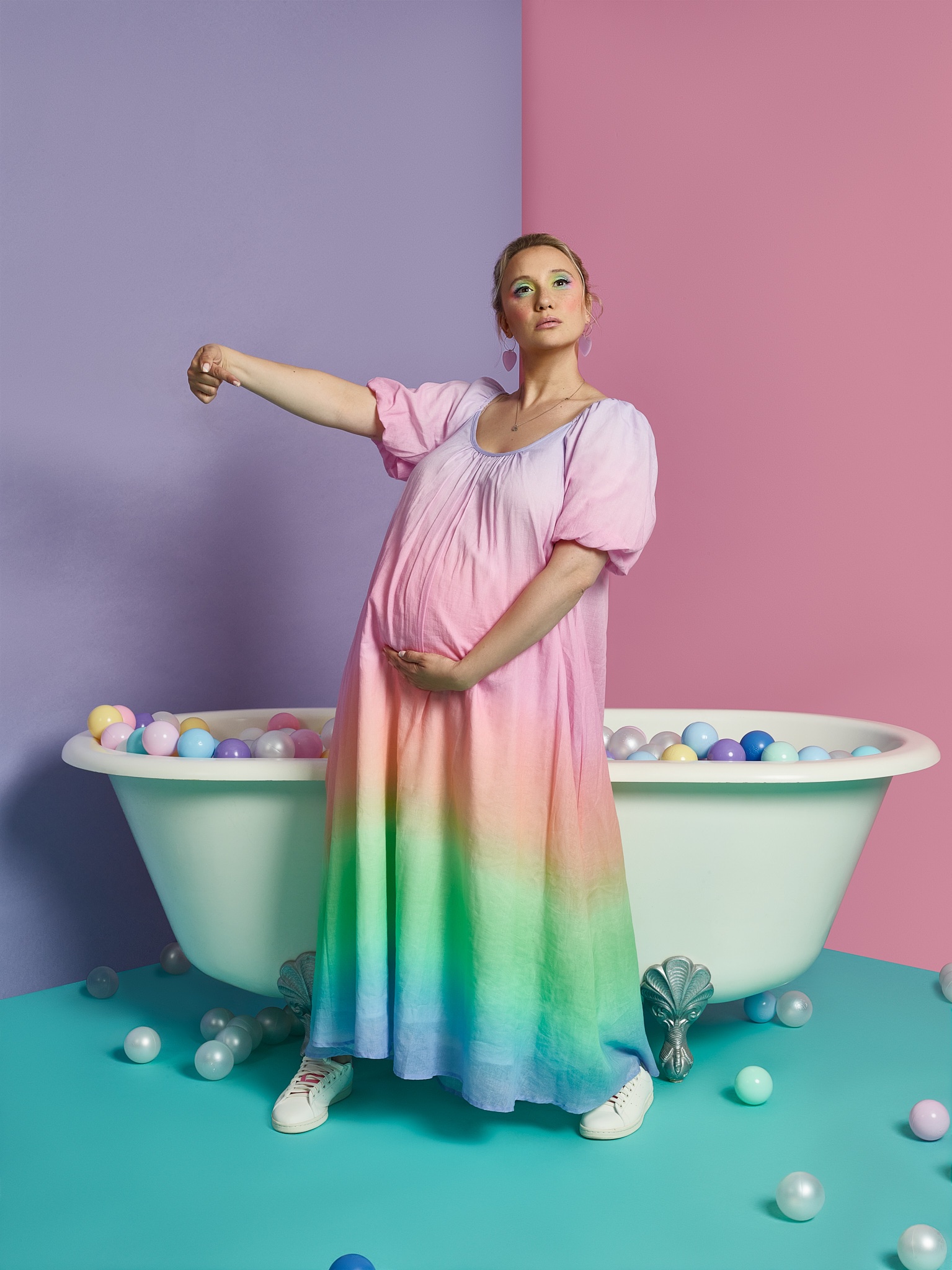
We first encountered Jenny Bede way back in 2013 at the Fringe, when she appeared alongside Jessie Cave in Ain’t Too Proud to Beg. We enjoyed that show a lot, but haven’t managed to see her since. Until now. And, while a lot has changed (she’s the first woman in the whole world to have ever been pregnant, you know), she’s still the same sweet-faced, potty-mouthed, musical comic we remember.

The theme here is – unsurprisingly, given the title – motherhood, but – as should also be evident – Bede is very, very self-aware. She’s brutally honest about the toll pregnancy and parenting take (the struggle to work while breast-feeding; the hormonal rage of the second trimester; the absolute carnage of giving birth), but also conscious of the self-absorption and entitlement ‘a white woman with a buggy’ sometimes displays.

Bede is an engaging performer. Her style is chatty and intimate, and she doesn’t seem to have a filter – some of her tales are very personal (and all the better for it). The show’s high points are the musical numbers, all original pieces, with bitingly witty lyrics. The standout is the song about things that make her angry, that soon descends into a rant, interrupted periodically by cheers and applause from the audience as she highlights issues that have affected us all (not least the fact that Boris Johnson was enjoying a party at the exact same time she was giving birth without her partner present, because WE WEREN’T ALLOWED TO MIX!).

There’s a weird heckle early on that unsettles her briefly, but Bede is an experienced comedian, and she soon settles back into her stride. This is a funny and appealing show, with some serious points playing peek-a-boo behind the jokes.

3.5 stars

Susan Singfield