Edfringe

Revolver

23/08/25

Pleasance Courtyard (Beneath), Edinburgh

In 1966, when Revolver was released, my mum was 18 years old, and had already been a fan of The Beatles for quite some time. As a Liverpudlian teenager, she’d spent many a lunchtime in the legendary Cavern Club, and was lucky enough to attend the Fab Four’s notorious 1964 homecoming gig at the Empire. She was, naturally, a member of their fan club – and still has her Christmas Flexi Discs to prove it. So, when she was scheduling her visit to this year’s Fringe, it was obvious that there was one production she wouldn’t want to miss…

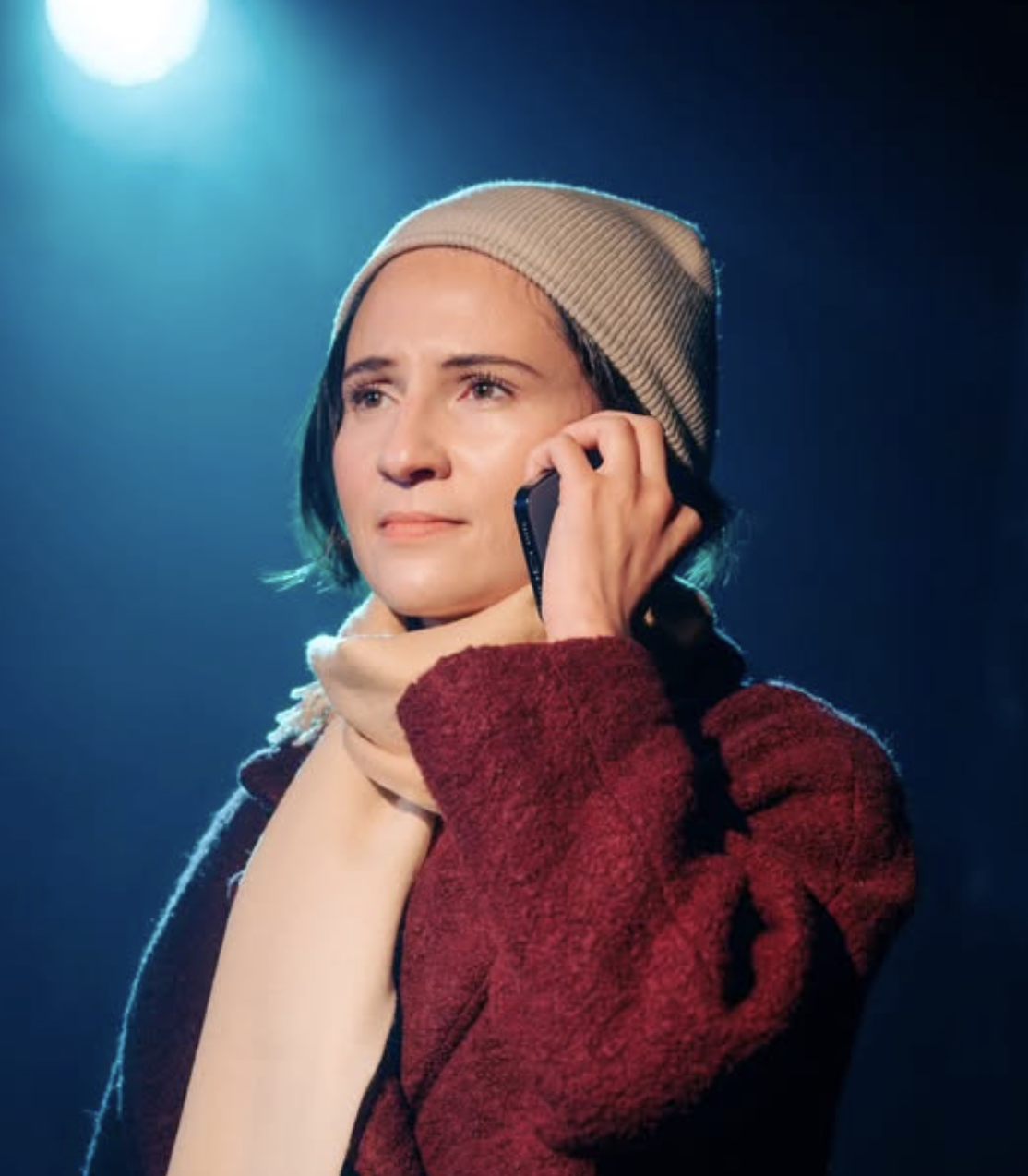
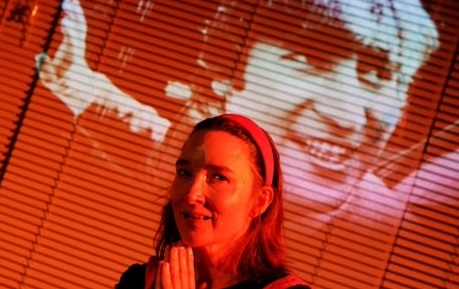
Writer-performer Emily Woof’s play doesn’t disappoint. It’s about three women, the first of whom is Jane Fraser, a former teacher turned TV-researcher, delighted to be working on a documentary about female fandom through the ages. The second is Helen, Jane’s mum, who spent her adolescence dreaming about John Lennon. And the third is Valerie Solanas: writer, activist – and pistol-wielding would-be killer.

Directed by Hamish McColl, Revolver is an intricate piece of theatre, dealing with the very questions Jane thinks the ‘Fangirls’ documentary should address. But, while the protagonist is thwarted in her endeavours by James, the ratings-driven film-maker who hired her, Woof makes her points cogently, drawing salient connections between fame and feminism, reverence and rage.

James’s sensationalist approach to the documentary – he favours the tagline ‘Young, Dumb and Fun’ – undermines the girls who screamed for their pop idols, ignoring the sociopolitical circumstances that gave rise to them. Woof uses Helen and Valerie to illuminate the disconnect between history and herstory, to validate the heightened emotions of teenage fans – and to shed light on the boiling rage that drove Solanas to shoot Andy Warhol.

Tracks from The Beatles album are played throughout, sometimes to mark transitions and sometimes as the soundscape. This works best when there is a clear association between the songs and what is happening onstage, e.g. Tomorrow Never Knows provides the perfect background to an acid trip. Occasionally, the song choices seem a little random, taking me out of the moment while I try to understand the link (Tax Man plays us out, for instance, and I don’t know why), but overall the soundtrack serves the piece well.

I like how knotty this is: Woof doesn’t shy away from the complexity of the issues at hand, and her performance is both bold and nuanced. I’m not entirely convinced by the sexual fantasy sequence (the language seems too sophisticated for an inexperienced young girl), but that’s my only quibble with the writing.

A thoughtful, exacting play, Revolver demands serious consideration from its audience. “Nobody can deny that there’s something there.”

4.4 stars

Susan Singfield
Mariupol

17/08/25

Pleasance Courtyard (Beneath), Edinburgh

Katia Haddad’s two-hander is an epic tale of love and loss spanning thirty years, exposing the quiet horrors of war: the tendrils that insinuate their way into ordinary people’s lives, strangling their hopes for happiness.

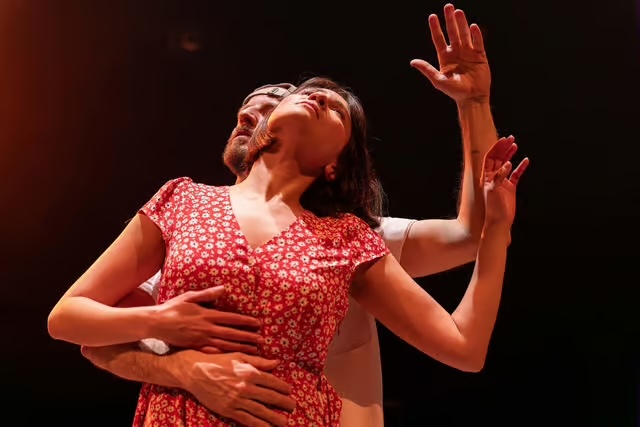
It’s 1992, a year after the dissolution of the USSR, when “Steve” and Galina (Oliver Gomm and Nathalie Barclay) meet at their friends’ wedding in the titular Ukrainian city. Steve (real name: Bondarenko, nicknamed for his karaoke renditions of Stevie Wonder songs) is a well-travelled naval officer, while Muscovite Galina is a literature student, who has so far only dreamed of seeing foreign lands. “You’re in a foreign land,” Steve reminds her, and he’s right: Ukraine is now an independent state. But it doesn’t feel foreign to Galina: “We speak the same language,” she says. And indeed they do, in more ways than one. But, after a whirlwind holiday romance on the picturesque Belosarayskaya Sandbank, it’s time for the two to say goodbye and return to their ‘real’ lives.

Three decades later, Russia invades Ukraine. Galina’s teenage son, a member of the Russian army, is captured by Ukrainian forces in Mariupol. She’s desperate to rescue him – and can only think of one person who might be able to help. But can Steve – who has lost everything and is fighting for his country’s very existence – really be expected to come to the aid of an enemy soldier?

Gomm and Barclay are both perfectly cast, delivering heartfelt but understated performances, which feel totally authentic. They seem to age before my eyes, and it’s impossible not to empathise with these two regular Joes, who ought to be free to focus on more mundane problems. Directed by Guy Retallack, Mariupol is an expertly-crafted piece of theatre, starkly illustrating the brutality of war without ever sensationalising it. Hugo Dodsworth’s monochrome video projections emphasise the awful devastation in Ukraine.

Of course, the ongoing nature of this particular conflict adds real urgency to the production, and I find myself crying as the dreadful human cost is laid bare. But tears are not enough. The play supports the David Nott Foundation, which trains doctors in countries impacted by conflict – including Ukraine – and I feel compelled to make a donation as soon as I get home. If you’d like to do the same, you can do so here: https://davidnottfoundation.com/.

A deeply moving and important play, Mariupol is horribly relevant but beautifully drawn.

4.7 stars

Susan Singfield

Lachlan Werner: Wondertwunk

15/08/25

Pleasance Dome (10 Dome), Edinburgh

Originality counts for a great deal at the Fringe and I have to say that Lachlan Werner has that commodity in spades. We’re here to catch his act mostly because a publicist we work with casually mentioned that she thought it would be ‘right up our street.’ The fact that it so definitely is probably says something about us, because this is utterly weird – but, I should add, in a good way. And it’s clear from the audience reaction that we’re far from the only ones delighted by what we’re viewing.

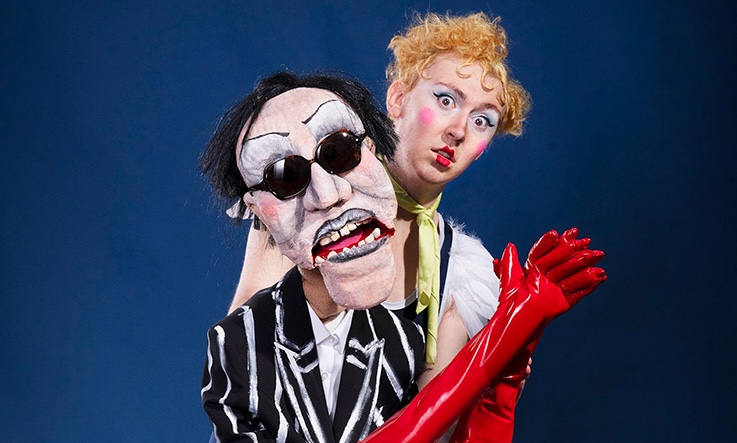
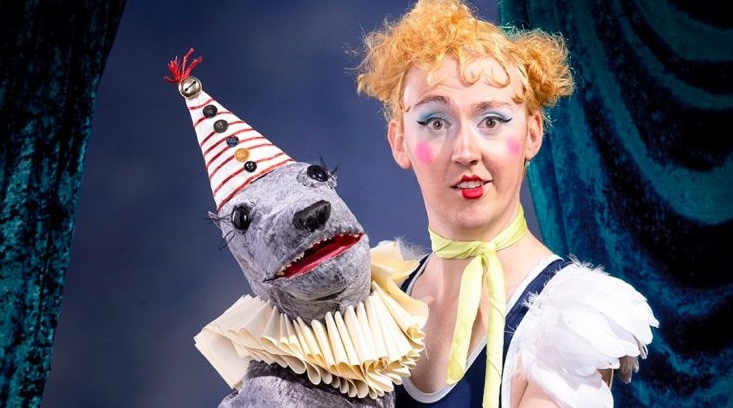
Werner plays Jack Hammer, the Strongest Boy in the World. He might not look the type to be lifting weights and bending steel bars, what with his impeccably-plaited curls, his grotesquely-painted features and his cupids-bow lips; and yet, thanks to some shonky-looking props, he manages these macho skills with ease. He performs every night in a circus owned by his clearly dodgy dad (depicted by a monstrous life-sized puppet), and his only friend in the world is a talented sea lion called Slippy, who, it turns out, can balance wine glasses on his nose.

Werner is a gifted ventriloquist, able to switch from his own cartoonish little voice to his dad’s gruff tones (or the distinctive bark of a sea lion) with apparent ease – and, while on paper the ‘jokes’ are simply a string of lame puns and outlandish boasts, there’s something so utterly beguiling in Werner’s delivery that I find myself laughing helplessly along from start to finish.

There are elements of horror in the story which put me in mind of the theatre of Grand Guignol, as Jack slowly begins to uncover grisly secrets about his father and, ultimately, himself. A guy from the audience is invited onto the stage to become his assistant and ends up as the object of his affection, an integral part of the show, as Werner flirts outrageously with him. By the show’s final stages, the entire audience is cheering Jack on, wanting him to to vanquish the powers of evil, to find a new identity and a suitably happy ending.

This show takes me completely by surprise and I’m fairly confident that other first-timers will have the same experience. One thing’s for certain: unless you’re already a fan of Lachlan Werner, you won’t have seen anything quite like it before. It’s sublime.

5 stars

Philip Caveney

Help! I’m Trapped in a One-Woman Show

14/08/25

Pleasance Dome (10 Dome), Edinburgh

Kate Skinner offers a nuanced perspective on widowhood in this frank one-woman show. The septuagenarian actor lost her beloved husband, Ron McLarty, in 2020, after seventeen years of marriage – and has mourned him ever since. “The thing about closure,” she tells us, “is that it isn’t real. It was made up by Oprah.”

But it’s been five years now and Skinner is torn: she doesn’t want to “move on” into a future without Ron, but she’s still here and she wants to live. Over the course of an hour, we learn how she makes her peace with this dichotomy, accepting that her grief will always be present, while forging new connections for herself.

Make no mistake: there are a lot of laughs to be had here. Skinner is searingly open, divulging every detail of her disastrous foray into online dating. It’s refreshing to hear an older person speak so candidly about sex; so often, these voices are muted. Her occasional bitchiness is also amusing, and she’s a born performer, creating a relaxed and intimate tone, so that we feel we’re being taken into her confidence.

There’s not a lot more I can say: this is a gentle and ultimately life-affirming piece of work. It’s a pleasure to spend sixty minutes in the company of this vivacious woman, who is unafraid to address a complex emotional subject that clearly resonates with many in the audience.

3.5 stars

Susan Singfield

The Unstoppable Rise of Ben Manager

10/08/25

Pleasance Courtyard (Above), Edinburgh

Bunkum Ensemble’s The Unstoppable Rise of Ben Manager is a Kafka-esque nightmare of a play, skewering the emptiness at the heart of many people’s work.

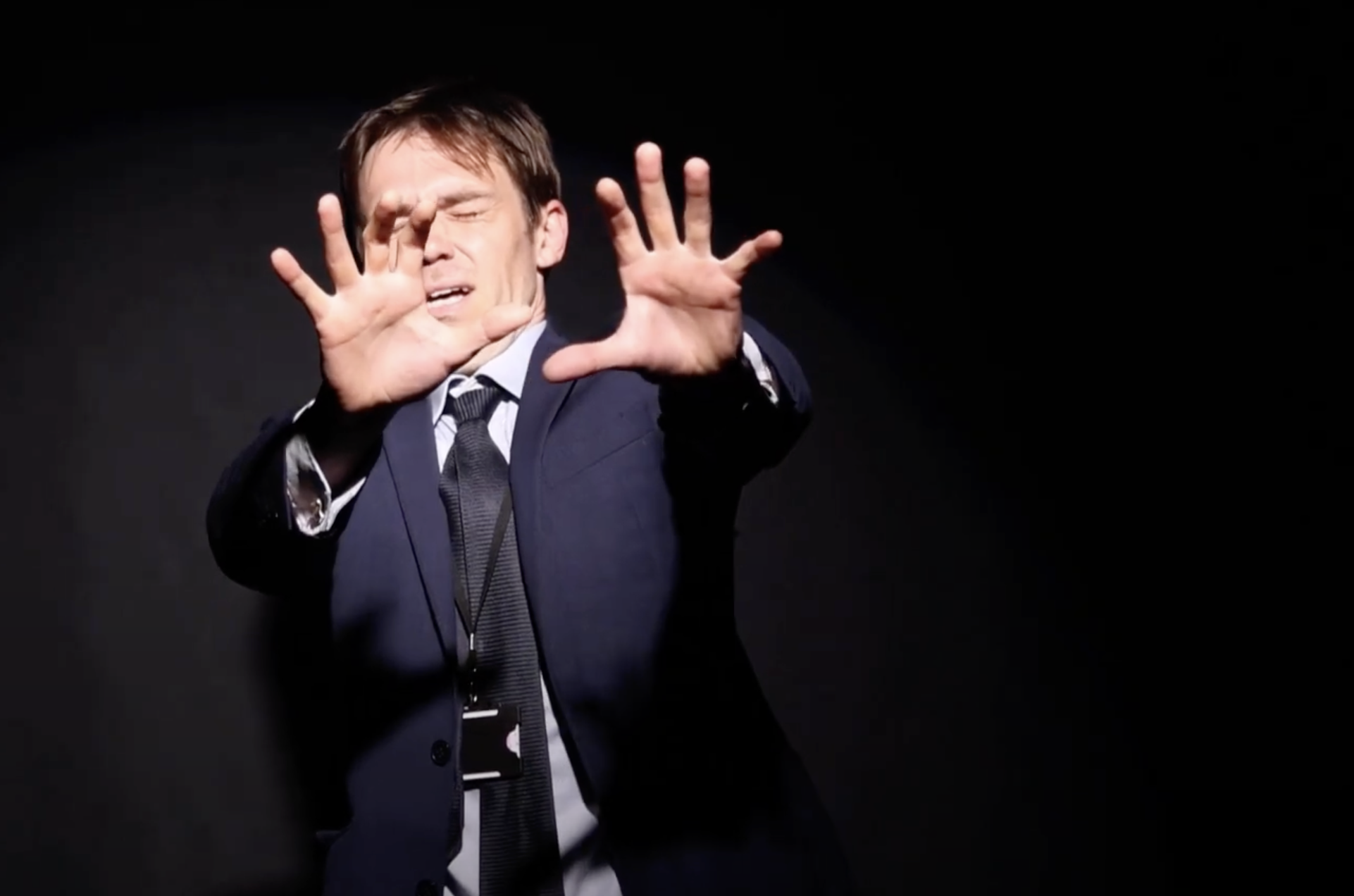
Ben Weaver (Jack Parris, who also wrote the script) is an ordinary kind of guy, an unassuming office drone, who works to live, to pay the bills. As the play opens, we see him suited and booted, in town early for an interview, eating an almond croissant to kill the time. But Fate has something different in store for Ben today: when he picks up a lanyard bearing the name ‘Ben Manager’, he finds himself caught in a Faustian trap…

Ben aces his interview. As Ben Manager, he is king of the vacuous PowerPoint, master of the mindless acronym. He knows his OOOs from his ETDs and he’s great at restructuring (“You’re all fired!”). What’s harder to understand is what it’s all for: what does the company actually do? What exactly is his role? Disoriented, Ben tries to remember what used to drive him. “I think I’d like to be creative,” he muses. “Maybe costume design?” But these half-formed thoughts are nebulous, impossible to grasp, lost to the demands of his daily routine.

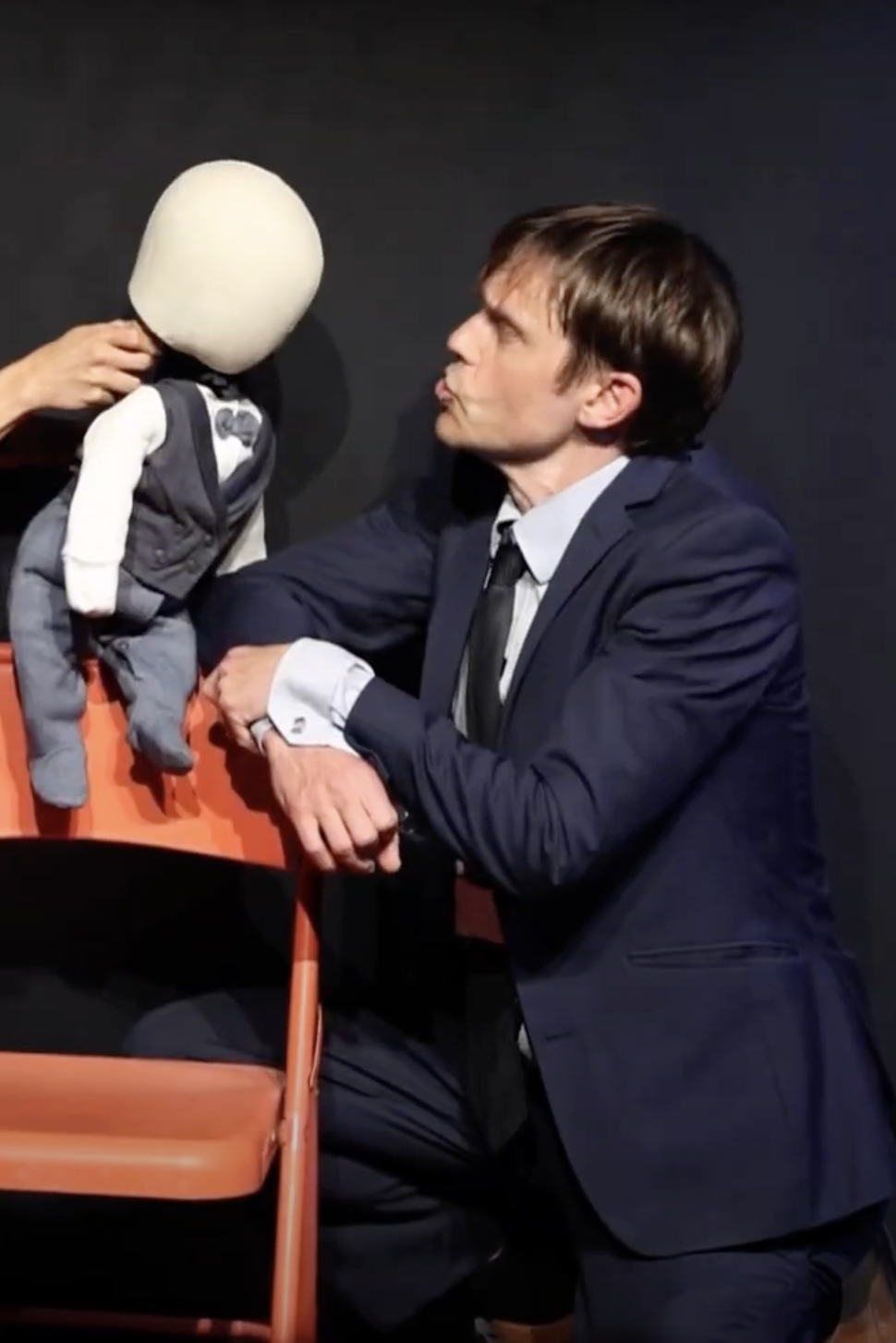
Parris is commanding in the central role, a leaf-cutter ant caught in the corporate machine. As events build to an almost hallucinatory crescendo, his mental unravelling is cleverly physicalised, and I love the disconcerting effect of the baby-sized puppet-colleague (operated by Teele Uustanti), its words spoken into a microphone by musician-performer Mike Coxhead). The audio-visual design is also impressive, adding to Ben’s (and our) growing sense of disconnection from reality.

Although it elicits plenty of laughs from the audience, The Unstoppable Rise of Ben Manager is fundamentally a brutal and discomfiting piece of theatre – and I’m not sure I’d find it amusing at all if I worked a nine-to-five.

4.3 stars

Susan Singfield

Lady Macbeth Played Wing Defence

09/08/25

Assembly George Square (Studio One), Edinburgh

The music’s pumping, the lights are flashing and the Dunsinane Hellhounds are warming up on the netball court. There’s no mistaking what kind of show this is going to be: high-octane, in-yer-face, Barbie-pink and lots of fun.

It’s Macbeth, but not as you know it: Macbeth without the monarchs, without the murder – without the men. Macbeth in an Aussie high school, where captaincy of the Year 12 netball team represents the seat of power, and where the Dagger Divas’ prophecies are streamed from Spotify.

“Mac” Beth (Orla Jean Poole) – wing defence – has always dreamed of leading the team. But Coach Duncan (Courtney McManus, who also wrote the book) has other ideas, and promotes Chloe Macduff (Shannon Rogers) instead. Mac is furious. Her best friend, Summer Banquo (Kate Sisley), tries to placate her, but Mac is too fired up to listen. She’ll do whatever it takes to ensure she gains the throne…

Crash Theatre Company’s Perth production pivots onto the Edinburgh scene via the House of Oz. Composer/director Bec Price’s electro-pop score is vibrant and lively, while the lyrics (co-written by McManus, Price and Ana Ferreira Manhoso) are a playful blend of Shakespearean verse and modern vernacular, with the bard’s most famous quotations all present and correct. The choreography (courtesy of Rogers) is suitably vigorous, while the bold costuming cleverly distinguishes the characters – no mean feat when they’re in matching uniforms.

This is a true ensemble piece, and I love the performers’ energy and vim. However, I do think there’s scope for the story to venture into darker territory, for Mac to engage in more nefarious deeds, as LMPWD stops a long way short of its progenitor’s “direst cruelty”. I’d also prefer a less saccharine ending, more akin to the original…

Nonetheless, there’s no denying the dynamic effect of this production: there’s a discernible buzz in the auditorium and plenty of people singing the catchy ‘Thunder, Lightning, Rain‘ on their way out (displaying the lyrics on the backdrop, karaoke-style, is an inspired idea). I find myself playing the score while I’m making dinner, and I’ve no doubt Lady Macbeth Played Wing Defence will prove especially popular with teens.

All hail, “Mac” Beth, that shalt be a blockbuster hereafter.

4 stars

Susan Singfield

The Other Mozart

05/08/25

Assembly George Square Studios (Studio Two), Edinburgh

You’ve heard of Nannerl Mozart, right?

Nope?

Me neither.

Her brother’s pretty well-known though. He’s so famous he’s known by just one name (which is probably a good thing, considering his original moniker was the unwieldy Joannes Chrysostomus Wolfgangus Theophilus Mozart – although he did later change this to Wolfgang Amadeus).

It turns out “Nannerl” (aka Maria Anna Walburga Ignatia; yep, Mama and Papa Mozart really liked long names) was something of a musical prodigy too, who toured with “Wolfie” when they were both children. This elegant production, written and performed by Sylvia Milo (in rotation with Daniela Galli), finally brings Nannerl out of the shadows and into the light.

It’s no great shock to discover that the reason we don’t know about her is because of her gender. Europe’s aristocracy were happy to watch a little girl perform, less so a grown woman. Here, with great artistry and precision, Milo shows us the toll this must have taken on the talented musician and composer, forced to watch her younger sibling garnering credit and acclaim while her own similar ambitions were thwarted, subsumed into marriage and motherhood.

Sadly, none of Nannerl’s original pieces survive, but Milo’s poised performance is beautifully complemented by Phyllis Chen and Nathan Davis’s compositions, which evoke the era perfectly, allowing us to believe in Nannerl’s genius.

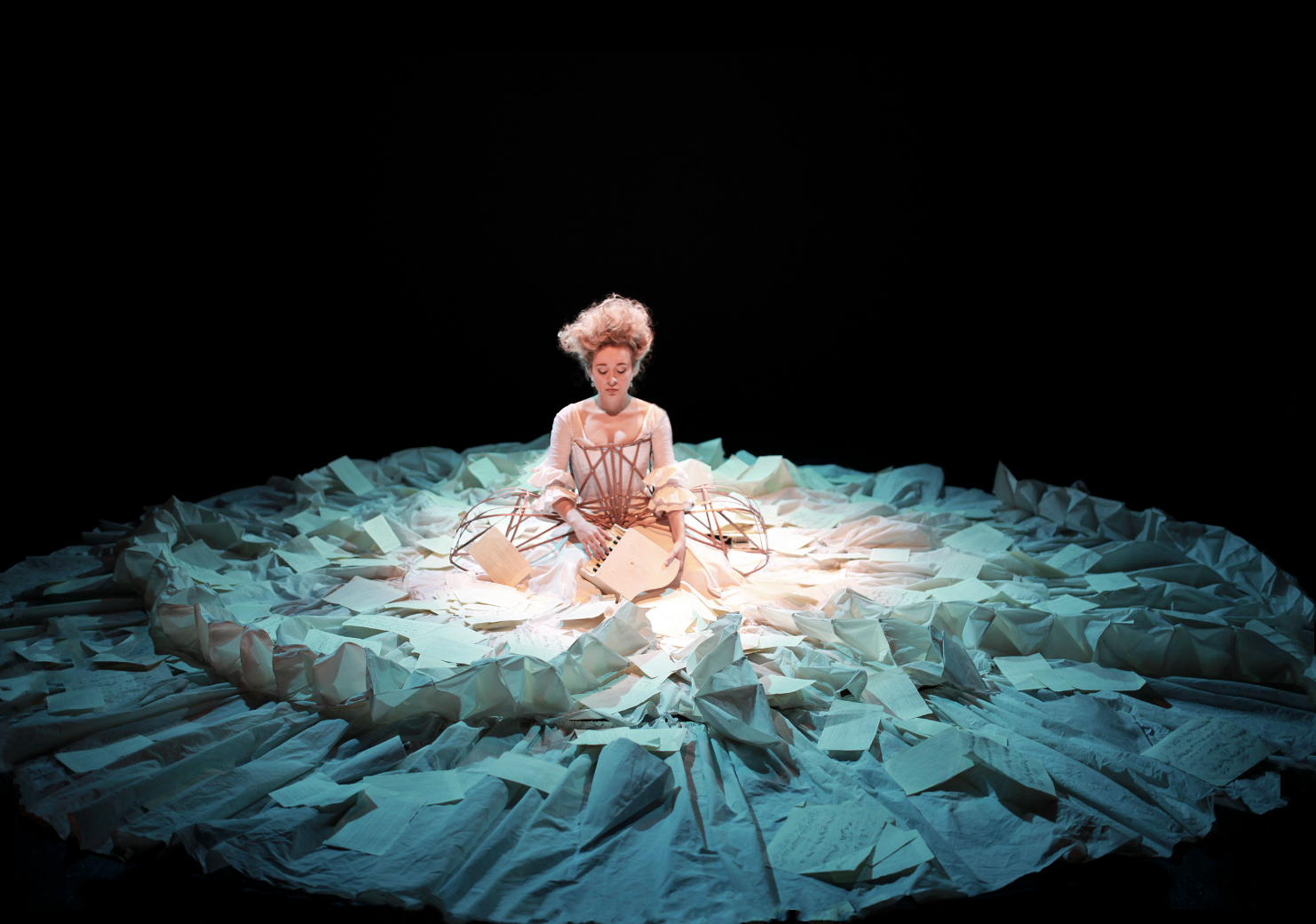
The Other Mozart, directed by Isaac Byrne, is a work of art: a sophisticated blend of monologue, music and movement – and it’s a visual marvel too. The set is the costume; the costume is the set: a giant dress, designed by Magdalena Dąbrowska, fills the entire stage, waiting, predator-like, to trap Nannerl in its fathomless drapes. The image is intensified by Miodrag Guberinic’s cage-like panier, constructed – I think – from music stands, constricting Nannerl but also amplifying her stature, so that she rises monumentally, towering over us, defying us to forget her name.

An object lesson in reclaiming women’s history, The Other Mozart is exquisitely conceived and realised, a magnum opus in its own right.

5 stars

Susan Singfield

She’s Behind You

03/08/25

Traverse Theatre, Edinburgh

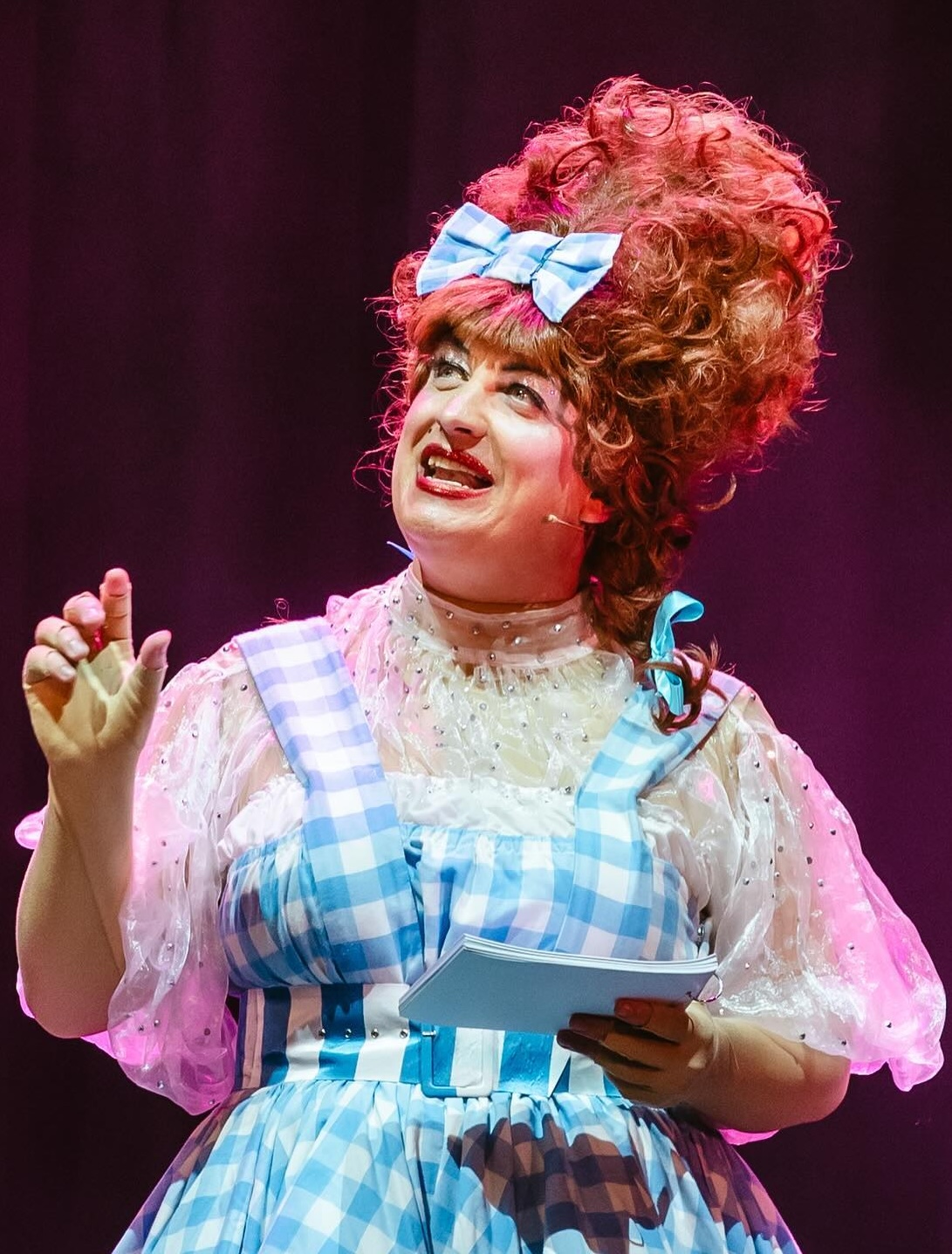
Johnny McKnight lifts the lid on all things panto in this hugely entertaining and informative one-dame show, directed by John Tiffany. She’s Behind You is an interesting hybrid, retaining all the bawdy glamour of Britain’s most popular theatrical form, while simultaneously offering a thoughtful commentary on its strengths and weaknesses. A seasoned writer and performer, McKnight has the audience in the palm of his spangly-gloved hands, eliciting gales of laughter as well as contemplative silences. He knows exactly how to tell his tale to best effect, effortlessly undercutting the more sombre moments with a raucous one-liner or comic song, carrying us along with him. It’s all beautifully designed by Kenny Miller and there’s a lightning-fast costume change (courtesy of Jennie Lööf) that will leave you breathless.

McKnight’s stage persona, Dorothy Blawna-Gale, is as warm as she is sassy, brash but never brutal – more Elsie Tanner than Cruella de Vil. “Punch up,” McKnight exhorts, reflecting on earlier iterations of his dame, where he followed in the footsteps of the Widow Twankeys and Ugly Sisters he’d so admired in his youth, making ‘harmless’ jokes about race, gender, sexuality and body size. “Times change,” he reminds us – and panto has to change with it. Some rules need to be kept – after all, the conventions of the genre date back to commedia dell’arte, a working-class art form that spurned elitism and focused on entertaining the masses – but some need to be broken.

For example, the gender imbalance doesn’t sit well any more, but most commercial panto casts are still at least 75% male, and the few women don’t get much agency, let alone the chance to tell jokes. There’s also an inherent homophobia, he tells us, which genuinely surprises me (I guess that’s my straight privilege showing). I’ve always thought of pantomime as gender fluid, sometimes sexist but never anti-gay. McKnight’s insider perspective opens my eyes, and I’m impressed by his efforts to walk the walk, writing scripts he can stand by and be proud of, serving his audiences rather than belittling them. Pantomime has survived so long by being adaptable and irreverent, so why is there so much resistance to challenging certain tropes?

But if all this sounds po-faced, then I’m doing McKnight a disservice, because – more than anything – She’s Behind You is a cyclonic blast, as big and bold as its glittering protagonist, and fully deserving the standing ovation it receives tonight.

So click your age-appropriate-but-sparkly orthotic heels together three times, and repeat, “There’s no place like the Traverse.” Dorothy Blawna-Gale will be waiting to see you. Oh yes she will!

5 stars

Susan Singfield

Hold the Line

02/08/25

Pleasance Courtyard (Bunker Two)

Hold the Line is the type of theatre that speaks to its time. Right here, right now, when the nation’s beloved NHS has been starved of funds for the past two decades, is exactly the moment for writer/performer Sam Macgregor to shine a spotlight on one of its least glamorous aspects, the 111 non-emergency helpline.

Gary (Macgregor) is a call-handler. The job has more in common with other call-centre work than it does with what we usually think of as healthcare, but with emotional trauma thrown into the mix. In amongst the standard queries there are, of course, the timewasters, ranging from the humorously trivial (“I’ve got a lash in my eye”) to the pointlessly abusive (“Fuck off!”). But there are also desperate people who, unable to get a GP appointment or unwilling to face an eight-hour wait in A&E, stretch the definition of ‘non-emergency’ beyond recognition, forcing Gary to exceed his remit. He’s not a medic: how can he be responsible for matters of life and death? And yet here he is, the only point of contact in a situation he’s not trained for, as his boss tells him there’s no clinician available just yet, so keep the patient on the line… 

Macgregor imbues the protagonist with a raw humanity, while Gabriela Chanova takes on the supporting roles, most notably Tim, calling about his diabetic dad, and Tony, Gary’s supervisor. Regular disembodied tannoy announcements remind Gary (and us) that he has targets to meet, that ‘comfort breaks’ are essentially selfish, causing waiting times to escalate, and that everything he does is being monitored. There is no downtime, no space to process difficult calls and no information available about the outcomes. As so often seems to be the case, the caring professions are not cared for. 

Director Laura Killeen utilises the small space well: Tony’s agitated pacing back and forth along the same path, over and over, serves to underscore the repetitive nature of the work, as well as the  sense of being on a treadmill, going nowhere fast. I also like the simplicity of the design (by Nalani Julien) with its central focus on Gary’s desk, and the cunningly hidden phones, which are used to good effect in the frenetic ‘workout’ routine, highlighting Gary’s inner turmoil. 

I have just one criticism: the section where Macgregor plays ‘Top Brass’, showing how Tony faces the same pressures as Gary, makes some important points, but it’s somehow weaker than the rest of the play, the polemic less artfully disguised. 

That aside, Hold the Line is a tight two-hander, holding up a dark mirror to the state of our health service. Voices like Macgregor’s highlight what’s happening – and hopefully help to bring the change we need. 

4 stars

Susan Singfield

Chloe Petts: Big Naturals

31/07/25

Pleasance Courtyard (Forth), Edinburgh

(Happy to use she or they)

It’s that time again, when Edinburgh explodes with literally thousands of new shows – and for no particular reason that we can determine, first out of the stalls for us this year is Chloe Petts, who has named her show after er… her favourite things in the world (I’ll leave it to you to work out what they might be). She must be delighted with the turnout for her first performance, which sees the capacious Pleasance Forth very nearly packed to capacity. She strolls out and, seemingly without effort, gets the crowd on side.

Okay, it’s not revolutionary stuff, but her confident patter ranges from her formative years – when she found herself avidly embracing the lad culture of the early noughties (and often actually being mistaken for a lad in the process) – to her doomed attempts to hide her sexuality from her straight-laced but well-meaning parents.

As her story unfolds, Petts unleashes a whole barrage of howlingly funny one-liners and, at key moments, conducts a beautifully-timed series of high fives with a young lad in the front row, who doesn’t quite know whether to go with them or cross his arms in mortification.

All in all, it’s a promising start to Fringe 2025 and I leave having enjoyed a really good laugh throughout her sixty-minute set. In a world where such a commodity seems to be in increasingly short supply, what more can you reasonably ask from a stand-up?

4 Stars

Philip Caveney