
Deborah Moggach

Pride and Prejudice

24/05/25

Netflix

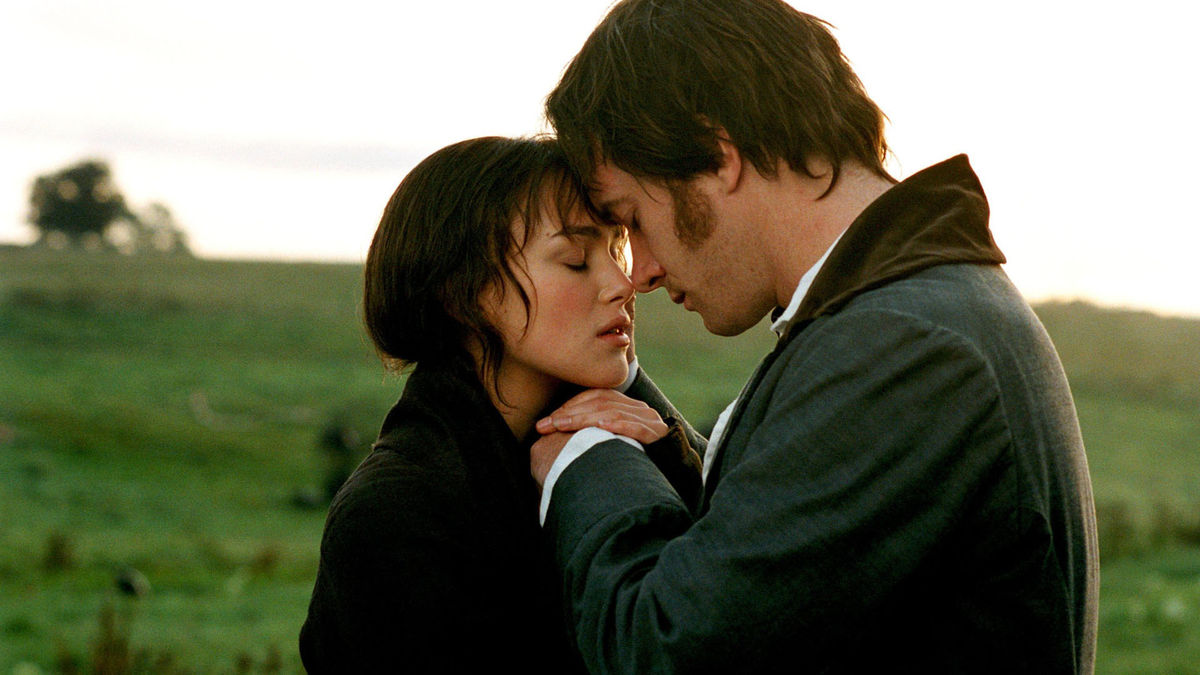
It’s hard to believe that Joe Wright’s adaptation of Pride and Prejudice is already twenty years old – and, while it’s been rereleased into selected cinemas to mark the occasion, it’s also right there on Netflix, all ready for re-examination at the touch of a button. I remember liking it back in the day and feeling that it was much more realistic than the widely-admired 1995 TV mini-series, which I found a little too chocolate-boxy.

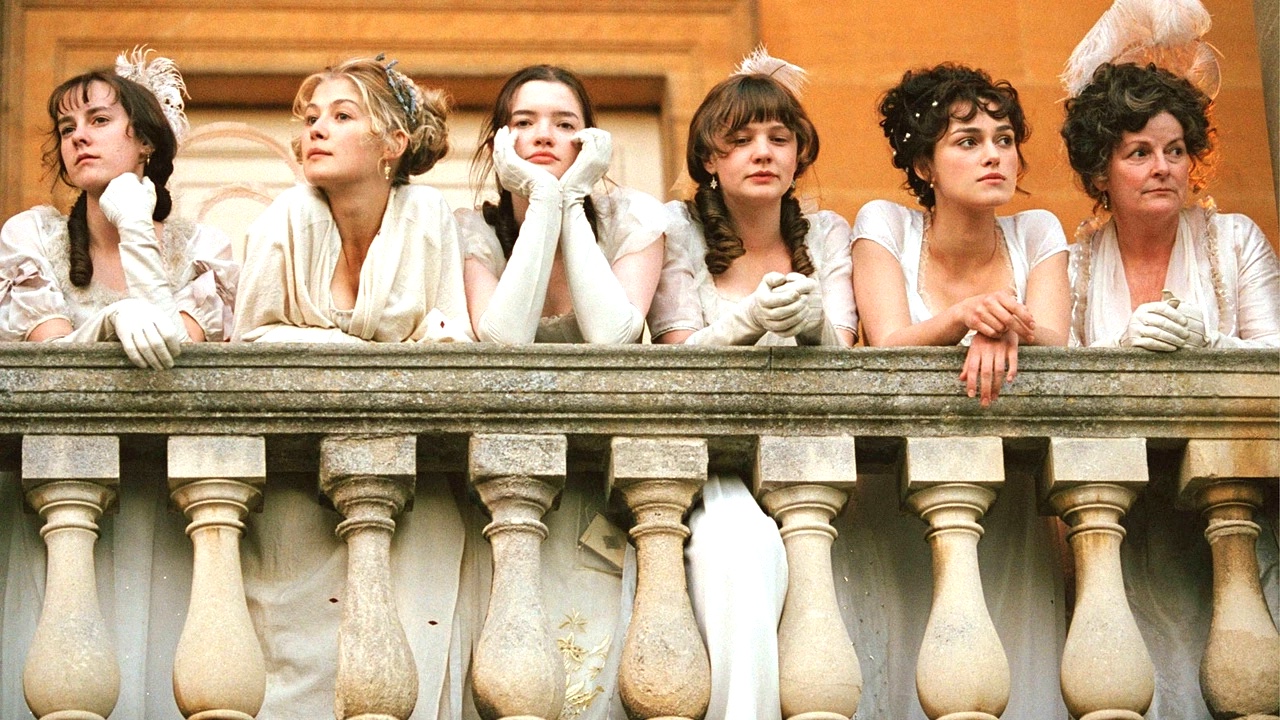
Wright’s version, though offering a tranquil and bucolic adaptation of Jane Austen’s novel, actually succeeds in showing the slightly down-at-heel and ramshackle nature of the Bennet family. In this version, a viewer fully understands the mounting desperation of Mrs Bennet (a wonderfully scatty Brenda Blethyn) as she seeks to find suitable husbands for her daughters, aware all the time that the clock is ticking and the women of the family stand on the edge of penury. Mr Bennet (Donald Sutherland) is useless, looking on in mystified wonder as his wife goes about her earnest business.

As the wilful and opinionated Elizabeth, Keira Knightley is an inspired choice. Why so many critics have taken against her acting abilities is quite beyond me, but here she plays Lizzie with considerable skill, scathing in her early encounters with Mr Darcy (a deliciously-sombre Matthew Macfadyen) and loving and playful in her interplay with Jane (Rosamund Pike) and her other sisters (look out for an early appearance by Carey Mulligan as Kitty). There’s a splendid turn from Rupert Friend as the caddish Mr Wickham, while Judi Dench struts her inimitable stuff as the acid-tongued Lady Catherine and Tom Hollander is wonderfully obsequious as Mr Collins, the reverend with an earnest desire to impress her.

The source novel has been cleverly adapted by Deborah Moggach, with additional (uncredited) dialogue by Emma Thompson, who had already earned herself an Oscar for her work on Ang Lee’s version of Sense and Sensibility. Wright never lingers too long on a scene and consequently the running time of two hours and nine minutes seems to positively flash by.

There are so many simple yet effective moments that have stayed with me since my first viewing. I love the scene where the Bennets’ prize pig wanders through their living quarters as though it’s a perfectly natural state of affairs, and the scene where Elizabeth and Darcy, enacting a complicated dance routine in the midst of a frenetic party are, quite suddenly, dancing completely alone. Roman Osin’s lush cinematography makes every landscape look suitably ravishing yet never overplays its hand. A scene where a pensive Elizabeth is taken from bright morning sunlight into the dark shadows of evening in one slow take is so understated, it barely registers.

This is Wright’s debut full-length feature and yet it feels like the work of a more experienced director. He would go straight on from this to his adaption of Atonement, another extraordinary literary film, once again with Knightley in a key role.

Sometimes when you return to a film after a long interval, you wonder what made you like it so much on first viewing. In the case of Pride and Prejudice, I feel I enjoy it even more.

4.6 stars

Philip Caveney

The Best Exotic Marigold Hotel

31/05/23

Festival Theatre, Edinburgh

I was a big fan of Deborah Moggach’s books back in the 80s and 90s. You Must Be Sisters, in particular, made an indelible impression. Although I didn’t read These Foolish Things, when it hit the silver screen in 2011 as The Best Exotic Marigold Hotel, I was primed to enjoy it – and I kind of did. Under John Madden’s direction and with a stellar cast, it struck me as a good-natured, feel-good slice of cinema.

It seems to be a truth universally acknowledged that a successful, ‘uplifting’ film should be adapted into a touring play, so it’s no surprise to find TBEMH added to the roll call. This gentle comedy tells the tale of the widowed Mrs Kapoor (Rekha John-Cheryan) and her hapless son, Sonny (Nishad More), owners of the dilapidated titular hotel. His mother wants to sell the failing business, but Sonny has another idea. He’s been reading about the way old people are treated in the UK: abandoned by their families; ripped off by care homes. Why not repurpose their building as a residential hotel, where elderly white English people can see out their days?

Enter a rag-tag of pensioners: mousy Evelyn (Tessa Peake-Jones), recently widowed and terribly timid; smug married “been-there-done-that” know-it-alls Jean (Eileen Battye) and Douglas (Paul Nicholas); mysterious ex-broadcaster Dorothy (Paola Dionisotti); would-be comedian Norman (Graham Seed); sexy Madge (Belinda Lang), on the hunt for a fourth husband; and Muriel (Marlene Sidaway), ex-cleaner and current bigot. Of course, they’re all on journeys of self-discovery, and India provides the perfect exotic backdrop…

The jokes land well with tonight’s audience and there is much laughter in the auditorium but, in all honesty, it’s an uncomfortable watch. It’s 2023, and we’re all more aware than we were back in 2011. Now, the white saviour narrative feels dated and horribly self-aggrandising. I wince as Muriel points out the inequity of the caste system, thus enlightening Mrs Kapoor and convincing her to promote the ‘Untouchable’ sweeper (Anant Varman). I cringe as the old white women solve Sonny’s relationship problems by telling him to marry for love and reject the idea of an arranged marriage. I squirm as Evelyn educates the lively call-centre workers (Shila Iqbal and Kerena Jagpal), smashing their sales targets with a bit of good English common sense. There is the occasional attempt to temper this (“It was the young people’s idea”), etc., but – basically – it’s the Indians’ role to inspire the Brits by smiling through adversity, and it’s the Brits’ role to show the Indians how to get things done. Sigh.

I’ll file this one under ‘A’ for ‘Awkward’.

2.5 stars

Susan Singfield

Finding Your Feet

28/02/18

It’s tempting to imagine the kind of think-tank meeting that might well have preceded this film.

‘OK, guys, we need to create a movie that appeals to the silver-haired brigade. You know, another Exotic Marigold Hotel. That made millions!’

‘Great. Well, first of all, we’ll need a few National Treasures in the cast. Imelda Staunton, perhaps? Check! Timothy Spall? Excellent! Of course, we’ll have to get Celia Imrie in there somewhere and… oh, yes, Joanna Lumley! And we’ll need to give them something to do. You know, something a bit naughty. Smoking pot, perhaps…. knocking back malt whisky and… dancing! Yes, let’s have them dancing…’

And so on. The inevitable effect, unfortunately, makes Finding Your Feet feel like a cynical exercise in box-ticking. Which is a shame, because there are some excellent actors in this, doing their level best to make it work.

Sandra (Staunton) is the well-to-do wife of Mike (John Sessions), a former chief constable. Hosting his retirement party at their palatial home, she discovers that he’s been cheating on her for the past five years with Pamela (Josie Lawrence) and, understandably miffed, she packs her bags and heads off to the council estate home of her estranged sister, Biff (Imrie), who is what might be described in these circles as ‘a bit  of a character.’ Sandra is understandably in a foul mood when she arrives, which goes some way to explain her general unpleasantness towards everyone she encounters, but not the scene in a Chinese restaurant where her attitude borders on out-and-out racism. Quite why Biff doesn’t send her packing is anybody’s guess.

Meanwhile, Biff’s close friend, Charlie (Spall), lives on a barge and is currently watching in helpless dismay as his wife, Lilly (Sian Thomas), who has been consigned the the tender mercies of a nursing home, slips further and further into the grip of senile dementia. His first encounters with Sandra are not exactly cordial but, when Biff manages to persuade her sister to come along to the weekly dance class that Charlie also attends, he and Sandra have a quick spin out on the dance floor and, against all the odds, they start to enjoy each other’s company.

What else do we need here? Oh yes, of course, let’s ship the whole cast off to an exotic location – in this case Rome – so they can participate in an international dance festival and where that new relationship can be allowed to blossom. Oh wait, there’s still one vital ingredient missing… oh yes, a terminal illness. Perfect!

All this manages to yield not one single surprise in the telling, and you have to feel a little sorry for the actors who work their socks off to sell this tosh, but even they can’t quite convince us to actually care. I think what’s been overlooked is that The Exotic Marigold Hotel was a more heartfelt affair, with the heft of a Deborah Moggach novel behind it, and – even so – its success as a film most probably came as a pleasant surprise to everyone involved. Indeed, the attempted sequel was a pretty woeful affair as the makers attempted to replicate its charms.

Viewers can easily tell the difference between a genuine story and a marketing exercise. With Finding Your Feet I simply cannot escape the feeling that behind all those light-hearted escapades lurks a mean-spirited attempt to part older viewers from their money – and try as I might, I can’t quite forgive it for that.

2.8 stars

Philip Caveney


The Second Best Exotic Marigold Hotel

MV5BMTU3MjkxNjc0OV5BMl5BanBnXkFtZTgwMjc0NDg0NDE@._V1_SX214_AL_

05/03/15

In 2011, The Best Exotic Marigold Hotel made the cinema industry sit up and take notice. Here was a modestly budgeted film that raked in a hefty profit, but more significantly, it took it from the kind of mature audience that cinema usually fails to attract (i.e. not just 12 year old boys). So it was inevitable that sooner, rather than later, there’d be a sequel. And here it is, complete with a title that sounds worryingly like a self-fulfilling prophecy. It should be remembered that the original film was based on a rather good source novel by Deborah Moggach. This one appears to be an original screenplay, if by original, you mean borrowing an idea that famously appeared in an episode of Fawlty Towers. The kindest thing you can say about it, is that it’s a curate’s egg of a film, good in parts but those parts are few and far between.

Sonny (Dev Patel) is soon to marry his fiancé, Sunaina (Tina Desai), but first he plans to expand his operation by opening a second hotel and at the film’s inception, has gone to America to seek finance. In this enterprise he’s aided by the caustic Mrs Donnelly (Maggie Smith) her character slightly diluted from her original bitchy incarnation, but nonetheless still awarded most of the funniest lines. Meanwhile the usual suspects from Marigold 1 parade around having affairs with each other (Celia Imrie’s character, Madge, appears to have turned into a borderline good time girl,) while Evelyn (Judy Dench) and Douglas (Bill Nighi) are still failing to connect, even when it’s perfectly clear that the two of them are simply made for each other. Into this hotbed of geriatric passion wanders Guy Chambers (Richard Gere) who might or might not, be the hotel inspector who can grant Sonny’s expansion plan. Before you can say, ‘Basil Fawlty,’ Guy has the hots for Sonny’s widowed mother and much (alleged) hilarity ensues. The problem is, that this is all so obvious, it might as well have been performed as a series of semaphore manoeuvres. A last minute ‘twist’ fails to offer any surprises whatsoever. And what’s happened to Sonny’s character? In Marigold 1, he was charming in a bumbling, hapless sort of way, but here he’s a car crash of a person who can’t open his mouth without offending everybody in the vicinity.

On one hand, TSBEMH deserves respect for daring to portray senior citizens as genuine characters with real lives and real concerns; on the other hand, points must be deducted for its outdated portrayal of India as a country that has somehow never escaped the bonds of colonialism. The first film managed to skirt skilfully around these issues, but this time it just wades on in, seemingly without thinking. The climactic wedding features lots of dancing and larking about, but also comes with a large dollop of sentimentality, which once again, the first film was careful to avoid.

So, second best by name and certainly second best by nature. Ideally, the film makers should have gratefully accepted their groundbreaking hit and moved on to another idea, but of course, the movie business will always respond to a hit by throwing more money in it’s general direction. Can we ‘look forward’ to The Third and Final Exotic Marigold Hotel? God, I hope not.

3 stars

Philip Caveney