David Tennant

The Thursday Murder Club

01/09/25

Netflix

Oh dear. The first film of the month and it’s a stinker. I haven’t read Richard Osman’s best-selling novel (cosy crime isn’t really my thing) but I’m sure it deserves a better adaptation than this. His podcasts (which I do listen to) show him to be clever and erudite. This movie is neither.

All the right pieces are in play: popular source material, a stellar cast, the prettiest of English villages. There’s even cake – but sadly not enough to sweeten this twaddle.

The Thursday Murder Club comprises four wealthy pensioners: Elizabeth (Helen Mirren), Ibrahim (Ben Kingsley), Ron (Pierce Brosnan) and Joyce (Celia Imrie). They live in a stately home called Coopers Chase, which has been converted into the the most luxurious retirement apartments imaginable, and pass their time investigating the cold case files their fellow resident, Penny (Susan Kirkby), a former detective, has somehow managed to hold onto.

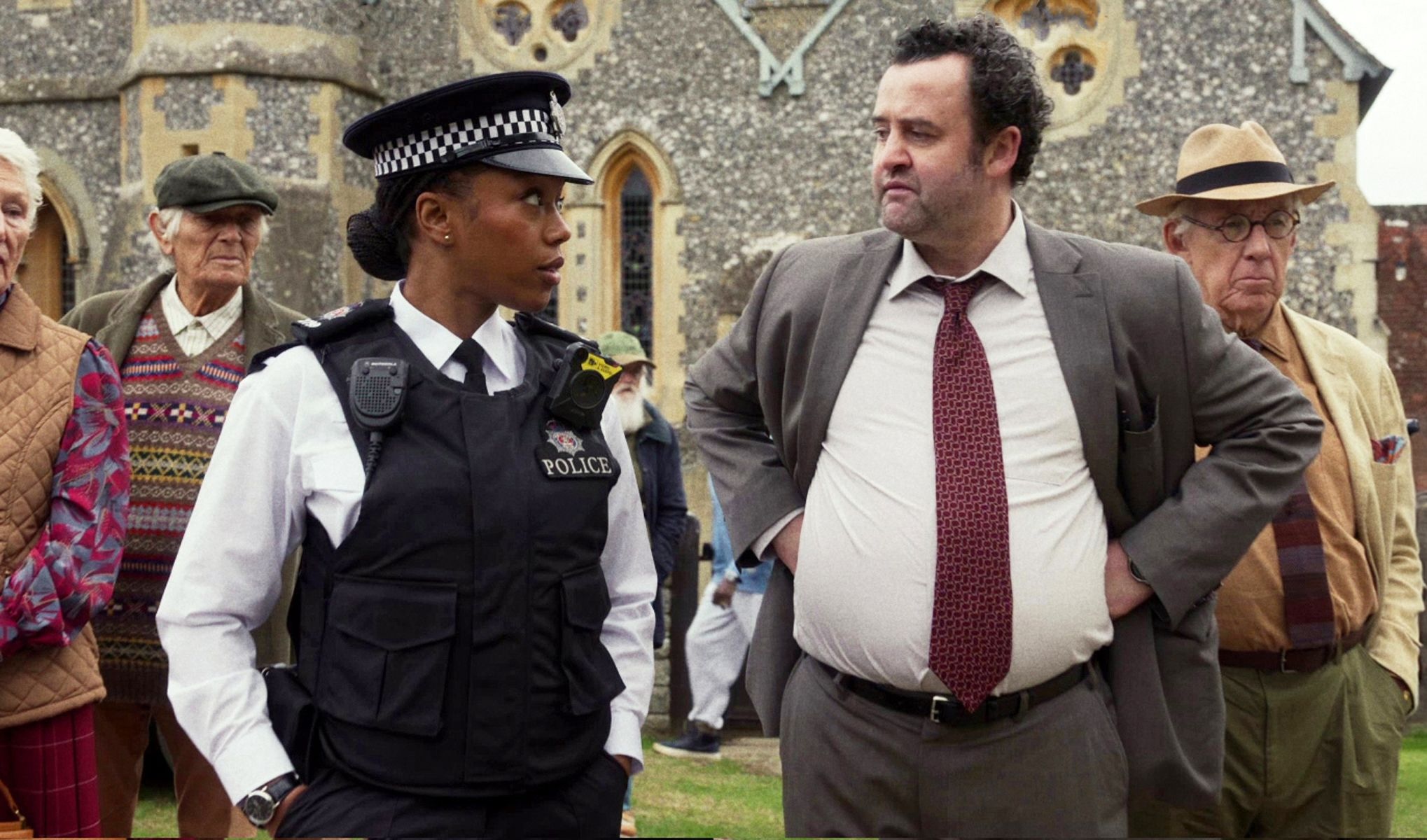
But when money-grubbing landowner, Ian Ventham (David Tennant), reveals his plans to redevelop Coopers Chase, murder is no longer confined to the past. The privileged pensioners can barely conceal their glee at having something real to get their dentures into, much to the dismay of local police officers, Chris Hudson (Daniel Mays) and Donna de Freitas (Naomi Ackie).

Amidst the lightweight sleuthing, some serious issues are raised, including people-trafficking and dementia. But these are hopelessly out of place, treated so glibly that it feels very uncomfortable. There’s some real snobbery at play here too, presumably unconscious: the working-class-man-made-good with his loud voice and tacky McMansion; the upper-class oldies with their mellow tones and oh-so-tasteful decor.

I want to find nice things to say because it’s Helen Mirren, for God’s sake. But hers isn’t even the most wasted talent – at least she’s in a lot of scenes. The wonderful Ruth Sheen barely gets a look in as Aunt Maud. (What’s the purpose of this character? She adds nothing to the plot.)

To quote a catchphrase that’ll only mean something to Gen X, here’s my suggestion: Just Switch Off Your Television Set and Go and Do Something Less Boring Instead.

2 stars

Susan Singfield

Macbeth

05/02/25

Cineworld, Edinburgh

Macbeth is a ubiquitous play. Searching back through the B&B archive, I’m not entirely surprised to find that this is the ninth time we’ve reviewed a version of Shakespeare’s celebrated tragedy and I note too that there are three other related items that reference that infamous surname in the title. It’s easy to understand why it’s such a perennial. One of the bard’s most propulsive stories, it’s a lean, mean tale of aspiration and the overriding lust for power, which – in these troubled times – seems all too relevant. This Olivier-award winning adaptation, filmed live at London’s Donmar Warehouse, features David Tennant in the title role with Cush Jumbo as the manipulative Lady M. The screening we attend is sold out.

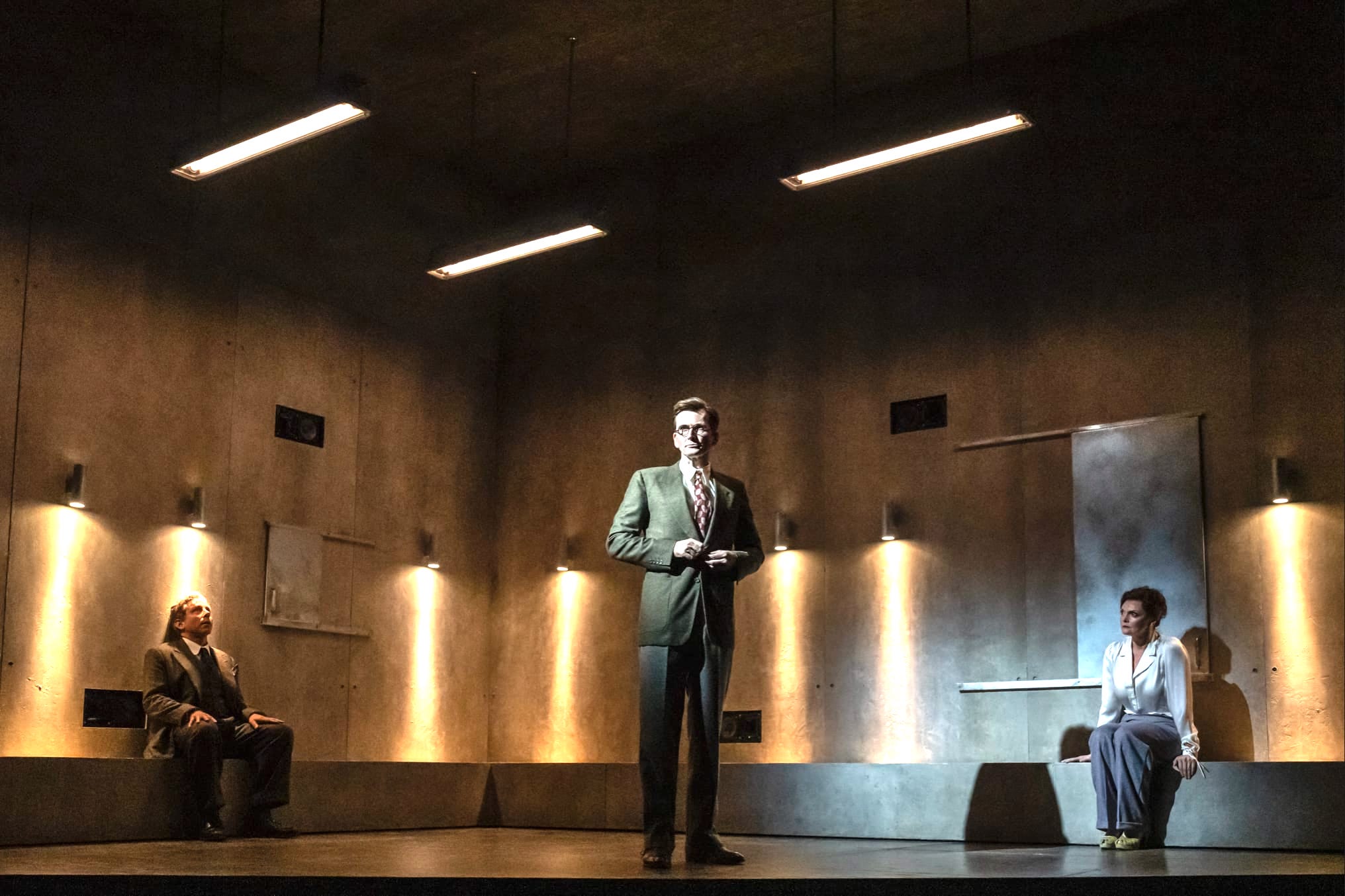
It’s a stripped-back production, freed from any issues with costuming or elaborate set design. The actors wear simple, monochrome outfits and the performance space is a stark white rectangular dais. It’s set in front of a transparent screened box, behind which other members of the cast occasionally gather, like a chorus of half-glimpsed ghosts, to comment on the action. Prominent among them is a young boy, who at one point hammers his fist repeatedly against the screen and also reappears in the midst of the final battle. His presence serves to remind me that the Macbeths have earlier lost a child – and that perhaps it is this loss that’s the driving force behind their callous bid to seize the throne and betray their former friends.

Tennant is extraordinary, speaking those familiar lines (often direct to camera, as though sharing confidential material) with such utter authority that I almost feel I’m hearing them for the first time. Jumbo is also compelling. She’s the only one here without a Scottish accent, which seems to emphasise her solitude and her distance from the other characters. Cal McCaninch is a stately Banquo, Nouff Ousellam smoulders powerfully as Macduff and it’s a delight to hear Benny Young’s cultured drawl delivering Duncan’s self-satisfied lines as he arrives at the castle where he is destined to die.

Ros Watt is a delightfully punky Malcolm and Jatinga Singh Randawa offers a rambunctious turn as the Porter. In the only scene that takes a wild swing away from what’s actually written on the page, the latter chats to members of the audience and displays all the symptoms of a man suffering from a raging hangover. It’s a gamble but it pays off. And the witches? In what might be the production’s bravest move, they are barely glimpsed in the first act, only heard in giggling off-stage asides as they arrive and depart with a flap of supernatural wings.

Gareth Fry’s sound design adds extra layers of suspense to the production (I note that the audience at the live performance all wear headphones for a truly immersive experience), while Alistair McCrae’s music offers jaunty reels, Celtic airs and, at one point, a spirited highland fling as a brief respite from that all-pervading air of menace. Director Max Webster brings all these disparate elements together to create a powerful and absorbing drama that dares to experiment with the source material. And, at the conclusion, designer Roanna Vize really does – magically – bring Birnam Wood to Dunsinane. 

The final confrontation doesn’t leave me wanting and the face-off between Macbeth and Macduff is unlike any version I’ve seen before. Of course, the only valid reason for doing this immortal story one more time is to offer audiences something new – an aim that this extraordinary production has clearly taken to its dark heart.

5 stars

Philip Caveney

Good: NT Live

28/04/23

Cameo Cinema, Edinburgh

We miss the first screening of Good due to health issues and are resigned to our fate, but happily The Cameo Cinema offers this encore screening just as we’re scratching our heads and wondering what we should see tonight.

Written by the comparatively little known C P Taylor (who tragically died soon after Good had its London premiere in 1981) this excoriating piece of theatre feels weirdly askew from the opening scene. Why has set designer, Vicki Mortimer opted to use so little of the Harold Pinter Theatre’s stage, confining the action to a narrow, wedge shaped, performance space, which only really opens up at the play’s startling conclusion?

Well, it’s this confined quality which emphasises the chilling claustrophobia of the piece, the story of a man consumed by his own hubris and his willingness to repeatedly spin his own heinous crimes as the actions of a ‘good’ person.

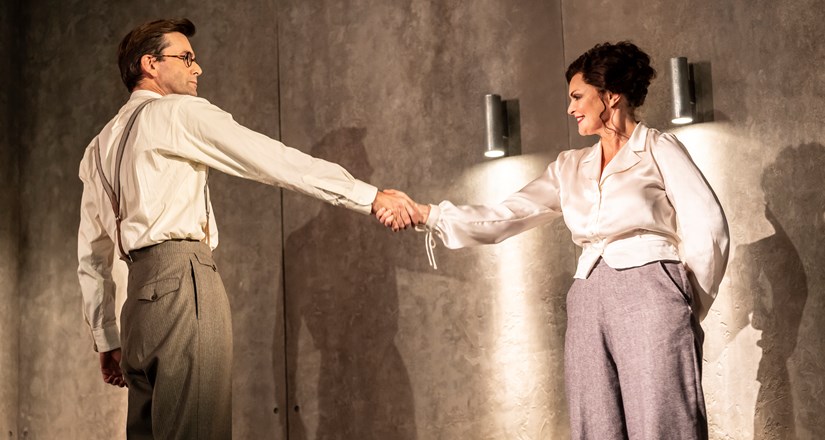
The man in question is Halder (David Tennant), a German literary professor whose published works catch the eyes of important people in the rising Nazi party, and who is invited to join their swelling ranks. But there’s an obvious problem with this suggestion: Halder’s best friend, psychiatrist Maurice (Elliot Levey), is Jewish and doesn’t see why he should be expected to hide the fact. Meanwhile, Halder is struggling to maintain a marriage to his hapless wife, Helen (Sharon Small), whilst looking after his mother, who is stricken by dementia – and he’s also starting an affair with one of his students, Anne. How is he going to square all these issues to his own satisfaction whilst proudly taking his place in the ranks of the SS? And at what point will he decide that he’s being asked to go too far?

Tennant, making his long awaited return to the West End, is incredibly assured in the complex role of Halder, switching from slyly funny to chillingly mercenary with aplomb. At one point, he even sings and dances with absolute authority, personifying the charmer with a steely inner self. Levy too is excellent, both as Maurice and in the other roles he inhabit, but for me it’s Small who really commands the stage, flicking effortlessly between her three female characters – and the persona of an alpha male SS commandant – simply by changing her voice and her posture. It’s a superbly nuanced performance that ensures I’m always fully aware of who she is embodying at any given moment.

Essentially a three-hander (although the play does feature other performers in its final stages), Good is an ambitious and original piece of theatre that makes me wonder what Taylor might have achieved if only he’d lived longer.

4 stars

Philip Caveney

Much Ado About Nothing

04/04/20

Digital Theatre

It’s the casting that initially draws us to this one. I mean, David Tennant and Catherine Tate? In a Shakespeare comedy? Intriguing, right? And here it is on Digital Theatre, filmed live at the Wyndham, London, in 2011, the perfect choice for a locked-in Saturday night.

Robert Delamere’s production cannily sets the antics in 1980s Gibraltar. Post Falklands war, there’s a celebratory air about the place with swaggering white-uniformed naval officers coming ashore to interact with the sun bathing locals. Claudio (Tom Bateman) has his sights set on Hero (Sarah McRae), whom he wishes to marry, but fellow officer Benedick (Tennant), a proud bachelor boy, is insistent that he will never ever go down the marriage path. He and the equally sarcastic Beatrice (Tate) already have a well established enmity towards each other, but when Benedick’s friends set up a scheme to convince him that Beatrice is secretly smitten by him, the couple’s adversarial history goes straight out of the window and something suspiciously like true love begins to bloom…

Much Ado About Nothing is a Shakespeare play I barely know – and let’s be honest, on the page his comedies can come across as a bit on the dull side. So this is something of a revelation – indeed, it has to be one of the funniest adaptations of the bard I can remember seeing. Most of the laughs are generated by the caustic interplay between Benedick and Beatrice – and even if Tate occasionally looks as though she’s about to ask Tennant if she’s bovvered, I have to admit that she handles her role with consummate skill. Tennant too, is superb, his comic timing impeccable. 

But it’s more than just a double act. The design is spectacular, with the regular use of a revolving stage showing us the action from a continually changing perspective. The scene where Benedick spies on his gossiping friends whilst becoming messily entangled with a decorating table is just inspired, and Beatrice too gets a similar scene where, caught up on a workman’s harness, she is hauled into the air, flailing helplessly around while her co-stars struggle to make themselves heard over the audience’s laughter.

I also love the masked disco, where the play’s characters, dressed as various 80s celebrities – Adam Ant, India Jones, Miss Piggy! –  dance around,, occasionally breaking off into little huddles to further develop the story. And yes, the story is a bewilderingly frivolous one, with characters playing complicated tricks on each other for no convincing reason, but it hardly matters. Two hours and forty one minutes whizz by like magic.

This is a superb slice of comic theatre that should please ardent Shakespearos and the lead couple’s sizeable fan bases alike. Interested parties will find it at digitaltheatre.com 

4.8 stars

Philip Caveney


Mary Queen of Scots

18/01/19

The Tudors are common parlance Chez B&B these days; since downloading the Six The Musical soundtrack, we’ve barely listened to anything else. Of course, this new film is a very different beast, but it does share a few key players, and our recently-discovered interest in the period makes us extra keen to see what’s on offer here.

What Mary Queen Of Scots has in common with Six is its telling of ‘herstory,’ with female experiences placed firmly and unapologetically in the spotlight. The perspectives belong to the women. Not just because they’re the main characters, but because the directors (Josie Rourke and Lucy Moss respectively) are women too, and so everything is reflected through this – sadly still unusual – prism.

Saoirse Ronan is Mary, and she’s every bit as impressive as you’d expect this extraordinary young actor to be. She’s strong and commanding, warm and vulnerable: the heart and heroine of this tale. Margot Robbie, as Mary’s English cousin and counterpart, has arguably the harder role: Elizabeth is less likeable, and burdened with the fact that (spoiler alert!) she has Mary imprisoned and then killed. But Robbie is more than equal to the task, imbuing the English queen with both formidable resolve and an unexpected frailty. The parallels between the two women – and the tragedy that they can not be allies – are central to the film.

The brutality of the era is clearly evoked, with bloody murders a-plenty. Thankfully, there are no extended battle sequences here (I’m a little weary of them); instead, the skirmishes are short and definitive, the armies as small as I suppose they really must have been, the power-grabs and politicking as baffling and depressing as they remain to this day.

The men might be peripheral, but they’re played with panache by such stalwarts as David Tennant (virtually unidentifable as John Knox, with his strange hat and straggly beard), Jack Lowden (as the loathsome, weak-willed Henry Darley) and Guy Pearce (playing William Cecil, chief advisor to his Neighbours stablemate, Robbie). The structural power bias is evident in the way these men succeed in out-manouevring even the redoubtable Mary, and in Elizabeth’s cannier recognition that the only way she can retain her position is by disavowing her gender, and surrendering her happiness.

A fascinating film, and – if the sold-out screening we’re at is anything to go by – one that is likely to do well. Mind you, we are in Edinburgh. And Mary is the Queen of Scots.

4.2 stars

Susan Singfield

What We Did On Our Holiday

MV5BMzY4MDc4NDYyOV5BMl5BanBnXkFtZTgwODgzMTc2MjE@._V1_SX214_AL_

4/10/14

On paper, this looked rather promising. Created by the writing team that brought us Outnumbered, it seemed to belong in that same tried-and-tested arena of harassed parents vs precocious children. Doug (David Tennant) and Abi (Rosamund Pike) are taking their three young kids up to the Scottish Highlands to visit Granddad Gordie (Billy Connolly) to celebrate his birthday, but nothing here is as straightforward as it might appear. Doug and Abi have actually separated after his infidelity with one of his students, while Granddad Gordie isn’t going to be celebrating any more birthdays, as he’s suffering from terminal cancer. So rather than upset him, everyone (kids included) is told to pretend that it’s business as usual.

The film starts well, following the established Outnumbered formula, as the two parents struggle to control their fractious offspring in a variety of picturesque locations on the long drive up to Scotland and there are plenty of laughs, expertly mined. But all too soon they arrive at their destination and we are introduced to Granddad Gordie, who unfortunately turns out to be one of those all-wise creations who wander around spouting lines that would be better placed on a series of novelty fridge magnets. On the morning of the birthday bash (an overly elaborate and expensive affair orchestrated by Doug’s pompous brother, Gavin (Ben Miller) and his depressive wife, Agnes (Amelia Bulmore), Gordie decides to take the three kids on a fishing trip and at this point, the story takes an abrupt left turn into much darker (and it has to be said, faintly unbelievable) territory. The three children take centre stage and matters aren’t helped one jot by the fact that they are considerably less appealing than their TV counterparts – the little girl in particular is profoundly irritating.

Having served up a mostly laughter-free middle section, the writers decide that what we really need to round things off is a syrupy, optimistic conclusion, which they duly deliver complete with a cliff top Highland Fling at sunset. This is a pity, because the film promised so much in its first half hour, that the dismal ending somehow rings even more hollow. Though there are decent performances from most of the adult actors, this can only count as a missed opportunity.

1.8 stars

Philip Caveney