David Greig

Glory On Earth

23/05/17

Glory on Earth, written by Linda McLean and directed by David Greig, is a refreshingly unusual piece of historical theatre. It’s the story of Mary Queen of Scots (Rona Morison) and the four meetings she held with protestant reformer, John Knox (Jamie Sives), whilst she was in virtual captivity in Holyrood Palace. To Knox, Mary was an abomination – a staunch Catholic with a genuine claim to the throne of Scotland, a country that had so recently been swept ‘pure’ by the Calvinist reformation.

Karen Tenant’s stage design eschews any conventional attempt at historical accuracy. Mary and her six female attendants (who, frustratingly for any would-be reviewer, are all called ‘Mary’ and each take on several other roles throughout the play) are dressed stylistically, in a mixture of old and new – lace ruffs and painted boots. The sets feature key elements that simply hint at architectural detail – stone arches drift silently down from above; a wooden pulpit resembling a scaffold trundles in from the wings. Moreover, the sound design utilises a mash-up of contemporary music from The Jesus & Mary Chain to the torch songs of Edith Piaf (the latter alluding to Mary’s previous role as Queen Consort of France). To add to the mix, the actors also sing some enchanting reformation psalms and occasionally even play musical instruments.

If I’m making this sound like a bit of a hodge-podge, I certainly don’t mean to. The central tenet of the tale – the clash between two styles of religion – is eloquently told. Jamie Sives’s Knox is a dour and intimidating presence, his grim expression guaranteed to take the fizz off anybody’s pint in an instant, while Morison’s Mary displays all the impatience and affectation of an eighteen year old woman caught in an impossible situation, desperately seeking a husband and trying in vain to kindle some kind of a friendship with her father’s cousin, Elizabeth. Of course, we all know where Mary’s journey ends and, as she progresses steadily towards her inevitable doom, it’s impossible not to feel sympathy for her plight.

A deceptively powerful piece, this, and one that delights in pointing out that, centuries after these events, there still exists the same constant wrangling between Catholic Europe and Protestant Britain. Those with an interest in the history of Scotland will definitely want to catch this, but there’s something here that will resonate with a wider audience than that. This is a tale about humanity, about belief, and about the impact we have on others. And it doesn’t get much more universal than that.

4 stars

Philip Caveney

Theatre Bouquets 2016

unknown-18

unknown-18

unknown-18

We’ve been lucky enough to see some amazing theatre again in 2016. Here, in order of viewing (and with the benefit of hindsight), are our favourite productions of the year.

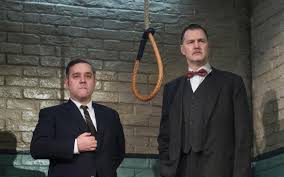
Hangmen – Wyndham’s Theatre, London

Unknown-1

An excellent start to the year’s theatrical viewing, Martin McDonagh’s play was absolutely superb: funny, frightening and thought-provoking with an outstanding central performance by David Morrissey.

The Girls – The Lowry, Salford

Gary Barlow, Tim Firth and the original Calendar Girls credit Matt Crockett

This was the biggest surprise of the year for us: on paper, it sounded a million miles away from the sort of thing we usually enjoy, and we went along reluctantly. But it was a truly delightful production – flawlessly realised.

The Merry Wives – The Lowry, Salford

image

Northern Broadsides version of The Merry Wives of Windsor was a rambunctious, irreverent take on the tale, with the inimitable Barrie Rutter clearly relishing the role of Falstaff.

I Am Thomas – Lyceum Theatre, Edinburgh

I_Am_Thomas_415x800_jpg_300x200_crop_q85

A strange and eclectic production, telling the tale of Thomas Aikenhead, the last person in Scotland to be hanged for blasphemy, this was essentially a series of vignettes and musical interludes, with an ensemble taking turns to play the eponymous role.

King Lear – Royal Exchange Theatre, Manchester

04-KING-LEAR-RET-L-R-Pepter-Lunkuse-Cordelia-Don-Warrington-King-Lear-Photo-Jonathan-Keenan

Michael Buffong’s King Lear was a tour de force, a gimmick-free yet undeniably modern production. Don Warrington was well-cast in the central role, but it was Pepter Lunkuse’s Cordelia who really stood out for us. She’s definitely one to watch!

Stowaway – Home, Manchester

Unknown

Analogue Theatre’s troubling tale of a stowaway falling from a flying aeroplane and landing in the car park of a DIY store was fascinating, depicting a moment where worlds collide and understandings begin to take root. A thought-provoking, political play.

Royal Vauxhall – Underbelly Med Quad, Edinburgh

2016ROYALVA-APJ-300

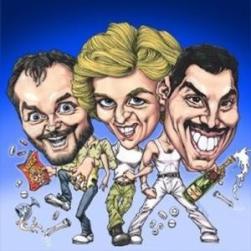
A quirky and irreverent musical, telling the true story of when Freddie Mercury and Kenny Everett dressed Princess Diana in drag and took her to the Royal Vauxhall Tavern in London for a night out, incognito. We loved this production.

Wonderman – Underbelly Potterrow, Edinburgh

Wonderman_edinburgh_FOURSHEETS-quartersize_final

Based on the short stories of Roald Dahl – and incorporating a true incident from his eventful life – Gagglebabble’s collaboration with the National Theatre of Wales was a sprightly mix of drama and music with a deliciously dark heart.

Cracked Tiles – Spotlites, Edinburgh

2016CRACKED_AVH

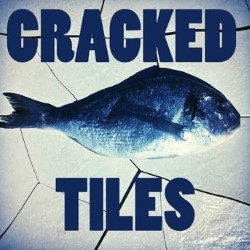
This beautifully crafted monologue, written and performed by Lorenzo Novani, was the downbeat tale of a young man who inherits a Glasgow fish and chip shop from his father Aldo. Novani was quite staggering as Riccardo.

Dear Home Office – Underbelly Med Quad, Edinburgh

2016DEARHOM_AXD

This was the story of unaccompanied minors applying for asylum in the UK, performed with touching vulnerability by eight refugee boys. The play was an amalgamation of the performers’ own experiences, blended with fictional accounts. A raw and truthful exposé.

The Suppliant Women – Lyceum Theatre, Edinburgh

29676962992_8e7a020135_b

It’s a rare thing indeed when you go into a theatre and are treated to something unique – but that is the word that kept coming to us, as we sat entranced in the stalls of The Lyceum, watching David Greig’s production of The Suppliant Women. Truly brilliant.

Grain in the Blood – Traverse Theatre, Edinburgh

unknown-2

A real one-off, this was a stark, unnerving chiller, at once contemporary and classical, with dialogue that was taut and ultra-modern in style, all fragments and silences and unfinished thoughts. This was a complex, angular, unwieldy play – a fascinating watch.

Jack and the Beanstalk – King’s Theatre, Edinburgh

cfk-panto-beanstalk-header

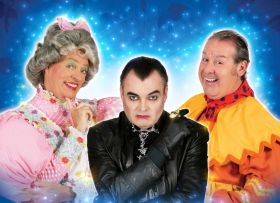
By far the best panto we have ever seen, this was a standout production, with fantastic performances from King’s Theatre regulars Allan Stewart, Andy Gray and Grant Stott. It brought the year to a celebratory end.

Susan Singfield

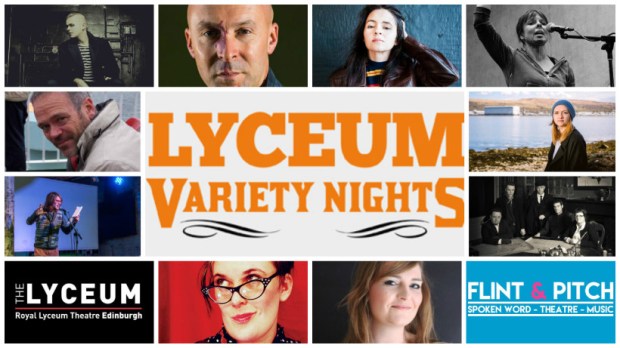
Lyceum Variety Night

final-lyceum-collage

06/11/16

Lyceum Theatre, Edinburgh

David Greig is not all talk. This is a man who walks the walk: he says he believes in the democratisation of theatre, then translates this belief into a diverse programme that truly opens those ‘elitist’ doors. First we had The Suppliant Women, with its chorus of fifty community volunteers. And now we have the Lyceum’s first ever variety night, bringing in a range of performers who wouldn’t normally appear in a venue such as this.

Organised and compèred by Jenny Lindsay of Flint & Pitch (ably assisted by Siân Bevan), this is an eclectic mix – but it’s all high quality, and well-worth the effort of venturing out on this cold Sunday evening.

First up is A New International, a seven-piece band with a lively folkish feel. The violin is glorious, and the singer has a real presence. They’re truly energising, and set the evening’s tone.

Christopher Brookmyre is up next, and he’s really very good indeed, reading a short story set in a Glasgow park about an open air production of A Midsummer Night’s Dream. It’s spellbinding and hilarious; I’d have come here just for this.

He’s followed by Emma Pollock, with three beautifully plaintive tunes. She clearly has a real fan base in the audience, and this is an assured set.

Jenna Watt performs an excerpt from her award-winning spoken word show, Faslane, about her complex relationship with nuclear weapons. Her delivery is soft and understated, but she’s telling us hard truths. It’s a fascinating piece and makes me want to see the full version.

Andrew Greig and Leo Glaister are a stepfather and son, and their act is hard to define, producing something that’s somewhere between music and spoken word. But it’s never less than engaging, and it’s witty, nuanced stuff.

Luke Wright is probably my favourite act of the night; he’s a charismatic performance poet, and his poems are both funny and challenging. The one about Iain Duncan Smith (using no vowels apart from ‘i’) is very clever indeed, and earns rapturous applause for its audacity.

Rachel Amey is another poet, and also a highlight of the evening. She exudes a quiet dignity, a serious sense of purpose that makes her verse compelling. There’s an honesty and integrity to her work, that leaves us pondering her ideas long after she has left the stage.

Proceedings are wound up with  A New International, performing three more songs, confirming our initial impression that they’re a band to watch out for.

Bravo, Lyceum! Bravo, Flint & Pitch and David Greig! This evening was a real triumph, and we’ll definitely be back for the next one.

4.6 stars

Susan Singfield

The Suppliant Women

10850529676962992_8e7a020135_b

Royal Lyceum, Edinburgh

05/10/16

It’s a rare thing indeed when you go into a theatre and are treated to something unique – but that is the word that kept coming to me, as I sat entranced in the stalls of The Lyceum, watching David Greig’s production of The Suppliant Women. Written by Aeschylus two thousand, five hundred years ago, this wasn’t the usual contemporary adaptation of classic Greek theatre, but an attempt (costumes aside) to present it pretty much as it must have been performed in its original incarnation, complete with libations of wine and milk, choral odes and synchronised movement.

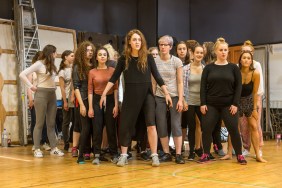
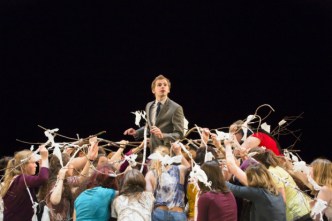
Add to this the fact that the cast of more than fifty performers is composed mostly of amateurs and you might have some notion of what an ambitious production this is, but you certainly won’t be prepared for the skill and grace with which the performers deliver their roles. Here’s a chorus, speaking as one, where you can hear every single word – a chorus that moves around the crowded stage with uncanny precision. They have only been rehearsing this since early September, yet their dedication shows at every turn.

The story may be thousands of years old and yet it’s remarkably prescient for our troubled times. The women of the title have fled their native Egypt where they are being forced to marry their cousins and, accompanied by their father, Danaaus (Omar Ebrahim), they arrive in Argos, seeking asylum. They take shelter in the temple of Zeus where they are met by The King (Oscar Batterham) who feels conflicted about their presence – to turn them away will offend Zeus, but the King is also aware that the local populace may take against these women, who are after all, migrants – and what if their presence here should cause a war between Argos and Egypt?

Skilfully directed by Ramin Grey, with musical accompaniment of percussion and Aulos (a traditional double-reeded instrument), this is a feast for the senses. The performance area is a bare breeze block paved space, that utilises the whole depth of the Lyceum’s curtainless stage, but there’s wonderfully atmospheric lighting (a scene set in near darkness where every woman carries a lantern is particularly effective) and plaudits must go to chorus leader, Gemma May, who manages to deliver all of her potentially tongue-twisting lines with absolute authority. If the idea of watching traditional Greek drama leaves you cold, don’t be misled – this is a riveting slice of theatre that deserves a wide audience.

Go, enjoy. There may not be a show like this one for another two thousand, five hundred years.

4.8 stars

Philip Caveney