David Cronenberg

The Shrouds

07/07/25

Filmhouse, Edinburgh

I first saw a David Cronenberg film way back in 1975. His low budget debut, Shivers, announced the arrival of a precocious new cinematic talent and, over the decades, the Canadian auteur has pretty much invented and shaped the concept of body horror. Films like The Brood, Videodrome and Scanners felt like one powerful punch after another – and I was always first in the queue to see them.

But somewhere down the years, I lost touch with the man’s work. Checking back through my reviews, I’m surprised to see that the last film of his I saw in the cinema was Maps to the Stars, and that I noted in the review that it was ‘not one of his best efforts.’ The recent re-opening of Filmhouse, after years of shuttered doors, seems the perfect opportunity to view The Shrouds, and it’s lovely to recline in one of the venue’s extra-comfortable seats and watch the film in razor-sharp definition on the big screen.

But if I am hoping to rekindle my old passion for Cronenberg’s work, I am somewhat disappointed.

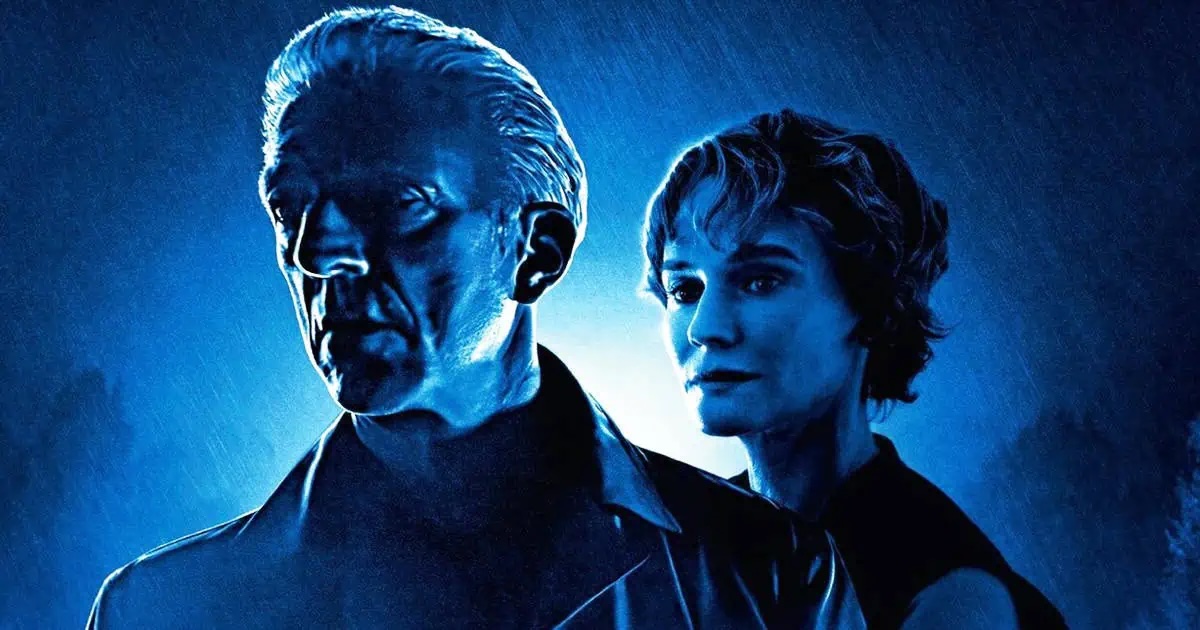
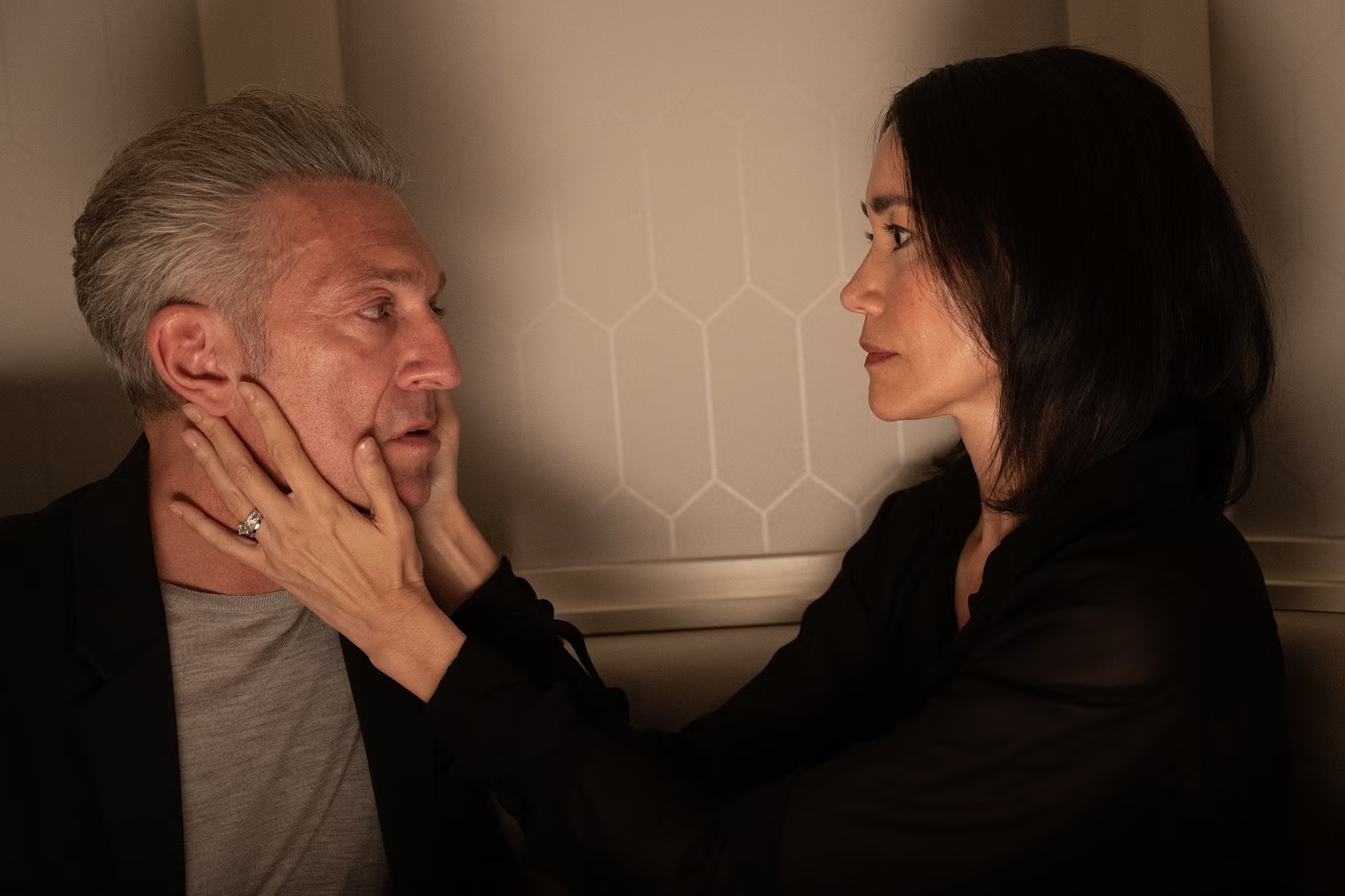
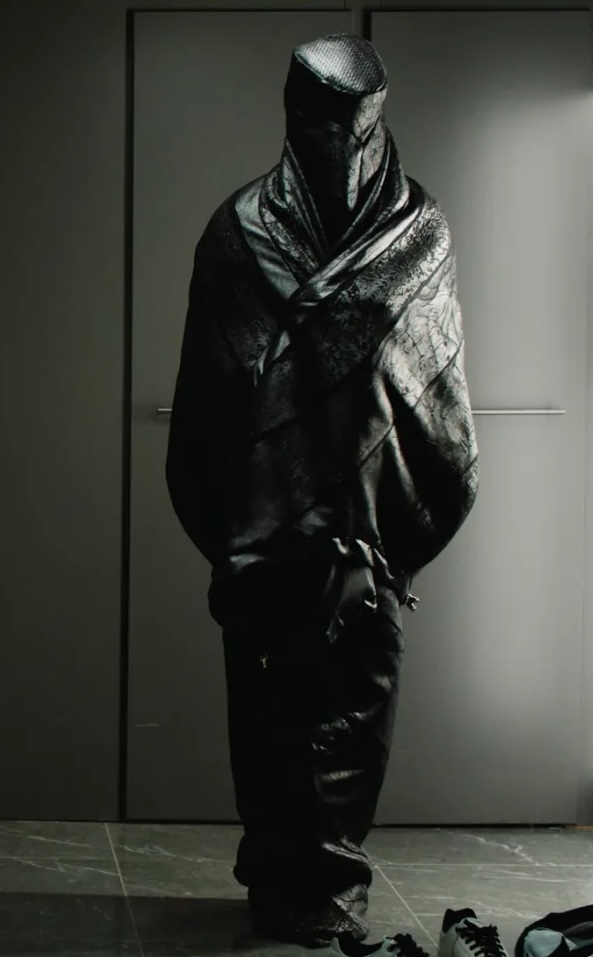
We first meet Karsh Relikh (Vincent Cassel) on a blind date with Myrna Shovlin (Jennifer Dale). He’s taken her to a posh restaurant to eat and, as they dine, he casually announces that he owns the place and, what’s more, he also owns the adjoining graveyard. He goes on to explain that he is the inventor of the titular shrouds, burial robes that contain hundreds of tiny cameras. With the aid of a screen on the gravestone – and a handy phone app – the bereaved can watch the gradual disintegration of the deceased. His company, Gravetech is establishing other souped-up burial sites across the globe.

Karsh suggests that perhaps Myrna would like to pop out after they’ve finished eating and have a look at Becca, Karsh’s recently deceased wife, to get an overview of her gradual disintegration? Strangely enough, Myrna isn’t keen on the idea. (Spoiler: there’s no second date.)

As the film continues, we learn that Becca has gradually succumbed to cancer and that her doctor had to remove one of her arms and a breast before she finally died. Karsh tells this to Becca’s twin sister, Terri (Diane Kruger), whose reaction to the news is… well, let’s just say it’s not what you might expect. Karsh also begins to develop a relationship with Soo-Min (Sandrine Holt), a blind woman, who seems to know more about him than she really should and is determined to get him into bed.

A slow-paced meditation on death and grief, it’s no great surprise to learn that the story has been inspired by the real-life demise of Cronenberg’s wife; and viewers can hardly fail to notice that tall, skinny Cassell with his snow white hair and perfectly-tailored suits is a dead ringer (no pun intended) for the director himself. Cronenberg has acted in quite a few films but seems to have drawn the line here, sensing perhaps that he’s already uncomfortably close to the material.

Both Cassel and Kruger give this their all but, apart from some decidedly dark humour, the funereal pace of proceedings and the general unpleasantness of the storyline serve to work against it. And yes, I appreciate it’s a bit rich complaining about unpleasantness in a David Cronenberg movie, but I find myself longing for a bit of the old-school shock-horror that used to be his trademark. If there’s a major issue here, it’s that everything is too polite, too considered, too… tasteful?

There’s a lot of emphasis on dreams and a blurring of the lines between what might be nightmares and what’s actually happening, but at times I feel confused by what is (or isn’t) real. Most damning of all in my eyes is the fact that the film’s ending leaves everything muddled. I’m genuinely surprised when the closing credits come up.

I take no pleasure in giving this film such a critical mauling. As I’ve already said, Cronenberg has given me tons of grisly entertainment over the decades, while recent films like The Substance show that his influence is still out there. But sadly, The Shrouds leaves me as cold as a Gravetech corpse.

2.8 stars

Philip Caveney

Queer

19/12/24

Cineworld, Edinburgh

The writing of William Burroughs is notoriously hard to film. (David Cronenberg came closest with The Naked Lunch in 1991.) Now Luca Guadagnino chances his arm with this adaptation of Burroughs’ 1985 novella, a belated sequel to his most celebrated novel, Junky. Queer, as adapted by Justin Kuritzikes, deviates dramatically from its source material in its second half and heads off in a startling new direction.

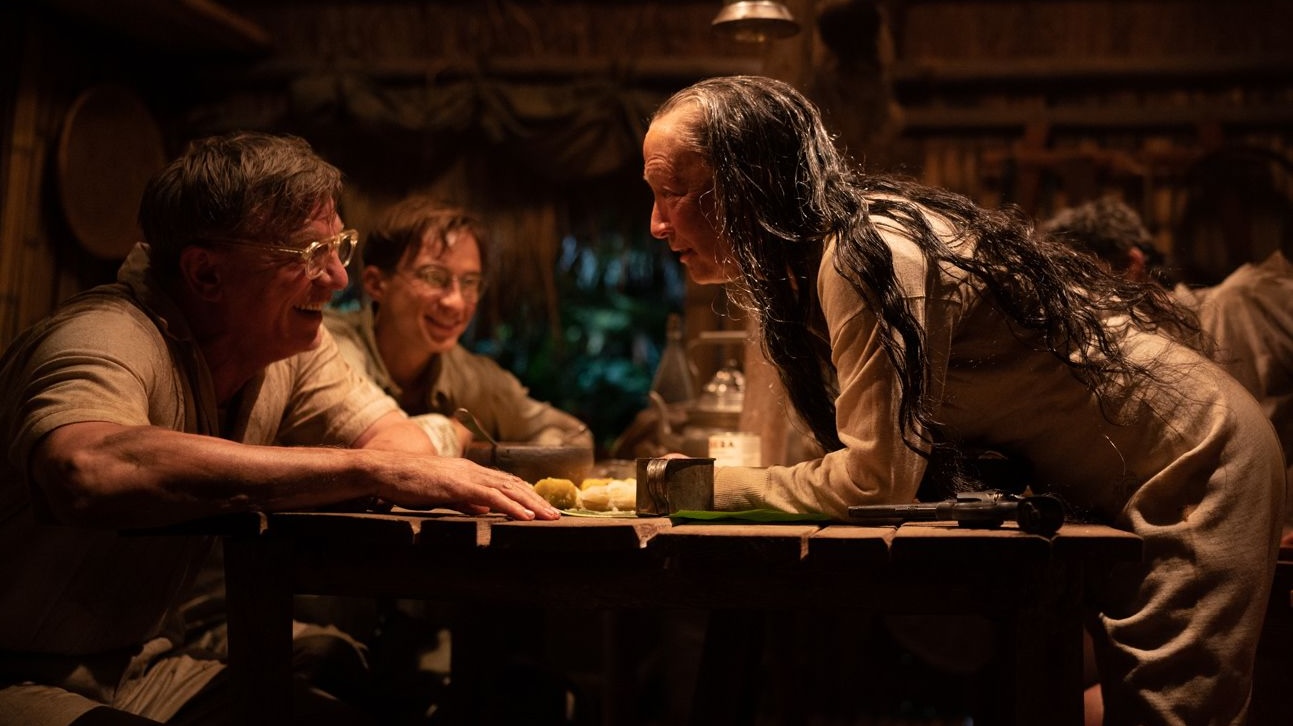
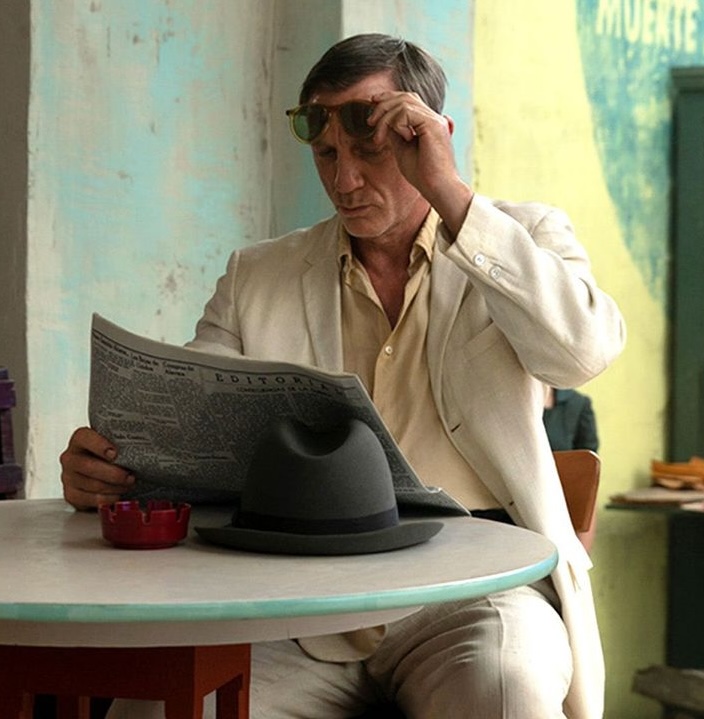
Daniel Craig, who seems determined to move as far away from his Bond persona as is humanly possible, plays Lee, a writer (but we never actually see him practising his craft). Craig does give the role his best endeavour, though it must be said it’s hard to believe that anyone could maintain such a buff physique on Lee’s daily diet of mescal, heroin and endless Camel cigarettes. He wanders the streets of Mexico City – which for the purposes of this film has been recreated in Rome’s Cinecita studios – and occasionally hires whichever young man catches his eye for rough sex in a sleazy hotel. But when his gaze falls on handsome young American, Eugene Allerton (Drew Starkey), he becomes hopelessly smitten and spends every waking hour attempting to get him into the sack.

Eventually, he succeeds in this mission but thereafter, Allerton treats him with such cool indifference that Lee becomes determined to learn more about him, so in the film’s second half, the duo set off to the jungles of Ecuador in search of a fabled drug called ayahuasca which is reputed to endow the user with telepathic powers…

Guadagnino is certainly an industrious filmmaker and I never know where he’ll go next. He’s already released the brilliant Challengers this year and I usually enjoy his work, but for me, he is prone to the occasional misstep. Suspiria felt puffed up with its own self-importance and Queer falls into that same category, a film that initially feels full of promise but ultimately delivers very little. Yes, it captures Burroughs’ seedy, nihilistic worldview, but like the source material, it’s strangely distancing and lacking in jeopardy and, frankly, none of the characters have qualities that an audience can root for – unless perhaps you count Jason Schwartzman’s fleeting appearance as Joe, Lee’s occasional drinking companion, who keeps being robbed by the young locals he sleeps with.

Lesley Manviile makes a late (almost unrecognisable) appearance as the feral, jungle-dwelling scientist, Dr Cotter, an expert in the aforementioned hallucinogen, and she helps Lee to achieve his goal of finding his inner self – but by this point I am already becoming uncomfortably aware of the film’s lengthy running time.

In its closing stages, Queer mostly feels uncomfortably reminiscent of Kubrik’s 2001: A Space Oddysey, which is not something I expected to say. And yes, it’s fine to refer to one of the more notorious episodes of Burroughs’ life, but to do so twice feels suspiciously like overkill. Kudos to Craig and Starkey who give this everything they have but, in the end, I just don’t care enough about what I’m watching to make this feel worth the effort.

2.8 stars

Philip Caveney

The Substance

21/09/24

Cineworld, Edinburgh

Every once in a while, a film opens with a sequence so striking that the viewer becomes instantly aware that they are in the presence of a powerful new voice in cinema. The Substance is a perfect case in point. In close-up, an egg is injected with something that causes the yolk to spilt into two. Then we watch as a pair of workmen instal a new star on Hollywood’s Walk of Fame – and, in an ensuing time-lapse, we see that star deteriorating over the decades until it is a cracked, grubby version of its former self, suffering the final indignity of having a burger and fries spilled on it.

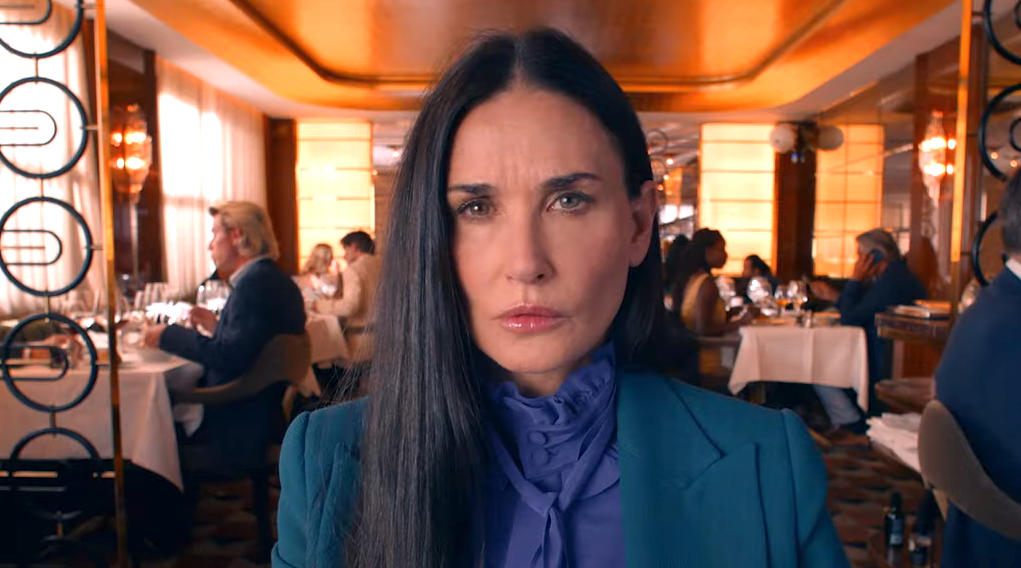
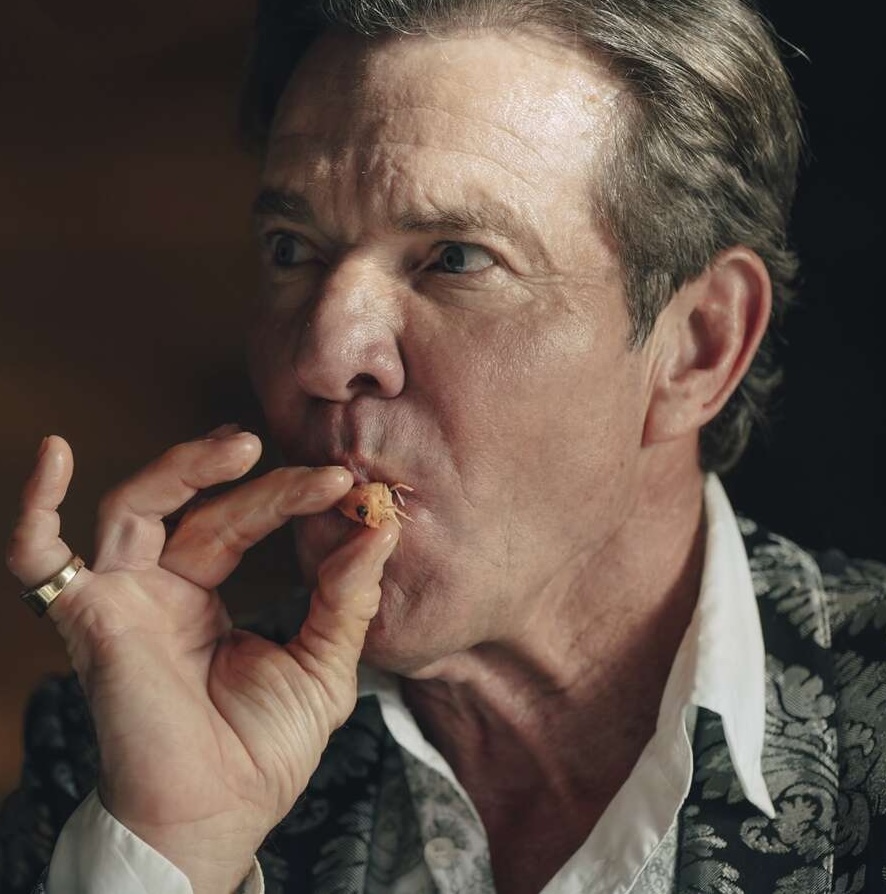
The star belongs to Elizabeth Sparkle (Demi Moore), once a bona-fide movie star, but now the leading light in the world of TV physical fitness shows. She’s fast approaching sixty and still looks great, working hard to keep her physique as she needs it to be. But her world is rocked when she overhears her toxic producer, Harvey (Dennis Quaid), talking on the phone, announcing that Elizabeth is now ‘too old’ for her role and that he wants a replacement as soon as possible – somebody younger.

Then, after a car crash (from which Elizabeth emerges unscathed), a handsome young hospital assistant slips her a note, alerting her to the existence of the titular drug, which promises to release a fresh new version of the user’s self. Like most Faustian deals, it comes with some very strict rules (bend them at your peril) but, in a shockingly visceral sequence, ‘Sue’ (Margaret Qualley) is born.

Now the two women must learn to co-exist, each one spending a week in the real world, while the other sleeps and regenerates. And of course, it’s all doomed to go horribly wrong…

This sophomore project from writer/director Coralie Fargeat – I have yet to see her debut film, RevengeThe Substance plays like a fable, a weird Grimms’ fairytale for the modern age. There are shades of The Picture of Dorian Gray here, allusions to Snow White and her stepmother’s ‘Mirror Mirror’ mantra, and several visual echoes of classic films like The Shining and Carrie. What’s more, the astounding practical makeup effects will remind many older film fans of early David Cronenberg and Brian Yuzna – though the eye-popping splatter sequences used here make movies like The Brood and Society look positively restrained by comparison.

But this is so much more than imitation. The Substance is an adept and powerful meditation on the subject of ageing and the ways in which women are constantly shackled and devalued by it – and how we all fall into the trap of enabling this sad state of affairs.

Moore is extraordinary in this film, delivering what might just be her finest screen performance (certainly her most unfettered), while Qualley makes the perfect foil. And Quaid, who I haven’t seen onscreen in quite a while, is gloriously, revoltingly odious here, making even the act of eating seafood a stomach-churning spectacle.

But it’s Fargeat who really deserves all the accolades. The Substance is surely one of the most provocative and affecting films of the year. I’m already excited to see where she will go next. But a word of warning: this won’t be for everyone. Those who shrink from body horror, blood and nudity are going to find plenty here to trigger them, particularly in the harrowing final stages, where Fargeat keeps pushing the gory imagery as far it can possibly go.

And then, she returns to that Hollywood star, and ties everything up in one delightful, blood-spattered package. If this sounds like your cup of haemoglobin, be sure to watch it on the big screen.

5 stars

Philip Caveney

Maps To The Stars

MV5BMTcxNDQwMjY0NV5BMl5BanBnXkFtZTgwOTgwNzE0MjE@._V1_SY317_CR0,0,214,317_AL_

26/09/14

David Cronenberg takes us on a guided tour to the dark heart of Hollywood, showing us elements of that city that the tour guides would certainly want to steer clear of. Along the way, we are introduced to a set of characters who are all pretty repellent in one way or another. Indeed, in the hands of a lesser director, this film would have struggled to hold the attention of an audience. But Cronenberg guides it all so expertly, the result is horribly compelling.

Agatha (Mia Wasikowska) has been badly burned in a fire in her childhood, but arrives in Hollywood full of hope for the future and looking for work. She hooks up with handsome limousine driver, Jerome (Robert Pattison), telling him that she has ‘become friends on the internet’ with Carrie Fisher (bizarrely playing herself). Fisher recommends Agatha as personal assistant to Havana Segrand, (Julianne Moore) a shallow, self-obsessed actress, currently chasing a role in what she hopes will be her ‘comeback’ movie, playing her own mother (herself a famous actress who died in a drowning) in a biopic of her life. (Weird enough yet? Stay tuned, it gets even stranger).

Benjie Weiss (Evan Bird) is a teenage phenomenon, star of the ‘Bad Babysitter’ franchise (think McCaulay Culkin, but with much more attitude) who has experienced a few problems in his childhood, while his father, Dr Stafford Weiss (John Cusack) is a celebrity therapist, whose patients include Havana Segrand. And Benjies Mother, Christina (Olivia Williams) is just a strung-out mess.

It’s evident from the very beginning that this isn’t going to end particularly well for anybody and Cronenberg doesn’t disappoint. Moore’s creation is a particular delight – snide, venal, happy to issue orders to Agatha whilst taking a dump, she is gloriously repulsive and must be a contender for yet another Oscar nomination with this. While it might not be quite up there with the director’s best efforts, it’s nonetheless entertaining stuff, well worth seeking out.

4 stars

Philip Caveney