Cineworld

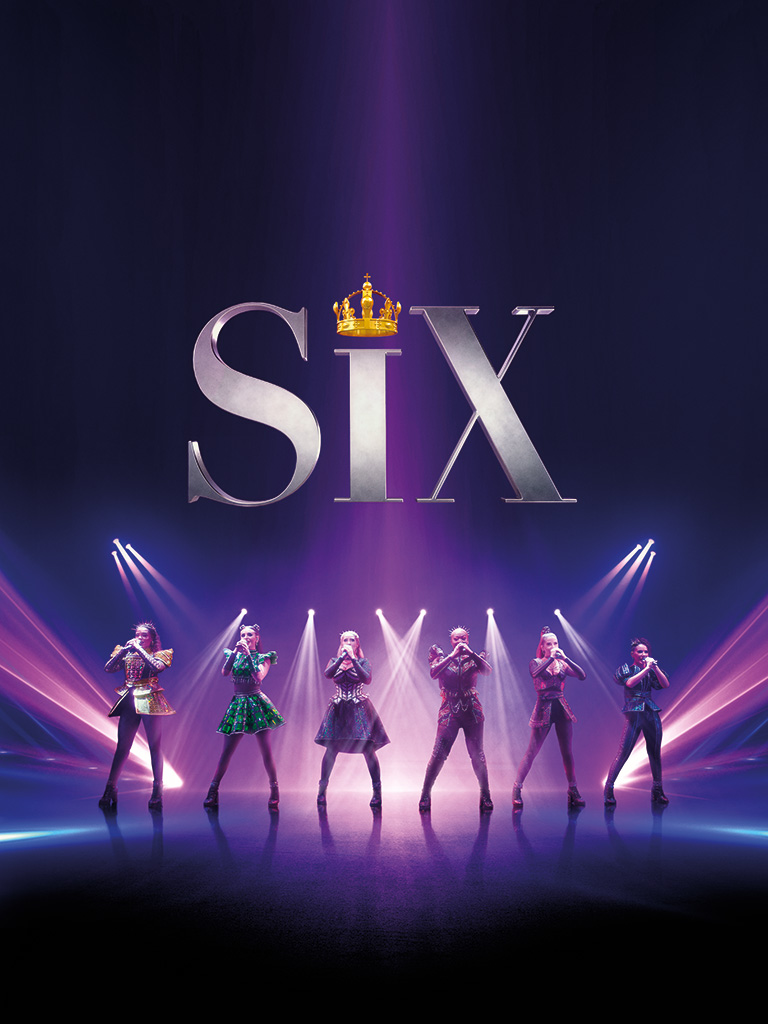
SIX The Musical Live!

27/04/25

Cineworld, Edinburgh

We first saw SIX The Musical in 2018 on its triumphant return to the Edinburgh Fringe. A year earlier, as a bare-bones student production, it had garnered a lot of attention. Now it was back with a big budget and a lot of buzz. We duly went along to the purple upside-down cow tent dominating George Square Gardens (AKA the Udderbelly) and immediately understood what all the fuss was about. With its high-octane energy and witty lyrics, this re-writing of herstory was bursting with vim and invention. Afterwards, we bought the album and listened to it on repeat.

We saw it a second time when it came to the Festival Theatre on tour, now with a different cast. The production was as compelling as ever – but those Udderbelly Queens will always reign as far as we’re concerned.

So we’re delighted to see that an original-cast reunion performance has been filmed; what’s more, it’s included in our Cineworld Unlimited plan. What better way to spend a Sunday morning than engaging in a little Fringe-nostalgia, and trying to suppress the urge to sing along with some of our favourite songs?

It’s astonishing to think that Lucy Moss and Toby Marlow were still at uni when they wrote this juggernaut, which now boasts more than a thousand performances both in the West End and on Broadway, to say nothing of its wider global reach. Their combined talent is truly awesome and, directed by Liz Clare, the musical absolutely deserves its huge success.

The conceit is simple: each of Horrid Henry’s wives thinks she’s the most historically important. Unable to come to a consensus, they decide to battle it out via the medium of song, so that the audience can judge who’s suffered the most and is therefore the most deserving. It’s hardly a spoiler to reveal that, in this feminist reframing, they end up setting their differences aside and embracing their sisterhood. After all, together they amount to more than just one word in a stupid rhyme, right? Combined, they’re the main reason anyone remembers Henry at all.

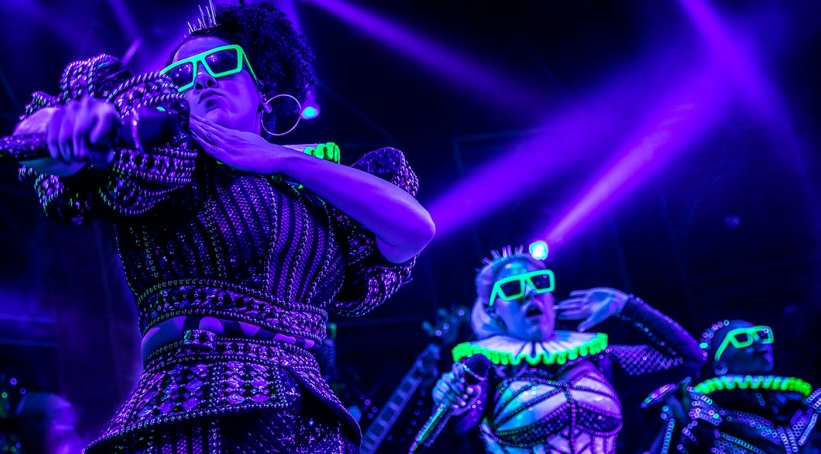
They sing in herstorical order: Jarneia Richard-Noel (Catherine of Aragon – divorced), Millie O’Connell (Anne Boleyn – beheaded), Natalie Paris (Jane Seymour – died), Alexia McIntosh (Anne of Cleves – divorced), Aimie Atkinson (Katherine Howard – beheaded) and Maiya Quansah-Breed (Catherine Parr – survived). The songs are wonderfully distinct, incorporating Latin-American-tinged funk, a plaintive ballad and thumping Teutonic techno. Each Queen earns every minute of her time on the throne.

For anyone who hasn’t seen it, grab the chance while you can: this version, filmed live at London’s Vaudeville Theatre, comes with a précis of the production’s journey, as well as a pre-show cast interview, and has several showings a day in multiplexes this week. You’d be hard pressed to find a more dynamic and entertaining group of dead women to spend your time with.

5 stars

Susan Singfield
Drop

18/04/25

Cineworld, Edinburgh

I’m not at all sure about Drop at first. It begins with a woman trying to escape a brutal attack from a violent man, the camera lingering on her battered face, so I’m worried it’s going to tread the ‘female suffering as spectacle’ path – and that, therefore, I’ll hate it. Thankfully, this approach is limited to the opening scene, and things quickly take a turn for the better.

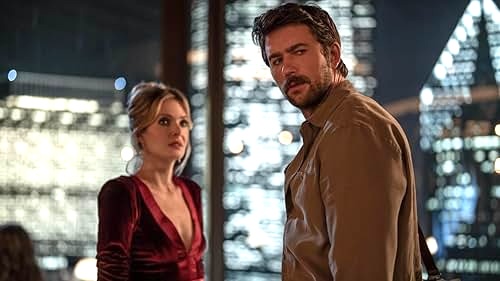
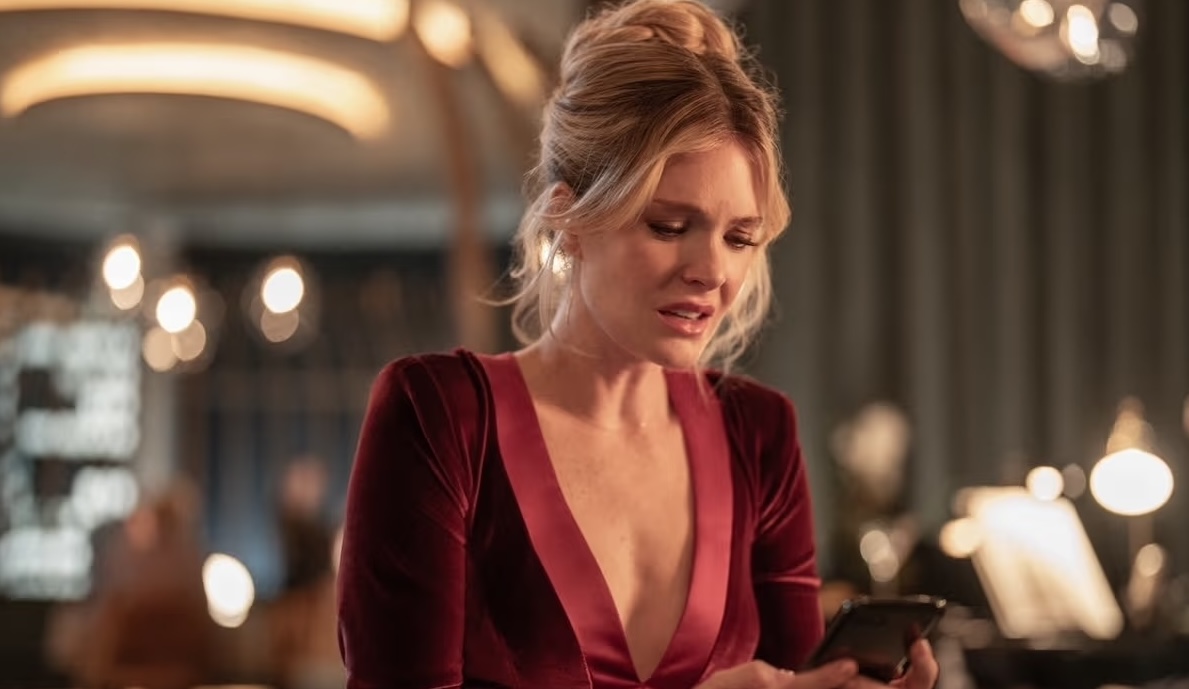
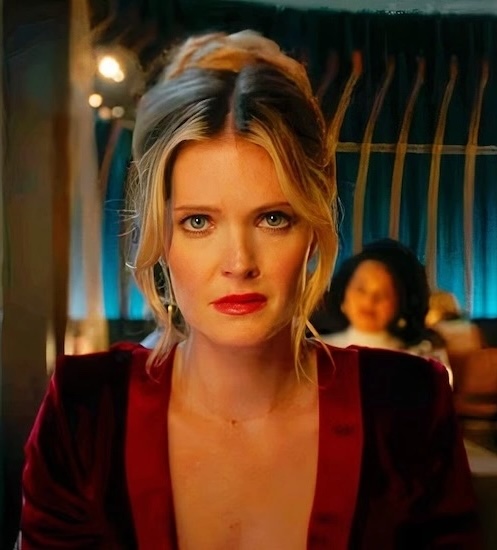
The woman, Violet (Meghann Fahy), is a psychotherapist, specialising in survivors of domestic abuse. She knows what they’ve endured because she’s been there too. Since her ex’s death, dating hasn’t exactly been her priority: she’s been focusing on raising her son, Toby (Jacob Robinson), and building her career. But her sister, Jen (Violett Beane), thinks it’s time that Violet had some fun, and persuades her to meet up with the guy she’s been chatting to via social media. He seems nice, and Jen’ll babysit Toby. What’s the worst that can happen?

Henry (Brandon Sklenar) is almost too good to be true. He’s handsome, charming and easy to talk to. Sure, the fancy restaurant he’s suggested for their date is situated on the top floor of a soaring skyscraper, but how is he supposed to know that Violet’s afraid of heights? Palate has an excellent reputation and a lovely atmosphere. Surely this is the start of something promising…

But then Violet begins to receive mysterious ‘digi-drops’ (airdrops), which gradually grow more threatening in tone. Digi-drops can only be sent within a fifty-metre radius, so she knows they’re coming from within the restaurant. But, of course, there are countless people glued to their phones; how can she identify who’s responsible? And anyway, that’s soon the least of her worries because, before she knows it, she’s being instructed to murder her date – and, if she refuses, her tormenter says he will kill her son.

If the premise sounds preposterous, that’s because it is, but the script – by Jillian Jacobs and Chris Roach – is genuinely thrilling, the tension ramped up with each passing minute. Fahy convinces as the desperate woman, fighting an unseen enemy with everything she’s got, and the plot is twisty, turny and delightfully unpredictable. Indeed, under Christopher Landon’s direction, Drop exhibits as much sophistication as Palate‘s Michelin-starred dishes – until we reach the final scenes, where ‘bold’ segues into ‘bonkers’ and ‘believability’ flies out of the smashed window.

In the end, the good outweighs the bad, and I leave the cinema more than satisfied by this exciting whodunnit with its appealing central duo and intriguing cast of suspects.

4 stars

Susan Singfield

The Last Showgirl

02/03/25

Cineworld, Edinburgh

I haven’t seen any of Pamela Anderson’s previous work (Baywatch never appealed) so my knowledge of her is limited to three headline facts: red swimsuit, sex tapes and – recently – no make-up. I’m not surprised that this reductive list doesn’t do the woman justice, but I am impressed by her nuanced performance in Gia Coppola’s latest film.

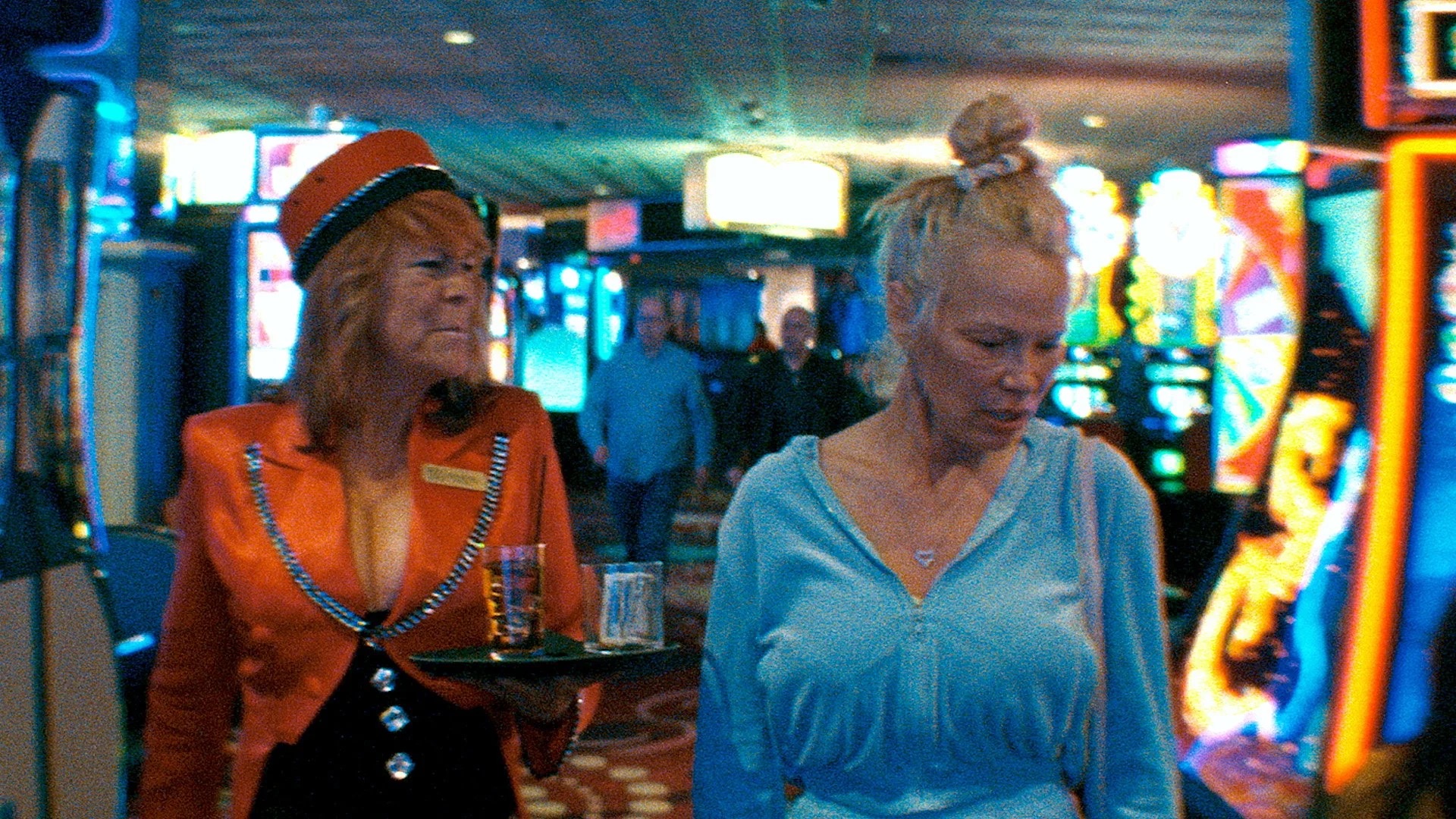
Anderson is Shelly, the titular last showgirl, still strutting her stuff in a Vegas casino. The clock is ticking, both for Shelly and the show itself. They’re both past their sell-by dates, and they’re being pushed aside for newer, brighter, fresher fare. But the fifty-seven-year-old has devoted her whole life to Le Razzle Dazzle and she doesn’t know who she is without it. News of the show’s impending closure is utterly devastating.

The sacrifices Shelly has made are huge. For more than thirty years, she has placed this job before her marriage, her security, even before her daughter, Hannah (Billie Lourd). But it turns out her bosses owe her nothing in return: no pension, no severance pay, no training for a different job. And, this being the USA, she won’t even have any health insurance when the curtain falls for the final time. What has it all been for?

Kate Gersten’s screenplay is deceptively simple, a layering of vignettes that slowly build to something quite profound. We already know how vampiric the industry is, sucking the last drop of blood from its initially willing victims before callously discarding them and calling, “Next!” Here, we see what happens to the husks it leaves behind.

At its heart, The Last Showgirl is a film about delusion, about the myths we tell ourselves to justify our lives. Shelly clings to the idea that Le Razzle Dazzle is a cut above, a Parisian-style extravaganza of glamour and elegance. But when Hannah sees the show, she bursts her mom’s balloon. “I’d hoped it would be worth it,” she says, before eviscerating Shelly’s dream, denouncing it as tawdry and outmoded, a nude show like any other – nothing special at all.

And Shelly’s not the only one. Her old friend Annette (Jamie Lee Curtis) gave up dancing long ago, and claims to be happy working as a hostess on a casino floor. But she is sent home whenever the place is quiet, her boss favouring her younger colleagues. No wonder she drinks; no wonder she gambles. Jodie (Kiernan Shipka) is only nineteen, but she’s already starting to realise the costs of pursuing her art, as her family disown her. Meanwhile, Eddie (Dave Bautista) is immune to the devastation. He’s a nice guy, seemingly quiet and kind, but he’s not at the mercy of a sexist world. He’ll be kept on to do the lighting for the next batch of sexy young women who come to the venue to perform.

The Last Showgirl is – ironically – an unshowy film. The social commentary is sharp but it’s cleverly-cloaked; the characters bold but the performances restrained. There’s a lot going on beneath the rhinestones and feathers.

4 stars

Susan Singfield

A Real Pain

12/01/25

Cineworld, Edinburgh

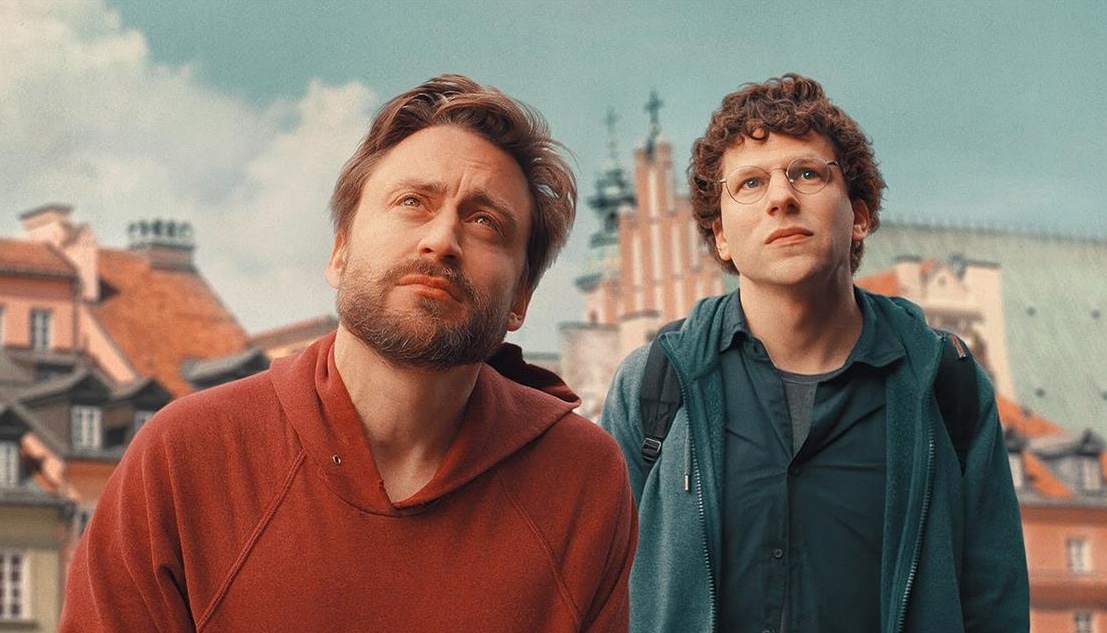
On paper, it sounds like a terrible idea: a comedy about chalk-and-cheese Jewish cousins on a tourist trip to a concentration camp. I’m sorry, what? But Jesse Eisenberg’s script successfully navigates the many potential pitfalls, and A Real Pain emerges as a thoughtful exploration of how we try to make sense of the horrors of recent history, expertly leavened by the mismatched buddy lols.

This is very much Eisenberg’s project: he also directs and co-stars as David, the uptight, neurotic half of the central pair. Kieran Culkin is Benji, the cousin he was inseparable from when they were young. Their backstory emerges through the dialogue: as they approach forty, we learn, David doesn’t want to hang out with Benji like he used to. He’s moved to NYC, where he has a wife, a child and a career to focus on. Benji, on the other hand, has yet to find his groove. Sure, he’s funny, charming and very popular, but he’s also living in his parents’ basement, depressed, without a steady job. Their paths rarely cross. But then their beloved Grandmother Dory dies, leaving money in her will for the two of them to travel to Poland, to see the house where she grew up and the camp that she survived. It feels like a canny final plan, to reunite her grandsons while also honouring the past.

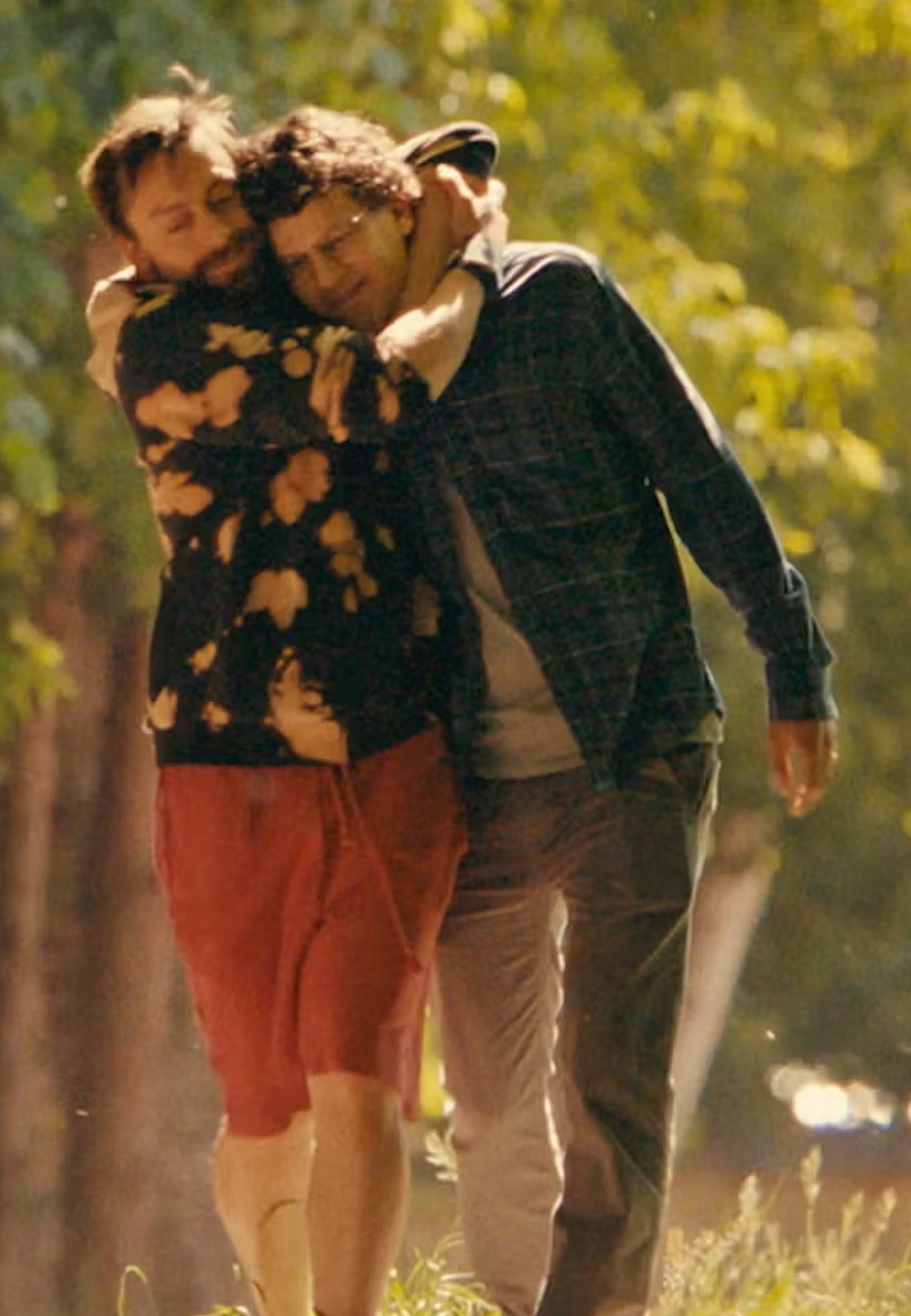
It helps, of course, that Eisenberg and Culkin are both such strong actors, easily securing the audience’s sympathy. Culkin in particular shines here in the showier role, Benji’s vulnerability writ large, despite his devil-may-care attitude. Even as he’s selfishly appropriating the window seat – again – or disrupting a whole train carriage with a tantrum, it’s impossible not to feel protective of him, the carapace he’s constructed so obviously fragile. Eisenberg provides the comedic foil; he’s the helpless observer apologising for his cousin’s outbursts, blinking with embarrassment as Benji transgresses social mores.

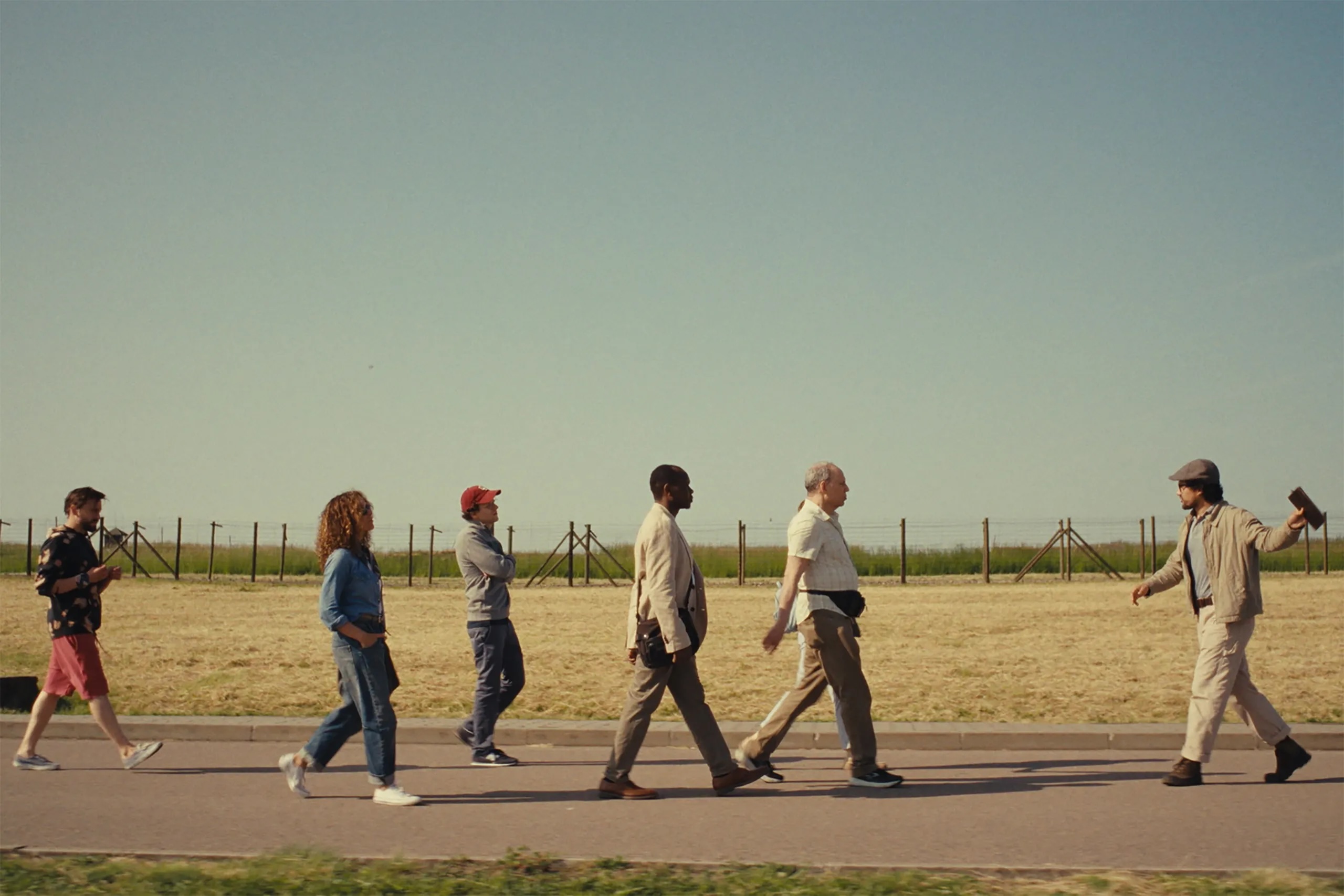
The supporting cast are also well-drawn, a convincing mix of characters, contentedly muddling along. British tour guide James (Will Sharpe) is an affable chap. He’s not Jewish but he is an Oxford graduate with a detailed knowledge of Polish history. The two solo travellers are Marcia (Jennifer Grey), a recently-divorced woman in her early sixties, and Eloge (Kurt Egyiawan), a survivor of the Rwandan genocide who has emigrated to the USA and converted to Judaism. Married couple Mark and Diane (Daniel Oreskes and Liza Sadovy) complete the group; like David and Benji, they’re visiting Lublin because it’s where their family comes from – and where many of them were killed.

The scenes in the Majdanek concentration camp are very moving. Eisenberg sensibly eschews any directorial flourishes here: there’s no music, no flashbacks, no fancy editing tricks. The bare walls speak for themselves, atrocities literally etched onto them in the blue stains left by poison gas. The tour group moves through in silence; their return bus journey passes quietly too, as they reflect on what they’ve seen – and what it means. Later, smoking a joint on the hotel roof, David points out three lights. “That’s the camp,” he says. “It’s so close” – a perfect example of the understated poignancy that makes the movie work so well.

A Real Pain is a clever film, a tight ninety minutes of carefully-structured storytelling, with never a dull moment. Eisenberg straddles the line between respect and irreverence, gently mocking people’s reactions without ever trivialising the Holocaust. It’s no mean feat to create such a heartwarming, thought-provoking tragicomedy.

4.4 stars

Susan Singfield

The Order

03/01/24

Cineworld, Edinburgh

The geographical landscape of this film is well-known to me – a Fulbright exchange saw me teaching high school in Walla Walla, Washington for a year in the 90s, and I visited many of the Pacific Northwest locations referenced: Spokane, Boise, Couer d’Alene, Whidbey Island. Thankfully, the film’s ideological and political landscape is far less familiar.

Directed by Justin Kurzel, The Order draws on a true story from 1983, when fascist Bob Mathews (Nicholas Hoult) began his violent mission to create an all-white promised land. In Zach Baylin’s script, a fictional FBI agent called Terry Husk (Jude Law) sets out to foil Mathews’ deadly plan. It’s a chilling tale, not least because it’s clear that not much has changed in the forty years since The Order was created. There are still way too many men like Mathews, spouting their twisted doctrines. Heck, one of them has made it all the way to the White House. Twice.

Adam Arkapaw’s bleached out cinematography evokes the feel of 1980s small town America: the vast swathes of uninhabited land; the isolated homesteads. These are the neighbourhoods where cops and criminals have known each other since kindergarten, have dated the same partners, understand each other even when they disagree. So when young police officer Jamie Bowen’s old school pal, Walter, goes missing, of course he wants to help. It doesn’t matter that they’re ethically opposed – Walter (Daniel Doheny) is a white supremacist, while Jamie (Tye Sheridan) is in a mixed-race marriage – Jamie is an Idaho boy through and through; these people are his kin.

Husk, on the other hand, is an Outsider with a capital ‘O’. Haunted by past failures, he is determined to stop the rot, to prevent any more carnage. He recognises the scale of Mathews’ ambition, but it’s hard to convince anyone but Jamie that The Order poses a real danger.

The success of this film is largely due to the contrasting trio at its heart: Law’s hard-bitten desperation; Sheridan’s hopeful naïvety; Hoult’s chilling fanaticism. All three deliver superb performances, and are perfectly cast in their roles.

Kurzel doesn’t hold back from the ugliness and real-world pain. There are the chases and shoot-outs you’d expect from any crime drama, but here they feel all-too believable, the impact evident on everyone involved, from the furrows on Husk’s forehead to the manic ecstasy of Mathews’ laugh.

It’s no accident that The Order feels so timely, as we stand on the precipice of a new era in US politics. Let’s just hope that there are enough Husks and Bowens to see us through.

4.2 stars

Susan Singfield
We Live in Time

02/12/24

Cineworld, Edinburgh

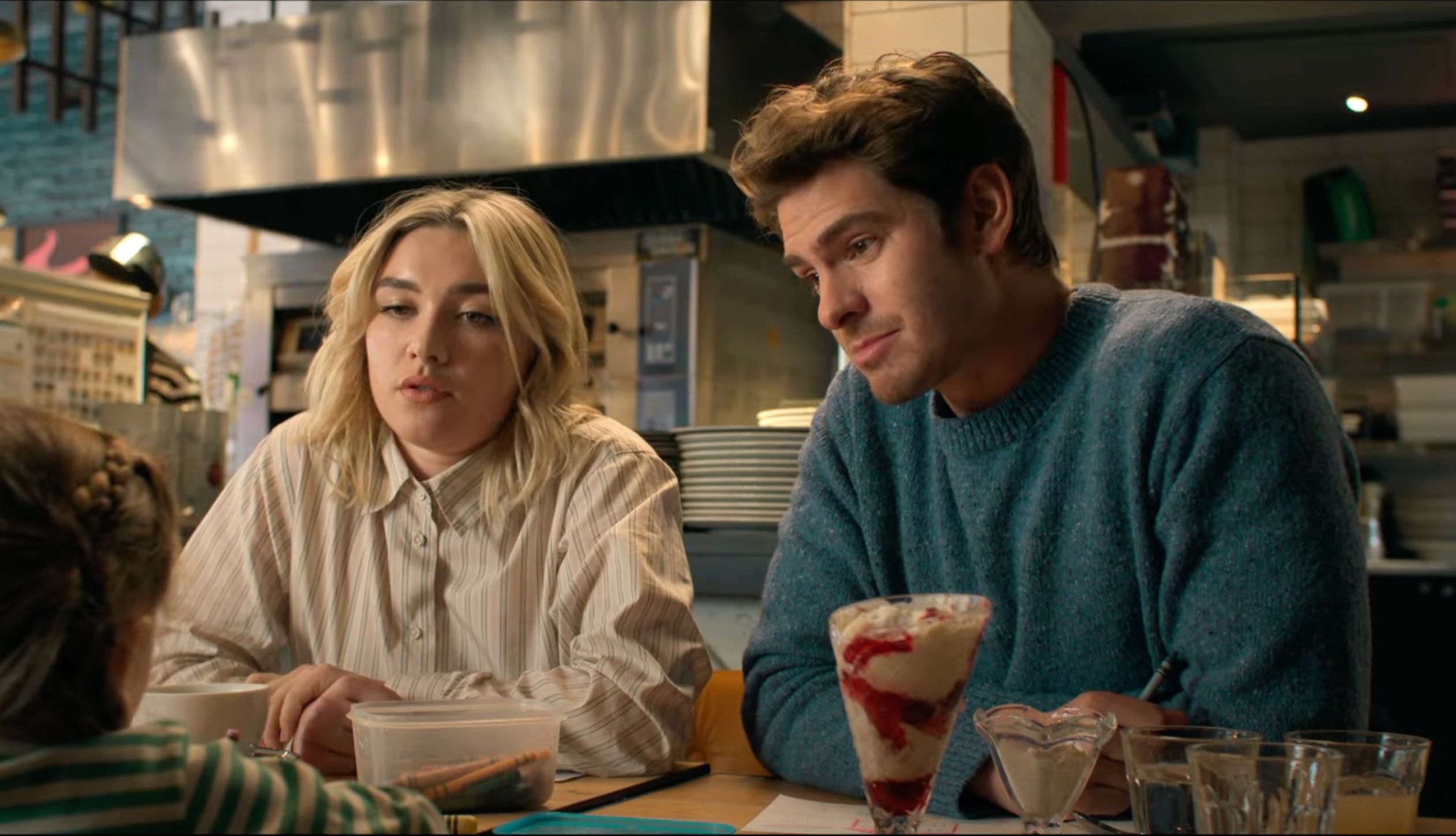
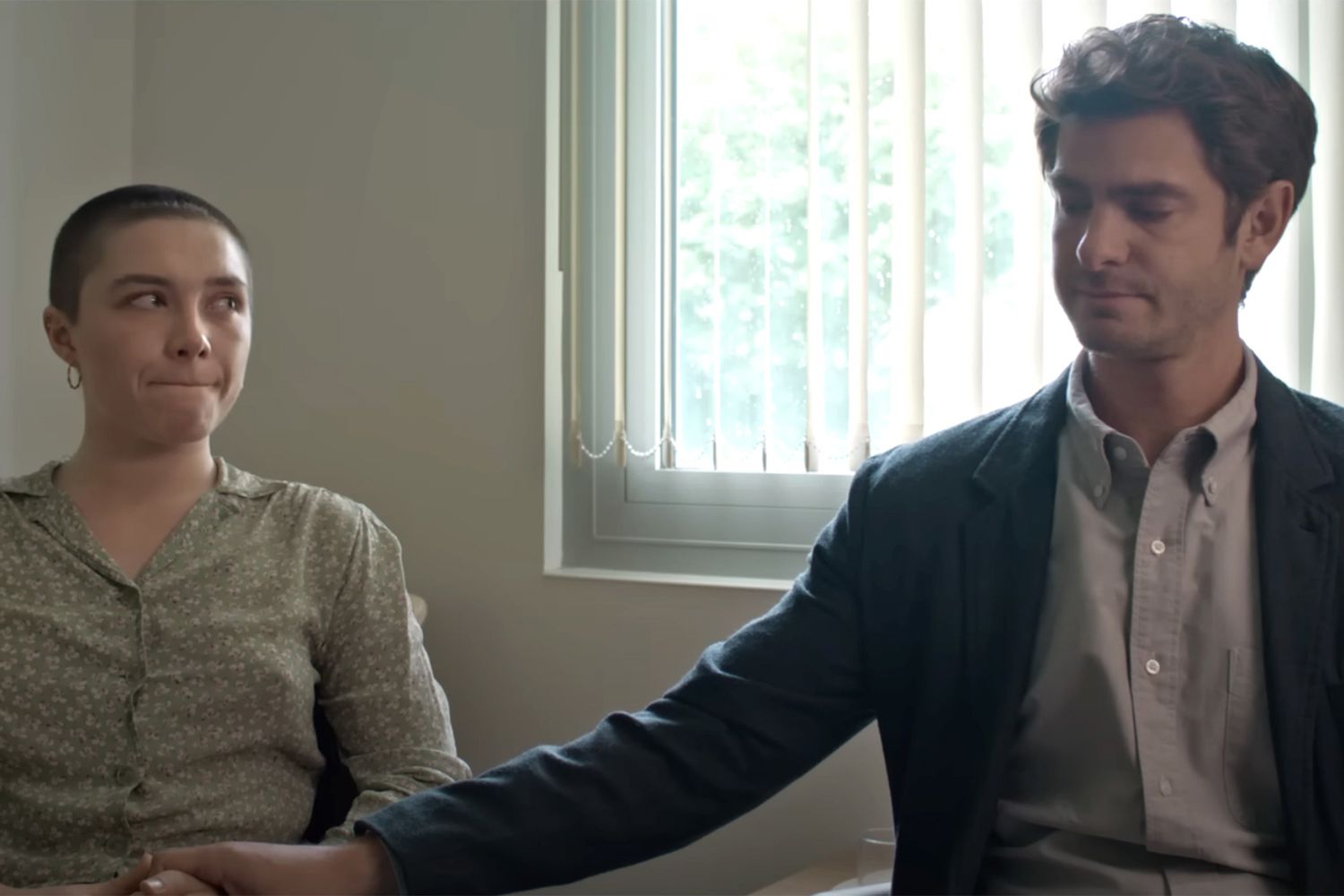
Directed by John Crowley, We Live in Time is a superior rom-com/weepie hybrid, anchored by stunning performances by two of Britain’s best actors, Florence Pugh and Andrew Garfield. Tonight’s advance screening – courtesy of Cineworld Unlimited – is extremely busy; in fact, we’ve managed to grab the very last two seats.

Pugh plays gourmet chef Almut Brühl, who hits a dressing-gown clad Tobias (Garfield) with her car while he’s bending down to pick up a piece of chocolate orange that’s fallen into the street. Luckily for the ‘rom’ part of the ‘com’, they’re both single: indeed, Tobias’s poor road-safety skills are the result of his reaction to signing his divorce papers. Before long, they’re in love – but then the ‘weepie’ element comes along, in the form of an ovarian cancer diagnosis, and a whole truckload of difficult decisions.

Nick Payne’s script is a sprightly delight, skipping around in time and tone with absolute assurance. The chronology is disrupted: we start in the middle of the story, then veer back and forth between the early stages of the couple’s relationship and the later trauma of Almut’s illness. It’s laugh-out-loud funny and devastatingly sad, a duality that’s reflected throughout the film.

Because Almut’s not ‘normal’. She’s a fascinatingly complex character: her restaurant serves Anglo-Bavarian fusion food; she’s bisexual; she’s fit and strong (a committed runner) and frail and weak (from the chemo). She’s a loving mother but it’s not enough: “I want to be remembered as more than a dead mum.” Almut treads her own path, and Tobias – softer and more passive than his go-getting partner – is her biggest supporter. Even if her driving force is sometimes hard to bear.

That Pugh makes a convincing chef is perhaps unsurprising as her father is a restaurateur. Naturally, given the couple’s jobs – Tobias is a data analyst for Weetabix – food plays a big part in this movie. Cinematographer Stuart Bentley highlights the seductive pleasure of a whole range of edible wonders, from Almut’s Michelin-starred concoctions to Jaffa Cakes dunked in mugs of tea and eaten in the bath.

We Live in Time is every bit as compelling as its heroine, and certainly worth a trip to your local cinema on New Year’s Day, when it’s out on general release. Just remember to pack your hanky – and maybe a fancy snack or two.

4.4 stars

Susan Singfield
Wicked: Part One

22/11/24

Cineworld, Edinburgh

It’s gratifying to see the cinema so busy on this icy cold November evening. There’s been a lot of speculation recently about movie-goers being averse to musicals – indeed, there was a notable absence of songs in the trailer for this very film. But, if tonight’s showing is anything to go by, there’s plenty of life in the genre yet. Just not, perhaps, when it strays into the DC universe (Joker: Folie a Deux, I’m looking at you).

Oddly, considering how often I’m at the theatre, I’ve never actually seen Wicked on stage, so the movie is my introduction to the tale. This is clearly not the case for most of the audience: there’s an abundance of green clothing and nail varnish, a lot of excited pre-film chatter and groups of women in the loos afterwards discussing where the film diverges from the show they know and love. Thankfully for the industry, the reactions I overhear are universally positive.

For me, there are a couple of negatives. First, I’m not super-happy about the fact that this is just ‘Part One’. I always feel cheated by movies that only tell me half a story and, although the central relationship between Elphaba and Galinda has a satisfying arc, the dark hinterland – the genocidal capture and destruction of speaking animals – is barely developed at all. Second, with the exception of Defying Gravity, none of the songs seems particularly memorable.

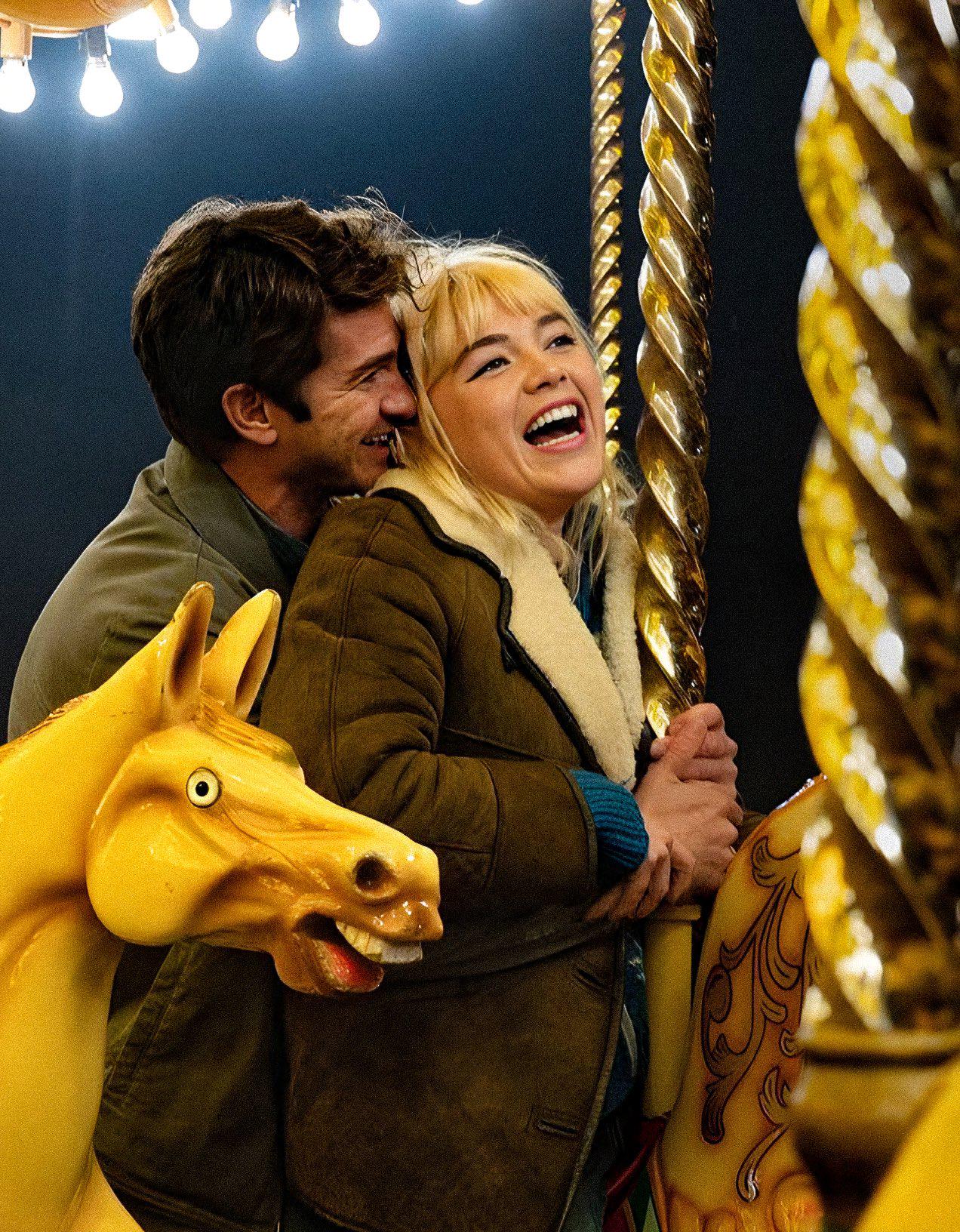
For the most part, though, Wicked is great. For those not in the know, it’s the origins story of the opposing magical forces of good and evil from The Wonderful Wizard of Oz, i.e. The Wicked Witch of the West and Glinda, the Good Witch of the North. In this prequel to L Frank Baum’s novel, Elphaba (Cynthia Erivo) and Galinda (Ariana Grande) meet at boarding school, where they are forced to share a room. Initially, they despise one another: Elphaba is powerful, studious and green, while Galinda is rich, popular and, well… blonde. But opposites attract, and over time they learn to see the good in one another, forging a strong friendship – which even survives the strain of their attraction to the same guy, Fiyero (Jonathan Bailey). When their history professor, a goat called Dr Dillamond (Peter Dinklage), is arrested and forcibly removed from their classroom amid nefarious plans to cage all speaking animals, Elphaba’s sorcery teacher, Madame Morrible (Sandra Yeoh), encourages her to go to the Emerald City, to plead with the Wonderful Wizard (Jeff Goldblum). But all is not as it seems…

Erivo and Grande are perfectly cast as the mis-matched pair, both utterly captivating in their roles. While Erivo provides the emotional depth – Elphaba is a study in suppressed yearning – Grande is the comic relief, all fluffy self-absorption and steely sweetness. It’s a delightful pairing.

Thanks to Alice Brooks’ cinematography, the film looks sumptuous. Oz has been gloriously rendered by designer Nathan Crowley: it’s a little bit steam-punk, a little bit Middle Earth, a truly fantastical land. I love the repeated cog motif, in Shiz academy’s library, on the Oz train and – naturally – in the Emerald City’s Royal Palace. Director Jon M Chu has created a superb stage-screen hybrid, combining established musical theatre-style choreography with a very modern filmic sensibility. LGBTQ+ themes are brought to the fore, with many explicitly queer-coded characters, and lots of deliberate ambiguity, so that we – along with the Ozians involved – are made to ponder where the line is drawn between platonic and sexual attraction, between friendship and love. It works well, emphasising the teenage protagonists’ heightened emotions. No wonder young adults love this story so much.

Judging by tonight’s screening, Wicked: Part One looks certain to be a box office success. I just wish I didn’t have to wait a year for Part Two.

4.1 stars

Susan Singfield
,

Anora

02/11/24

Cineworld, Edinburgh

Sean Baker excels at placing marginalised people centre stage and showing them in all their complex, multi-faceted glory. Transgender sex workers (Tangerine), motel-dwelling families (The Florida Project), washed-up porn stars (Red Rocket): they’ve all emerged from his films as so much more than mere victims or villains. This time, his camera is focused on exotic dancers and escorts.

The eponymous Anora (Mikey Madison) – or Ani, as she prefers to be known – works in a New York strip club. In the opening stretches of the film, the emphasis is on the ordinariness of her job: Ani moves from client to client with practised ease, using the same lines, the same moves, spending her break in the staff room, chatting to her co-workers while eating a Tupperware-packed meal.

But one night, a young Russian turns up at the club, demanding an escort who can speak his language. Thanks to her Russian grandmother, Ani fits the bill, although she prefers to speak English because her accent is “terrible”. Ivan (Mark Eidelshtein) turns out to be the son of a billionaire oligarch, and he’s willing to pay handsomely for Ani’s time. He’ll give her $15k if she’ll spend a week with him in his mansion as his girlfriend.

Of course Ani agrees. Why wouldn’t she? Ivan is fun: he’s blithe, impulsive, generous and wild. Ani is many of these things too, although she can’t afford to be so carefree. In Vegas – where they’ve gone on a whim in his private jet – Ivan proposes. “Don’t mess about with this,” Ani cautions him. He’s not messing, he reassures her. And so they get married.

But there’s no happy-ever-after here because Ivan is a long way from Prince Charming. He’s a spoilt brat, infantilised by indulgent parents, who – when they learn of his inappropriate match – send their henchmen (Karren Karagulian, Yura Borisov and Vache Tovmasyan) to set things straight. Like the child he is, Ivan responds by running away…

The middle section of the film combines a comic caper with a tragedy, as Ani and the henchmen try to track Ivan down. The humour is slapstick but the emotions are raw. Madison is extraordinary in the central role, a firebrand of a character, lighting up the screen. While Karagulian and Tovmasyan – as brothers Toros and Garnick – provide the comedy via their ineptitude, Borisov – as Igor – is an altogether more serious and thoughtful character. Even stooges are fully fleshed-out in a Baker film.

In the closing stretches, we see how flawed the Cinderella model is. The social commentary here is fierce: rich people hold all the aces. The fallout is shocking and Baker skilfully leads us to a final scene of utter devastation.

5 stars

Susan Singfield

A Different Man

05/10/24

Cineworld, Edinburgh

It’s not hard to imagine actor Adam Pearson’s delight on first reading the script for A Different Man. The film, a three-hander, was written expressly for him – and, my word, it gives him a chance to show what he can do. It also challenges our preconceptions and prejudices around disability and disfigurement – but not in any obvious, seen-it-all-before way.

Writer-director Aaron Schimberg has a cleft palate, so he knows something of how it feels to look different. Pearson, meanwhile – along with his character, Oswald, and Sebastian Stan’s character, Edward – has neurofibromatosis, which is a lot more noticeable. Edward copes by keeping his head down and trying to make himself small. He’s quiet, unassuming, and sadly accepting of his lot. He is an actor, but he doesn’t get much work – unless you count condescending corporate training videos of the ‘how to behave around your disabled colleagues’ variety.

And then two things happen.

First, Edward is offered the chance to take part in a drug trial for a revolutionary new treatment that will transform his appearance. Next, he meets his new neighbour, aspiring playwright Ingrid (Renate Reinsve), and begins to develop feelings for her. She’s nice to him – but recoils when he makes a tentative move.

He decides to take the plunge.

As the tumours begin to literally fall from his face (courtesy of some pretty impressive prosthetics), a new Edward emerges, smooth-skinned and conventionally handsome. Keen to shuck off his old identity as well as his deformities, he informs everyone that Edward has committed suicide and rebrands himself as ‘Guy’. Before long, he’s living the dream, with a well-paid job, a luxury flat and an active sex life. What more could he want?

The answer, it turns out, is the starring role in Ingrid’s off-off-Broadway play, Edward, which is all about her friendship with her tragic neighbour. But she’s not sure about giving Guy the part – it wouldn’t be authentic and surely a disfigured actor ought to get the role? But, she has to admit, there’s something compelling about Guy, even if he does have to wear a mask on stage.

And then Oswald turns up, cheerily intrigued by the idea of the play with a central part he feels he was born for. He’s keen to see how Ingrid has written the character and what Guy brings to the role. He looks like Edward used to look, but that’s where the similarity ends. Because Oswald is no one’s victim. He’s a happy, talented, popular man, keen to grasp new opportunities, comfortable in his own skin. Edward can’t cope, his cocksure persona crumbling in the face of Oswald’s frank and open confidence. Before too long, he finds himself replaced…

The three central performances are all impressive, although Pearson is the one who shines. Stan is believably conflicted as the shy, awkward Edward, his true nature visible to the viewer even when he’s swaggering and trying to inhabit his brave new world. Reinsve, meanwhile, is perfect as the deluded Ingrid, convincing herself that she’s not only well-intentioned but also alert to discrimination, despite the self-serving nature of her work, and the fact that she keeps referring to Beauty and the Beast as her inspiration.

A Different Man is well-crafted on every level but, primarily, it is a clever piece of writing, as multi-layered as Stan’s prosthetics, unflinching in its examination of how non-disabled people view those with disabilities. Without offering any easy answers, it also explores the ideas of authenticity and appropriation, all the while avoiding anything resembling a cliché. This is the sort of script that sparks ethical discussions – akin in some ways to American Fiction, The Substance or Scottish playwright Kieran Hurley’s Mouthpiece.

Nuanced, shocking, intelligent and insightful, this is a memorable movie for all the right reasons.

4.7 stars

Susan Singfield

Lee

14/09/24

Cineworld, Edinburgh

This biopic is as much a tribute to photojournalism as it is to its protagonist, Lee Miller. In an age where AI-trickery can make us doubt our own eyes, it is a timely reminder of why we need to document what’s really happening in the world. In the 1940s, no one wanted to believe in concentration camps or desperate, scapegoated women being hanged for collaboration. War photographers forced people to confront the grim realities, to understand the scale of the horrors that had been unleashed.

Miller trod a lot of paths in her life, but Lee, directed by Ellen Kuras, focuses on her work during the second world war. There’s a framing device: wannabe journalist Antony (Josh O’Connor) is interviewing the now elderly photographer, his questions evoking stories told in flashback. Her previous work as a fashion model and artists’ muse is acknowledged in a brief but revelatory early scene, where she wonders what on earth she’s going to do with her life now that she’s aged out of – and is bored by – all that. When she meets Roland (Alexander Skarsgård), marriage beckons but it’s not enough. Miller is a formidable woman and she needs to forge her own path.

Kate Winslet is marvellous as Lee, shimmering with pent-up energy and drive. Her Miller is motivated by righteousness as well as ambition: she’s a woman and, what’s more, she knows the camera from the other side; she can tell a different story from her male counterparts. If that means barging her way in and ignoring ‘no women’ regulations, then so be it. Her work is important. Not that she’s a loner: she’s sociable and enjoys working alongside her male colleague and friend, David Scherman (Andy Samberg).

The real Miller was indomitable, and Winslet absolutely does her justice. This is a powerful performance, harnessing the grit and determination that allowed Miller to capture such provocative and controversial images, many of which are recreated here.

Perhaps the biggest surprise for me is the realisation that Miller’s war correspondence work was done for Vogue magazine, then edited by Audrey Withers (Andrea Riseborough). I’ve never read Vogue; I thought it was all fashion and frivolity. Its serious side is a revelation, much like Miller’s shocking photos must have been for those who previously knew her only as a model.

The cinematography – by Pawel Edelman – captures the brutality of war: the scarred landscapes, chaos and traumatised faces. We also see how, ninety years ago, fascism trumpeted its arrival but still caught people by surprise. There’s a lesson here, and it’s not a subtle one.

Focus. Flash. Snap.

See.

4.3 stars

Susan Singfield