Black Lives Matter

Eddington

18/08/25

Cineworld, Edinburgh

For reasons too boring to go into, tonight’s schedule is clear – and an Unlimited preview of the new Ari Aster film is simply too tempting to ignore. Aster is an interesting writer/director and, though his last film, Beau Is Afraid, was disliked by those who enjoyed Hereditary and Midsommar, I thought there were some very interesting ideas in there.

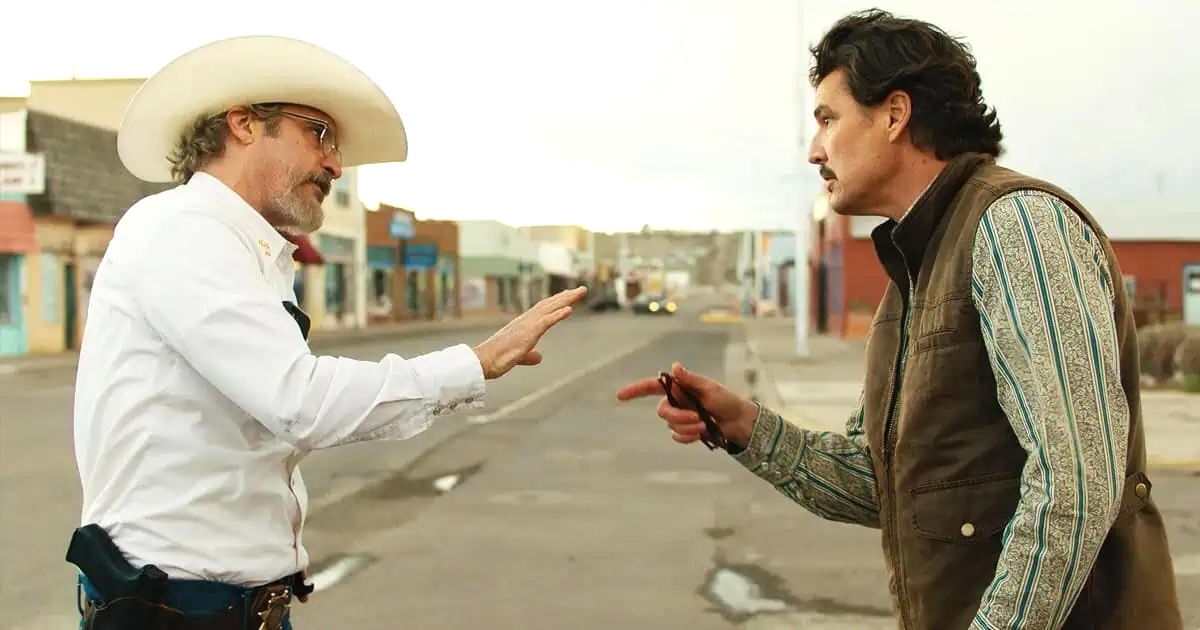
Eddington reunites Aster with Joaquin Phoenix as Sheriff Joe Cross, attempting to keep control of the titular desert town in the midst of the COVID pandemic. (Amazingly, this is perhaps the first film I’ve seen that focuses on the effects of the lockdowns and, for that reason alone, it deserves to be seen.) Cross is asthmatic and does not take well to the constraints of a face mask. Since there have, as yet, been no cases of COVID in Eddington, Cross resists wearing one at all times, even though Mayor Ted Garcia (Pedro Pascal) has made it mandatory that they should be worn whenever people are sharing indoor space.

Garcia is currently running for re-election and there are big posters of him everywhere but Cross has an old grudge against the Mayor, stemming from something that happened to Cross’s wife, Louise (Emma Stone), back when she was a teenager. Louise is now a frail and mentally unstable woman, unable to handle stressful situations, a condition that isn’t helped by the presence of her mother, Dawn (Deidre O’Connell), in the family home. Dawn is addicted to conspiracy theories and openly denounces COVID as fiction.

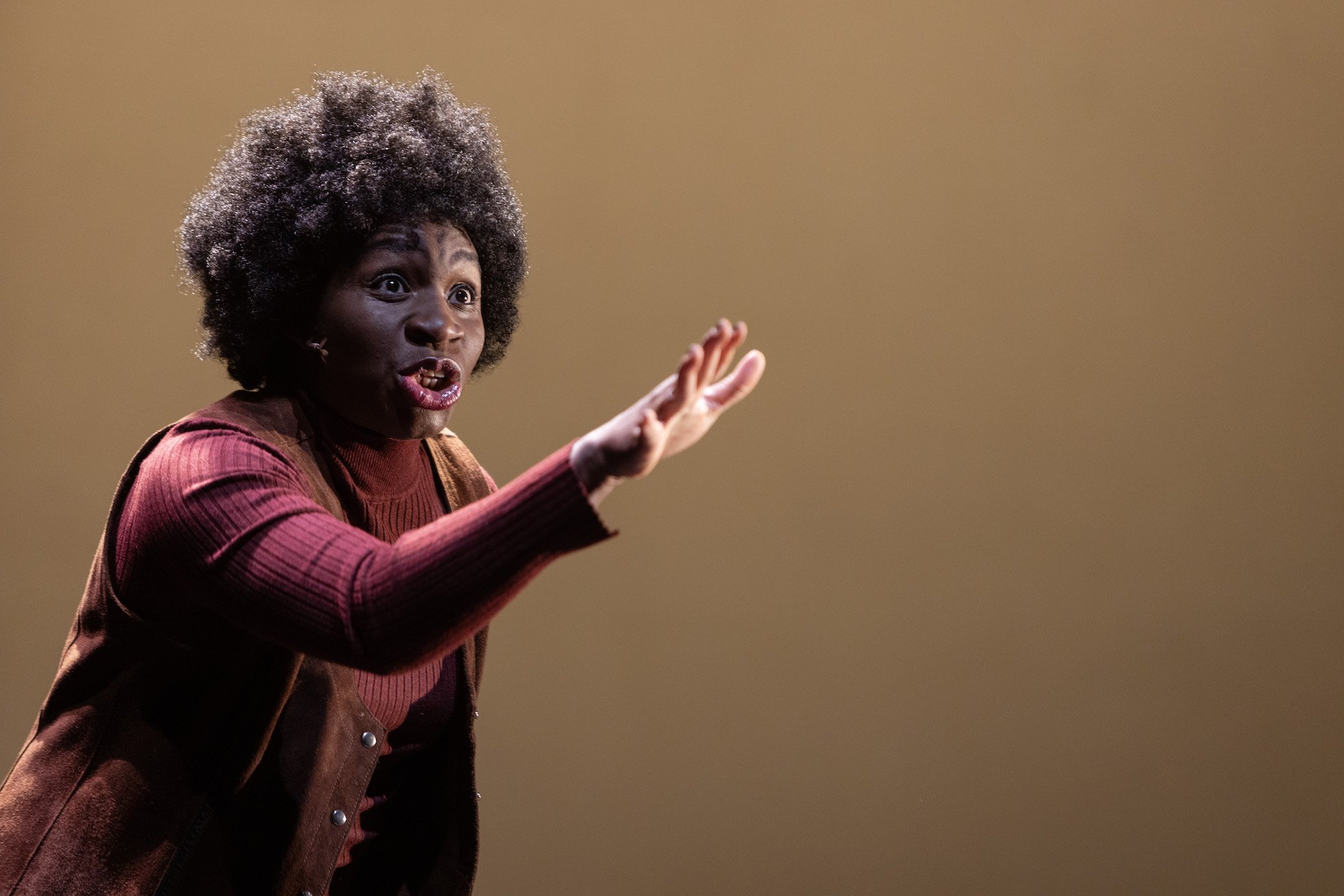
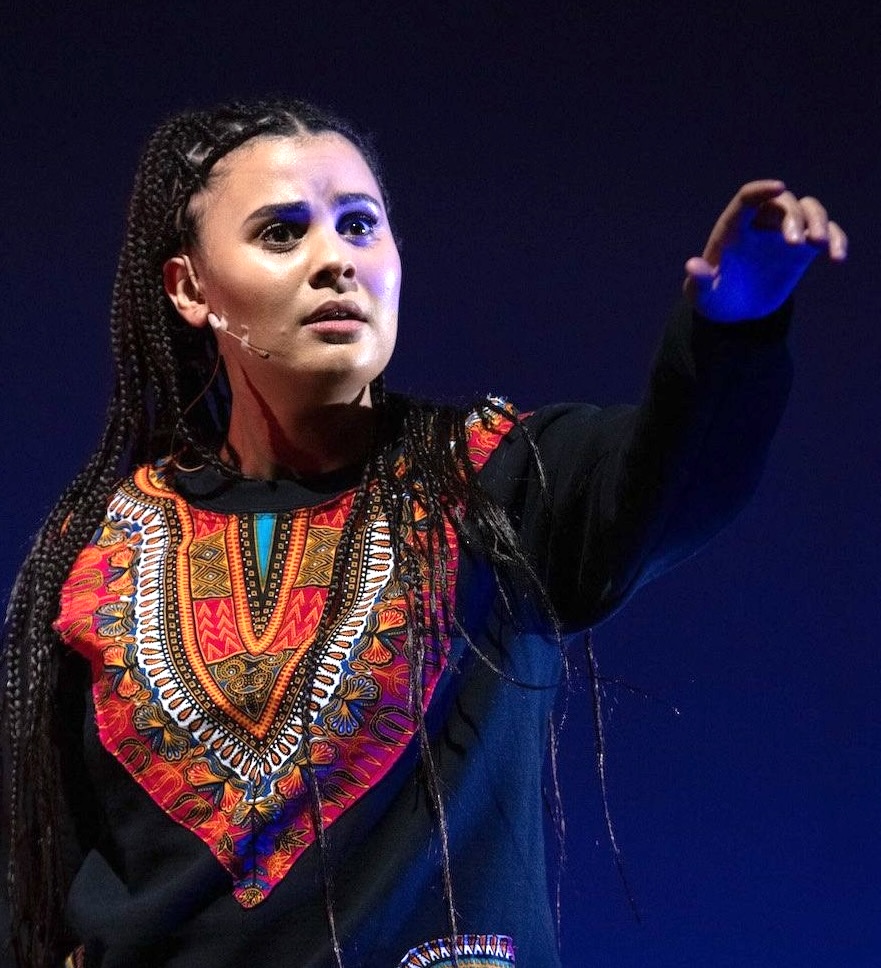
After a confrontation between Cross and Garcia, Cross suddenly decides that he wants to run for the position of Mayor of Eddington himself, and he enlists a couple of hapless deputies to help with his campaign. But the killing of George Floyd by a police officer during a riot in Minneapolis instigates the local teenagers to launch a Black Lives Matter protest in the town centre. Cross and his two officers head out to confront the kids and, everything begins to spin out of control…

Some films suffer from a lack of original ideas but the problem with Eddington is that it has far too many of them. They virtually fall over each other as they tumble out in all directions and I cannot deny that the result is something of a mess. Furthermore, there are so many characters competing for screen time that great actors like Stone, Pascal and Austin Butler – who appears briefly as deranged cult leader, Vernon Jefferson Peak – are reduced to little more than cameo roles.

That said, I’m never bored by what’s happening onscreen and much of what’s here is darkly funny. It’s clear from early-on that things are destined to become explosive and, once the fuse is lit, I can only sit back and watch appalled as the shit hits the fan.

More than anything else, Eddington is a commentary on American politics and the ways in which online culture – exacerbated by the isolation of the lockdowns – has polarised the opinions of everyday people, resulting in the massive divides that now hold sway in the USA (and closer to home). This may not be a perfect film, but it’s certainly worth a trip to the cinema to watch as the chaos unfolds.

3.8 stars

Philip Caveney
Through the Mud

11/08/24

Summerhall (Main Hall), Edinburgh

Plus ça change, plus c’est la même chose

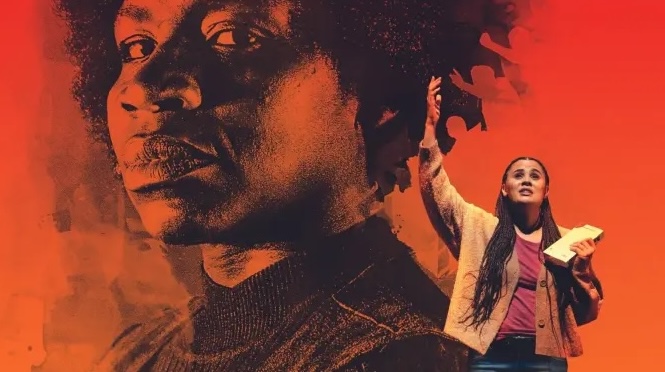
Apphia Campbell’s Through the Mud is a chilling reminder of how little has changed over the years when it comes to Black liberation in America. Campbell plays Assata Shakur, the 1970s civil rights activist, who – convicted of murder – escaped from jail and has been living in exile in Cuba ever since. In a parallel storyline, forty years later, college student Ambrosia Rollins (Tinashe Warikandwa) finds herself caught up in the beginnings of the Black Lives Matter movement.

This is a powerful piece of theatre, as much a call to arms as anything else, and it feels especially apposite as racist riots are breaking out just over the border in England. Of course, Through the Mud pertains specifically to American politics, but bigotry and prejudice aren’t confined to one continent and we have just as much blood on our hands.

Co-produced by Stellar Quines and Edinburgh’s Royal Lyceum Theatre, the production values are as high as you’d expect, and director Caitlin Skinner deftly leads us through the intertwining timelines, allowing the women’s individual stories space to breathe as well as highlighting the connections. The characters contrast and complement one another perfectly: Campbell imbues Assata with a fierce dignity and a fighter’s strength, while Warikandwa’s Ambrosia is altogether sweeter and more naïve – until her first weeks of college coincide with the fatal shooting of Michael Brown by a white police officer, and she can no longer cling to the fair-world fantasy that her parents built for her. 

The sense of outrage at the heart of the play is brought to life by the music, where spirituals and gospel songs give voice to the protest. The women’s vocals are impressive: Campbell deep and powerfully resonant, while Warikandwa’s more plaintive tones offer an enchanting counterpoint. When the two harmonise, the effect is positively thrilling.

In the face of all the awful evidence, it’s to Campbell’s credit that Through the Mud feels somehow hopeful rather than dispiriting. The women’s indefatigable spirits spur us into thinking we ought to act too. 

Not enough has changed – but the fight goes on.

4.5 stars

Susan Singfield

The Hate U Give

27/10/18

Adapted from Angie Thomas’s YA best-seller of the same name, The Hate U Give is a powerful film, with a compelling central performance by Amandla Stenberg as Starr, a sixteen-year-old black girl struggling to fit in. Her mother doesn’t want her to attend the local public school, where the kids from her neighbourhood go to fight and get high. Instead, Starr is sent to a private – and mostly white – establishment, where she has to hide huge swathes of her identity to get along, to be ‘the non-threatening black’ her new friends find palatable.

So far, so standard teen movie, but then Starr’s childhood friend, Khalil (Algee Smith) is killed by a cop who pulls them over as they’re driving home from a party: shot dead for being a little mouthy, for reaching for a hairbrush, for doing these things while black. Starr is the only witness, and she’s afraid. She knows that speaking up will mean media coverage and instant fame, and she doesn’t want to draw attention to herself this way. Partly because of school, where she reveals little of where she lives, but also because of King (Anthony Mackie), the local drug lord, who doesn’t want the authorities to know that Khalil has been dealing drugs for him.

It’s an uncompromising story, with strength in its convictions, using Starr’s confusion to  confront this whole big ugly mess. When media pundits dismiss Khalil as a lowlife dealer, Starr demands they stop blaming him for his own death: we already know that he sells drugs because there’s no easy way to make money in their no-hope suburb, and that there’s no universal healthcare to ensure his grandma gets the cancer drugs she needs. When her white friends use the cop’s acquittal as an excuse to walk out of school to protest that ‘Black Lives Matter,’ Starr is appalled, not because she doesn’t agree with their sentiment, but because they’re blatant in their insincerity – they want to avoid a test. She doesn’t want them to co-opt his name for their own ends, especially not Hailey (Sabrina Carpenter), who’s unequivocal in her belief that the cop was just doing his job.

Okay, so sometimes it’s a little clunky and heavy-handed, more of a message than a story, but it’s a prescient and vital message nonetheless, told with nuance and with heart. We’re offered various points of view: Starr’s uncle Carlos (Common) gives us some insight into why cops might sometimes shoot before they should; her boyfriend, Chris (KJ Apa), shows us how to be a white ally. It’s a learning curve for me, at least, and I suspect I’m not alone.

4 stars

Susan Singfield