
Ang Lee

Pride and Prejudice

24/05/25

Netflix

It’s hard to believe that Joe Wright’s adaptation of Pride and Prejudice is already twenty years old – and, while it’s been rereleased into selected cinemas to mark the occasion, it’s also right there on Netflix, all ready for re-examination at the touch of a button. I remember liking it back in the day and feeling that it was much more realistic than the widely-admired 1995 TV mini-series, which I found a little too chocolate-boxy.

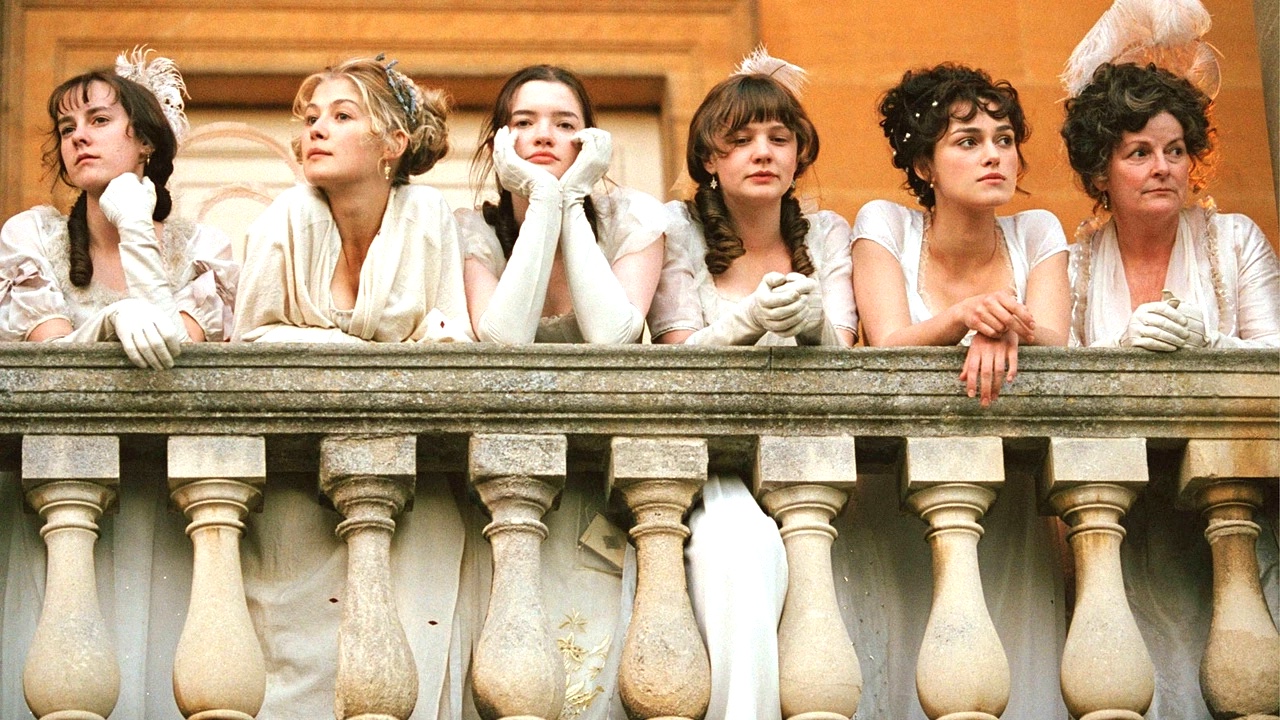
Wright’s version, though offering a tranquil and bucolic adaptation of Jane Austen’s novel, actually succeeds in showing the slightly down-at-heel and ramshackle nature of the Bennet family. In this version, a viewer fully understands the mounting desperation of Mrs Bennet (a wonderfully scatty Brenda Blethyn) as she seeks to find suitable husbands for her daughters, aware all the time that the clock is ticking and the women of the family stand on the edge of penury. Mr Bennet (Donald Sutherland) is useless, looking on in mystified wonder as his wife goes about her earnest business.

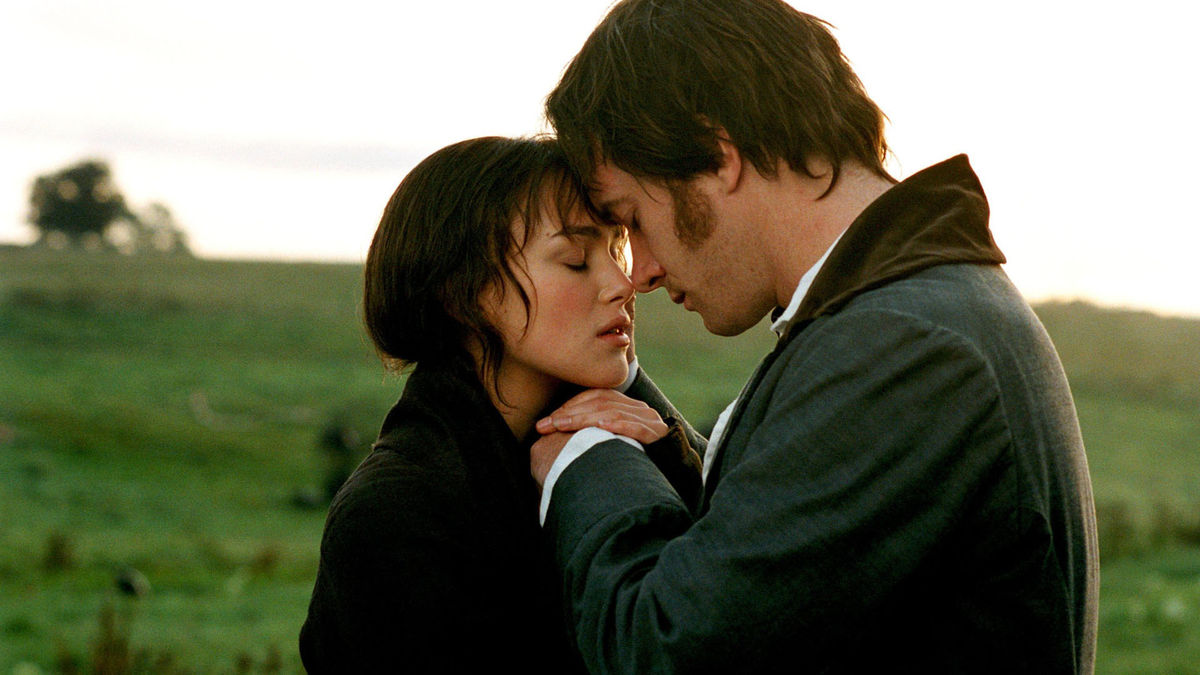
As the wilful and opinionated Elizabeth, Keira Knightley is an inspired choice. Why so many critics have taken against her acting abilities is quite beyond me, but here she plays Lizzie with considerable skill, scathing in her early encounters with Mr Darcy (a deliciously-sombre Matthew Macfadyen) and loving and playful in her interplay with Jane (Rosamund Pike) and her other sisters (look out for an early appearance by Carey Mulligan as Kitty). There’s a splendid turn from Rupert Friend as the caddish Mr Wickham, while Judi Dench struts her inimitable stuff as the acid-tongued Lady Catherine and Tom Hollander is wonderfully obsequious as Mr Collins, the reverend with an earnest desire to impress her.

The source novel has been cleverly adapted by Deborah Moggach, with additional (uncredited) dialogue by Emma Thompson, who had already earned herself an Oscar for her work on Ang Lee’s version of Sense and Sensibility. Wright never lingers too long on a scene and consequently the running time of two hours and nine minutes seems to positively flash by.

There are so many simple yet effective moments that have stayed with me since my first viewing. I love the scene where the Bennets’ prize pig wanders through their living quarters as though it’s a perfectly natural state of affairs, and the scene where Elizabeth and Darcy, enacting a complicated dance routine in the midst of a frenetic party are, quite suddenly, dancing completely alone. Roman Osin’s lush cinematography makes every landscape look suitably ravishing yet never overplays its hand. A scene where a pensive Elizabeth is taken from bright morning sunlight into the dark shadows of evening in one slow take is so understated, it barely registers.

This is Wright’s debut full-length feature and yet it feels like the work of a more experienced director. He would go straight on from this to his adaption of Atonement, another extraordinary literary film, once again with Knightley in a key role.

Sometimes when you return to a film after a long interval, you wonder what made you like it so much on first viewing. In the case of Pride and Prejudice, I feel I enjoy it even more.

4.6 stars

Philip Caveney

Life of Pi

31/03/23

Cineworld, Edinburgh

Yann Martel’s novel, Life of Pi, was published in 2001 and won the Booker Prize the following year. In 2012, it was adapted into an impressive film, directed by Ang Lee. Of course, the inevitable next step was to adapt it for the stage, but that’s a very tall order. Would it be possible to convincingly present such a fantastical story in a theatre? Well, never underestimate what can be achieved with a suitable budget and state-of-the-art special effects. This version, beamed direct from London’s Wyndham Theatre as part of the NT Live season, is absolutely eye-popping.

The play opens in a hospital ward in Mexico, where our eponymous hero is being interviewed about his extraordinary survival in an open boat for 227 days, but his recollections are suddenly punctuated by a scene change so slick, I barely notice it happening, – until it has. 

It’s the 1960s and Piscine Molitor Patel (Hiran Abeysekera) lives in Pondicherry, India. Named after a swimming pool in France, he prefers his adopted nickname ‘Pi.’ His parents run a small zoo and Pi and his sister spend much of their time looking after the animals – including the latest arrival, a fierce Siberian tiger called Richard Parker.

And now it’s 1976 and, due to violent political unrest, Pi’s parents have decided to relocate their animals to a zoo in Canada. Pi, his family and all the animals board the Japanese freighter Tsintsum, and set off on a sea voyage. What could possibly go wrong? Well, plenty, as it happens. Pi ends up stranded in a lifeboat with only a zebra, a hyena, an orangutan and er… Richard Parker for company. 

Which is awkward, to say the very least.

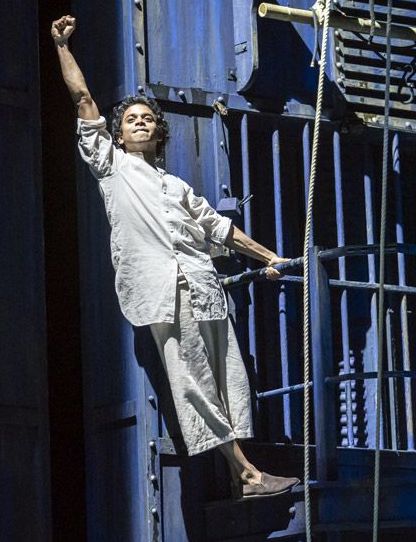
To give him his due, Abeysekara offers an extraordinary performance in the lead role but, as you might expect, his efforts and those of his fellow performers are somewhat dwarfed by the aforementioned puppetry and special effects, which are quite frankly, off the scale. 

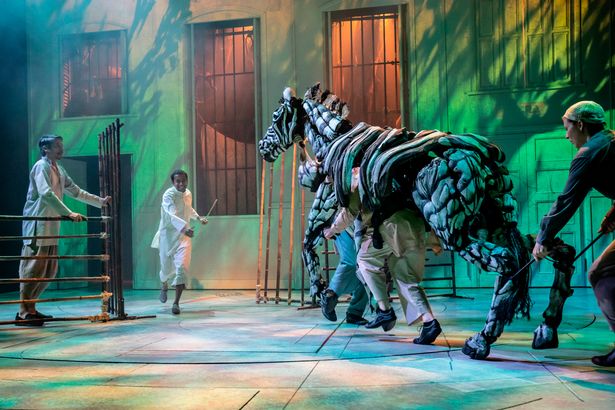
Let’s begin with Tim Hatley’s ingenious set designs, particularly those that deal with Pi’s adventures in the fateful lifeboat tossed upon stormy seas. Raging torrents of water appear to flood across the performance space, while shoals of fluorescent fish speed along just below the surface. I even gasp out loud at one point when Pi takes a nose dive onto an apparently solid stage… and disappears right through it, only to resurface in an entirely different spot a moment later. How have they done that? (With trapdoors, obviously, but it’s astonishing nevertheless.)

As are the animals – or, more accurately,  the puppets, designed by Nick Barnes, which are so intricately made that I actually keep forgetting they’re mechanical, which is ridiculous because I can quite clearly see the people operating them… and yet… and yet, I still believe they’re real, which is some accomplishment. Richard Parker is, of course, la bête du jour, the very essence of feline power, even able to switch into a comedic role as a fan of haute cuisine and back to a snarling, powerful predator, but – to be fair – every creature I see, right down to the swarms of multi coloured butterflies, is an astonishing creations.

Adapted by Lolita Chakrabarti and directed by Max Webster, Life of Pi is like a magician’s box of tricks. There’s a small part of me that feels sorry for the cast of (mostly excellent) actors struggling to make themselves seen amidst all that sturm und drang, but I guess it’s just – ahem – the nature of the beast.

4.3 stars

Philip Caveney

Billy Lynn’s Long Halftime Walk

11/02/17

Let’s start with an admission: we’re watching Billy Lynn’s Long Halftime Walk in 2D, and at 24fps at our local Cineworld. So we’re not going to be able to comment on its technical wizardry, not on whether the 4K 3D 120fps makes Ang Lee’s experiment worthwhile, nor on whether we agree with the critics who claim it makes the film uncomfortable to watch. But, as only five cinemas worldwide are equipped to show this movie in its full glory, our experience is more likely to chime with that of our readers. And so we’ll focus on the film behind the tech.

Based on a novel by Ben Fountain, BLLHW tells the tale of a squad of young American soldiers, brought home from Iraq for a victory tour, following the circulation of video footage showing their doomed-but-heroic fight to save their sergeant’s life. Billy (Joe Alwyn) is struggling to cope, ambivalent about the war, and unsure of much except his loyalty to his squad. They are rewarded with a day out: they are guests of honour at a football game, trotted out to stand behind Destiny’s Child to wild applause during halftime. And there is talk of a film deal, too: they’ll be famous, wealthy, given everything they need.

Joe Alwyn’s performance is subtle and nuanced: his pain is palpable. The realities of his war are revealed through a series of short flashbacks, sparked by the flash of a firework or a poignant word. It’s a touching story: he hasn’t much to stay home for, but neither does he want to go back to Iraq. His sister, Kathryn (Kristen Stewart), tries to persuade him to see a psychiatrist; she’s scared of losing him and can see that he has PTSD. And it’s heartbreaking to watch him struggle with the decision. There are no easy answers here.

I enjoyed this film a lot, and not just because of the novelty of seeing Vin Diesel in a role where he’s required to act. It’s not action-packed, and there are no clichéd moments of wonder or revelation. It’s a slow, wordy piece about ambiguity, about what we ask young men to do, and how little we know of the toll it takes. The response to Bravo Squad on their return to the US is confused: they’re heroes, but they’re ordinary. They’re revered, but they’re mocked. They’re film worthy, but no one will pay them properly. In the end, they only have each other, and their instincts – and, if that’s not enough, well that’s too bad. It’s a fascinating story, and well worth two hours of your time.

4 stars

Susan Singfield