Andrew Scott

Pride 10th Anniversary

30/06/24

Mareel, Lerwick, Shetland

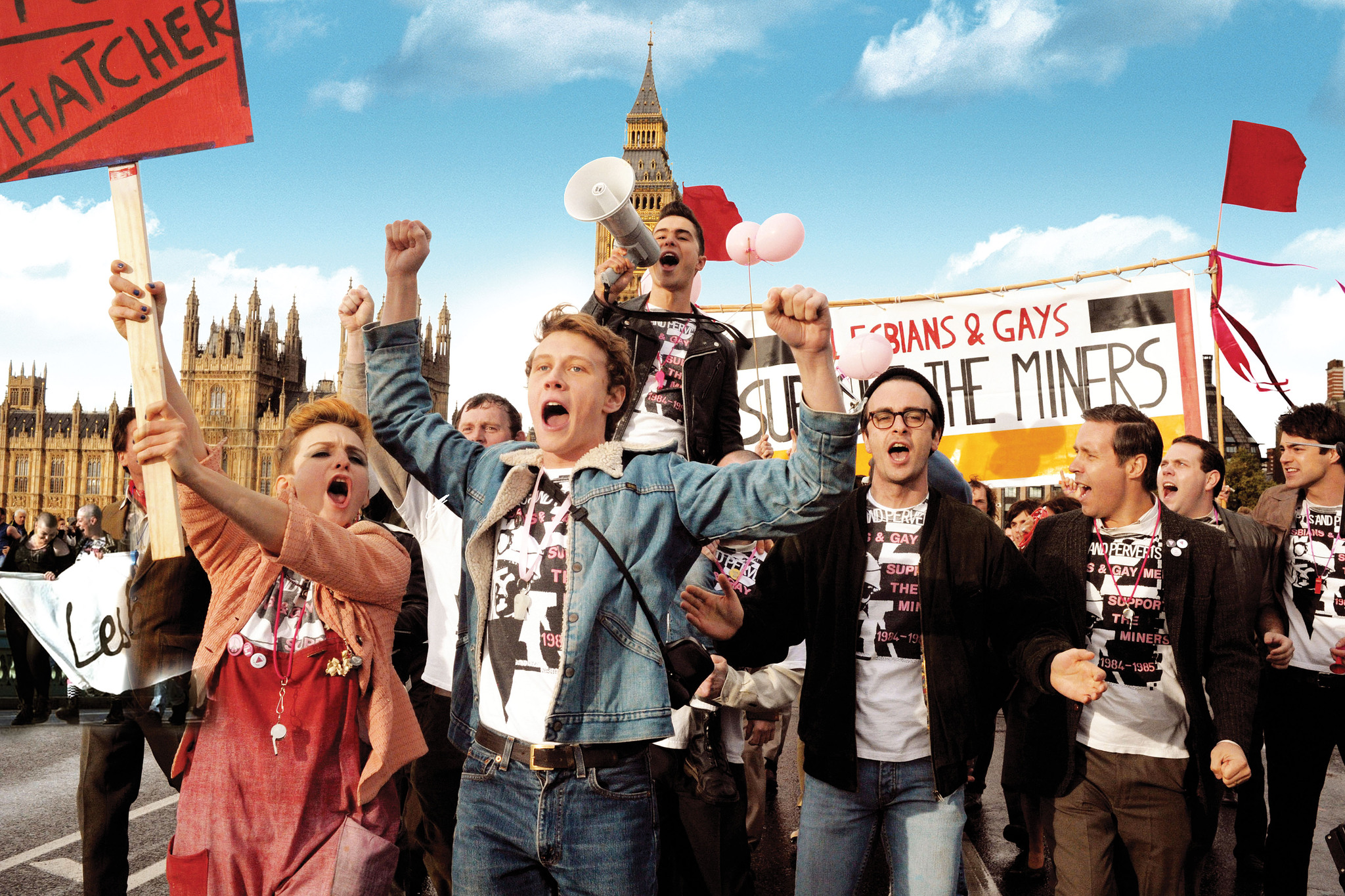
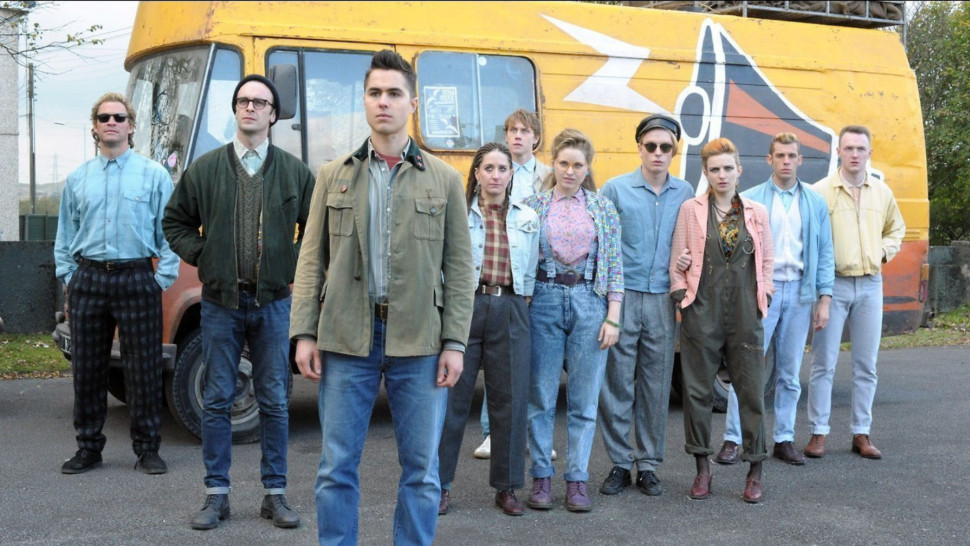
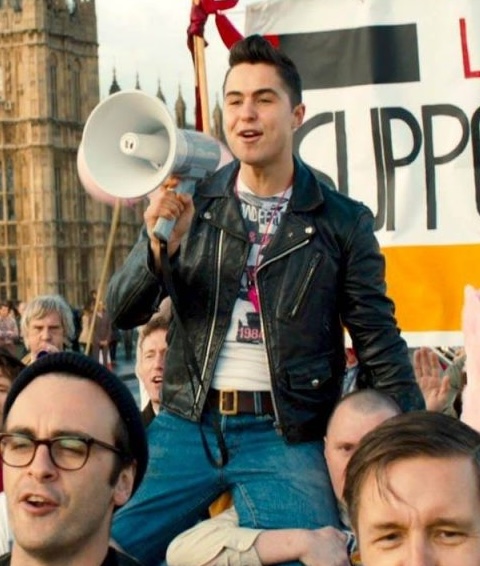
We reviewed Pride on its initial release in 2014 and, ten years later, it’s given this timely rerelease. What strikes me most about it now is how relevant it still feels, the same – or similar – battles still needing heroes to fight them. I’m fascinated too by the stellar cast, many of whom have on to even greater things, notably Andrew Scott and George MacKay – and also Jessica Gunning, who (thanks to Baby Reindeer) has recently been catapulted to wider recognition.

If Pride made me weep first time around, it leaves me in floods today.

I post my original review here and absolutely stand by the observations, though in retrospect I might be tempted now to boost those stars to a full 5.

14/09/14

Cineword, Didsbury

Set in 1984, at the height of the miners’ strike, Pride tells the true-life story of Mark Ashton (Ben Schnetzer), a young gay activist who manages to persuade a group of like-minded friends to form LGSM (Lesbian and Gays Support the Miners). They start to collect money on behalf of one particular group of strikers in South Wales and are so successful, it’s not long before the group meets up with likeable Union man, Dai (Paddy Considine).

He invites them to the sleepy village of Onllwyn, to meet the miners in person – where inevitably, they encounter resistance from some of the more reactionary inhabitants. But after a frosty initial reception, they start to find allies in some rather unlikely places…

Pride is simply irresistible. Cut from the same cloth as films like The Full Monty and Brassed Off, it features a terrific ensemble – Bill Nighy, George MacKay, Imelda Staunton and Dominic West are undoubted highlights, but the overall casting is note-perfect. While it occasionally plays for easy laughs (‘Dai, your gays have arrived!’), it’s never less than entertaining and also takes the opportunity to slip in some genuinely thought-provoking moments.

It would be a cold heart indeed that doesn’t shed tears at the film’s emotional conclusion. Like most ‘true-life’ stories, there remains the conviction that a little dramatic licence may have been exercised on some of the actual events, but nevertheless, this is a successful slice of drama, snappily directed by Matthew Warchus, wittily scripted by Stephen Beresford and one that manages to keep itself just the right side of sentimentality.

4.5 stars

Philip Caveney
Vanya: National Theatre Live

23/02/24

Cameo Cinema, Edinburgh

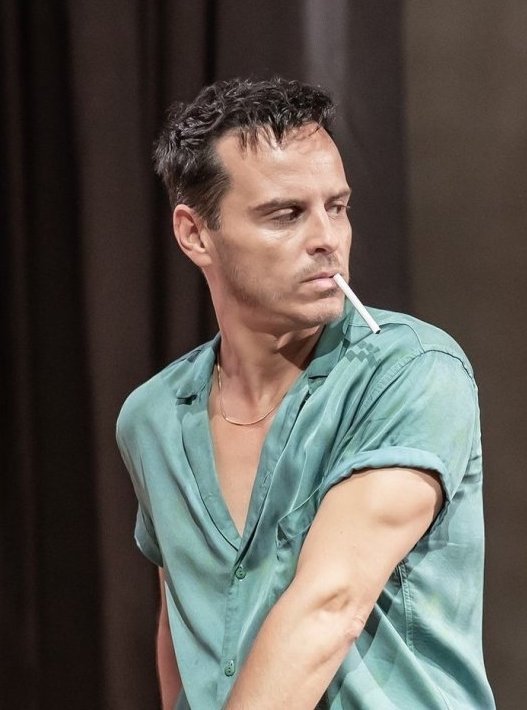
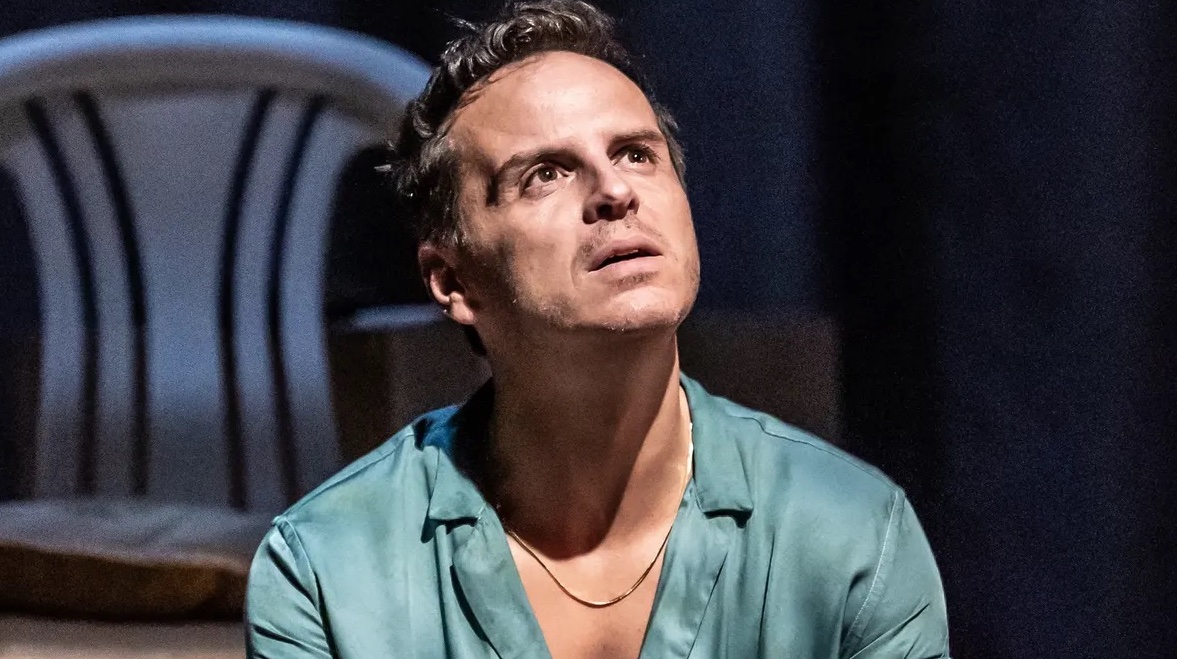
I have previously been somewhat baffled by the general adulation heaped upon Andrew Scott. Don’t get me wrong, I’ve always thought him a perfectly decent actor, but have somehow failed to appreciate the full depths of his talent.

Until now.

Simon Stephens’ brilliant adaptation of Anton Chekov’s Uncle Vanya features seven characters in a complex tale of a family’s interactions on a remote country estate. All of them are played – perhaps inhabited would be a more accurate word – by Scott. There’s no recourse to any costume changes and the set design amounts to little more than a series of chairs, a piano and a doorway. Scott slips effortlessly from one character to the next, using only slight modulations of voice and tiny mannerisms to tell me instantly who he is at any given moment. The effect is uncanny. The term tour de force is often used but I’ve rarely seen it so consummately earned.

Credit should also go to Stephens, whose script strips the story back to its basics (and slightly updates it) so that all the characters’ motivations are clear from the outset – and to director Sam Yates who keeps the whole enterprise beautifully understated, so that it flows from scene to scene like honey in a heatwave. But the lion’s share of the accolades must go to Scott, who is mesmerising in every role: pompous and self-aggrandising at Aleksandr Sebryakov, the retired professor still obsessed with working on his latest project; smooth and sensual as Aleksandr’s young wife Helena; and painfully self-conscious as his daughter Sofia, who has always been told that she’s ‘plain’.

He’s delightfully gossipy as Maria – the mother of the titular Ivan (Vanya), a hard working man who has selflessly devoted himself to supporting Aleksandr, whom he has idolised since childhood – and wonderfully tragic as Mikhail, the middle-aged country doctor who is desperately in love with Helena.

And finally, he is comically ingratiating as Ilya, an impoverished landowner, now dependent on the goodwill of the Sebryakov family. A delightful running joke has us (and the rest of the cast) forgetting that he’s there, observing everything that happens.

If this sounds hopelessly complicated on paper, fear not. The wonder of this National Theatre Live production is the way in which it glides like gossamer through the cuts and thrusts of a family drama, where even a scene where Scott is obliged to make love to himself unfolds like a dream. Throw in a rendition of Jacques Brel’s heartbreaking ballad If You Go Away and I’m completely sold, a convert to Scott’s evident talent.

Vanya – and Scott – are both extraordinary. If you get the opportunity to see this, I urge you to take it.

5 stars

Philip Caveney

All of Us Strangers

27/01/24

Cineworld, Edinburgh

All of Us Strangers is a curious creature. Not exactly a tale of the supernatural, not really a love story, it borrows elements from both genres and weaves them seamlessly together to create something that’s impossible to classify. More than anything else, this feels like a lament for lost opportunities – a meditation on longing and regret.

Written and directed by Andrew Haigh and based on a novel by Taichi Yamada, it tells the story of Adam (Andrew Scott), a lonely screenwriter, currently plying his trade in a near-empty high-rise somewhere in London. He’s currently attempting to write a screenplay based on a true incident from his childhood: the death of his parents in a car crash back in 1978, when he was eleven years old.

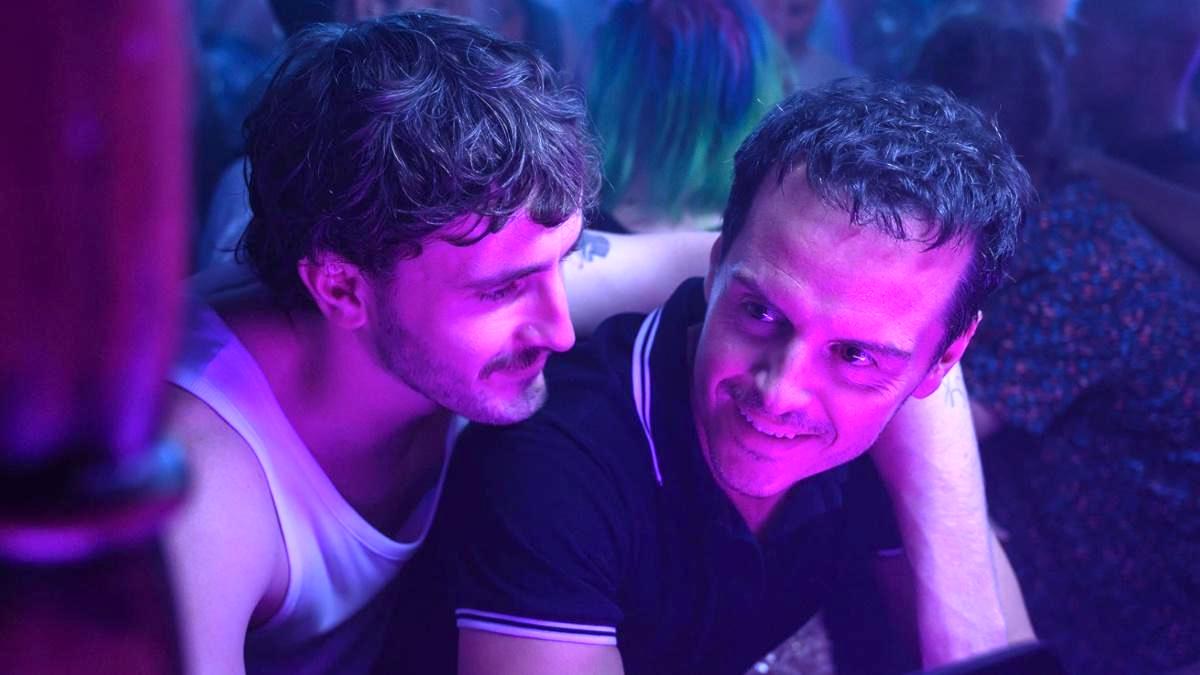
Adam’s musings are interrupted by the arrival of the man who appears to be the block’s only other resident. He’s Harry (Paul Mescal), currently halfway through a bottle of whisky and clearly looking for company. But Adam is nervous and politely refuses Harry’s advances.

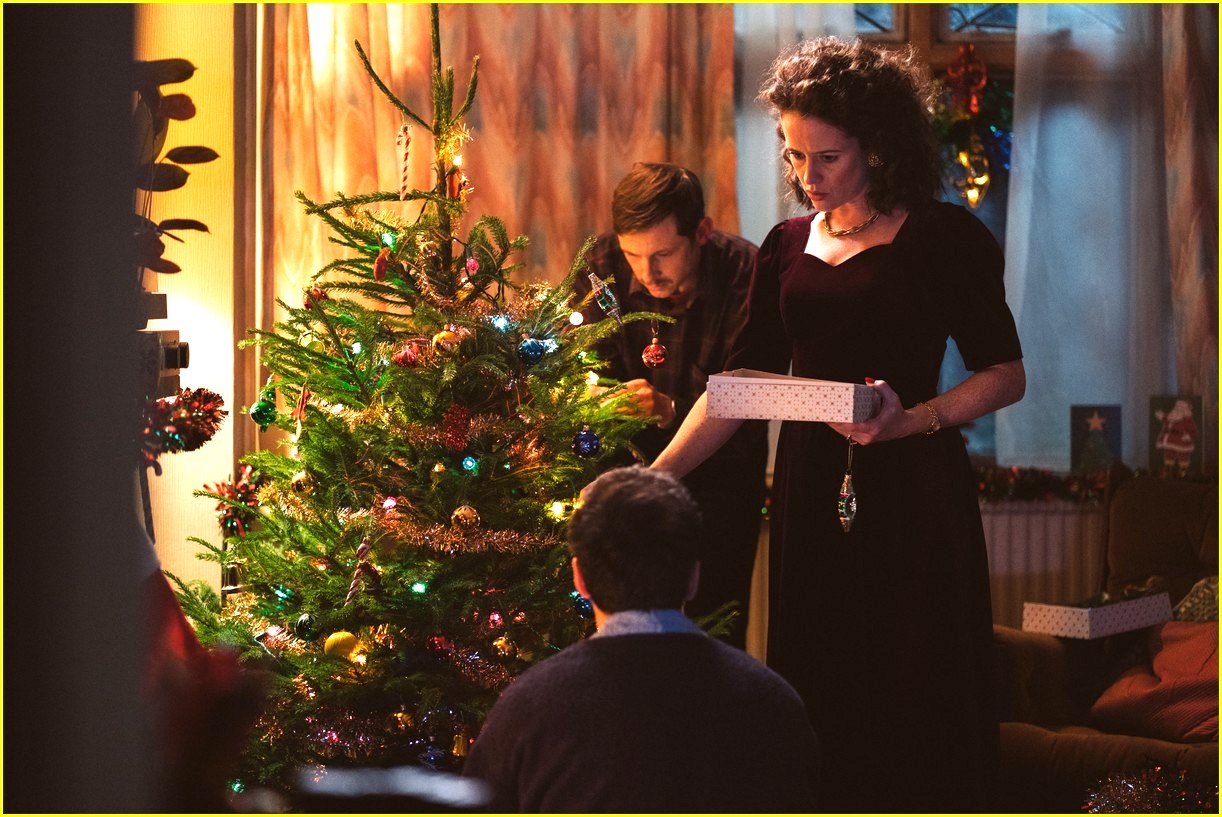
Seeking inspiration, Adam makes the train journey to his parents’ old house in the suburbs of Dorking and is astonished to discover that both Dad (Jamie Bell) and Mum (Claire Foy) are still alive, looking exactly as he remembers them. The 70s aesthetic of their lives is convincingly evoked, right down to the soundtrack of Erasure and Frankie Goes to Hollywood, and his folks are eager to find out how their boy has fared since they last saw him.

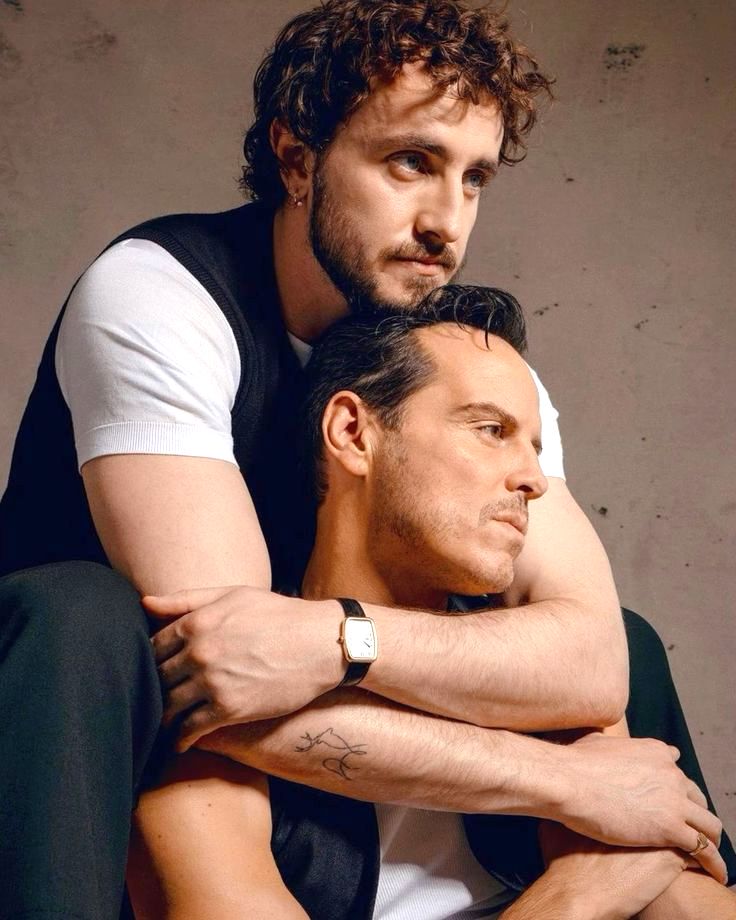
And then, Adam reconnects with Harry and an intense sexual relationship develops, their first encounter sensitively captured, their wild hedonistic nights in London’s gay clubs accompanied by a succession of pounding nightclub bangers. But where are they – and the story – heading?

Essentially a four-hander – we never meet any other characters – this sweetly-sad narrative is anchored by impressive performances from the four stars. Scott, in particular, creates a beautifully-judged picture of loneliness and regret, a man struggling to come to terms with a world where he struggles to function. In the scenes where he’s enjoying some time with his parents, he effortlessly slips into a state of childlike wonder.

Many viewers have said that watching this moved them to tears, though I stay resolutely dry-eyed throughout. Perhaps this says more about me than it does about Haigh’s film, but what All of Us Strangers captures particularly well for me is the curious way a writer’s mind works; how half-remembered incidents from childhood can be developed into something tangible, the stuff of alternative reality, and how such discoveries can sometimes become almost overwhelming.

If not the five-star masterpiece I’ve been led to expect, this is nevertheless an exciting and provocative slice of contemporary cinema.

4.2 stars

Philip Caveney

Present Laughter: NT Live

26/01/20

Festival Theatre, Edinburgh

It’s hard to believe that National Theatre Live is already celebrating its 10th anniversary. This brilliant initiative, which makes the very best theatrical productions accessible to a much wider audience than they could ever reach on the stage, has been a resounding success. Like many people, we usually view them at the cinema – but there’s something very fitting about seeing this West End winner on the big screen at the Festival Theatre.

The play invites us to witness a few turbulent days in the life of highly successful actor, Garry Essendine (Andrew Scott). Recently turned forty and about to embark on a prestigious tour of Africa, Gary is suffering something of a mid-life crisis and, at the play’s opening, wakes up after a night of drunken debauchery to discover that he has slept with ingenue Daphne Stillington (Kitty Archer). Unfortunately, she is still hanging around his swish apartment, hoping for breakfast and that meaningful relationship he promised her last night.

Her presence is tolerated with little more than a raised eyebrow by Garry’s long-suffering assistant, Monica (Sophie Thompson), and by his ex wife, Liz (Indira Varma), who has long ago abandoned her personal feelings in favour of managing and protecting the Garry Essendine ‘brand.’ Both women know that such indiscretions are parr for the course.

But further complications rear their heads when Garry’s married business associate, Morris (Abdul Salis) confesses to having an affair with Joe (Enzo Cilenti), and it isn’t long before the self-same Joe has arrived at the apartment and is making flirtatious advances to Garry.

Coward fans will know that in the original play, Joe was Joanna, but this gender-swap is an astute move on the part of director, Matthew Warchus, reminding us that Coward was a closeted gay man at a time when such inclinations could never be expressed onstage. As the tempo steadily rises, and the play careers like an out-of-control vehicle from one frenetic scene to the next, it’s no surprise to hear the complaint, ‘I feel like a character in a French farce.’

The actors are all pretty much note-perfect: Luke Thallon is particularly assured as a sycophantic fan prepared to move heaven and earth to be near his idol, while Sophie Thompson is an absolute delight as Monica, enmeshed in a love-hate relationship with her employer and sometimes in danger of veering towards the former. But make no mistake, this show belongs to Scott and his undeniable talent. His embodiment of the vain, childish and self-obsessed Garry Essendine is an absolute comic tour de force. I’ve seen plenty of Noel Coward plays over the years but I’ve never laughed as uproariously as I do at this one.

I think he’d be thoroughly delighted by this version, though, which is fresh and vivacious enough to make me think that I’d like to see more of The Master’s plays reimagined for our times.

There are more top flight theatrical productions scheduled to view at the Festival Theatre. Why not treat yourself?

4.6 stars

Philip Caveney


Denial

02/02/17

You’d be hard put to find a worthier subject than that depicted in Denial. It’s based around the true story of American historian, Deborah Lipstadt (Rachel Weisz), who, in the late 90s, was sued for defamation by author, David Irving (a slimmed-down and eerily repellant, Timothy Spall), after she dismissed his ramblings in print as the work of  a ‘holocaust denier.’ An admitted lifelong Hitler obsessive, Irving repeatedly maintained that there was no real proof that the Nazis carried out genocide on the Jewish people during the Second World War, and that Jews had simply fabricated the idea in order to obtain reparation from the Germans after the conflict was over.

The trial is played out in London and Lipstadt is horrified to discover that, because of the peculiarities of British law, it is not for her to prove that Irving is wrong, but rather that she is correct in insisting that the Holocaust actually took place. To lose the case would be unthinkable. Her solicitor, Anthony Julius (Andrew Scott), is insistent that Lipstadt will not be allowed to take the stand, and neither, for that matter, will any Jewish survivors, who will run the risk of being publicly humiliated by Irving. Just to make things even more difficult, Julius decides that the case  should be deliberated not by a jury, but by a single high court Judge.

This is, of course, what actually happened, so we can hardly take umbrage with the particulars of the case – but, in terms of a screenplay, it makes it very hard for playwright David Hare to generate any sense of the actual drama. Lipstadt is forced to sit throughout the proceedings in frustrated silence while barrister Richard Rampton (Tom Wilkinson) conducts the case on her behalf. The result is, I’m afraid, a curiously unaffecting film, one that fails to engage an audience as much as it needs to. Even the scenes shot in modern day Auschwitz seem somehow perfunctory and lacking in emotional depth. And of course, since we all know the outcome of the case, there’s no real suspense here, either.

This is a shame because on nearly every other level the film is nicely done. There are strong performances from an excellent cast, it is decently shot and Irving’s famous interview with Jeremy Paxman is cleverly reenacted. But I have to say, worthy though the subject undoubtedly is, this doesn’t have the kind of impact it could.

3.6 stars 

Philip Caveney

SPECTRE

MV5BMjM2Nzg4MzkwOF5BMl5BanBnXkFtZTgwNzA0OTE3NjE@._V1_SX214_AL_ Unknown-2

08/11/15

The James Bond movies seem to have settled into a regular pattern – a decent outing alternating with a not so decent one. I’ve been following the films since Dr No and was initially delighted with Daniel Craig’s efforts. Casino Royale delivered a much needed kick up the franchise, even if most of its chops were nicked from The Bourne Identity. Craig seemed to cleave closer to Ian Fleming’s vision of his infamous antihero and the silly gimmicks were kept to a minimum. Quantum of Solace felt like a decidedly patchy follow-up, which never really built up a head of steam. Skyfall of course, kicked things clear out of the stadium, becoming the most successful Bond film of all time, which leaves returning director Sam Mendes only one direction in which to take things. Down.

In the latest outing, Bond is (once again) looking like he’s all washed up. He’s gone out on his own in search of the orchestrator of a sinister organisation and M (Ralph Fiennes) has no option but to order him to stand down. Not that it deters him at all. With the help of Q (Ben Wishaw) and Moneypenny (Naomie Harris) he loads his gun and heads out after the bad guys. Before you can say implausible, he’s heading off to a variety of locations to hunt down whichever evil mastermind is behind the latest series of outrages. Meanwhile, the headquarters of MI6, bombed to destruction in Skyfall, have been replaced by a brand new super dooper high rise building, masterminded by C (Andrew Scott) who may as well have the word ‘dodgy’ tattooed on his forehead.

The film starts promisingly with a pre-credits sequence set amidst Mexico City’s El Dia De Muerte celebrations. There’s a Touch of Evil style tracking shot, some massive explosions and a helicopter-set punch up that redefines the word ‘thrilling.’ If the rest of the film was up to this standard, it would be a wonderful thing indeed. Instead, after Sam Smith’s forgettable theme song, (too shrill by half) we’re treated to some exposition, which, after that brilliant opening salvo, seems to move with all the urgency of molasses in winter. It takes quite a while for the film to recover – there’s a forgettable car chase, a punch up on a train that echoes Connery’s fight with Robert Shaw in From Russia With Love, a new love interest with Gallic moody monkey Lea Seydoux and a brief snogathon with Monica Bellucchi that looks like it’s crawled straight out of the sexist 60s. Things don’t really pick up much until chief villain Oberhauzer (Cristophe Waltz) puts in a belated appearance, whereupon we’re treated to a bit of torture, (always a great way to focus the attention), followed by what ought to be the finale.

Except that it’s not. There’s another finale, which though decently executed feels like a sequence too far (and judging by the legions of audience members paying a visit to the loo, we weren’t the only ones who felt this way). SPECTRE is decent entertainment and it’s savvy enough to reference many of the earlier movies, but it’s not strong enough to take its place with the best examples of the series. Some tightening up would have helped it hit all the right targets, but as it stands, this falls into the usual pattern. ‘Bond will return’ promises a credit, but will he be Daniel Craig? Watch this space.

3.8 stars

Philip Caveney