26/03/26
Cineworld, Edinburgh
The title of Stephen Graham’s new film has caused some confusion. The Good Boy is known as in some quarters as Heel, mostly to avoid being confused with another recent release, Good Boy, which is about a haunted dog – though in both films one of the ‘lead’ characters gets to wear a collar. Confused? Don’t be. Suffice to say this is a fascinating watch, whatever it’s called, featuring one of the darkest, most twisted storylines I’ve seen in a very long time.
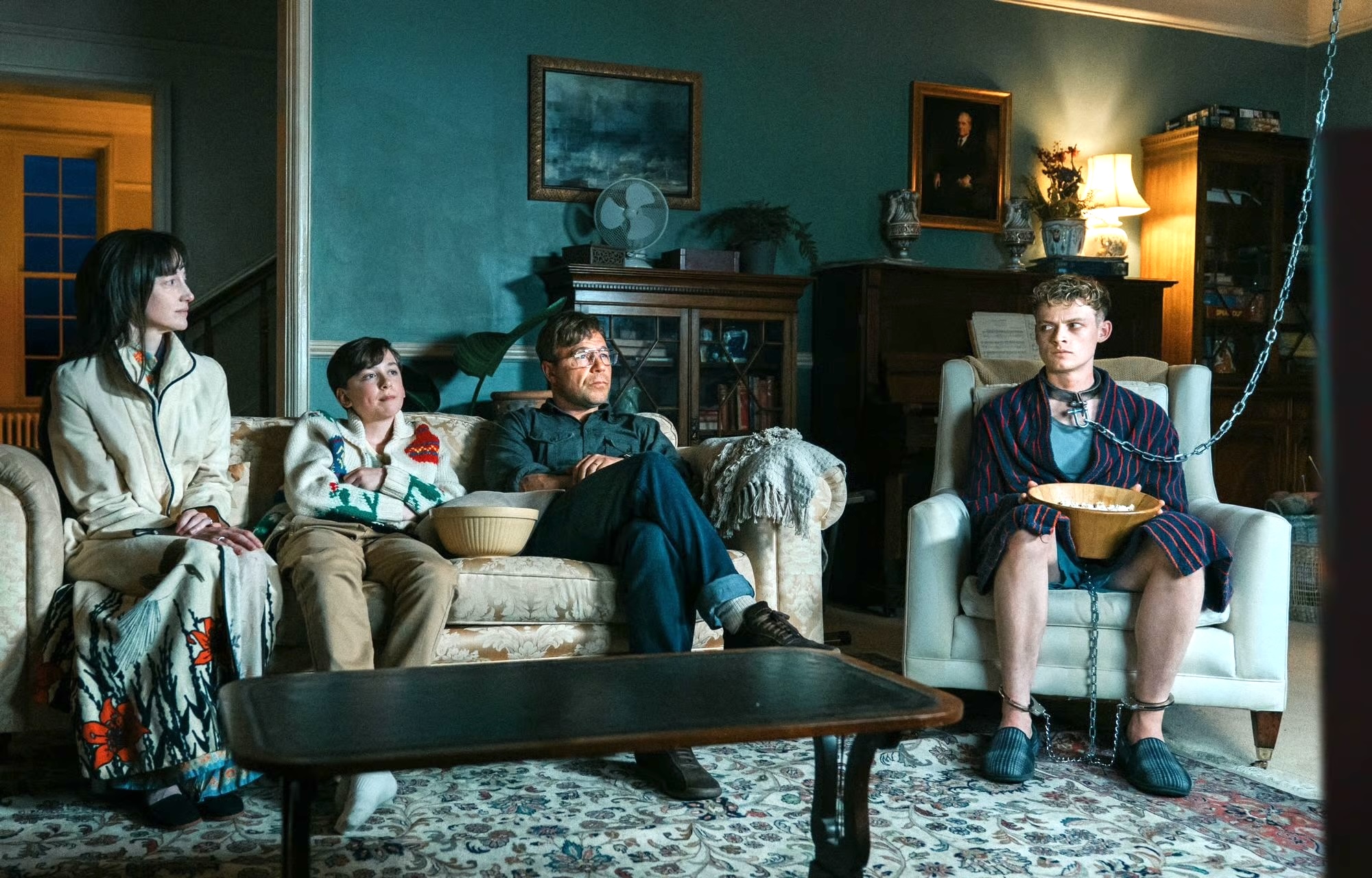
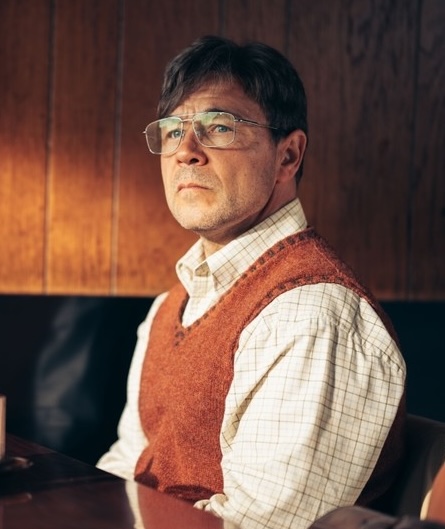
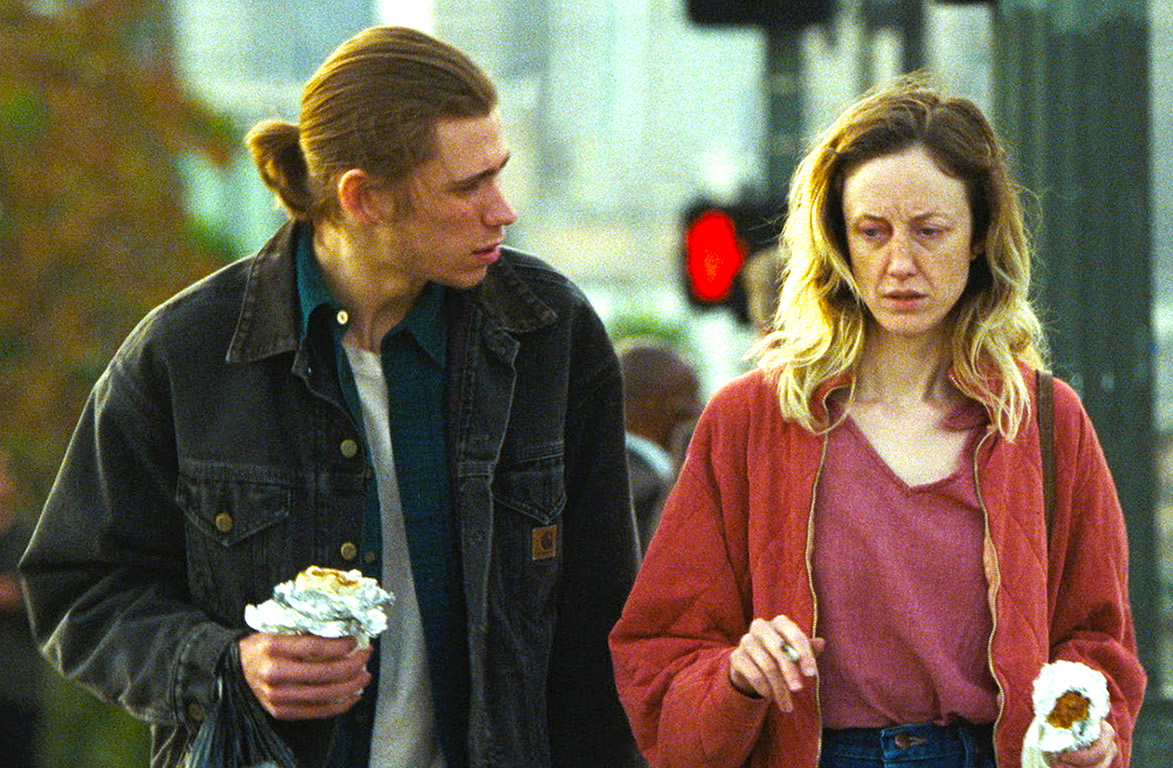
Tommy (Anson Boon) is a toxic nineteen-year-old, who revels in drugs, violence and rampant sex, delighting in filming his exploits and posting them up on social media, where he’s attracting quite a following. Unluckily for him, his excesses have come to the attention of Chris (Stephen Graham) and, all too soon, Tommy wakes up on a mattress in the cellar of Chris’s remote detached house, chained in position and wearing the aforementioned collar. In his new home, he is compelled to obey his master’s every command. Should he misbehave, Chris is more than ready to dole out savage punishment – and he makes it clear from the get-go that he intends to show Tommy how a good boy behaves.
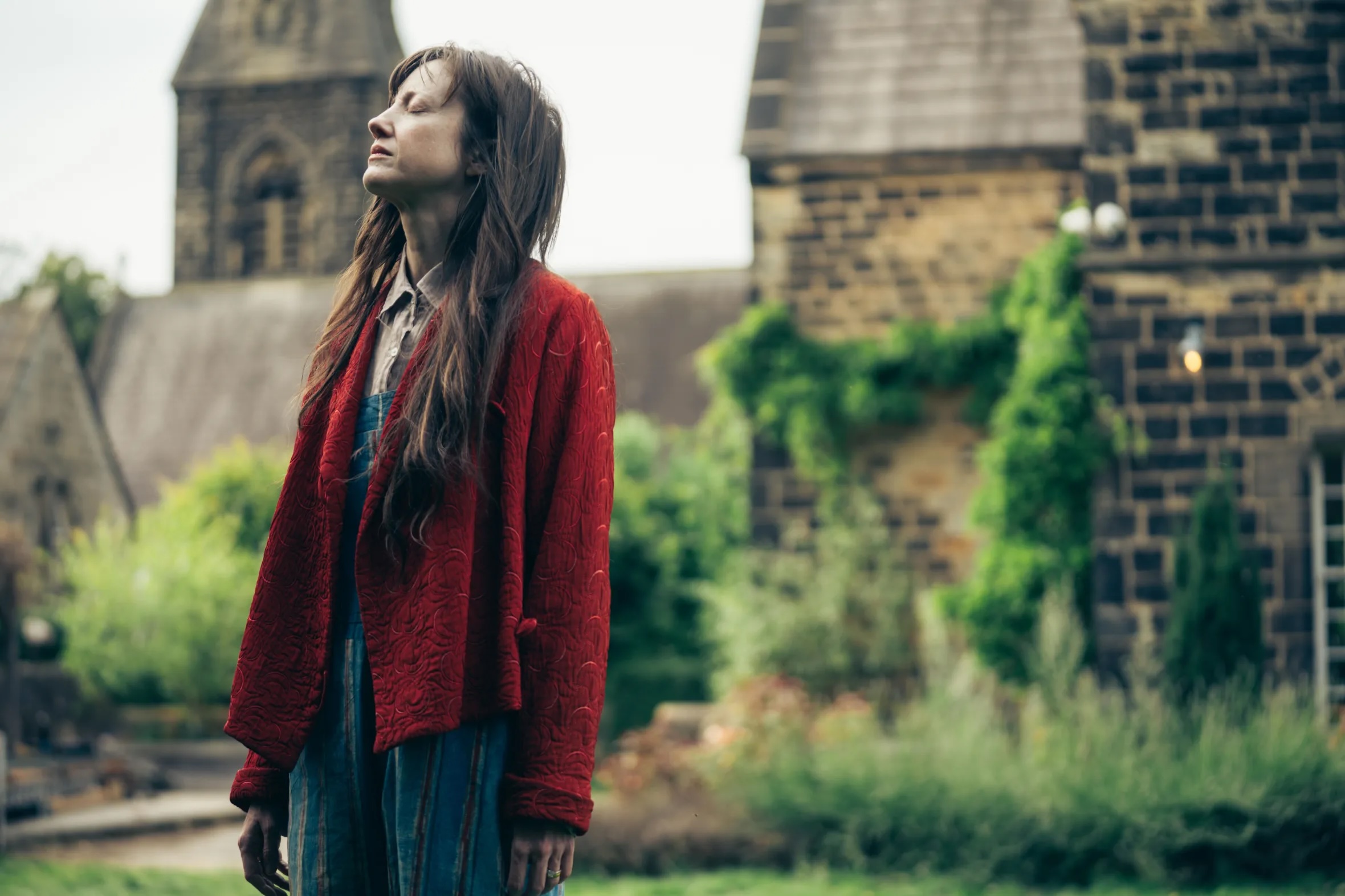
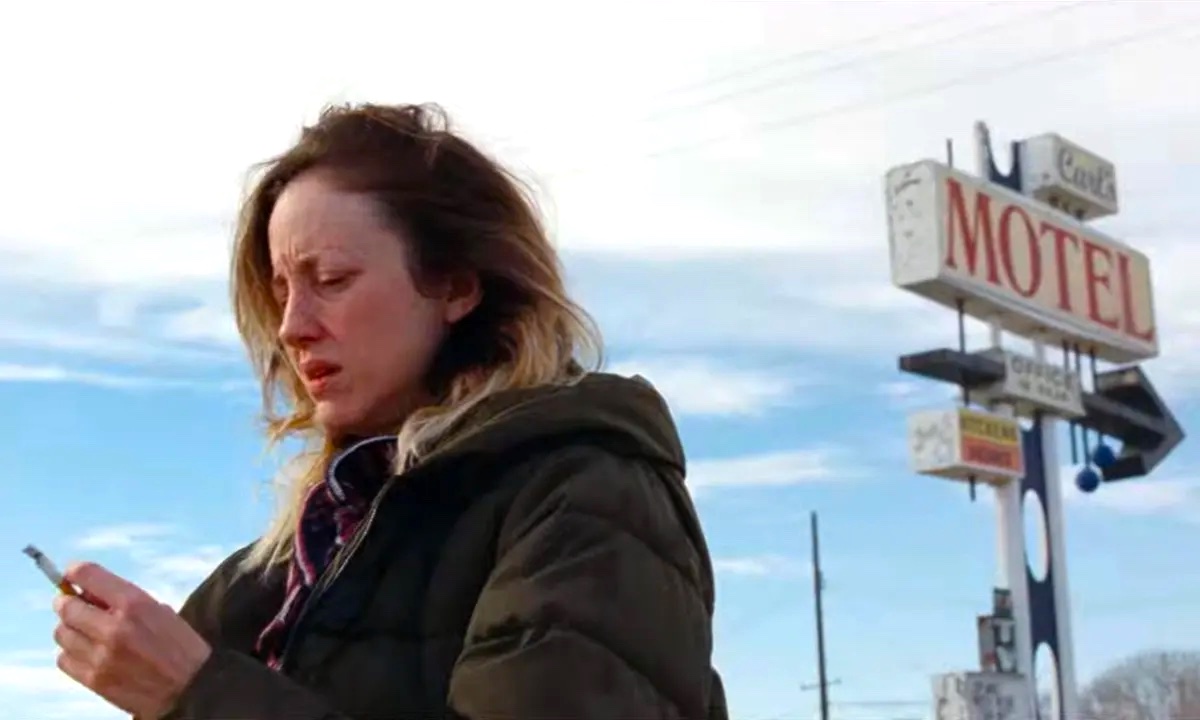
So, who is going to come to Tommy’s help? Certainly not Chris’s pale and wan wife, Kathryn (Andrea Riseborough), who appears to be broken by something terrible in her recent past. And certainly not Chris’s young son, Jonathan (Kit Rakusen), who looks and talks like a kid from an Enid Blyton novel and is very careful not to misbehave. What about the house’s most recent addition, hired cleaning woman, Rina (Monika Frajczyk)? Could she become Tommy’s ally? Or is she too caught up with family problems of her own? Besides, surely somebody has reported Tommy’s disappearance… won’t the police be looking for him?
The beauty of this film, written by Bartek Bartosik and Naqqash Khalid, is that I’m never entirely sure where the storyline is headed, right up to its final scene. Every time I think I’m close to working things out, it swings in an entirely different direction, which only serves to make it all the more intriguing. The three leads all play their roles compellingly, particularly Riseborough, who is obliged to remain mute for many of her early appearances, yet skilfully contrives to exude a palpable air of utter misery. Director Jan Komasa keeps everything on such a tight leash (we’re back to dogs again!) that the film has me in suspense from start to finish.
But what’s it about, I hear you ask? Is it just an unpleasant tale of sadism? No. It’s much more than that. The Good Boy challenges our preconceptions about right and wrong. It is about the power of the family unit – the ways in which it can exert both good and bad influences on those who are held within its tenacious grip. So many people attribute importance to their respective families and are often prepared to go to extreme lengths to ensure that the dynamic continues to function. Chris has clearly taken this approach far further than anyone ever should, but is there something at the heart of his methods that might actually… work?
Whatever your thoughts on the matter, The Good Boy is a powerful and highly original slice of contemporary cinema. See it if you can and draw your own conclusions. I guarantee, you won’t be bored.
5 stars
Philip Caveney





 Bouquets & Brickbats