Alan Bennett

The Choral

09/11/25

Cineworld, Ediburgh

The year is 1916 and in the fictional Yorkshire town of Ramsden, the local choral society is drawing up plans for its next production – but the depredations of war have taken their inevitable toll. Most of the village’s males are either away fighting or already dead. Yet, ironically, with so many of them buried on the Western Front, the most under-employed person on the society’s committee is Mr Trickett (Alun Armstrong), the local undertaker.

The choral’s leader, Alderman Bernard Duxbury (Roger Allam), is painfully aware that his own voice is at best, average but, as the man who provides most of the funds for these productions – and who badly needs distraction after the death of his own son in the trenches – he presses ahead with his plans for the next show, in which he fully expects to sing the lead. 

With the former musical director recently enlisted, Duxbury is keen to acquire the services of Dr Henry Guthrie (Ralph Fiennes) as his replacement, but here too lie problems. Guthrie makes no secret of the fact that he lived and worked for several years in (whisper it) Germany! There are many locals who feel this taints him irrevocably – and why does he spend so much time in the library checking out news articles about the German navy? But other members of the committee, Mr Fyton (Mark Addy) and Mr Horner (Robert Emms), have to grudgingly admit that the man is a real talent.

But once they have him on board, what piece of music can the society possibly perform? Nearly every title they come up with has been written by a German! Eventually, Guthrie alights upon The Dream of Gerontius by Edward Elgar, a suitably British composer. Duxbury gives the title role his best endeavour, but it’s clear that something’s not working…

This original screenplay by Alan Bennett, directed by Nicholas Hytner, could so easily be one of those traditional feel-good features, with the plucky inhabitants of Ramsden coming together to create a masterpiece and performing it to a packed auditorium of spellbound locals – and, while this isn’t so very far from what’s actually delivered here, the telling steers clear of schmaltz and offers something more gritty, nuanced and realistic. 

Guthrie enlists many of his performers from the local hospital where soldiers, recovering from their injuries, are happy to have something else to concentrate on. And for the role of Gerontius, how about young soldier, Clyde (Jacob Dudman)? He has returned to his hometown minus his right arm, only to find that the girl he loves, Bella (Emily Fairn), has fallen for another boy in his absence. If ever there was someone with a real understanding of loss, here he is – and luckily, he has a decent voice.

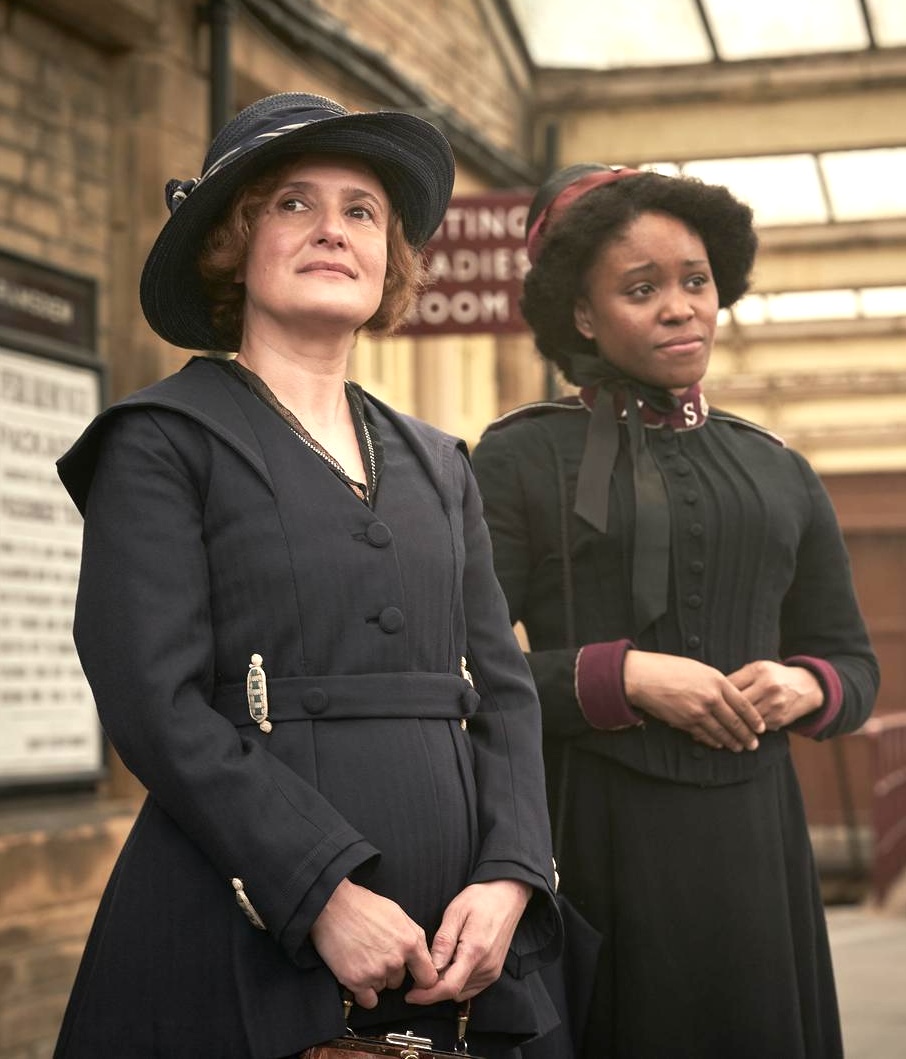
The production gradually starts to come together. When Salvation Army worker, Mary (Amara Okereke), innocently invites Sir Edward Elgar (Simon Russell Beale) along to see a rehearsal, nobody expects that he’ll actually turn up… or that he will turn out to be such a self-aggrandising bellend, maybe the one man who can stop the show in its tracks. There’s a genuine sense of jeopardy as realisation dawns.

But the element of The Choral that I find the most affecting is the depiction of the youths of the town, who use the whole enterprise as a means to meet members of the opposite sex, to have some fun and enjoy a laugh, all the time painfully aware that the clock is ticking, and that their 18th birthdays are fast approaching… along with their call-up papers.

The Choral is an engaging and melancholic piece that serves as a reminder of the awful injustice of war, and the healing power of communal art in times of tribulation.

4 stars

Philip Caveney

Scaffolding

22/08/24

Pleasance (Jack Dome), Edinburgh

Sheridan (Suzanna Hamilton) is in a bit of a fix. After the death of her husband, Emil, she is now the sole carer for her profoundly disabled daughter and has the Adult Social Care representatives snapping at her heels. And, despite having raised a massive amount of money for the restoration of her parish church’s steeple, she now finds that, because of a falling congregation, the church – and the grounds in which Emil is buried – are up for sale.

The vicar isn’t much help, even if he does bear more than a passing resemblance to Hugh Grant – the Notting Hill one, not Paddington 2 – so she’s made a perilous ascent up the titular scaffolding. Here is a place where she can contemplate her woes, not to mention all her recent purchases – the items necessary to build a powerful bomb…

This clever and affecting monologue, written by Lucy Bell and directed by Lillian Waddington, has about it the air of an Alan Bennett Talking Heads piece, a whole wealth of emotion masked by casual flippancy. Hamilton plays the role with assurance, building steadily from nervous anticipation to open despair as she realises she has reached a significant crossroads in her life – and the end of her tether. Bell’s script is equally agile, by turns humorous, acerbic and, ultimately, heartbreaking.

Alice Sales’ set design keeps Hamilton constrained within its claustrophobic confines, emphasising Sheridan’s dilemma. I can feel her building frustration as the story approaches its conclusion. I think I know where all this is headed… but the denouement confounds all my expectations.

In the final days of this year’s Fringe, here’s another production that’s worth catching if you get the chance. It may also be the only show on offer where every single member of the audience gets to be God for an hour. Which, let’s face it, isn’t an offer you get every day.

4.4 stars

Philip Caveney

Allelujah

17/03/23

Cineworld, Edinburgh

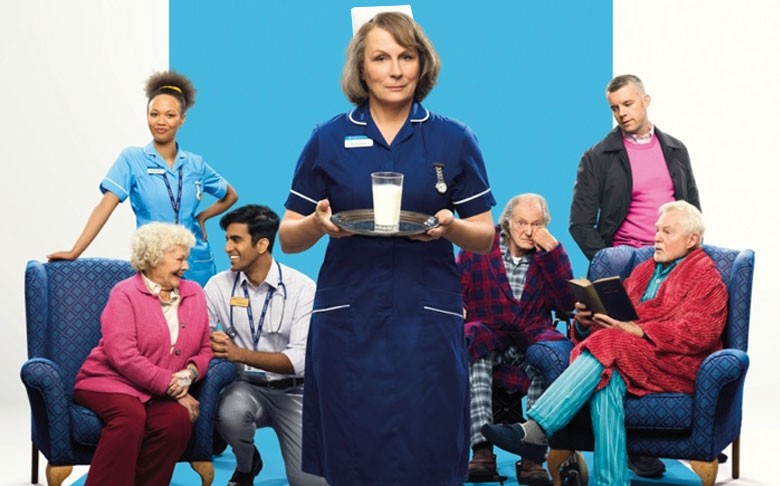
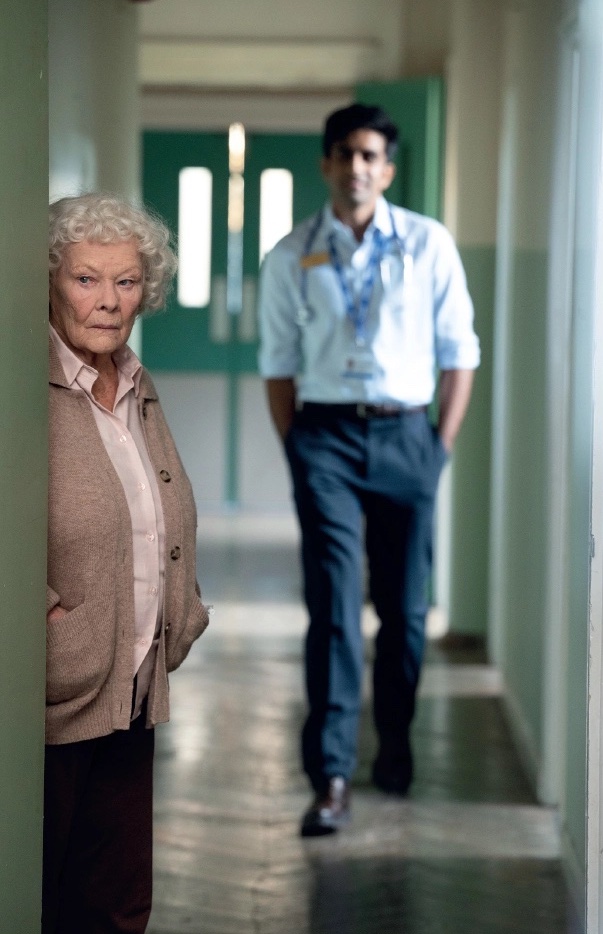
This film boasts a starry cast. Indeed, with comedy queen Jennifer Saunders in the lead role, alongside British acting legends such as Judi Dench, Julia McKenzie, Derek Jacobi and David Bradley – not to mention the brightly-hued, smiling posters – it promises to be a clever-but-gentle affair, something pleasant for a Sunday afternoon.

It’s not.

Adapted (and updated) by Heidi Thomas from Alan Bennett’s 2018 stage play, Allelujah is an ode to the NHS, as gnarly and wonderful, inspiring and infuriating as the institution itself. I feel like I’ve been lured in by the publicity, before being punched in the gut by a polemic – but I’m not complaining. This is the movie equivalent of a protest song; it’s timely and vital.

Sister Gilpin (Saunders) and Dr Valentine (Bally Gill) work at ‘the Beth’ – a small, crumbling, Yorkshire hospital, specialising in geriatric care. They’re fighting a losing battle against closure, despite the fundraising efforts of local volunteers, but they forge on anyway, doing their best for the elderly patients who need them, offering them compassion and dignity in the last stages of their lives.

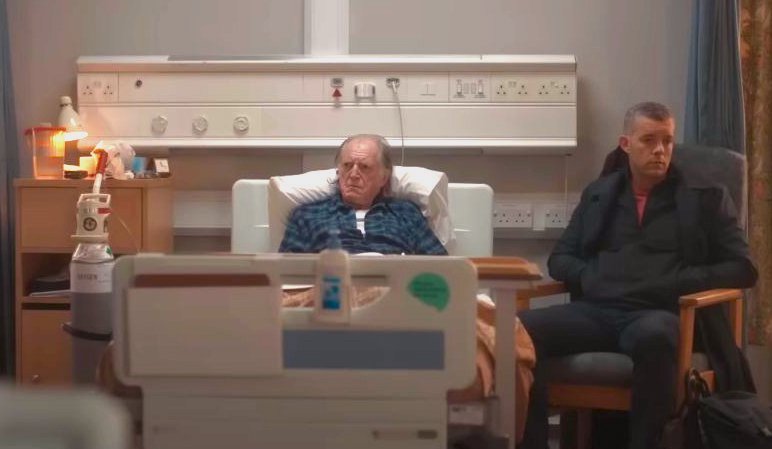
Joe (David Bradley) likes it in the Beth. He doesn’t want to go back to the Rowans, the care home where he’s miserable. But his son, Colin (Russell Tovey), is the film’s antagonist, the malevolent Tory hatchet man, who views the hospital dispassionately, from a purely numbers perspective. His relationship with his dad is thorny, but – as they soften towards one another – will he change his mind about the NHS?

Actually, it’s not as clear cut as that. Nothing here is. Under Richard Eyre’s directorship, Allelujah‘s narrative arc is awkward and jarring; it never leads where I anticipate. Instead, it keeps confounding my expectations, pulling me one way and then another, wrong-footing me. Some of the political grandstanding is a little clunky – there are speeches occasionally, in lieu of dialogue – but all of this adds up to something really impactful.

If Sister Gilpin is a microcosm of the Beth, embodying its best and worst, then the Beth is a microcosm of the NHS, encompassing its triumphs and its disasters, its shortcomings and its accomplishments. The final scenes, depicting the heroic work our doctors and nurses did during the pandemic, provide a stark reminder of why we have to fight to keep our health service. It might be troubled, but it’s glorious and it’s ours. “You dismantle it at your peril.”

As the credits roll, there’s a stunned silence in the cinema. Then someone begins to applaud. And we all join in.

5 stars

Susan Singfield

The Madness of King George

16/06/20

National Theatre Live

This adaptation of Alan Bennett’s acclaimed 1991 play, a co-production between The National Theatre and the Nottingham Playhouse, stars Mark Gatiss as George III, the much-loved and admired monarch whose reign was nearly destroyed by a protracted battle with mental illness. We now know that George suffered from porphyria, a condition that comes with a whole raft of punishing symptoms – and it’s clear from the outset that the illness itself is worsened by the ill-informed efforts of the court physicians, who set about inflicting a whole series of what can only be described as tortures on the luckless monarch. They bleed him, they ply him with laxatives, they even spill boiling hot wax onto his head and back, convinced that these remedies will drive out his ‘ill humours.’  Little wonder, then, that their efforts are instrumental in pushing the king deeper into delirium. Bennett’s script walks a perilous tightrope between hilarity and the full blown tragedy of watching a man degraded and humbled in front of his family and his courtiers. 

It’s only when Prime Minister William Pitt (Nicholas Bishop) engages the services of Doctor Willis (Adrian Scarborough) that a possible light appears on the horizon. Willis’s approach to the problem is a tough, rigorous routine that seems more appropriate to the breaking of a horse than the nurturing of a stricken human being but, against all the odds, it starts to pay dividends.

Meanwhile, the Whigs see the king’s situation as an opportunity to oust Pitt’s Tories by allying themselves to the ambitious Prince of Wales (Wilf Scolding), who longs for some kind of power and doesn’t mind how he gets it.

This is a handsomely mounted production, which takes off at a gallop and never allows the pace to flag. Each scene segues effortlessly to the next and there’s solid work from the supporting cast, but this is essentially an opportunity for Gatiss to shine and he rises to the challenge with considerable aplomb, managing to bring out George’s innate likeability even as he is reduced to a gibbering, gesticulating wreck by his steadily mounting symptoms.

This is an object lesson in how to present a period piece. Everything here – the costumes, the sets, the actors’ comic timing, the machinations of the various political players, is presented with absolute authority and skilfully directed by Adam Penford.

It’s often said that fact is stranger than fiction and The Madness of King George seems to illustrate this point perfectly. 

4.2 stars

Philip Caveney


The Habit of Art

07/04/20

Original Theatre Company

In the normal run of things we would have been seeing this at the King’s Theatre just a few days ago, and basing our review around that performance. But these are very far from normal times and, consequently, this revival of Alan Bennett’s 2009 production, directed by Philip Franks, can now be accessed directly from The Original Theatre Company’s website for just a few pounds.

Ostensibly a play about the odd friendship between WH Auden (Matthew Kelly) and Benjamin Britten (David Yelland), The Habit of Art is made more interesting by allowing the audience to be observers at a rehearsal for the play, taking place in a scruffy church hall. We are afforded an insider’s view complete with all the mistakes, digressions and conflicts that exist in such situations. In effect, each actor is portraying not just the character they embody in the biographical play, but also the actor who portrays that character – which probably makes this sound a lot more complicated than it actually is. Don’t worry, the metatheatre all falls into place.

Auden, in the latter years of his career, has been reduced to living in rooms at his college in Oxford, where he meets occasional friends and regularly entertains rent boys, who supply him with his daily bout of fellatio. He is unexpectedly visited by his biographer, Humphrey Carpenter (whom he briefly mistakes for that day’s supplier of sexual favours), and later by Britten, whom Benjamin hasn’t seen for thirty years and is keen to discuss his latest project, a planned adaptation of Thomas Mann’s Death in Venice. (Mann, incidentally, was Auden’s Father-in-law.)

Bennett has a lot of fun dealing with the subject of homosexuality, still illegal in the 1970s when this play is set, and the secret that drove these two great artists. Auden talks much about the titular habit – how creative minds are constantly disposed to creating work, long after any real need to do so has vanished from their lives, and the moment when he seizes upon the desperate hope that Britten is thinking of offering him a collaboration is the play’s pivotal scene. Both Kelly and Yelland offer assured performances, and they are well supported by Veronica Roberts as the ever capable stage manager, Kay, and by John Wark as Donald, who can’t quite rid himself of the notion that, in playing Humphrey Carpenter, he’s actually nothing but a ‘device.’

This witty and engaging performance, even when condensed onto our tiny screen at home, is worth seeking out, but it makes me long to have seen it in the theatre, where it really belongs. Still, interested parties will find it at www.originaltheatre.com

4 stars

Philip Caveney


The Lady In The Van

MV5BOTY0MjM3NTQyOF5BMl5BanBnXkFtZTgwMzcwNjUxNzE@._V1_SX214_AL_44-lady-in-the-van

14/11/15

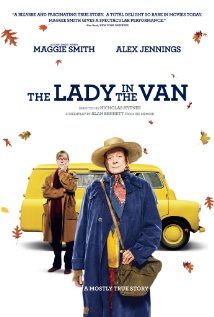
Based on Alan Bennett’s memoir and adapted from his 1999 West End play, The Lady In The Van features Alex Jennings as the great man himself, and is the true story of Miss Shepherd (Maggie Smith), an elderly transient who parked her beaten up old Bedford van in Bennett’s driveway and ended up staying there for fifteen years. The film’s a total delight, offering Maggie Smith a gift of a role as the obstinate, curmudgeonly and sometimes downright rude, Miss Shepherd, while Jennings’ assured turn as Bennett is so much more than just an uncannily accurate impersonation; indeed, here we get two Alan Bennetts for the price of one – the man who writes about his life and the one who actually lives it. With this simple but brilliant device, the film has a lot to say about the very nature of writing and the way in which real events are sometimes adapted for the purposes of entertainment. ‘But that didn’t really happen,’ writer Bennett will occasionally announce, like some glum member of a Greek chorus lurking in the background.

The story opens with a brief glimpse into Miss Shepherd’s past, the single traumatic event that initiated her deterioration into vagrancy, and then we witness her arrival in the street in Camden Town where Bennett has just purchased a house. We meet the other inhabitants of the street and witness their reactions to having this tragic creature parked nearby, an interesting mixture of liberal guilt and open disgust. Miss Shepherd’s toiletry arrangements are rudimentary to say the very least, while her open disdain for anyone who tries to help her, would probably move Ghandi to violence.

There’s so much to enjoy here. Bennett’s wry asides are sometimes cripplingly funny, Maggie Smith gives a triumphant performance in a role she was born to play and there are cameos from some big names, including one from each of the boys in the film of The History Boys. While much of the emphasis is on comedy, the film’s latter stages are deeply affecting and more sensitive viewers may find they have occasional recourse to a pack of tissues, and yet the script easily resists cheap sentiment.

Perfectly judged, beautifully acted and cannily scripted, there’s really not much here to criticise – just plenty to enjoy.

5 Stars

Philip Caveney