Adam Driver

Megalopolis

03/10/24

Cineworld, Edinburgh

Well, I can’t say I wasn’t warned. Francis Ford Coppola’s long-nurtured passion project, Megalopolis, arrives garlanded with the kind of vitriolic advance reviews that instantly sank its chances of making any money at the box office. But why all the furore? What has the man done that’s so unspeakable? You’d think he’d murdered somebody. Instead, at the age of eighty-six, he’s made a vanity project, self-financing the hundred million dollar film by selling one of his vineyards. (We’ve all been there.) He hasn’t bankrupted a movie studio, which makes a refreshing change.

Lest we forget, Coppola has made some underwhelming films before. Yes, he gave us The Conversation, The Godfathers (One and Two) and of course, Apocalypse Now, but there was also One From the Heart and er… Jack, both of which were less than perfect.

It’s important to note that right from the opening credits, Megalopolis is described as ‘A Fable,’ so those who describe it as ‘unrealistic’ may be missing the point.

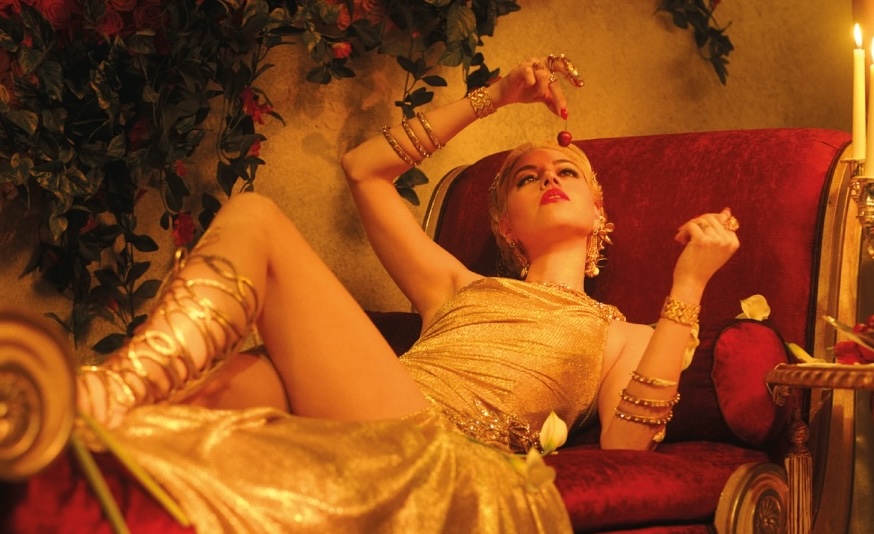
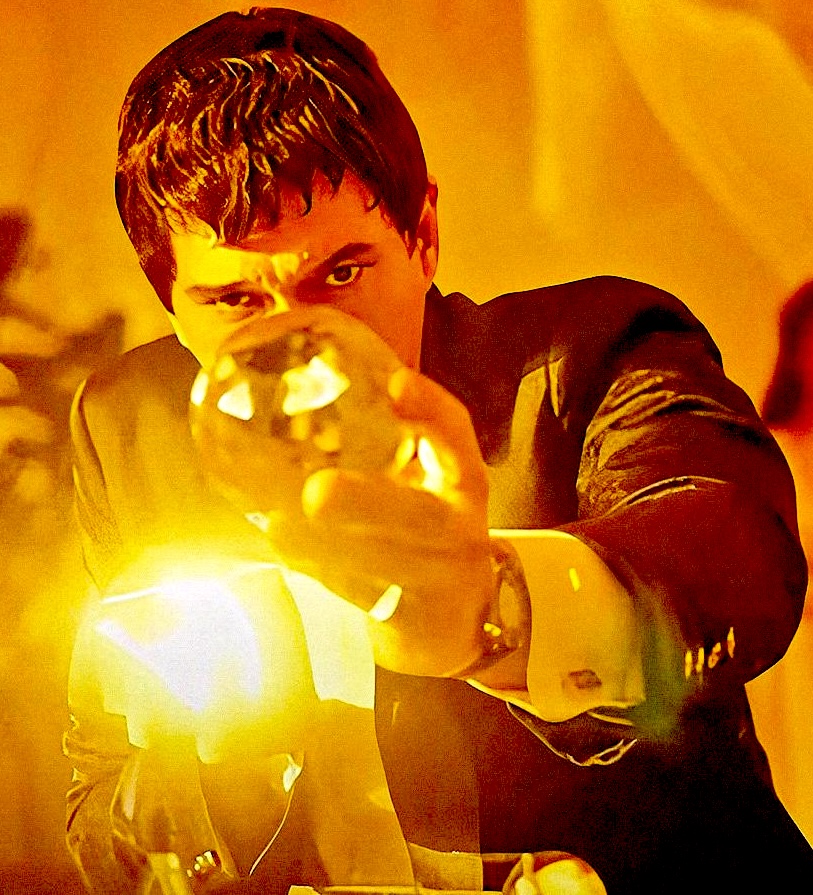
Somewhere in an imagined future, New York has become New Rome, and those that run the city have taken on the aspects of senators and emperors, strutting around in toga-like garments and looking very pleased with themselves. Cesar Catalina (Adam Driver) is a sort of genius / town-planner, who has discovered a mysterious and indestructible building substance called Megalon. He has also found a way to stop time by clicking his fingers (as you do) and has a penchant for lapsing into Shakespeare soliloquies for no apparent reason.

Cesar is currently intent on building the titular inner city area, which he believes will be the first step in creating a bright new future, but his main adversary in this project is Mayor Cicero (Giancarlo Esposito), who seems to be opposed to any kind of progress. Cicero’s daughter, Julia (Nathalie Emmanuel), on the other hand, finds herself increasingly drawn to Catalina and it’s not long before sparks begin to fly between them. It’s clearly going to cause trouble.

There are other powers at work in the city. TV presenter, Wow Platinum (Aubrey Plaza), is suffering from failing audience figures and is keen to take a step up in the world by marrying Cesar’s rich uncle, Hamilton Crassus III (Jon Voight). She uses her nephew, Clodio (Shia LaBeouf), to help her to get there, by any foul means he can devise. (The odious Clodio is clearly inspired by Donald Trump, right down to the bloody insurrection he foments and is perhaps the one place in the ‘fable’ that does relate to real life.)

Overall, Megalopolis doesn’t work and it’s not that it’s short of ideas. On the contrary, it is virtually struggling to contain them all and it doesn’t help that there are too many big names in cameo roles here, most of them improvising their lines. The likes of Dustin Hoffman and Talia Shire flit briefly across the screen and it feels as though Coppola, having secured their services, is unsure of exactly what to do with them. Sometimes, when you work too hard on a project, you stop seeing it objectively.

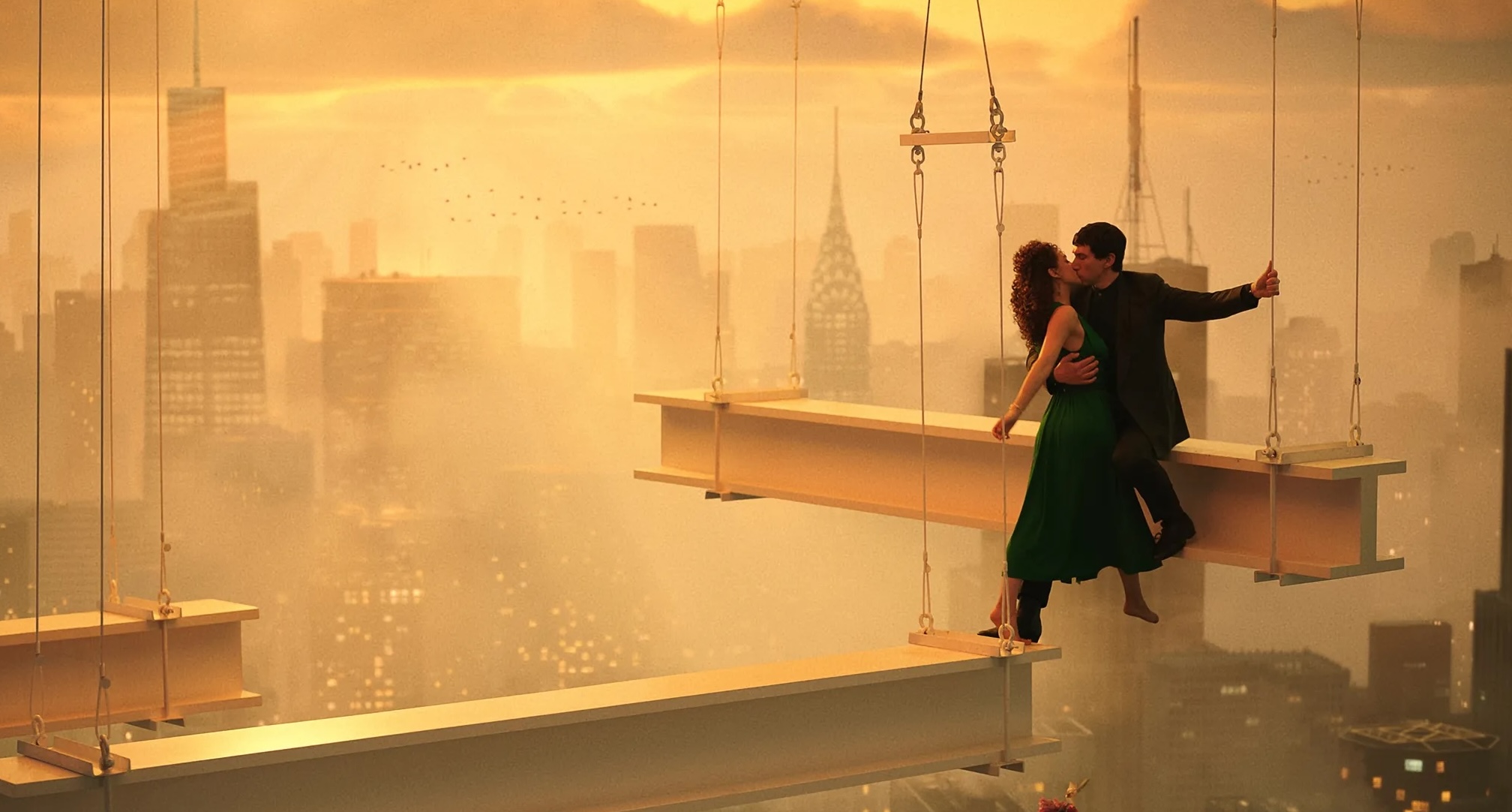
On the plus side, the film looks magnificent in IMAX, a succulent, shimmering wonder to behold (Coppola did his own cinematography) and, in the film’s latter stages, there are sequences that might best be described as psychedelic, the massive screen appearing to erupt at regular intervals in a blaze of light and colour. If you’re going to see this, do try to catch it in the cinema, because its going to lose all of its majesty on streaming. The running time of two hours and eighteen minutes soon elapses and, after everything that Coppola has given us over the years, surely it’s not too much to ask that movie buffs make the effort to actually go out to see it.

3 stars

Philip Caveney

Ferrari

04/01/24

Cineworld, Edinburgh

Director Michael Mann has been plying his trade since the late 60s, with varying degrees of success, occasionally coming up with pure gold with films like The Last of the Mohicans and Heat. Recently, he’s concentrated on more personal works and Ferrari is very much a passion project, something he’s been tinkering with for years, based on a screenplay by the late Troy Kennedy Martin.

It’s not the kind of biopic we might have expected, but instead focuses on a single turbulent year in Enzo Ferrari’s life(1957), when his iconic sports car company is speeding dangerously close to extinction, mainly because Enzo (a convincingly-aged Adam Driver) is much more interested in his cars winning races than he is in selling them.

Meanwhile, his domestic life is also a holy mess. Since the untimely death of his much-loved son, Enzo has become estranged from his wife, Laura (a smouldering Penélope Cruz, threatening in every scene to steal the film from its titular hero). Enzo is spending much of his spare time in the company of his mistress, Lina (Shailene Woodley), with whom he has another son. This seems to be an open secret in Enzo’s neighbourhood of Modena, but Laura is yet to find out – and there are sure to be fireworks when she does.

And then Enzo’s business manager gives him an ultimatum. If he wants to sell enough cars to save the company, he must enter – and win – the gruelling Mille Miglia road race, at the same time seeing off his main competitor, Maserati. If he fails, it will be game over.

So, no pressure.

Ferrari is a handsome production, the 1950s era convincingly evoked right down to the last detail. Despite the nominative determinism, Driver doesn’t get to sit behind a steering wheel unless you count the knackered old jalopy in which he putters around the countryside. It’s left to younger men like the ambitious Alfonso de Potago (Gabriel Leone) or old hand Peter Collins (Jack O’Connell) to climb into those vintage cars and send them roaring around the track.

The racing scenes are perhaps the film’s strongest suit, the cars screaming along country roads with such visceral intensity you can almost smell the petrol, feel the wheels juddering beneath you. Incredibly, the cars had no roll bars back then, not even seat belts, so accidents were generally disastrous. One such scene is so brilliantly staged it actually has me exclaiming two words out loud (the first of them being ‘Oh!’). In another sequence, a nerve-wracking race is intercut with scenes of Enzo at a church service, amplifying the point that, in Modena, sports car racing is perceived as a kind of religion. And I Iove the scene on the eve of Mille Miglia where drivers write letters to their partners, for all the world like soldiers about to go into battle.

There’s plenty to enjoy in Ferrari but it won’t be for everyone. Petrolheads will doubtless feel that there isn’t enough actual racing to keep them happy, while the many scenes of marital discord and the various wheelings and dealings behind the scenes can sometimes feel suspiciously like padding. But there’s no doubting Mann’s obsession with his subject and his ability to capture every detail with considerable flair.

Ferrari offers a distinctly bumpy ride, with no opportunity to strap in.

3.6 stars

Philip Caveney

65

11/03/23

Cineworld, Edinburgh

It was clear before 65 even arrived that something was amiss with this project. Two planned release dates were swiftly abandoned, as though the project were seeking a landing at a time when not much else was happening cinema-wise. On paper, the premise sounds good. Adam Driver versus dinosaurs? What could possibly go wrong?

From the get-go, 65 requires viewers to accept a pretty unlikely set-up – that somewhere in the universe, sixty-five million years ago, a planet existed where the inhabits looked human, acted human and some of them even spoke perfect English. This is by no means a spoiler, it’s spelled out in text in the film’s opening moments. Mills (Driver) is a spaceship pilot, who has recently been charged with the task of heading up a two-year mission (we’re never given any of the details of what he’s expected to achieve out there). He’s agreed to leave his – everyday sexism alert! – un-named wife (Nika King) and his daughter, Nevine (Chloe Coleman), back on his home planet because the latter is suffering from an unspecified illness and Mills will now be earning triple his usual wages, which will no doubt pay for all those pesky hospital bills.

A year or so later, he’s travelling through space in a ship that’s also carrying a group of anonymous passengers in suspended animation (again we’re not trusted with an explanation for this), when a sudden meteor strike sends the ship hurtling towards an unknown planet. Mills survives the subsequent crash, along with a nine-year-old girl, Koa (Ariana Greenblatt). Now the two of them must somehow make their way to the ship’s escape pod, which is inconveniently stranded on top of a mountain.

The planet? It’s Earth. And it’s heavily populated by dinosaurs…

The term ‘stripped-back’ has never felt more appropriate – and, while the set-up strains credulity, it’s simply and effectively done. But once Mills and Koa are installed on this hostile planet, the film has nothing left but a series of frantic chases as our two heroes are pursued hither and thither by a bunch of scaly co-stars with no higher ambition than to eat their visitors. While the film looks great (the scenes shot in the Florida Everglades are particularly eye-catching), the inevitable result is monotony.

Attempts to vary things up are mostly centred around Mill’s recorded memories of his daughter – though, curiously there are none of his wife. (Did they fall out? We don’t know!) I am asked to suspend my disbelief every time a miraculous event saves Mills and Koa, allowing them to escape apparently certain death by a hair’s breadth. Written and directed by Scott Beck and Bryan Woods, who created the superior A Quiet Place, I can’t help feeling that at some point there must have been a lot more information built into this film, cut out piece-by-piece after successive test screenings, perhaps. This may account for the finished movie’s relatively lean running time, and I suspect that, somewhere in the archives, there’s a director’s cut, which features a lot more information than we’re offered here.

It’s by no means a terrible film. The dinosaurs are decently rendered in CGI and I’m genuinely excited by the first attack – but, by the seventh or eighth, I find myself looking at my watch, wondering when I’ll be able to achieve escape velocity.

2. 8 stars

Philip Caveney

White Noise

13/12/22

The Cameo, Edinburgh

Noah Baumbach’s latest film – based on the 1985 novel by Dom Delillo – is mostly about death: humanity’s fear of it, the inevitability of it and the final irrefutable truth that one day it comes to us all. If this makes White Noise sound about as much fun as a car crash at a funeral, don’t be misled. It’s a fascinating film, by turns absurdly funny, deeply puzzling and profoundly worrying. If, ultimately, it attempts to bite off a little more than it can chew, it’s nonetheless an ambitious and bravely experimental slice of filmmaking.

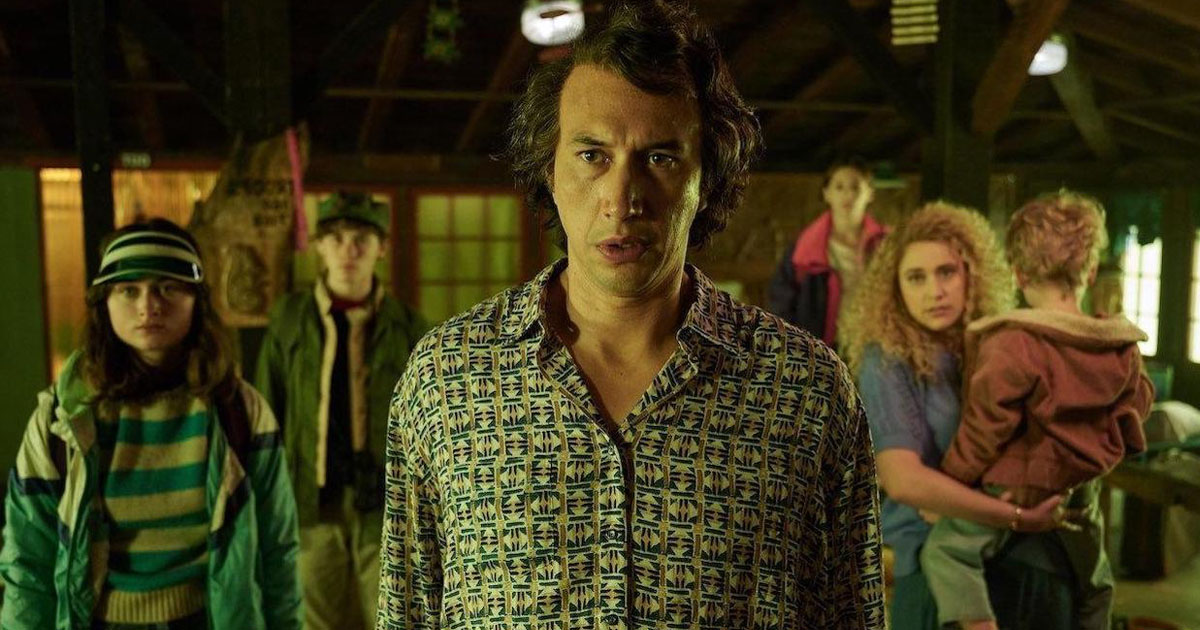
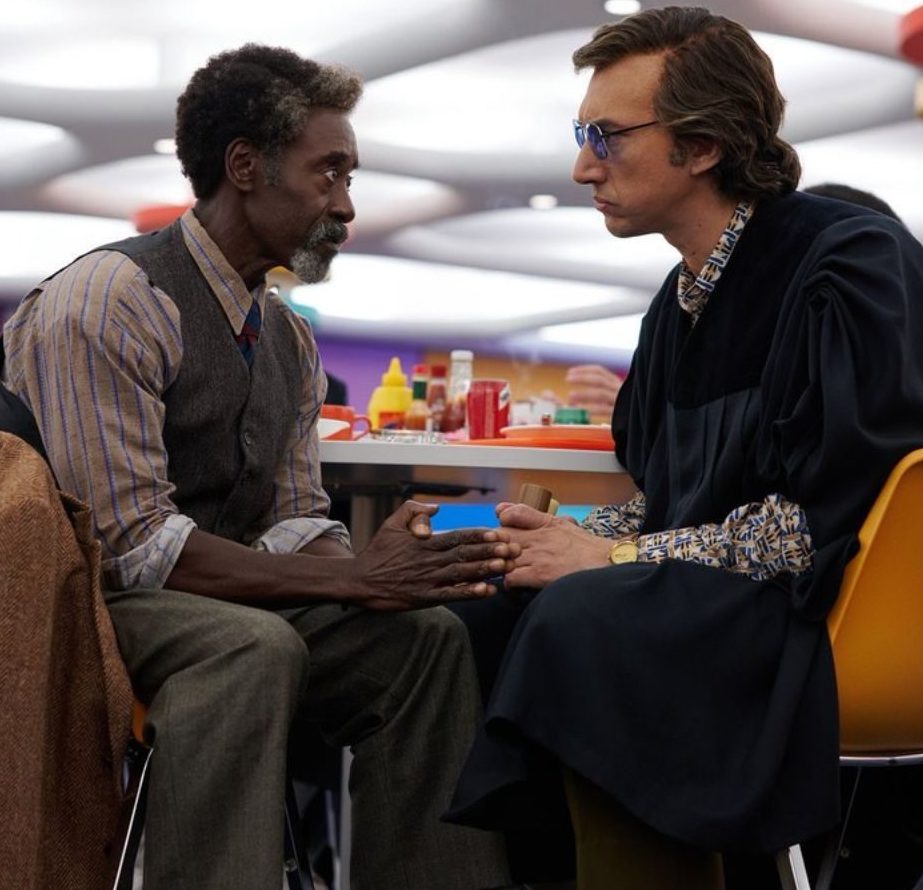
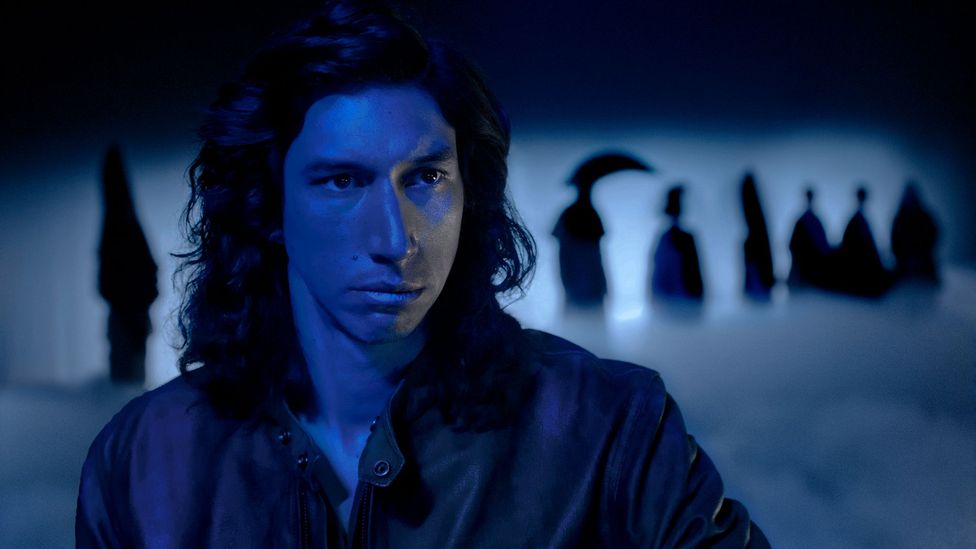
We’re somewhere in the American midwest where Jack Gladney (Adam Driver) is ‘Professor of Hitler Studies’ at the prestigious ‘College on the Hill’, where he’s fond of waxing lyrical about the rise of the Nazis without, it seems, any inkling of how distressing a subject it actually is. He’s also hiding the embarrassing fact that he can’t speak a word of German. Jack enjoys an adversarial friendship with another lecturer, Murray Siskind (Don Cheadle), who specialises in two main subjects, Elvis and er… car crashes. A scene where the two men attempt to engage in a kind of intellectual battle of wits in front of a spellbound class is a particular highlight.

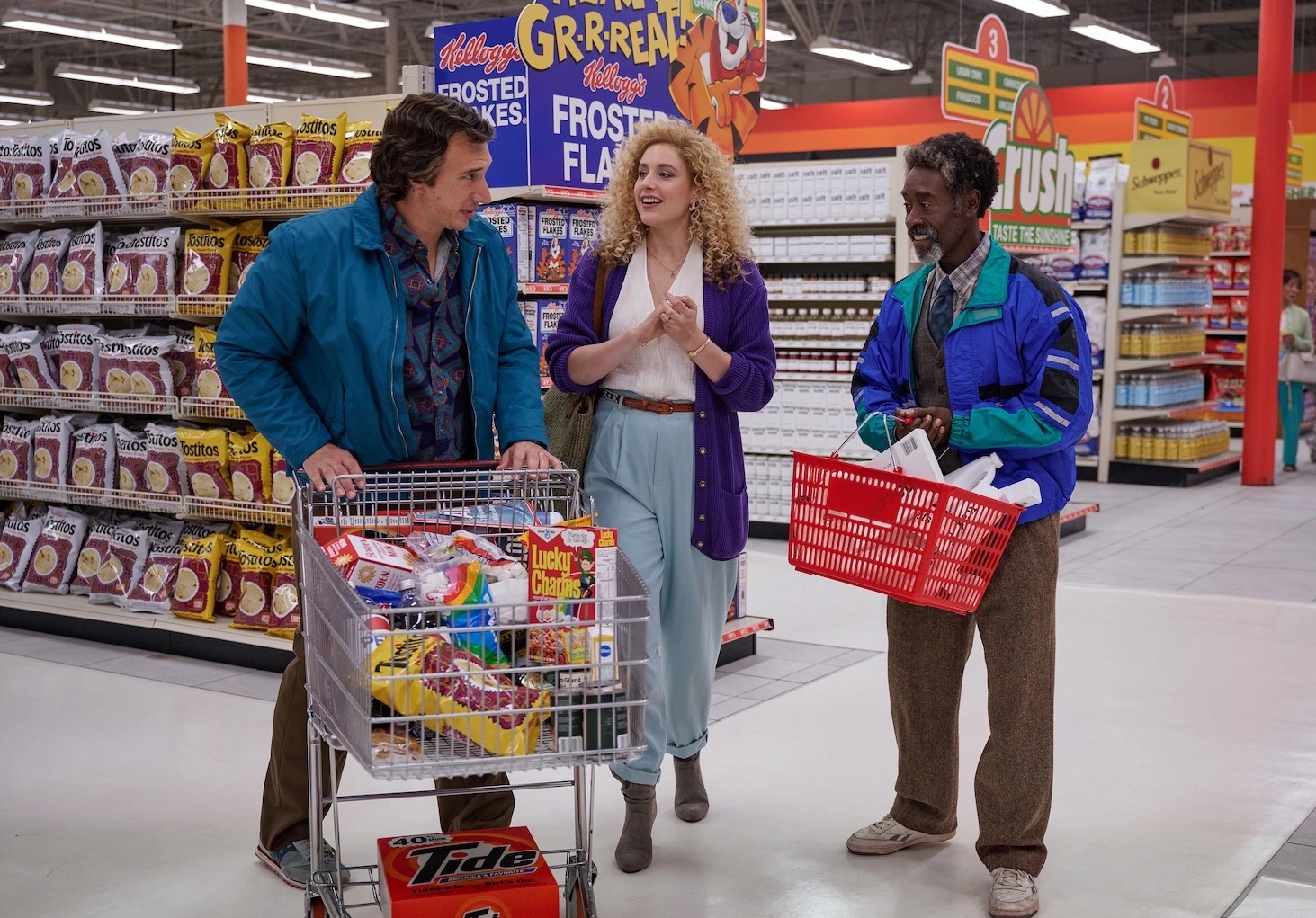
Jack lives with his wife, Babette (Greta Gerwig), and their extended family. Both have had previous marriages and the gaggle of kids who live with them are all better informed than either of their parents. The family lives in a bubble of domestic bliss, interspersed with regular trips to a gigantic, day-glo supermarket, which seems to hold for them the importance of a church. But not everything is quite as cosy as it seems. What are those pills that Babette is secretly taking? And why, when challenged, does she deny their very existence?

Matters take a dramatic turn for the worse when a freight train laden with dangerous chemicals collides with an articulated lorry, carrying something equally nasty. The result in an ‘airborne toxic event’ which sends clouds of deadly fumes into the sky. The Gladney family – and just about everybody else in the vicinity – vacate their home in a desperate attempt to escape. But what exactly are they fleeing from? And what’s the prognosis if you’re exposed to those ‘deadly’ clouds? Nobody seems to know.

White Noise offers as many questions as it does answers. If not everything we’re offered here quite comes off, much of it works brilliantly. Baumbach’s vision of suburban America is packed full of surprises, from doctors who clearly don’t care about the welfare of their patients to a Mother Superior who rubbishes the idea of heaven and angels. There are perfectly judged performances from Driver and Gerwig (particularly the latter who plays her role as if in a permanent drug daze) and Lol Crawley’s cinematography gives everything an unearthly sheen.

In the film’s final third, Jack finds himself driven to seek out the person responsible for Babette’s addiction, but even that doesn’t follow the lines you’d generally expect to encounter in such a narrative. It’s here that the film begins to feel a little too unhinged, though the enterprise is rescued by a delightful end-credit sequence.

It’s an ingenious device that keeps me glued to my seat until the screen finally fades to black.  

3. 8 stars

Philip Caveney

House of Gucci

02/12/21

Cineworld, Edinburgh

A talented young man is motivated by his manipulative wife to take hold of the power that lies within easy reach. He just needs to be ruthless in order to obtain it. Despite his qualms, he follows her advice and is led onwards to his own destruction.

This is, of course, the plot of Macbeth, but it’s also one that fits House of Gucci like a perfectly designed leather glove. Ridley Scott’s film, based on the book by Sara Gay Forden, relates the true life events that led up to the assassination, in 1995, of Maurizio Gucci, the major shareholder in one of the world’s most successful fashion brands. If proof were ever needed that real life can be weirder than fiction, then here it is, writ large.

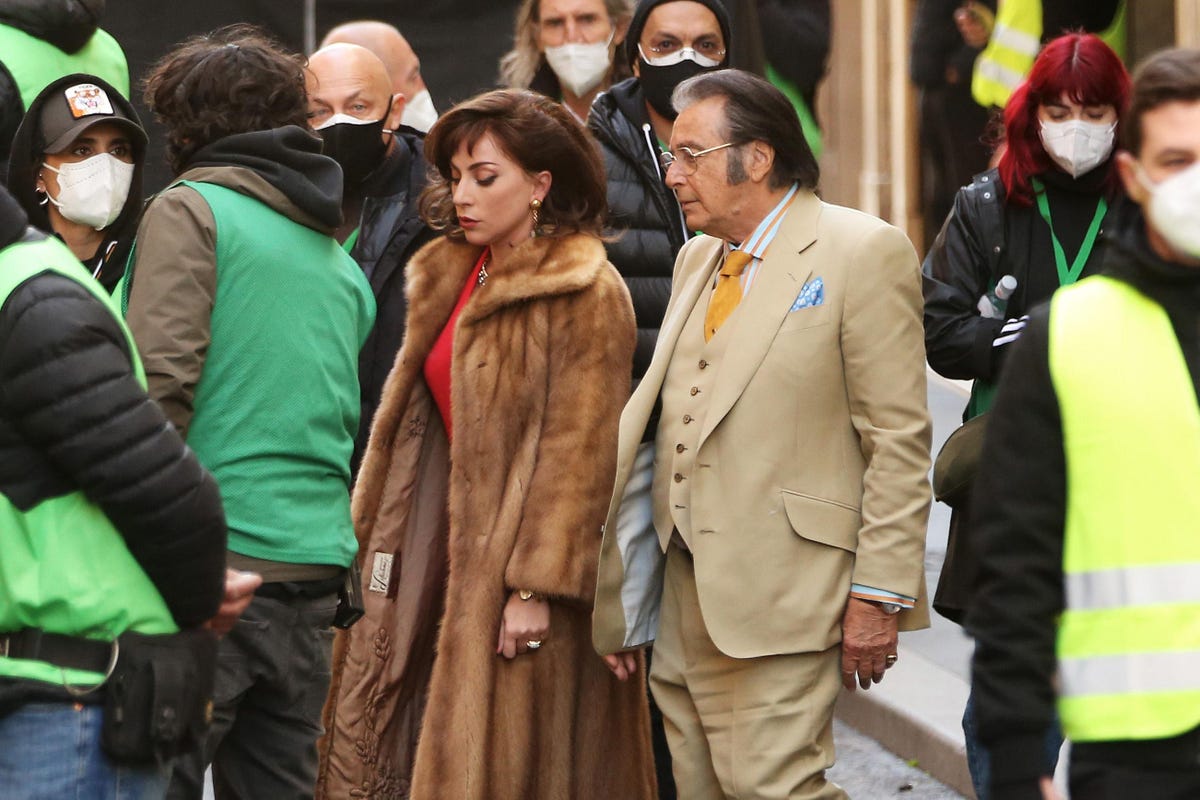
When we first meet Maurizio (Adam Driver) it’s the 1970s and, though he’s well aware that he’s the potential heir to the Gucci fortune, he’s already decided he wants none of it and is training to be a lawyer. Then, at a party, he meets Patrizia Reggiani (Lady Gaga), who – having recognised the possibilities that Maurizo’s surname offers – has soon romanced him to the point where he wants to marry her.

Maurizio’s sickly father, Rodolfo (Jeremy Irons), decides she’s a ‘gold-digger’ and advises his son to steer clear, but Maurizio is smitten enough to renounce the family fortunes in order to be with her. It isn’t long before Maurizio and Patrizia are married and a baby daughter is on the way. Meanwhile, she keeps reminding Maurizio that he needs to step up to the plate and take control of his inheritance…

After the assured (but sadly unsuccessful) The Last Duel, this film feels like another Ridley Scott body- swerve. He’s always been a director that refuses to be pigeon-holed and this really couldn’t be more different from its predecessor, but where TLD felt perfectly judged, HOG is just flabby and unfocused, a parade of caricatures cavorting in a series of fancy locations. It rarely feels like these people are real and have actual lives.

While Lady Gaga certainly puts in a game performance as the success-obsessed Patrizia, even Al Pacino as Maurizo’s Uncle Aldo struggles to rise above the clunky dialogue he’s been given.

And then there’s the enigma of Jared Leto as Aldo’s deluded son, Paolo, who fancies himself as a fashion designer but has no evident talent to back him up. It’s panto season, so perhaps that explains why Leto feels the need to deliver his lines in a kind of high pitched sing-song fashion, but it just seems… really odd. What’s more, with a two-hour-thirty-eight minute running time, there’s a lot here that should have been cut back. The film doesn’t really find its mojo until the final third, but by then it feels like a case of too little, too late. There’s a welcome appearance by Call My Agent‘s Camille Cottin as the new woman in Maurizio’s life, but she’s not given enough to do.

It certainly doesn’t help that most of the people involved are venal, unscrupulous capitalists and it speaks volumes when Pacino’s Aldo – an unapologetic tax dodger – emerges as the film’s most sympathetic character.

In the end, this is something of a disappointment.

3 stars

Philip Caveney
The Last Duel

16/10/21

Cineworld, Edinburgh

You have to hand it to Ridley Scott. At an age when most people are seeking nothing more than a mug of Horlicks and a pair of comfy slippers, he’s still creating big, powerful movies at a rate that would make most younger directors quail. Lurking just over the cinematic horizon is The House of Gucci, but meanwhile there’s The Last Duel, a powerful slice of true history, that unfolds its controversial story over a leisurely two hours and thirty-two minutes. Set in France in the fourteenth century, it relates the story of the last official duel ever fought there.

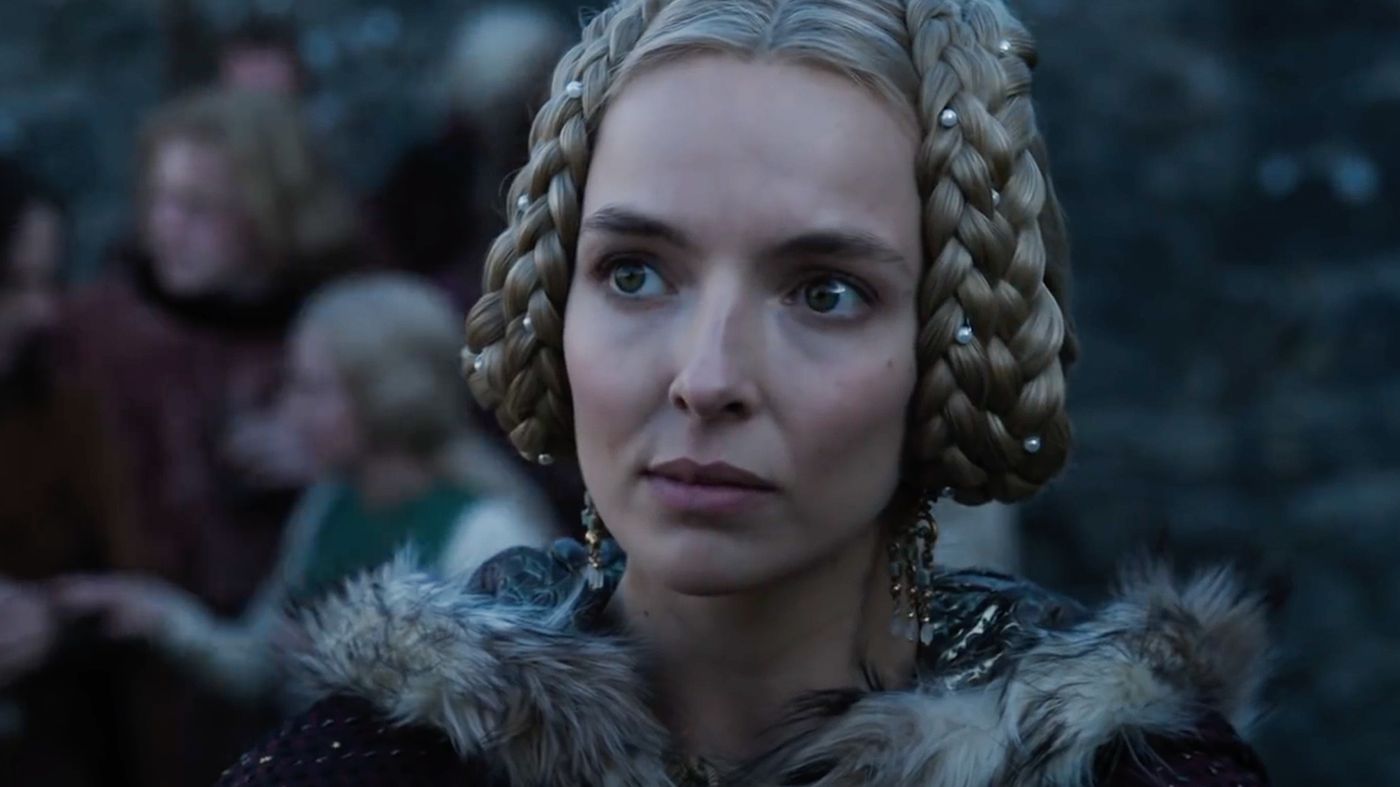
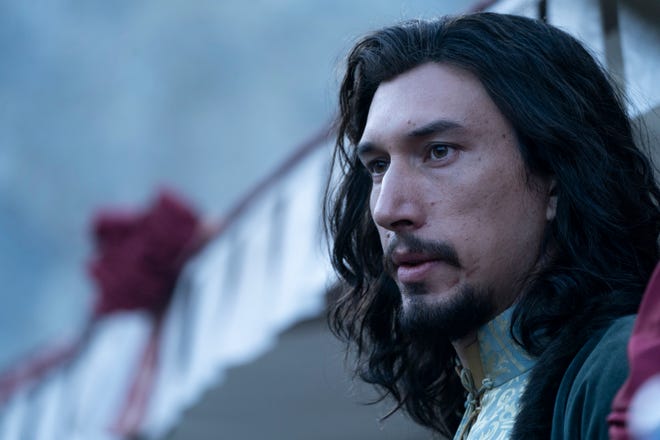
After years of military service in various wars under the sponsorship of Count Pierre d’ Alençon (Ben Affleck), Sir Jean de Carrouges (Matt Damon) is struggling to maintain his house and lands, after the death of his wife. So he marries Marguerite de Thibouville (Jodie Comer), the daughter of a disgraced but prosperous landowner. As part of the dowry, Jean is promised an area of land he’s long coveted, so he’s understandably miffed when Pierre takes control of it and gifts it to his squire, Jacques le Gris (Adam Driver), a former friend of Jean’s.

A powerful rivalry develops between the two men – a rivalry that finally culminates in Jacques visiting Jean’s castle in his absence and raping Marguerite. Jacques denies the allegation – in his self-aggrandising mind, Marguerite was attracted to him and therefore there was no rape. She meanwhile insists on speaking out against her assailant in an age when women in such situations were advised to keep quiet about such matters for their own safety.

Jean demands that Jacques meets him in mortal combat, and that God should decide who is telling the truth – but the consequences of him losing the fight are severe to say the very least. Marguerite will be burned alive if God judges her to be a liar.

The message here is inescapable. In a world where toxic masculinity holds sway, a woman’s word is worth nothing. She is expected to obey her husband in all matters and keep her mouth firmly shut, just as Jean’s mother, Nicole (Harriet Walter), had to when she was younger. It’s sad to observe that, many centuries later, this situation hasn’t improved as much as it should have done. Only recently, certain commentators in America have insisted on holding to the medieval belief that a woman cannot become pregnant through rape. It beggars belief but it’s still out there.

The Last Duel is told, Rashomon style, in three separate chapters, each one seen from the point of view of one of the leading characters. Often we see the same scene replayed with sometimes subtle, sometimes jarring differences. It’s not until we reach the final stretch that we witness Marguerite’s account of what actually happened to her and there’s no doubt in our minds that hers is the one we ought to believe. The script by Damon, Afflick and Nicole Holofcener, based on the novel by Eric Jager, is perfectly judged and a quick perusal of the actual events reveals that the writers have been assiduously faithful to what happened. Both Damon and Driver excel as men driven by their own overbearing sense of privilege, while Comer dazzles in every frame, clearly a woman on the verge of becoming a major star of the big screen. Little wonder that Scott has lined her up to play Josephine in his upcoming Napoleon biopic.

This is serious, grown-up filmmaking of a kind that’s sadly all too rare in a cinema dominated by cartoonish fantasy films. Scott has always excelled in recreating history on an epic scale and The Last Duel doesn’t disappoint. The big screen virtually explodes with a whole series of magnificent set pieces. Here is a medieval world that convinces down to the final detail, one that looks and feels thoroughly believable. And is there any other director who can depict medieval warfare in such brutal, unflinching detail? For once, the film’s 18 certificate feels entirely appropriate. I find myself gasping at just about every sword, axe and hammer blow.

The Last Duel won’t be for everyone, but for me it provides a visual feast with a compelling and fascinating story – and reinforces my belief that Ridley Scott is one of cinema’s most enduring and most versatile talents.

4.6 stars

Philip Caveney

Annette

03/09/21

Cineworld Edinburgh

Director Leos Carax has a reputation for the unusual. Anyone who witnessed Holy Motors (2012) will testify that he loves to embrace the absurd. So Annette would seem like a good fit for him. This surreal rock opera, created by Ron and Russel Mael of Sparks – who themselves are suddenly enjoying some time in the sun after a long sojourn in the ‘whatever happened to?’ file – gives Carax free rein to unleash his bonkers world-view. There are some gorgeous visuals in here, strong performances and several scenes that feel genuinely unique. How ironic then, that what ultimately lets the film down is the songs.

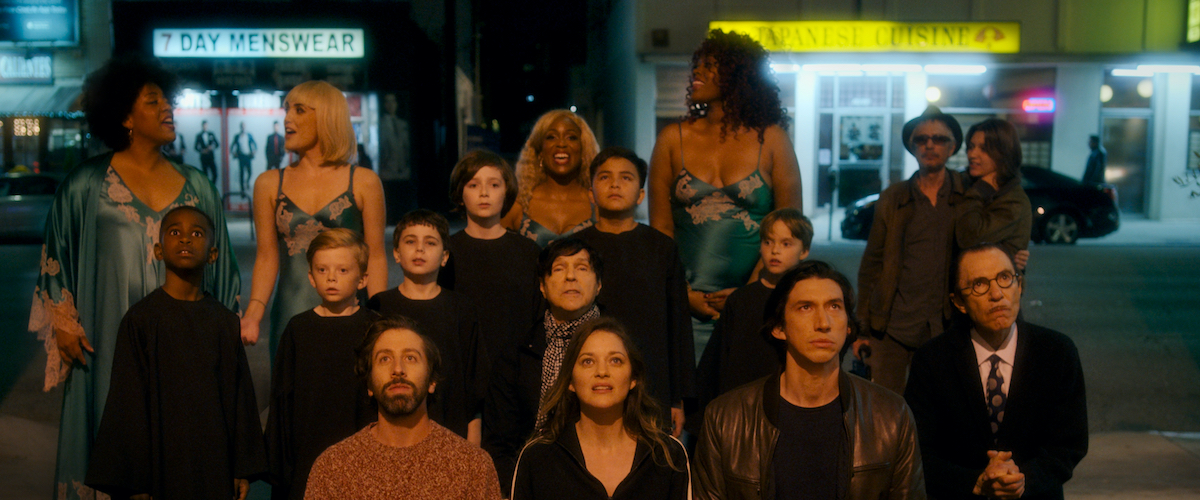
There’s a really upbeat start to proceedings as the cast and crew parade through the streets singing about how excited they are to get this show started. And then it begins…

This is the story of Henry McHenry (Adam Driver), a ‘provocative’ stand up comedian who seems to love insulting the poor saps who buy tickets to see his shows. If it’s supposed to be funny, well, it isn’t working for me, but perhaps that’s the point. Henry is in the throes of a passionate love affair with world famous opera singer, Ann Desfranoux (Marion Cotillard), to whom he sings even when they are in the midst of sexual intercourse. Not wanting to be left out, she joins in with him.

But when Henry’s ‘comedy’ career suddenly hits the rocks and Ann’s operatic trajectory continues to soar, in true A Star in Born fashion, Henry becomes ever more Machiavellian in his attempts to bring her down, even after she’s given birth to their daughter, the titular Annette. The child is unusual to say the very least and not just because she appears to be made of wood.

It would perhaps be unfair to give away much more of the plot, but suffice to say that what starts out as very strange becomes increasingly bizarre. So there’s plenty here to keep a viewer entertained.

Which brings me back to the aforementioned songs, too many of which seem to consist of characters singing the same six words over and over again in a minor key. After a while it begins to feel like a particularly irritating ring tone. It also makes me think that the bum-numbing running time of two hours and twenty minutes could easily have been reduced by a good forty minutes, if the Maels had done a bit of judicious trimming.

It’s also doubly bewildering when a final duet between McHenry and his daughter is the film’s undoubted musical highlight, but by that time it feels too late in the day to save it. A shout out is due to the astonishing Devyn McDowell, who kind of steals the film in its closing moments. I think she’ll be a huge star in the future.

Driver also deserves full credit for playing it straight and giving his role total commitment. Cotillard – somewhat underused for reasons that soon become clear – at least gets to sing some classic arias with great skill. (And yes, she does perform them herself.) But the current plethora of four and five star reviews for Annette seem wildly overstated. And much as I enjoyed Edgar Wright’s documentary about Ron and Russell, this is not their finest moment. I fully expected to love this, but in the end, I’m somewhat disappointed by it.

3.2 stars

Philip Caveney

Star Wars: The Rise of Skywalker

21/12/19

In the early 70s, a young filmmaker called George Lucas had a vision. He wanted to make an epic space saga that would consist of nine episodes in total. (And one for which he would, naturally, retain all merchandising rights.) For reasons best known to himself, he decided to begin, in 1977, with episode four of what, for me, is one of the most overrated film franchises in history.

It began well enough – indeed, the first two films are great – but, from that point, it has descended into a whole series of misfires. There’s the one with the Ewoks. And those three awful prequels… oh God, those prequels!

Finally, here we are at episode nine: The Rise of Skywalker. After the bewildering cul de sac of The Last Jedi – and after the ignonimous departure of Skywalker’s original director, Colin Trevorrow – J J Abrams is back on board to bring the saga to an end. This seemed like a sensible decision when it was first announced. After all, his The Force Awakens was easily the best Star Wars movie in a very long time, a sort of lively ‘best of’ compilation. If anybody could offer a safe pair of hands, surely he was the man? So it’s sad to report that (for my money, at least) this final chapter provides a decidedly lacklustre conclusion.

The plot: a familiar voice from the past is threatening the rebel resistance, which is still being commanded by Leia Organa (the late Carrie Fisher, courtesy of some visual trickery). Rey (Daisy Ridley), Finn (John Boyega) and Poe (Oscar Isaac) head off on a quest to try to find where that pesky voice is coming from, accompanied by C3PO (Anthony Daniels) and Chewbacca (Joonas Suotamo). Meanwhile, Kylo Ren (Adam Driver) is still intent on ruling the universe. And then… ah, who cares? It’s all lumpen and – dare I say it? – dull. I find myself bored after just twenty minutes of viewing. And considering the film opens with an all-out action sequence, that’s a problem.

So what has gone wrong? Is it the unnecessarily complicated storyline that sinks it? The seemingly endless procession of people we think are dead, but aren’t any more? (Maybe even the ones who actually are dead but don’t seem to know it – and I’m not talking about Carrie Fisher here, but the fictional characters.)

Is it the series of hopelessly turgid lightsaber duels that drag it down? The fact that people talk in a series of fridge magnet quotes? Is it that characters still can’t decide if they’re good eggs or dark, demonic nasties? Or is it simply that not enough time has passed since Jedi to allow audiences to summon up enough enthusiasm for this nonsense? Whatever the reasons, by the time we hit the (ho hum) extended space battle climax, I’m looking at my watch and praying for it to be over.

I appreciate that the diehard fans will rally round to support the film, because, well, that’s what Star Wars freaks tend to do but, apart from a couple of scenes here and there, I can’t honestly say that I enjoy this. And that’s a shame because, despite the curse of diminishing returns, Star Wars has had a remarkably good run down the decades and I want it to go out on a high.

Of course, I’m not so dumb as to imagine it’s really going to end here. As long as there’s more money to be made, there will be spin-offs and prequels and homages and tie-ins.

But I seriously doubt I’ll be watching them.

2.5 stars

Philip Caveney


Marriage Story

09/12/19

Noah Baumbach’s Marriage Story is a tale of unravelling, of thwarted hope and bitter frustration. Here, divorce rewrites the past, reframing a loving relationship as a decade-long battle, impoverishing its players while enriching their lawyers. For the latter, the higher the stakes, the brighter the rewards; any sense of peace or perspective is lost to their big-dollar game.

Based on Baumbach’s own experiences during his 2013 split from actor Jennifer Jason Leigh, this semi-autobiographical movie is told mainly from theatre director Charlie (Adam Driver)’s point of view. His wife, Nicole (Scarlett Johansson), has had enough. He’s cheated on her, and it’s the final straw. She gave up a promising LA film career and relocated to New York to be with him; her fame ensured publicity for his then-fledgling theatre company. Now he’s successful, fêted as the toast of the avant-garde, and he’s stopped paying attention to what she wants.

And what she wants now is a divorce.

Not only that, she’s also moving back to LA, where she’s been offered a part in a TV pilot. Charlie doesn’t rate TV, and he doesn’t think the project will go anywhere, so he doesn’t object when she takes their eight-year old son, Henry (Azhy Robertson), with her. But Nicole has no intention of returning – why would she? – and, when the pilot is given the green light, she employs a lawyer to help her wrangle the details.

Laura Dern plays Nora Fanshaw, a fancy LA divorce lawyer with a tendency to kick off her heels and over-sympathise, a vulture feigning friendship. She’s terrific in the role, all hard-as-nails faux-comforter and, along with the other lawyers in the piece (Ray Liotta and Alan Alda), provides much light relief in what is, at times, a harrowing story. Young Azhy Robertson is a delight too: his Henry is wonderfully truculent, never saying quite what his parents want him to, refusing to perform for either one of them, turning his deadpan eyes away.

But this is Adam Driver’s movie, really. Johansson performs well too, but we see more of Charlie, understand his grief better, and his failings too. He despises LA, and we share his sense of helplessness as he’s forced to semi-relocate there in order to be a dad, while his New York directing career begins to suffer his absence. Despite their privilege, he and Nicole are nearly broken by the process, their plain apartments in clear contrast with their lawyers’ glitzy offices and designer clothes.

It’s genuinely heartbreaking, but rather funny and lovely too. Catch it on Netflix now.

4.2 stars

Susan Singfield


The Dead Don’t Die

13/07/19

Jim Jarmusch’s mumblecore zombie movie, The Dead Don’t Die (or Dawn of the Deadpan, as I like to think of it) is typically understated, the somnolent residents of Centreville downplaying the impending apocalypse even as it overwhelms them.

Bill Murray is the small town’s chief cop, Cliff Robertson, cheerfully supported by officers Ronnie and Mindy (Adam Driver and Chloë Sevigny respectively). They’re an easy-going trio without much to tax them, apart from occasionally rebuking Hermit Bob (Tom Waits) for stealing Farmer Miller (Steve Buscemi)’s hens.

True, strange things are certainly afoot: fracking has caused the earth to tilt on its access, blurring the lines between day and night; phones don’t work and TVs stutter; pets are missing all over town. But no one pays these things much heed – they shake their heads and carry on, with no real concern for where it might all lead…

The metaphor is hardly subtle. We’re all sleepwalking towards our own destruction, tutting and frowning about climate change and the rise of the far right. Jarmusch’s version of middle America (and, by extension, most of the western world) is not far from reality.

The zombies here (including, marvellously, Iggy Pop) are never really frightening. They’re not too dissimilar from the townsfolk they want to eat: shuffling in pursuit of banal and transient aims. “Wifi!” they moan, “Sweets! Chardonnay! Coffee!” They want what we want, and they move among us – and we won’t know until too late just how dangerous they (we) are. Sure, they’re bloody and hungry and the images are visceral, but it’s all very low-key and unremarked upon. The townsfolk never think to band together, to coordinate a response against their own demise. (Like I said, it’s not subtle.)

Having read several lacklustre reviews, I wasn’t expecting much from this. But I find myself really enjoying it – even the inconsistent post-modernism – largely because of its lugubrious tone. Sure, there are issues: Zelda Winston (Tilda Swinton)’s story arc certainly jumps the shark (although Swinton is the luminous enigma you’d expect her to be) and the strand concerning three sweet inmates at the local juvenile detention centre leaves them, well… stranded. But it’s beautifully acted throughout, and – I think – a great addition to the zombie pantheon.

4.1 stars

Susan Singfield