A Play A Pie and A Pint

Bread and Breakfast

05/03/24

Traverse Theatre, Edinburgh

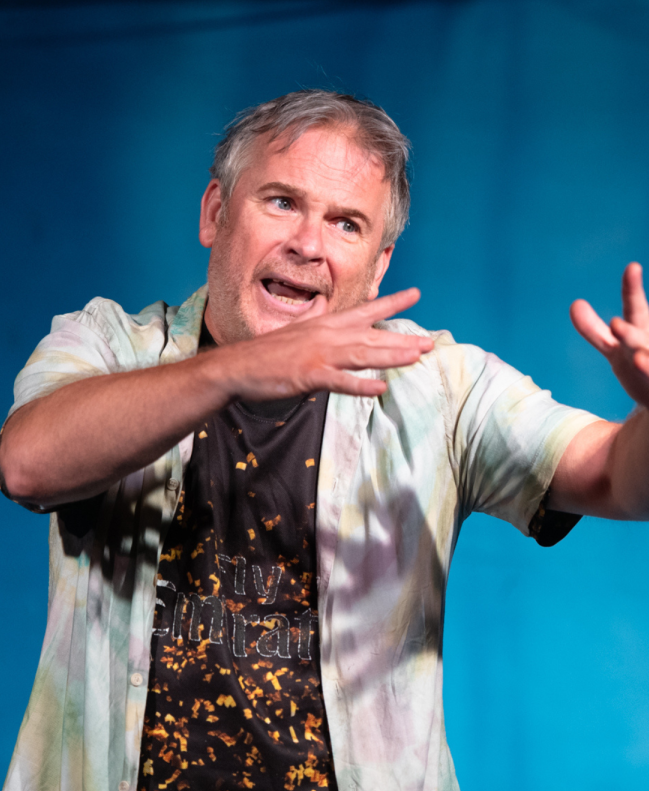
The latest production in the A Play, A Pie and A Pint season offers a distinct change of pace. Who’s up for a good old-fashioned British farce? You know, the kind of vehicle that Brian Rix would have had a field day with back in the 1960s – slapstick characters painted with broad strokes and even broader dialogue.

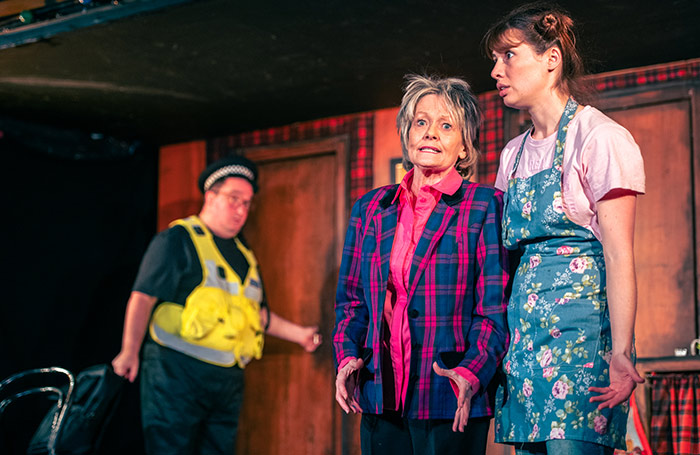
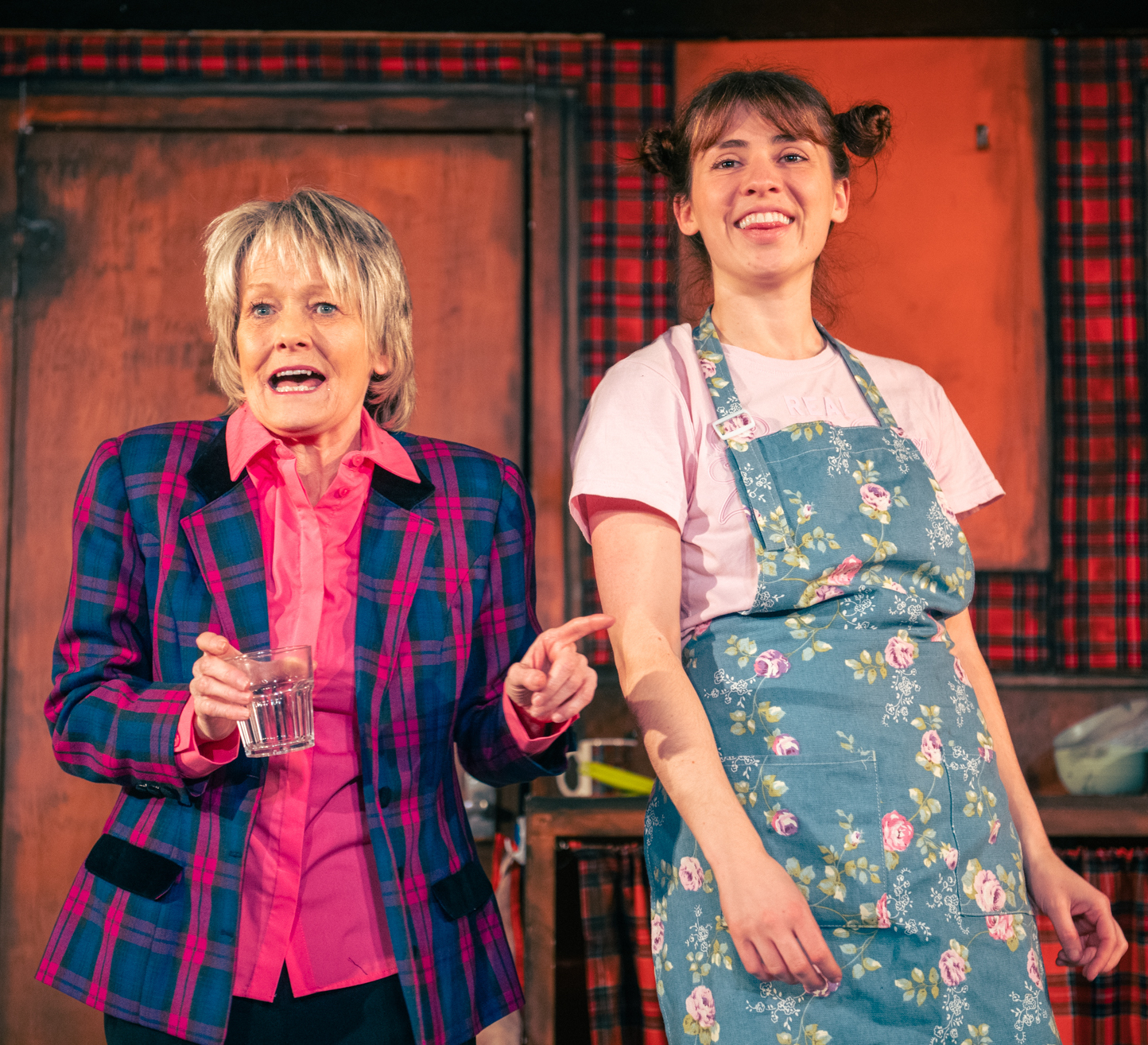
Welcome to Nessie’s Lodge, a bed and breakfast somewhere in the Highlands, a place where holidaymakers can relax in real style – provided they turn a blind eye to the indigestible food and the bedbugs… not to mention the rats. I said not to mention them! Proprietor Irene (Maureen Carr) is growing rather tired of the business, even though it boasts a single star from the AA. She dreams of selling the establishment to anybody who’s dumb enough to shell out money for it. But she’s continually hampered by her dimwitted young employee, Jo (Erin Elkin), who somehow manages to misinterpret every instruction she’s given. 

Then, in a distinctly Fawlty Towers twist, an AA restaurant inspector (James Peake) arrives out of the blue and the writing’s on the wall for Nessie’s Lodge. Also on the wall is a possibly priceless work of art that might just save Irene’s bacon…

Bread and Breakfast, written by Kirsty Halliday and directed by Laila Noble, has some genuinely funny lines in the mix, though there’s a worrying tendency to over-signal and over-explain them. Furthermore, it should also be said that those classic Whitehall farces were always anchored by absolute precision and excellent production values – which we can’t really expect from a modestly-budgeted lunchtime show.

The packed crowd at this afternoon’s show are clearly enjoying themselves, laughing throughout. As ever, stalwart actor Carr generates her own brand of potty-mouthed good humour; she’s a natural comic and has the audience in the palm of her hand. Elkin is excellent as Jo, giving her an edgy, almost manic appeal, as she flails from one hapless misunderstanding to another. Meanwhile Peake has the funniest moment of the show, as he delivers a spirited rendition of God Save Our Gracious Quing!  

If Bread and Breakfast isn’t quite to my taste, it’s nevertheless interesting to see a play so tonally different from anything I’ve previously seen at PPP.

3 stars

Philip Caveney

Jack

27/02/24

Traverse Theatre, Edinburgh

It’s a wet and miserable February day, but we don’t care because A Play, A Pie and A Pint is back – and if I say the new season starts with a whimper, that’s no bad thing. Because the whimper belongs to Jack.

And Jack is a puppy.

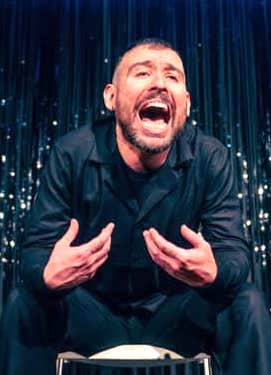
At first, our protagonist (Lawrence Boothman) isn’t too enamoured with his Christmas present. He doesn’t like dogs. They smell and they piss everywhere and they require a lot of care. But he can’t say that to ‘Him’, his un-named partner, can he? That’d be ungrateful. “Aw,” he says instead. “You shouldn’t have. Thank you.”

Of course, it doesn’t take Jack long to win the protagonist over, vet bills and chewed-up espadrilles notwithstanding. And when ‘He’ is killed in a car accident, Jack is both a source of comfort and a reason to go on.

Appealingly directed by Gareth Nicholls, Jack is a witty, engaging monologue, effortlessly straddling the line between acerbic humour and devastating emotion. Boothman reels us in from the opening lines and we’re absolutely with the protagonist as he mourns his lover and struggles to cope with his grief.

Liam Moffat’s nicely-crafted script paints a convincing portrait of a man adrift. The protagonist doesn’t know how to be a widower; he’s too young; there’s no template for him to follow. Heartbroken, he rebuffs his London friends but, away from the security of his crowd, he’s startled by the homophobia that denies the importance of his relationship and excludes him from his partner’s funeral.

The set, designed by Kenny Miller, is suitably simple: a raised platform with a sparkly backdrop, a single plastic chair and a ticker tape bearing captions for each successive ‘chapter’ of the protagonist’s story. Dogs really aren’t just for Christmas, it turns out.

So Jack gets this PPP off to a flying start. No, I’m not crying. You are.

4.4 stars

Susan Singfield

Disfunction

24/10/23

Traverse Theatre, Edinburgh

Sadly, this is the final PPP of the season; Tuesday lunchtimes just won’t be the same without an invigorating hour of original theatre. Luckily, Disfunction (“with an ‘i'”) provides a rousing send-off. This is first-rate stuff: a beautifully distilled character study, with a slice of social commentary on the side.

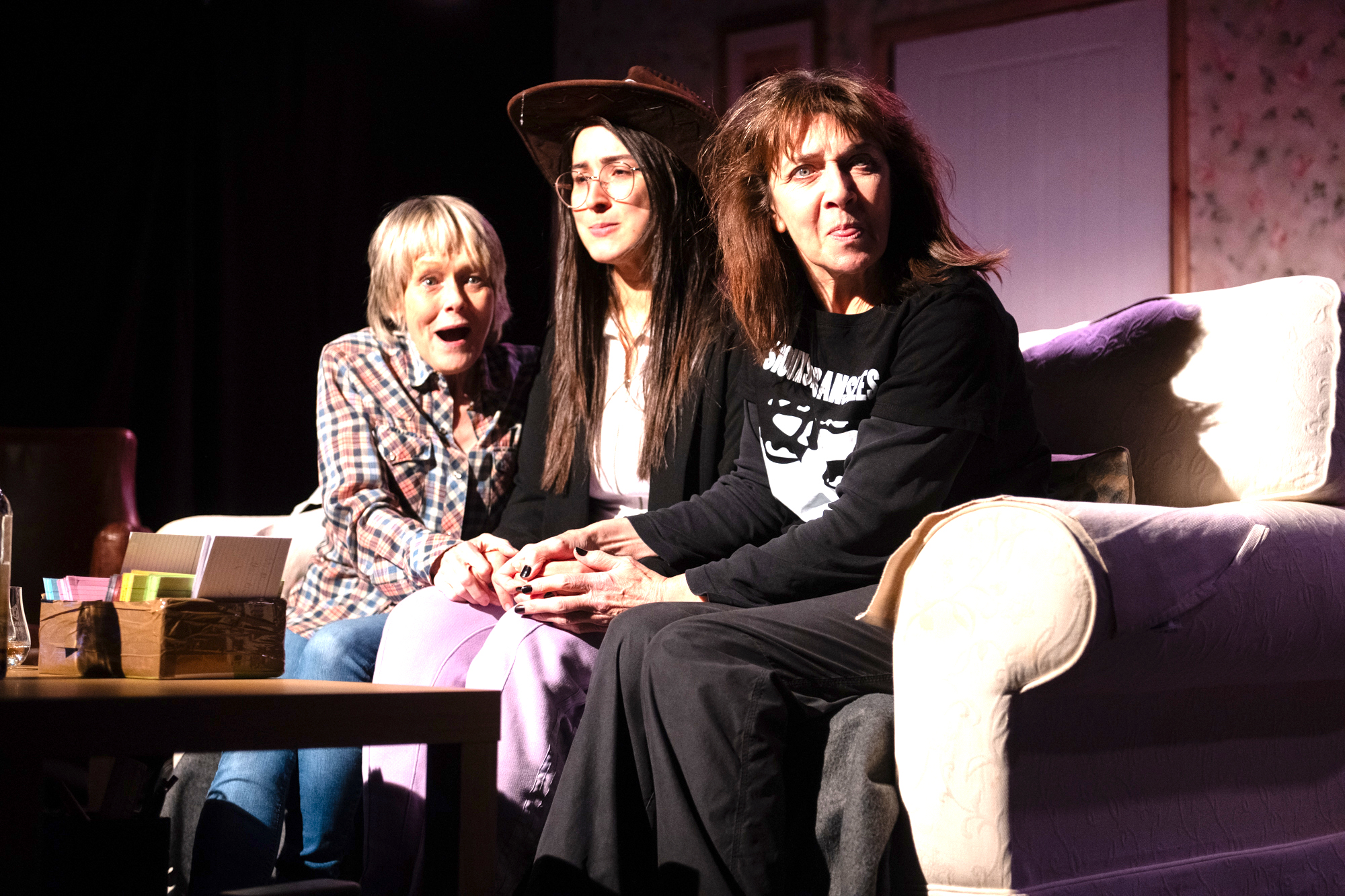
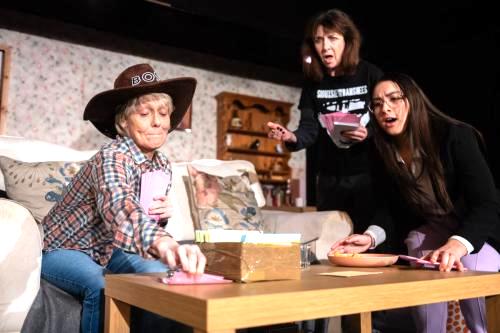
Kate Bowen’s play tells the story of sisters Moira and Melanie (Maureens Beattie and Carr respectively) and a game they’ve been honing for fifty years. Their goddaughter, Tanya (Betty Valencia), thinks she’s found a way to monetise their creation – by turning it into a sort of reality-TV experience, where viewers can pay to watch them play. At its best, the game is all Taskmaster-style fun: one round requires a blindfolded participant to put a pin in a map and then (sans blindfold) make their way to wherever the pin lands. Caveat: no cars allowed. Oh, and once they get there, they need to take a photograph of themselves. With four animals.

At its worst, the game is an exercise in, well, dysfunction. With a ‘y’.

The Maureens are surely two of Scotland’s national treasures, aren’t they? It feels like a real privilege to see these two great actors in such an intimate setting. They clearly relish their roles, especially Carr, who gets the plum part of the sassy, self-destructive Melanie. But Beattie is just as impressive as the more reserved and taciturn Moira, and Valencia more than holds her own as troubled Tanya, all bright-eyed desperation, a paper-thin smile covering her pain.

Lu Kemp’s kinetic direction means that the characters are always in motion (notable moments include a hilarious performance of Whigfield’s Saturday Night routine), and highlights that peculiar combative closeness that defines so many families.

Are there any negatives? Not really. Disfunction‘s role-playing political round perhaps stretches credulity (if there are only three people playing and each one has to ‘be’ a politician, who has set the questions to catch the others out?), but that’s my only gripe. Otherwise, it’s a pure delight. After all, as Tanya so cannily perceives, who doesn’t want to watch a bunch of strangers tearing themselves apart?

4.5 stars

Susan Singfield

Meetings with the Monk

17/010/23

Traverse Theatre, Edinburgh

Meetings With the Monk, this week’s offering from A Play, A Pie and A Pint, is a gentle affair, a study in both mental health and the limitations of live drama. Deceptively simple in tone, it explores these two issues in some depth – although the meta-theatricality arguably hogs the show.

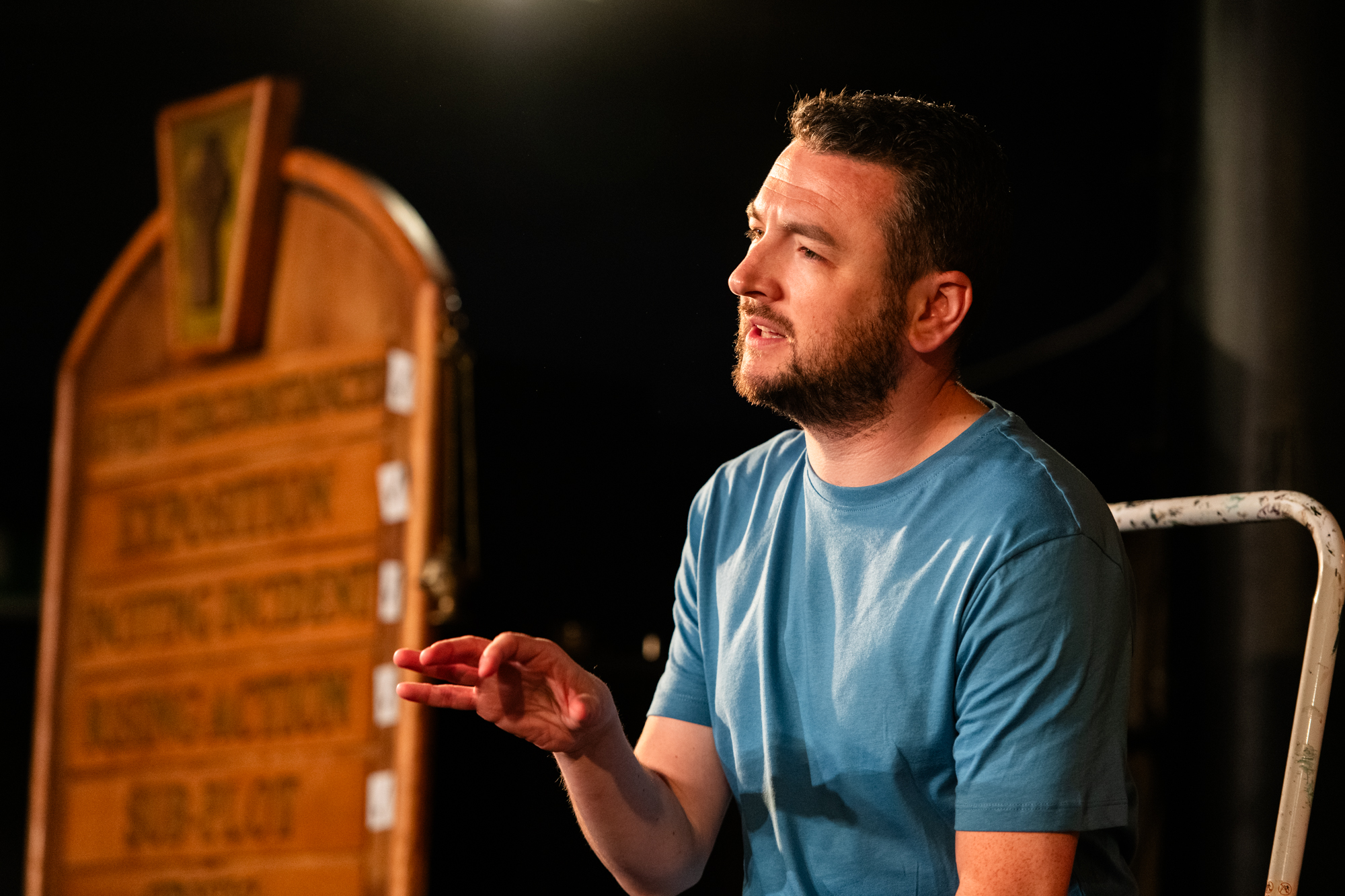
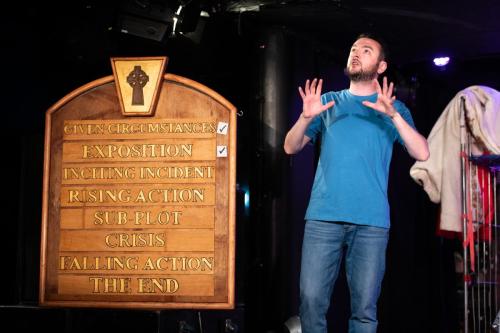
Brian James O’Sullivan is our guide, the elision between writer, actor and character established right from the off, as he assumes the role of the front of house staff, pointing out the emergency exits and informing us about next week’s play. He’s chatty and friendly, explaining what’s going to happen, breaking down the performance into its component parts, ticking them off on a list as they occur. Introduction? Check. Exposition? Check. Rising action? Bring it on.

The story is almost incidental. The title sounds enticing (what do monks talk about?) but, actually, the meetings with the brothers are the least interesting things about this piece. It turns out that people who live cloistered lives don’t have all that much to say. Still, their soothing words have a profound effect on ‘Brian’, who’s struggling with depression, and thinks that taking a leaf out of his Granny’s book and going on a retreat might help. The Abbey is very different from his home in Glasgow and, in this quiet place, he finds the space to clear his head. 

O’Sullivan is a stand-up comedian and he uses that skill to his advantage. Although this piece isn’t a comedy by any means, his easy interaction with the audience means that we’re immediately on his side, and he knows just when to undercut a difficult topic with humour, so that it never feels too much, even when he’s talking about suicide. 

The set (by Gemma Patchett and Johnny Scott) is monkishly austere, while Ross Nurney’s lighting – appropriately – lightens the mood, a simple coloured spot indicating an abbey or the goodness that shines from Brother Felix.

Nimbly directed by Laila Noble, this is an enjoyable and thought-provoking play, although I do find myself wishing for a little more substance. I really enjoy the exploration of theatrical storytelling, but I’d also like a bit more plot or at least a bigger climax. Father Felix, who appears as a recorded voice – apparently, there are several different recordings, and O’Sullivan doesn’t know which will be played on the day – feels like a wasted opportunity. I keep waiting for him to say something memorable. 

Nonetheless, I applaud the experimental nature of Meetings With the Monk. It’s a quirky, original piece of writing, and one that invites much discussion afterwards..

3.6 stars

Susan Singfield

Stay

10/010/23

Traverse Theatre, Edinburgh

Stay, it turns out, is a musical, but lest that word should conjure images of hordes of costumed performers, leaping and gyrating across a stage, let me quickly point out that this is the latest in the Traverse Theatres’s A Play A Pie and A Pint season. It’s a two-hander. But its smallness of scale is more than made up for by its sweet, affecting nature and for the insights it offers into its difficult theme.

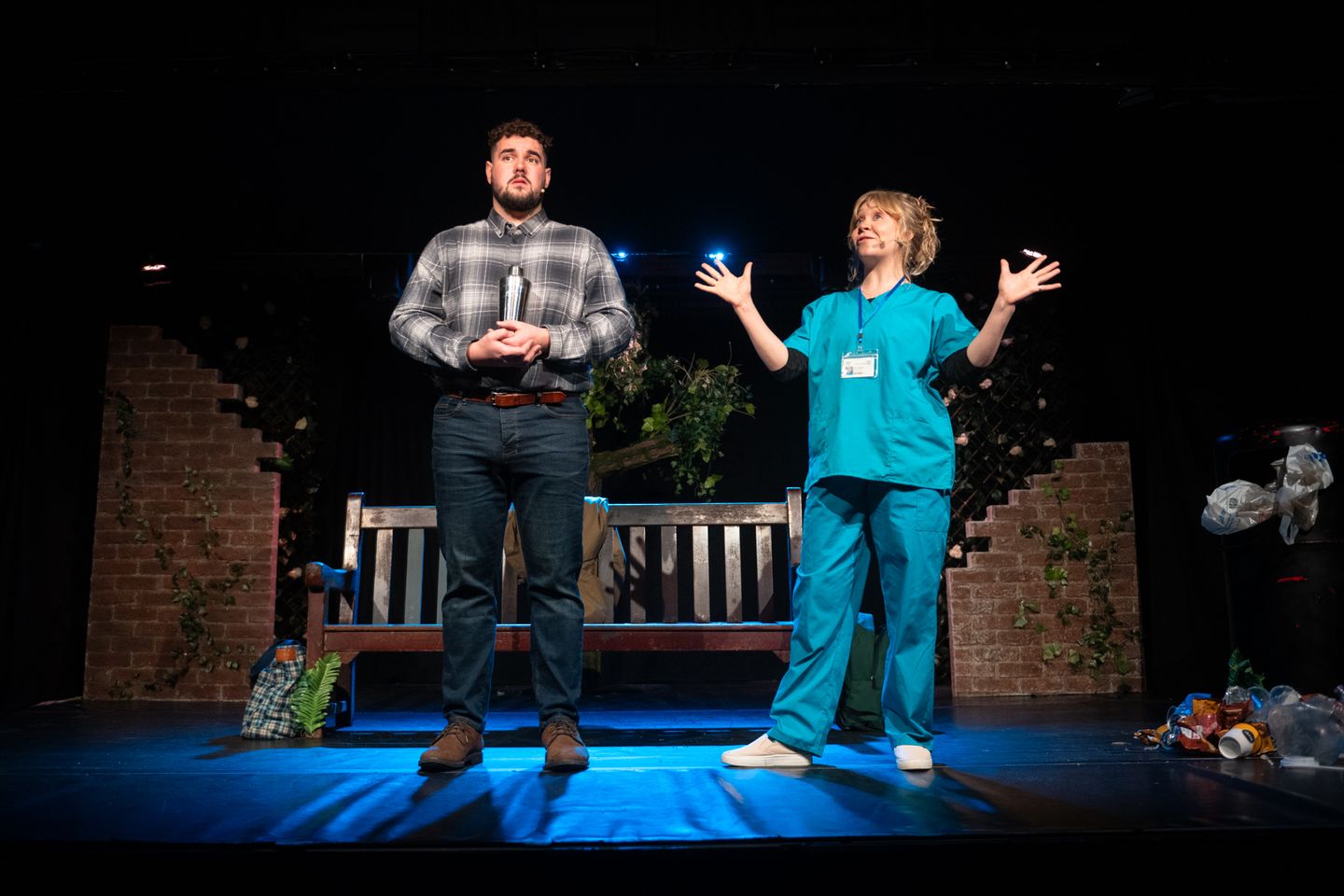
Rowan (Craig Hunter) and Kit (Daisy Ann Fletcher) meet up in their favourite corner of the local park. Rowan is carrying an urn containing somebody’s ashes: he’s finally prepared himself for the task of scattering them in the duck pond, but he needs back-up for this grim task and, of course, Kit is there, dressed in her hospital scrubs, ready to make jokes about every aspect of this solemn occasion.

The two of them were once lovers but four years ago something went badly wrong – and yet, somehow, Rowan doesn’t want his current girlfriend here today. For this challenge, Kit is the perfect choice…

Written by Jonathan O Neil and Isaac Savage and directed by Melanie Bell, Stay is a deceptively simple piece, its quirky plaintive songs recounting a poignant story about a relationship gone awry. Rowan is steady and dependable, Kit adorably scatty, forever taking the narrative off in unexpected directions, but together they have something special. Both leads deliver the plaintive, haunting songs with considerable skill and the piece is cunningly written, luring you in with its seemingly innocuous narrative, before heading off into darker territory and deftly delivering a climactic gut punch.

If I wanted to nitpick, I’d say there’s one song too many after that change of direction; nevertheless, Stay is a delightful piece of lunchtime theatre that will make you laugh and cry in equal measure.

4.5 stars

Philip Caveney

The Sheriff of Kalamaki

03/09/23

Traverse Theatre, Edinburgh

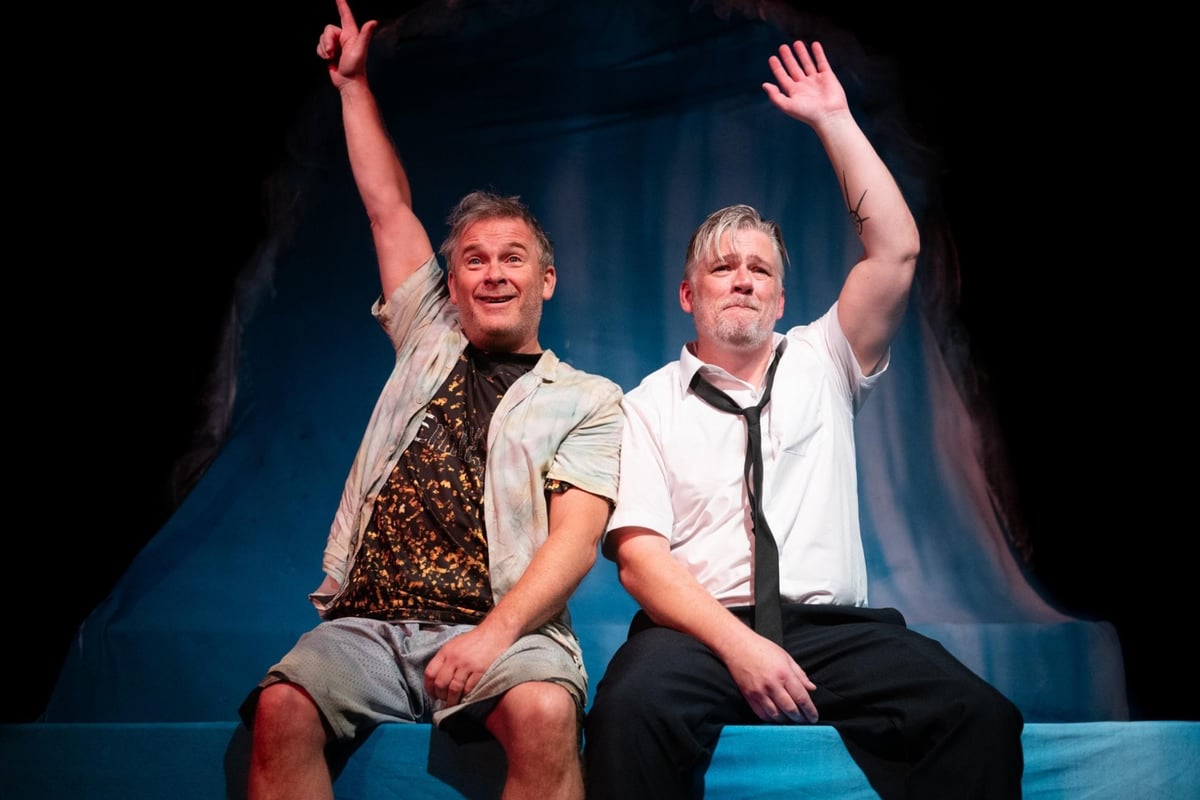
In this unusual two-hander by Douglas Maxwell, Paul McCole plays the eponymous law-keeper. It’s not an official role but alcoholic Dion is proud of the title, even if he did choose it himself. He swaggers (and staggers) his way through the bars and clubs of Zakynthos, seemingly unaware that he’s being used as a lookout by the local drug dealer. He’s a loveable character, his cheery bluster doing little to hide just how damaged and vulnerable he really is. His existence is precarious but he seems to be coping – until his apparently straight-laced brother, Ally (Stephen McCole), comes looking for him, after almost thirty long years…

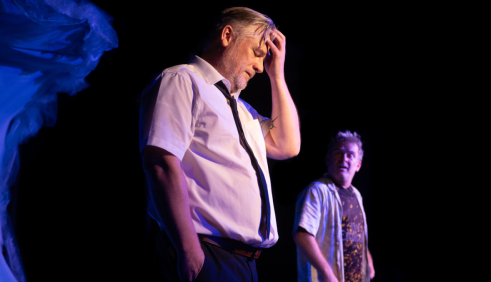
Maxwell eschews a duologue in favour of two almost completely separate monologues, a structural device that mirrors the brothers’ estrangement. Dion, when we first meet him, is alone – as he has been since 1994. When Ally shows up, the ensuing conflict shows us how this situation began, and then it’s Ally’s turn to find himself bereft and isolated in Kalamaki, a solitary figure standing on a cliff, facing his demons, while in the town below him, everyone else is having fun. The script’s construction makes for an oddly unsettling experience, but I think it serves the story well.

Gemma Patchett and Jonny Scott’s set design is suitably stark: a raised platform, overshadowed by a huge, curved sheet that represents the sea and sky. This works well on a figurative level too, the brothers dwarfed by the natural world, the quarrel that once seemed so all-consuming now rendered petty and insignificant. After all, the planet’s burning: Ally’s plane is half-empty; tourists have turned their backs on the island’s unbearable heat and unpredictable wildfires.

Jemima Levick’s direction is lively and pacy, highlighting the superficial contrasts between the two men, while the real-life McCole siblings are both formidable performers, creating a convincingly acrimonious relationship. Their differences are slowly peeled away, revealing their essential similarities and exposing the myths we tell ourselves about what ‘a good life’ really is.

4 stars

Susan Singfield

Ship Rats

19/09/23

Traverse Theatre, Edinburgh

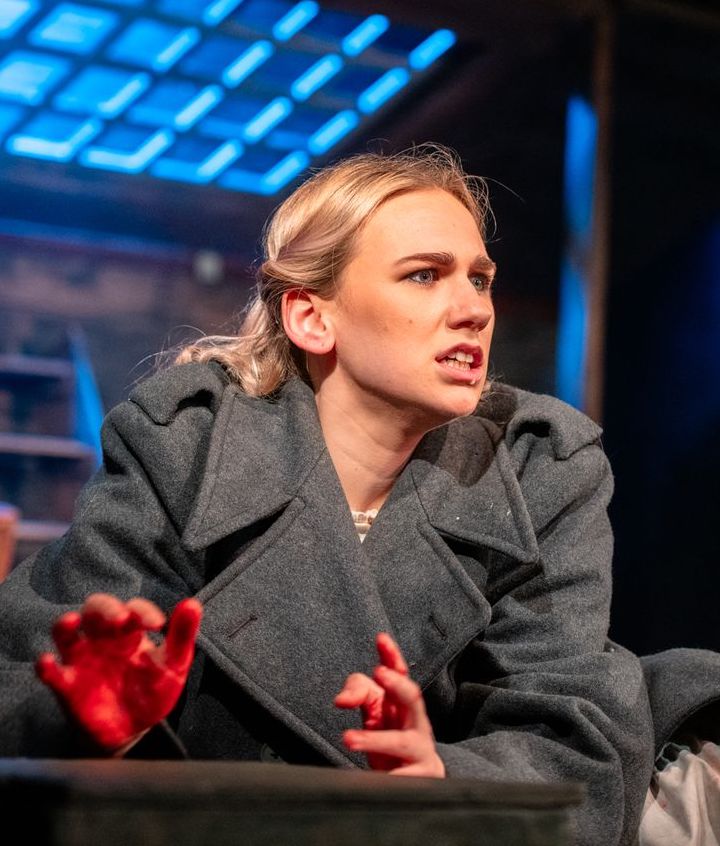
It’s the year 1880 and Jessie (Madeline Grieve) is in big trouble. She’s just murdered her husband and she’s covered in his blood. He’s the captain of the ship she’s currently aboard, a cruel tyrant who recently condemned an innocent cabin boy to fifty lashes for stealing a biscuit. He probably had it coming, but still, his crew are unlikely to be sympathetic.

To make matters worse, Jessie has sought refuge in the cabin of the ship’s Chinese cook, Jin Hai (Sebastian Lim-Seet), a man with probelms of his own. Shunned by the other members of the crew, he is planning a daring escape from the ship – but, try as he might, he cannot find the box of matches he needs in order to make his departure go with a bang.

When the inevitable hue and cry kicks off, Jessie and Jin Hai realise that they’ll have to ignore their respective differences and hide out together. In doing so, they begin to realise that they actually have quite a bit in common. Their conversation takes in a range of subjects: colonialism and Chinese medicine; murder and morning sickness; ginger and gunpowder.

Alice Clark’s spirited two-hander, a co-production between Òran Mór and the Traverse Theatre, is inspired by the adventures of the playwright’s own great-great-grandmother, a seafaring lass with a colourful backstory. The fact that the two protagonists in Ship Rats speak like contemporary Glaswegians out on the lash is initially jarring but, once I settle into the rhythm, it makes for a fun-filled fifty minutes, even if the tone is sometimes relentlessly frenetic.

Grieve offers a rollicking turn as the amusingly foulmouthed Jessie, while Lim-Seet makes an astute foil for her bawdy barrage of invective. If occasionally Jessie and Jin-Hai seem to possess the kind of insight that really only comes with the advantage of historical perspective, well that’s acceptable, given that this wants more than anything else to be a commentary on the toxic nature of Empire.

Director Laila Noble keeps the action propulsive enough to ensure that the pace never flags and Ship Rats has me entertained right up to the final scene.

3.4 stars

Philip Caveney

The Spark

04/04/23

Traverse Theatre, Edinburgh

It’s hard to believe it’s taken until now – the 2020s – for the term ‘perimenopause’ to enter popular discourse, although, ironically, my computer has just underlined it in red, signalling an unknown word – so maybe we’ve still got a way to go. Nevertheless, we’re moving inexorably away from hushed murmurings about ‘the change’ and oblique references to ‘hot flushes’, and instead naming all of the physical and mental symptoms of this life-altering process. It turns out it’s not just your periods petering to a halt. No such luck. Instead it’s some or all of the following: joint pain, exhaustion, menstrual cramps, decreased (or increased) libido, mood swings, anger, vaginal dryness, brain fog… it’s quite the gut punch. Almost literally.

In The Spark, playwright Kathy McKean explores the impact of the perimenopause on a politician. Robin (the brilliant Nicole Cooper) is struggling in a system that seems designed to constrain her. And whereas, in her younger years, she might have bitten her lip and done what needed to be done in order to get ahead, she’s at ‘that age’ now, and the fuck-it factor has set in. No, she won’t stand by while a group of men harass a young girl at a bus stop. No, she won’t deliver the anodyne presentation her speech-writer, James (Johnny Panchaud), has concocted – a bowdlerised version of her own from-the-heart first draft. No, she won’t accept that she’s powerless to affect change. Because otherwise, what’s it all for?

Directed by Gordon Barr, the three actors effortlessly illuminate the chaos inside Robin’s head, as her adversarial discussions with both James and her long-suffering GP, Maggie (Beth Marshall), build to a cacophony. Maggie’s got enough problems of her own – and she blames Robin for some of them. After all, Robin was, until recently, the minister for health. She knows how over-worked the nation’s doctors are; how can she possibly think Maggie has time to deal with what seems on the surface like a pretty bog-standard set of symptoms? Except that Robin’s menopausal heat seems to manifesting itself outside her body, and who knows where that will end…

The writing here is sharp and the delivery fast-paced and engaging. The Spark seems like a fitting finale to what has been a particularly strong season of A Play, a Pie and a Pint. It’s not perfect – it’s a simple idea that builds well at first, but doesn’t deliver the shocking crescendo it perhaps should, and maybe takes aim at the wrong target (I can think of many institutions more deserving of a middle-aged woman’s ire than the parliament at Holyrood). But it’s good to see this subject aired, and in such a witty, thought-provoking way.

4 stars

Susan Singfield

Variant

28/03/23

Traverse Theatre, Edinburgh

The latest in this A Play, A Pie and A Pint season is Variant, written by Peter Arnott and directed by Kolbrún Björt Sigfusdöttir. It’s a distinctly Beckettian slice of absurdist theatre, a slippery two-hander that seems to question the very essence of identity. Who are we? Are we who we really think we are? And are the people we believe we are closest to, actually who they appear to be? Such heavy questions are just the tip of the iceberg in this taut and unsettling play.

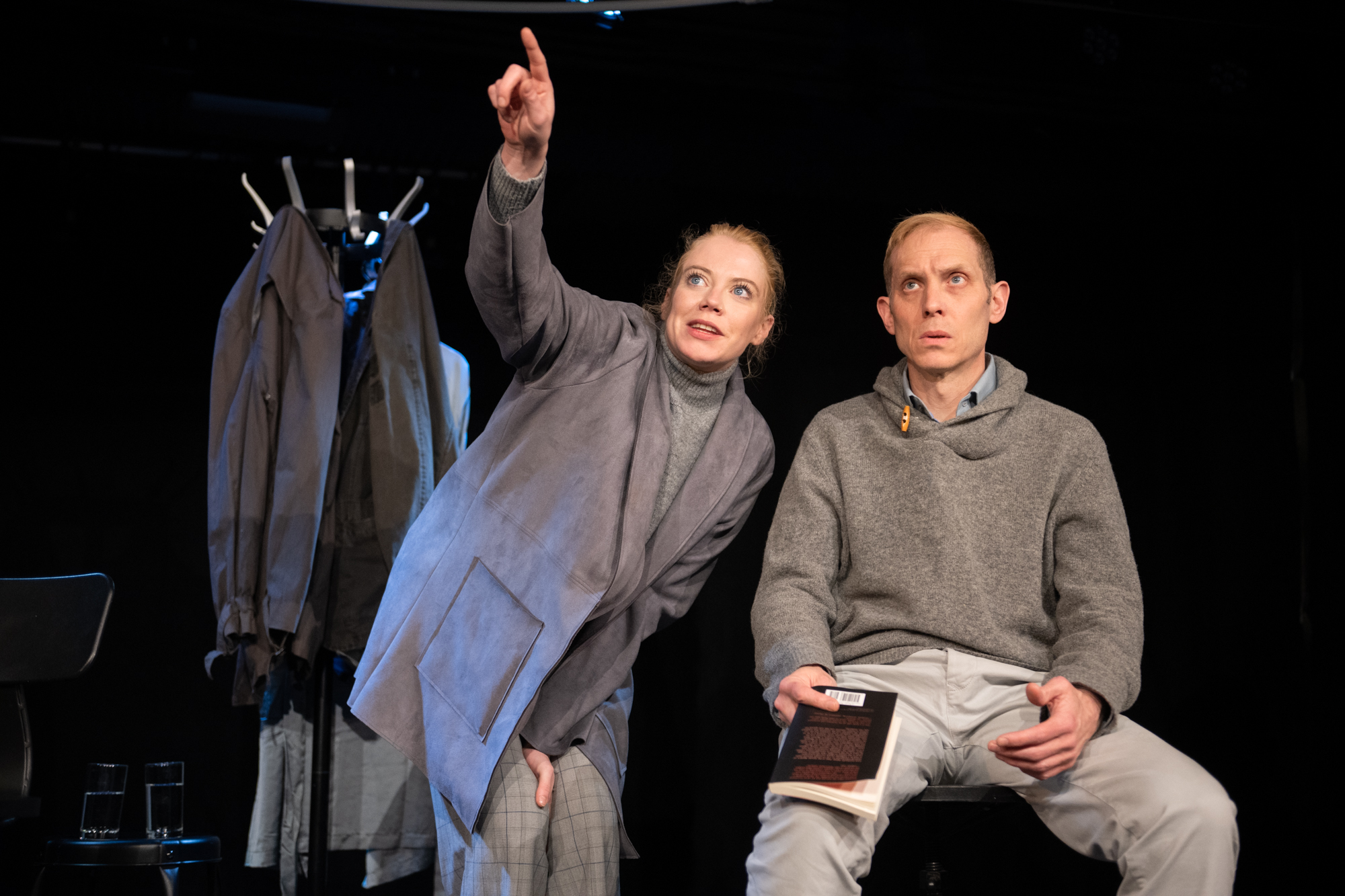
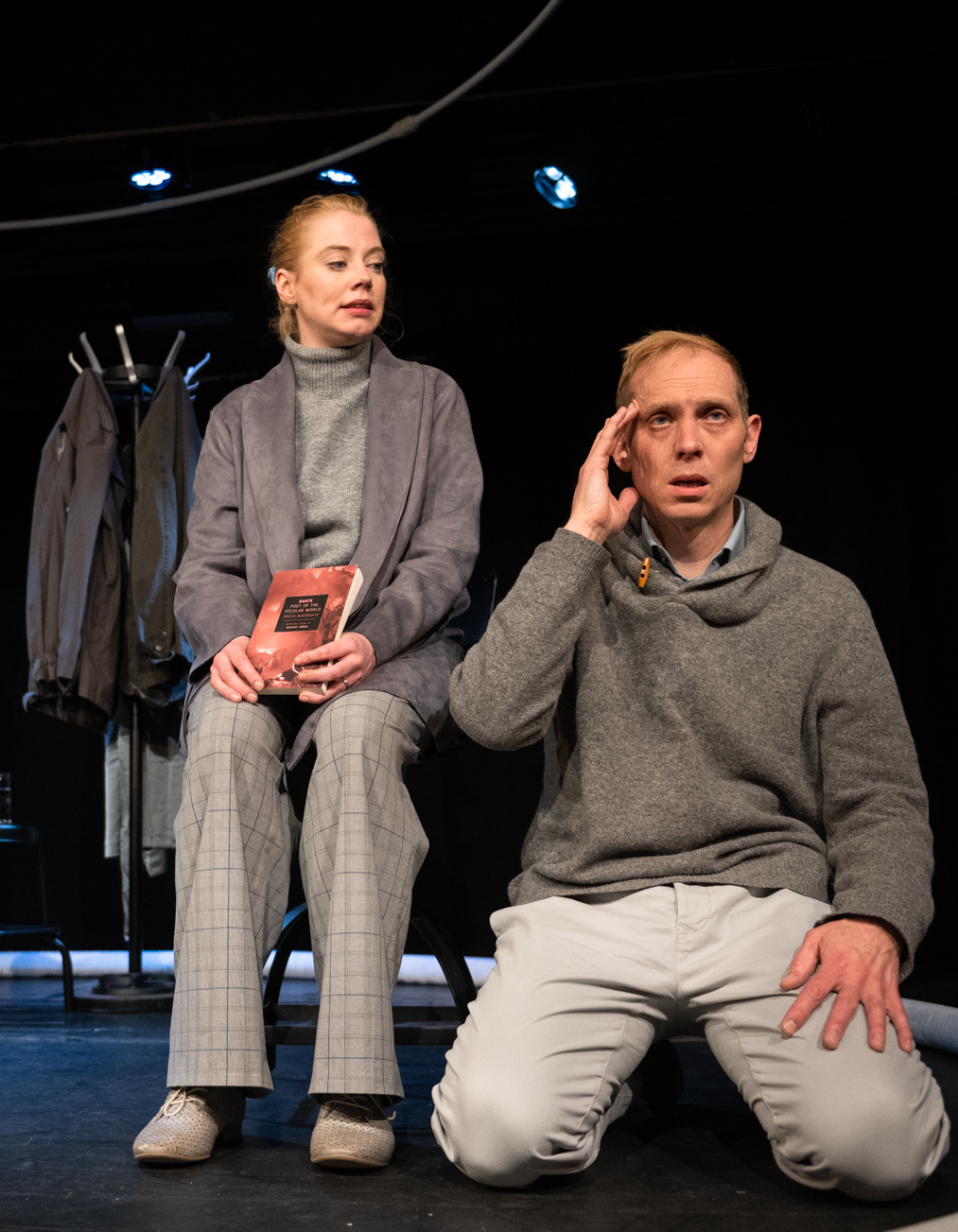
A woman (Meghan Tyler) and a man (Simon Donaldson) saunter into the circular performance space, dressed in muted tones that perfectly match the simple setting. The woman begins to write in a notebook, the man reads a novel, but the silence is almost immediately broken by the arrival of a fly, buzzing annoyingly around the man’s head, interrupting his reading. He kills it. And then he pauses to make a remark to the woman.

‘I see you’ve changed your hair.’

But she quickly questions what he means by this. Was there something wrong with her hair before? Does he approve of what she’s done to it? Or would he have preferred something else? What’s wrong with her hair?

At first the conversation seems innocuous, the bickering of a long-married couple – but as it progresses, it becomes increasingly complicated, loaded with allusions to other things. I find myself asking questions. Are the two people actually married? Because isn’t this beginning to feel distinctly like an interview? And why does the woman keep steering the conversation into darker waters? Why are the images she refers to so violent?

Arnott’s play is cleverly constructed, raising many questions but offering no answers, and – just as we’re beginning to think we have a handle on it – the piece resets itself, and pursues another line of thought, steering us in a different direction. All credit to Tyler and Donaldson, who inhabit their complicated roles with absolute authority. If I’m not always entirely convinced that the piece has as much substance as it has ambition, it’s still nonetheless an engaging, and wryly amusing play, weighing in at a taut forty-five minutes, during which it switches back and forth like a cerebral rollercoaster. 

Did I like the play? Well, let me ask you something. What do you mean by the word ‘like’? Are you asking if it entertained me? Or puzzled me? Or even baffled me? Do you think I should review it? But then, what is a review? And perhaps more to the point, who’s writing this one? Oh, hang on a minute. I think it must be me. Whoever I am.

3.8 stars

Philip Caveney
Write-Off

21/03/23

Traverse Theatre, Edinburgh

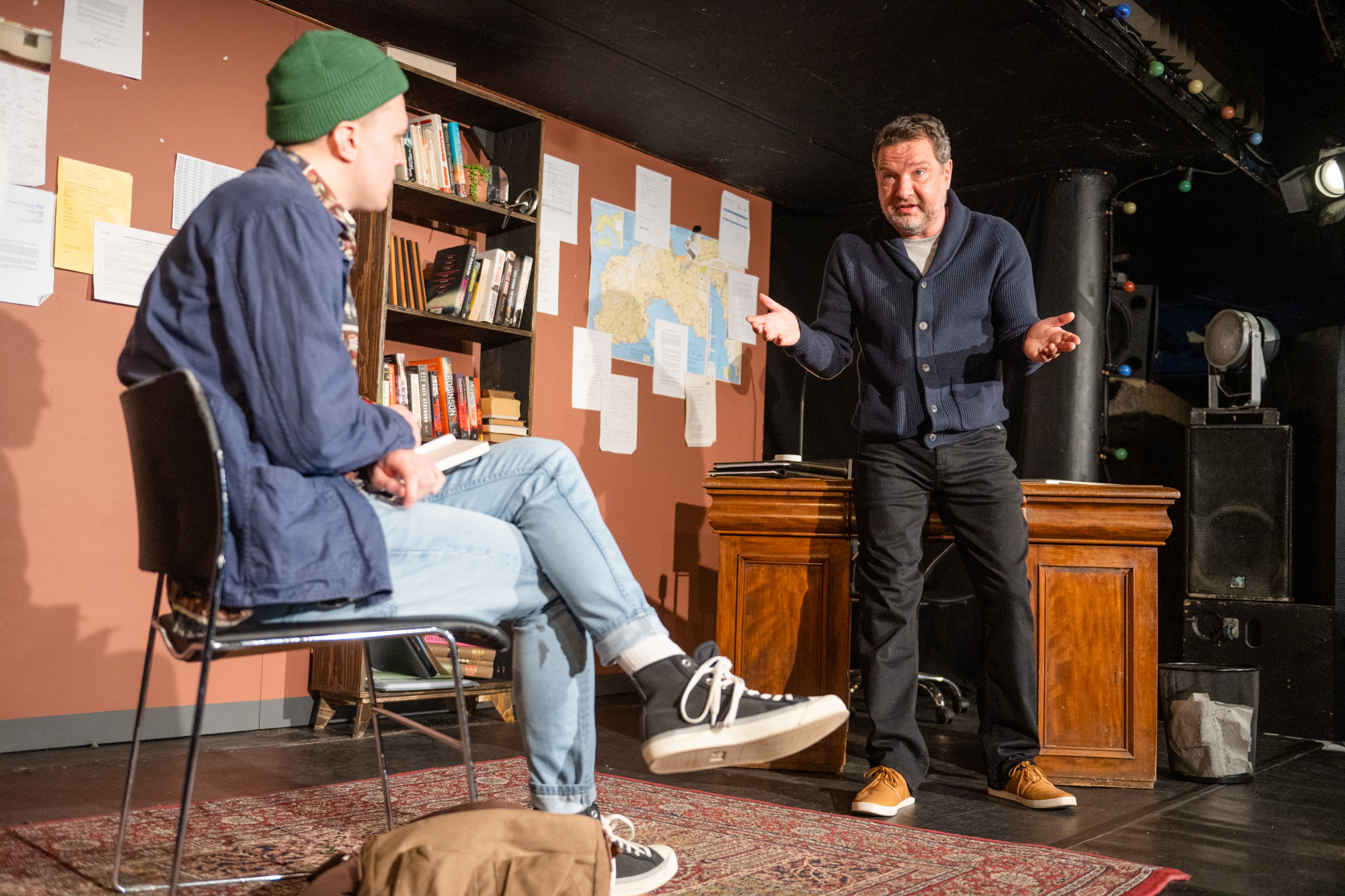
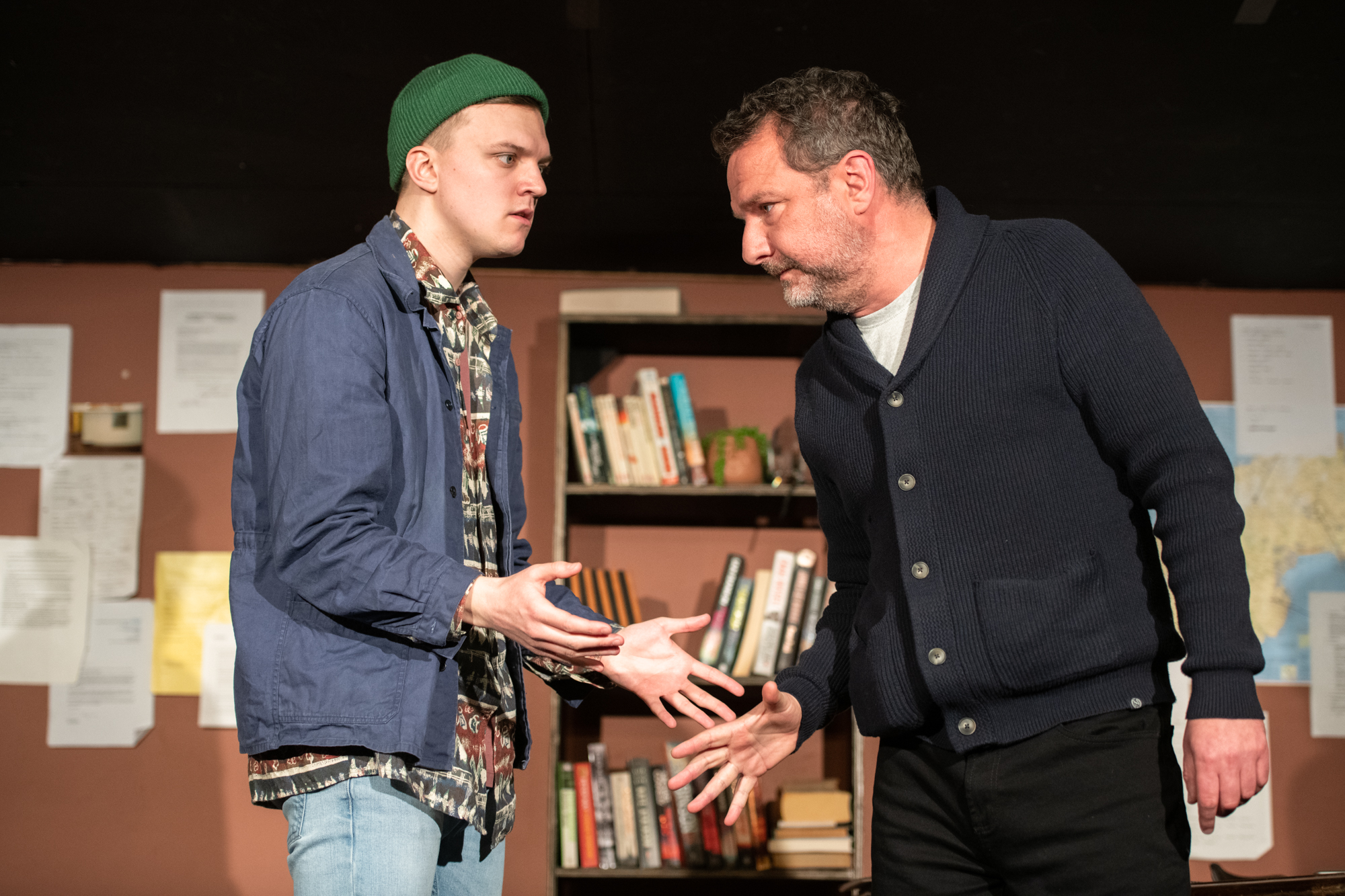
The A Play, A Pie and a Pint season continues its cracking run with this intriguing two-hander, written by Aodhan Gallagher and directed by Irene McDougall. It’s a play about writers and writing, so naturally I’m fascinated to see what it has to say about the subject – and, as it turns out, it has plenty. What’s more, I’m delighted to note how many unexpected twists and turns are packed into a brisk fifty-minute running time.

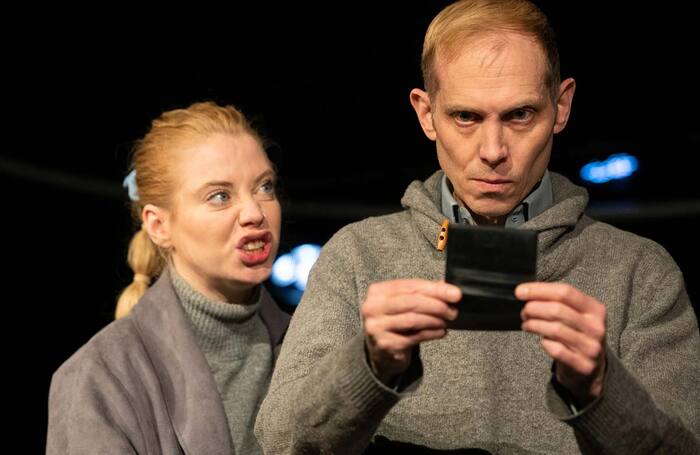
Freddie (Richard Conlon) is a long-established fiction writer, currently preparing to start work on a new novel – most of which is already a stack of crumpled notes in his wastebasket. He’s never seen the necessity for incorporating elements from his own life into the gritty psychological thrillers he’s made his reputation on. These are brutal tales filled with violence and action. But lately, Freddie’s publishers have become a little twitchy, pointing out that his earlier work is increasingly being perceived as ‘problematic’. 

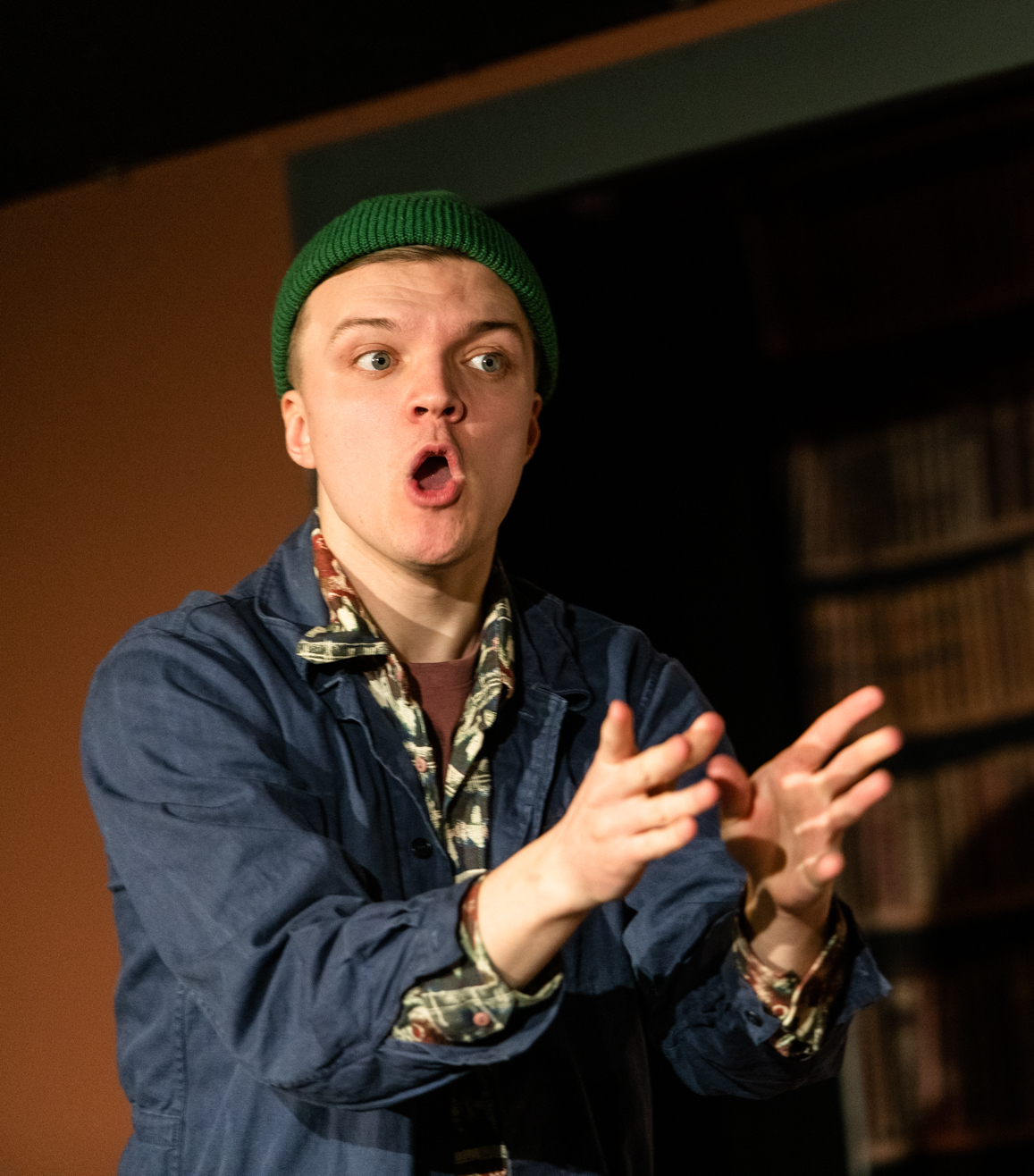
With this in mind, they’ve suggested that this time around, he might want to employ a ‘sensitivity reader’, somebody more attuned to contemporary issues. Enter Ben (Bailey Newsome), the promising student of one of Freddie’s literary acquaintances. Ben is young, gay and confidently in touch with the zeitgeist. He sports a beanie hat and trendy footwear. He also has an unpublished novel of his own that he’s very keen to get noticed…

Write-Off’s acerbic dialogue hooks me from the get-go and my sympathies bounce from character to character as the two men, by turns adversaries and allies, discuss their respective ambitions, beliefs and motives. One moment I’m laughing out loud at Freddie’s caustic observations, the next I’m gasping at some new revelation from Ben, which I genuinely haven’t seen coming. Can these two men ever hope to settle their differences enough to work together on a project?

The performances of the two actors are utterly believable and while it could be argued that this is a piece that’s completely predicated on its quickfire dialogue – and might work just as effectively as a radio play – it’s nonetheless a compelling and challenging production that maintains its propulsive edge right up to the final scene.

I head straight from the play to The National Library of Scotland where – inevitably – I’m working on my new novel. Who says life doesn’t imitate art?

4 stars

Philip Caveney