A Play A Pie and A Pint

Kev Campbell Was He

11/03/25

Traverse Theatre, Edinburgh

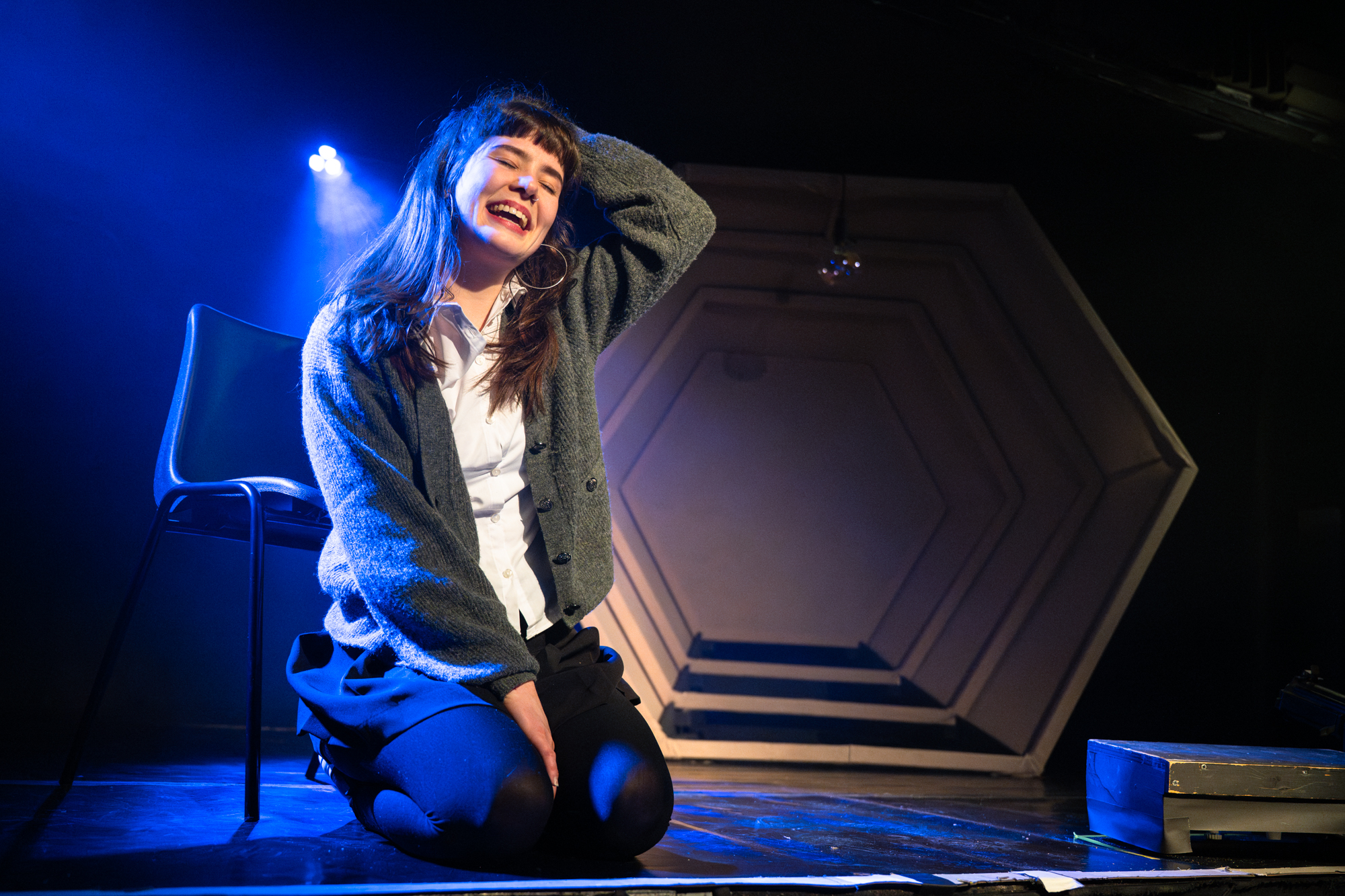
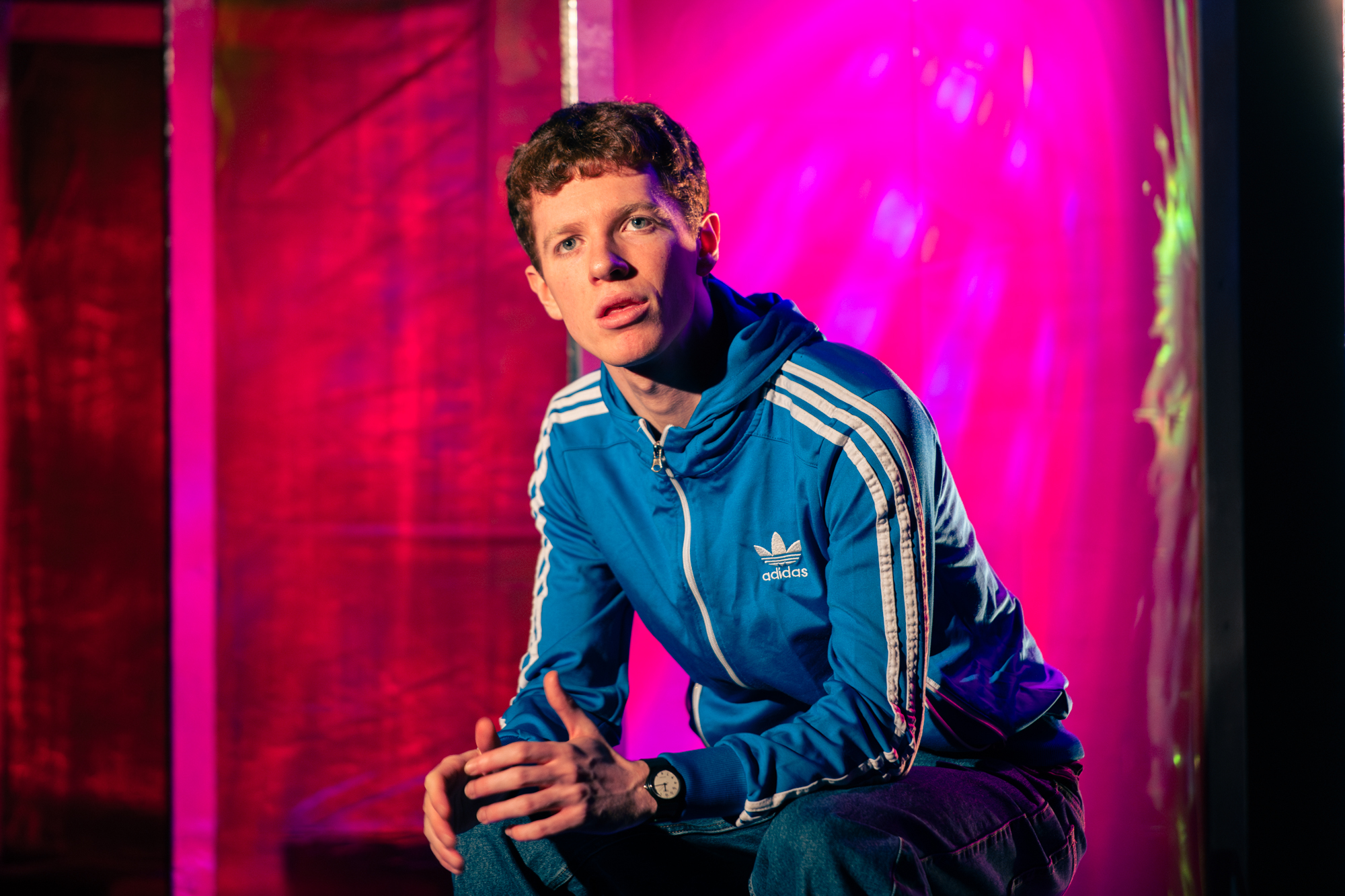
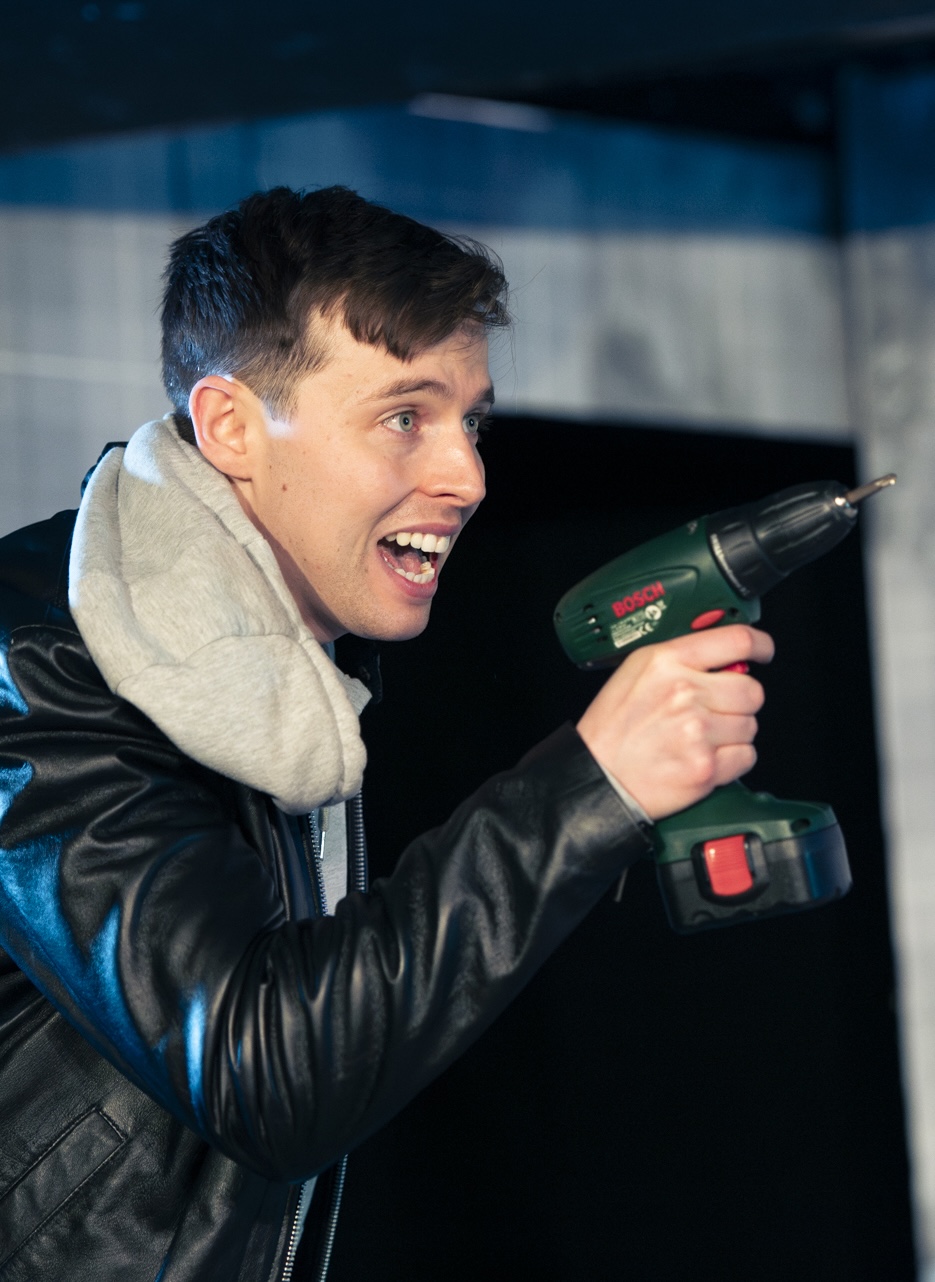
Today’s A Play, A Pie and A Pint performance  begins in unprepossessing style: an empty stage with a toilet placed centrally; uptempo music thundering along for quite some time – almost too much time – and then our titular hero bursts frantically into view, pulls down his pants and er… relieves himself. 

Mission accomplished, Kev (Alexander Tait) realises that the toilet cubicle he is sitting in is entirely free of graffiti, so he sets about changing that situation, by the application of his trusty pen – of which we will learn more later. Kev, as you may have gathered, is a bit of a lad, a freewheeling Glasgow boy, stuck in a dead-end job at a backstreet cafe. He has little prospect of achieving much in his life, but is determined to drink and laugh and chat shite, in order to get himself through another day and late into the following night.

And if he is occasionally given to indulging in strange cinematic fantasies, well, where’s the harm in that? We all get through it the best way we can, eh?

And then somebody steps into the cubicle next to Kev and sits down to read The Great Gatsby, an occurrence that inadvertently kicks off a string of events that will eventually encourage Kev to head off in an entirely different direction…

For the first ten minutes or so, I don’t really think I’m destined to enjoy Kev Campbell Was He, which appears at first to be a series of character studies, offering insights into the respective mindsets of the people Kev knows, but offering little in the way of anything surprising. But my preconceptions are cleverly shattered when the story takes a beguiling and unexpected twist and I begin to  realise that this is a tale about thwarted ambition – about a youth shackled by his working-class origins for too long. It’s about someone who has been told repeatedly that to nurture a dream is futile, that attempting to step into a world where he doesn’t quite fit can only end in tears. 

In many ways, it makes me think back to my own younger days, when I nursed powerful ambitions to become a writer and everyone was virtually lining up to tell me why I couldn’t hope to step into that rarified atmosphere. Fifty-odd novels later, the message of the play hits home with considerable force. People are so often warned not to chase their dreams but at the end of the day, what else do we have?

Tait is an assured young performer who handles the different personas he inhabits with total confidence and makes me believe in each one of them. But he’s not just an actor, he’s also a playwright: Kev Campbell Was He is his debut play, recently nominated for the David McLennan Award. It’s by turns funny, sad and bittersweet and, I have to say, it’s a promising start for somebody who seems destined to go on to greater heights.

All this, plus a pie and a pint. What are you waiting for?

4 stars

Philip Caveney

Detained

22/10/24

Traverse Theatre, Edinburgh

In a week when the Home Office has found the time to issue the fictional Paddington Bear with an official passport, it’s sobering to be faced with a stark reminder of the realities of the UK immigration system and the human lives caught up in it.

Playwright Michelle Chantelle Hopewell’s professional debut has a strong premise, exploring the uneven power dynamic between two friends, where a single impulsive moment of spite has a profound and devastating impact.

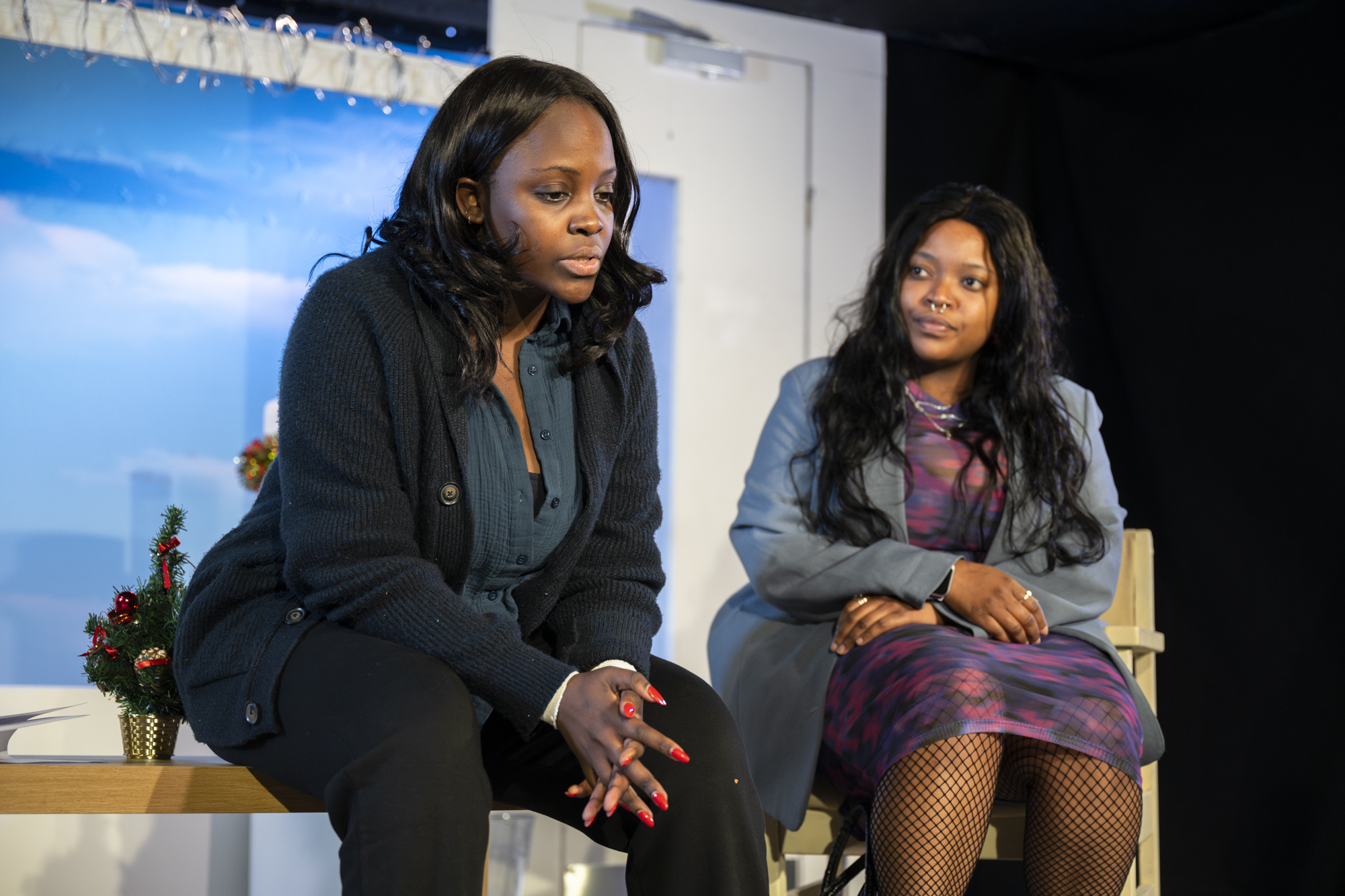
South African asylum seeker Yemi (Titana Muthui) is incarcerated in a detention centre, and she’s appalled to learn that she’s there because of her best friend, Bea (Laura Lovemore). The women work in the same restaurant, and Bea, catching her boyfriend in the arms of another waitress, has called the authorities to report her for being there illegally. She doesn’t know that Yemi’s visa has run out, that her ‘sister’ will get caught in the crossfire.

We’re witness to a series of visits spanning two years, as Yemi languishes in ‘jail’, refusing to open up about her traumatic past, even to the lawyer who might be able to assist her. Through her conversations with Bea, we learn how horribly dehumanising the process is, and how a simple oversight – such as not filling in a form on time – can change a person’s life. Bea is impacted too, learning to live with the guilt of what she’s done, trying – and failing – to compensate by campaigning for Yemi’s release.

Both Muthui and Lovemore are compelling in their roles, with Muthui in particular exuding a desperate dignity. Even though I want to shout at Yemi to tell the lawyer what he needs to know, I can’t help but be impressed by her quiet determination not to be forced to share her nightmares to appease others. Muthui makes this awful choice entirely credible.

Caitlin Skinner’s direction ensures that this wordy drama remains dynamic, and Heather Grace Currie’s simple set design manages to include both the barbed wire holding Yemi back and the blue skies still offering her a glimmer of hope.

Even for A Play, A Pie and A Pint, Detained is short, and doesn’t perhaps make the most of its potential, with a lot of ideas left unexplored. I’m also not convinced by the single section addressed to the audience by Yemi, which feels stylistically (but not tonally) different from the rest. I think for this to work, she would need to be revealing something we haven’t previously seen from her – a greater anger, maybe, or a deeper exploration of her situation.

A piece that asks more questions than it answers, Detained is certainly a play for our times. Let’s hope that fewer pretend bears and more actual people are afforded access to asylum over the coming years.

3 stars

Susan Singfield

Lost Girls/ At Bus Stops

15/10/24

Traverse Theatre, Edinburgh

Lost Girls/At Bus Stops is my favourite so far in this PPP season: I love the marriage of Róisín Sheridan-Bryson’s fragmented, non-linear writing with Laila Noble’s kinetic direction. 

At its heart there’s a simple will-they/won’t they love story. Ever since Jess (Catriona Faint) approached Iona (Leyla Aycan) at a bus stop with a flyer for a Fringe show several years ago, the two have been friends, meeting up every August to make the most of the Festival buzz, weaving their way from show to bar to show again, navigating the crowds, the hills, the closes, the booze. On the surface, theirs is an easy alliance, born of a shared hedonism and an openness about who they are. Underneath, they’re a mess of repressed longing, each too nervous to risk their precious friendship by declaring how they really feel. And this time, with Iona about to leave for pastures new, there’s an added pressure. If neither of them makes a move, it’ll be too late.

Sheridan-Bryson’s script skips nimbly between dialogue and narration, the protagonists referring to themselves in both third and first person, almost mythologising the city, their accounts of various Edinburgh nights colliding as they disagree about details and bring different moments to the fore. The disrupted timeline mirrors a real-life conversation, almost stream-of-consciousness in its construction, bouncing back and forth through their shared memories.

The two actors portray the contrasting characters with aplomb, Aycan’s gentle stillness a perfect foil for Faint’s more manic, agitated demeanour. As Jess reacts to the pressure by downing drink after drink, snogging random men and trying to start fights, Iona – while matching her on the booze front – is altogether calmer, trying time and again to make Jess stop and talk, to say the things they need to say. Their emotions are palpable and it’s impossible not to feel engaged, not to sit silently urging them to take the plunge. 

Zephyr Liddell’s set is simple but effective, the grimy bus stop and disco lights echoing the superficial glamour of a sequin-clad performer in an archetypal dingy Fringe venue. 

Sheridan-Bryson pulls off the difficult task of creating a play that is at once meta-theatrical and down-to-earth, complex in structure but easy to follow. It’s an impressive piece of work. 

4.6 stars

Susan Singfield

Anna/Anastasia

08/10/24

Traverse Theatre, Edinburgh

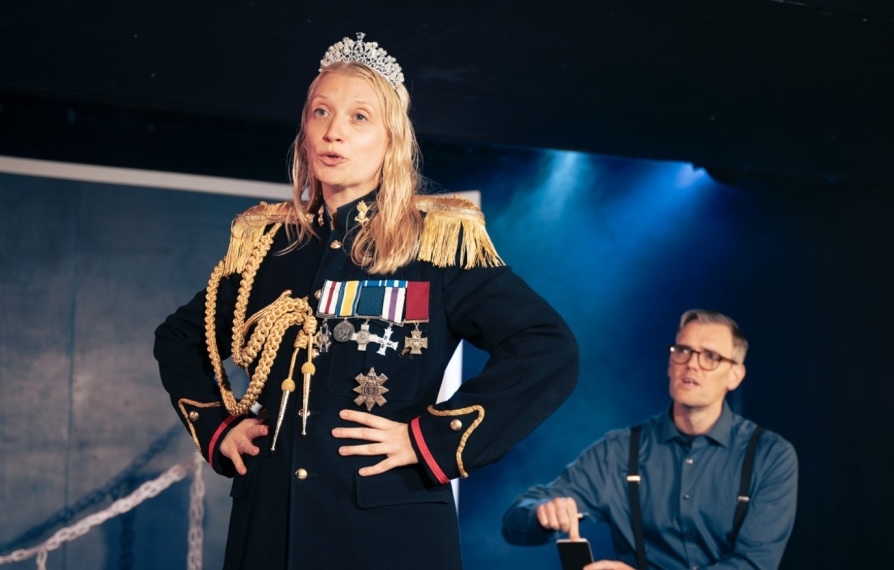
Berlin, February, 1922. Following a failed suicide attempt, Anna (Kirsty McDuff) is brought to a local police station. She’s dripping wet after trying to drown herself in a local canal. She is interviewed by Franz (Chris Forbes), a straight-laced police officer with a liking for equally straight talking. But when she claims to be the Grand Duchess Anastasia, the lone survivor of the assassination of her entire family by Bolshevik revolutionaries two years earlier, Franz isn’t quite sure what to believe. For one thing, Anna talks so lucidly about her glamorous past: her memories from the court of Nicholas and Alexandra, the glittering balls, the wonderful meals.

And for another, she is wearing an expensive-looking tiara that’s clearly been dented by a bullet…

Inspired by real events, Anna/Anastasia approaches its subject matter with an endearing sense of humour, playing Anna’s volatility off against Franz’s restrained, analytical approach. Franz, we are told, paints china swans as a hobby and keeps them up in the attic out of harm’s way. Anna, with her unrestrained bursts of exuberance, represents something he is unaccustomed to, something that threatens to bring all his most established convictions clattering down around him in pieces – and yet, as the years pass and Anna’s fortunes rise and fall, the couple keep re-encountering each other and a kind of guarded relationship develops.

The sprightly script by Jonny Donahoe (whose Every Brilliant Thing is a popular yearly visitor to the Edinburgh Fringe) maintains just the right mix of comedy and pathos, while the two performers make perfect foils for each other. McDuff stays in character the whole way through, inhabiting Anderson’s turbulent persona with considerable skill, while Forbes occasionally steps out of his main role to play a number of subsidiary characters – at one point breathlessly re-enacting the murder of the entire Romonov family single-handedly. Liz Caruthers handles the direction with an assured touch.

The story of Anna Anderson has formed the basis for many plays and films over the years and, though the mystery has recently been pretty much solved thanks to DNA testing, it continues to exert considerable powers over the public imagination. As Anna/Anastasia seems to emphasise, the actual truth of the story is somehow less important than the speculation it has always kindled – and the play’s bitter-sweet conclusion still manages to leave us wondering about the possibilities.

4.4 stars

Philip Caveney

Armour: A Herstory of the Scottish Bard

01/10/24

Traverse Theatre, Edinburgh

Today’s A Play, A Pie and A Pint production is a welcome revival of Shonagh Murray’s Armour: A Herstory of the Scottish Bard. Unwieldy title notwithstanding, this is a taut, well-scripted piece of theatre, the music deftly evoking the lyrical poetry at its heart.

It’s thirty years since the death of Scotland’s beloved poet, Robert Burns, and his widow, Jean (Irene Allan), still misses him. But she has plenty to occupy her time, not least her headstrong young granddaughter, Sarah (Karen Fishwick), who’s been sent to live with her in Dumfries, while her dad’s away in India. And then there’s Nancy Maclehose (Hilary Maclean), Burns’ erstwhile mistress, who seems very keen to talk to Jean. There’s something important she needs to say…

Tom Cooper’s direction and Heather Grace Currie’s set design both serve to highlight Murray’s clever structure, ensuring that Burns’ absence forms the centre of the play, a model of his mausoleum gleaming from the mantlepiece, white against the dark furniture. Armour is a feminist piece but it doesn’t shy away from the fact that we only know these women in relation to a man, that they are destined to remain almost unknown, circling the ghost of a famous heavyweight, as small as the dolls that Sarah plays with.

Murray’s script breathes life into the women, imagining their responses to the scant details we have of their real circumstances. Allan imbues Jean with a sharp dignity, a refusal to be shamed or diminished by her husband’s infidelities. What’s more, Maclean’s Nancy defies the image of a paramour: she admits to feeling guilt for not thinking about Jean, but there’s no room here for any moral outrage. She loved Rab. He loved her. He loved Jean too. People are complicated and you can’t change that. What you can do, as Jean explains to Sarah, is choose whether to be “a sitter or a do-er”. And being a do-er is infinitely more admirable.

Fishwick shines as the motherless young child, fascinated by her granny’s stories and determined to follow in her grandad’s footsteps and become a bard herself. Her wistful demeanour – as she remembers India and her dad – contrasts beautifully with the irrepressible spirit she shows as she sings and dances around her granny’s house. Jean and Nancy might have been consigned to a life in the shadows, but Sarah believes she can have much more. Especially with those great women behind her.

Armour is a deceptively melodic piece, which smoulders gently before bursting into full flame.

4.1 stars

Susan Singfield

The Wolves at the Door

24/09/24

Traverse Theatre, Edinburgh

The Wolves at the Door, the second in this season of A Play, A Pie and A Pint at the Traverse, is a heartfelt polemic, written by Jack Hunter and directed by Amie Burns Walker. As Winter crooks its frosty finger and beckons, this timely piece zooms in on the issue of energy companies forcing impoverished people to use expensive prepaid gas and electricity meters.

The allegory of a Big Bad Wolf threatening the security of a vulnerable Little Pig might not be subtle but it’s certainly effective, and Heather Grace Currie’s dingy set design reminds us exactly how Grimm (sorry) the situation is.

The Pig, Daniel (Ciaran Stewart), is struggling. He’s lost his job, his marriage has fallen apart and he’s desperate to maintain a good relationship with his seven-year-old daughter. But how can he do that when the flat he’s renting is mouldy and damp, and a combination of Universal Credit and part-time shelf-stacking barely leaves him enough to feed himself, let alone put the heating on? Worst of all, his daughter knows. She puts on a brave face for him, trying to reassure him that the crappy pizza he’s heated up is exactly what she wants for her tea. He can’t bear it.

Enter the Wolf, Malc (Ben Ewing), and his sidekick, Sussanne (Beth Marshall). He’s a debt collector and she’s an engineer, and they’re here at the behest of the energy company, to install a new smart meter – one that requires prepayment. If he doesn’t have the money up front, Daniel will be left without power.

Malc is unsympathetic. He knows what poor looks like; it’s how he grew up. But he believes it’s up to individuals to get off their arses and sort themselves out – like he has done. Ewing portrays the GB News-loving cynic with a charismatic swagger. “How can someone call themselves broke if they’re still drinking ground coffee, if they’ve got a TV and a Playstation?” he demands. Sussanne is less world-weary – it’s her first day – and more sympathetic too: she doesn’t think it’s a lot to ask for a warm, safe home and enough food in your belly; she’s in favour of a benefits system that allows people a few small treats. Marshall imbues the conflicted newbie with real heart – but hey, she’s got a job to do, and if she doesn’t do it, she’ll be in the same boat as Daniel.

Hunter makes some important points in this play, but the dialogue focuses too intensely on the issue, reducing the characters to representatives of their respective positions, rather than fully-rounded people. While the dark humour works well in places, a lighter touch is needed throughout to stop the story from being bogged down by its own good intentions – and perhaps the brusque conclusion ties everything up a little too neatly to be entirely convincing.

3 stars

Susan Singfield

The Last Cabaret on Earth

17/09/24

Traverse Theatre, Edinburgh

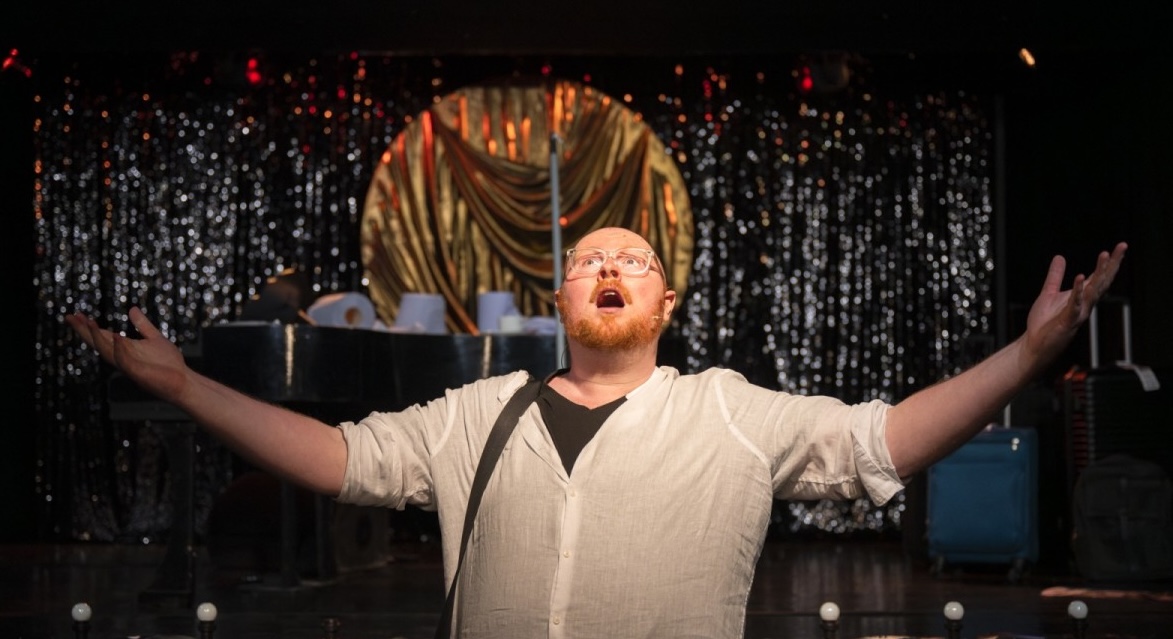
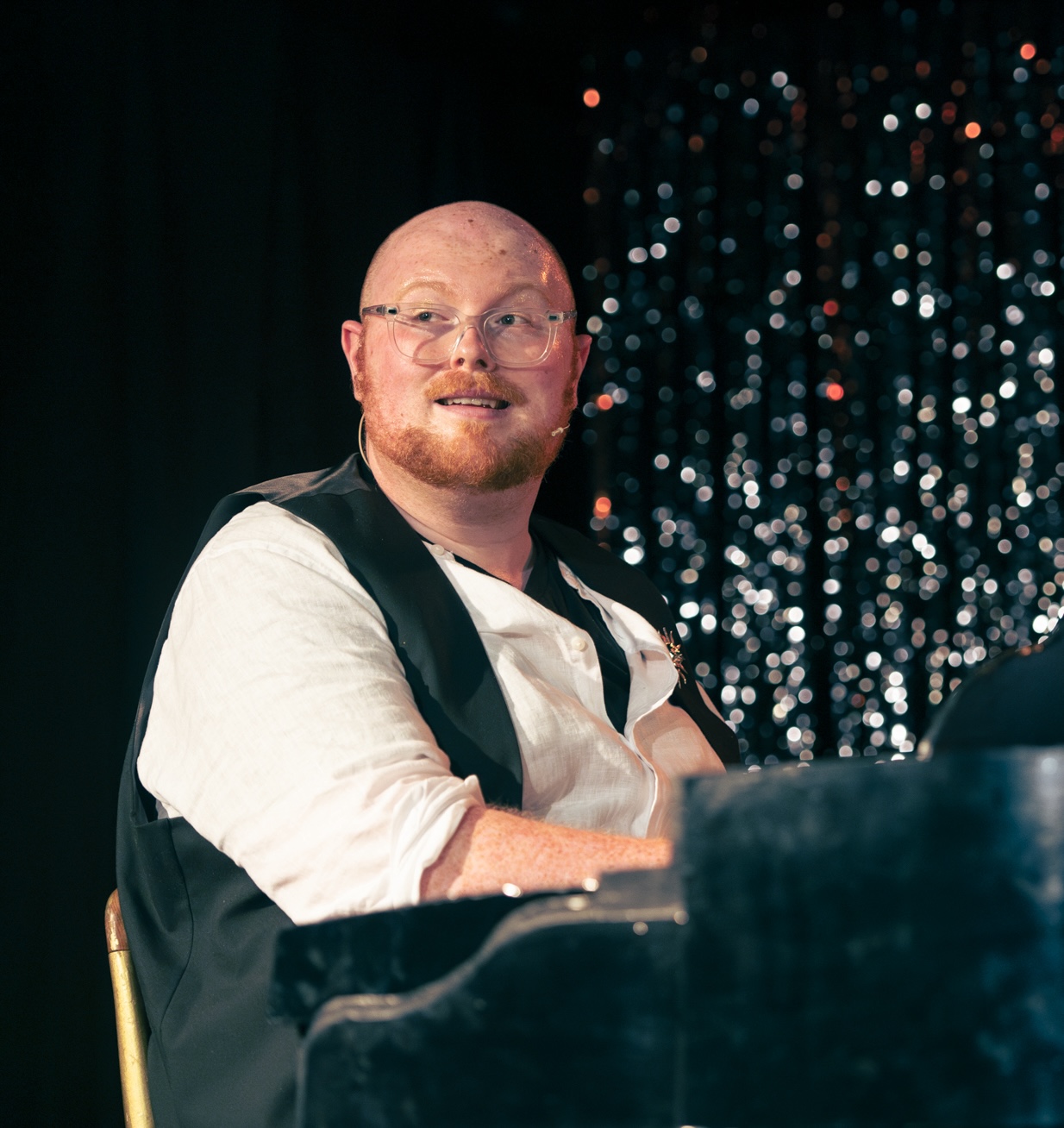
Almost before we know it, a new season of A Play, A Pie and A Pint is upon us for its – gasp! – 20th Anniversary run. This opening piece is part-play, part-cabaret and the title is not – as you might suppose – metaphorical, but quite literal. Due to a catastrophic solar event, the world is due to end in one hour (don’t panic!) and Sam (Marc Mackinnon) is stuck in a locked-down airport hotel, delivering his final show to a captive audience. That’s us, in case you were wondering.

He’s stranded hundreds of miles away from his longtime partner and co-creator, Mel, who can only contribute to the performance via a series of jumbled text messages. As the final hour ticks relentlessly away, Sam offers us some insight into his tortuous path into show-biz: the people who helped him on his way, the others who stood in his path.

One thing’s for sure: when the end finally comes, he’ll greet it with a song and a smile…

Mackinnon is an engaging actor and he delivers Brian James O’Sullivan’s script with considerable skill, performing a series of classic songs in a wonderfully distinctive style. Under Joe Douglas’s direction, Mackinnon lures the audience into his prematurely fading orbit. A sequence utilising an old glitter-ball and the torch from a mobile phone is particularly affecting.

I do have one reservation. Although the songs – ranging from Judy Garland to James Taylor – are beautifully sung and Mackinnon has a strong, plaintive voice, there isn’t much original material here. There is a charming little ditty about a man who lives in a house made of pasta (!) but I would like to hear more new compositions.

However, this apocalypse is weirdly captivating and a strangely delightful way to spend your last hour – even if the tragic conclusion seems horribly prophetic.

3.8 stars

Philip Caveney

The Scaff

02/04/24

Traverse Theatre, Edinburgh

For someone who has always maintained a complete indifference to the game of football, I do seem to be watching a lot of plays about it lately, all of them at the Traverse. And the thing is, the standard has been incredibly high. First up, there was the five-star masterpiece that was Moorcroft. Then there was the wonderful Same Team, which also found a fresh approach to its chosen subject. Now here’s The Scaff, the final offering in the A Play, A Pie and A Pint spring season, which I approach with some trepidation.

Can the Traverse really hope to pull off a hat trick?

Happily, it turns out that they can. Written by Stephen Christopher and Graeme Smith, this is an assured and acerbically funny play, centred around a school football team. Jamie (Bailey Newsome) and Frankie (Stuart Edgar) live and breathe for the game. They spend most of their time out on the pitch, helping the team’s star player, Coco (Craig McClean), to rack up the goals. They’re also friends with Liam (Benjamin Keachie), but one day Jamie overhears Coco referring to Liam as ‘a scaff’. And while there may be some truth in the accusation – Liam’s Mum does buy own-brand crisps and Liam is forced to play in Mitzuma football boots, for God’s sake – Jamie encourages Liam to take his revenge on Coco by unleashing a hard tackle in the next game.

Liam takes his friend’s advice with disastrous consequences. Coco’s resulting injury means that the team will be without their top scorer as they approach the school cup final. Liam is in disgrace – and can Jamie and Frankie even admit to being friends with a boy who is now little more than a pariah?

Of course, The Scaff is about so much more than football. It concentrates on the subject of friendship and the difficulties that life can throw into its path. It’s also about the the constant longing to be liked and the awful fear of thinking that you are hated for things you have no control over. And mostly, it’s about the difficulties of escaping from an identity that others have bestowed on you, a term that is as degrading as it is dismissive.

The performances of the four leads are strong, each actor convincing in his respective role. I particularly enjoy Keachie’s physicality as a boy almost crippled by anxiety, forever giving sidelong glances to his companions, beseeching them for support and also forgiveness. Director Jordan Blackwood handles the tricky problem of making a quartet of actors on a bare stage convince as team players, and the performers give it their best, leaping, twirling and launching savage kicks at an imaginary ball. They manage to pull off the illusion, with the audience reacting delightedly to each successive goal. I find myself yelling and clapping along with them, something that no actual football match has never managed to make me do.

It’s been another strong season for A Play, A Pie and A Pint, and The Scaff provides a winning finalé that scores on just about every level.

4.6 stars

Philip Caveney
Hotdog

26/03/24

Traverse Theatre, Edinburgh

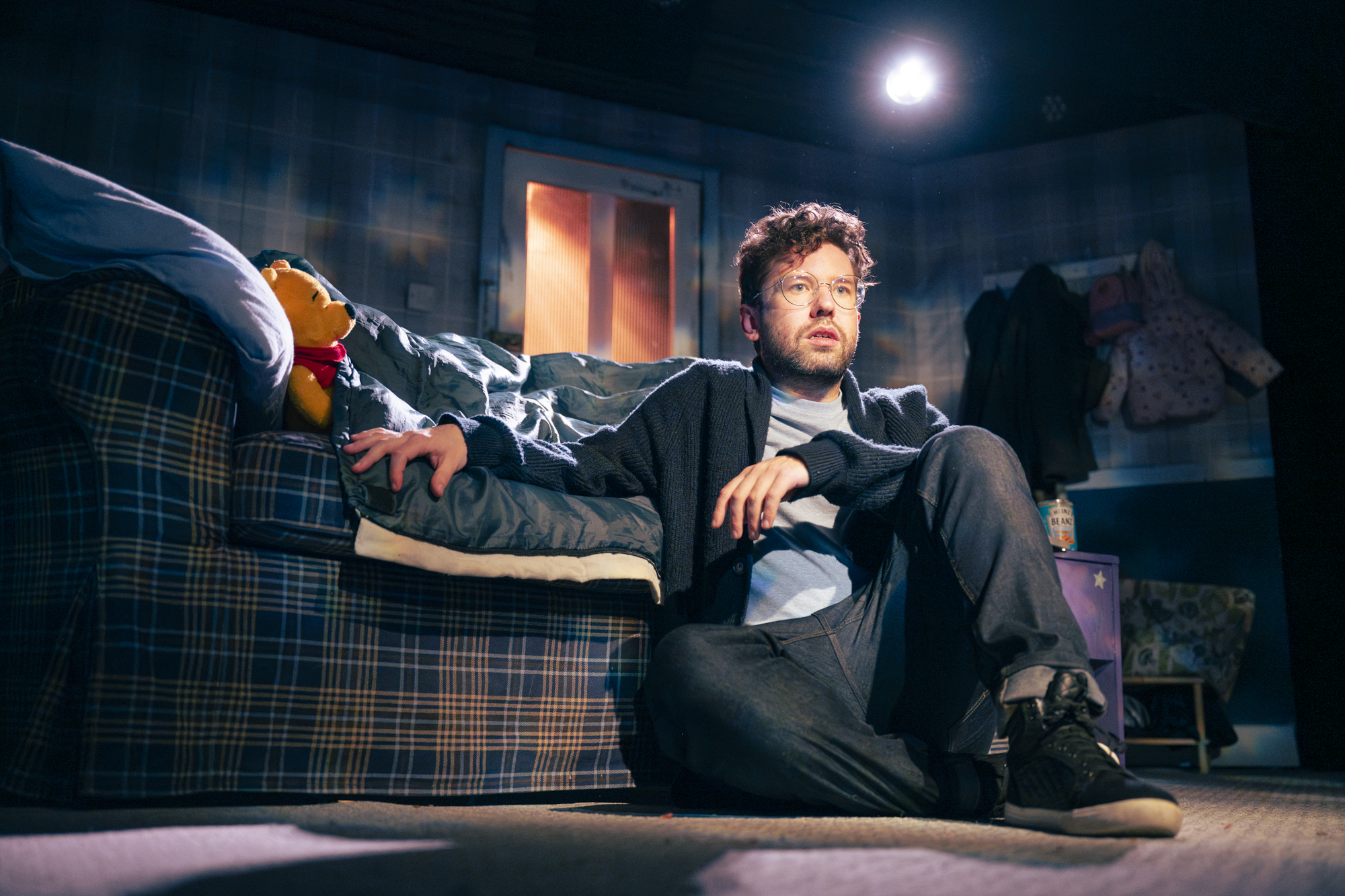
Hotdog (Chloe-Ann Tylor) is all dressed up and ready to party! 

Wearing a garish hired costume and carrying a handbag, a phone and a bottle of lemonade, she’s leaving the sanctuary of her flat and heading off to an undisclosed location to strut her stuff. Outspoken and full of pent-up bile, she is determined that tonight she will be the life and soul of the party. She will dance and drink and curse and laugh out loud! She will sweep aside anybody who has a single bad word to say about her and show them who’s the boss.

But, as is so often the case, her forced exuberance only exists to mask a deeper, darker truth. Because something bad happened to Hotdog in the recent past – something that it’s going to take her a very long time to come to terms with.

Written by Ellen Ritchie and directed by Beckie Hope-Palmer, with an enchanting central performance  by Chloe-Ann Tylor, the latest piece from A Play, A Pie and a Pint is an astutely observed drama that deals with the subject of trauma. Tylor (most recently seen by B&B in  Same Team: A Street Soccer Story and in the fabulous Battery Park) talks directly to the audience, discussing her character’s uncompromising, no-holds-barred approach to life. She tells us about her apparent hatred of her over-protective mother and her revulsion for the kind of fridge-magnet things that people are prone to say to her. 

As she chips steadily away at the brittle carapace she’s constructed around herself, the real story gradually emerges – and it’s utterly heartbreaking.

Tylor is joined onstage by Ross Allan, who at first undertakes the role of a silent stage hand, ensuring that props, music cues and sound effects are there whenever Hotdog needs them. It’s only in the poignant final stretches that he becomes Andy, the proprietor of the chippy where Hotdog tends to finish up her evenings. As in his previous role, he is exactly the helping hand she needs, the one who keeps a caring eye on her. He’s also the bearer of a truth universally acknowledged – that Joni Mitchell is the greatest lyricist of all time.

Kenny Miller’s set might at first glance seem overly complicated, but all those meticulous white lines on the floor – like Hotdog’s motivation – eventually fall into place.

4 stars

Philip Caveney
Starving

12/03/24

Traverse Theatre, Edinburgh

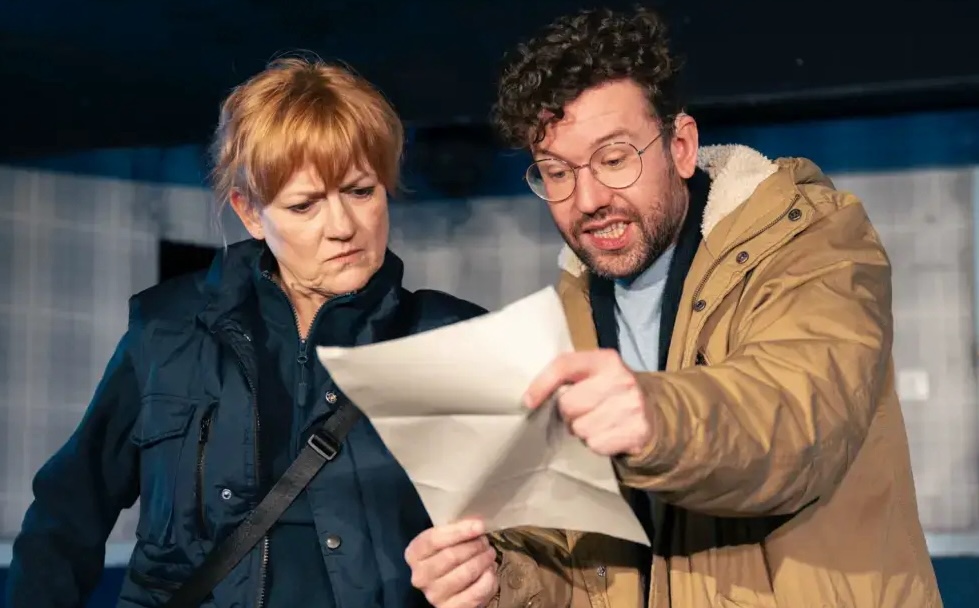
It’s December, 1972 and Scottish independence campaigner and all-round firebrand, Wendy Wood (Isabella Jarrett) is preparing to enter the fifth day of her hunger strike. She’s seventy-eight years old and this is just the latest in a long string of adventures.

It’s also December 2024 and, at the age of thirty, copywriter Freya (Madeline Grieve) is stuck in her Edinburgh flat, crippled by insecurity and afraid to venture out into the world she finds so overwhelming. She too hasn’t eaten for a while – but her hunger has more existential beginnings.

Somehow the two women find themselves occupying the same time and space. Which is all fine and dandy, until Freya checks out her companion on Wikipedia and discovers that A. She’s famous and B. She died in 1981.

Imogen Stirling’s sprightly debut play (we previously saw her performing in the fabulous Love the Sinner) flings these disparate characters together and explores what makes them so different. At the same time, it uncovers the qualities that they have in common. Director Eve Nicol has the good sense to keep the proceedings all stripped back, just a bright banner and a couple of microphones for those moments when the women need to vent their feelings – which they both do, volubly and admirably.

Jarrett is quite awesome as Wendy, staunch, bold and ever resistant to the idea of being told ‘no!’ (After the show, I also look Wood up on Wikipedia, and it’s quite the eye-opener). As Freya, Grieve handles her more nuanced character with absolute assurance. I find myself alternately amused and amazed by the breadth of the material covered here, and there’s plenty to make me think about the various political issues that are touched on. I also love the play’s exuberant conclusion, the two protagonists joining together in a rousing rap about the need for freedom.

Once again, A Play, A Pie and A Pint have come up with a production designed to brighten your afternoon. Don’t miss your chance to share it.

4.5 stars

Philip Caveney