

Death on the Nile

12/02/22

Cineworld, Edinburgh

Kenneth Branagh earned himself a lot of brownie points for the sublime Belfast, but quickly squanders most of them in this, his second Agatha Christie adaptation. While it’s a definite improvement on his previous attempt, Murder on the Orient Express (which suffered from a bad case of too many actors in cameo roles), it still struggles to escape from the suffocating confines of the genre.

Mind you, it opens with a totally unexpected sequence set in the First World War, where we meet a digitally de-aged Poirot as a solider in the trenches, already flexing his powers of deduction. And then we are offered an origin story for that famous moustache. Interesting…

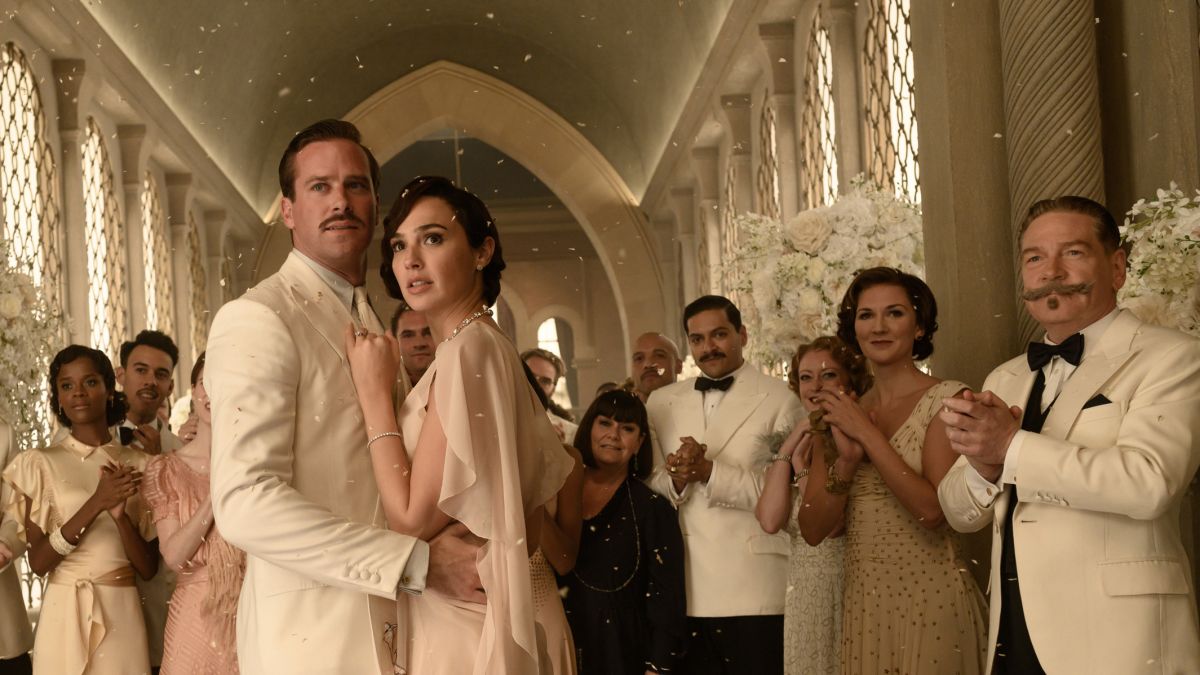
But all too soon, the action has moved on to 1937 and more familiar territory. Poirot is in a nightclub, fussing over some desserts, listening to blues singer Salome Otterburn (Sophie Okonedo) and watching as a certain Simon Doyle indulges in some rather dirty dancing with his fiancée, Jacqueline de Belfort (Emma McKey). The fact that Doyle is played by the recently disgraced Armie Hammer is, um, awkward, to say the least (and when I reflect that the previous film had a pivotal role for Johnny Depp, it makes me wonder is there isn’t some kind of ‘Curse of the Christies’ going on here).

Anyway, six weeks later, Doyle is climbing aboard a cruise ship in Egypt with his new bride… Linnet Ridgeway (Gal Gadot). Things get even more uncomfortable when Jacqueline arrives and spends her time glaring balefully at the newly weds over the lobster and fizzy wine. Honestly, if looks could kill!

Okay, this is Christie territory, so it’s a hardly a spoiler to say that somebody winds up murdered, which puts a proper crimp on the festivities. The perpetrator could be any of the passengers, all of them played by well know faces: Annette Bening, Dawn French, Jennifer Saunders, Russell Brand, Letitia Wright. Place your bets, folks – unless, like me, you saw the 1978 version or have read the book, and already know whodunnit.

Which, I must confess, spoils it somewhat.

It’s all handsomely done and this time around there’s enough focus on the various players to make it feel that they’re more than just cardboard cutouts. Egypt is lovingly recreated in CGI and the shameful opulence of the era is shown in unflinching detail. Here is an age where somebody can throw the contents of a champagne glass into the Nile and declare ‘there’s plenty more where that came from’ while starving people watch in silence from the river bank.

Okay, it was a different time, but at the end of the day, this feels hopelessly antiquated and badly in need of updating. Diehard Christie fans will doubtless tell themselves that Branagh has done his subject proud, and yes, perhaps he has – but I for one will be in no great hurry to see another Poirot movie. Unless, that is, it can offer something more unexpected than an origin story for some facial hair.

3.4 stars

Philip Caveney

Belle

10/02/22

Cineworld, Edinburgh

Writer/director Mamoru Hosoda’s Belle, is a modern re-working of Beauty and the Beast (renamed here in the subtitle as The Dragon and the Freckled Princess). This animation is a delight: a fresh, thought-provoking take on the fairytale. Is it sentimental? Yes. Does that bother me? Not one jot.

Suzu (voiced by Kaho Nakamura) is a troubled seventeen-year-old. Her mother died when Suzu was a little girl, and she’s never really come to terms with the loss. She is moody and taciturn with her father (Kôji Yakusho), and struggles to express herself. Suzu and her mother always used to sing together, but now – even under the patient guidance of her mother’s choir friends – Suzu can’t find her voice; she’s desperately shy and self-conscious.

But in the virtual world of ‘U,’ Suzu can use an avatar and, at this remove, her emotions all come tumbling out – in song. Her haunting voice and plaintive lyrics attract a lot of attention, and, as Suzu’s best friend, Hiroka (Lilas Ikuta), is a tech-savvy genius, her alter-ego, ‘Belle’ soon becomes a star. In U, at least, everything is going well… until a mysterious beast disrupts one of Belle’s performances, and she embarks on a quest to discover his identity.

This Studio Chizu production is gloriously animated. The real world backdrops are rendered in intricate detail, in stark contrast with the dizzying, eye-popping invention of the virtual world. And the story works well: the characters are fully-rounded – complex and flawed; their relationships are credible. The not-so-subtle allusions to Twitter pile-ons and trolls – represented here by Justin (Toshiyuki Morikawa) and his vigilante group – depict the problematic aspects of social media, but the main impression is one of positivity. U is a place of opportunity, an egalitarian space, where preconceptions don’t count.

Perhaps the film’s greatest strength is in its message that our virtual selves can work in harmony with our real selves, serving to bolster our confidence. Belle allows Suzu to sing again and, having practised in the safe space of U, she feels able to open up at school and home. We hear negative stories all the time, about how fake images and pretence are damaging our lives. But Hosoda asks us to see things differently, to consider how we might harness this technology to become the best versions of ourselves. It’s a fascinating take.

My only quibble is with the cinema rather than the movie. This is a children’s film, squarely aimed at a middle-grade to teen audience. So why is it only showing once a day, at 8pm, when most youngsters are at home, getting ready for bed? Of course, it works for adults too, and I enjoy it immensely, but it seems a shame to limit its potential in this way.

4.1 stars

Susan Singfield

The Lion, the Witch and the Wardrobe

08/02/22

King’s Theatre, Edinburgh

And, we’re back!

After the disappointment of seeing the King’s Theatre close its doors shortly after the launch of the Christmas pantomime, it’s wonderful to return once more to the stalls of the ‘Old Lady of Leven Street’ – and what a fabulous offering to kick things back into motion! I’ve seen several adaptations of CS Lewis’s celebrated book over the years, but few have handled the material quite as skilfully as in this powerful show, directed by Michael Fentiman and based upon Sally Cookson’s original production.

The four Pevensie children – Susan (Robyn Sinclair), Lucy (Karise Yansen), Peter (Ammar Duffus) and Edmund (Shaka Kalokoh) – are sent away from home as evacuees and, in a brilliantly staged opening , find themselves whisked off by train to a remote house somewhere in the wilds of Scotland. Here they meet their host, Professor Kirk (Johnson Willis), the owner of a curious cat and an ancient wardrobe that provides a convenient portal to the forever-winter world of Narnia…

From the outset here is a production that dazzles with enchantment. There’s a big cast, all of whom are given their chance to shine as they dance, play music and slip from character to character with apparent ease. This isn’t so much a full blown musical as a play with songs and the occasional burst of foot-tapping music. Of course, all the familiar faces are in place. There’s the imperious white witch (Samantha Womack), the messiah-like lion (Chris Jared), the flute-tootling faun (Jez Unwin) and the two of rebellious beavers (Sam Buttery and Christina Tedders), intent on returning Narnia to the way it used to be, before the snow began to fall.

There are several moments here that actually make me gasp in surprise: simply but effectively staged flying sequences; genuinely mind-twisting magical effects; and a brilliantly engineered set, where circular panels move smoothly aside to reveal fresh wonders, looking for all the world like Renaissance paintings. The audience sits spellbound as the performers leap and whirl across the stage in a riot of sound, colour and spectacle. The character of Aslan, simultaneously a real actor and a huge puppet, is an absolute masterstroke.

If you’ve been missing the buzz of live theatre, The Lion, the Witch and the Wardrobe offers a feast of delights for all the family – and, if you’ve been waiting for just the right production to lure you back, this must surely be the one to do it.

4.6 stars

Philip Caveney

Pig

06/02/22

Now TV

I’m late to this, mostly because of my inability to find the film showing at a cinema anywhere near me. But I’ve heard good things about it and eventually, I chase it down on the small screen. My expectations are that it will turn out to be a kind of ‘John Wick with a pig’ scenario, which isn’t a prospect I relish, but happily it is gentler and a bit more nuanced than that.

Disturbingly, though, days after the viewing, I’m still not entirely sure what it is.

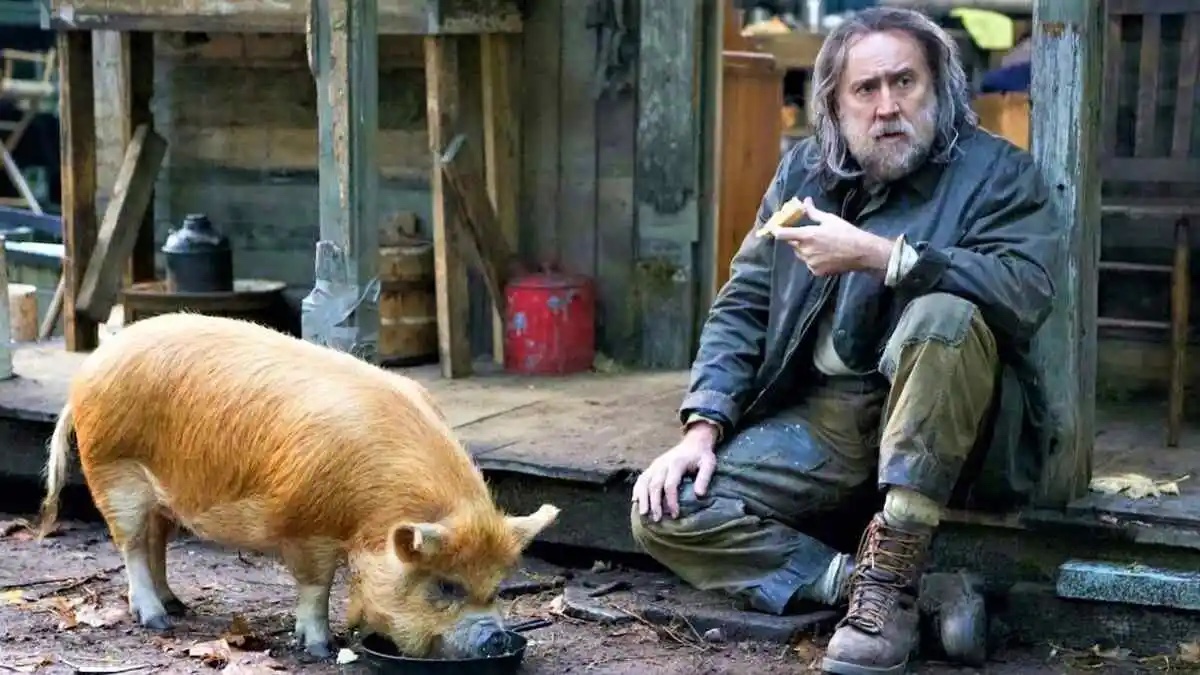
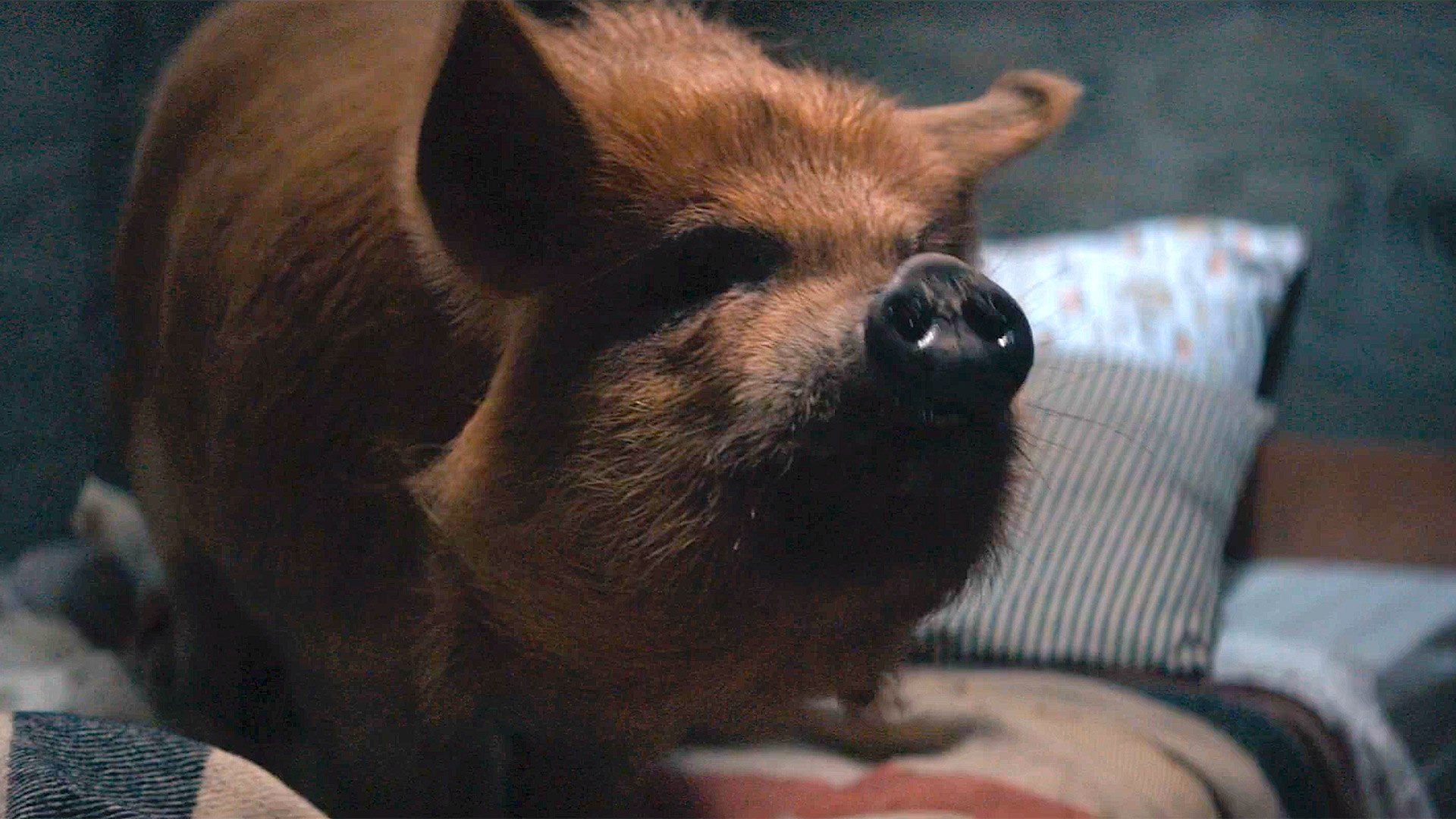
Nicholas Cage plays ‘Rob,’ who ekes out a precarious existence in a tumbledown cabin in the middle of a forest in Oregon. He makes his living from harvesting truffles, along with his beloved er… pig (Brandy), who has a snout for that kind of thing. Rob is visited from time to time by young entrepreneur, Amir (Alex Wolff), who sells those foraged truffles in Portland, where they are prized by chefs at the fancier dining establishments. It’s an odd arrangement but it seems to work.

But things take a nasty turn when Rob is attacked one night and his pig stolen. So, with Amir as his driver, Rob sets out for the big city with only one thing on his mind: to get his pig back. It’s nothing to do with the truffle situation, though. Rob loves her and cannot envisage life without her.

As he and Amir travel through the city, it soon becomes clear that Rob has been here before. Once upon a time, it transpires, a near legendary chef and the very mention of his full name – Robin Feld – is enough to invoke awe in everyone who hears it. (It’s hard to imagine that the names of Jamie Oliver or Gordon Ramsay could inspire such respect.) Along the way, Rob has some strange encounters. He volunteers to be beaten up in a private fight club (as you do), he cooks food for Amir and his ruthless father, and he makes it clear that he has nothing but contempt for his former career and for the customers who used to flock to him for his gastronomic delights.

Pig is an odd film, to say the very least. While it’s refreshing to see a Nicholas Cage project that doesn’t require him to chew the scenery, it’s also probably true to say that most of what’s going on here is in the subtext. Rob is a shambling, monosyllabic central character, covered with bruises and blood throughout the film – a scene where he books a table at a swanky restaurant and none of his fellow-diners raise so much as an eyebrow actually beggars belief – and he is single minded in his determination to get that pig back, come hell or high water.

Debut director/co-writer Michael Sarnoski’s fairy tale seems to be suggesting that greeting violence with love (and food) is the way to solve problems, and perhaps he’s right on that score, but ‘turning the other cheek’ is hardly a revelation, and it doesn’t seem enough to hang an entire movie on. While it’s also true to say that Pig never goes anywhere you expect it to, it feels somehow as though the stakes need upping a little.

Bacon sandwich, anyone?

3.4 stars

Philip Caveney

The House

06/02/22

Netflix

It’s a cold Sunday afternoon, with the threat of snow hanging over it. We’ve nothing pressing to do, and we’ve already braved the elements for a bracing walk. We don’t want to go out again. It’s warm in our lounge, and there must be something worth watching that we haven’t already seen… But what?

The House pops up as a suggestion, and we’re intrigued.

Originally billed as a miniseries, The House appears on Netflix as a portmanteau, and is – I think – all the better for it. Viewed as one, the themes coalesce, and the strange beauty of this piece is given time to develop.

The house in question is a rather lovely one: three storeys of opulence and grandeur. Enda Walsh’s script shows it to us in three different times: the past, the present and the future.

Chapter One, And Heard Within, a Lie is Spun, is an eerie origins tale, directed by Emma de Swaef and Marc James Roels, and brought to life via some very spooky felt dolls. Mabel (voiced by Mia Goth) is a little girl. It’s some time in the 1800s, and her father’s fecklessness means her family is impoverished. Raymond (Matthew Goode) is a decent man; it’s just that he’s not very good at making money or managing his alcohol intake. One night, he wanders drunkenly into the forest, and meets a mysterious being, who offers him a way out. The enigmatic architect, Mr Van Schoonbeek, will build him a house. It is a gift. The only catch is that they have to live there – and that doesn’t seem like a catch at all. What could go wrong?

A lot, as it happens. Mabel is disconcerted to discover that Mr Van Schoonbeek keeps making changes. Big changes. Such as removing the staircases, so that she and her baby sister, Isobel, are trapped on the upper floor. Her parents seem caught up in the house’s spell, lured by its riches, and all too soon are literally defined by what they own…

Chapter Two, Then Lost is Truth That Can’t Be Won, directed by Niki Lindroth von Bahr, takes us to the present day. The house is now part of a suburban row, and is in the process of being renovated.

By a rat.

Said rat, known only as The Developer and voiced by Jarvis Cocker, is a hard-working soul. He has everything riding on the success of what seems to be a solo project, and – as his constant calls to the bank confirm – is relying on a quick sale. At first, he’s confident. His plans are meticulous. He has dedicated his life to this money-making scheme, sleeping in the basement for months, doing the place up room by room. It’s a wonder of high-spec luxury. But when he spies a fur beetle scurrying along the kitchen floor, he realises he has a problem. He fills in gaps in the skirting boards and throws around a liberal amount of beetle-poison, but all to no avail. He has an open viewing scheduled. What is he to do?

In Chapter Three, Listen Again and Seek the Sun, director Paloma Baeza offers us a washed out dystopia, set in the near future. Floods have risen, and the house looms precariously out of the water, an island in a never-ending sea. It’s all studio apartments now, owned by a cat called Rosa (Susan Wokoma), who dreams of restoring the dilapidated building to its former glory. The Pinterest-style boards attached to her wall show an ambitious vision, but she’s fighting a losing battle. All but two of her tenants have left, and those who remain, Jen (Helena Bonham Carter) and Elias (Will Sharpe), pay their rent, respectively, in crystals and fish. Which is all very well, Rosa tells them crossly, but no plumber will accept them as currency so no, sorry, she can’t do anything about the horrible brown water that’s coming out of the taps.

When Cosmos (Paul Kaye) arrives, the truth becomes clear: Rosa needs to let go of her attachment to the house if she wants to survive.

Taken as a whole, these three stories amount to a gentle polemic, an admonishment to us all to realise what really matters before it’s too late to save the world. It’s beautifully done. The tales are fresh, engaging, and quirkily animated – a lovely way to while away an hour and a half.

4.1 stars

Susan Singfield

Munich: The Edge of War

06/02/22

Netflix

History has not been kind to Neville Chamberlain. He’s generally depicted as the naïve fool who, despite good intentions, utterly failed to put the stops on Adolf Hitler. It’s interesting to note that this Netflix film, based on a novel by Robert Harris, chooses to view his actions in the lead up to World War 2 in a more sympathetic light. Could it be that the man actually knew what he was doing?

This is a handsomely mounted production that struggles to create any real sense of suspense, because… well, unlike say Quentin Tarantino, director Christian Schwochow decides to stick closer to the truth. Plot spoiler: Hitler does not get mown down in a hail of bullets by the film’s heroes a la Inglourious Basterds. Just so you know.

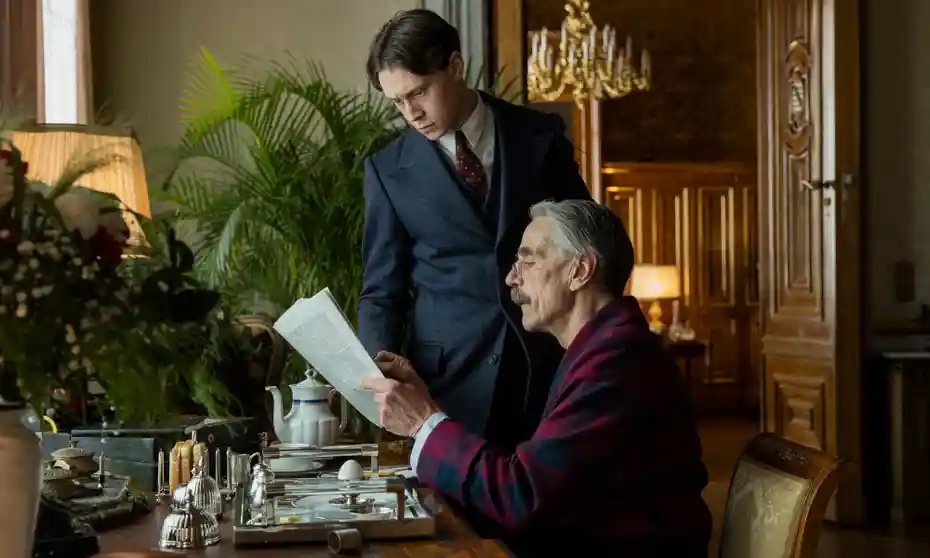
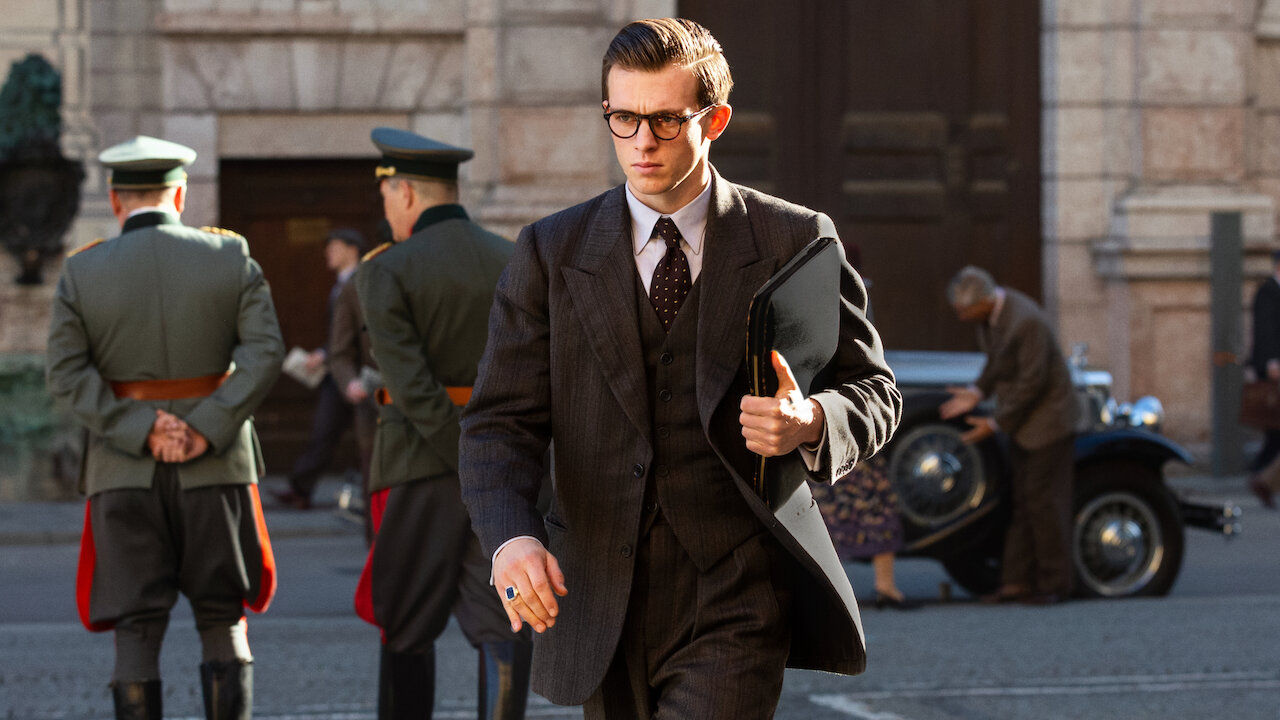
We first meet Hugh Legat (George McKay) and his friend, Paul Von Hartmann (Jannis Niewöhner), in 1932, when they are celebrating their graduation from Oxford, along with Paul’s Jewish girlfriend, Lena (Liv Lisa Fries). Paul is singing the praises of a certain Adolf H, who – he genuinely believes – represents the best future for his homeland. Hugh is understandably horrified. Shortly thereafter, Hugh visits Paul in Munich, where the latter seems even more bullish about his adulation for the Führer – and the two friends fall out with each other.

The action moves on six years, and Paul’s views have changed for the better. He’s realised that his earlier beliefs were short-sighted to say the very least and is now involved in a clandestine plot to bring Hitler down before he can do any more damage. When he discovers that his old pal, Hugh, has become private secretary to Neville Chamberlain (Jeremy Irons), Paul spots an opportunity to get to the British PM, in order to urge him not to sign the upcoming Munich agreement.

Hugh, somewhat reluctantly, finds himself once again on his way to Germany.

McKay, having spent a lot of time running like the clappers to avoid impending carnage in 1917, finds himself doing something similar here, only this time, he’s attempting to head off an entire World War. (So no pressure there.) He’s very engaging as a young man trying to do his level best, whilst struggling with tantrums from his wife, Pamela (Jessica Brown Findlay), who seems to take it personally that her husband thinks preventing a World War is more important than ensuring he’s home for dinner every evening.

Niewöhner has a smouldering James Dean-ish quality that augers well for his future, while Irons is typically assured in his depiction of Chamberlain, giving us a bumbling, frightfully British sort of chap, who is obsessed with making recordings for the good old BBC and won’t tolerate anybody speaking out of turn. Ulrich Matthes, meanwhile, gives us one of the most terrifying screen Hitlers I can remember.

Matters become more complicated when Paul discovers that a childhood acquaintance, Franz Sauer (August Diehl), is now a leading officer in the SS and that the two of them are going to be spending a lot of time together. What’s more, Sauer is also clearly suspicious about his former schoolfriend’s intentions and has an unfortunate habit of turning up in all the wrong places.

Munich: the Edge of War offers an entertaining couple of hours, but the protagonists never seem to be really imperilled. While this may work in the source novel, it prevents the film from ever going into the kind of overdrive its final stretches require.

3.6 stars

Philip Caveney

The Souvenir: Part Two

04/02/22

Cineword, Edinburgh

Joanna Hogg’s The Souvenir was a well deserved indie hit back in 2020. It relates the story of young film student, Julie (Honor Swinton Byrne), whose life becomes inextricably entangled with the mysterious Anthony (Tom Burke), a secretive alpha-male who claims to work for the foreign office. Julie quickly learns that Anthony cannot be trusted and that he has a propensity for selling off her treasured belongings in order to fuel an all-pervading drug addiction. It’s a powerful story, one with a heart-rendingly tragic conclusion.

It therefore came as something of a surprise to learn that a sequel had been commissioned. Shot last year, and newly arrived in the cinemas, it’s already been garlanded with high praise and five star reviews from many of the UK’s most prestigious critics. Like the previous film, it boasts Martin Scorcese as executive producer and takes up where the last film ended, with Julie trying to come to terms with Anthony’s suicide, whilst simultaneously attempting to continue her schooling, working alongside a bunch of fellow students to produce her graduation film.

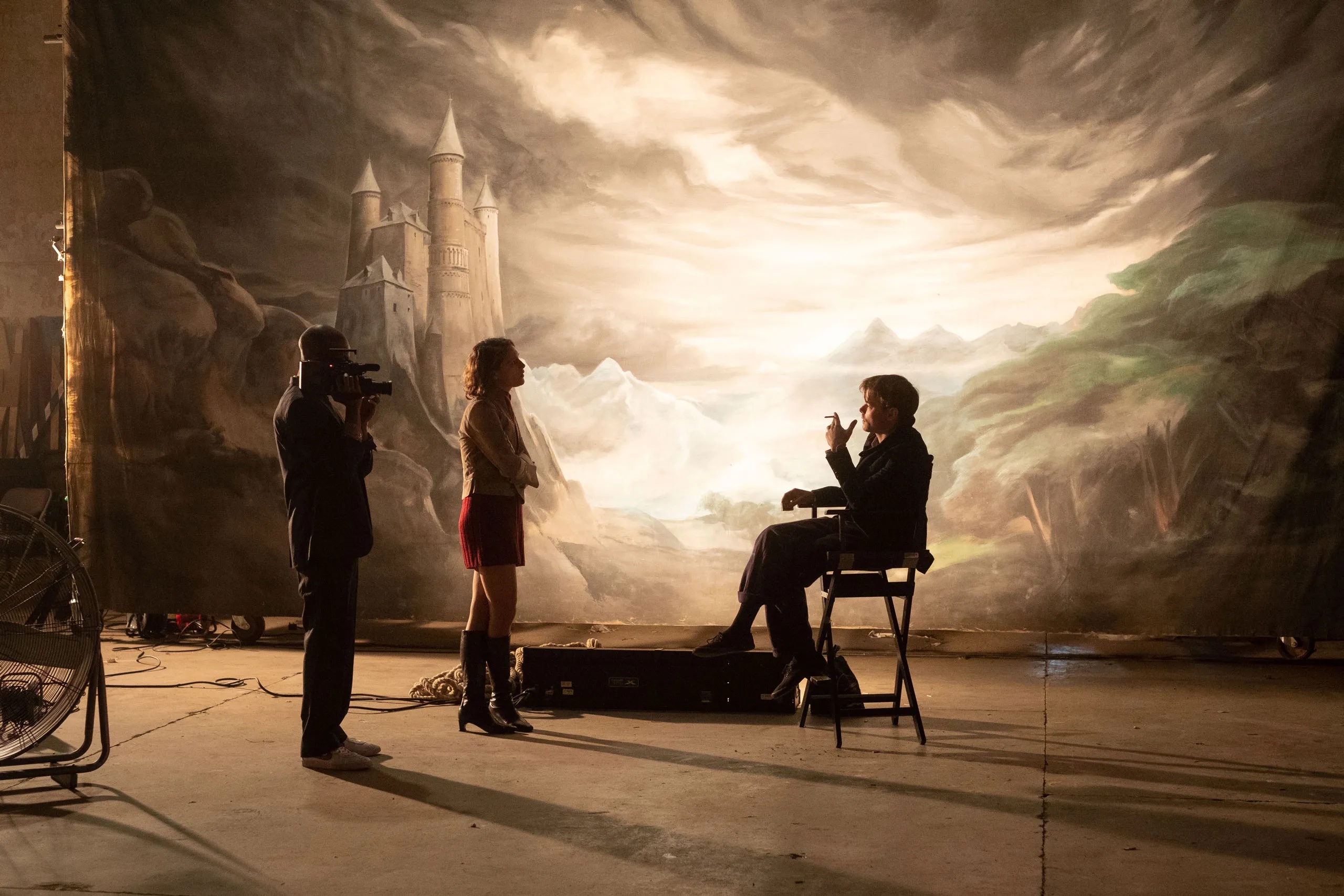
Along the way, Julie experiences a disastrous one-night-stand with actor Jim (Charlie Hutton) and continues to kindle the scorn of the egomaniac fledgling director, Patrick (Richard Ayoade), who offers some of the film’s funniest lines. ‘You’re literally forcing me to have a tantrum!’ he screams at one point. It’s the late 80s, which probably explains why nearly every character we meet smokes continuously – on film sets, at the dinner table, even in the cinema. The film occasionally feels as though it should carry a government health warning.

As before, Hogg makes no attempt to disguise the fact that Julie is rampantly over-privileged. Here is a student with no side-job, who nevertheless lives alone in a swanky, central-London apartment, and is able to call upon her rich parents, Rosalind (Swinton-Byrne’s real life mother Tilda Swinton) and William (James Spencer), to further fund her filmmaking efforts to the tune of ten thousand pounds, which they are able to do without an eyebrow being raised.

The first half of the film works well, concentrating on Julie’s efforts to process her grief. She makes regular visits to a counsellor, visits Anthony’s parents and even drops in on some of his shadier acquaintances in her search for answers. The second half of the film takes us headlong into the filmmaking process, with Julie struggling to get her ideas across to the cast and crew who’ve been assigned to work on her vision. A decision to abandon her original project (a film about the working classes in Sunderland) is probably a wise move – anything she might have had to say about that subject would have smacked of appropriation.

Instead, she tries to capture the details of her doomed relationship with Anthony on film. This is meta to say the very least. Now we’re watching Julie watching actors playing her and Anthony, enacting scenes from her recent history – and then, when we see the finished film, it’s viewed through Julie’s gaze so she appears to be starring in a film about her own life titled… er… The Souvenir.

To my mind, this second half is both more ambitious and less cohesive than what’s gone before. Which is not to say that there isn’t plenty here to admire, just that it feels a bit scattershot – and the film’s final sequence would have impressed me a lot more if I hadn’t recently seen it done better – and more confidently – in TV series Landscapers.

But that’s hardly Hogg’s fault. She’s clearly a talented filmmaker, but I’m hoping now she’ll apply those talents to something entirely different, rather than The Souvenir: Part Three.

Only time will tell on that one.

3.8 stars

Philip Caveney

Mass

02/02/22

Now TV

Mass isn’t going to be anybody’s idea of a fun trip to the cinema.

Perhaps that’s why we’ve seen no opportunity to view it on the big screen, though, to be fair, this intimate drama, written and directed by Franz Kranz, works perfectly well on a television screen. Effectively, it’s a four-hander, and I might be forgiven for assuming that it started life in the theatre, but actually it’s an original screenplay and one that draws me quickly in to its central premise.

We start proceedings in a dowdy church hall, somewhere in the heart of America, where Judy (Breeda Wool) fusses around preparing a room for an impending meeting, directing the taciturn Anthony (Keegan Albright) to help her set out the furniture just so. This one, she warns him, is going to be ‘tricky.’

Then Kendra (Michelle M Carter) arrives to further supervise things, and we learn that she has been working with one of the couples due to meet here and has finally persuaded them to attend. But these distractions are just set dressing for the main event. Soon enough, the first couple arrive and take their seats. They are Jay (Jason Isaacs) and his wife, Gail (Martha Plimpton), and it’s clear that they are reluctant to be here. Shortly thereafter come estranged couple Richard (Reed Birney) and Linda (Ann Dowd) and we sense that they too are horribly conflicted.

We soon learn why they are here – and this is in no way a spoiler.

There has been a fatal school shooting some time earlier. Both couples have lost a son in the incident, one son a victim, the other the perpetrator, who afterwards took his own life. The two couples are here to talk through their respective issues, to try to come to terms with what has happened to their children and to their own lives. What follows is a harrowing exchange, which ranges through mutual sympathy, antagonism, despair and outright anger. This is a mature and important conversation that America needs to address urgently.

Of course, this is only going to work if the acting is top notch and, frankly, it is uniformly brilliant. Indeed, I’d be hard put to select one performance over another; suffice to say, I am by turns horrified, bewildered and tearful. This is incendiary stuff and the banal topping and tailing of the piece just serves to accentuate the power of the main event.

Needless to say, Mass won’t be for everyone – it will be too brutal, too affecting for some and you could argue that, after the gloom of the pandemic, many will prefer to look towards more optimistic horizons. But it is nonetheless a powerful slice of filmmaking that achieves its ambitions with skill and determination.

4.3 stars

Philip Caveney

Parallel Mothers

28/01/22

Cineworld, Edinburgh

Pedro Almadóvar’s latest film is as fascinating as you’d expect; the veteran director is no stranger to serious stories, improbably furnished with lush images and unlikely melodrama. In this sense, Parallel Mothers is more of the same. But it is, of course, gloriously original too, and very much its own film.

Actually, maybe that’s not quite right. Maybe this is really two different films, because the two main strands are very disparate and never really converge. They’re parallel, if you like.

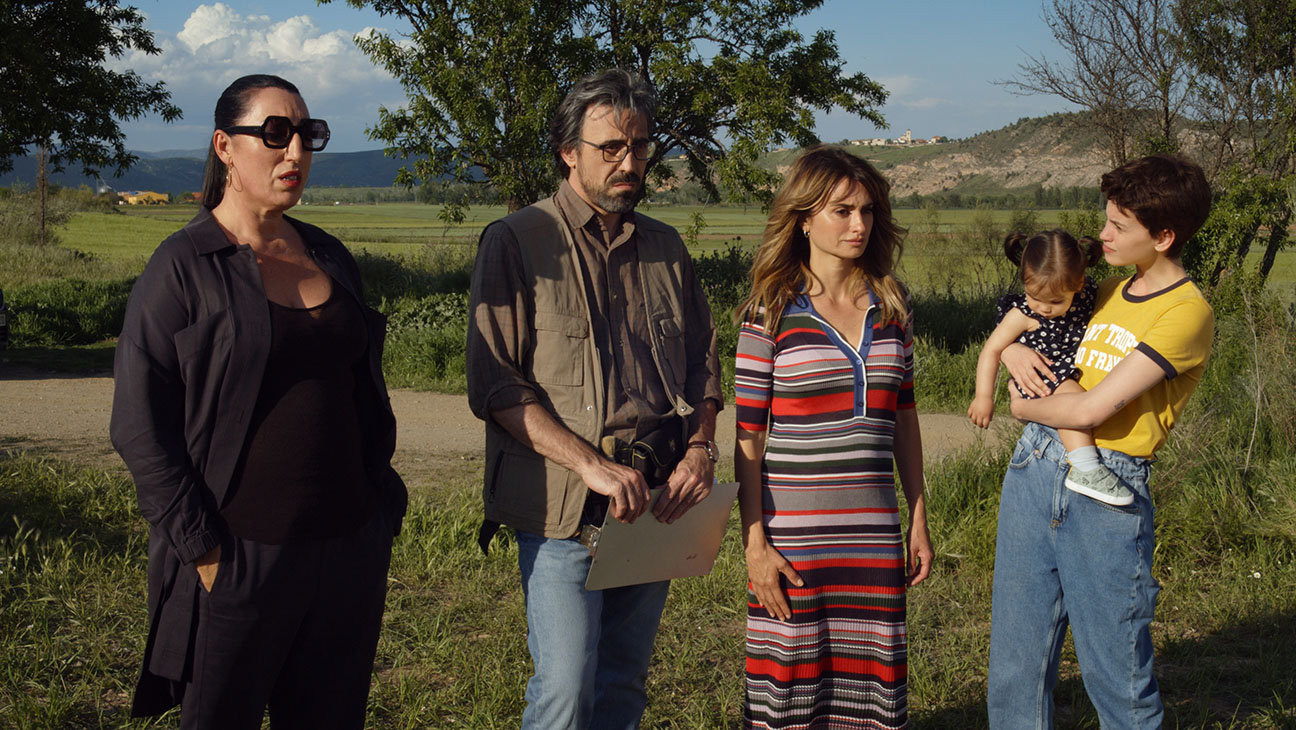
We open with the first – and arguably most interesting – strand. In a studio in Madrid, Janis (Penélope Cruz) is taking photographs of Arturo (Israel Elejalde), an eminent archaeologist. She seizes the opportunity to ask for his help: she wants him to excavate a potential grave-site, where, she believes, her great-grandfather is buried, along with nine other early victims of the  Franco regime. The impact of the past on the present is superbly realised, and reinforces the importance of Spain’s Law of Historical Memory, which – shockingly – only began the process of identifying and exhuming mass graves in 2007. I’m embarrassingly ignorant about the Spanish Civil War; this movie has already made me read up on the basics, and I’m keen to learn more, so – for me, at least – it’s proved successful in raising awareness, which is clearly part of Almadóvar’s aim.

The second strand is more domestic. Janis and Arturo have a casual relationship, which results in a very-much-unplanned pregnancy. She’s delighted; he’s not. He’s married; his wife has cancer; he doesn’t want to start a family. They part amicably. Janis doesn’t mind the idea of raising a child on her own; after all, her own mother did it, and her grandmother too.

In the maternity hospital, Janis’s roommate is a frightened teenager. Ana (Milena Smit) doesn’t want a baby. She’s got all the material support she could need: her mother, Teresa (Aitana Sánchez-Gijón), is a wealthy actress with a big house, and there are staff too: a housekeeper and a nanny. But the emotional support is lacking, and she turns to Janis for comfort. The two women are very different, but their situations similar enough to allow them to bond.

Until something unforeseen happens…

The film ends with a quotation from Eduardo Galeano: “No history is mute. No matter how much they own it, break it, and lie about it, human history refuses to shut its mouth.” This is true of the bodies piled in anonymous graves, and it’s true of the contemporary secret Janis uncovers too.

There are more parallels: between Lorca’s exposé of “the grotesque treatment of women in Spain” in Doña Rosita the Spinster (Teresa’s latest role) and Ana’s tragic backstory; between Janis and her own free spirit of a mum, dead at twenty-seven from an overdose.

There is also humour, and beautiful domestic scenery. Ana and Janis bond over stereotypical ‘women’s work’ – the food imagery is very evocative, and I leave the cinema feeling hungry.

And yet…

This film is gorgeous to watch, thanks to José Luis Alcaine’s cinematography, but there’s no getting past the fact that some plot points are skated over. Without giving any spoilers, I can’t say too much, but there’s a gaping hole where officialdom and bureaucracy should be, and perhaps the tying up of the ‘mothers’ strand feels a little glib.

There’s no glibness in the final shot though; that’s as profound as they come. I’d have liked a better balance between the two strands, I think: the domestic story overshadows the historical one.

But, without doubt, this is a film to watch.

4.1 stars

Susan Singfield

Nightmare Alley

25/01/22

Cineworld, Edinburgh

After the heartwarming optimism of Belfast, could there be a more contrary film than Nightmare Alley? This bleak, cynical tale of corrupt grifters, who spend their days trying to part the vulnerable from their worldly wealth, is a noir in the truest sense of the word, and marks the first time that Guillermo del Toro has stepped away from the supernatural or  sci-fi in order to tell a story. That said, this is every bit as dark as anything he’s done before.

It is of course, a remake, originally filmed in 1947 and starring Tyrone Power. Here, the boots of the lead character, Stanton Carlisle, are convincingly filled by Bradley Cooper. When we first meet Carlisle he’s carefully eradicating all traces of something he’s done – something bad that can only be cleansed by fire – but we won’t be given more detail until much later. After a long ride on an overnight bus, Carlisle arrives on the doorstep of a seedy carnival run by Clem Hoatley (Willem Dafoe), a venal charmer who thinks nothing of employing alcoholics and passing them off as ‘geeks’ – supposed ‘wild men’, who will bite the heads of live chickens for the entertainment of the carnival’s visitors.

Carlisle makes himself useful, helping to pitch tents and dispose of rubbish. He meets up with ‘Zeena’ (Toni Collette), who runs a mind-reading act alongside her alcoholic husband, Pete (David Strathairn), and, spotting an opportunity, Carlisle succumbs to Zeena’s charms, whilst filching the basics of Pete’s old routine for future use.

The carnival provides a wonderful setting, an atmospheric world where the neon-lit, tawdry wonders seem to throb with an innate sense of dread. Carlisle meets up with Molly (Rooney Mara), whose act has her being ‘electrocuted’ on a nightly basis. Carlisle transfers his affections to her, and the couple head off to the film’s second act, which takes up the story two years later. Now Carlisle and Molly are running a successful night club act, using Pete’s old blueprint, and are living the highlife. What could possibly go wrong?

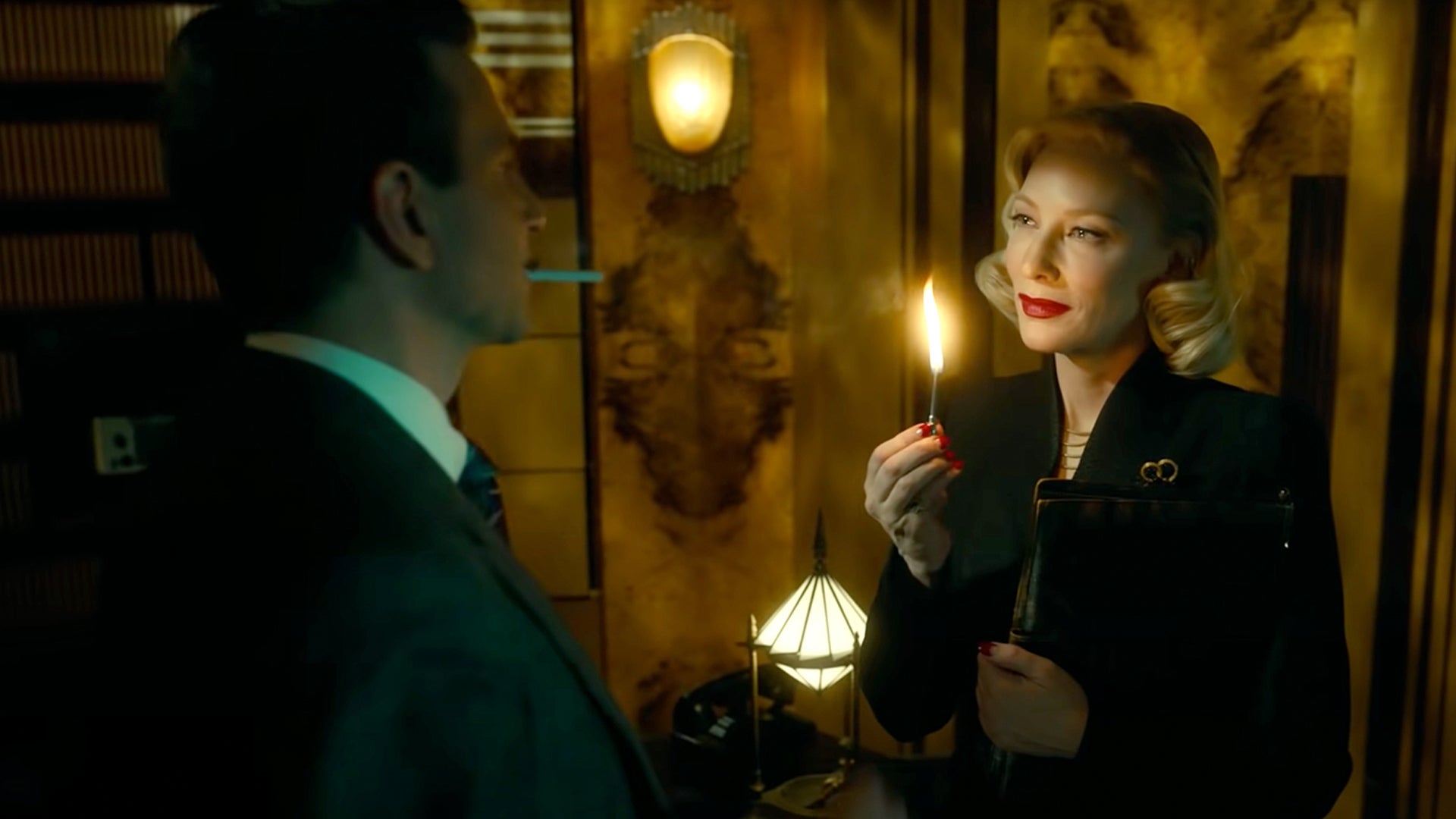
Well, this is noir, so of course there has to be a femme fatal and she dutifully arrives in the shape of psychologist Dr Lilith Ritter (Cate Blanchett). She starts to dangle the prospect of even greater riches in front of Carlisle. Will he yield to temptation?

Del Toro’s theme here is that the unscrupulous operate by exploiting the weaknesses of their victims, whether they’re doing it from the grubby confines of a canvas tent or the swish environs of an art deco apartment building. And, as ever, the wealthy are never happy to stand still, when they can see even more riches glittering enticingly, just out of reach.

Nightmare Alley is proper, grown-up filmmaking. The lengthy running-time and serious subject matter will doubtless put some punters off, and financial success will rather depend on whether any of its predicted Oscar nominations come to fruition. While this might not be the slice of cinematic perfection that is The Shape of Water, it’s nonetheless the work of a gifted director at the peak of his powers, handling a tricky subject with consummate skill, aided and abetted by the dazzling cinematography of Dan Lautsen.

Plans are afoot to release a monochrome version of this, but it’s hard to imagine how it could look any more lush than it does here, with every frame a veritable work of art.

4.8 stars

Philip Caveney