Challengers

21/04/24

Cineworld, Edinburgh

Challengers

I’m a huge tennis fan, but I’d be hard pushed to think of a non-documentary film that has ever come close to capturing the verve and excitement of the game. Until now. Luca Guadagnino’s Challengers manages to capture the gladiatorial nature of the sport and at the same time interweaves it with a stylish, sexy drama, which centres on three players and their complicated relationships. Guadagnino is a gifted filmmaker with both Call Me By Your Name and Bones and All as brilliant examples of the art. (I’ve just about forgiven him for his pretentious remake of Dario Argento’s Suspiria.)

The film opens midway through an intense tennis final between Art Donaldson (Mike Faist)  and Patrick Zweig (Josh O’Connor), who are playing under the baleful gaze of Art’s coach – and wife – Tashi Duncan (Zendaya). Art has been a top player but his star is waning; he’s still got the sponsorship deals earning him big money but he’s lost his mojo so, in a desperate attempt to rekindle his ambition, Tasha – who’s only ever really been motivated by her own thwarted obsession with tennis – persuades him to enter an open tournament, feeling that playing a series of lower seeds will be good for his confidence. Patrick is doing rather less well financially, living hand to mouth and at one point reduced to sleeping in his car – but he is playing to win.

From this point, the film flashes effortlessly back to thirteen years earlier, when the two young men, best friends since their first day at boarding school, encounter Tashi, the player everyone’s talking about. Both of them fall head over heels in lust with her and, in a playful scene in the men’s shared hotel room, Tashi announces that she will sleep with whoever wins the match when the two of them play tennis tomorrow…

It would be a crime to reveal much more about the plot from this point, but suffice to say that it takes some pretty labyrinthine twists and turns as it moves forwards and backwards in time, taking in everything that happens along the way.

There are strong performances from the three leads – nobody else gets much of a look-in – and while the story has some strong sexual content, it’s never allowed to feel prurient. It’s clear from the outset that Tasha is the main motivator in this three-way entanglement and she’s not about to be manipulated by anybody. 

Justin Kuritzke’s script is cleverly nuanced and sometimes wickedly funny, while Trent Reznor and Atticus Ross have created an atypical electronic score, one so propulsive that I find my feet tapping along to the urgent rhythms. For the most part it works brilliantly, though I do feel it’s occasionally overused. A special mention must go to the inventive cinematography of Sayombhu Mukdeeprom, particularly in the climactic stages of the final tennis match, which at one point has the camera careering madly back and forth across the court as though its been glued to a tennis ball.

Challengers is a grown up, slick and inventive feature, which is the work of a director at (ahem) the top of his game, set and match. 

4.6 stars

Philip Caveney

Mitsos – Serial Griller

20/04/24

Brougham Street, Edinburgh

It was way back in November 2017 that we first stumbled upon Taxidi – a charming little Greek restaurant just around the corner from where we live – and were absolutely knocked out both by the standard of the food and the relaxed, friendly atmosphere. It became a regular favourite and somewhere we often recommended to Edinburgh visitors. So, in January of this year, we were somewhat dismayed to see that it appeared to be closing down.

We needn’t have worried. The premises were simply undergoing a transformation into Mitsos – Serial Griller, under the same ownership. We vow to visit as soon as possible, but the best laid plans often go awry, and it’s quite some time before we finally find the opportunity. As the name implies, the little restaurant is now home to a sizeable charcoal grill and, as we enter the familiar premises, we’re greeted by the appetising aroma of roasting meat – though I should add that, as before, there are still plenty of vegetarian options on the menu.

We start with some marinated anchovies. These are quite the revelation. Plump and zesty, infused with lemon, parsley and garlic, they are about a million miles away from the dried up, salty things that come in tins. We eat them (perhaps ‘devour’ would be a more appropriate word) with slices of char-grilled pitta bread, which are are quite a revelation themselves, hot, crispy and so downright moreish that we have to rein ourselves back a little in order to have some to accompany the dishes that follow.

Next to arrive is a grilled chicken breast – marinated in yoghurt and cooked over charcoal. It’s accompanied by mild red onion and a delicious mustard, the meat wonderfully tender and as moist as you could ask for. Then comes the undoubted star of the show, a whole grilled sea bream, perfectly cooked, the flesh quite literally falling off the bone and as light as a feather. This comes with a lemon and coriander dressing, which brings out the delicate flavour of the fish. There’s also a lovely beetroot salad, flecked with manouri cheese and flavoured with mint and garlic, and a side of handcut chips. Suffice to say that we make very short work of it all.

We’ve left room for a pudding (naturally), so we’re initially disappointed to find that Mitsos only offers a choice of two, but the disappointment is short-lived because both prove to be delicious. There’s that most traditional of Greek desserts, baklava, this one fabulously sweet and sticky – and there’s Greek yoghurt. I’ll confess that the latter doesn’t sound inspiring, but I soon discover that this version of the classic dish is a cut above – a mouthwatering confection that comprises ultra thick spoonfuls of set yoghurt, heaped with a succulent berry compote and liberally sprinkled with chopped nuts. Good? It’s all I can do not to lick the platter clean!

We leave feeling comfortably full and already planning our next visit. Αντίο, Taxidi. Long live the Serial Griller!

5 Stars

Philip Caveney

Abigail

20/04/24

Cineworld, Edinburgh

Twelve-year-old Abigail (Alisha Weir) is kidnapped one evening after her ballet class. Sedated, blindfolded and spirited away to an abandoned mansion, she’s held hostage by a ragtag bunch of mercenaries, intent on extorting $50 million from her gangster father (Matthew Goode). But when Daddy doesn’t care enough to cough up, what’s a tweenage girl to do? Sometimes you have to be a little bit naughty…

Although it treads a well-worn path, Abigail is more than just tropes and jump-scares. The script (by Stephen Shields and Guy Busick) is witty and spare, the exposition deftly integrated. Although the characters never stand a chance – their subsequent fall is inevitable – they are three-dimensional and interesting, their shifting dynamic always plausible.

The gang are not exactly innocent victims of their story. They’re all prepared to traumatise a child for nothing more than the mighty moolah. But directors Matt Bettinelli-Olpin and Tyler Gillett manage to engage our sympathy for the squad, allowing us the time and space to get to know them and understand their motivations.

Medic and former-addict Joey (Melissa Barrera) is the second lead, and we’re on her side from the outset. She’s aghast to learn that the victim is a child, and forms a bond with Abigail straight away. Ex-cop Frank (Dan Stevens) is harder to like: he feels neither shame nor remorse for the work he does; he’s pragmatic and cool. Rickles (William Catlett), Peter (Kevin Durand) and Dean (the late Angus Cloud, to whom the film is dedicated) are all hapless in their various ways, while rich-kid hacker Sammy (Kathryn Newton) is just in it for the lulz.

But the tiniest mite packs the mightiest sting, and it turns out that there’s much more to Abigail than meets the eye…

Weir is clearly having a whale of a time in this 18-certificate bloodfest: she more than holds her own with the adult actors. She’s the perfect embodiment of innocence and evil, and it’s great to see her refusing to be typecast. Although it’s an undeniably violent film, the action meets the demands of the story and never feels superfluous.

This grisly thriller is a gem, but be warned: the characters’ endings are often a little bit gory.

4 stars

Susan Singfield

Chicken

18/04/24

Traverse Theatre, Edinburgh

It’s certainly a memorable entrance as Eva O’Connor struts and pecks her fretful way onto the stage of The Traverse, clad in an ingenious suit (designed by Bryony Rumble) that transforms her into the creature of the title. That said, she is no ordinary chicken. O’Connor plays Don Murphy, a proud Kerry cockerel and a ‘true son of Ireland.’ Hatched on a beach and full of ambition, he begins the long and eventful journey to stardom with dogged determination, working his way from appearing as Jesus in a local nativity play to the dizzy heights of Hollywood. I mean, come on, how many chickens do you know that have actually won a mother-clucking Oscar?

Chicken, co-written by O’Connor with Hildegard Ryan, is certainly like nothing I’ve ever seen before and O’Connor’s performance is a study in utter commitment as she circles the stage, staring intently into the audience, flapping her wings and flinging out chicken-related puns with absolute conviction. Don, it turns out, is also an inveterate name-dropper. He’s worked with all the biggest Irish film stars – Michael Fassbender, Colin O’Farrell, Brendan Gleeson – and he’s had some strange encounters along the way.

But things become more unsettled when he crosses paths with a daring avian performance artist who reminds him that not all chickens are as lucky as he – and that many of them are destined for the dinner plates of humanity.

For all O’Connor’s undoubted skills as a performer, Chicken is ultimately a little too one-note for comfort. Though exquisitely told and punctuated by a couple of spirited, strobe-lit dance sequences (courtesy of Marianne Nightingale), it doesn’t really have anywhere else to go. By the time Don tells us of his return to his roots in Derry – to star in a Martin McDonagh movie, no less – I’m starting to wish the piece would progress in some more fundamental way, other than pointing out the ultimate limitations of Don’s poultry form. But then, quite without warning it reaches its conclusion.

All respect to O’Connor who gives this 100%, but ultimately I am left wanting more. Happily, that doesn’t extend to calling in at Nando’s on the way home.

3 stars

Philip Caveney

Back to Black

18/04/24

Cineworld, Edinburgh

Advance reviews for Back to Black have been mostly underwhelming, writers mostly castigating the film for not finding anything that hasn’t already been covered in Asif Kapadia’s (admittedly brilliant) 2015 documentary, Amy. (https://bouquetsbrickbatsreviews.com/2015/07/04/amy/)

Those in the know have also muttered darkly that certain players in the story have been let off a little too lightly for comfort. While it’s certainly true that Sam Taylor-Johnson’s biopic resolutely refuses to apportion any blame for what happened to Amy Winehouse, it doesn’t detract from the fact that this film is both eminently watchable and genuinely, heart-breakingly tragic.

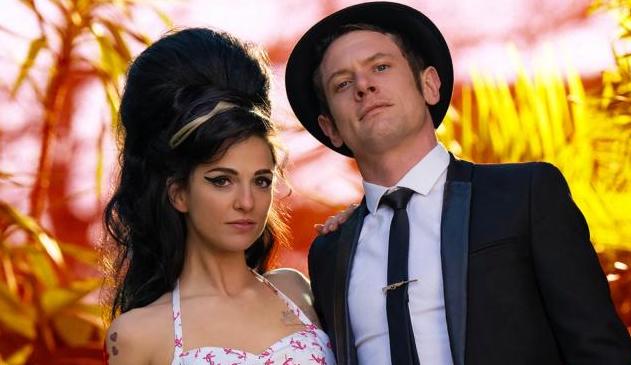
We first encounter Amy (Marisa Abela) as a teenager in Camden, already a talented performer, inspired by her beloved Nan, Cynthia (Lesley Manville), a jazz singer back in the day. She’s also encouraged by her taxi-driver dad, Mitch (Eddie Marsan), who isn’t shy of indulging in a bit of crooning himself. If Matt Greenhalgh’s screenplay features an overload of exposition in the opening scenes, it soon settles down enough to allow viewers to enjoy the ride.

A&R man Nick (Sam Buchanan) hears Amy’s demo tape and is keen to sign her up to the Simon Fuller agency, but she’s quick to point out to him that her idea of ‘girl power’ is Sarah Vaughan and that she ‘ain’t no fuckin’ Spice Girl.’ Success, it seems, must come on her terms or not at all. But of course, she rises like a meteor and, almost before you can say ‘Go Amy!,’ she has an album out, a residency at a local pub and a rapidly-growing legion of fans.

But Amy’s world is turned upside down when she encounters Blake (Jack O’ Connell), a Camden Jack-the-Lad with a nice line in deadpan patter and a coke habit that’s already getting him into trouble. Despite the fact that Amy hates drugs and Blake doesn’t care for booze, the two of them become lovers. What can possibly go wrong?

Of course, what happens after that is a steadily mounting disaster played out under the baleful glare of the paparazzi (who, I suspect, are the ones who should really shoulder some of the blame for what happened) and the result is much like watching a slow-motion car crash. I cannot look away. Abela is astonishing in the lead role, playing Amy with absolute conviction, alternately hard as nails and fragile as cut glass. She also supplies her own vocals. I’m no Winehouse aficionado, but to me it sounds spot on. O’Connell, an undervalued performer, is also terrific, encompassing Blake’s strengths and failings perfectly. The scene where Amy and Blake first meet is beautifully handled and it’s clear from the outset why they become so besotted with each other, so utterly incapable of extricating themselves from the ensuing carnage.

In the finest biopic tradition, there are recreations of famous performances, which once again capture the look and feel of the period, and it would be a hard-hearted soul indeed who doesn’t shed a tear in the scene where Amy performs a heartfelt rendition of Love is a Losing Game, after hearing that Blake has, once again, turned his back on her.

Of course, it’s always difficult to depict something so familiar and find new horizons within it, but I can’t help feeling that Taylor-Johnson has been unfairly maligned on this one. Back to Black offers us a compelling insight into Amy’s character, and it never flags. Abela is a revelation and, provided she can successfully avoid the spectre of typecasting, she really should have a bright future ahead of her.

4 stars

Philip Caveney

The Girls of Slender Means

17/04/24

Lyceum Theatre, Edinburgh

Gabriel Quigley’s vivacious adaptation of Muriel Spark’s novel opens in the 1960s. Jane (Molly Vevers) is the editor of Elan magazine. Her bright young assistant, Bluebell (Molly McGrath), nervously pitches a feature, but Jane is distracted by news of a certain Nicholas Farringdon (Seamus Dillane)’s demise. Maybe she can write a piece about him? After all, she knew him, back in the day. And, just like that, she is hurtling down Memory Lane, back to 1945 and the months between VE Day and VJ Day, when she lived in the May of Teck…

The May of Teck is a pithily-straplined boarding house, “for the pecuniary convenience and social protection of ladies of slender means below the age of thirty years, who are obliged to reside apart from their families in order to follow an occupation in London.” The young occupants – who all work as secretaries – share everything: rations, deportment tips, clothes. One dress in particular, a Shiaparelli known affectionately as Scappers, is dear to all their hearts. They each get to wear it on special occasions; there’s a strict rota in place.

The first act is sprightly, frothy, almost determinedly light; the focus is on fashion and friendship, dancing and diets. Beautiful Selina (Julia Brown) carefully monitors her calorie-intake to ensure her hips don’t grow too wide to wriggle through the tiny bathroom window so that she can sunbathe on the roof. Live-wire Anne (Amy Kennedy) provides a caustic running commentary on everything and everyone, while angelic elocution teacher, Joanna (McGrath again), recites poetry and sews. Meanwhile, Pauline (Shannon Watson) never stops prattling about her love affair with famous actor Jack Buchanan, and our Scottish protagonist, Jane, forges fan mail to authors for her publisher boss, and dreams of being a poet herself one day. Her attempts to be taken seriously – her dowdy cardigan, her constant references to “brain work” – are undermined by her goofy awkwardness, wonderfully captured by Vevers.

There’s a tonal shift in the second act. As we get to know the girls better, we begin to see beneath the gilded surface. Their frivolity is revealed for what it is: a distraction from the horrors they have endured during the war. It shouldn’t come as a surprise; it’s been there all along in Jessica Worrall’s set design, the monochrome backdrop of bombed-out buildings a constant reminder that the girls’ colourful chatter belies a darker truth. But it shocks, providing an effective wake-up call. They are survivors. No wonder they cling so desperately to the fantasy Scappers provides.

Under Roxanna Silbert’s direction, the story has a clear contemporary resonance, and not just because we, like they, are living through the dying days of a Tory government, fearful of what might happen next. The production is impressive as a whole, but there are also some stand-out scenes, most notably the droll office sequence and the dance, where the girls’ boyfriends are represented by legless mannequins.

Spark’s lesson is clear. Don’t underestimate people because they seem shallow; you don’t know what’s concealed within their depths.

4.3 stars

Susan Singfield

Civil War

14/04/24

Cineworld, Edinburgh

With the situation in the Middle East rapidly approaching flashpoint, it seems a particularly propitious time for Alex Garland’s Civil War to open at UK cinemas. If it was devised as a kind of warning for the near future, then it now seems doubly unnerving. Set in an unspecified year, the film opens with the president of the United States (a suitably Trumpian Nick Offerman) rehearsing a speech telling his followers that all is well and that the seditionary forces opposing him will soon be vanquished. But in reality, the civil war which that has been raging for some time is now approaching its inevitable conclusion as the aforementioned insurrectionists converge on Washington DC. And they haven’t come to shake the president’s hand.

Renowned photojournalist Lee Smith (Kirsten Dunst) and her colleague Joel (Wagner Moura) are both determined to be at the capital in time to witness what happens, and – more importantly – to capture it on film. But getting there will involve a long and hazardous trip across the war-torn country. The night before they leave they pick up a couple of fellow travellers: veteran newshound Sammy (Stephen McKinley Henderson), more cautious than the other two, but still determined to be in at the kill – and young novice Jessie (Cailee Spaeny), who actually idolises Lee and wants to – quite literally – follow in her footsteps…

Civil War has been criticised by some for failing to pin down exactly who is attacking whom in the various conflicts the foursome encounter – but I think that’s entirely the point. Garland (who also wrote the screenplay) wants to show the confusion of warfare, the fact that all kinds of people are pitching into this carnage with manifestos of their own. Against this chaotic background, Garland is much more interested in the photojournalists themselves, the callousness they must possess in order to observe atrocities without ever pitching in to help, the utter determination that propels them to risk their own lives in order to get that one all-important image and document history as it unfolds.

The background in which these scenarios play out is convincingly portrayed. This is production company A24’s most expensive project yet and it shows, the final conflict in the capital rendered with absolute veracity. There’s a powerful sense of unease that builds steadily throughout the film and I’ve rarely seen urban warfare depicted with such unflinching realism and attention to detail. Watch out for a powerful cameo from Jesse Plemons as a merciless soldier in a particularly dread-charged sequence and marvel too at the clever device that repeatedly halts cinematographer Rob Hardy’s adrenaline-charged action sequences to pick out one black and white image.

I’ve occasionally had issues with some of Garland’s endings (Men in particular, where he seemed to be pounding home his final message with a sledgehammer) but this keeps me gripped right to the final frame. Civil War’s conclusion may be too cynical for some, but I feel it’s absolutely spot on. Furthermore, I’d go so far as to suggest that this might be Alex Garland’s most fully-realised film so far.

But be warned. You’ll most likely leave the cinema feeling pretty grim about the future.

4.6 stars

Philip Caveney

Seize Them!

10/04/24

Cineworld, Edinburgh

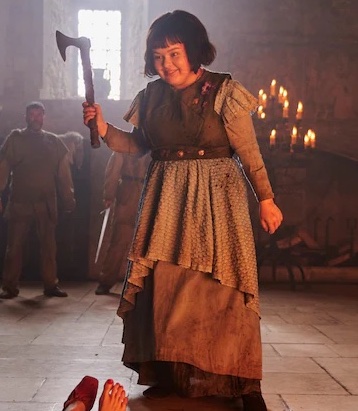
Britain in the Dark Ages is a perilous place for a ruler, as Queen Dagan (Aimee Lou Wood) finds to her cost. A petulant, privileged brat who has never encountered hardship, she’s currently presiding over a realm that’s in imminent danger of collapse, due to the presence of too many revolting peasants. They are currently being stirred into insurrection by the duplicitous Humble Joan (Nicola Coughlan), supposedly down with the common people, but always with one eye on the throne, even when she’s preaching equality.

Dagan’s approach is to carry on regardless, relying on her acolyte Leofwine (Jessica Hynes) for guidance. But she’s the kind of assistant who will switch sides at the drop of a crown, which she promptly does – and Dagan has no option but to flee for her life, accompanied only by faithful servant, Shulmay (Lolly Adefope). Trekking across a remote landscape, they encounter humble shit-spader, Bobik (Nick Frost), a likeable fellow who is clearly as thick as the product he works with, but the three of them team up in a bid to help Dagan to reach some potential allies in the Northlands…

Seize Them! is written by Andy Riley, who has contributed to the Horrible Histories series, and his heritage shows in a string of silly gags in which poos, farts and slapstick figure prominently. But as the story unfolds, I can’t help wondering who this film is actually for. The presence of ‘adult’ swear words and some unexpectedly grisly injury details have earned it a 15 certificate, but no self-respecting fifteen-year-old is going to be content with the childish fare on offer here and I have to confess I’m with them.

While there’s a whole battalion of comic talent doing their best with the poor material they’ve been given, they have precious little to work with. After the disappointment of Ghostbusters: Frozen Empire, it’s once again a shame to see James Acaster fobbed off with generic lines that offer him no room to show what he can actually do – and it’s almost painful to witness Jessica Hynes delivering lines that she could doubtless improve on in her sleep.

Director Curtis Vowell is hampered by a shoestring budget and the result is lacklustre to say the very least. The only scene that does manage to make me laugh – Bobik amiably listing the different kinds of shit he’s worked with – is hardly comedy gold.

This may manage to scare up an audience when it goes to streaming but, as a cinematic experience, it leaves much to be desired.

2.8 stars

Philip Caveney

Robot Dreams

09/04/24

Cameo Cinema, Edinburgh

After the blistering onslaught of Monkey Man, I find myself hankering after something a little more sedate and I’ve heard promising things about Robot Dreams, even if cinematic showings are proving elusive. So I’m delighted to discover that there’s an afternoon screening at The Cameo at a time when I’m available to see it. Written and directed by Pablo Berger, based on the graphic novel by Sara Varon, this wordless animation, set in New York some time in the 1980s, is the very epitome of charm – yet its deceptively simple premise also manages to make room for some perceptive observations about the nature of relationships.

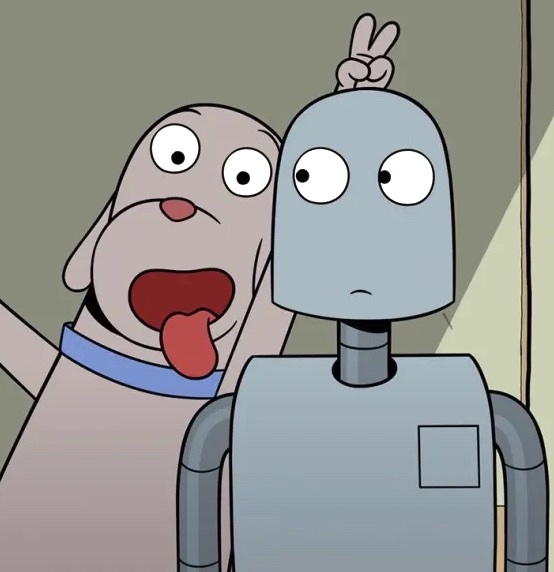
Dog lives in an apartment in the heart of the city and tries to keep himself occupied by playing the latest video game – Pong – and cooking up nightly feasts of microwave meals for one. But he is increasingly aware that he has nobody to share his life with. When he sees a TV advert for a robot companion, he eagerly sends off for one and it arrives as a flatpack all ready to be assembled. Dog is quite handy with a tool kit and soon puts Robot together. It isn’t long before the two of them are out on the town, visiting a series of beautifully-rendered locations and learning how to function as a duo.

It all goes swimmingly until, ironically, they visit the beach together and Robot learns to his cost that a metal body and sea water do not make a winning team. Rusted into immobility, he’s unable to do anything to help himself and Dog doesn’t have the strength to move him from his place on the sand, so he heads off to look for help. But it’s the last day of the season and, when he returns, the beach is all locked up and off limits until June…

It’s hard to convey how utterly charming this film is and how its various twists and turns have the power to exert a grip on my emotions. As I watch, I find myself thinking back to situations in my own past, times when things have moved beyond my control. I love its inventiveness: the constant attention to detail; the fact that pretty much every frame holds a tiny item that references something else. The dreams of the title refer to a series of visions that Robot has while he lies in the sand waiting for rescue, but Dog has them too – and unlike most animated movies, Robot Dreams has the courage to resist offering us the usual glib resolution.

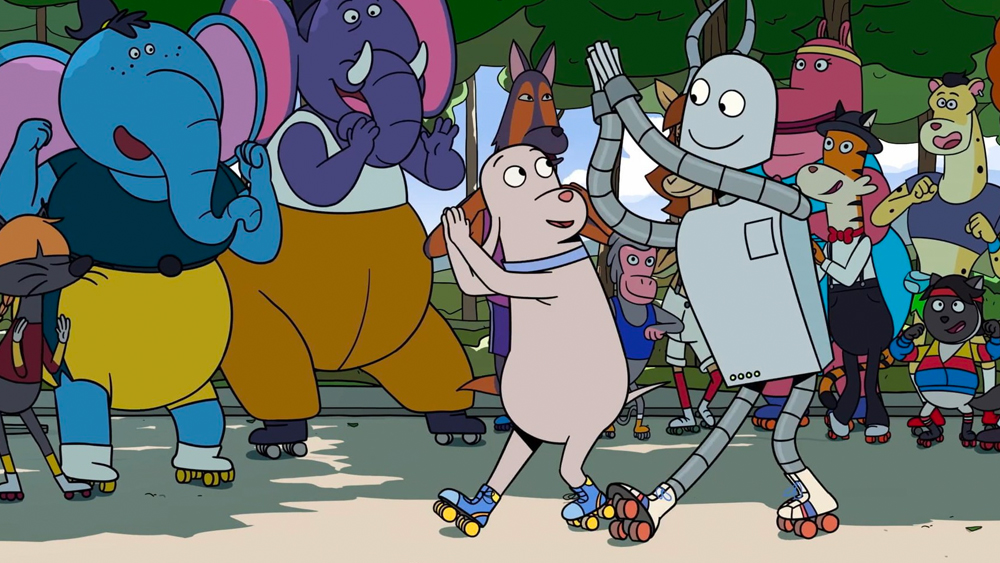
The rumours are correct: this is a delightful cinematic experience which absolutely deserves its recent Oscar nomination for Best Animated Feature. And you’ll believe that dogs and robots can roller skate to the music of Earth, Wind and Fire.

4.8 stars

Philip Caveney

Monkey Man

07/04/24

Cineworld, Edinburgh

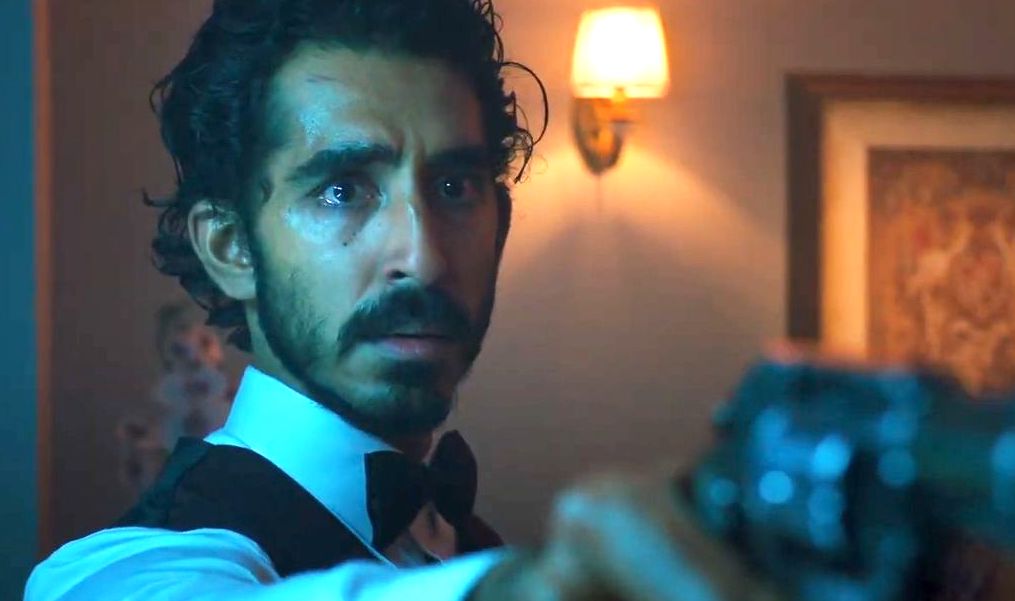
Dev Patel’s debut film as a director is an ultra-violent revenge thriller set in an Indian city called Yatana that looks very much like Mumbai. Patel plays Kid, a man entirely motivated by the need to find the corrupt Police Chief, Rana (Sikandar Kher), who is responsible for the brutal murder of Kid’s mother back when he actually was a, well, kid. Why it’s taken him so long to get around to this is never explained.

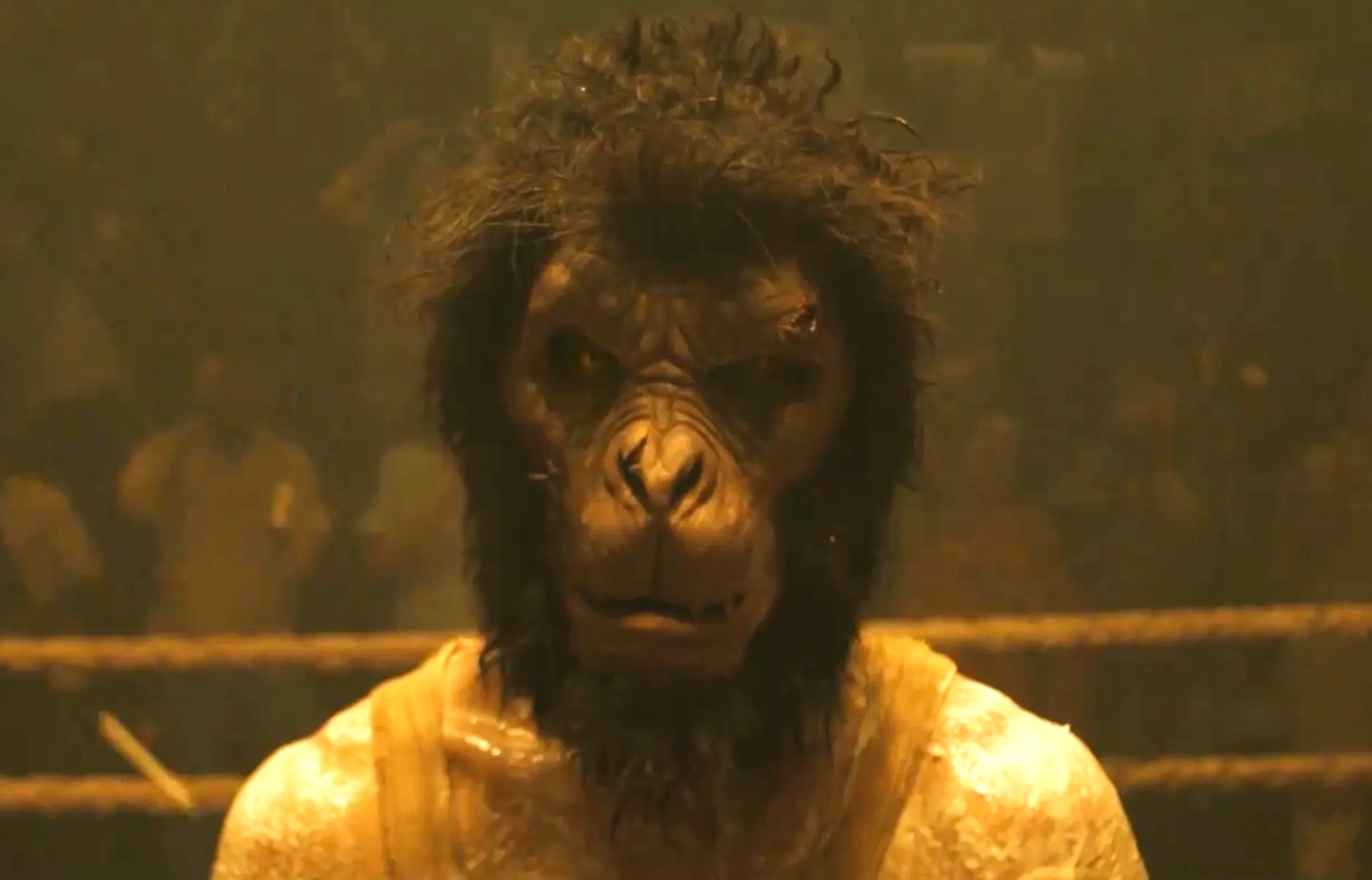
Kid currently earns a buck by taking part in a series of no-holds-barred fights, hosted by sleazy MC, Tiger (Sharlto Copley), and attended by baying crowds. He hides his identity behind a realistic monkey mask – inspired by the Indian god, Hanuman – but he doesn’t win his bouts, preferring instead to make easy money by taking dives. Meanwhile, he finds a way of procuring work as a barman at the swish city nightclub where he knows Rana likes to spend his spare time. His sole ambition is to get to Rana and kill him.

While Monkey Man has a distinctive look (largely thanks to cinematographer Sharon Weir) and occasionally hints at the more interesting film it could have been, it feels hampered by its reductive plot and an evident desire to be a kind of Asian John Wick. Those films are actually mentioned by one character early on and, in the final extended punch-up, where Kid fights his way from the basement of the hotel to the VIP room at the top, it’s hard not to think of Gareth Evans’ The Raid – though these films feel almost restrained compared to the levels of bone-snapping, blood-drenched violence on offer here. That 18 certificate is there for a reason.

Patel’s character dominates the film to the extent that none of the other actors gets much of a look in. An early attempt to introduce perky sidekick, Alphonso (Pitobash), is disappointingly abandoned, and Kid’s brief interplay with a sympathetic sex worker, Sita (Sobita Dhulipala), is never allowed to develop into anything more substantial.

Occasionally Patel – who co-wrote the screenplay with Paul Angunawela and John Collee – tries to usher in more original elements. There are references to Indian folklore, pastoral flashbacks to Kid’s rural childhood and there are some astute observations about bogus spiritual leaders, who exploit the poverty of their followers, but these themes are repeatedly punched and kicked into submission by a seemingly endless succession of extended fight scenes. The first one, set largely in a kitchen (with a varied supply of potential weapons), is brilliantly choreographed and has me flinching and gasping in all the right places. But it’s followed by another fight and then another one and the repetitiveness of them begins to work against the material.

Eventually, I start to feel bludgeoned and bored, which I’m pretty sure is not the effect Patel was looking for.

In the chaos of flying fists and breaking bones, I also find myself asking questions. If Kid simply wants revenge on a single man, why not wait until he’s alone, rather than surrounded by hundreds of bodyguards? What’s the point is maiming all those people who are simply carrying out their duties? (Mind you, I’d be the first to admit that wouldn’t make for a particularly memorable film, either.)

Action junkies will doubtless tell me that I’m wrong about Monkey Man, that it’s a kick-ass, adrenalin-fuelled marvel, but the occasional flashes of brilliance it does contain merely enforce my view that this film could so easily have been an absolute knockout, instead of the long and messy brawl that it is.

3 stars

Philip Caveney