Michelle Brasier: Legacy

18/08/24

Gilded Balloon Patter Hoose (Doonstairs), Edinburgh

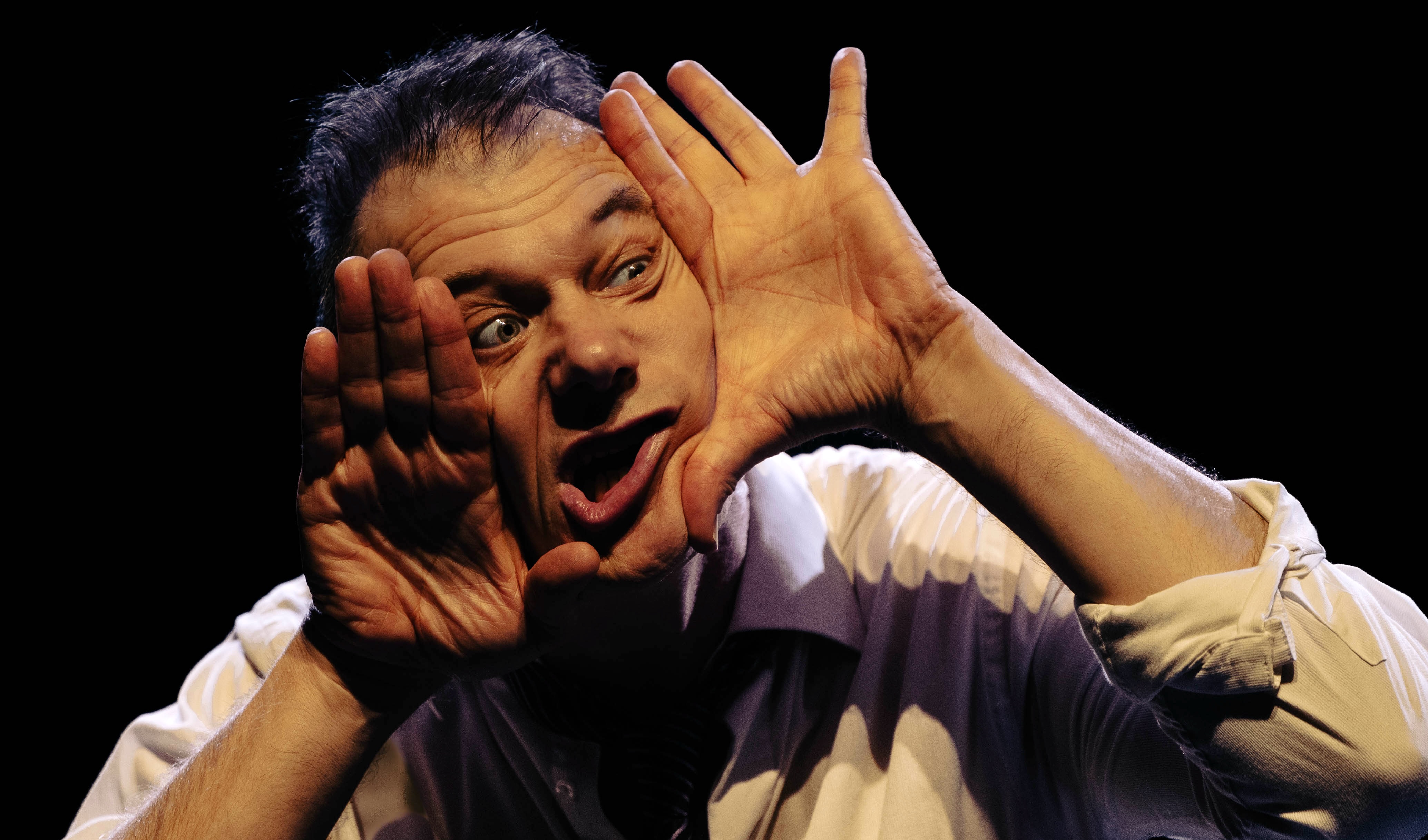
First up, a disclaimer. It’s not Michelle Brasier’s fault, but there’s something wrong with the sound in this room. I don’t know if it’s where we’re positioned – first row, far left, directly in front of a gigantic speaker – but the volume is so amplified that Brasier’s voice is distorted, and I find it hard to follow some of what she says. I leave the show with a headache.

It’s a loud, high-octane production anyway. But, if you can sit further back or in the middle, I’m sure that works in its favour. Aussie comic Brasier zips along at a frenetic pace. I feel breathless just sitting here, as if I’m one of those maximise-your-time people who listen to podcasts on double speed. Her stage persona (and maybe her real-life self, for all I know) is a diva-drama-queen, who warns us from the start that she has ‘main character energy’. This makes for a lively hour – with some deeper themes beneath the fun façade.

The conceit is simple. Visiting her local cinema, Brasier is handed an envelope with her name on it containing $10.50 in coins – but it’s not for her. She embarks on a quest to find this other Michelle Brasier and return the money. At first, I assume this means we’re setting off on a Dave Gorman-esque mission, but no – it’s very much an original tale and actually not really about any other Michelles at all. After all, this Brasier is the hero of her own story. She did tell is us that from the start. Even the most banal occurrences are exciting if they happen to her.

But not everything that happens is banal.

The threat of an early death laps at the edges of this musical comedy show, surfacing in the form of a refrain (“What if I die younger than I should?”), in the cyst she’s just had excised and in a terrifying plane journey. Brasier has a high risk of cancer and doesn’t want children. And so, as the title tells us, she’s concerned about her legacy. How will she be remembered? Will she be remembered at all?

I like her brash, bold approach to her story, and her amusing digressions along the way. She has some insightful things to say about the generational divide and the shock of realising that you’ve aged out of being cool. Her partner, Tim Lancaster, provides an interesting counterpoint, as well as guitar accompaniment and backing vocals. He’s quiet and, in comparison to Brasier, seems to move and speak at a glacial pace. This difference is cleverly mined for all its potential; he’s the perfect foil for her manic style.

This is well-crafted comedy with some catchy songs, and Brasier has the vocal skills to make it soar. Just be careful where you sit – and then prepare to be caught up in her infectious energy.

4 stars

Susan Singfield

Willy’s Candy Spectacular

18/08/24

King Dome, Assembly, Edinburgh

Unless you’ve been living in a cave for the past six months, you’ll doubtless be aware of the ill-fated Willy Wonka Experience held in Glasgow back in February. You’ll surely have read about the ensuing travesty, how parents stumped up £35 for tickets and were incensed when their kids were handed a couple of jelly beans in a near-empty warehouse.

And you’ll have seen the image of young actor, Kirsty Paterson, shoddily dressed as an Oompah Loompah, standing behind a wooden counter/meth lab, looking thoroughly depressed. That meme subsequently went viral and gave Hollywood director Andy Fickman an idea for a new Edinburgh show…

Ironically, a production built around a real-life disaster has already had more than its own fair share of turmoil, with the cast decimated in its opening week by a bout of COVID. But now they’ve got through that and here we sit amidst a sell-out crowd at the King Dome – and the lights go down.

Guitars and drums pump out the opening number at ear-splitting volume (the sound mix is eventually sorted out), ‘David Hasselhoff’ (Wilkie Ferguson) belts out the lyrics while a couple of glitter-clad dancers strut their stuff around him. The song ends and on comes Julie Dawn-Cole (who played Veruca Salt opposite Gene Wilder in the 1971 movie) as our sardonic narrator. She’s accompanied by the actual Kirsty Paterson, who gets to make the occasional remark, but is still pretty glum because not one, not two, but three actors have been employed to impersonate her, while she stands around like a spare part.

Well, that’s theatre for you.

But the show must go on and now here comes the fictional version of event-organiser, Billy Coull. He’s Willy the Impresario (Eric Peterson), here to explain, through the medium of song, exactly what he thought he was doing. Swindling people, I guess, though the lyrics seem to let him off the hook somewhat. Because he did have good intentions. (Did he?)

If sheer energy could make a Fringe hit, then Willy’s Candy Spectacular would be home and dry. But the problem is that this is a show that’s been created solely to parody the crap event that inspired it. Having established that in the first fifteen minutes, it really doesn’t have anywhere left to go. The inevitable result is that it all feels a bit one-note. No matter how hard Peterson and his supporting cast strive to keep things peppy, no matter how many gimmicks are thrown into the mix (scratch and sniff cards anyone?), the show never really takes flight.

There’s perhaps the only positive song about AI I’ve ever witnessed (ably performed by Nicole Greenwood) and a sweet ballad sung by Monica Evans explaining that kids can be entertained by the unlikeliest things, but the fifteen songs have been put together by ten songwriters and, though they get your toes tapping, they don’t really cohere. In fairness, I think I should add that today’s audience shows every sign of enjoying themselves and the applause at the conclusion is enthusiastic.

But I can’t help feeling that the disparate parts of this production don’t quite add up to the feel-good entertainment it so obviously wants to be.

3 stars

Philip Caveney

300 Paintings

18/08/24

Summerhall (TechCube 0), Edinburgh

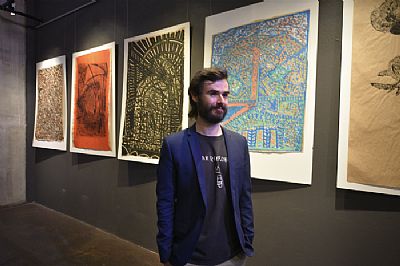
Aussie comedian Sam Kissajukian had an epiphany in 2021. Okay, so it turns out it was actually a manic episode, but he didn’t know he had bipolar at the time, so he really believed he’d seen the light. It was time, he decided, to turn his back on comedy and become an artist. So what if he’d never painted before? He had a beret. He was good to go.

We have his bipolar to thank for the art we see today: without the high levels of energy, the euphoria and the delusions that come with a manic episode, Kissajukian might never have rented a workshop, moved into it and obsessively painted massive (and tiny) pictures for several months. He might never have created the Museum of Modernia or held exhibitions of his work across Australia – or visited the Edinburgh Fringe with this fascinating show.

Of course, he wouldn’t have had to endure the crippling depression that followed either, but he’s doing well now, he tells us, so we’re allowed to laugh at the crazy, funny stuff he did.

300 Paintings is essentially a story about finding yourself and, although most of us won’t experience periods of transition with quite the same intensity as Kissajukian, the urge to escape our shackles and work out what we really want is very relatable. Unleashed from the need to please a drunken comedy audience, Kissajukian turns out to be extraordinarily creative. His ideas are inventive (literally) and exciting; his artwork primitive but fresh. He pushes every concept beyond its boundaries, so that this show is unlike anything I’ve seen before.

Kissajukian’s previous incarnation as a comic means he’s adept at communicating with the audience, even if the early morning is an unusual time for him to be awake. His easy-going patter makes the complex mental health issues accessible, and the projections of his artwork illustrate the story perfectly. Twenty-five of his paintings are on display here at Summerhall, the performance and exhibition inextricably linked.

Today’s show was sold out but, if you can get a ticket, 300 Paintings is an invigorating way to start your day.

4.2 stars

Susan Singfield
Sinatra: RAW

17/08/24

C Arts Venues (C Aurora), Lauriston Street, Edinburgh

Tribute acts have long been a staple of the Fringe, but to describe Richard Shelton’s interpretation that way would be to do it a disservice. It’s 1971 and Sinatra is here to deliver his final performance. We’re in the Purple Room in Palm Springs (though in reality, we’re actually in the room where Susan and I go to cast our votes in government elections). Out saunters Shelton, the very personification of Ol’ Blue Eyes, and he launches into his opening song, accompanied on the piano by Campbell Normand.

It’s not just the voice, though it must be said that’s spot on – as smooth as warm honey, as powerful as high-tensile steel – Shelton also bears more than a passing resemblance to the great crooner and, as he casually mentions at the end, he’s actually wearing one of Sinatra’s suits. In between songs, he talks about the singer’s life: his meteoric rise to fame thanks to the adulation of his young followers, the Bobby Soxers; his clashes with band leader Tommy Dorsey; his doomed love affair with Ava Gardner… it’s all here, delivered in that familiar, hard-bitten voice.

As he reminisces, he works his way steadily through a bottle of Jack Daniels (which I presume is non- alcoholic because Shelton has to get to the end of August to finish his stint). At one point, he slips easily into the suave voice of Eddie Fisher and I think, “Wow, this guy really knows how to nail a British accent.” So to learn, at the very end, that Shelton is actually from Wolverhampton is quite the revelation.

In short, if you love Frank Sinatra songs, if you’d like to know a little more about the man’s turbulent history, if you hanker to hear a rendition of A Very Good Year that may bring you close to tears, then head for Lauriston Street at your earliest opportunity. Every evening at 9pm, Frank (or rather Richard Shelton) is waiting to perform for you. And those who enjoy a relaxed late-night experience might also wish to check out his other show, Sinatra and Me, which promises to be just as much of a revelation.

Oh and don’t bother to take your voting ID. That’s all done and dusted.

4.6 stars

Philip Caveney

Summer of Harold

17/08/24

Assembly Checkpoint, Edinburgh

Ensemble Theatre’s three short standalone plays are brought to the Fringe via House of Oz. Written by Hilary Bell and performed by Berynn Schwerdt and Lucia Mastrantone, they form a perfect trinity, and we are treated to ninety minutes of exquisite storytelling.

The opening monologue, Summer of Harold, is all about Janet (Mastrantone), a middle-aged woman clearing out her junk room and reminiscing about the seasonal job she had when she went backpacking in her youth. But nineteen-year-old Janet doesn’t settle for bar work or fruit-picking. Instead, she spends her time in London working as a housekeeper for the titular Harold.

Pinter.

That’s right. Janet – whose story is inspired by the true-life adventures of one Margaret Woodward – provides holiday cover for Harold Pinter’s live-in help. And that summer, with Pinter and his wife, the novelist Lady Antonia Fraser, looms large and bright in Janet’s memories.

Mastrantone is tiny but she fills the stage with her glorious portrayals of the Pinters, as well as their many famous friends and her own chain-smoking Kiwi co-worker, Alison. She encapsulates the bold, vivacious swagger of youth, as the two girls bluff their way into a job they can’t do, and then learn how to do it anyway. Bell’s script is beautifully crafted and Mastrantone more than does it justice.

The second monologue, Enfant Terrible, stars Berynn Schwerdt, a man as big as Mastrantone is small, his gangly frame an interesting visual counterpoint to hers as they swap places and a new tale begins.

Gareth is a ceramicist but he’s not as famous as he’d like to be. More pressingly, he’s not as famous as his erstwhile best friend from art college, even though Gareth was the star back then and the work he’s producing now is definitely much better than anything “Mr Pinch-Pot” could create. Definitely. But his ex-pal is being given a big award so Gareth has to attend the ceremony and act like he is pleased.

There’s also a piece of very old and rancid Camembert he needs to deal with…

Again, it’s flawless. This is perhaps my favourite piece of writing of the three (although they’re all great), and Schwerdt’s performance has real emotional heft. His jealousy and resentment are both visceral and palpable – and any creative who says they don’t recognise these feelings is lying!

The final piece, Lookout, is a two-hander, with Schwerdt as Jonathan and Mastrantone as Rae, two people in their late 50s. It’s Jonathan’s birthday and they’re up a mountain in their special place, remembering the many times they’ve been here before. They haven’t visited recently though; they haven’t seen each other for a while. And Jonathan has some news for Rae that catches her off-guard…

Unlike the first two plays, Lookout relies on the element of surprise, so I won’t reveal too much about the storyline here. Suffice to say, it’s every bit as engaging as its predecessors, and just as skilfully acted.

Damien Ryan’s direction allows the trio of plays to shine. The transitions are particularly well-handled, overtly playful and theatrical. I especially like the device of using Schwerdt as a kind of silent removal man throughout Summer of Harold, carrying away Janet’s boxes one by one, leaving the stage bare and uncluttered for Enfant Terrible.

If you’re looking for an hour-and-a-half of impressive theatre, with snort-out-loud humour as well as profound emotional moments, then Summer of Harold ticks all the boxes. It’s an absolute pleasure from start to finish.

5 stars

Susan Singfield

One Man Musical

16/08/24

Queen Dome, Assembly, Edinburgh

Flo & Joan are established Fringe favourites, loved by many. I enjoy their quirky songs which are celebrations of all matter of unlikely subjects – waiting for an Amazon delivery, the weirdness of their parents’ ornaments, the pressures when siblings make music together… seemingly trivial subjects mined for their sheer silliness. But I’ve often wondered if they might one day apply their undoubted talents to a single theme.

One Man Musical is exactly that, a look at the life of a VERY famous musical theatre entrepreneur – let’s call him “Andy”. He’s played by George Fouracres with such absolute assurance, I can’t help wondering why he hasn’t come to my attention before. He sings, he dances, he tells jokes, he plays the world’s smallest piano and he gives a priceless demonstration of how not to talk to a member of the audience…

Flo & Joan (or Nicola and Rosie Dempsey if you prefer) take a back seat for this one, providing solid support on keyboards and drums respectively and somehow maintaining those trademark impassive expressions. (God knows how, since the sell-out audience spends pretty much the entire hour convulsed with laughter, me included.)

This is wonderfully irreverent stuff and the selection of songs, though as witty as ever, seem to benefit from sticking to one central premise. “Andy”, it turns out, has seen more successful days and is now coasting on his back catalogue. He strives valiantly not to be bitter, but his efforts are in vain. When he sees former partners doing well with other musical collaborators, he can’t resist sticking the knife in.

And he’s keen to point out that a humble white, upper-class, privately-educated lad like him, from a palatial home in England, has really had to struggle to make it in the cut-throat world of musical theatre. A soulful ballad to this effect almost makes me start to feel sorry for “Andy”… until he weighs in with the next bunch of sour grapes.

One Man Musical is an absolute delight and anyone in need of a good laugh should make their way to the Queen Dome where – unless the real “Andy” issues them with an injunction – the show will continue.

4.6 stars

Philip Caveney

Alien: Romulus

16/08/24

Cineworld, Edinburgh

The cinema generally takes a back seat for us in August when the Edinburgh Fringe takes up so much of our time. But a new addition to the Alien franchise has to be an honourable exception. Like most people who say there are Alien fans, it really only applies to the first two films: Ridley Scott’s iconic original and James Cameron’s (IMO) superior sequel, which qualifies as one of my all-time favourites. Since then, it’s been an irritating game of misfires. Even Scott’s two attempts to rekindle the series have been well-intentioned disappointments.

But Fede Alvaraz seems like a decent bet to attempt a reboot. After all, he somehow managed to breathe some fresh er… death into the Evil Dead films. So when I spot a two-hour slot in my schedule, I’m off to the multiplex with high hopes.

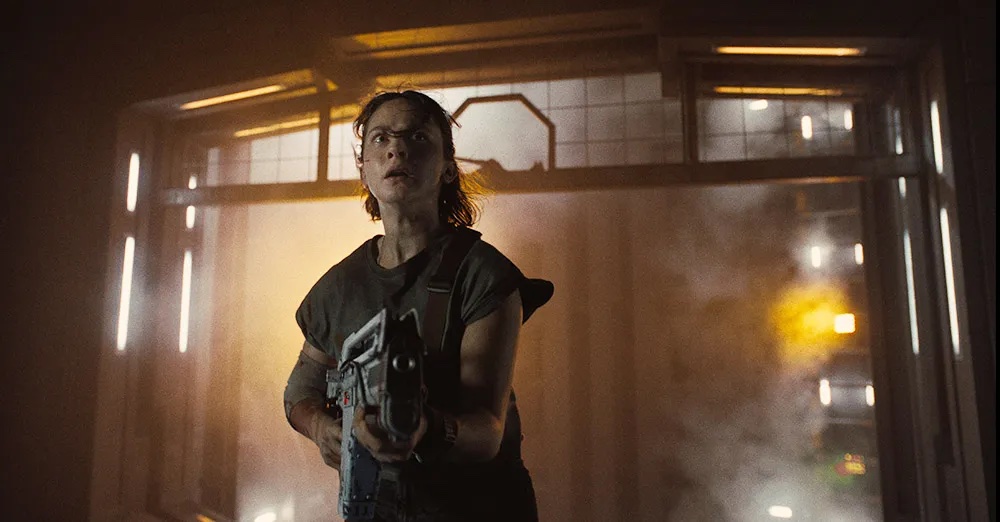
It starts well. Rain (Cailee Spaeny) lives and works on a horrible planet where it’s eternally dark. Her adopted brother, Andy (David Jonsson), does his best to look after her. He’s a synthetic, rescued from a rubbish dump by Rain’s father, but his aging technology means that he has a tendency to glitch and he is regarded with suspicion by a lot of the planet’s inhabitants. When Rain tries to get permission to leave – she’s desparate to get some sunshine – she’s denied the chance and told she’ll be transferred to the mines, so when her friend Tyler (Archie Reneux) suggests an alternative, it’s timely to say the very least.

It turns out that there’s a decommissioned Weyland-Utani space station in the sky above them and Tyler reckons they can gain access to it using Andy (who is a Weyland-Utani creation) to get aboard. There are just thirty-six hours left before the station hits an asteroid belt but it will almost certainly have sleep pods aboard, which the threesome – and their accomplices – can use to make the nine-year journey to the nearest inhabited planet. What can possibly go wrong? Rain reluctantly agrees to give it her best shot and it isn’t long before the gang are approaching their destination…

I like the fact that the protagonists are young. If the mature astronauts of Alien: Covenant seemed to constantly make stupid decisions, the recklessness of youth makes for a much more acceptable premise – and, once aboard the ship, which of course features more face-huggers and chest-bursters than you could shake a stick at, Alvarez and co-writer Rodo Sayagues manage to keep the pot of suspense bubbling nicely. There are visual references to the earlier films and the audacious decision to bring back a character from the first film – or rather, half of him – just about pays off. What’s more, Andy is given an upgrade which makes him faster and better – but way more logical, a development that means his loyalties now lie with the corporation that owns him rather than with Rain.

There are some new ideas in here too. A situation where the space station’s gravity keeps switching off in order to reboot really ramps up the torment, while a solution to all that acid blood flying around is an interesting development. Spaeny is terrific in the lead role, managing to fill Ripley’s action boots with aplomb and Jonsson (who made such a good impression in Rye Lane), is also memorable as her unreliable sidekick.

It’s only as the film thunders into the home straight that it takes a wrong turn. I almost stand up and shout at the screen, as Alvarez makes the baffling decision to homage Prometheus and all those hard-won plus points make a swift exit through the nearest escape hatch. It’s a shame, because it is so nearly home and dry.

Overall, Romulus is a decent addition to the canon, certainly the third best offering in the series, but still light years behind films one and two.

3.8 stars

Philip Caveney

Deluge

15/08/24

Summerhall (TechCube 0), Edinburgh

Deluge typifies what I used to think the Fringe was – way back when, before I’d ever set foot in Edinburgh. I expected every show to be like this: artsy, meaningful and chock-full of expressive dance. Of course, now I’m both an old hand and an Auld Reekie resident, and I know that the 3000+ shows on offer here cover every form imaginable: from the mainstream and family-friendly to the wild and debauched; in venues as varied as traditional theatres, circus tents, tiny broom cupboards and former dissecting rooms. But in fact, there’s not actually a lot that conforms to those youthful preconceptions.

Deluge – a one-woman play by Brazilian theatre-makers Gabriela Flarys and Andrea Maciel – is very artsy, very meaningful and, yes, replete with expressive dance. And I am totally absorbed, lapping up every minute of this quirky, offbeat play.

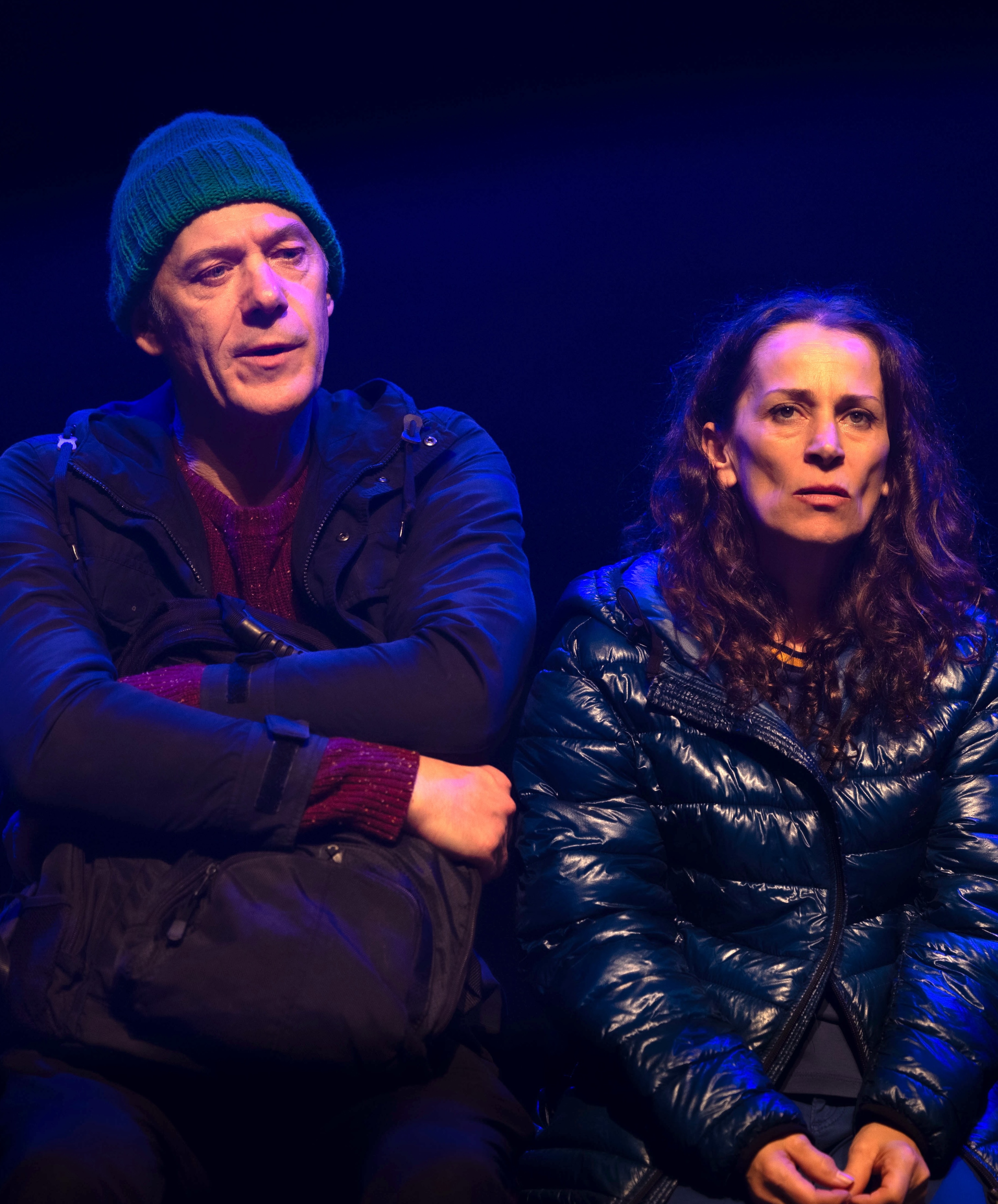
The protagonist (Flarys) is in mourning. Her lover has left her and she is bereft. She is also covered in jam. What follows is a wonderfully eloquent evocation of loss, the whole grieving process externalised and made concrete. ‘The End’ itself is personified, while the emotions overwhelming her are represented by a cumbersome ladder and a constant drip-drip dripping sound, as inescapable as tinnitus.

The woman takes us back in time, to when she first met her ex-boyfriend. We bear witness to their love, and to the diverging dreams that eventually tear them apart. This is a multi-media production, cleverly utilising a keyboard, video projections and, most impressively of all, Flarys’ extraordinary physical skills, as she contorts herself every which way, a paroxysm of grief. Despite her unhappiness, the protagonist is an expressive and three-dimensional character, extrovert and full of life. She just needs to negotiate her way through this quagmire of misery…

The central metaphor – of grief as water, infiltrating the woman’s home and threatening to drown her – is beautifully realised, not least when she hopelessly tries to plug up the leaks with the jam her partner left behind. We all know bereavement and heartache, one way or another, and I found this section in particular spoke to me and my experiences.

Deluge is a profoundly moving piece of theatre, as ‘Fringey’ as it gets and none the worse for it.

4.3 stars

Susan Singfield

Gamble

15/08/24

Summerhall (Cairns Lecture Theatre), Edinburgh

Hannah Walker greets us as we wander into the Cairns Lecture Theatre. She’s dressed in a sharp suit featuring dollar bills and wearing a pair of snazzy high-heels. Without further ado, she launches into her intro, a razzle-dazzle rant about the joys of online gambling, backed up by a bright and zippy display on the video screen behind her.  She tells us about her youth, spent in a sleepy village in the UK, where the only bright spot was the occasional trip to the bingo. Even at a tender age, she tells us, she was being indoctrinated, taught that ‘having a flutter’ was perfectly acceptable.

But time moves on and she finds herself married to a man with a gambling addiction, unable to resist squandering eye-watering amounts of money on an almost daily basis. This show is Walker’s attempt to highlight the potential dangers of online gambling, the invidious ways in which it can entice and corrupt people into its clutches, convincing us that it’s just a bit of harmless fun. The show alternates between those brash, colourful enticements and clips of addicts, confessing how what originally seemed like a harmless pastime mutated into something utterly destructive. There’s also input from a clinical psychologist and an invitation to attend Zoom sessions, where people with a gambling problem can talk about their situation.

Walker and her co-creator (Rosa Postlethwaite) give this piece their all, but I’m left with the distinct impression that Gamble is trying to be too many things at once and that its potential is somewhat dissipated by a tendency to spread itself too wide and not all of the humour lands. Also, perhaps because Walker is so close to the issue (her husband is an addict, though thankfully in recovery), it doesn’t go hard enough to expose the depth of the potential problems. For example, the number of gamblers committing suicide is mentioned but never explored.

There’s no doubting the sincerity of Walker’s intentions and Gamble is a thought-provoking piece, which has plenty to say about a multibillion dollar industry that hides behind that cheerful, glittering façade. But I’d like to see its focus tightened in order to realise its full potential.

3 stars

Philip Caveney

Hold On to Your Butts

15/08/24

Pleasance Forth, Edinburgh

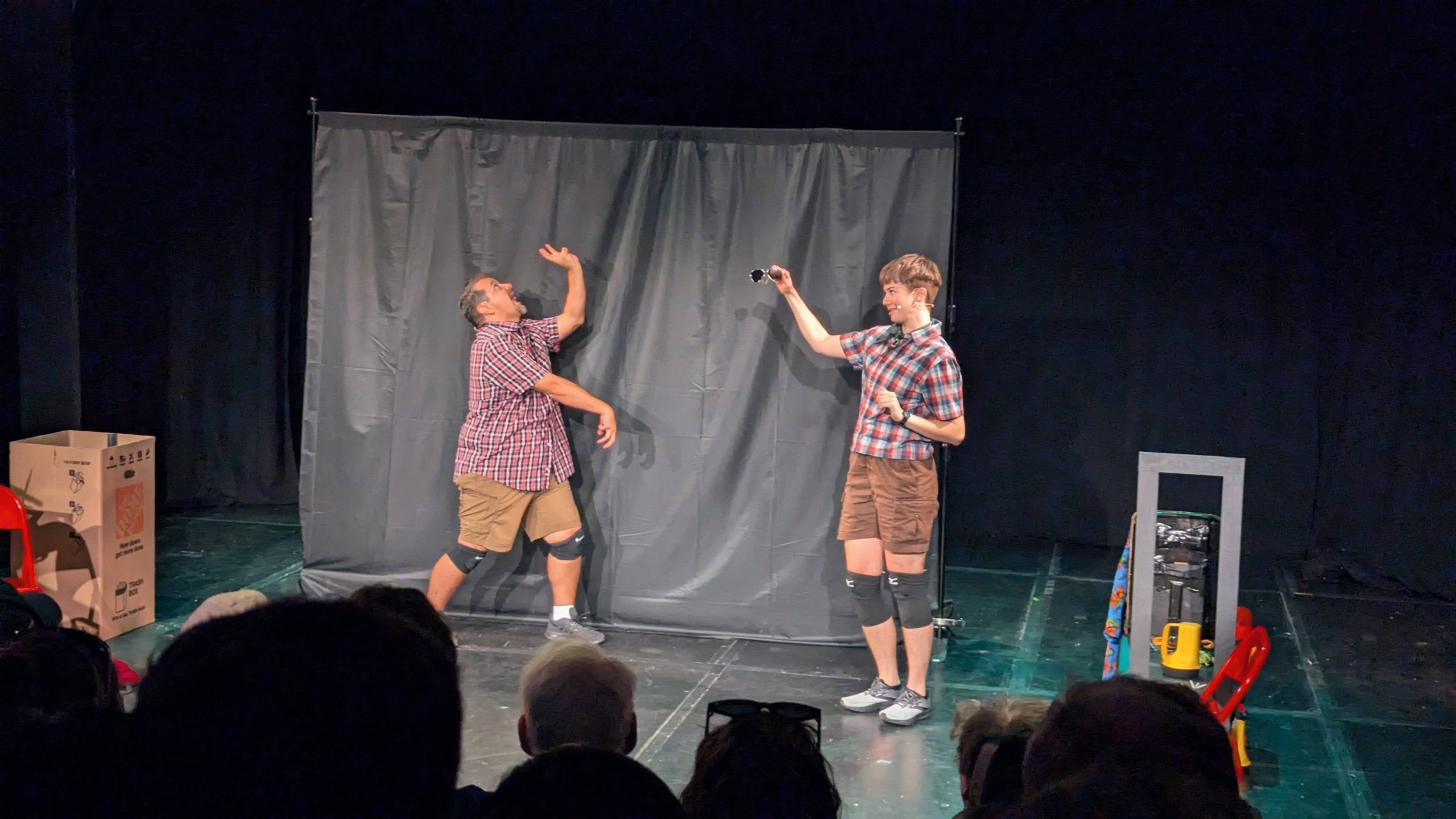
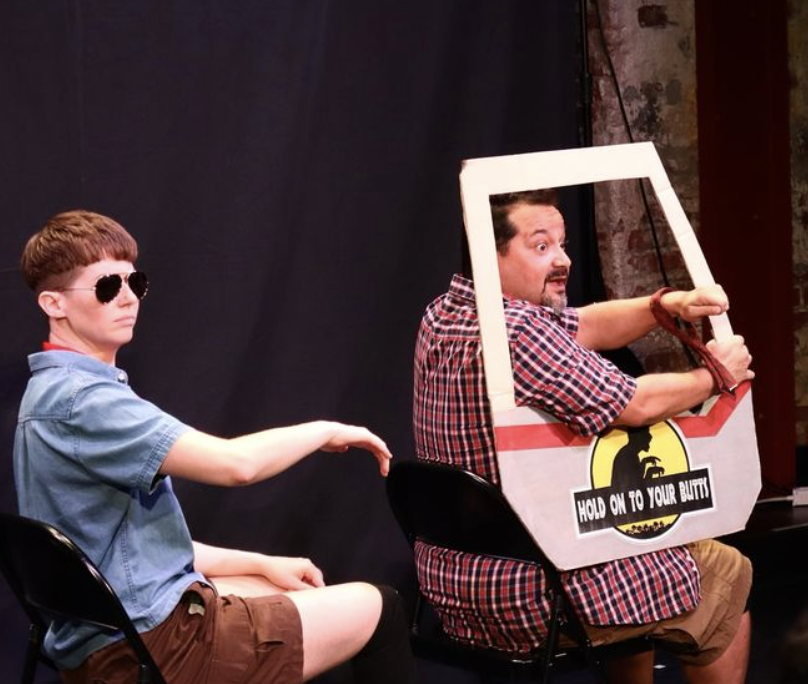
At the Pleasance Forth, a huge crowd of film fans has eagerly assembled for Hold Onto Your Butts. The raison d’etre of this New York-based outfit, making its debut at the Fringe, is to take a big-budget movie – you know the kind of thing, epic scale, massive special effects – and replicate it. They do this pretty much scene-for-scene, using a series of cheap-as-chips props to capture every detail. So for instance, a spinning umbrella becomes the rotor blades of a helicopter. Got it? Good.

Today we’re being treated to their version of Jurassic Park, though (presumably for legal reasons) the title is never mentioned. A grand cast of two performers (Natalie Rich and Matt Zambrano) and one foley artist (Kelly Robinson) gleefully launch themselves headlong into the action. The actors mine the film for its weaknesses, having fun with Ian Malcolm’s proclivity for pregnant pauses, John Hammond’s habit of fitting in lavish meals at inopportune moments, and the seeming inability of the adults in the cast to realise that they are repeatedly plunging the two kids in the story into harm’s way.

And then of course there are the dinosaurs. It’s amazing what can be achieved with a bike helmet and a traffic cone…

This is great fun, but I should probably point out that anyone with little or no knowledge of the original film will be somewhat bewildered by what’s happening onstage. Fans of Jurassic Park – and there are many – will have a whale of a time. Judging by the gales of laughter filling the room, that’s a sizeable part of the audience.

Fast, funny and irreverent, Hold On To Your Butts has all the makings of a monster hit and I fully expect it to become a regular fixture at the Fringe. We’ll see how that one er… evolves.

4 stars

Philip Caveney