The Sound of the Space Between

25/08/24

Zoo Playground, Edinburgh

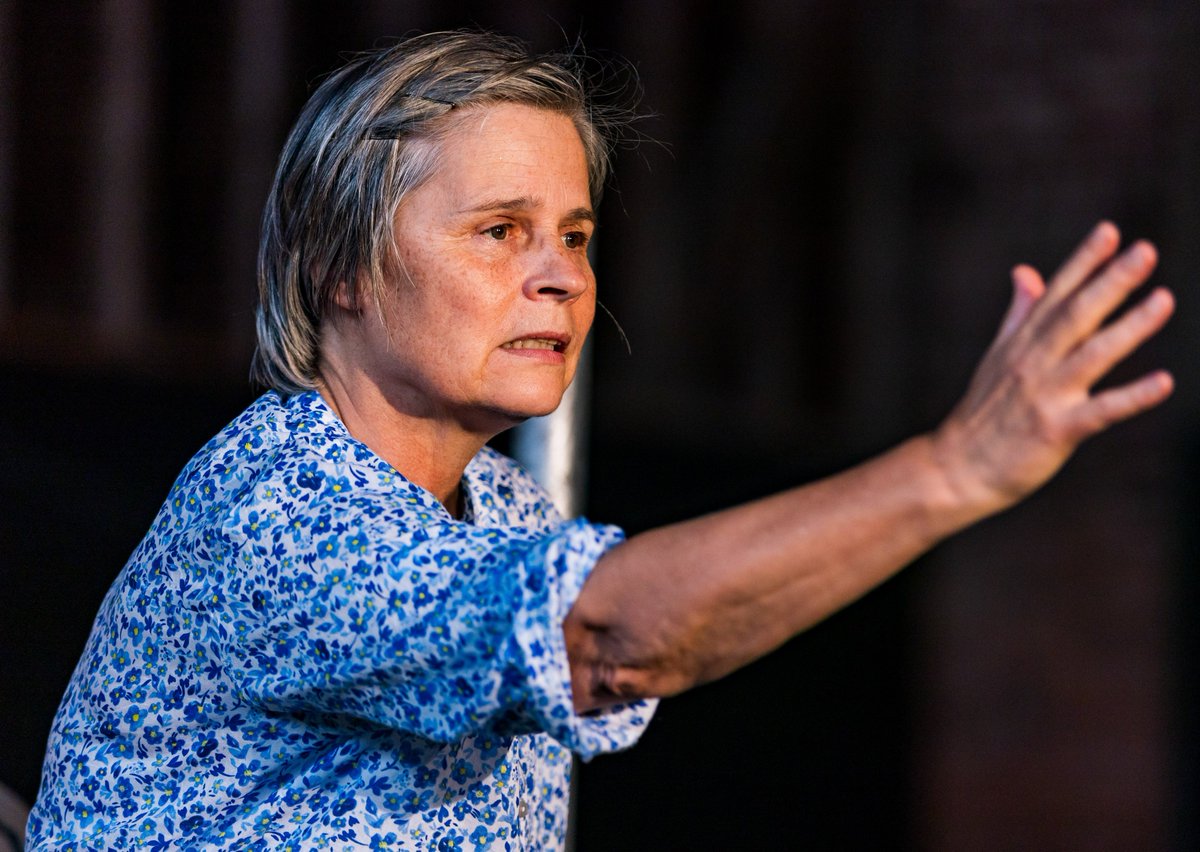
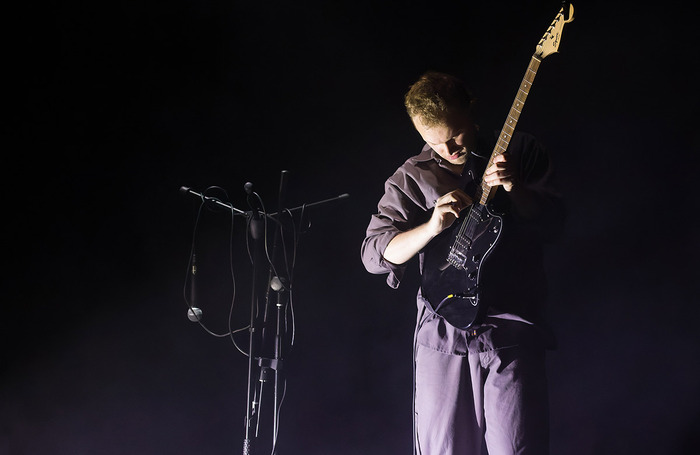
Harri Pitches’ debut hour, The Sound of the Space Between, is perhaps more performance art than ‘show’ – a series of soundscapes and images created with nothing more than a couple of fancy torches, some microphones and a loop pedal. The result is evocative and intense, a meditation on grief and longing.

There’s not a lot of narrative here – which I guess is the point. It’s an expression of feelings, a jumble of nightmares and memories, yearning and fear. Barefoot, clad in a pair of grey pyjamas, Pitches opens with the information that he’s suffering from sleep deprivation. This explains the hallucinatory dreamscape that takes hold of him every time he shuts his eyes. Eventually, he works out that he’s in a garden that he used to know when he was a child, and remnants of long-forgotten knowledge return to him – details gleaned from his dead grandparents. He misses them; their loss makes him regress to boyhood.

The soundscapes work well, enveloping the audience, so that it feels like we’re inside his head. If I have a criticism, it’s that it’s all a bit one-note, and doesn’t really build to anything. The heightened emotions are all there from the beginning and, once we learn quite early on that this is about bereavement, there is no further development of the theme.

Nonetheless, this is a heartfelt piece, and Pitches performs with absolute commitment. All I need to know now is where I can get one of those amazing torches.

3 stars

Susan Singfield
Precious Cargo

24/08/24

Summerhall (Demonstration Room), Edinburgh

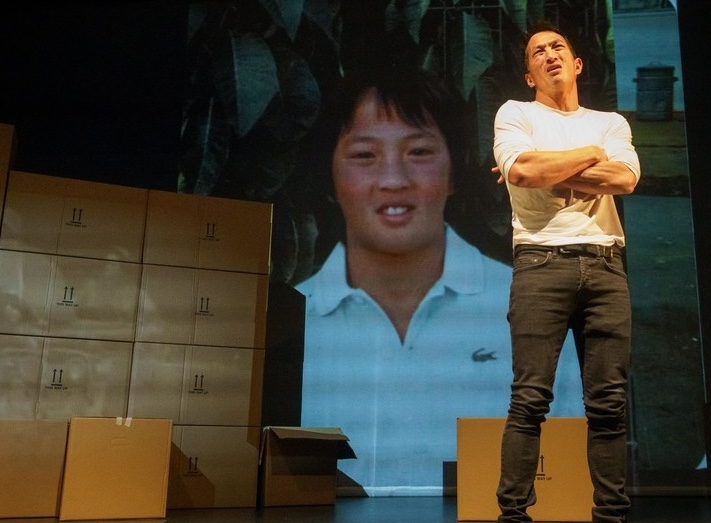
In 1975, as the Vietnam War came to its chaotic conclusion, thousands of orphaned Vietnamese babies were airlifted to safety and relocated in Australia, the USA and Europe. Barton Williams was one such orphan, taken in by a family in Adelaide. As he grew up, he made friends and enemies, learned the skills of being a surfer and, later on, found his niche in acting. His onscreen appearances were mostly in Vietnam war movies, even though – ironically – he couldn’t speak a word of his native language.

Then, working on an indie film on the Isle of Lewis, he met Andy Yearly, a musician and composer, who had also been a part of Operation Babylift and who had grown up in pretty much the same situation as Williams, albeit in a more remote environment. It was here that the two men came up with the premise for Precious Cargo.

The stage is a litter of cardboard boxes, the kind of container in which Williams first arrived in Australia. As the story unfolds, he moves the boxes back and forth around the stage, stacking them in piles. Vintage film footage is projected onto them: a mixture of family photographs and found images, designed by Robbie Thomson. Yearly’s original music plays in the background and there are recorded interviews with others who found new homes in unfamiliar countries.

Williams talks about the rootlessness that was an inevitable result of his upheaval, the many ways in which he sought to locate his birth parents, his desperate attempts to reconnect with a culture he barely even remembers. Taking a DNA test, he is bewildered to discover that he is 94% Chinese. The hopelessness of the situation is affecting and so too is his evident love for the family that took him in – without whom, he reminds us, he wouldn’t have survived to tell his story.

This is an ambitious project and there are a lot of different elements to control. With so many of them at play on stage, I occasionally find myself struggling to follow some of the recorded dialogue. But Barton is a compelling storyteller and there’s little doubting the sincerity of what he has to say about his life – or the importance of having the platform on which to speak about it. Developed with the assistance of Creative Scotland, Precious Cargo offers an opportunity to look at a largely forgotten moment of recent history.

There are just a couple of chances left to catch up with it at Summerhall.

3.6 stars

Philip Caveney

The Daughters of Roísín

24/08/24

Pleasance Courtyard (Bunker 1), Edinburgh

The Daughters of Roísín, written and performed by Aoibh Johnson, is an ode to the women of Ireland, whose histories are too often forgotten. Serving as a kind of companion piece to Luke Kelly’s 1980 poem, For What Died the Sons of Roísín? this play is a poignant reminder of what the country’s women sacrificed.

By now, we all know about the infamous Magdalene Laundries, where so-called ‘fallen women’ were sent to work before having their babies, which were then taken from them and sold to wealthy adoptive families. But even those who avoided the overt cruelty of the convents were failed by a Catholic state that viewed them as sinners.

Directed by Cahal Clarke, this play from Wee Yarn Productions tells the tale of Johnson’s great-grandmother, who fell pregnant as a teenager. Her vulnerability is highlighted by the phrase she uses to insist her parents let her go to a dance (“I’m almost an adult; I’m seventeen”), which segues into a mournful lament (“I’m only seventeen!”) when she discovers she is going to have a child. After all, how was she supposed to know? No one ever spoke about sex. She didn’t understand what she was doing.

Johnson’s performance is utterly compelling: she flits effortlessly between the past and the present, breaking the fourth wall to draw us in with direct questioning, then clipping up her hair and becoming the frightened young woman confined to her room, with only the tiniest of windows to peek out of for the nine months of her pregnancy. No one must see her; her ‘sickness’ would bring shame to the family. And, when she gives birth, the baby – Johnson’s grandfather – is spirited away and adopted.

This is a lyrical piece of work, blending poetry, song and prose, at once a scathing condemnation of the church and a love letter to Ireland’s lost women. Oisin Clarke’s simple lighting and sound work well, allowing breathing space for the moments of silence and darkness, which are eerily effective.

One of my favourite things about the Fringe is the sheer breadth of what’s on offer; I love the fact that serious plays like this sit alongside stand-up comedy and circus acts and everything in between. The Daughters of Roísín is a thought-provoking, important piece of theatre, and I’m glad it’s found a home here at the Pleasance.

4.3 stars

Susan Singfield

Scaffolding

22/08/24

Pleasance (Jack Dome), Edinburgh

Sheridan (Suzanna Hamilton) is in a bit of a fix. After the death of her husband, Emil, she is now the sole carer for her profoundly disabled daughter and has the Adult Social Care representatives snapping at her heels. And, despite having raised a massive amount of money for the restoration of her parish church’s steeple, she now finds that, because of a falling congregation, the church – and the grounds in which Emil is buried – are up for sale.

The vicar isn’t much help, even if he does bear more than a passing resemblance to Hugh Grant – the Notting Hill one, not Paddington 2 – so she’s made a perilous ascent up the titular scaffolding. Here is a place where she can contemplate her woes, not to mention all her recent purchases – the items necessary to build a powerful bomb…

This clever and affecting monologue, written by Lucy Bell and directed by Lillian Waddington, has about it the air of an Alan Bennett Talking Heads piece, a whole wealth of emotion masked by casual flippancy. Hamilton plays the role with assurance, building steadily from nervous anticipation to open despair as she realises she has reached a significant crossroads in her life – and the end of her tether. Bell’s script is equally agile, by turns humorous, acerbic and, ultimately, heartbreaking.

Alice Sales’ set design keeps Hamilton constrained within its claustrophobic confines, emphasising Sheridan’s dilemma. I can feel her building frustration as the story approaches its conclusion. I think I know where all this is headed… but the denouement confounds all my expectations.

In the final days of this year’s Fringe, here’s another production that’s worth catching if you get the chance. It may also be the only show on offer where every single member of the audience gets to be God for an hour. Which, let’s face it, isn’t an offer you get every day.

4.4 stars

Philip Caveney

Failure Project

22/08/24

Summerhall (Anatomy Lecture Theatre), Edinburgh

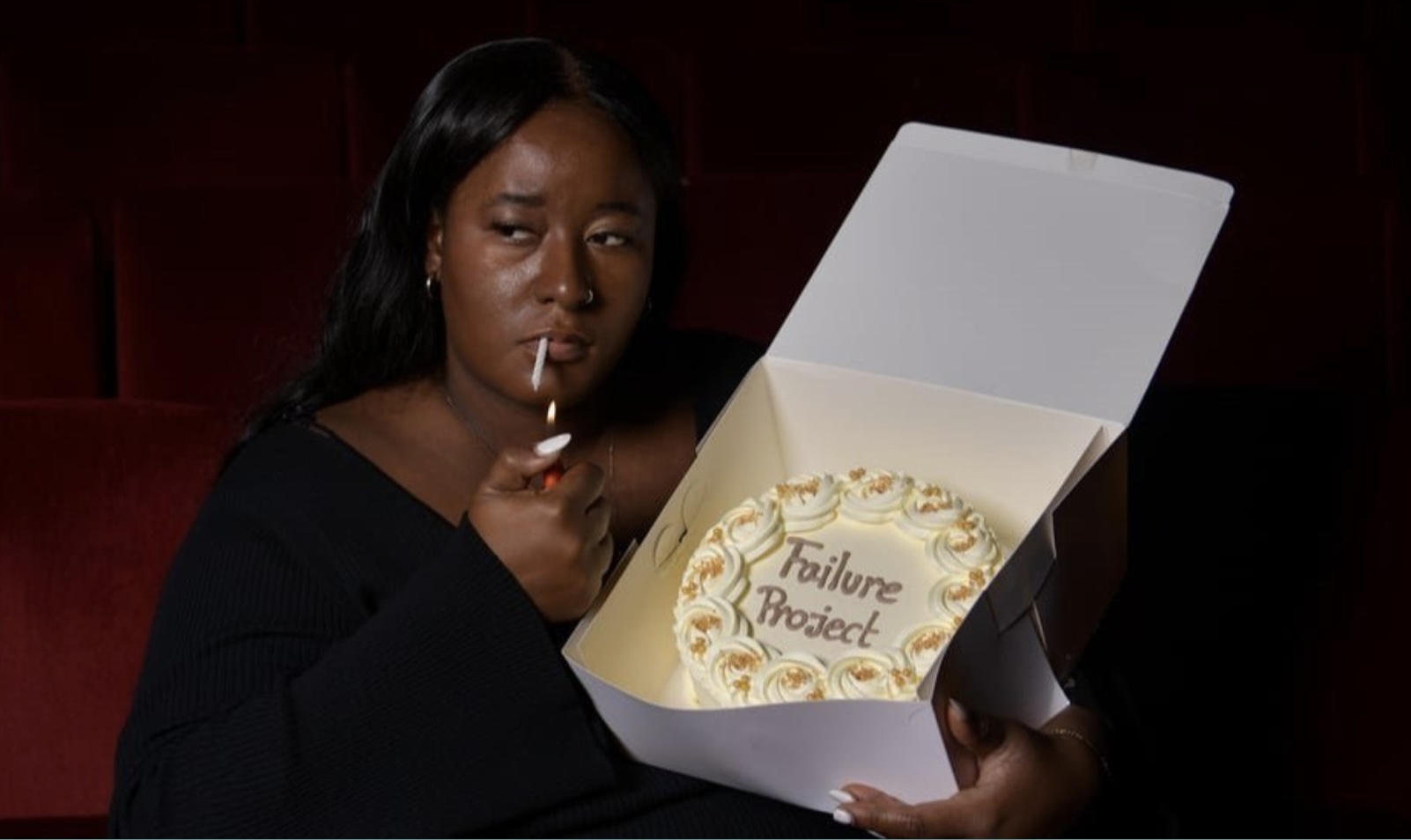
Ade Adeyami (Yolanda Mercy) is an up-and-coming British-Nigerian playwright/actor. Some recent success (including a BAFTA nomination) means that the world is her oyster – or, at least, that’s what people keep telling her. But none of the white theatre execs she meets have any interest in her idea for an uplifting play about Black women scientists; instead, they want something about slavery, some trauma porn that they can wallow in to make them feel – what? Virtuous? The one play she has had commissioned – based on her own experiences as a Black scholarship girl at a prestigious private school – is being systematically torn apart before her eyes: an influencer cast in lieu of Adeyami herself; a director who wants to change some details, so that the bullying refers to class rather than race because “it’s more universal.” Sigh.

Unhappy though she is, Adeyami cannot heave her heart into her mouth. She’s supposed to be grateful for the opportunities she’s being offered. She has to succeed. “You’re doing it for all of us,” another young, Black, aspiring playwright tells her. And so she nods, says nothing. Works on the rewrites, as required.

It’s all too much. The weight of expectation on her shoulders is unmanageable. It doesn’t help that the work she’s doing is all unpaid until someone wants to buy it, nor that her ‘boyfriend’ is so flaky. To cap it all off, her bestie isn’t picking up the phone.

Mercy – who also wrote the script – is an engaging performer, so that – although the piece is undeniably inward-looking, it never feels self-pitying. It’s more like a howl of rage that’s been hammered into shape before being presented to us, allowing us a glimpse into the overwhelming amount of effort and persistence it takes for a Black woman to make theatre – even when she’s hailed as a success. The sense of doom is palpable, Adeyami’s dreams of a glittering future hanging by a thread so delicate that it’s hard to imagine it won’t break.

Mercy talks directly to the audience, making the most of the intimate performance space, drawing us into her orbit and forcing us to feel Adeyami’s pain. The narrative arc is subtle but effective, the conversational tone belying the clever structure. There’s even a twist ending – and I don’t see it coming.

Despite its title, Failure Project is a success: warm and funny on the surface but with some serious depth.

4 stars

Susan Singfield
In Defiance of Gravity

21/08/24

Summerhall (Demonstration Room), Edinburgh

Ezra Montefiore (Saul Boyer) is London’s most celebrated spirit medium and, with the help of his benefactor, Guppy (Laurel Marks), who keeps him solvent, he is plying a lucrative trade in London in the years following the First World War. But Ezra’s appetite for opium – plus his gambling addiction – have made life somewhat precarious for them both.

Then Ezra is approached by Prince Felix Yusupov (Lewis Chandler), whom Ezra knows from years earlier. Felix wants to contact his late brother, who was killed in a duel when Felix was little and Ezra agrees to help him. He also agrees to find a solution to a problem Felix and his wife, Princess Irina (also played by Chandler), have encountered after the tragic death of their first-born child.

But there’s a powerful sexual attraction between Ezra and Felix and, when Ezra compels Felix to assassinate Grigori Rasputin, in order to keep news of their affair from reaching the Russian Royal Court, Felix is powerless to resist…

In Defiance of Gravity plays fast and loose with history, combining a mix of fictional characters and real life ones, and the result feels somewhat muddled. Some of what we see here actually happened, but much of it is speculation – and the latter outweighs the former. And when the key scene of Rasputin’s murder takes place offstage – I can’t help wishing I could watch it rather than hear about it second hand.

What’s more, the promised magical elements of the play mostly come down to a brief and rather unconvincing spot of levitation. The piece depends largely on its impressive sound design to transmit a sense of the supernatural so it certainly doesn’t help that the all-too-real hammering of actual rain on the skylight of the Demonstration Room competes with it throughout.

Felix Yusupov is a fascinating historical character and Unleash the Llama Productions might want to bear in mind that, back in 1932, he sued MGM films after their production of Rasputin and the Empress alleged that Irina had been seduced by Rasputin. The Yusupovs received £25,000 in compensation (a fortune back then) and the result was that subsequently all films featuring real-life characters had to have that famous ‘all similarities to people living or dead’ disclaimer at the opening. Here’s hoping that Felix’s descendants are not litigious.

But I digress. In Defiance of Gravity is a challenging blend of fantasy and reality and whether it’s for you or not will surely depend on your views on the ethics of rewriting history. Interested parties have just a few more chances to attend the séance at Summerhall.

Fancy it? Knock once for yes and twice for no.

3 stars

Philip Caveney

Plenty of Fish in the Sea

20/08/24

Assembly George Square (Studio 2), Edinburgh

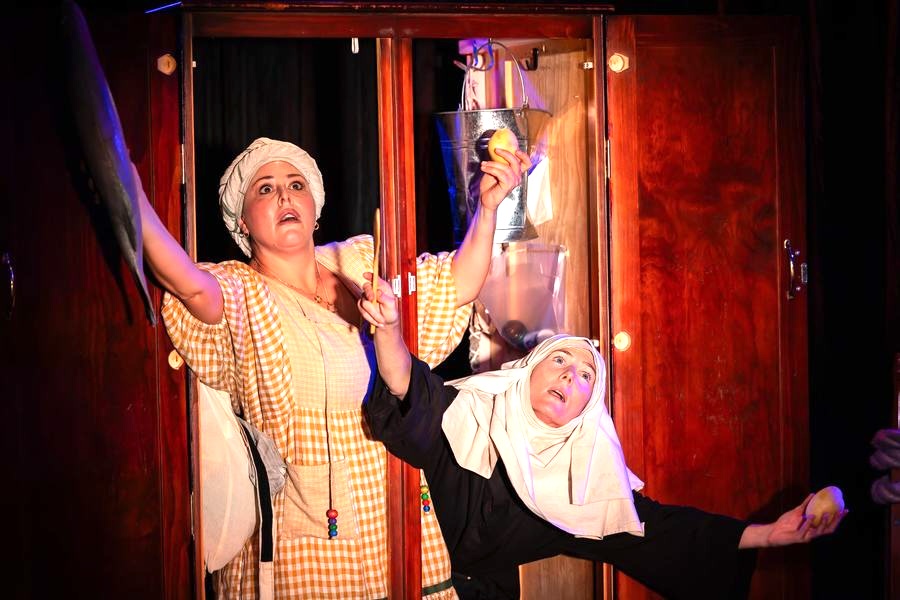
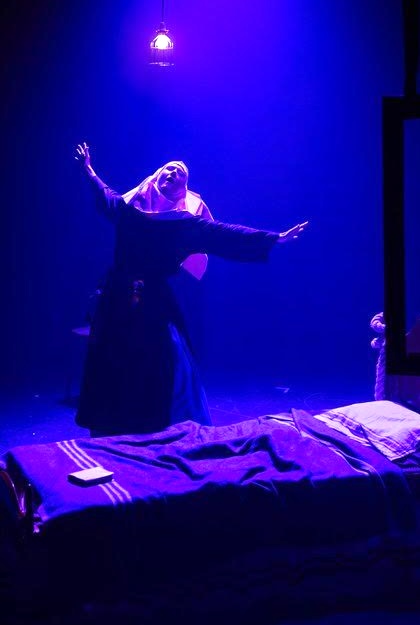
I hardly know where to begin with this one. Plenty of Fish in the Sea is – bear with me – an absurdist fable about a couple of isolated nuns (Madeline Baghurst and Emily Ayoub), who catch a man (Christopher Samuel Carrol) with their fishing rods; they then take hallucinogenic drugs and have wild sex with him before throwing him back into the sea. If ever proof were needed that the ‘seven basic plots’ theory is flawed, then look no further. I think it’s safe to say you haven’t seen this one before.

Devised by Baghurst and Ayoub of Clockfire Theatre Company, this is a mind-boggling delight. From the forbidding image of St Cotrillard to an obsessive plundering of the ocean and a gluttonous feeding frenzy, this is a play that defies explanation. It’s like being immersed in someone else’s fever dream. I’m hooked.

Clockfire’s roots lie in the Jacques Lecoq Theatre School, so this is – of course – a piece of perfectly-executed physical theatre, with some exquisite clowning. There are numerous elaborate set pieces, an abundance of striking tableaux that linger long after the final bow. There’s the nun (Baghurst), trudging along, pulling everything she owns behind her. There’s Bernadette (Ayoub), the silent novice, administering a mysterious salve to the man’s cheek – and then, cocaine-like, to her own gums. There’s the man (Carrol), passionately kissing a fish. And much, much more.

The props are simple: a cupboard, a bed, a window/picture frame. But they’re inventively designed (by Tobhiyah Stone Feller) and utilised to unsettling effect, with characters emerging, farce-like, from within the cupboard or behind the bed. Daniel Herten’s disquieting compositions add to the feeling of unease.

But what does it all mean? Ayoub says that the piece was “inspired by the modern societal pressures of ‘hook-up’ culture,” and there’s certainly something here about the soul-destroying nature of swiping right to find a mate. But it’s a lot more than that too. There’s surely a skewering of religion and consumerism, a commentary on human greed and the sheer silliness of the rituals we perform on an everyday basis. But Plenty of.. is a slippery fish, and it’s hard to pin it down.

And that’s exactly where its beauty lies.

4.3 stars

Susan Singfield

The State of Grace

19/08/24

Assembly Rooms (Drawing Room), George Street, Edinburgh

In any given year at the Fringe you’ll find a varied assortment of monologues on offer – some comic, some tragic, some wildly entertaining – but there are others that hit you like a ton of lead, leading you to question and reassess your own long-held beliefs about a specific subject. 

Michaela Burger’s The State of Grace covers all of these bases but mostly belongs in the final category.

The words we hear in this show are not Burger’s, but those of Pippa O’Sullivan – or as she became more widely known around the world, Grace Bellavue, an Adelaide-based sex worker, who was also a writer and influencer. Bellavue struggled with bipolar and PTSD for much of her life, before committing suicide in 2015 at the age of 28.

Bellavue’s mother subsequently entrusted Burger with a whole stack of her late daughter’s writings and even some of her favourite belongings. Burger has used them to create this fascinating show.

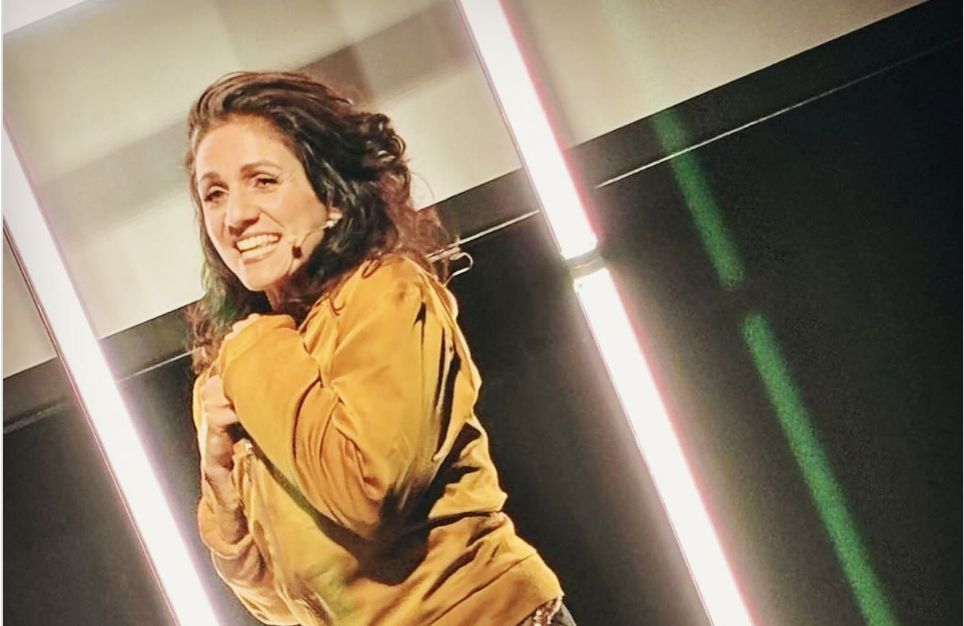
When she first walks out onto the small stage of the Drawing Room, Burger is simply herself, but she steps effortlessly into her alter ego and leads the audience deeper into Bellavue’s world.  It’s not so much an impersonation as a transformation. She talks eloquently and provocatively about the lives of sex workers, explaining why there is a need for their business to be recognised and decriminalised, pointing out the dangers inherent in the present system, and the ways in which those who work in the trade are denigrated and discriminated against.

And if this sounds like you’re going to be heading into a po-faced sermon, think again, because it’s performed with wit and nuance and, every so often, Burger sings some of Bellavue’s lyrics, using a loop pedal to overlay her own voice to create ethereal harmonies that seem to shimmer like aural mirages. I love the simple but effective staging here, where a couple of neon rectangles don’t just create a nightclub vibe, but are also used to suggest doorways, portals, a shower cubicle, even a bath into which a reluctant cat is plunged and scrubbed clean. 

And whenever you think you’ve got the measure of the piece, it twists in another new direction, giving fresh food for thought, breaking down the barriers that I’ve carried around in my head for years. In this astonishing, multi-faceted role, Burger is quite simply mesmerising. 

There are only a few more chances to see The State of Grace and, as I have occasionally observed before in week three of the Fringe, I wish I’d seen this earlier in the run, so I could try to coax even more people to see it before it packs its bags and heads back to Australia. 

No ifs or buts. This is a must-see.

5 stars

Philip Caveney

Come Dine With Me: The Musical

19/08/24

Underbelly, Bristo Square (Cowbarn), Edinburgh

There’s a well-established route to success at the Edinburgh Fringe. Find a long established TV series (one that already boasts legions of devotees), tack the words “The Musical” onto the end and design a poster to go with it. Voila, you have the ingredients guaranteed to pull in large crowds of festival-goers in search of an hour’s entertainment. 

The results can sometimes be mediocre, but to give Come Dine With Me: The Musical its proper due, this sprightly production, co-created by Neil Butler and Genevieve Welch – who actually worked on the original programme – is slickly put together and nicely performed.

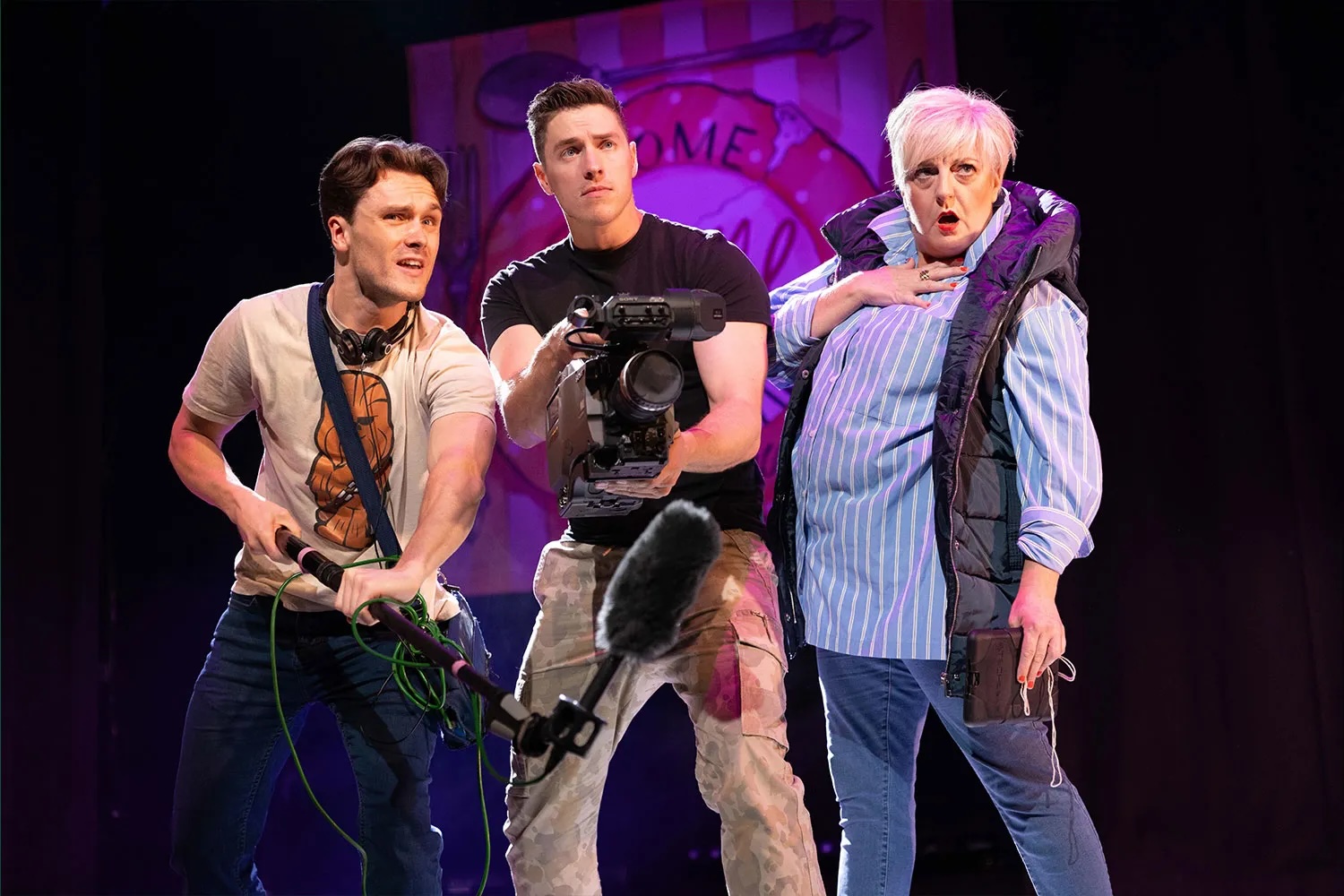
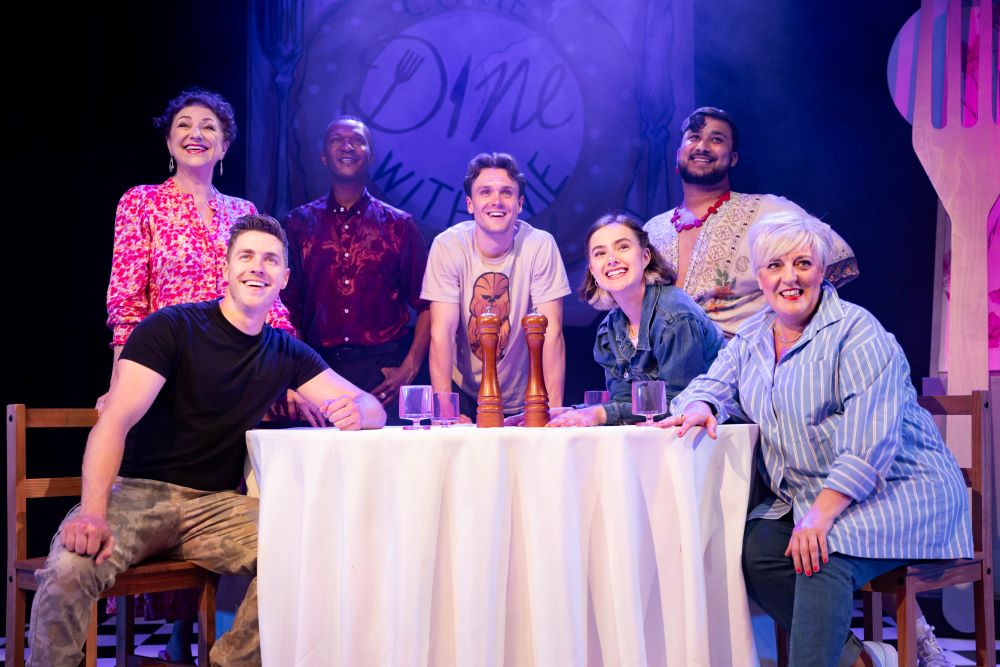
We are first introduced to harassed TV producer, Mary (Danielle Coombe), her hunky camera operator Roy (Tom Bowen) and her shy and hapless sound man, Teddy (Harry Chandler). The series is fast approaching it’s 1000th episode and the trio drive with some trepidation to the remote English village where it is to be filmed. They need something to boost their flagging viewing figures. Teddy is anxious for entirely different reasons. He grew up there.

Of course, we all know the format of the show (four disparate people cook dinner and are scored out of 10) but who will be the winner? Will it be snooty Barbara (Kim Ismay), who is completely obsessed with all things Françaises? Will it be evangelistic vegan, Ernest (Leo Udvarlaky), who can do some pretty inventive things with a bowl of lentils? What about the self proclaimed ‘King of the Sausage Roll,’ Duncan (Paul Hazel), a man who equates meat with manhood? And, lest we forget, how about Teddy’s old school chum (and secret crush), Jenny (Sophie Hutchinson)?

But when Teddy’s microphone picks up what appears to be somebody scheming to spike another chef’s culinary creations, the scene is set for a memorable landmark edition…

This is an enjoyable and occasionally very funny show, with a selection of songs memorable enough to have me humming the closing melody as I leave the theatre. All the performers have excellent vocal skills, with Coombe in particular reaching some impressive top notes.

You might argue that it’s slight fare, an amuse bouche rather than a dish of the day, but if it’s an hour of escapism you’re after, you could do a lot worse than Come Dine With Me: The Musical, before heading out for a slap-up meal in Edinburgh.

4 stars

Philip Caveney

Katzenmusik

19/08/24

theSpace @ Surgeons’ Hall (Grand Theatre), Edinburgh

Kingston Grammar School’s drama teachers don’t make things easy for themselves. Not for them the tried and tested school favourites; there’s not even a sniff of DNA or A Midsummer Night’s Dream on the agenda, let alone a mention of Oliver! or, dare I say it, Grease. Nope, every other year, they bring their sixth formers to perform at the Fringe – and, based on the two productions I’ve seen, they like to go a bit off-piste.

All power to them for opening their students’ eyes to exciting new voices in modern theatre. In 2022, they gave us Phil Porter’s comic romp, The Ofsted Massacre. This year, they’re back with Tom Fowler’s darker, weirder katzenmusik.

It’s an interesting choice for a private school: a scathing piece of social commentary, excoriating the rich and powerful for not valuing poor people’s lives. The setting is Burnside, a northern industrial town, decimated by the closure of its car plant – and a microcosm of Britain as a whole. It’s a place where a historical mining accident is commemorated with a statue to the cat that survived rather than a memorial to the seventeen men who were killed. So, when local resident Jackie Williams dies in her freezing, mould-infested flat, it makes a kind of warped sense for a group of outraged citizens to hit their dodgy landlords where it hurts – by killing their pampered pets. Of course, the media doesn’t see it that way, and soon the town is a byword for senseless animal cruelty, its inhabitants shunned and vilified.

Director Meg Christmas does a sterling job marshalling her troupe, and the players perform with gusto as well as skill. This is very much an ensemble piece, so it’s hard to single out individuals, but Jasmine Proctor-Tarabanov is compelling as the protest’s reluctant figurehead, Jamie, while Grace Dormer convinces as the vulnerable Maureen. Hats off to Charlotte Routledge too, for her impressive accent work.

Despite the heavy themes, there is humour here, most notably when groups of minor characters move in unison, delivering their lines in well-judged comic tones. The large cast utilise the space well, with smooth transitions and efficient use of props. I especially like the way that more and more bloodied cats are added to the stage, slowly ramping up the horror of what’s unfolding.

This is a complex play but the young actors have clearly worked hard to explore its every nuance, so that the production is emotionally engaging as well as provocative. I can’t wait to see what KGS come up with in 2026.

4 stars

Susan Singfield