Kafka’s Monkey

Kathryn Hunter in Kafka's Monkey at the Young Vic (photo by Tristram Kenton) Kafka's Monkey - pic 1

17/06/15

Home, Manchester

Based on Kafka’s short story, A Report To An Academy, and adapted for the Young Vic by Colin Teevan, (though it follows the original text pretty much word-for-word) Kafka’s Monkey is a fascinating monologue by Kathryn Hunter. It tells the story of Red Peter, an ape, captured in Africa and taught by his human masters to walk, talk and behave as a ‘human,’ mostly by aping the very worst aspects of humanity. Over a taut 50 minutes, we follow Peter’s progress from helpless captive to celebrated music hall performer and are left to speculate about the question of identity. Peter ultimately emerges as a misfit, a creature neither ape nor human but somewhere in between, and consequently a tragic figure. The play is completely dominated by Hunter’s extraordinary performance. Make no mistake, this is a tour de force of the actor’s art. She shuffles onstage, her body stooped and twisted and brilliantly embodies her simian character, eerily conveying Peter’s eccentric moves and his stylised way of speaking.

Sadly, the production’s other aspects aren’t quite in the same league. Teevan’s script attempts a form of iambic pentameter for Peter’s ‘human’ utterings and free verse form for his ‘monkey’ self – but the story is short on anecdotal material. The presentation is after all supposed to be taking place in a scientific establishment, which may go some way to explain its curious sense of detachment, but a more intimate approach would surely have elicited more empathy with Peter’s plight. A central screen seems somewhat underused, displaying as it does just one image, that of a chimpanzee. It’s left blank for most of the running time and might perhaps have been used to indicate different scenes – the hold of a ship, perhaps or a music hall. There’s a sparse electronic score, which again seems perfunctory, particularly when set against Hunter’s bravura performance.

There are a couple of welcome touches of humour scattered throughout the proceedings as ‘Peter’ interacts with people in the front row, hugging them, offering them bananas, coaxing them to join him onstage. Hunter also performs some contortions that elicit gasps of amazement from the audience. She’s worth the price of admission on her own, but I can’t help feeling that more supportive staging would have lifted this production to another level entirely.

3.8 stars

Philip Caveney

Damson, Heaton Moor

Unknownimages

16/06/15

It’s not our usual practise to re-review a restaurant only a few weeks after we’ve visited, but in Damson’s case, our previous visit was spectacularly mistimed – only a few weeks before the place was given a major refurbishment and the menu overhauled. What’s more, since Steve Pilling’s establishment sets the bar for dining on ‘the Moor’ and because it was Susan’s birthday, now seemed as good a time as any to make an exception to the rule.

Apart from a few touches, Damson hasn’t changed that much inside, but the exterior has been completely repainted and the terrace is now surrounded by higher wooden enclosures, liberally planted with flowers and shrubs, while the seating and tables have all been replaced. It’s now an absolute pleasure to sit out in sunny weather with a drink (assuming, that is, that you can find such weather in Stockport!)

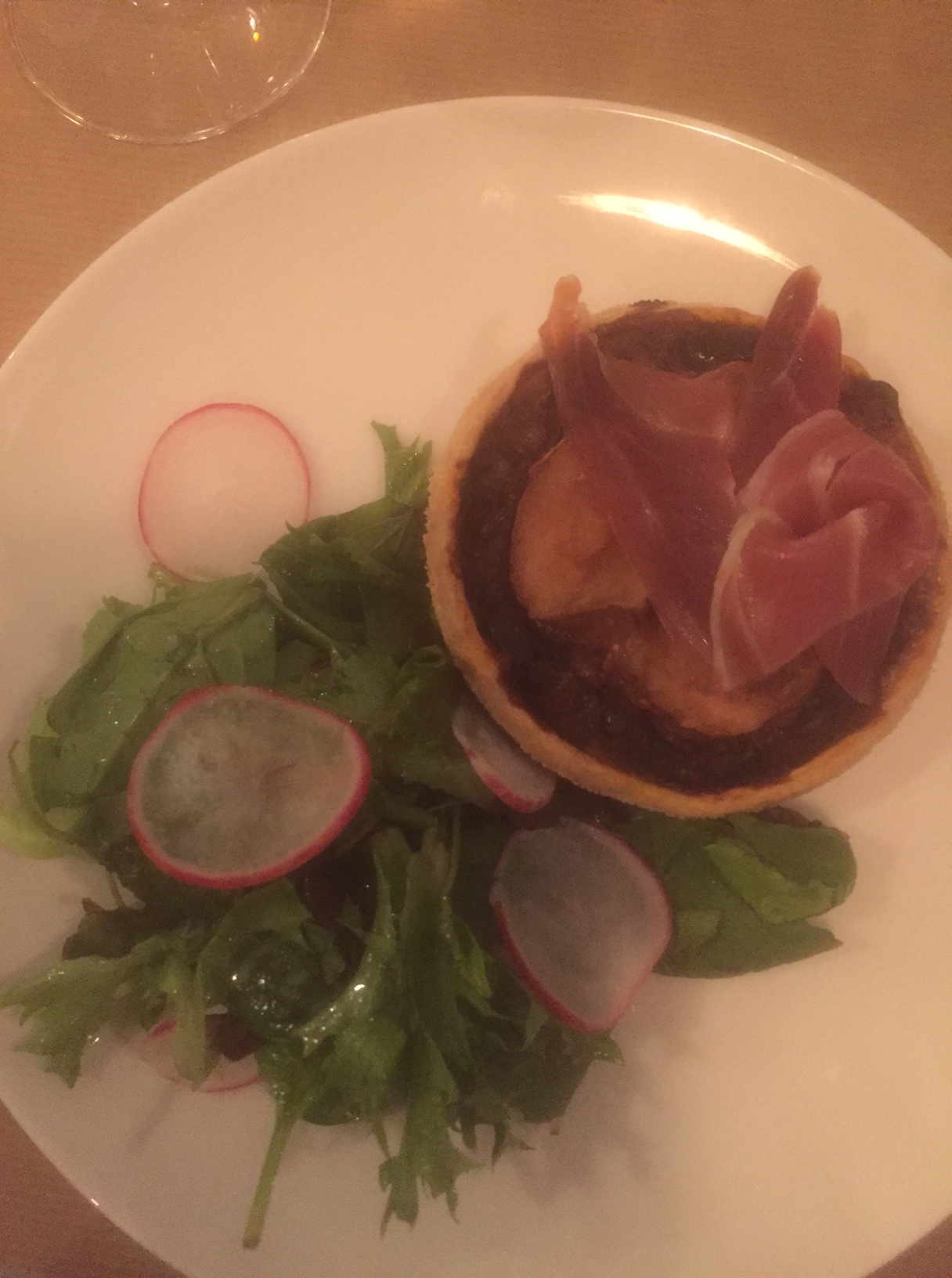
As for the menu, there’s a new selection of reasonably priced cocktails on offer and some sharing platters, one of which we decided to try instead of a conventional starter (though the platters are usually available only on the lunch menu.) These are generously sized wooden boards, which come loaded with four kinds of cured meat, four kinds of cheese, plenty of sourdough bread, butter, chutney, homemade pickles and your choice of three jars, each one packed with a delicious spread – there are eight jars to choose from. We opted for Duck with potted pear and hazelnut, Whitby Crab and Crayfish with avocado and Herb Goat’s Curd with salt baked beetroot. To say that each of these was delicious would be something of an understatement. They were, quite frankly, exquisite. A sharing board costs just £15 and at lunchtime, accompanied by a drink, are clearly a brilliant idea for two diners.

But this was a birthday evening so we moved on to a couple of main courses from the new set menu, now available till 9.30 on a weekday and till 6.30 at the weekend. it costs £15 for a main course, £20 for two courses and  £25 for three. My choice was the Slow Cooked Middle White Pork Belly with apricot, pak choy, curried lentils and potato. As ever, this was note perfect, the mildy spiced lentils proving the perfect accompaniment to that succulent, mouth-watering meat. Susan sampled the Grilled Fillet of Mackerel, with pesto creamed potato, tomato, olives, coriander and lemon. The fish was perfectly cooked, with a crispy exterior and a moist, richly flavoured interior, the intense flavour perfectly counterpointed by the delicately flavoured pesto mash.

Would there be room for any of those delicious desserts? Sadly no, mainly because the sharer had been so generously proportioned, but I’m not complaining. (See our previous review for our thoughts on Damson’s desserts!) Suffice to say that after six years, Damson is not resting on its laurels and the Moor’s other contenders are going to have to work really hard if they hope to challenge its dominance. Our meal with a decent bottle of Pino Grigio came to around £65, proof positive that you don’t have to pay out a fortune for fine cuisine.

5 stars

Philip Caveney
Man Up

MV5BMTUzODcxNDcxMl5BMl5BanBnXkFtZTgwODE1NjM4NTE@._V1_SX214_AL_

06/06/15

Some films are little more than entertaining fluff, but as entertaining fluff goes, Man Up is right there with the best of them. It boasts two likeable leads in Simon Pegg and Lake Bell, a great supporting cast, a witty script by Tess Morris and a genuine ‘feel good’ tone that carries you effortlessly through to its (pleasingly predictable) ending.

Lake Bell is Nancy, a thirty something female with a poor record in the relationships game. At the film’s start, she’d supposed to be attending the engagement party of a couple of friends, where she’s been set up on a blind date, but opts instead to eat a burger alone in her hotel room and watch The Silence of the Lambs. Pestered by her sister, Elaine (Sharon Horgan) to get in there and give it a shot, she goes to meet the man in question. The ensuing toe-curling conversation is one of the film’s funniest scenes. On the train home, she meets Jessica (Ophelia Lovibond) who is herself en route to a blind date, carrying a cheesy self-help book for the purposes of identification. By chance, Nancy ends up with the book and with the blind date, Jack (Simon Pegg), a forty year old would-be artist who is still hurting from the pain of the separation from his ex. Caught up in the moment, Nancy allows Jack to think that she is actually Jessica and the two of them embark on a night of drinking and conversation, made all the more challenging by Nancy’s desperate attempts to ‘be’ Jessica – who it turns out, is a twenty four year old triathlete! It’s all going swimmingly until they visit a bowling alley and bump into Sean (Rory Kinnear) one of Nancy’s ex schoolmates and a man who has been nursing a (rather creepy) obsession with her ever since…

Mistaken identity is a familiar conceit in the movies and many have tried this idea with average results, but Man Up is a superior product in most respects. The quirky script has far more surprises up its sleeve than you might expect from a subject like this and there are some genuinely laugh-out-loud moments along the way, even if we know all along that Jack and Nancy are made for each other and there’s no way the filmmakers would dream of letting us down in that regard. If you’re expecting the earth to move, this may not be for you, but if you’re in the market for a quirky, heartwarming feel good picture, you could frankly do a lot worse than this.

4.4 stars

Philip Caveney

Funfair

GC_Home_Funfair_Wide-056 GC_Home_Funfair_DressR-491

2/6/15

Home, Manchester

We were (ironically) away from home for the launch of Home – Manchester’s brand-spanking new arts centre, which takes over from two legendary local institutions, The Cornerhouse and The Library Theatre. Home is housed in a great big serious-looking building at the end of First Street, replete with cinema screens, theatres, exhibition spaces, a cavernous bar and a restaurant. What’s not to like?

There’s certainly plenty to like about its inaugural theatre presentation, The Funfair. This is Simon Stephens’ astute adaptation of Odon Von Harvath’s late 20s play Kasimir and Karoline. Stephens must be the hardest working person in theatre right now and if Von Harvath’s play seems a wilfully obscure choice as the opening gambit for a brand new venue, its certainly a prescient one – the original play was set in austerity-stricken Munich just a few years before the rise of the Nazi party. It’s surely no coincidence that the story strikes a whole series of ironic chords with what’s happening in the UK right now. The action takes place in and around a seedy fairground and Ti Green’s design captures perfectly the tawdry splendour of such settings. Neon lights flicker, carousels whirl and you can almost smell the fried onions.

Cash (Ben Batt) is a former chauffeur, himself a victim of the stricken economy. Out of luck and now out of work, he worries that his already turbulent relationship with fiancé Caroline (Katie Moore) is doomed to failure by his lack of employment – and there are certainly plenty of temptations lying in wait for her when, after a row with Cash, she decides to visit the fair, with the professed intention of going on ‘all the rides’. She soon elicits the attentions of John Chase (Rhodri Meilir) a dorky but ambitious salesman with a liking for ice cream. When John’s rich boss, Billy Smoke (a superbly lascivious Ian Bartholomew) turns up accompanied by his equally venal companion, David Spear (Christopher Wright) their combined gaze falls upon Caroline… and the stage is set for a deliciously dark allegory about the human condition and its propensity for excess.

The Funfair is a dazzling box of delights, a real multi-media event that employs lights, shadows, live rock music, back and front projection, masks, movement and a central turntable that’s used to stunning visual effect, but none of this is ever allowed to overwhelm the splendid performances from the ensemble cast. Stephens’ canny script flips us back and forth like a well-oiled rollercoaster between the various intertwining stories and the events culminate in a bitter-sweet scene that will stay with you long after you’ve stumbled out of the building.

Home really couldn’t have asked for a better opening salvo than this. It’s on until the 13th of June and it’s an unqualified delight. Miss it and weep.

5 stars

 Philip Caveney

Scotland Short Play Award 2015

Unknown-1 Unknown

Traverse Theatre, Edinburgh

28/05/15

The Traverse is a writers’ theatre, its commitment to new writing intrinsic to its existence. This makes it an exciting place to visit; one thing here is always certain: you won’t be watching a tired old revival or an over-exposed crowd-pleaser.

Last night’s showcase of the four finalists in the Scotland Short Play Award 2015 was a case in point: a genuinely compelling selection of pieces, all simply staged but powerfully performed, with all the wit, vigour and contention you could hope for from a group of emerging young playwrights.

First up was Morven by Emily Ashton. This was a disturbing howl of a play, with Nicola Roy superb as the anguished mother, who may or may not have murdered her child. Hounded by both press and social workers, at once devastated and furious, the eponymous Morven forced the audience to confront the idea that we can never really know the truth about some stories, no matter how clear cut they appear in the tabloids. The play’s structure was simple, and the director (Tony Cownie) utilised this to advantage, employing some nice techniques, e.g. the disembodied voice of the invisible questioner filling the theatre; the headline-like questions projected onto the wall; the Katie Mitchell-esque ‘live’ projections emphasising the minutiae of Morven’s movements and expression (not least, in fact, at the end, when the projection ceased to mirror Morven, showing how dissociated even she had become). A cracking start.

The second play was Romance by Ross Dunsmore, and this was our favourite of the night. A two-hander, performed with charm and gusto by Joanne Thompson and Cristian Ortega, it explored the complexities of a teenage relationship in the social media age, laying bare the insecurity and vulnerability that leads young girls to share explicit images of themselves. If that sounds bleak, it does the play a disservice, as this was laugh-out-loud funny, depicting the sweetest of boys remaining doggedly  loyal to the girl he likes. It even had a hopeful, warm-hearted ending. In some ways, it made a mockery of the media hysteria around sexting. ‘Yeah ok,’ it seemed to say, ‘people do stupid stuff, and there can be ugly consequences, but – you know – this too will pass. It doesn’t have to be the end of the world.’ A poignant, endearing and humorous play. Lovely stuff.

Next was Cameron Forbes’ It Never Ends, another two-hander about a modern relationship, this time focused on the slightly older demographic of the undergraduate. This was perhaps the most controversial piece of the night, dealing as it did with two young people heading out to a club, both keen to let loose: get drunk, get high and get laid. Their intentions were clear and stated, and the first half of the play was full of hope and hedonism, dancing and fun. The following morning, however, waking up in a stranger’s bed, the young woman had no recollection of their sexual encounter, and crept away, bereft and violated. There was no redemption here, and no easy ‘answer’ for the audience. The young man was not a rapist (he was as inchoate as she) but she certainly felt raped. Neither of them found the joy they were seeking. It’s a sad and complex issue, and the tragedy was made clear here.

The final play of the night was Potterrow by Martin McCormick. This was the most ambitious piece by far, and perhaps the least suited to the fifteen-minute time-frame. Nevertheless, it was a fascinating monologue, charting a man’s breakdown: a new parent’s sleep deprivation leading to paranoia and obsession, and – eventually – to the murder of an old woman whose dog fouls The Meadows. We were never quite sure if he was a policeman or not, or if the uniform he wore was just another symptom of his ailing mind. The footprints laid out on sheets across the stage mapped out the man’s demise, and also emphasised how often he became derailed, his intentions thwarted along the way. The performance, by Gavin Jon Wright, was both nuanced and convincing. This playwright is certainly one to watch.

All in all, then, this was a fascinating night, and bodes well for the future of theatre. With these young playwrights at the helm, things look very promising indeed.

4 stars

Susan Singfield

Damson, Heaton Moor

images Unknown

29/05/15

Of all the restaurants I’ve ever eaten in (and they are many and varied), Damson remains my favourite – and not just because of the food.

Make no mistake, the food here is consistently delicious. But there’s that friendly, convivial vibe as well; the calm, relaxing decor; and the understated professionalism of the front of house team.

We’re here tonight for the early bird menu, which offers two courses for £16.95, or three for £19.95. Of course, we will eat three. The portions here are perfectly balanced, leaving the diner satisfied but not too full. There’s always room for one of their exquisite puddings.

To start, I opt for the tartare of Cheshire beef fillet, while Philip has  a chicken Caesar salad. The tartare is light and fresh and melts in the mouth, but Philip’s salad is even better. There’s an egg, which has been caught at exactly that moment between soft and hard, its orange yolk glistening most attractively. It’s anchovy-rich, a creamy delight of a starter, and certainly whets the appetite for what is yet to come.

Next up, I have the grilled fillet of sea bass, which comes with pesto creamed potato. Again, this is note-perfect, the fish all crispy skin and moist soft flesh. Olives and tomatoes add piquancy to the dish. I want to lick my plate. Philip has the roasted rump of lamb (for a supplement of £5); this comes with goats’ cheese mash, sweetbreads, braised baby gem, peas, broad beans and morels. It sounds like hearty fare, but it’s as delicate as can be, and the lamb is softer and richer than any I’ve tasted before.

Then there’s the pudding. Philip has the creme fraiche tart with crushed raspberries and strawberry sorbet, a sweet-sharp combination that literally has him whimpering with delight. I go for the chocolate cremeux with macerated strawberries and vanilla ice cream, the richness of the chocolate perfectly offset by the freshness of the fruit.

We’ve eaten in restaurants with bigger reputations than Damson, but nowhere else we’ve been to has yet rivalled it for such unpretentious but accomplished food. There is confidence here, and care too, and it makes for a most satisfying experience. We’ll certainly be back for more.

5 stars

Susan Singfield

Pomegranate, Edinburgh

UnknownUnknown-1

28/05/15

Situated just off Leith Walk, Pomegranate is an unpretentious bistro-style cafe serving Middle Eastern cuisine. The bright vibrant decor gives the place a cheery atmosphere, but be warned, the only wines and beers on offer are of the non-alcoholic variety, so if you want to drink something more punchy with your meal, bring your own. (No corkage is charged, which makes eating here even better value for money.)

There were three of us to dine and we were all very hungry. For starters we chose Soujek (Spicy Lebanese sausages sautéed in tomato, green pepper, garlic and chilli), Baly Merishke (barbecued lemon-scented chicken wings) and Kubba Halub (Seasoned minced lamb, mixed with sultanas, encased in crushed rice.) All three starters were lovely – the sausages were enveloped in a rich spicy sauce, the chicken wings crisp yet succulent and the Kubba Halub had a crunchy exterior and a melt-in-the-mouth centre.

On to the mains – I sampled the Joujeh (half a chargrilled chicken marinated in lemon, tomato and garlic), Susan went for the Chargrilled Whole Sea Bass (marinated with lemon and Persian sumac and served with a side of bamya – a beef and okra stew, or tapsi – an eggplant sauce). Our companion, who’d eaten here before, went for his favourite,  Qozy Lamb (braised lamb on the bone, served with tapsi or bamya.) Once again all dishes were note perfect and came accompanied with generously-sized mounds of clean-tasting basmati rice and the restaurant’s own naan breads, thinner and somewhat crispier than their Indian brethren, but absolutely delicious.

Did we eat everything that was put before us? Yes, we did and licked our platters clean. Did we have any room to sample the selection of great-sounding desserts on offer? No we did not. But one thing’s for sure. If you’re looking for great tasting middle Eastern cuisine in the heart of Edinburgh, this is where you should come. Outstanding! Oh yes, and I promised to mention our waitress for the evening, the charming and friendly Alicja, who looked after us in friendly but unobtrusive style!

4.5 stars

Philip Caveney

A Girl Walks Home Alone At Night

MV5BMjMzNjMyMjU2M15BMl5BanBnXkFtZTgwMzA3NjQ0MzE@._V1_SY317_CR4,0,214,317_AL_

26/05/15

Despite the rather ponderous title, there’s much to recommend about this low budget indie from Iranian director Ana Lily Amirpour, not least the stark black and white cinematography and the assured performances by a cast of unknowns. While the industrial settings and bursts of white noise occasionally echo early David Lynch (with Eraserhead an obvious touchstone) and some of the soundtrack tropes are clearly influenced by Ennio Morricone, there’s nonetheless a lot here that’s like nothing else you’ve ever seen on a cinema screen.

The story is set in ‘Bad City,’ an industrialised hellhole where the sight of a ravine filled with heaps of dead bodies doesn’t seem to cause any of the inhabitants to raise so  much as an eyebrow. Arrash (Arash Marandi) is a handsome young man, saddled with the upkeep of his junkie father, Hossein, who is in hock to vicious drug dealer, Saeed. When Hossein can’t pay what he owes, Saeed does not hesitate to take Arrash’s much-prized car as a part-payment. Into this bleak scenario wanders ‘The Girl,’ (Sheila Vand) a hijab-wearing, night walking (and occasionally skate-boarding) vampire, who seems to choose her victims according to a strange, self-determined code, homing in on those who she deems to be wicked. It’s an intriguing performance from Vand, as beguiling and compelling, as it is, occasionally, terrifying. She first meets Arash when he is stoned, returning from a fancy dress party dressed as Dracula. She promptly wheels him back to her place and a quirky romance ensues…

A Girl Walks Home Alone At Night is a fascinating film, pretty much the last sort of movie you might expect to emerge from Iran. Even though the sexual overtones of the story are portrayed in an allegorical way, they are undoubtedly there, along with unflinching scenes of drug-taking and some interesting role reversal – here the girl on her own is the one you need to be afraid of. It’s an assured debut from Armipour, who manages to create something really original here, proving once again, that the supposed demise of the vampire movie has been somewhat exaggerated. This is another fresh twist on the genre, that will have you discussing the film long after you’ve left the cinema.

4.4 stars

Philip Caveney

The King’s Speech

Unknown001562_regular

King’s Theatre, Edinburgh

23/05/15

The King’s Theatre, Edinburgh, has a reputation for being beautiful. “If you like the Lyceum,” several friends have told us, “just wait until you see the King’s.” And, to be fair, the building is gorgeous: all perfectly preserved Art Deco woodwork, and a frankly overgenerous serving of boxes, with a staggering eighteen ornate (and empty) loges dominating the auditorium. So, yes, the theatre is lovely to look at.

Unfortunately, I didn’t love the play. The story was too familiar from the over-praised film (I enjoyed the film, I really did, but it felt more like a decent TV drama than the Oscar-winning heavyweight it was lauded as), and the subject too unsympathetic. It’s hard to empathise too much with such a vastly over-privileged man.

The performances were good: Jason Donovan made an appealingly irreverent Lionel; Claire Lams a wonderfully acerbic Queen. But the dialogue was plodding, and the direction lacked the lightness of touch that elevated the film. Set changes, for example, were more complex than necessary, interrupting the flow and slowing the pace. The simplicity of the wooden wall panels was negated by the constant shifting of superfluous props: the location was clear as soon as a door slid open; I didn’t need three desks, a bookshelf and a couple of armchairs to tell me where we were.

I liked the way the political machinations were writ large in this play, and how Lionel Logue’s refreshing lack of agenda was shown to contrast so heavily with the naked, ugly self-interest of the clergy, the government and the royal family itself. But, overall, this was not for me.

2.3 stars

Susan Singfield

Soba, Edinburgh

imagesFullSizeRender

24/06/15

We generally avoid reviewing chain restaurants but with venues only in Edinburgh, Glasgow and (recently opened) Leeds, Soba seemed suitably niche enough to make an exception. Describing its offerings as ‘Pan Asian Street-Food,’ this self-styled bar/kitchen occupies a slot on Hanover Street and offers a funky, lively place to dine, with tables arranged on several levels. The interior decorator seems to have a predilection for different kinds of light fittings and manga style art, but the overall effect is much more pleasing than I’m making it sound.

For starters we chose Sweetcorn and Coconut Fritters, which were every bit as light and delicately spiced as the name would lead you to expect: and Char Siu Steamed Pork Buns with Ginger Plums. These were deliciously soft and sticky and when you got over the initial surprise of them being so gloopy, were really rather enjoyable. The ginger plums lent the dish a contrasting piquancy.

The main courses were two familiar favourites. As somebody who spent several years of my childhood in Malaysia, I couldn’t resist the Nasi Goreng, a deliciously spicy mixture of rice, chicken and shrimps, served with chicken skewers, a thick, lip-smackingly good peanut sauce and shrimp crackers. The whole thing is topped off with a soft fried egg. (In my childhood, Nasi Goreng was our equivalent of fish and chips. A man used to cycle around with a heated box of the stuff, which would be served wrapped in a banana leaf. Obviously, in that version the egg was of the scrambled variety but we loved it! Soba’s version was much more stylish but had an authentic taste that took me right back to those happy days.) Susan sampled the Pad Thai, a generously sized bowl of rice noodles and prawns, intensely flavoured with lime, ginger and tamarind. Again, it was everything that a Pad Thai should be – a delightful commingling of ingredients, topped with crunchy bean sprouts.

As I said earlier, portions are on the generous side, so we eschewed the dessert menu this time around. Neither was it the right opportunity to sample any of Soba’s cocktails, of which they are clearly very proud. I should perhaps mention that they are now offering an express lunch with two courses for just £8.95 (which is a bargain any way you look at it) and regular diners might like to consider investing in a trade card, which costs just £25 and offers 25% off main courses, cocktails for just £5 and ‘house pours’ – four of the most popular spirit and mixer combinations – for just £2.

Our meal for two with a couple of drinks came to just over £30. We’ll most certainly be eating there again.

4.2 stars 

Philip Caveney