
Uncategorized

The Fantastic Life of Minnie Rubinski

09/02/23

The Fruitmarket Gallery, Edinburgh

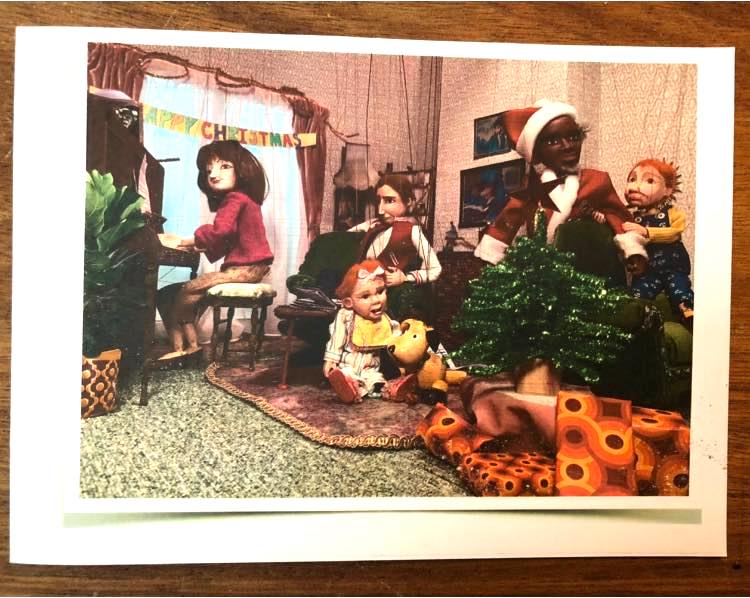
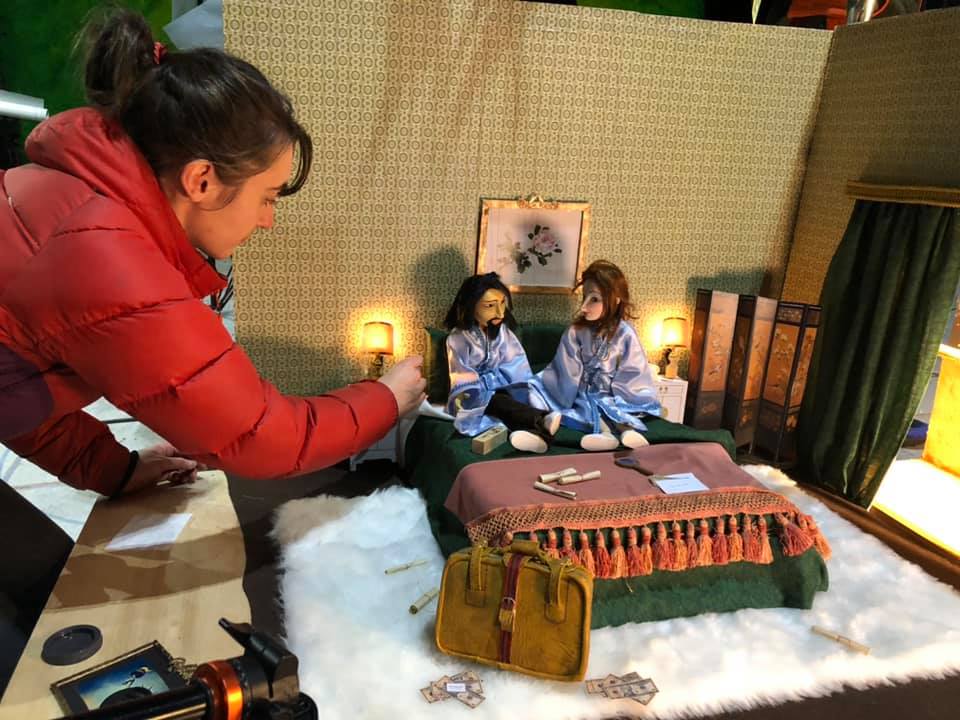
Vision Mechanic’s production of The Fantastic Life of Minnie Rubinski was conceived during the pandemic and is inspired by creative director Kim Bergsagel’s mother (real name Sondra Rubin). Part movie, part installation and part puppet-show, it’s an affecting look into the memories and changing fortunes of one woman’s life.

Entering the performance space, we find ourselves in a darkened room dominated by a central ‘brain,’ a little shelter where we are invited to sit awhile and listen to the recorded sounds of a jumble of voices and musical cues. From there, we can follow one of a number of illuminated ‘synapses’ to a whole series of screens showing vignettes of key incidents from Minnie’s life. The characters are puppets, moving around custom-built sets, which are presented in intricate detail – check out the sequence in a 1950s supermarket and take a close look at the hundreds of items ranged on the shelves. The attention to detail is astonishing!

The scenes we are offered range from charming glimpses of Minnie’s childhood, to the years of her unfulfilling marriage, her time spent running a swish art gallery and latterly, her final days in a care home as she increasingly descends into dementia. It’s in these latter stretches that some of her adventures become particularly bizarre and the lines between memories and hallucinations are allowed to blur. We can choose to watch the sequences chronologically or simply go to whichever screen is vacant at any given time and piece everything together from what’s onscreen. (I really recommend this approach. It’s oddly like playing detective and the storyline is so skilfully handled, it never becomes confusing.)

Of course, a production like this isn’t the work of one person, but of a whole team of creative artists – puppet makers, set dressers, musicians, you name it – and their splendid endeavours are up there on the screens for all to see, as they pool their diverse talents to create a charming and fascinating narrative. I can honestly say I’ve never seen anything quite like this before.

Interested parties should make a beeline for the Fruitmarket Gallery, because this delightful production, showing as part of the Manipulate Festival, is only available to view until Sunday 12th February. Go and spend forty-five minutes in Minnie’s extraordinary world. It’ll be time well spent.

4.4 stars

Philip Caveney
Babylon

20/01/23

Cineworld, Edinburgh

Babylon arrives in British cinemas surrounded by all the signs of a cinematic disaster. The complaints are depressingly familiar. It’s too expensive, too complicated and, at three hours and nine minutes, too flipping long for mass consumption – though that doesn’t seem to have been a problem for the vapid Avatar: the Way of Water. The proof of the pudding, of course, is in the eating – and for anyone remotely interested in the history of cinema, this is a delicious confection, to be consumed slowly, relishing every mouthful. It manages to hold me spellbound throughout.

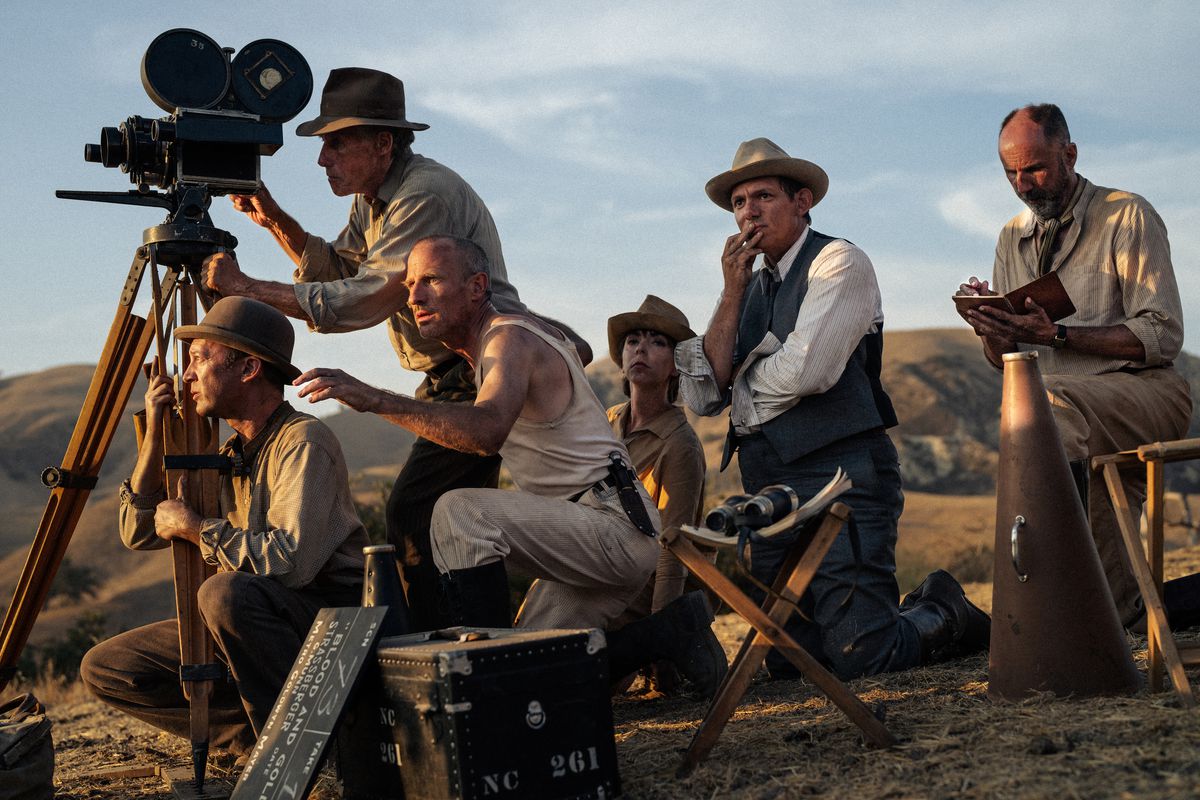
It’s the year 1926 and the silent cinema industry is rejoicing in its unparrallelled power and glory, staging depraved and profligate parties/orgies in the Hollywood Hills. Jack Conrad (Brad Pitt), a silent movie star in the tradition of John Gilbert, has enjoyed an impressive career thus far and is blissfully unaware of the massive sea change that will hit the industry in just one year’s time. Meanwhile Manny Torres (Diego Calva) is taking his first steps into the industry he’s always longed to be part of, mainly by saying ‘yes’ to anything that comes his way – even if that means agreeing  to transport an elephant to one the aforementioned parties. Sidney Palmer (Jovan Adepo) is a trumpet player, whose presence at that very event initiates an opportunity to take his place – abeit briefly – in the Hollywood firmament. 

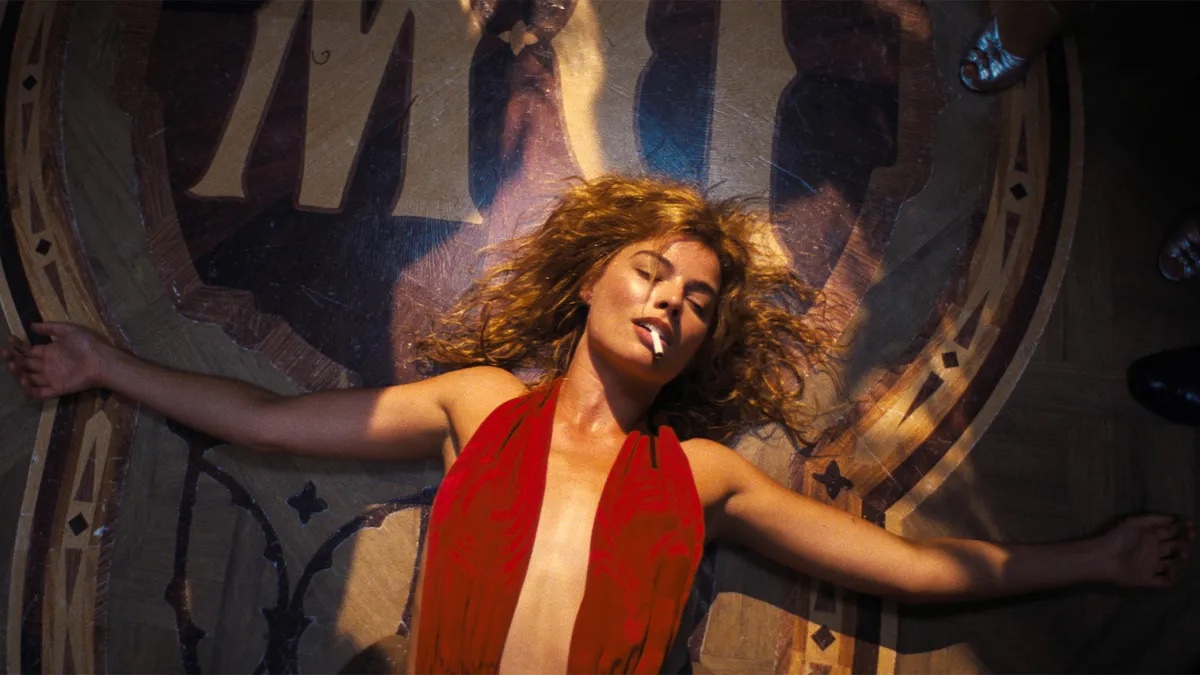
And then there’s Nellie LaRoy (Margot Robbie), self-styled wild child, currently broke and living in a shit hole, but able to bluff her way into any soiree. She’s not just convinced that she’s destined to be a star – she thinks she already is one, but nobody’s noticed yet. When she and Manny bump into each other, sparks fly between them – but it will be several years before they have anything resembling a relationship. 

Babylon is another film about the magic of cinema, though it also has some harsh observations to make about the process of stardom – the arbitary quality of it, the way it defiines and redefines the people it happens to and how, in most cases it destroys them. Several of the characters here are based upon real people and, in some cases, they’re easy to identify. Others are composites. There are some wonderful evocations of the film-making process. An early scene depicting the shooting of a ‘silent’ sequence which features a battle between medieval armies is a joyful, rampaging slice of mayhem, with actual carnage occurring in the process. It’s contrasted with a scene just a year later, where the filming of an early ‘talkie’ is dependent on quiet, and constantly, maddeningly disrupted by every squeak of a shoe, every rustle of clothing.

And there’s a powerful coda in 1952 as an older, wiser Manny slips into a cinema to watch Singin’ in the Rain, only to see his life flashing before his eyes and twisted into comedy. The film’s final sequence is either utterly mesmerising or alienating – there are some walkouts at  this point from those in the latter faction – but I adore it.

Babylon is big, powerful, ambitious and illuminating, all qualities that ought to make it a massive cinematic hit. But we seem to be living in an age where – James Cameron excepted – smaller, more personal films are ruiling the roost. This carries me effortlessly through its duration. Pitt is superb as a once great performer, watching in puzzlement as his powers wain. But Babylon is really Robbie’s film. As the dangerous, self-destructive Nellie LaRoy, she’s the beating heart of this sumptuous, powerful epic.

4.6 stars

Philip Caveney

Dulse

08/01/23

Queensferry Street, Edinburgh

The New Year’s festivities are over, the decorations are packed away (in our case into a tiny box), and we’re into the dreary days of early January – a time when not very much happens. So aren’t we glad we took advantage of some Black Friday deals and lined up a couple of gastronomic treats for early 2023? The first of them is for a Sunday roast at Dulse. It’s here that chef Dean Banks has lined up a eclectic menu, all based around seafood. Seafood for a Sunday roast? Does this compute? More of that later.

We’ve dined in this building before, of course, back when it was L’escargot Blanc, a cosy French restaurant, all nooks and crannies, with an authentic country inn kind of feel. Now the place has been opened out and given a brighter, more contemporary look. Somehow it feels as though it’s doubled in size, which can’t be possible. We order a bottle of the house white – a lovely melon-flavoured Languedoc that rejoices under the name of Baron de Badassiere (which we inevitably dub ‘Baron Badass,’ mainly because there’s nobody to stop us). We sip our drinks and peruse the menu.

For starters we order a delightful trout pastrami – sashimi styled slices of fish bursting with flavour and served with rye bread and a dollop of Katy Rodgers creme fraiche. Each bite is a little taste of heaven, the crispy rye bread a perfect foil for the smoky, succulent slices of fish. There’s also a huge bowl of Singapore mussels, which for me are the star of the show, as they reside in a superb, spicy broth, packed with garlic and chillies, each mouthful offering that delightful catch at the back of the throat. We see now why the waitress advised us to also order the bread loaf with sustainable butter, because chunks of this fabulous grain bread dunked into the broth are just heavenly. The plates are cleared in record time and we’re already brighter than we were.

Now for the main course, the Sunday roast. Picture, if you will, the images that those two words conjure in your mind’s eye and then erase them and think again. In place of the meat course, there’s a whole slow roasted plaice, sliced down the middle but left on the bone, the flesh so delicate that it virtually melts in the mouth. I’ve had plaice many times, but this is a revelation. So too are the accompaniments, which are roast new potatoes, perfectly cooked, with a crispy exterior and soft, buttery inside. There’s a also a couple of wedges of charred hispi cabbage, deliciously crunchy and with a couple of sauces to pour over, one flavoured with saffron, the other, lemon. It’s hard to decide which is the best, but eventually we decide on the lemon. I’ve never had a Sunday roast like this before and, unlike the traditional alternative, when it’s finished I don’t feel stuffed to the gills.

Which is great because there’s a pudding (when is there not a pudding?) and, though both of them sound unprepossessing, each in its own way is quietly impressive. There’s a dulce de leche chocolate pave, served with a scoop of vanilla ice cream, and it’s both perfectly executed and perfectly delicious. Then there’s a plum and apple crumble, which in itself seems like a reinvention, the chunks of fruit cooked al dente, the crumble topping light and (dare we use this word?) sort of… healthy. It’s all finished off with a dollop of cream.

Suddenly, January doesn’t seem quite so dreary. Anybody wishing to partake of some stunning seafood should hurry on down to Queensferry Street at their earliest opportunity. This is a game-changer.

5 stars

Philip Caveney

White Noise

13/12/22

The Cameo, Edinburgh

Noah Baumbach’s latest film – based on the 1985 novel by Dom Delillo – is mostly about death: humanity’s fear of it, the inevitability of it and the final irrefutable truth that one day it comes to us all. If this makes White Noise sound about as much fun as a car crash at a funeral, don’t be misled. It’s a fascinating film, by turns absurdly funny, deeply puzzling and profoundly worrying. If, ultimately, it attempts to bite off a little more than it can chew, it’s nonetheless an ambitious and bravely experimental slice of filmmaking.

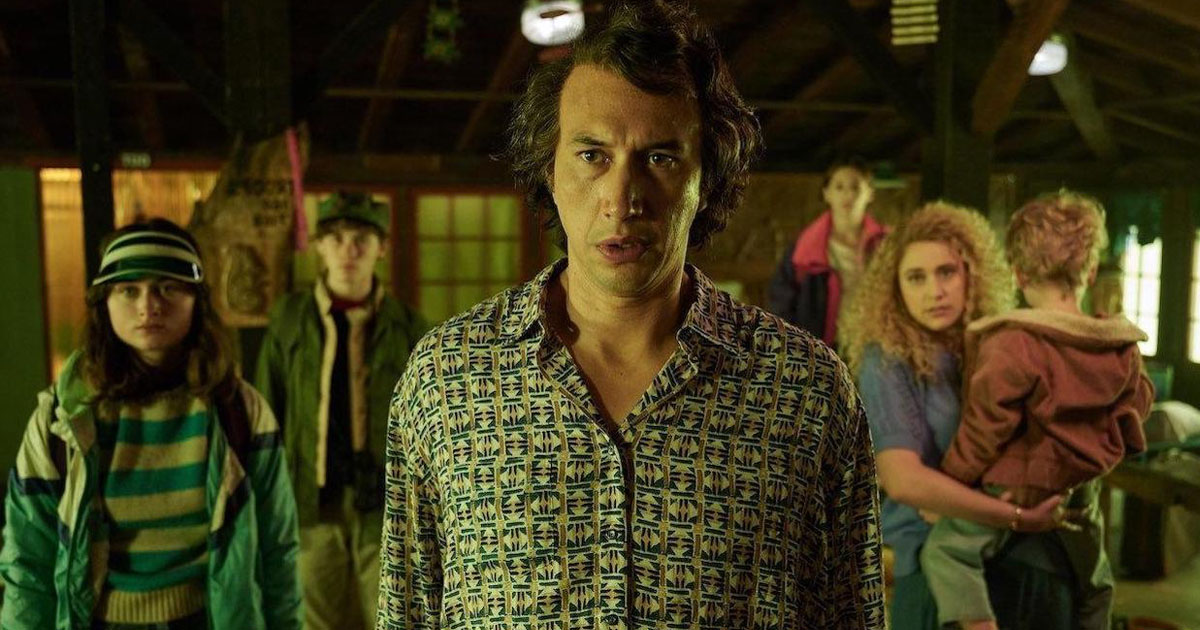
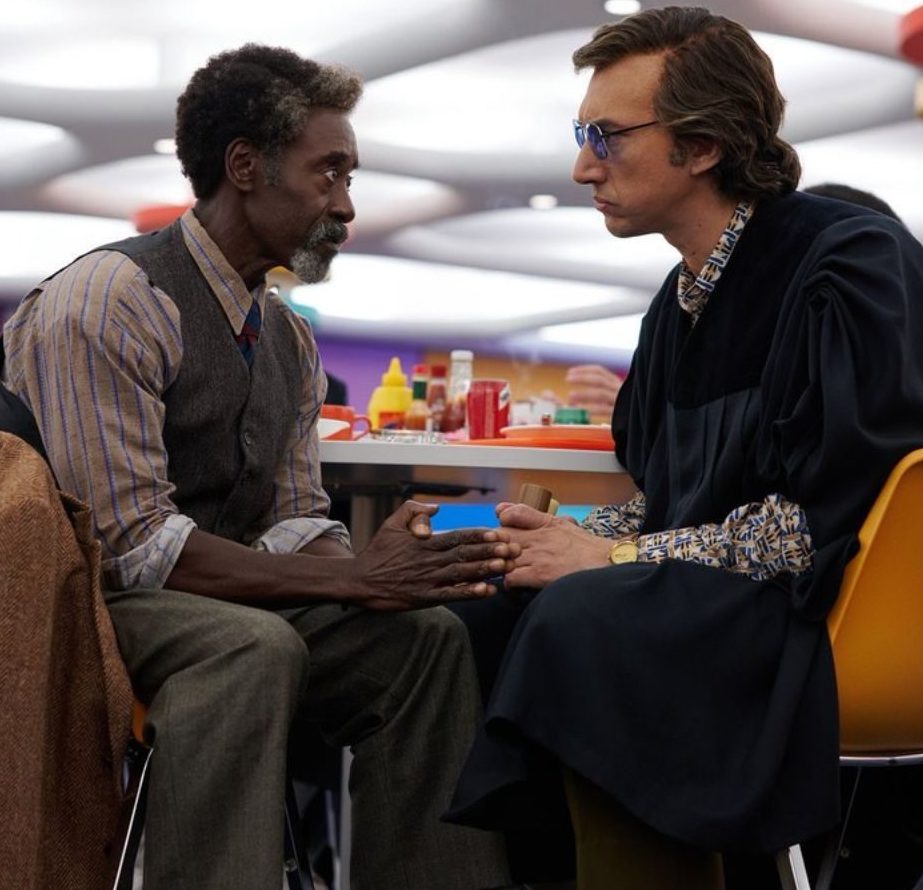
We’re somewhere in the American midwest where Jack Gladney (Adam Driver) is ‘Professor of Hitler Studies’ at the prestigious ‘College on the Hill’, where he’s fond of waxing lyrical about the rise of the Nazis without, it seems, any inkling of how distressing a subject it actually is. He’s also hiding the embarrassing fact that he can’t speak a word of German. Jack enjoys an adversarial friendship with another lecturer, Murray Siskind (Don Cheadle), who specialises in two main subjects, Elvis and er… car crashes. A scene where the two men attempt to engage in a kind of intellectual battle of wits in front of a spellbound class is a particular highlight.

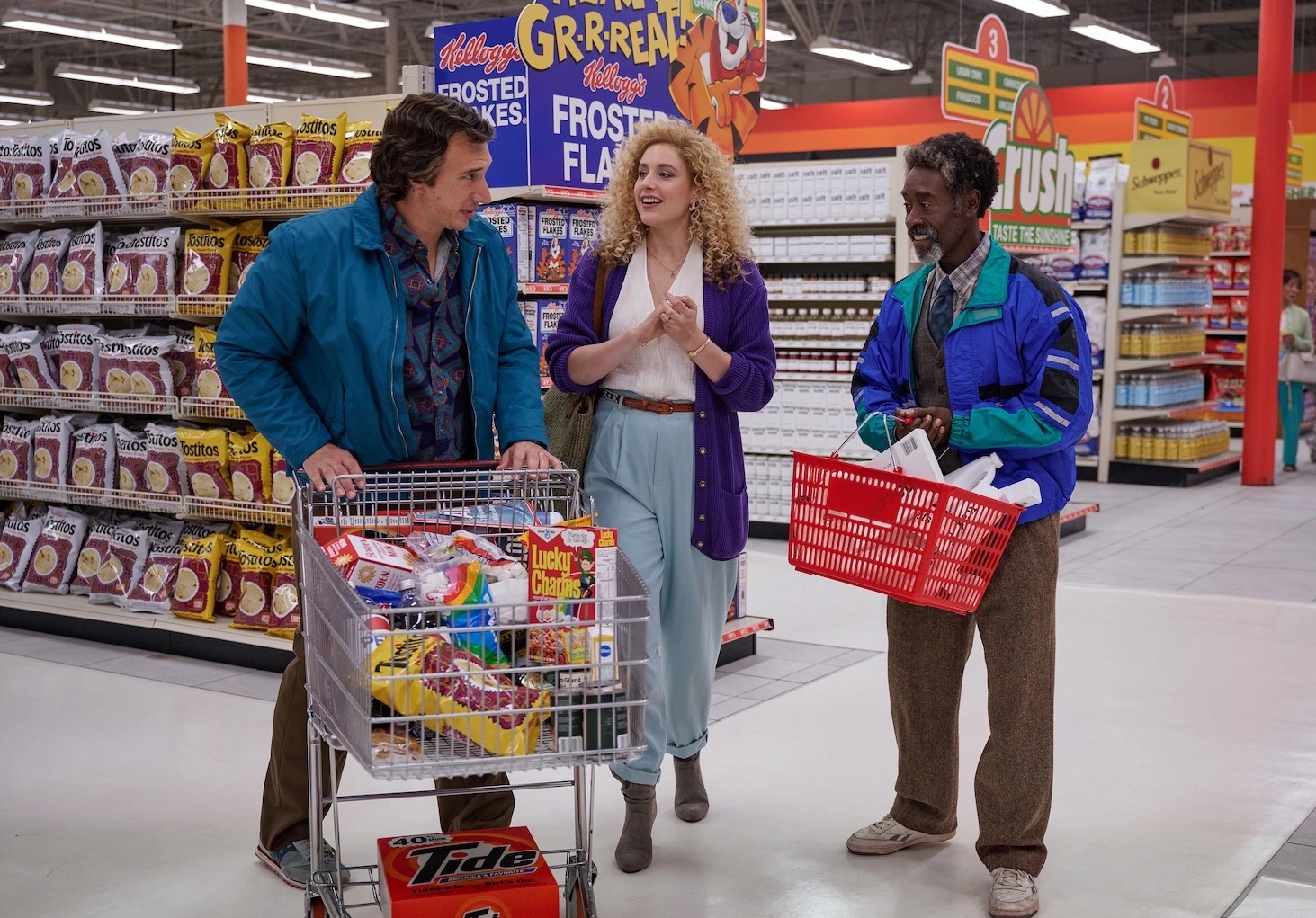
Jack lives with his wife, Babette (Greta Gerwig), and their extended family. Both have had previous marriages and the gaggle of kids who live with them are all better informed than either of their parents. The family lives in a bubble of domestic bliss, interspersed with regular trips to a gigantic, day-glo supermarket, which seems to hold for them the importance of a church. But not everything is quite as cosy as it seems. What are those pills that Babette is secretly taking? And why, when challenged, does she deny their very existence?

Matters take a dramatic turn for the worse when a freight train laden with dangerous chemicals collides with an articulated lorry, carrying something equally nasty. The result in an ‘airborne toxic event’ which sends clouds of deadly fumes into the sky. The Gladney family – and just about everybody else in the vicinity – vacate their home in a desperate attempt to escape. But what exactly are they fleeing from? And what’s the prognosis if you’re exposed to those ‘deadly’ clouds? Nobody seems to know.

White Noise offers as many questions as it does answers. If not everything we’re offered here quite comes off, much of it works brilliantly. Baumbach’s vision of suburban America is packed full of surprises, from doctors who clearly don’t care about the welfare of their patients to a Mother Superior who rubbishes the idea of heaven and angels. There are perfectly judged performances from Driver and Gerwig (particularly the latter who plays her role as if in a permanent drug daze) and Lol Crawley’s cinematography gives everything an unearthly sheen.

In the film’s final third, Jack finds himself driven to seek out the person responsible for Babette’s addiction, but even that doesn’t follow the lines you’d generally expect to encounter in such a narrative. It’s here that the film begins to feel a little too unhinged, though the enterprise is rescued by a delightful end-credit sequence.

It’s an ingenious device that keeps me glued to my seat until the screen finally fades to black.  

3. 8 stars

Philip Caveney

An Edinburgh Christmas Carol

25/11/22

Lyceum Theatre, Edinburgh

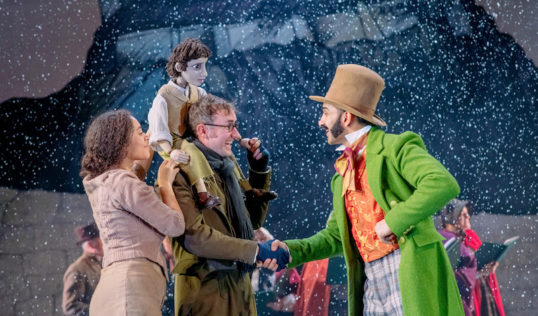
Hats off to the Lyceum for this revival of their 2019 success. It’s a bold decision – to repeat a production quite so soon – but it seems likely to work. The last three years have been hard on theatres, and it makes sense to opt for a crowd-pleaser. Tonight’s crowd certainly seems pleased: the atmosphere in the auditorium is electric, and the show is as lively, funny and heartwarming as it was last time around.

This time, there’s added poignancy: Cratchit’s careful selection of a single coal for the fire is all-too relatable; Scrooge’s casual dismissal of the poor horribly similar to the Tory government’s. This lends the piece a somewhat zeitgesity air, which wasn’t there before. It’s a shame for Britain, but it’s good for the show.

The tale is so ubiquitous, there can’t be many who don’t know the story of miserly Scrooge and the three ghosts who visit him to make him mend his ways (in fact, I overhear a little girl behind me say, “I think I’ve seen this before, Mum, but there used to be Muppets in it”). Last time around, the Edinburgh location provided a few surprises, such as the inclusion of Greyfriars Bobby and the weirdness of setting an historical Christmas story in a Scotland that didn’t officially celebrate the occasion until 1958, but this time that’s familiar too. I think that’s the joy of it: no one’s here for a surprise. We’re here for some festive nostalgia, and we get it in spades.

Using puppets for Tiny Tim and Bobby, two of the cutest, most heart-string-tugging characters in fiction and history, is an unashamedly calculating act, and it works. Brought to life by puppeteers Stacey Mitchell and Hannah Low, the pair are simply adorable, garnering the biggest cheer at the end of the night.

I find Nicola Roy funny in all of her roles (except for Belle, of course), but particularly as Mrs Bigchin, the Salvation Army charity collector. She and Lottie Longbones (Belle Jones) make me laugh out loud every time they appear on stage. But this is really Crawford Logan’s play: he makes an impressive Scrooge, imbuing the man’s emotional journey with gravitas and credibility.

The set (by Neil Murray) is lovely, like a series of Christmas cards, a backdrop and a few simple flats cleverly generating a whole range of locations. The spirits’ magic is also simple, relying mostly on lighting (designed by Robbie Butler and Zoe Spurr) and glitter, validating the axiom that “less is (sometimes) more”.

The use of local young actors as John and Lizzie Cratchit, along with the community choir’s carol singers, makes it feel as though An Edinburgh Christmas Carol really belongs to the city: it is inclusive and celebratory.

Merry Christmas, one and all!

5 stars

Susan Singfield

Black Panther: Wakanda Forever

15/11/22

Cineworld, Edinburgh

In 2019, Black Panther was a genuine delight, a superhero movie that dared to challenge the preconceptions of the genre. What’s more, it was a film that made Black audiences, previously poorly represented in the world of spandex, flock to cinemas in their millions. Of course, after such phenomenal success, there was always going to be a sequel, but the tragic death of actor Chadwick Boseman (who played the lead role of T’Challa) left writer/director Ryan Coogler with a real quandary. How could he hope to make another Black Panther without Boseman? Should he recast the role? Or might there be another way?

Wakanda Forever opens with T’ Challa’s sister, Shuri (Letitia Wright), desperately trying to engineer a cure for the ‘mysterious illness’ that has recently claimed her brother. But of course, it’s already too late and soon she and Queen Ramonda (Angela Bassett) are presiding over an elaborate funeral service, full of dancing, drumming and joyous singing. This feels as much like the cast’s heartfelt farewell to Boseman, as it does part of the story. But a story there must be, so…

We begin with a raid by armed soldiers on one of Wakanda’s outreach posts, an attempt to steal some of the priceless vibranium that makes the African nation the most powerful in the world. But Wakanda’s battalions of fearsome female warriors are lying in wait and one of those 12A style punch-ups duly ensues – the kind where no blow quite lands and no deaths are too clearly signalled. To add to the confusion, it’s all filmed at night, employing a particularly muddy palette, so it’s not always clear exactly who’s not quite punching who. Not an auspicious start.

And then it transpires that somebody else in the world has vibranium! He’s Namor (Tenich Huerta), a sort of merman with winged feet, who commands the Meso American undersea kingdom of Talokan (he’s better known as The Sub-Mariner in the source comic books). Namor is looking to form an alliance with Wakanda and warns Queen Ramonda that, if she refuses his invitation, he’ll consider her an enemy and will declare war on her people. She’s adamant that she won’t accept his terms, so war it shall be.

It was never going to be an easy task to follow up Black Panther, but it’s disheartening to witness just how completely this attempt fails at almost every step. The mournful reality of what’s happened behind the scenes seems to have infected the whole project, reducing it to a collection of turgid conversations featuring people talking about very serious matters in gloomy chambers. Shuri, previously an enthusiastic bright spark of a character, a sort of Q to Boseman’s Bond, has grown up to be a seriously sombre young woman, weighted down by the realisation that she must take on her brother’s former responsibilities. Meanwhile Basset’s Queen Ramonda seems permanently angry about everything and spends most of her time alternately shouting and sneering at people. As T’ Challa’s former wife, Nakia, the excellent Lupita Nyong’o is given precious little to do and the same goes for Martin Freeman as Agent Everett Ross, who seems to have been handed the thankless task of being the ‘comic relief.’ Where the first film hurtled gleefully along, fuelled by its own sense of reinvention, Wakanda Forever trudges dejectedly from scene to scene. At times, I am dangerously close to falling asleep.

Okay, there’s an admittedly epic final battle between the Wakandans and Namor’s aquatic hordes (who, it must be said, look like they’ve wandered in from the set of Avatar) – and, for the more patient viewer, there’s a post-credit sequence that offers up a genuine surprise – but by then it’s far too late to save this project from the doldrums. Some may argue that Coogler has taken the franchise into even more uncharted territory, but unfortunately, Wakanda Forever takes me to places I really don’t want to visit.

2.8 stars

Philip Caveney

Sister Radio

10/11/22

Traverse Theatre, Edinburgh

Sister Radio is a rare beast: an intimate two-hander with an epic sweep. We open with some recorded sound: two childish voices, giddy and playful, welcoming an imaginary audience to the ‘Sister Radio’ of the title. And then we move forward in time and place: we’re in Edinburgh; it’s 2020; the pandemic has just landed on our shores. The girls have grown up; indeed, sisters Fatemeh (Lanna Joffrey) and Shirin (Nalân Burgess) have been sharing a tenement flat for more than forty years. But something is amiss. Why don’t they speak to each other?

Sara Shaarawi’s script flits nimbly between the past and the present. Suddenly it’s the late 1970s, and Shirin arrives, suitcase in hand, newly immigrated to the UK from Tehran. Fatemeh is older; she’s already established a life for herself here – but she’s excited to see her sister, happy to share her apartment. As we move back and forth in time, we begin to see both the macrocosmic events that have shaped the women’s lives, and the microcosmic ones that have silenced them.

Despite the constraints of a simple, fixed set (designed by Becky Minto) and minimal costume changes, we are never in any doubt as to when we are, thanks to the clever soundscape emanating from the radio. It’s a lovely device, reminding us of the close relationship the sisters used to enjoy, and also anchoring us in time, via popular music and news coverage of key events. There’s the fall of the Berlin Wall, the Chernobyl disaster, a royal wedding or two – and, of course, the Iranian revolution, the reason Fatemeh and Shirin have sought sanctuary in Scotland. Their personal conflict plays out against this background, and director Caitlin Skinner skilfully balances the two strands.

Both Joffrey and Burgess inhabit their characters, their performances convincing and compelling, illuminating Shaarawi’s subtle exploration of what it means to be an immigrant. Their voluble discussions about their imagined futures are fascinating – while Shirin wants to return to Tehran, Fatemeh sees Edinburgh as her home. Even the years of silence are engaging, thanks to movement director Saffy Setohy: the sisters almost dance their daily rituals, existing separately within the same space, side-stepping away, their eyes never meeting – not even when they’re swapping coffee cups, to read each other’s fortunes in the grounds.

The revelation, when it comes, is somewhat disappointing: it’s mundane and predictable, unlike the set up. But maybe that’s the point: whatever else is going on – even something as momentous as the toppling of a regime – it’s the little things that propel us. We’re never free of our own pettiness.

Sister Radio, co-produced by Pitlochry Theatre and Stellar Quines, is on at the Traverse until Saturday. It’s a quietly impressive piece, and all the more resonant because of the current protests in Iran.

4 stars

Susan Singfield

Sen Viet Vegan Restaurant

28/10/22

Brougham Place, Edinburgh

For the first time in ages, we have a couple of visitors – and one of them is Our Favourite Vegan (TM), so it seems like the perfect opportunity to try out a relatively recent addition to Edinburgh’s dining scene. Sen Viet Vegan Restaurant occupies the premises where Passorn Thai Restaurant used to stand, and is now resplendent in a very bright – some might say too bright – shade of yellow. It’s early Friday evening and the place is already pretty full – so full, in fact, that we have to wait a good wee while for our pre-booked table to become available. But we’re not in a rush, so we don’t mind. When we’re finally seated, we waste no time in ordering some bottles of Vietnamese beer. Both North and South Vietnam are represented; I find myself favouring the South, although there’s not a lot in it. Both are clean tasting lagers that make the perfect companion to spicy food.

The friendly staff have already warned us that they only have one chef tonight and that there might be a bit of a delay, but we’re happy to sit and sip and chatter.

The appetisers prove to be exactly what we are hoping for. We’ve ordered two Khai Vị Đặc Biệt (sharing platters), which are generously heaped with a variety of appetisers. There are delightfully chewy chunks of salted and chilli-battered tofu, expertly deep-fried crispy spring rolls, piquant tofu summer rolls, vermicelli grilled betal leaves and Ha Long fried cakes (these are traditionally made using squid, but whatever’s in this vegan adaptation captures the fishy flavour perfectly). The appetisers are accompanied by three different dips, including a peanut-based sauce that is absolutely finger-licking tasty and this is a convenient way to sample a wide range of different flavours and textures.

There’s another wait for the main courses but, once again, when they arrive, they are exceptionally good.

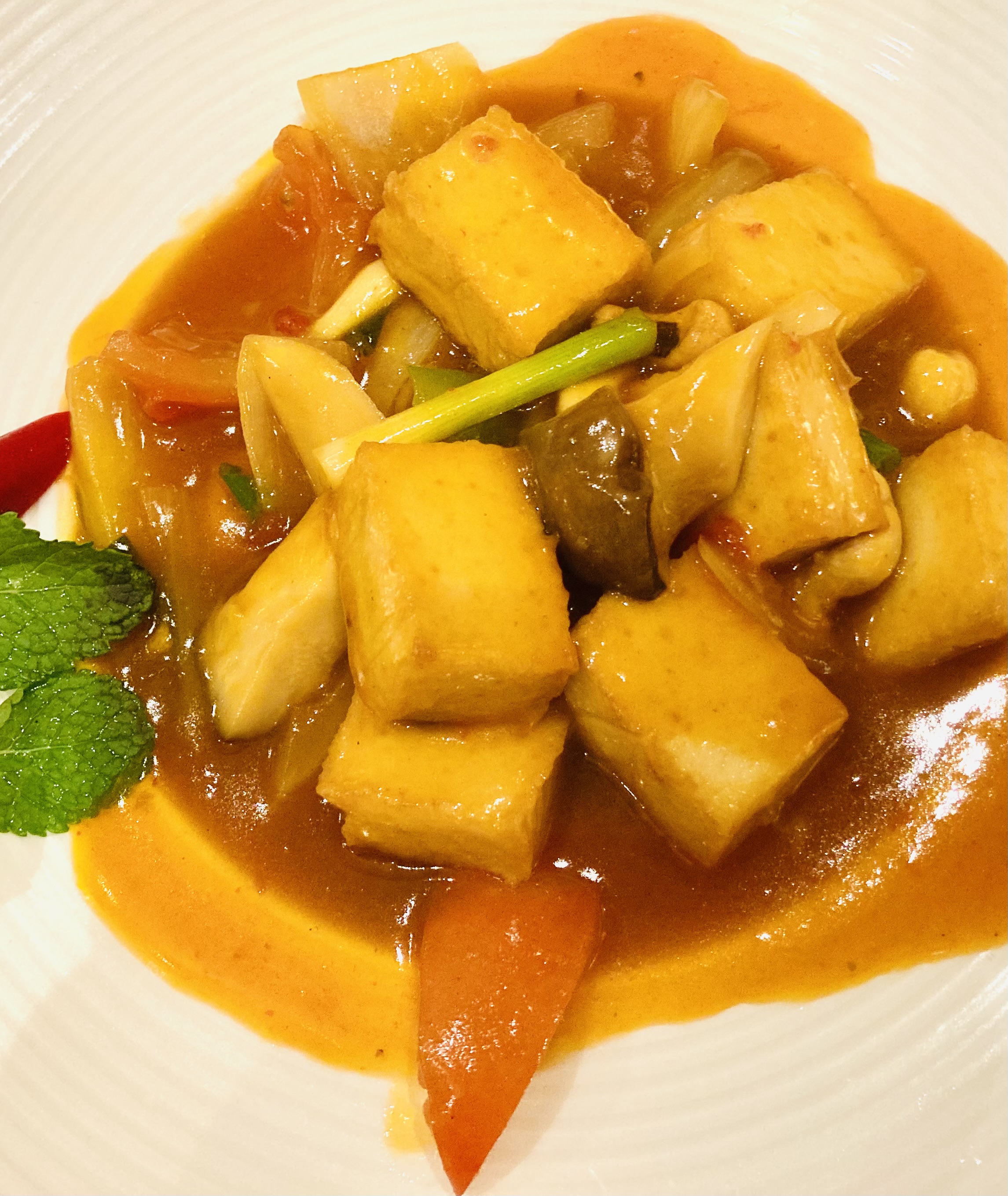
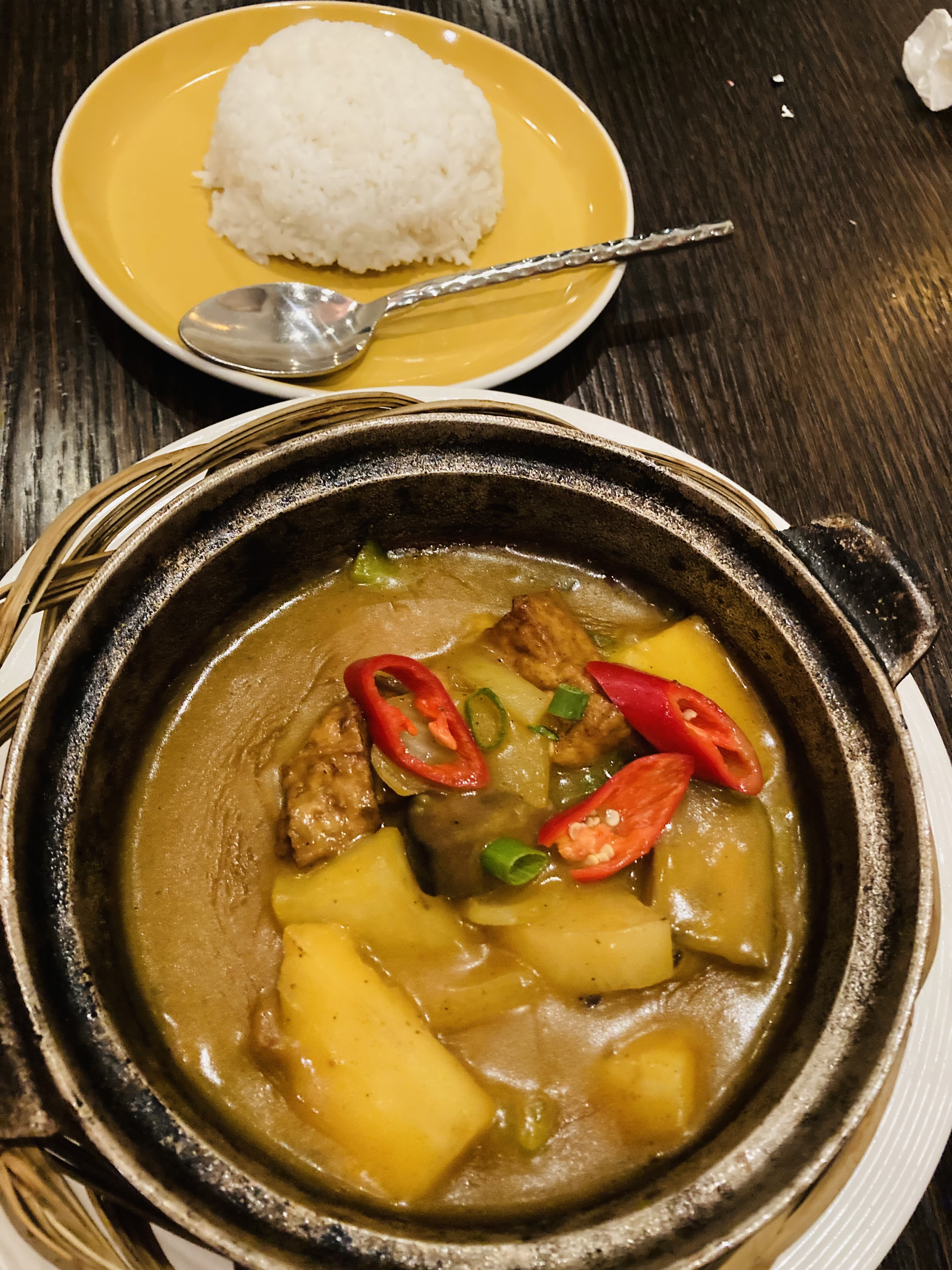
I have chosen the Cà Ri Đậu Hũ  – a tofu coconut curry. While it’s really not much to look at, the dish contains chunks of dark tofu, with slow cooked mixed vegetables, tender pieces of potato and sweet potato, onion and garlic, all slow-cooked in coconut cream and lemongrass broth. It’s so good, I have to keep reminding myself not to eat it too quickly. There’s also a bowl of perfectly-cooked sticky rice, which is the ideal accompaniment.

Susan has gone for the Đậu Hũ Kho – a traditional dish that features tofu and mixed vegetables caramelised in a clay pot. Again, it’s absolutely sumptuous, thick and effusive, even though – again – the photos fail to do it justice. The bowls are licked thoroughly clean and we find ourselves too full for pudding.

Based on the food alone, Sen Viet is an unqualified delight – and we’ll certainly be back to see how it fares on nights when they have more than just one chef at work. All in all, Brougham Place – which also boasts Sora Lella Roman Restaurant and Black Rabbit Deli – is fast becoming the essential destination for hungry vegans.

4 stars

Philip Caveney

The Beauty Queen of Leenane

19/10/22

Traverse Theatre, Edinburgh

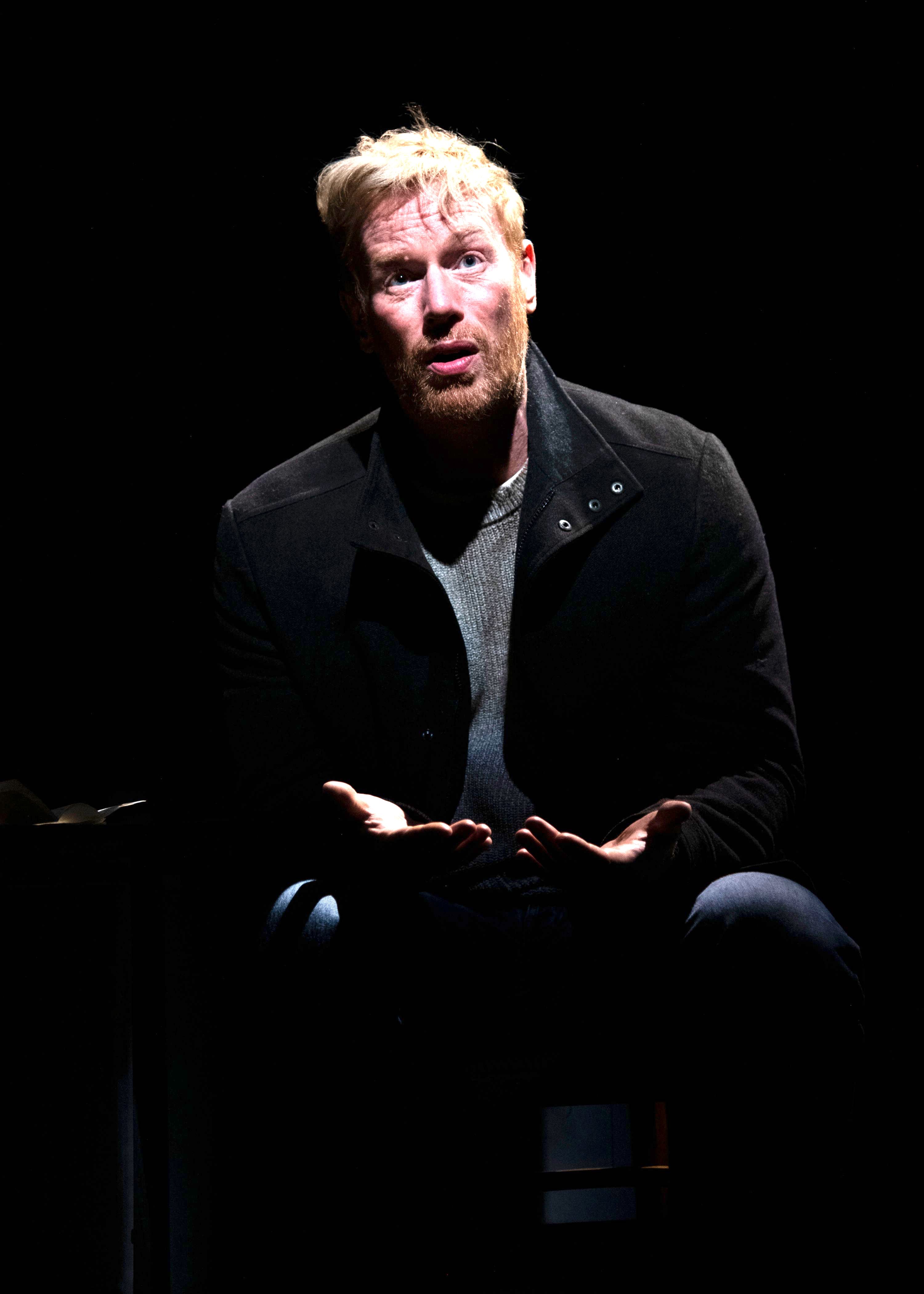
I’m a huge fan of Martin McDonagh, both as a playwright and a film director. In Bruges may just qualify as my favourite movie of all time and, on one memorable occasion, I travelled from Manchester to London to catch his play, Hangmen, where I very nearly witnessed the accidental hanging of actor Johnny Flynn. But somehow, in all my years of reviewing, I’ve never managed to see a production of McDonagh’s debut play, The Beauty Queen of Leenane. Until now. To say that I’m excited about seeing it would be an understatement. So… no pressure, Rapture Theatre.

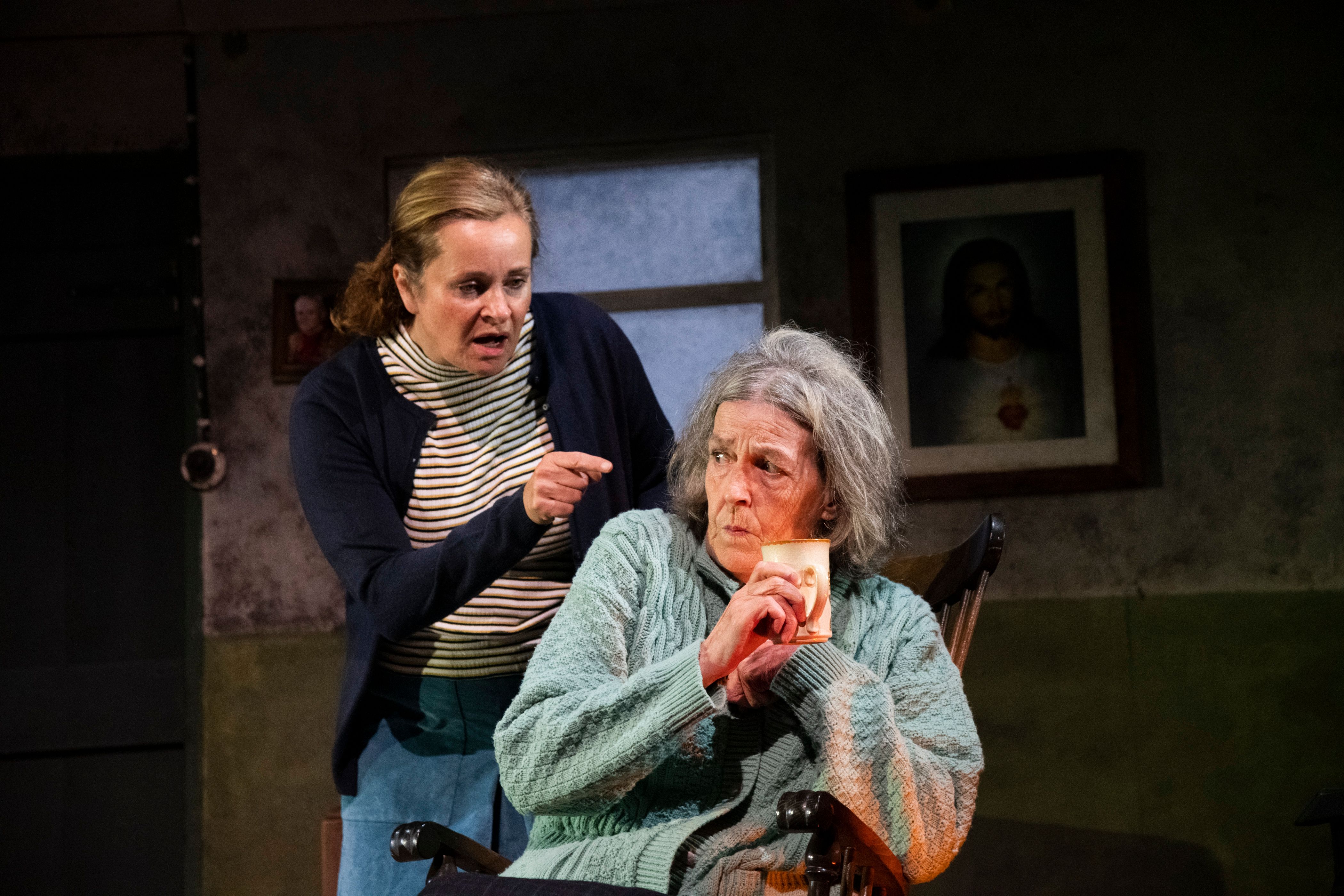
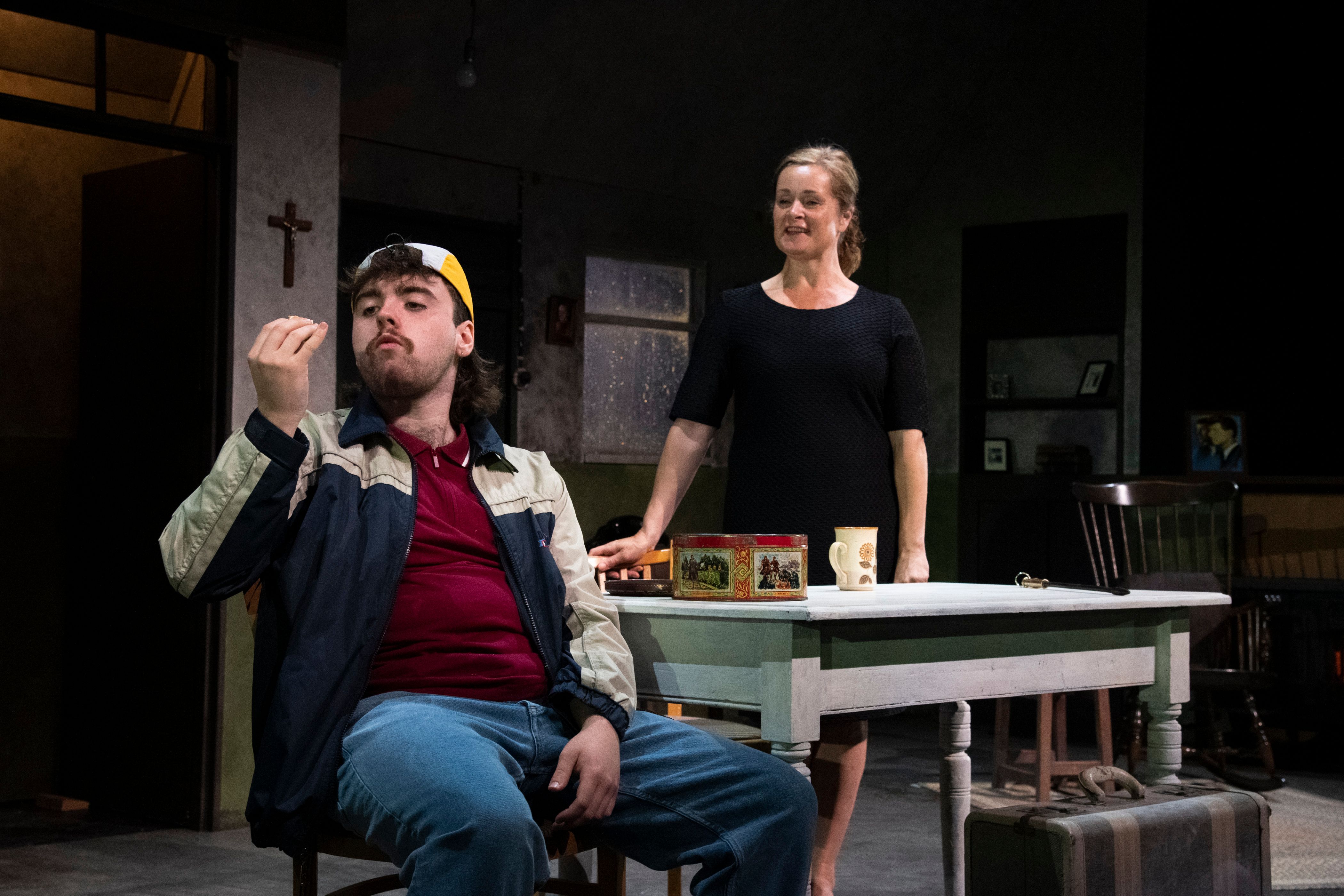
Maureen (Julie Hale) is forty years old, and living with her elderly mother, Mags (Nuala Walsh), in a grubby cottage in the wilds of Connemara. It’s a thankless existence, forever mashing up her Ma’s daily Complan and preparing bowls of lumpy porridge, while listening to the stream of malignant chatter the old woman spews out. Then one day, their obnoxious neighbour, Ray (Ian O’ Reilly), drops by with what passes for exciting news in these parts. Ray’s older brother, Pato (Paul Carroll), is coming over from London to attend a family celebration, and Maureen and Mags are invited along.

Maureen has long had a soft spot for Pato. Could his presence offer the possibility of romance she’s always dreamed of? Decked out in a brand new dress and some high heeled shoes, Maureen makes her play for Pato and it begins to look as though all her prayers might be answered. But then there’s the awkward question of what will happen to Mags, should Maureen decide to leave Leenane…

This is a debut piece and, while it might not have the assuredness of some of McDonagh’s later works, it nonetheless displays all the hallmarks of an exciting new talent flexing his muscles. The influence of Harold Pinter is surely there in the awkward pauses, the repetitions, the elevation of innocuous comments to a weird form of poetry – and McDonagh’s ear for the Irish vernacular is already finely tuned. As if setting out his territory for future exploration, there’s a shocking moment of violence that comes out of left field in unflinching detail.

There’s also a moment of revelation, which obliges me to go back and reconsider something I thought I already knew…

The performances here are exemplary and it’s perhaps unfair to single out one in particular, though I do relish Walsh’s personification of Mags: forever watchful, sly, and secretive, simultaneously Maureen’s warden and her tragic victim. This is an elegy about loneliness and subjugation, the perils that lie in wait for those who seek to escape – and a warning to be very, very careful what you wish for.

For me, The Beauty Queen of Leenane has been a long time coming, but it is well worth the wait.

4.3 stars

Philip Caveney
The Woman King

16/010/22

Cineworld IMAX, Edinburgh

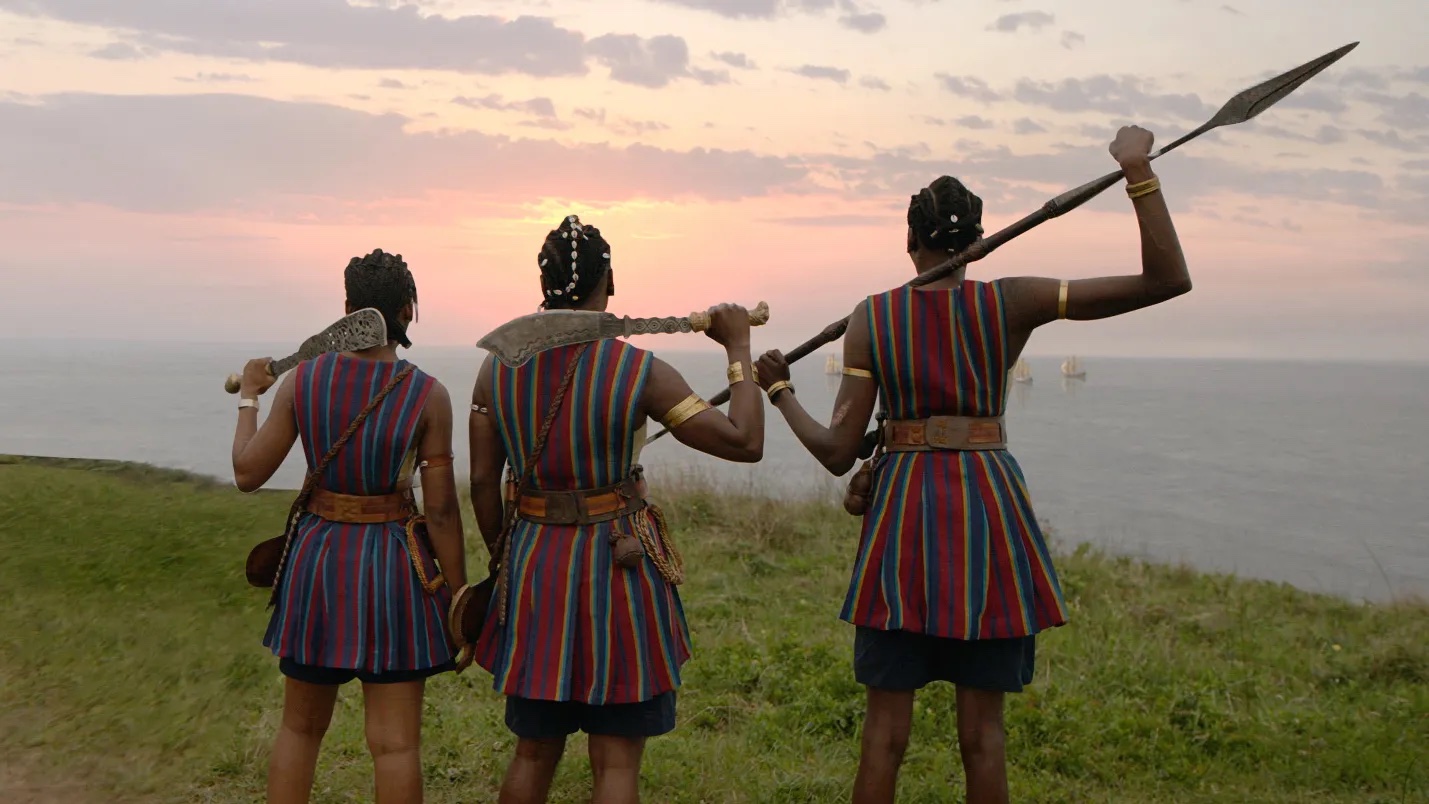
It’s 1823, and in the West African kingdom of Dahomey, King Ghezo (John Boyega) rules over a tribe who are continually being oppressed by their neighbours, the Oyu, who repeatedly take captives and sell them as slaves to the Portuguese traders who have begun to infiltrate their territory. The Oyu have clearly decided that their best chance of survival is to join up with the invaders, but King Ghezo has a powerful weapon: the Agojie, a select group of warrior women, who are pledged to fight to the death to defend Dahomey. They are led by General Ninisca (an impressibly buff Viola Davis), supported by her veteran lieutenants, Izogie (Lashana Lynch) and Amenza (Sheila Atim).

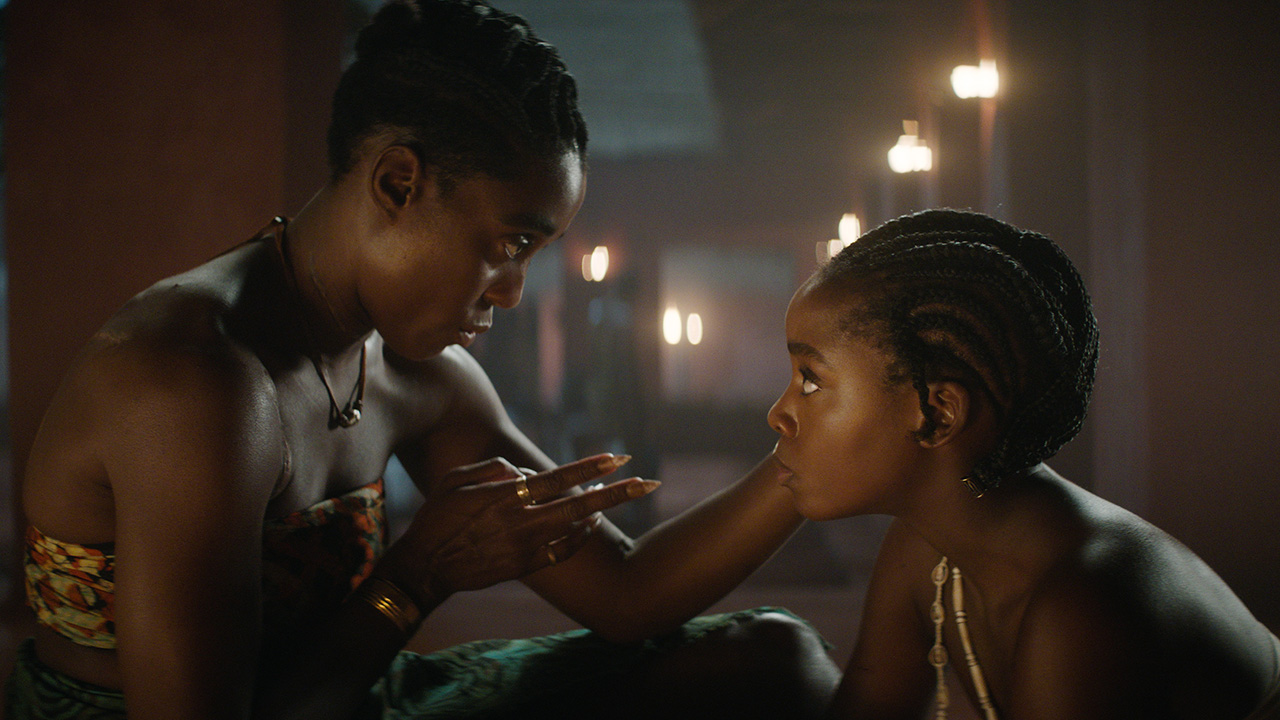
New recruit Nawi (Thusu Mbedu) arrives after her father casts her out for refusing to marry the openly abusive elderly husband he’s lined up for her. She begins the rigorous process of learning the ways of the Agojie. If she is going to be accepted as a warrior she will have to prove her mettle – and the path to acceptance is a hard one.

Meanwhile, General Ninisca is always watching to find her weaknesses…

The Woman King is an epic adventure story with thrilling action set-pieces – but it’s more than just that. It’s also a commentary on the horrors of colonisation and the slavery that goes hand-in-hand with it. It’s a story about kinship and motherhood and it’s a handsomely mounted visualisation of a mostly forgotten era in the history of Africa – a time when women were encouraged to take a leading role in the protection of their people’s way of life.

Davis is always impressive, but she’s rarely been more convincing than she is here, as a hard as nails powerhouse, who stands ready to give her life to her cause. Both Lynch and Atim also offer standout performances in roles that are much more nuanced than you might expect in an action movie, and I’m quite sure we’ll be seeing a lot more of Mbedu in the not too distant future. Gina Prince-Bythewood handles the directorial honours with assurance and Terence Blanchard’s eclectic score is incredibly rousing, his battle anthems stirring enough to make you want to march beside the Agojie. This is definitely one to watch on the IMAX screen if you get the chance, because the world-building here is superbly done and benefits from the immersive qualities of a giant screen, particularly in those powerful battle scenes.

Ironically, before the film, there’s a trailer for upcoming Black Panther sequel, Wakanda Forever, which will be attempting some African world-building of its own on behalf of the Marvel Cinematic Universe (though the society that Ryan Coogler and his team create will be entirely fictional).

No prizes for guessing which of the two films will draw the biggest crowds, and that’s a shame, because the events featured in The Woman King are (however loosely) based on history; and the paltry audience at Cineworld this Sunday afternoon are treated to a big, bold, beautiful slice of cinema, which deserves to be seen by millions.

4.8 stars

Philip Caveney