Uncategorized

Nye: National Theatre Live

27/04/24

Cameo Cinema, Edinburgh

National Theatre Live has chosen a propitious subject for its hundredth project. 

Nye, written by Tim Price and directed by Rufus Norris, is the story of Aneurin ‘Nye’ Bevan, the Labour MP who conceived and delivered the National Health Service. I’m somewhat embarrassed to admit that beyond that one incredible achievement, I have no other knowledge of the man’s life, so this feels like the perfect time to find out more about him.

When we first encounter Nye (Michael Sheen), he’s a patient in one of the National Health hospitals he built. Accompanied by his ever-protective wife, Jennie (Sharon Small), and his best friend, Archie (Roger Evans), Nye has just undergone a routine operation for a stomach ulcer but it turns out there’s something much more serious causing the awful pains in his gut. Zonked out on drugs and hallucinating, his hospital bed takes on a magic carpet-like ability to whisk him back down the years to revisit key scenes in his life.

Vicki Mortimer’s ingenious set design is mostly achieved using curtains. They sweep from side to side, they descend from on high and sometimes they even rise magisterially from the floor, to alternatively create new spaces and reveal hidden depths within the Olivier’s expansive stage. Though Sheen remains dressed in his striped pyjamas throughout, there’s never any doubt as to where (and when) a particular memory is located. 

We see Nye in childhood, afflicted by a stutter and brutalised by a sadistic teacher, but uniting his classmates in a show of defiance. We see him and Archie as older children, discovering the wonders of a library where… unbelievably…books can be borrowed and read – for free! And we see an older Nye, a fledgling politician now, arguing with his sister, Arianwen (Kezrena James), over the care of their father, David (Rhodri Meiler), a former miner succumbing to a slow and horrible death from black lung.

Later, Nye crosses swords with a bombastic Winston Churchill (Tony Jayawardena), who is violently opposed to handing out free health care to the oiks. Then, under a new Labour government, he accepts an offer from Clement Attlee (Stephanie Jacob, silently gliding around the stage behind a desk like a Doctor Who villain) to become Minister for Health – and Housing.

If certain elements of Nye’s life have been simplified for dramatic purposes (his huge collection of siblings is whittled down to a single sister, for instance), it matters little. The central premise of this story is so huge that it can’t be overburdened with detail.

Sheen is terrific in the central role, giving Nye an understated and strangely vulnerable charm. Small is also marvellous as the firebrand, Jennie Lee – so good in fact that she should perhaps be given a little more to do, but that’s only a niggle. A sprightly rendition of Get Happy with Sheen singing and dancing his way around a busy hospital ward conveys Nye’s playful, engaging nature.

I love Jon Driscoll’s projection design, which utilises cinematic techniques. A key scene, depicting the death toll on the UK population after the end of the war, features hordes of monochromatic figures shambling helplessly towards the camera, only to morph into actual actors, appearing as if by magic, pleading for our help. Another sequence has Nye being scrutinised by the medical profession, scores of masked faces staring blankly at him across an abyss of prejudice. Who is this upstart who wants to change everything?

The play’s climax is almost unbearably poignant and I’m left sitting in the semi-darkness, tears in my eyes, marvelling at the sheer scale of one man’s glorious ambition. It seems particularly significant that. as I write this, a Tory government (which has spent so much time and effort trying to dismantle Aneurin Bevan’s wonderful achievement) looks set to be finally given its marching orders. Please let that happen!

Nye will doubtless be given other screenings soon, so keep an eye out for more opportunities if you missed it this time around. This is National Theatre Live at its most creative and enjoyable.

4.7 stars

Philip Caveney

Ghostbusters: Frozen Empire

23/03/24

Cineworld, Edinburgh

Back in 2021, Ghostbusters: Afterlife felt like a sizeable step in the right direction. Director Jason Reitman (son of Ivan Reitman, who created the original Ghostbusters) had somehow managed to pull off an effective reboot, introducing a new cast of players and putting two of the youngest members at the helm. This sequel, written and directed by Gil Kenan, wants to have its cake and eat it, employing the new cohort, and bringing in some fresh faces, whilst handing large dollops of screen time to the veteran cast from the first two films. The inevitable result is that Ghostbusters: Frozen Empire feels overstuffed as too many characters slug it out to get their stories across.

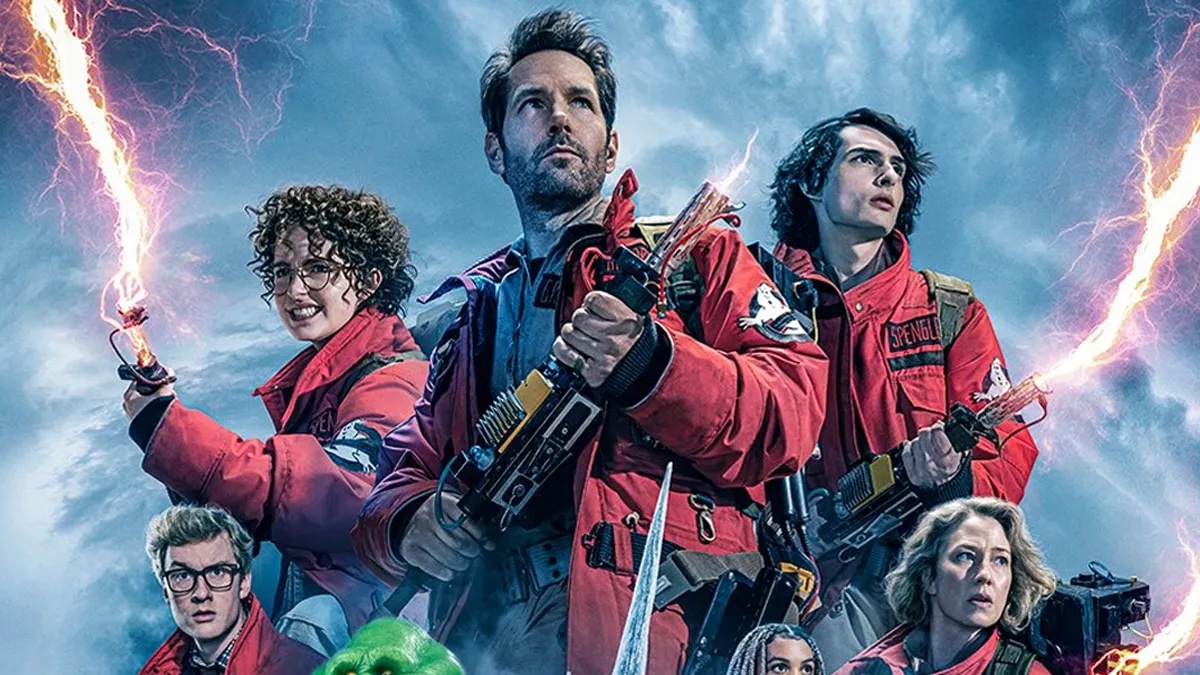
There’s a creepy prologue set back in 1904 and then we’re brought bang up-to-date as we join the Spengler family – Phoebe (McKenna Grace), Trevor (Finn Wolfhard), their mum, Callie (Carrie Coon), and ‘step-teacher’ Gary Grooberson (Paul Rudd) as they pursue the Hell’s Kitchen Sewer Dragon through the streets of New York. The Spenglers now operate from the iconic fire station where the franchise began, but the team have been so industrious that they are in serious danger of running out of storage space for ghouls. Then Phoebe (who is only 15) is banned from working with the team by old adversary, Mayor Peck (William Atherton) and has to watch in frustration as the others head off on their ghost-busting duties without her.

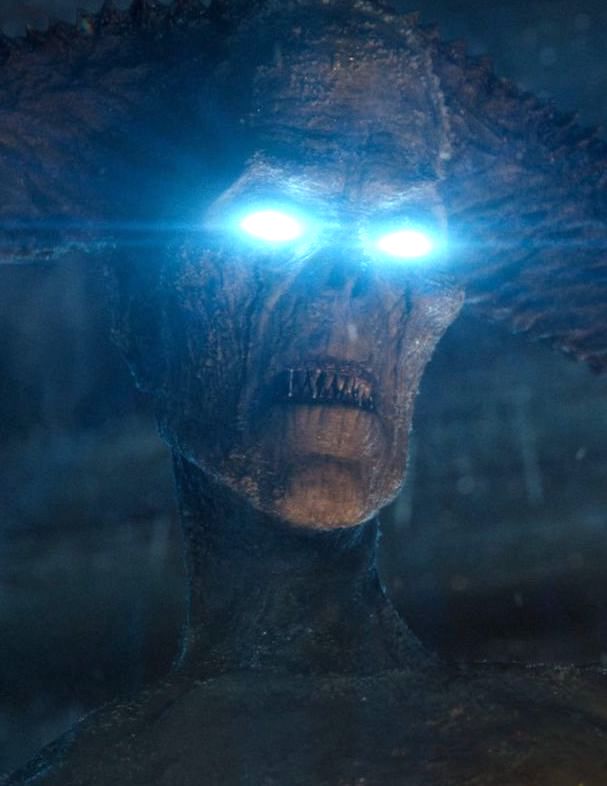
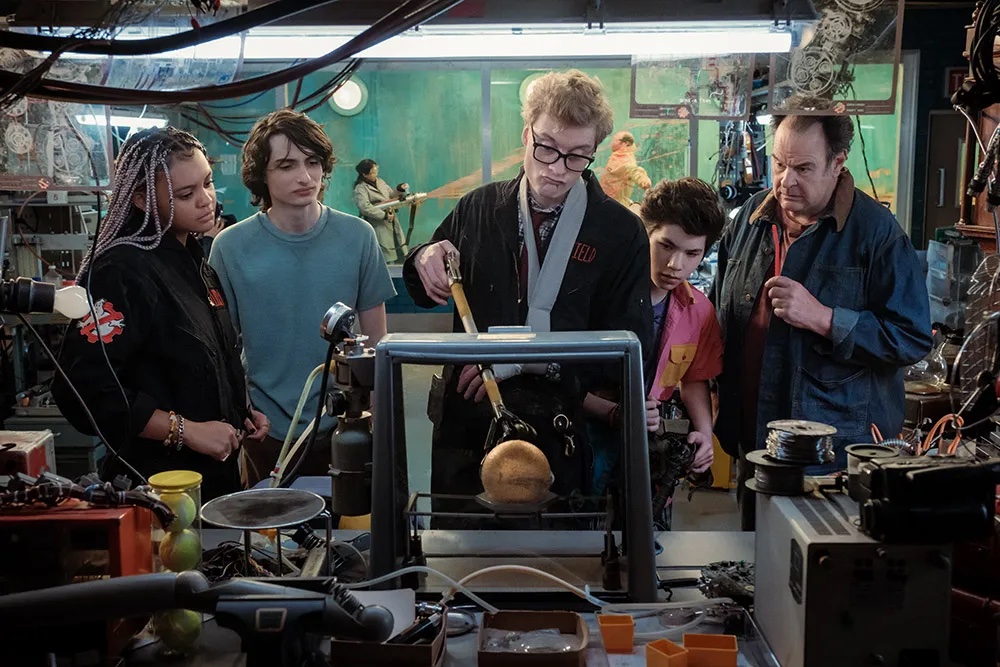
Things take a sinister turn when new arrival, Nadeem (Kumail Nanjiani), wanders into the second-hand shop run by Ray Stantz (Dan Akroyd) and sells him a mysterious sphere which used to belong to his late Grandma. It turns out that said sphere is cursed and is the key to releasing an evil spirit called Garakka, who has laid dormant for thousands of years – and is capable of unleashing a second ice age that will turn the world into a frozen wasteland…

This plot-line seems to belong more in the realms of cosmic horror than fun-filled family entertainment. It feels unnecessarily complex and convoluted – and I’m disappointed to report that some of the main characters from Afterlife – Trevor (Wolfhard), Podcast (Logan Kim) and Lucky (Celeste O’ Connor) – have hardly anything to do here other than draw breath. Meanwhile, every actor who enjoyed as much as a walk-on part in the first film is afforded the opportunity to return and strut their respective stuff.

Comedian James Acaster as scientist Dr Lars Pinfield shows some promise as an actor but Nanjiani gets the few funny lines on offer. A promising link-up between Phoebe and teenage ghost, Melody (Emily Alyn Lind), really doesn’t have enough space to fully develop. Time and again, we find ourselves back with the original cast, who really don’t have a valid reason to be there. Bill Murray as Peter Venkman and Ernie Hudson as Dr Winston Zeddermore look like they’re acting in their sleep and, in one scene during the climactic punch up with Garakka, I count thirteen characters, which significantly dilutes the impact.

Most damning of all is the fact that long stretches of the film are just plain dull, spending far too long on exposition, striving to tell us things rather than show them.

This is a shame, because Afterlife rescued a tired formula and gave it the kiss of life. Frozen Empire makes me suspect that this franchise has now flatlined.

2.8 stars

Philip Caveney

Starving

12/03/24

Traverse Theatre, Edinburgh

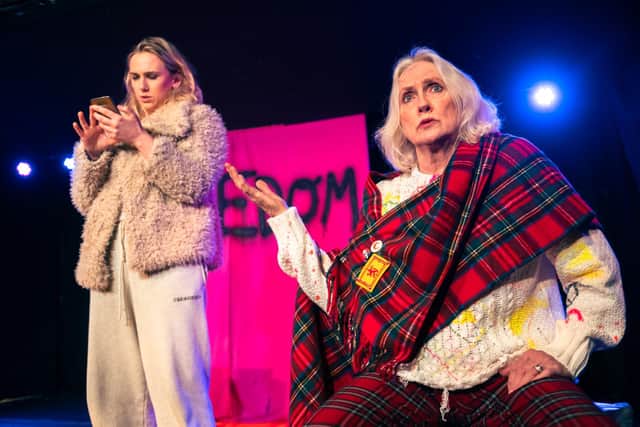
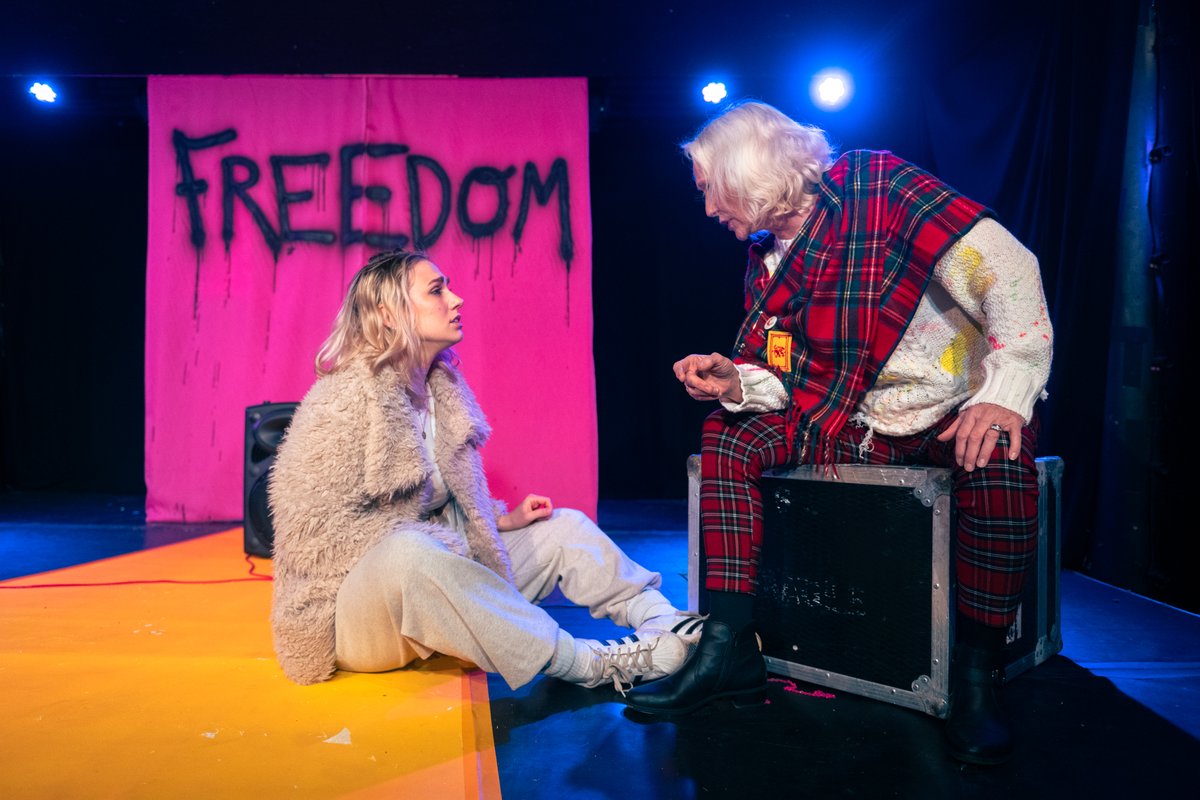
It’s December, 1972 and Scottish independence campaigner and all-round firebrand, Wendy Wood (Isabella Jarrett) is preparing to enter the fifth day of her hunger strike. She’s seventy-eight years old and this is just the latest in a long string of adventures.

It’s also December 2024 and, at the age of thirty, copywriter Freya (Madeline Grieve) is stuck in her Edinburgh flat, crippled by insecurity and afraid to venture out into the world she finds so overwhelming. She too hasn’t eaten for a while – but her hunger has more existential beginnings.

Somehow the two women find themselves occupying the same time and space. Which is all fine and dandy, until Freya checks out her companion on Wikipedia and discovers that A. She’s famous and B. She died in 1981.

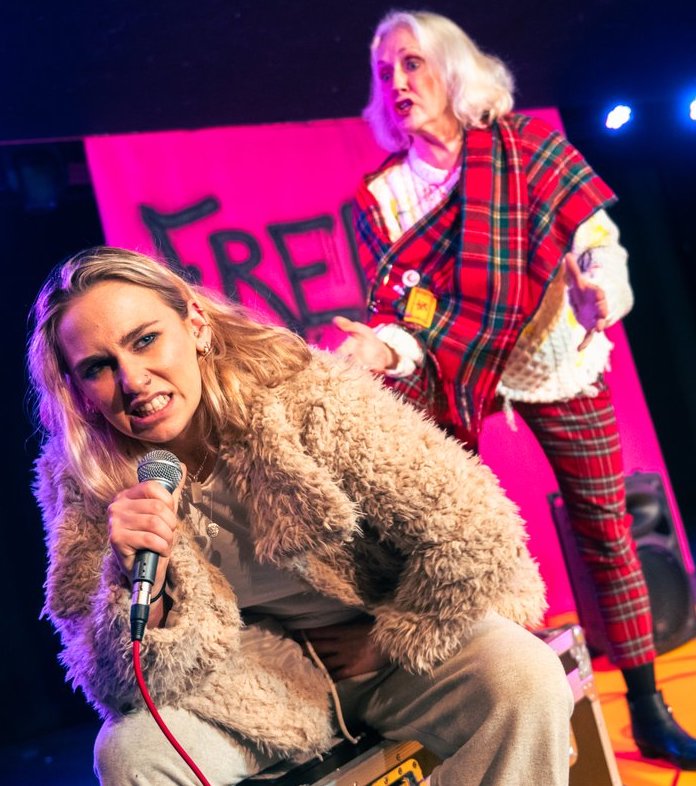
Imogen Stirling’s sprightly debut play (we previously saw her performing in the fabulous Love the Sinner) flings these disparate characters together and explores what makes them so different. At the same time, it uncovers the qualities that they have in common. Director Eve Nicol has the good sense to keep the proceedings all stripped back, just a bright banner and a couple of microphones for those moments when the women need to vent their feelings – which they both do, volubly and admirably.

Jarrett is quite awesome as Wendy, staunch, bold and ever resistant to the idea of being told ‘no!’ (After the show, I also look Wood up on Wikipedia, and it’s quite the eye-opener). As Freya, Grieve handles her more nuanced character with absolute assurance. I find myself alternately amused and amazed by the breadth of the material covered here, and there’s plenty to make me think about the various political issues that are touched on. I also love the play’s exuberant conclusion, the two protagonists joining together in a rousing rap about the need for freedom.

Once again, A Play, A Pie and A Pint have come up with a production designed to brighten your afternoon. Don’t miss your chance to share it.

4.5 stars

Philip Caveney

Origin

10/03/24

Cineworld, Edinburgh

Origin isn’t like any film I’ve seen before. Structurally, it’s akin to a dramatised lecture – but if that sounds dry, then I’m doing it a huge disservice. Writer/director Ava DuVernay has taken an academic text and created an artist’s impression of both the work and its author. The result is multi-layered: at once instructive and provocative – and absolutely riveting.

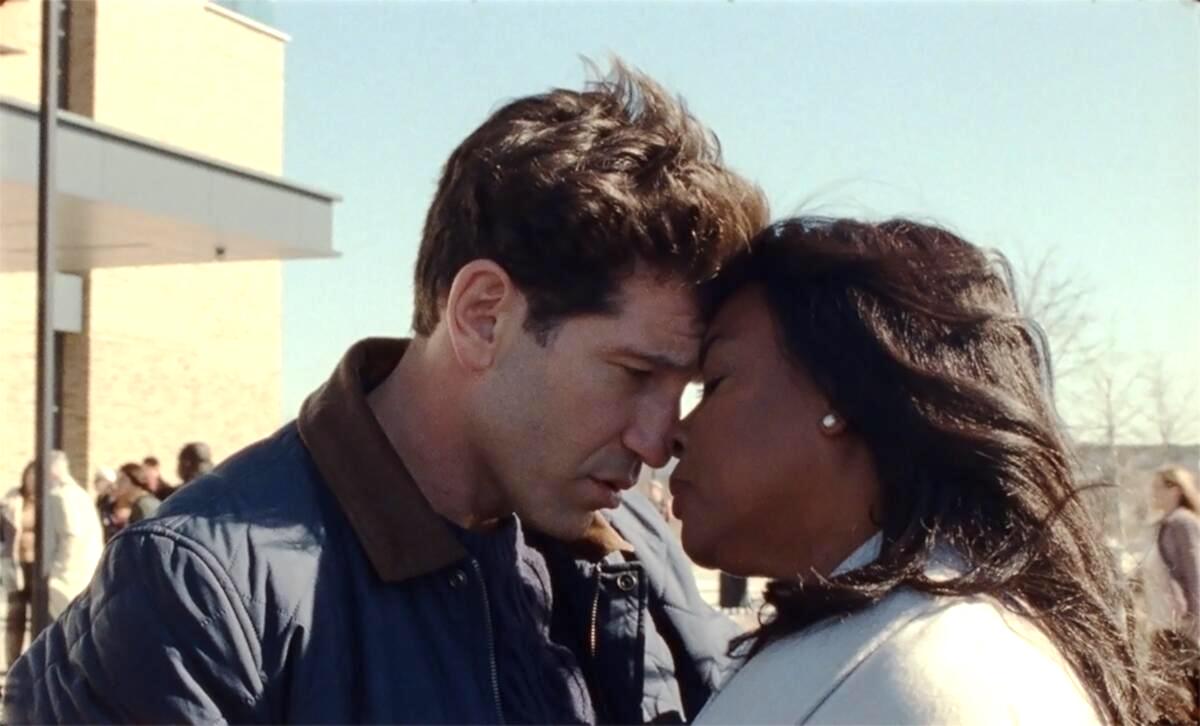
Based on Caste: The Origins of Our Discontents by Isabel Wilkerson (played here by Aunjanue Ellis-Taylor), Origin isn’t an easy watch. Wilkerson’s central conceit is that all oppression is linked – that the Holocaust, US slavery and India’s caste system all stem from the same fundamental practice of labelling one group of people ‘inferior’. This perception is entrenched via eight ‘pillars’, including endogamy, dehumanisation and heritability. DuVernay has done a sterling job of distilling these complex ideas and making them accessible, but the volume of cruelty on display is devastating. Who are we? Why do we keep on letting this happen? Some scenes are particularly heartbreaking, for example the young Al Bright (Lennox Simms)’s humiliating experience at a swimming pool in 1951, and I can hardly bear to mention the visceral horror of seeing people crammed into slave ships.

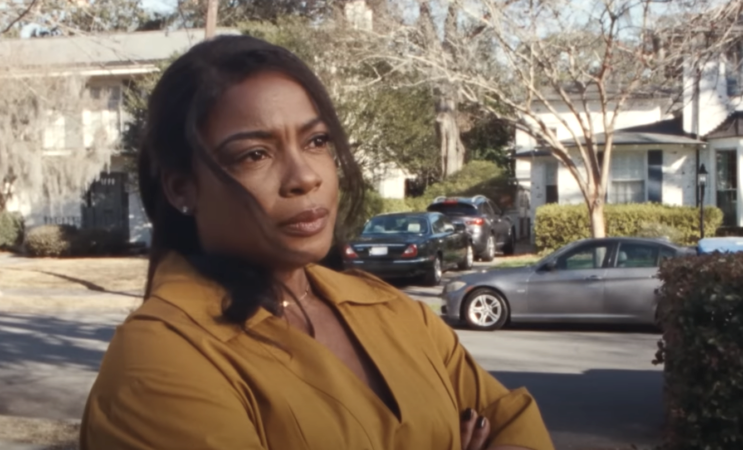
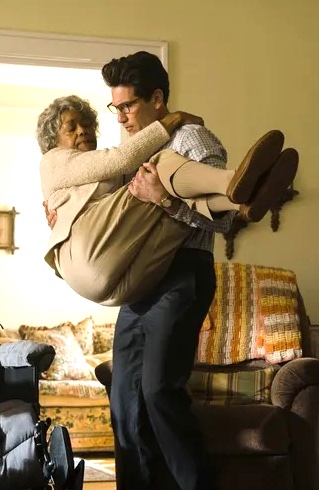
Ellis-Taylor’s Wilkerson is very engaging. She’s not only fiercely intelligent, but also thoughtful and gentle. Despite the weighty topics that dominate her working life, she finds time to have fun with her husband, Brett (Jon Bernthal), and to look after her mum, Ruby (Emily Yancy). She feels real.

Wilkerson’s personal life anchors the movie, which begins with her looking at retirement homes with Ruby. We see how Trayvon Martin (Myles Frost)’s shooting sows the first seed of her thesis, and then we jump back and forth in time and place, bearing witness to Nazi book burnings and Bhimrao Ambedkar’s ‘untouchable’ status; to Elizabeth and Allison Davis’s undercover work with Burleigh and Mary Gardner, documenting the everyday realities of racism in 1940s Mississippi. It is to DuVernay’s credit that we are never in any doubt about where we are or what point is being made.

There are moments when the concepts need bullet-pointing for clarity, and this is neatly achieved by the addition of a literal whiteboard. We see Wilkerson laboriously erecting it, before covering it in notes about the pillars that hold oppression in its place. This helps to anchor the key arguments, making them easy to grasp and remember.

Origin is a demanding piece of cinema, but it’s worth the effort. I come away feeling both horrified and educated, looking at the world in a different way.

4 stars

Susan Singfield

Guys and Dolls

17/02/24

Pleasance Theatre, Edinburgh

Once in a while, there’s a perfect match between a show and the company that’s presenting it. This is definitely the case with the Edinburgh University Footlights production of Guys and Dolls. The twenty-one young actors who inhabit Damon Runyan’s cast of unforgettable characters provide enough energy between them to power the National Grid.

Nathan Detroit (Benedict Baxter) is looking for a venue in which to host his beloved (illegal) crap game, as well as desperately prevaricating whenever his fiancée of fourteen years, Miss Adelaide (Megan Le Brocq), attempts to get him to name the date for their wedding. Meanwhile, at the Save-a-Soul Mission, Sarah Brown (Nina Harman) is struggling to bring the word of the Lord to the streets of downtown New York. When she encounters inveterate gambler Sky Masterton (Sebastian Schneeberger), a romance ensues – but she’s unaware that he’s accepted a bet from Nathan to lure her to Havana.

When the truth comes out, it’s sure to be awkward…

Jauntily directed by Phee Simpson, this is a production so packed with good things that my review is in serious danger of becoming a long list of superlatives, but I shall try to reign myself in. Rosie Fletcher’s choreography deserves special mention. She makes the most of every inch of the Pleasance’s relatively small stage, creating a visual extravaganza that enhances our understanding of the characters and their situations; an extended sequence depicting a frenzied crap game, powered by the Footlights’ huge orchestra, is a genuinely thrilling experience.

Harman, who has a stunning voice, nails her role with aplomb, and Le Brocq perfectly captures the world-weary charm of Miss Adelaide. Baxter’s Nathan Detroit is wonderfully caustic and Shneeberger handles the tricky role of Masterton with just the right degree of cool. But there’s room for every member of the cast to shine and they seize their opportunities with gusto. Check out the wonderful interplay between Nicely-Nicely Johnson (Benji Castella McDonald) and Benny Southstreet (Dan J Bryant) as they deliver the unforgettable title song. What’s more, Castella McDonald’s delivery of Sit Down You’re Rocking the Boat virtually threatens to blow the roof off the building.

Of course, it always helps when there’s a raft of great songs to perform and Frank Leosser, Abe Burrows and Jo Swerling created them way back in 1950. The wonder is that they still sound as fresh as ever. Guys and Dolls is a truly electrifying experience, a reminder that some shows never seem to age and, while I’ve seen quite a few productions over the years (including one at my daughter’s school, where she was playing General Cartwright), this one, powered by a cast of supremely talented young performers, is surely the most impressive.

You’ve one more chance to catch this glorious show. Don’t miss out.

5 stars

Philip Caveney

Jekyll & Hyde

18/01/24

Royal Lyceum Theatre, Edinburgh

I’ve always thought of Jekyll and Hyde as the quintessential Edinburgh story, so it never fails to come as a surprise when I’m reminded that the original novella was based in London. (And written in Bournemouth to boot!) Gary McNair’s astute adaptation of Robert Louis Stevenson’s iconic story uses the same setting as its illustrious predecessor and strips the story back to its bare essentials. It’s a monologue, performed with gusto by Forbes Masson. Everything about the production feels taut and fleet, a straight seventy-five minute run with no interval.

Masson wanders onstage as the story’s narrator, lawyer Gabriel Utterson, who warns us that he’s not ‘the good guy’ in this tale. With this idea firmly planted, he begins to relate his story: how he learns from his cousin, Richard Enfield, of a brutal attack on an innocent eight-year-old girl by a man called Edward Hyde, whom he describes as “downright detestable.” 

Utterson’s suspicions are instantly aroused because one of his oldest friends and clients, the mild-mannered Dr Henry Jekyll, has recently changed his will in favour of a man with that same name. Utterson soon becomes obsessed with Hyde and spends much of his time hanging around the man’s doorway without ever managing to spot him… 

The problem with adapting such a familiar story is, of course, that there can be few real surprises. I admire Michael Fentiman’s direction, Max Jones’ spare set design and particularly Richard Howell’s startling lighting effects, which – combined with the Richard Hammarton’s eerie soundscapes – accentuate the disturbing psychological aspects of the story. I applaud the fact that McNair has dispensed with the mysterious ‘serum’ swigged by Jekyll in order to transform himself into Hyde, an element that has always seemed corny to me. I note too that the plot’s most unbelievable strand – that despite so many visits to Hyde’s doorway, Utterson fails to notice that it connects directly to Jekyll’s house – has been left intact.

Of course, none of this could fly without Masson’s confident performance and he rises to the occasion admirably, inhabiting every character with consummate skill, switching from one to the other, seemingly without effort. A sequence where he passes a bowler hat from hand-to-hand as he conducts a lengthy conversation with himself feels suspiciously like observing a masterclass in acting. It’s an absolute pleasure to behold.

It’s only in the production’s final moments – when Utterson’s introductory words are re-echoed – that this adaptation’s true strengths are actually revealed. There is, I think, a suggestion here that hasn’t been fully explored before. And that’s reason enough for its existence.

4 stars

Philip Caveney
THEATRE BOUQUETS 2023

In 2023, despite the King’s Theatre being out of action due to its long-awaited refurb, Edinburgh still had more than its fair share of exciting shows. We’ve somehow managed to narrow it down to our favourite ten, but if we’ve missed something, be sure to let us know about it!

Macbeth – An Undoing (Lyceum Theatre, Edinburgh)

“Harris’s adaptation is bold, daring and witty. I love the idea of the witches as servants: it makes perfect sense. They’re the eyes and ears of the house, privy to the paperwork the Macbeths have drawn up, witness to intimate moments and careless asides. Invisible. Ignored.”

The Ocean at the End of the Lane (Festival Theatre, Edinburgh)

“A sequence featuring a whole series of illuminated doorways through which Ursula disappears and reappears is so brilliantly played that I find myself gasping aloud at each new revelation.”

The Grand Old Opera House Hotel (Traverse Theatre, Edinburgh)

“A piece that fearlessly swings for the fences and hits all of its targets bang on. Part slapstick, part comic-opera, part mad-as-a-box-of-frogs spectacle, this is something you really don’t want to miss.”

Bloody Elle (Traverse Theatre, Edinburgh)

“This queer love story offers a wonderful celebration of the affecting powers of first love and Lauryn Redding takes us by the hand and leads us through the experience.”

Dark Noon (Pleasance EICC, Edinburgh)

“A unique piece of devised theatre, sprawling and multi-faceted. It’s sometimes funny, but more often it’s shocking and humbling. At the conclusion, the sell-out crowd rises to its collective feet and the applause reverberates around the room like thunder.”

Bacon (Summerhall, Edinburgh)

“A whip-smart, tightly-constructed duologue that pulls me into its tenacious grip and holds me spellbound as the story unfolds, cutting back and forth between the two boys’ home lives, their developing relationship, their triumphs and disasters.”

After the Act (Traverse Theatre, Edinburgh)

“A triumphant piece of theatre. Stevens skewers Margaret Thatcher’s self-righteous ignorance in a comical depiction of the ex-PM: if she sounds ridiculous as she defends her nasty law, they’re her own words; she’s hoist by her own petard.”

Moorcroft (Traverse Theatre, Edinburgh)

“A fabulous slice of theatre that moves effortlessly through a whole series of emotions. It swerves from raucous hilarity to visceral anger to heartrending tragedy with all the sure-footed precision of a well-drilled team.

The Snow Queen (Lyceum, Edinburgh)

“In this very Scottish adaptation, Morna Young illuminates the story’s season-appropriate warm heart. This production is as bold and vivacious as everything we’ve seen Cora Bissett direct”

Battery Park (Traverse Theatre, Edinburgh)

Battery Park captures the sweaty exuberance of a band’s early days with absolute authority, providing an inspired mix of drama and high-octane rock. As gig theatre goes, this is a perfect example of the craft.”

Susan Singfield & Philip Caveney

FILM BOUQUETS 2023

In 2023 we were gifted a rich and diverse selection of films. Indeed, there was so much to choose from we’ve had a very hard time picking out our ten favourites, but here they are in chronological order. Did we miss anything? Let us know if your favourite movie of 2023 hasn’t made our list!

Empire of Light

“This charming and affecting movie has me entranced from its opening shot to its final frame, and I suspect that anybody with a genuine love of film is going to have a similar experience.”

Tár

“This is a fascinating film, so densely packed I know I need to watch it again (something I rarely do). Quite simply, Tár is a masterpiece.”

Marcel the Shell with Shoes On

“Be warned: all but the most cynical will be in serious danger of falling head-over-heels for Marcel’s considerable charms.”

Spider-Man: Across the Spider-Verse

“The true triumph is the ever-changing beauty of the many different art techniques used to illustrate the story: from realist to impressionist; from pastel shades to psychedelia.”

Barbie

“Gerwig doesn’t just walk the thin line between celebrating and critiquing Barbie: she jumps up and down on it, turning somersaults and waving cheekily.”

Oppenheimer

“Murphy’s chiselled features seem to stare out of that giant screen as if appealing for understanding for the torture he’s going through, the awful weight of responsibility resting on those narrow shoulders.”

Past Lives

Celine Song has created a narrative so assured, so brilliantly handled, it’s little wonder that critics around the world have fallen for its charms.”

Killers of the Flower Moon

“There’s no doubt that this true story, based on the book by David Gran, makes for compelling viewing – and the film’s two-hundred-million dollar budget ensures that Scorcese’s evocation of the era is beautifully realised.”

The Creator

“Considerably more nuanced than most sci-fi adventures and I find myself constantly impressed by the film’s invention, the grubby reality of the AI creations that populate this imagined world.”

Anatomy of a Fall

“A strange beast indeed, a film that becomes increasingly compelling as it moves ever further away from anything approaching a straightforward resolution.”

Philip Caveney & Susan Singfield

Maestro

14/12/23

Cameo Cinema, Edinburgh

Like several other recent films, Maestro has been bankrolled by Netflix and consequently ended up with a fleeting theatrical release before moving on to the streaming service. Much of the advance publicity has been caught up in the furore generated by writer/actor/director Bradley Cooper’s controversial decision to use a prosthetic nose in order to look more like his chosen subject, Leonard Bernstein, a complex issue I don’t feel qualified to wade into.

The film itself is undoubtedly accomplished and Cooper’s performance moves beyond impersonation, as he captures the composer’s restless nature, depicting him as a powerful, chain-smoking force of nature, a man constantly warring between his evident devotion to his wife, actor Felicia Montealegre (Carey Mulligan), and the succession of male lovers that drift into his orbit. He’s also at war with himself, lamenting his inability to concentrate on the classics he loves because of his commitments to provide music for various film and broadway productions. (When these include the likes of West Side Story, it’s hard to commiserate with him.)

Set over decades, the two actors enact their roles with absolute authority, while cinematographer Matthew Libatique uncannily captures the different eras with a range of camera techniques and varying aspect ratios. The effect is that the images gradually grow in scale as the years unfold. An early monochrome sequence where the two young lovers watch of production of On The Town and end up dancing with the cast is a particular highlight.

This is perhaps a film to admire rather than enjoy, with the story so tightly focused on the central characters that supporting players are barely given the opportunity to make much of an impression. Sarah Silverman as Leonard’s snarky sister Shirley comes the closest, but she’s only occasionally onscreen. Lovers of classical music will doubtless respond favourably to the long intervals where Bernstein conducts massive orchestras and choirs in his distinctive animated style, while those who are oblivious to its charms may feel distanced and (dare I say it?) a little bored by the excesses. Happily for me, I belong to the former category.

Maestro is a handsome, brilliantly executed film, one that belies the fact that this is only Cooper’s second outing a director. (2018’s A Star is Born was his debut; thanks for asking.) Made with the full cooperation of the Bernstein family, this is something of a Marmite movie. Mulligan (who is top-billed) submits a powerful performance as a woman compelled to a lifetime of compromise and her later scenes, where she slowly succumbs to illness, are devastating.

Many will decide to wait a week or so to stream this at home but it does deserve to be seen on the biggest screen available and with a speaker system that can do justice to that magnificent score.

4 stars

Philip Caveney
Learning to Fly

17/11/23

Traverse Theatre, Edinburgh

We have an unusual reason to remember the name James Rowland.

Searching back through the annals of our reviews blog, I see that, on the 14th March 2019, we were in the Traverse Theatre, watching him perform A Hundred Different Words for Love, part of a trilogy of plays he was touring. We managed to see all three of them but, due to circumstances beyond our control, in the wrong order.

You don’t need long memories to recall that this was a troubling time for theatre-makers around the world – and indeed, the poor turnout for this show had nothing to do with Rowlands’ material but instead spoke volumes about how frightened audiences were of mysterious new virus that was afflicting the world. Tickets had been sold, but few customers were brave/reckless enough to turn up and take their seats. Sure enough, just two days later, theatres across the UK were instructed to close their doors – and it was a long time before they were safe to reopen them.

Happily, things have moved on since those dark days  – and Rowland’s latest offering, Learning to Fly, is a charming and affable piece, based around a recollection from the performer’s youth, a time when he lived in Didsbury, Manchester, near to Fog Lane Park. 

Weirdly, in the 1980s, I lived there too, but that’s another story.

Rowlands is as likeable and swaggering as ever. I can hardly fail to forget that he performed one part of the aforementioned trilogy stark bollock naked, which certainly takes some confidence, but tonight he’s modestly dressed in a white singlet, trackie pants and trainers. He wanders onto the stage, has a brief chat with the audience about trigger warnings and the like, and then launches into his story.

He tells us about being fourteen years old and about an unspecified illness that keeps him from going to school; and how his struggling mother leaves him for one day a week in the care of Anne, an elderly neighbour, who never seems to leave her house and who spends most of her time listening to the music of Beethoven.

Against all the odds, the two of them  form an uneasy friendship, one that steadily grows over the weeks until one night, James does something unprecedented – something that will change their relationship forever…

Learning to Fly is a charming and beguiling piece, one that veers from outright hilarity to moments of pathos and regret. It’s easy to picture Rowlands as a youngster, steadfastly pursuing his own particular goals in life, which perhaps unsurprisingly, are not those of the average fourteen year old. I can believe that he would do something so spectacularly off-the-wall. 

If I’ve a criticism to make, it’s simply that some of the pay-offs are not always delivered as forcefully as I’d like – and there’s an indecisiveness to the conclusion that has tonight’s audience unsure of whether the time to applaud has actually arrived or not. 

But it would be an unsympathetic viewer indeed who doesn’t derive enjoyment from this unconventional mix of comedy, storytelling and music. 

Hopefully Rowlands’ current tour will be allowed to continue without the unwelcome interruption of a pandemic. Fingers crossed.

3.8 stars

Philip Caveney