Uncategorized

La Chimera

11/09/24

Amazon Prime

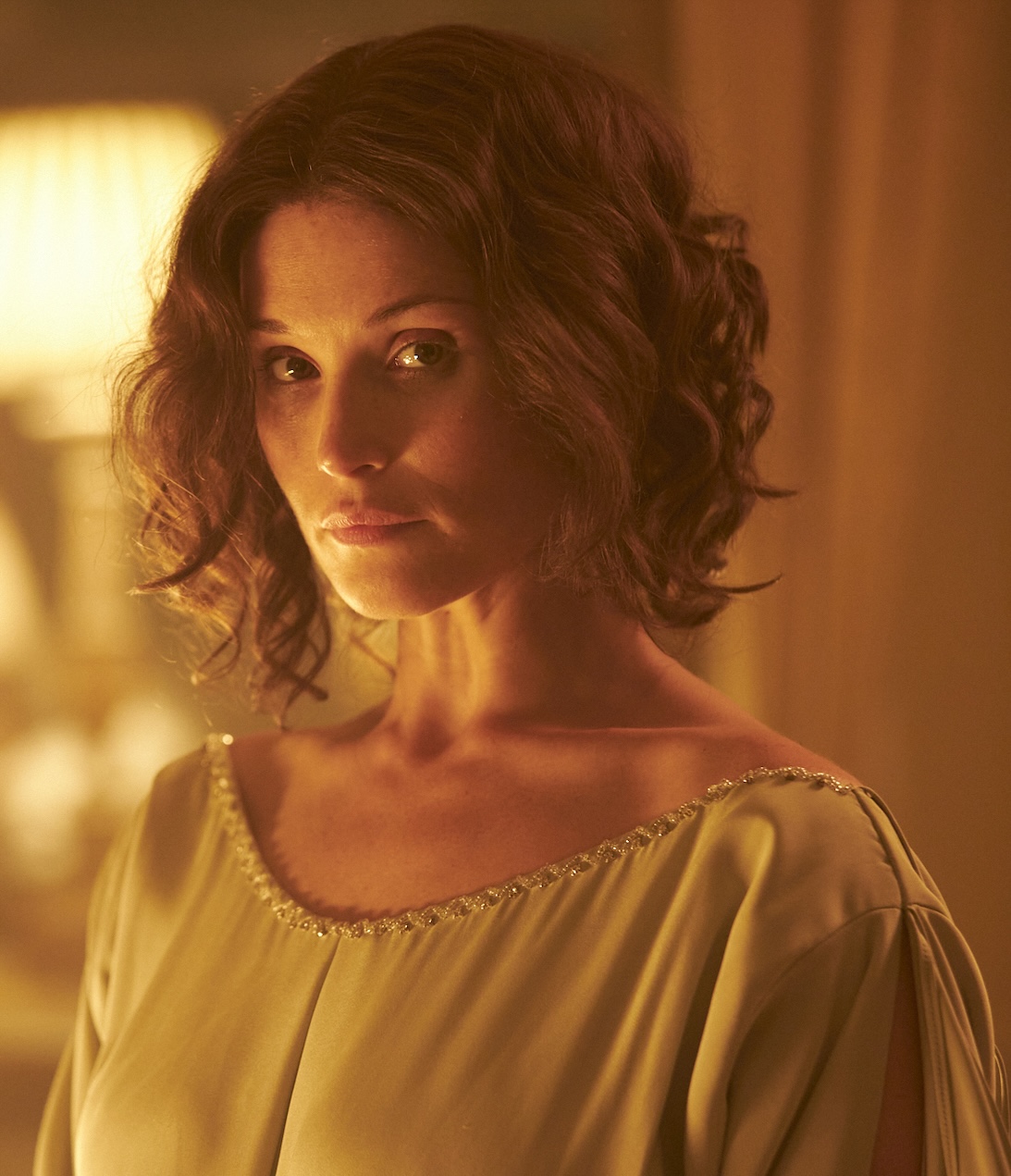
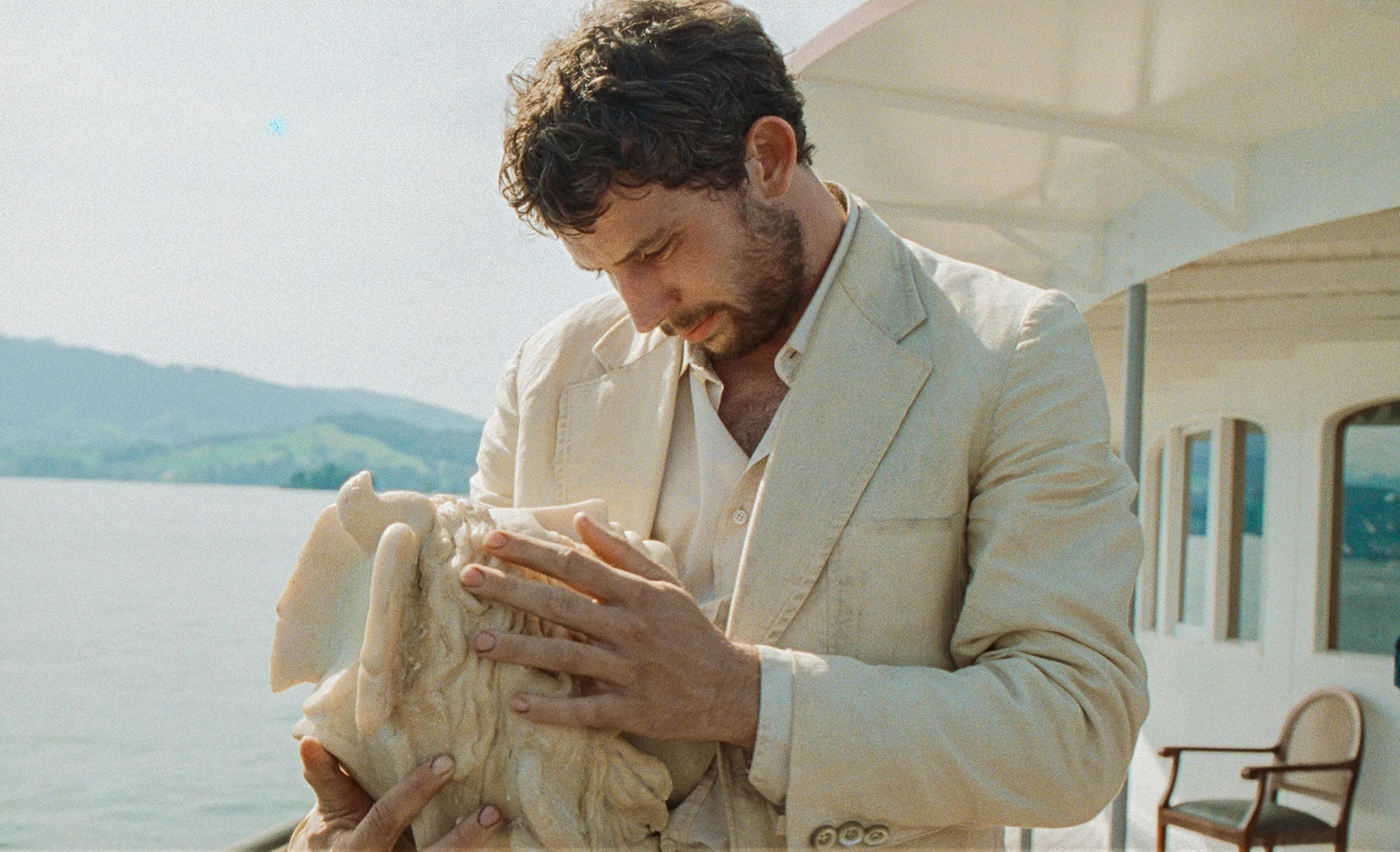
We’re in Tuscany, some time in the 1980s. Dishevelled Englishman Arthur (Josh O’Connor) is sensitive, clever, sweet and engaging. He’s also a grave robber, recently released from an Italian prison and about to head right back to his life of crime.

First though, he has an important visit to make – to the grand but crumbling estate that is home to the aged Flora (Isabella Rossellini). Despite her gaggle of adult daughters’ cacophonous protestations, Flora is Arthur’s biggest champion. Years back, when he was a respectable archaeologist, he was in love with her other daughter, Beniamina (Yile Yara Vianello), now deceased. The bereaved duo cling to their mutual connection.

In fact, Arthur’s yearning for Beniamina is so intense that it allows him to transcend the barriers between past and present. With a dowsing rod, he can pinpoint the long-lost tombs of the Estruscan dead with unerring accuracy. He’s the natural leader of this band of thieves.

The moral questions raised are unsettling. Stealing trinkets from corpses seems inherently wrong, but Arthur and his troubadour friends are homeless, living in poverty. What good are treasures lying in the ground? What’s wrong with living people using them to earn a crust? The rich buyers – whom we glimpse at an exclusive auction – will never go to jail, but they’re the ones profiteering from the poor men’s crimes, turning a blind eye to the items’ provenance. After all, in his old profession, Arthur’s findings were deemed legitimate and sold to museums. Is there really any difference?

But then Arthur begins to fall for Italia (Carol Duarte), Flora’s singing-student-slash-maid. The future is beckoning. Can he stop looking back?

Alice Rohrwacher’s film is a panoply of oxymorons: a firmly realistic supernatural tale; bleakly comic; slow and exciting. Driven entirely by its own logic, there are surprises at every turn, but they all make sense within the story. The Tuscan landscape is beautifully evoked by cinematographer Hélène Louvart, and there’s an unnerving folksy element, caught in the songs and celebrations of the tomb raiders.

But it’s O’Connor’s fine central performance that really makes La Chimera. He embodies the quiet desperation the title connotes, faithful to his impossible quest.

4.1 stars

Susan Singfield

300 Paintings

18/08/24

Summerhall (TechCube 0), Edinburgh

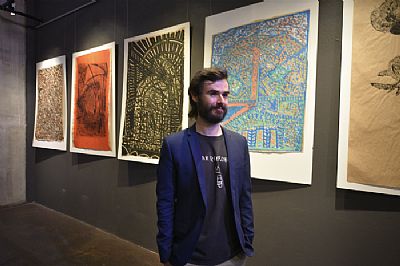
Aussie comedian Sam Kissajukian had an epiphany in 2021. Okay, so it turns out it was actually a manic episode, but he didn’t know he had bipolar at the time, so he really believed he’d seen the light. It was time, he decided, to turn his back on comedy and become an artist. So what if he’d never painted before? He had a beret. He was good to go.

We have his bipolar to thank for the art we see today: without the high levels of energy, the euphoria and the delusions that come with a manic episode, Kissajukian might never have rented a workshop, moved into it and obsessively painted massive (and tiny) pictures for several months. He might never have created the Museum of Modernia or held exhibitions of his work across Australia – or visited the Edinburgh Fringe with this fascinating show.

Of course, he wouldn’t have had to endure the crippling depression that followed either, but he’s doing well now, he tells us, so we’re allowed to laugh at the crazy, funny stuff he did.

300 Paintings is essentially a story about finding yourself and, although most of us won’t experience periods of transition with quite the same intensity as Kissajukian, the urge to escape our shackles and work out what we really want is very relatable. Unleashed from the need to please a drunken comedy audience, Kissajukian turns out to be extraordinarily creative. His ideas are inventive (literally) and exciting; his artwork primitive but fresh. He pushes every concept beyond its boundaries, so that this show is unlike anything I’ve seen before.

Kissajukian’s previous incarnation as a comic means he’s adept at communicating with the audience, even if the early morning is an unusual time for him to be awake. His easy-going patter makes the complex mental health issues accessible, and the projections of his artwork illustrate the story perfectly. Twenty-five of his paintings are on display here at Summerhall, the performance and exhibition inextricably linked.

Today’s show was sold out but, if you can get a ticket, 300 Paintings is an invigorating way to start your day.

4.2 stars

Susan Singfield

Sinatra: RAW

17/08/24

C Arts Venues (C Aurora), Lauriston Street, Edinburgh

Tribute acts have long been a staple of the Fringe, but to describe Richard Shelton’s interpretation that way would be to do it a disservice. It’s 1971 and Sinatra is here to deliver his final performance. We’re in the Purple Room in Palm Springs (though in reality, we’re actually in the room where Susan and I go to cast our votes in government elections). Out saunters Shelton, the very personification of Ol’ Blue Eyes, and he launches into his opening song, accompanied on the piano by Campbell Normand.

It’s not just the voice, though it must be said that’s spot on – as smooth as warm honey, as powerful as high-tensile steel – Shelton also bears more than a passing resemblance to the great crooner and, as he casually mentions at the end, he’s actually wearing one of Sinatra’s suits. In between songs, he talks about the singer’s life: his meteoric rise to fame thanks to the adulation of his young followers, the Bobby Soxers; his clashes with band leader Tommy Dorsey; his doomed love affair with Ava Gardner… it’s all here, delivered in that familiar, hard-bitten voice.

As he reminisces, he works his way steadily through a bottle of Jack Daniels (which I presume is non- alcoholic because Shelton has to get to the end of August to finish his stint). At one point, he slips easily into the suave voice of Eddie Fisher and I think, “Wow, this guy really knows how to nail a British accent.” So to learn, at the very end, that Shelton is actually from Wolverhampton is quite the revelation.

In short, if you love Frank Sinatra songs, if you’d like to know a little more about the man’s turbulent history, if you hanker to hear a rendition of A Very Good Year that may bring you close to tears, then head for Lauriston Street at your earliest opportunity. Every evening at 9pm, Frank (or rather Richard Shelton) is waiting to perform for you. And those who enjoy a relaxed late-night experience might also wish to check out his other show, Sinatra and Me, which promises to be just as much of a revelation.

Oh and don’t bother to take your voting ID. That’s all done and dusted.

4.6 stars

Philip Caveney
One Man Musical

16/08/24

Queen Dome, Assembly, Edinburgh

Flo & Joan are established Fringe favourites, loved by many. I enjoy their quirky songs which are celebrations of all matter of unlikely subjects – waiting for an Amazon delivery, the weirdness of their parents’ ornaments, the pressures when siblings make music together… seemingly trivial subjects mined for their sheer silliness. But I’ve often wondered if they might one day apply their undoubted talents to a single theme.

One Man Musical is exactly that, a look at the life of a VERY famous musical theatre entrepreneur – let’s call him “Andy”. He’s played by George Fouracres with such absolute assurance, I can’t help wondering why he hasn’t come to my attention before. He sings, he dances, he tells jokes, he plays the world’s smallest piano and he gives a priceless demonstration of how not to talk to a member of the audience…

Flo & Joan (or Nicola and Rosie Dempsey if you prefer) take a back seat for this one, providing solid support on keyboards and drums respectively and somehow maintaining those trademark impassive expressions. (God knows how, since the sell-out audience spends pretty much the entire hour convulsed with laughter, me included.)

This is wonderfully irreverent stuff and the selection of songs, though as witty as ever, seem to benefit from sticking to one central premise. “Andy”, it turns out, has seen more successful days and is now coasting on his back catalogue. He strives valiantly not to be bitter, but his efforts are in vain. When he sees former partners doing well with other musical collaborators, he can’t resist sticking the knife in.

And he’s keen to point out that a humble white, upper-class, privately-educated lad like him, from a palatial home in England, has really had to struggle to make it in the cut-throat world of musical theatre. A soulful ballad to this effect almost makes me start to feel sorry for “Andy”… until he weighs in with the next bunch of sour grapes.

One Man Musical is an absolute delight and anyone in need of a good laugh should make their way to the Queen Dome where – unless the real “Andy” issues them with an injunction – the show will continue.

4.6 stars

Philip Caveney
Dear Annie, I Hate You

14/08/24

Zoo Playground 2, Edinburgh

When we enter the performance space, we can hardly fail to notice Sam Ipema, lying stretched out on a podium, seemingly fast asleep. She’s surrounded by a series of miniature television screens, upon which random images from her childhood are playing, as if granting us access to her dreams. 

But then she wakes up and starts to tell us her life story, all about a young girl who grows up with her parents. They are present, providing comments from the TV screens. We also hear from her adopted brother who has Downs Syndrome and is very fond of Batman. As Sam grows older, she becomes obsessed with soccer and seizes every opportunity to practice the sport, thinking that perhaps one day she’ll be a star player…

And then Sam’s narrative is rudely interrupted by the arrival of ‘Annie’ (Eleanor House), a bright buzzy young woman clad in a glitzy pink outfit. She’s playing a tuneless rendition of Also Sprach Zarathustra – on a trombone – and she seems intent on wrecking everything that Sam has so carefully set up.

But ‘Annie’ is just the name that Sam has given to her aneurism – the one she discovered years back, quite by accident, the one that she endured surgery on, but which still hides deep within her brain and could prove fatal at any moment…

Dear Annie, I Hate You is a wonderfully inventive and cleverly-assembled slice of true experience, by turns funny, profound and – at one particular point – very challenging. Those of a delicate disposition should note that this show offers the opportunity to literally look inside Ipema’s brain (via a screen, obviously), but I want to stress that those too squeamish to watch it are given ample opportunity to either close their eyes or leave the room until that part is over. I choose to stay and am riveted by what I see.

The performance space at Zoo Playground I is quite compact and I’ve rarely seen such a modest stage used to such great effect. Hats off to director James Meteyard, who manages to have Ipema and House moving through the clutter with ease, interacting, arguing, fighting – even playing a game of table tennis. The simple but utterly practical props work a treat, light cables pulsing and flashing to accentuate the action, and there’s one bit of business – which I won’t spoil – that actually makes me gasp out loud.

Ipema is a confident and relaxed narrator, while House proves the perfect foil, her polar opposite. Watching the two of them interact is both entertaining and affecting.

More than anything else, I’m impressed by Ipema’s courage, the way that she has met the daunting experience of an aneurism full on, turning it into one of the most thought-provoking shows I have seen at this year’s Fringe.

5 stars

Philip Caveney

Síomha Hennessy: 30 Under 30

06/08/24

Gilded Balloon Patter Hoose (Nip), Edinburgh

Síomha (it’s pronounced Shiva) is 35 years old and somehow, against all her expectations, she’s still ‘unexpectedly unfamous.’ She’s bewildered by this and, to be honest, I’m as mystified as she is. From the moment she prowls confidently into the room and launches into her first song, she has the crowd at the Patter Hoose in her tenacious grip. That opening pop song is terrific, wonderfully catchy and with lyrics that make you laugh out loud. It’s an impressive start.

The ensuing patter is just as perfectly crafted: canny observations about growing up in Ireland, her disastrous relationships, the minefield of social media and some outrageously outspoken views about sexuality. A ‘folk’ song from the POV of her contraceptive coil is wonderfully surreal. Presented in the style of Luke Kelly of The Dubliners, it’s an absolute hoot, the premise being that – at 200 euros – the device isn’t earning back its investment.

And then, just when you think you’ve got the measure of Hennessy’s schtick, she delivers a soulful ballad about Instagram, which shows off her soaring vocal range to the full.

The hour positively flies by until a final song – which has the entire room happily singing along with the chorus – brings the show to its conclusion. We missed Hennessy at last year’s Fringe but I’m glad we caught her act this time. She’s definitely one to watch and, on this evidence, she won’t remain ‘unfamous’ for very much longer.

4.8 stars

Philip Caveney
Chris Dugdale: 11

05/08/24

The Ballroom, Assembly, Edinburgh

At the Fringe, we spend most of our time seeking out new performers whose work we’ve never encountered before. But there are a few honourable exceptions. Back in 2015, as fledgling reviewers at the Festival, we happened upon Chris Dugdale: Sleightly Dishonest and were blown away by it. We weren’t magic fans per se (still aren’t really) but something about the man’s delivery, his brain-scrambling routines, his cheeky persona, chimed with us and we’ve seen him pretty much every year since – apart from when the dreaded COVID cancelled the whole Festival in one fell swoop.

But here he is again with 11 (remember that number), another meticulously arranged head-spinner that is mostly about coincidences – or at least apparent coincidences. One section deals with the attack on the World Trade Centre and the importance of that title is suddenly made clear. 

Dugdale is in a bigger theatre than usual and his wife and two young daughters are sitting in the audience (the latter putting their hands up when he asks for volunteers and having to be politely refused). As ever, we find ourselves laughing at the sheer unbelievability of some of the things we’re witness to, especially the examples of close-up magic, where a video camera is focused on the illusionist’s hands as he does a whole series of impossible things with a pack of cards. There are also some examples of mind control that have us shaking our heads in disbelief – and I may be guilty of muttering the odd expletive.

Oh and did I mention Dugdale’s poster collection? There’s a whole wall of them to stage left, a series of seemingly unconnected images…

As ever with these shows, I can’t give too much away because the best approach to Dugdale’s material is to go in with an open mind and prepare to have it opened a good deal more. But I will say that this is the best show we’ve seen from him and, trust me, it’s a very high bar. Those who like the sound of this should make a beeline for The Ballroom in the Assembly Rooms on George Street, where Mr Dugdale is doing unbelievable things every night.

Walking home afterwards, Susan randomly asks me what time it is. I glance at my watch and can’t help gasping. The numbers on the digital display are 9:11.

Another coincidence? Or is that noise I hear the distant sound of Chris Dugdale chuckling maniacally?

5 stars

Philip Caveney

Really Good Exposure

03/08/24

Underbelly (Belly Button), Cowgate, Edinburgh

Actor Megan Prescott – most famous for her role in Skins – opens up a compelling discourse in this excoriating monologue about how sex sells and is sold. Drawn from a mixture of her own experiences and those she’s observed, Really Good Exposure is a challenging and thought-provoking play – fittingly funded by Prescott’s OnlyFans.

Molly Thomas (Prescott) is fast approaching thirty. A former child star, she’s been encouraged to sell sex throughout her acting career, notably as an adolescent in popular TV drama, Meat. But now she’s no longer a teenager, and it turns out selling sex on her own terms – as a stripper or in porn – is way less socially acceptable than being controlled by ‘the industry’. 

Prescott is an accomplished performer. She tantalises and reels us in before skewering our internal biases and forcing us to think. For most of the running time, she is clad only in a sparkling bikini. This is disturbing in the flashbacks – when she’s eleven years old, practising her competition dance, or sixteen, worried about her first intimate scene for Meat – but empowering when she’s older and finally operating on her own terms. 

As a Gen X feminist, I’m forced to confront my own prejudices. I’ve never been one to demonise sex workers – I believe in a sisterhood that supports all women. But I’ve certainly been guilty of seeing sex workers as victims or as unwitting conduits for misogynist violence. Prescott’s polemic reveals the glaring holes in this logic. Her own experience is that she has more agency and makes more money in porn than she ever did in the mainstream. This is perfectly illustrated by the juxtaposition of two scenes: one featuring full-frontal nudity, where Molly is forced to strip naked to prove she really wants a part in an indie film; the other an exuberant lap dance performed in a strip club. 

As Molly points out, of course there are issues within the porn industry but, “We didn’t ban acting after #MeToo.” 

A fascinating insight into what it costs to be a woman in the spotlight, Really Good Exposure is a must-see at this year’s Fringe.

4.7 stars

Susan Singfield

Bellringers

03/08/24

Roundabout at Summerhall, Edinburgh

Two figures, hooded and shrouded, stumble in out of the torrential rain and prepare themselves for a spot of campanology. But who are they? My first intimation is that they are monks and this piece must be set back in the day, but the cloaks are quickly removed and the two men are revealed to be contemporary characters – yet the world they discuss is bewildering. What’s all this talk of raining frogs? Death by lightning? And why are mushrooms growing everywhere?

Aspinall (Paul Adeyefa) and Clement (Luke Rollason) are the latest in a line of bellringers, who come here in the belief that ringing the church bells might somehow dispel the devastating storm they know is fast approaching. There have been other bellringers before them but it’s a worryingly short-lived profession. Best not to talk too much about what happened to their predecessors. Neither of them are religious – not really – but they have to do something don’t they? And a respected friend claims that this is the only surefire way to avert disaster.

As the two men count the intervals between lightning strikes and thunderbolts, which grow worryingly shorter, they talk about this baffling world in which they’re trying to survive – this doomed place of dying crops and terrible famines and weather conditions that seem to be spinning out of control…

It doesn’t take a Sherlock Holmes to interpret this particular allegory, but the power of Bellringers is in the uncanny way in which information is slowly but surely released, so that things only fully coalesce in the play’s final stretches. Both Adeyefa and Rollason play their roles with consummate skill, the former calm and measured, the latter nervy and intense, tortured by a secret he’s been keeping for over a year. Daisy Hall’s acerbic script is at once funny and terrifying, highlighting the futility of a world that puts its faith in superstition and crossed fingers. In the end, all the two men have ever wanted is “what they had – an ordinary life. And long.” A damning reference the world that we are all in the process of bequeathing to generations yet to come.

Little wonder that this debut play was a finalist for The Women’s Prize 2023. Under Jessica Lazar’s assured direction this is another winner from Roundabout, one that will send you out of that unique location with a lot to think about.

4.5 stars

Philip Caveney

Thelma

23/07/24

Cineworld, Edinburgh

Hollywood rarely manages to find projects for older female actors so it’s heartening to witness seasoned veteran June Squibb taking on her first lead role at the tender age of ninety-four. This kind of project can often be unbearably cute, an opportunity to smile condescendingly at the funny things old ladies tend to say, but Sundance hit Thelma, written and directed by Josh Margolin, is perfectly pitched and utterly charming, managing to exploit the tropes of a Mission Impossible style caper while never stepping beyond the realms of credulity. No mean feat.

Thelma is slowly coming to terms with the death of her beloved husband two years earlier and, with the help of her grandson, the hapless but loveable Daniel (Fred Hechinger), she’s managing to adjust to the changing and sometimes bewildering world in which she lives. When, out of the blue, she gets a call from ‘Daniel’ telling her that he is in trouble and needs her to send $10,000 dollars in cash to a PO box, she doesn’t hesitate to follow the instructions she is given, never pausing to question the situation. Of course, she’s been scammed. Her daughter, Gail (Parker Posey), and son in law, Alan (Clark Gregg), begin to wonder if its time to for Thelma to go into a home. Meanwhile the police tell the family that there’s nothing much they can do to help retrieve those lost funds.

But, inspired by the Tom Cruise movies that Thelma enjoys so much, she decides that she’s not ready to give up so easily. She enlists the help of her old friend Ben (Richard Roundtree, in his final role), who is now in a retirement home and is the proud owner of a state-of-the-art mobility scooter. Backed by Nick Chuba’s propulsive score, the duo head off into the night to stake out the PO box in the hope of finding the scammer that did Thelma wrong.

One other thing. They’re going to need a gun…

Thelma is a hoot, weaving expertly between laugh-out-loud jokes and nail-biting suspense. While our aged protagonists can hardly take on the kind of stunts that are the staple of a Tom Cruise movie, their scaled-down antics prove to be just as exciting. For a nonagenarian, even climbing an unfamiliar staircase is a potentially dangerous challenge, and a chase in a motorised mobility aid can be a heart stopper.

It’s not just thrills and spills. The film has plenty to say about the importance of friendship and the indignities of old age: a reminder that we shouldn’t write people off because of their advanced years. It also features the most unlikely performance of Little Orphan Annie you’re ever likely to witness. Squibb is terrific and the late Richard Roundtree – best remembered as the titular hero of 1971’s Shaft – has chanced upon the perfect farewell for his long career. Watch out for the villain of the piece too. It might take you a few moments to recognise him, but that really is Malcolm McDowell! And don’t get up from your seat too quickly because you’ll miss a brief cameo from the woman who inspired the film: Josh Margolin’s grandma, still going strong at 103!

Thelma hasn’t had the widest of releases but keep an eye open for it at your local cinema. It’s an absolute joy.

5 stars

Philip Caveney