Uncategorized

Eternity

12/12/25

Cineworld, Edinburgh

The festive season is upon us so what better time to release a charming, romantic comedy about, er… death? That’s Eternity’s central premise, but hey, don’t let it put you off.

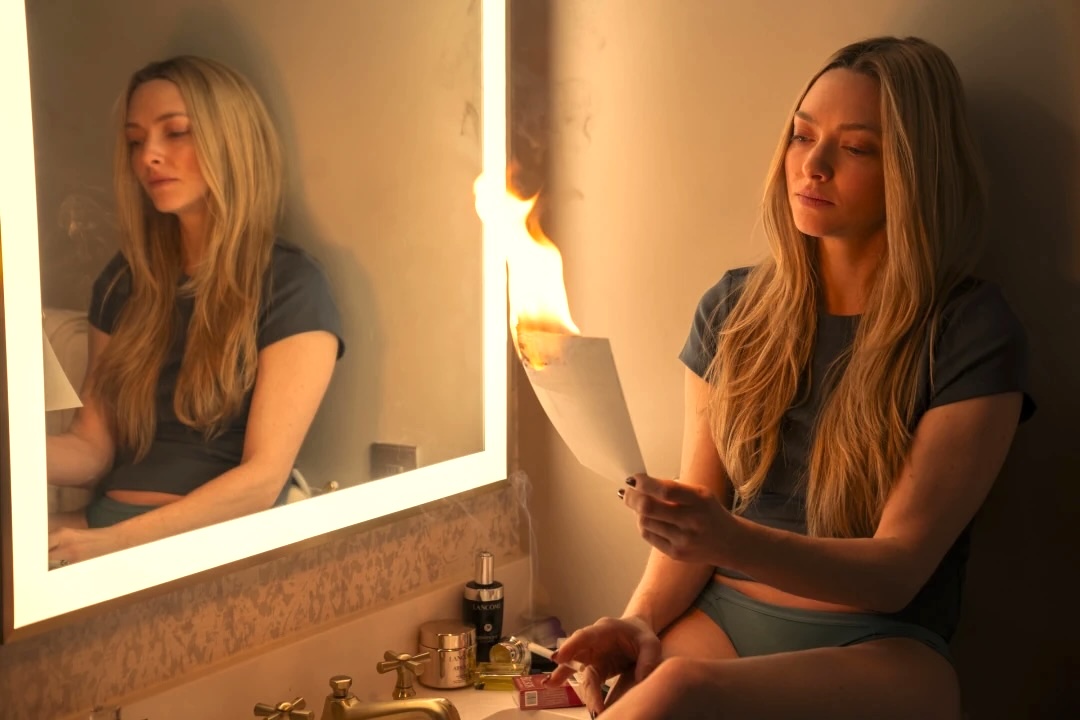
In the film’s opening scenes, we join elderly couple, Larry (Barry Primus) and Joan (Betty Buckley), as they drive to a gender reveal party, bickering all the way there. What they haven’t revealed to their family members is that Joan is in the final stages of cancer and only has a short time left to live. But, ironically, it’s Larry who receives notice of an urgent appointment with his own mortality, thanks to getting a pesky pretzel stuck in his throat.

He suddenly finds himself on board a train as it arrives at ‘The Junction,’ a stopping-off place on the journey to Eternity. Larry (now played by Miles Teller) has been transformed to his younger self, able to do squats without pain, but understandably confused as to his current situation. Luckily, he’s been assigned an ‘Afterlife Co-ordinator’ called Anna (Da’Vine Joy Randolph) and, when Larry explains that his wife will be joining him any time now, Anna arranges special dispensation for him to wait for her. 

In the meantime, Anna advises Larry to browse all the many brochures on offer in order to choose an Eternity that will be suitable for him and Joan. There are lots of different settings to choose from, ranging from different types of scenery to what can only be described as niche worlds. But Anna warns Larry that once a destination has been chosen, it cannot be changed – no matter what.

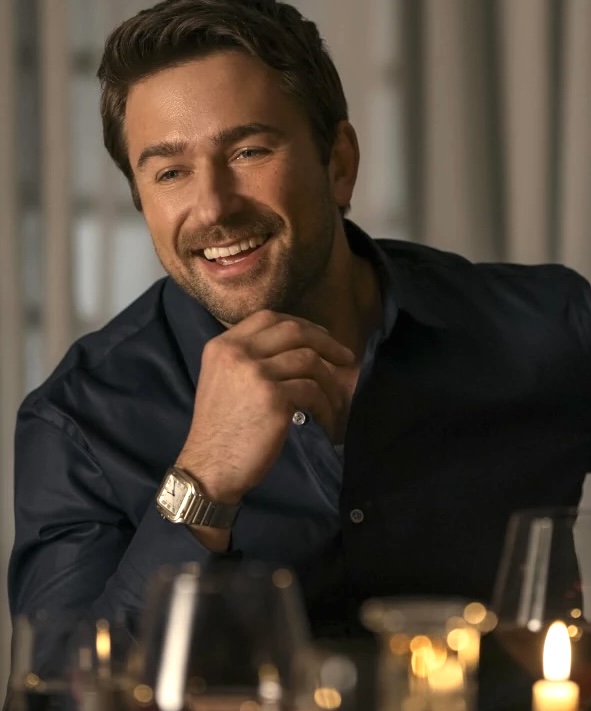
Soon enough, Joan arrives (looking uncannily like Elizabeth Olsen), and Larry is waiting eagerly to greet her. Unfortunately, so is Luke (Callum Turner), her first husband, who was killed in the Korean war. And he’s been waiting for more than sixty years to be reunited with her… which is awkward, to say the very least.

There’s lots to like about Eternity, not least its depiction of the afterlife, which has the general look and feel of a glossy holiday marketing exhibition, with representatives of the various destinations eager to sign up the recently deceased. I find myself laughing out loud at the absurdity of some of the concepts that prospective customers are offered. Germany in the 1930s but with 100% less Nazis? What’s not to like? And I love the ‘Archives’ where the dead can visit key scenes from their past, all of them presented as low-budget stage adaptations of the actual events.

The performances from the three leads are engaging and there’s some sparky interplay between Randolph’s Anna and Luke’s Afterlife Co-ordinator, Ryan (John Early). If I have slight reservations, it’s with the script, co-written by Patrick Cunnane and director David Freyne, which in its final stretches appears to bend some of the rules that it’s previously taken great pains to establish. But hey, it’s no deal- breaker. This is overall a thoughtful and engaging story with a pervading sense of melancholy.

If it occasionally invites comparisons with classics like Powell and Pressburger’s A Matter of Life and Death, well, that’s no bad thing either. Those seeking something a bit different this Christmas should find plenty here to keep them hooked. Just don’t take pretzels as your snack of choice.

4.2 stars

Philip Caveney
She Rides Shotgun

29/11/25

Prime Video

Now and then (and more increasingly in these troubled times) a film deserving of a theatrical release finds itself unceremoniously shunted straight onto streaming. She Rides Shotgun is one such production. While it doesn’t exactly reinvent the wheel, this tautly-paced action thriller has all the ingredients required to keep a viewer hooked to the final frame, not least impressive performances from Taron Egerton and newcomer, Ana Sophia Heger.

10-year-old Polly Huff (Heger) is waiting patiently outside her school in Los Angeles (though the film is mostly shot in and around Alberquerque), fully expecting to be picked up by her mom. She’s understandably bewildered when her estranged father, Nate (Egerton), turns up at the wheel of a stolen vehicle and bundles her into the passenger seat. Polly knows that Nate has only recently been released from prison and is also aware that her mother has moved on with her life and now has a new partner. 

But once installed in a seedy motel room, Polly overhears a television news report informing her that both her mom and stepdad have been murdered, and that Nate is the main suspect for the crime. What’s more, the killings have been linked to a white supremacist movement called Aryan Steel.

Before Polly quite knows what’s happening, Nate is cutting and dying her hair and preparing to take her off on a desperate run for the Mexican border.

As I said, She Rides Shotgun doesn’t have the most original premise – indeed, with those New Mexico locations and that evocative title, it feels suspiciously like a contemporary Western – but director Nick Rowland ensures that the unfolding events are seen through Polly’s POV, and he somehow manages to imbue the resulting mix of gun fights, punch-ups and car chases with enough verve to keep me on the edge of my seat.

Events get more complicated when it transpires that nearly every police officer the duo encounter on their travels is linked to the aforementioned Aryan Steel. It’s hard to know who they can trust – though Detective John Park (Rob Yang) seems the likeliest contender for that role – and he says he has a plan that can secure their future…

Egerton (looking like he’s ingested a mountain of protein shakes since his last screen outing and sporting a ripped physique that’s seemingly carved from granite) manages to convey a father’s desperate need to protect his daughter. Heger’s performance is extraordinary, her evident vulnerability bringing me close to tears, especially at the film’s heartbreaking conclusion.

So, job done: this is well worth catching, even if those vast desert landscapes do deserve to be seen on a much bigger screen.

4.2 stars

Philip Caveney
Inside No. 9: Stage/Fright

27/11/25

Playhouse Theatre, Edinburgh

I’m rarely excited to see theatre inspired by television but I was keen to secure tickets for Inside No. 9 as soon as this tour was announced. Like so many others, I’ve been an avid fan of Reece Shearsmith and Steve Pemberton ever since I first saw them (along with Mark Gatiss) in 1999’s The League of Gentlemen. And, more recently, No. 9 has been one of the few television series I’ve watched avidly, through all nine of its seasons, marvelling at the sheer ingenuity of these two men, who are masters of the tricky art of horror comedy.

It’s clear that they have many other faithful followers because the capacious Playhouse is a complete sell-out tonight. The audience is somewhat restless so the opening sketch, in which we are confronted by rows of theatre seats looking straight back at us, is an inspired choice, while the subject – the ways in which noisy audience members can incur the wrath of somebody trying to watch a play – is doubly so. And even if a large section of the first act is overly-familiar – based around the classic TV episode Bernie Clifton’s Dressing Room – well, that’s only like your favourite rock band smashing out some of their established hits before introducing you to their new material.

In the second act, the duo, assisted by a sizeable cast, do exactly that. What initially appears to be a group of characters enacting a delicious slice of grand guignol theatre in a Victorian asylum is revealed to be… ah, but that would be telling. Like so much of their output, Shearsmith and Pemberton have woven elements of surprise into the piece and it would be a crime to reveal too much. Suffice to say that this extended sketch utilises cinematic elements, somehow blending the two distinct disciplines of theatre and film into one satisfying whole. While there’s much here that is deliciously, darkly funny, there are also moments of extreme tension and some genuinely effective jump-scares.

A word of warning: don’t be like those members of tonight’s audience who leap up from their seats the moment the house lights come up and race for the exits – because there’s more to come and you don’t want to miss the further revelations that unfold.

This is yet another assured collaboration from the gruesome twosome. Where will Shearsmith and Pemberton venture next? Your guess is as good as mine, but wherever it is, bring it on! I’m keen to see whatever they’ve got up their sleeves.

4.6 stars

Philip Caveney
Sisu: Road to Revenge

23/11/25

Cineworld, Edinburgh

I missed Sisu on its first release, but caught up with it on streaming some time later. It was easy to see why it was such a hit in its native Finland and why so many people had raved about it. This simple, action adventure in which a near-silent old man single-handedly despatched an entire battalion of Nazis in ever-more inventive ways was a thoroughly decent watch. And who doesn’t want to see Nazis get their comeuppance?

But of course, Sisu’s success meant that there would be the inevitable sequel. And what’s left to say?

Writer/director Jalmari Helander has fallen back on the age-old technique of telling the same story again but making it bigger, louder and even more unbelievable. He’s switched out those pesky Nazis for some caricatured Russians and thrown in a George Miller-esque vehicle chase and an aerial sequence for good measure. Plus some very big explosions.

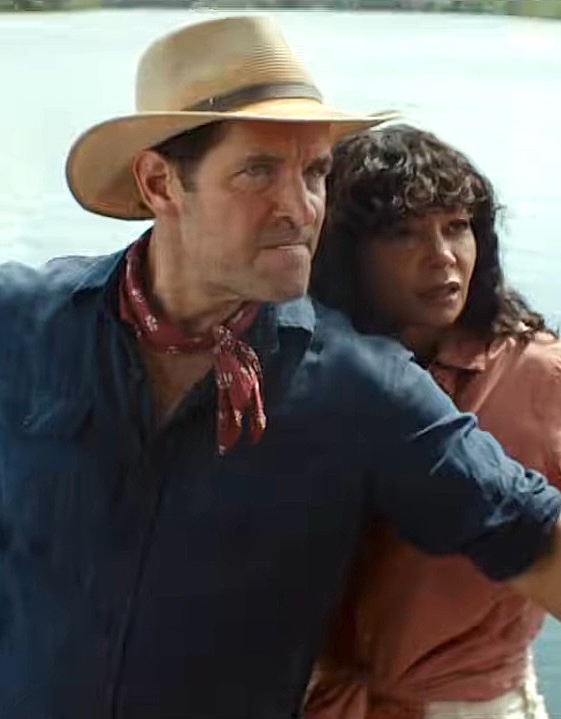
It’s 1946, the war is done and dusted, and Helander’s silent hero, Aatami (Jorma Tormilla), has decided to nip across the newly-instigated border to take his old home apart plank by plank so he can transport it back to a new location, where he plans to rebuild it… as you do.

But when a top-rank KGB officer hears what’s happening, he releases imprisoned Red Army leader Igor Draganov (Stephen Lang) and instructs him to go in pursuit of Aatami and.. ahem… finnish him off. Draganov is, of course, the man who killed Aatami’s wife and two children, utilising the unusual method of cutting them to bits with a spade, something he’s so proud of he mentions it twice.

All this information is imparted in the film’s opening fifteen minutes and the rest of it (aside from a short coda) is devoted to the ensuing mayhem as Aatami slaughters what feels like the entire male population of Russia with a series of increasingly outlandish improvised weapons. This is a man capable of turning a paper handkerchief into something with the killing potential of an AK47. While I’m happy to suspend my disbelief to a certain level, I have to draw the line at watching him deflect an approaching fighter plane with a length of roof timber, or propelling a train along a track at super speed simply by igniting the rocket it’s carrying on a flatbed.

Yes, I know, it’s not meant to be realistic – but neither is it a superhero film and Aatami’s abilities somehow feel more suited to that genre.

More worrying to my mind are the later scenes where Aatami is captured and brutally tortured by the people who have simply been instructed to kill him. The damage inflicted upon his bare flesh borders on the prurient. And God forbid if at some point we had flashbacks to earlier days and his memories of that family he spends all his time trying to avenge. It’s almost amusing to learn that Tormilla is a respected theatrical actor in his homeland, when all he’s required to do here is bleed copiously, grunt when he’s obliged to walk barefoot on glass and occasionally decapitate one of his many opponents. But hey, that’s showbiz.

Looking desperately around for something to enthuse about, I will say that cinematographer Mila Orasmaa does a creditable job of capturing all the madness on film and that the music of Juri Seppä and Tuomas Wäinölä has a stirring Ennio Morricone quality that sometimes makes me feel I’m watching a Sergio Leone western. (Not that we’re anywhere near that exalted league.)

And then there’s the aforementioned coda, which – against all the odds – is poignant and strangely moving. Though in the case of Sisu: Road to Revenge, it does feel suspiciously like too little, too late.

3 stars

Philip Caveney
Òran

13/11/25

Traverse Theatre, Edinburgh

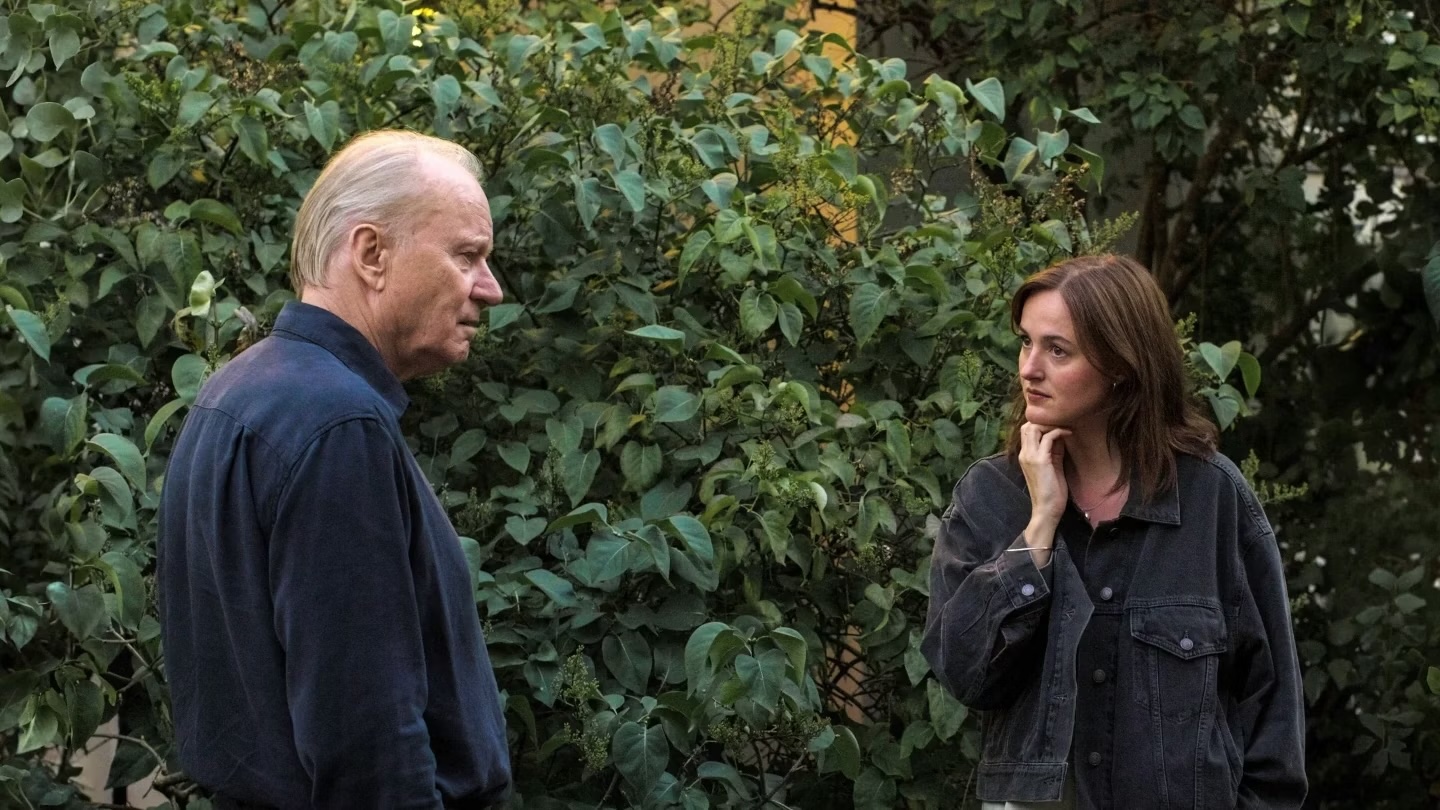
Òran is a retelling of the myth of Orpheus and Eurydice, a powerful one-man monologue written by hip-hop artist Owen Sutcliffe and performed by Robbie Gordon. The piece is centred around a pulsing, haunting soundtrack by Vanives and Ben Dean, and the story is given a contemporary makeover. Òran (Gordon) a pupil in a Scottish high school is witness to the cruel cyber-bullying of his best friend, Euan, but does nothing to help him.

Overcome with guilt, Òran feels compelled to descend into the Underworld (via a conveniently located lift) in an attempt to find Euan and pull him free from the pit of desperation into which he has disappeared.

This is a spoken-word production, with Gordon sitting either at a desk – controlling the small mixing deck which contains the labyrinthine layers of the soundtrack – or racing frantically around the stage, interacting with the audience, making us both witness to and part of the story. This is especially effective in one emotionally-charged moment when we help to create a moment of theatrical magic.

I can’t help but notice that a large group of teens sitting across from me are absolutely spellbound by this performance, staring transfixed as the story unfolds, their reactions writ large. 

Sutcliffe’s Scots poetry alternates between the fierce and the poignant, often breaking into rap. The piece is sensitively directed by Jack Nurse and the production is also elevated by Benny Goodman’s evocative lighting design. I particularly enjoy the clever depiction of the descent into the Underworld, which is simply but effectively achieved. I also like the way that Gordon’s voice is dramatically transformed whenever he assumes the persona of Hades.

Perhaps the story’s late-stage revelation loses some of its power in the midst of what is essentially an aural assault, but that’s a quibble. Òran grabs an ancient myth by the scruff of its neck and gives it a right good shaking.

4 stars

Philip Caveney
Predator Badlands

08/11/25

Cineworld, Edinburgh

2022 was a pretty grim year for obvious reasons but one of its few bright spots was the opportunity to watch Dan Trachtenberg’s Prey on streaming. Those with long memories will remember the original Predator film, an Arnold Schwarzenegger vehicle from 1987. It introduced us to the titular alien hunter, a creature with a face like a crab doing press-ups on a mirror – and most definitely the villain of the piece. While the film was no masterpiece, it was a fun sci-fi / horror / shoot-‘em-up and it made a big splash at the box office. Inevitably there would be sequels.

Which is where the problems began. A whole barrage of them were released over the years, all inferior to the original. An attempt to combine them with the Alien franchise led to the most disappointing examples of a sorry bunch, turgid retreads of the same-old, same-old.

So when Prey was announced, my expectations were pretty low. However, Trachtenberg did something unexpectedly different with the premise, sending the whole thing back in time and pitting the villainous hunter against a bunch of Native Americans, armed only with bows and arrows, adding a compelling layer of social commentary. It worked big time. Now the pressing question is: can the director pull it off a second time?

And the answer is, yes, he can. The latest twist on the concept comes in the form of an unspoken question. What if the predator were more sympathetic?

Dek (Dimitrius Schuster-Koloamatangi) is a bit of a disappointment to his father, Njohrr (Reuben de Jong). For one thing, Dek is noticeably smaller than the average Yautja warrior and nowhere near as ruthless as Dad would like him to be. In a fight with his big brother, Kwei, Dek can’t even bring himself to kill his bruv. Oh, the shame! His dad is determined to have him eradicated for this weakness but instead Dek heads off to the planet Genna with the intention of defeating the ‘unkillable’ Kalisk, thus proving himself to the old man beyond all reasonable doubt.

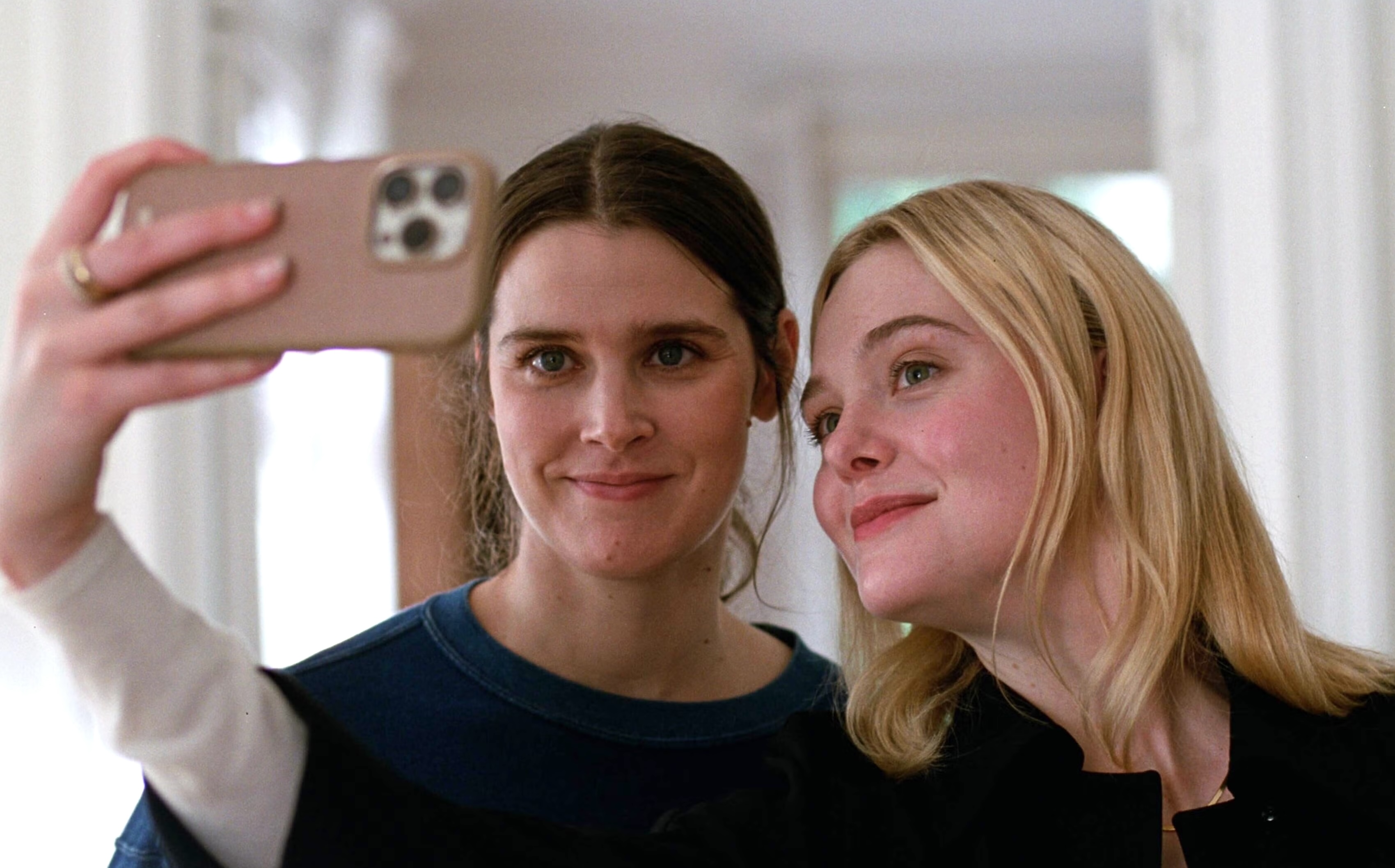
Once on Genna, Dek discovers that the place is a total death trap, featuring more predatory creatures than you could shake a plasma sword at. But then he bumps into Thia (Elle Fanning), a Weyland Yutani synthetic. Or rather, he bumps into half of her because, thanks to the Kalisk, she is now missing her lower body, though she’s determined to stay cheerful about the situation. Dek grudgingly takes her along with him, thinking that he will use her knowledge of the planet to locate the creature he is seeking. But as they travel, something unexpected occurs. He begins to care about her…

Hardcore Predator fans (apparently that’s a thing) have argued vociferously that this film has ‘softened’ the concept, but that’s fine in my book, because the interplay between Dek and Thia does make me feel for the characters in a way that even the original never managed. And for those who come to this series for the weird creatures and the rampant bloodshed, there’s still plenty of that thrown into the mix. (Weirdly, the fact that none of them is human has resulted in a 12A certificate, but the amount of carnage that goes on here feels, to my mind, more in the vicinity of a 15.)

My only real quibble is that the first fifteen minutes or so, set on Dek’s home planet, are so poorly lit that it’s sometimes hard to follow the action, but that issue is resolved the moment Dek blasts off Into space and things continue to improve as his friendship with Thia develops. I even liked Bud, a cute little alien that the duo encounter on their travels.

There are just enough elements from the Alien films here to show how blending two franchises can work seamlessly – one reference in the film’s latter stages is a particular delight (fans of Aliens will recognise it when they see it). Okay, so Predator Badlands won’t be picking up any awards at the Oscars but, for my money, this is is up there with the best films of the Predator cannon and, while you could argue that it’s a pretty low bar, it’s nonetheless a testament to Trachtenberg’s abilities that, once again, he has managed to breathe life into a dead Yautja.

4.2 stars

Philip Caveney
Dead of Winter

05/10/25

Cineworld, Edinburgh

Dead of Winter has only been granted a limited screening in UK cinemas before moving on to streaming, but provided a multiplex near you is showing it, it’s well worth making a trip out for. This edgy action thriller has me in its tenacious grip pretty much from the word ‘go.’

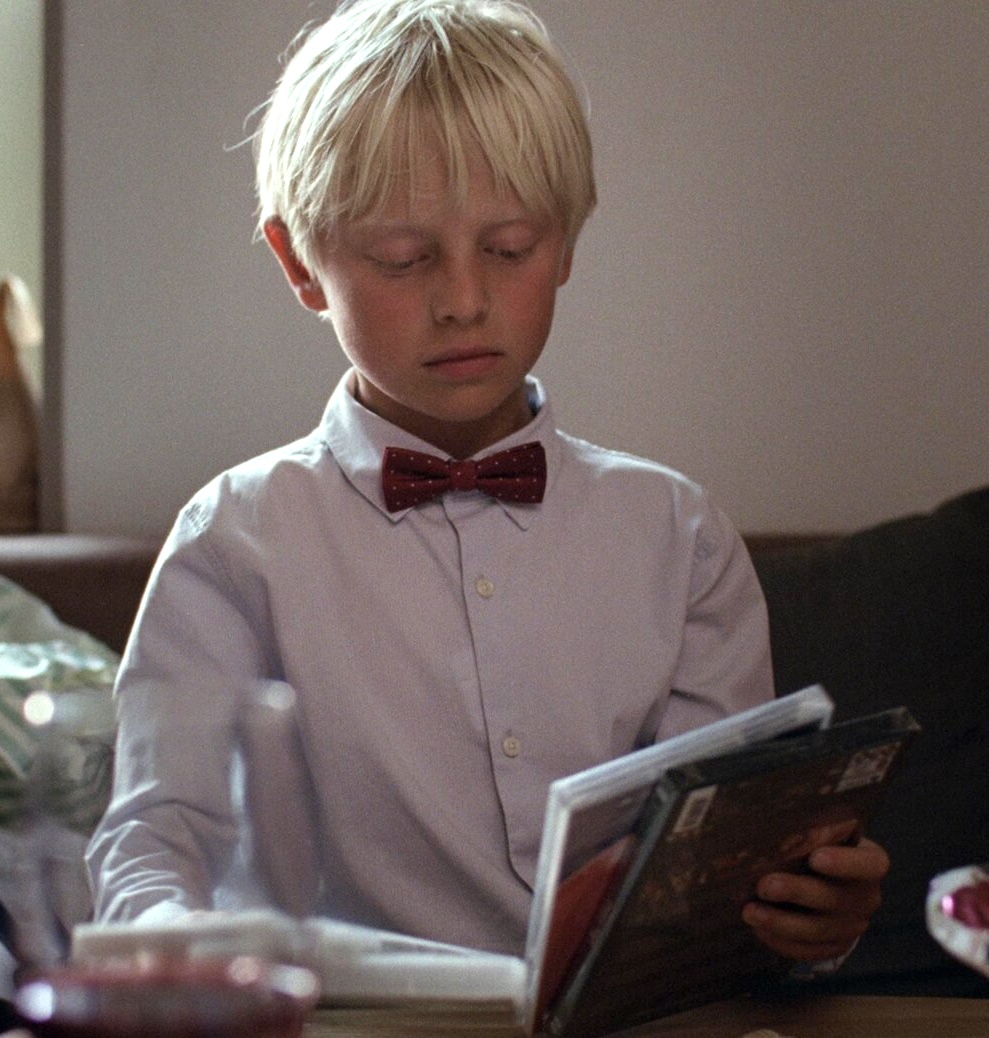
Barb (Emma Thomson) leaves her remote home in Northern Minnesota to make the arduous drive to the even more remote Lake Hilda for a reason that’s only gradually revealed as the story unfolds. As you might guess from the film’s title, she’s chosen a pretty challenging time of year to undertake her journey. On the way to the lake, she stops off at an isolated homestead to ask for directions and encounters ‘Camo Jacket’ (Marc Menchaca), who is acting in a decidedly suspicious manner. Barb can’t help but notice an ominous splash of blood in the snow, which the man attributes to ‘deer.’

She continues to the lake where she engages in a spot of ice-fishing, but then witnesses a young girl fleeing from Camo Jacket. Barb watches horrified as she is dragged back in the direction of his cabin and then follows at a distance. It’s soon apparent that the girl is being held hostage in the cellar of the man’s house. But what can Barb do? She cannot call the police since there’s no phone signal in these parts, but she’s nevertheless determined to help Leah (Laurel Marsden) and will not quit, even when Camo Jacket’s trigger-happy wife, The Purple Lady (Judy Greer), turns up at the cabin and the bizarre motives behind the kidnapping are explained…

Written by Nicholas Jacobson-Larsen and Dalton Leeb, and masterfully directed by Brian Kirk, Dead of Winter alternates scenes of extreme tension with gentler flashbacks to Barb’s youth, where she’s played by Thompson’s real life daughter, Gaia Wise. While I involuntarily bristle at nepotism, I have to grudgingly admit that this is a convincing move and, happily, the enormous potential for sentimentality in these scenes is skilfully side-stepped: indeed, I find them genuinely affecting.

We’ve all seen those ‘geri-action’ movies where elderly men miraculously transform into athletic heroes, capable of throwing kicks and punches like pros, but this iteration keeps everything within the realms of believability. Barb shows the limitations of her age but also displays her stubborn determination to just keep going no matter what, putting one snow-boot in front of the other. And, having existed in this hostile land for many years, she has a few tricks in her tackle box that will give her a competitive edge.

The snowbound locations, often filmed using drones – it was actually shot in Finland – look absolutely ravishing on the big screen, and you’re uncomfortably aware of the sub-zero temperatures throughout. Those of a nervous disposition should be warned that a scene where Barb is obliged to perform surgery on herself – with a fishing hook – might make you want to avert your gaze.

It’s impossible not to watch this and picture Frances McDormand in the lead role but Thompson is a brilliant actor and captures this character in every detail, as well as doing a very creditable job of handling the Minnesotan accent. Greer is also compelling as a woman driven to unreasonable acts by her own tragic circumstances. It’s only in the final scenes that all the pieces fall into place and I manage to get my breathing back to its usual rhythm.

4.4 stars

Philip Caveney
Our Brother

16/09/25

Traverse Theatre, Edinburgh

‘American’ (Nicole Cooper) recounts her memories of what happened back in 1978, when she was working as a photojournalist and introduced naïve Scottish academic ‘Stranger’ (Bobby Bradly) to the man he idolised. ‘Brother’ (David Lee-Jones) is the leader of the Khmer Rouge, the party who imposed communism in Kampuchea in 1975. Stranger has been totally seduced by Brother’s rhetoric about the currency-free society he’s founded and the resulting equality he envisages. Indeed, Stranger is eager to record his hero’s every word so he can produce a revised edition of the book he’s already published: In Defence of Kampuchea.

But he soon discovers that Brother is less than transparent about the ways his new doctrine is imposed – and, when Stranger insists on pushing him for more information, he finally begins to understand the awful truth behind the man’s evangelising.

This three-hander, written by Jack MacGregor and directed by Andrea Ling, serves as a timely warning not to be seduced by the carefully-chosen words of ruthless despots. Brother is, of course, the man who came to notoriety as Pol Pot – responsible for the genocide of more than a million people before finally being deposed.

The three actors all play their characters with authority but the piece occasionally feels a little too didactic. It’s anchored in the same location throughout, and there’s sometimes the feeling that we are being told what’s happening rather than shown it – though I do like the moments when American chooses to ‘rewind’ a scene to replay it in a version that’s closer to the way she actually remembers it. She also uses a handheld red light to pick out key moments in the action, as though developing images in a darkroom.

The distressing conclusion offers little in the way of surprises – indeed, it’s something I’ve been expecting from early on – but, at a time when extremism is once more on the rise, Our Brother serves as a sobering reminder of the horrors that lie behind the reassuring smiles of demagogues.

3.6 stars

Philip Caveney
Highest 2 Lowest

13/09/25

Filmhouse, Edinburgh

I first became aware of the work of director Spike Lee way back in 1986 at the press launch for his second feature, She’s Gotta Have It, and subsequently followed his cinematic evolution with big hitters like Do the Right Thing and Malcolm X. But since 2018’s BlackKkKlansman, Lee increasingly seems to have struggled to find focus.

Highest 2 Lowest (a loose remake of Akira Kurosawa’s 1963 film, High and Low) represents a considerable step up – a big, brash love letter to New York City, to Black music and, in particular, to Lee’s favourite basketball team, The Knicks.

The film begins in grandiloquent style with a rendition of Oh, What a Beautiful Mornin as cinematographer Matthew Libatique’s cameras glide magisterially around the gleaming highrise apartment building that is home to near-legendary record producer, David King (Denzel Washington). He’s about to embark on a crucial bid to buy the record label that made his reputation, but his plans are rudely disrupted when he receives news that his son, Trey (Aubrey Johnson), has been kidnapped and held ransom to the tune of seventeen million dollars.

When it’s revealed that the kidnappers have mistakenly grabbed Trey’s best friend, Kyle (Elijah Wright), the son of David’s loyal chauffeur, Paul Christopher (Jeffrey Wright), things become very complicated indeed. David loves and respects Paul – but can he really be expected to pay an amount that will surely bankrupt him for the release of another man’s son?

It would be criminal to reveal anything more about the plot, but Highest 2 Lowest is an ambitious undertaking that largely succeeds. Since David is so involved with music, composer Howard Drossin has been given full rein to create a mesmeric soundtrack and, though in early scenes it can occasionally seem intrusive – in places his keyboards and strings seem to run rampant behind really important lines of dialogue – in others it meshes perfectly with the action. An extended sequence on a subway train packed with very vocal Knicks fans, intercut with scenes filmed at New York’s Puerto Rican Mardi Gras, is masterfully done and is one of the film’s high points.

Washington shows once again why he is one of the greatest actors of his generation. David King has music at his core and Washington’s mood seems to evolve with whatever track he’s listening to. His hostile confrontation with ambitious young rapper, Yung Felon (A$AP Rocky), evolves into a kind of rap duel which might sound strange on paper, but is a genuinely thrilling progression. If I have an issue, it’s that David’s wife, Pam (Ilfenesh Hadera), seems unbelievably submissive, bowing to her husband’s every decision – even when the result might leave her homeless – as though she has no say in the matter.

Reservations aside, this is bold and adventurous filmmaking of the highest order, with the sheen and dazzle of a 50s technicolour extravaganza. It deserves to be seen on the biggest screen available and is proof, if ever it were needed, that veteran filmmaker Spike Lee still has plenty to offer.

4.6 stars

Philip Caveney
Edfest Bouquets 2025

It’s that time of year when we award virtual bouquets to our favourite shows from this year’s Fringe.

Once again, we’ve seen some absolutely magnificent productions, so – without further ado – here’s our pick.

Shake Rag Hollow – Assembly Rooms (Front Room)

“A powerful play that gradually builds to a shattering crescendo…”

Alright Sunshine – Pleasance Dome (Jack Dome)

 “Cowan’s taut, almost poetic script is brought powerfully to life by Geddes’ mesmerising performance: a tour de force with real emotional heft…”

She’s Behind You! – Traverse Theatre

“McKnight has the audience in the palm of his spangly-gloved hands, eliciting gales of laughter as well as contemplative silences…”

Bury the Hatchet – Pleasance Dome (Queen Dome)

“An inspired piece of theatre, wonderfully propulsive, perfectly judged and by turns shocking, intriguing and acerbically funny…”

The Other Mozart – Assembly George Square Studios

“An object lesson in reclaiming women’s history, The Other Mozart is exquisitely conceived and realised, a magnum opus in its own right.”

Lost Lear – Traverse Theatre

‘Feels worthy of its progenitor: a clever, multi-faceted drama; a treatise on the nature of life and death…”

Vagabond Skies: The Van Gogh Musical – Gilded Balloon at the Museum

“It’s when all the voices come together that the piece really dazzles, the harmonies soaring…”

Lachlan Werner: Wondertwunk – Pleasance Dome (10 Dome)

“There are elements of horror in the story, which put me in mind of the theatre of Grand Guignol…”

Macbeth – Zoo Southside

“Lively and engaging, switching from up-tempo toe-tappers to plaintive ballads at the drop of a stetson…”

1984 – Pleasance Courtyard (Above)

“It’s chilling to acknowledge that, in today’s turbulent world, Orwell’s warnings about totalitarianism seem more relevant than ever…”

Mariupol – Pleasance Courtyard (Beneath)

Mariupol is an expertly-crafted piece of theatre, starkly illustrating the brutality of war without ever sensationalising it.”

The Insider – Pleasance Dome (King Dome)

“Every single utterance – every bump, squeak and scratch – is weirdly amplified in the crucible of my head. The result is totally immersive and weirdly compelling.”

Susan Singfield & Philip Caveney