Film

Pink Floyd at Pompeii

25/04/25

Cineworld, Edinburgh

I first saw this film in the cinema fifty-three years ago…

Wait. Stop. Can that be right? I mean, I understand that I’m getting old but… fifty-three years? But, yes, the dates do check out. And amazingly in 1972, when Pink Floyd at Pompeii was released, I had already been a fan of the band for half a decade. In 1967, in what was my final year at a rather horrendous boarding school in Peterborough, I was entranced enough by the Floyd’s second single, See Emily Play, to actually use some of my pocket money to buy a mono copy of their debut album, The Piper At the Gates of Dawn. Returning to school with it held proudly under my arm, I found myself surrounded by a gang of bigger boys, who sneeringly informed me that the Floyd were ‘degenerates who took drugs’ -unlike their favourite band, The Beatles. They then threw me to the ground and attempted to stamp all over my new purchase but luckily I was able to shield the album with my own body and it survived to be played another day.

I took great delight the following morning in strolling over to my assailant’s breakfast table and dropping a copy of a newspaper in front of them. The banner headline on page one was, “‘I took LSD,’ says Paul McCartney.”

The years rolled on. In 1969 I finally saw the band live at the Liverpool Philharmonic performing Umma Gumma, managing to procure a ticket for the equivalent of what might these days fall down the back of the average sofa. I emerged with the demeanour of somebody who had just witnessed the second coming of Christ. I remember that at one point the band wore gas masks and played in the midst of bright red smoke. I was by now a rabid fan.

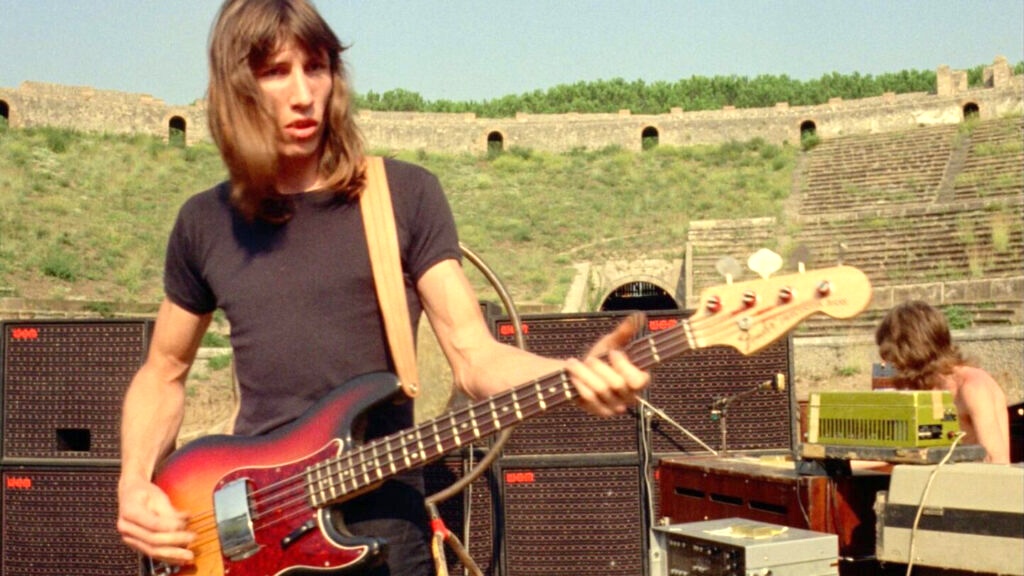
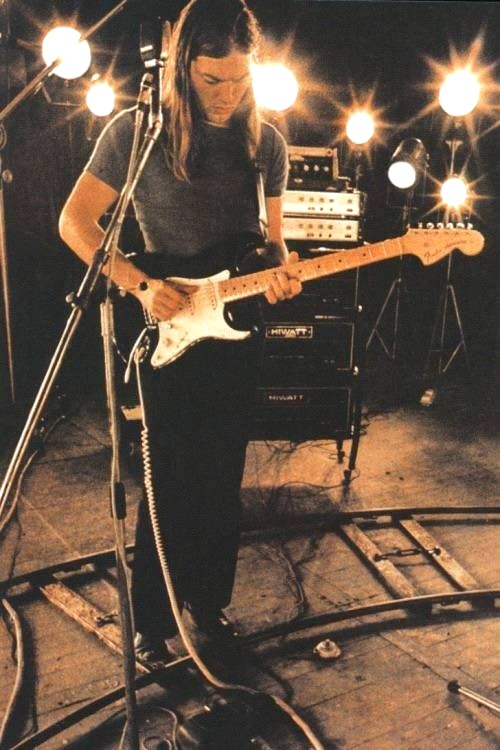
Which finally brings me to this re-release. In 1972, director Adrian Maben persuaded the band to go to the ancient ruins of Pompeii, set up their equipment in an empty arena and run through excerpts from their new album, Meddle, plus a selection of live favourites (Careful With that Axe, Eugene; A Saucerful of Secrets; Set the Controls for the Heart of the Sun). There’s no audience present unless you count the various film technicians and road crew, standing stripped to the waist in the baking sun and watching with apparent indifference as David Gilmour, Roger Waters, Richard Wright and Nick Mason unleash a barrage of sonic mayhem. On the directorial side there’s little in the way of special effects. Cameras, mounted on rails, prowl restlessly around the musicians as they play, sometimes tracking along behind stacks of sound equipment. At key moments in the Blitzkrieg, images of ancient statues, bubbling lava pits and fiery sunsets are inserted into the mix, Maben seeming instinctively to know when to augment a particular sound with a visual counterpoint.

What’s new here is the massive scale of an IMAX screen, a pin-sharp print and a crisp, clear digital sound mix that captures every last musical nuance in perfect detail. There are cutaways to the band ensconced at Abbey Road studios, working on what will be Dark Side of the Moon. The wonderful advantage of hindsight shows four young men who are quietly confident that their new brainchild will be good, but completely unaware that in just one year, they will be releasing one of the biggest-selling – and many would claim – greatest albums in history.

The next time I saw Floyd live, it was at Wembley Stadium, with that massive state-of-the-art show that included the infamous exploding aeroplane and levels of technical razzle-dazzle that changed the rock business forever. But it’s at Pompeii that I prefer to remember them, a youthful quartet just beginning to nuzzle hungrily at the edges of greatness, blissfully unaware of everything that’s about to follow. And I’m amazed to discover that Maben’s film is so ingrained in my memory that I can remember key shots and images as they unfold. It’s one hour and thirty-two minutes of sheer heaven for me and, glancing around the packed auditorium, I can see I’m not alone.

Stars? For me, this one can’t be anything less than the maximum allowed. After all, I’ve waited a very long time to see it. Again.

5 stars

Philip Caveney

Warfare

19/04/25

Cineworld, Edinburgh

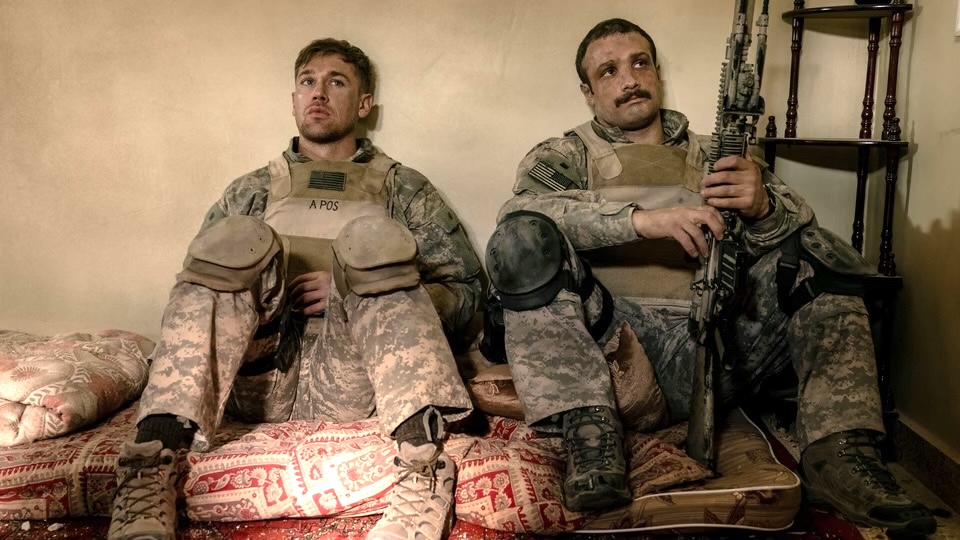
After the ferocity of Civil War, perhaps it was inevitable that Alex Garland’s next project would see him heading further into the world of military action – though it must be said that Warfare, co-written and co-directed with former marine Ray Mendoza (depicted in the film by D’Pharoah Woon-A-Tai), may qualify as the most realistic slice of it ever recreated on camera. Based on a real event, which took place in November 2006 in Ramadi, Iraq, it follows a platoon of Navy SEALS into action, as they occupy a house and await incoming Iraqi forces.

We first meet the platoon in their downtime as they watch an Eric Prydz workout video featuring some statuesque women and one man, bobbing about to the strains of Call On Me. The men laugh along and react to each other’s antics, letting off steam before heading into action. But the fun is short-lived. All too soon, they’re sneaking down darkened streets, singling out the house where they are going to hole up overnight while they wait for things to kick off. Two Iraqi families live there and are taken captive and secured in one room ,while the troops take up their positions, keeping watch for the insurgents they are told are gathering in this area.

As a new day dawns, I begin to recognise some of the actors. That’s Will Poulter as Erik and Joseph Quinn as new recruit, Sam. And there’s Cosmo Jarvis as the sniper, Elliott. But I can’t recall seeing a film where recognising the actors matters less, because this is a true ensemble piece, the characters’ identical uniforms making it difficult to tell them apart, just as it must be in reality. 

Warfare does exactly what it says in the title. It takes you from your safe seat in the cinema and plonks you down in the midst of the action – and it’s not somewhere you really want to be. There are none of the tropes that we so often associate with movies about war. There are no heroes here, no villains, no miraculous dodging of incoming bullets, no conveniently-timed lulls in the action.

At first what there is in abundance is waiting. The troops sit around, bored, longing for the action to start but only so it will eventually be over. And I share that awful anticipation with them. I flinch at every unexpected sound; I hold my breath whenever a radio crackles into life. And, when the action does come, it occurs with such unexpected shock that I find myself wincing at every explosion, every unexpected rattle of gunfire. 

The real-life event I spoke of is actually a tragedy. This is not the story of a platoon of soldiers who act with extraordinary valour and emerge with everything intact. It’s the story of a bunch of guys who have their asses handed to them in a string bag. It’s hard to watch and occasionally even harder to stomach, because there’s very realistic injury detail here and the troops who went through the experience have contributed all their memories to ensure that nothing is left out.

Warfare is truly game-changing. Does it qualify as entertainment? The truth is, I’m really not sure that it does, but it feels to me like an important film and a unique achievement, a construct that doesn’t try to tailor its narrative in an attempt to make it more palatable, preferring to depict warfare as it really is: bloody horrible. 

Those of a nervous disposition may want to give this one a wide berth – and anybody out there who harbours illusions about the nobility of war is about to have them well and truly shattered.

4.6 stars

Philip Caveney 

Drop

18/04/25

Cineworld, Edinburgh

I’m not at all sure about Drop at first. It begins with a woman trying to escape a brutal attack from a violent man, the camera lingering on her battered face, so I’m worried it’s going to tread the ‘female suffering as spectacle’ path – and that, therefore, I’ll hate it. Thankfully, this approach is limited to the opening scene, and things quickly take a turn for the better.

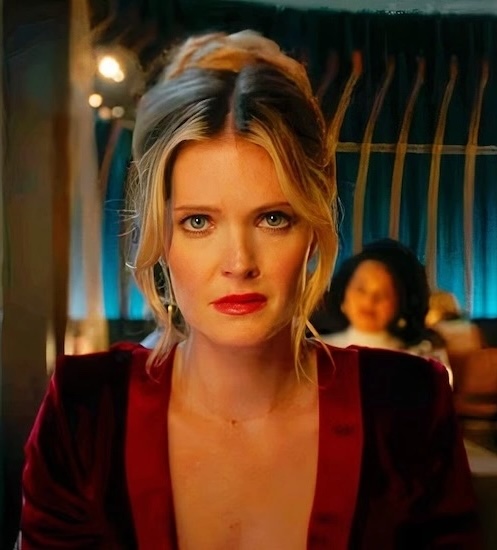
The woman, Violet (Meghann Fahy), is a psychotherapist, specialising in survivors of domestic abuse. She knows what they’ve endured because she’s been there too. Since her ex’s death, dating hasn’t exactly been her priority: she’s been focusing on raising her son, Toby (Jacob Robinson), and building her career. But her sister, Jen (Violett Beane), thinks it’s time that Violet had some fun, and persuades her to meet up with the guy she’s been chatting to via social media. He seems nice, and Jen’ll babysit Toby. What’s the worst that can happen?

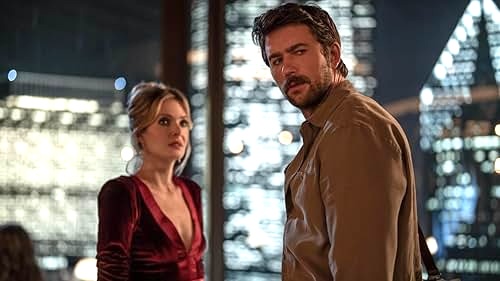
Henry (Brandon Sklenar) is almost too good to be true. He’s handsome, charming and easy to talk to. Sure, the fancy restaurant he’s suggested for their date is situated on the top floor of a soaring skyscraper, but how is he supposed to know that Violet’s afraid of heights? Palate has an excellent reputation and a lovely atmosphere. Surely this is the start of something promising…

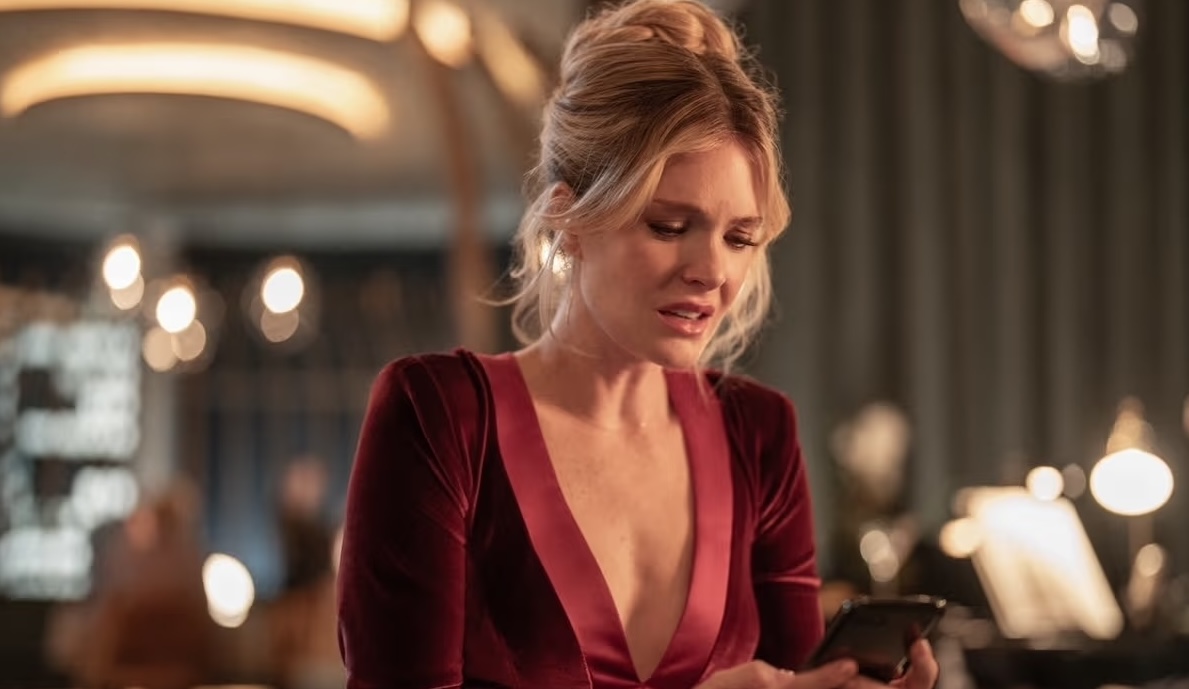
But then Violet begins to receive mysterious ‘digi-drops’ (airdrops), which gradually grow more threatening in tone. Digi-drops can only be sent within a fifty-metre radius, so she knows they’re coming from within the restaurant. But, of course, there are countless people glued to their phones; how can she identify who’s responsible? And anyway, that’s soon the least of her worries because, before she knows it, she’s being instructed to murder her date – and, if she refuses, her tormenter says he will kill her son.

If the premise sounds preposterous, that’s because it is, but the script – by Jillian Jacobs and Chris Roach – is genuinely thrilling, the tension ramped up with each passing minute. Fahy convinces as the desperate woman, fighting an unseen enemy with everything she’s got, and the plot is twisty, turny and delightfully unpredictable. Indeed, under Christopher Landon’s direction, Drop exhibits as much sophistication as Palate‘s Michelin-starred dishes – until we reach the final scenes, where ‘bold’ segues into ‘bonkers’ and ‘believability’ flies out of the smashed window.

In the end, the good outweighs the bad, and I leave the cinema more than satisfied by this exciting whodunnit with its appealing central duo and intriguing cast of suspects.

4 stars

Susan Singfield

The Penguin Lessons

16/04/25

Cineworld, Edinburgh

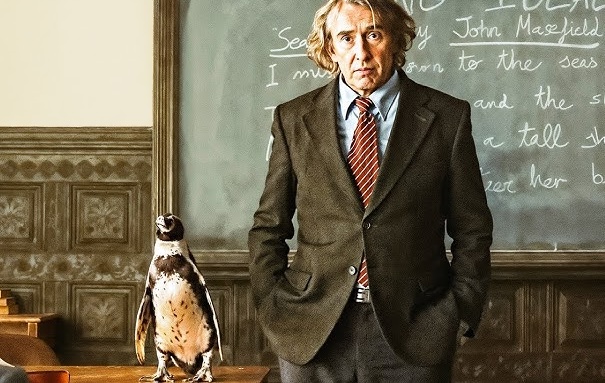
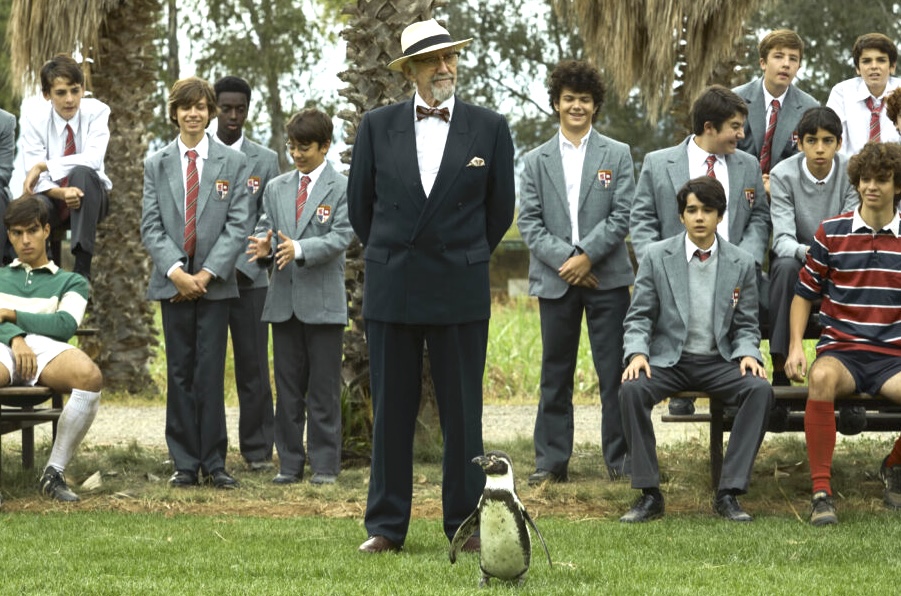
Adapted from Tom Michell’s memoir by the ever industrious Jeff Pope, The Penguin Lessons begins in 1976, when Michell (Steve Coogan) is a somewhat disaffected English teacher, beginning a new post in a private school in Argentina. He arrives in a country that has recently undergone a brutal coup and takes up his post under the watchful gaze of Headmaster Buckie (Jonathan Pryce), a man who prefers to put the needs of the school first and pretend that the current political upheaval is of no consequence. The only friend Tom makes on the staff is Tapio (Björn Gustafsson) a well-meaning but humourless Finlander, who seems to have the knack of saying the wrong thing every time he opens this mouth.

On a brief visit to Ecuador, Tom chances upon a group of oil-covered penguins washed up on a beach. One of them is still alive and – mainly because he’s trying to impress a young (married) woman he’s met in a dancehall – Tom takes the luckless bird back to his hotel room and cleans him up. Having acquired the penguin – Tom dubs him ‘Juan Salvador’ – he finds it impossible to get rid of it, the penguin following him hopefully everywhere he goes. Eventually, Tom has no option but to take Juan Salvador back to the school and keep him hidden in his room… until, in a moment of madness, fuelled by the indifference of his privileged pupils, Tom is prompted to bring the creature into the classroom…

The Penguin Lessons could so easily descend into a mawkish comedy at this point – and there’s no denying that Juan Salvador (or at least the penguin actor who portrays him) is impossibly cute, coaxing adoring sighs from the audience every time he waddles engagingly onto the screen. But Pope’s script skilfully touches on darker themes, dealing with the brutal regime of the Junta and the plight of the ‘disappeared,’ the thousands of people arrested by Perón’s forces. Tom manages to distance himself from the situation until Sofia (Alfonsina Carrocio), the daughter of the school’s housekeeper, Maria (Vivian El Jaber), is arrested on the street and taken away to be ‘interrogated.’

Coogan is on impressive form here, portraying Tom as a cynical, hardbitten loner with something lurking in his past. The short scene where we discover the reason for his remoteness is affecting because it is so understated and yet so utterly believable; likewise, the scene where Tom is prompted to confess to Maria that he could have tried to help Sofia as she was being arrested but was ‘too scared.’

Peter Cattaneo directs with a lightness of touch that effortlessly fuses the film’s disparate elements. There are many who will criticise its ambition but, to my mind it’s beautifully handled: a funny, touching story set against a tumultuous background.

And now, if you’ll excuse me, I’m off to p-p-p-pick up a penguin.

4 stars

Philip Caveney

Mr Burton

11/05/25

Cameo Cinema, Edinburgh

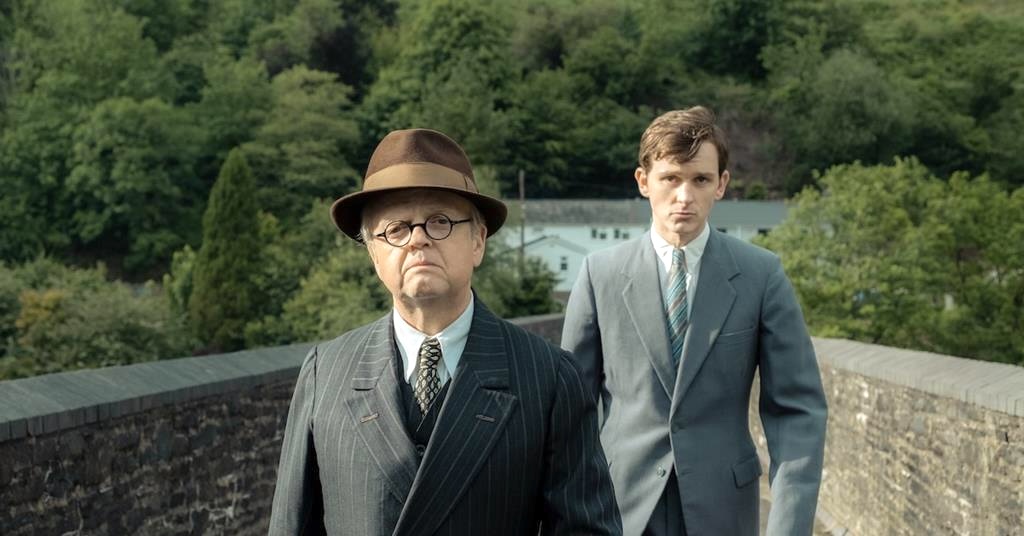
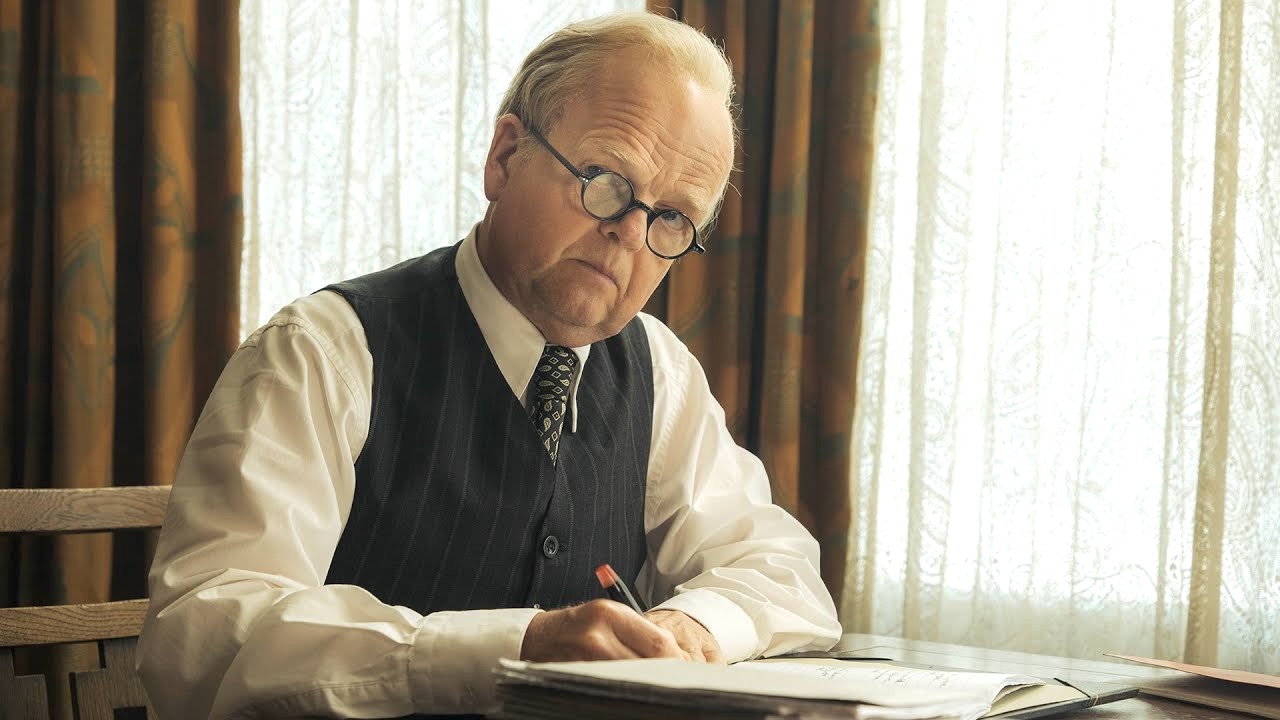
The theme of the ‘inspirational teacher’ is a well-worn cinematic device but, in the case of Mr Burton, it does have the advantage of being true. The titular Mr B (impeccably played by Toby Jones) is a quiet, but authoritarian teacher in a little school in Port Talbot, a man nursing his own thwarted ambitions as a playwright.

We join the story in 1942, when Mr Burton is doing his level best to instil a love of Shakespeare into his students, despite the glowering presence of the coal mines that threaten to claim those young men who are not thrown into the maelstrom of the Second World War. Burton is somewhat bemused to discover that the pupil who has the strongest response to his English literature lessons is Richard Jenkins (Harry Lawtey), a boy all-but abandoned by his coal miner father, Dic (Steffan Rhodri). Richard is obliged to live in the overcrowded home of his sister (Aimee Ffion-Edwards) and her resentful husband, Elfed (Anuerin Barnard).

When Richard shows considerable promise in a amateur production set up by Burton, the teacher is prompted to take the boy under his wing, giving him lessons in elocution in an attempt to erase his local accent, even finding him (and paying for) accommodation with his landlady, Ma Smith (Lesley Manville). Inevitably, tongues begin to wag as suspicious observers cast doubt on Mr Burton’s intentions.

When he takes the step of adopting the boy and lending him his surname, in the hope of getting him a scholarship at Oxford, the gossip intensifies…

Written by Tom Bullough and Josh Hyams and directed by Marc Evans, Mr Burton is an atmospheric period piece that captures the hardscrabble era in which it’s set. Jones is as assured as ever in a role that allows him to give little away, while Leslie Manville is a perfect foil for him – and makes a very decent fist of the Welsh accent. But it’s Lawtey’s star-making turn as Richard Jenkins/Burton that provides the heart and soul of this film. He’s utterly convincing as a shy, vulnerable teenager in the first half and then, when the action skips onward several years, convincingly nails Richard Burton’s sonorous tones and lithe sexuality, as he struggles to come to grips with his breakthrough role as Prince Hal in Stratford.

Lawtey’s astonishing transformation – and the astute comparison with the way that Hal shrugs off his former mentor, Falstaff in Henry IV – ensures that Mr Burton is a riveting piece about the importance of nurture and the many ways in which teaching can provide that all-important first step on the path to greatness.

4.4 stars

Philip Caveney

The End

30/03/25

The Cameo, Edinburgh

Joshua Oppenheimer might not be the most prolific of directors, but he’s certainly one of the most original. The documentary-maker’s first foray into fiction is a case in point: who else would offer us an unsettling post-apocalyptic… musical?

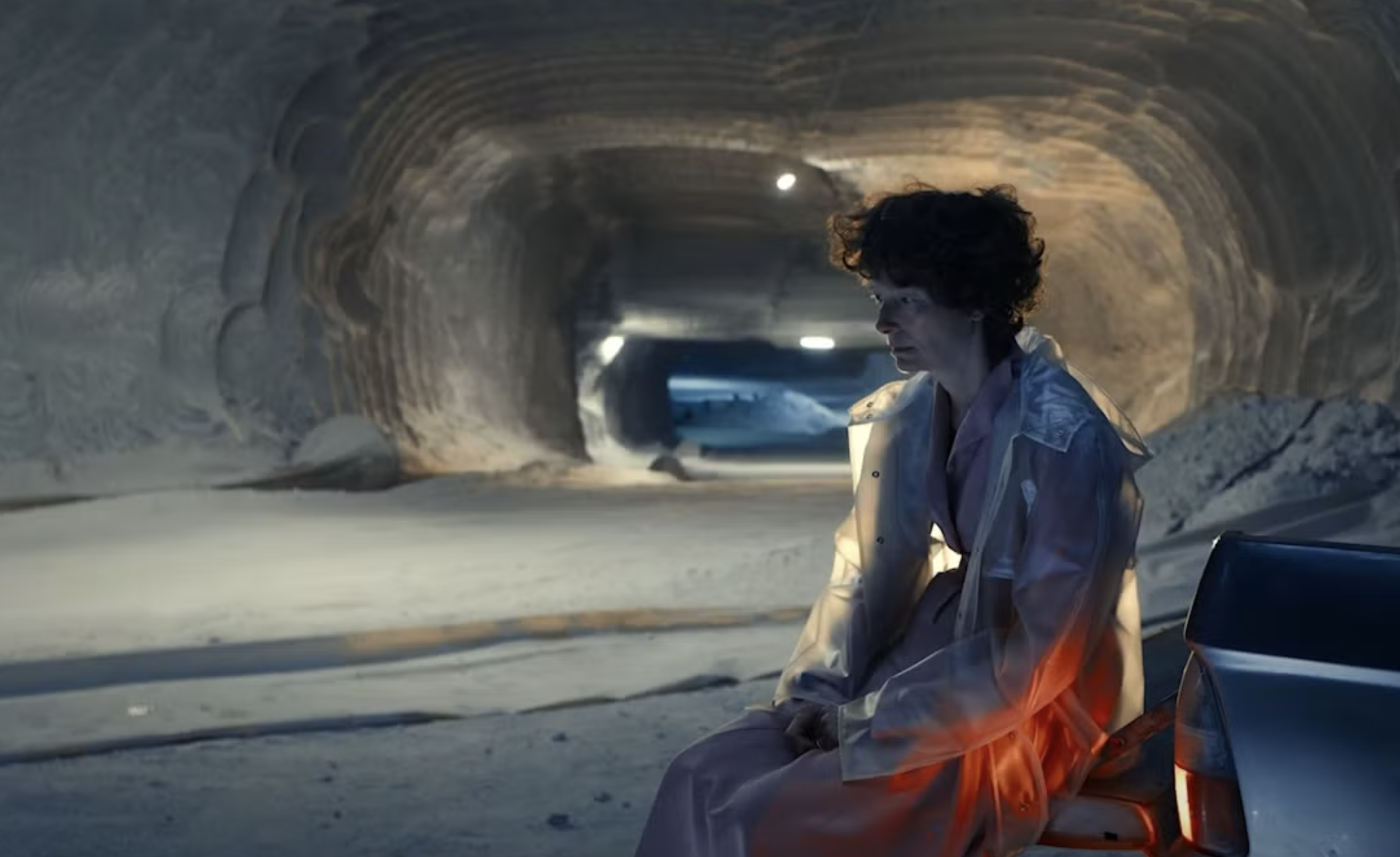
The setting is an oligarch’s nuclear bunker. There’s been some kind of climate disaster, precipitated by the billionaire’s fossil fuel company. Most of humanity is dead, but – decades after the fallout, far below the earth – a chosen few still live in luxury, albeit in the confines of some eerie salt mines.

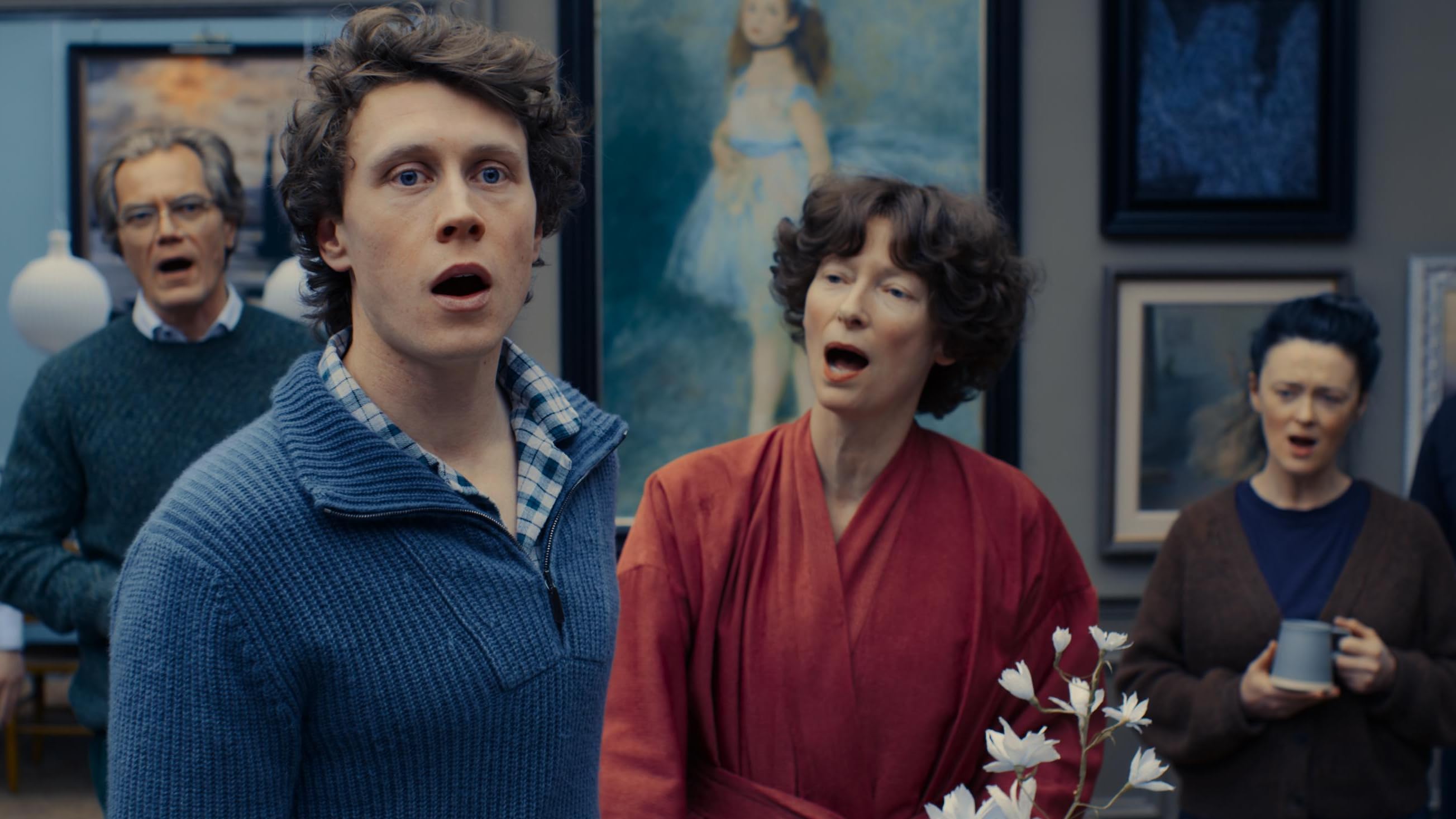
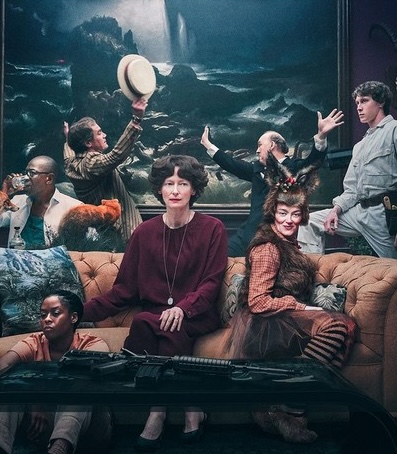
Father (Michael Shannon) is the oligarch, Mother (Tilda Swinton) his wife and Son (George McKay) their twenty-year-old child, born underground. He has never seen the sky, never met anyone outwith their small circle – and never questioned his parents’ tales about their former lives. Instead, he immerses himself in building an intricate model of all the outside places he’s only ever heard about.

The bunker has three more occupants: Friend (Bronagh Gallagher), Butler (Tim McInnerny) and Doctor (Lennie James). The trio are touted as “part of the family” but it’s pretty clear they’re here to serve, to take care of the cooking, the cleaning and the rich people’s health. Father spends his time working on a self-aggrandising autobiography, resisting Son’s attempts to offer editorial advice, while Mother fusses endlessly over the exact positioning of the priceless artworks on the walls. Life ticks by, one day much like another, an opulence-clad monotony that fulfils none of them.

And then Girl (Moses Ingram) turns up. She’s the first outsider Son has ever met, and he’s smitten. But she’s had to leave her family behind, and her survivor’s guilt opens up new avenues of thought for Son. Why has his family been chosen, out of everyone, to inhabit this haven? And why, when the place is vast, are there so few of them? Once he starts to ask questions, everything changes…

Mikhail Krichman’s cinematography is sumptuous: the scenes in the salt mines are particularly beautiful, but every shot is a work of art, as meticulously framed as the Renoirs and Monets decorating the bunker.

The film is billed as a musical but, despite the lengthy spoken sections, it feels more like an opera, with its formality of tone and portentousness. The music by Marius De Vries and Josh Schmidt amplifies the heightened emotions, but the vocal parts are sensibly kept simple, which suits the non-singers in the cast (such as Swinton). Ingram, Gallagher and McKay are more accomplished, and they are given the most to do.

Despite its bloated running time, The End is a thought-provoking and startlingly unconventional movie, quite unlike anything else on the big screen. It’s not one you’ll find at a multiplex, but it’s definitely worth the price of a ticket at your local indie (or Picturehouse) cinema.

4.3 stars

Susan Singfield

Dr Strangelove: National Theatre Live

29/03/25

Cineworld, Edinburgh

In 1964, I watched Stanley Kubrick’s dark satire, Dr Strangelove, in an RAF cinema somewhere in darkest Lincolnshire. I was thirteen years old, arguably a bit too young to fully appreciate its biting satire, but I remember being absolutely terrified by the apocalyptic ending, which left me feeling decidedly nervous about the world’s future.

Fast forward to the early 1980s, where I attend a stand-up gig at the Old Grey Mare pub in Didsbury, Greater Manchester. Friends have encouraged me to go along and catch a gifted young impressionist called Steve Coogan, who they predict ‘has a promising future ahead of him.’ It costs me fifty pence to get in and the funniest routine is the one where Coogan adopts the persona of a BBC reporter, commentating on a live tragedy unfolding in… er… Camberwick Green.

What I could never have predicted is that in 2025, Coogan would be starring in an adaptation of Kubrick’s film, adapted by Armando Iannucci from the original screenplay co-written by Kubrick and Terry Southern – and, perhaps more pertinently, that a story that played like an outrageous spoof in the 1960s feels suspiciously like a cautionary warning in the present day.

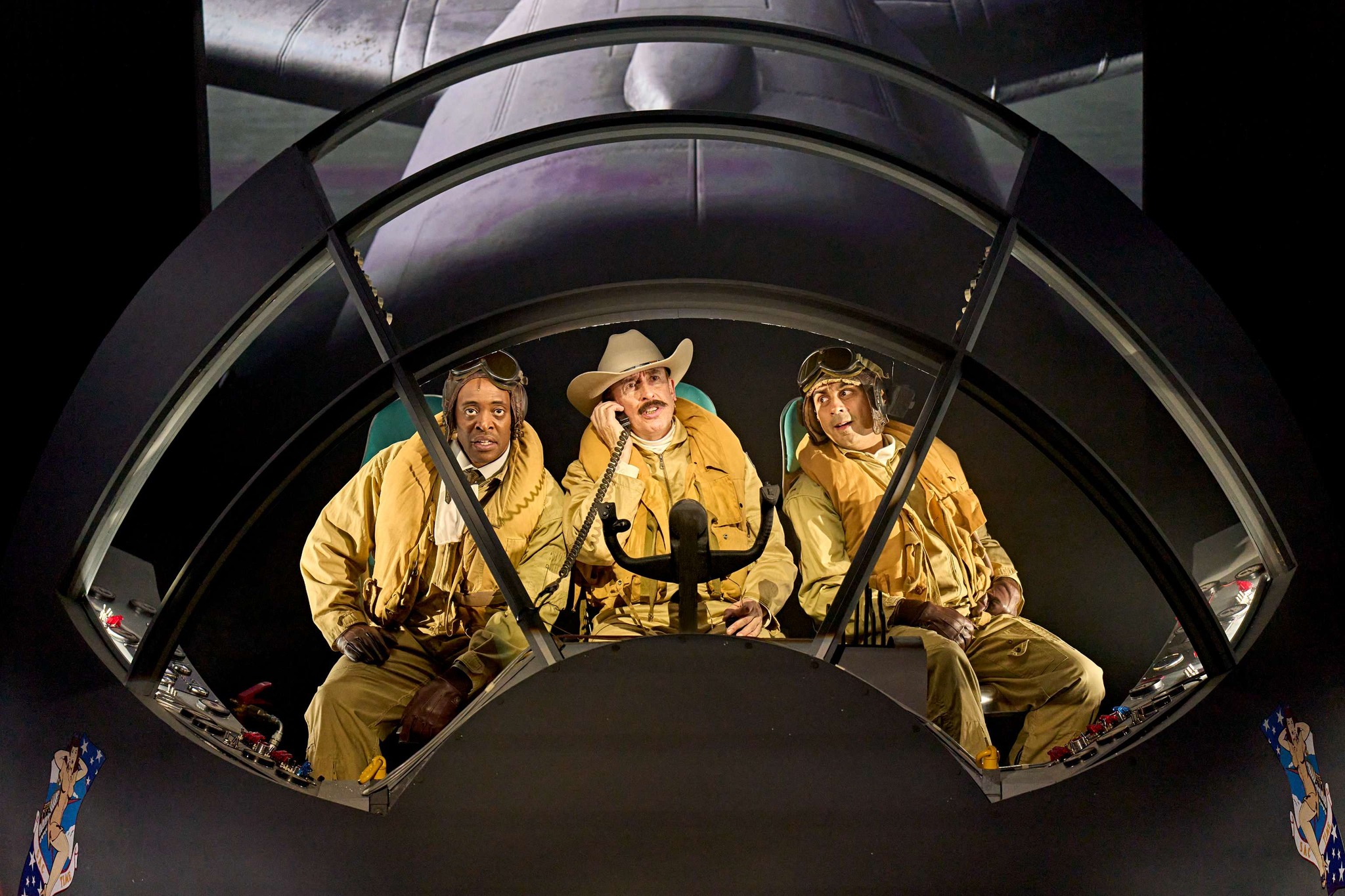
Brigadier General Jack D Ripper (John Hopkins) has a paranoid breakdown and orders a B52 bomber, piloted by Major TJ ‘King’ Kong (Coogan, in one of four roles) to drop a nuclear device on a target in the Soviet Union. President Merkin Muffley (also Coogan), after being briefed by General Buck Turgidson (Giles Terrera), finds himself presented with the tricky task of contacting the Russian President to warn him of the incoming attack. The Russian premier is understandably not too happy about the situation, especially when he learns that the aircraft is maintaining complete radio silence, and that the attack can therefore not be called off.

A whole series of disastrous events ensue…

This brilliantly-staged production is a weird hybrid – part play, part film – and at times it is astonishing in its sheer invention. Coogan is extraordinary. Like Peter Sellars before him, he also takes on the role of RAF officer Group Captain Lionel Mandrake and, of course, the titular Dr S, a man who can’t seem to stop himself from making involuntary Nazi salutes… (Now where have I seen that recently?) Some of the lightning-fast costume changes he’s obliged to undergo are so slickly done that I’m left gasping.

But it’s not just Coogan who excels here. Hopkins plays the cigar-chomping, alpha male, Jack D Ripper with panache, while Terrera milks plenty of laughs as the scheming, self-serving Turgidson. There’s a huge cast at work here and every one of them is drilled to perfection.

Hildegard Bechtler’s set design is accomplished, opening and closing to disclose a wild variety of settings, even managing to convincingly place the audience in the cockpit of a B52 bomber, flying over mountainous terrain. Iannucci handles the adaptation with a light touch, capturing the original film perfectly and only occasionally tweaking the script to accommodate more recent references.

You don’t have to have seen the original to appreciate this superb production, but it might prompt many to investigate it on streaming. Kubrick made many great films over his long career and was famously pernickety about his work. But I have no doubt that he would be absolutely delighted by what director Sean Foley and his team have done with what could be the filmmaker’s greatest achievement.

5 stars

Philip Caveney
Flow

23/03/25

Cineworld, Edinburgh

We managed to catch nearly all of this year’s Oscar nominated films at the cinema before (or shortly after) the event, but news that the widely-admired The Wild Robot hadn’t taken the gong for ‘best animation’ came as something of a surprise. Only a few minutes into Flow, which is finally on general release, that surprise is quickly annihilated. I often think that the word ‘masterpiece’ is overused but this groundbreaking animation by Latvian director Glints Zilbalodis is so accomplished, it’s all-too easy to see why it was handed the top award. The fact that it was made for a budget of three-million dollars – utilising free software package, Blender – only adds to the accomplishment.

Zilbalodis – who co-wrote the story with Matiss Kaza and Ron Dyens – eschews any of the long-established tropes we’ve come to expect from this genre. There are no talking animals voiced by well-known actors, the creatures that make up the cast can only miaow, bark, screech and grunt at each other and yet, somehow, that all adds to the wonder of the thing. The influences on the verdant look of this strange new world are more Miyazaki than Disney. Much of what I see on the big screen is quite simply breath-taking.

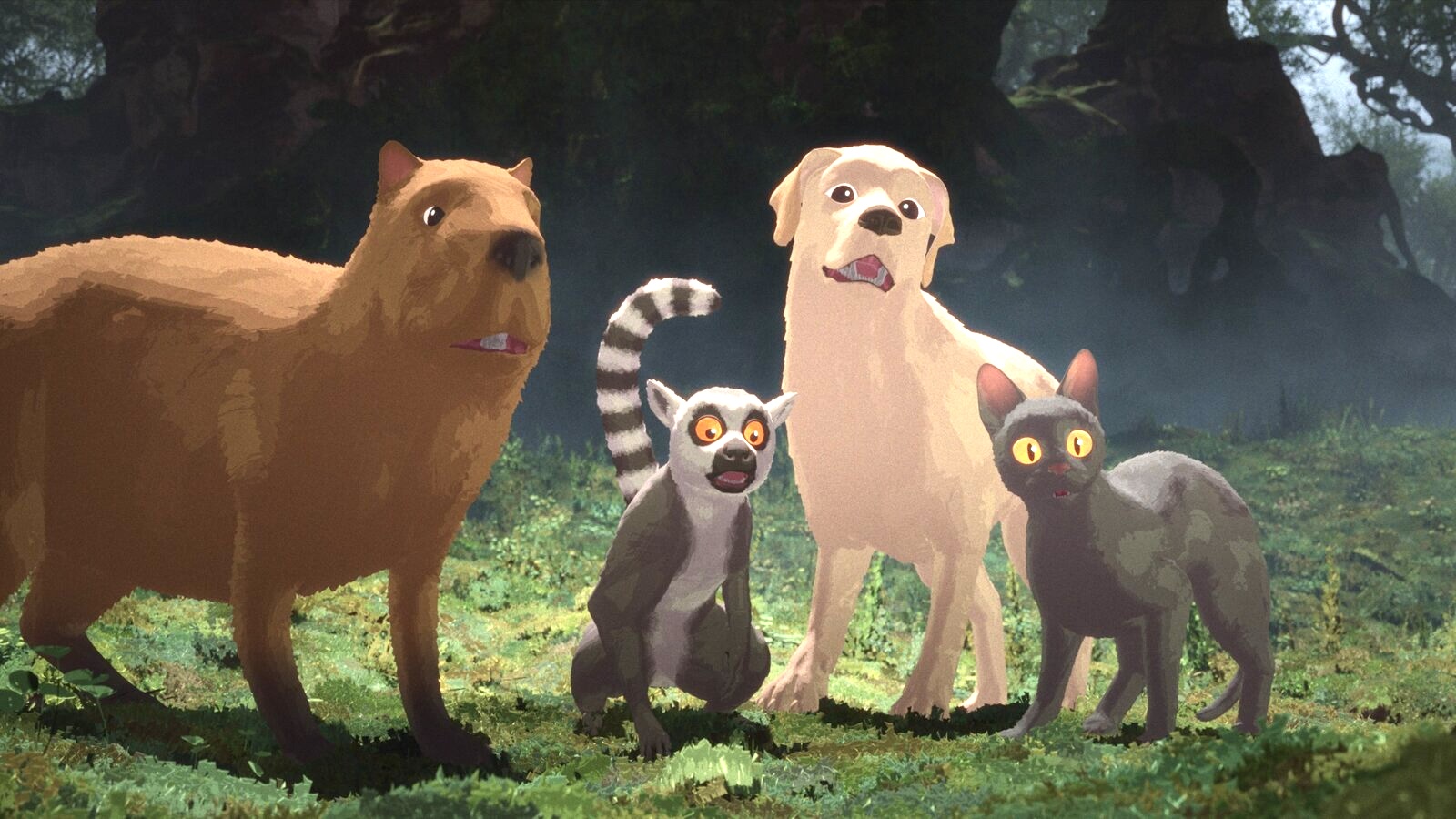
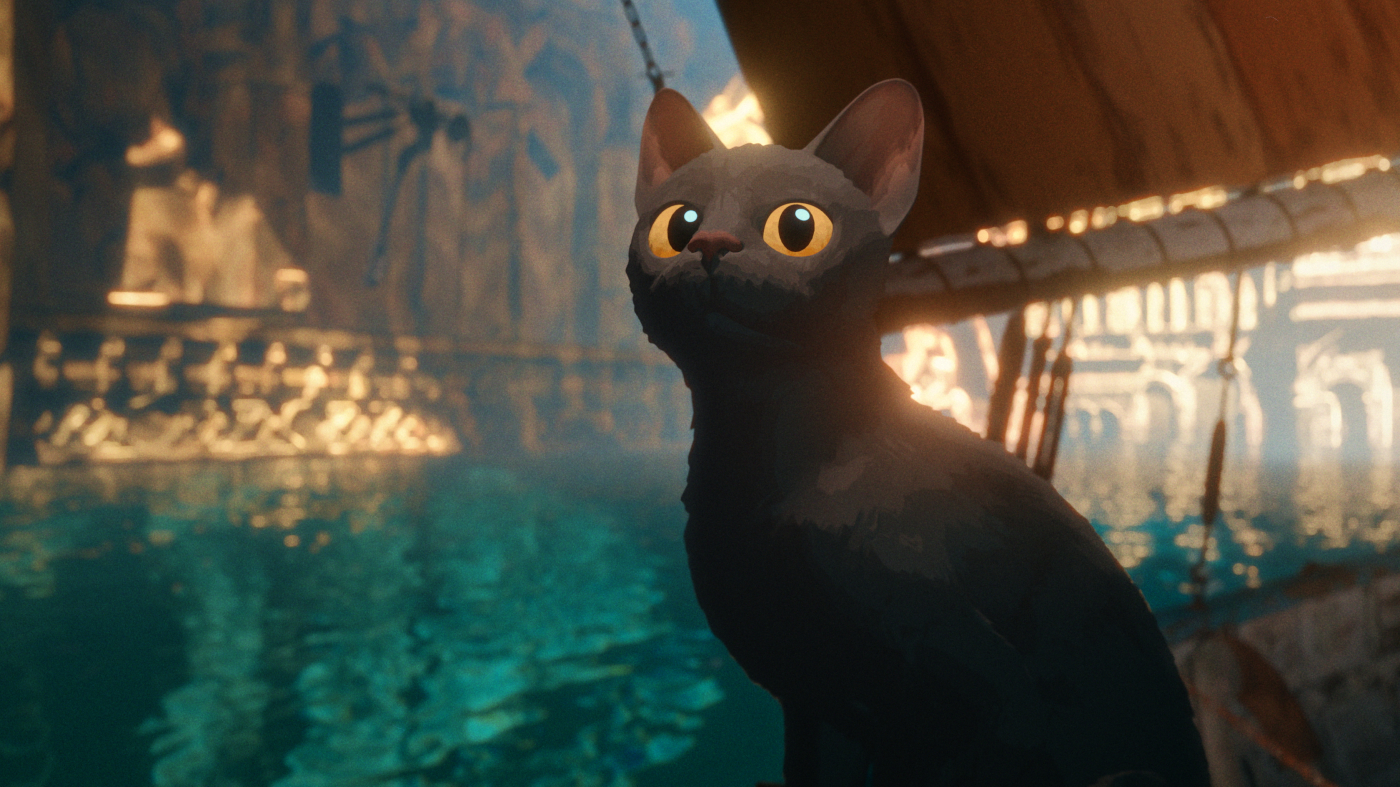
We’re somewhere in the near future and, while initially the world looks intact, there’s no sign of any humans, other than their empty houses and the everyday things they’ve left behind. Our hero is a black cat, who wanders across the countyside engaged in a never-ending search for food. He has a run-in with a pack of dogs, one of them an affable-looking golden retriever, but the confrontation is rudely interrupted by the arrival of a herd of fleeing deer. This is followed by a sudden and unexplained tsunami, a biblical flood that sets water levels rising at a terrifying speed.

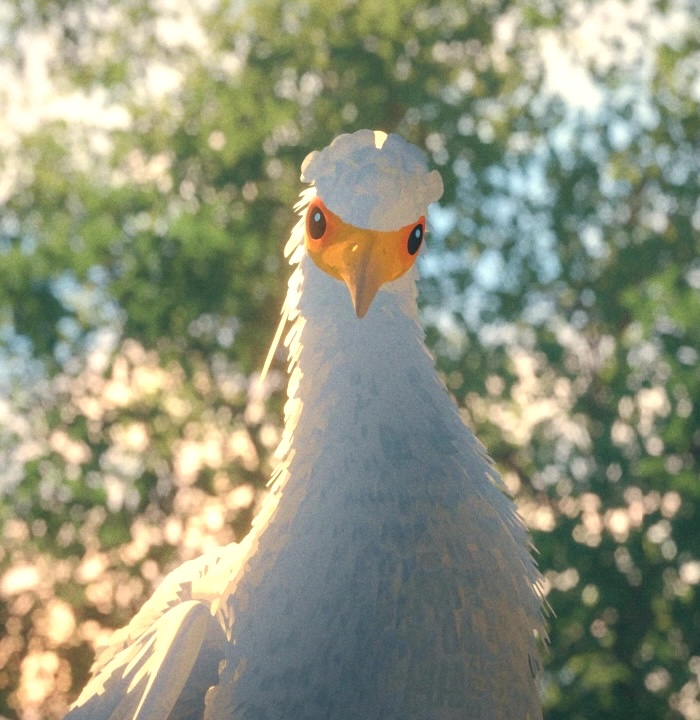
The cat is lucky enough to encounter a sailboat drifting on the torrent but, once aboard, he finds it is already occupied by a capybara; though the two creatures have nothing in common, they quickly learn to co-exist. It’s not long before they are joined by the aforementioned retriever, an acquisitive lemur and a lanky secretary bird, who – it turns out – is pretty good at steering boats. Together they sail onwards, heading now towards a mysterious range of peaks on the far horizon. But what’s waiting for them there?

Flow is a great big allegory wrapped up in an enigma, one that fairly bristles with references. Climate crisis? Right there. Biblical references? Yup, you’ve got them – and not just Noah’s Ark. Allusions to death and what happens when creatures confront it? Oh, yes. It’s probably worth mentioning that there’s a lot of peril in this U certificate story and that some of its strands may not be suitable for younger viewers. While there’s no real violence to speak of, there is evidence of nature red in tooth and claw, so parents should think carefully before taking their smaller offspring along.

For older children and grown-ups, there’s a wonderful feast of viewing to be had, backed by soaring electronic music – composed by Zilbalodis (is there no end to this man’s talents?) with Rihards Zaļupe. Afterwards, there are great discussions to be had about all the different themes touched on by this ambitious, inspired, and sometimes downright challenging story.

It took five years to create Flow – and I’m already looking forward to exploring wherever Zilbalodis takes me next.

5 stars

Philip Caveney

Black Bag

15/03/25

Cineworld, Edinburgh

Meanwhile, back in the most unconvincing retirement since Frank Sinatra announced his ‘final’ tour, Steven Soderbergh has a new film. (We reviewed his previous effort, Presence, in January.) So he’s more productive than most of his peers and, if it sometimes feels as though he’s simply ticking some boxes here – “Ooh, I haven’t done a proper spy movie before!” – Black Bag is yet another notch on his belt, even if it seems like his latest opus is a little too understated for comfort.

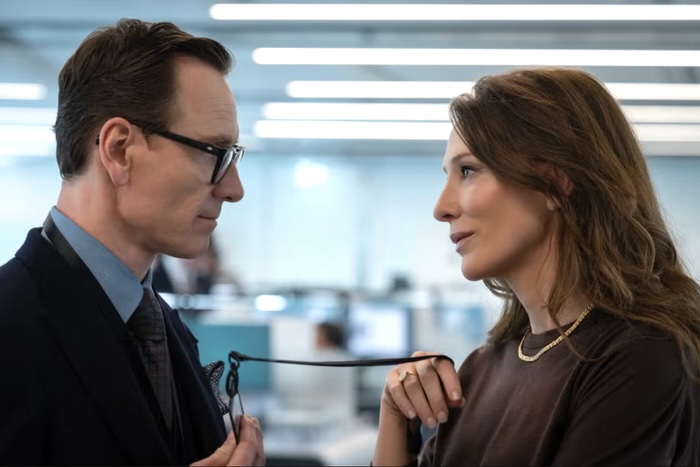
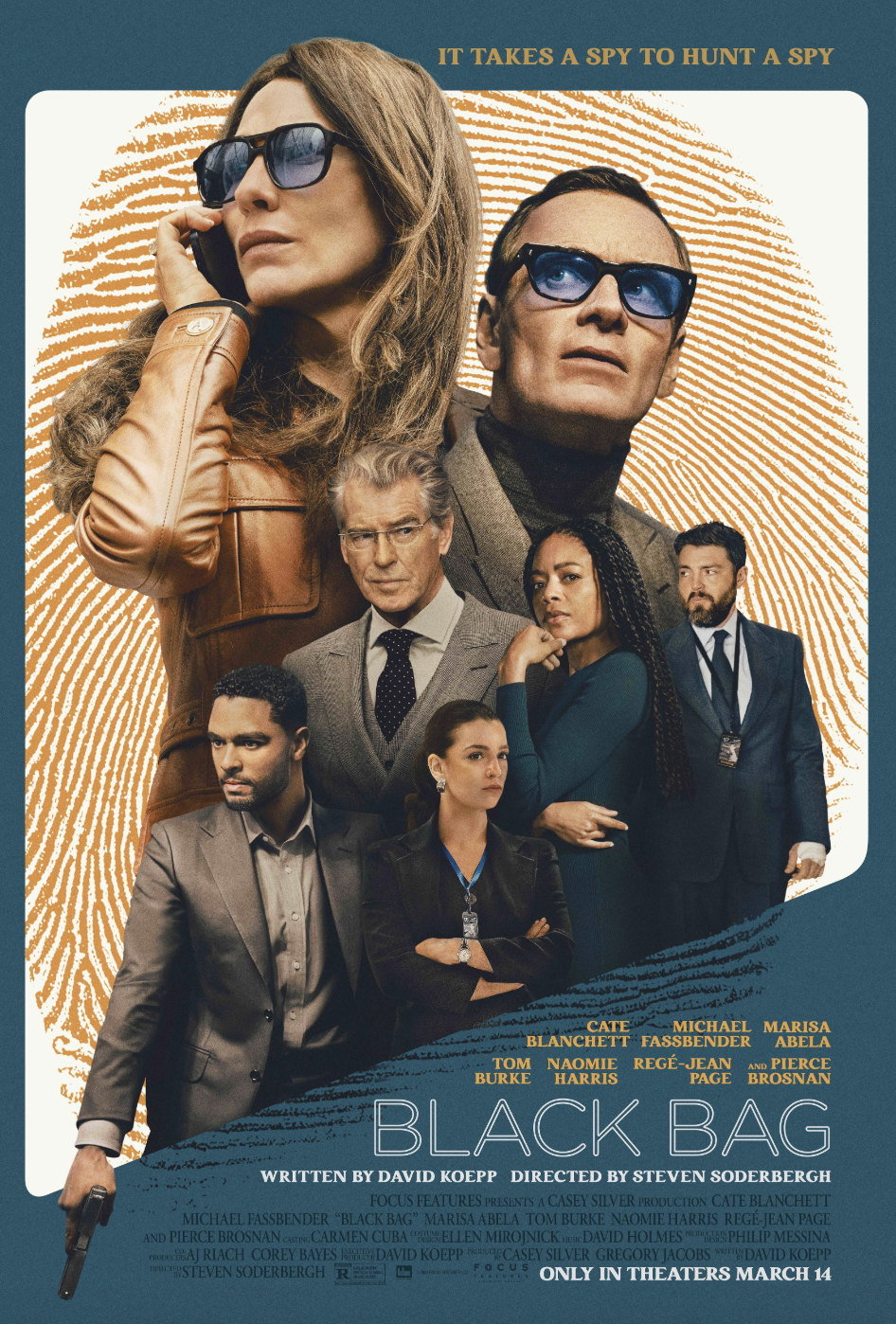
British intelligence officer George Woodhouse (Michael Fassbender) is contacted by his superior, ‘Meachum’ (Gustaf Skarsgaard), to investigate the leak of a top-secret software programme called ‘Severus.’ (It might just as readily have been named ‘McGuffin.) All we really know about Severus is that, if it falls into the wrong hands, thousands of people could die, though exactly how is a matter of conjecture. Meachum warns George that amongst the suspects is Woodhouse’s wife and fellow-operative, Kathryn (Cate Blanchett), who – George has to reluctantly admit to himself – has been behaving rather suspiciously of late. But he trusts her implicitly… doesn’t he? Meachum gives George a week to find out who is responsible but, shortly afterwards, Meachum succumbs to an unlikely heart attack and dies.

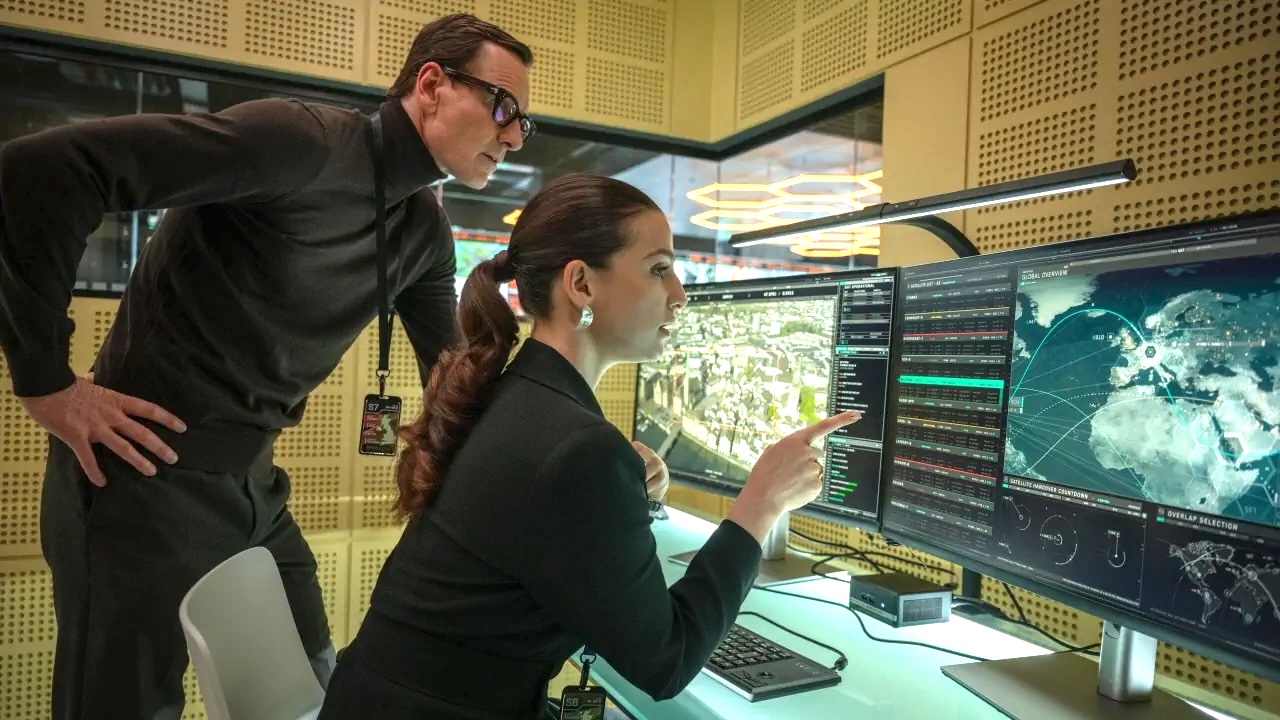
George is a meticulous operative and he promptly invites the four other suspects – all of them fellow spies – to a dinner party at his house, where he spikes a bowl of curry with a truth serum (after first warning Kathryn not to eat any). But who is the most likely candidate for this betrayal? Could it be satellite imagery expert, Clarissa (Marisa Abela)? Her current boyfriend, Freddie (Tom Burke), who is himself having an affair with… somebody? What about the agency psychiatrist, Zoe (Naomi Harris), who is privy to all their secrets? Or her current squeeze, James (Regé Jean Page), a man who is perhaps a little too cool and handsome to be entirely trustworthy?

To add a little extra spice, the agency’s overall boss, Arthur Steiglitz (Pierce Brosnan), would also appear to have some skin in the game…

Black Bag is, I suppose, a slice of cold-war claustrophobia. The title refers to the two-word excuse given by operatives when they don’t want their recent escapades to be investigated too closely. Soderburgh keeps everything bubbling along as David Koepp’s script switches slickly back and forth between the various machinations, and there are some cyber-tech scenes where suspects are investigated by hidden cameras… but there’s a problem here: it’s that I’m simply not invested enough in the characters to care what happens to them. The most interesting scene is the one where the four suspects undergo lie-detector tests and Soderbergh has fun cutting back and forth between their respective POVs, but that’s not really enough to keep me hooked through the entire hour-and-a-half run time.

And the closing scene’s final ‘twist’ doesn’t feel like enough justification for the whole enterprise. So, decent-ish, I guess, but certainly not up there with the director’s finest work.

So, let’s see what he has up his sleeve. It occurs to me that he’s never really done a cannibal holocaust movie. Who knows? It could just happen.

3.2 stars

Philip Caveney
Mickey 17

09/03/25

Cineworld, Edinburgh

After several lengthy delays, Bong Joon-Ho’s follow-up to 2019’s Oscar-winning smash, Parasite, finally makes it into the UK’s multiplexes. Mickey 17 is frankly nothing like its eminent predecessor, closer in tone to the director’s earlier films like Snowpiercer and Okja, the kind of futuristic sci-fi adventures that first helped him build his stellar reputation.

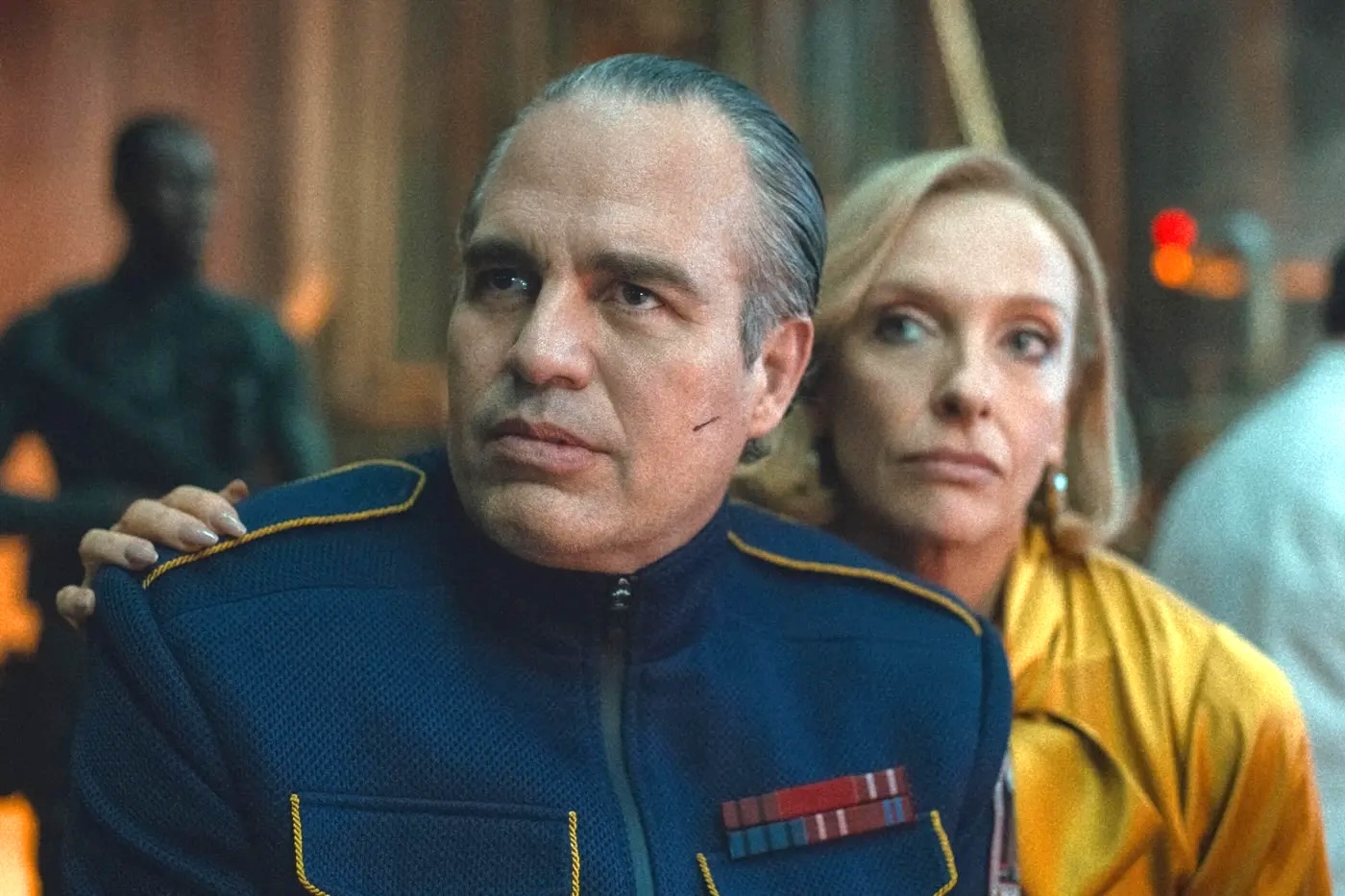
It’s 2054 and the world (as widely predicted) is going to hell in a handcart – so much so that its inhabitants are literally fighting for places on an upcoming space mission to seek out a new habitable planet. The mission is spearheaded by failed Presidential candidate, Kenneth Marshall (Mark Ruffalo), a man so obsessed with his own image he grabs every opportunity to film himself looking suitably heroic. He’s always accompanied by his clingy, sauce-obsessed partner, Yifa (Toni Collette), whose ideas he quickly appropriates and passes off as his own.

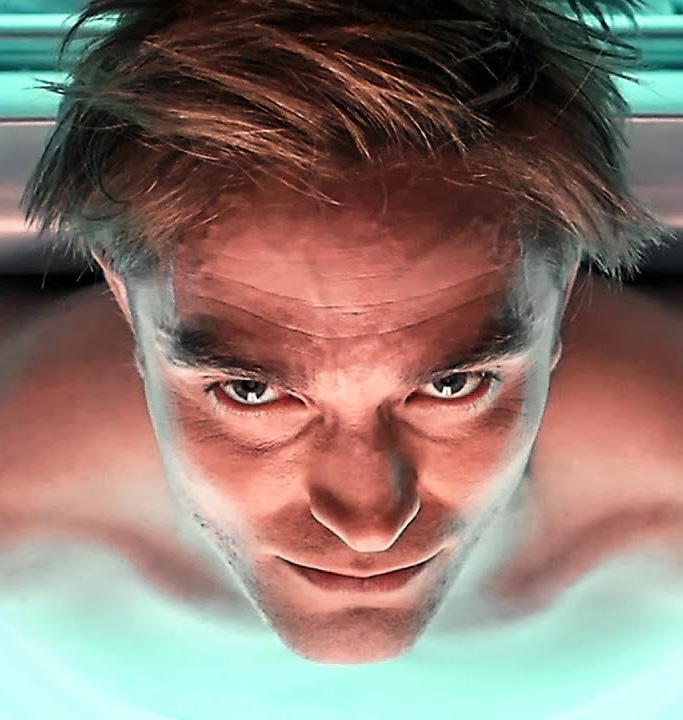
Shy, bumbling Mickey Barnes (Robert Pattinson) and his dodgy best friend, Timo (Steven Yeun), have pressing reasons to secure berths on Marshall’s spacecraft. Their recently launched Macaron business has gone tits-up. Timo financed the venture by borrowing money from a famously terse mobster who is known for exacting recompense from defaulters by the liberal application of a chainsaw – so making themselves scarce seems like a good idea.

Timo (typically) manages to land himself a plum role on the mission, but poor Mickey has to resort to signing himself up as an ‘Expendable.’ As the mysterious ‘Red Hair’ (Holiday Grainger) explains, he will be expected to undertake a series of potentially lethal experiments whilst on board, but no matter, because all his genetic information will be stored in a database. In the event of his death, the company will simply print a new version of him, all ready to start over. What could possibly go wrong?

On the long journey, Mickey’s luck appears to change for the better when he clicks with security officer, Nasha (Naomi Ackie), and enjoys a loving and sexual relationship with her, even though such shenanigans are openly discouraged by Marshall. But once the ship has landed on the ice-bound planet of Niflheim, Mickey begins to appreciate how easily his life can be repeatedly snatched away from him, as he is used as a guinea pig to test out the potentially deadly atmosphere. And once that problem is solved, there are the native creatures to deal with: huge woodlouse-like beasts, quickly dubbed by Yifa as ‘Creepers.’ But are they really as ominous as they look?

Mickey 17 has all the hallmarks of Bong’s sci-fi work. It looks astonishing, particularly the footage on Niflheim, where countless numbers of Creepers go on the rampage. Pattison is terrific in the title role and in the scenes where he has to be both Mickeys 17 and 18, manages to subtly convey the tiny differences between them with considerable skill. Ruffalo also shines in a role where the similarities with the USA’s current president are clearly entirely intentional. (Ironically, the fact that the film’s been held back for so long only serves to accentuate the character’s monstrous ego and constant need to self-aggrandise – all familiar from watching the traits play out on the daily news reports.)

I’d be lying if I said that this is a perfect film. For one thing, there are far too many characters and even a running time of two-hours-seventeen-minutes fails to offer enough space for Bong to fully explore them all. You will briefly spot the likes of Thomas Turgoose and Tim Key in cameo roles, but it’s the female characters in particular who are given short shrift. Grainger’s early appearance suggests that ‘Red Head’ is going to be important to the story but she just fades away as the film progresses. Collette does the best she can with what little Yifa is given to work with, but it’s never really enough.

That said, I find the film fascinating and I love the lo-fi nature of the future of space exploration, full of glitches and hiccups – and the ways in which the lust for personal glory will always vanquish the need to act with compassion towards strangers. Bong (who also wrote the screenplay, based on a novel by Edward Ashton) seems to delight in his central premise, that the rights of the individual come pretty low down the pecking order in the pursuit of so-called progress.

Characters constantly ask Mickey Barnes the same question: ‘What’s it like to die?’ To which he is never able to supply a satisfactory answer. And perhaps that’s because the central premise is so elusive – that age-old mystery about mortality and what it really means. To be – or not to be?

Mickey 17 is proof, if ever needed, that even when he’s not quite firing on all cylinders, Bong Joon-Ho is still one of the world’s most downright watchable directors. I have a blast with this. However, those who come expecting Parasite 2 will definitely be disappointed.

4 stars

Philip Caveney