Film

Rocks

30/10/20

Netlix

In one of those weird examples of synchronicity, I’ve just finished writing a monologue about a fifteen-year-old girl whose mum takes off, leaving her home alone and frantically trying to avoid the prying eyes of social workers. And then we come across Rocks on Netflix, and decide to give it a go.

Ah. It’s about a teenage girl whose mum takes off, leaving her home alone, etc.

Bucky Bakray plays Shola, known to her friends as Rocks. When her mum, Funke (Layo-Christina Akinlude), takes off ‘to clear her head,’ Rocks knows the score. It’s not the first time it’s happened. Funke has mental health problems; it’s not that she doesn’t care. She leaves Rocks some money, after all.

But there’s Rocks’ little brother, Emmanuel (D’angelou Osei Kissiedu), to consider too. He’s still at primary school, and he takes a lot of looking after. It’s too much for Rocks, and she starts to lose her way, falling out with her best friend, Sumaya (Kosar Ali), and taking up with loose-cannon new girl, Roshé (Shaneigha-Monik Greyson). Things soon get out of hand, and Rocks’ world comes crashing down.

Rocks is a lovely, heartfelt movie. It’s tragic, yes, but it’s also warm and life-affirming. It’s great to see a film set in London’s sprawling council estates that recognises inner-city poverty without wallowing in it, and that depicts the city’s working-class residents as rounded human beings. It’s beautifully performed by this troupe of teenage actors, and is utterly believable. I’m especially moved by the realistic depiction of friendship here: the girls quarrel, they tell each other unwelcome truths; they cry, they laugh, they are frequently out of their depth – but, ultimately, they care, and that’s enough.

Directed by Sarah Gavron and written by Theresa Ikoko, Rocks is a wonderful coming-of-age story, and well worth your attention.

4.5 stars

Susan Singfield
Rebecca

23/10/20

Netflix

Ben Wheatley is certainly a versatile director. Over a relatively short career, he’s given us surreal dark comedy in Sightseers, dystopian sci fi in High-Rise and a bloated snore-fest in the endlessly protracted action movie Free Fire. Now he plunges himself headlong into a remake of Rebecca, clearly undeterred by the fact that many cinephiles regard the 1940 version as Alfred Hitchock’s finest hour.

Daphne Du Maurier’s source novel is well-regarded but there’s little doubt that it’s a bit of a potboiler – albeit a brilliantly executed one. Essentially a contemporary riff on Jane Eyre, it has been memorably described as a ghost story without a ghost, which seems about right.

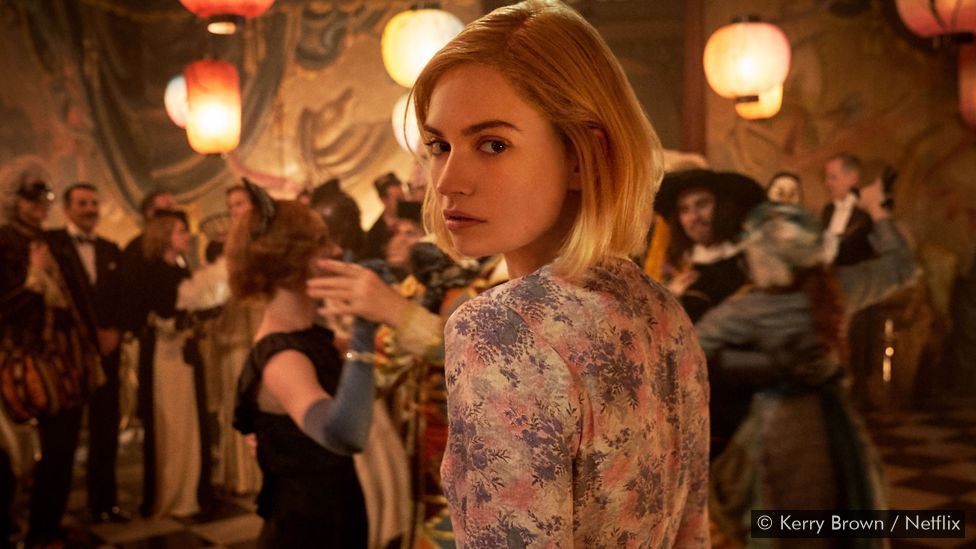
The unnamed protagonist of the story, played here by Lily James, is suffering through the thankless task of being a ‘lady’s companion’ to the extremely unpleasant Mrs Van Hopper (Ann Dowd, being effortlessly loathsome). Mind you, the suffering takes place on the French Riviera, so I can’t help feeling that things really could be a lot worse.

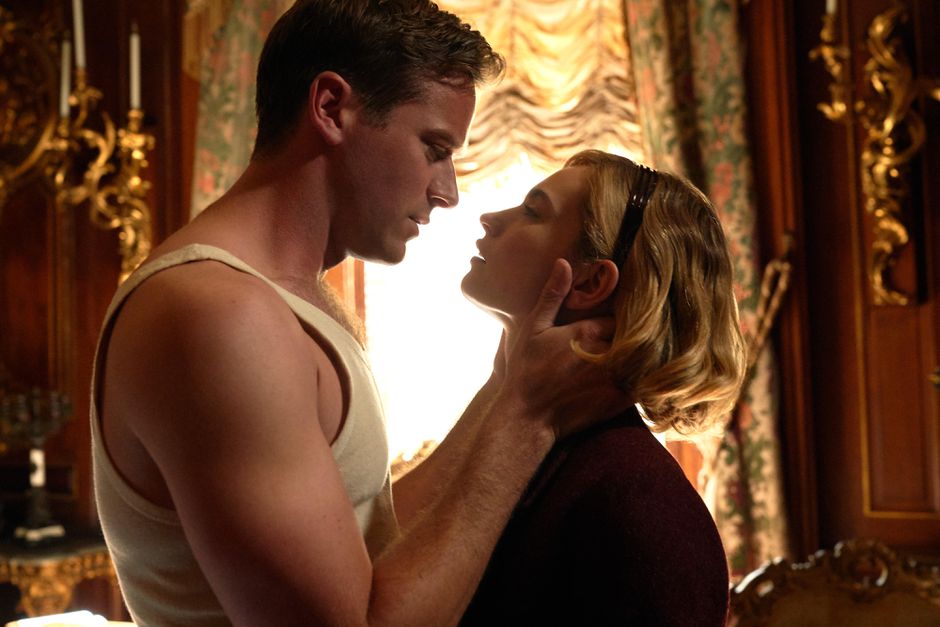
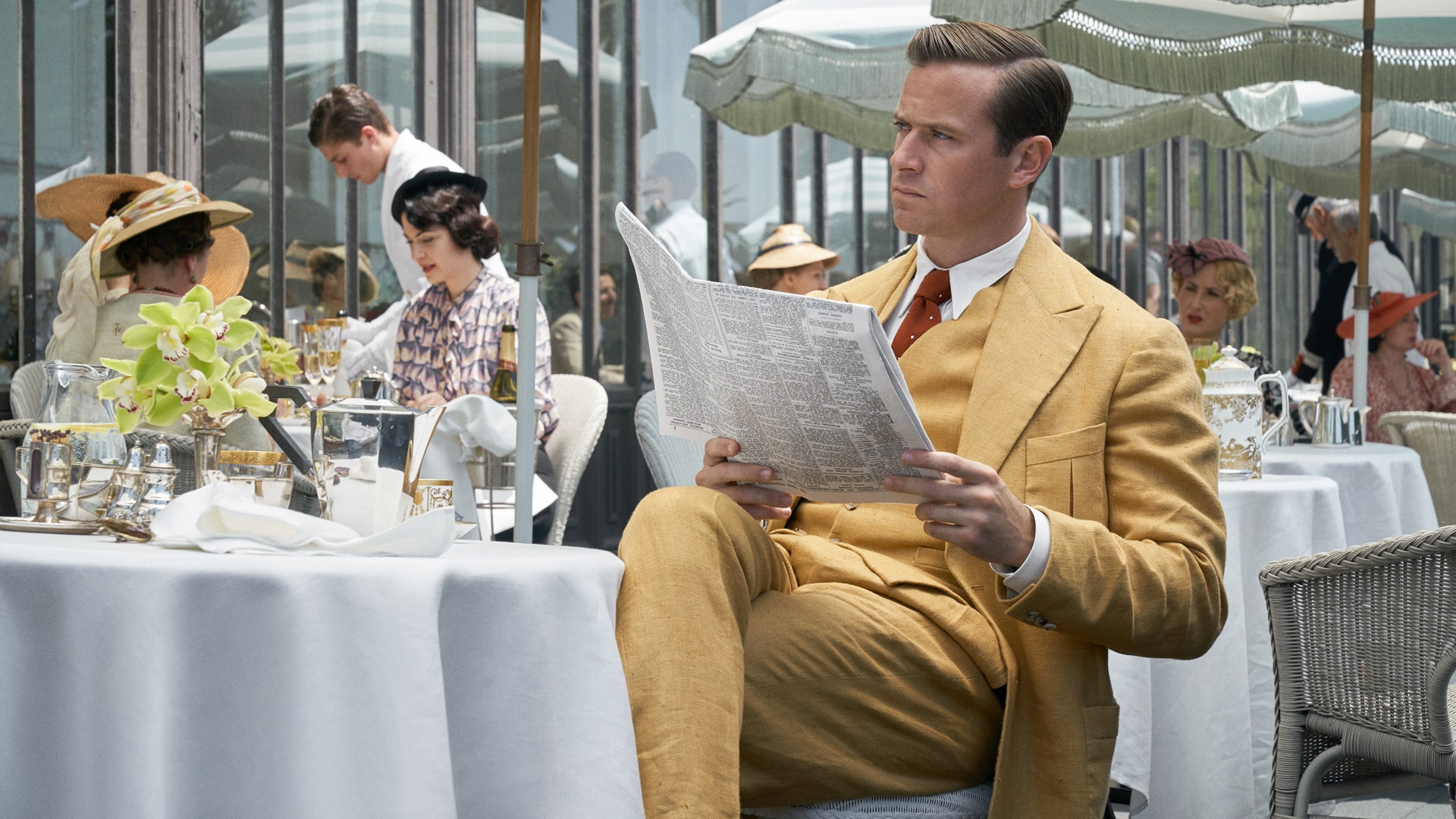
When she encounters eligible widower Maxim De Winter (Armie Hammer), she thinks herself to be completely out of his league, but a whirlwind romance duly ensues and it isn’t long before she’s whisked back to Manderley, his stately home in Cornwall, complete with battalions of servants and a baleful housekeeper, Mrs Danvers (Kristen Scott Thomas). The latter is clearly devoted to her employer but more particularly to the memory of his late wife. The newly married Mrs De Winter soon discovers that Rebecca is a tough act to follow – and that there’s something decidedly fishy about her death…

Jane Goldman’s screenplay gets quite a few things right and redresses omissions left out of the earlier film, mainly due to pressure from the Hayes Code. This version adheres to Du Maurier’s downbeat conclusion, which is a typically reckless move on Wheatley’s part, but it pays off.

Lily James nails the heroine’s awkward vulnerability, while Hammer gives us a much more likeable De Winter than Laurence Oliver’s rather saturnine performance. Furthermore, Scott Thomas is a perfect Mrs Danvers: cool, calculating – and with a prowling sexuality.

There are other good things too. In his sumptuous location photography, Laurie Rose opts for vivid colours rather than the usual muted tones and somehow captures the era perfectly. I also enjoy the inclusion of several traditional folk songs, which really shouldn’t work, but do, giving certain sequences a kind of Wicker Man vibe, helping to accentuate the lead character’s sense of alienation.

If I’ve a major criticism, it’s that this Rebecca is somewhat lacking in suspense – a quality that Mr Hitchcock knew all about. In the film’s latter stretches, where Mrs De Winter has to turn detective in order to save her husband’s reputation – and life – she seems to achieve her objective without breaking a sweat. Of course, the fact that she even wants to help him is itself a matter of some controversy.

Du Maurier’s story is ultimately nihilistic, as though her primary concern is to give the subject of romance a thoroughly good kicking. Wheatley colludes in this endeavour, and the result is well worth viewing.

4 stars

Philip Caveney

The Trial of the Chicago 7

16/10/20

Netflix

Those people who despair about the current state of the judicial system in America should take a long, hard look at The Trial of the Chicago 7 – if only to remind themselves that it was just as rotten in the late 60s.

The titular trial is, of course, one of the most outrageous miscarriages of justice in relatively recent history, and here it is in all its shocking detail. Presented as fiction, this would inevitably raise eyebrows. The fact that it’s all true only intensifies the sense of shame the story generates. This is a damning narrative in the truest sense of the word.

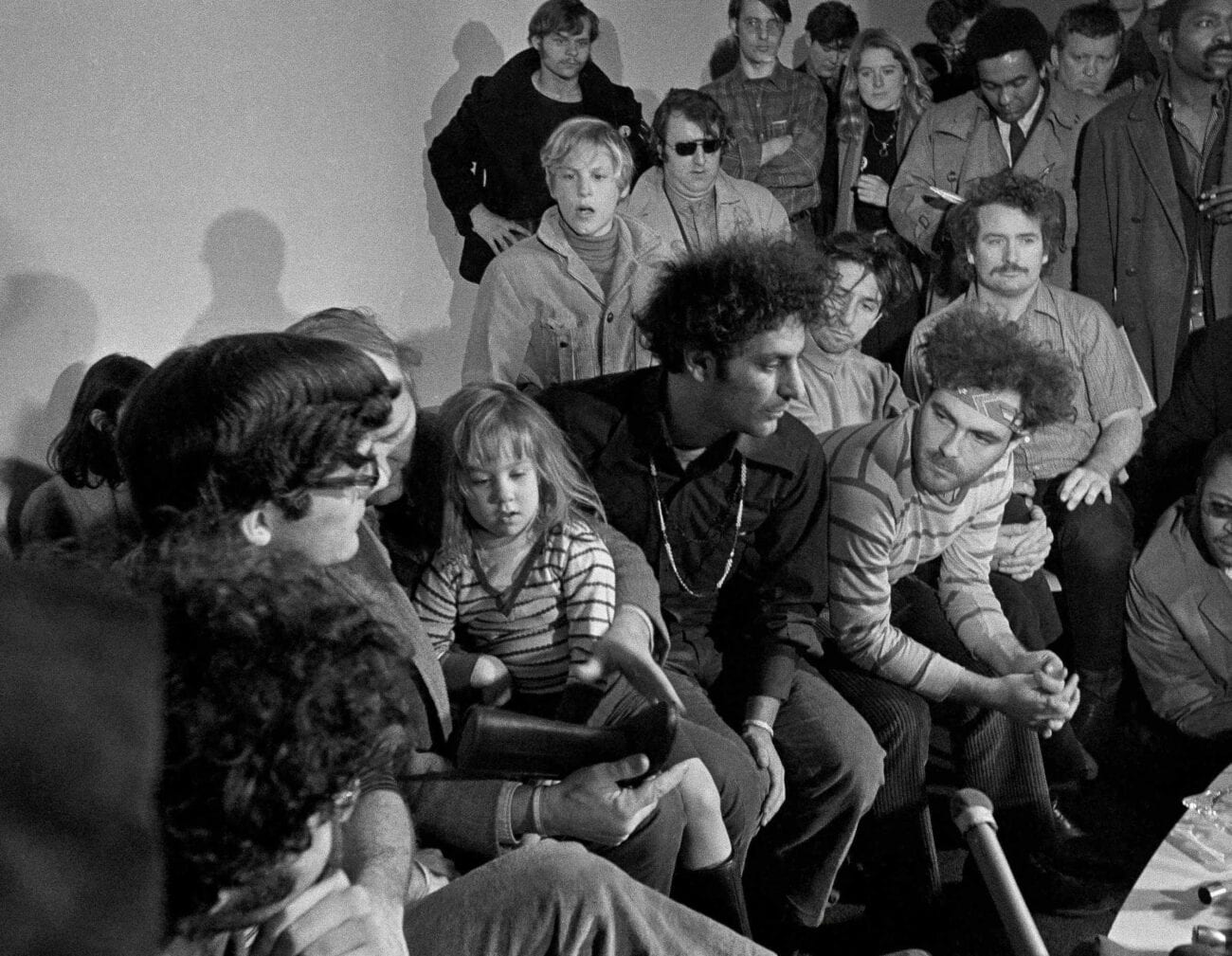
It’s the story of a bunch of radicals who, in 1968, organised a peaceful protest against the Vietnam War. On the night of the protest, a large contingent of the protesters were cornered by the police and subjected to a brutal physical assault. Many of the officers removed their identification before striking out with their batons.

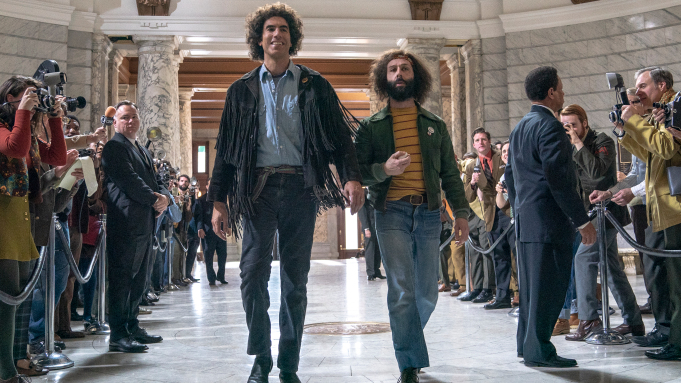
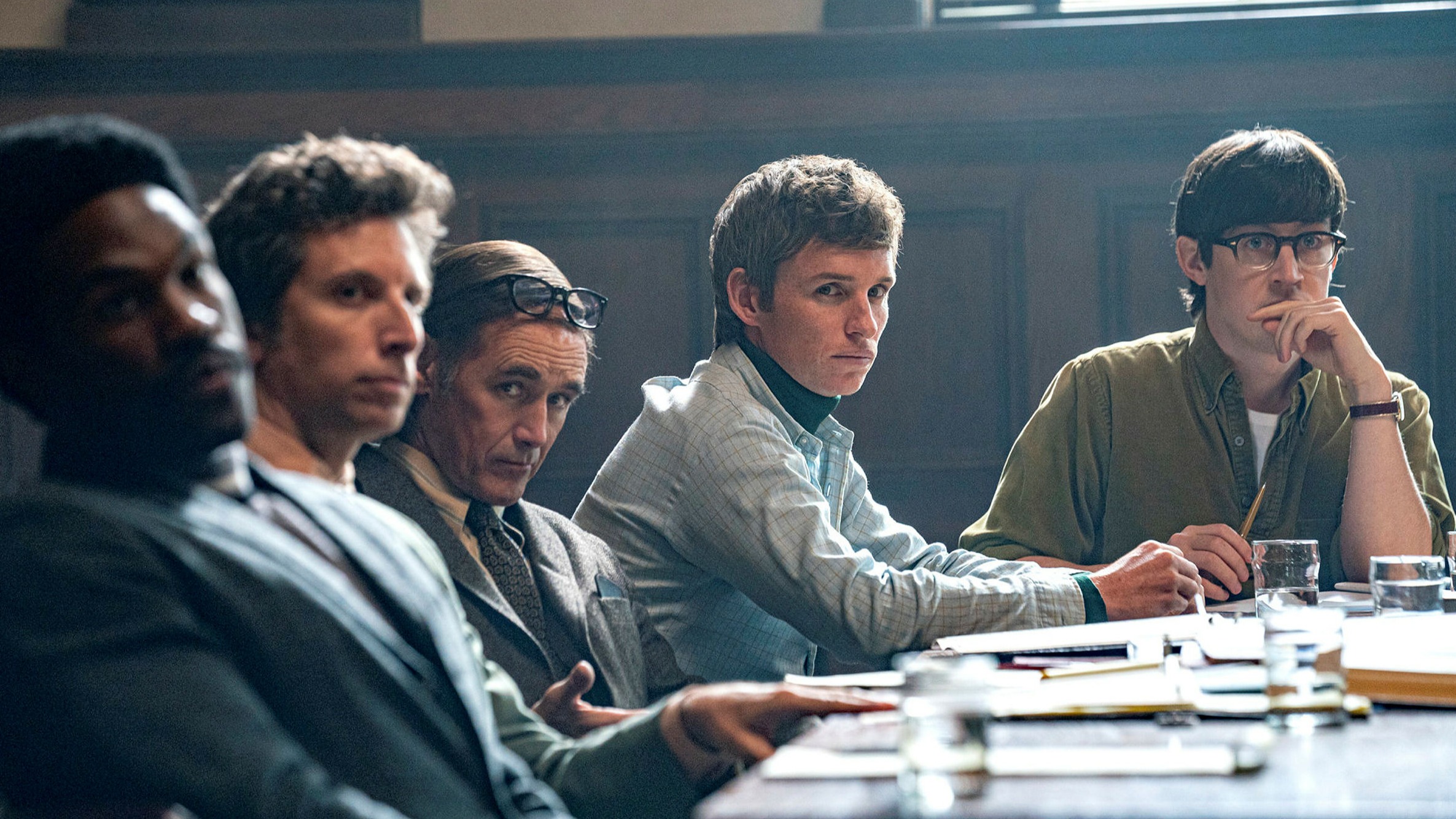
The upshot should surely have been that the Chicago police were the ones on trial, but no such luck. Tom Hayden (Eddie Redmayne), Abbie Hoffman (Sacha Baron Cohen), Jerry Rubin (Jeremy Strong) and four of their friends find themselves up before Judge Julius Hoffman (Frank Langella), a rampant hardliner who clearly deems them guilty on the length of their hair alone. Their crime? Hard to say, really. Obstructing police batons with their faces?

Just to complicate matters, Black Panther member Bobby Seale (Yahya Abdul-Mateen II) is on trial alongside them, for no apparent reason other than he happened to be in Chicago on the same night. He has no legal representation in the court and, when he tries to speak for himself, he’s escorted outside, beaten, shackled and brought back in wearing a gag.

Think about that for a moment…

Writer/Director Aaron Sorkin has been working on this film for several years and it’s clearly a passion project. At first glance, some of the casting seems questionable but, as it turns out, Redmayne is perfectly convincing as Hayden, and Baron Cohen – hardly the go-to person for a credible acting performance – really captures the spirit of Abbie Hoffman, delivering what just might be his best film performance so far.

There are plenty of other sterling actors in smaller roles – Mark Rylance, Joseph Gordon-Levitt and Michael Keaton to name but three – and the era is reproduced in almost forensic detail. It’s evident that Sorkin has designed this as a salutary lesson, a plea for the USA to ditch the kind of values exhibited here.

Some of that will be decided in the upcoming Presidential election but, in the meantime, here’s a chilling testament to the iniquities of the law and a stark warning of what happens when the judiciary isn’t held to proper account.

Hard-hitting stuff.

4.3 stars

Philip Caveney

Eternal Beauty

09/10/20

Curzon Home Cinema

Films that tackle the subject of mental illness are difficult to get right and the ones that do are few and far between. Eternal Beauty, written and directed by Craig Roberts, is more successful than most at capturing the confused and sometimes terrifying world of a schizophrenic.

It does seem odd, though, that a film set in South Wales and financed by the Welsh Film Board should feature such a paucity of Welsh actors in its cast. Robert Pugh, the only cast member with a noticeably Welsh accent, ironically spends the entire film in almost total silence.

Go figure.

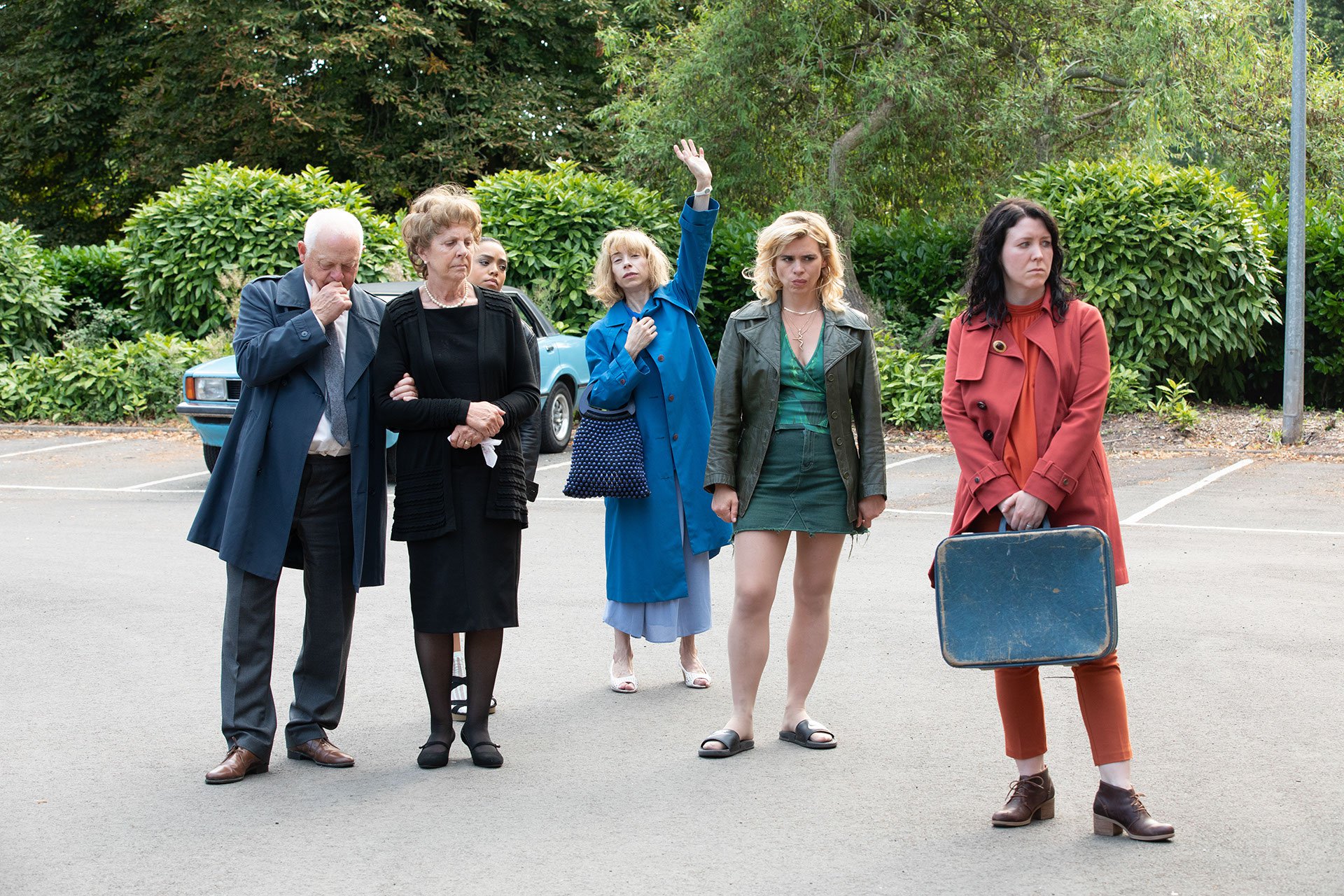
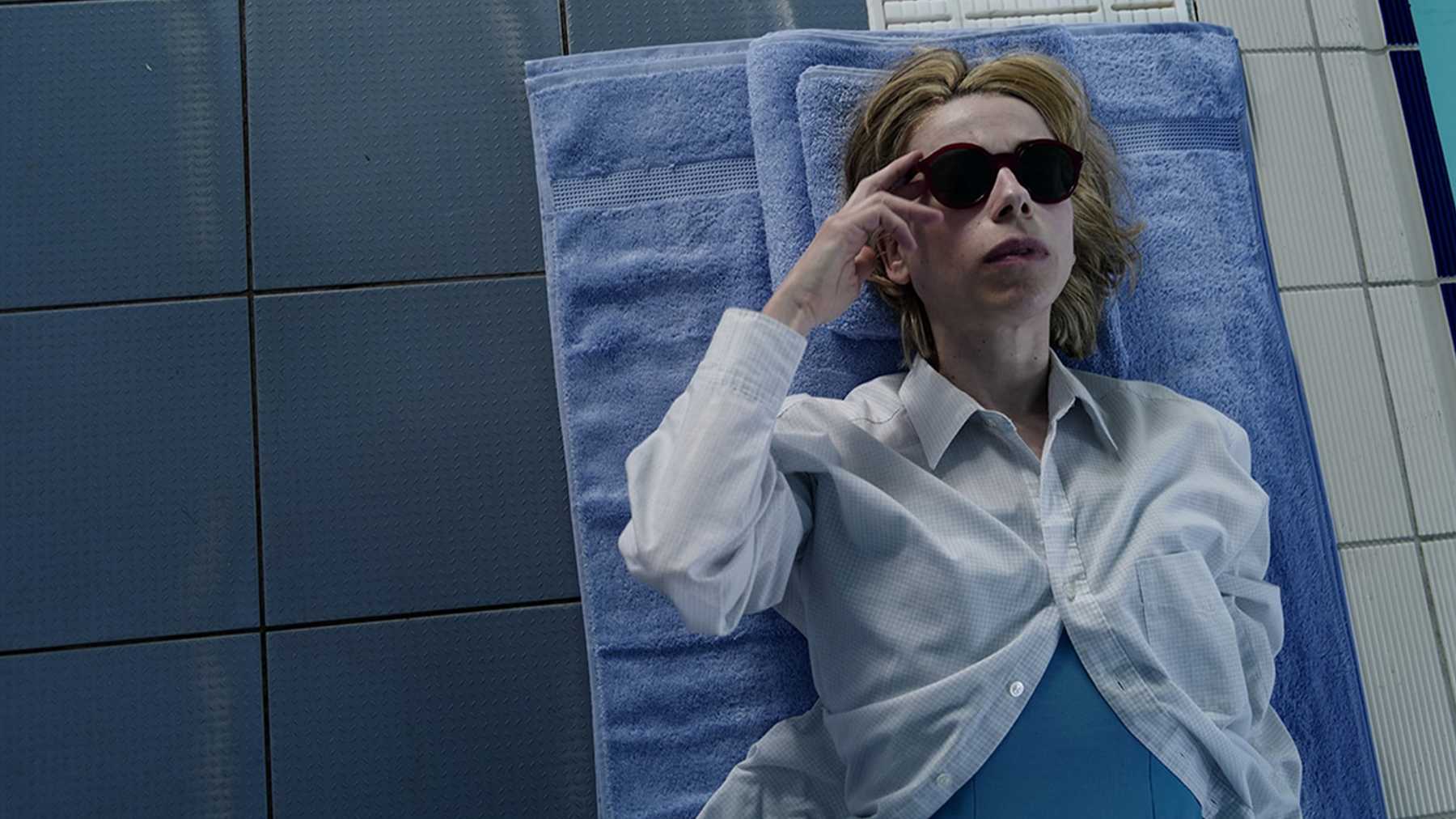
Sally Hawkins is Jane, who, since being left at the altar by her fiancé many years ago, has increasingly drifted into a chaotic world of delusion, much to the bewilderment of her family. (In flashbacks, she’s played by Morfydd Clark, who is great, although she looks nothing like Hawkins.) Jane dwells in a place where ‘reality’ is in very short supply and where the aforementioned fiancé phones her at random times throughout the day and night, to whisper sweet nothings down the line.

Jane’s singularly unsympathetic mother, Vivian (Penelope Wilton) treats her condition with utter disdain, while her father, Dennis (Pugh), can’t even seem to voice an opinion. Jane’s two sisters, the likeable Alice (Alice Lowe) and the frankly unpleasant Nicola (Billie Piper), each deal with her condition in their own way.

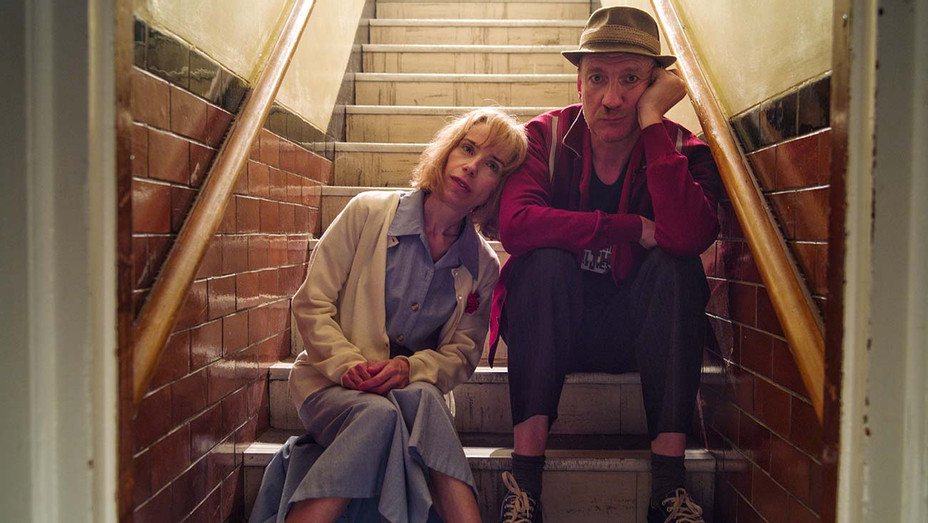
Jane’s fragile existence receives a sudden boost when she reconnects with a friend from childhood. Mike (David Thewlis) styles himself as a musician – though the brief performance we’re treated to suggests that this may not be his true forte. However, his sparky presence revitalises Jane and it begins to look as though he may be just the man to lead her out of the dark labyrinth in which she’s become ensnared. But this is no fairy tale…

As ever, Hawkins submits a brilliantly nuanced performance in the lead role and she’s ably supported by a whole host of excellent performers. Kit Fraser’s cinematography cleverly uses colour palettes to define the different characters and there’s a suitably quirky soundtrack of vintage songs to supplement the action. Niggles aside, Eternal Beauty is well worth a watch, if only to marvel at Hawkins’ ability to take the most demanding roles in her stride – and to wonder how Roberts has somehow managed to make this bleak tale curiously life-affirming.

4.2 stars

Philip Caveney

Enola Holmes

28/09/20

Netflix

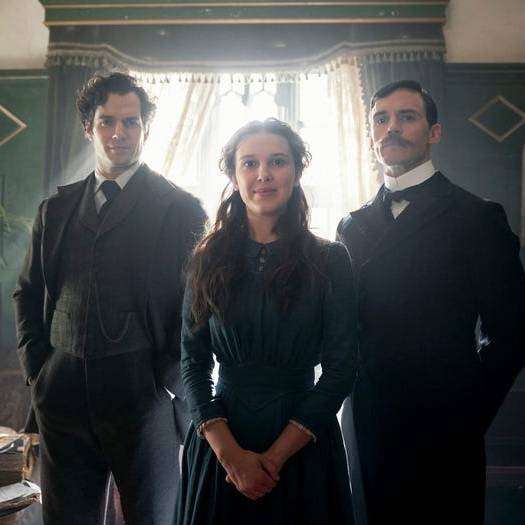
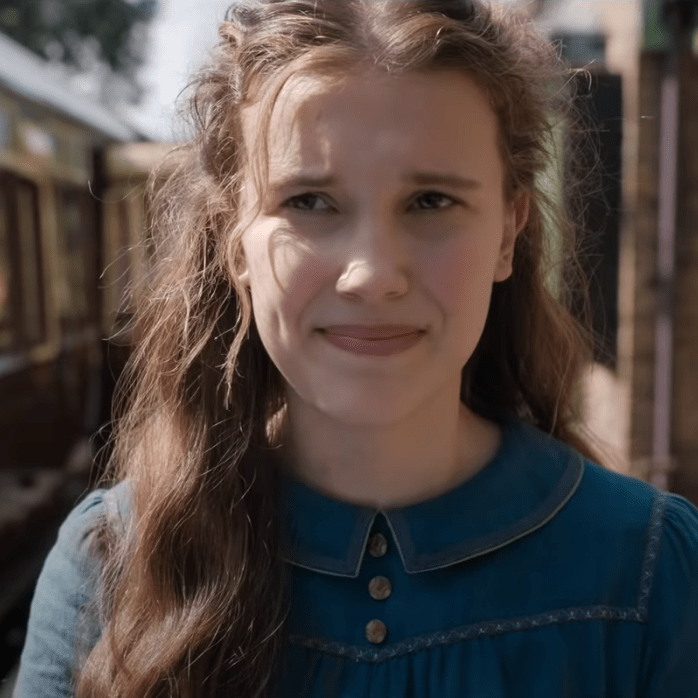
Let’s get one thing straight, shall we? Enola Holmes is an invention of American author Nancy Springer. The character does not appear in any of Sir Arthur Conan Doyle’s original stories. Furthermore, news that the Conan Doyle estate is in the process of suing Netflix for having the temerity to feature a ‘likeable’ version of the great detective strikes me as faintly absurd. Still, here is the aforementioned Enola, as portrayed by the immensely likeable Millie Bobby Brown, (better known as ’11’ in Stranger Things) in the first of what is intended to be a series of six films – and you know what? It’s really rather good.

Enola is the estranged little sister of Sherlock (Henry Cavill) and Mycroft (Sam Claflin), though she hasn’t seen either of them since she was a toddler. Brought up by her reclusive mother, Eudoria (Helena Bonham Carter) she’s been home-schooled in a whole series of unusual subjects, all designed to develop her mind and (importantly) her martial arts skills.

When Eudoria suddenly disappears without explanation, Enola’s care passes to her humourless guardian, Mycroft, who decides to put her in a finishing school run by the dreaded Miss Harrison (Fiona Shaw being suitably repellent). But instead, Enola opts to go in search of her mother, using a series of disguises and the kind of detection skills that Sherlock would be proud of. Along the way, she encounters another runaway, Lord Tewkesbury (Louis Partridge) and it isn’t long before sparks begin to fly between them. But first, there’s a complicated mystery in need of unravelling…

Handsomely mounted and featuring a whole battalion of revered character actors, there’s much here to enjoy, though it really is Millie Bobby Brown who keeps everything bubbling along, maintaining a jovial conversation with the audience as she goes. This is witty, inventive and – unusually for a Holmes project – has a nicely handled feminist subtext at its heart.

Legal actions not withstanding, there’s every reason to believe that Enola Holmes could go on to be an engaging series, but – should it turn out to be a standalone – it’s still an enjoyable way to pass a couple of hours.

4.2 stars

Philip Caveney

The Devil All the Time

23/09/20

Netflix

Imagine the vibrant Americana of the Coen Brothers, twisted into a seething vat of venomous corruption and you’ll pretty much have the measure of The Devil All the Time. Directed and co-written by Antonio Campos and based on a novel by Donald Ray Pollock (who serves as our narrator), this is a multi-layered, labyrinthine slow-burner of a film, where a whole string of characters are linked by a series of weird coincidences. In Pollock’s bleak world view, the blame for most of the evil that plagues humanity can be laid squarely at the door of organised religion.

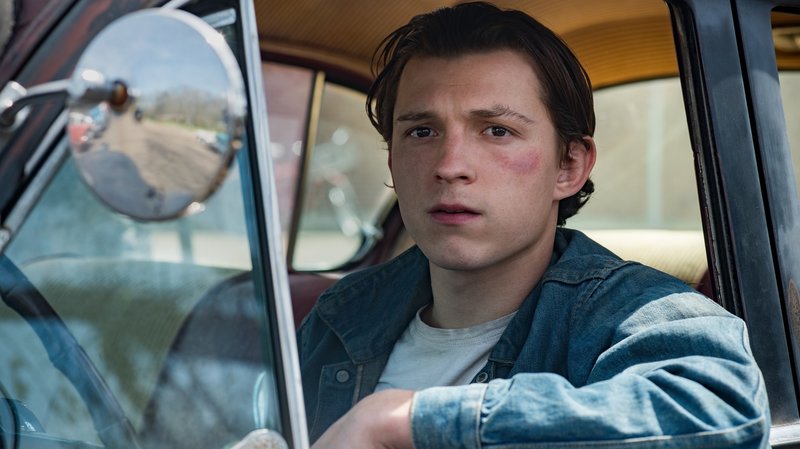
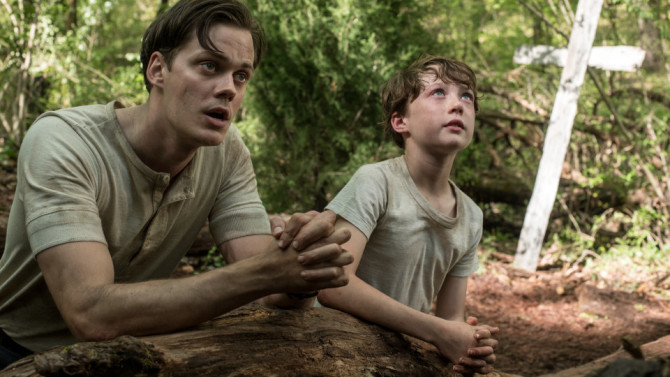
The central character, Arvon Russell (Tom Holland), is one of the few sympathetic human beings in this narrative, and even he is someone given to Old Testament levels of brutality towards anyone who wrongs his much-loved step sister, Lenora (Eliza Scanlen). Arvon’s violent tendencies stem from the treatment he received from his God-fearing Dad, Willard (Bill Skarsgard), who very much believed in the eye-for-an-eye approach and whose treatment of the family pet is particularly hard to stomach. Lassie Come Home, this really isn’t.  

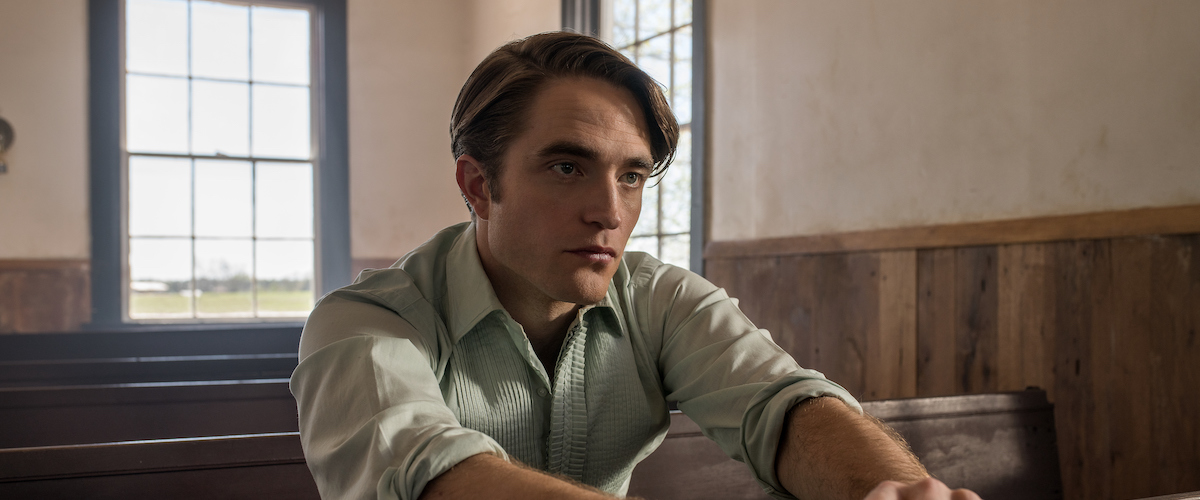
Elsewhere, we encounter the Reverend Preston Teagarden (Robert Pattinson), a sleazy preacher with a predilection for seducing young girls: crooked cop Lee Bodecker (Sebastian Stan) who’ll do whatever is necessary to further his ambitions, and a particularly vile couple, played by Jason Clarke and Riley Keough, who get their kicks from picking up young male hitchhikers…

On paper, it all sounds rather relentless but, unfolded as it is in a slow, measured narrative, it’s a surprisingly powerful brew. As Arvon is led inexorably deeper and deeper along the path to retribution, I find myself gripped right up to the final credits. It helps that a whole menagerie of talented actors submit nuanced performances here, particularly Holland who proves beyond a shadow of a doubt that there’s a lot more to him than slinging webs.

This may not be to everybody’s taste. As a vision of the United States, there’s little here resembling any kind of hope for the country’s collective soul. Indeed, it is a tale so excoriating, so morally bankrupt, that you can only feel a nagging worry for the society that spawned it. 

The Devil All the Time is a Netflix original, ready to watch whenever you have the time, or the nerve, to take it on.

4.2 stars

Philip Caveney

Babyteeth

02/09/20

Milla (Eliza Scanlen) is sixteen years old and going through a rough time. Already alienated from her schoolmates, struggling to co-exist with her concert-pianist mother, Anna (Essie Davis) and her psychiatrist father, Henry (Ben Mendelsohn), she’s also trying to keep things together as a terminal illness exerts an increasingly powerful grip upon her.

So when she falls head-over-heels for local tearaway, Moses (Toby Wallace), a free-living, drug-abusing twenty-something, her parents are far from delighted at his unexpected appearance in their suburban home – particularly when his urgent need for drug money prompts him to try and rob the place. But Moses is Milla’s first romantic crush and he’s almost certain to be her last… so Anna and Henry realise they are going to have to let her take the lead on this.

Perhaps the most refreshing thing about Babyteeth is its steadfast refusal to allow any of the usual ‘brave victim’ clichés to step into the mix. Indeed, for quite some time, Milla’s cancer is barely mentioned, so when it finally does step into the frame, it delivers something of a gut punch.

Scanlen, last seen as the least interesting character in Little Women, is a revelation here, quietly dominating the screen with her sparky presence. Wallace too does a fabulous job of making the initially deeply unlikable Moses into a fully formed character, redeemed both by Milla’s love for him and by her parents’ touching decision to allow him into the family fold. This could have been extremely mawkish, but is so adeptly handled that it really isn’t. Davis and Mendelsohn too submit nuanced performances that make them so much more than just supporting players. We share their anxieties, their frustrations and their unswerving devotion to the daughter they love.

Babyteeth marks the assured directorial debut of actor Shannon Murphy, and she’s aided and abetted by Rita Kalnejais’s inventive screenplay, the story punctuated by a series of quirky chapter headings, giving this the feel of a superior teen novel.

The only tragedy is one of timing. There are only a handful of people at the afternoon screening we attend and that’s a shame. In safer times, I have no doubt, this would be pulling in decent crowds and deservedly so. It’s an affecting story – and expertly told.

4.7 stars

Philip Caveney

Scenes for Survival

27/08/20

BBC iPlayer/YouTube

Scenes for Survival is a series of short digital artworks created by leading Scottish theatre and screen talent, co-produced by the BBC and the National Theatre of Scotland.

It’s a mixed bag, that’s for sure, a veritable cornucopia of ideas, all inspired by or relating to lockdown. Their variety is their strength; there is a sense of universality, of common suffering. Some of them are frustratingly short: the briefest of glimpses into a situation or psyche, and – inevitably – some are better than others, although they’re all high quality, as they should be, with actors, writers and directors of such calibre.

The obvious standout so far (they’re still being made) is Fatbaws, written by Douglas Maxwell and performed by Peter Mullan. It’s a simple, cheeky little idea – a man being bullied by the birds in his garden – but the writing is exquisite and Mullan’s performance is jaw-droppingly good, a masterclass in character acting. No mean feat when two of the characters are a crow and a pigeon.

I also like Larchview by Rob Drummond, where Mark “Ubiquitous” Bonnar plays a disgraced minister making a public apology for breaking lockdown rules. His progression from phoney contrition to peevish defensiveness is deftly conceived, and there’s redemption too, as he begins to hear the emptiness of his excuses, and a real sense of remorse emerges. It’s cleverly humanising – and Lord knows our politicians need a bit of that.

Alan Cummings stars in Johnny McKnight’s twisty three-parter, Out of the Woods. It’s a shaky hand-cam thriller, depicted as a series of FaceTime calls between a man and his mother and his child. He’s creeping through the woods to his estranged partner’s house; he’s picking up their daughter, but her other dad is not to know…

But honestly, even if these don’t appeal, there are so many to choose from, there’s something here for everyone. Retired Inspector Rebus (Brian Cox – not that one) puts in an appearance, courtesy of Ian Rankin, and there are contributions from many of Scotland’s best-loved creatives, including Val McDermid, Elaine C Smith and Janey Godley.

So, take a peek. See what tickles your fancy. Because strong original content has been a rarity for the past few months, and these are a real treat, as well as a vital documentation of our times.

4.6 stars

Susan Singfield

The Equaliser 2

13/08/20

Netflix

Lost in the shuffle on its theatrical release two years ago, The Equaliser 2, like so many other middle-range thrillers, is now available to watch on Netflix. The franchise, of course, has quite a history. It started way back in 1985 on the small screen, when Edward Woodward played Robert McCall , a retired CIA operative with a penchant for wreaking violence on those villains reckless enough to disrespect his friends and neighbours.

In 2014, Denzel Washington stepped into McCall’s loafers and, under the direction of Antoine Fuqua, delivered a palpable hit, grossing 192 million dollars at the box office – proof if ever it were needed that there’s money to be made from mayhem. In this iteration of the character, McCall brought almost the entire stock of a DIY store into play during his violent altercation with some major league bad guys.

Several years later, and officially ‘deceased,’ McCall is still living a quiet life, reading quality literature, driving a Lyft taxi to make ends meet and occasionally breaking off to inflict major injuries on those who cross him or, more specifically, his friends. He also bonds with Miles (Ashton Sanders), a young local teenager with artistic ambitions who is being tempted into the world of drug dealing by some local hoodlums.

But when McCall’s old associate, Susan Plummer (Melissa Leo), is brutally murdered, McCall enlists the help of another former colleague, Dave York (Pedro Pascal), to seek out those responsible and unleash some Biblical level violence upon them.

In an illustrious movie career that stretches all the way back to 1979, it’s interesting to note that this is the first sequel that Washington has attached his name to and, to give it its due, it’s far from the stripped-down action-fest I was expecting. While there are obvious problems with any story that attempts to present a vigilante as somebody we should all be rooting for, Washington does manage to give the character a surprising degree of depth – though finally imbuing him with attributes that wouldn’t look out of place on a saint might be over-egging things. And I can’t help wondering how he manages to live such a comfortable existence on the money he makes from driving a taxi… he can’t be living on a generous pension, because… well, he’s dead, right?

Still, there are enough surprises in the plot to keep me guessing till the end and an extended climactic confrontation is given an extra layer of jeopardy when it takes place in the midst of a hurricane.

All in all, this makes for decent viewing in these impoverished times – but Denzel, mate, maybe don’t go for the hat trick, huh?

3.8 stars

Philip Caveney


The Nightingale

04/08/20

Netflix

It’s been six years since Jennifer Kent’s impressive second feature, The Babadouk initiated the urgent need for more absorbent seating in cinemas throughout the land. But where that film was a cleverly constructed frightmare, The Nightingale is terrifying for entirely different reasons. It’s an unflinching account of events in Tasmania in 1825, where the indigenous population is being systematically eradicated and where everyday life for the white settlers is unrelentingly savage.

I’ve been wanting to see this film for quite some time. On its cinematic release in 2018, it caused much controversy, but I was unable to find a single cinema in my locality that was showing it. Now, finally, here it is on Netflix, in all its excruciating detail. And ‘excruciating’ is definitely the operative word.

The ‘nightingale’ of the title is Clare (Aisling Franciosi), a young Irish woman, sent to the penal colonies for some unspecified crime before being ‘rescued’ by Captain Hawkins (Sam Claflin), a callous and ambitious military officer, who keeps her for his own amusement – and for her ability to sing plaintive Irish ballads. 

Clare is now married to another convict, Aidan (Michael Sheasby), and even has a baby by him, but – when Clare asks if, after three years of toil, she and her husband might be allowed to go free – Hawkins (in an almost unwatchable scene) exercises his control over her in the most brutal way imaginable. And when Aidan,, emboldened by drink, goes to plead his wife’s case, horrific violence ensues.

Hawkins and his equally depraved Sergeant, Ruse (Damon Harriman), set off across the hostile landscape to the town where Hawkins is to take up a new commission. Clare follows, intent on revenge, enlisting an aboriginal tracker, Billy (Baykali  Ganambarr), to be her guide. At first the two of them simply tolerate each other but, as their arduous journey continues, they start to become friends…

It should be said right up front that The Nightingale is not for the faint hearted. It’s a coruscating, shocking and occasionally heartbreaking story, set during one of the most shameful periods of contemporary history. Rape, murder and general violence are all depicted in unflinching detail – though it’s important to add that at no point does any of it feel prurient. Hawkins is a particularly nasty piece of work – and perhaps it’s this character that prevents the film from being a truly great piece of work – he’s so unremittingly horrible, so vile, that he sometimes borders on caricature: a leering pantomime villain who exists purely for audiences to despise him. I would like some insight into what has made him the loathsome creature that he is. Also, there’s a point in the film where Clare bafflingly appears to lose her lust for vengeance and we’re never entirely sure why this is the case. The film wobbles for fifteen minutes or so, before coming back to full coherence.

And yet, this is a story that needs to be told, a reminder of how dehumanising the process of colonialism is. It’s a matter of historical record that the natives of Tasmania were eradicated by over-zealous settlers in just a few short years: apart, that is,  from one old woman who was kept alive… and exhibited in a zoo.

So, steel yourself and watch The Nightingale – if you have the mettle for it. I won’t try to claim that it’s a comfortable experience, but Kent’s film nonetheless tells a story that must never be forgotten.

4 stars

Philip Caveney