Film

Living

09/11/22

Cineworld, Edinburgh

Scripted by novelist Kazuo Ishiguro and directed by Oliver Hermanus, Living is a remake of Akira Kurosawa’s celebrated film, Ikiru – the story of a man coming to the end of his life and desperately trying to right the wrongs of his wasted opportunities. Set in the same era as the original, the story is cleverly relocated to a city hall somewhere in London, where a battalion of bowler-hatted wage slaves put reams of printed paper into order. The office is presided over by Mr Williams (Bill Nighy) a man so grievously incapable of meaningful conversation, that the office’s sole female occupant, Miss Harris (Aimee Lou Wood), has secretly dubbed him ‘Mr Zombie.’

But when his doctor informs him that, courtesy of stomach cancer, he has only a few months left to live, Williams finds he is totally incapable of talking about it to his son and daughter-in-law, preferring instead to unload on a random stranger he meets in a cafe, louche ‘artist’, Sutherland (Tom Burke). Sutherland listens in bewilderment as Williams tells him that he’s never properly lived his life and his solution is to take Williams out on the lash, visiting a series of seedy bars and strip clubs. This offers Williams some momentary respite from his torture, but no real answers.

Next, he has a chance encounter with Miss Harris, and ultimately takes her into his confidence. These scenes could easily be creepy, but it’s clear that Williams is inspired not by lust, but by the young woman’s youth: her ability to take pleasure in the smallest things – like the knickerbocker glory she gleefully chooses when the two of them have lunch at Fortnum’s. It’s these scenes that are the film’s strongest suit and one lengthy monologue from Williams, as he recalls happier times, actually has me filling up with tears.

Ultimately, Living is all about the inability of people to communicate with each other and the point is eloquently made, but – given the film’s length and the fact that it moves with all the urgency of glacial erosion – it sometimes feels as though it makes it several times over. Williams’ elevation to a kind of sainthood, as his final moments are recalled by a passing police constable (Thomas Coombes), come dangerously close to mawkishness. Furthermore, there’s a part of me that feels there’s a kind of cheating going on here. Williams’ progressing illness is conveyed with little more than the occasional grimace and a discreet spot of blood on a handkerchief. Otherwise, he remains as perfectly attired and implacable as ever. None of the horrors of his cancer are ever shown and we all know, don’t we, that real life is never as convenient as that?

Still, there’s plenty to admire here. Nighy was doubtless put on this earth to play the role of Williams, his chiselled, impassive features somehow managing to convey the torment that lies beneath that calm exterior – and Wood is simply adorable as the ingenue who breezes briefly through the fusty atmosphere of the office, before moving on to better things. Kudos should also go to the sound department, for the lustrous music that underpins the films key moments, accentuating the poignancy and regret of the central premise. The era is convincingly evoked, right down to the opening and closing credits and Sandy Powell’s meticulous costume design is, as ever, spot on.

A final thought. I wonder if this – like the film that inspired it – would have looked even more sumptuous in black and white?

3. 8 stars

Philip Caveney

Barbarian

08/11/22

Cineworld, Edinburgh

There’s been a lot of hush-hushery from the makers of Barbarian, of the ‘don’t give away the ending’ variety. I can totally understand why. Writer/director Zach Creggar has put together a low-budget horror tale that seems to delight in pulling the rug from under the viewer at regular intervals. No sooner am I thinking, ‘Ah, I know what’s happening here,’ than I am obliged to indulge in a major rethink, until – eventually – I’m in the ‘what the hell is happening here?’ camp.

I rather like being in this position and, in the end, I find I’m awarding points for Creggar’s chutzpah, as he gleefully galumphs into uncharted territory. Put it this way: if you can work out where it’s all going, you’re way ahead of me.

Tess (Georgina Campbell) is travelling to an Airbnb in a run-down neighbourhood of Detroit, ignoring regular calls from someone who we presume is her troublesome ex. She arrives in the dead of night, exhausted, only to find that the place is already occupied by Keith (Bill Skarsgärd), who seems thoroughly nice and agreeable. But is he? When Tess discovers that every hotel in Detroit is fully booked because of a convention, she reluctantly accepts Keith’s invitation to take the bed while he sleeps on the sofa, but she’s understandably apprehensive when he offers her a glass of wine.

The atmosphere is already freighted with anxiety and, when Tess wakes up in the night to find that her previously locked bedroom door is open, it’s clear that darker things are coming. These include: the unexpected arrival of the Airbnb’s owner, toxic male film director, A J (Justin Long); flashbacks to the antics of a very disturbing fellow called Frank (Richard Brake); and then there’s… no, sorry, I can’t really tell you about that. You probably wouldn’t believe me anyway.

Campbell and Skarsgärd are both terrific, and Long is convincing as the odious AJ. But Barbarian goes to some pretty horrible places. As the title suggests, there are various barbaric situations for viewers to get through and those who draw the line at seeing a man beaten to death with his own arm might prefer to give this one a miss. Like many films in the horror genre, it’s only in the closing stages that some of what’s happening onscreen begins to stretch credulity. (I was always told that all falling objects descend at the same speed – but apparently not.)

However, it’s been a while since a horror film has surprised me in such a positive way, and in that spirit, I’m happy to commend this film as a right riveting watch.

Just make sure you double-lock your bedroom door when you get home afterwards. It’s best to be on the safe side.

4.2 stars

Philip Caveney
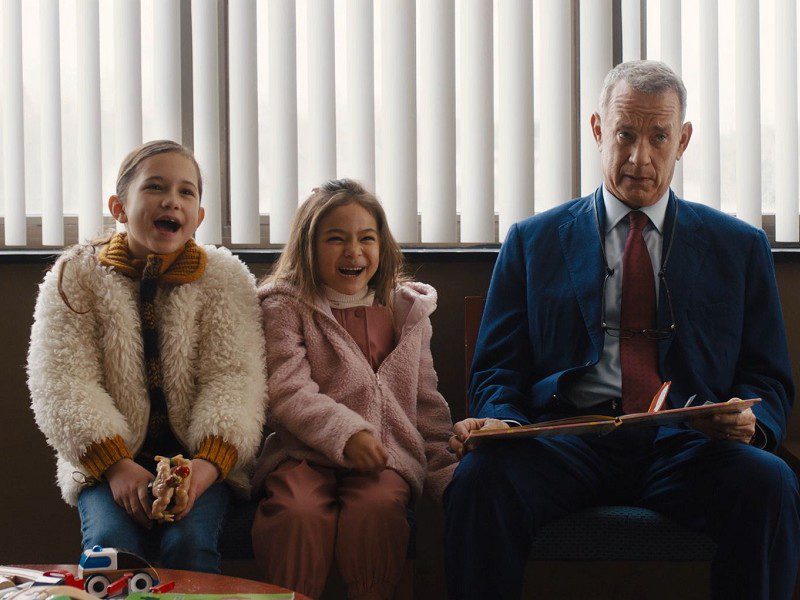
All Quiet on the Western Front

05/11/22

Netflix

Erich Maria Remarque’s novel, All Quiet on the Western Front, first published in 1923, was that rarest of things – a runaway bestseller that carried at its heart a powerful anti-war message. In 1930 it was adapted into a movie, directed by Lewis Milestone, and it easily won that year’s Oscar for best film. In 1979, a pedestrian TV version struggled to compete with what had gone before and is now pretty much forgotten. It would be a brave soul indeed who thought they could do anything fresh with the subject.

Hats off then to writer/director Edward Berger, who steps gamely up to the diving board and takes a headlong plunge. Here is a version of the tale that doubles down on the futility of warfare and is able to depict the full visceral horror of life and death in the trenches in ways that Milestone would never have been allowed to in the 1920s.

We begin with a chilling scene of hundreds of dead German soldiers in the aftermath of a battle. We see their uniforms bieng stripped from them, then taken away to be laundered and packaged. Next we encounter our hero, Paul Bäumer (Felix Kammerer), still a naïve teenage schoolboy. He and his classmates are swept up in the idea of being heroes for a just cause and can’t wait to enlist, to do their duty. But all too soon, they arrive on the Western Front, unwittingly wearing the dead men’s uniforms, and begin to realise that all their childish fantasies are about to be torn to pieces by the bloody conflict around them.

The set pieces that follow make for harrowing viewing. The battle scenes are epic in scale, brilliantly captured by James Friend’s cinematography, and Berger doesn’t flinch from depicting scenes of utter carnage. An extended sequence where Paul’s battalion encounters tanks for the first time is particularly memorable – but there are quieter scenes too. Paul’s growing friendship with his comrade ‘Kat’ (Albrect Schuch) is expertly drawn, and the regular cutaways to politician Matthias Erzberger (Daniel Brühl), frantically trying to negotiate a truce as yet another brutal conflict approaches, add notes of suspense. Of course, we all know where this is leading. Volker Bertelmann’s ominous score contributes to the growing sense of unease.

Milestone’s iconic ending (taken from the novel) is so well known, I completely understand why Berger chose not to use it. In this version, he offers a desperate race against time, which may lack the elegance of the original concept, but the utter futility of the situation is once again brought to the fore and it makes for a powerful conclusion.

I can hardly recommend this as an uplifting watch – indeed, there are moments here that make me want to look away. But the novel’s original message is still very much in evidence.

4.2 stars

Philip Caveney

The Good Nurse

29/10/22

Netflix

Films about real-life serial killers usually break down into two distinct groups. There are those that exploit the original story for lurid shock effect and have no real interest in looking for answers. Then there are those that are prepared to delve a little deeper into the circumstances surrounding a series of events. The Good Nurse, directed by Tobias Lindholm, definitely belongs in the latter category. There’s no mistaking the fact that the screenplay – written by Krysty Wilson-Cairns (and based on the book by Charles Graeber) is much more interested in the motivation than the crimes themselves.

The film focuses primarily on the nurse of the title. She’s Amy Laughren (Jessica Chastain), a single mom, struggling to balance her punishing work schedule at a New Jersey hospital with looking after her two young daughters – and she’s suffering from a debilitating heart condition. Put simply, Amy cannot afford to take time off work because she’s not been in her current post long enough to qualify for health insurance. She needs to keep going for another year, if she can.

And then along comes new recruit, Charlie Cullen (Eddie Redmayne), a likeable and considerate workmate, who quickly guesses at Amy’s health issues and does his best to help her out, appearing to care deeply about her difficult situation. The two of them quickly become close friends, with Charlie even helping to look after Amy’s daughters, Maya (Evan McDowell) and Alex (Alix West Lefler), when the going gets particularly tough.

But then there are some unexplained fatalities on the hospital ward, and two investigators, Tim Braun (Noah Emmerich) and Danny Baldwin (Mnmandi Asomugha), show up, asking some worrying questions. Why has Charlie Cullen been repeatedly shunted from hospital to hospital over his long career? Why does he always leave after a spike in deaths? And why do his former employers always seem so reluctant to pursue any questions about him?

This is another true crime story that boggles the mind: The Good Nurse doesn’t hesitate to point the finger of accusation at the American health care system, identifying it as a major enabler of Cullen’s exploits. Indeed, it’s the main reason why a man responsible for one of the highest murder tolls in history remains, ironically, a name that few people are familiar with. Essentially a taut two-hander, the film is as compelling as it is baffling. Chastain is terrific as Laughren, torn between her genuine friendship with Cullen and the dawning realisation that he is not the affable fellow he appears to be. Redmayne keeps his performance understated, only unleashing the full force of his character’s anger in one confrontational interview, yet he still manages to convey the frightening creature that hides behind that bland, smiling exterior.

We still don’t know – and probably never will – what motivated Cullen’s apparently random acts of murder, but The Good Nurse is unflinching in its portrayal of a health system motivated by profit and with scant regard for those who depend upon it for their survival.

4.2 stars

Philip Caveney
Decision to Leave

26/10/22

Cameo Cinema, Edinburgh

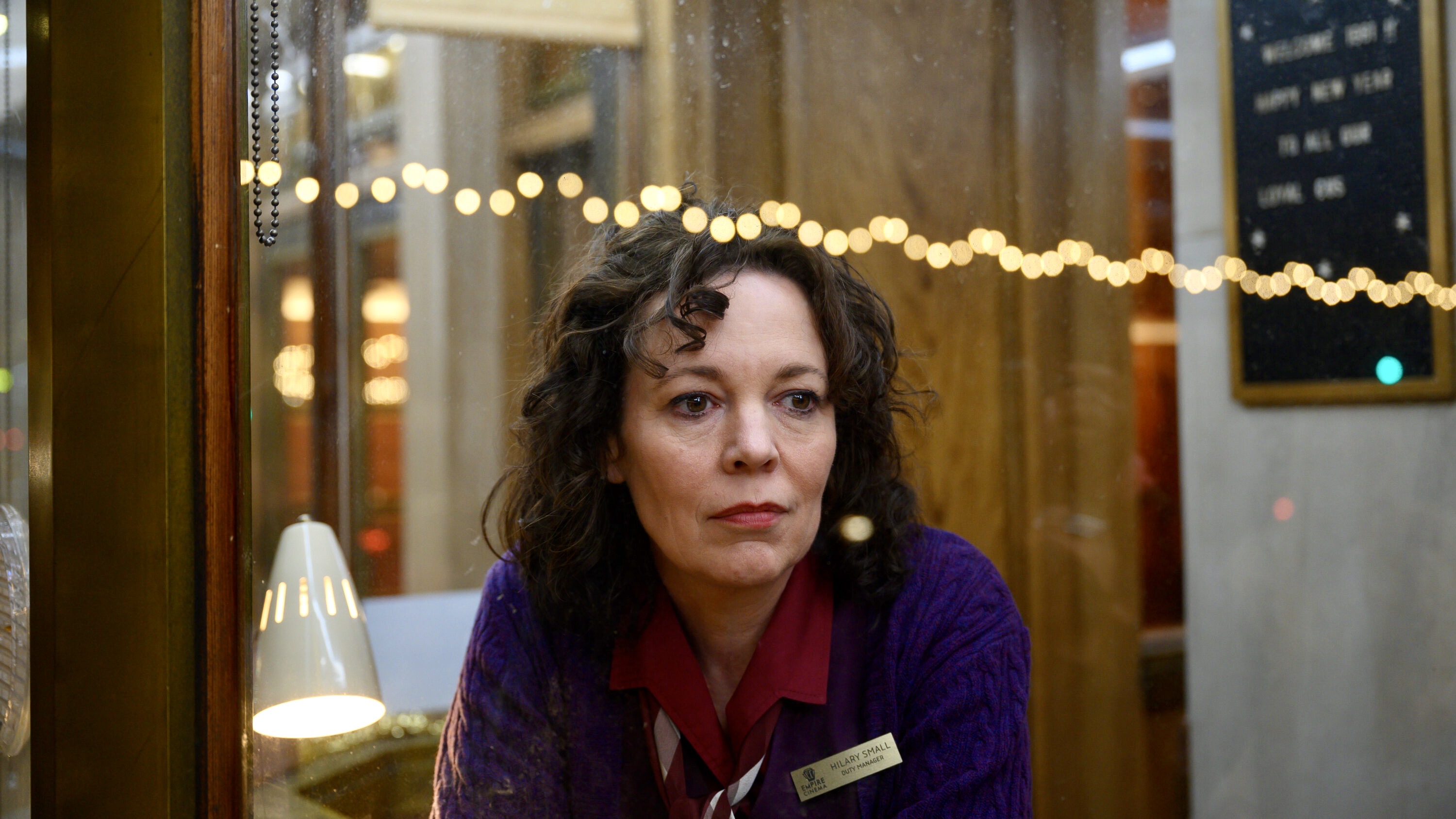
A new release from Park Chan-wook is always a cause for celebration, but anyone expecting the unbridled sexuality of The Handmaiden may be surprised to learn that Decision to Leave is a much more chaste affair. Yes, there’s passion here, but it’s portrayed almost entirely in words (in some cases via a Chinese-Korean translation app) and in discreet sidelong glances.

Workaholic Detective Hae-jun (Park Hae-il) is summoned to investigate the death of a mountain climber who has fallen from a great height. But did the man jump or was he pushed? Suspicion soon falls on his Chinese wife, Seo-rei (Tang Wei), and Hae-jun, who is already suffering from chronic insomnia, starts to spend his nights surveilling her. He follows her around Busan, studies her routines and chronicles her every move. And then he begins to realise that he is falling in love with her and that what began as professional interest is turning into something much more compelling…

This is one of those films where it would be criminal to give too much of the plot away – and besides, the ensuing story is so labyrinthine, so full of unexpected twists and turns, it would be pretty much impossible to do that even if I wanted to. Armchair detectives will have a field day trying to figure out the mysteries wrapped up in this story and I’m fairly certain that very few are likely to guess at the baffling solution to this strange, enigmatic puzzle of a film.

Park Chan-wook’s distinctive visual style – aided and abetted by cinematographer Kin Je-yong – is to the fore throughout and, as ever, he relishes playing tricks on the viewer, constantly tinkering with our perceptions and expectations. Both the leads dazzle in their roles, and are ably supported by a fine cast, particularly by Lee Jung-hyun as Hae-jun’s statistic-obsessed wife, Jung-an – but this is essentially a two-hander.

With a running time of two hours and nineteen minutes, I do occasionally find myself wishing that the pace wasn’t quite so glacial, but the great director has never been one to hurry himself over anything and, despite my reservations, Decision to Leave manages to hold me in a powerful grip right up to its chilling final frame.

4 stars

Philip Caveney

The Banshees of Insisherin

25/10/22

Cineworld, Edinburgh

Last week, I finally managed to catch up with Martin McDonagh’s debut play, The Beauty Queen of Leenane, at the Traverse Theatre – and now here’s his latest cinematic offering, which itself started life as a play, the projected third piece in his Aran Islands trilogy. For various reasons, McDonagh wasn’t happy with it in its original form, so it was never released. He should be delighted, however, with the critical reception for The Banshees of Inisherin, where important voices have been talking about potential Oscar nominations.

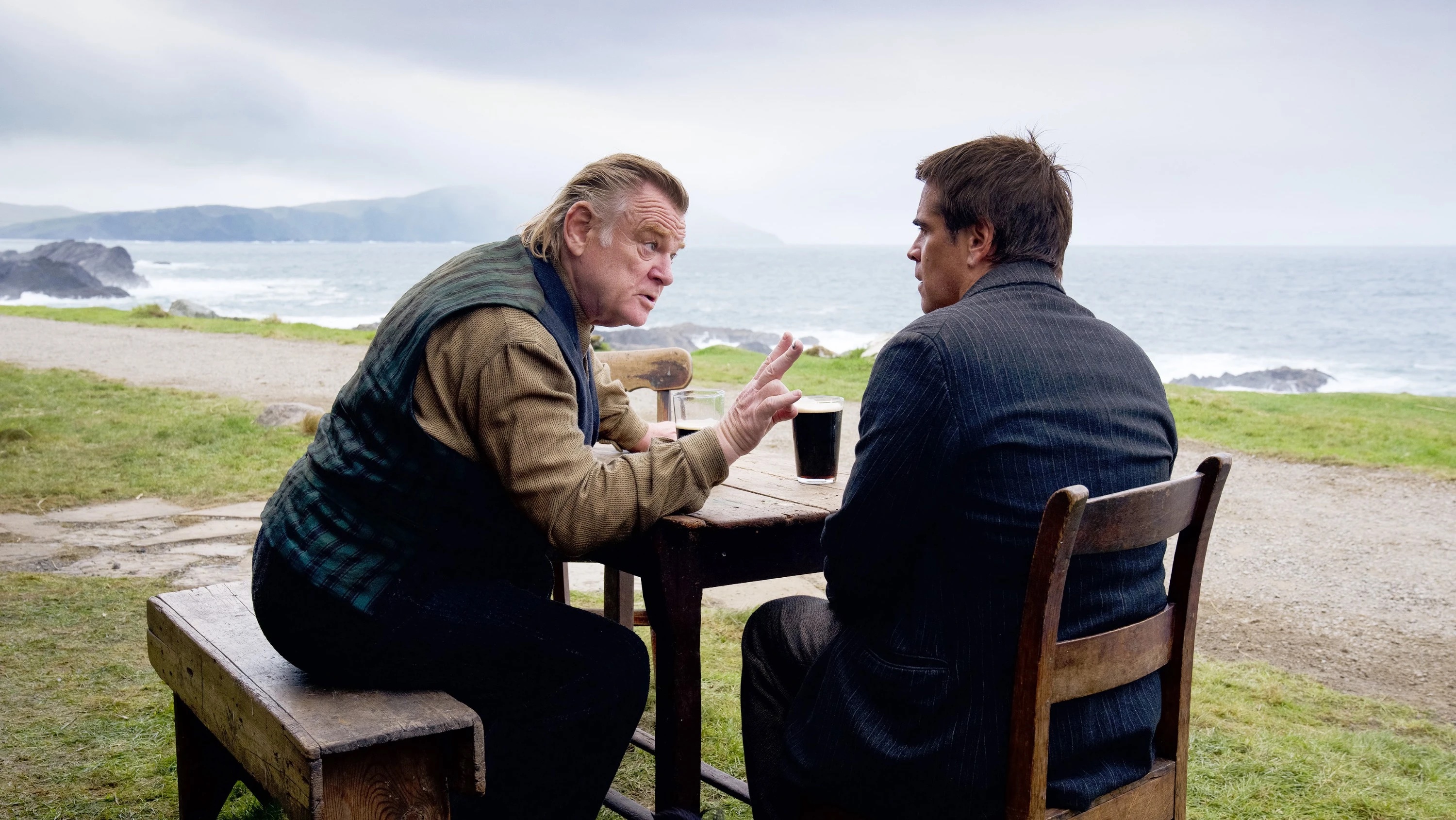
It’s 1923 and the titular island is a remote and inaccessible place. Across the water on the mainland, a civil war is raging and, even from a distance, the sound and fury can be overheard. But here there’s precious little to occupy the inhabitants, who spend their days trying to grub some kind of living from the soil. Pádraic Súilleabháin (Colin Farrell) lives with his sister, Siobhan (Kerry Condon), and he’s a man who likes to follow a routine. Every day at 2 pm, it’s his custom to call on his best friend, Colm Doherty (Brendan Gleeson), and accompany him to the local pub for a couple of pints.

He’s understandably shocked when one day Colm announces that he doesn’t want to be friends with Pádraic anymore. Colm claims that his regular drinking companion is the dullest man on the island and that he wishes to devote the rest of his life to writing his music. Pádraic is never to speak a word to him again – and, if he does, there will be terrible consequences…

Pádraic is hit for six by this announcement and haplessly tries to rescue the situation – but he has no idea how far Colm is prepared to go in order that his edict is followed.

Banshee’s theatrical origins are evident from the opening scenes and it’s clear that here is a piece that could work very effectively on stage, though the beautiful rural settings do help to open the story up to wider horizons. McDonagh’s ear for absurdist black humour has rarely been better and the plot, which sounds slight on paper, is filled with fascinating nuance. McDonagh has plenty to say about the insular psyche of island communities, an unforgiving world where everyone knows everyone else’s business and is happy to discuss it in public. Both Farrell and Gleeson make the most of their acting reunion, fourteen years after In Bruges, though I would suspect Farrell’s performance as the vulnerable Pádraic is the most Oscar-worthy of the two. Both Condon and Barry Keoghan (as, respectively, Siobhan and the tragic Dominic) may be worthy of ‘best supporting’ nods.

The Banshees of Inisherin is a beautifully observed contemplation of the thankless futility of human existence. Colm is stubborn and self-aggrandising, locked in hopeless dreams of being remembered after his death. Pádraic, meanwhile, is incapable of dealing with anything that compromises his preferred schedule.

Only Siobhan has the courage to change her life, but even that simple act – it turns out – has dark consequences.

4.6 Stars

Philip Caveney

Jack Absolute Flies Again

18/10/22

NT Live: The Cameo, Edinburgh

Daytime cinema always feels like playing hooky. A sign that – for today – fun has priority. And NT Live screenings have the same ‘getting away with something’ vibe. I’m watching a play in London, but – shhh, whisper it – I haven’t left Edinburgh. So this afternoon’s indulgence, Jack Absolute Flies Again, is the double whammy: a National Theatre production at lunch time on a Tuesday! And in our favourite picture house too…

Based on Sheridan’s The Rivals, Richard Bean and Oliver Chris’s production exemplifies ‘rollicking’. It’s a silly, frothy, feelgood piece of theatre – and I absolutely love it.

The action has moved from the late 18th century to the early 20th – specifically to World War 2 – and Malaprop Mansion has been requisitioned by the RAF. The titular Jack (Laurie Davidson) is a pilot, stationed in the grounds. He’s in love with fellow pilot, Lydia Languish (Natalie Simpson), who just happens to live in the mansion with her aunt, Mrs Malaprop (Caroline Quentin). Lydia, however, is infatuated with northern mechanic, Dudley Scunthorpe (Kelvin Fletcher), who, in turn, has a thing for Lydia’s maid, Lucy (Kerry Howard). Throw in a couple of other pilots vying for Lydia’s attention, a jealous fiancé and the ever-present spectre of death (these are military people, after all), not to mention Mrs Malaprop’s attraction to Jack’s father, Sir Anthony Absolute (Peter Forbes), and you’ve got quite the heady mix…

This comedy of errors is beautifully handled, all knowing nods to the audience, and perfectly executed groan-out-loud jokes. Sure, we can see the punchlines coming from cruising height, but that’s the point: the laughs are garnered in the gap, the moment when we know what’s coming before it lands. Quentin is particularly funny, clearly relishing the Malapropisms that litter her speech. They are so plentiful they make Sheridan look positively restrained, but their abundance works, again prompting us to pre-empt what she might say (Chekhov’s clematis, if you will). Howard also proves to have that comic edge, and I like her character’s frequent references to the theatricality of the piece, reminding the audience of the genre and what they ought to expect.

The set is delightful: all bucolic beauty and architectural elegance. Its chocolate box design suits the tone of the piece, and I especially like the doll’s house effect, when the mansion opens to reveal the rooms within. Ironically, the only things that don’t translate well to the cinema are, well, the cinematic sequences. I’m sure they’re impactful in the vast Olivier auditorium, but they are diminished by the live-screening process.

The ending is something of a shock, deliberately jarring. I won’t go into any detail (no spoilers here), but – on reflection – I think it works. It’s a brave choice, but probably the only one that makes sense, given the context. It feels tonally different from the rest of the piece, but I guess that’s the point. We all plod along, don’t we, dealing with the minutiae while the big stuff happens around us. Until…

There are a few more ‘encore’ screenings of Jack Absolute over the next month or so. If you’re in need of a laugh, take advantage of NT Live and give your local cinema a much-needed boost at the same time. You won’t regret it.

4.2 stars

Susan Singfield

The Lost King

07/10/22

Cineworld, Edinburgh

The Lost King is based on a true story – how a woman called Philippa Langley came to be the driving force behind the discovery of the remains of King Richard III… underneath a council car park in Leicester. Written by Steve Coogan and Jeff Pope and directed by Stephen Frears (the team behind the excellent Philomena), the film relates how Langley (Sally Hawkins), an ‘ordinary woman’ living in Edinburgh, first becomes interested in the last of the Plantagenet kings, while watching a performance of Shakespeare’s eponymous play. The titular role is performed by a young actor (Harry Lloyd) and thereafter, Langley experiences visions of ‘Richard’, who seems to be waiting for her to do something.

Much to the bemusement of her ex-husband, John (Coogan), and her two young sons, Langley’s interest quickly develops into a full-blown obsession. She reads everything she can find about Richard, she joins a group of local enthusiasts and, eventually , she finds herself in Leicester and that fateful car park. After making her way a spot helpfully marked by a large letter R, she becomes convinced that she’s standing on Richard’s grave.

I know. If this hadn’t actually happened it would be risible. But it did happen, so get over it.

Convinced she’s right, Langley approaches archeologist Richard Buckley (Mark Addy) at Leicester University, and persuades him to help her to organise an excavation of the car park. But where are the funds going to come from?

The film has stirred up some controversy by suggesting that, although Langley was undoubtedly the prime mover behind the campaign to find Richard – she actually raised most of the money via crowdfunding – she was latterly sidelined by Leicester University, who monopolised the subsequent discovery and dismissed her as an ‘amateur’. One man in particular, Richard Taylor (played here by Lee Ingleby), comes across as especially unpleasant and the real Taylor, former Vice Chancellor of the university, is currently threatening legal action. Surely it would have been kinder at least to give the character a different name? (This would also have avoided having yet another Richard in the story.)

Whatever the truth of the case, this is a fascinating story about self-belief and perseverance. I like the fact that Langley is not deified here, but presented as a far from perfect individual, selfishly devoting everything to her obsession, no matter what the cost to herself or her family. And I like the device of having Richard as part of the ongoing adventure, offering a little more depth to the proceedings.

While the whereabouts of a long-dead body is arguably low-stakes, recent events have shown how pageantry, pomp and circumstance really seem to matter to huge swathes of the population, and it’s always a delight to see Edinburgh (my home city) depicted onscreen in all its glory – even when, in certain scenes, it’s pretending to be Leicester!

3.8 stars

Philip Caveney

Blonde

03/10/22

Netflix

Andrew Dominik’s Blonde, based on a novel by Joyce Carol Oates, is an art film with a capital ‘A’. Given a running time close to three hours and presented in a whole variety of aspect ratios, it purports to be the inside story of Norma Jeane Baker – or Marilyn Monroe, as she’s better known. One overriding message comes through loud and clear: if there were any joyful moments in the star’s life, they were few and far between. This is the tale of a young woman who is repeatedly betrayed and brutalised by just about everybody she comes into contact with.

We first encounter her as a little girl (Lily Fisher), living with her abusive, disturbed mother, Gladys (Julianne Nicholson), who nearly ends both their lives by driving headlong into the midst of a bush fire. As an opening, it’s powerful and arresting – but from this point, the story takes a seismic jump through time, where we discover Norma/Marilyn (Ana de Armas) chasing roles in Hollywood, largely by allowing herself to be thrown down onto the casting couch and horribly abused by unnamed ‘producers’. The problem here is that Dominik, who also wrote the screenplay, seems to assume that everybody watching is going to be so well versed in Monroe’s career that we’ll instinctively know who’s who. It’s not always easy to follow and, for those not in the know, it’s hard work.

The overall theme here is about father issues. From the beginning, Norma Jeane’s Mother shows her photographs of a mysterious man who, she claims, is her father, once a big star in Hollywood movies. Norma Jeane consequently spends most of her life searching for him, even calling her various partners ‘Daddy’. The story leaps back and forth in time and we’re given insights into her doomed marriage to Joe Di Maggio (or ‘Ex-Athlete’, as Bobby Cannavale’s character is billed) and her equally ill-fated relationship with ‘The Playwright’ (Adrien Brody, looking the dead spit of Arthur Miller).

This is hardly a fun-filled ride. We see a harrowing abortion scene, which definitely feels pitched as an anti-abortion polemic, and there’s an equally horrible account of the miscarriage Monroe suffers while married to Arthur Miller. A brief and sordid encounter between Monroe and ‘The President’ (Caspar Philipson) is about as repugnant a sex scene as I’ve ever witnessed.

As if in an attempt to lighten the mix, there are accomplished recreations of several of Monroe’s most iconic film roles, but the swings in tone are extreme and it feels suspiciously like being alternately sprinkled with sugar and dragged through a cess pit.

Ana de Armass offers an accomplished performance in the lead role, inhabiting Monroe’s manic persona with great skill – but Blonde feels increasingly like a big bumper pack of fireworks, occasionally shooting off fabulous cinematic dazzlers but, more often than not, offering a selection of damp squibs. What’s more, the film would benefit I think, from a more stringent edit, cutting out those slower sections where the story is allowed to drag.

It’s worth seeing, but be warned – it’s not the straightforward biopic that you might expect.

3.6 stars

Philip Caveney

Mrs. Harris Goes to Paris

30/09/22

Cineworld, Edinburgh

I am poorly when I see the 1992 teleplay, Mrs ‘Arris Goes to Paris, nursing a cold. I am lying on my sofa with the TV on, drifting in and out of sleep. At one point, I wake up, and there are Angela Lansbury, Diana Rigg, and, wait, is that Fred from Corrie? Is this a fever dream? I find myself engaging with the story, and watching through to the end. On occasion, I mention it to friends, but nobody has ever heard of it. They look at me sceptically. I let it go…

So I’m weirdly excited about this latest iteration of the tale, which I now know is based on a novel by Paul Gallico. Lesley Manville stars as the titular Mrs Harris (her ‘H’ restored), with Isabelle Huppert and Jason Isaacs as the big name support.

It’s London, 1957. Ada Harris knows in her heart that she’s a war widow, but she’s been waiting years for Eddie’s death to be confirmed. In the meantime, she’s working as a charwoman, cleaning up after a succession of indolent rich folk. She’s not unhappy exactly: she has a busy social life, drinking, dancing and ‘going to the dogs’ with her friends, Violet (Ellen Thomas) and Archie (Isaacs). But something is missing and, when Ada catches a glimpse of an exquisite couture gown in Lady Dant (Anna Chancellor)’s bedroom, she realises exactly what that missing something is…

A posh frock from Paris is beyond Mrs Harris’s slender means, but she’s a determined woman, and sets to with admirable grit, making savings wherever she can. Take the bus to work? No, not when she can walk. And what does she need with evenings out? Better to spend the time altering and repairing people’s clothes, bringing in a few extra shillings. Despite her hard work, however, that Dior dress is still way out of reach.

Until a series of fortunate events occurs, and – of course – she’s off to Paris! (Come on, that’s hardly a spoiler; it’s literally in the title.) The streets of the French capital appear to be paved with litter (there’s a bin strike, which we citizens of Edinburgh can certainly relate to), but Ada rises easily above the stink. She’s having the time of her life, and – with the help of André (Lucas Bravo), Natasha (Alba Baptista) and the dashing Marquis de Chassagne (Lambert Wilson) – she’s rediscovering her mojo. Sure, Mme Colbert (Huppert) is a bit sneery, and Mme Avallon (Guilaine Londez) seems to view her as an enemy, but so what? A couture gown is on its way; what could possibly go wrong?

Mrs Harris Goes to Paris is essentially a fairytale, although it’s not very grim. It’s a frothy concoction, signifying little, but it’s eminently watchable, with warm, engaging characters, and a satisfying (if predictable) story arc. Under Anthony Fabian’s direction, this primarily Hungarian production (no, I don’t know why either) is beautifully shot, and Felix Wiedemann’s cinematography really captures the ethereal beauty of the clothes, so vital to the tale. It’s refreshing to see a love story that doesn’t patronise an older woman, and I’m pleased that the ‘fish out of water’ stuff is played down. Ada is independent: she has lived alone through a war and is used to city life, and she mixes with all kinds. It’s no surprise that she can hold her own in a Parisian restaurant, nor that she’s unfazed by the unfamiliar etiquette of a Dior fashion show. Perhaps the most important theme is one of societal change: just as the political elite in Paris have to accept that the workers won’t settle for poverty wages any more, neither will Ada continue to put up with late payments and disrespect from her employers. The war was a real turning point, and its longterm implications are starting to be felt.

I don’t really know how this compares to the teleplay, because I wasn’t fully compos mentis when I was watching that, but I do know that it’s more enjoyable to see Mrs Harris finding her dream dress when I’m not in a Lemsip fug. And at the cinema too, which is always better (true fact, no counter-arguments accepted).

3.8 stars

Susan Singfield