Author: Bouquets & Brickbats

Battery Park

26/10/23

Traverse Theatre, Edinburgh

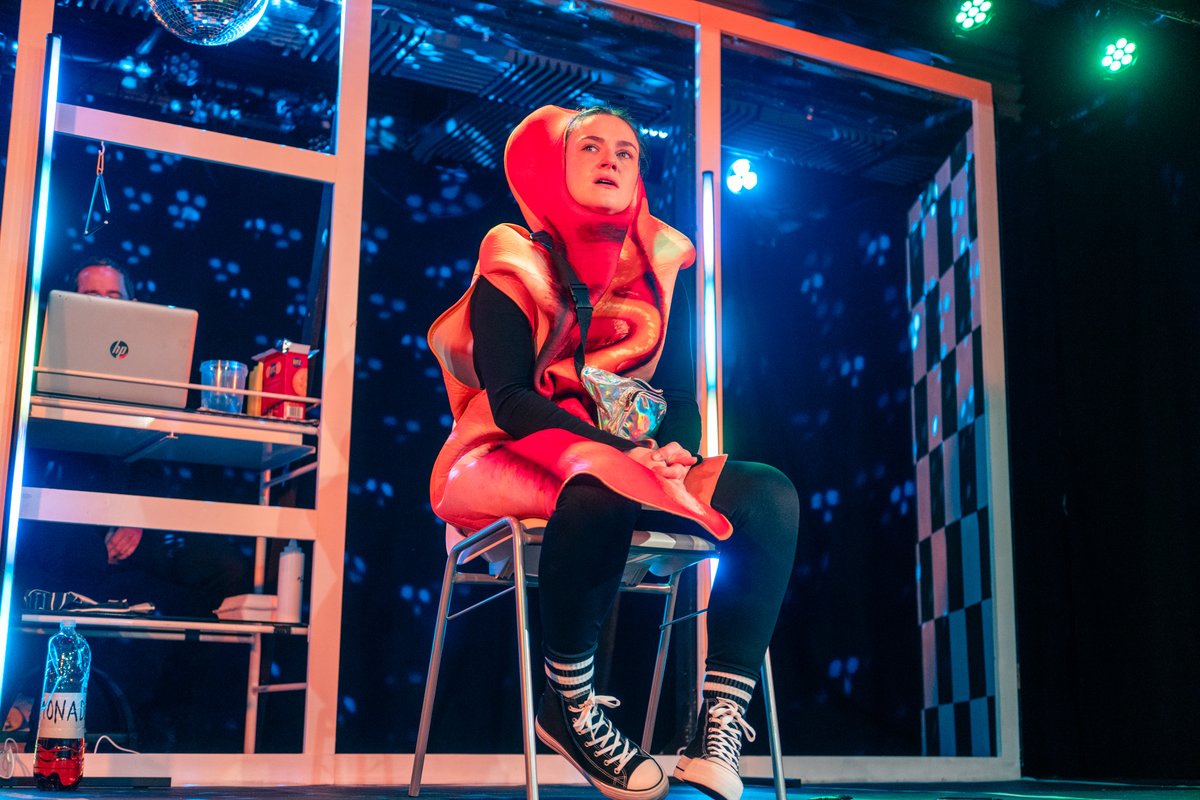
Whatever happened to Battery Park? Back in the 90s, they were ‘the band most likely to happen’, but they suddenly – irrevocably – split, leaving just one iconic album for their many fans to remember them by. So where and why did it all go wrong.? The beauty of Andy McGregor’s love letter to the Britpop era is that it’s all done with such veracity it’s hard to believe that it’s a piece of fiction – that the titular band never existed.

The play opens in the present day. Angie (Chloe-Ann Tylor) is at University and she’s doing her dissertation on Britpop (of course she is!). She tracks down Tommy (Chris Alexander), drinking alone in his regular haunt at Greenock Bowling Club, and asks him for the inside story. He needs a little persuading but soon enough he’s reminiscing about his younger self (Stuart Edgar), his older brother, Ed (Tommy McGowan), and their best pal, Biffy (Charlie West), who is one of those guys who likes to hang around with musicians – a drummer. Tommy has been writing songs and, lured by the possibility of a paid gig at the aforementioned bowling club, the boys hastily put together their band.

But while Tommy can write a catchy song, he’s not that confident a performer, so when Lucy (also played by Tylor) mentions that her best friend, Robyn (Kim Allan), is a brilliant vocalist/guitarist, it’s a no-brainer. Robyn is confident, talented and determined to make it big, no matter what it takes. From their very first performance, the new line-up seems destined for success…

Battery Park captures the sweaty exuberance of a band’s early days with absolute authority, providing an inspired mix of drama and high-octane rock. Kenneth McLeod’s set design somehow manages to incorporate all the necessary jumble of instruments and amplification into the story without ever getting its leads tangled, and I find myself marvelling at the ingenuity: the speaker cabinet that doubles as a safe is inspired!

While the first act chronicles the band’s dizzy rise to the brink of stardom, Tommy has signalled from the outset that the second will detail its heartbreaking descent into ignominy. The resulting dramatic irony is almost too much to take. By the closing stages, I’m watching with tears in my eyes.

All the performers excel, both as actors and musicians – and it certainly helps that the band’s numbers (also written by McGregor) are a series of propulsive bangers, each one containing a memorable hook in the chorus. As the musicians hit the final chords of the closing song, the applause erupts, intense and heartfelt.

As gig theatre goes, this is a perfect example of the craft. Don’t miss it.

5 stars

Philip Caveney
Disfunction

24/10/23

Traverse Theatre, Edinburgh

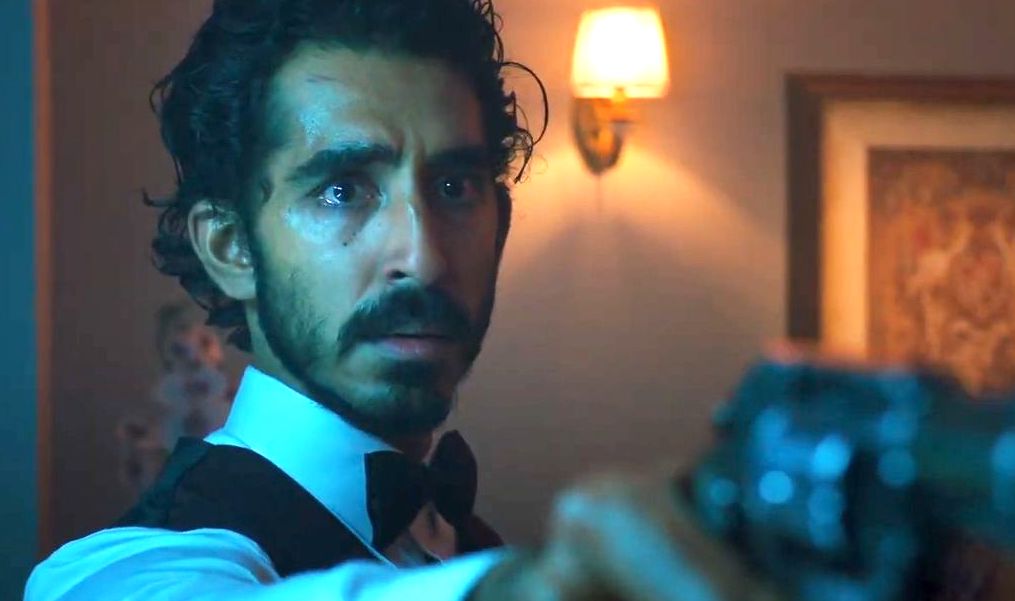
Sadly, this is the final PPP of the season; Tuesday lunchtimes just won’t be the same without an invigorating hour of original theatre. Luckily, Disfunction (“with an ‘i'”) provides a rousing send-off. This is first-rate stuff: a beautifully distilled character study, with a slice of social commentary on the side.

Kate Bowen’s play tells the story of sisters Moira and Melanie (Maureens Beattie and Carr respectively) and a game they’ve been honing for fifty years. Their goddaughter, Tanya (Betty Valencia), thinks she’s found a way to monetise their creation – by turning it into a sort of reality-TV experience, where viewers can pay to watch them play. At its best, the game is all Taskmaster-style fun: one round requires a blindfolded participant to put a pin in a map and then (sans blindfold) make their way to wherever the pin lands. Caveat: no cars allowed. Oh, and once they get there, they need to take a photograph of themselves. With four animals.

At its worst, the game is an exercise in, well, dysfunction. With a ‘y’.

The Maureens are surely two of Scotland’s national treasures, aren’t they? It feels like a real privilege to see these two great actors in such an intimate setting. They clearly relish their roles, especially Carr, who gets the plum part of the sassy, self-destructive Melanie. But Beattie is just as impressive as the more reserved and taciturn Moira, and Valencia more than holds her own as troubled Tanya, all bright-eyed desperation, a paper-thin smile covering her pain.

Lu Kemp’s kinetic direction means that the characters are always in motion (notable moments include a hilarious performance of Whigfield’s Saturday Night routine), and highlights that peculiar combative closeness that defines so many families.

Are there any negatives? Not really. Disfunction‘s role-playing political round perhaps stretches credulity (if there are only three people playing and each one has to ‘be’ a politician, who has set the questions to catch the others out?), but that’s my only gripe. Otherwise, it’s a pure delight. After all, as Tanya so cannily perceives, who doesn’t want to watch a bunch of strangers tearing themselves apart?

4.5 stars

Susan Singfield

Moorcroft

24/10/23

Traverse Theatre, Edinburgh

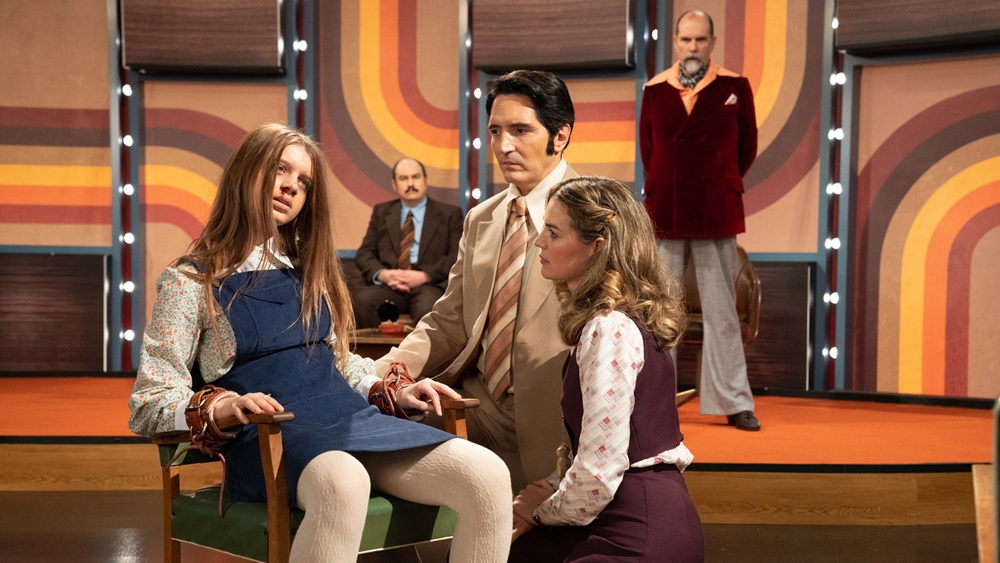
It’s Garry (Martin Docherty)’s 50th birthday and he’s not in the mood for a celebration. Instead, he prefers to think back to his teenage years and the wee amateur football team he put together with his best friends in Renfrew. He warns us in advance, this isn’t going to be an easy ride…

He assembles his crew. For starters, there’s Mick (Jatinder Singh Randhawa), once a promising member of a junior football team, now plying his trade as a hairdresser. There’s Tubs (Dylan Wood), who is gay – and in a 1980s small town, that’s seriously difficult – and there’s Paul (Sean Connor), struggling to cope with an abusive, alcoholic father. Noodles (Santino Smith) appears to be the most successful of the crew, with a decent job and the money to pay for some fancy football shirts (but should they be that shade of maroon?). Sooty (Kyle Gardiner) is a dedicated mod with a fishtail parka and no higher ambition than to ‘do a Quadrophenia’ and ride his scooter to Brighton, while Mince (Bailey Newsome) has an uncanny propensity for saying the wrong thing at the wrong time… every time.

But from their very first training session, the teammates work well together. The go from strength to strength, finding pleasure in the simple joys of kicking a ball around a pitch. They are blissfully unaware that darker times are inexorably closing in on them.

Moorcroft, written and directed by Elidh Loan, is a fabulous slice of theatre, one that moves effortlessly through a whole series of emotions. It swerves from raucous hilarity to visceral anger to heartrending tragedy with all the sure-footed precision of a well-drilled team. There are superb performances from the entire cast – particularly from Newsome as the slow-witted but oddly adorable Mince – and I especially enjoy the physical sequences as the team leap, twirl and kick their way through a series of energetic routines backed by a selection of 80s bangers. Loan knows exactly when to switch the mood. One minute I’m laughing out loud, the next my eyes are filling with tears.

It would be so easy to dismiss this as ‘a play about football’ but it’s much more than that. Moorcroft is a meditation on masculinity, its strengths, its weaknesses. It’s a reflection on the everyday deprivation of working-class life, and it’s a lament about the awful injustice of fate. Compelling and propulsive throughout, it never once relaxes its powerful grip.

It shoots, it scores. It’s a winner.

5 stars

Philip Caveney
Killers of the Flower Moon

22/10/23

Cineworld, Edinburgh

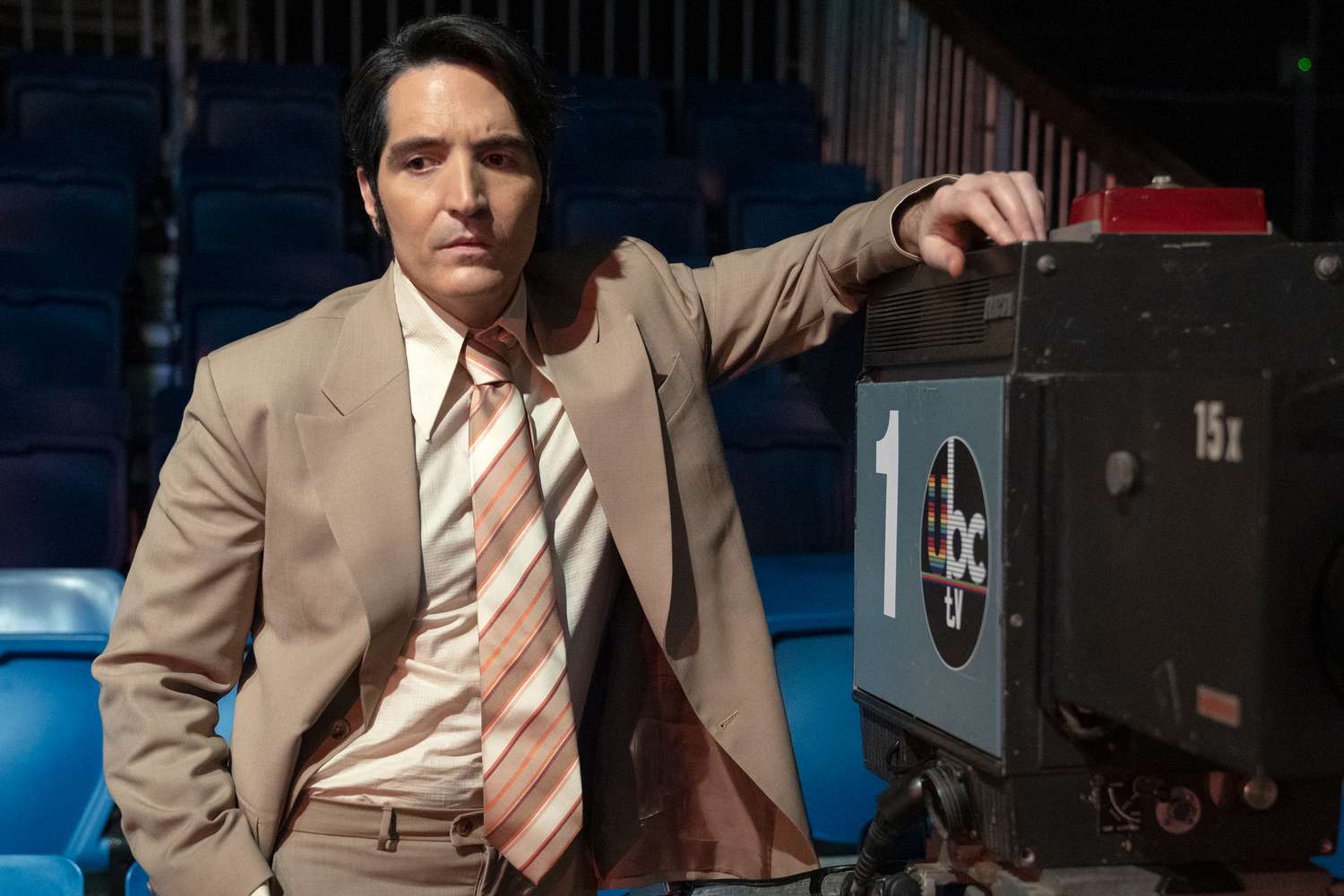
A quick glance at IMDB informs me that I first watched a Martin Scorcese movie way back in 1976 – Taxi Driver – and that I have seen pretty much every film he’s directed since. So naturally I am eager to see Killers of the Flower Moon, though somewhat apprehensive at its prodigious running time of three hours and twenty-six minutes. 

Set in the early 1920s, it tells the story of the Osage tribe, native Americans who, after being shunted unceremoniously from their Kansas homeland to a reservation in the wilds of Oklahoma, subsequently discover that the land they have been allocated contains vast quantities of crude oil – and that they are now the richest people per capita in the USA.

Of course, this being America, it’s complicated. For one thing, the Osage can’t just be allowed to own their own money. The very idea! In most cases, they must have a white guarantor to enable them to have access to it. And naturally, there are plenty of unscrupulous people in the vicinity, who are eager to put their hands on that wealth – even if it means arranging for the regular liquidation of certain members of the tribe. Suspicious deaths among the Osage are all too common, and such crimes are rarely even investigated.

Chief among the white opportunists is rancher ‘King’ William Hale (Robert De Niro), who purports to be the tribe’s greatest friend and has even learned to speak their language, but who secretly wheels and deals to ensure that large amounts of Osage money keeps flowing in his general direction. When his nephew, First World War veteran Ernest (Leonardo DiCaprio), arrives looking to make a new start, Hale ensures that he crosses the path of Osage woman, Mollie (Lily Gladstone), telling Ernest that this will be an opportunity for both of them to make a killing…

There’s no doubt that this true story, based on the book by David Gran, makes for compelling viewing – and the film’s two-hundred-million dollar budget ensures that Scorcese’s evocation of the era is beautifully realised. Many of the great director’s touches are in evidence here: the matter-of-fact quality of the murders; the chilling depictions of everyday cruelty and avarice; and, as ever, there’s Scorcese’s uncanny ability to choose the perfect music to accompany any given scene.

There are also three extraordinary performances to savour. Di Caprio as the sullen, selfish and frankly not-very-bright Ernest may be a career-best display of acting. He plays the role as a kind of arrested adolescent with a constantly glum expression, as though he’s being admonished for something he’s done (or maybe hasn’t done). Old hand De Niro is horribly oleaginous as Hale, a man so utterly devious, it’s a wonder he can manage to walk in a straight line. And Gladstone is terrific as Mollie, managing to convey so much with a withering look, a shrug, a silence. Her calm presence is somehow this turbulent story’s anchor.

The film’s first and concluding thirds, the set-up and pay-off – when FBI man Tom White (Jesse Plemons) arrives to initiate a long-awaited investigation –  easily hold my attention, but that middle section feels decidedly baggy and and the constant stream of viewers nipping out for a judicious toilet break is really distracting. It prompts the inevitable question: does the film need to be so long? In my opinion, no. Trimmed back by an hour, this could have been even more satisfying. I can’t help but think wistfully back to the likes of Lawrence of Arabia and Doctor Zhivago, epic films that always included an intermission around the halfway mark for this very reason.

That said, I love Killer’s ironic coda, which presents an account of what we have just seen as a soapy ‘true crime’ vintage radio recording, and which also features a cameo from Mr Scorcese himself. But the film fails to mention the fact (which I read about elsewhere) that the heinous conditions that the Osage tribe suffers in this film persist to this day. They are still being stiffed by the oil companies, who have brazenly commandeered the ‘black gold’ that continues to bubble up from beneath their reservation. And their demands for justice remain unheard.

Land of the free? Don’t make me laugh.

4.2 stars

Philip Caveney
Bryn Williams at Porth Eirias

20/10/23

Promenade, Colwyn Bay

We are in North Wales visiting Susan’s mum and the weather is frankly horrible. All thoughts of a pleasant stroll along the sea front are promptly vanquished by the distinct possibility of being washed away by the foaming grey breakers crashing over the barriers as we pull into the Porth Eirias car park. We opt to watch the sea from behind the safety of the massive picture windows in Bryn Williams’ excellent restaurant.

For my starter, I choose salt and pepper squid, which is served with spring onion, mint and a swirl of tangy lime mayonnaise. The squid is moist and gratifying, with the finest dusting of crispy batter. It’s faultless – and so are Susan’s roasted prawns. There are five of them, plump and juicy, and they come with chilli butter and a bowl of Bloody Mary sauce. Yum.

When the weather is foul, is there anything more gratifying than a fish pie? At Bryn Williams, the dish comes as a sharing platter for two, a hearty creation featuring chunks of cod and salmon, nestling under mounds of creamy mashed potato, the top nicely crisped in a hot oven. It’s piping hot and utterly satisfying. Brenda has opted for stone bass served with tender-stem broccoli, a perfectly cooked poached egg in breadcrumbs and chicken beurre blanc. She pronounces it ‘superb’ – the fish skin is beautifully crisp, and the egg yolk an enticing rich orange.

Lately, puddings seem to be the weak link in many restaurants, but not so here. Susan and Brenda both go for the Porth Eirias Baked Alaska, which is the standout of the day – sweet and succulent; chewy and crisp – while I enjoy the treacle tart, which again is a fine example of its kind, enhanced with a swirl of intensely flavoured orange jus and a scoop of vanilla ice cream.

All in all, this is a note-perfect meal, vivid and vibrant enough to make up for the miserable weather conditions. Even our scramble to the car is a bit dicy as we are obliged to time our dash between incoming waves, but the impeccable standard of the food makes it well worth the effort.

5 stars

Philip Caveney
I, Daniel Blake

17/10/23

Traverse Theatre, Edinburgh

It’s a propitious time for this play to appear, following, as it does, close on the heels of Ken Loach’s ‘final’ film, The Old Oak. 2016’s I, Daniel Blake was one of the veteran director’s most palpable successes, a compelling and often heartbreaking study of working-class life in broken Britain, set in the North East of England and featurIng stand up comedian Dave Johns in the title role.

It’s Johns who has adapted the film for stage and, for the most part, he’s stuck pretty closely to Paul Laverty’s screenplay – a little too closely perhaps, because surely the whole  point of a theatrical adaptation is to open up the original to fresh perspectives. Suffice to say that all the key scenes from the movie are present and correct, and it’s a hard heart indeed that can resist the subsequent pummelling.

Daniel (David Nellist) is a widower, a carpenter by trade, recently stricken by a debilitating heart attack. His doctor has advised him that he cannot risk doing anything strenuous but, in order to qualify for Jobseeker’s Allowance, he has to be able to demonstrate that he is actively looking for employment. At the job centre he encounters Katie (Bryony Corrigan) and her daughter, Daisy (Jodie Wild), recently rehoused from London and struggling to survive in an unfamiliar location. But Katie is a few minutes late for her meeting and is brusquely told that she is being sanctioned and will have to wait four weeks to get any money.

Daniel befriends the pair and does what he can to help them settle into their new home, while he goes about the thankless task of jumping through the various hoops that the DHSS keep throwing in his path. It’s clear that sooner or later, the merde is going to hit the fan…

The performances are exemplary (particularly Corrigan, who has to handle most of the heavy lifting), and there are some credible attempts to bring the piece up to date with recordings of the voices of Boris Johnson and Liz Truss, demonstrating their complete lack of empathy for anyone who is less privileged than them. Rhys Jarman’s design makes good use of video projection, highlighting a series of meaningless adverts supposed to inspire confidence in the government’s approach to unemployment, while Mark Calvert handles the direction with an assured touch.

But not everything from the film translates effectively to the stage. There are perhaps a couple of heartless interviews too many and a lengthy scene that follows the infamous graffiti incident – a homeless guy delivering an attempt at a rabble-rousing oration –  feels uncomfortably tacked on.

Still, this is a credible and compelling play and the fervent applause from a packed audience makes it clear, that if anything has changed for the unemployed since 2016, it’s certainly not for the better.

4 stars

Philip Caveney
Meetings with the Monk

17/010/23

Traverse Theatre, Edinburgh

Meetings With the Monk, this week’s offering from A Play, A Pie and A Pint, is a gentle affair, a study in both mental health and the limitations of live drama. Deceptively simple in tone, it explores these two issues in some depth – although the meta-theatricality arguably hogs the show.

Brian James O’Sullivan is our guide, the elision between writer, actor and character established right from the off, as he assumes the role of the front of house staff, pointing out the emergency exits and informing us about next week’s play. He’s chatty and friendly, explaining what’s going to happen, breaking down the performance into its component parts, ticking them off on a list as they occur. Introduction? Check. Exposition? Check. Rising action? Bring it on.

The story is almost incidental. The title sounds enticing (what do monks talk about?) but, actually, the meetings with the brothers are the least interesting things about this piece. It turns out that people who live cloistered lives don’t have all that much to say. Still, their soothing words have a profound effect on ‘Brian’, who’s struggling with depression, and thinks that taking a leaf out of his Granny’s book and going on a retreat might help. The Abbey is very different from his home in Glasgow and, in this quiet place, he finds the space to clear his head. 

O’Sullivan is a stand-up comedian and he uses that skill to his advantage. Although this piece isn’t a comedy by any means, his easy interaction with the audience means that we’re immediately on his side, and he knows just when to undercut a difficult topic with humour, so that it never feels too much, even when he’s talking about suicide. 

The set (by Gemma Patchett and Johnny Scott) is monkishly austere, while Ross Nurney’s lighting – appropriately – lightens the mood, a simple coloured spot indicating an abbey or the goodness that shines from Brother Felix.

Nimbly directed by Laila Noble, this is an enjoyable and thought-provoking play, although I do find myself wishing for a little more substance. I really enjoy the exploration of theatrical storytelling, but I’d also like a bit more plot or at least a bigger climax. Father Felix, who appears as a recorded voice – apparently, there are several different recordings, and O’Sullivan doesn’t know which will be played on the day – feels like a wasted opportunity. I keep waiting for him to say something memorable. 

Nonetheless, I applaud the experimental nature of Meetings With the Monk. It’s a quirky, original piece of writing, and one that invites much discussion afterwards..

3.6 stars

Susan Singfield

Don@Tokyo

15/10/23

Lothian Road, Edinburgh

It‘s not every day that a restaurant opens at the end of your street, but in the case of Don@Tokyo, that’s exactly what’s happened – and we couldn’t be happier about it.

When we first moved to Edinburgh eight years ago, the building that now houses the venue was a TSB bank. It closed in 2019 and, though there were mutterings about turning it into a wine bar, the arrival of COVID promptly finished off that idea. The place stood empty for years and quickly became virtually derelict and covered in graffiti, a real eyesore.

So when legions of workers appeared earlier this year and started to gut the place, working around the clock to get the job done, we were understandably delighted. In what seems an improbably brief space of time, the interior has been repurposed, refitted and redecorated and we’ve watched entranced as Don@Toyko has risen from the ashes. It’s now a bright, spacious, bustling Japanese restaurant with an eye-catching video display in the foyer, some quirky red figurines and even a semi-private dining room for larger parties. Best of all, they’ve preserved the beautiful old Victorian mosaic over the doorway that announces ‘Thrift is Blessing’.

We take our seats and somebody brings us the menu, a tablet with images of the various dishes on it and we tap through, wondering why there are so few mains to choose from. Then our waiter realises that there’s a glitch and that not all the meals are showing. He brings us a replacement and there’s a lot more there than we first thought. (Say what you like about ink and paper, you never have to turn it off and turn it on again.)

We decide to share some rainbow sushi: exquisite parcels of sticky rice featuring salmon, tuna and prawn – and some california rolls with crab, cucumber and avocado. Both are delicious, particularly when eaten with slices of the pickled ginger that accompanies them. 

We also order some soft shell crab. This is a tempura with not a hint of grease. The batter is as light as anything and the flesh beneath melt-in-the-mouth tender.

Best of all is the main course we share, a gyudon, slices of beef and egg on a bed of rice. It may not be the most picturesque item on the menu, but it’s rich and nourishing and we finish every last morsel.

From the drinks menu we choose a couple of cold teas, one with mango, the other with grapefruit. I’ve never been a big fan of tea but these sweet beverages work brilliantly with the food, the citrusy tang cutting through those savoury flavours and gooey textures.

A word of warning. The service here is really swift and we make the mistake of ordering everything up front, so it all arrives together. While this would clearly suit larger parties of people who like to mix and match their dishes, it’s less successful for two people seeking a quiet dinner. Next time, we’ll choose a dish, eat it and then order the next. What’s more, we’re so full towards the end, we ask to take half of the California rolls away with us, which proves to be no problem. They are transferred into a delightful little presentation box, ready for a delicious lunch the following day.

It’s early days for Din@Tokyo, with the staff clearly still getting the measure of the place, but on the basis of our first foray, it makes a welcome addition to the local eating scene. I’m sure we’ll be back for more before very much longer.

4 stars

Philip Caveney
Dracula: Mina’s Reckoning

11/10/23

Festival Theatre, Edinburgh

Bram Stoker’s Dracula is one of those novels, like Alice in Wonderland, that is more famous for its enduring imagery than for its story. Its iconic characters are part of the fabric of our culture, recognised instinctively, even by those who have never so much as picked up the book. Such tales are ripe for retelling, like ciphers waiting to be reshaped for our times.

Into that space steps Mina’s Reckoning, a reimagining of the world’s most famous vampire, written by Morna Pearson and directed by Sally Cookson. This all-female and non-binary production redresses the gender imbalances in the source material: here, the women are elevated from mere victims and damsels-in-distress and are actually afforded some agency.

Whitby is out and north-east Scotland is in, justified by the fact that Scots writer Emily Gerard provided much of the inspiration for Stoker’s novel: it was from her work that he learned about the Romanian superstitions that inform some of the most compelling ideas in his book. More specifically, we’re in Cruden Bay, in a women’s asylum, where some of the characters speak in the Doric dialect. The Scots angle works well, the rhythms of the language creating an earthy poetry. The play opens with Mina (Danielle Jam) banging on the asylum door, demanding to be let in. She has Jonathan’s journals and wants Dr Seward (a wonderfully comic Maggie Bain) to help her ward off the evil that’s on its way.

The long first act sticks pretty closely to Stoker’s tale, albeit with more jokes and some judicious pruning (the boring suitor sequences are gone, thank goodness, and so are the details of Jonathan’s interminable journey). The second, shorter, act is much better, precisely because this is where the creative reimagining takes place, allowing Mina to come into her own. It’s a shame that the piece skews this way: it feels unbalanced. I’d like a shorter set-up and a longer unravelling.

It’s a great idea to recast Dracula as a woman and Liz Kettle clearly relishes the role. She’s a bold presence, at once attractive and repellant, exactly as the Count should be. Here, the blood-sucker is more nuanced than her original incarnation, both supervillain and saviour. As Mina seals her Faustian deal, we recognise what Dracula is offering her, and understand exactly why she makes the choice she does.

Kenneth MacLeod’s set is both the production’s strength and its weakness. It’s clever and imposing, evoking the chillingly austere asylum as well as the grand gothic castle – all staircases and hidden corners – and I like the use of Lewis den Hertog’s video projections and Aideen Malone’s lights to stain the walls red with blood, turning them into journals, then night skies, then stormy seas. However, the set’s cage-like qualities – the bars and rails imprisoning the women – also create a sense of distance, so that it’s hard to feel close to the characters and to empathise with them. What’s more, it makes the whole play less scary because we’re not immersed in the ghoulish goings-on.

Benji Bower’s music is wonderfully eerie and evocative but the sound drowns out the dialogue at times, which is a shame, as it obscures some of the finer details of the plot. Likewise, the ensemble work is excellent, but comes at the expense of the individual characters, as the inmates of the asylum blend together.

Albeit a little uneven, there’s a lot to like about this NTS and Aberdeen Performing Arts production, in association with Coventry’s Belgrade Theatre. The powerful image of Kettle, striding the ramparts – grey hair flowing, coat tails billowing – is one that will stay with me for a long time.

3.8 stars

Susan Singfield

The Great Escaper

11/10/23

Cineworld, Edinburgh

This poignant film, written by William Ivory and directed by Oliver Parker, relates the true story of pensioner Bernard Jordan (Michael Caine), who, when we first encounter him in 2014, is living a life of quiet desperation in a care home in Hove. He and his wife of many years, Rene (Glenda Jackson, in her final film role), have become used to the daily grind of meals and medication. Bernard is a veteran of World War 2 and like many others, he’s applied to go over to France to commemorate the seventieth anniversary of D Day, but is disappointed to be told that he’s left it too late.

Bernard and Rene have a heart-to-heart discussion about the situation. She’s not mobile enough to travel these days, but realises that Bernard has a long-held need to confront a particular ghost from his past. She advises him to go to France anyway, realising that this is something he really needs to do. He takes her at her word and slips away early one morning. When the care home staff finally start to notice his absence, Rene does an excellent job of stalling for time…

The Great Escaper is one of those stories that would seem ridiculously far-fetched if it weren’t true. Aboard the cross channel ferry, Bernard befriends Arthur, a former RAF officer (John Standing), who is haunted by his own tragic memories of the war; and he also encounters, Scott (Victor Oshin), a more recent veteran, who had the bad fortune to stand on a landmine in Helmand Province and is now struggling to adjust to his new life as an amputee.

These contemporary strands are punctuated by scenes of a young Bernard (Will Fletcher) and Irene (Laura Marcus), meeting during wartime and falling in love – and there are steadily unfolding sequences of the event that has haunted Bernard’s dreams for decades. The young actors who double for Caine and Jackson are perfectly cast in their roles.

This isn’t an epic film by any stretch of the imagination – it’s small and realistic and never afraid to show the darker side of ageing, the awful tragedy of it. Though the media interest in Bernard’s adventure actually happened, it’s never feels overblown; it’s measured and realistic. There’s also a refusal to glorify the bravery of the veterans.

The film’s strongest moment is the scene where a sobbing Bernard stands alone amidst a forest of white crosses in a military graveyard. ‘What a waste,’ he cries – and I’m pretty confident there’s not a soul in the audience that would disagree with him.

If eventually the film feels a little too sombre for its own good, there are still genuinely heartwarming performances from the two leads. Caine came out of retirement for the chance to work with Jackson again (they last appeared together in 1975’s The Romantic Englishwoman) and now, reunited for one final appearance, they make a winning team.

4 stars

Philip Caveney