Author: Bouquets & Brickbats

Cuckooed

Unknown

18/04/15

Cuckooed was one of the hot tickets at last year’s Fringe – so hot, in fact, that we failed to procure tickets for it. So it was great to see it repeated at the Traverse Theatre and to note, that once again, it was absolutely sold out. Luckily we booked early.

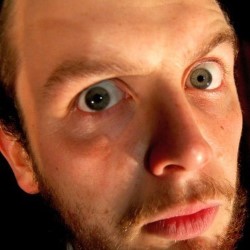
Tonight’s show is divided into two halves. Before the titular ‘comedy of betrayal,’ we are treated to forty minutes of chat by writer and star Mark Thomas, focusing mostly on the ‘105 Acts of Minor Dissent’ that he recently set himself. It’s hard to describe Thomas’s act. He’s not exactly a standup, in the sense that there are no real jokes or punchlines here – and yet he has people roaring with laughter, pretty much from the get go. He’s actually an activist, a ‘domestic terrorist’ as the police like to label him, a man who entered the Guinness Book of records for holding 20 protests in 24 hours. Thomas has devoted his life to confronting senseless authority and he manages to make me feel ashamed for not doing more. He’s also a man who doesn’t hold back when talking about those who he feels fall short of being decent human beings. A recent competition he held, to come up with a definition of the word ‘Farage,’ resulted in the following: Farage: the puddle of smelly liquid at the bottom of a rubbish bin. 

Cuckooed is a more complex animal, a blend of theatre, witness-recollections, video and reconstruction. Instead of a programme, we get a paperback copy of the script, which is always a bonus. It tells the story of when Mark was a member of the Campaign Against the Arms Trade and carried out protests alongside his dearest friend, referred to here only as ‘Martin.’ When it becomes apparent that members of the group are being spied on by the arms company, BAE Systems, it soon transpires that there has to be a mole working within CAAT, and, after much digging, suspicion falls upon Martin. Thomas is at first incensed. How could just a hardworking, devoted activist be thought capable of performing such a horrible deception? But, as he begins to probe the evidence himself, a terrible truth is uncovered…

Thomas is a mesmerising performer. This is essentially a monologue (with interjections from witnesses recorded on video screens, cleverly contained within the sliding drawers of filing cabinets), but he carries the show expertly, using all the techniques of a gifted actor. A key scene where his emotion builds to the point where his eyes fill with tears of regret is incredibly moving, and, I believe, impossible to fake. It raises some incredibly cogent questions about the right to privacy and touches on other deceptions – notably the case of undercover policeman John Dines, who conducted a three year relationship with a woman, a member of an anti-capitalist group, simply in order to spy on her and the other members.

It’s a brilliant show, not the angry diatribe it might have been, but thoughtful and measured. At its conclusion, the audience rise to their feet to deliver a well-deserved standing ovation. You can bet that we’ll be booking tickets early for his next show, Trespass, when it comes to Edinburgh in August.

5 stars

Philip Caveney

The Apartment, Edinburgh

Unknown

17/04/15

Edinburgh has a whole host of excellent restaurants but The Apartment, in Barclay Place, is undoubtedly one of its best, not only in its eclectic choice of ingredients, but also in terms of value for money. The set menu offers two superb courses for £15 and three for £17 (£19 after 7 pm). There’s also a selection of Chef’s specials, a choice of three kinds of healthy skewers, steaks and (a nice touch here)  three dishes that can be ordered as small or large portions, the former clearly aimed at customers with a lot more control than I have! On the night we visited, we were greeted by the maitre d, an affable and chatty Irishman, who certainly knew how to make us feel relaxed and happy. The staff are attentive, without being pushy and the surroundings, though smart and modern, are nonetheless atmospheric and entirely convivial.

For starters we had Pan Fried Squid with Chervil and Butter Sauce and Chicken and Black Pudding Terrine with Star Anise Apricots. If the descriptions sound enticing, let me assure you that the food absolutely lived up to them! The squid was deliciously light and suffused with a subtle lemon tang, while the black pudding had a spicy ‘melt-in-the-mouth’ quality, that ensured the platter was virtually licked clean.

On to the main courses: I went for the Roasted Pork Loin with Merguez, Soupy Puy Lentils and Crispy Pancetta while Susan ordered the Grilled Plaice Fillets with Wild Garlic Mash, Brown Shrimp and Mussel Vinaigrette. Once again, both courses were note perfect – the pork was succulent and perfectly offset by the dark, earthy lentils and the spicy Spanish sausage, while the fish was light and flaky, swimming in that citrusy mussel vinaigrette. Yum!

Was there room for pudding? You bet! And frankly, who could resist the Mille Feuille with Lemon & Lime Curd or the Dark Chocolate Pot with Dulche De Leche and Blueberry Jelly? Not us, that’s for sure. The former was light and buttery, the latter… well, if chocolate’s your thing, then you’re going to be very happy with this.

The meal was accompanied by a very decent Sauvignon Blanc which at £17 for a bottle, was once again, excellent value.

So, should you find yourself in Edinburgh, hungry and  in need of something a little bit special, take my advice and steer yourself up towards Bruntsfield and The Apartment. You won’t be disappointed.

5 stars

Philip Caveney

Thursday Night at The Stand

images

16/04/15

A Thursday night at The Stand and another five comedians vie for our attention on what must be Edinburgh’s most intimate stage. Tonight our MC is Jonathan Mayor, a gay black comedian from Moss Side, Manchester, with an endearingly camp and bitchy line of patter which soon wins over the audience. This includes 21 year old Jamie, who sitting in the front row, has to endure the brunt of Mayor’s scorn. Occasionally, the put downs and sexual overtures go a little too far for comfort, but Jamie takes it all in his stride and Mayor is consistently funny, even when one of his routines goes spectacularly wrong and he corpses right in the middle of it.

First up is Jay Lafferty, a thirty year old Scottish comic, who is quick to point out that she’s an unusual act here as she’s female. She’s right up to a point (although some of the best acts we saw at last year’s Fringe were women – and we’ve seen more women doing stand-up at The Stand than any of the other comedy clubs we frequent) but I can’t help feeling that building a key joke around reading 50 Shades of Grey on holiday is not doing the cause of feminism any great favours. Her set is intermittently funny but she’d certainly benefit from stronger material.

Rob Kane is another Scottish comic, afforded a short slot here. Once again, he’s occasionally amusing and his account of his holiday in Thailand raises some genuine belly laughs. But it’s all a bit hit and miss and he perhaps needs to establish more confidence if he’s to take a step up to the next level.

Ro Campbell on the other hand, has confidence to spare. He’s an Australian, living in Edinburgh and addicted to chewing gum. He tells us that he’s shortly returned from a tour of Singapore, where unfortunately gum is a banned substance and his subsequent tale of smuggling packets of Wrigley’s through customs, hidden where the sun don’t shine, is absolutely hilarious. He’s good too on audience interaction, managing to put down a potential heckler with one scornful rebuke.

Top of the bill is veteran comic, Kevin Gildea, a softly spoken Irishman who has a relaxed, almost conversational approach to comedy, but it soon becomes clear why he’s top of the bill tonight. He builds the laughs steadily until he has you right in  the palm of his hand. Highlights include his trip to the Cork Butter Museum, a note purportedly written by a free range pig on the inside of a pack of bacon and some observations about his children that go beyond the usual run of the mill parental stuff. I thought he was excellent, despite his taking exception to my rather fabulous T shirt and his suggestion that my daughter is a bit mean with the old Father’s day cards.

Once again, a great value night out (there was a two-for-one offer on tonight’s show) and a varied crop of comedians, all of whom managed to evoke genuine laughs. The Stand continues to be Edinburgh’s quintessential comedy venue, so get down there and give your laughing tackle a thorough workout.

3.6 stars

Philip Caveney

Broth

Unknown-1 Unknown

Traverse, Edinburgh

The Traverse Theatre’s A Play, A Pie and A Pint is a fabulous idea: for a mere £12, punters can treat themselves to a warm lunch, a convivial drink, and – of course – some entertainment. It’s a clear attempt to thwart theatre’s (often unfair) elitist reputation; to render play-going a simple, unpretentious event.

Let’s begin with the play. This one (the last in PPP’s Spring season), Broth by Tim Primrose, starts very well indeed: three women, a kitchen and a blood-soaked man. The man is Jimmy, a terrifying patriarch, husband, father and grandfather – respectively – to Mary, Sheena and Ally. It seems that Mary has, for once, fought back: Jimmy is unconscious, maybe even dead, and his blood is everywhere – all over the table cloth, the kettle, his clothes and his face. The three women unite as they try to work out what to do.

The premise is strong, and the characters convince. Their voices are appealingly authentic, the Scots dialect employed with knowing wit and a lightness of touch. The performances rarely falter, and the relationships are beautifully flawed. It’s funny too: that raw, black humour that epitomises domestic tragedies such as this. It’s hard to single out an individual actor for praise; this is a real ensemble piece, and they work together to create a fully-realised world.

Unfortunately, the plotting doesn’t seem as strong as the other elements: after a tight forty minutes, the story starts to waver, becoming repetitive and unfocused. It’s still enjoyable, but there’s no peril left, and the half-hinted at idea of the metaphysical (‘It hurt when you killed me’) is never really developed, so that it feels like a wasted concept – a strange red herring that adds nothing to the play.

Still, it’s well worth seeing, and would work well away from a traditional theatre setting too: this is a play that would translate effectively to a school hall or a community centre or a working men’s club. It’s a welcome slice of kitchen-sink – and at its best when its not trying to be anything else.

Oh – and the pie was lovely.

3.2 stars

Susan Singfield

While We’re Young

MV5BMTc4MDEzMTA5MF5BMl5BanBnXkFtZTgwODA5MTM0NDE@._V1_SX214_AL_

13/04/15

Reviewing Noah Baumbach’s previous film, Frances Ha, I remarked that it was the best Woody Allen movie in ages and I think that still holds true for While We’re Young. The spirit of Woody in his prime haunts this sprightly comedy, though perhaps this is mid-period Woody, around the time of say, Hannah and Her Sisters. This isn’t intended as a criticism, by the way, but as a compliment of the highest order. Even Woody Allen can’t make movies like this any more.

Josh (Ben Stiller) is a once-promising documentary maker who has stalled on his second project, still incomplete after ten years of tinkering with it. His wife, Cornelia (Naomi Watts) is a film producer who works alongside her father, Leslie (Charles Grodin) a documentary maker of near legendary fame, a cross which Josh has had to bear for most of his life. When Josh and Leslie encounter cool young film-maker Jamie (Adam Driver) and his free-spirited girlfriend Darby (Amanda Siefried), they soon find themselves being inexorably drawn into their quirky universe, complete with a change of wardrobe and a visit to a spiritual vomiting course. Jamie professes to be Josh’s greatest fan… and he soon has him working as his collaborator on a new film project – but is Jamie everything he claims to be? Or does he have more mercenary objectives in mind?

The film is funniest when examining the ‘chalk and cheese’ aspects of the two male leads. While Josh plays CD’s, Jamie prefers vinyl. Where Josh frequents Facebook, Jamie prefers scribbling down obscure messages on bits of paper. It soon becomes clear that Jamie is actually a total jerk. Despite that, it’s also obvious that he’s likely to make a big success at his chosen vocation. There are plenty of laughs along the way, but the story falls down somewhat with a conclusion which suggests that people cannot really be complete until they become parents. Since Josh and Cornelia have spent most of the movie professing how lucky they are to have escaped that particular ‘trap,’ it seems a little facile to have them both willingly falling headlong into it.

Still, for all that, this is that rarest of things, an intelligent comedy that hits most of its intended targets with ease. It may not quite be in the same league as Frances Ha, but it’s not so bad either.

4.2 stars

Philip Caveney

13

Woman In Gold

MV5BMTExMTUxNDQ5MjdeQTJeQWpwZ15BbWU4MDk4NTgxMzQx._V1_SX214_AL_

11/03/15

One of those real-life tales that would seem highly unlikely if presented as a piece of fiction, Woman In Gold tells the story of Maria Altmann, (Helen Mirren) an elderly Austrian-born woman living in California, who after the death of her sister contacts a young lawyer, Randol Schoenberg (Ryan Reynolds) to ask his advice about a painting – a very famous one. Known to the world as The Woman In Gold, it was painted by Gustav Klimt, was commissioned by Maria’s father and is actually a portrait of her late Aunt. Looted by the Nazi’s during the Second World War, it now hangs in Vienna’s most famous art gallery and is widely regarded as Austria’s most quintessential piece of art. What chance would there be, wonders Maria, of having the painting returned to her?

The story looks at the long series of meetings, negotiations and court cases that the two leads have to go through in order to obtain justice. Mirren is on great form as the cantankerous Maria, (though it must be said that for a supposed octogenarian, Mirren looks distinctly healthy), while Reynolds, always an underrated actor, makes an adept transformation to the quietly-spoken but determined lawyer, prepared to take an entire country to the supreme court. The Altmann’s tragic history is shown through a series of assured flashbacks with Orphan Black’s Tatiana Maslany looking surprisingly convincing as a younger version of Helen Mirren.

In a story like this it would be all too easy to slip into schmaltz, but Director Simon Curtis manages to keep everything reined  in enough to tug at the heartstrings without losing control; and this is, after all, an emotional story of cruelty, dispossession and greed, that will make all but the stoniest individuals shed tears. A decent and absorbing film.

4.6 stars

Philip Caveney

Hedda Gabler

images images-1

10/04/15

Lyceum, Edinburgh

Edinburgh’s Lyceum is a beautiful Victorian theatre, and a delightful place to visit in its own right; it’s hard to imagine anyone could be unimpressed by the perfectly preserved intricacies of its decor; the sumptuous blues, golds and reds, redolent of old-fashioned luxury. It’s lovely.

If this, along with the choice of an Ibsen piece, suggests a staid, old-fashioned production, then nothing could be further from the truth. This version of Hedda Gabler (adapted by Richard Eyre and directed by Amanda Gaughan) is vivacious and sprightly; as fast and funny as it is heartbreaking and tragic. Nicola Daley, as Hedda, is never less than utterly engaging; she clearly revels in the role, and captures perfectly the awful attractiveness of Hedda’s reckless malevolence. By the end, we feel sorry for Hedda, but we never lose sight of how dangerous she is.

The supporting cast is strong too: I love Sally Edwards’ Aunt Juju – a real Miss Bates of a character – as irritating and vapid as she is charming and kind; Benny Young, as Judge Brack, oozes sly debauchery concealed beneath a layer of respectability so thin that only Juju is taken in. Jade Williams convinces as the outwardly naive – but ultimately hard-headed – Thea, and Jack Tarlton’s swaggering energy makes Loevborg’s wild dissolution a physical, menacing thing.

The set is marvellous too: the light, fresh, open design makes for a queasy juxtaposition with the suffocation Hedda feels in her home, her marriage, her social class. It underscores the point for us that poor George will never be able to give her what she needs; no open window will ever offer enough air.

I loved this play. I can’t fault it. I’m still thinking about the characters twenty-four hours later, contemplating their behaviours and their fates. A fabulous piece of theatre.

5 stars

Susan Singfield

Blade Runner: The Director’s Cut

5172CDVME5L

09/04/15

Thirty three years ago, as a raw recruit with Piccadilly Radio, I was sent to review Ridley Scott’s Blade Runner. The film was far from perfect (a Chandleresque voiceover by Harrison Ford, one of the chief offenders) but nevertheless, it blew me away. I couldn’t remember seeing a more credible vision of the future. Since then, Scott has revisited the film several times, trimming it, tuning it, reworking certain scenes with new technology as it became available. This version, originally released in 1992, now receives another showing on the big screen and if ever there was a film that deserved to be viewed that way, this is the one. Scott’s dystopic vision of Los Angeles in 2019 is a twelve course feast for the senses – a world dominated by acid rain, Japanese technology and endless adverts for Coca Cola. The visual effects are quite extraordinary (all the more so when you consider that this was before the days of CGI), but they don’t dominate proceedings, while Vangelis’s pulsing electronic score makes a perfect marriage with the onscreen action.

Rick Deckard (Harrison Ford) is a Blade Runner, a man charged with the tricky task of hunting down and eliminating rogue Replicants (incredibly realistic androids, generally used as workers on off-world colonies.) Four particularly resourceful Replicants led by Roy Batty (Rutger Hauer) are hiding out in Los Angeles and Deckard is recruited by his old boss to hunt them down. Visiting the Tyrell Corporation, who manufacture the replicants, he meets Rachael (Sean Young) an intelligent young woman who it seems, might not be quite as human as she appears…

In futuristic movies, it’s always fascinating to see how many unlikely predictions are made. In 2019, apparently, Deckard is still reading old fashioned newspapers and loading printed snapshots into what looks like a CD deck (though he can admittedly do amazing things once they’re in there). Meanwhile, people are zooming around in flying cars! But this matters not. The film goes deeper than most sci fi stories to ask some challenging questions. Does artificial life have as much right to exist as the creatures that have created it? And do those creators have the right to take that life away, when the creation fails to meet their expectations? The final sequences in J.S. Sebastian’s toy shop/apartment in ‘The Bradbury Building’ build to a compelling conclusion and Hauer has never been as enigmatic as he is here.  Blade Runner is serious film-making on a grandiose scale. Scott has made many films since, but this will probably remain his undisputed masterpiece. It’s stood the test of time and passed with flying colours.

5 stars

Philip Caveney

Kampung Ali, Fountainbridge, Edinburgh

Unknown

08/04/15

Looking for somewhere with an incredible sense of style? Maybe Kampung Ali isn’t for you. The decor is, at best, functional and the huge mural on the back wall, which depicts an eastern city at night, complete with twinkling neon lights is, dare I say it? A bit kitsch. Maybe you’re looking for somewhere with an extensive wine list? Again, you won’t find it here. The house white is a chardonnay and at a push, they’ll drag out a glass of rosé sauvignon blanc that tastes as though it was originally opened to celebrate the marriage of Charles and Diana – though beer lovers will fare rather better with a bottle of Tiger. But if you’re looking for superb Malaysian cuisine offered at great value prices, well then, that’s a different matter entirely.

We began with two classic starters. The Vegetarian Spring Rolls were light, flakey and delicately spiced, one of the best versions of this dish I’ve ever tried. The the Satay Chicken Skewers came immersed in a thick and tangy peanut sauce, that was finger-lickingly good. Both portions were on the generous side (those with faint appetites may want to share a starter.)  The main courses were equally stunning. I had Crispy Pork with Noodles, which had a clean, pleasing flavour spiced with lemongrass and chilli, just enough to make the taste buds tingle, but not too overpowering. Susan opted for King Prawn with Noodles, a big hearty bowl of fishy goodness, swimming in a broth that was fierce but satisfyingly sweetened with coconut milk. No diner at Kampung Ali can afford to miss out on a bowl of their Coconut Rice  which is light, sticky and fragrant.

A meal for two with drinks came in at £36, which in the City Centre, can only be viewed as exceptional value. So, come to Kampung Ali. Ignore the decor. Sit down and take your taste buds for a brisk trot around the park. You won’t be disappointed.

4.2 stars

Philip Caveney

The Second Best Exotic Marigold Hotel

MV5BMTU3MjkxNjc0OV5BMl5BanBnXkFtZTgwMjc0NDg0NDE@._V1_SX214_AL_

05/03/15

In 2011, The Best Exotic Marigold Hotel made the cinema industry sit up and take notice. Here was a modestly budgeted film that raked in a hefty profit, but more significantly, it took it from the kind of mature audience that cinema usually fails to attract (i.e. not just 12 year old boys). So it was inevitable that sooner, rather than later, there’d be a sequel. And here it is, complete with a title that sounds worryingly like a self-fulfilling prophecy. It should be remembered that the original film was based on a rather good source novel by Deborah Moggach. This one appears to be an original screenplay, if by original, you mean borrowing an idea that famously appeared in an episode of Fawlty Towers. The kindest thing you can say about it, is that it’s a curate’s egg of a film, good in parts but those parts are few and far between.

Sonny (Dev Patel) is soon to marry his fiancé, Sunaina (Tina Desai), but first he plans to expand his operation by opening a second hotel and at the film’s inception, has gone to America to seek finance. In this enterprise he’s aided by the caustic Mrs Donnelly (Maggie Smith) her character slightly diluted from her original bitchy incarnation, but nonetheless still awarded most of the funniest lines. Meanwhile the usual suspects from Marigold 1 parade around having affairs with each other (Celia Imrie’s character, Madge, appears to have turned into a borderline good time girl,) while Evelyn (Judy Dench) and Douglas (Bill Nighi) are still failing to connect, even when it’s perfectly clear that the two of them are simply made for each other. Into this hotbed of geriatric passion wanders Guy Chambers (Richard Gere) who might or might not, be the hotel inspector who can grant Sonny’s expansion plan. Before you can say, ‘Basil Fawlty,’ Guy has the hots for Sonny’s widowed mother and much (alleged) hilarity ensues. The problem is, that this is all so obvious, it might as well have been performed as a series of semaphore manoeuvres. A last minute ‘twist’ fails to offer any surprises whatsoever. And what’s happened to Sonny’s character? In Marigold 1, he was charming in a bumbling, hapless sort of way, but here he’s a car crash of a person who can’t open his mouth without offending everybody in the vicinity.

On one hand, TSBEMH deserves respect for daring to portray senior citizens as genuine characters with real lives and real concerns; on the other hand, points must be deducted for its outdated portrayal of India as a country that has somehow never escaped the bonds of colonialism. The first film managed to skirt skilfully around these issues, but this time it just wades on in, seemingly without thinking. The climactic wedding features lots of dancing and larking about, but also comes with a large dollop of sentimentality, which once again, the first film was careful to avoid.

So, second best by name and certainly second best by nature. Ideally, the film makers should have gratefully accepted their groundbreaking hit and moved on to another idea, but of course, the movie business will always respond to a hit by throwing more money in it’s general direction. Can we ‘look forward’ to The Third and Final Exotic Marigold Hotel? God, I hope not.

3 stars

Philip Caveney