Author: Bouquets & Brickbats

Tony Singh at Apex Grassmarket

Grassmarket, Edinburgh

12/04/16

The Apex hotel is an unprepossessing location for a meal, despite the always startling view of the castle from the plate glass windows. It’s got that sterile vibe that so often permeates hotel restaurants: too corporate, too samey-same.

But Tony Singh’s new restaurant here has garnered a lot of press attention, and we’re keen to see if it’s as interesting as they say, so we meet up with a couple of friends and take our seats with open minds.

To be honest, it’s all a little bit odd, and it takes us a long time to decide what we are going to eat. It’s called a sharing menu, but the dishes, in the main, don’t seem like things that are easy to share. It’s called ‘fusion’ too, but it’s not well fused. “Confusion,” mutters one of our companions, and she’s not far wrong.

Still, the food when it arrives is mostly very good indeed. There’s Vuhra (a spiced lamb kebab with mint & coriander sauce and tamarind dressing), which – once we’ve gone through the rigamarole of cutting it into four – Philip and I adore, the spicing intense and packing a real punch. Our friends are not as keen, but they’re not fans of red meat anyway; if you are, you’ll like this one. The Haggis Pakora are delicious too, and easier to share. They’re robustly flavoured, and accompanied by two contrasting dips. We all enjoy the BBQ Pork Doughnutfilled with sticky pulled pork, sweet with maple syrup, smoked bacon and a whiskey glaze. It’s possibly the best thing we eat all night, but it’s definitely one to consume in moderation: I don’t imagine they’re recommending this much fat and sugar in any health clinic.

We try the Tiger Salad with Cured Salmon too; it’s fresh and zingy, an excellent contrast to all the deep fried food we’ve been indulging in. The Fish Taco with Crema and Loco Salsa is a similarly light, and wonderfully flavoured dish. Less impressive are the Fish Balls (poached & fried with Manong’s Grill Restaurant’s famous sauce). The sauce is indeed very tasty, but the fish balls themselves are oddly chewy, and somewhat unpleasantly textured. These are the only real ‘miss’ of the night, and can probably be forgiven among so many ‘hits.’

We have dessert too, sharing Churros and Sliders; the former are unexpectedly dense while the slider, with its chunky brownies and intense tasting ‘monkey blood’ is better, but I can’t help wishing I’d ordered the more whimsical Tuck Shop Float, which would have been a lighter end to what is actually a rather heavy meal. We can’t complain about the price though – £35 per head for seven sharing plates, four desserts and several rounds of drinks is good value for money, especially in the heart of the city.

All in all, we’re glad we’ve tried this restaurant. The food is great. But I’m not sure it’s somewhere we’ll come again; it’s all a bit lacking in cohesion and atmosphere.

3.9 stars

Susan Singfield
Midnight Special

Unknown

10/03/16

Writer/director Jeff Nichols has given us some fine movies over the last few years but one thing he’s not so good at is coming up with a decent title. Take Shelter? Not one of the best. Mud? A terrible title for an excellent film. And now, here’s Midnight Special, a title that for the life of me I can’t see the relevance of when applied to this absorbing story – but I suppose this is a minor niggle. The film this most reminds me of is ET… though I hasten to add, a much more sophisticated, grown up and gritty version of Speilberg’s sci fi tale.

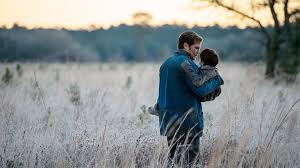
Alton Meyer (Jaeden Lieberher) is a very special boy. It has something to do with his eyes. He must be kept in darkness as much as possible and has to wear special goggles whenever he steps into the sunlight. When we first meet him, he’s been abducted by his biological father, Roy (Michael Shannon) and his friend,  cop Lucas (Joel Egerton) from the religious community that has looked after him for the past two years. Because of the boy’s habit of ‘speaking in tongues,’ the cult’s leader,  Calvin (Sam Shepard) believes that Alton may be some kind of messiah and he and his followers will do just about anything to get him back, even if it means picking up weapons to enforce their will.

Sam and Lucas hook up with Alton’s birth mother, Sarah (Kirsten Dunst) and the four of them set off on a perilous journey to bring Alton to the special destination where he repeatedly tells them he needs to be – but how can they get there when the combined forces of the FBI, the US military and a bunch of religious fruitcakes are intent on intercepting them?

Midnight Special is expertly told, releasing nuggets of information bit-by-bit, just enough to keep you hooked and to make you want to know more. When the solution is finally revealed it is, quite frankly mind-blowing and at this point, will divide audiences into ‘hell yes!’ or ‘no way!’ categories. I, happily, belong to the former. There are compelling performances from all concerned (Adam Driver is particularly good as a baffled boffin trying to work out what’s happening) and the pace never flags.

This is a riveting story about the power of belief and the lengths to which people will go to honour it. It also confirms Nichols as a film maker at the height of his powers.

It will be interesting to see what he does next.

4.5 stars

Philip Caveney

Dheepan

MV5BMzc1NzgwMzgyM15BMl5BanBnXkFtZTgwMzAwMzQ1ODE@._V1_UX182_CR0,0,182,268_AL_Unknown-1

08/04/16

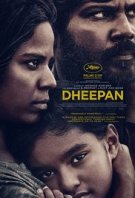
Director Jacques Audiard seems to revel in telling the stories of outsiders. Both Rust and Bone and A Prophet went down this route and Dheepan is no exception. The film opens in Sri Lanka, in 2009, at the end of the savage civil war that had lasted twenty five years and claimed more than 80,000 lives. A defeated Tamil Tiger soldier (Jesusthasan Antonythasan), has realised that the only way he can hope to stay alive is to flee the country. At the departure camp, he is hastily put together with a woman he has never met before (Kalieaswari Srinivasan) and an orphaned girl (Claudine Vinasithamby), so they can use the passports of three dead people. Their new names are Dheepan, Yalini and Illayaal.

Yalini longs to go to England where her sister lives, but instead they end up in France, where Dheepan has been offered work as a caretaker – but this is a part of France that’s never going to feature in the tourist brochures, a broken down, lawless community where drug gangs rule and where the police never deign to show their faces. Dheepan goes doggedly about his business trying to make friends, while Yalini is offered work looking after an elderly man, whose son, Brahim (Vincent Rottier) is a drug kingpin, recently released from a spell in jail and using his father’s home as a base. Meanwhile, Illayaal is enrolled at a local school where she sets about trying to fit in with the other children, but she is seen as an outsider and struggles to make headway. But can three strangers thrown together in this way ever hope to function as a family?

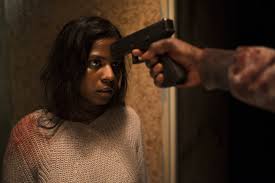
Dheepan is a fascinating study of the lives of refugees, one that never makes the mistake of falling into cliche. The three lead protagonists feel like real people, with real hopes and real ambitions. Even when the story descends into violence – an inevitability you can feel looming over the story  like a terrible premonition – it avoids all the usual Hollywood action-movie tropes to offer something that feels horribly real. The film’s optimistic coda has been derided by some critics as being unrealistic but they’re surely missing the point – this is just another heartfelt dream that is never going to be achieved.

Dheepan is a brilliant and deeply affecting film. See it but don’t expect a chucklefest. This is a bleak tale by a master storyteller.

4.6 stars

Philip Caveney

Eddie the Eagle

6Zy8HlUrFFmJIlsVfv9YOx4PxYO

Eddie The Eagle

07/04/16

The British public loves an underdog and nowhere was this trait better exemplified than in the case of ‘Eddie the Eagle’ (real name Michael Edwards), who, at the 1988 Winter Olympics in Calgary, caught the attention of press and public alike by competing in the ski jump. He always knew he would finish last (though it should be said that at the time, he did set a new British record) but his hapless, charming manner somehow managed to make him an overnight star.

Dexter Fletcher’s watchable biopic fashions an entertaining (albeit, as has been suggested, somewhat inaccurate) account of the events leading up to his ‘triumph.’ It begins with Eddie’s childhood and his obsession with one day representing his country at the Olympics – in one sport or another – much to the chagrin of his plasterer father, Terry (Keith Allen), who urges him to get a sensible job. Soon enough, young Eddie has grown up to be Taron Egerton, gamely trying to disguise his good looks behind a series of gurning facial expressions. Eddie fails to make the Olympic skiing team, largely because of the sneering disapproval of team leader, Dustin Target (Tim McInnery), who clearly thinks that the sport should not be open to the working classes. But then Eddie discovers that the British don’t actually have a ski jumping team, and this seems to offer him a golden opportunity to compete without any, um, competition – so he hotfoots it to Gstaad. Here he comes to the attention of former champion ski jumper, Bronson Peary (Hugh Jackman), now a washed up alcoholic. Eddie begs Bronson to coach him and eventually he succumbs…

This is a charming if unchallenging film, that galumphs along at breakneck pace, rarely pausing to draw breath. Fletcher’s challenge here was to create suspense in a story that we all know the ending to and he largely succeeds, taking us to vertiginous heights and sending us straight down the slope. The story is essentially a bromance, the chemistry between Egerton and Jackman is a winner and there’s a last minute cameo by Christopher Walken, which is always a bonus.

The film doesn’t go beyond Calgary, which is probably just as well, as the reality is that Edwards is now working as a plasterer, the very trade that his father always urged him to pursue. Fame is fleeting of course, but this may be Eddie the Eagle’s second moment in the spotlight and it’s well worth the price of admission.

4.2 stars

Philip Caveney

I Am Thomas

I_Am_Thomas_415x800_jpg_300x200_crop_q8512615524_962903753801176_8608464594952847469_o

Lyceum Theatre, Edinburgh

06/04/16

I Am Thomas is a true ensemble piece, in production as well as performance. The list of those involved in its creation is very long (Told By An Idiot, Simon Armitage, Iain Johnstone, National Theatre Scotland, the Royal Lyceum Edinburgh, Liverpool’s Playhouse and Everyman) and it shows: this is an eclectic and dynamic mix of music and drama, a triumph of collaboration, devised theatre at its best.

It tells the tale of Thomas Aikenhead, a young Edinburgh student who, in 1696, was the last person in Scotland, to be hanged for the crime of blasphemy. Lurching appealingly between the past and the present, Aikenhead’s story is told though a series of vignettes, presenting him as a pub singer and – at one point – as Jesus Christ himself. Each member of the cast takes on the central role, the changes signified by a simple ‘I am Thomas’ slogan emblazoned on jackets and T-shirts, so that we are never in any doubt as to who is playing him. This helps, of course, to underline the ‘I am Spartacus/Je suis Charlie’ message already highlighted by the play’s title, and brings the focus – the importance of the right to free speech – into sharp relief.

The performances are uniformly strong: the cast are all musically adept, playing a range of instruments, and singing beautifully. The lyrics are witty, the music sprightly and engaging. It’s funny and warm – and tragic too. The props are deliciously silly and inventive, and the costuming a marvel of 1970s theme party kitsch. All in all, it’s really rather good.

Just one thing: what’s a prehistoric heron got to do with anything?

4.6 stars

Susan Singfield

The Easy Fish Co.

IMG_1866IMG_1897

Heaton Moor, Stockport

31/03/16

We were in the mood to celebrate, and the release of my latest novel seemed to offer a spurious excuse, so we resolved to eat at the Easy Fish Co. We dined here soon after the place opened, before we’d even started writing this blog and remembered the experience fondly, so back we came to investigate further.

Like most restaurants on ‘the Moor,’ the EFC is situated close to Damson, that fabulous venue against which all other Moor eateries must, inevitably, be measured. Rather like the FishWorks in London, the EFC is a fishmonger by day and a restaurant by night, so there’s clearly no problem in obtaining fresh ingredients for the meals. The staff are relaxed and friendly and the service is on the leisurely side – we sat down at 6.45 and didn’t leave the place until 8.45, but the bustling, congenial atmosphere was nice enough and we had a decent bottle of Pino Grigio to drink, so there was no great hurry.

We chose two starters, which we shared. The ‘Taster Board’ comprised a selection of fishy things – charred baby squid with sweet and sour peppers, whitebait, poached king prawns and pea aranchi (a kind of croquette) with mint crème fraiche. We also sampled a jar of smoked fish pate with a golden raisin chutney, served with toasted bread. The pate was the star of the show, light, citrusy and deliciously smoky, and the aranchi and poached prawns were also perfectly done. The squid though, was a tad rubbery and without those zesty peppers in support, wouldn’t have tasted of all that much. The whitebait was disappointing, the flavour a little muddy and the coating not as crisp as I would have liked. A few of them were left, which isn’t like me at all.

On to the main courses. I’ve always loved swordfish, and have often eaten it in little beach bars in Spain where the steak you’re given is so generous it could almost double as an eiderdown. This was a more realistic portion, two triangular steaks served on a bed of sweet potato, with scorched pak choi, a green Thai creme fraiche, beansprouts and sweet chilli. It was, in short, sublime and whoever thought of pairing it with sweet potato should really take a bow, because it worked brilliantly. Susan had opted for bouillabaisse and when it came to the table, we couldn’t help staring at it, because though it looked nicely cooked and presented, this wasn’t really a bouillabaisse at all, which really should be a hearty fish stew, swimming in a spicy, full-flavoured stock that has been simmering away for several days. OK, the medley of perfectly cooked fish on the plate came with a little pot of thick, creamy sauce to pour over, but this was not bouillabaisse as we know it. (A member of staff later explained that this was the chef’s own take on the classic dish, which is fair enough, but the name brings certain expectations and no matter how nicely the meal is done, there’s a sense of disappointment when you realise it’s not going to be what you actually wanted.)

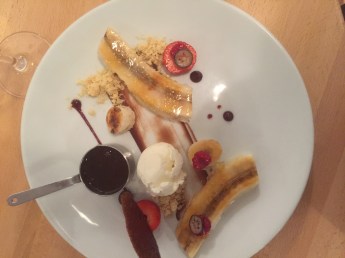
As it was a special occasion, we thought we’d sample some desserts and these proved to be so delicious they were well worth the wait. I had caramelised bananas with peanut crumb, served with a salted caramel rum sauce and ice cream, which tasted every bit as delicious as it sounds. The rum sauce was a particular delight, delicately flavoured and ‘lick the plate clean’ satisfying. Susan had the special, an Affogato – two scoops of ice cream with an espresso coffee and a hearty shot of amaretto to pour over. It was, she proclaimed, a coffee-lover’s dream. Both desserts had an expertly made tuile to go with it and there were fresh strawberries and little blobs of intensely flavoured fruit compote to further enhance your eating pleasure.

So, all in all, a very good meal in agreeable surroundings, with just a couple of details that might have been improved on. And while I can hardly detract points for calling a dish something that it isn’t (particularly when the dish in question is cooked with such skill) I would humbly suggest that they find a new name for that chef’s take on a classic dish.

4 stars

Philip Caveney

The Herbal Bed

English Touring Theatre

The Lowry, Salford

30/03/16

The Herbal Bed: The Secret Life of Shakespeare’s Daughter takes the sparse historical details of a suit for slander and weaves them into an engaging tale. The facts are few: Susanna Hall (Shakespeare’s oldest daughter) was accused, in 1613, of having an affair with a local man, Rafe Smith. The accuser, Jack Lane, was convicted of slander, and excommunicated for his crime.

Playwright Peter Whelan extrapolates a convincing narrative from these scant details; indeed, in this version of events, Lane is telling the truth: Susanna and Rafe have indeed been intimate. But, with help from her reluctant maid, Susanna takes the moral high ground, and Lane is exposed as a spiteful liar.

It’s an interesting play, with strong performances. Michael Mears, as Vicar-General Goche, is a real delight: a perfect incarnation of lugubrious self-righteousness, revelling in the sordid details of the sin he so abhors. Matt Whitchurch, as the hapless Lane, is also very good: a brash, emphatic performance, yes, but also a convincing one, and a welcome relief in what is overall a very measured piece.

If there’s a problem with this production, it’s in the measured tone. There’s no peril here, no real tension. We know the outcome of the case; we know Susanna’s reputation – and her marriage – survive the accusations sent her way. And nobody gets carried away by emotion: apart from one brief moment of passion, Rafe and Susanna behave with sober propriety; Susanna’s husband, John Hall (Jonathan Guy Lewis) remains calm throughout. The affair, such as it is, doesn’t really seem to matter; no one’s heart is broken; no one really cares.

In the programme, director James Dacre says that Whelan “never imposes an unrealistic crisis for the sake of good drama.” And, of course, no one wants to see an unrealistic crisis in a serious play like this. But what would be wrong with a realistic crisis? It’s a fictionalised account; the possibilities are limitless. And a little excitement would go a long way.

Despite this niggle, I enjoyed The Herbal Bed. It’s intelligently conceived, and well delivered – certainly one to watch.

4 stars

Susan Singfield


The Railway Children


York Theatre Royal and the National Railway Museum

Encore Cinema Screening

28/03/16

I saw this play when it opened in 2008, and was blown away by the site-specific production: the idea of staging it inside the National Railway Museum, once realised, seemed at once audacious and really bloody obvious. The tracks made a natural traverse, and the audience, seated on the platforms either side, were closely involved with the action. It was an ingenious and engaging piece, and one I’ve talked about ever since. It was no surprise to see its run extended, year on year, nor to see it relocate to King’s Cross for London’s theatre crowd.

So today’s cinema screening was a welcome opportunity to see this production again. And it didn’t disappoint. Of course, a film can never quite evoke the immersive atmosphere of live theatre, but this was beautifully done, capturing the essence of this charming adaptation of E. Nesbit’s famous book.

The story is well known: Bobbie, Phyllis, Peter and their mother are obliged to relocate to the countryside after their father is called away; they don’t know where he has gone, but they do know that they are suddenly – and frighteningly – poor. The servants and luxuries they have grown up with have all gone, and they have to learn to live a very different kind of life. They gravitate towards the railway station, where they make friends, and come to learn a lot about themselves and others too.

In its original form, The Railway Children is a sweet – if somewhat cloying – tale; here, it is given a dash of spice, as the adult Bobbie, Phyllis and Peter reminisce, telling their story with a knowing, grown-up edge. This conceit works well; it seems natural when they engage with the audience, or point out moments that are difficult to stage. It’s humorous and witty – but still tear-jerking: the essence of the story is not diluted by the fresh approach. Is there anyone alive who doesn’t cry when – in print, on screen or on stage – Bobbie cries, “Oh daddy, my daddy”? If there is, I’ve never met them.

The performances are very good throughout (although Andrina Carroll, as Mother, did have a tendency to shout), but it’s the staging and design that are the stars of this show. Bare wooden blocks are pushed along the tracks, with simple props placed on them to evoke a range of locations. The platform and bridge are incorporated well, and the appearance of the hulking, steaming locomotive is a real wow moment.

If you haven’t seen this already, it’s certainly one to look out for.

4.2 stars

Susan Singfield


10 Cloverfield Lane

Unknown-1Unknown

25/03/16

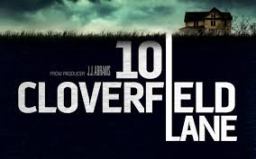
You have to hand it to J.J. Abrams. The original Cloverfield was arguably one of the best shakey-cam horror films ever, a creature feature that starred a giant alien, venting its wrath on New York (with particular reference to the Statue of Liberty). Interestingly, Abrams managed to sneak the film out under the radar, meaning that nobody had an inkling about its existence until the first trailers appeared in cinemas. With 10 Cloverfield Lane, he’s somehow managed to repeat the trick, despite all the attention focused upon him because of a certain little Star Wars movie. So how does this film (produced by Abrams and directed by Dan Trachtenberg) relate to the first story? Well, interesting question…

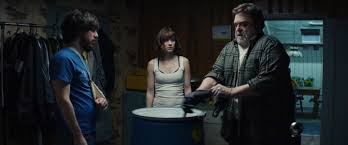
Michelle (Mary Elizabeth Winstead) falls out with her boyfriend, climbs into her car and drives off into the night. Then she’s involved in a sudden and quite shocking accident. When she wakes up, she’s being kept prisoner in the underground bunker of survivalist Howard (John Goodman) who tells her that there’s been an ‘attack’ above ground and that everybody up there is dead. She’s then introduced to Emmett (John Gallagher Jnr) a local guy with a broken arm, who has taken refuge with Howard and pretty much confirms his story. The three of them, it seems, could be stuck down there for years, but luckily Howard has laid in plenty of provisions… including a selection of jigsaw puzzles.

The film divides, more or less, into three distinct sections – the first third is a mystery (what really is going on above ground? Is Howard telling the truth or is he actually some kind of power-crazy nut job with a hidden agenda?) Part two slips effortlessly into psychological thriller territory, as Michelle  discovers some unpalatable truths about Howard and plans her escape. And part three… well, it would be criminal to give too much away, but suffice to say that the film, brilliantly scripted by John Campbell and Matthew Stuecken) expertly and repeatedly pulls the rug out from under you, until you barely know what to expect next. Despite its cross-genre nature, its a riveting ride from start to finish.

As good as the first film? Yes. It’s so different and yet, in its own way, it’s another absolute corker. Go see it and be prepared for surprises.

4.8 stars

Philip Caveney


Dick Tracy

Le_Navet_Bete_Dick_Tracey_Production_Shots_Mark_Dawson_Photography_DSC0689Le-Navet-Bete_Dick-Tracey-Production-Shots_Mark-Dawson-Photography_DSC0383-1024x819

24/03/16

The Lowry, Salford Quays

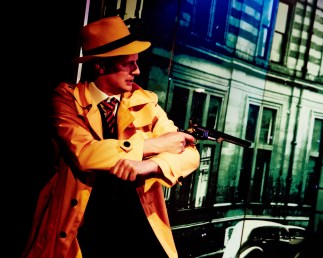
Dick Tracy was, of course, the yellow-raincoat wearing star of the classic 1930s cartoon strip by Chester Gould. Over the years, the story has been adapted into many forms -it’s been a popular, long-running radio serial, it’s been filmed (most famously by Warren Beatty and Madonna) and now  the physical comedy team, Le Navet Bete offer us their take on the story, a whip-smart, endearingly funny slice of full-on slapstick that soon has the audience at the Lowry laughing at every turn. This is irresistibly silly stuff with enough jokes and pratfalls to keep everyone royally entertained.

It’s hard to believe that there are only four actors in the cast, such is the dizzying range of characters they portray, using costume, songs, masks and a whole variety of accents. At the story’s start, Alphonse ‘Big Boy’ Caprice has been slammed in the cooler after a failed attempt to kidnap Tracy’s girlfriend Tess Trueheart. When he is finally released, however, he announces that he is going ‘legit’ along with his henchmen, Flattop and Cueball. Pretty soon he has them selling lemonade and kittens. But of course, it’s all part of a fiendishly cunning plan. Caprice enlists his girlfriend, Careless Whisper (yes, really!) to frame Tracy for setting fire to an orphanage, leaving the bad guys free to weave their wicked plans for the city of Detroit.

There’s so much here to enjoy. The script, written collaboratively by the cast, contains enough zippy one liners and full-on groan-makers to please the most exacting of audiences – and the ingenious use of props never fails to delight. I particularly enjoyed the motor cycle which appeared to be made from a wheel, a pair of handlebars and a hair dryer on full blast! Annoyingly, we chanced upon Le Navet Bete towards the end of a long run of Dick Tracy – there’s just one last performance at Luton Library Theatre on the 26th March (if you’re in the area, don’t dare miss it!) and they will present a new show, their own take on The Wonderful Wizard of Oz at the Barbican Theatre, Plymouth on the 7th, 8th and 9th of April. If it’s anything like as good as DT, it will be well worth seeking out..

We arrived at the theatre tonight feeling pretty sorry for ourselves and left with great big smiles on our faces. You really can’t ask for more than that.

5 stars

Philip Caveney