Author: Bouquets & Brickbats

24 Hours with Mary Lynn Rajskub

201624HOURT_AAV

04/08/16

Assembly George Square Studios, Edinburgh

Mary Lynn Rajskub is best known for her role in hit American TV series 24, and that notoriety is certainly helping her to draw in a crowd. As a comedian, she has little presence in the UK, but she seems set to have a successful debut at the fringe. But, while it might be her fame as an actor that brings the punters in, they’re unlikley to leave disappointed if tonight’s performance is anything to go by. Because she’s really very good.

She seems a little tired, and needs to refer to her set-list on occasion, but this is the first show, and she’s jet-lagged, so we can forgive her that. She’s a strong, engaging performer, with an easy confidence and an attractive persona: she’s self-deprecating but not too much; she knows how good she is.

There’s a confessional tone to the show, and what seems like genuine emotion behind the stories she tells (although she is, of course, an actress…); she’s relatable despite being an international star. Her account of attending the Golden Globes, for example, is less a starry tale of showbiz glamour than an everywoman howl at how awkward life can be.

There are a couple of hack moments (slagging off man-buns just seems too easy, really), but overall this is a delightful show. Mary Lynn is an interesting woman, and it’s worth hearing what she has to say.

4 stars

Susan Singfield

Gratiano

Unknown

04/08/16

Spotlites, Edinburgh

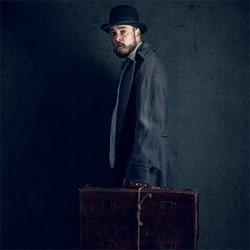
There’s a fascinating idea behind Gratiano.

Take one of the minor players from The Merchant of Venice, (the comedy sidekick who no-one quite remembers), transport him forward in time to 1940s Italy during the rise of Mussolini, and have him re-examine his role in the events of one of Shakespeare’s most enduring plays. A monologue, written and performed by Ross Ericson, this opening night show is somewhat marred by the fact that only a few people have actually turned out to see it – but it’s early days at the Fringe and there’s plenty of time for this to find the right audience. The play is beautifully scripted and gamely performed – and it offers views about fascism and racism that seem powerfully prescient given what’s happening in the world right now.

Ericson’s tale imagines the consequences of the original play’s events: something terrible has happened to Gratiano’s old friend, Bassanio. He’s been found murdered and the police are wondering if his former best friend might have been involved. Gratiano, of course, is quick to dispel such notions. After all, he and Bassanio parted ways years ago. So where’s the motive?

Spoken in contemporary language, this is compelling stuff and some passages – particularly the observations about the concentration camps spill over from prose into sheer poetry. Those who are looking to find a new approach to a time-honoured classic could do a lot worse than investigate this.

4 stars

Philip Caveney

John Robertson: Arena Spectacular

_MG_4112_160129

04/08/16

The Stand 2, Edinburgh

We first chanced on John Robertson at last year’s fringe when we reviewed his Dark Room game show, in which I managed to be ‘out’ in a spectacularly short time. (Go me!) This year, we had the chance to see his Arena Spectacular, something we jumped at. The title is of course, ironic. The room in which he performs seats 45 punters tops, but you have to admire the chutzpah of a man who enters  to booming rock music and then proceeds to hurl a barrage of excoriating criticism at virtually every member of the audience. One young man who bears a passing resemblance to Christopher Reeves suffers a whole series of Superman jokes – another guy, in Robertson’s opinion, looks like a member of the Hitler Youth. Our reviewer’s lanyards make us the butt of a whole string of running remarks, where he pretty much advises us how many stars to award his act. He gets away with it all largely by dint of an angelic grin, that would charm the birds from the trees.

Robertson seems to be fuelled by equal parts anger, contempt and perversity. He’s a brilliantly funny comedian, an inspired improviser and he looks like (in his own estimation) ‘a dead Nick Cave.’ From his opening line he has pretty much the entire audience laughing raucously, a condition he keeps them in pretty much until his flamboyant exit where he gets in a genuine plug for some T-shirts he’s had made to mark the death of his pet dog. (Death figures quite prominently in this set and if you don’t think that’s a suitable subject to be laughing at, trust me, you won’t be able to stop yourself.)

Robertson’s a true original. I can’t think of another comedian who works in quite the same way as this. Do yourself an immense favour. Grab a ticket for this before they’re gone.

4.4 stars

Philip Caveney

If There’s Not Dancing at the Revolution, I’m Not Coming

2016IFTHERE_9S

04/08/16

Summerhall, Edinburgh

Julia Croft’s ‘performance collage’ is an unconventional piece of theatre, laying bare  -quite literally – the representation of women’s bodies in contemporary popular (western) culture. Swathed in an extraordinary number of layers, Croft’s exploration evokes the shedding of skins, as she sloughs off costume after costume to reveal yet another unpalatable image of womanhood. Finally, she stands before us, naked and silent. The preposterous outfits are now heaped on her head, disguising her face, but exposing the truth: this is a female body.

It’s a serious, disturbing and thought-provoking production, but there is laughter here too: Croft is an engaging performer, interacting with the audience, prolonging eye contact and forcing us from our comfort zones. But the apparent simplicity is deceptive; our expectations are subverted here. The familiar is exposed as absurd; what we have come to accept is clearly unacceptable. The juxtaposition of The Ying Yang Twins’ The Whisper Song with Taylor Swift’s Love Story makes for a particularly discomfiting vignette, as does a mirroring of a scene from horror movie House of Wax: while Paris Hilton, clad improbably in underwear, flees a serial killer on screen, Croft, similarly dressed, crawls around the small performance space, climbing over and under the audience, bringing the horror far too close for comfort, showing how brutal the scene really is.

This is an important piece, I think, that a lot of people should see. Be one of them. You won’t regret it.

4.2 stars

Susan Singfield

Maggie’s Plan

1-maggies-plan

03/08/16

It’s ironic that before the screening of Maggie’s Plan, we’re shown a trailer for Cafe Society, the kind of film that Woody Allen makes now – ironic, because the main feature is the kind of film that he used to make, back at the height of his powers. Greta Gerwig stars as the titular heroine, a self-confessed control freak who believes she has her whole life planned out in advance. Having failed to sustain a meaningful relationship for more than a few months, but deeply addicted to the idea of becoming a mother, she decides to go ahead and have a baby via insemination by Guy (Travis Fimmel) a ‘pickle entrepreneur’ who readily agrees to eschew any notion of parental responsibility. But matters become a bit more complicated when Maggie’s fellow university lecturer, John (Ethan Hawke) asks her if she wouldn’t mind reading some chapters from his novel, a thinly veiled account of his own life and marriage to the highly successful, but  extremely neurotic Georgette (Julianne Moore).

As Maggie and John’s friendship develops, it soon becomes apparent that they are falling for each other and matters are compounded when, inevitably, they sleep together

Three years later, they are a couple with a toddler to look after but Maggie is beginning to realise that this isn’t anything like the kind of rosy future she’d envisaged. As well as her own child, she’s also handling the other kids that John had with Georgette and John is too intent on that blasted novel to pay her any real attention – so Maggie hatches a devious plan to get John and Georgette back together…

The film is a delight, funny, acerbic, beautifully handled by writer/director Rebecca Miller. Gerwig builds on the sterling work she did in Frances Ha and Julianne Moore submits another of her chameleon-like performances, that stays just the right side of caricature. Bill Hader is particularly funny as Maggie’s long-suffering best friend, but to be fair, there’s barely a wrong note anywhere in this movie, which is as light and palatable as a perfectly cooked soufflé. It’s interesting to note that there are no villains in this story, just a collection of people dealing with their own life issues- and there’s a delightful surprise at the film’s conclusion that makes for a truly satisfying ending.

4.2 stars

Philip Caveney


The Fundamentals of Caring

maxresdefault


01/08/16

I really enjoyed The Fundamentals of Caring. A Netflix original, written and directed by Rob Burnett, it’s a sweet, quirky story, reminiscent of Little Miss Sunshine in its worldview. Despite the sarcasm and raw pain, there’a a refreshing lack of cynicism here: most people, it seems, are essentially okay. This is a film with neither heroes nor villains, just ordinary folk, getting by with all their flaws.

Coming so soon after Me Before You, another film about the relationship between a disabled person and a carer is bound to draw comparisons. But The Fundamentals of Caring manages to avoid a lot of the traps the more mainstream film falls into, largely by making Trevor (Craig Roberts) a convincing human being, defined by more than just his disability. He can be a bit of a shit, moody and truculent, contradictory and annoying. And so can everyone else. Dot (Selena Gomez) doesn’t kiss him because she feels sorry for him, nor because she admires him. She kisses him because she fancies him, because he’s “handsome and cool.” And, yeah, Ben (Paul Rudd) does find some redemption in his caring role; yeah, Trevor helps to ‘heal’ the able-bodied bloke. But the fact that this cliche is acknowledged makes it okay, I think: “I have no interest in saving you,” Trevor tells Ben, making clear that he will not be used this way. And, in the end, no one is really saved; they all just feel a little better about the crappy cards they’ve been dealt.

This is a funny film, with a number of successful running gags. Trevor’s repeated attempts to convince Ben that he’s dying might not sound like the stuff that jokes are made of, but they’re moments of silliness and tension that help ensure we stay on-side. So it’s a comedy about pain, a road-trip movie without much road, a buddy-movie without much buddying. And you know what? It’s really good. Watch it. See what you think.

4.4 stars

Susan Singfield


Finding Dory

FD_gallery_1200x599

31/07/16

Pixar don’t often do sequels and they’ve certainly waited a long time before offering this one, following on from Finding Nemo (2002). This film concentrates on the character of Dory (Ellen DeGeneres) the fish with short term memory disorder. We start with her as a child desperately trying to follow the instructions of her parents and then cut to one year after the events of ‘Nemo’ with Marlin (Albert Brooks) still trying to cope with his best friend’s irritating habit of repeating everything at five minute intervals. Somewhere amidst the flashbacks she regularly encounters, Dory remembers her doting parents and before you can say ‘tunafish’ she and Marlin and Nemo (Hayden Rolance) have set off on an epic quest to find them.

What can I say about this film? Obviously, it’s not aimed at people of my age and obviously, it reintroduces a raft of characters from the original film. I remember enjoying Nemo and I guess I mostly enjoyed this one. The animation is as customarily dazzling as you’d expect from Pixar and perhaps it’s unfair to attribute the occasional forays into cheesy fridge magnet mawkishness to the fact that Disney now own the animation studio and are bound to exert a certain influence. It also occurred to me somewhere along the way that the story could be interpreted as an metaphor about senile dementia, but perhaps I’m over over-thinking something that has much less serious intentions.

There are good elements scattered throughout proceedings. I particularly liked a pair of indolent (English) sea lions and Hank (Ed O Neill) the intrepid octopus (or should that be septopus, since he’s missing a tentacle?) A sequence towards the film’s finale depicting an articulated lorry going over a cliff in slow-motion is suitably awe-inspiring, and  – even if, ultimately, Finding Dory is just swimming gamely along in the wake of its ground-breaking progenitor – it is beautifully done and there’s much to commend it.

Kiddie-winks will love this; and do try to get along early enough to see Piper, the by now traditional short animation that precedes the main feature.

4 stars

Philip Caveney

Jason Bourne

Unknown

30/07/16

The Bourne franchise has been through some interesting twists and turns since its inception in 2002. Created by director, Doug Limon, the first instalment was successful enough to engender two assured sequels, both directed by Paul Greengrass, at which point its influence could be seen in several other films, most notably in Casino Royale, where the Bond series could almost have been accused of plagiarising Greengrass’s frantic, shakey-cam style. When Matt Damon and Greengrass both announced they’d had enough, The Bourne Legacy attempted to fill the gap with Jeremy Renner stepping into the lead role, but it failed to do the kind of numbers that the previous films had achieved and many people thought that it had run its course.

Now, despite all their protestations, Damon and Greengrass are back at the helm and the big question on everyone’s lips is ‘can they pull it off a third time?’

The answer is a resounding ‘yes.’ There may not be much depth to these films but they do grip like a steel vice as they race relentlessly from one chase to another, while all the supporting characters gleefully double cross each other at every opportunity. This is kinetic cinema at its most compelling. It puts you right in the driver’s seat and it’s an enthralling, exciting ride.

When we first meet Jason in this adventure, he’s been reduced to illegal boxing to make ends meet, something he does with his customary mixture of skill and melancholy – but when Nicky Parsons (Julia Styles) comes back into his life, it soon becomes evident that Bourne is not yet finished with Treadstone and it is not finished with him. Reptillian CIA director Robert Dewey (Tommy Lee Jones) is still pulling the strings and now he has ambitious new recruit Heather Lee (Alicia Vikander) to help him engineer the capture of his most elusive enemy. He also has The Asset (Vincent Cassel) hiding behind every corner with a high-powered rifle, ready to blow Bourne’s brains across the screen should he try to evade the elaborate traps that have been set for him by the powers-that-be. And just to add a touch of contemporary relevance, there’s a Mark Zuckerberg-like entrepreneur (Riz Ahmed) who’s multi-billion dollar social network empire has, it appears, been built on rather dodgy foundations.

Stir it all together with a selection of pulverising car chases, brutal punch ups and vicious shoot-outs and we have another pulse pounding instalment of one of the most successful franchises in film history. If you liked the other films, you’ll enjoy this one. You might argue that Jason Bourne offers nothing new to the established formula but when it’s put together as brilliantly as this, you’ll get no complaints from me.

4.6 stars

Philip Caveney

Star Trek Beyond

Jaylah_and_scott

23/07/81

Star Trek has had a somewhat chequered history in the movies, a series that started well, peaked around the  third film and then become increasingly moribund with each successive instalment. In 2009, J.J. Abrams managed to deliver a great big kick up the franchise, revitalising the whole shebang – and while his sequel, Into Darkness wasn’t quite as assured, managing to upset a lot of Trek stalwarts with it’s reinventions, it was nonetheless, well told and fairly absorbing. Now Justin Lin (of the Fast and Furious movies) picks up the baton and attempts to run with it. Oh dear, oh dear…

Things start promisingly enough with a clever sight gag and soon after that, a sequence where The Enterprise arrives at a remote space station, a stunning construction that looks like it might have been designed by Escher – but when Kirk (Chris Pine) agrees to go and help some captives on a beleaguered planet, he and his intrepid crew soon realise that they have wandered into an elaborate trap, set by the villainous Krall (a virtually unrecognisable Idris Elba) and a huge space battle ensues. It goes on for what seems like weeks and the fact that it occurs in murky, half-darkness does nothing for an audience’s ability to follow what’s happening. Soon, the familiar characters are aboard escape pods and hurtling towards different locations, where they will have to regroup in order to stop Krall from employing a terrible weapon…

There are a few moments here, where Lin remembers that what has always fuelled Gene Roddenberry’s creation most effectively is the interplay between the characters. But whenever there’s a danger of things getting interesting, the script by Simon Pegg (who should have known better) and several other broth-spoilers, flings us back in the direction of yet another interminable pitched battle. And the franchise finds itself  in the doldrums once again, undoing all of Abrams hard work. A coda where a character solemnly intones the old bit about ‘boldly going to strange new worlds’ seems all the more ironic.

There’s nothing new or interesting here, just the resounding clunk of a missed opportunity.

2 stars

Philip Caveney


The BFG

maxresdefault

22/07/16

It sounded like a marriage made in heaven – Steven Spielberg takes on one of Roald Dahl’s best-loved tales, with a screenplay by ET author Melissa Mathison (who recently died of cancer and to whom this film is respectfully dedicated). And there’s surely much to admire in this handsomely mounted, big screen production. Newcomer Ruby Barnhill, who plays the role of Sophie, is leagues away from the usual cheesy Hollywood starlet and, as the titular big friendly giant, Mark Rylance is perfectly charming, his features projecting a whole range of emotions to camera. And yet… there’s something curiously inert about this film. Every image might look like something you could put in a gilt frame but the story itself is… dare I say it? A bit dull. There’s none of the peril that you’ll usually find in a Dahl story; indeed, the plot here is thin and, at times, downright illogical. And then, of course, there’s Spielberg’s inevitable proclivity for the sentimental, something that Dahl (bless him) could never have been accused of.

In 1980s London, young Sophie dwells in a peculiar sort of orphanage. In the small hours of the morning, she looks out of the window and spots a giant wandering the alleyways of the city and, because she has seen him, he grabs her and takes her away to ‘Giant Country,’ where she quickly discovers that this big friendly giant is, in fact, a bit of a runt, constantly bullied by other, bigger giants. She accompanies him to his work, where he catches dreams and stores them in bottles – it’s never really clear why.

The audience this afternoon is largely made up of youngsters but it’s quickly apparent by all the restless trips to the toilet that the film isn’t really grabbing them. An extended farting sequence at Buckingham Palace has them laughing but it’s over much too quickly,  and they’re soon back to fidgeting and chatting. I’m afraid I am in total agreement with them. Spielberg is the closest you could reasonably expect to provide  a capable set of hands at the tiller of any celluloid voyage but this particular journey soon finds itself becalmed and that’s a genuine shame.

3 stars

Philip Caveney