Author: Bouquets & Brickbats

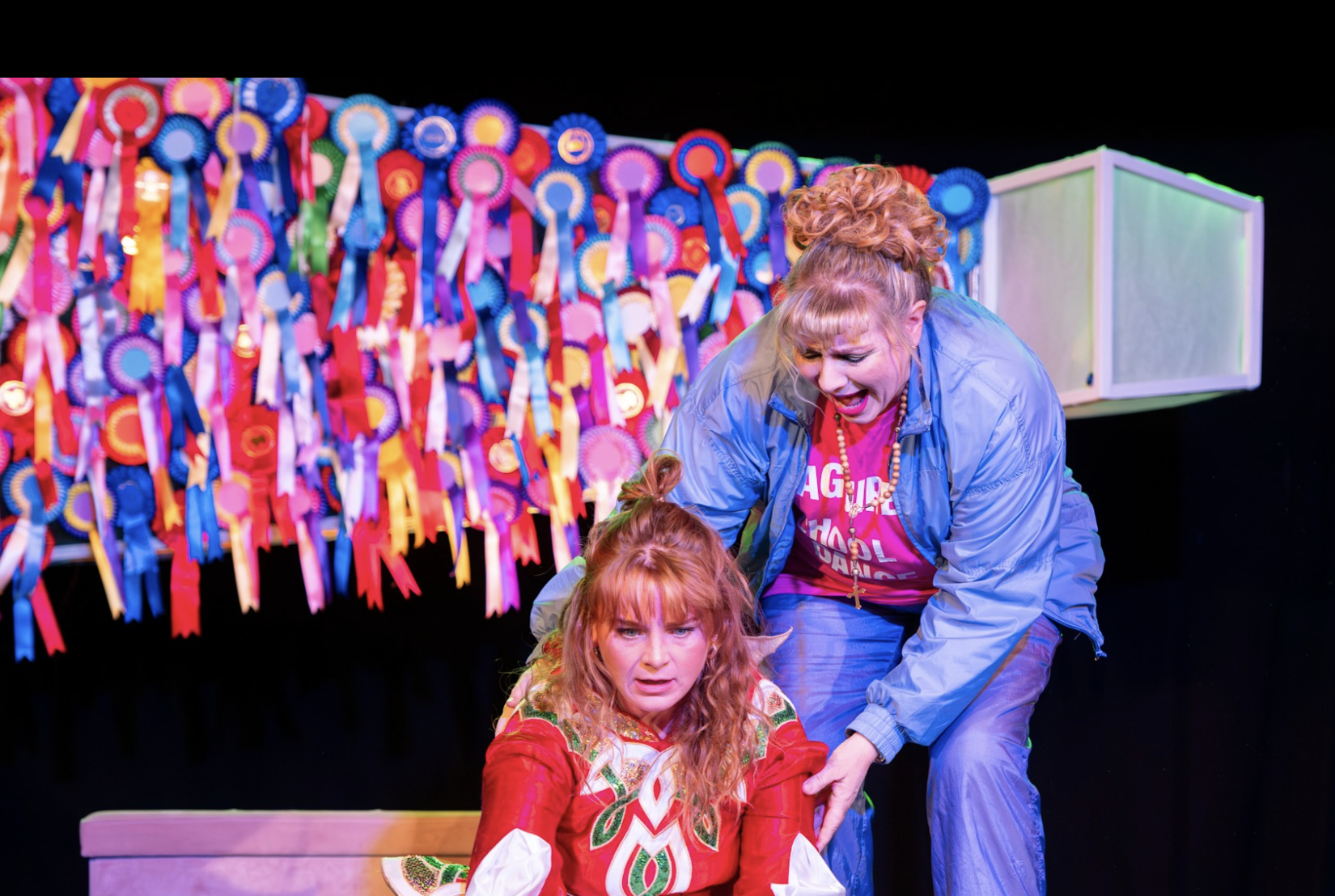
Restless Natives: The Musical

07/06/25

Leith Theatre, Edinburgh

Since it first opened in 1932, Leith Theatre has had a chequered history. Originally conceived as a gift from the city of Edinburgh, when Leith amalgamated with it (in 1920), the venue was badly damaged during the Second World War and didn’t fully reopen for business until the 1960s. Over the following decades, the doors opened and closed for a whole variety of reasons – but this year it has finally secured a 50-year lease and a National Lottery Grant. Stepping through the doors on launch night feels somehow propitious, the start of an exciting new era for this handsome and much-loved theatre.

Based upon the 1985 film of the same title, the touring musical of Restless Natives seems like an inspired choice for a relaunch. Like the film, the production is set in the 1980s. We open with members of the cast performing a mournful a cappella rendition of Stuart Adamson’s In a Big Country, the sweet harmonies coaxing genuine chills – and then we launch headlong into the story, the exploits of two young men, disenchanted with their lot in Thatcher’s Britain and struggling to make ends meet in Edinburgh.

Ronnie (Kyle Gardiner) is managing a joke shop and hates the fact that much of his regular stock is being replaced by items of tartan tat, aimed at tourists. His best friend, Will (Finlay McKillop), is earning a crust as a road sweep and, incorrigible romantic that he is, constantly searching for his one true love. When Ronnie suggests a radical new way of making dough, Will goes along with the idea. They will climb onto a motorbike, wearing joke-shop masks to disguise their identities and, armed only with a toy pistol and a bazooka filled with itching powder, they will rob coaches loaded with tourists. What could possibly go wrong?

Against all the odds, the ruse works, and it’s not long before our two modern highwaymen – dubbed ‘The Clown’ and ‘The Wolfman’ – are plying a decent trade along the backroads of the Highlands. Not only that but they are generating a strange kind of fandom, with coach passengers openly hoping that they will be the next targets. On one such robbery, Will takes a shine to Margot (Kirsty MacLaren), a vivacious tour guide and, when he meets her afterwards, can’t quite stop himself from revealing his true identity. Since her father, Baird (Alan McHugh), is the local Chief of Police, it’s evident that things are about to become complicated…

This sprightly production, directed by Michael Hoffman, and based on Ninian Dunnett’s original screenplay, has a kind of galumphing charm as it scampers merrily from one encounter to the next with barely a pause for breath. Occasionally, events do somewhat beggar belief. A scene where Ronnie visits a club stuffed to the gills with dodgy characters appears to have wandered in from a different genre entirely – comic opera, perhaps? But Harry Ward is clearly having such a ball playing Nigel, Scotland’s Most Wanted Criminal, it seems churlish to complain. Meanwhile, a visiting Texas Ranger, Bender (Sarah Galbraith), has a propensity to encourage everybody to indulge in a spot of line-dancing at odd moments and… well, hell, why not?

There’s no message here, other than ‘have a good time’ along with a kind of generalised pro-Scotland vibe. This is a romp: each member of the eleven-strong cast giving every ounce of dedication and perspiration that they have. MacLaren’s stunning vocals are a consistent standout, while Gardiner and McKillop convince as the chalk-and-cheese besties. The enthusiastic applause as the cast take their final bow is heartfelt and well-earned – and I’m already looking forward to successive productions as this venue continues to grow and flourish.

Interested parties will find Restless Natives here until Sat 21st of June (and practical jokes really are available in the foyer), before it moves on to the King’s Theatre, Glasgow.

3.6 stars

Philip Caveney

Lear

05/06/25

Traverse Theatre, Edinburgh

It seems at first an act of incredible hubris: to take one of Shakespeare’s most accomplished works, chuck out all those pesky words and attempt to tell the story entirely through movement. But only a few minutes into Raw Material’s adaptation and I am beginning to appreciate what a clever idea this actually is – one that opens out the play’s central story to encompass a whole range of different interpretations. Anybody who has watched helplessly as an aging relative slips inexorably into the fog of dementia, for instance, will find plenty to identify with here.

Anna Orton’s simple set comprises mostly heaps of sandbags, which we will soon discover are stuffed with what look like ashes and which, when scattered around the stage, seem to accentuate the central character’s failing grasp on reality. When Lear (Ramesh Meyyappan) first strides confidently into view, he is fearless, energetic, reenacting his past conflicts for the entertainment of his three daughters.

But we cannot fail to notice that he is already jumping at shadows, reacting to every bump and thud of David Paul Jones’s vibrant score, every flash and flicker of Derek Anderson’s vivid lighting design. Director Orla O’Loughlin keeps him centre stage while his daughters move around its periphery, cooly observing as he begins a slow but steady decline. As his grasp on the war-torn kingdom grows ever more precarious, so he goes to his daughters seeking refuge. Regan (Amy Kennedy) and Goneril (Nicole Cooper) are not the grasping, cruel sisters of the source play, but rather two concerned siblings that strive their hardest to accommodate their Father’s eccentricities. Cordelia (Draya Maria) keeps to the sidelines, always giving way to her more manipulative sisters – but her affection for her father is evident, making it clear that she will love him unconditionally.

And then the fog really begins to take hold as Lear don’s his Fool’s old hat and adopts the gurning, slapstick attitude of his former jester, Meyyappan pantomiming exquisitely as he slips effortlessly between the two characters, bicker and competing with each other for the sister’s affections. His bewildered daughters try their best to cope with their father’s mounting instability but once taken hold, these changes cannot be denied. In Lear’s latter stages, stripped to his underwear and no longer able even to wash himself, the character’s ultimate tragedy really begins to hit home.

Lear’s story is also true of so many people as they begin to slip helplessly into their twilight years – as they succumb to drug addiction – as they are weighed down by advancing depression – the transformation witnessed by their partners and their children. This daring adaptation nails such experiences with considerable skill.

Despite my initial reservations, I have to raise my hat to a fearless and thought-provoking piece of theatre.

4.2 stars

Philip Caveney

The Mountaintop

04/06/25

The Royal Lyceum, Edinburgh

Katori Hall’s 2009 play bristles with prescience in this stirring revival, directed by Rikki Henry. We’re in Room 306 of the Lorraine Motel, Memphis, where a tired, sick Dr Martin Luther King Jr (Caleb Roberts) is planning on writing through the night. But, as the night in question is April 3 1968, we know this work will never make it to completion. Instead, assassination awaits.

The great man’s famous “I’ve been to the mountaintop” metaphor is gloriously realised in Hyemi Shin’s set design, the room balanced precariously on a slab of jutting rock protruding from the dark earth, offering little protection from the Biblical storm raging outside. There are climbing ropes too, tethering King to earthly reality even as they call for his ascension.

As ever, MLK is up against it. He’s in Memphis to promote his Poor People’s Campaign, and to support the striking Black sanitation workers. He’s a divisive figure: a hero to those he’s championing; a thorn in the side of the establishment. White supremacists hate him. How can he allow himself to rest when there is so much injustice to address? He calls the motel’s reception to ask for coffee, and salvation arrives in the form of housekeeping. It’s Camae (Shannon Hayes)’s first day on the job, and she’s beyond excited to meet her idol. Of course he can have one of her cigarettes.

In this fictional encounter between the real-life martyr and the made-up maid, Hall illuminates the flawed reality of King, who was, after all, a mere mortal, as prone to weakness as the rest of us. What set him apart wasn’t saintliness, it was conviction, purpose, determination – and the belief that he could be the change. As he laments the failures of his beloved America, the message comes across loud and clear, and is particularly important today: you don’t have to be special to make a difference. You just have to show up and fight.

Roberts and Hayes make an electric duo in this fierce two-hander, which lurches from realism to expressionism with thrilling momentum. Roberts imbues his warts-and-all depiction of MLK with so much warmth and charisma that we forgive him his trespasses. After all, if God (with whom he argues via the motel’s landline) can summon him to Heaven, who are we to argue with Her? Hayes makes for a perfect antagonist, her spirited Camae proving more than a match for the mighty King, challenging him both politically and personally. Issues of race and equity are illuminated rather than undermined by the humour that punctuates the couple’s verbal sparring, and Camae’s final monologue, accompanied by Lewis den Hertog’s black and white video design, is a stark reminder both of MLK’s legacy and of the battles yet to come.

4.5 stars

Susan Singfield

The Ballad of Wallis Island

02/06/25

Cameo Cinema, Edinburgh

Herb McGwyer (Tom Basden) is a musician, once a member of an influential folk duo, now reduced to forging a living in the independent music sector. He needs funds to finance the new ‘poppier’ album he’s been working on, so he’s delighted (and somewhat bewildered) when he’s approached to perform a concert on a remote island somewhere off the coast of Pembrokeshire.

The fee? A cool half a million quid.

At his manager’s urging, Herb is soon on the island and being greeted by his benefactor, Charles Heath (Tim Key), a hapless but likeable oddball who seems incapable of talking without throwing in a string of terrible puns and vaguely insulting observations. When Herb asks him some perfectly reasonable questions: “Where’s the stage? How many people will be attending the performance? Why is the fee being paid in cash?” Charles offers little in the way of explanation, other than to mention that McGwyer and Mortimer – the aforementioned folk duo – were his wife’s all-time-favourite musicians. The audience, he announces, will be “less than a hundred.”

And then another boat arrives, bringing Nell Mortimer (Carey Mulligan) to Wallis Island. Charles, it turns out, has also hired her to perform. To say that the reunion is awkward would be something of an understatement. Back in the day, Herb and Nell were partners in more than just the musical sense and Herb still nurtures strong feelings for her. The fact that she has brought her new squeeze, Michael (Akemnji Ndifornyen), along for the trip seems a recipe for disaster…

Written by Basden and Key (and developed from a short film they made back in 2007), The Ballad of Wallis Island is a warm, gentle hug of a film, one that takes a long look at the subject of relationships and the many ways in which memories can still affect people long after an initial attraction has gone – and perhaps more significantly, it centres on the importance of moving forward.

Basden does a great job of conveying the insecurity of an aging performer struggling to hang on to his career in a musical climate that has changed out of all proportion. The beautifully-judged exchanges between Herb and Charles are delightfully and consistently funny, while the songs (also written by Basden) are strong enough to convince me that McGwyer and Mortimer really could have secured an ardent following, particularly when Mulligan supplies some sweet harmonies to Basden’s plaintive lead vocals. James Griffiths handles the direction with assurance.

It will be a stern soul indeed that doesn’t warm to this sweet, charming and gently affecting film. If it drops anchor at a cinema near you, I’d urge you to see it.

4.4 stars

Philip Caveney

drops anchor

The Salt Path

08/07/25

Update

In the aftermath of the bombshell dropped by Chloe Hadjimatheou in this weekend’s Observer, where she exposes the lies this story is based on, it feels right to reassess our original response to the movie. Our opening sentence included the words “raised eyebrows”. Perhaps we shouldn’t have been so gullible.

But we’re in good company, including Penguin Random House, Number 9 Films and more than two million readers worldwide. Chivalrous Jason Isaacs, sitting next to Raynor Winn on The One Show sofa, gently corrects her when she says it all began when she and her husband “got into a financial dispute”. “You were conned out of everything you had,” he says sympathetically. “You might not be able to say it but I can.”

The Winns’ audacity is breathtaking. According to Hadjimatheou, the real con-artist is Raynor, aka Sally Walker. Aka embezzler of £64k from her employer; aka borrower of £100k to pay back her ill-gotten gains and thus avoid a criminal trial. When their house was repossessed, it wasn’t because a good friend betrayed them; it wasn’t a naïve business investment gone wrong. It was the simple calling-in of an unpaid debt, ratified by the courts. Did Walker and her husband Ti-Moth-y really believe the truth would stay buried as they appeared on national television to publicise their untruths?

So how gullible were we, really? Like many, we believed the basic premise. Why wouldn’t we? Sure, it was clear that the exact circumstances of the couple’s slide into destitution were being glossed over, and of course their story was shaped into a neater narrative than real life provides. But we had no reason to doubt the fundamentals. (How could anyone have guessed they had a ‘spare’ property in France?) In fact, my interest piqued by the movie, I went on to read Winn’s books. I liked The Salt Path, although I was disappointed not to learn more about the calamitous investment. I found books two and three (The Wild Silence and Landlines) less interesting: just more of the same, but – now that the couple were housed and embracing successful careers – without the jeopardy. In these sequels, the focus shifts to Moth’s terminal illness, corticobasal degeneration, and the miraculous curative effect that hiking has for him. While the first book tentatively suggests that strenuous exercise might be beneficial for those with this rare condition, by the third we’re deep into dubious ‘wellness’ territory, with Winn’s ‘own research’ supposedly trumping anything a neurologist might purport to know.

Still, we won’t be taking down our review (you can read it in full below). We stand by it as a reaction to a well-acted and nicely-crafted film that we enjoyed. Of course, its message of grit in the face of adversity doesn’t have quite the same potency it did, now that we know the protagonists are a pair of grifters, but, if we can steel ourselves to view it as a work of fiction, it’s an affecting and moving piece.

Susan Singfield and Philip Caveney

01/06/25

Cineworld, Edinburgh

I’ve often remarked that real-life stories, depicted as fiction, would more often than not be the case for raised eyebrows. Take the case of Raynor and Moth Winn, for example: a married couple who, after a badly-judged business investment went tits up, found themselves evicted from their family farm, unable to obtain any financial help, bar a paltry £40 a week benefit. Around the same time, Moth was diagnosed with a rare (and inoperable) degenerative brain condition. Their response? To set off to walk the South West Coastal Path, a trip of hundreds of miles, telling themselves that if they just kept walking, something was sure to turn up…

Okay, so in a move they could surely never have anticipated, the book that Raynor wrote about the experience eventually went on to sell two million copies… but it would be a hard-hearted reviewer who begrudged them this success.

In this adaptation by Rebecca Lenkiewicz, we first encounter Raynor (Gillian Anderson) and Moth (Jason Isaacs) as they fight to save their last real possession – a small tent – from the ravages of the incoming tide. The couples’ back story is told in a series of fragmentary flashbacks, though director Marianne Elliott is less interested in the events that brought the couple to this sorry situation, than exploring the possibilities of what their newfound freedom brings them.

As the two of them progress on their journey, struggling at first but gradually adapting to a different kind of life, it becomes clear that there is something to be said for casting off the familiar shackles of a home and a mortgage. The couple find an inner strength they didn’t know existed and, along the way, they rediscover what drew them together in the first place. This could easily have been overly -sentimental but manages to pursue a less obvious route.

The story takes the duo across some jaw-dropping locations around Cornwall and Devon and the majesty of the scenery is nicely set against Chris Roe’s ethereal soundtrack. Anderson and Isaacs make a winning duo, conveying the real life couple’s indomitable spirit and genuine devotion to each other, while the various situations they stumble into range from the comical to the deeply affecting.

The film’s final drone sequence cleverly encapsulates its central message in one soaring extended shot. There have been some mean-spirited early reviews for The Salt Path but I find it genuinely moving and a cinematic journey worth sharing.

4.2 stars

Philip Caveney and Susan Singfield

The Phoenician Scheme

26/05/25

Cineworld, Edinburgh

Cinema fans can hardly have failed to notice that a new Wes Anderson movie is on general release. As ever, it features his usual bag of tricks: impeccably-framed images arranged in perfect symmetry on the screen; an extended set of famous faces, all of whom show up for every successive project and seem happy to put in cameo performances for shirt buttons; and, as ever, a plot that appears to have been created simply to redefine the term ‘off-beat.’

Anderson has long been a disciple of Verfremdungseffekt – the distancing technique devised by playwright Bertolt Brecht, employed to prevent an audience from easy identification with his characters. It’s always been there in Anderson’s work to some degree but, this time around, I can’t help feeling that it might have been too enthusiastically applied.

Call me old-fashioned, but I do like a character I can root for. Here, there really isn’t one.

Wealthy and indomitable business magnate Zsa zsa Korda (Benicio del Toro) continues to thrive, despite the many assassination attempts that have been made on him by his rivals. After a near-fatal plane crash, he gets in touch with noviciate nun, Liesl (Mia Threapleton), who may just be his only daughter. (Korda has nine sons, several of them adopted, but he tends to spend as little time with them as possible.) Now, realising that he might be getting close to the end of his life, he has decided to offer Liesl a trial run as the sole heir to his considerable estate. He also takes on a new assistant, Bjørn Lund (Michael Cera), his last sidekick having been blown in half in the aforementioned plane crash.

The threesome must now travel around the fictional country of Phoenicia, where Korda has heavily invested in several major projects. A shadowy cabal of businessmen, led by Mr Excalibur (Rupert Friend), have raised the price of an all-important rivet used in the manufacturing process. This means that, unless Korda can persuade his business associates to take smaller profits, he is at risk of losing everything…

Even as I write this plot outline, I wonder why I’m bothering. Wes Anderson films are like art exhibitions. Some you love, though you cannot exactly pinpoint why. And others leave you flat for no easily-discernible reason. I’m not saying that The Phoenician Scheme is without merit. I sit watching it unfold, approving of its incomparable look and style, occasionally chuckling at some absurd lines of dialogue, even spotting the occasional movie reference. That Moroccan style club run by Marseille Bob (Mathieu Amalric), that’s a nod to Casablanca, right? And the black and white dream sequences, where Korda meets up with God (Bill Murray, naturally), are surely a reference to…

But this is pointless. I loved Anderson’s previous release, Asteroid City, which many viewers dismissed as another exercise in style over content. But this time, even I can’t seem to make myself care enough about the many characters I’m presented with. Korda’s growing relationship with Liesl could perhaps have been the hook that pulled me in, but that element feels somewhat under-developed.

That said, Anderson is one of the few film makers who walks his own path and refuses to compromise his vision. With names like Tom Hanks, Scarlett Johannsson and Benedict Cumberbatch ready and willing to bury their egos in walk-on roles, he’s in the rare position of being free to do exactly as he wishes.

So, why not give this a go? Chances are, you’ll completely disagree with me.

3.6 stars

Philip Caveney

Pride and Prejudice

24/05/25

Netflix

It’s hard to believe that Joe Wright’s adaptation of Pride and Prejudice is already twenty years old – and, while it’s been rereleased into selected cinemas to mark the occasion, it’s also right there on Netflix, all ready for re-examination at the touch of a button. I remember liking it back in the day and feeling that it was much more realistic than the widely-admired 1995 TV mini-series, which I found a little too chocolate-boxy.

Wright’s version, though offering a tranquil and bucolic adaptation of Jane Austen’s novel, actually succeeds in showing the slightly down-at-heel and ramshackle nature of the Bennet family. In this version, a viewer fully understands the mounting desperation of Mrs Bennet (a wonderfully scatty Brenda Blethyn) as she seeks to find suitable husbands for her daughters, aware all the time that the clock is ticking and the women of the family stand on the edge of penury. Mr Bennet (Donald Sutherland) is useless, looking on in mystified wonder as his wife goes about her earnest business.

As the wilful and opinionated Elizabeth, Keira Knightley is an inspired choice. Why so many critics have taken against her acting abilities is quite beyond me, but here she plays Lizzie with considerable skill, scathing in her early encounters with Mr Darcy (a deliciously-sombre Matthew Macfadyen) and loving and playful in her interplay with Jane (Rosamund Pike) and her other sisters (look out for an early appearance by Carey Mulligan as Kitty). There’s a splendid turn from Rupert Friend as the caddish Mr Wickham, while Judi Dench struts her inimitable stuff as the acid-tongued Lady Catherine and Tom Hollander is wonderfully obsequious as Mr Collins, the reverend with an earnest desire to impress her.

The source novel has been cleverly adapted by Deborah Moggach, with additional (uncredited) dialogue by Emma Thompson, who had already earned herself an Oscar for her work on Ang Lee’s version of Sense and Sensibility. Wright never lingers too long on a scene and consequently the running time of two hours and nine minutes seems to positively flash by.

There are so many simple yet effective moments that have stayed with me since my first viewing. I love the scene where the Bennets’ prize pig wanders through their living quarters as though it’s a perfectly natural state of affairs, and the scene where Elizabeth and Darcy, enacting a complicated dance routine in the midst of a frenetic party are, quite suddenly, dancing completely alone. Roman Osin’s lush cinematography makes every landscape look suitably ravishing yet never overplays its hand. A scene where a pensive Elizabeth is taken from bright morning sunlight into the dark shadows of evening in one slow take is so understated, it barely registers.

This is Wright’s debut full-length feature and yet it feels like the work of a more experienced director. He would go straight on from this to his adaption of Atonement, another extraordinary literary film, once again with Knightley in a key role.

Sometimes when you return to a film after a long interval, you wonder what made you like it so much on first viewing. In the case of Pride and Prejudice, I feel I enjoy it even more.

4.6 stars

Philip Caveney

Final Destination Bloodlines

24/05/2

Cineworld, Edinburgh

Another long-running franchise gets a reboot – and since the Final Destination films operate on well-established ground rules, it’s questionable how much originality film-making duo Zach Lipovsky and Adam Stein can hope to inject into the proceedings. The first FD arrived back in 2009 and there’s been a fourteen-year interval since the imaginatively titled Final Destination 5, so I decide to go along and see what they’ve come up with…

To give them their due, the film starts well with a flashback to the 1960s, a young couple paying a visit to a swanky restaurant perched on a tower hundreds of feet in the air. After a decent interval while a few worrying details are set up, there’s a fabulous extended set-piece, where pretty much everyone present hurtles to messy destruction. Whereupon, we realise that this isn’t something that has actually happened, but an event that was avoided thanks to a timely premonition by Iris (Brec Bassinger). But as we already know, Death hates to be cheated and, over the years, he has claimed most of the lives of those present. He is now ready to start in on their relatives…

We cut to the present day, where college student Stefani (Kaitlyn Santa Huana) is being troubled by dreams about the event in which her grandmother played such a key role. She pays a visit to Iris (now played by Gabrielle Rose), a recluse who has kept herself locked safely away from Death’s retribution for many years. But, she warns her granddaughter, any surviving members of the Immediate family are in real danger if she doesn’t warn them about what’s coming…

We know how it goes from hereon in. Death – who, as ever, seems to have based his game plan on regular re-treadings of the works of Anton Chekhov – likes to employ everyday objects in his murderous quests, a sort of Heath Robinson approach to the art of bloodshed. If the camera should linger on a small detail – a dropped coin, a misplaced shard of glass, the ‘on’ switch of a rotary mower – we know that said detail is going to play an important role in the dismemberment of the next victim. Again, to their credit, the four screenwriters who put this together have a lot of fun using elements of suspense, misdirection and shock to achieve their ends and, though the deaths are uniformly gory, they are so absurdly cartoonish that it’s hard not to laugh out loud as the latest victim is er… disassembled.

For me, perhaps because that opening set piece is so OTT, the ensuing chaos feels like the law of diminishing returns, each kill slightly less impressive than the one before. This is probably the kind of film best enjoyed with a group of well-oiled friends, all laughing it up together. Whether it will be the progenitor of more FD misadventures will, I’m sure, depend on how much money it makes. Personally, I’d prefer to see this as a one-off event, rather than the start of another endless rollercoaster of death .

And talking of the Grim Reaper, it’s darkly ironic to note that there’s a cameo appearance here by the late Tony “Candyman” Todd, making his final filmed appearance as the guy who managed to cheat Death – and to whom the film is respectfully dedicated.

3.6 stars

Philip Caveney

Mission Impossible: The Final Reckoning

22/05/25

Cineworld, Edinburgh

And so, it would seem, the end is nigh – though I’m cynical enough to believe that will depend entirely on The Final Reckoning’s box office. It’s been a long and varied ride for Mission Impossible. As I’ve observed before, most franchises start strong and have a couple of decent follow-ups, before eventually running out of ideas and becoming pale shadows of their former selves. MI – based on the popular 60s TV series – began its cinematic journey way back in 1996 (originally helmed by Brian de Palma) and then struggled through a bunch of variable sequels until director Christopher McQuarrie came on board for 2015’s Rogue Nation. In that film, all the disparate elements finally gelled.

For my money, 2018’s Fallout was MI’s pinnacle: tense, propulsive, gloriously inventive, it kept me hooked right to the final frame and earned itself a five star B&B review. 2023’s Dead Reckoning wasn’t quite as perfect and the fact that it was a Part One didn’t help, particularly when Part Two wasn’t set to rear its head for another couple of years. Realising, no doubt, that viewers’ memories will need a significant nudge, The Final Reckoning opens with a kind of overview: a greatest hits package offering glimpses of a younger, leaner Ethan Hunt going through his frenetic paces.

After that, we arrive in a darker, gloomier world than we’re used to seeing in MI, where super-powerful AI Big-Bad, The Entity has taken control of the entire planet’s nuclear weapons and appears to be on the verge of initiating World War Three. (Sound familiar?) Ethan Hunt is now in hiding after the shenanigans of Part One so the American President (played by Angela Bassett, who, let’s face it, is the leader we all wish America currently had) puts out an urgent plea for him to show himself and to bring along that mysterious key he got hold of in Part One.

Will Ethan step up to this new challenge? Well, what do you think?

Aided by Grace (Hayley Atwell), Luther (Ving Rhames) and Benjie (Simon Pegg), plus former adversary, Paris (Pom Klementieff), Hunt devises ever more ingenious ways of taking on the all-powerful Entity and, if the storyline is patently absurd, well of course it is. This is Mission Impossible, FFS!

To give Cruise and McQuarrie their due, they have put everything they’ve got into making this the ultimate MI adventure and, to a large degree, they’ve succeeded. There are some incredibly-assured sequences, not least a claustrophobic and nail-biting return to that Russian submarine we saw in Part One. There’s also a nerve-racking aerial routine, where Hunt clambers all over the fuselage of a single-engined plane (in mid-flight) in a desperate bid to come face-to-face with human villain, Gabriel (Esai Morales). The fact that Cruise has done all these stunts for real is, of course, admirable, though I do wonder what professional stunt performers must think about such grandstanding. (I note from the credits that Cruise actually employs a stunt double, which begs the question ‘What does that man do to earn his fee?’ Make the coffees?)

On the debit side, the film’s ponderous running time does leave me with the onerous task of choosing the right moment to nip out for a toilet break – and I’d argue that thirty minutes could easily be clipped from this, simply by removing some of those references to past adventures. Having a call-back to a character who actually appeared in the very first movie is a nice touch, but I ask myself how much does it actually add to the story?

Still, kudos to Team Cruise-McQuarrie, who have devoted so much of their time, energy and (let’s face it) money to this franchise. But it does seem like the right time to bow out. And I’m pretty sure I’m not the only film fan who wistfully remembers Cruise in films like Jerry McGuire, Rain Man and Magnolia, where he was actually required to act and turned out to be pretty damned good at it.

I’m already looking forward to seeing what he does next.

4 stars

Philip Caveney
Blinded By The Light

21/05/25

Traverse Theatre, Edinburgh

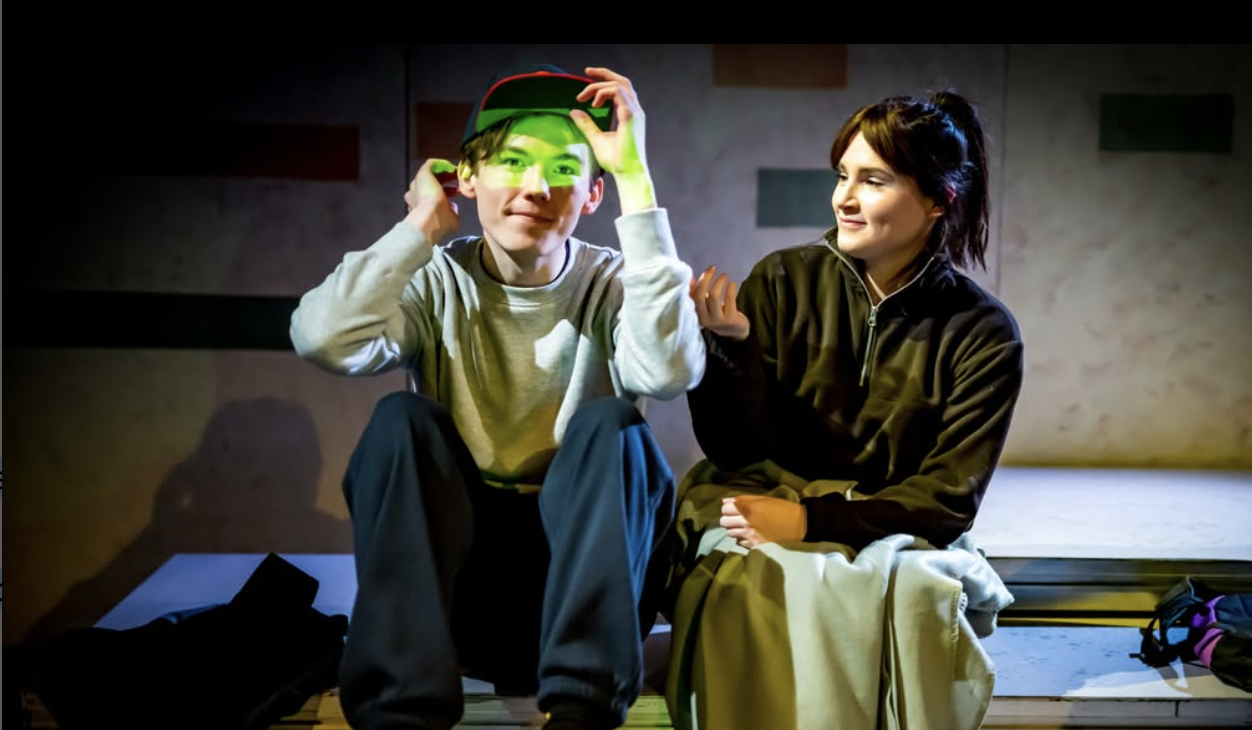
Drawing on the true story of a historical protest, Sylvia Dow’s Blinded by the Light illuminates two distinct timelines: first, the real-life miners who held a ‘stay-doon’ in the pit at Kinneil Colliery in 1982; second, the fictional inhabitants of a near-future dystopia, forced underground by the climate crisis and now occupying those same Bo’ness tunnels.

Nimbly directed by Philip Howard, the disparate worlds intersect seamlessly, the stories harmonising into something bigger and brighter than the sum of their parts. For Lily 7 (Holly Howden Gilchrist) and Freddie 9 (Reece Montague), the coal-black warren is a prison: they’ve never been ‘up’; never seen the grass or felt the rain; to them, the sun is nothing more than an enticing concept, gleaned from forbidden books. Meanwhile, two hundred years earlier, Andy (Rhys Anderson), Matt (Barrie Hunter) and Matt’s son, Jerry (Andrew Rothney), view the mine very differently. For them, it represents a well-loved way of life – not just their workplace but also their community. Of course, they also have friends and family in the outside world, but it’s their mining jobs that define them. The looming pit closure threatens everything they know and love.

Becky Minto’s simple set design works well. A steeply-raked wooden floor emphasises the precariousness of the situations, and the small footprint forces all five characters into close proximity, highlighting their interdependence across the centuries. The script employs repetition and echoes to stress these links, and Howard mines this (sorry!) for full effect, as the tunnels’ inhabitants occasionally finish each other’s lines or speak in perfect unison. A scene where Lily and Freddie place their palms in the handprints left by their ancestors is particularly affecting.

The performances are uniformly strong, but Howden Gilchrist and Rothney are the standouts for me, perhaps because their characters share a wide-eyed optimism, which makes their inevitable defeat all the more heart-rending.

In a play where light – or lack of it – is literally the point, the lighting designer’s role is even more important than usual. Colin Grenfell rises to the occasion, conveying the mine’s darkness while simultaneously directing our attention to the action as it unfolds. The clear distinction between the timelines is also achieved primarily through stage lighting (along with some wonderfully atmospheric sound design by Philip Pinsky).

Dow writes with a lightness of touch, exploring big political ideas without ever straying into the didactic or expositional. The plight of Britain’s striking miners, sacrificed to Thatcherism, is effortlessly laid bare, as is a warning about the bleak future we’re stumbling towards, with its shades of both Fahrenheit 451 and 1984.

Blinded by the Light has left Edinburgh now, but there are still two more chances to see this thought-provoking production: at St Andrews’ Byre Theatre on the 23rd May and Stirling’s Macrobert Arts Centre on the 24th. Catch it if you can!

4.3 stars

Susan Singfield