Author: Bouquets & Brickbats

Single Use

06/08/25

Pleasance Courtyard (Bunker Three), Edinburgh

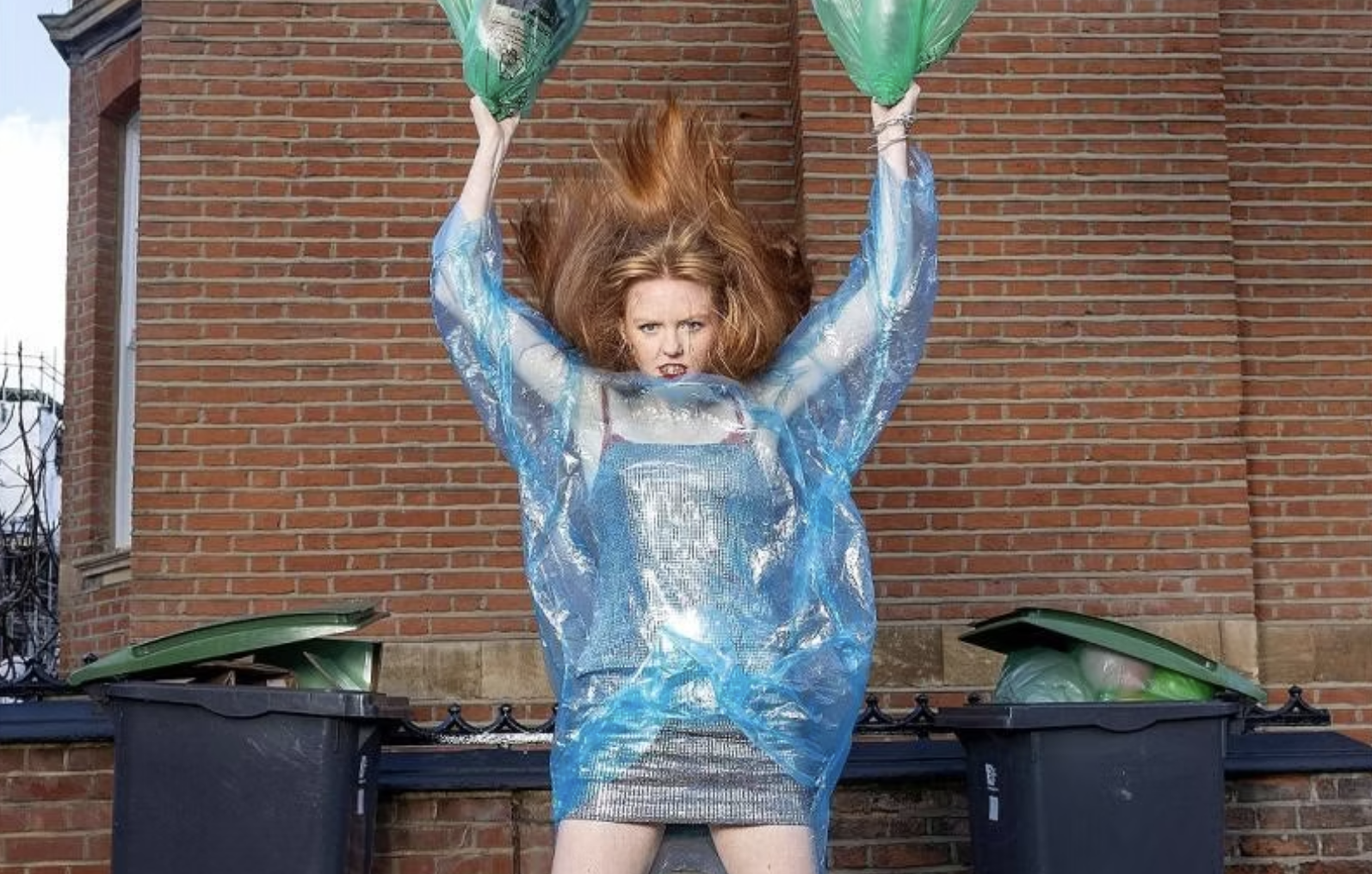
Ella’s life is a muddle: she’s struggling to separate her mounting troubles and figure out how to deal with them. A bit like her recycling.

Ella (Verity Mullan) is an expert procrastinator. She’s unfulfilled by her bar job, but can’t be bothered to look for anything else. She likes the idea of her allotment, but tending to it is a step too far. She never pays her rent on time and doesn’t get on with her flatmate anyway. She cares about the planet, but it’s not her fault takeaways are delivered in plastic boxes – and who has the energy to cook? From the outside, it’s clear that Ella is depressed. It’s just that she hasn’t realised it yet.

Written by Mullan and directed by Emma Beth Jones, Single Use works well as a character study. Mullan is an engaging performer, imbuing Ella with a winsome vulnerability and spark. I particularly enjoy the physical comedy – her exaggerated sense of repulsion as she deals with her icky bin bags; the slurping of beer from Tupperware – all perfectly complemented by Flick Isaac-Chilton’s sound design.

However, there are too many disparate plot strands competing for our attention and it’s not always clear who the various voice messages are from. I’m confused by ‘Stusi’ (Ella’s young stepsister), who is first described as someone to whom “puberty has not been kind” – leading me to assume that she is about thirteen years old – but then turns up in a car to give Ella a lift home. The climate crisis element feels particularly under-developed, with the tantalising messages from Malaysia left to fizzle into nothing.

Ultimately, there are some promising ideas here, but they perhaps need a little more cohesion and development for this piece to fully realise its potential.

3 stars

Susan Singfield

Matt Forde: Defying Calamity

05/08/25

Pleasance Courtyard (Beyond), Edinburgh

It’s rather lovely to see Matt Forde strolling out to greet a sold-out house at the spacious Pleasance Beyond, the mere sight of him bringing back memories of alcohol-fuelled nights at earlier fringes (in smaller venues) in those far-off days before we went on the wagon.

Anyone coming to this show after spotting the poster and expecting some kind of Wicked mash-up will be sorely disappointed. That title is, I think, a reference to the comedy-impressionist’s own recent brush with cancer and the couple of years he’s spent learning how to adjust to his new condition. If anything, the experience has given him an added openness, a willingness to talk about his own situation in unflinching detail. I now know a lot more about erectile dysfunction than I did before.

Which is not to say that this isn’t a rollicking evening of laughter as he flits from impersonations of one politician to another: a hapless Keir Starmer, trying his level best to do the right thing but invariably putting his foot in it; a swaggering Nigel Farage, fired up on pints of best bitter and loudly opposing anything his opponents present him with; and is there any other impressionist who can portray the execrable Donald T with quite such skill, capturing the man in all his awfulness which just a frown and a grimace?

Forde is also rather adept at making me reconsider views that that I’ve long held, merely by coming at a subject from a slightly different direction. He’s a staunch centrist, and I’d like to hear his views on the new Corbyn-Sultana alliance, but maybe it’s too recent an event for him to have built a routine around.

Tonight’s set offers an overview of Great Britain as it stands at the crossroads of change. Just exactly where our country is headed remains to be seen, but it’s great to have a skilled comic like Forde to provide the commentary, offering his own authoritative insights into the world of politics.

I’m glad to see him back on stage, where he belongs.

4 stars

Philip Caveney

The Other Mozart

05/08/25

Assembly George Square Studios (Studio Two), Edinburgh

You’ve heard of Nannerl Mozart, right?

Nope?

Me neither.

Her brother’s pretty well-known though. He’s so famous he’s known by just one name (which is probably a good thing, considering his original moniker was the unwieldy Joannes Chrysostomus Wolfgangus Theophilus Mozart – although he did later change this to Wolfgang Amadeus).

It turns out “Nannerl” (aka Maria Anna Walburga Ignatia; yep, Mama and Papa Mozart really liked long names) was something of a musical prodigy too, who toured with “Wolfie” when they were both children. This elegant production, written and performed by Sylvia Milo (in rotation with Daniela Galli), finally brings Nannerl out of the shadows and into the light.

It’s no great shock to discover that the reason we don’t know about her is because of her gender. Europe’s aristocracy were happy to watch a little girl perform, less so a grown woman. Here, with great artistry and precision, Milo shows us the toll this must have taken on the talented musician and composer, forced to watch her younger sibling garnering credit and acclaim while her own similar ambitions were thwarted, subsumed into marriage and motherhood.

Sadly, none of Nannerl’s original pieces survive, but Milo’s poised performance is beautifully complemented by Phyllis Chen and Nathan Davis’s compositions, which evoke the era perfectly, allowing us to believe in Nannerl’s genius.

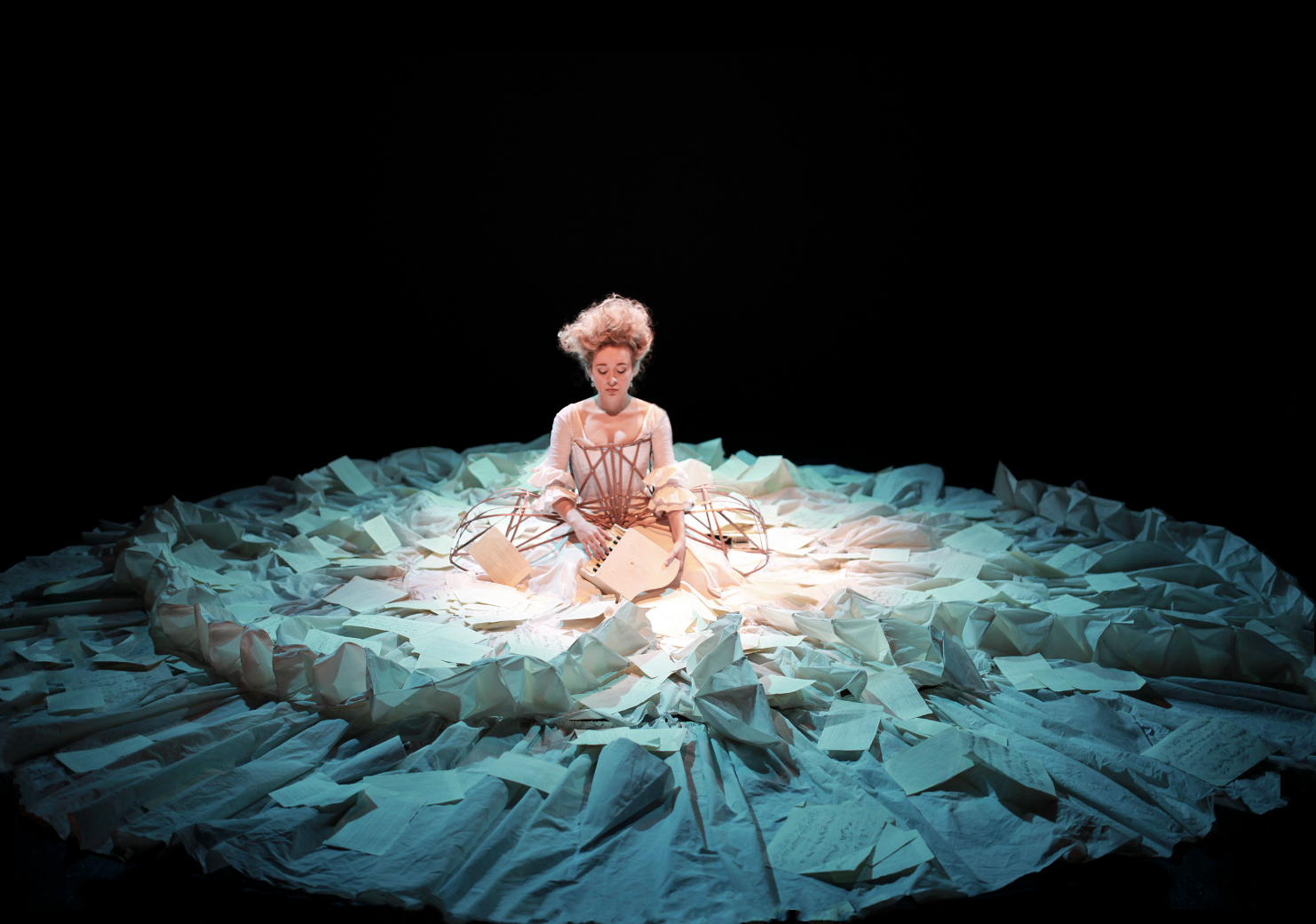
The Other Mozart, directed by Isaac Byrne, is a work of art: a sophisticated blend of monologue, music and movement – and it’s a visual marvel too. The set is the costume; the costume is the set: a giant dress, designed by Magdalena Dąbrowska, fills the entire stage, waiting, predator-like, to trap Nannerl in its fathomless drapes. The image is intensified by Miodrag Guberinic’s cage-like panier, constructed – I think – from music stands, constricting Nannerl but also amplifying her stature, so that she rises monumentally, towering over us, defying us to forget her name.

An object lesson in reclaiming women’s history, The Other Mozart is exquisitely conceived and realised, a magnum opus in its own right.

5 stars

Susan Singfield

Bury the Hatchet

05/08/25

Pleasance Dome (Queen Dome), Edinburgh

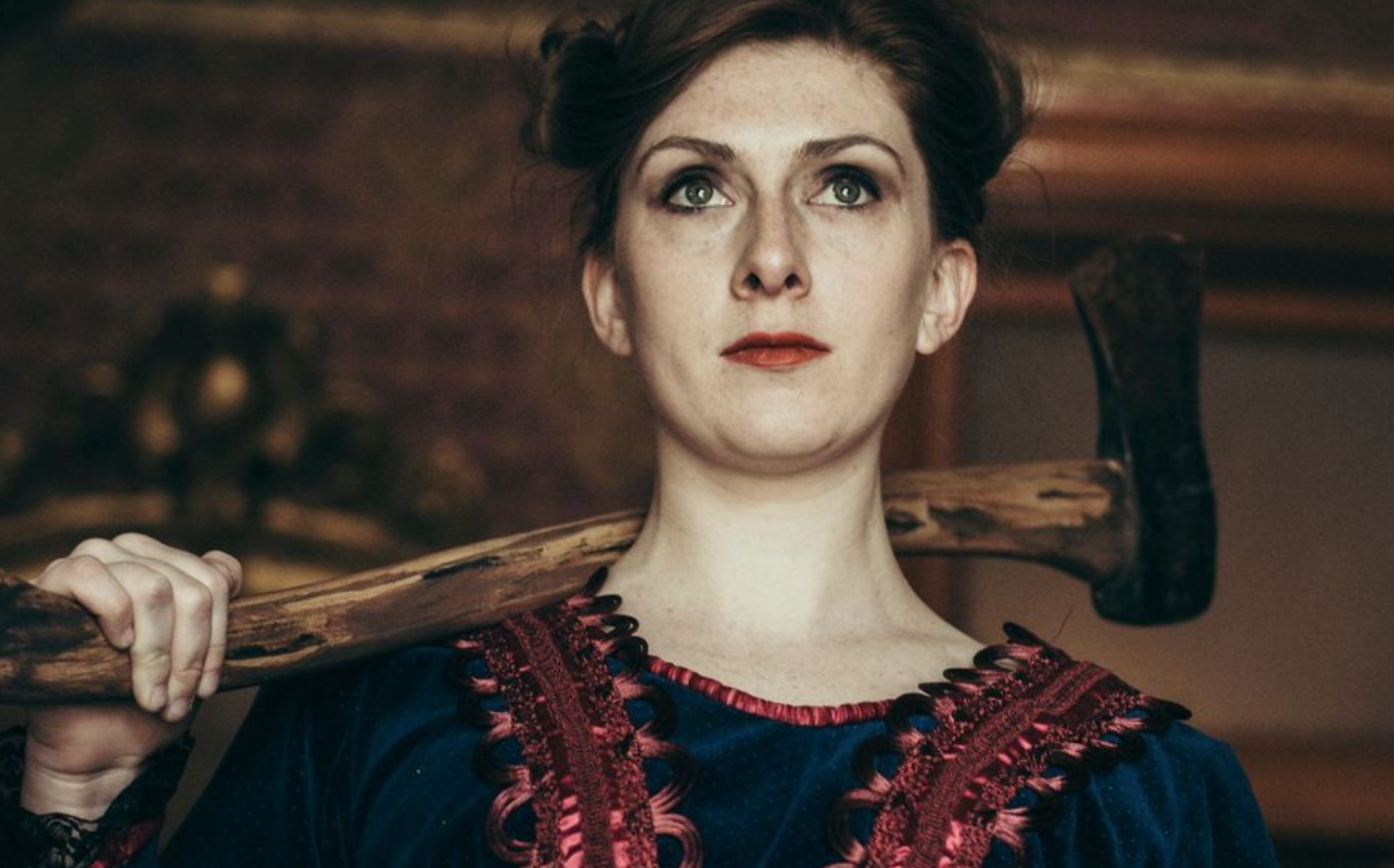
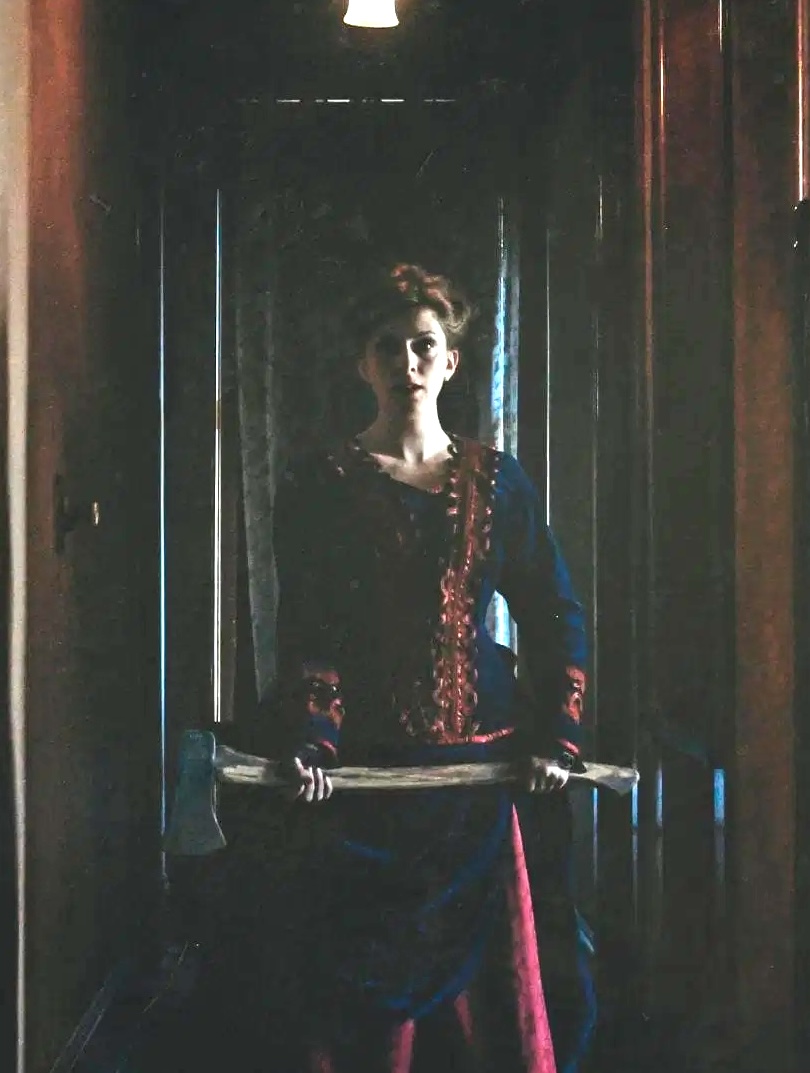
I’ve long been fascinated by the case of Lizzie Borden, after reading Evan Hunter’s fictionalised account of her story back in my youth – and, of course, many people are aware of the little poem that begins, ‘Lizzie Borden took an axe…’

I don’t think I’ve ever used the word ‘playful’ to describe a true-crime drama before – but it’s the first word that springs to mind when thinking about Out of the Forest’s production of Bury the Hatchet. It’s not that Sasha Wilson’s script treats its grave subject disrespectfully, far from it. It’s just that the story is handled in such an offbeat and refreshing way.

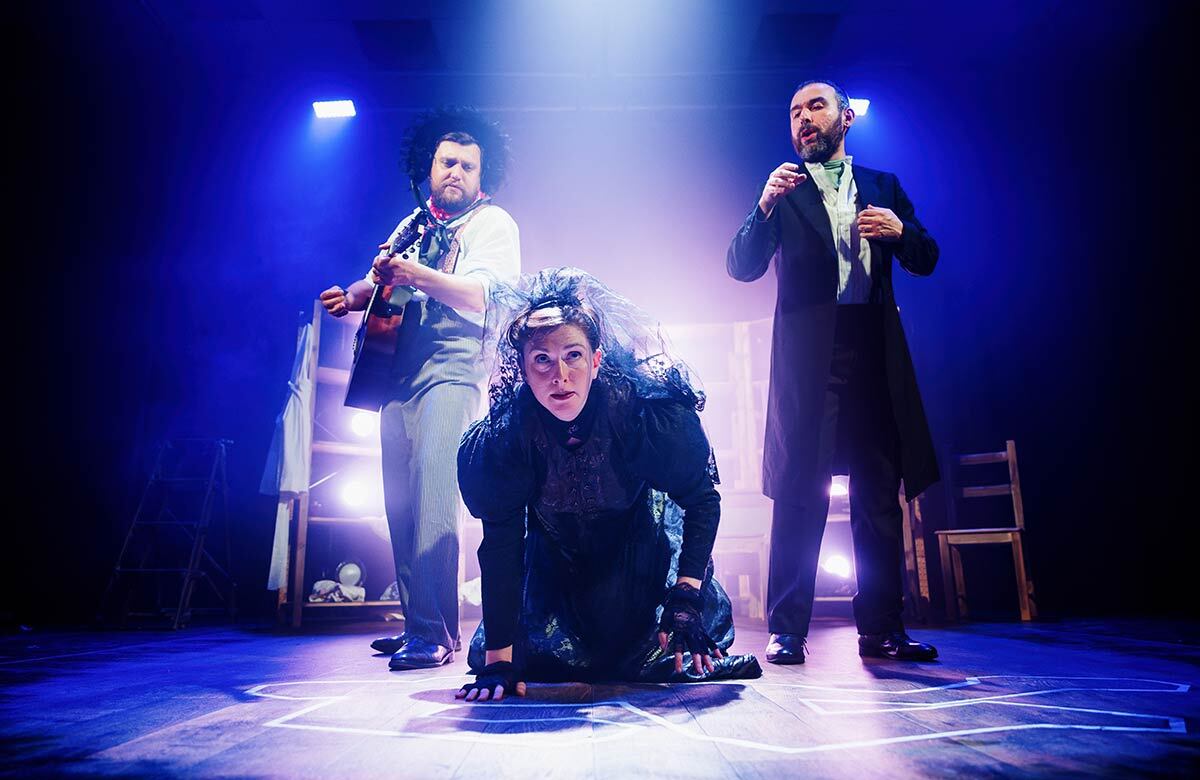
This fascinating hybrid – part true-crime investigation, part re-evaluation – looks at all the different threads of the mysterious murder of Lizzie Borden’s parents in the prosperous neighbourhood of Fall River, Massachusetts, in the year 1892. With all the relevant pieces in place, it attempts to make sense of them. Wilson plays Lizzie, while Lawrence Boothman and David Leopold embody a whole cast of different characters, switching from role to role with only a token item of clothing or a simple prop to ensure I’m never confused as to who is who. And trust me, it’s a tangled tale.

At key moments, Lizzie will snatch up a mandolin, while her companions grab a violin and a guitar, and they bash out a series of bluegrass standards (at one point, even a Nina Simone classic), their voices blending in stirring harmony. In other fourth-wall-breaking moments, the actors briefly step out of their guises, bewildered by the complexity of the task they’ve taken on, pausing to question the likelihood of some of the weird evidence submitted by Lizzie in her defence.

‘She said what? Mosquito bites?’

If I’m making this sound too convoluted, don’t be misled. Bury the Hatchet is an inspired piece of theatre, wonderfully propulsive, perfectly judged and by turns shocking, intriguing and acerbically funny. Vicky Moran’s direction keeps everything bubbling away at full throttle so that the pace is never allowed to lag. This is an object lesson in how to pitch a true-crime drama – and how to hold an audience absolutely spellbound.

So was Lizzie Borden guilty of a heinous crime? Did she walk away from the gallows simply by virtue of being a prosperous white woman? Or was there another, more complex explanation for what happened to the Bordens? Whatever the case, they were brutally murdered and nobody ever had to answer for the crime.

Interested parties should make their way to the Pleasance Queen Dome to judge for themselves – and prepare to be utterly captivated by this thrilling production.

5 stars

Philip Caveney

Charming

05/08/25

Greenside (Forest Theatre), George Street, Edinburgh

“And they all lived happily ever after…”

Everyone’s familiar with the traditional fairytale ending, but playwright Annie Lux has a question: what does that actually look like? Twenty years down the line, how are Prince Charming and Cinderella getting along? After all, she reminds us, there’s no mention of “together…” in that concluding line.

We meet Charming (Nigel Myles-Thomas) after a gruelling ‘petition day’. He’s tired, as tetchy as King Charles III faced with a leaky quill, and not at all inclined to see the insistent latecomer who’s waiting at his gate. But this last-minute petitioner is Cinderella’s fairy godmother (Claire Toeman) and, with a wave of her wand, she’s gained entry. Before he knows it, Charming is being served divorce papers. Cinderella wants out.

Directed by Lee Costello, Myles-Thomas imbues Charming with weary charisma, and his bewildered responses to Cinderella’s demands are very funny. I like the conceit that the characters know about the different versions of themselves, and use these as justification for their actions (“Only in Grimm! Not in Andersen!”), although I do wonder why punches are pulled. If we’re to acknowledge the ugly sisters having their toes chopped off in Grimm, why is there no mention of them having their eyes pecked out?

Apart from a brief appearance from Cinderella’s wicked stepmum (Margot Avery) – no iron shoes; no walking on fire – Charming is a two-hander and, while Avery makes a decent fist of the role, I don’t think her character has enough to do. To justify her sudden arrival in the final third, she needs to signal an escalation or be a catalyst for change, but that is not the case, so she just feels redundant. Another issue is the over-reliance on dialogue: nothing is conveyed without being spoken, which seems a shame as theatre is a visual art form and fairytales are so replete with imagery.

There are plenty of revisionist versions of this story, but not many focus on the characters in middle-age, and it’s interesting to see this whimsical representation of the effects of the passing years, even on those with charmed – and Charming – lives.

3 stars

Susan Singfield

ROTUS: Receptionist of the United States

04/08/25

Gilded Balloon Patterhoose (Snug), Edinburgh

Meet Chastity Quirke (Leigh Douglas), a God-fearing young Republican, who has used all her guile and skills to manoeuvre her way from humble intern to the coveted role of receptionist at the White House – or, as her good friend president Drumpf likes to refer to her, ROTUS. If you want to meet Drumpf you have to get past Chastity first.

Loyal, determined and always ready to turn a blind eye to the underhand dealings she’s witness to on a daily basis, Chastity finds herself surrounded by ruthless congressmen, who count on her to act as their eyes and ears, ready to tip them off to anything they might use to their advantage. She’s ruthless – and has the requisite skills to make any innocent remark she makes sound like an indecent proposal.

Chastity believes that she has what it takes to stay at the top of her nefarious game. But is she a player? Or is she simply being played?

With the current smouldering powder keg that is US politics, ROTUS couldn’t be any more topical – and Douglas, who also wrote the whip-smart script, is an assured and confident performer. This is as bitingly funny as it is disturbing to witness, as we watch Chastity manipulating her way through the rampant misogyny and deceitfulness of the MAGA patriarchy. Director Fiona Kingwill keeps everything stripped back and allows Douglas to strut her stuff: the result keeps the audience hooked until the final moment. Little wonder the relatively compact Snug is selling out on a daily basis.

Those who fancy a slice of this delicious satire should book tickets at the earliest opportunity. As we take our seats, Storm Floris is raging outside but Douglas cooks up her own perfect storm on the little stage in front of us and we are spellbound. Don’t miss this one, it’s a keeper.

4.4 stars

Philip Caveney

She’s Behind You

03/08/25

Traverse Theatre, Edinburgh

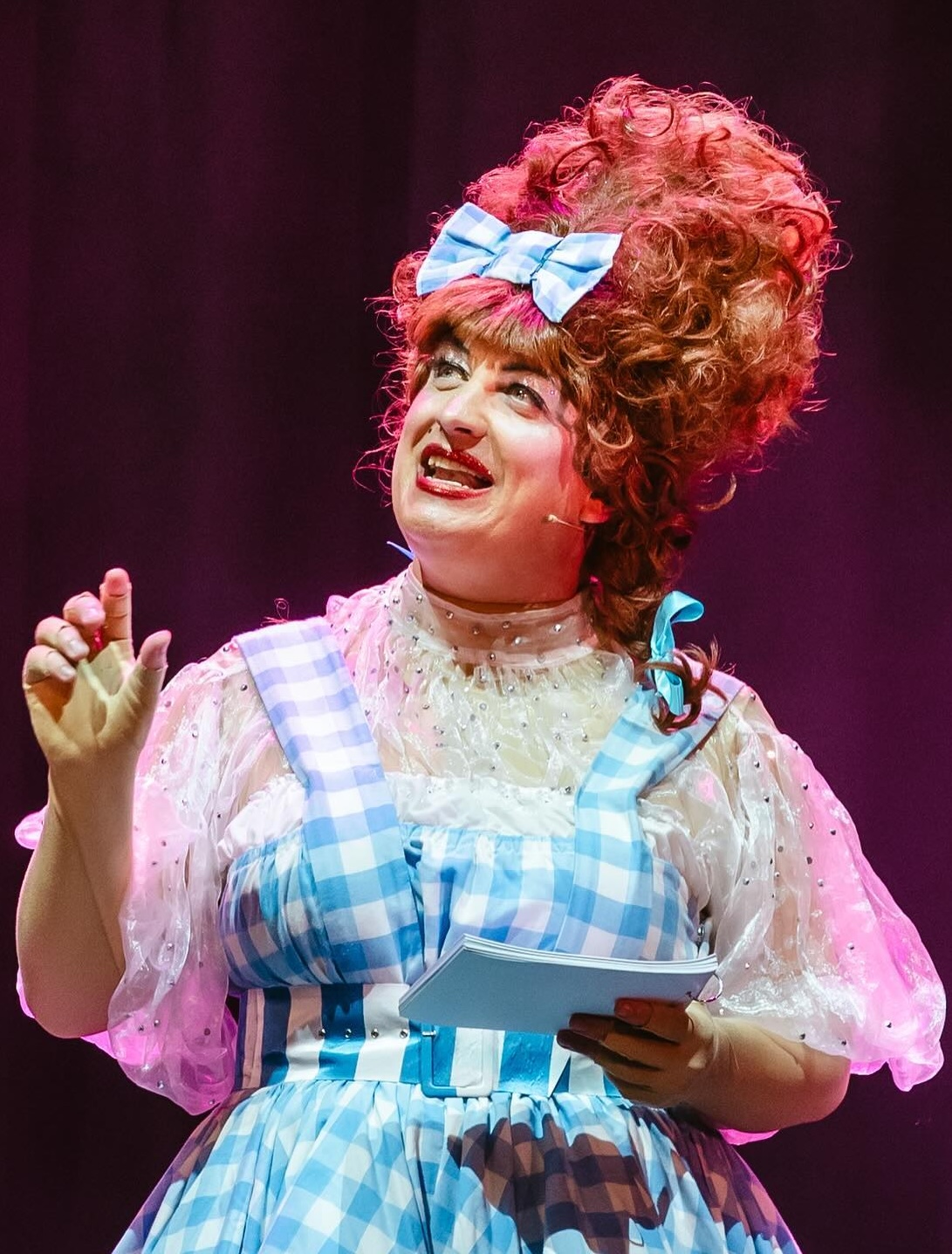
Johnny McKnight lifts the lid on all things panto in this hugely entertaining and informative one-dame show, directed by John Tiffany. She’s Behind You is an interesting hybrid, retaining all the bawdy glamour of Britain’s most popular theatrical form, while simultaneously offering a thoughtful commentary on its strengths and weaknesses. A seasoned writer and performer, McKnight has the audience in the palm of his spangly-gloved hands, eliciting gales of laughter as well as contemplative silences. He knows exactly how to tell his tale to best effect, effortlessly undercutting the more sombre moments with a raucous one-liner or comic song, carrying us along with him. It’s all beautifully designed by Kenny Miller and there’s a lightning-fast costume change (courtesy of Jennie Lööf) that will leave you breathless.

McKnight’s stage persona, Dorothy Blawna-Gale, is as warm as she is sassy, brash but never brutal – more Elsie Tanner than Cruella de Vil. “Punch up,” McKnight exhorts, reflecting on earlier iterations of his dame, where he followed in the footsteps of the Widow Twankeys and Ugly Sisters he’d so admired in his youth, making ‘harmless’ jokes about race, gender, sexuality and body size. “Times change,” he reminds us – and panto has to change with it. Some rules need to be kept – after all, the conventions of the genre date back to commedia dell’arte, a working-class art form that spurned elitism and focused on entertaining the masses – but some need to be broken.

For example, the gender imbalance doesn’t sit well any more, but most commercial panto casts are still at least 75% male, and the few women don’t get much agency, let alone the chance to tell jokes. There’s also an inherent homophobia, he tells us, which genuinely surprises me (I guess that’s my straight privilege showing). I’ve always thought of pantomime as gender fluid, sometimes sexist but never anti-gay. McKnight’s insider perspective opens my eyes, and I’m impressed by his efforts to walk the walk, writing scripts he can stand by and be proud of, serving his audiences rather than belittling them. Pantomime has survived so long by being adaptable and irreverent, so why is there so much resistance to challenging certain tropes?

But if all this sounds po-faced, then I’m doing McKnight a disservice, because – more than anything – She’s Behind You is a cyclonic blast, as big and bold as its glittering protagonist, and fully deserving the standing ovation it receives tonight.

So click your age-appropriate-but-sparkly orthotic heels together three times, and repeat, “There’s no place like the Traverse.” Dorothy Blawna-Gale will be waiting to see you. Oh yes she will!

5 stars

Susan Singfield

Alright Sunshine

03/08/25

Pleasance Dome (Jack Dome), Edinburgh

Edinburgh playwright Isla Cowan is making quite a name for herself in Scottlish theatre – and it’s easy to see why. We’ve watched two of her previous pieces (2023’s And… And… And… and 2024’s To Save the Sea) and been mightily impressed; today’s production of Alright Sunshine is even better: an intense monologue about being a woman, being a police officer, and the darkness lurking behind sunny days on the Meadows. 

PC Nicky McCreadie (Molly Geddes) is dedicated to her job. It comes first: before her family, before her relationships, before her health (who has time for eggs for breakfast when there’s a Greggs on the way to work?). Her dad was polis too, and she’s determined to be the kind of officer he’d be proud of… if he were alive. She’ll be as strong, as focused, as brave as he always urged her to be. She won’t give in to her feelings. She won’t cry. She won’t be weak like her mum. She won’t be a girl.

Directed by Debbie Hannan, Cowan’s taut, almost poetic script is brought powerfully to life by Geddes’ mesmerising performance: a tour de force with real emotional heft. The playful, observational tone of the opening sections – where the park’s ‘timetable’ is humorously detailed – is skilfully undercut by the gradual disclosure that all is not okay in PC Nicky’s world. She’s seen too much, given up too much, suppressed too many emotions in her bid to be the perfect policewoman. Now that carefully-constructed carapace is breaking apart and she has no idea what she’s supposed to do.

It would be a crime to reveal any more than this; suffice to say that this is a compelling play with an important message at its heart. If you can watch it without giving in to your feelings, without crying, without being a girl, then you probably need to talk to someone. Soon.

5 stars

Susan Singfield

Consumed

03/08/25

Traverse Theatre, Edinburgh

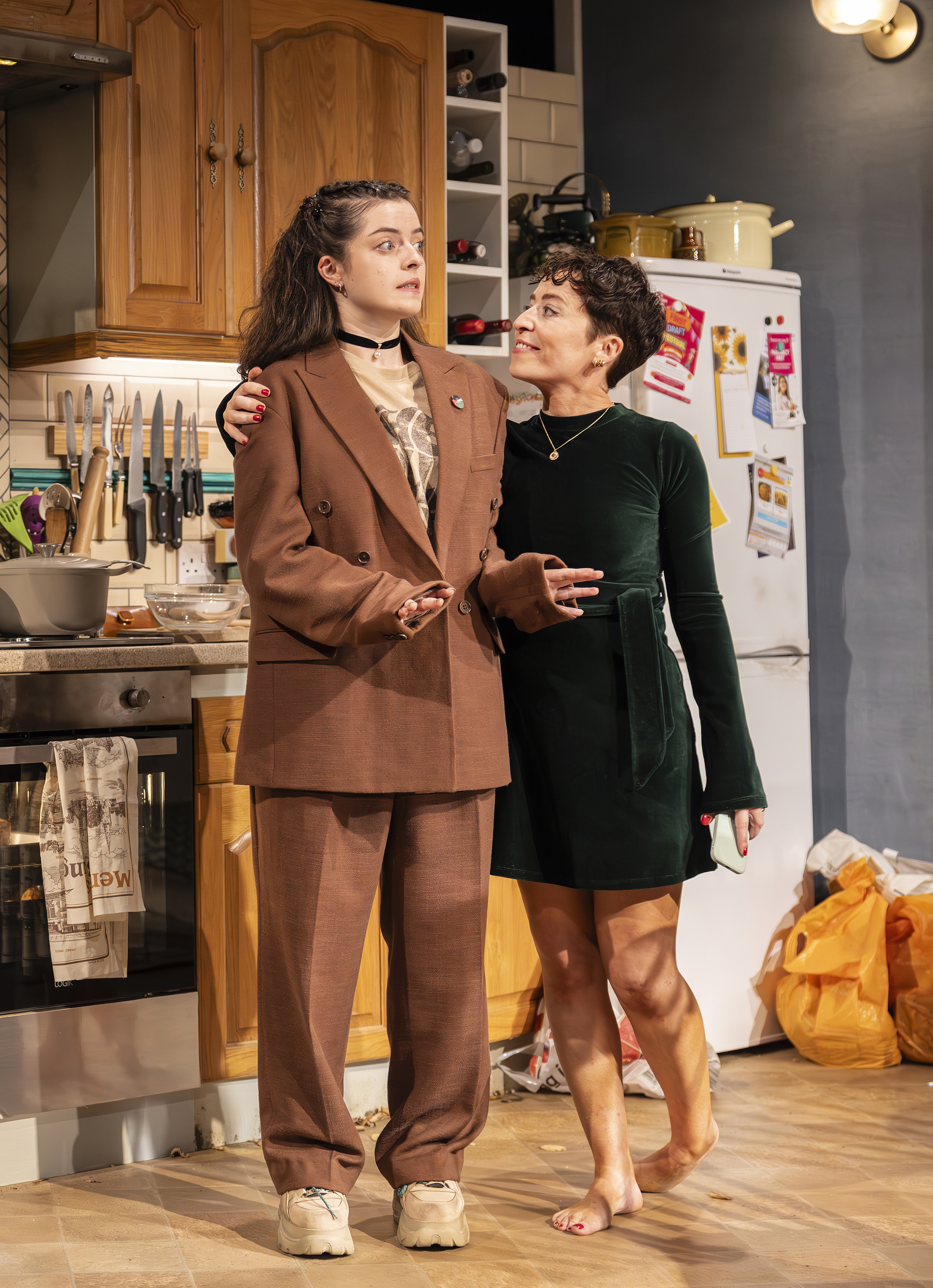
In a suburban home, somewhere in Northern Ireland, a ninetieth birthday celebration is about to begin. Gilly (Andrea Irvine) is preparing a special meal for her mother, Eileen (Julia Dearden), sparing no expense. After all, as Eileen seems to delight in pointing out, this might be her last chance for a decent shindig. Gilly’s daughter, Jenny (Caoimhe Farren), has travelled all the way from that London especially for the occasion, but – wouldn’t you know it – there’s no sign of her husband. Instead, she’s brought along her teenage daughter, Muireen (Muireen Ní Fhaogáion), who is… whisper it… a vegetarian.

But as the celebration gathers pace, it soon becomes clear that something here isn’t quite right. Why can’t the four generations of women find some common ground? Why is Eileen so dismissive of her visitors’ privileged lives? And… why is there absolutely no sign of Gilly’s husband?

Karis Kelly’s pitch-dark comedy, Consumed, winner of the Women’s Prize for Playwriting in 2023, is a multi-layered tale of intergenerational conflict, sumptuously situated in Lily Arnold’s incredibly realistic set, where even items of food appear to be genuinely cooked and served as we watch. The four characters are all convincingly portrayed, with Dearden ruling the roost as a gloriously foul-mouthed Granny from Hell, levelling her curses at Feinians and the English with equal venom.

Meanwhile, Muireen can’t understand why Gilly’s house is so cluttered with plastic bags and other non-recyclables – is she turning into a hoarder? And when people ask awkward questions, why does Jenny always seem to take refuge in a glass of red wine?

As a whole series of twists are gleefully unravelled, the pressure cooker atmosphere in the house steadily builds up an explosive head of steam. In the final stages, there’s an abrupt twist from realism to a kind of dreamlike symbolism, as Eileen and Muireen enter a shared experience – and it’s in this section that for me, the play loses a little of its drive.

But quibbles aside, Consumed is a delicious confection, sensitively directed by Katie Posner – an affecting narrative, which has me laughing throughout, while also giving me plenty to think about.

4.4 stars

Philip Caveney

Shake Rag Hollow

02/08/25

Assembly (Front Room), Edinburgh

The Edinburgh Fringe is a place where precious gems can sometimes be unearthed in the unlikeliest places. Shake Rag Hollow is a perfect example of the phenomenon. This tightly-constructed three-hander, written by Arlene Hutton (whose Blood of the Lamb was also a bit of a revelation back in 2023) and directed by Eric Nightengale, is set at the top of a mountain in Southern Tennessee – though in reality, it’s taking place in an unprepossessing metal storage container on George Street. 

That gentle voice we can hear, extolling the virtues of the eponymous hollow, belongs to the late Sherman, who always loved this place, and delighted in revealing its charms to his young niece, Denise. But Sherman is long gone and now Denise’s daughter, Laurel (Sofia Ayral-Hutton), lives in the remote cabin with her grandmother, Pauline (Beth Links). Denise has been in prison for years, convicted of a horrendous crime, and Laurel has learned to despise the mother she has never met.

But then Denise (Dana Brooke) turns up unannounced, lugging a suitcase and looking for somewhere to stay. Recently released, Denise needs space to complete the online Masters in psychology she’s so close to achieving. Pauline grudgingly gives her daughter sanctuary, despite Laurel’s hostility – and, as Denise and Laurel gradually start to connect, unexplained mysteries from the past begin to resurface – raising questions that have remained unanswered for far too long…

This is a powerful play that gradually builds to a shattering crescendo. The three actors portray their characters with authority, allowing the audience to vividly imagine the rural setting, so that I can accept that an upturned table and a couple of chairs represent a wild forest through which Denise and Laurel must pick their way – and that a humble cardboard box really can hold the key to so many secrets. Brooke in particular manages to convey the inner desperation of her character, a woman seething with pent-up trauma, who has been obliged to live with a lie for decades and is now finally confronting the truth – and Ayral-Hutton is also compelling as the naïve and impressionable Laurel.

The climax when it arrives actually brings me to tears. This play deserves as big an audience as can be crammed into the available space, so my advice would be to book your tickets for this one before it’s swamped.

5 stars

Philip Caveney