Month: November 2024

Blitz

09/11/24

Cameo Cinema, Edinburgh

Steve McQueen is always a fascinating filmmaker and I love the fact that I never quite know what to expect from him. Blitz is an Apple Original, destined to start streaming soon, but I would urge anyone interested to seek out an independent cinema where it’s showing, because this is a film that deserves to be seen on the big screen. As the name suggests, it’s set in 1940 as London undergoes the Blitzkreig, bombed on an almost nightly basis by the Luftwaffe.

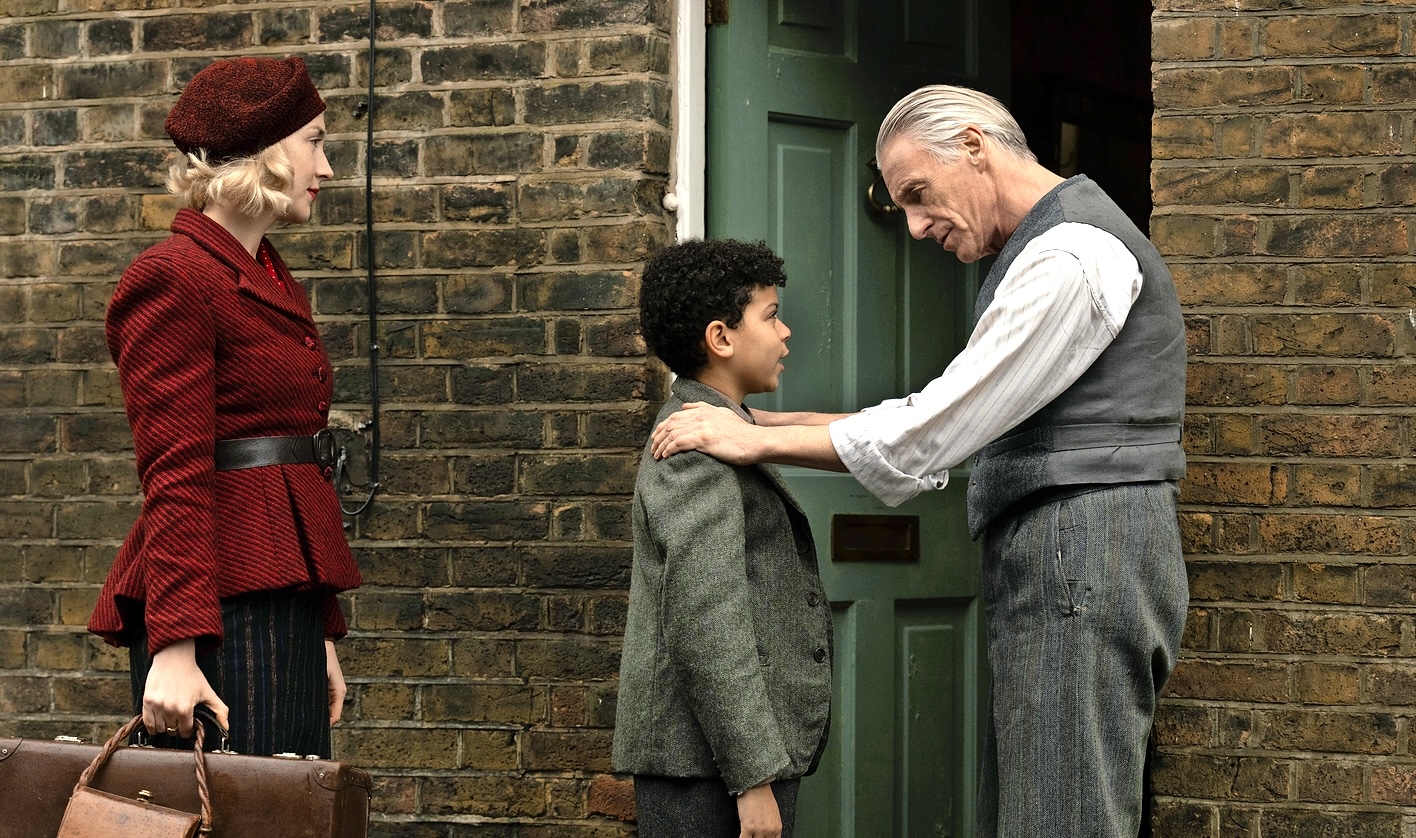
The story is centred around George (Elliott Heffernan), a young mixed-race boy, who lives with his mum, Rita (Saoirse Ronan), and his grandad, Gerald (Paul Weller), in a little terraced house in the city. George has never met his father, who we learn (in flashback) has been deported back to Grenada for entirely nefarious reasons. As the bombing becomes more intense, the government’s plan for the mass evacuation of children from the city is announced. George is reluctant to leave his mum but, together with a bunch of other youngsters, he’s put aboard a train heading for the safety of the countryside.

But George has other plans and, at his first opportunity, he jumps off the train and starts to make his way back along the track in the direction of home…

What ensues repeatedly puts me in mind of a YA adventure as George encounters a whole selection of characters on his way home: kindly Black air-raid warden, Ife (Benjamin Clémentine); callous Fagin-esque thieves, Albert (Stephen Graham) and Beryl (Kathy Burke); and a trio of friendly young boys who keep challenging George to do ever more reckless things. His odyssey is intercut with scenes of what’s happening to Rita: working in a munitions factory; heading out on the town with her friends, Doris (Erin Kellyman) and Tilda (Hayley Squires); even performing a song for the BBC when a live series visits the factory. Episodic it most certainly is but, unlike most of the Sunday evening dramas it might be compared to, the stakes here are perilously high and happy endings are by no means assured. Whenever the story is in any danger of heading towards sentimentality, McQueen (who also wrote the screenplay) finds a way to snatch it back and amp up the jeopardy, never allowing us to forget that these are dangerous, unpredictable times – and not everybody is destined to make it to the end of the line.

The production values are first-class throughout, the depictions of the war-torn city sometimes awe-inspiring, occasionally verging on high art. Blitz also offers a fresh insight into the era, the war seen from the point of view of a boy who suffers from racial slurs on a daily basis. A scene where George wanders through a deserted shopping arcade looking at an exhibition depicting the subjugation of slaves is particularly affecting; so too, an extended sequence at the Café de Paris which depicts a Black orchestra playing for the entertainment of exclusively white, upper-class customers – a frantic, sexually-charged show which is destined to be interrupted in heart-stopping fashion.

Ronan, as ever, portrays her character with absolute assurance and even demonstrates a decent singing voice but it’s Heffernan who is handed the biggest challenge here, carrying this powerful and affecting film with absolute authority. I’ve seen some decidedly lukewarm advance reviews for this, and am at a loss to understand why some critics have failed to appreciate its evident charms. It’s epic filmmaking of the highest order. As I said, it will be on your televisions soon, but it won’t look as awesome as it undoubtedly does on a cinema screen.

4.6 stars

Philip Caveney

Angels in America: Part One – The Millennium Approaches

08/11/24

Bedlam Theatre, Edinburgh

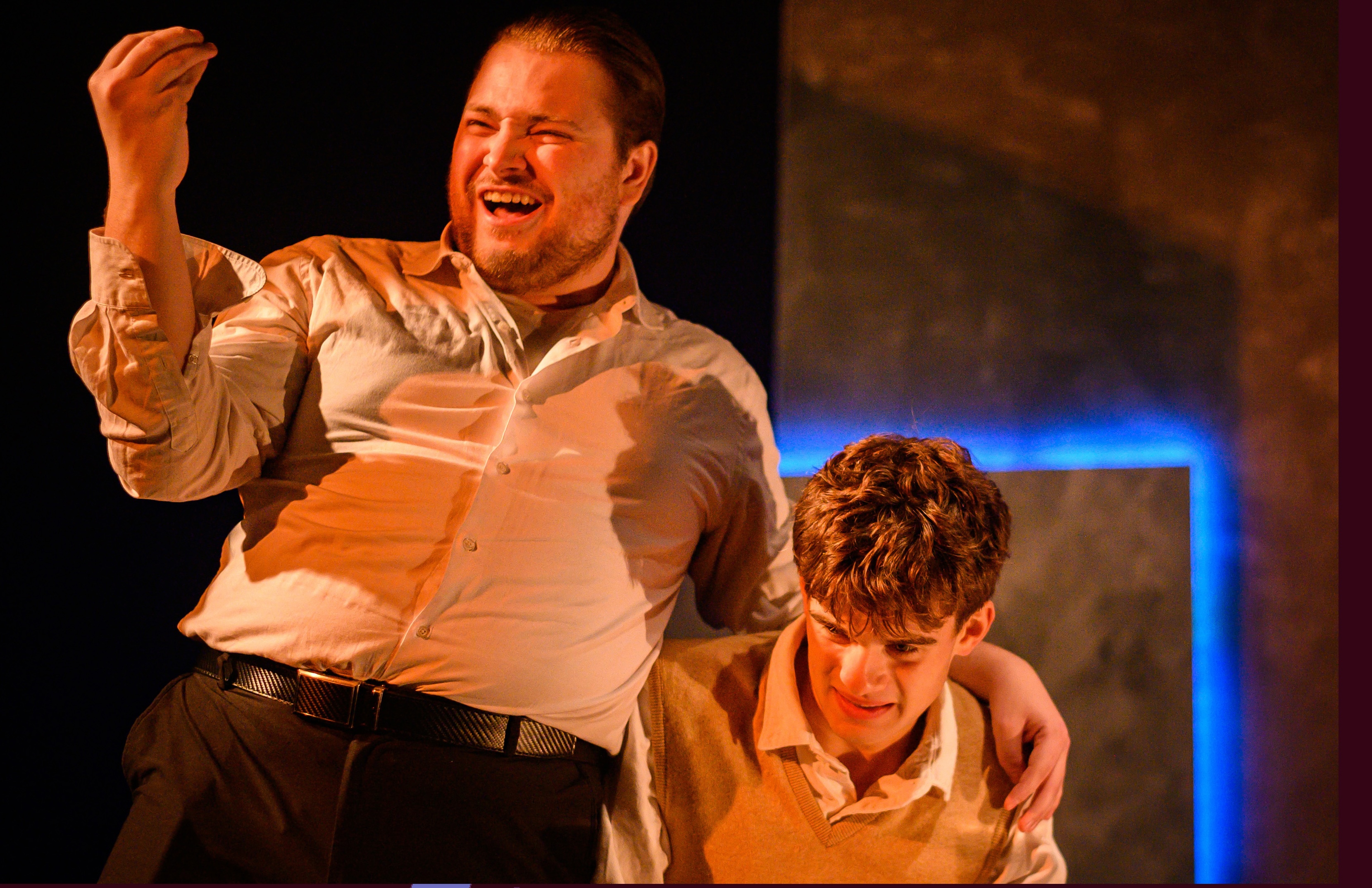
New York playwright Tony Kushner’s 1991 “fantasia on national themes” is notoriously complex, but we’ve come to expect EUTC to tackle ambitious projects head-on, so we’re not surprised to learn that they’ve chosen this seminal play for their latest production. We’re excited to see what Gen Z will bring to this play about their Gen X predecessors, as they struggle to deal with a deadly epidemic, populist prejudice and rampant capitalism. Plus ça change, plus c’est la même chose… I’m guessing they can relate.

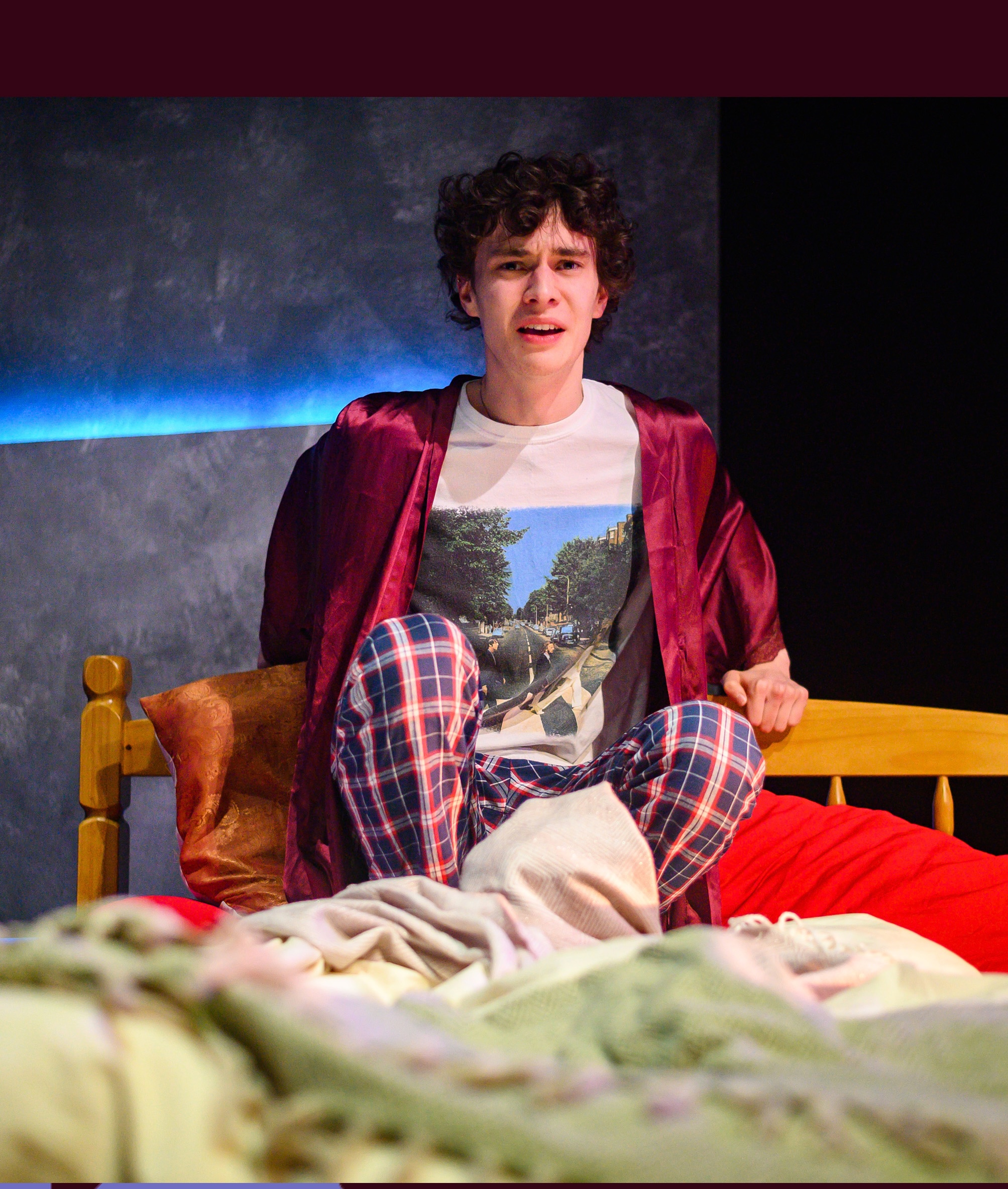
El Mair plays Prior Walter, a young man with a recent AIDS diagnosis and a distraught boyfriend. Louis (Leo Odgers) doesn’t want to deal with the realities of illness: the puke, the shit, the spectre of death. Prior is devastated by Louis’s abandonment, and retreats ever further into a fantasy world, ably assisted by the cocktail of drugs he has to take to manage his condition.

Meanwhile, Louis’s colleague, Joe (Will Grice), is facing demons of his own: his Mormon faith doesn’t allow him to acknowledge his homosexuality and remaining in the closet is killing him. But when he tries to come out to his mother, Hannah (Ava Vaccari, who excels throughout this production in a number of roles), she refuses to listen. “This conversation didn’t happen.” Of course, the secret also has a devastating impact on his wife, Harper (Natalia Campbell), who is addicted to Valium and, like Prior, plagued by visions.

As if Joe weren’t already dealing with enough pressure, his mentor, sleazy lawyer Roy Cohn (Hunter King) – the only real-life character in this fictional world – is determined to put Joe’s shiny good-boy persona to use, finding him a job in Washington DC, close to the seat of power. (“I make presidents,” he says, King’s already chilling performance heightened by the wider context, the combination of Trump’s re-election and Abi Abbasi’s recent film, The Apprentice, which details Cohn’s influence on the young Donald.)

Directed by Meri Suonenlahti and Andrew More, Angels in America is a triumph. The student cast are more than up to it, imbuing their characters with heart as well as humour; there’s some real intelligence at play here. The naturalistic performance style works well, emphasising the strangeness of the more fantastical sequences, such as Harper and Prior’s dream meeting. Campbell and Mair, both talented actors, are especially compelling in this scene, their fragility writ large as they stare at each other ‘through a glass darkly’. Louis Handley’s set design mirrors these contrasts, the prosaic heaviness of the bed and desk and sofa juxtaposed by dreamily-lit pastel backdrops, which move on casters between each scene, so that the landscape subtly shifts and dips, illuminating the characters’ growing disorientation. Full use is made of the theatre’s history as a former chapel too, the huge blacked-out window above the stage lit to suggest the angels’ presence.

It’s astounding what EUTC manage to achieve with their limited budget: the final scene in particular is a coup de théâtre (I won’t say any more; I won’t spoil the surprise). Suffice to say, it’s worth bundling up in your winter woollies and heading to Bedlam to catch this one. Three and a half hours fly by like the eponymous angel. I only wish they were doing Part Two: Perestroika as well.

4.8 stars

Susan Singfield

Run, Rebel

07/11/24

Traverse Theatre, Edinburgh

Theatre productions are always a team effort but I’ve rarely been so aware of the fact as I am watching this sprightly offering from Pilot Theatre, written by Manjeet Mann and directed by Tessa Walker.

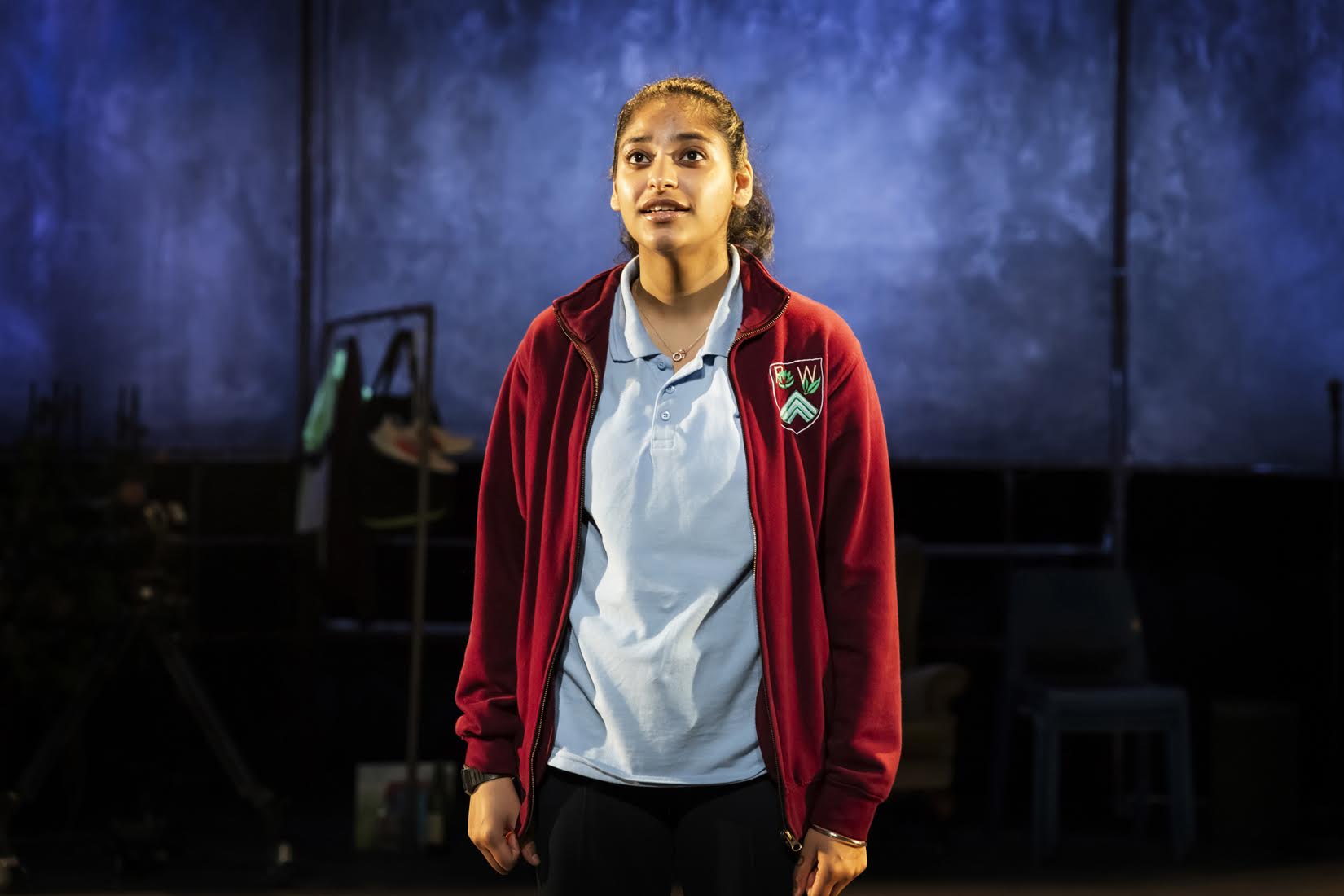
Amber (Jessica Kaur) is a fifteen-year-old Punjabi girl making her way through a world that seems determined to put obstacles in her path. She is nursing a serious crush on her friend David (Kiran Raywilliams) and is somewhat disconcerted that he is spending a lot of time with her other close friend, Tara (Heather Forster). Meanwhile, Amber is a talented athlete, always leading the field for her school running team, and her coach is talking seriously about the possibility of her one day qualifying for the Olympics…

But Amber’s controlling father, Harbans (Pushpinder Chani), keeps telling her that it’s time for her to think about settling down and accepting a husband, like her older sister, Ruby (Simran Kular). Meanwhile, their mother, Surinder (Asha Kingsley), is trapped in a violent, loveless marriage, unable to read or write a word of English. It doesn’t help that Harbans is a hopeless alcoholic, who spends nearly every penny that comes in on drink…

If the plot of Run, Rebel occasionally feels a little over-familiar, Mann’s script is sure-footed enough to keep me hooked throughout, while Walker’s direction moves the players from scene-to scene with absolute authority. Kaur is compelling in the lead role, and her co-stars move effortlessly through a selection of different characters, all of whom have enough individual quirks to make them feel real.

Debbie Duru’s fabulous set design features ramped edges, so that the running sequences are suitably propulsive as the actors literally race back and forth through Kuldip Singh-Barmi’s cleverly-choreographed sequences. Daniel Denton’s atmospheric video designs lend the story added depth and I particularly relish the moments when Amber steps out of the action to replay those scenes that go particularly well for her.

Only the most impassive viewer will fail to be thrilled as Run, Rebel races headlong to the finish line. It will be at the Traverse until Saturday 9th November, so anybody in search of an uplifting couple of hours in the theatre should grab some tickets without delay.

Ready? On your marks, get set, GO!

4 stars

Philip Caveney

Bright Places

06/11/24

Traverse Theatre, Edinburgh

Rae Mainwaring’s Bright Places is advertised with the quirky tag-line, “a three-woman, one-woman show about Multiple Sclerosis, MS for short, not to be confused with M&S or S&M.” It’s an apt introduction to what proves to be a thoughtful yet riotous piece of theatre, exploring both the playwright’s personal experiences and the wider picture of societal responses to disability.

I love the writing. It’s to Mainwaring’s credit that she has managed to convey the brutal realities of her condition with such humour and heart. She neatly avoids any disabled-person-as-inspiration traps, presenting us instead with a young protagonist (‘Louise’) learning to navigate a landscape she never expected to inhabit, slowly adjusting to her new limitations while also finding ways to hold on to the fun-loving, lively person she’s always been. Mainwaring doesn’t shy away from the difficulties Louise faces, but they’re not all-encompassing. MS is part of Louise’s life; it isn’t the whole thing.

Produced by Carbon Theatre in association with Birmingham Rep, the style is boldly meta-theatrical, opening with the trio of accomplished actors (Lauren Foster, Aimee Berwick and Rebecca Holmes) explaining why they, three non-disabled women of different ages, races and physical appearances, are playing ‘Louise’ – who is both a fictional construction but also Rae, the playwright. It’s complex but it all makes perfect sense as they tell it, and addresses the question of authenticity head-on. Rae can’t perform this ‘one woman’ show herself: it’s literally the work of three people, and she’s got MS. It’d exhaust her.

Under Tessa Walker’s direction, Bright Places is a fast-paced and lively piece, all high-octane vitality, even as Louise’s energy flags. We’re led from nightclubs to hospitals, sickbeds to game shows, anger to acceptance. The costumes are bold, sequinned and vivid, as irrepressible as Louise. As Rae. And the soundtrack is bangin’.

A delight from start to finish, Bright Places is the most fun you’ll ever have learning about a chronic autoimmune disease. It’s got two more nights here in Edinburgh before continuing on its UK tour (next up, Exeter). Catch it if you can.

4.3 stars

Susan Singfield

Small Things Like These

03/11/24

Cineworld, Edinburgh

Some films are like icebergs. There’s a lot more going on beneath the surface than we are actually shown onscreen. Small Things Like These, directed by Tim Mielants and adapted by Enda Walsh from the novella by Claire Keegan, is a good case in point.

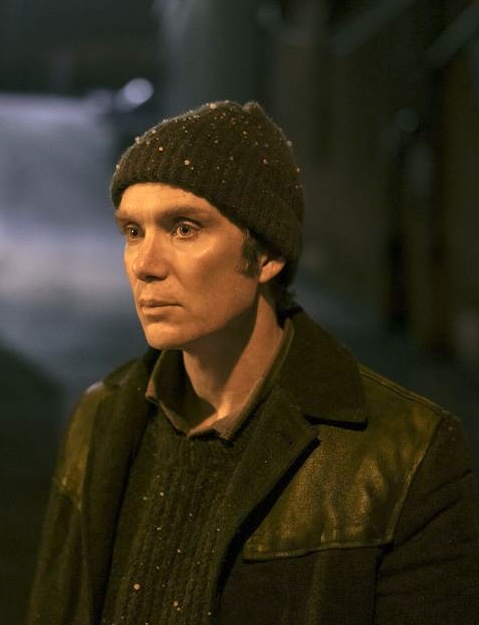
Set in a small town in Ireland some time in the early 1980s, it’s the story of Bill Furlong (Cillian Murphy), a mild-mannered coal man, who spends most of his time distributing sacks of fuel to the local community. He rises in the small hours every morning and plies his trade through all weathers. Every night he comes home to his wife, Eileen (Eileen Walsh), and his five daughters, living cheek by jowl in their little house. His first task is always to scrub his dirt-encrusted hands clean. But some things are not so easily erased.

One of his regular delivery slots is to the local convent and, when visiting the place, he cannot help but notice the seemingly endless ranks of teenage girls, pressed into service in the laundry and the kitchen, working like slaves for the nuns, under the steely command of Sister Mary (Emily Watson). When he finds one of the girls, Sarah (Zara Devlin), who is pregnant and being made to sleep in the coal shed as a punishment, the incident kindles a series of powerful memories from his childhood, when young Bill (Louis Kirwan) and his unmarried mother – also called Sarah (Agnes O’Casey) – were taken into the home of a kindly local woman, Mrs Wilson (Michelle Fairley).

In terms of plot, there isn’t much more to be said but what there is – in abundance – is a sense of steadily mounting pressure as older Bill, a man who finds is hard to be confrontational, who can barely muster half a dozen words in any given conversation, gradually arrives at the realisation that he has to do something about a situation that will allow him no rest.

Murphy manages to evoke so much with just smouldering expressions and the occasional panic attack, while Watson submits a powerful cameo as Sister Mary: cold, supercilious, calculating, willing to bribe Bill with cash to procure his silence about some of the things he’s witnessed. Meanwhile, everyone else in the community is urging him not to make waves, pointing out that the nuns have the power to make things really difficult for him and his family.

And Christmas is coming… why rock the boat?

As somebody who was raised as a Catholic, I identify with much of what I see here – and as the film builds to its powerful conclusion, I find my anger rising along with it. Small Things Like These won’t be for everyone – so much of the story is left for the viewer to mull over and conjecture about – but for my money it’s a little gem, a film that pins down the dark iniquities that are all too often committed in the name of religion. It’s possibly the bleakest ‘Christmas’ movie ever.

The film is dedicated to all the women who suffered in the ‘Magdalene laundries’ of Ireland before they were finally done away with in the – believe it or not – late 1990s.

4 stars

Philip Caveney

Anora

02/11/24

Cineworld, Edinburgh

Sean Baker excels at placing marginalised people centre stage and showing them in all their complex, multi-faceted glory. Transgender sex workers (Tangerine), motel-dwelling families (The Florida Project), washed-up porn stars (Red Rocket): they’ve all emerged from his films as so much more than mere victims or villains. This time, his camera is focused on exotic dancers and escorts.

The eponymous Anora (Mikey Madison) – or Ani, as she prefers to be known – works in a New York strip club. In the opening stretches of the film, the emphasis is on the ordinariness of her job: Ani moves from client to client with practised ease, using the same lines, the same moves, spending her break in the staff room, chatting to her co-workers while eating a Tupperware-packed meal.

But one night, a young Russian turns up at the club, demanding an escort who can speak his language. Thanks to her Russian grandmother, Ani fits the bill, although she prefers to speak English because her accent is “terrible”. Ivan (Mark Eidelshtein) turns out to be the son of a billionaire oligarch, and he’s willing to pay handsomely for Ani’s time. He’ll give her $15k if she’ll spend a week with him in his mansion as his girlfriend.

Of course Ani agrees. Why wouldn’t she? Ivan is fun: he’s blithe, impulsive, generous and wild. Ani is many of these things too, although she can’t afford to be so carefree. In Vegas – where they’ve gone on a whim in his private jet – Ivan proposes. “Don’t mess about with this,” Ani cautions him. He’s not messing, he reassures her. And so they get married.

But there’s no happy-ever-after here because Ivan is a long way from Prince Charming. He’s a spoilt brat, infantilised by indulgent parents, who – when they learn of his inappropriate match – send their henchmen (Karren Karagulian, Yura Borisov and Vache Tovmasyan) to set things straight. Like the child he is, Ivan responds by running away…

The middle section of the film combines a comic caper with a tragedy, as Ani and the henchmen try to track Ivan down. The humour is slapstick but the emotions are raw. Madison is extraordinary in the central role, a firebrand of a character, lighting up the screen. While Karagulian and Tovmasyan – as brothers Toros and Garnick – provide the comedy via their ineptitude, Borisov – as Igor – is an altogether more serious and thoughtful character. Even stooges are fully fleshed-out in a Baker film.

In the closing stretches, we see how flawed the Cinderella model is. The social commentary here is fierce: rich people hold all the aces. The fallout is shocking and Baker skilfully leads us to a final scene of utter devastation.

5 stars

Susan Singfield

No Love Songs

31/10/24

Traverse Theatre, Edinburgh

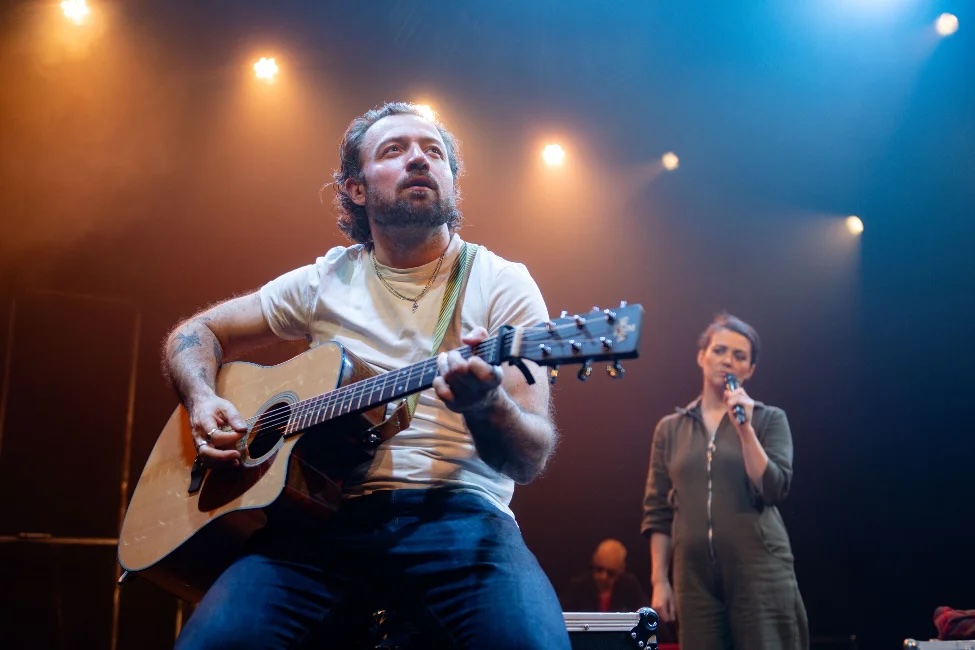
No Love Songs is a sweetly bleak piece of gig theatre, at once an unflinching exploration of post-natal depression and a testimony to the power of, well, love.

With music by The View’s frontman, Kyle Falconer – lifted from his solo album, No Love Songs for Laura – the book comes courtesy of the titular Laura (Wilde), his partner, and Johnny McKnight and is based on their real-life experiences.

Jessie (John McLarnon) is a musician. Sure, he’s mostly playing weddings and sweaty Dundee dive bars, but he has big dreams. Lana (Anna Russell-Martin), newly arrived in town to embark on a fashion course at the college, is full of creative ambition too. Together, they think, they can take on the world. When Lana becomes pregnant, they’re excited about their shared future.

But reality can be a bitch, and Lana – like one in five new mothers – struggles with post-natal depression. In a master-stroke of bad timing, Jessie is offered a big break: the chance to go on tour in America. Not only is this important for his musical career, it’s also an opportunity for him to earn some proper money for his family. If all goes well, they might even be able to buy a house.

“You have to go,” says Lana. It’s only a couple of months, right? She’ll be fine.

But Lana is not fine and a gulf opens up between the pair, as Jessie embraces his new life while Lana spirals into despair. What’s wrong with her? Why isn’t she ‘yummy’ like all the other mummies out there? She’s humiliated by her failure.

Jessie’s role as a musician means that the songs fit seamlessly into this play, with the conceit that we are witness to their creation: they are being written in response to the events as they unfurl. There’s a wide variety of styles, ranging from poppy to plaintive, and there’s some real emotional heft here too. I’m not much of a crier, but there are definitely tears in my eyes at moments tonight.

Directors Andrew Panton and Tashi Gore create a gentle, natural tone: there’s a relaxed ease between McLarnon and Russell-Martin that makes them convince as a couple. It could be argued that their obvious affection undermines the tension, suggesting from the start that everything is going to be okay. But I don’t mind that: the subject matter is so dark that it helps to know that there is a glimmer of light on the horizon.

As heart-warming as it is heart-wrenching, No Love Songs is – despite its title – a lyrical musing on the very notion of love.

4.4 stars

Susan Singfield