Month: March 2024

Blue Beard

15/03/24

Royal Lyceum Theatre, Edinburgh

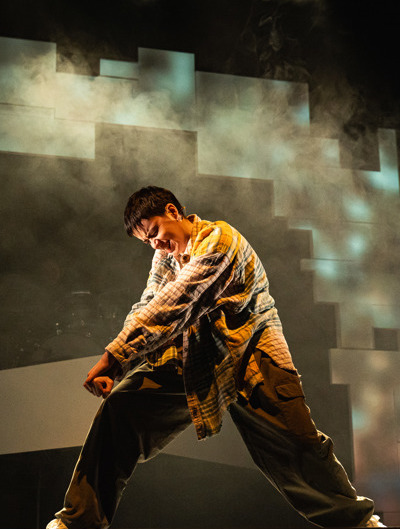
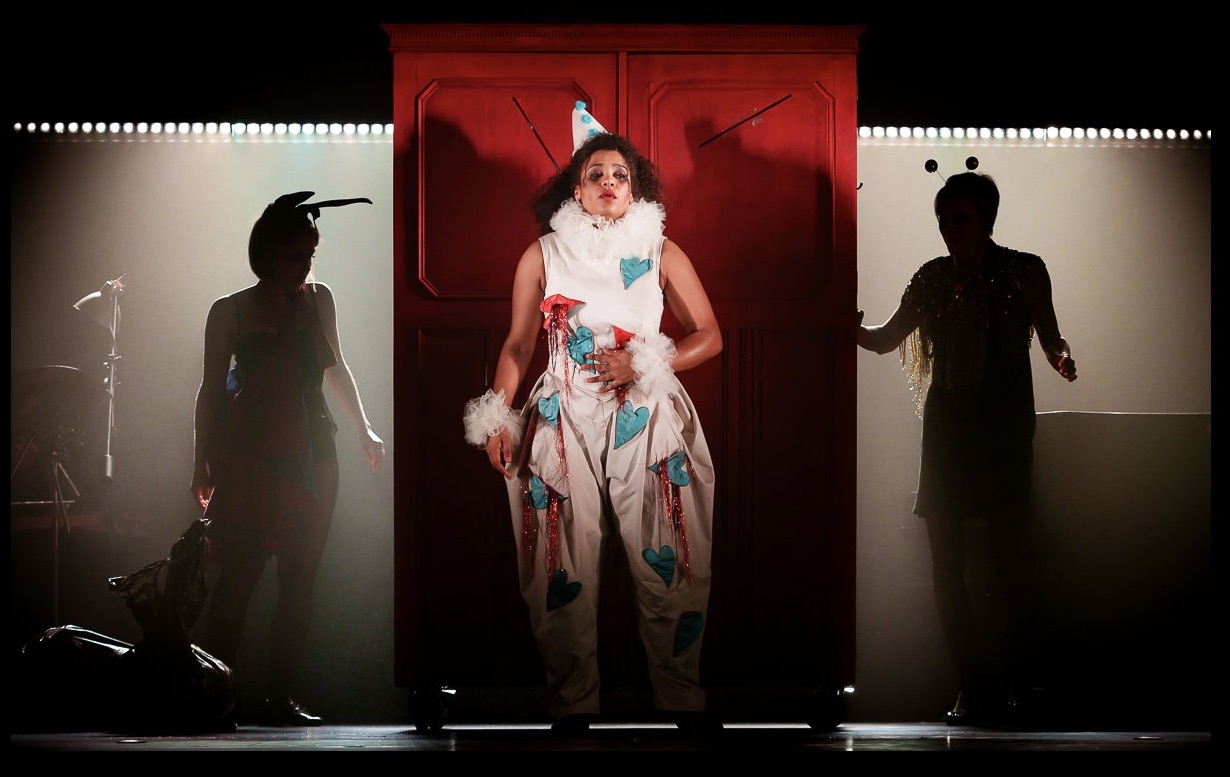
I’m a massive fan of writer/director Emma Rice – and also of fairytales. I even wrote my own version of Blue Beard some years ago, a short story currently languishing in the proverbial drawer where unpublished fiction goes to die. So, co-produced by Wise Children, Birmingham Rep, HOME Manchester, York Theatre Royal, and – of course – Edinburgh’s Royal Lyceum, this adaptation promises to be a delight. It doesn’t disappoint.

We all know the story. Blue Beard is a charming villain: rich, handsome and very popular. Sure, he’s had more wives than Henry VIII, but he doesn’t pretend to be a saint, and it’s no surprise when a naïve young woman agrees to marry him. The surprise comes later, when he gives his new bride a key but prohibits her from using it, placing a temptation in her way that he knows she can’t resist. When, inevitably, she opens the forbidden door, she finds the dismembered corpses of his previous wives and understands immediately that she is next. Luckily, she has brothers, and they come riding to the rescue. And then – spoiler alert! – she lives happily ever after.

Naturally, things pan out a little differently here. Rice embraces the anarchic heart of the fairy tale, while simultaneously tearing it apart. The result is as chaotic and brash as anyone who knows her work will expect: maximalist and frantic and as unsubtle as the protagonist’s cerulean facial hair. I love it.

The music (by Stu Barker) is integral to the piece. It’s enthralling, and beautifully performed by the impressive cast, all of whom turn out to be quadruple-threats, not only dancing, singing and acting with aplomb, but also playing a range of instruments and, in the case of Mirabelle Gremaud, adding gymnastics and contortion to the mix.

Vicki Mortimer’s ingenious set comprises boxes within boxes: indeed, the whole play is a magic show, all dazzling mirror-balls and sleights of hand. The cabaret glitz enhances the plot: no wonder Lucky (Robyn Sinclair) finds Blue Beard (Tristan Sturrock) spellbinding; he’s a magician, after all; illusions are his stock-in-trade. The thrilling, illicit pleasure draws us in: we too are seduced by Blue Beard’s ostentation and flair; excited as he conjures a horse race from nowhere; throws knives at his assistant (Gremaud); saws Lucky in half. This first act is all about the seductive allure of darkness, the impulse that makes us devour murder-mysteries and glamourise the bad guys.

But Rice’s Blue Beard comes with a warning, in the form of Mother Superior (the fabulous Katy Owen), whose Convent of the Three Fs reminds us that real women – as opposed to their fairytale counterparts – are at once fearful, fucked and furious. She’s both narrator and chorus, veering between humour and rage, first undercutting the tension with a perfectly-placed “fuck off”, then skewering Blue Beard’s dangerous pomposity.

The second act draws all the disparate strands together. Lucky doesn’t have brothers who can rescue her, but she does have Treasure and Trouble, her mum and sister (Patrycja Kujawska and Stephanie Hockley), and Blue Beard is no match for this formidable trio.

Out in the real world, the Lost Sister (Gremaud) is not so lucky. A screen showing black and white CCTV footage of a man following a woman is a theatrical gut-punch, less visceral than the slo-mo, gore-spattered, cartoon battle we’ve just enjoyed, but much more chilling. The auditorium, which just a moment ago was a riot of whoops and claps, is silent, aghast. The Lost Brother (Adam Mirsky) weeps; the Mother Superior sheds her habit. The smoke clears; the illusion breaks.

This is theatre with a capital T.

5 stars

Susan Singfield
Escaped Alone

14/03/24

Traverse Theatre, Edinburgh

First performed at the Royal Court in 2016, Caryl Churchill’s Escaped Alone is a fascinating piece, revealing some essential human truths despite the brevity of its running time.

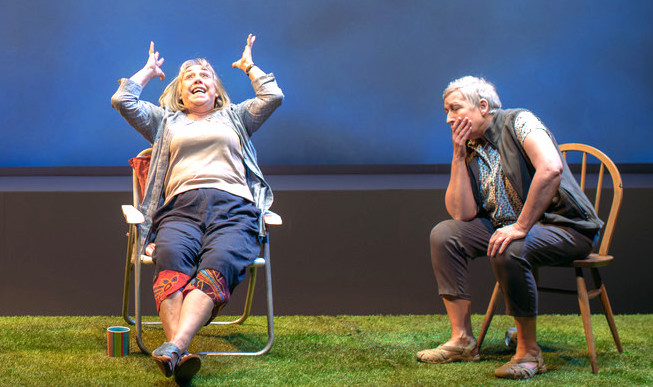
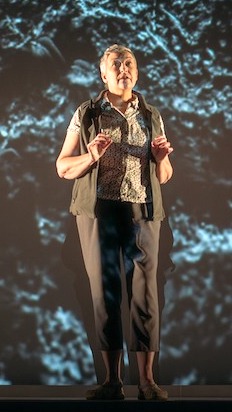
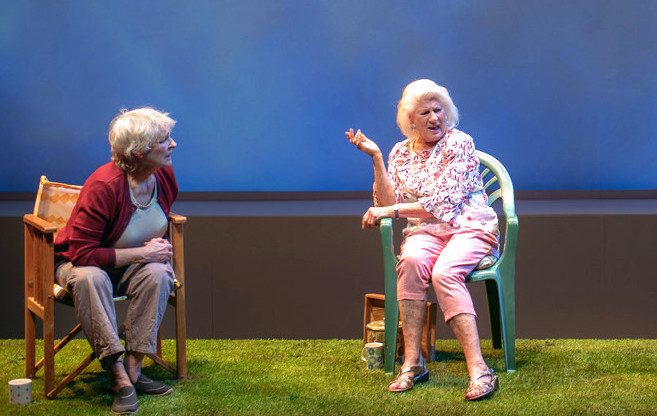
Three retired women – neighbours – sit in a garden, chatting inconsequentially. Mrs Jarrett (Blythe Duff) calls out a greeting as she passes by and is invited to take a seat. On the surface, she fits in, joining in the conversation. But she’s plagued by her knowledge of what’s happening in the news. At regular intervals, while the other women freeze, Mrs Jarrett rises and stands before Lewis den Hertog’s bleak black and white video projection, monologuing about apocalyptic events in the world beyond the garden. It’s like she’s zoning out, and we’re inside her head – and then she’s back again, making small talk, as if nothing has happened.

Although the catastrophes Mrs Jarrett describes are absurd in their extremity – all food has been diverted to TV channels; the hungry only know breakfast as an image on their screens; obese people sell their flesh, cutting rashers from their own bodies – the situation is depressingly normal. Just this morning, listening to the radio, I hear that 300 kidnapped Nigerian schoolchildren are still missing. In Gaza, shots have been fired at starving Palestinians waiting for a food truck. War still rages in Ukraine. It’s horrible. “Should we have curry or pasta for dinner tonight?” I ask my husband. We’re all fiddling while Rome burns.

The set, designed by Anna Orton, heightens the feeling of pretence. The grass is too green, the sky too blue; it’s what the women want to see, not what’s really there.

But, however fervently they cling to the façade they’ve created, real life keeps creeping in. “I’d love to go to Japan,” muses the agoraphobic (Anne Kidd). “Get yourself to Tesco first,” advises the caustic former GP (Joanna Tope), puncturing the daydream. Most resolutely cheerful of all is the ex-hairdresser (Irene McDougall), fresh out of prison for killing her husband. She went down for manslaughter, “but it might have been murder, in actual fact.” Nothing is what it seems.

Under Johanna Bowman’s direction, the performances are pulsing with vitality. There’s an urgency to proceedings that underscores the latent horror. Churchill’s script offers no real plot or character progression and this Tron Theatre production makes sense of that. It’s a snapshot of the way we’re stuck: a never-ending cycle of looking away; distracting ourselves from what’s really happening; ignoring the overpowering emotion consuming us.

“Terrible rage. Terrible rage. TERRIBLE RAGE.”

4.3 stars

Susan Singfield
Starving

12/03/24

Traverse Theatre, Edinburgh

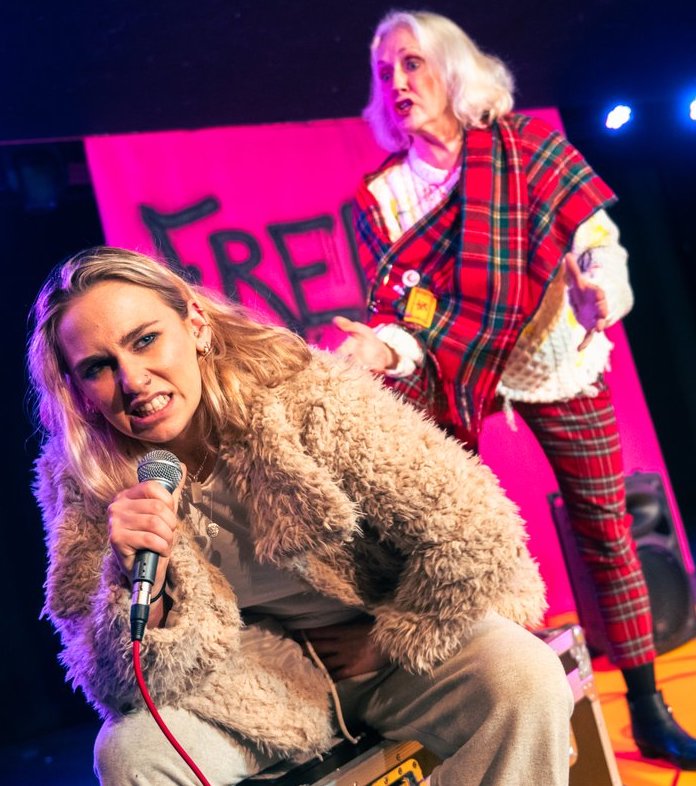
It’s December, 1972 and Scottish independence campaigner and all-round firebrand, Wendy Wood (Isabella Jarrett) is preparing to enter the fifth day of her hunger strike. She’s seventy-eight years old and this is just the latest in a long string of adventures.

It’s also December 2024 and, at the age of thirty, copywriter Freya (Madeline Grieve) is stuck in her Edinburgh flat, crippled by insecurity and afraid to venture out into the world she finds so overwhelming. She too hasn’t eaten for a while – but her hunger has more existential beginnings.

Somehow the two women find themselves occupying the same time and space. Which is all fine and dandy, until Freya checks out her companion on Wikipedia and discovers that A. She’s famous and B. She died in 1981.

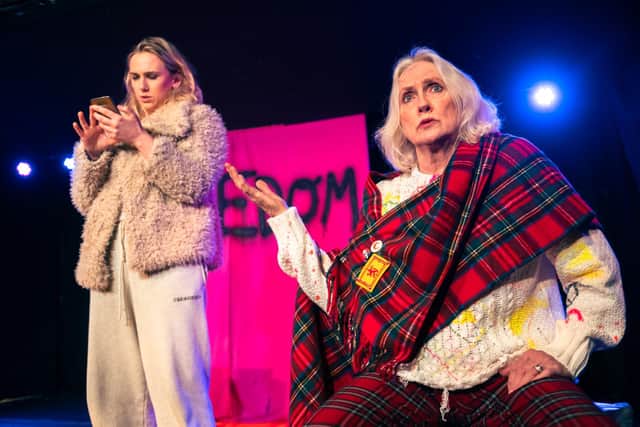
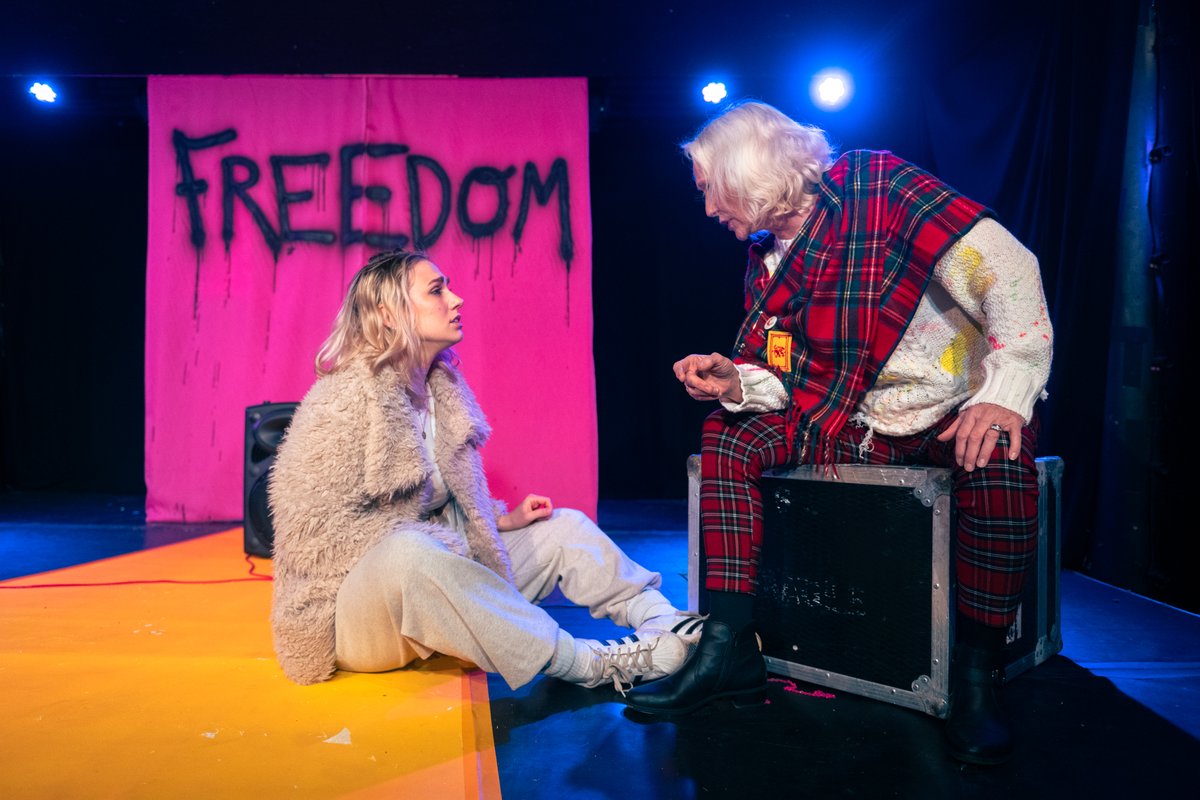
Imogen Stirling’s sprightly debut play (we previously saw her performing in the fabulous Love the Sinner) flings these disparate characters together and explores what makes them so different. At the same time, it uncovers the qualities that they have in common. Director Eve Nicol has the good sense to keep the proceedings all stripped back, just a bright banner and a couple of microphones for those moments when the women need to vent their feelings – which they both do, volubly and admirably.

Jarrett is quite awesome as Wendy, staunch, bold and ever resistant to the idea of being told ‘no!’ (After the show, I also look Wood up on Wikipedia, and it’s quite the eye-opener). As Freya, Grieve handles her more nuanced character with absolute assurance. I find myself alternately amused and amazed by the breadth of the material covered here, and there’s plenty to make me think about the various political issues that are touched on. I also love the play’s exuberant conclusion, the two protagonists joining together in a rousing rap about the need for freedom.

Once again, A Play, A Pie and A Pint have come up with a production designed to brighten your afternoon. Don’t miss your chance to share it.

4.5 stars

Philip Caveney

Origin

10/03/24

Cineworld, Edinburgh

Origin isn’t like any film I’ve seen before. Structurally, it’s akin to a dramatised lecture – but if that sounds dry, then I’m doing it a huge disservice. Writer/director Ava DuVernay has taken an academic text and created an artist’s impression of both the work and its author. The result is multi-layered: at once instructive and provocative – and absolutely riveting.

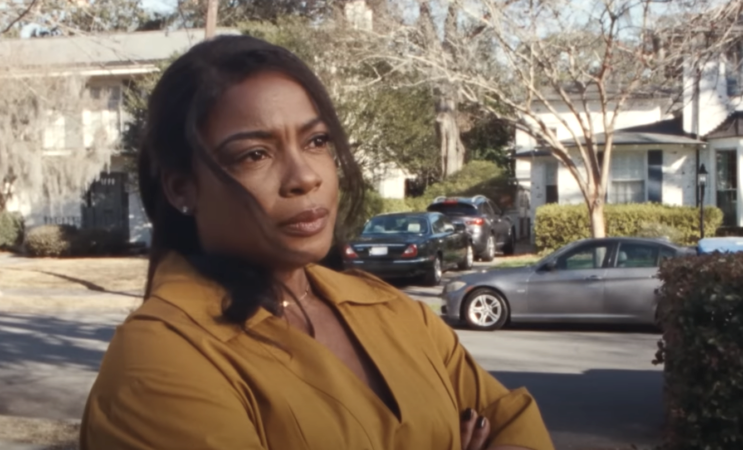
Based on Caste: The Origins of Our Discontents by Isabel Wilkerson (played here by Aunjanue Ellis-Taylor), Origin isn’t an easy watch. Wilkerson’s central conceit is that all oppression is linked – that the Holocaust, US slavery and India’s caste system all stem from the same fundamental practice of labelling one group of people ‘inferior’. This perception is entrenched via eight ‘pillars’, including endogamy, dehumanisation and heritability. DuVernay has done a sterling job of distilling these complex ideas and making them accessible, but the volume of cruelty on display is devastating. Who are we? Why do we keep on letting this happen? Some scenes are particularly heartbreaking, for example the young Al Bright (Lennox Simms)’s humiliating experience at a swimming pool in 1951, and I can hardly bear to mention the visceral horror of seeing people crammed into slave ships.

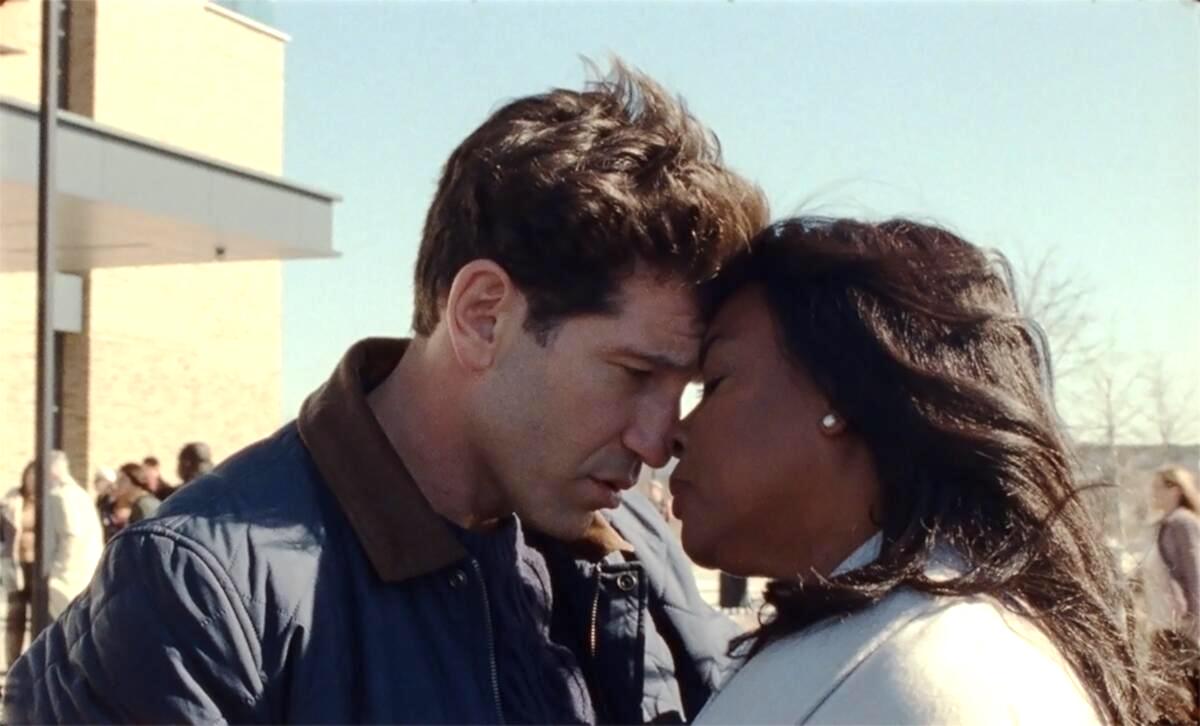
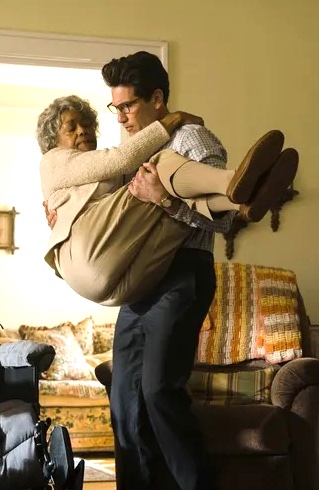
Ellis-Taylor’s Wilkerson is very engaging. She’s not only fiercely intelligent, but also thoughtful and gentle. Despite the weighty topics that dominate her working life, she finds time to have fun with her husband, Brett (Jon Bernthal), and to look after her mum, Ruby (Emily Yancy). She feels real.

Wilkerson’s personal life anchors the movie, which begins with her looking at retirement homes with Ruby. We see how Trayvon Martin (Myles Frost)’s shooting sows the first seed of her thesis, and then we jump back and forth in time and place, bearing witness to Nazi book burnings and Bhimrao Ambedkar’s ‘untouchable’ status; to Elizabeth and Allison Davis’s undercover work with Burleigh and Mary Gardner, documenting the everyday realities of racism in 1940s Mississippi. It is to DuVernay’s credit that we are never in any doubt about where we are or what point is being made.

There are moments when the concepts need bullet-pointing for clarity, and this is neatly achieved by the addition of a literal whiteboard. We see Wilkerson laboriously erecting it, before covering it in notes about the pillars that hold oppression in its place. This helps to anchor the key arguments, making them easy to grasp and remember.

Origin is a demanding piece of cinema, but it’s worth the effort. I come away feeling both horrified and educated, looking at the world in a different way.

4 stars

Susan Singfield
A Giant on the Bridge

08/03/24

Traverse Theatre, Edinburgh

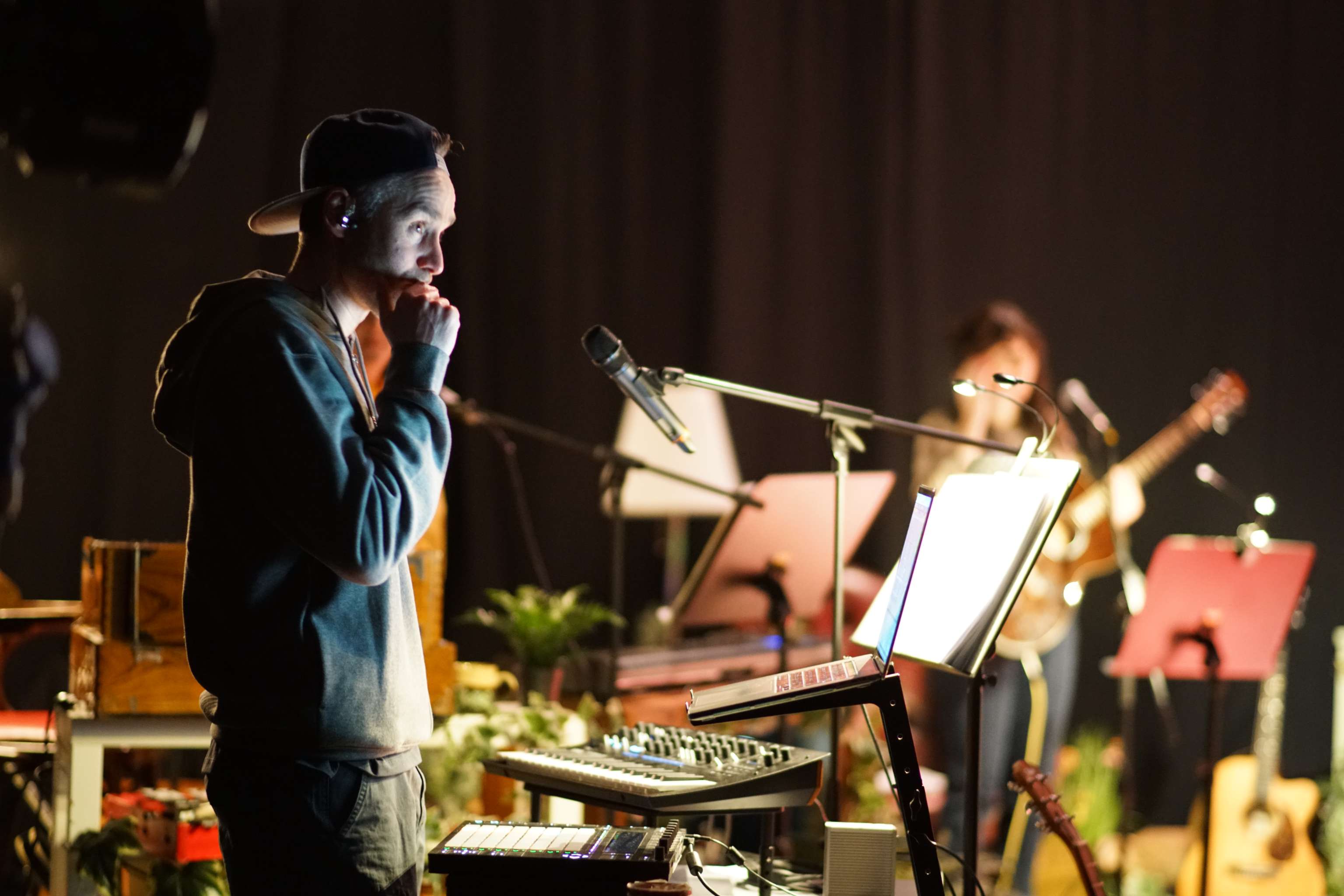
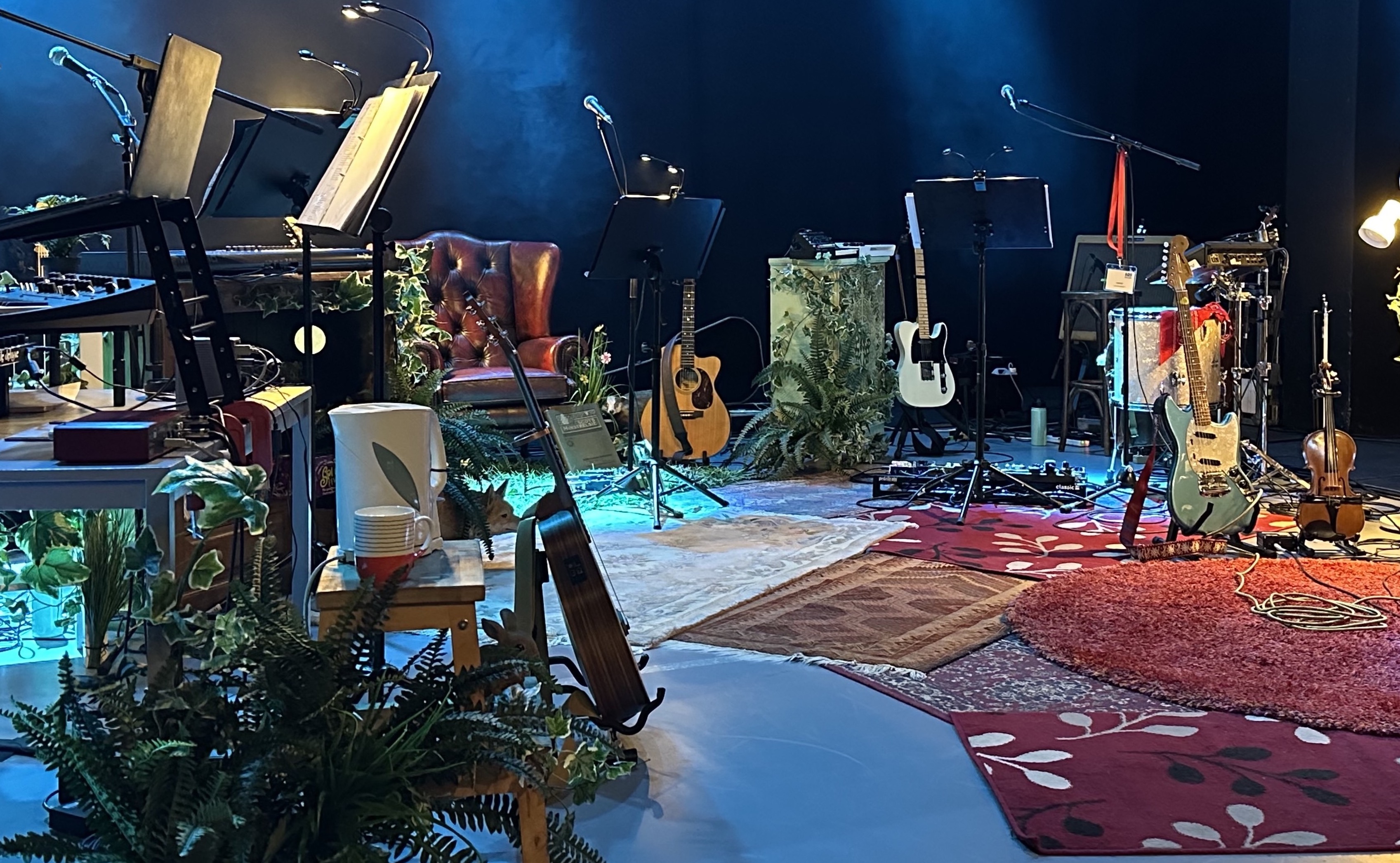
One look at the stage in Traverse 1 is enough to convince me that tonight, I’m going to witness some serious musicianship. There’s a complex arrangement of guitars and drums on display, as well as electronic keyboards, a violin, a harmonium and other instruments I cannot even name. They’re all connected by a jumble of leads and microphones that make me wonder how anyone will negotiate their way through it without tripping up. Then six musicians emerge from the wings, pick up their respective instruments and launch headlong into an extended piece of gig theatre that pretty soon has me in raptures.

Devised by Liam Hurley and Jo Mango, A Giant on the Bridge is created from a collection of songs written in Vox Sessions by the inmates of prisons across Scotland. It’s heartening to acknowledge that this joyful music has emanated from such grim beginnings, but here it is: a complex, labyrinthine piece that explores a whole range of different moods, moving from plaintive acoustic ballads to propulsive electric rock.

There are five different narratives here, the performers often breaking the fourth wall to speak directly to the audience. Louis Abbot delivers The Songwriter’s Story, telling us in essence about his daily routine, trying to coax music from troubled prisoners. Kim Grant delivers her Giant Story, a traditional tale about an imprisoned giantess, who has lost her heart to a ruthless king. Jo Mango gives us Clem’s Story; she’s a social worker and poet whose interactions with the daughter of an inmate unlock her own past trauma, while Jill O’Sullivan shares June’s Story, playing the role of a young woman looking after the daughter of her twin brother, D, and preparing for his imminent release from prison. And finally, Solareye relates D’s Story; he’s a man who sees and translates everything that happens to him into a distinctive form of rap.

If this description makes it all sound like a complex jumble, make no mistake: the various story threads are brilliantly interwoven, the narratives cunningly echoing and reinforcing each other, before the strands are drawn together into a heartfelt and uplifting conclusion. I find myself constantly thrilled by the sheer ambition of this production and the way its various goals have been so consummately achieved. The musicians also take on acting roles with aplomb.

It’s not just me who loves this show.. The wild applause from a packed audience is confirmation of how successful – and how unique – this musical experiment is. If you can grab a ticket to see it before it moves on, I urge you to take the opportunity. This is something very special.

5 stars

Philip Caveney

Lisa Frankenstein

07/03/23

Cineworld, Edinburgh

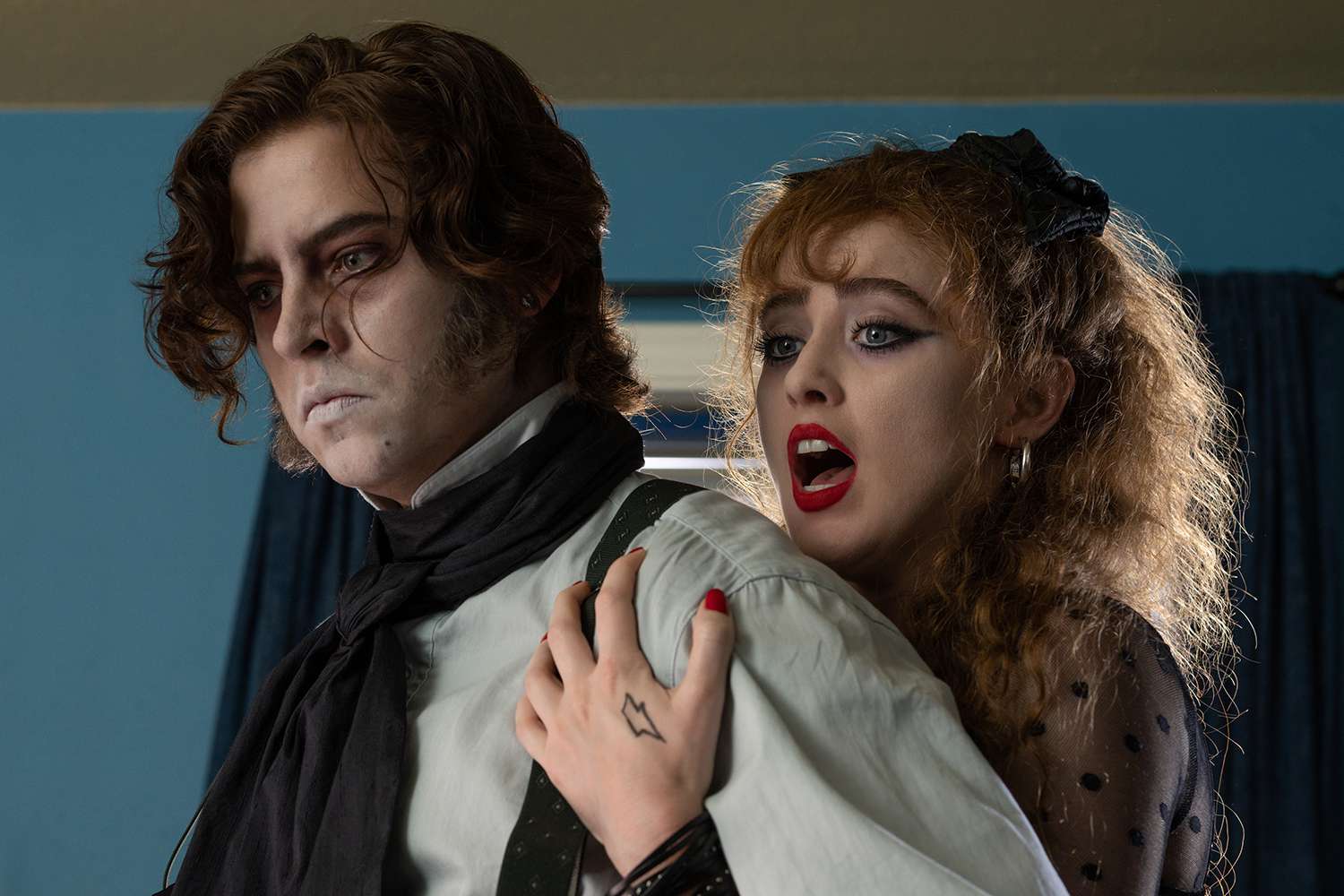
Diablo Cody first came to my attention with Juno (2007), a whip-smart, whimsical piece of work that deservedly won her the Oscar for Best Original Screenplay. Two years later, her script for Jennifer’s Body, though divisive, was still an impressive piece of work. Since then, her career has been somewhat hit and miss, but her name is still the main reason I choose to see Lisa Frankenstein

So I’m somewhat nonplussed to discover that the film is a dud. Seriously, the word ‘disappointing’ does not cover how bad this is – a slice of horror comedy that isn’t particularly gruesome (given the PG13 certificate) and manages to be about as funny as a car crash. The kindest thing I can think to say about it is that it has stylish opening titles that promise something much more sophisticated than what follows.

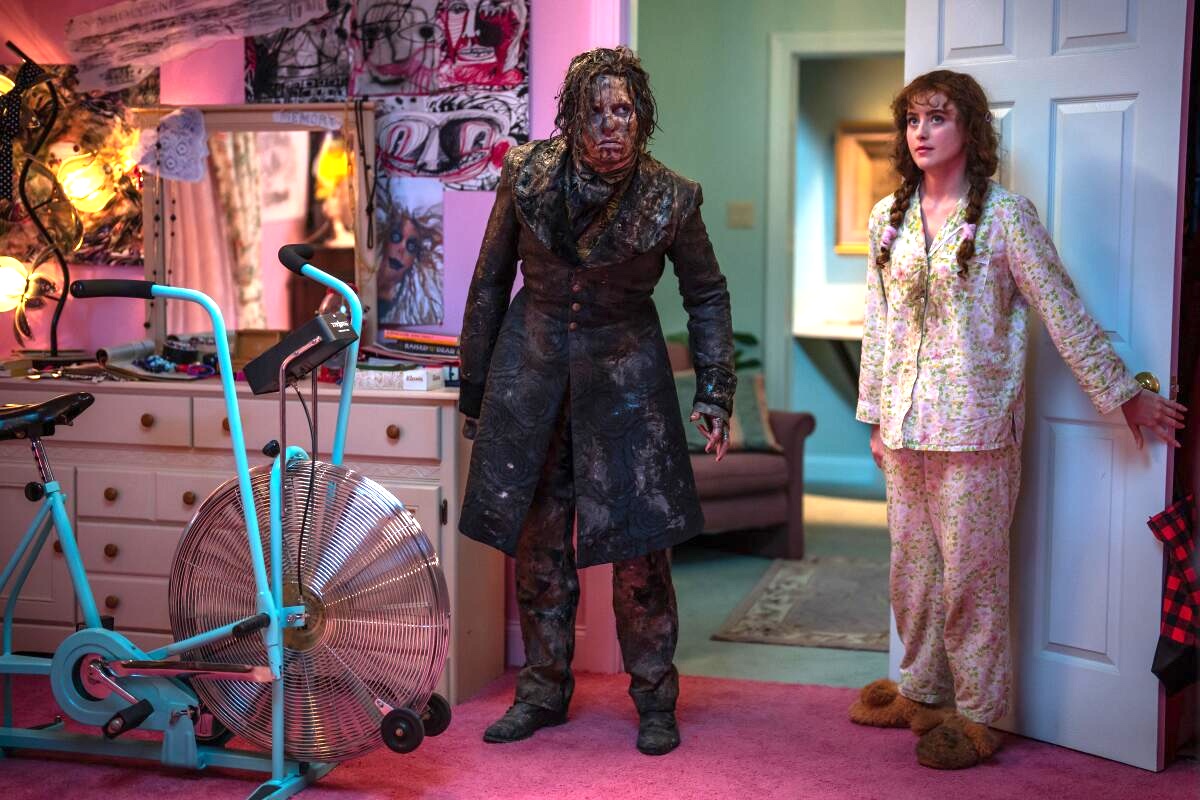
Lisa Swallows (Kathryn Newton) has never quite got over the night when her mother was murdered by a random axe murderer. (Laughing yet?) She now lives with her Dad, Dale (Joe Chrest), who is now married to Janet (Carla Gugino, chewing the scenery as the traditional evil stepmother, yet arguably the most watchable element in the film).  Lisa has also acquired a step-sister, Taffy (Liza Soberano), who – against all the odds – is friendly and supportive, which may be the only touch of originality here.

Lisa has taken to spending her spare time in the local cemetery, where she has been brooding beside the grave of a young Victorian male, who died back in 1837. Cue a thunderstorm, a convenient flash of lighting and said creature (played by Cole Sprouse) reanimates and lumbers his way to Lisa’s house, where she – quite by chance – is all alone in her bedroom. The creature is missing a hand and it’s not long before he and Lisa are on the lookout for a replacement…

I honestly want to like this, but almost everything about it misfires. The ‘jokes’ fall flat from the word go; the direction (by Zelda Williams) is perfunctory at best and occasionally rather confusing. While the 1989 setting is decently evoked, the dialogue that emerges from the mouths of the mostly young cast sounds like nothing anyone of that age would ever say. Newton does her best with what she’s been given, but deserves better lines to deliver. It doesn’t help that for nearly all of the film, her co-star Sprouse is only able to make various grunts, growls and shouts. 

The film lurches clumsily onwards, powered only by its own internal logic, but when that logic is so fatally flawed, it takes every ounce of my will to stay in my seat until the end. Sorry to all involved, but this feels like a waste of a sizeable budget that could have been spent on something better than this muddled mess.

1.5 stars

Philip Caveney 

Spaceman

06/03/24

Netflix

Adam Sandler. There, I said it.

Sandler is, of course, best known for his comedies, though these can most politely be described as ‘variable’. More often than not, they seem like an elaborate excuse for Sandler to team up with a bunch of mates and improvise something that feels like it has been literally thrown together. And then, every now and again, out of the blue, he decides to star in something more substantial for a quality director. I’m thinking of the likes of Punch Drunk Love, which he made with Paul Thomas Anderson, and the stone cold masterpiece Uncut Gems, written and directed by the Safdie Brothers, which possibly qualifies as the most stressful couple of hours I’ve spent in the cinema.

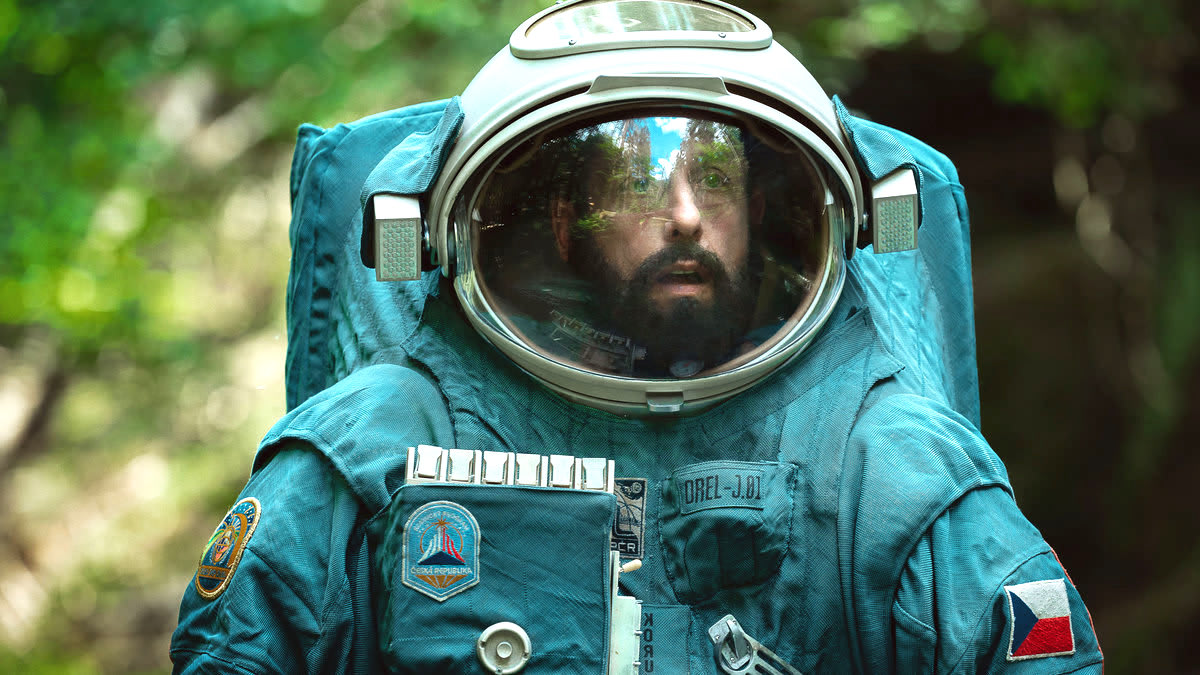
Spaceman, directed by Johan Renck and adapted by Colby Day (from a novel by Jaroslav Kalfar), is not in the same league as those two films and yet it’s a sizeable step up from Sandler’s usual offerings, a slow-moving, thoughtful allegory about the distance that can exist between a man and his wife, even when they are physically together.

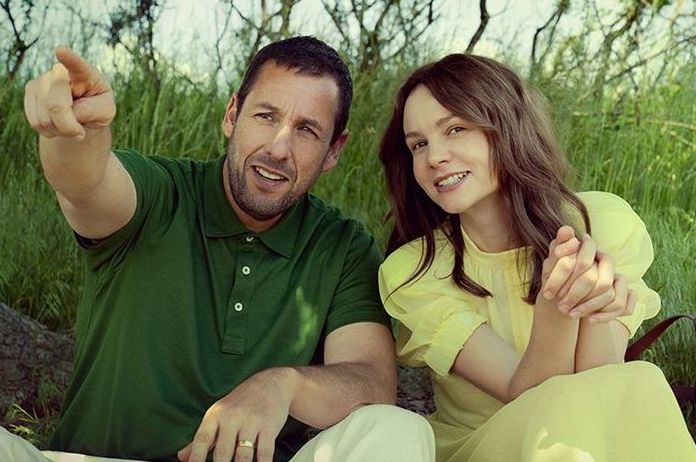
The Spaceman of the title is Jakub, a Czech cosmonaut, currently on a six-month mission to visit (and take samples from) the mysterious Cloud of Chopra, somewhere beyond Neptune. At home, his pregnant wife, Lenka (Carey Mulligan), is falling out of love with him, because he’s been distant in so many ways -even before he set off on his current voyage.

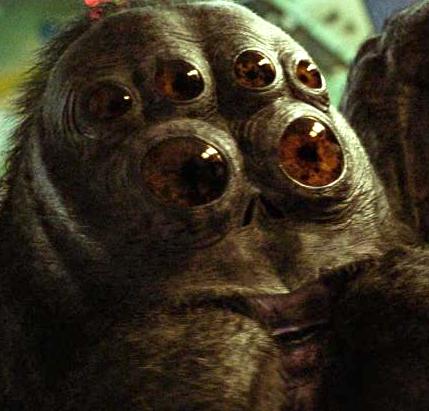
Jakub is nonplussed to discover that his regular calls to Lenka are going unanswered. He’s even more bewildered to learn that he has a stowaway aboard his spaceship – a huge alien spider, who can talk and is memorably voiced by Paul Dano. (Arachnophobes, take note: this film may not be for you!)

Most movies of this kind would pitch the alien as a voracious predator, with no higher motive than to chow down on the spaceship’s other occupant, but this creature (whom Jakub names Hanûs) turns out to be a gentle and communicative beast, who soon takes on the role of a kind of life coach, offering Jakub advice about all manner of things, including his failing marriage. It’s the sheer unexpectedness of this approach that grabs me most. As the mission steadily unfolds, we begin to learn more about the event that caused the rift between Jakub and Lenka. Can it ever be repaired?

Spaceman won’t be for everyone. For one thing, it moves at a glacial pace, Jakub’s journey interspersed with flashbacks to his courtship of Lenka and occasional cutaways to her present day conversations with her mother, Zdena (Lena Olin). There’s a lot of footage of the mysterious Cloud of Chopra, which – though pleasant enough to look at – soon starts to feel suspiciously like filler.

I will also confess to being initially confused by the ending, but with a little thought it soon makes perfect sense. Overall, Spaceman is an interesting little film with a fascinating premise. Though flawed, it’s light years ahead of Sandler’s customary output.

3.6 stars

Philip Caveney

Bread and Breakfast

05/03/24

Traverse Theatre, Edinburgh

The latest production in the A Play, A Pie and A Pint season offers a distinct change of pace. Who’s up for a good old-fashioned British farce? You know, the kind of vehicle that Brian Rix would have had a field day with back in the 1960s – slapstick characters painted with broad strokes and even broader dialogue.

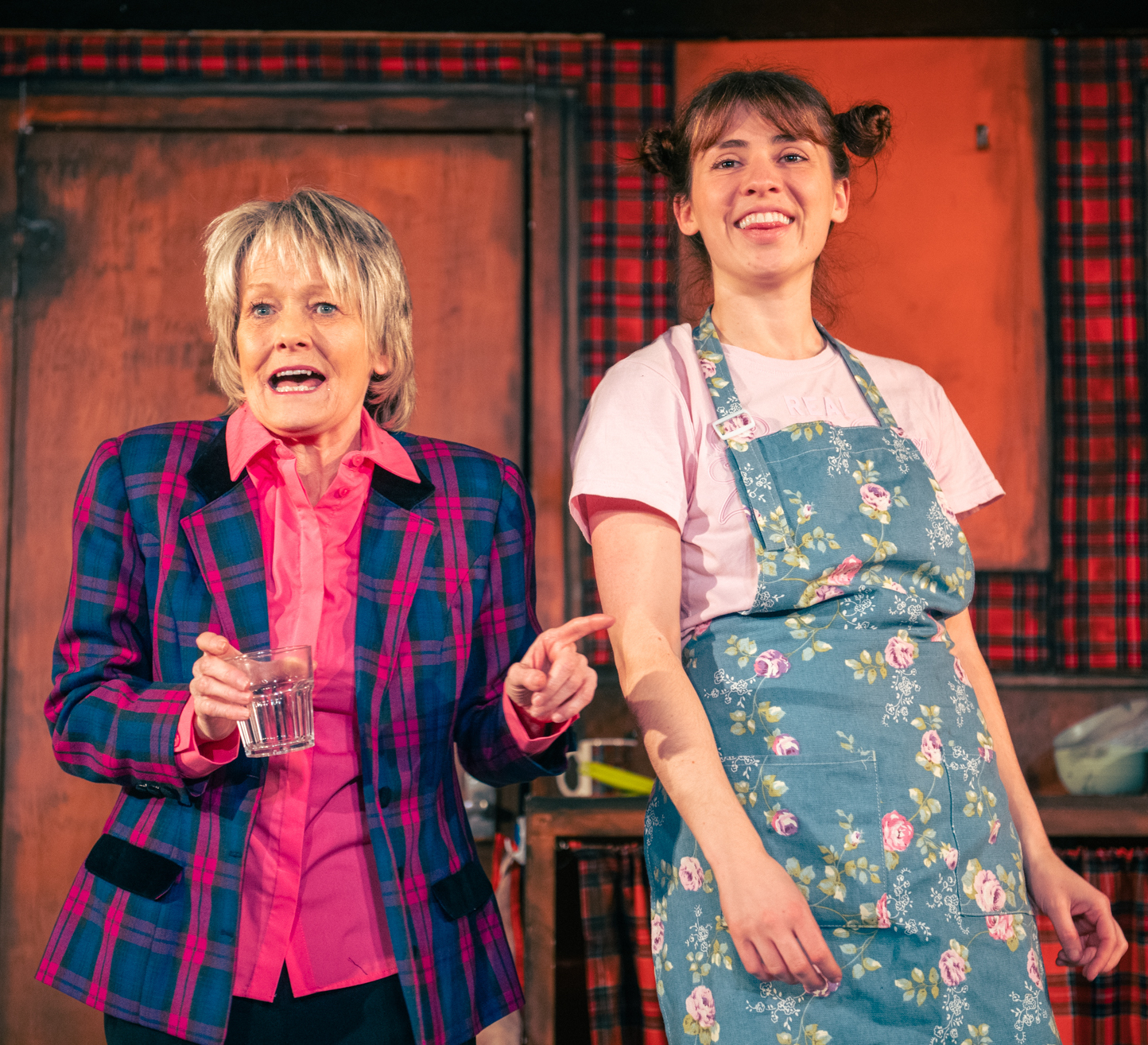
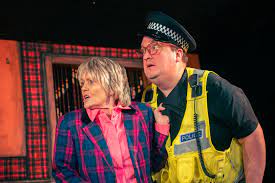
Welcome to Nessie’s Lodge, a bed and breakfast somewhere in the Highlands, a place where holidaymakers can relax in real style – provided they turn a blind eye to the indigestible food and the bedbugs… not to mention the rats. I said not to mention them! Proprietor Irene (Maureen Carr) is growing rather tired of the business, even though it boasts a single star from the AA. She dreams of selling the establishment to anybody who’s dumb enough to shell out money for it. But she’s continually hampered by her dimwitted young employee, Jo (Erin Elkin), who somehow manages to misinterpret every instruction she’s given. 

Then, in a distinctly Fawlty Towers twist, an AA restaurant inspector (James Peake) arrives out of the blue and the writing’s on the wall for Nessie’s Lodge. Also on the wall is a possibly priceless work of art that might just save Irene’s bacon…

Bread and Breakfast, written by Kirsty Halliday and directed by Laila Noble, has some genuinely funny lines in the mix, though there’s a worrying tendency to over-signal and over-explain them. Furthermore, it should also be said that those classic Whitehall farces were always anchored by absolute precision and excellent production values – which we can’t really expect from a modestly-budgeted lunchtime show.

The packed crowd at this afternoon’s show are clearly enjoying themselves, laughing throughout. As ever, stalwart actor Carr generates her own brand of potty-mouthed good humour; she’s a natural comic and has the audience in the palm of her hand. Elkin is excellent as Jo, giving her an edgy, almost manic appeal, as she flails from one hapless misunderstanding to another. Meanwhile Peake has the funniest moment of the show, as he delivers a spirited rendition of God Save Our Gracious Quing!  

If Bread and Breakfast isn’t quite to my taste, it’s nevertheless interesting to see a play so tonally different from anything I’ve previously seen at PPP.

3 stars

Philip Caveney

Dune: Part Two

03/03/24

Cineworld, Edinburgh

It only needs a glance around the IMAX auditorium at Edinburgh’s Cineworld on this Sunday afternoon to confirm that Denis Villeneuve’s big gamble has paid off. There’s barely an empty seat in the building. 

Dune: Part One came along at a propitious time. It was October 2021 and we were barely out of lockdown, sitting uncertainly in our seats, wearing paper masks and slapping gel on our hands at five-minute intervals. What we needed now was something epic to take our minds off the pandemic and we certainly got that – but what we were also handed was an unfinished story and a three-year wait for its conclusion. 

Would it be worth it?

The answer to that is a resounding yes! If the first film occasionally felt a little too languid for comfort, Part Two ramps the action up to eleven, and Villeneuve has the good sense to keep everything rattling along at full speed ahead. The result is a film that, despite  a running time of just under three hours, never feels overlong. 

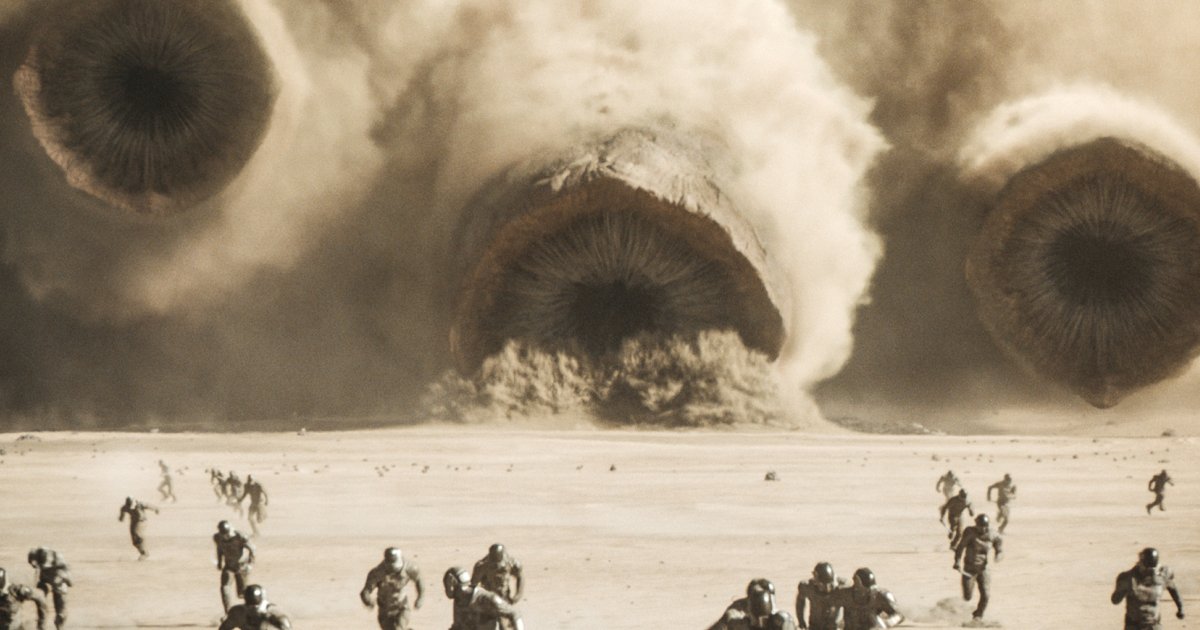
And in this case the word ‘epic’ barely does the material justice: this is an immense, eye-popping spectacle, an insanely inspired slice of cinematic world-building that at times leaves me almost breathless at what I’m witnessing up on the giant screen. This, my friends, is why they invented IMAX. If you haven’t seen Part One since its release (or at all for that matter), I’d advise you to catch up with it via streaming before sitting down to the second installment. I did and it helps no end to reacquaint myself with the characters.

We pick up exactly where we left off. Paul Atreides (Timothée Chalamet) and his mother, Jessica (Rebecca Ferguson), have survived the murder of most of their family and have sought refuge with the Fremen people in the remotest part of the desert planet, Arrakis. Paul has finally met his (quite literal) dream girl, Chani (Zendaya), and, under the protection of Stilgar (Javier Bardem), he’s learning the ways of the Fremen. 

At the same time, he’s all too aware that some of the more devout members of the tribe are giving him meaningful looks and referring back to an ancient prophecy that a messiah will one day arrive and lead the Fremen to triumph over their oppressors.

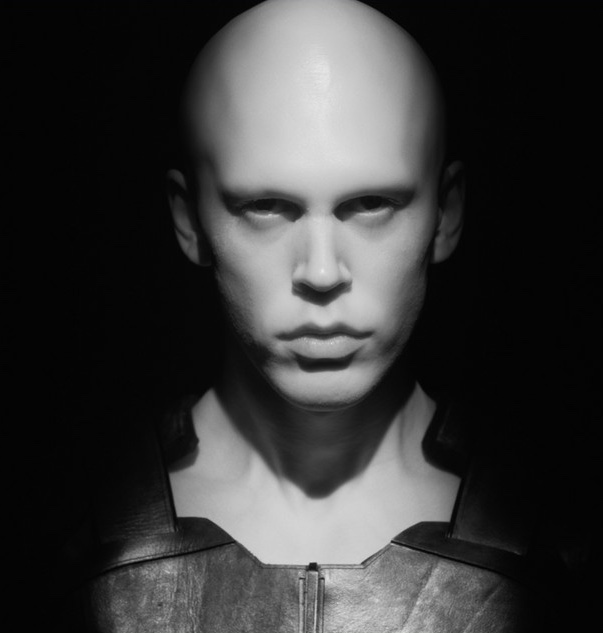
Could this be a potential way for Paul to take revenge for the killing of his father by the evil Baron Harkonen (Stellan Skarsgard), who is still skulking in a bathtub doing unspeakably horrible things to everyone who comes near him? And if you think he’s bad, wait till you meet his nephew, the psychopathic Feyd-Rautha (Austin ‘Elvis’ Butler), who redefines the word ‘villain’ in one of the most remarkable screen transformations ever.

Villeneuve has excelled himself here and Dune: Part Two is an extraordinary achievement, one that cements his reputation as one of the great visionaries of the cinema, up there with the likes of David Lean and Stanley Kubrick. His interpretation of Frank Herbert’s source novel spins allegories about the links between religion and drugs, the evils of colonialism, the ruthlessness of royalty, the inevitability of war between the poor and the privileged. That’s all there lurking behind the dazzling action set pieces and massive explosions.

My only niggle (as with the first film) is that the 12A rating sometimes works against the film, when all that violent mayhem must remain essentially bloodless in order to tick the boxes – but it’s not a big enough quibble to dampen my enthusiasm for this giant-sized helping of space fantasy, that quite frankly makes the Star Wars franchise look positively amateurish by comparison. 

And if the story’s conclusion doesn’t feel quite as er… conclusive as I might have expected, the possibility of Dune Messiah looming on a distant horizon may account for it. A trilogy, perhaps? 

Well, it would be rude not to, right?

5 stars

Philip Caveney

Peak Stuff

01/03/24

Traverse Theatre, Edinburgh

ThickSkin Theatre have a reputation for ambitious, cutting-edge theatre and I’m happy to say that Peak Stuff – a riveting new play by Billie Collins – does not disappoint. Indeed, this edgy slice of words and music manages to keep me on the edge of my seat throughout. 

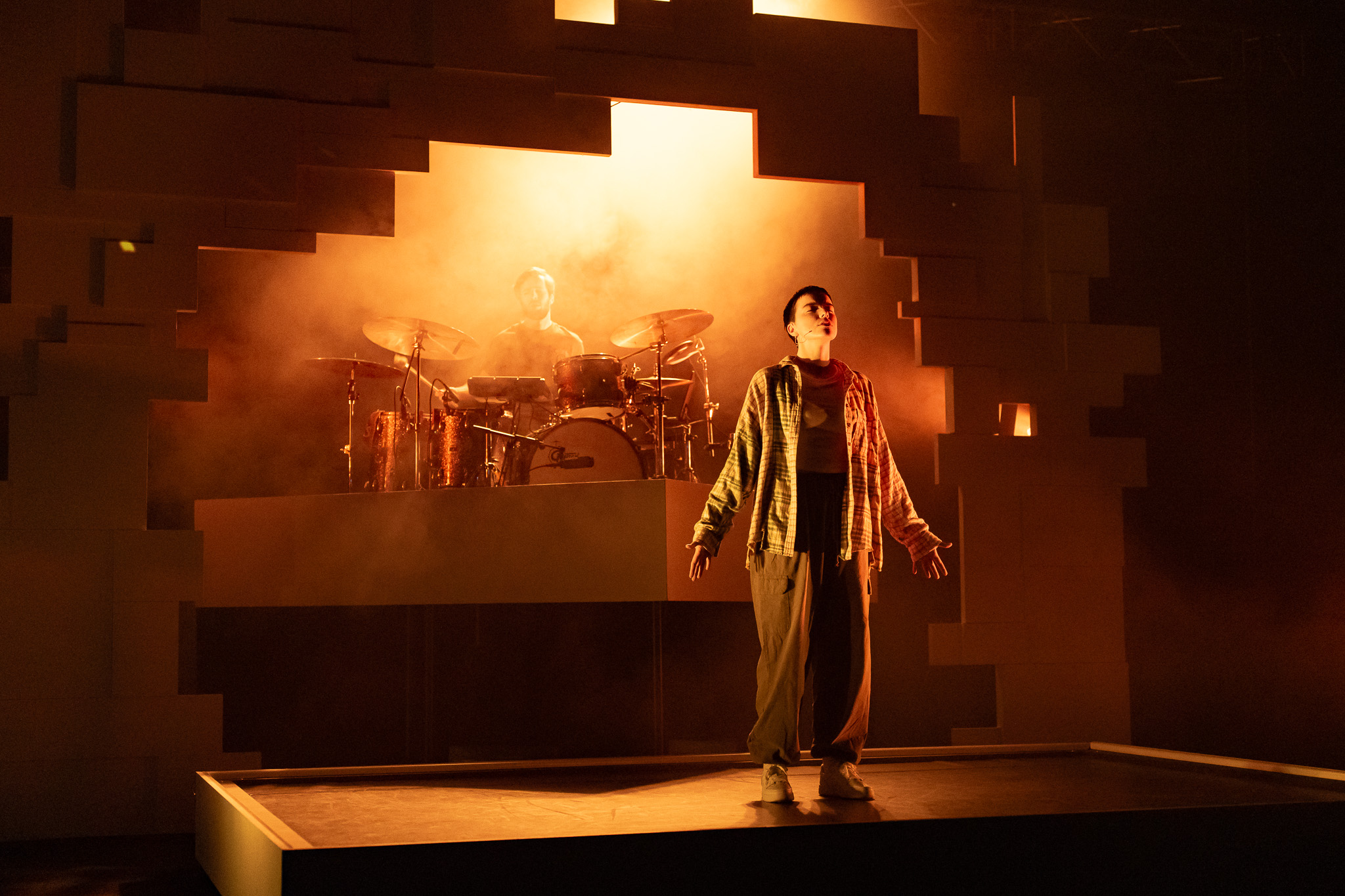
I’m immediately pulled in by the ingenious set design, which has drummer Matthew Churcher poised in the midst of a hollow, which is itself surrounded by a series of flat panels onto which Jim Dawson and Izzy Pye’s video designs are projected. Churcher is, in effect, the beating heart of the story, his intricate, propulsive rhythms combining with the soaring, majestic music of Neil Bettles (who also directs) and interacting with the narratives of three disparate characters, all memorably played by Meg Lewis.

Alice is a disaffected teenager, who is both appalled and galvanised by the awful reality of life in the 21st century. The world is burning and nobody seems to care! She’s determined to make her voice of protest heard above the hubbub, but is unsure of exactly how to go about making it happen. Ben works in marketing and is a loner, currently living in his mother’s house, which he is steadily filling to bursting point with a whole series of pointless purchases. They include a massive collection of branded trainers, which he never even takes out of their boxes. Online influencer Charlie is gleefully devoting herself to her latest project: selling parts of her body online to the highest bidder, starting with the little finger of her left hand…

How the lives of this strange, unconnected trio unfold is the bedrock upon which Peak Stuff is built – and the greatest wonder of this multifaceted piece is that there are so many ways it could go wrong; the whole edifice could easily collapse in upon itself in a stream of disconnected words, music and lights. The fact that it never does is surely testament to how tightly drilled this creative unit is. Lewis moves effortlessly from character to character, with just the slightest of changes to her voice and posture; Churcher keeps supplying those metronomic rhythms as the excitement steadily builds – and the three narratives combine with the eye-popping video projections which take us from Albert Square, Manchester to the heart of a blazing building.

This is bold, experimental theatre at its finest and the tumultuous applause that greets the final chord is evidence that tonight’s audience has been just as thrilled as I am.

4.6 stars

Philip Caveney