Month: January 2018

All the Money in the World


06/01/18

You have to admire Ridley Scott. At eighty years old, he seems to have levels of energy and commitment that would put younger directors to shame. Having emerged from the disappointment that was Alien Covenant, he threw himself headlong into his next project, the stranger than fiction tale of the abduction of Paul Getty III, nephew of multi-millionaire J Paul Getty. The film was in post-production when the allegations about Kevin Spacey (who was playing J Paul Getty) emerged, and Scott went to the unprecedented lengths of reshooting all of his scenes with a new actor, Christopher Plummer. The fact that Plummer is now being talked up for Oscar nominations speaks volumes about how successfully he has been assimilated into the final product.

It’s 1976 and sixteen year old Paul Getty III (Charlie Plummer) is wandering around Rome, enjoying life, when he is unceremoniously bundled into a van and driven to a remote location in the wilds of Italy. His mother, Gail (Michelle Williams in her latest onscreen transformation), receives a phone call saying that the kidnappers are demanding a ransom of seventeen million dollars and that Gail should approach her father-in-law for the money.

But there’s a problem. J Paul Getty isn’t your usual sort of millionaire. He may be the richest man in history but he still launders his own underwear when he stays in hotels and has even had a coin-operated red telephone box installed in his British mansion for whenever guests wish to use the phone. He outright refuses to pay the ransom and brings in Fletcher Chase (Mark Wahlberg) to handle negotiations with the kidnappers. As time slips by, Paul’s situation begins to look more and more precarious… and it’s only a matter of time before blood is shed.

Screenwriters David Scarpa and John Pearson have crafted a sprawling, but fascinating story, with details so weird that they really couldn’t pass for fiction. Okay, so some elements have been tweaked for the sake of building suspense – the conclusion of the case was certainly not as nail-bitingly dramatic as it’s portrayed here and occasiona liberties have been taken with the chronology of the story – but it all makes for a compelling narrative and, naturally, Scott makes every frame look gorgeous. Michelle Williams seems to completely reinvent herself from film to film and Plummer is good enough to make you stop caring what sort of a job Spacey might have made of so meaty a role.

Ironically of course, the reshoots have helped to bring this film to wider public attention and, judging by the packed afternoon screening we’re attending, All the Money in the World is destined to do a lot better than its predecessor. It absolutely deserves to.

4.6 stars

Philip Caveney

Hostiles

05/01/18

It’s often been said that, in times of political uncertainty, Hollywood revisits the Western – and it’s certainly true that this once moribund genre has recently enjoyed a bit of a renaissance, not least through Netflix’s superb series, Godless, which offers a refreshingly feminist view on the subject. Scott Cooper’s bleak and savage vision of the Old West seems designed primarily to remind us what an unpleasant era it was in which to eke an existence. Which is not to say that it isn’t a fascinating film. It is – even if it occasionally makes for uncomfortable viewing.

The film starts in New Mexico in 1892, towards the end of the infamous ‘Indian Wars.’ Captain Joseph Blocker (Christian Bale), a seasoned cavalry officer, finds himself presented with an assignment he really doesn’t relish. He is to escort his old adversary, a captive Cheyenne warrior called Yellow Hawk (Wes Studi), to Montana. The old man is stricken with cancer and wants to return to his ancestral burial grounds to end his life. Blocker makes no secret of the fact that he hates Yellow Hawk and has no intention of burying an axe unless it’s in the back of the old man’s head, but the US President has decreed that he must fulfil his obligations, so he rounds up a detachment of men and sets off on the long and arduous journey. (Watch out for a cameo role from young Timothee Chalomet currently being talked up as a potential  Oscar contender for his role in  Call Me By Your Name.)

Soon, Blocker and his men stumble across a harrowing tragedy in the shape of Rosalie Quaid (Rosamund Pike), who has just witnessed her entire family being massacred by a Comanche war party. Blocker has no option but to take the widow along for the ride, hoping that he can drop her off somewhere safe along the way… but as the journey progresses and a series of disasters unfold, it becomes clear that Blocker and Quaid’s  lives are to become inextricably entangled.

Cooper paints an unpleasant picture of the West: a world where gunfire and rape seem to lurk around every corner; where most of Cooper’s men are suffering from what was then called ‘the melancholy’ but which we now label as PTSD; where irrational hatred begets ever more hatred; and where women are seen as a commodity to be taken and used at any man’s whim. Bale is excellent in the central role, managing to convey his internal agony with little more than a look and a shrug – whilst Pike, whose character goes through a living hell in this film, is also memorable.

More than anything else though, the film serves as a comment on what’s happening in Trump’s America right now. It helps you to understand the entrenched Republican values that makes Americans so resolute on the right to bear arms – and why the country is inevitably heading for such devastating sorrows.

4.2 stars

Philip Caveney

Molly’s Game

04/01/18

As a screenwriter, Aaron Sorkin has certainly earned his stripes. From The West Wing to The Social Network, he’s proved his abilities as an ace screenwriter. For his directorial debut, he’s seized upon the real life story of Molly Bloom (not that Molly Bloom) portrayed here by Jessica Chastain on excellent form and based upon Bloom’s autobiography – which probably explains how she is be presented here as a bit of a saint, rather than the ruthless enabler she so clearly was.

The film opens with an extended voiceover that explains how Bloom’s youth is spent as a competitive downhill skier, schooled by her hard-assed father, Larry (Kevin Costner) and constantly in the shadow of her more successful brother, a downhill champion. When a terrible injury puts a premature end to her sporting ambitions, Bloom looks around for alternative forms of employment and more by accident than design, ends up helping to host a series of ‘slightly’ illegal poker games where celebrity players gamble (and generally lose) obscene amounts of money. When her boorish employer, Dean (Jeremy Strong) decides to cut her out of the games, she immediately sets up in competition with him, hiring swankier venues and stealing all of his regulars. From there, she goes all out to tempt in more affluent players. When, two years after quitting the business, she is arrested by the FBI she goes in search of a lawyer and finds Charlie Jaffey (Idris Elba) who despite his initial reluctance to represent her, is soon won over by Bloom’s charms… (Jaffey, by the way, isn’t a real character, but an invention, intended to represent the various lawyers she was associated with before coming to trial).

It’s perhaps inevitable that Sorkin the director fails to fully rein in Sorkin the writer – with a running time of two hours and twenty minutes, Molly’s Game becomes somewhat lumpen in the middle section and could surely have lost half an hour in the editing suite. Furthermore, those viewers (like me) who know or care nothing about the rules of poker may find their attention wandering during these stretches – but the film gathers momentum as it heads into its final stretch and has me hooked to its conclusion.

Sorkin’s dialogue is as delicious as ever, but if there’s an overall problem here, it’s simply that it’s hard to sympathise with any of the major characters – Elba’s fictional one aside. The once cute Michael Cera (of Juno) is really unpleasant as the mysterious Player X and even the usually affable Chris O Dowd is irritating as perennial loser Douglas Downey. And no matter how eloquently Chastain plays that lead role, its hard to feel warmth for a woman who doesn’t think twice about exploiting the needs of gambling addicts in order to earn herself considerable sums of money.

In the end, Molly’s Game is watchable if flawed. Poker fans will doubtless see this as a royal flush, whereas to me it’s more like three of a kind.

3.8 stars

Philip Caveney
 

The Greatest Showman

03/01/17

Okay, so we need to get one thing clear: The Greatest Showman is in no way a biopic. It may purport to tell the tale of PT Barnum, but it’s so far removed from the insalubrious truth that it’s more accurately filed under fiction. It borrows Barnum’s name, that’s all, and a few details from his life. Otherwise, it’s pure fantasy: a complete reimagining of the infamous freak show.

That’s not to say it doesn’t work; it’s a highly entertaining and lively piece of cinema, beautifully produced and performed with precision and wit. It’s bright and exhilarating, with catchy tunes. No doubt about it: this is fun.

In this version of events, PT Barnum (Hugh Jackman) is a striver: a poor tailor’s son with huge ambitions, who falls in love with Charity (Michelle Williams), a rich, upper-class girl, and is determined to provide her with the lifestyle he believes she deserves. He’s a risk taker and a charlatan, but he’s charming with a big heart, and disarms everyone he meets. When they fall on hard times, he decides to open a circus, showcasing such ‘freaks’ as a bearded lady, conjoined twins, a dwarf and a fat man. In his fictional incarnation, he’s not exploiting them, exactly, although he is making money from their efforts; he’s celebrating them, offering redemption to those society has rejected, helping them to forge a kind of family. And all progresses swimmingly, until he can’t resist the charms of opera singer, Jenny Lind (Rebecca Ferguson), who seems like a passport into the higher echelons of society. He risks everything to promote her, and it all comes crashing down.

It’s utterly enchanting, even if it isn’t true, and there are some excellent set pieces, such as the freaks’ defiant song of self-determination, This Is Me, led by bearded lady Lettie Lutz (Keala Settle), whose voice is just spectacular. Jackman is very good too, and Michelle Williams proves again that she’s a real chameleon, able to convince – it seems – in almost any role.

I was disappointed, though, to learn that Rebecca Ferguson doesn’t sing her own songs  (she is dubbed by Loren Allred); Ferguson is a fine actress with a face just made for the big screen, but was there really no one available who could deliver the whole deal? It seems a shame to give the part to someone who can’t play it, just because she is a ‘name’. There are enough stars in this film to carry it, surely?

Still, quibbles aside, this is eminently watchable, itself fulfilling (ironically perhaps) what it claims were Barnum’s aims: it’s rare indeed to see such a diverse range of performers given such prominent roles in a movie. It has the feelgood factor in bucketloads, and is eminently suitable for a family audience.

4.2 stars

Susan Singfield


Three Billboards Outside Ebbing, Missouri

02/01/18

Martin McDonagh is an interesting writer/director. His plays are always stupendous and his first foray into cinema, In Bruges, is a five star solid gold masterpiece (and one, incidentally, that just won ‘best Christmas movie’ in our recent ‘World Cup of Everything’ game). The follow-up, however – Seven Psychopaths – wasn’t anything like as assured. Indeed, in a recent interview, McDonagh (with refreshing honesty in a business not usually associated with that sentiment) admits that he took his eye off the ball during the making of it. Now Three Billboards outside Ebbing, Missouri arrives amidst much muttering about potential Oscar wins. The truth is, it’s an interesting film but, sadly, not in the same league as In Bruges. Having said that, it’s still worth your consideration.

In the remote town of Ebbing, Mildred Hayes (Frances McDormand) rents three billboards on a lonely stretch of country road and has them papered with three simple slogans. It’s been seven months since her daughter, Angela, was raped and murdered and, enraged by the lack of any progress in the resulting police investigation, Mildred has decided to start pointing the finger of blame, primarily at Chief Willoughby (Woody Harrelson). He’s understandably miffed by this approach, particularly as he’s recently had a cancer diagnosis and knows that his days are numbered. But Mildred is not about to give up on her mission, even if it is set to make her and her son, Robbie (Lucas Hedges), the most unpopular people in the county. Meanwhile, openly racist policeman, Dixon (Sam Rockwell), is not above taking the law into his own hands…

As I said, this isn’t a perfect film but there’s plenty here to admire, not least McDormand’s searing performance in the lead role, brilliantly portraying a woman so obsessed with her daughter’s death that she’s willing to go to any lengths to obtain justice, no matter what the cost. Rockwell too, is splendid, managing to give his initially unsympathetic character some degree of redemption, and Harrelson delivers what just might be his best turn since Cheers. But there are plot strands here that don’t quite convince. Some of the minor characters are never fully developed and others seem to step in for one cracking scene and are never seen again. (I’m thinking here of the scene where Mildred exchanges some crackling dialogue with the town priest. It’s brilliant but it feels unresolved.) Likewise, Peter Dinklage’s turn as (as one character refers to him) ‘the town midget,’ a sweet-natured drunkard who carries a torch for Mildred. And is it just the presence of McDormand and that distinctive Carter Burwell score that make this feel eerily like an early Coen brothers movie?

Whether or not Oscar will come knocking for this film is debatable. Certainly if we’re talking ‘best actress,’ I for one wouldn’t be making any objections – I’ve long been of the opinion that McDormand is one of the best there is. But while this is a huge step up from Seven Psychopaths, it’s perhaps not quite the total masterpiece that many are claiming.

4.2 stars

Philip Caveney

Film Bouquets 2017

unknown-18

unknown-18

unknown-18

All things considered, 2017 was a pretty good year for film – so much so that we’ve decided to award twelve bouquets – and it still means leaving out some excellent movies. Here, in order of release, are our favourite films of 2017.

Manchester By the Sea

manchester-by-the-sea-001

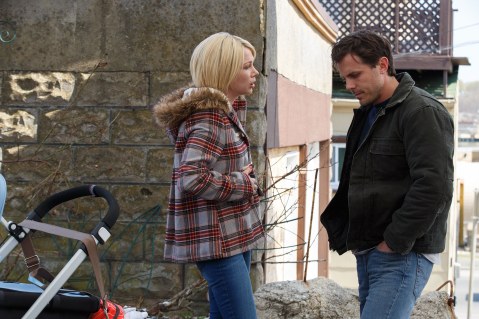
This bleakly brilliant film got the new year off to a great start. Powered by superb central performances by Casey Affleck and (especially) Michelle Williams, it was a stern viewer indeed who didn’t find themselves reduced to floods of tears.

Moonlight

Unknown

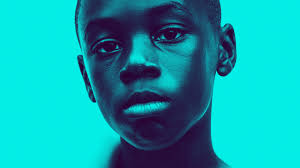
An affecting coming-of-age movie chronicling the life of a young black man as he gradually came to terms with his own sexuality, this film, of course, beat La La Land to the best movie Oscar in unforgettable style. It absolutely deserved its success.

Get Out

Get Out

A ‘social thriller’ that, despite it’s serious message, enjoyed a lightness of touch that made it a joy to watch. There were shades of The Stepford Wives and this witty calling card from director Jordan Peele suggested that cinema had found a hot new talent.

The Handmaiden: Director’s Cut

the-handmaiden-2016-movie-review-chan-wook-park-south-korean-film

Park Chan-wook’s masterpiece, loosely based on Sarah Water’s novel, Fingersmith, took us into the Korea of the 1930s and kept us spellbound for nearly three hours. Lush cinematography, a genuine sense of eroticism and fine performances from an ensemble cast – what’s not to like?

The Red Turtle

RedTurtle

This stunning animation from Michael Dudok de Wit, co-produced by Japan’s Studio Ghibli,  exemplified the best artistic traditions of east and west – a beautiful allegory about life and love and relationships. A delight to watch and a story that we couldn’t stop thinking about.

Baby Driver

Ansel Elgort

Edgar Wright’s adrenaline-fuelled chase movie ticked all the right boxes – a great soundtrack, breathless pacing and an intriguing central character in Ansel Elgort’s titular hero. It all added up to an unforgettable movie experience.

God’s Own Country

GodsOwnCountry

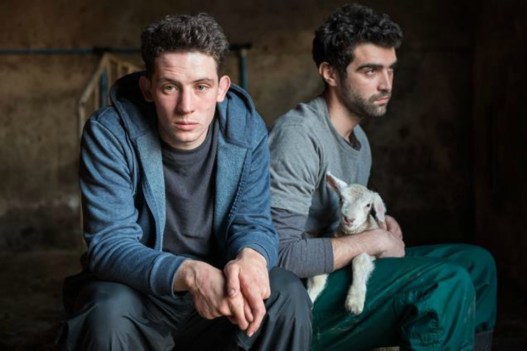
This extraordinarily accomplished debut by writer/director Francis Lee played like ‘Brokeback Yorkshire’ but had enough brio to be heralded in its own right. Beak and brutal, it told the story of two farm hands slowly coming to terms with their growing love for each other. Magnificent stuff.

Mother!

Mother

Darren Aronfsky’s absurd fantasy alienated as many viewers as it delighted, but we found ourselves well and truly hooked. From Jennifer Lawrence’s great central performance to the film’s bruising finale, this was definitely a film not to be missed – and one of the year’s most discussed films.

Blade Runner 2049

blade-runner-2049

We waited thirty years for a sequel to Ridley Scott’s infamous film and I’m glad to say it was worth the wait – a superior slice of dystopian cinema that dutifully referenced the original whilst adding some innovative ideas of its own. Denis Villeneauve handled the director’s reins expertly and Hans Zimmer’s score was also memorable.

The Killing of a Sacred Deer

the-killing-of-a-sacred-deer-ksd_02198_rgb-3000

Another piece of eerie weirdness from director Yorgos Lanthimos, this film also managed to divide audiences, but for us it was a fascinating tale, expertly told and one that kept us hooked to the final, heart-stopping scene. A unique cinematic experience.

Paddington 2

paddington2

Yes, really! The sequel to the equally accomplished Paddington was an object lesson in how to effortlessly please every single member of an audience. Charming, funny and – at one key point – heartbreaking, this also featured a scene-stealing turn from Hugh Grant.

The Florida Project

the-florida-project

Think ‘Ken Loach does Disney’ and you’re halfway there. Sean Baker’s delightful film might just have been our favourite of 2017, a moving story about the tragic underbelly of life in contemporary America. Brooklyn Prince’s performance as six-year-old Moonee announced the arrival of a precocious new talent.

Philip Caveney & Susan Singfield

Theatre Bouquets 2017

unknown-18

unknown-18

unknown-18

Once again we have been wowed by some fantastic theatre this year. Here, in order of viewing (and with the benefit of hindsight), are our favourite productions of 2017.

The Winter’s Tale – Lyceum Theatre, Edinburgh

The Winter's Tale

This thrilling, modern-day version of Shakespeare’s play was dynamic and audacious – with the whole fourth act recast in Scots. We loved every minute of it, especially Maureen Beattie’s performance as Paulina.

Chess: The Musical  – Festival Theatre, Edinburgh

Chess

The students from the Royal Conservatoire of Scotland thrilled the audience with a skilful display of all things theatrical. We loved the sophisticated choreography (often incorporating the real time use of video cameras) and choral singing that sent chills down our spines.

Nell Gwyn – King’s Theatre, Edinburgh

Nell Gwyn\

This superb production of Jessica Swales’ Olivier Award-winning comedy was a delight in just about every respect. From the superbly realised set, through to the opulent costumes and the lively period music, this was fabulous to behold.

Death of a Salesman – King’s Theatre, Edinburgh

Death of a Salesman

It was the direction that made this production so good: Abigail Graham did a wonderful job of clarifying everybody’s pain. And Nicholas Woodeson was perfect for the lead role, conveying Willy’s struggle with warmth and vitality.

The Toxic Avenger – Pleasance One, Edinburgh

The Toxic Avenger

A musical in the same vein that made Little Shop of Horrors such a pleasure, The Toxic Avenger was an unqualified delight, romping happily along powered by its own exuberance and the efforts of a stellar cast, who gave this everything they had – and then some.

The Power Behind the Crone – Assembly George Square, Edinburgh

The Power Behind the Crone

This was a wonderful piece of theatre, an exemplar of a Fringe show: beautifully scripted, and acted with precision and panache. Alison Skilbeck had absolute control of the material and created an impressive range of distinct, believable characters.

Seagulls – The Leith Volcano, Edinburgh

Volcano Theatre SEagulls at Edinburgh Fringe Festival

This was the most ambitious, exhilarating piece of theatre we saw this year. Site-specific productions – when the site is as spectacular and relevant as this (we were in an abandoned church, which had been flooded with forty-five tons of water) – can be truly exciting, and this one had a lot to offer.

Safe Place – Rose Street Theatre, Edinburgh

Safe Place

Safe Place provided a sensitive, insightful examination of the uneasy relationship between trans-activism and feminism. It asked (and answered) many questions, all within the framework of a nuanced and intelligent play.

Angels in America: NT Live – Festival Theatre, Edinburgh

Angels In America

Clocking in at just under eight hours, Tony Kushner’s play offered us a “gay fantasia on national themes” – a sprawling, painful and searingly funny depiction of New York in the 1980s, fractured and ill-prepared to deal with the AIDS epidemic. A truly iconic piece of theatre.

Twelfth Night/Romeo & Juliet – King’s Theatre, Edinburgh

Twelfth Night

Romeo & Juliet

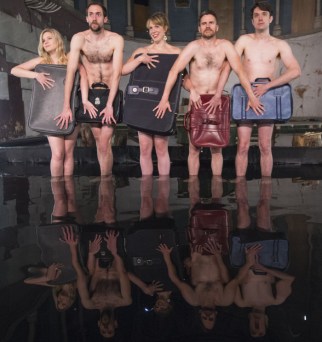
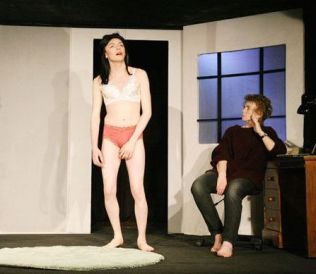
Merely Theatre gave us some ‘stripped-back’ Shakespeare, performing Twelfth Night and Romeo & Juliet in rep. The plays featured only five actors and the casting was gender-blind. It all made for an interesting dynamic and prompted us to re-examine familiar scenes.

Cockpit – Lyceum Theatre, Edinburgh

Cockpit

Cockpit was a witty, clever play, which saw the Lyceum transformed into a truly immersive space.  Director Wils Wilson served up a fascinating piece of theatre: arresting, thought-provoking, provocative and demanding – and it kept us talking for hours afterwards.

Cinderella – King’s Theatre, Edinburgh

Cinderella

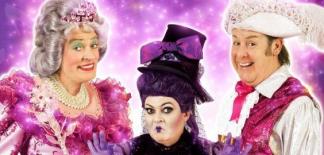
We never thought a pantomime would feature in any ‘best of’ list of ours but, for the second year running, the King’s Theatre’s stalwarts managed to wow us. Allan Stewart, Andy Gray and Grant Stott knew exactly how to work their audience, and the special effects were truly spectacular.

Susan Singfield & Philip Caveney

Happy End

30/12/17

It has long been a tradition in our household that I choose to visit the cinema on my birthday – but since that birthday falls at an awkward time of year, it isn’t always easy to find something decent to watch. I was therefore delighted to note that the Cameo Cinema was offering a screening of Michael Haneke’s Happy End. While it can hardly be regarded as cheery birthday fare, Haneke’s films are always challenging to say the very least.

The film centres around the upper-bourgeois Laurent family who own a construction company based in Calais, against the troubling background of the migrant crisis.  The widowed patriarch of the family, George (Jean Louis Trintignant), is rapidly succumbing to dementia and spends much of his time actively trying to end it all. Meanwhile, his daughter, Anne (Isabelle Huppert), runs the business in her own no-nonsense manner, whilst vainly trying to interest her hapless son, Pierre (Franz Rogowski), in the idea of taking over from her – but it’s clear that he’s not really cut out for this kind of life. When an industrial accident results in the death of an employee, matters come to a head – and, at the same time, George’s son, Thomas (Mathieu Kassovitz), a well-to-do doctor, has to unexpectedly offer a home to his estranged teenage daughter, Anais (a remarkable performance from Laura Verlinden), whose mother has recently died from poisoning. Thomas is now remarried and has an infant son. It’s quite clear that he isn’t really sure how to interact with Anais – and there are still disturbing questions to be asked about what happened to her mother…

This is typical Haneke territory – the story is never clear cut, but gradually unfolds in a series of incredibly realistic vignettes. There are long takes, often shot from a distance, where the viewer is made to feel like a voyeur spying on the proceedings, an effect heightened by the way Anais records much of the action on her mobile phone – and at several points we are presented with revelations that make us reconsider many of the conclusions we have already drawn.

Haneke isn’t to everyone’s taste. His is an uncompromising world-view that takes no prisoners, but he is a unique talent that deserves to be celebrated and, to my mind at least, this is an excellent way to conclude the year’s viewing.

4.6 stars

Philip Caveney